Color the Circles: Vocabulary Worksheet for Preschoolers
Matching a chart of letter-color pairings to circles below reinforces alphabet recognition for children ages 3-5 while training them to hold a two-step visual instruction in mind — find the letter, then find its color — while coloring.

Part of the pack
Month 11: Learning & Development | Ages Up to 4
This is page 5 of the pack. Ages 2-4 · PreschoolAges 2-4 · NurseryAges 2-4
Made for your child
Spelling practice, made for your child
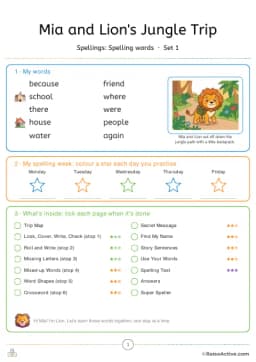
Their own spelling words turned into a pack: trace or look-cover-write-check, roll and write, a secret picture code, a word search, a crossword and a test, with their name in it.
Make a spelling packFree preview · free for members
Or start free: a word search with sight wordsCurriculum
- Cognitive - Attention > Colors & Sorting
How to use this worksheet
Look at the chart at the top of the page together and read each letter and its paired color aloud. Point to the first circle below, find its matching letter on the chart, and help your child choose the correct crayon color. Continue circle by circle, checking the chart each time, until every circle on the page has been colored according to the key.
Materials needed
- Crayons or colored pencils
- Pencil
Extension activities
- 1Make your own letter-color chart with different colors and quiz your child on it.
- 2Sort crayons by color and name while reciting the associated letter.
- 3Draw simple pictures and label them with the correct beginning letter and color.
- 4Create flashcards pairing each letter with an object of that color.

Written by
Hemsweta Jain · Teacher Cheena
MBA and Early Childhood Educator, teaching since 2014 · Founder of RaisoActive, Mumbai
Every RaisoActive worksheet is designed and checked by the founder before publishing.
Published · Last reviewed
More from Month 11: Learning & Development | Ages Up to 4
Paper Bag Craft Worksheet for Kids
Ages 3-5 · Preschool–Pre-KAges 3-5 · Nursery–ReceptionAges 3-5 · Nursery–LKGAges 3-5
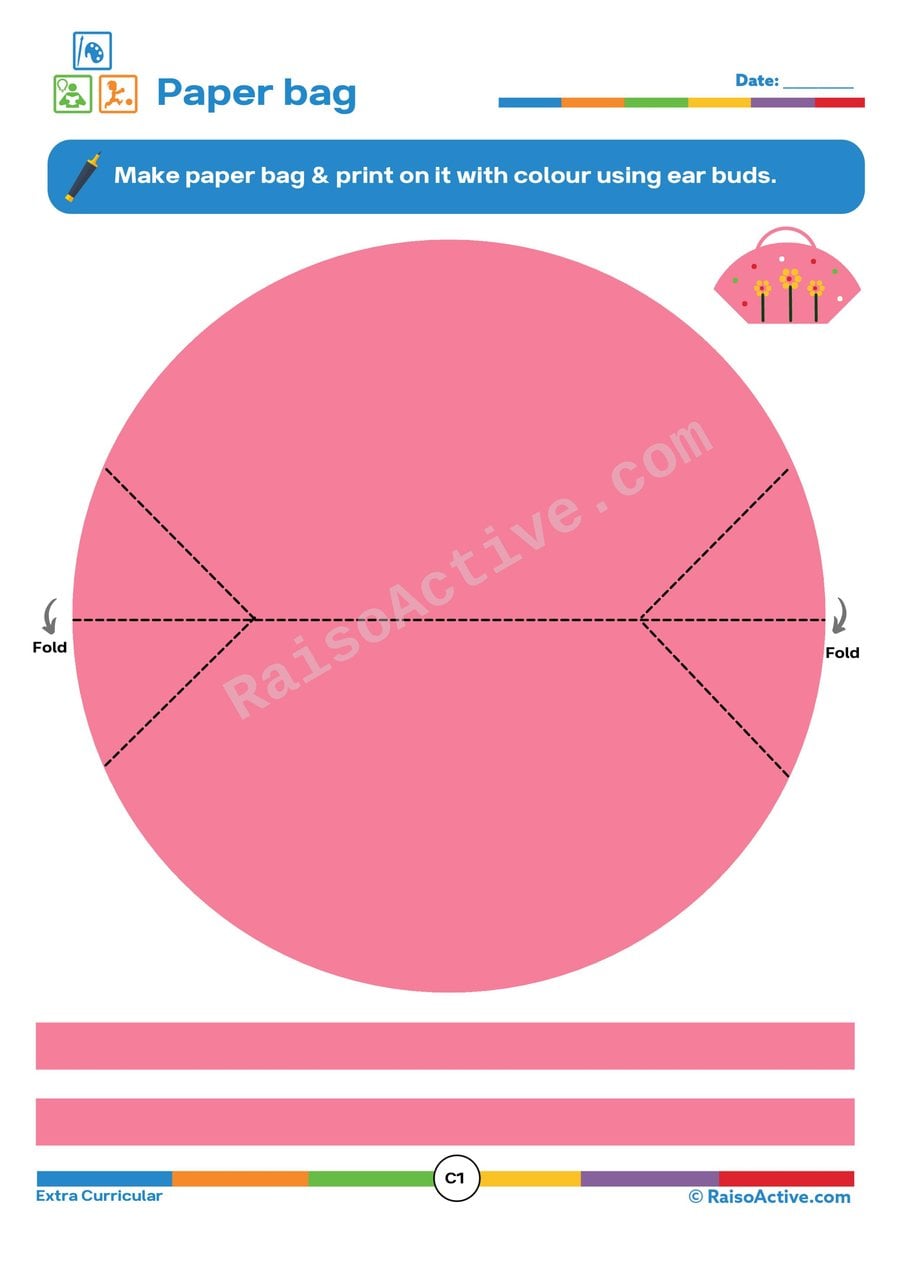
Children ages 3-5 practice fine motor control and following multi-step craft instructions by folding a paper bag and decorating it using a cotton swab dipped in color, an unusual painting tool that builds hand control and creative expression at the same time. Following each folding and coloring step in order also strengthens early sequencing and listening skills.
Write and Color Numbers 1-20 Worksheet
Ages 4-6 · Pre-K–KindergartenAges 4-6 · Reception–Year 1Ages 4-6 · LKG–UKGAges 4-6
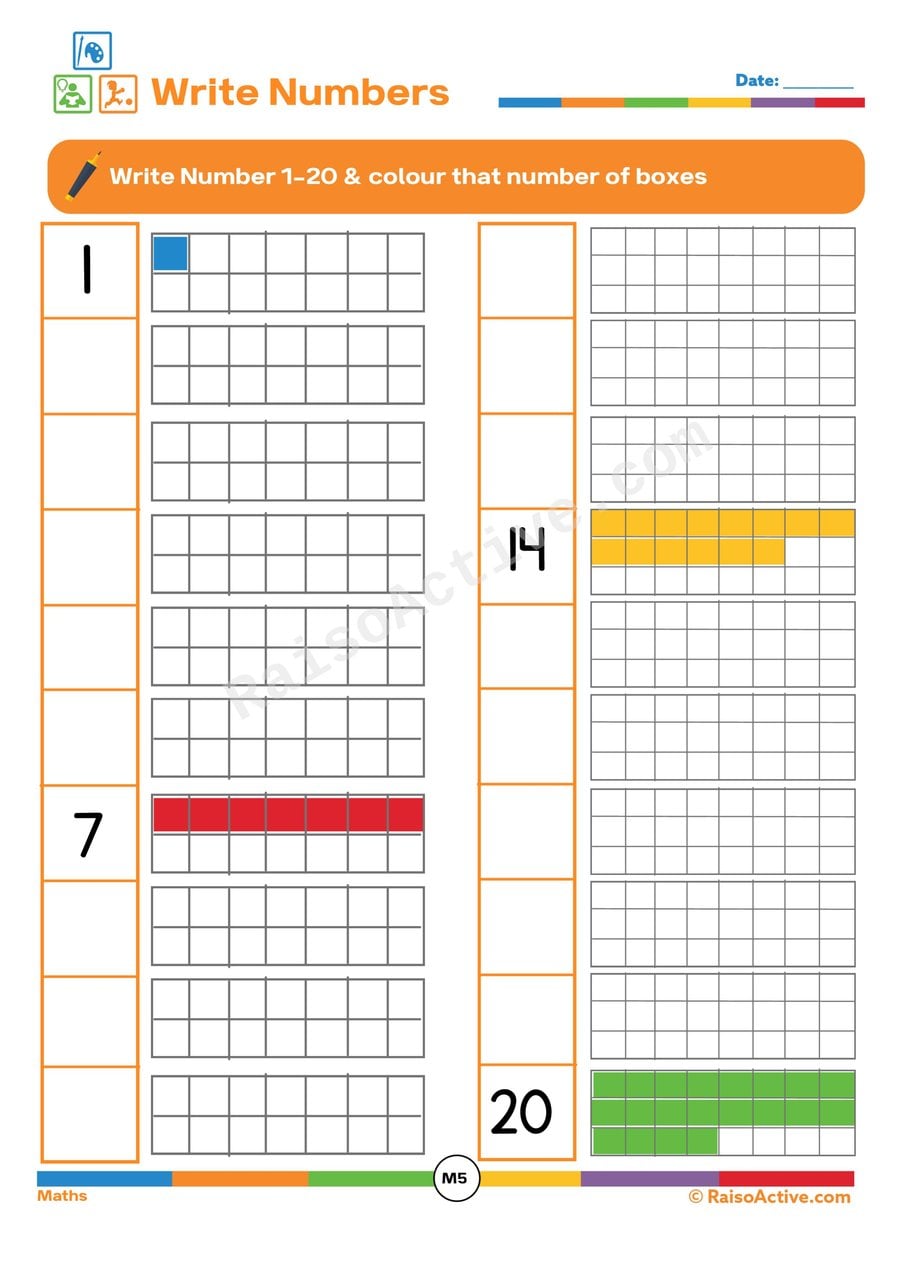
Children ages 4-6 practice writing numbers from 1 to 20 in sequence while reinforcing quantity recognition by coloring the matching number of boxes for each number, connecting the written numeral to the amount it represents. Extending number writing practice up through 20 supports children moving beyond single digits into the teens and twenties, a range many children find confusing.

Match the Fruits to Their Plants Worksheet for Preschoolers
Ages 3-5 · Preschool–Pre-KAges 3-5 · Nursery–ReceptionAges 3-5 · Nursery–LKGAges 3-5
This worksheet helps children ages 3-5 build early plant science knowledge by matching common fruits to the plant or tree they actually grow on, such as an apple to a tree or a strawberry to a low bush. This task moves beyond simply naming fruits into understanding where food comes from, an important first step in connecting nature to the food children eat every day.

Alphabet U-Z Worksheet: Find the Letter and Count!
Ages 4-6 · Pre-K–KindergartenAges 4-6 · Reception–Year 1Ages 4-6 · LKG–UKGAges 4-6
This worksheet extends alphabet mastery to the less-practiced letters U through Z for children ages 4-6, combining beginning-sound identification with a counting task for each object pictured. Because letters at the end of the alphabet appear less often in early reading material, dedicated practice here helps round out full alphabet fluency, while the counting component keeps numeracy skills active alongside literacy.
Skip Counting Adventure: Counting by 2, 5, and 10!
Ages 4-6 · Pre-K–KindergartenAges 4-6 · Reception–Year 1Ages 4-6 · LKG–UKGAges 4-6
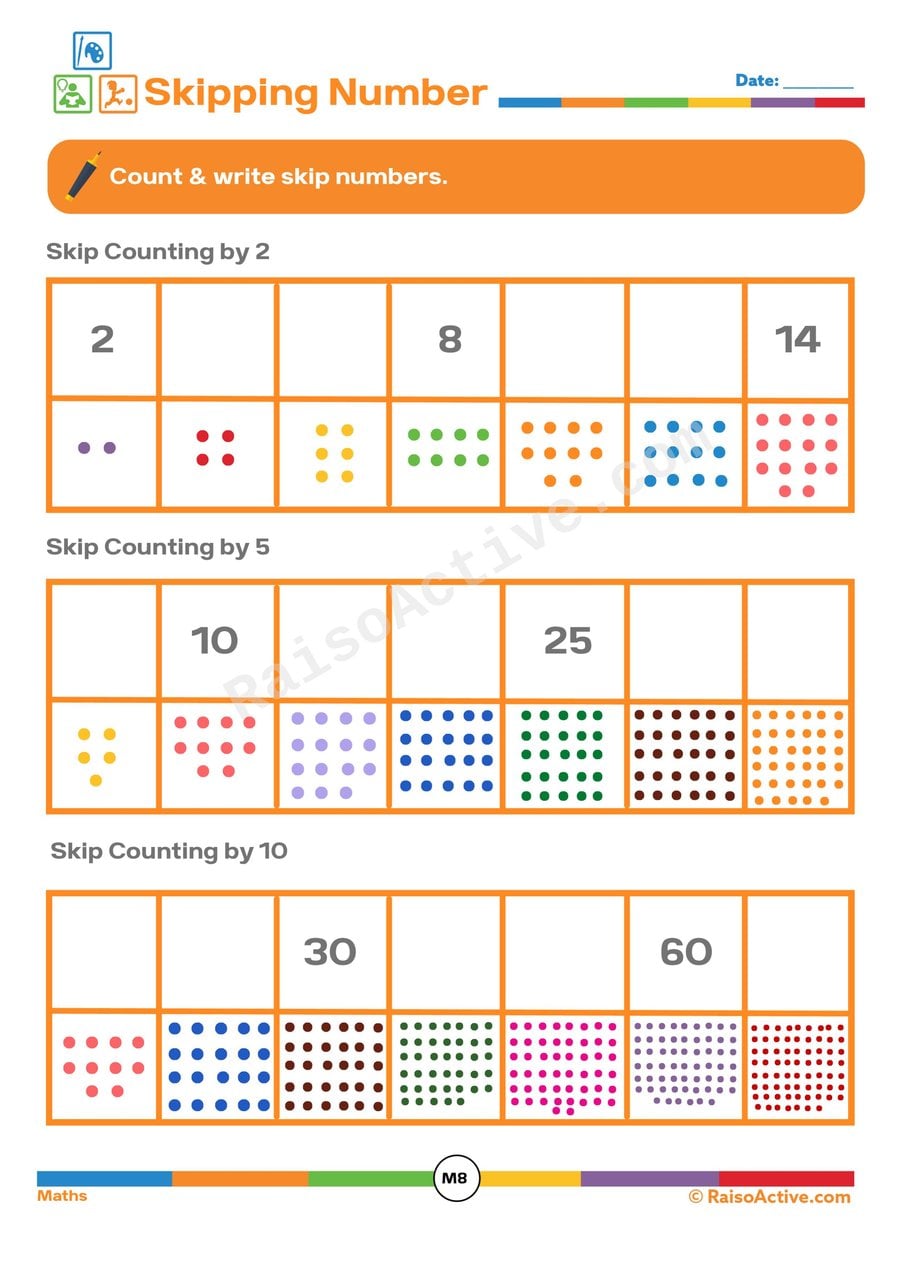
Children ages 4-6 practice skip counting by 2s, 5s, and 10s, recognizing the repeating number patterns that let them count large groups faster than counting one by one. Skip counting is an early stepping stone toward multiplication and a genuinely useful shortcut children can apply well beyond this worksheet.

Alphabet Adventures: Write the First Letter - A to T Worksheet
Ages 4-5 · Pre-KAges 4-5 · ReceptionAges 4-5 · LKGAges 4-5
This worksheet builds early phonemic awareness in children ages 4-5 by asking them to identify a pictured object, say its name aloud, and isolate the very first sound to write as a letter. Practicing this across a wide range of letters, A through T, gives children repeated exposure to the letter-sound connection that underlies all future reading and spelling. It also strengthens letter formation as children physically write each capital letter.

Summer Count: A Fun Counting Worksheet for Preschoolers!
Ages 3-5 · Preschool–Pre-KAges 3-5 · Nursery–ReceptionAges 3-5 · Nursery–LKGAges 3-5
Counting groups of summer-themed objects like sunglasses, beach balls, or ice creams builds one-to-one correspondence for children ages 3-5, and recording the total in writing gives them foundational practice before moving into simple addition.
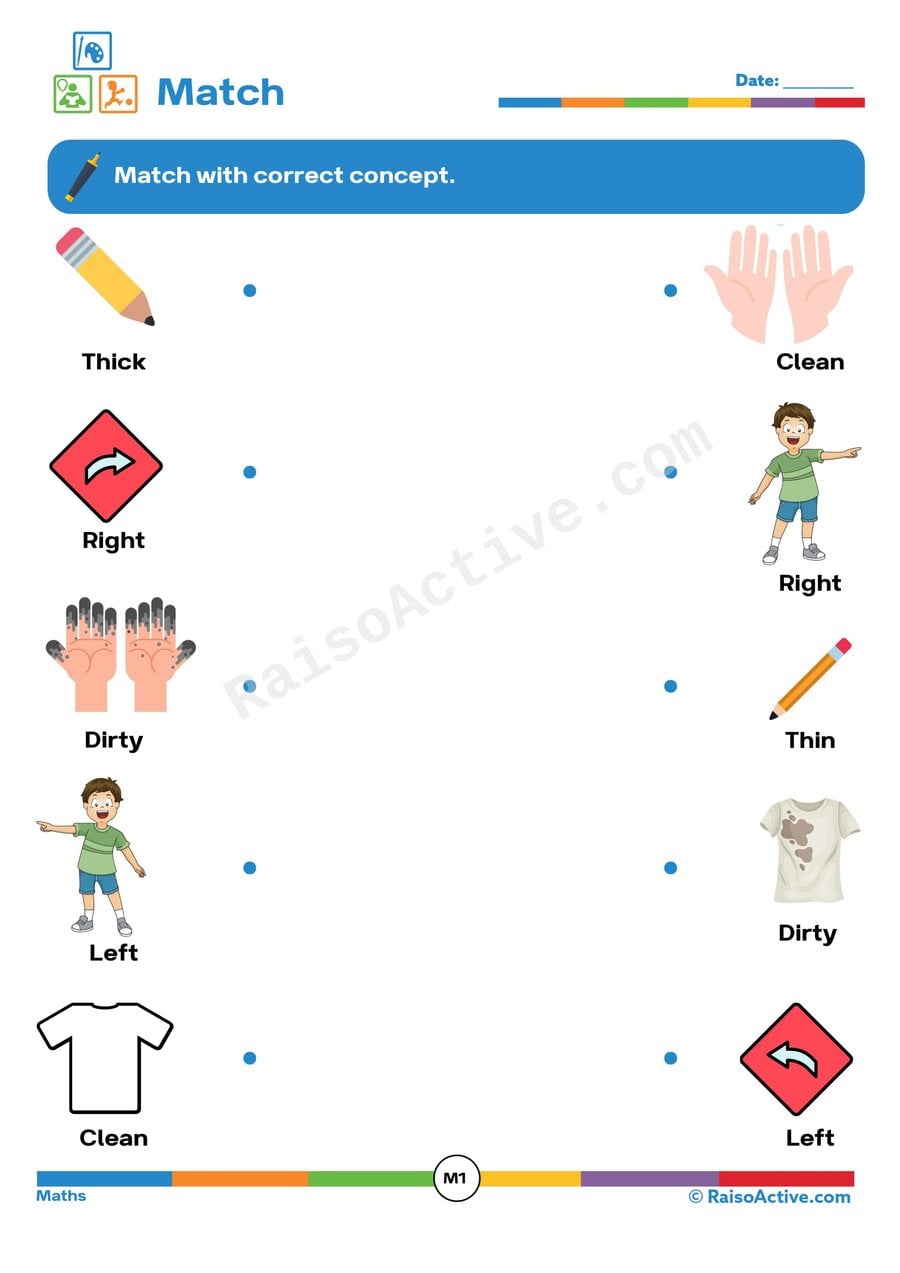
Match the Concepts! A Fun Worksheet for Kids
Ages 3-5 · Preschool–Pre-KAges 3-5 · Nursery–ReceptionAges 3-5 · Nursery–LKGAges 3-5
Children ages 3-5 practice matching pairs of opposite or related concepts, like thick and thin or clean and dirty, building early vocabulary and critical thinking around comparison words. Understanding these paired concepts helps children describe the world around them with more precise, descriptive language.
Related worksheets
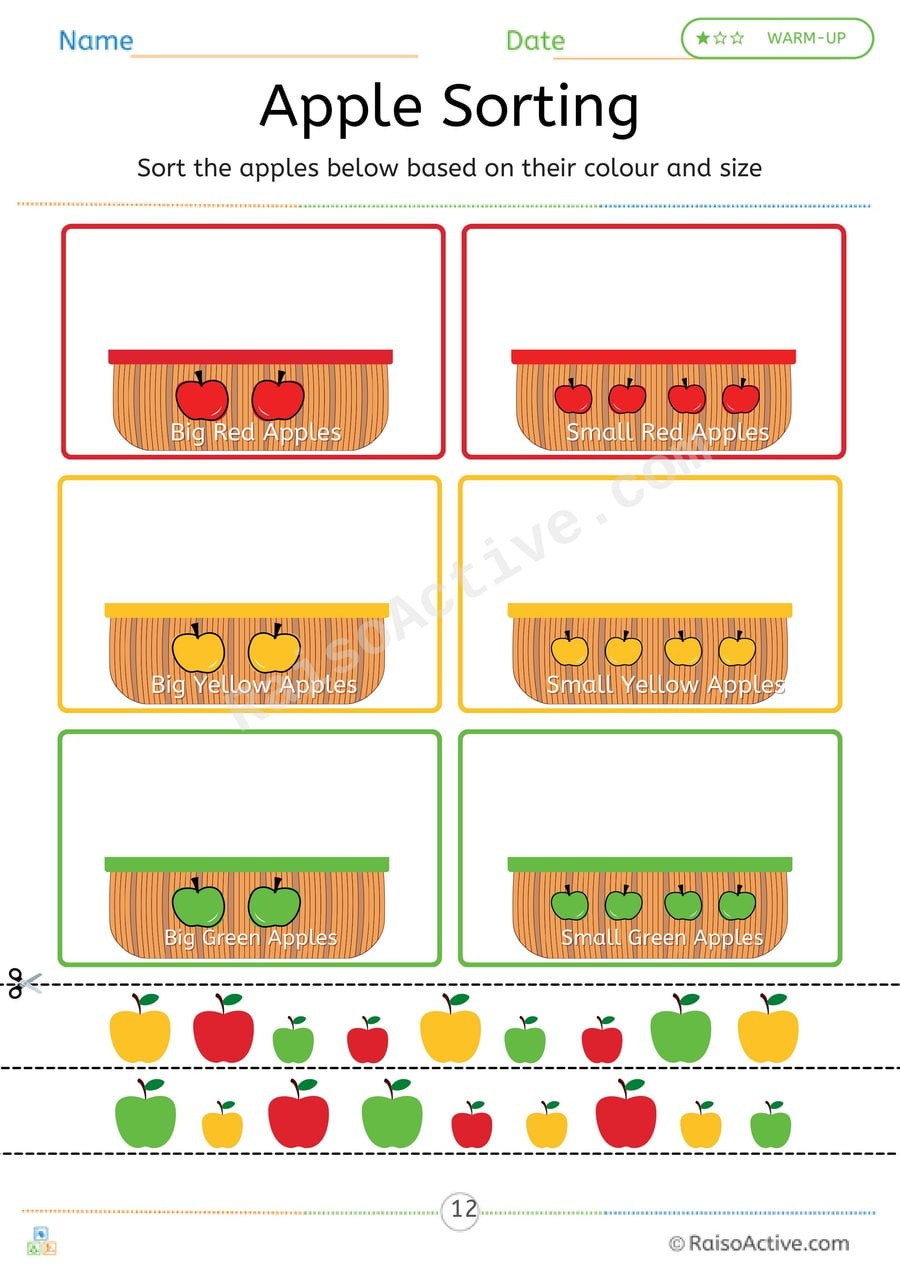
Apple Sorting Worksheet: Color and Size Fun!
Ages 4-6 · Pre-K–KindergartenAges 4-6 · Reception–Year 1Ages 4-6 · LKG–UKGAges 4-6
This sorting worksheet has children ages 4-6 classify a set of cut-out apples by two different attributes, color and size, simultaneously, which builds more advanced categorization skills than sorting by a single trait alone. Deciding which basket an apple belongs in based on two criteria at once also strengthens early logical reasoning.

Color Sorting Fun: Cut and Paste Worksheet for Preschoolers
Ages 3-5 · Preschool–Pre-KAges 3-5 · Nursery–ReceptionAges 3-5 · Nursery–LKGAges 3-5
This cut-and-paste activity builds color recognition alongside fine motor control, as children use scissors to cut out pictures and glue them into matching color categories. For ages 3-5, sorting by a single attribute like color is an early classification skill that lays the groundwork for later math concepts like grouping and comparing.

Color Sorting Worksheet: Cut and Paste the Pictures!
Ages 3-5 · Preschool–Pre-KAges 3-5 · Nursery–ReceptionAges 3-5 · Nursery–LKGAges 3-5
This worksheet helps children ages 3-5 practice color recognition and sorting by cutting out pictures and gluing each one into the row matching its color. Physically sorting objects by a single shared attribute, like color, builds early categorization skills, while the cutting and gluing strengthens fine motor coordination needed for more complex craft and writing tasks later on.

Color Sorting Worksheet: Cut and Paste the Objects!
Ages 3-5 · Preschool–Pre-KAges 3-5 · Nursery–ReceptionAges 3-5 · Nursery–LKGAges 3-5
This cut-and-paste worksheet has 3-5 year olds identify the color of each pictured object and sort it into the matching color square — a task that requires accurate color recognition rather than guessing, since some colors (teal versus blue, or orange versus red) can be genuinely tricky to distinguish at this age. Cutting the pictures out along their edges and matching each to a labeled color square also builds fine motor control alongside the sorting logic.

Fall Colors Dice Game Worksheet for Preschoolers
Ages 3-5 · Preschool–Pre-KAges 3-5 · Nursery–ReceptionAges 3-5 · Nursery–LKGAges 3-5
Rolling a die and matching the number to a color key teaches children ages 3-5 to connect a numeral with a specific color while practicing number recognition up to six in a low-stakes, game-like format. Because the color to use depends entirely on the number rolled, children also build symbolic thinking, understanding that one thing (a number) can stand for another (a color instruction). The chance element of the dice roll adds motivation and turn-taking practice, which supports early self-regulation.

Color Sorting Fun: Cut and Paste Worksheet for Preschoolers
Ages 3-5 · Preschool–Pre-KAges 3-5 · Nursery–ReceptionAges 3-5 · Nursery–LKGAges 3-5
Sorting cut-out objects by color teaches children ages 3-5 to classify items based on a single shared visual attribute, an early categorization skill that lays groundwork for more advanced sorting and grouping tasks in math and science. The cutting and gluing also reinforces color recognition through repeated, hands-on decision-making rather than passive naming.
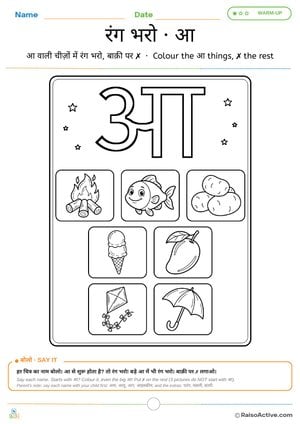
Colour the आ Things: Hindi Letter आ Colouring Page | रंग भरो · आ
Ages 3-7 · Preschool–Grade 1Ages 3-7 · Nursery–Year 2Ages 3-7 · Nursery–Class 1Ages 3-7
Children listen for the first sound of each picture name and decide whether it starts with आ. They colour the आ pictures, cross out the others and colour the big letter.

Holi Colour Mixing: Colour the Picture and Mix the Colours
Ages 4-8 · Pre-K–Grade 2Ages 4-8 · Reception–Year 3Ages 4-8 · LKG–Class 2Ages 4-8
Children learn that Holi is the festival of colours that welcomes spring, and discover which colours they get when they mix two primary colours.
Guides for this topic

Sight Words by Age: The First 50 Words and How to Teach Them Without Flashcard Fatigue
Which sight words to teach first and why, the heart-word method, a read-trace-write-find routine, games, and a by-age table of typical sight-word progress.
How to Teach CVC Blending: A Step-by-Step Method That Works in Two Weeks
A step-by-step method for teaching CVC blending, covering continuous sounds, word families, common errors, and a 14-day plan that most children finish reading CVC words.

Best Worksheets for 3-Year-Olds: What Works and What to Avoid
What works on worksheets for 3-year-olds: short sessions, crayons, tracing lines, matching, cutting, a free weekly plan, and signs one is too advanced.
Reviews
Every worksheet for ages 3–5, no watermark
Members download the full library of 1,000+ worksheets and every activity pack without watermarks or daily limits. One year costs ₹999 in India or $20 elsewhere.
See membership plansOr download any worksheet free with a watermark (5 a day).