How to Teach CVC Blending: A Step-by-Step Method That Works in Two Weeks
Author
RaisoActive - Kids Activities and Fun Learning
Published
Reading Time
6 min read
- CVC blending goes best in two stages: secure single-letter sounds and oral blending first, then blend in print
- Starting with continuous sounds — s, m, n, f, l, r — lets a child hear the slide between sounds before harder stop sounds are added
- Successive blending, sliding from one sound into the next without stopping, works better for most beginners than sounding out each letter in isolation
- A focused 14-day plan of ten minutes a day takes most children from letter sounds to independent CVC reading
- Guessing from pictures and adding an extra "uh" after stop sounds are the two most common errors, and both have a specific fix
The Order That Makes CVC Blending Click
CVC blending is best taught in two stages: secure single-letter sounds and oral blending first, then blend words that start with continuous sounds — s, m, n, f, l, r — before words that start with stop sounds like b, p, t and d. With ten minutes of daily practice in this order, most children blend CVC words independently within about two weeks.
Many phonics programs skip straight from teaching letter sounds to putting three printed letters in front of a child and asking them to read the word. For a good number of children this works fine. For a large minority it does not, and the reason is usually not the letters — it is that nobody built the oral blending skill first, or the first words chosen happened to start with sounds that are genuinely harder to blend. Fix the order and the same child who was stuck for weeks often blends independently within days.
Whether your child's classroom calls this stage Kindergarten, Reception, or UKG, the blending skill underneath is identical: hearing three separate sounds and pulling them into one word. Hemsweta Jain (Teacher Cheena), RaisoActive's founder and an early-childhood educator since 2014, teaches blending in exactly this order in her own phonics groups, because skipping the oral-blending step is the single most common reason a phonics program stalls before it starts.
Prerequisites: What a Child Needs Before Blending in Print
Letter-Sound Automaticity
Before blending starts, a child should produce the sound for 10–15 letters instantly, without stopping to think. If a child needs three or four seconds to recall a sound, blending will fall apart before they reach the end of the word — by the time they retrieve the third sound, they have forgotten the first. If sounds are still slow, spend another week on isolated letter sounds practice before introducing blending at all.
Oral Blending Without Print
Oral blending is a listening skill, not a reading skill, and it should be solid before letters are involved. Say a word slowly, sound by sound — "m...a...t" — and ask your child to say the whole word back. Robot-talk games in the car or at the dinner table build this quickly: you speak like a robot in separate sounds, your child translates into a real word, then you swap roles. A child who can blend three sounds orally, with no letters in sight, is ready for the next step.
- Recognizes at least 10 letter sounds instantly, without counting on fingers or pausing to think
- Can blend two or three spoken sounds into a word with no letters shown at all
- Shows interest in print — points at letters, asks what a word says
- Can hold focused attention on a short table task for three to five minutes
Continuous Sounds vs. Stop Sounds: Why the Order Matters
Continuous sounds — s, m, n, f, l, r, and the vowels — can be stretched out for as long as a breath lasts: "sssss," "mmmmm," "fffff." That stretch is what lets a child hear the slide from one sound directly into the next, with no gap in between. Stop sounds — b, p, t, d, k, g — are quick bursts of air that cannot be held. Say "b" by itself and it almost always comes out "buh," with an extra vowel sound attached.
That difference matters enormously for a beginner. A word like "sun" can be blended as one continuous sound sliding into the next: "sssuuunnn." A word like "top" cannot be stretched the same way, so a child has to hold three separate, clipped sounds in memory and combine them without gliding — a genuinely harder task. Start with words built only from continuous consonants plus a vowel, then add stop sounds once blending itself feels automatic.
- Continuous sounds (can be stretched): s, m, n, f, l, r, v, z, and every vowel
- Stop sounds (short bursts, no stretch): b, p, t, d, k, g
- Good first words: sat, mat, man, fan, ran, sun, fin, ram — all made from continuous consonants
- Add later: top, pat, dad, big, cup — once blending with continuous sounds is comfortable
A page of CVC word practice organized in this order — continuous-sound words first, stop-sound words second — saves you from having to sort the word list yourself.
Successive Blending: The Technique, Step by Step
Successive blending means sliding from the first sound directly into the second and third, with no pause in between, rather than saying each sound in isolation and combining them afterward. For the sound set most children start with, sliding is easier than the isolate-then-combine approach, because the child never has to hold three separate sounds in memory at once — each sound flows straight into the next.
- Point under the first letter and say its sound, holding it if it is continuous
- Slide your finger to the second letter without stopping, letting the first sound flow into it
- Slide to the third letter the same way, so all three sounds blur into one continuous stream
- Say the resulting word at normal speed — "sat," not "s...a...t"
- Ask "does that make sense?" so decoding is always checked against meaning, not just sound
If a child stops between sounds and re-says each one in isolation, gently model the slide again rather than correcting: "watch my finger — sssaaat, sat." Most children pick up the slide within a handful of tries once they hear it modeled a few times.
Word Families and Decodable Sentences
Once a child blends individual CVC words reliably, group them by word family — words that share the same last two letters, or "rime": -at, -an, -ig, -op, -ug. Changing only the first letter (cat, hat, mat, sat) lets a child notice the pattern instead of decoding from scratch every time, and reading speed picks up quickly once the pattern is visible.
From there, move into short decodable sentences that use only sounds the child already knows, plus a small handful of unavoidable high-frequency words like "the," "a," and "I." Reading these sentences — "Sam can nap," "The cat is fat" — is where blending becomes reading rather than a letters drill. Avoid books with unfamiliar words during this stage; every unknown word invites a guess instead of a blend, which undoes the habit you are building. A short set of phonics worksheets that stick to known sounds works better here than a general picture book.
grapheme–phoneme correspondences are taught in Letters and Sounds Phase 2, the UK phonics framework built around exactly this progression — enough single-letter sounds to build dozens of CVC words by the end of the phase
Source: Letters and Sounds, UK Department for Education phonics guidance
A 14-Day CVC Blending Plan
Days 1–2: Warm Up Sounds and Oral Blending
Review 10–15 letter sounds until recall is instant. Play oral blending games with no letters in sight — say a word sound by sound and have your child guess it. Do not touch print yet if oral blending still feels shaky.
Days 3–5: Blend Continuous-Sound Words
Introduce three-letter word cards built from continuous consonants only — sat, man, fan, sun, ram. Model the finger-slide technique, then let your child try with your hand guiding theirs before they do it alone.
Days 6–8: Add Stop Sounds
Bring in words that start or end with a stop sound — top, pat, big, cup. Expect this to feel harder for a day or two; keep sessions short and end on a word the child blends successfully.
Days 9–11: Word Families and Speed
Practice one word family a day (-at, -an, -ig) by changing only the first letter. Time a short set of ten words with a stopwatch, purely to notice progress — not to create pressure.
Days 12–14: Decodable Sentences
Read short sentences built only from known sounds plus "a," "the," and "I." Ask your child to point to the word that answers a simple question about the sentence, to confirm they are reading for meaning, not just noise.
- **Guessing from the picture or first letter**: cover the picture, and if your child guesses after only the first sound, ask them to point under each letter and say every sound before guessing again
- **Adding an extra "uh" after stop sounds** ("buh-a-t" instead of "b-a-t"): practice saying the stop sound as a short, clipped burst in isolation, away from any word, before blending it into one
- **Skipping the middle vowel sound**: slow the slide down and exaggerate the vowel — "sssaaaat" — until the child can hear all three sounds clearly
- **Blending too slowly and losing the word shape**: once individual sounds are secure, practice the same word five times in a row to build speed, since a very slow blend can make the result unrecognizable even when every sound was correct
- **Reading the same word two different ways in one sentence**: this usually means the child is guessing some of the time and blending the rest — go back to slower, deliberate blending until it is consistent
Blending is a skill that becomes automatic with repetition — it is not something a child either has or does not have.
A child who cannot blend "sat" on Monday and blends it instantly by Friday has not suddenly become smarter; they have simply practiced the slide enough times that it no longer takes conscious effort. Keep sessions short, start with the easier continuous sounds, and expect the skill to click within about two weeks of daily practice — not on the first try.
CVC blending questions parents ask
What exactly is a CVC word?
My child sounds out each letter but can't blend them into a word. What's wrong?
Should I teach letter names or letter sounds first for blending?
How long does it realistically take to learn to blend?
What should we read after CVC words?
Blending Is a Skill, Not a Guessing Game
Every child who reads fluently today once sat and slowly slid three sounds into "cat" for the first time. The order matters — sounds before blending, continuous before stop, oral before print — but so does patience with the slow, deliberate stage before it becomes automatic. If you would like a short phonics activity in your inbox each week while you work through this plan, you can subscribe here.
Free worksheets for this topic
Browse all worksheets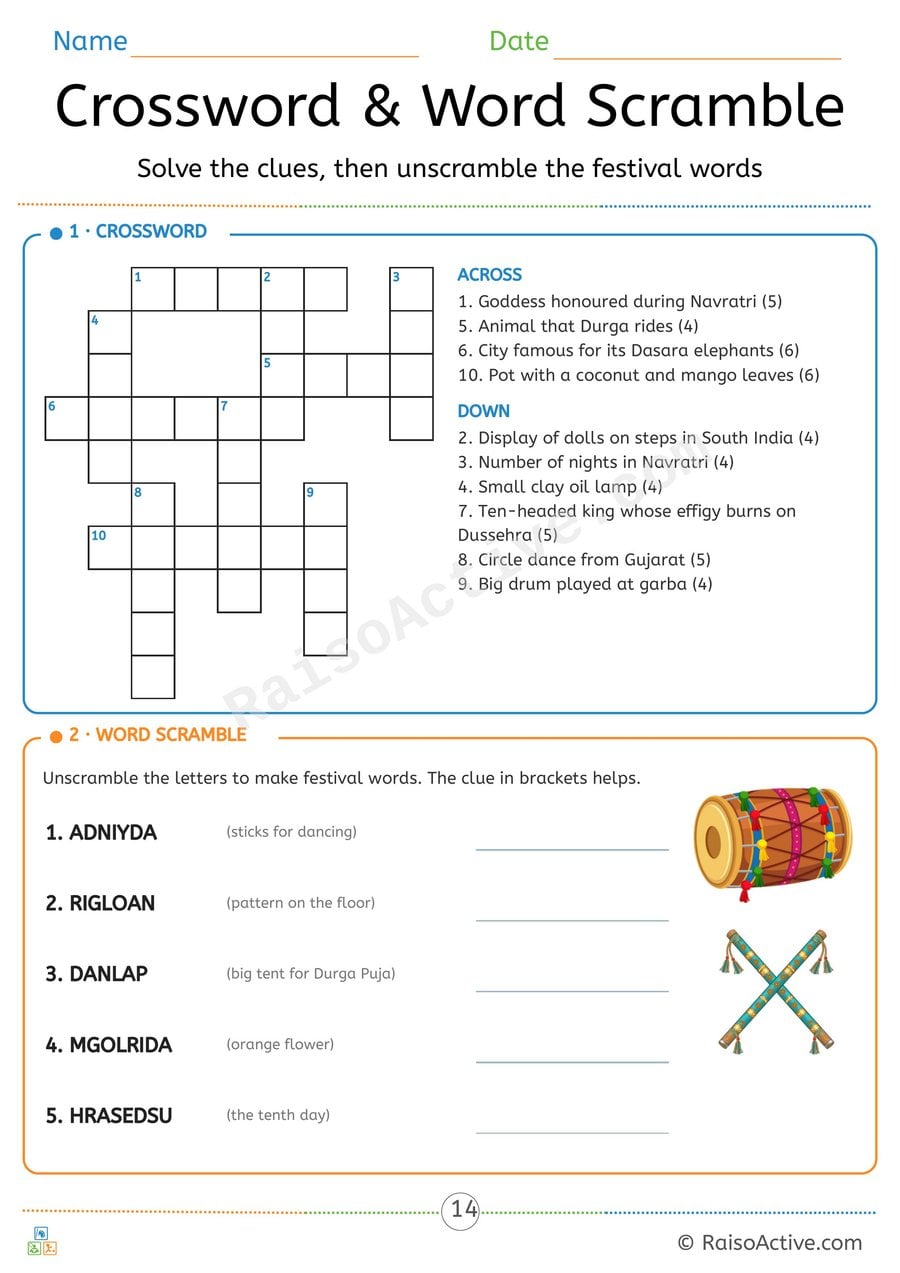
Navratri Crossword and Word Scramble
Ages 7-11 · Grade 2–Grade 3Ages 7-11 · Year 3–Year 4Ages 7-11 · Class 2–Class 3Ages 7-11
Children solve 10 crossword clues about the goddess, the lion, Mysuru, the kalash, Golu, diyas, Ravan, garba and the dhol, and unscramble five festival words with a clue for each.
Navratri Word Search and Secret Code Puzzle
Ages 7-11 · Grade 2–Grade 3Ages 7-11 · Year 3–Year 4Ages 7-11 · Class 2–Class 3Ages 7-11
Children find 12 festival words that run across, down and diagonally, and use an A = 1 to Z = 26 key to decode a message about the festival. Then they write their own name in code.
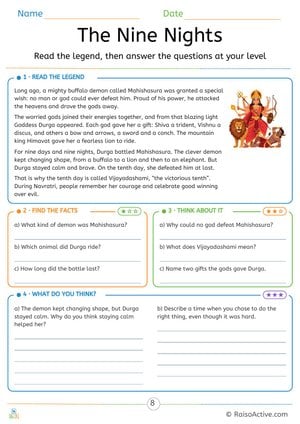
The Nine Nights: Durga and Mahishasura Reading Comprehension
Ages 7-11 · Grade 2–Grade 3Ages 7-11 · Year 3–Year 4Ages 7-11 · Class 2–Class 3Ages 7-11
Children read a retelling of the legend of Durga and Mahishasura, find facts in the text, answer inference questions about why things happened, and write their own opinion about staying calm and doing the right thing.

Navratri Picture Cards: Cut-Out Memory Match Game
Ages 4-6 · Pre-K–KindergartenAges 4-6 · Reception–Year 1Ages 4-6 · LKG–UKGAges 4-6
Children learn six Navratri words, match each picture to its word and clue, and practise memory and cutting skills.

Written by
Hemsweta Jain · Teacher Cheena
MBA and Early Childhood Educator, teaching since 2014 · Founder of RaisoActive, Mumbai
Published · Last reviewed
Related Resources
Printable Resources(10)
View all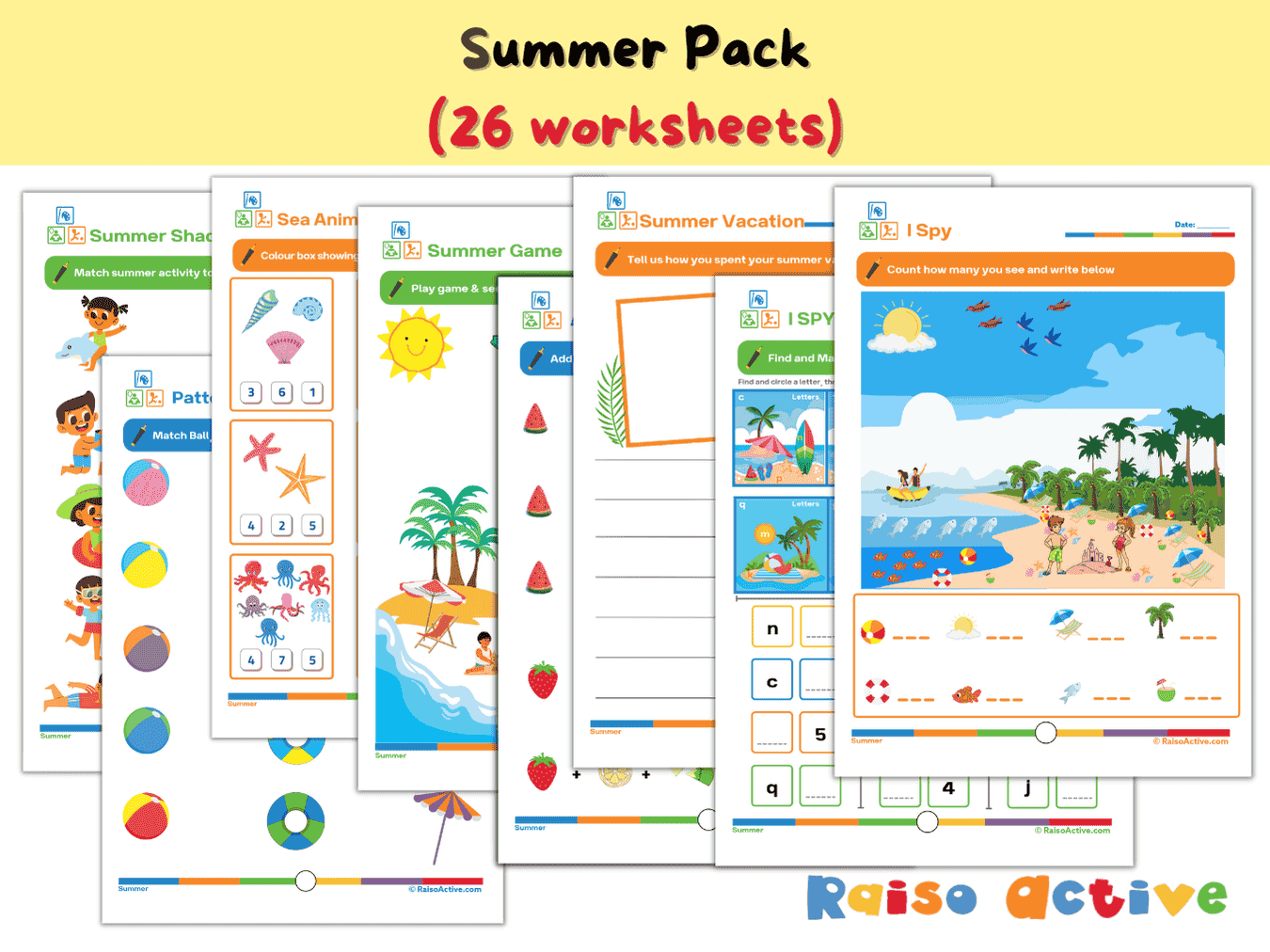

Summer Activity Pack: Math, Literacy, Puzzles & More for Preschool & Kindergarten
Ages 3-7 · Preschool–Grade 1Ages 3-7 · Nursery–Year 2Ages 3-7 · Nursery–Class 1Ages 3-7 · 26 pages
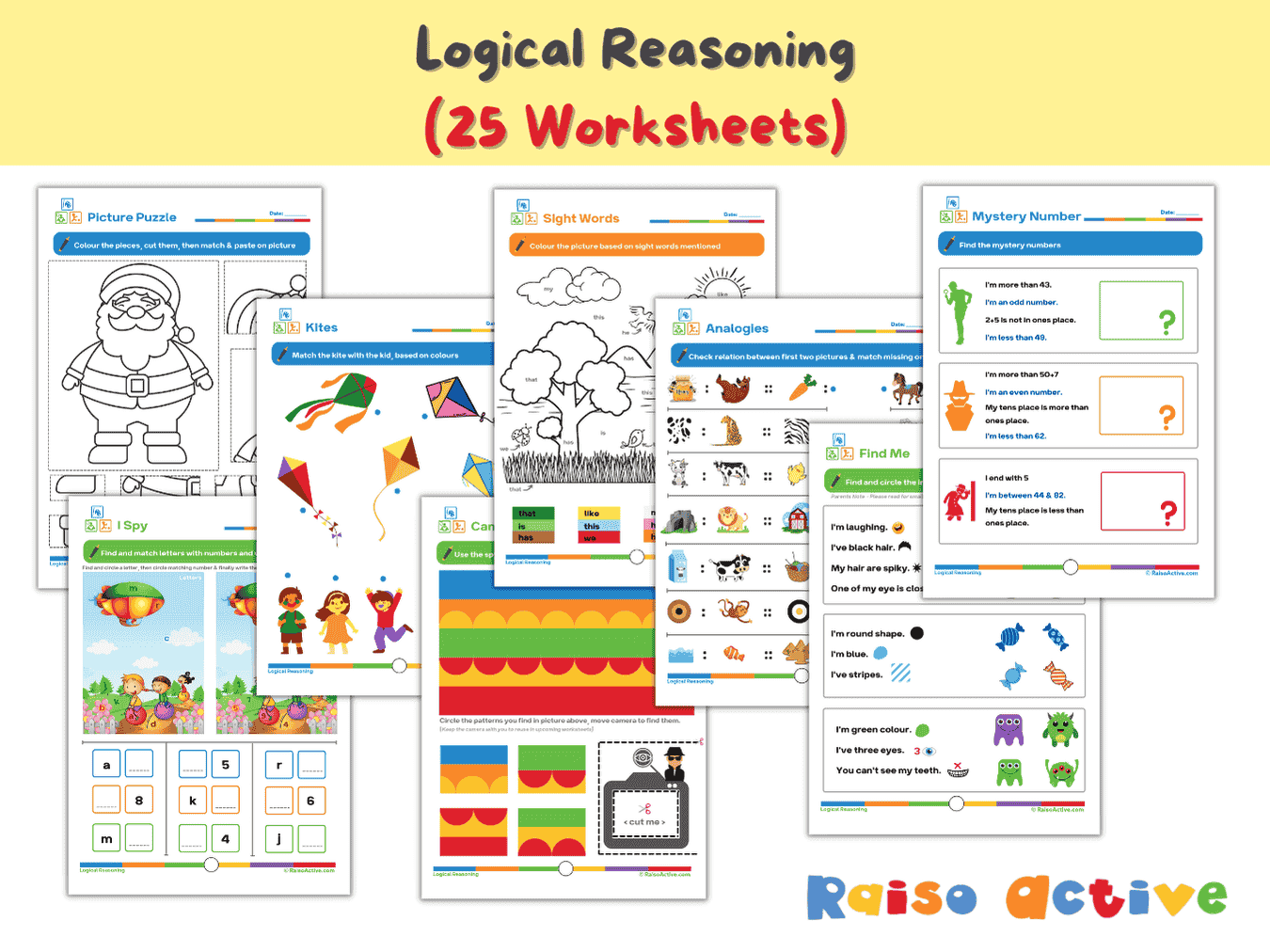

Logical Reasoning Activity Book for Preschool & Kindergarten | Patterns, Puzzles & Analogies
Ages 4-7 · Pre-K–Grade 1Ages 4-7 · Reception–Year 2Ages 4-7 · LKG–Class 1Ages 4-7 · 26 pages
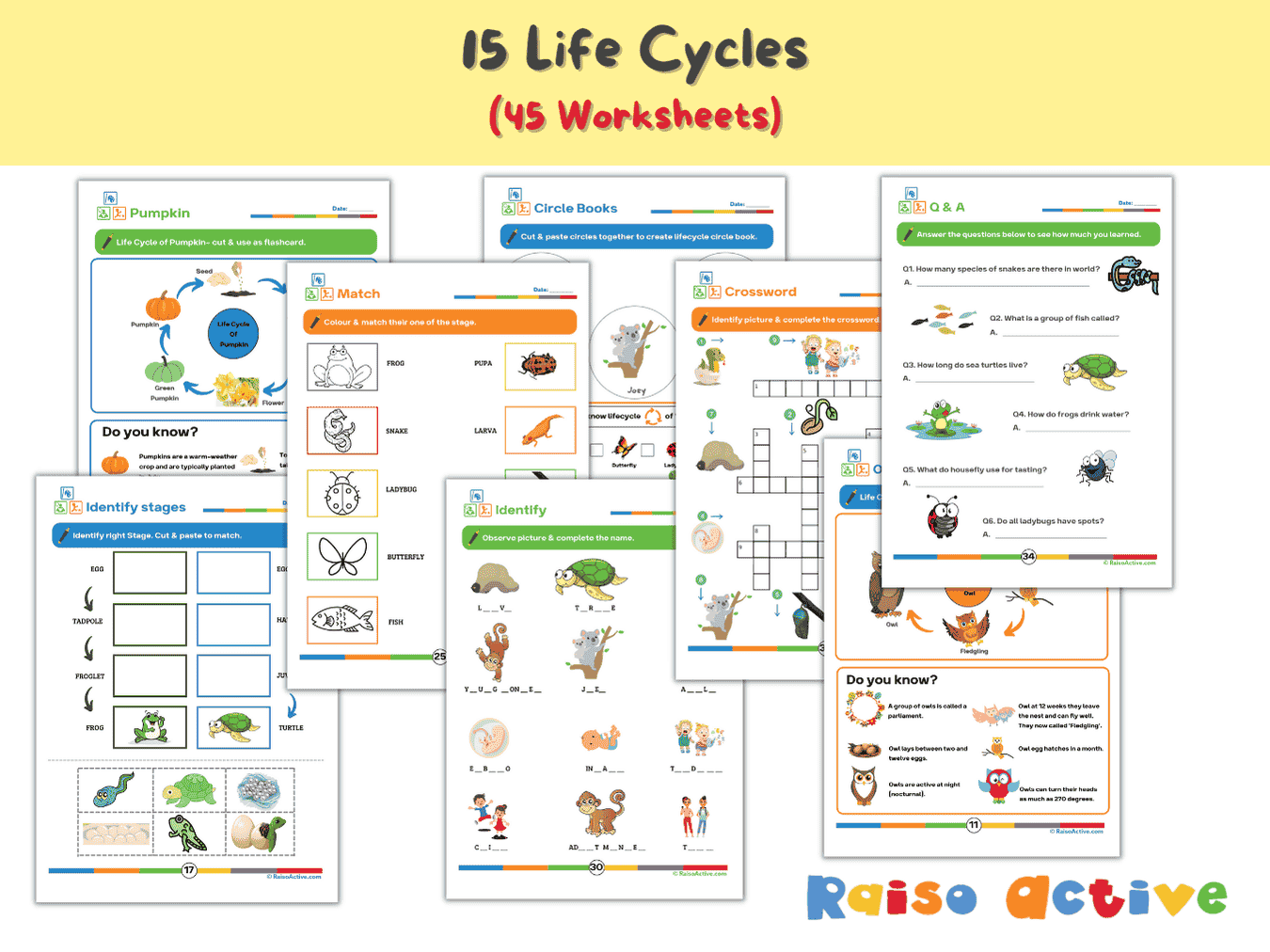

Lifecycles Activity Book & Flashcards for Preschool & Early Elementary
Ages 3-8 · Preschool–Grade 2Ages 3-8 · Nursery–Year 3Ages 3-8 · Nursery–Class 2Ages 3-8 · 46 pages
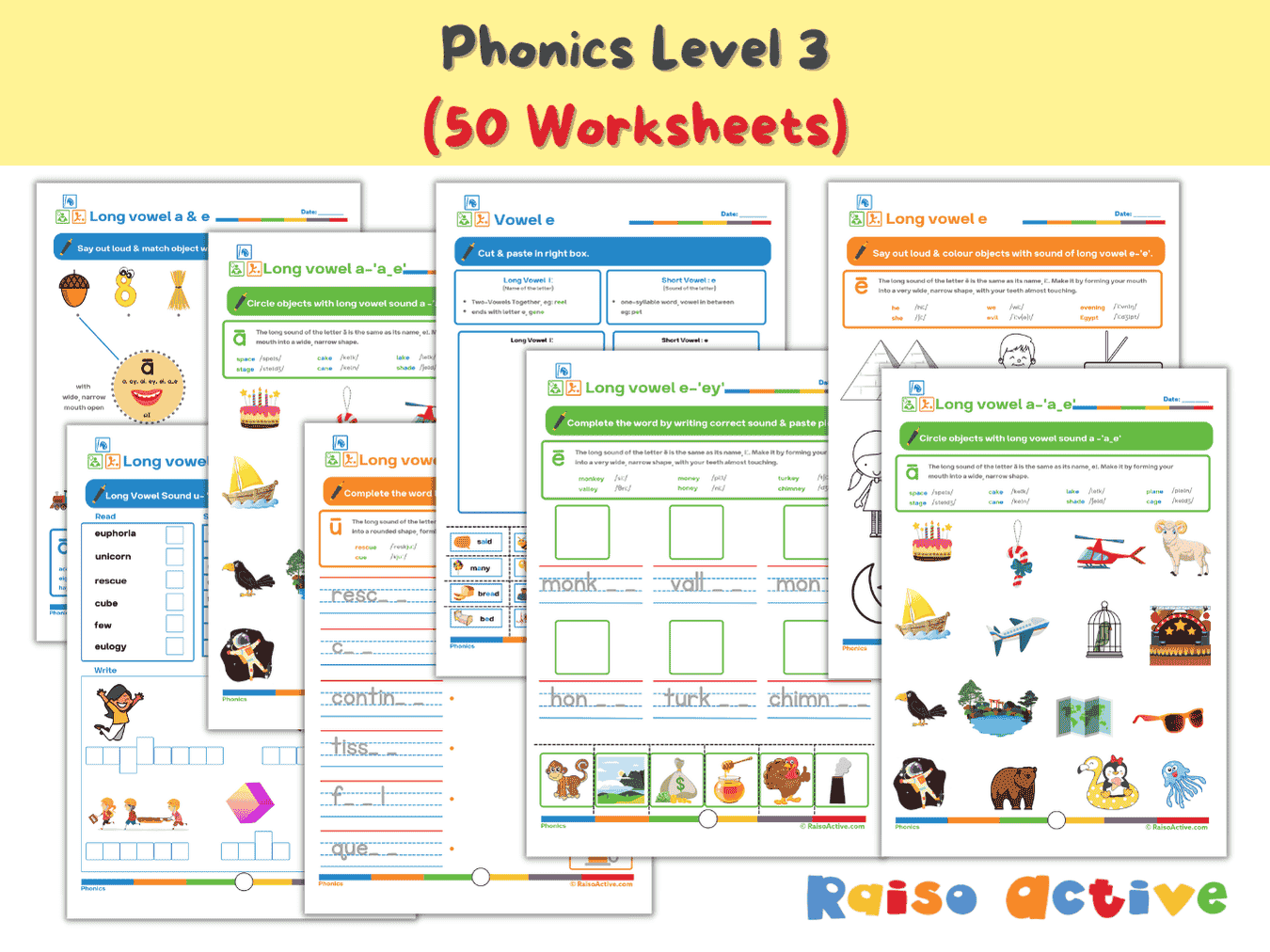

Phonics Level 3 Long Vowels Activity Book for Kindergarten & 1st Grade
Ages 5-7 · Kindergarten–Grade 1Ages 5-7 · Year 1–Year 2Ages 5-7 · UKG–Class 1Ages 5-7 · 51 pages
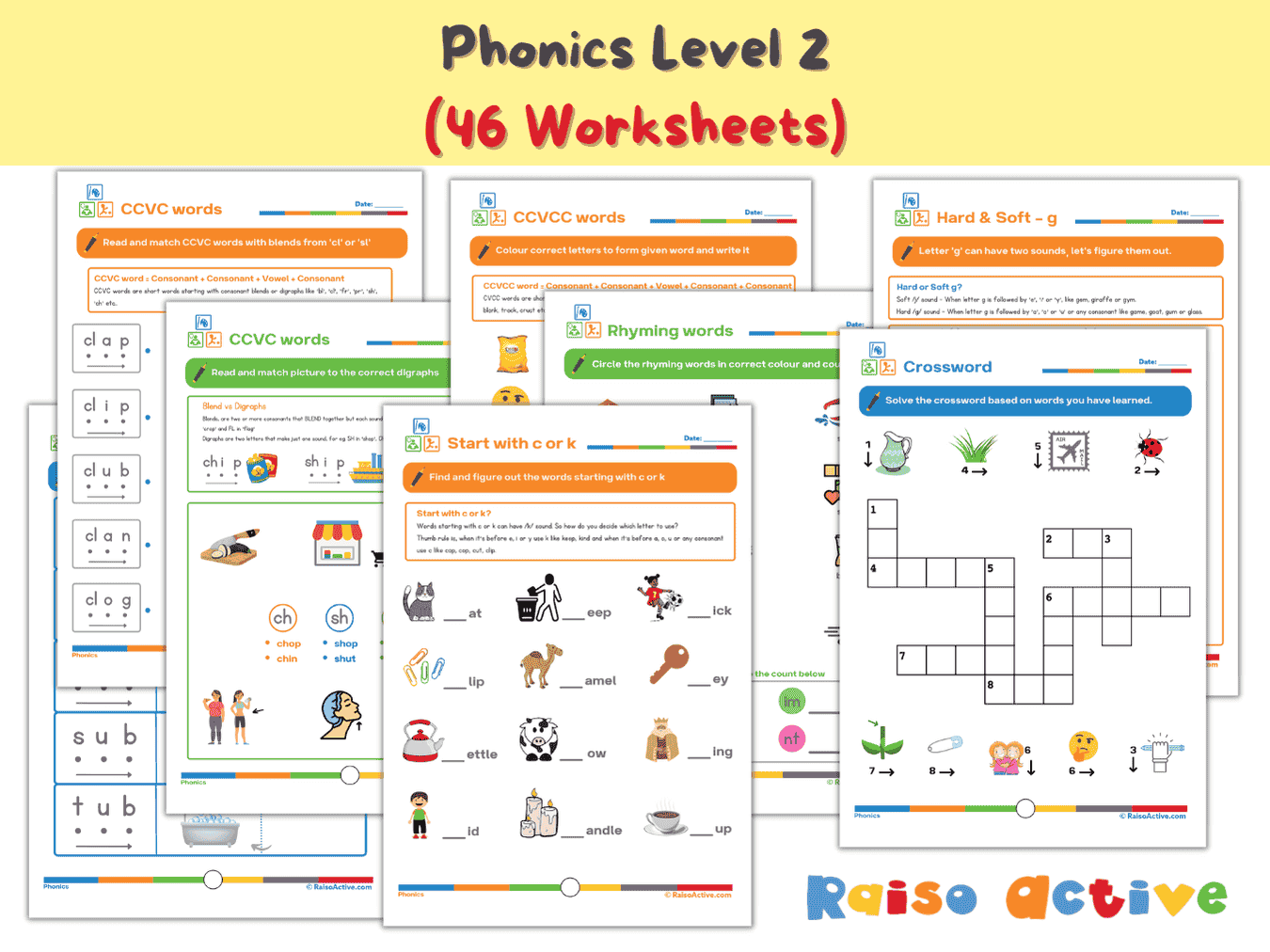
Phonics Level 2 Worksheets: CVC, CCVC, CVCC Word Families & Blends for Early Readers (Ages 4-7)
Ages 4-7 · Pre-K–Grade 1Ages 4-7 · Reception–Year 2Ages 4-7 · LKG–Class 1Ages 4-7 · 47 pages
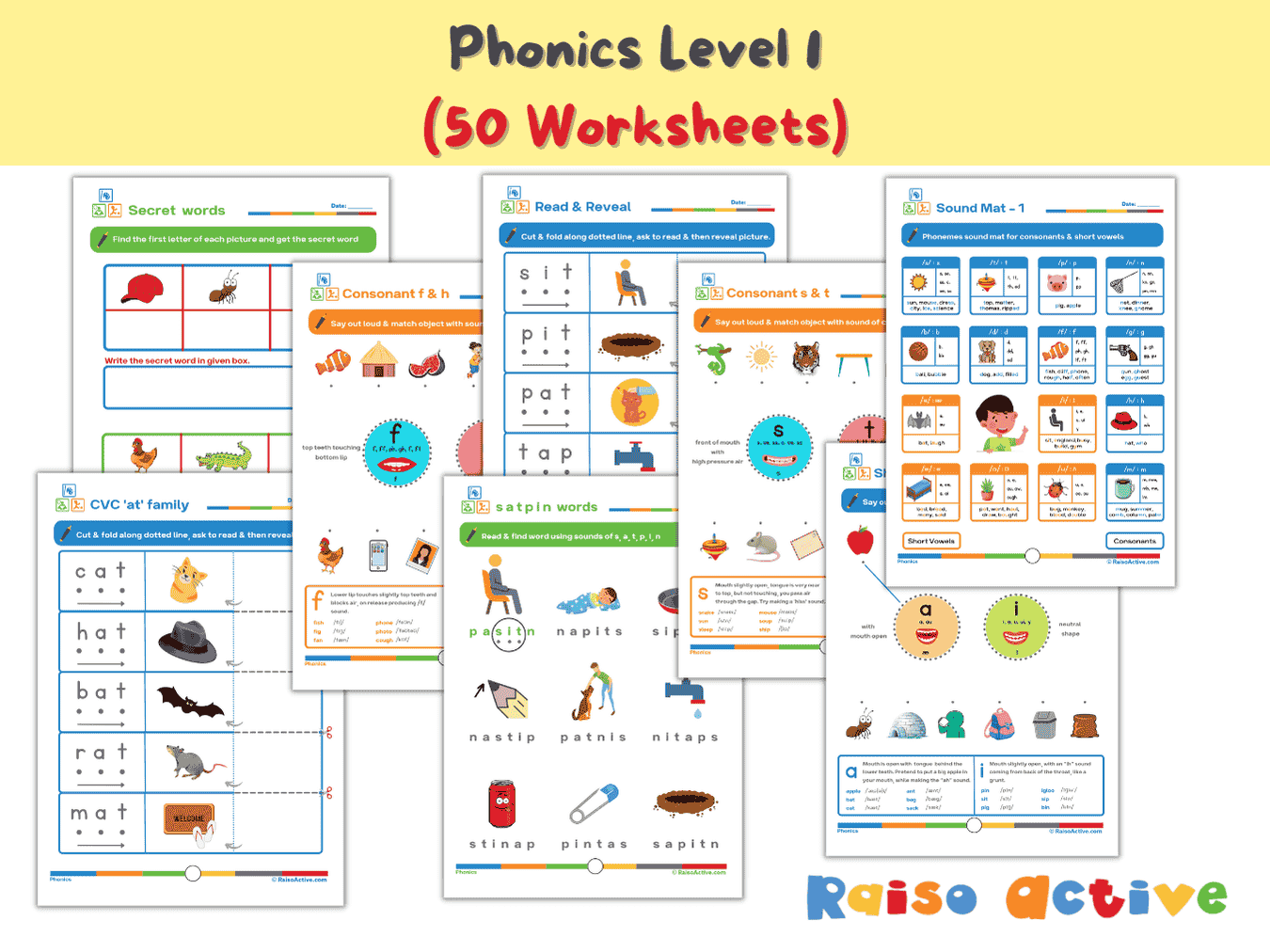
Phonics Level 1 Activity Book: Letter Sounds, Blending & CVC Words for Preschool & Kindergarten
Ages 3-6 · Preschool–KindergartenAges 3-6 · Nursery–Year 1Ages 3-6 · Nursery–UKGAges 3-6 · 60 pages
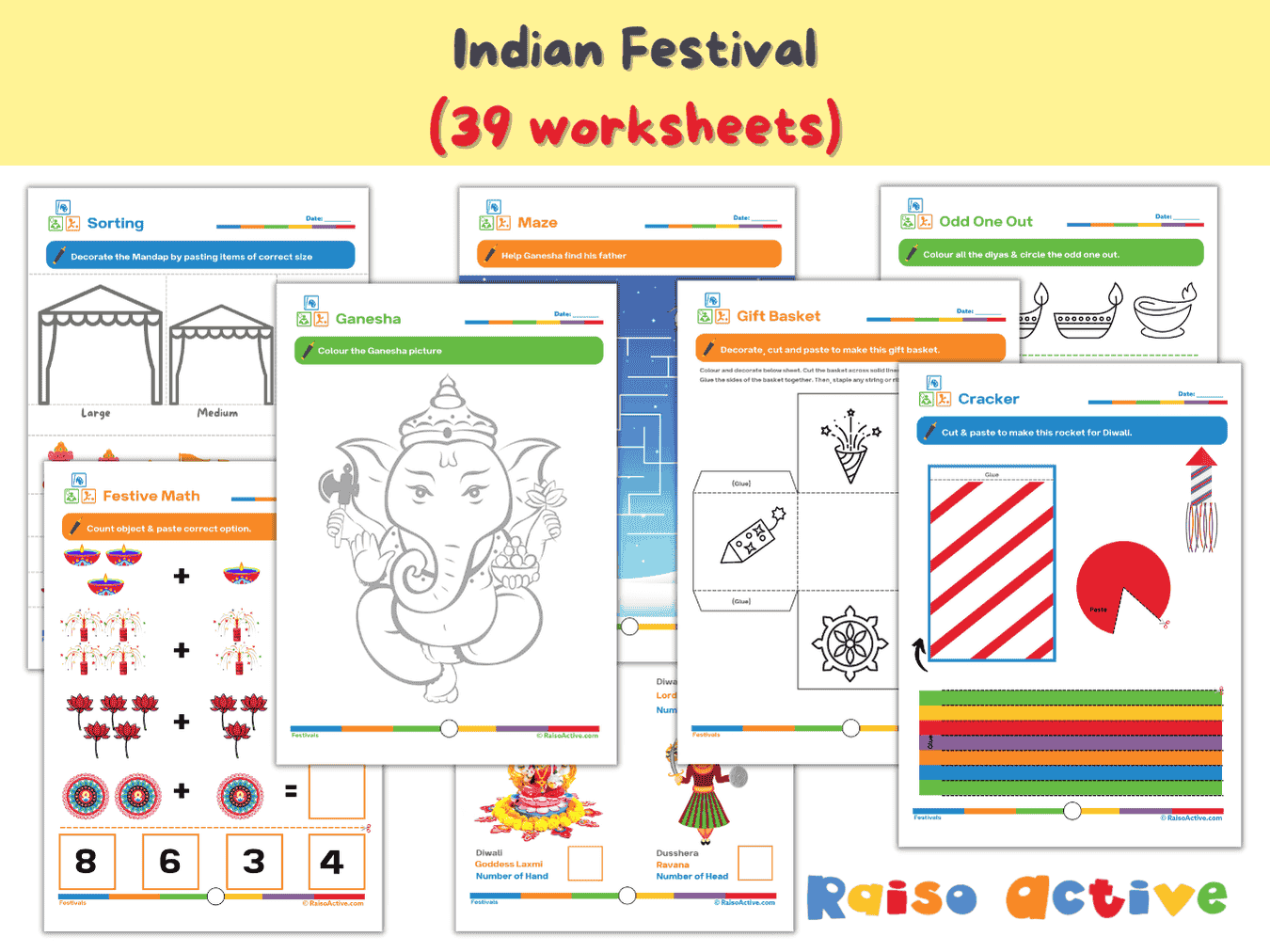
Festivals & Cultural Diversity Activity Book for Kids (Ages 4-8)
Ages 4-8 · Pre-K–Grade 2Ages 4-8 · Reception–Year 3Ages 4-8 · LKG–Class 2Ages 4-8 · 30 pages
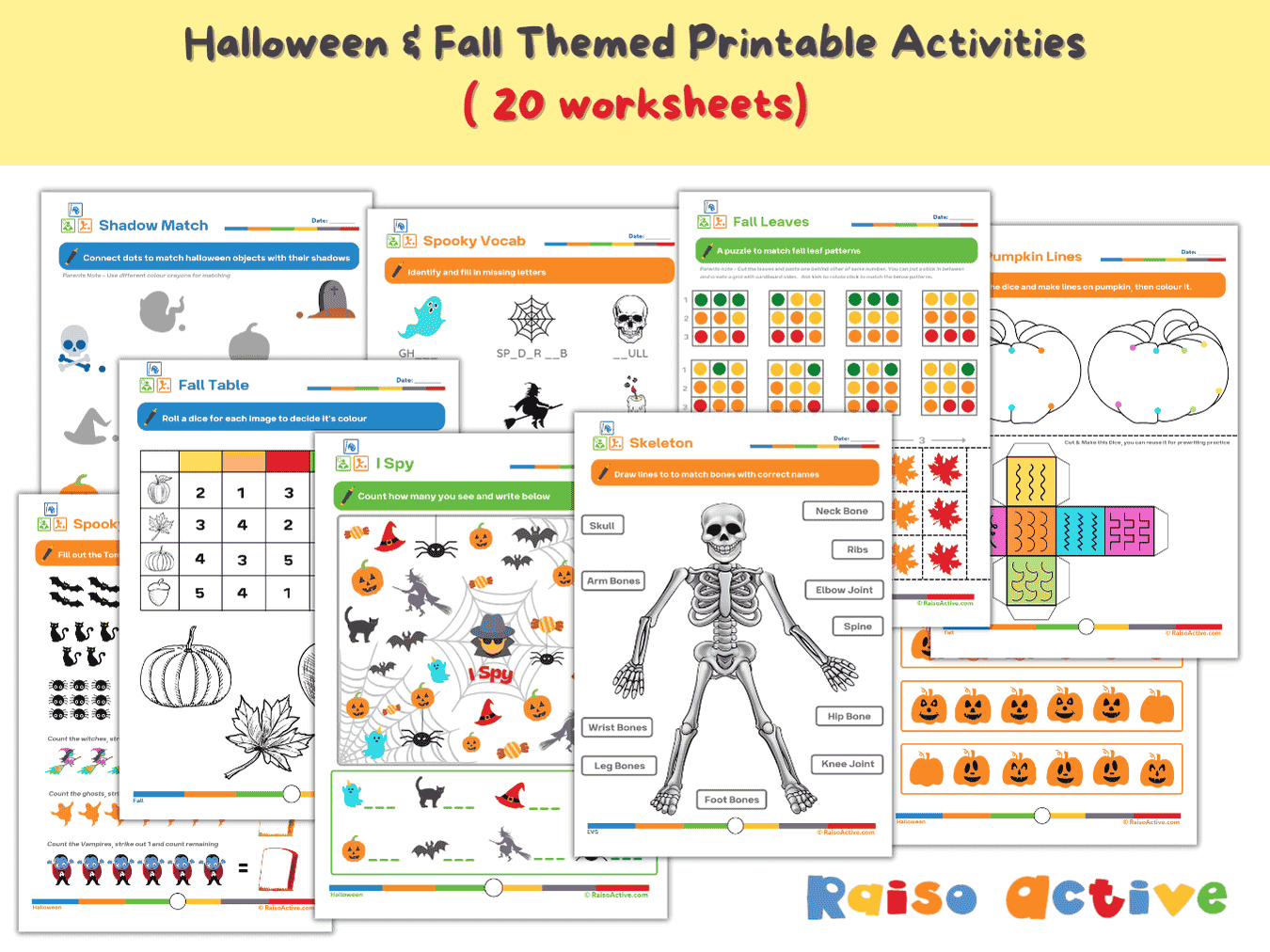
Halloween & Fall Activity Book: Math, Literacy & Cognitive Skills for Ages 4-8
Ages 4-8 · Pre-K–Grade 2Ages 4-8 · Reception–Year 3Ages 4-8 · LKG–Class 2Ages 4-8 · 23 pages
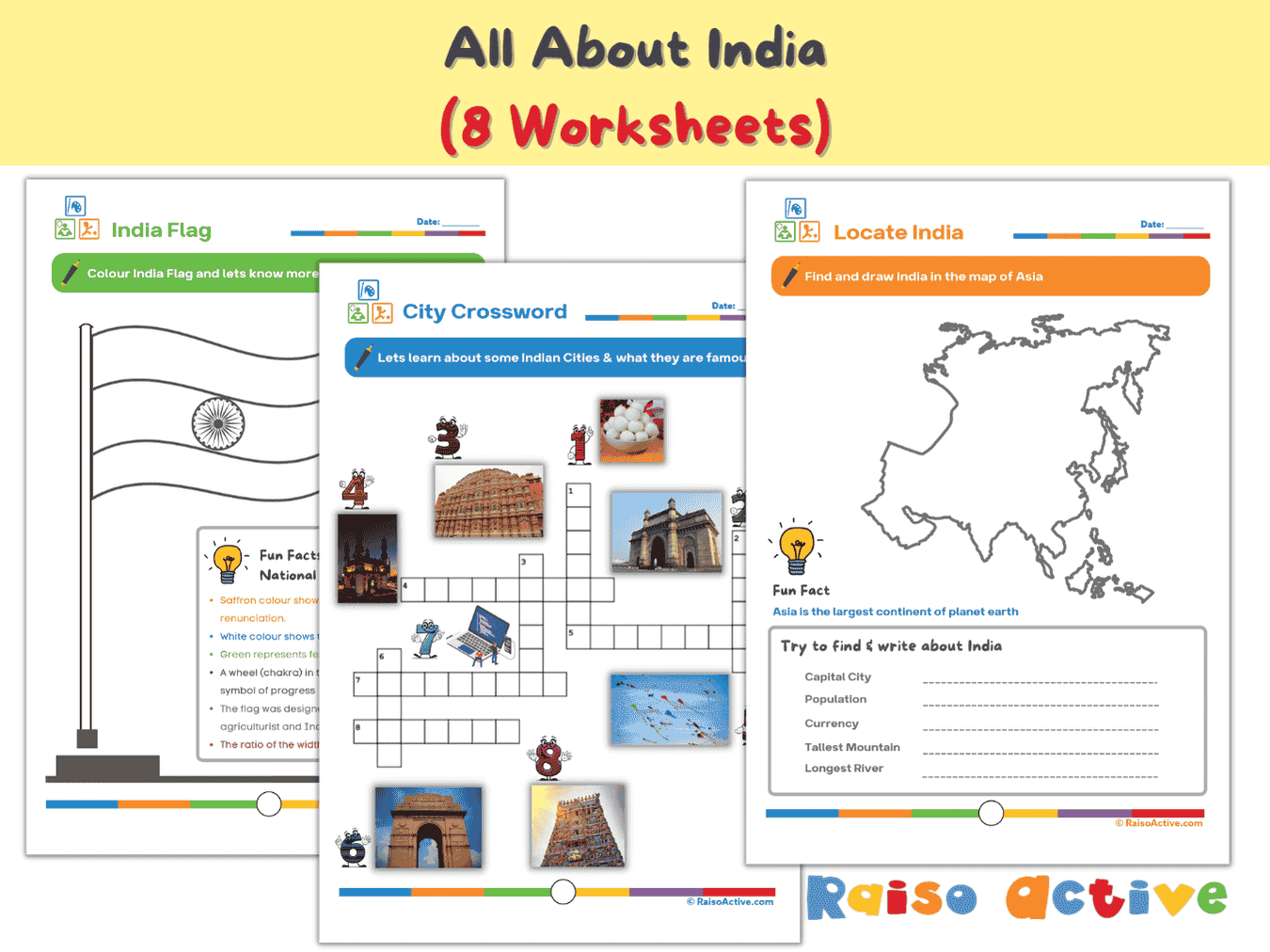
India Activity Book for Kids: Explore Geography, Culture & Symbols (Ages 5-8)
Ages 5-8 · Kindergarten–Grade 2Ages 5-8 · Year 1–Year 3Ages 5-8 · UKG–Class 2Ages 5-8 · 8 pages

Month 9: Holistic Preschool Play Learning | Ages Up to 4
Ages 3-4 · PreschoolAges 3-4 · NurseryAges 3-4 · 30 pages