Free printable worksheets · United States
Kindergarten Phonics Worksheets
Kindergarten phonics worksheets are printable reading practice for children aged 5 to 6 covering the Common Core foundational skills RF.K.2 and RF.K.3: hearing and isolating beginning, middle and ending sounds, the five short vowels, blending consonant-vowel-consonant words, word families such as -at and -op, and reading high-frequency sight words.
Phonics in kindergarten rests on a skill that has nothing to do with print: hearing the separate sounds inside a spoken word. RF.K.2 covers that phonemic awareness, from rhyming and clapping syllables to isolating the first, last and middle sound in cat. RF.K.3 then attaches letters to those sounds, one for each consonant and the short and long sounds of each vowel, and the two come together in blending c-a-t into cat. Word families (-at, -an, -ig, -op) let a child read a dozen words from one pattern, while sight words handle the common words that resist sounding out. The worksheets on this page follow that order: sound isolation first, then short vowels and CVC blending, then word families and sight words in short decodable sentences.
1055+ worksheets · free PDF download · print on A4 or Letter
Kindergarten Phonics Worksheets to print
Browse all worksheets for ages 5–6
Fall Vocabulary Unscramble Worksheet for Preschoolers
This unscrambling activity asks children ages 4-6 to rearrange jumbled letters into correctly spelled fall vocabulary words, building letter-sound awareness and an early sense of correct spelling patterns. Because each word relates to a picture clue, children also practice connecting spoken vocabulary to its written form, a key step on the road to independent reading.

Long Vowel 'ai' Worksheet: Circle and Write the Words!
The long 'ai' spelling pattern, found in words like 'rain' and 'snail,' is one of the first alternative spellings children ages 4-6 encounter for the long 'a' sound, since they've likely already learned the more common silent-e pattern like in 'cake.' This worksheet has children identify pictures containing the 'ai' sound and then write the matching word, building recognition of this specific spelling choice among the several ways English can represent the same long vowel sound. Understanding that one sound can be spelled multiple ways is a key insight for becoming a flexible, confident reader.

Addition Fun: Add and Match the Numbers! (Worksheet)
Children ages 4-6 practice basic addition by counting two groups of pictured objects, finding their total, and then matching that sum to the correct number, combining counting, addition, and visual matching in a single activity. Drawing a line to connect an answer to its number reinforces that a math sentence and a numeral represent exactly the same quantity.

Safety Signs Matching Worksheet for Early Learners
This worksheet has children ages 4-6 cut and paste safety signs to match their correct descriptions and fill in blanks identifying travel and safety symbols, deepening the recognition skill of reading signs by their shape, color, and symbol rather than by words alone. Building fluency in reading safety signs is a genuinely practical life skill that supports children's growing independence as pedestrians.

Identify Numbers Worksheet: Matching Numbers and Words
This worksheet builds number-word recognition by having children match written number names, like 'seven,' to their corresponding numeral, 7. For four- to six-year-olds, learning to read number words alongside numerals adds an important layer to early numeracy, since numbers appear in both written-word and symbol form in books, signs, and everyday life.

Time Telling Worksheet: Write the Time on the Clocks!
Reading the position of the hour and minute hands on an analog clock and writing the matching time builds clock-reading fluency for children ages 4-6, a more advanced step than simply recognizing a given time, since it requires producing the answer independently.

Blend Words Worksheet: Fill in the Blanks with Beginning Blends!
Similar to blend recognition but with an added layer of choice, this worksheet gives children ages 4-6 a bank of possible beginning blends to choose from as they complete each picture word, building both phonics recall and careful selection skills. Choosing the correct blend from several options requires your child to test each possibility mentally against the word they're trying to spell, which strengthens their ability to self-check and problem-solve rather than just guessing. This kind of active decision-making with phonics elements builds toward more independent spelling down the road.
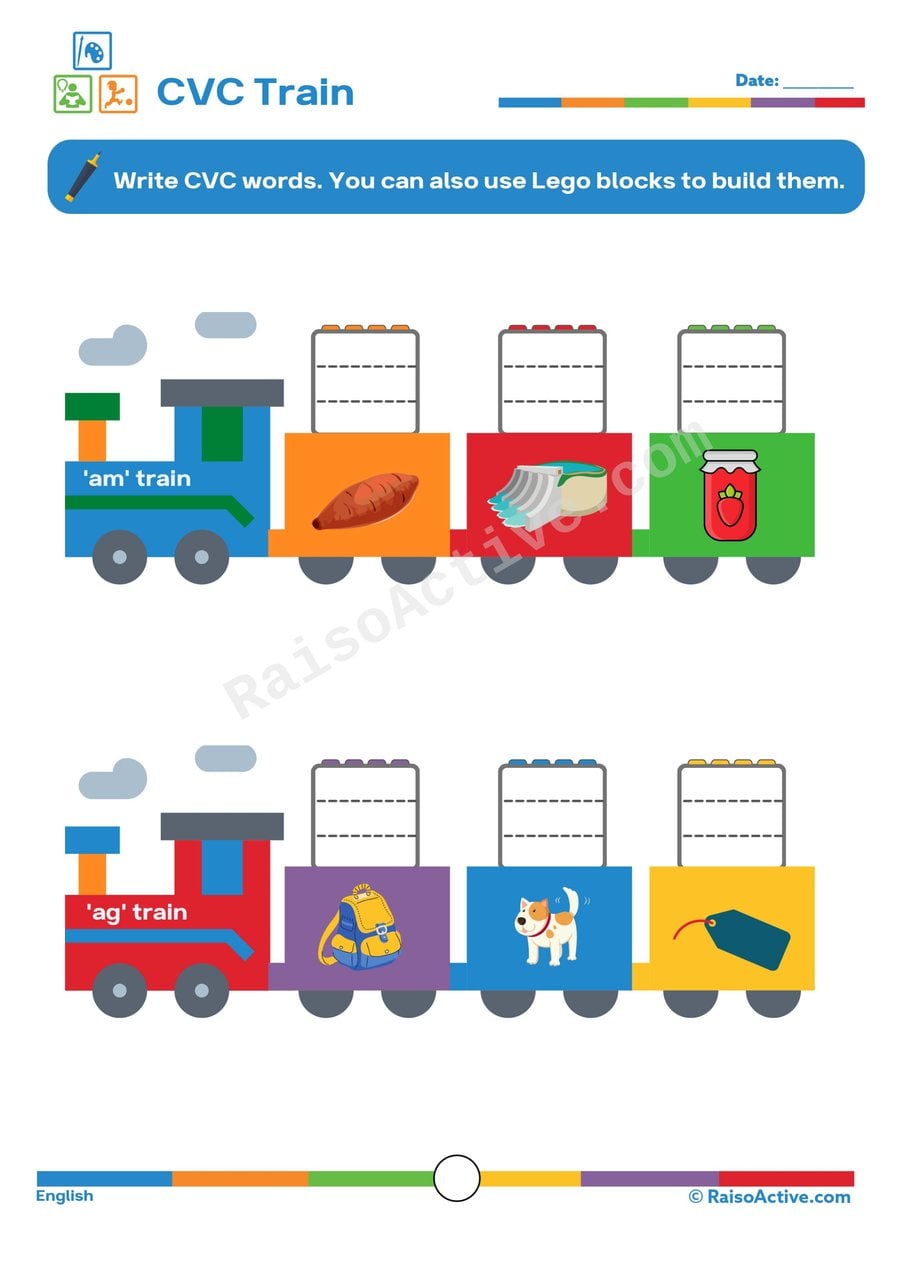
CVC Train Worksheet: Write and Build CVC Words!
This worksheet gives children ages 4-6 focused practice blending letter sounds into consonant-vowel-consonant words, using train-car pictures as clues for words like 'dog,' 'hen,' or 'cup.' Because children both write the word and can optionally build it with Lego blocks, this worksheet reinforces the same phonics skill through two different physical actions — handwriting and hands-on construction — which helps the spelling patterns stick.

Ot Word Family Worksheet: Read, Trace, and Identify!
Reading, tracing, and identifying words from the 'ot' family — like pot, dot, and hot — helps children ages 4-6 see how changing the first letter of a word while keeping the same ending produces a whole new word, reinforcing the pattern-based phonics strategy known as word families. Tracing each word while reading it connects handwriting practice directly to reading practice, and identifying the matching picture afterward checks genuine comprehension rather than rote letter-sounding. Word family practice like this builds the foundation for decoding many more words independently later on.

Tens and Ones Matching Worksheet for Preschoolers
Children ages 4-6 begin exploring the concept of tens and ones by matching groups of objects to their corresponding number sentences, an early step toward understanding place value in two-digit numbers. Cutting and pasting pictures into the correct boxes reinforces the matching logic while adding fine motor practice. This groundwork prepares children for later math concepts like regrouping and multi-digit addition.

Pronoun Power: Complete the Sentences Worksheet for Kids
This worksheet gives children ages 4-6 practice choosing the correct pronoun — like 'he', 'she', 'it', or 'they' — to complete simple sentences, reinforcing an early grammar skill that makes spoken and written language flow more naturally. Learning to replace a repeated noun with the right pronoun is a subtle but important step toward writing sentences that sound natural rather than repetitive.
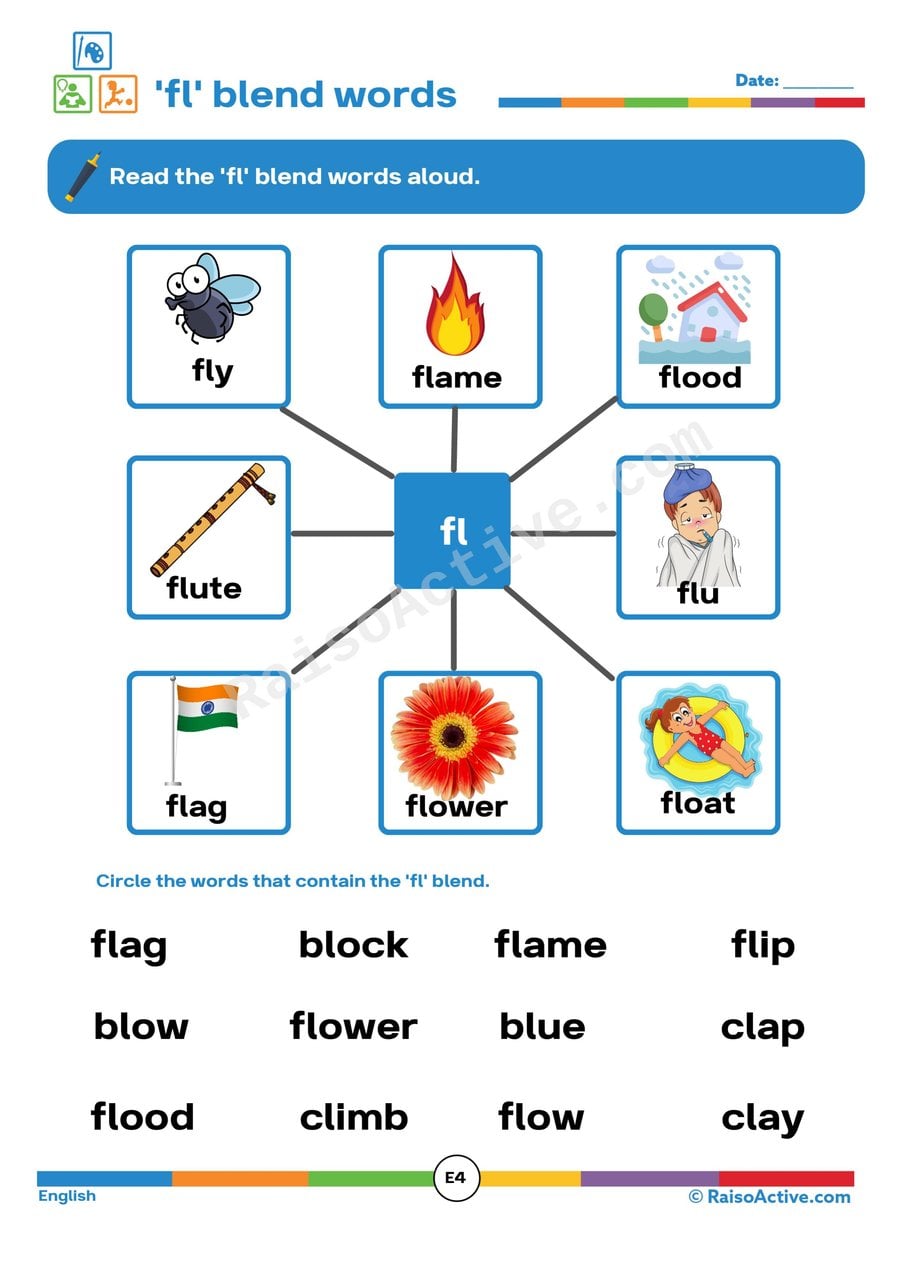
FL Blend Words Worksheet: Read, Circle, and Learn!
Reading and circling words that begin with the 'fl' consonant blend teaches children ages 4-6 that two consonants together, like f and l, can combine into one smooth sound at the start of a word, a more advanced phonics concept than single-letter sounds. This kind of targeted blend practice builds the specific decoding skill needed to read common early words like 'flag,' 'fly,' and 'flower' without stumbling. Strengthening blend recognition now supports much smoother, more confident reading as vocabulary grows in later grades.

Y and Z Consonant Sounds Worksheet: Match the Objects!
This worksheet builds beginning-sound recognition for children ages 4-6 with the letters 'y' and 'z', two consonants that appear less frequently at the start of common words, giving children practice with sounds they may hear less often than 's', 't', or 'm'. Matching each picture to its correct starting letter reinforces the sound-symbol connection while also expanding vocabulary, since words like 'yarn' or 'zebra' may be less familiar to young learners. This rounds out a child's coverage of consonant sounds toward full alphabet mastery.

Summer Fun: Write Sentences About the Beach! Worksheet
Children ages 4-6 practice translating what they observe in a picture into written sentences, a key step in moving from spoken language to independent writing. Describing a beach scene specifically — people swimming, building sandcastles, or playing in the waves — gives children concrete, familiar content to draw on, which makes the jump to writing less intimidating than an open-ended prompt.

N-Z Alphabet Worksheet: Missing Letters and Picture Matching
This worksheet continues alphabet mastery for children ages 4-6 by having them fill in missing letters from N to Z and match each one to a corresponding picture, extending the sequencing and picture-matching skills used in the first half of the alphabet into the second half. Completing both halves of the alphabet across companion worksheets like this builds full, confident recall of all 26 letters in order.

Animal Homes Worksheet: Match the Animals to Their Habitats!
Children ages 4-6 build early life-science knowledge as they match each animal to the habitat where it actually lives, such as a fish to water or a bird to a nest. This worksheet moves beyond simple animal identification into understanding the relationship between a living thing and its environment, an important building block for later ecosystem and habitat topics in science class.
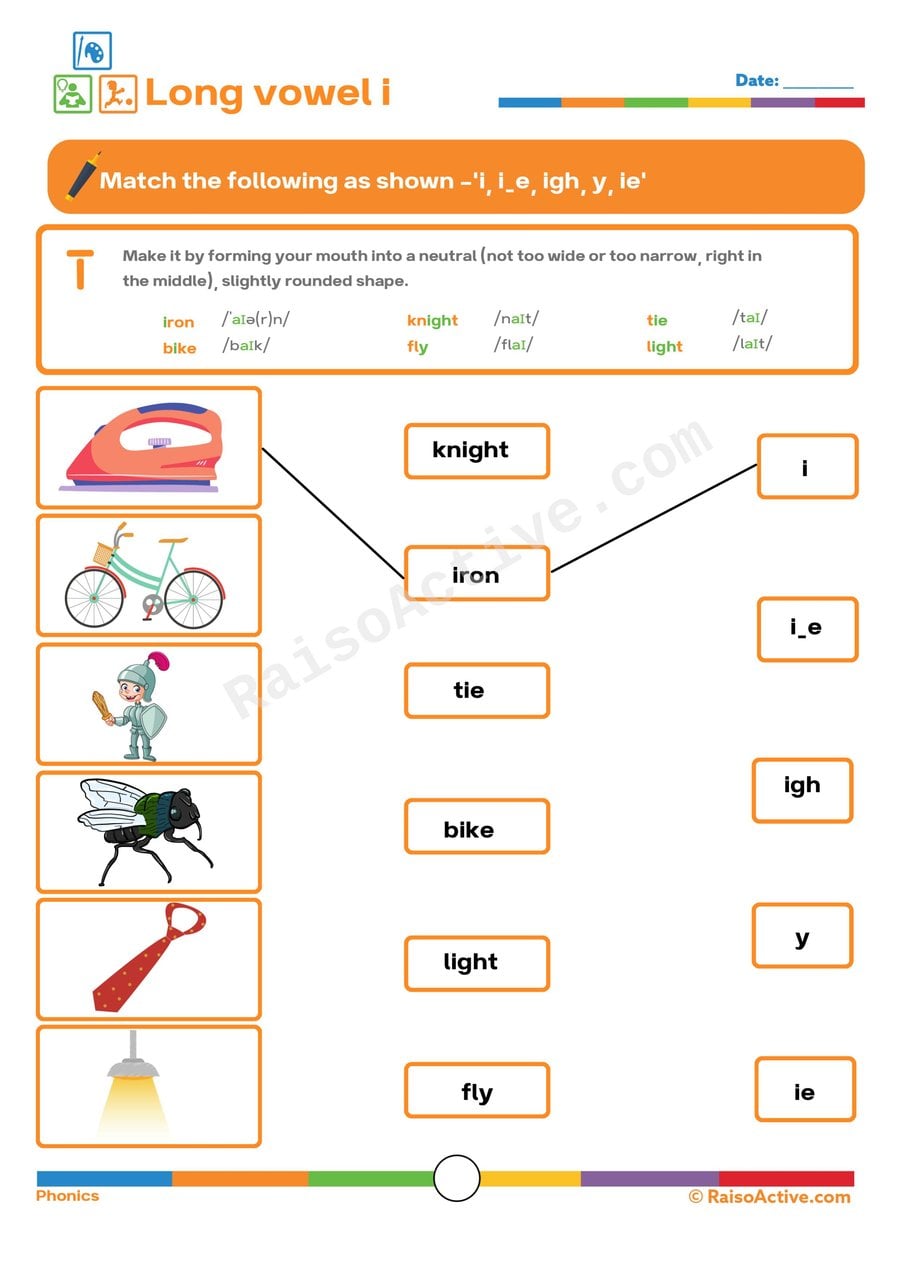
Long Vowel 'i' Matching Worksheet for Kids
This worksheet challenges children ages 4-6 to match pictures with words that share the long 'i' sound but use different spelling patterns, such as 'ie' in 'pie' or a silent 'e' in 'kite,' building awareness that one vowel sound can take multiple written forms. This flexible understanding of spelling patterns is an important step beyond basic phonics, preparing children for the many irregular spellings they'll encounter as readers.

Sentence Building Worksheet: Write Sentences with Given Words!
Using given words to build a complete sentence teaches children ages 4-6 how word order creates meaning, an essential step toward reading fluency and independent writing. Practicing this skill also reinforces sentence mechanics like starting with a capital letter and ending with a period, which many children this age are just beginning to apply consistently.
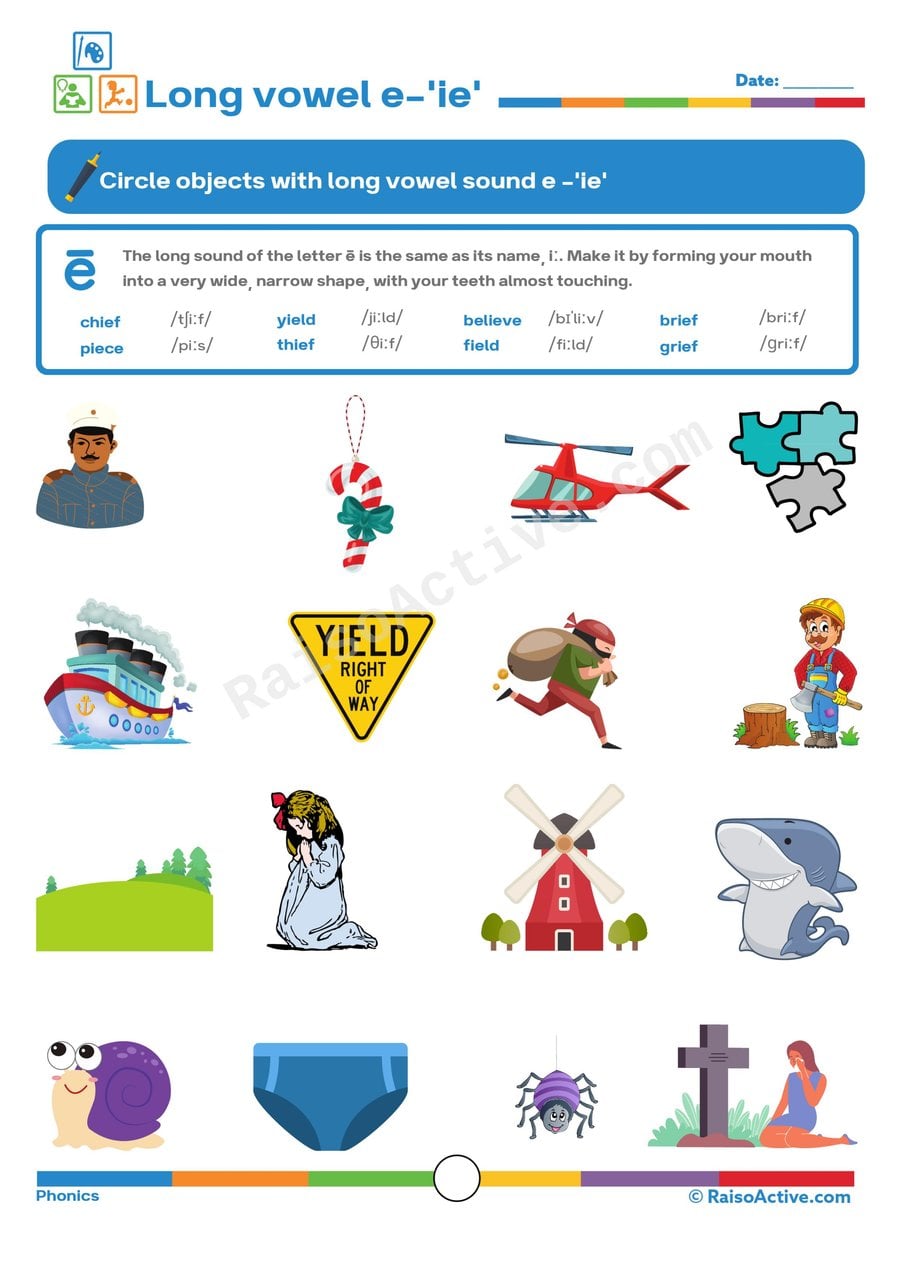
Long Vowel E 'ie' Worksheet: Circle the Pictures!
This worksheet asks children ages 4-6 to identify words with the long 'e' sound spelled using the less common 'ie' pattern, as in 'chief' and 'field', and circle the matching pictures. Because 'ie' is a trickier, less intuitive spelling for the long 'e' sound than more familiar patterns like 'ee', this worksheet stretches children's phonics knowledge toward more advanced and irregular spelling patterns.
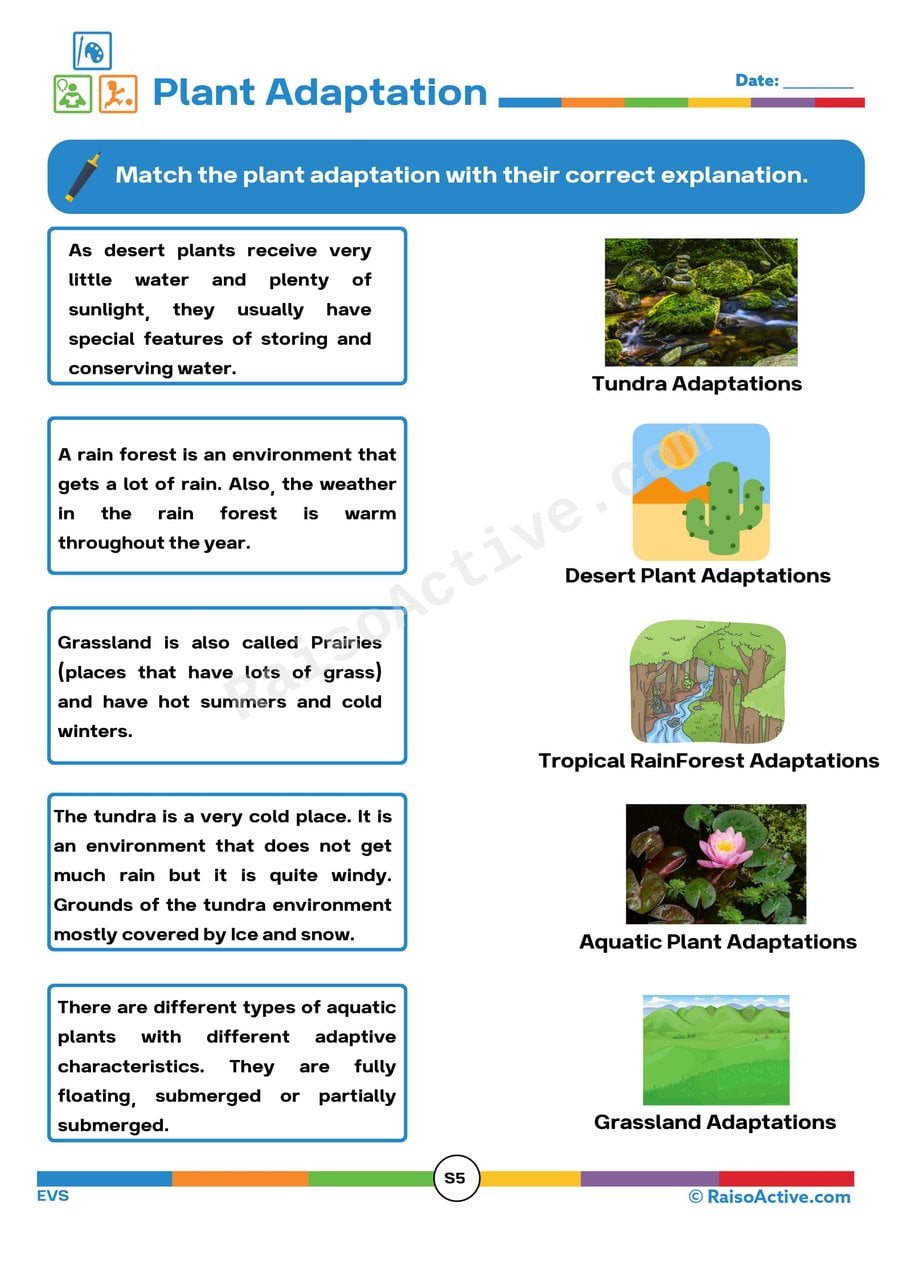
Plant Adaptation Matching Worksheet for Kids
This worksheet has 4-6 year olds match written descriptions of plant adaptations to the correct pictures, building on the idea that plants develop specific features — thick leaves, deep roots, bright flowers — to help them survive in their particular environment. Matching a description to an image requires your child to connect an abstract idea (why does this feature help?) to a concrete picture, which is a genuine step up from simple plant-part identification.

Number Names Worksheet: Unscramble, Match, and Write Numbers!
This worksheet layers three literacy and numeracy skills together: unscrambling jumbled letters to spell out number names, writing the corresponding numeral, and matching numbers to their written names. For ages 4-6, connecting a numeral like '5' to its written word 'five' bridges math and reading skills, reinforcing that numbers can be represented in more than one way.

Body Parts Worksheet: Identify and Paste the Correct Organ!
Reading a clue about a body part's function and finding the matching organ builds science vocabulary and reading comprehension for children ages 4-6, linking what a body part does to its correct name.
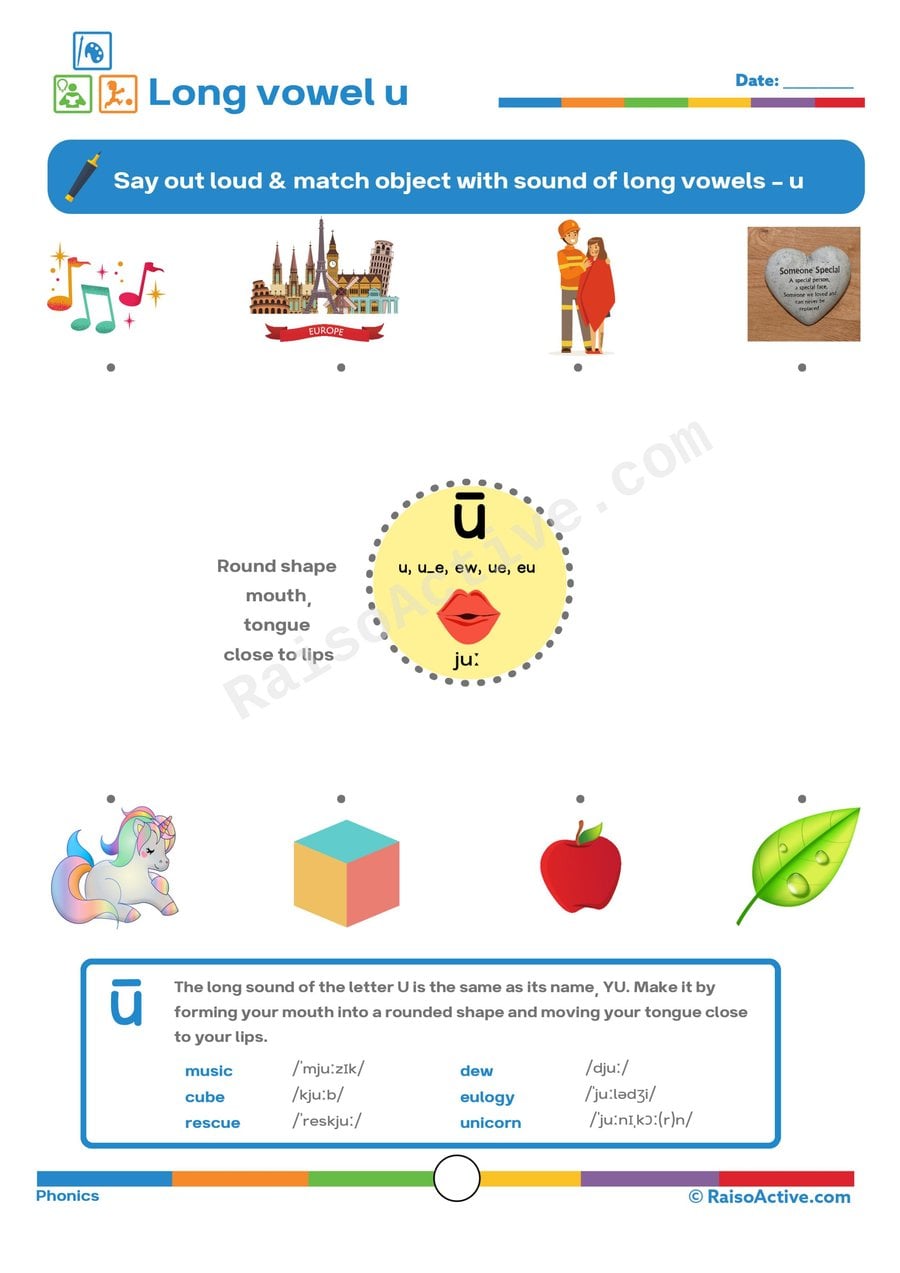
Long Vowel U Worksheet: Say the Sound and Match!
This matching worksheet gives children ages 4-6 focused practice hearing and identifying the long 'u' sound (as in 'cube' and 'mule') inside real words, then connecting that sound to its written form. Matching pictures to words strengthens the sound-symbol link that underlies fluent reading, while distinguishing long 'u' from other vowel sounds sharpens phonemic awareness — a strong predictor of later reading success.

Articles Adventure: A, An, and The Worksheet for Preschoolers
Choosing between 'a,' 'an,' and 'the' teaches children ages 4-6 one of English grammar's trickier rules — that 'an' is used before words starting with a vowel sound while 'a' comes before consonant sounds — building an ear for language patterns that native speakers often absorb through repetition rather than explicit rules. Practicing these small but frequent words also smooths out overall sentence fluency, since articles appear constantly in everyday speech and writing.
What kindergarten phonics covers
The two foundational skills standards are short but dense. RF.K.2 has five parts, from recognizing rhymes to adding or changing a sound to make a new word. RF.K.3 has four: consonant sounds, long and short vowel sounds, high-frequency words by sight, and telling similar words apart by the letters that differ (cat, cot, cut). Most kindergarten phonics programs teach them in roughly this order.
- RF.K.2a–b: rhyming words; counting and blending syllables
- RF.K.2c–d: onset and rime (c-at); isolating and saying the first, middle vowel and last sound in a CVC word
- RF.K.2e: changing one sound to make a new word (cat to hat to hot)
- RF.K.3a–b: a sound for each consonant; short and long sounds for a, e, i, o, u
- RF.K.3c–d: Dolch pre-primer and primer sight words; distinguishing words that differ by one letter
Short vowels, CVC words and word families
Short vowels come first because they are consistent: a as in apple, e in egg, i in igloo, o in octopus, u in umbrella. With those five sounds and the consonants, a child can read hundreds of CVC words. Word families group them by ending so one pattern unlocks many words: cat, hat, mat, sat, bat. Sheets that ask a child to change the first letter and read the new word are practicing RF.K.2e and RF.K.3d at the same time.
How to use these worksheets at home
Say the sounds, not the letter names, and keep them clipped: m, not muh. Do the oral part of every sheet before the writing part; if your child cannot hear the first sound in a word, tracing the letter will not help. Blend aloud together, sliding a finger under the letters, then let your child try alone. Five to ten minutes daily beats a long weekend session. Mix in a sight word sheet once a week and reread the same decodable sentences until they are smooth.
Frequently asked questions
What phonics should a child know by the end of kindergarten?
By the end of kindergarten a child should know a sound for every consonant and the short sound of each vowel, be able to hear and say the first, middle and last sounds in a CVC word, blend three sounds to read words like sun and map, change one sound to make a new word, read the common pre-primer and primer sight words, and read simple decodable sentences.
What is the difference between phonemic awareness and phonics?
Phonemic awareness is hearing and manipulating the sounds in spoken words, with no letters involved: knowing that cat has three sounds, or that changing the first sound makes bat. Phonics is matching those sounds to letters so a child can read and spell. Common Core separates them as RF.K.2 and RF.K.3. Phonemic awareness comes first and is a strong predictor of later reading.
What are CVC words?
CVC stands for consonant-vowel-consonant: three-letter words with a short vowel in the middle, such as cat, bed, pig, hot and sun. They are the first words children decode because every letter makes its most common sound, so blending works every time. Kindergarten phonics spends most of the year on them, grouped by vowel and by word family, before moving to digraphs and long vowels in first grade.
How many sight words should a kindergartner learn?
Common Core does not set a number; it asks for reading common high-frequency words by sight. The Dolch pre-primer list (40 words) and primer list (52 words) are what most kindergarten programs use, so around 50 to 90 words by the end of the year is typical. Some districts use the first 100 Fry words instead. A few new words a week, reviewed constantly, is the usual pace.
Are kindergarten phonics worksheets free to download?
Yes. Sign up for a free account and download any sheet as a watermarked PDF, up to five a day. An annual subscription removes the watermark and the daily limit for the full library of more than 1,000 worksheets and every printable pack. Pages print on US Letter or A4.

Written by
Hemsweta Jain · Teacher Cheena
MBA and Early Childhood Educator, teaching since 2014 · Founder of RaisoActive, Mumbai
Written and reviewed by Hemsweta Jain (Teacher Cheena), who designs every RaisoActive worksheet.
Last reviewed
Printable packs for ages 5–6
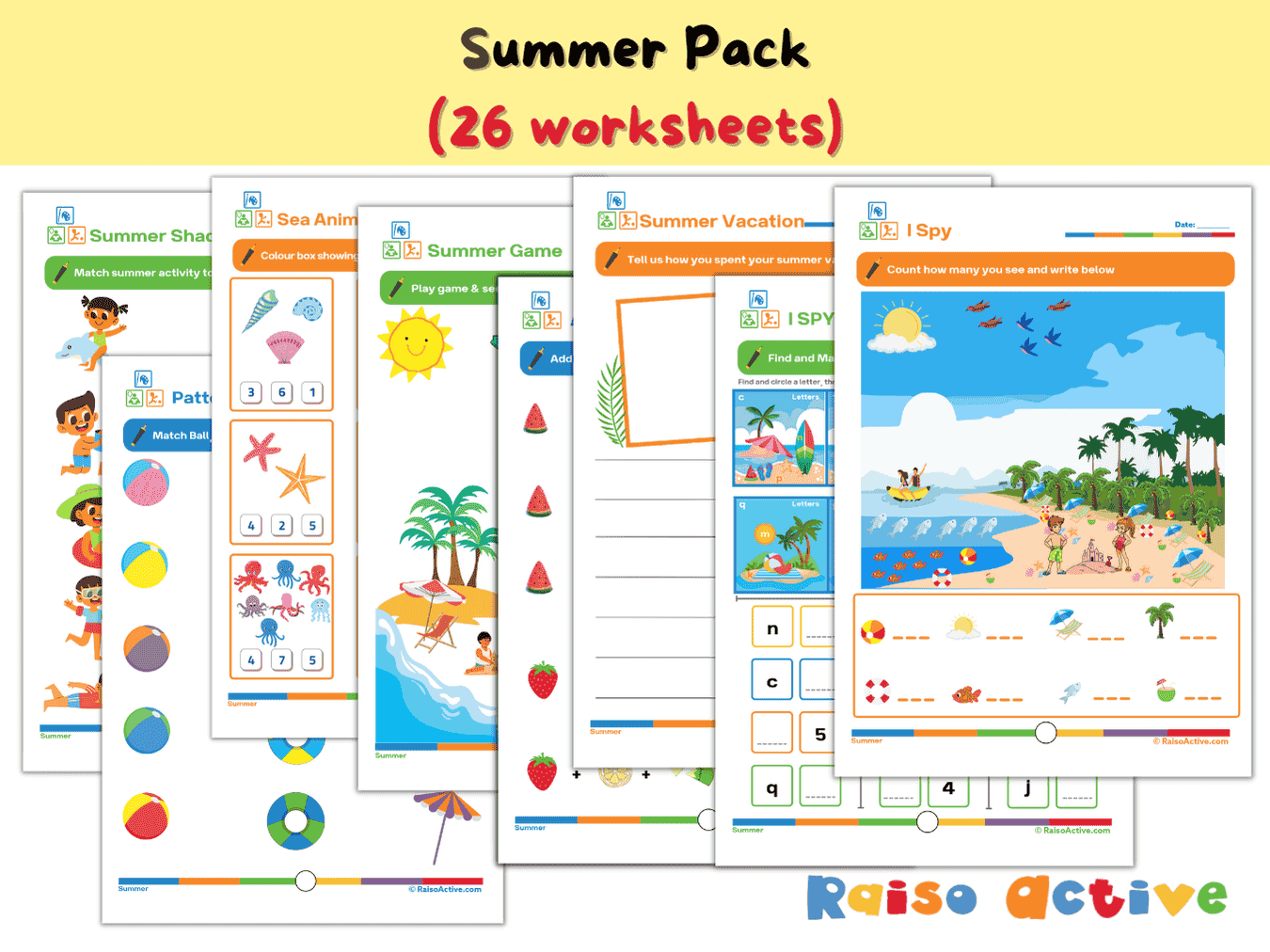
Summer Activity Pack: Math, Literacy, Puzzles & More for Preschool & Kindergarten
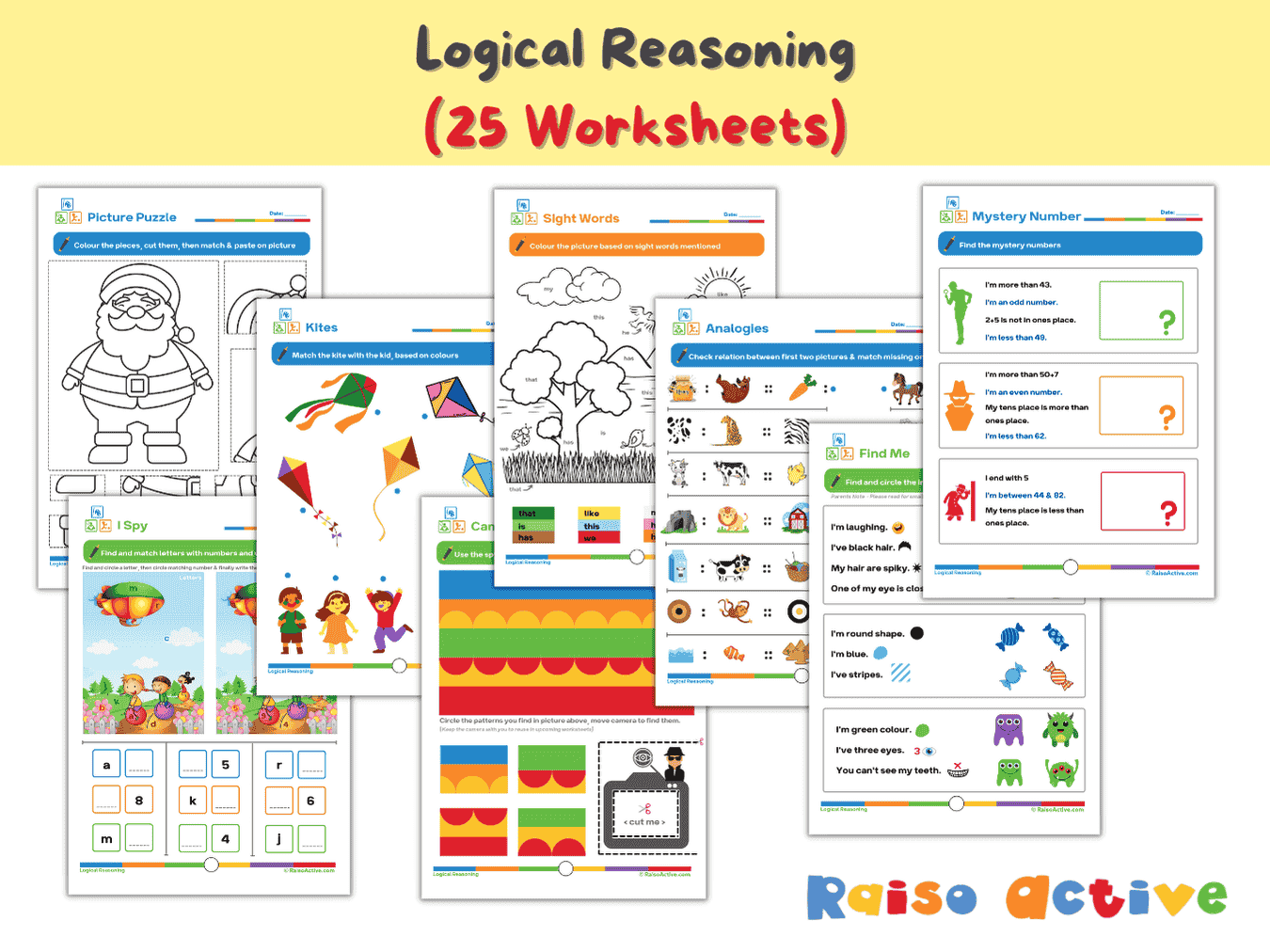
Logical Reasoning Activity Book for Preschool & Kindergarten | Patterns, Puzzles & Analogies
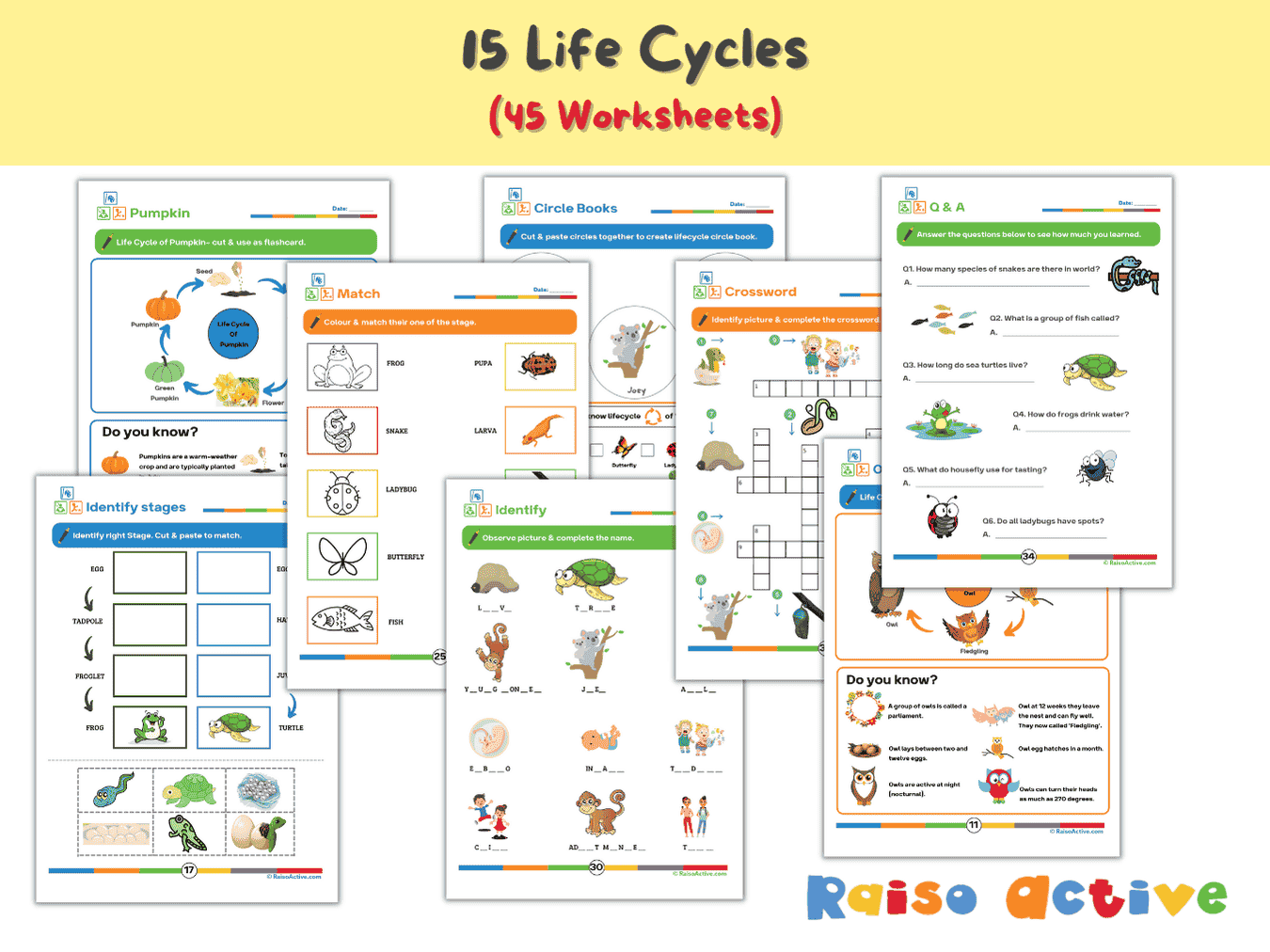
Lifecycles Activity Book & Flashcards for Preschool & Early Elementary
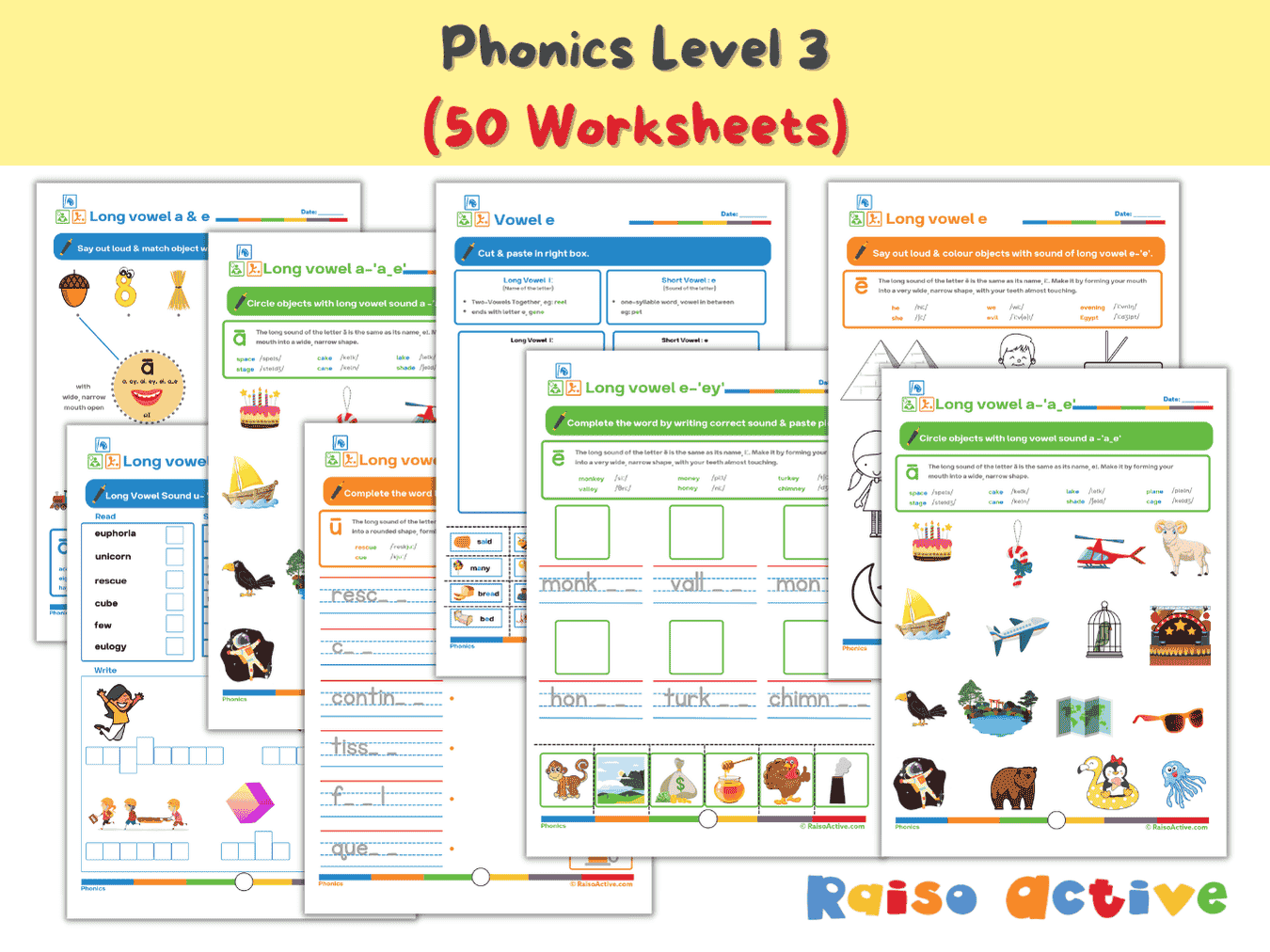
Phonics Level 3 Long Vowels Activity Book for Kindergarten & 1st Grade
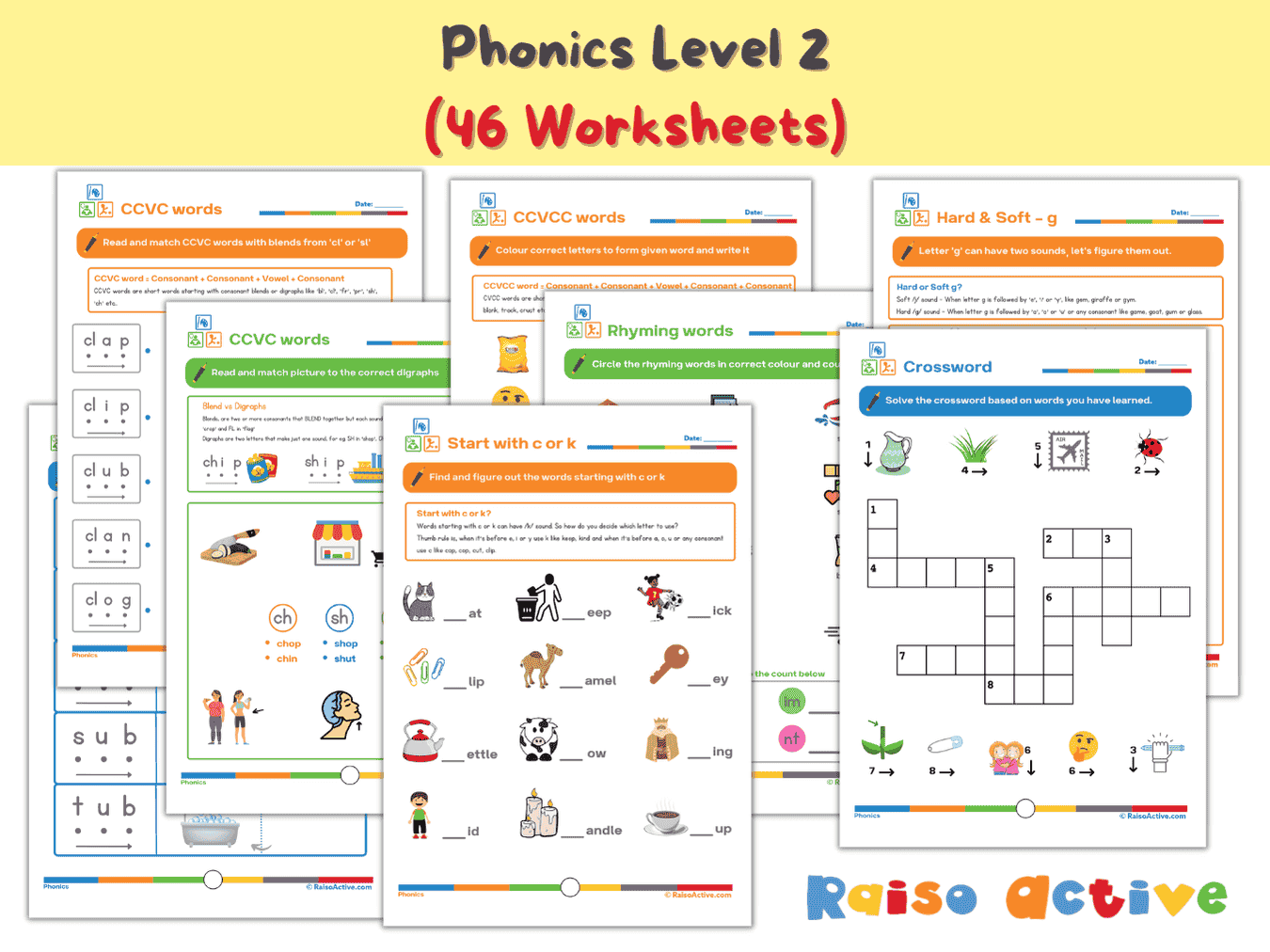
Phonics Level 2 Worksheets: CVC, CCVC, CVCC Word Families & Blends for Early Readers (Ages 4-7)
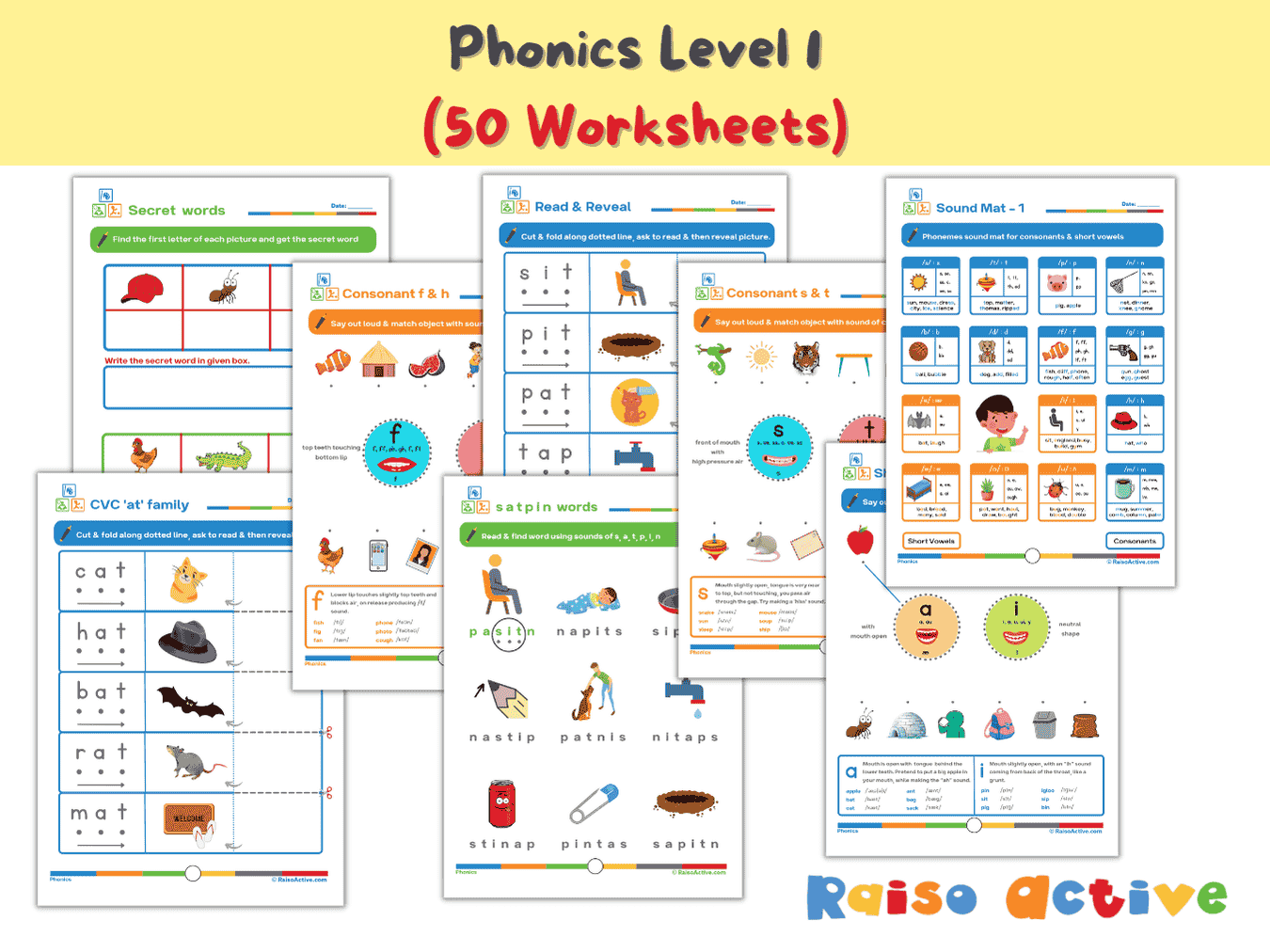
Phonics Level 1 Activity Book: Letter Sounds, Blending & CVC Words for Preschool & Kindergarten
Guides for parents and teachers
See all guides →Sight Words by Age: The First 50 Words and How to Teach Them Without Flashcard Fatigue
Which sight words to teach first and why, the heart-word method, a read-trace-write-find routine, games, and a by-age table of typical sight-word progress.
How to Teach CVC Blending: A Step-by-Step Method That Works in Two Weeks
A step-by-step method for teaching CVC blending, covering continuous sounds, word families, common errors, and a 14-day plan that most children finish reading CVC words.
Phase 2 Phonics at Home: Sound Order, Blending Games, Worksheets
Phase 2 phonics at home: the five sound sets in order, oral blending, tricky words, a two-week routine, common mistakes, and free worksheets.
Reception Year Explained: EYFS Learning and How to Help at Home
A teacher's plain-English guide to the Reception Year: the seven areas of learning, Early Learning Goals, Phase 2/3 phonics, the RBA and home routines.
UKG Syllabus Explained: English, Maths and EVS Month by Month
What UKG classes typically cover in English, maths and EVS, month by month, aligned to NEP 2020, with ways to support at home and signs your child is behind.
Bridging Two Worlds: A Complete Guide to Teaching Heritage Languages Alongside English
A practical guide to raising bilingual children who speak both their heritage language and English with confidence. Research-backed strategies, activities, and tips for Indian families.
Canonical: https://raisoactive.com/worksheets/kindergarten-phonics