Ot Word Family Worksheet: Read, Trace, and Identify!
Reading, tracing, and identifying words from the 'ot' family — like pot, dot, and hot — helps children ages 4-6 see how changing the first letter of a word while keeping the same ending produces a whole new word, reinforcing the pattern-based phonics strategy known as word families. Tracing each word while reading it connects handwriting practice directly to reading practice, and identifying the matching picture afterward checks genuine comprehension rather than rote letter-sounding. Word family practice like this builds the foundation for decoding many more words independently later on.
Part of the pack
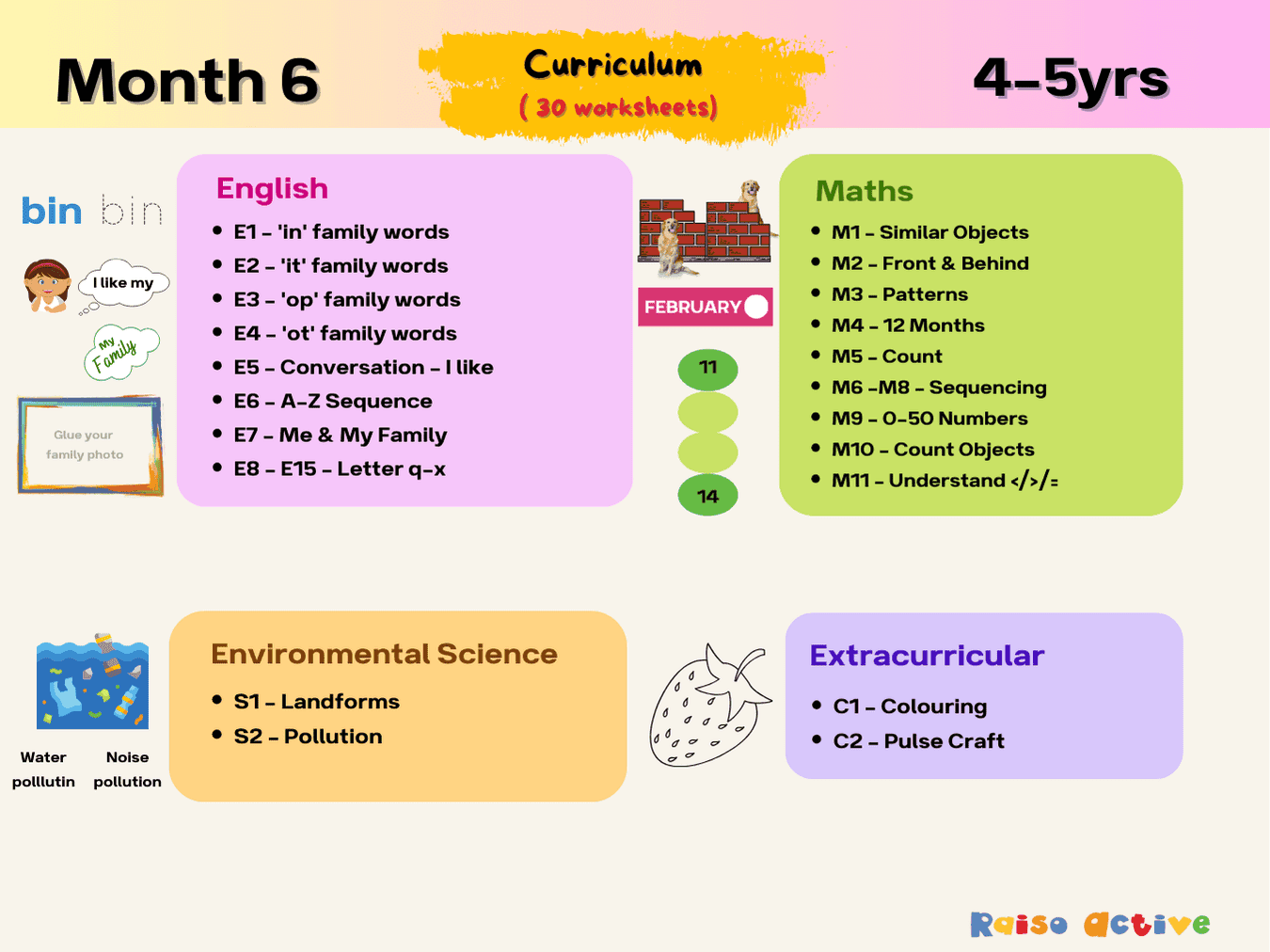
Month 6: Preschool multi-subject foundational skills | Ages 4-5
This is page 7 of the pack. Ages 4-5 · Pre-KAges 4-5 · ReceptionAges 4-5 · LKGAges 4-5
Made for your child
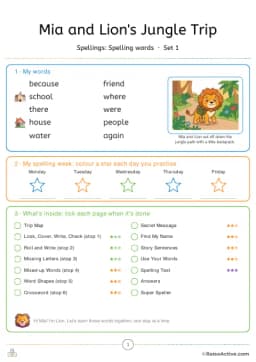
Spelling practice, made for your child
Their own spelling words turned into a pack: trace or look-cover-write-check, roll and write, a secret picture code, a word search, a crossword and a test, with their name in it.
Make a spelling packFree preview · free for members
Or start free: a word search with sight wordsCurriculum
- Phonics - CVC Words > CVC Short O Families
How to use this worksheet
Read the first 'ot' family word aloud together, pointing to each letter and emphasizing the shared '-ot' ending. Have your child trace over the dotted word with a pencil, saying the word again as they write it. Once traced, ask them to look at the nearby pictures and identify which one matches the word they just read and traced. Repeat the process for each word on the page, encouraging more independent reading as your child gets comfortable with the pattern.
Materials needed
- Pencil
- Crayons
Extension activities
- 1Brainstorm other 'ot' family words together, like 'cot,' 'jot,' or 'not.'
- 2Have your child write one or two 'ot' family words from memory without tracing, to check retention.
- 3Ask your child to use one of the words, like 'pot' or 'hot,' in a simple sentence out loud.
- 4Cut apart the matched pictures from the page and use them for a quick memory-matching game.
- 5Read a short rhyming book together and listen for any 'ot' family words that appear.

Written by
Hemsweta Jain · Teacher Cheena
MBA and Early Childhood Educator, teaching since 2014 · Founder of RaisoActive, Mumbai
Every RaisoActive worksheet is designed and checked by the founder before publishing.
Published · Last reviewed
More from Month 6: Preschool multi-subject foundational skills | Ages 4-5
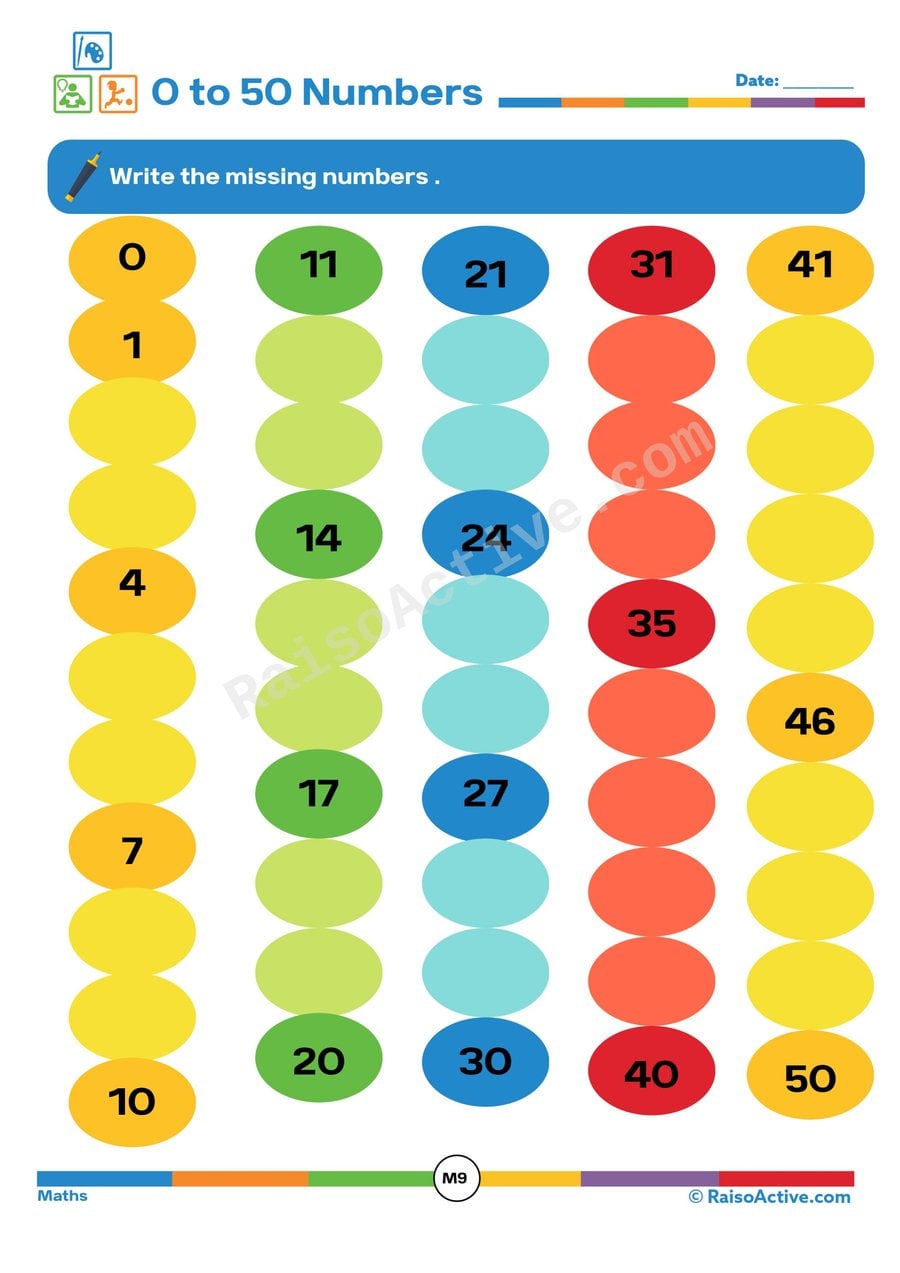
Missing Numbers Worksheet: 0 to 50
Ages 4-5 · Pre-KAges 4-5 · ReceptionAges 4-5 · LKGAges 4-5
Filling in missing numbers across the 0-50 range asks children ages 4-5 to hold a much longer counting sequence in mind than typical 1-20 worksheets, strengthening both number recognition and the pattern sense needed to predict what comes next at any point in the range. This kind of extended practice also introduces children to the way numbers group into decades, like the 20s or 30s, which becomes important for later place-value understanding. Successfully completing a long sequence like this builds real counting stamina and confidence.
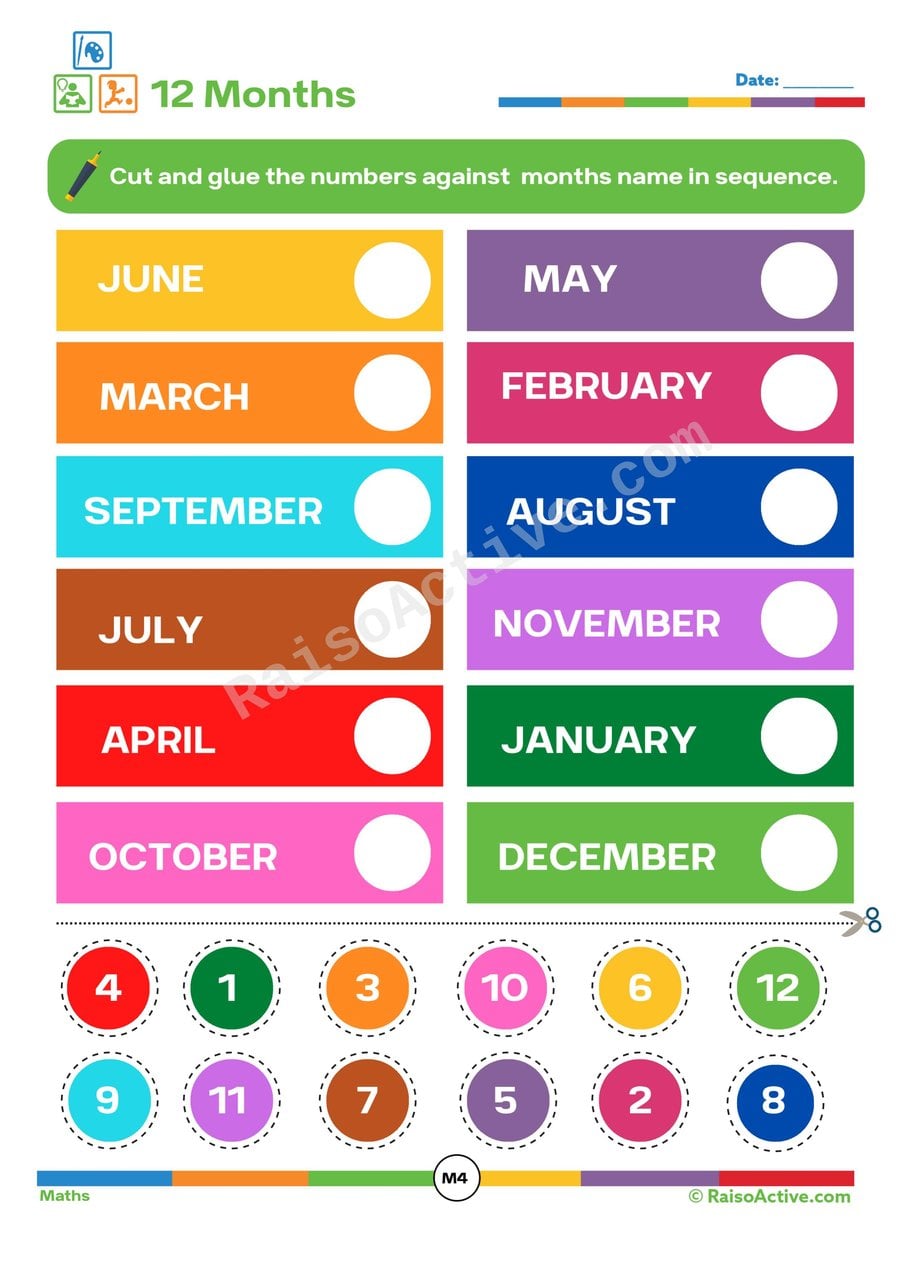
Months of the Year Matching Worksheet for Kids
Ages 4-5 · Pre-KAges 4-5 · ReceptionAges 4-5 · LKGAges 4-5
Matching numbers to month names introduces children ages 4-5 to the idea that the calendar has a fixed, meaningful order, which supports early time-concept development alongside their growing number recognition. This cut-and-paste format adds a fine motor and sequencing challenge, since children must locate the correct number piece among several options before gluing it into place. Learning the months by their order also lays groundwork for talking about birthdays, holidays, and seasons throughout the year.

What Do You Like? Conversation Worksheet for Kids
Ages 3-5 · Preschool–Pre-KAges 3-5 · Nursery–ReceptionAges 3-5 · Nursery–LKGAges 3-5
Ages 3-5 are learning to move from single words to full thoughts, and this 'What Do You Like?' worksheet gives them structured practice putting a preference into words. Looking at a picture prompt and answering 'I like...' builds expressive vocabulary and the confidence to speak up in a group, both key pre-literacy and social-emotional milestones at this age. It also introduces the back-and-forth rhythm of real conversation rather than just naming objects.

In Family Words Worksheet: Read, Trace, and Identify the Pictures!
Ages 3-5 · Preschool–Pre-KAges 3-5 · Nursery–ReceptionAges 3-5 · Nursery–LKGAges 3-5
Reading, tracing, and matching words from the 'in' family — like pin, fin, and win — helps children ages 3-5 notice that changing just the first letter of a word while keeping the same ending creates a whole new word, a key phonics insight called word family recognition. Tracing each word alongside reading it builds handwriting muscle memory at the same time as reading fluency. Circling the picture that matches each traced word also checks true comprehension, not just the ability to sound out letters.
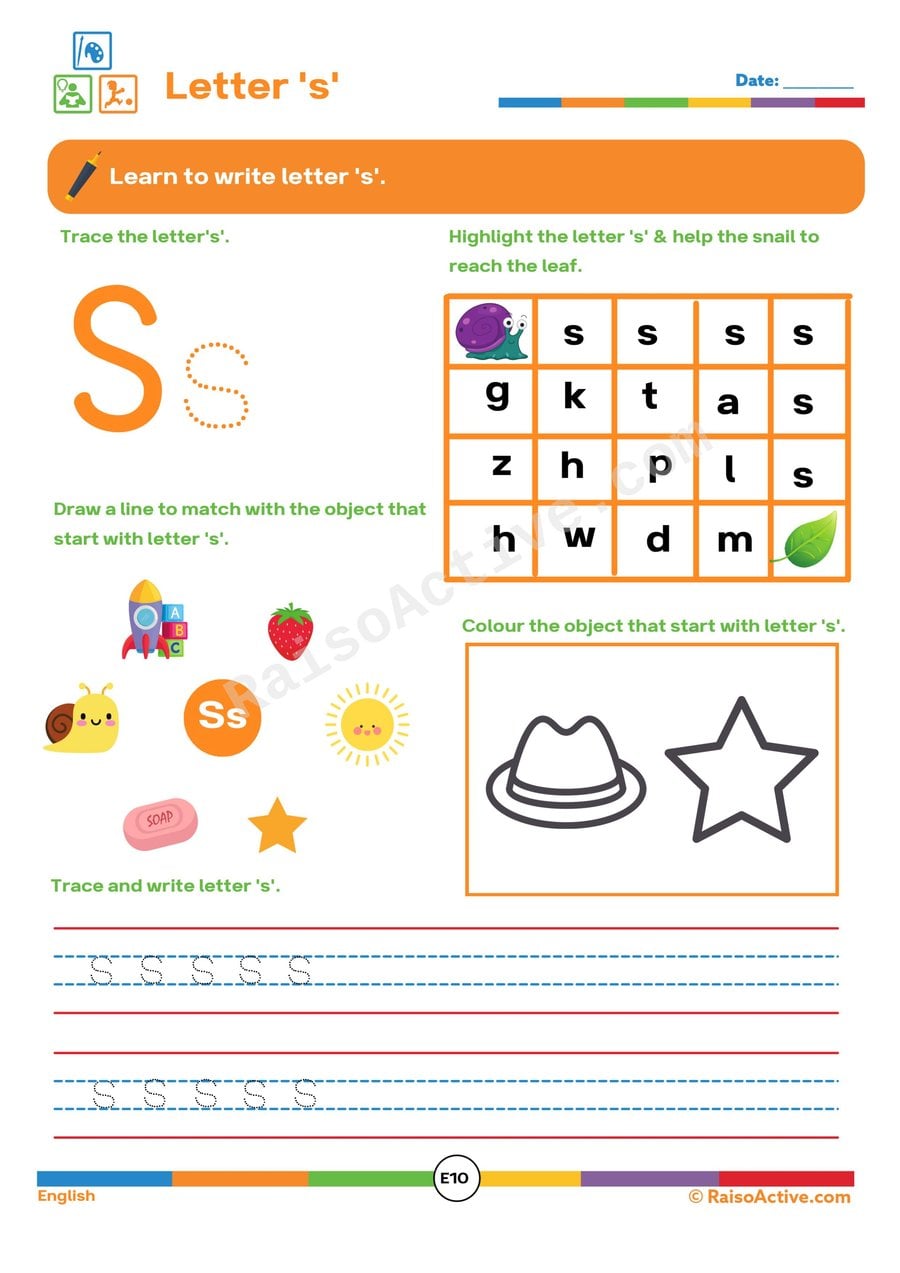
Letter 's' Worksheet: Trace, Match, and Color!
Ages 3-5 · Preschool–Pre-KAges 3-5 · Nursery–ReceptionAges 3-5 · Nursery–LKGAges 3-5
This worksheet gives children ages 3-5 focused practice forming the letter 's,' one of the trickier curved strokes for beginning writers to control with a pencil. Beyond handwriting, matching pictures to the letter and coloring only the 's' objects builds phonemic awareness by linking the letter shape to its /s/ sound at the start of words. Combining tracing, matching, and coloring in one page also keeps a young child's attention across multiple related tasks.

Find the Matching Objects! A Fun Sorting Worksheet for Kids
Ages 3-5 · Preschool–Pre-KAges 3-5 · Nursery–ReceptionAges 3-5 · Nursery–LKGAges 3-5
Spotting which objects in a set are truly identical, rather than just similar, sharpens the visual discrimination skills that ages 3-5 need before they can tell apart similarly shaped letters like 'b' and 'd' later on. This sorting worksheet also builds early critical thinking, since children must compare size, color, and shape details across several objects instead of relying on a first glance. Circling only the matching pair(s) in each row teaches them to look carefully before deciding.

A-Z Letter Sequence Worksheet: Fill in the Missing Letters!
Ages 4-5 · Pre-KAges 4-5 · ReceptionAges 4-5 · LKGAges 4-5
By age 4-5, children move from reciting the alphabet by rote to actually recognizing individual letters out of sequence, and this fill-in-the-blank worksheet tests that deeper knowledge by asking them to supply missing capital letters in a scrambled order. Locating where a gap belongs strengthens letter-order memory and visual letter recognition, both essential precursors to reading and independent writing. It also builds attention to detail, since children must scan neighboring letters to figure out what's missing.

Count and Compare: Fun Math Worksheet for Preschoolers
Ages 3-5 · Preschool–Pre-KAges 3-5 · Nursery–ReceptionAges 3-5 · Nursery–LKGAges 3-5
Counting two groups of objects and then choosing the correct greater-than, less-than, or equal-to symbol introduces children ages 3-5 to comparative reasoning, a step beyond simple counting that asks them to judge relationships between quantities. This worksheet turns an abstract math symbol into something concrete by grounding it in objects they've just counted themselves, rather than presenting the symbol in isolation. Learning to compare quantities this early builds the number sense needed for later addition, subtraction, and general mathematical reasoning.
Related worksheets
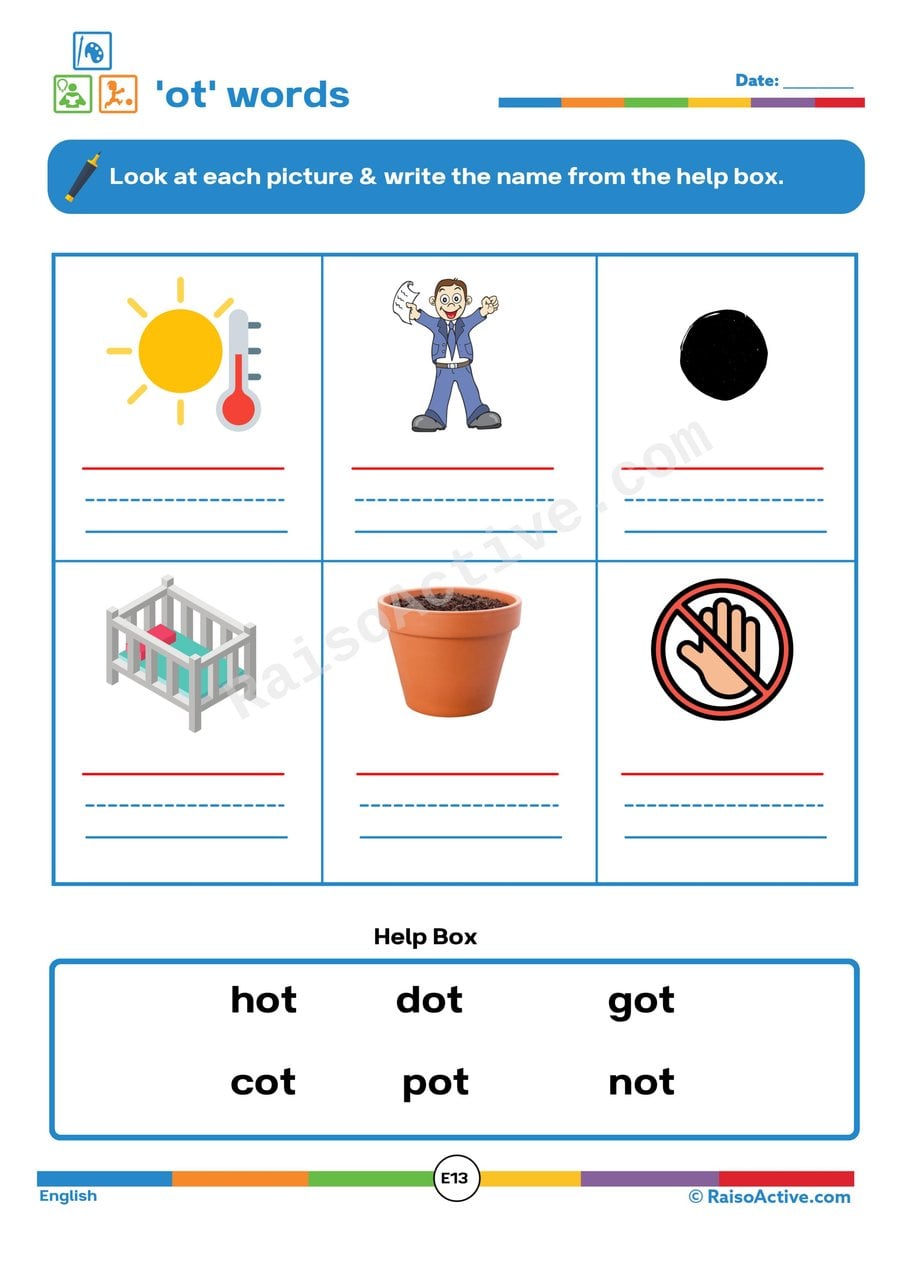
Ot Word Fun: 'ot' Word Worksheet for Early Readers
Ages 4-6 · Pre-K–KindergartenAges 4-6 · Reception–Year 1Ages 4-6 · LKG–UKGAges 4-6
Children ages 4-6 build phonics fluency by reading and writing CVC words in the 'ot' family, like 'pot', 'dot', and 'hot'. Recognizing this consistent letter pattern teaches early readers that groups of letters make predictable sounds, a key strategy for decoding unfamiliar words independently. Writing the words afterward reinforces the sound-to-letter connection needed for spelling.

Phonics Level 1 Certificate of Achievement
Ages 3-6 · Preschool–KindergartenAges 3-6 · Nursery–Year 1Ages 3-6 · Nursery–UKGAges 3-6
Children celebrate finishing Phonics Level 1 and tick the CVC word families they can now read, from at to ut.

Apple Picking Fun: A Reading Comprehension Worksheet for Kids
Ages 4-6 · Pre-K–KindergartenAges 4-6 · Reception–Year 1Ages 4-6 · LKG–UKGAges 4-6
This worksheet builds early reading comprehension skills in children ages 4-6 by having them read a short story about apple picking and then answer simple questions that check their understanding of what happened. Answering questions after reading, rather than just decoding words, pushes children to hold the story's meaning in mind and recall specific details, a critical skill for all future reading. Coloring an apple afterward gives a relaxing, creative close to the comprehension task.
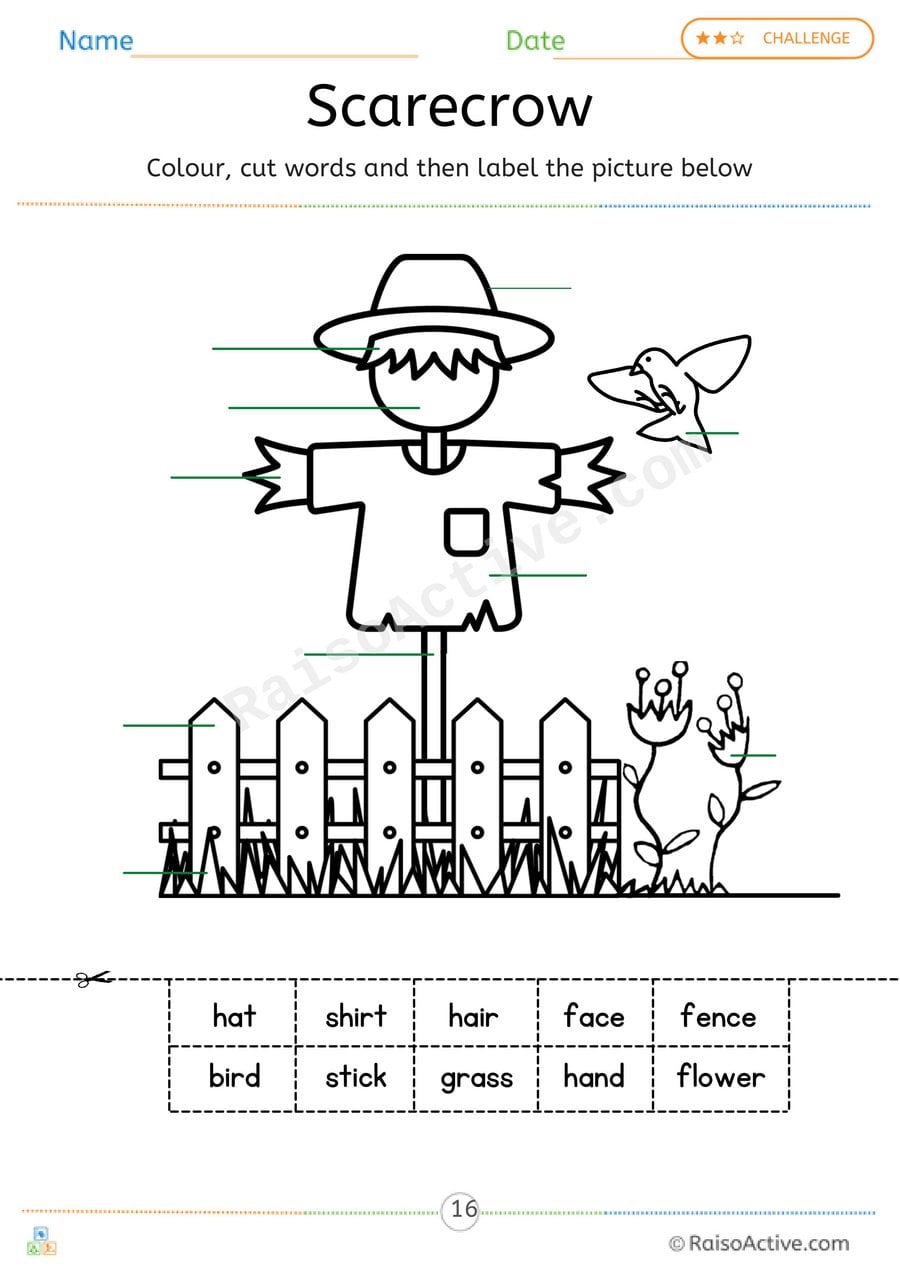
Scarecrow Labeling Worksheet for Preschoolers
Ages 3-5 · Preschool–Pre-KAges 3-5 · Nursery–ReceptionAges 3-5 · Nursery–LKGAges 3-5
This worksheet has children ages 3-5 color a scarecrow, then cut out word labels for its parts, hat, straw, shirt, gloves, and glue each label onto the correct spot, connecting written words directly to the objects they name. Tracing the labels afterward adds letter-formation practice on top of the vocabulary-building label matching.

Phonics Level 2 Sound Mat 3: Long Vowel and R-Influenced Vowel Sounds
Ages 4-7 · Pre-K–Grade 1Ages 4-7 · Reception–Year 2Ages 4-7 · LKG–Class 1Ages 4-7
Children see the long vowel sounds, the r-influenced vowels such as ar, er and or, and other vowel sounds such as ow, oy and oo, each with spellings and examples.
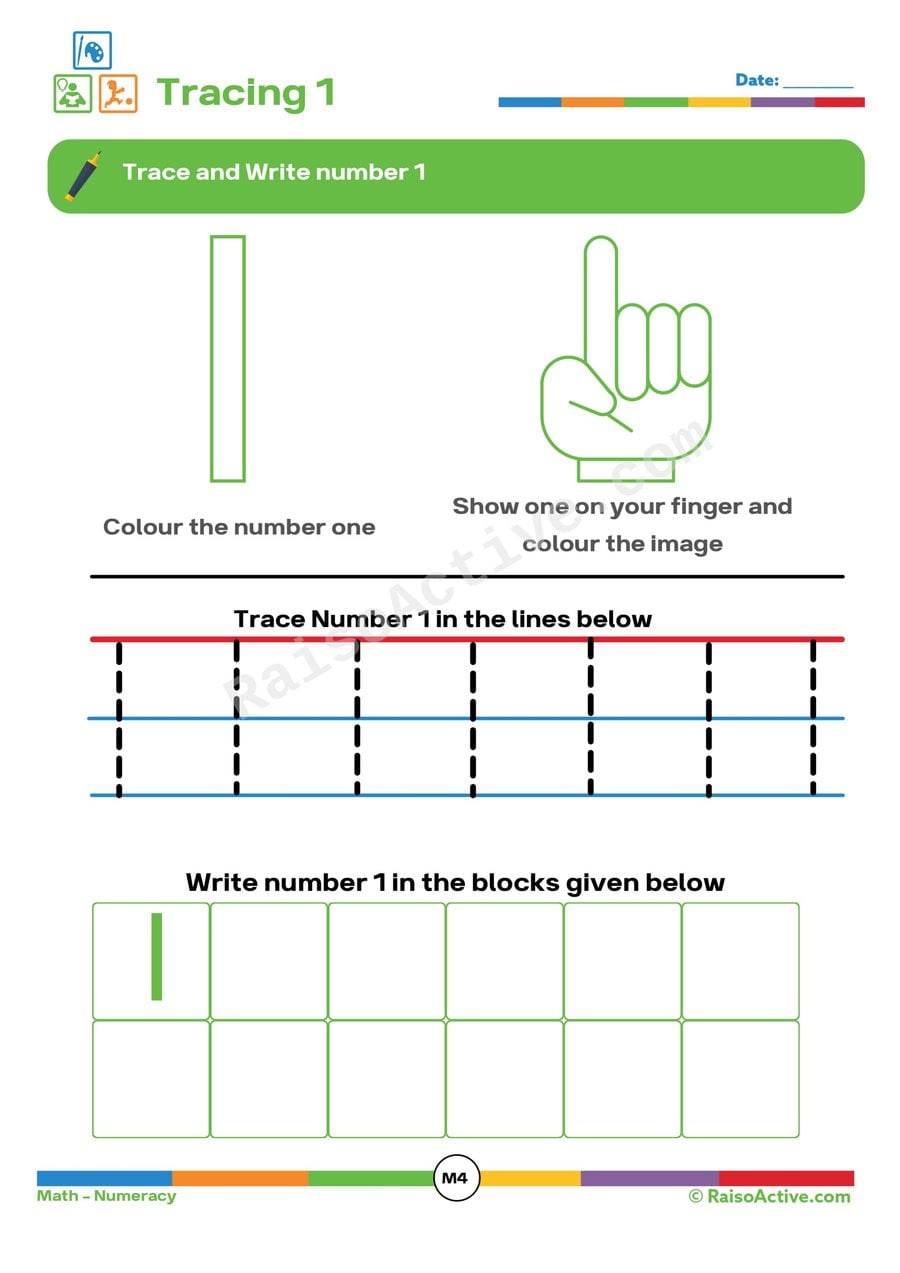
Tracing Number 1 Worksheet for Preschoolers
Ages 3-5 · Preschool–Pre-KAges 3-5 · Nursery–ReceptionAges 3-5 · Nursery–LKGAges 3-5
This tracing worksheet gives children ages 3-5 focused, repetitive practice forming the number 1 through tracing dotted lines, independent writing in provided boxes, and coloring an accompanying image, building the pencil control that precedes confident number writing. Because number 1 is typically the very first numeral children learn to write, getting the stroke direction and starting point correct here sets a strong foundation for writing higher numbers later. Repetition across multiple boxes on the page also builds the muscle memory needed for consistent, automatic number formation.

The Three Little Pigs Storytelling Worksheet for Preschoolers
Ages 3-5 · Preschool–Pre-KAges 3-5 · Nursery–ReceptionAges 3-5 · Nursery–LKGAges 3-5
This storytelling worksheet helps children ages 3-5 practice narrative sequencing and oral language skills by retelling the classic tale of the Three Little Pigs in their own words, using picture prompts as a guide. Putting a familiar story into their own sentences builds comprehension and expressive vocabulary far more actively than just listening to the story read aloud. The cut-and-paste sequencing option adds a second layer of practice with story order.

Near or Far Worksheet: Following Instructions for Preschoolers
Ages 3-5 · Preschool–Pre-KAges 3-5 · Nursery–ReceptionAges 3-5 · Nursery–LKGAges 3-5
Reading an instruction and circling the object that is either near or far teaches children ages 3-5 relative distance vocabulary, helping them understand that 'near' and 'far' describe a relationship between two things rather than a fixed property of a single object. Following a written or spoken instruction to complete each picture also builds listening comprehension and the ability to carry out a one-step direction independently. This combination of spatial concept and instruction-following prepares children for the kind of directions they'll regularly encounter in a classroom setting.
Guides for this topic

How to Teach CVC Blending: A Step-by-Step Method That Works in Two Weeks
A step-by-step method for teaching CVC blending, covering continuous sounds, word families, common errors, and a 14-day plan that most children finish reading CVC words.
Phase 2 Phonics at Home: Sound Order, Blending Games, Worksheets
Phase 2 phonics at home: the five sound sets in order, oral blending, tricky words, a two-week routine, common mistakes, and free worksheets.

Reception Year Explained: EYFS Learning and How to Help at Home
A teacher's plain-English guide to the Reception Year: the seven areas of learning, Early Learning Goals, Phase 2/3 phonics, the RBA and home routines.
Reviews
Every worksheet for ages 4–6, no watermark
Members download the full library of 1,000+ worksheets and every activity pack without watermarks or daily limits. One year costs ₹999 in India or $20 elsewhere.
See membership plansOr download any worksheet free with a watermark (5 a day).