Free printable worksheets · India
Diwali Worksheets (Ages 3–7)
Diwali worksheets are printable activity sheets for children aged 3 to 7 based on the Indian festival of lights. They include rangoli dot counting, diya and lantern tracing, firework pattern completion, colouring within rangoli borders and matching diyas to numbers, building counting, pencil control and pattern-recognition skills ahead of Diwali on 8 November 2026.
Diwali falls on Sunday, 8 November 2026, and the fortnight before it is when Indian pre-primary classrooms turn festival traditions into worksheet practice. A three-year-old traces a diya outline with a chunky crayon while a six-year-old counts rangoli dots in tens and completes a symmetrical pattern inside firm borders. These sheets sit alongside the usual Nursery-to-Class-1 numeracy, tracing and colouring goals, simply using diyas, rangoli, lanterns and fireworks as the subject instead of generic shapes, so festive-term activity corners and family gatherings get worksheets that feel seasonal rather than recycled from any other month.
9 worksheets · free PDF download · print on A4 or Letter
Diwali Worksheets to print
Browse all worksheets for ages 3–7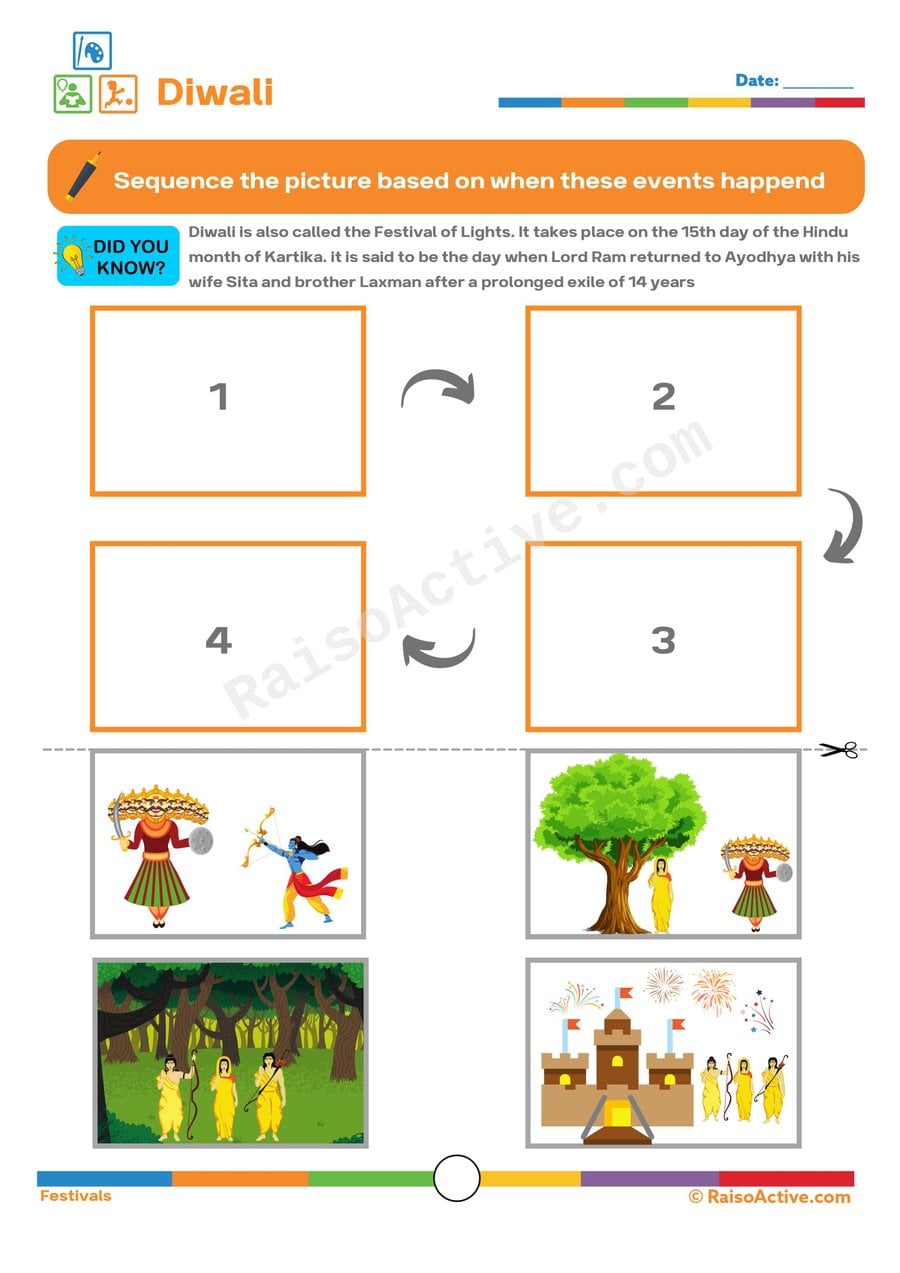
Diwali Sequencing Worksheet for Kids
Children ages 4-6 practice logical sequencing by ordering pictures related to Diwali celebrations, such as cleaning the home, lighting diyas, and sharing sweets. Understanding that festival celebrations follow a logical order of events builds narrative sequencing skills that also support early storytelling and reading comprehension.
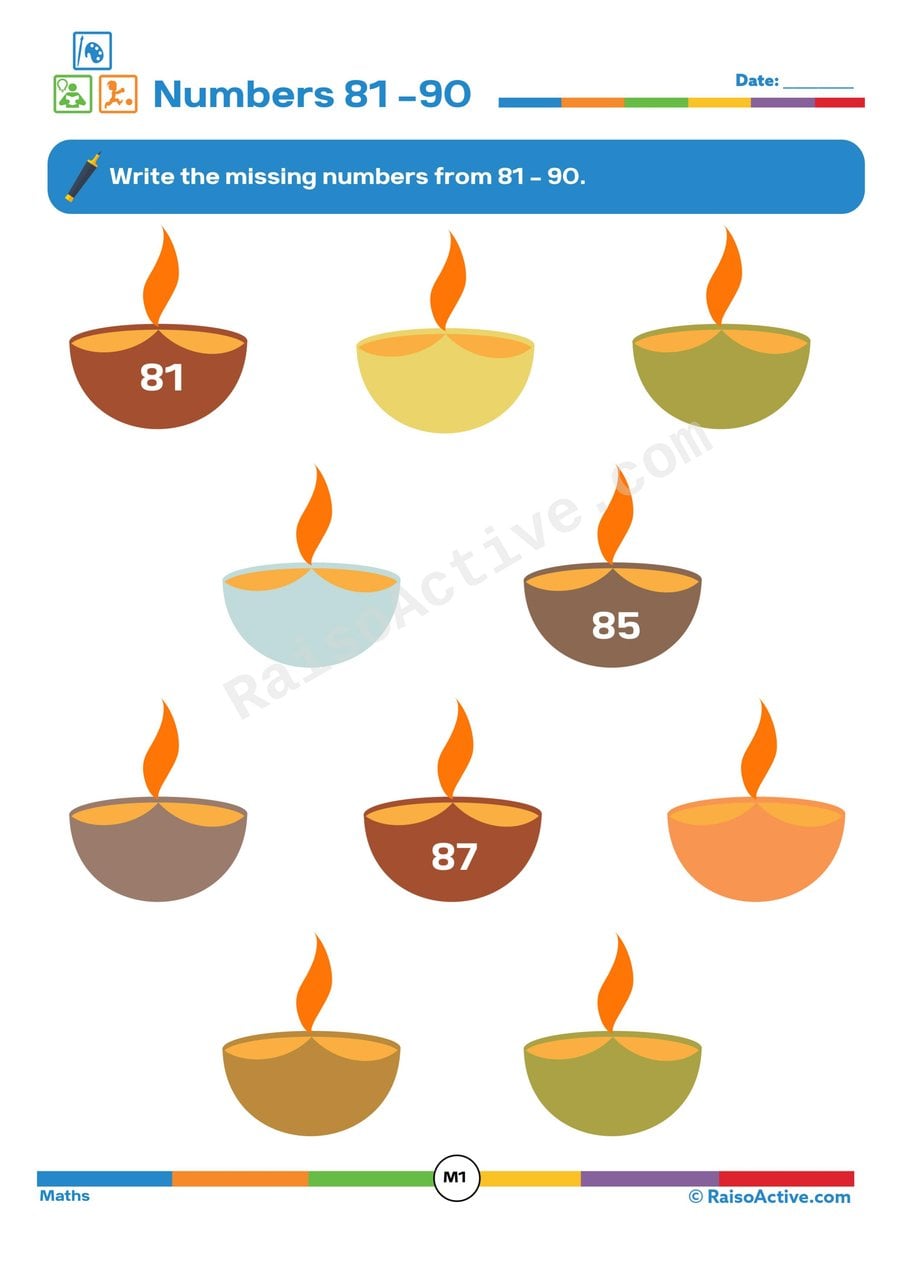
Missing Numbers: Diwali Diyas Worksheet for Kids
Children ages 4-6 practice number sequencing within the 81 to 90 range by identifying and writing missing numbers on a set of Diwali-themed diyas. Working with numbers in the 80s pushes children beyond the more familiar 1-20 range, reinforcing that the same counting pattern continues predictably into higher numbers. This festive theme also connects math practice to a meaningful cultural celebration, making the abstract number work feel relevant.

Diwali Addition Worksheet for Kids: Counting and Adding Objects!
Children ages 4-5 practice addition by counting two separate sets of Diwali-themed objects, then combining the totals and writing the sum. Seeing objects grouped together concretely helps children understand what 'adding' actually means before relying on memorized number facts. This festive theme also connects the math skill to a real cultural celebration, giving the abstract addition work a meaningful, relatable context.
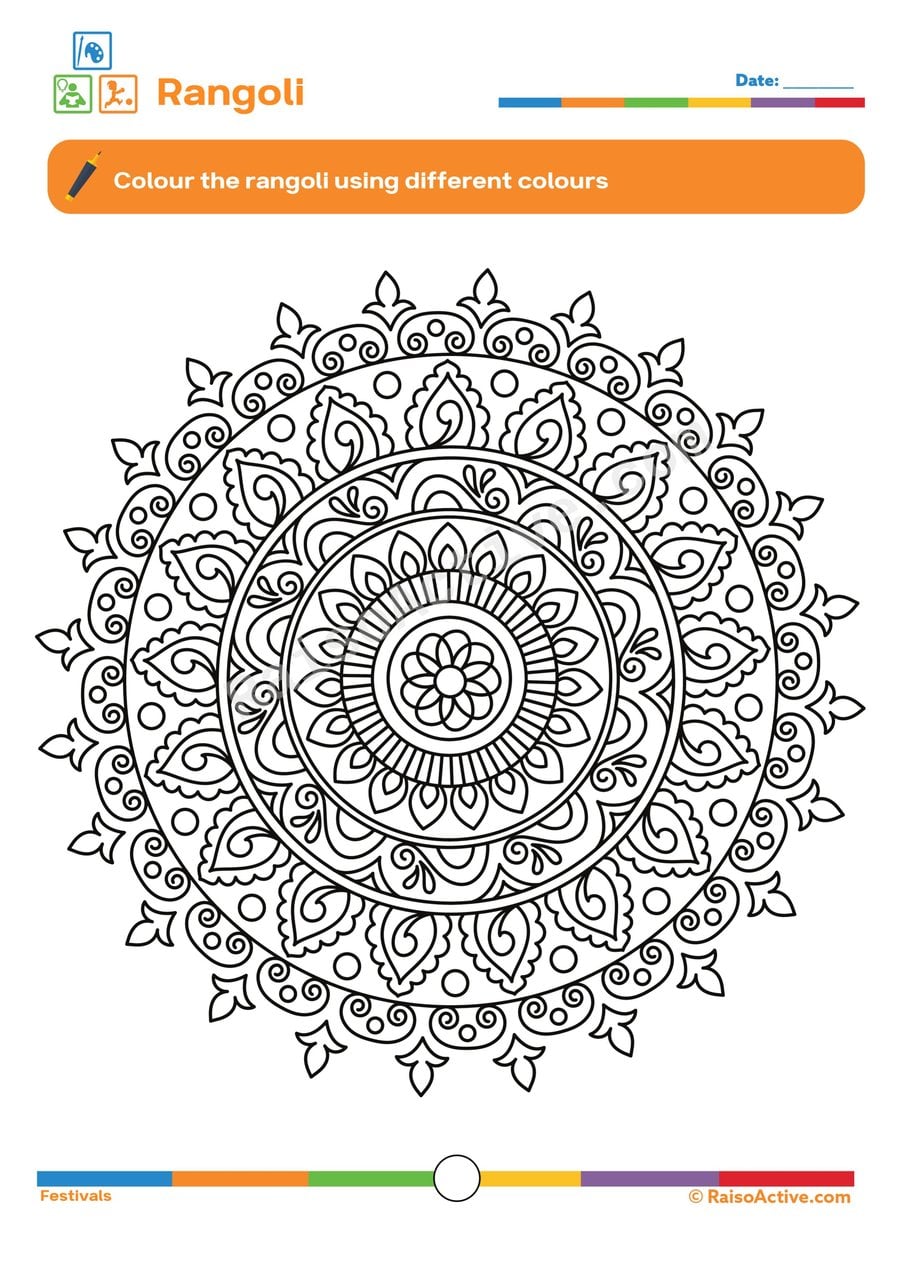
Rangoli Coloring Worksheet for Kids
Children ages 3-6 practice fine motor control and pattern following as they color a symmetrical rangoli design using multiple colors. Because rangoli patterns are built from repeating shapes, this activity also introduces early geometry and symmetry awareness in a hands-on, visual way.
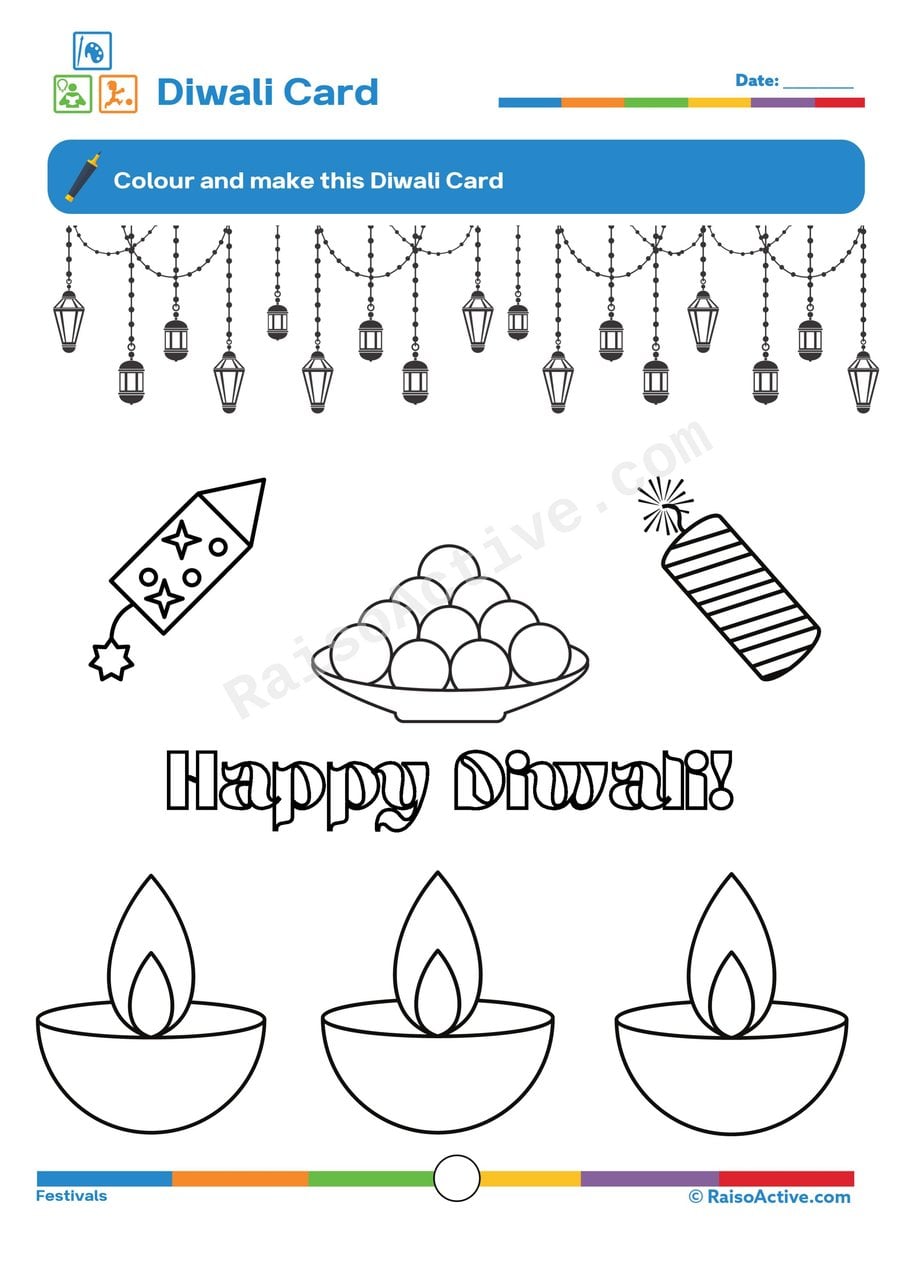
Happy Diwali Coloring Worksheet for Kids
This coloring worksheet helps children ages 3-5 practice fine motor control and color recognition while engaging with Diwali-themed imagery like diyas and rangoli patterns. Coloring detailed festival scenes also builds early cultural awareness, giving children a visual anchor for conversations about the Festival of Lights.
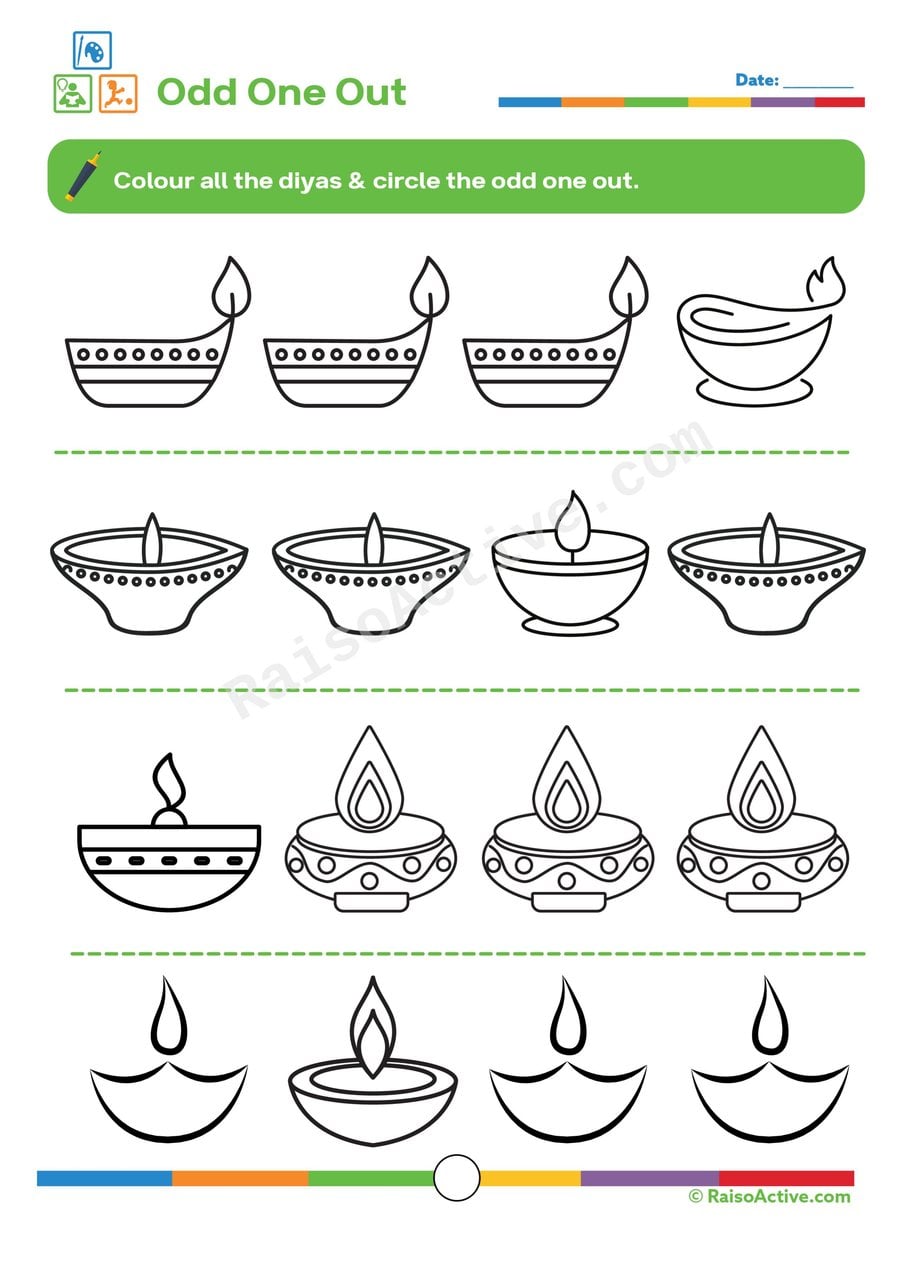
Diya Odd One Out Worksheet for Kids
This worksheet builds visual discrimination skills in children ages 3-5 as they compare a row of diyas and identify the one that differs from the rest. Spotting subtle differences in shape, color, or design is an early critical-thinking skill that lays groundwork for later pattern recognition and attention-to-detail tasks in reading and math.

Diwali Patterns: Observe and Paste the Correct Option Worksheet
Children ages 3-5 practice pattern recognition by observing a repeating sequence of Diwali-related images and pasting the correct picture to complete each pattern. This worksheet extends pattern skills beyond simple colors or shapes into meaningful festival imagery, adding a layer of cultural vocabulary to the math concept.

Diwali Rocket Craft: Cut and Paste Worksheet for Kids
This Diwali-themed rocket craft has children ages 3-5 cut out several rocket parts and assemble them in the correct order, building scissor control and an early understanding of how individual pieces combine into a whole structure. Because rockets are traditionally associated with Diwali fireworks and celebrations, the craft also connects a fine motor activity to real festival traditions your child may have observed.
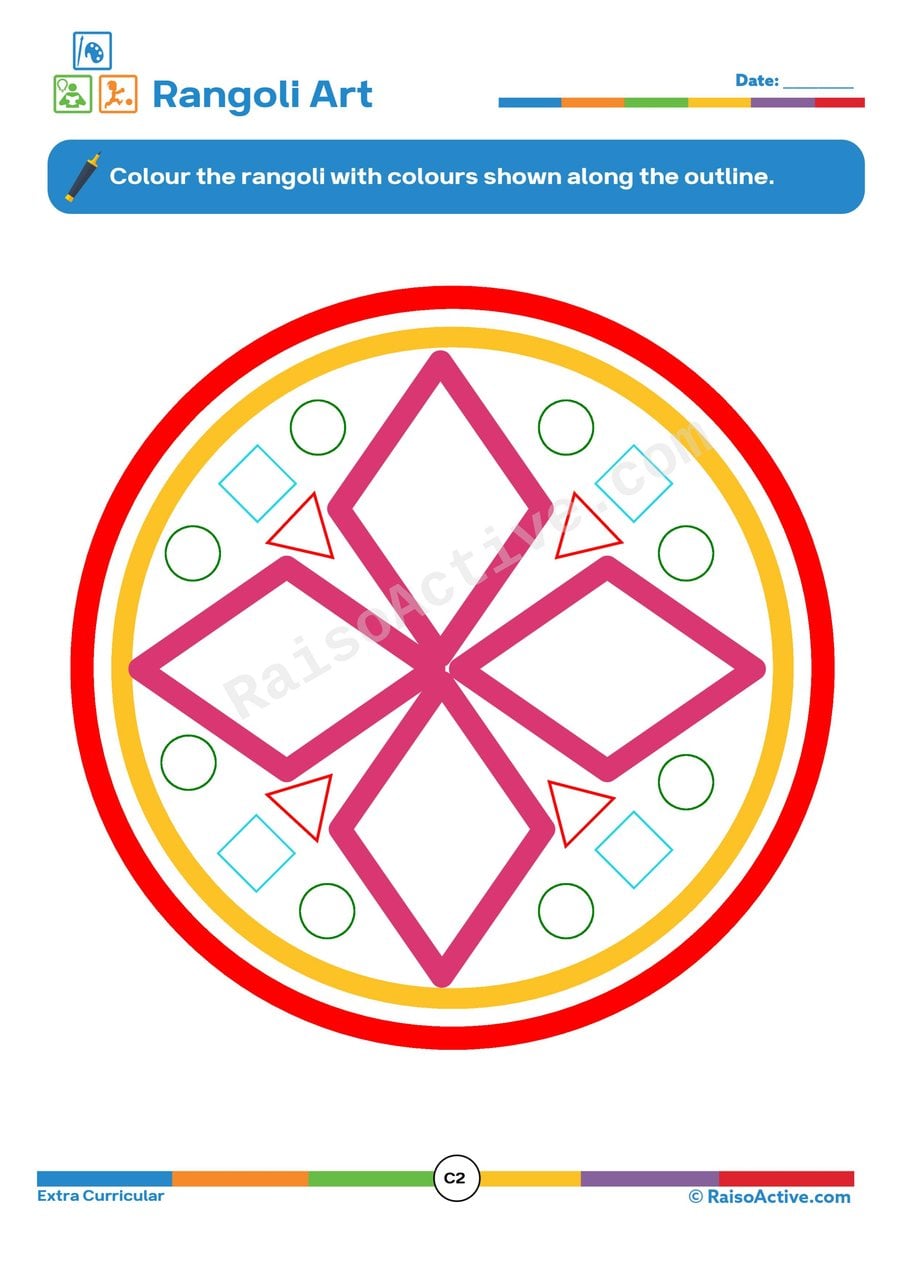
Rangoli Art Coloring Worksheet for Kids
This worksheet builds fine motor control and color-following precision as children color a traditional Rangoli design according to a color key along the outline, while also introducing them to a meaningful cultural art form. For ages 3-5, staying within intricate, symmetrical lines is more demanding than open coloring pages and helps develop the hand control needed for detailed schoolwork later on.
What children learn through Diwali worksheets
Diwali worksheets turn diya rows and rangoli patterns into counting practice: ten-frames and dot-to-dot fireworks help a three- to five-year-old grasp one-to-one correspondence, while five- to seven-year-olds add diyas along a number line or complete a rangoli symmetry pattern. Tracing sheets follow diya, lantern and firework outlines to build the pencil control needed before letter formation, and colouring pages practise staying inside a firm border.
- Counting rangoli dots and diyas in ones, twos and fives
- Tracing diya, lantern and firework outlines
- Colouring inside rangoli and lantern borders without going over the line
- Matching diyas to numbers and simple addition within 10
What to prepare a week before Diwali
Print sheets for the age band you need at least a week before 8 November so cousins visiting for the holiday have activities ready without a last search through the library. Keep one or two harder sheets aside for the day itself: a child who has already practised diya tracing and rangoli counting settles into a printed activity faster than a brand-new one handed over on a busy evening.
- Print 5–6 sheets spanning tracing, counting and colouring
- Stock crayons, safety scissors and a glue stick for cut-and-paste diyas
- Keep one or two harder sheets back for cousins or older siblings
- Laminate a favourite rangoli sheet for reusable dry-erase counting practice
Frequently asked questions
What age are Diwali worksheets for?
Diwali worksheets on this page suit children aged 3 to 7, roughly Nursery through Class 1 in Indian schools. Three- and four-year-olds do best with tracing and colouring sheets that use large diya and rangoli outlines, while five- to seven-year-olds are ready for counting, addition and symmetry-based rangoli patterns that match the UKG and Class 1 maths syllabus.
What should a child be able to do with rangoli counting by age 5?
By age 5, in UKG or Kindergarten, most children can count and colour a set of 10 to 20 rangoli dots one at a time without skipping, and can copy a simple two-colour repeating pattern around a diya. A child who can also add two small groups of diyas together is ready for Class 1 addition worksheets.
How do I use worksheets to explain Diwali to a preschooler?
A worksheet gives a preschooler a concrete task to pair with the story: tracing a diya while talking about lighting lamps, or colouring a rangoli while explaining that the pattern welcomes guests. Children aged 3 to 4 understand festivals through repeated, hands-on activity rather than spoken explanation alone, so a tracing or colouring sheet reinforces the idea better than words on their own.
When should Diwali worksheet practice start?
Starting seven to ten days before Diwali, which falls on Sunday, 8 November 2026, gives a child enough repeated practice to notice their own improvement in tracing steadiness or counting accuracy without turning it into a rushed daily task. Two or three short sessions a week in that window suits most children aged 3 to 7.
Are the Diwali worksheets free to download?
Yes. Every Diwali worksheet and printable pack can be downloaded free as a watermarked PDF after creating an account, with five downloads a day. An annual subscription removes the watermark and the daily limit across the Diwali sheets, printable packs and the rest of the 1,000+ worksheet library.

Written by
Hemsweta Jain · Teacher Cheena
MBA and Early Childhood Educator, teaching since 2014 · Founder of RaisoActive, Mumbai
Written and reviewed by Hemsweta Jain (Teacher Cheena), who designs every RaisoActive worksheet.
Last reviewed
Printable packs for ages 3–7
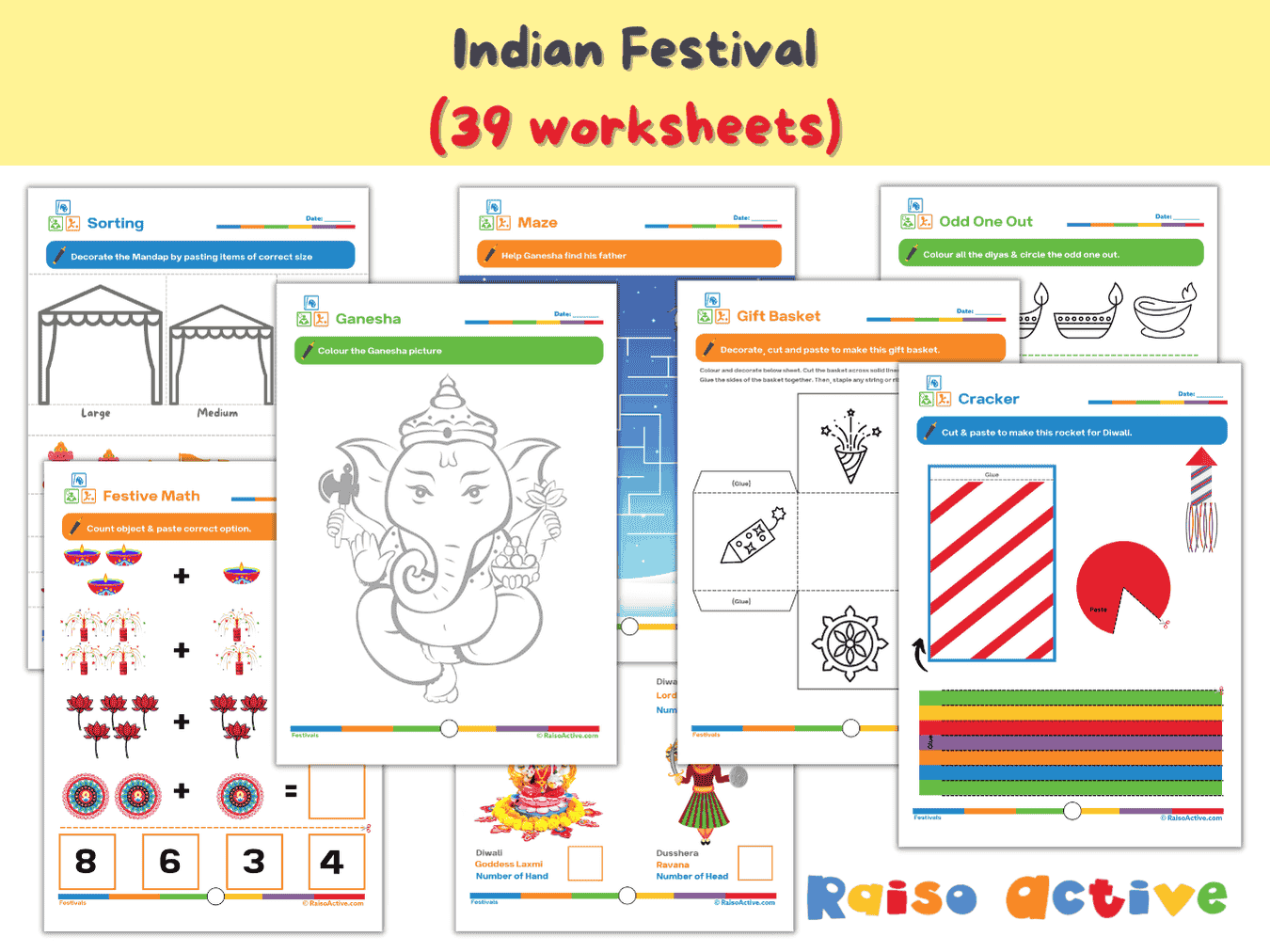
Festivals & Cultural Diversity Activity Book for Kids (Ages 4-8)
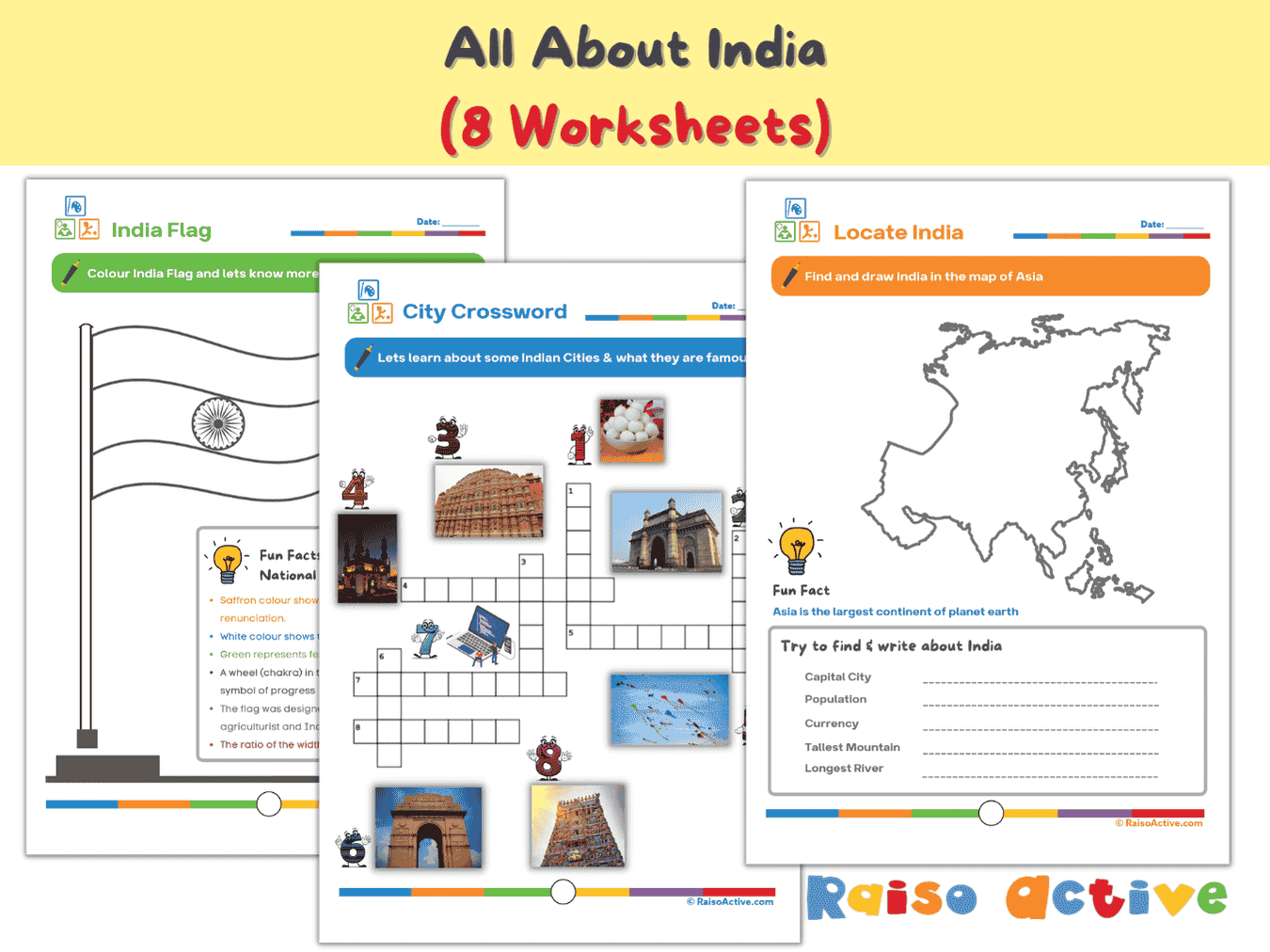
India Activity Book for Kids: Explore Geography, Culture & Symbols (Ages 5-8)
Guides for parents and teachers
See all guides →Number Formation Rhymes 0–9 and How to Fix Reversals
Original number formation rhymes for 0–9, the correct stroke order for each digit, why 3, 5 and 7 get reversed most often, and multisensory fixes that work.
Pre-Writing Strokes in Order: From Standing Lines to Loops (With Printable Patterns)
The developmental order of pre-writing strokes, from vertical lines to loops, and why practicing them in sequence makes letter formation much easier to learn.
Kindergarten Readiness Checklist: 25 Skills to Practice Before the First Day
A kindergarten readiness checklist of 25 literacy, math, motor, self-regulation and self-help skills, with an 8-week summer plan and notes on when not to worry.
Best Worksheets for 3-Year-Olds: What Works and What to Avoid
What works on worksheets for 3-year-olds: short sessions, crayons, tracing lines, matching, cutting, a free weekly plan, and signs one is too advanced.
What Should a 4-Year-Old Know Before LKG? A Readiness Checklist
A calm, teacher-written LKG readiness checklist for 4-year-olds: language, pattern writing, numbers to 10, self-help and social skills, plus a 6-week plan.
Resources for Children with Multiple Disabilities: A Comprehensive Guide for Families
Discover essential resources for children with multiple disabilities. Therapies, inclusive learning, assistive technology, and printable activities for ages 1-8.
Canonical: https://raisoactive.com/worksheets/diwali-worksheets