Pre-Writing Strokes in Order: From Standing Lines to Loops (With Printable Patterns)
Author
RaisoActive - Kids Activities and Fun Learning
Published
Reading Time
5 min read
- Pre-writing strokes develop in a set order — vertical, horizontal, circle, cross, diagonal, square, then triangle — because each one needs more precise control than the last
- Skipping ahead to a harder stroke, or straight to letters, asks a child to use control they have not built yet
- A tripod grip, stable wrist and correctly angled paper matter more than which stroke a child is practicing
- Indian preschools call this progression "pattern writing"; Western early-years programs call it "pre-writing strokes" — the motor skill underneath is the same
- A simple 4-week plan, moving one or two strokes at a time, is enough to build the full set before letter formation starts
The Order Pre-Writing Strokes Develop In
Children master pre-writing strokes in a set developmental order — vertical line, horizontal line, circle, cross, diagonal line, square, then triangle — because each stroke demands finer wrist and finger control than the one before it. Practicing them in this order, rather than jumping to whichever shape a workbook happens to show first, builds the hand strength and directional control that make letter formation noticeably easier once it starts.
This is not a rule specific to one country or curriculum. Whether a child's program calls this stage Nursery, Pre-K, or LKG, occupational therapists and early-years teachers describe the same sequence, because it follows how a young hand actually gains control — large shoulder and arm movements first, then wrist control, then the small finger movements that a triangle or a diagonal line demands. A four-year-old who cannot yet draw a clean cross is not behind; they are simply not there yet on a sequence every child moves through.
Understanding the order also changes how you choose printable practice. A page of tracing worksheets that starts a child on diagonals and triangles before verticals and circles are solid is asking for frustration that has nothing to do with effort. Work through the strokes in sequence, and each new one arrives easier than the last.
The Seven Strokes, in Developmental Order
Ages below are general guides, not deadlines — plenty of capable children move through this sequence a little earlier or later.
- Vertical line (top to bottom): usually the first controlled mark a child makes on purpose, often manageable from around age 2
- Horizontal line (left to right): needs the wrist to move sideways instead of down, typically solid by around 2.5–3
- Circle: the first continuous curved stroke, requiring the hand to change direction smoothly all the way around, usually steady by 3
- Cross (a horizontal line over a vertical one): needs a child to plan and combine two strokes with accurate placement, usually managed by 3.5–4
- Diagonal line: harder than it looks, since a diagonal is not anchored to the top-to-bottom or left-to-right movements a child already knows, typically emerging around 4–4.5
- Square: four straight sides meeting at four corners with accurate direction changes, generally solid by 4.5–5
- Triangle: three straight sides at three angles, including at least one diagonal, usually the last of the seven to become reliable, often around 5–5.5
Why This Sequence Matters for Letter Formation
Every printed letter is built from a small number of these same strokes. A child who has practiced verticals and circles confidently can already produce most of the motion needed for letters like l, t, i, o, c, and a. Letters that rely on diagonals — k, v, w, x, y, z — and letters with crossed strokes, like t and f, are noticeably easier for a child who has already built those specific movements through pattern practice rather than meeting them for the first time inside a letter shape.
- Vertical and horizontal lines appear in l, t, i, E, F, H, and in the crossbars of many capital letters
- Circles and curves appear in o, c, a, e, s, and the rounded parts of b, d, g, p, q
- Crosses appear directly in t, f, and x
- Diagonals appear in k, v, w, x, y, z, and the capital letters A, K, M, N, W, Y
This is why a child who struggles with a specific letter often benefits more from returning to the underlying stroke — practicing plain diagonal lines before attempting k again, for instance — than from repeating the letter itself over and over.
Grip and Posture Before Strokes
The stroke a child is practicing matters less than how they are holding the pencil and sitting while they practice it. A tripod grip — thumb and index finger holding the pencil near the tip, resting on the middle finger — gives the small finger movements that later strokes need. A whole-fist grip can still produce a vertical line, but it makes circles, diagonals, and crosses far harder, because the whole arm has to move instead of just the fingers and wrist.
- Feet flat on the floor or a footrest, with the table at roughly elbow height — a wobbly base makes a steady hand much harder
- Paper angled slightly (about 20–30 degrees) in the direction of the writing hand, rather than kept perfectly straight
- A short, thick crayon or triangular pencil for children who are still building grip strength, moving to a standard pencil once the tripod hold is comfortable
- The non-writing hand resting on the paper to hold it steady — a habit worth teaching early
Same Progression, Two Names: Pattern Writing and Pre-Writing Strokes
Indian preschools and LKG classrooms almost always call this "pattern writing" — waves, zigzags, loops, and running patterns practiced across a page before letters are introduced. UK and US early-years programs more often use the term "pre-writing strokes" or "pre-writing patterns." The vocabulary differs; the motor skill being built is exactly the same progression described above, just packaged into slightly different worksheet formats.
Hemsweta Jain (Teacher Cheena), RaisoActive's founder and an early-childhood educator since 2014, has used both terms with parents depending on which system their child is in, and always makes the same point: a child working through pattern writing pages in an LKG classroom is doing precisely the same hand-development work as a child tracing pre-writing strokes in a Western preschool, however different the two worksheets look on the page.
A 4-Week Pattern-Writing Plan
Week 1: Vertical and Horizontal Lines
Start big — vertical and horizontal strokes in the air, on a whiteboard, or in a tray of sand or shaving foam — before moving to paper. Keep lines short and thick at first, then narrow the practice space over the week.
Week 2: Circles and Curves
Practice large circular motions first (painting a circle on an easel, tracing a hoop on the floor with a finger) before small pencil circles. Curved lines and waves come next, since they share the same continuous, changing-direction motion.
Week 3: Crosses and Diagonals
Introduce the cross by having a child trace a horizontal line over an already-drawn vertical one, so the placement is guided. Diagonals benefit from a visual anchor — trace from one corner of a small square to the opposite corner.
Week 4: Squares, Triangles, and Mixed Review
Build a square one side at a time before asking for it in one continuous attempt. Introduce the triangle last, since it combines a diagonal with two other sides. Finish the week mixing all seven strokes on one page to check which still need slow, guided practice.
- Trace with a finger or a dry-erase marker before switching to a pencil — repeating the motion without the pressure of getting a pencil line right builds confidence first
- Talk through the motion out loud ("down, down, down" for a vertical line; "around and around" for a circle) so the words and the movement reinforce each other
- Keep sessions to five or ten minutes — pre-writing strokes need frequent short practice far more than one long session
- Use [preschool tracing pages](/worksheets/preschool-tracing) with dotted guides and directional arrows rather than blank paper until a stroke is reliable
- Praise the attempt at the stroke, not just a neat result — a wobbly diagonal attempted independently is more useful practice than a straight one guided hand-over-hand
The order matters more than the speed — skipping a stroke to reach letters faster usually slows everything down.
A child asked to write letters before their hand can manage circles, crosses, and diagonals will produce shaky, effortful letters and often develop an awkward grip to compensate, since the hand finds whatever way it can to get the shape onto the page. Give the underlying strokes a few weeks of dedicated practice first, and letter formation tends to arrive with far less frustration on both sides.
Pre-writing strokes questions parents ask
What age do pre-writing strokes start?
My child still can't draw a cross or diagonal at age 5. Should I worry?
What is pattern writing, and is it the same as pre-writing strokes?
Can we skip straight to letters instead of practicing strokes first?
How long should a pre-writing practice session last?
Patterns Before Letters
A page of loops and zigzags might look like a small thing next to a page of letters, but it is doing the harder, less visible work that letters depend on. Give the seven strokes their proper order and a few unhurried weeks, and the transition to handwriting tends to look almost easy by comparison.
Free worksheets for this topic
Browse all worksheets
Clothing Pattern Match Worksheet for Preschoolers
Ages 3-5 · Preschool–Pre-KAges 3-5 · Nursery–ReceptionAges 3-5 · Nursery–LKGAges 3-5
This worksheet has children ages 3-5 study repeating patterns on clothing items — stripes, polka dots, or checks — and match each item to its identical twin, building visual discrimination and early pattern-sequencing skills. Distinguishing between similar-looking patterns also sharpens attention to detail, a skill that later supports letter and word recognition.
Mela Data Detective: Navratri Bar Chart, Patterns and Moon Maths
Ages 7-11 · Grade 2–Grade 3Ages 7-11 · Year 3–Year 4Ages 7-11 · Class 2–Class 3Ages 7-11
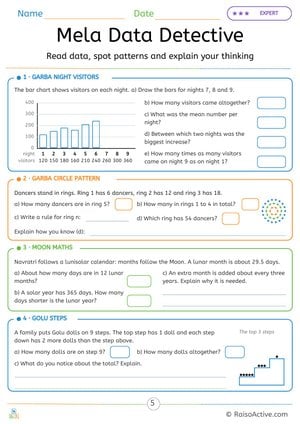
Children complete a bar chart of nine nights of visitors, find the total, the mean and the biggest increase, find and explain the rule for a growing pattern of dancers, compare a lunar year with a solar year, and add the dolls on nine Golu steps to discover a square number.
Make a Paper Toran: Navratri Craft Template
Ages 4-6 · Pre-K–KindergartenAges 4-6 · Reception–Year 1Ages 4-6 · LKG–UKGAges 4-6
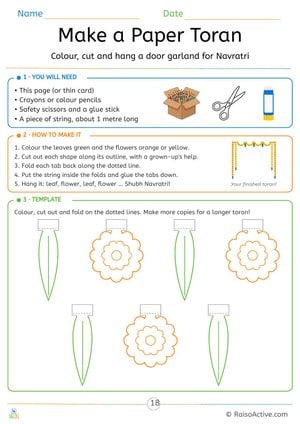
Children follow step-by-step instructions to colour, cut, fold and glue a festival decoration, building scissor skills and fine motor control.
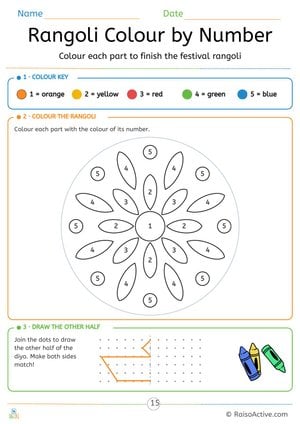
Navratri Rangoli Colour by Number and Symmetry Diya
Ages 4-6 · Pre-K–KindergartenAges 4-6 · Reception–Year 1Ages 4-6 · LKG–UKGAges 4-6
Children match numbers to colours using a key, colour a rangoli pattern carefully and draw the other half of a shape so both sides match.

Written by
Hemsweta Jain · Teacher Cheena
MBA and Early Childhood Educator, teaching since 2014 · Founder of RaisoActive, Mumbai
Published · Last reviewed
Related Resources
Printable Resources(10)
View all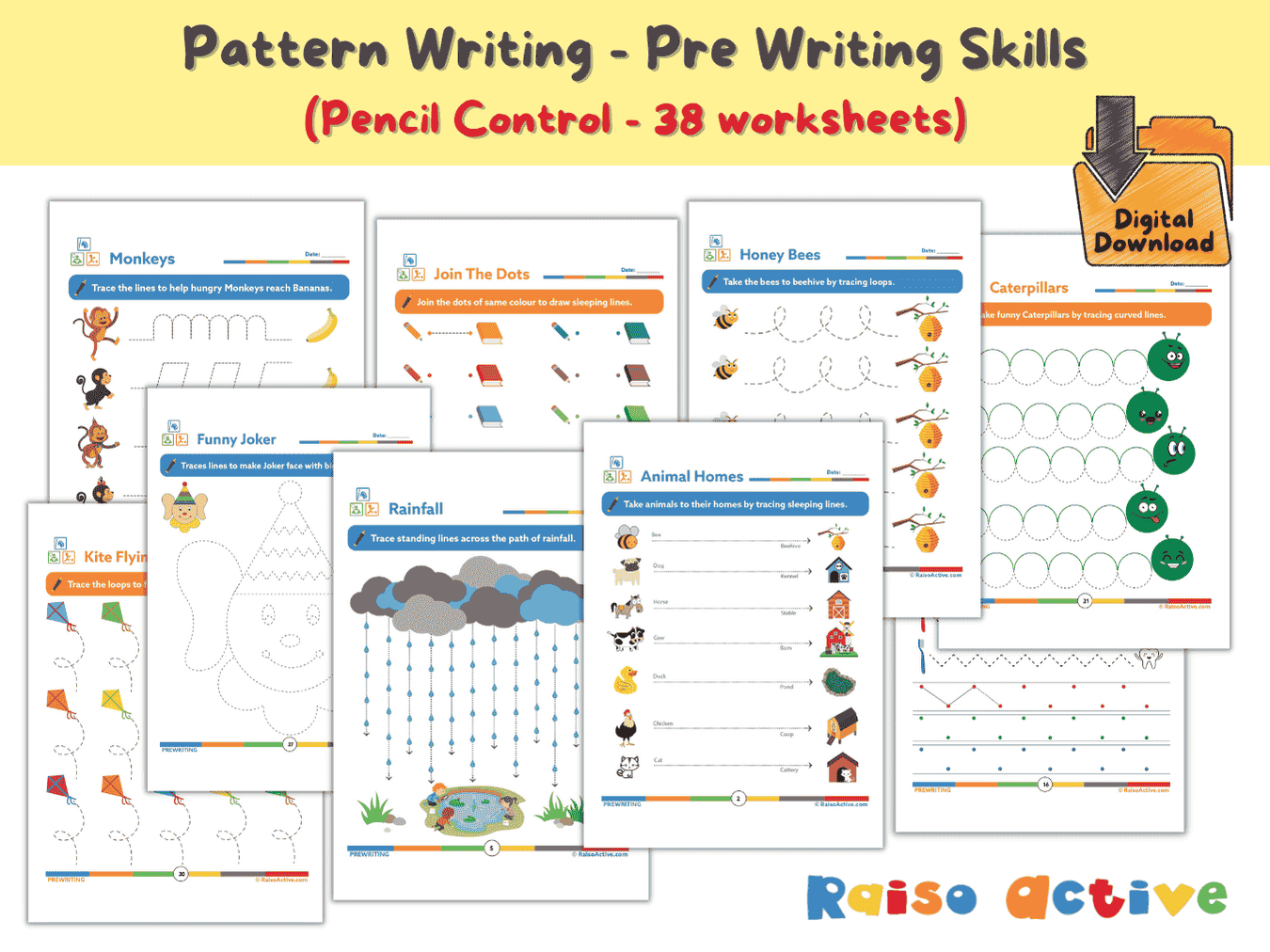
Pattern Writing Pre-writing Skills Activity Book for 3-4 Year Olds
Ages 3-4 · PreschoolAges 3-4 · NurseryAges 3-4 · 44 pages
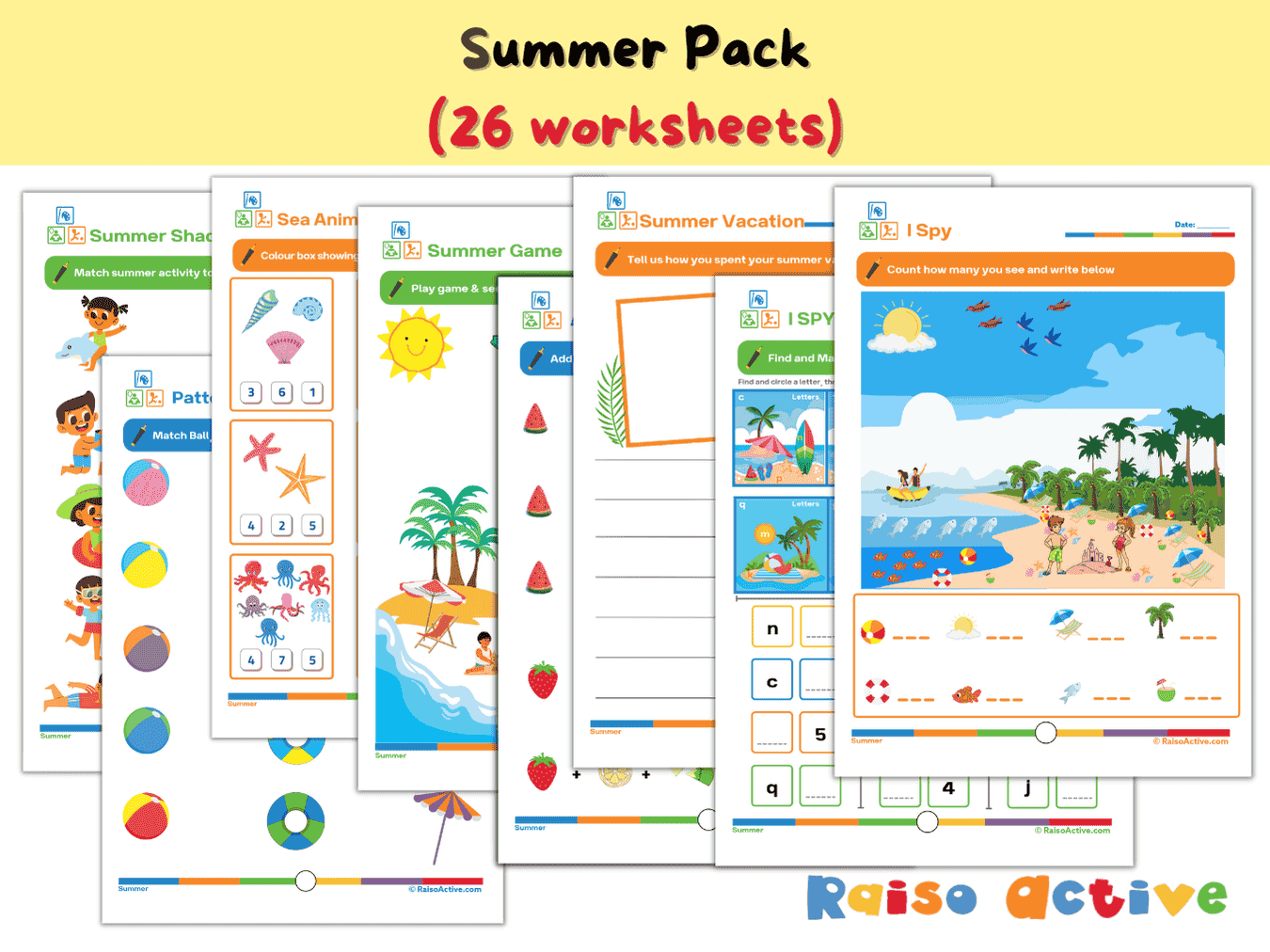

Summer Activity Pack: Math, Literacy, Puzzles & More for Preschool & Kindergarten
Ages 3-7 · Preschool–Grade 1Ages 3-7 · Nursery–Year 2Ages 3-7 · Nursery–Class 1Ages 3-7 · 26 pages
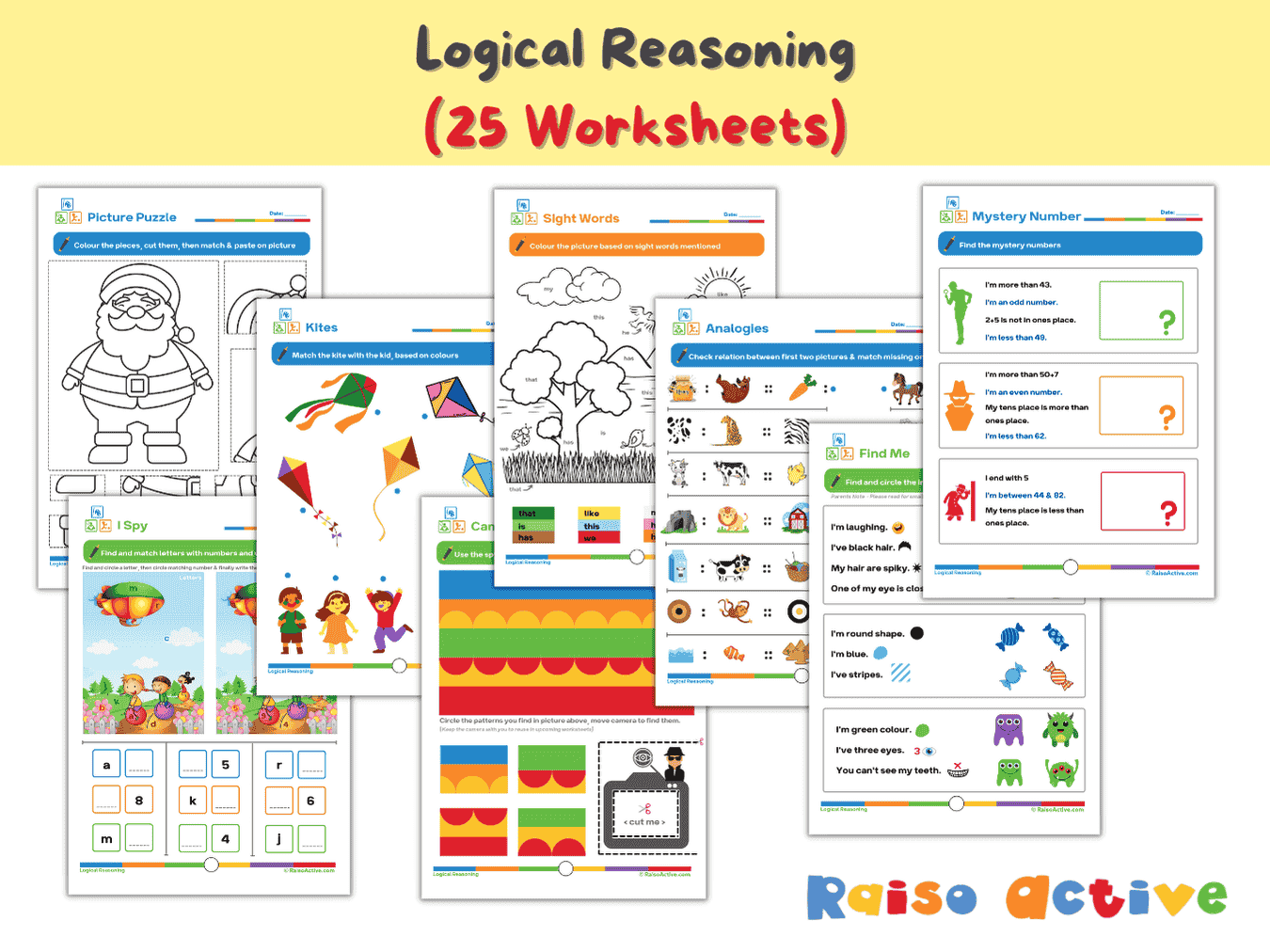

Logical Reasoning Activity Book for Preschool & Kindergarten | Patterns, Puzzles & Analogies
Ages 4-7 · Pre-K–Grade 1Ages 4-7 · Reception–Year 2Ages 4-7 · LKG–Class 1Ages 4-7 · 26 pages
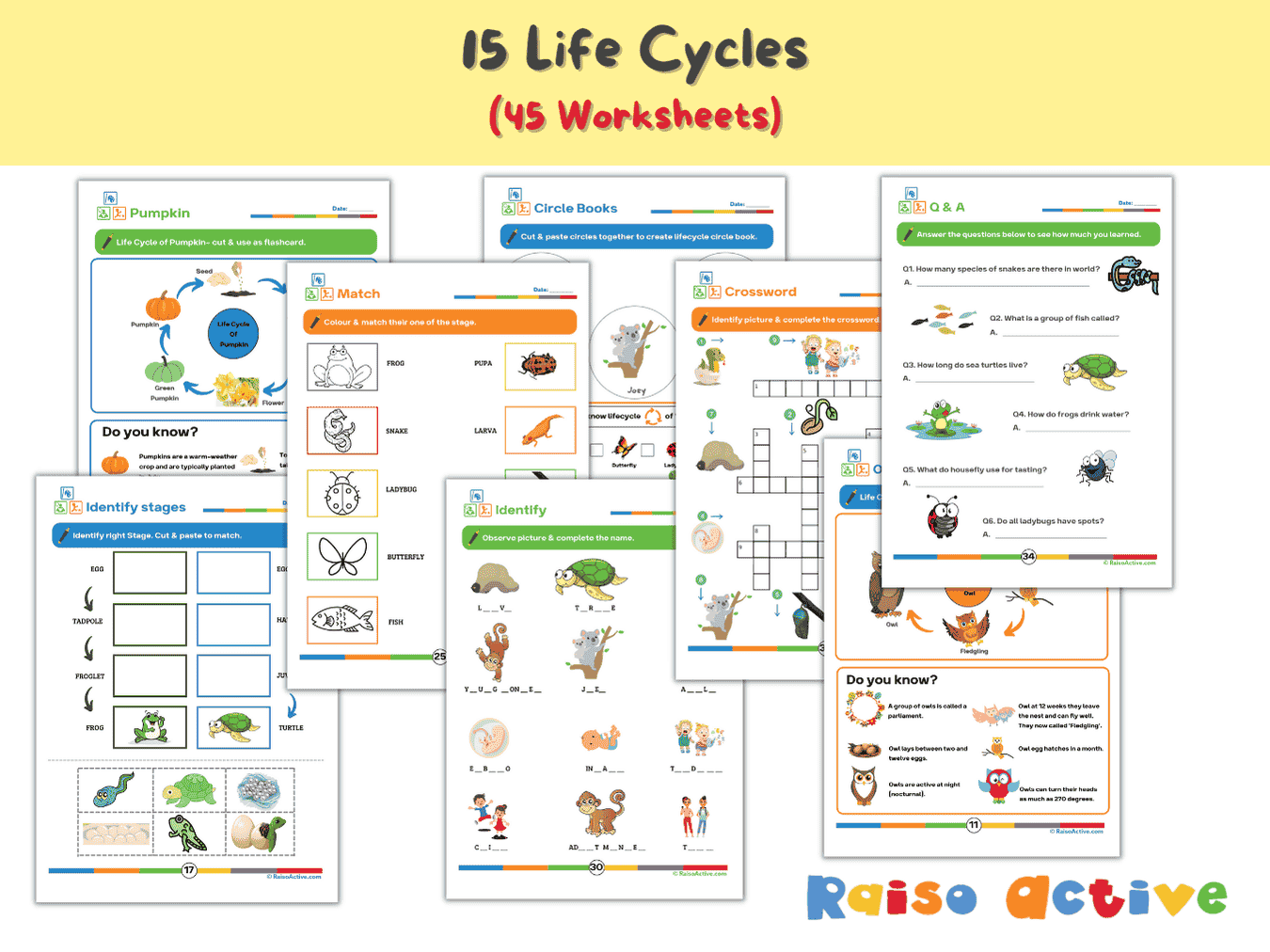

Lifecycles Activity Book & Flashcards for Preschool & Early Elementary
Ages 3-8 · Preschool–Grade 2Ages 3-8 · Nursery–Year 3Ages 3-8 · Nursery–Class 2Ages 3-8 · 46 pages
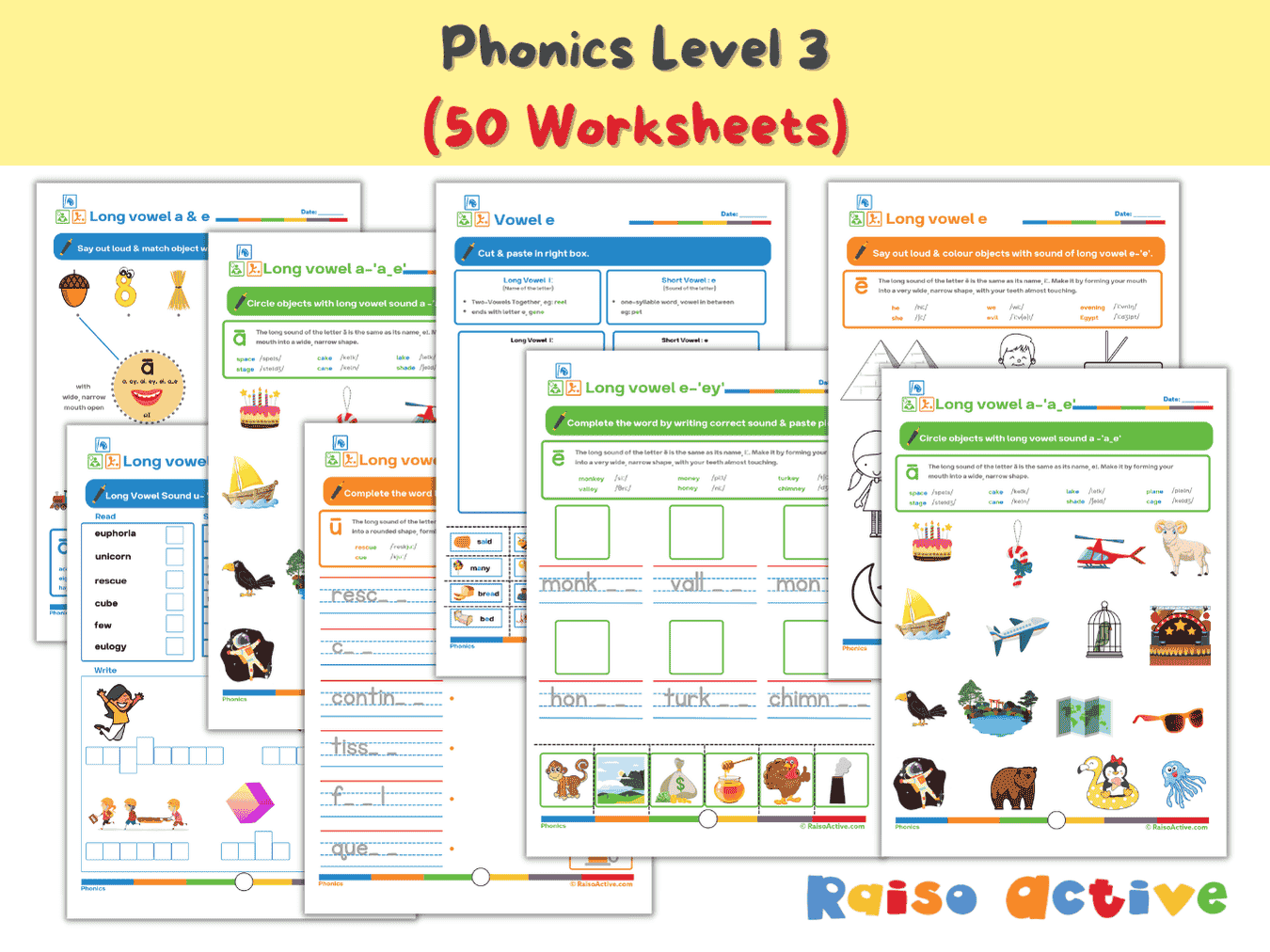

Phonics Level 3 Long Vowels Activity Book for Kindergarten & 1st Grade
Ages 5-7 · Kindergarten–Grade 1Ages 5-7 · Year 1–Year 2Ages 5-7 · UKG–Class 1Ages 5-7 · 51 pages
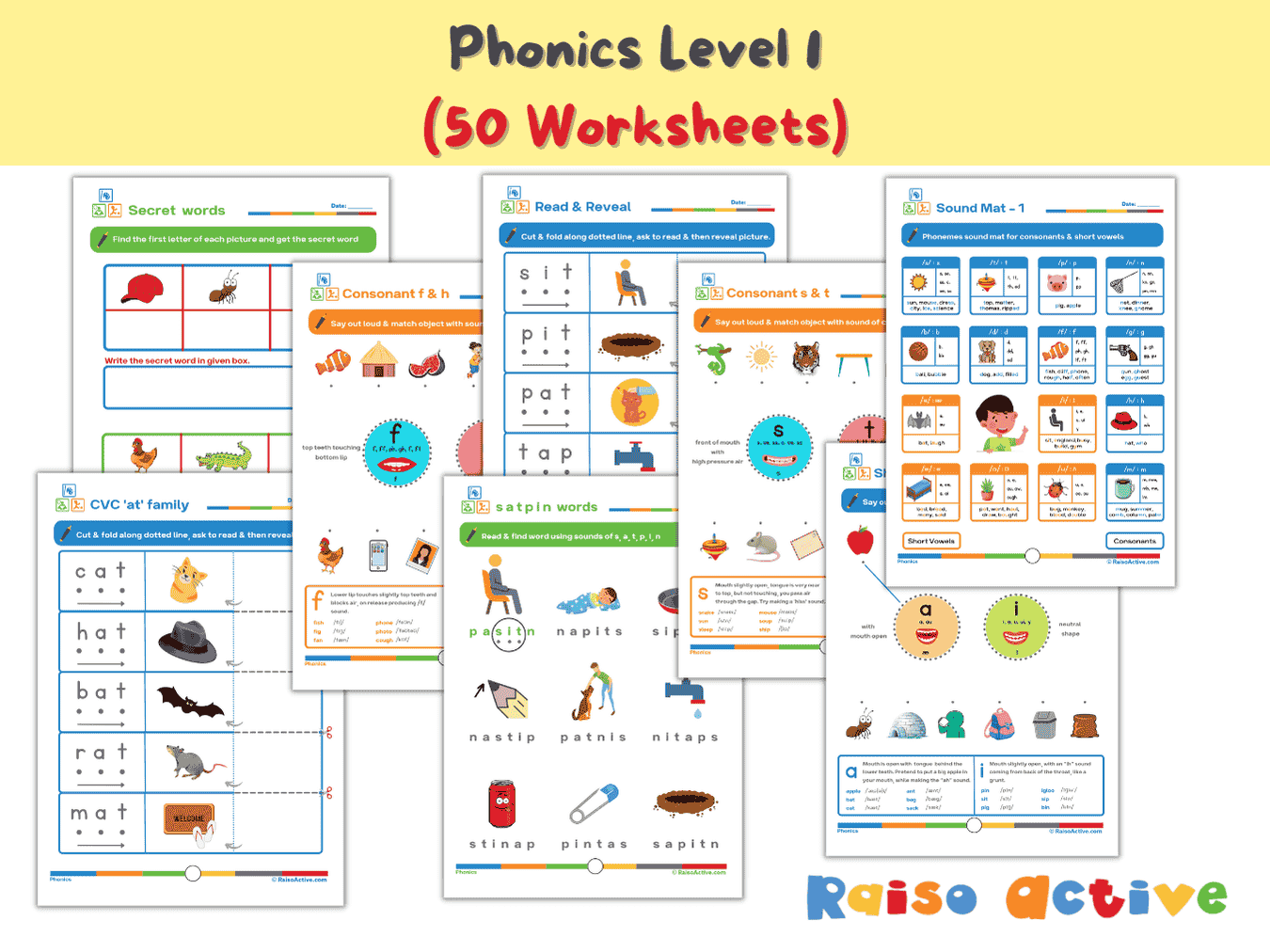
Phonics Level 1 Activity Book: Letter Sounds, Blending & CVC Words for Preschool & Kindergarten
Ages 3-6 · Preschool–KindergartenAges 3-6 · Nursery–Year 1Ages 3-6 · Nursery–UKGAges 3-6 · 60 pages
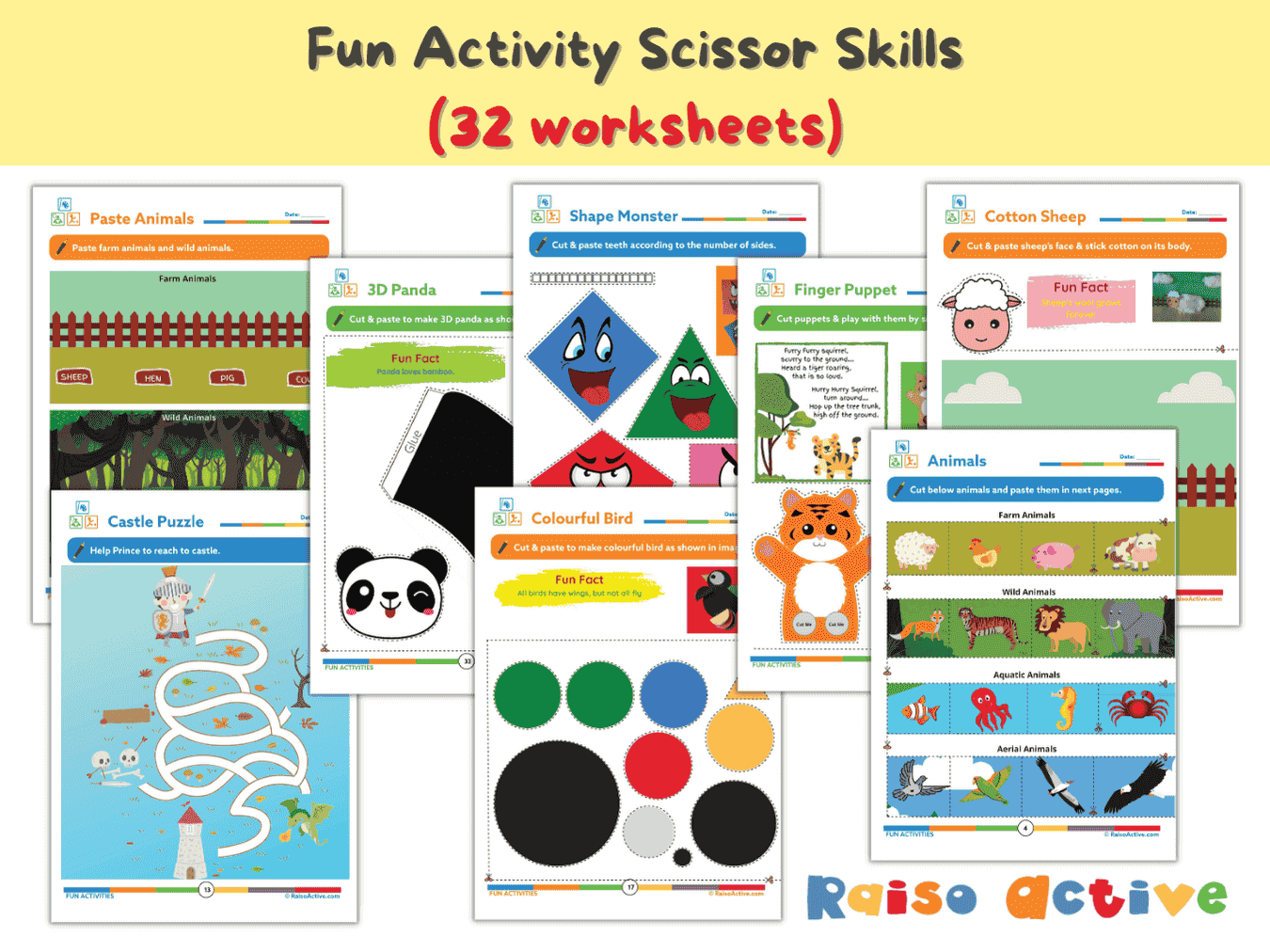
Preschool Scissor Skills Activity Book: Fine Motor & Craft Fun for Ages 3-6
Ages 3-6 · Preschool–KindergartenAges 3-6 · Nursery–Year 1Ages 3-6 · Nursery–UKGAges 3-6 · 35 pages
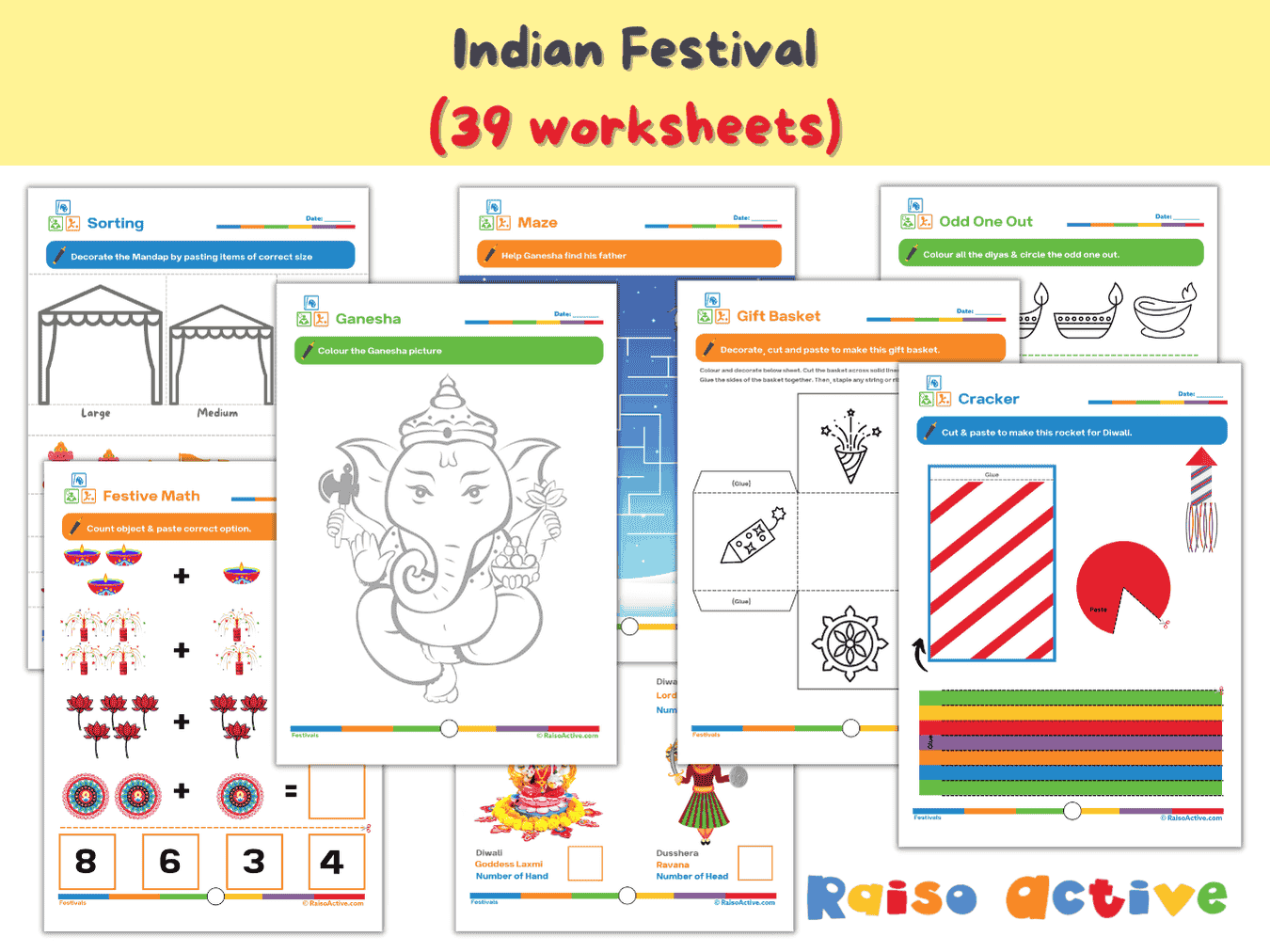
Festivals & Cultural Diversity Activity Book for Kids (Ages 4-8)
Ages 4-8 · Pre-K–Grade 2Ages 4-8 · Reception–Year 3Ages 4-8 · LKG–Class 2Ages 4-8 · 30 pages
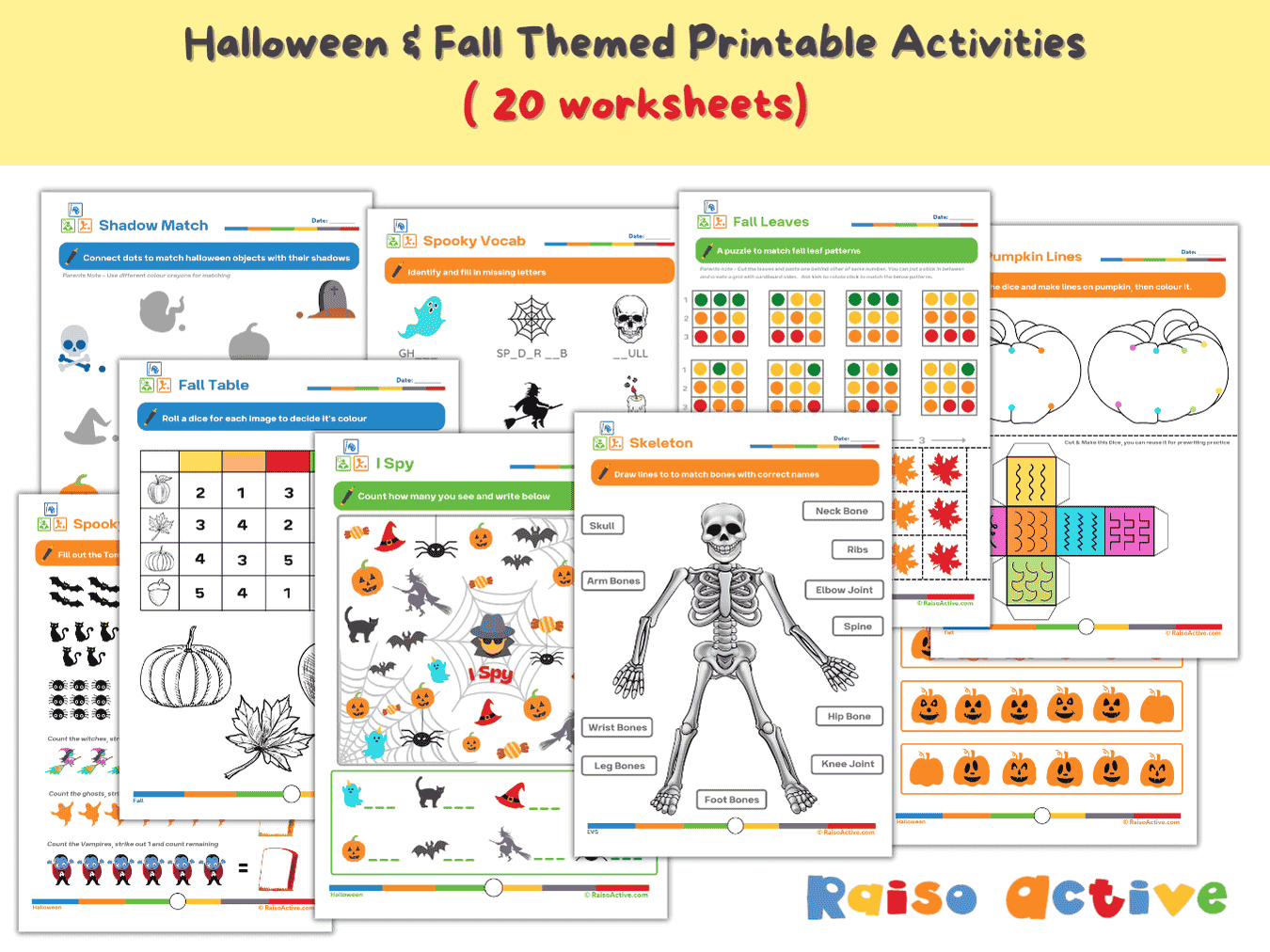
Halloween & Fall Activity Book: Math, Literacy & Cognitive Skills for Ages 4-8
Ages 4-8 · Pre-K–Grade 2Ages 4-8 · Reception–Year 3Ages 4-8 · LKG–Class 2Ages 4-8 · 23 pages
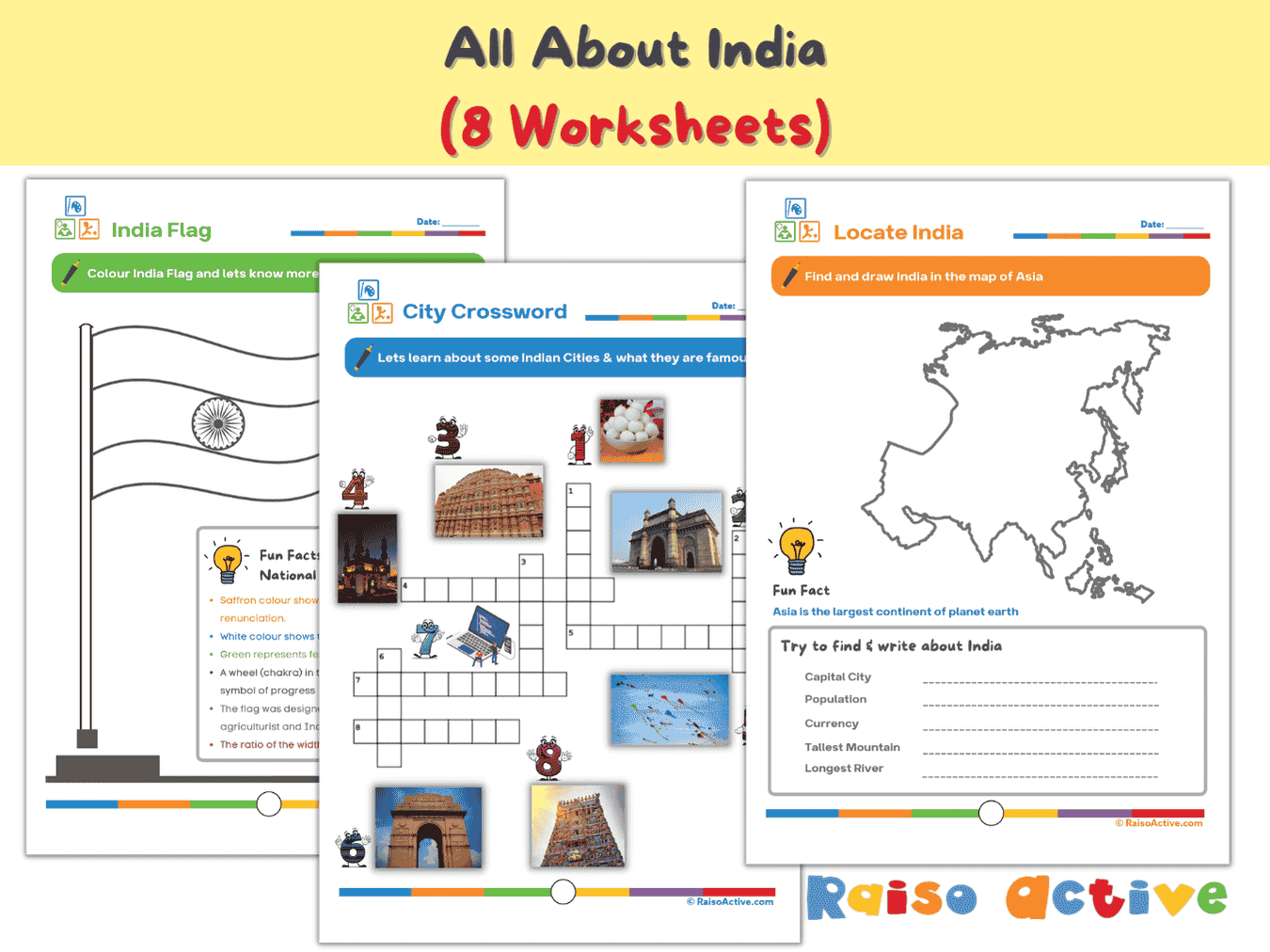
India Activity Book for Kids: Explore Geography, Culture & Symbols (Ages 5-8)
Ages 5-8 · Kindergarten–Grade 2Ages 5-8 · Year 1–Year 3Ages 5-8 · UKG–Class 2Ages 5-8 · 8 pages