Free printable worksheets · United States
Kindergarten Worksheets (Ages 5–6)
Kindergarten worksheets are practice sheets for children aged 5 to 6 in the first year of elementary school. They cover the Common Core kindergarten standards: print concepts, phonological awareness and phonics (RF.K.1–3), sight words, reading CVC words, writing simple sentences, counting to 100 and writing numbers to 20 (K.CC), addition and subtraction within 10 (K.OA), and shapes (K.G).
Kindergarten in the US has become the year reading instruction begins, and the Common Core standards make the targets explicit: by June a kindergartner should know a sound for every consonant and the short vowels, read common high-frequency words by sight, decode CVC words, and write a sentence with invented spelling that others can read. In math, K.CC asks for counting to 100 by ones and tens and writing numbers 0 to 20, and K.OA for adding and subtracting within 10 with objects, fingers or drawings. That is a lot of ground for a five-year-old, and the pace varies widely between districts. The worksheets on this page are organized by standard so you can match what the classroom is doing each week.
- 24 worksheets
- Free PDF download
- Print on A4 or Letter
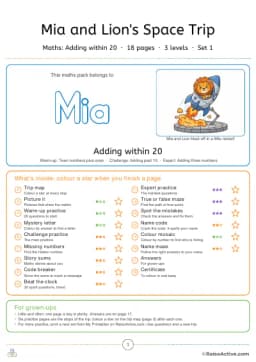
Made for your child
Adding within 10, made for your child
A maths pack with your child's name in it: pictures that explain, practice at three levels, puzzles and story sums about them. Print a new set whenever they finish.
Make a maths packFree preview · free for members
Kindergarten Worksheets to print
Browse all worksheets for ages 5–6
Logical Reasoning Certificate of Achievement
Ages 4-7 · Pre-K–Grade 1Ages 4-7 · Reception–Year 2Ages 4-7 · LKG–Class 1Ages 4-7
A certificate to celebrate a child who has spotted patterns, cracked codes, solved mazes and thought things through. It has tick boxes for the Warm-up, Challenge and Expert levels completed.

Picture Sudoku for Kids: Cut and Paste 4x4 Puzzles
Ages 4-7 · Pre-K–Grade 1Ages 4-7 · Reception–Year 2Ages 4-7 · LKG–Class 1Ages 4-7
This worksheet helps children develop logical reasoning and problem-solving skills by completing Sudoku puzzles with holiday-themed pictures.

Camera Spy 3: Pattern Recognition Worksheet for Preschoolers
Ages 4-7 · Pre-K–Grade 1Ages 4-7 · Reception–Year 2Ages 4-7 · LKG–Class 1Ages 4-7
This worksheet helps children identify and match patterns by using a 'spy camera'.

Pizza Pattern Matching Worksheet for Preschoolers
Ages 4-7 · Pre-K–Grade 1Ages 4-7 · Reception–Year 2Ages 4-7 · LKG–Class 1Ages 4-7
This worksheet helps children practice visual discrimination and pattern recognition by matching pizza slices to complete the whole pizza.
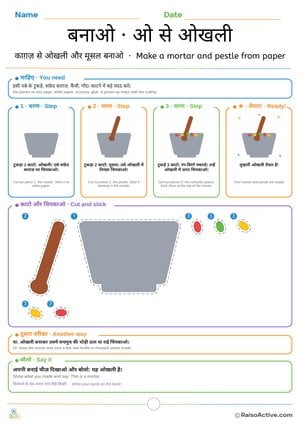
Make a Paper Mortar and Pestle: Hindi Letter ओ (o) Cut and Stick Craft | बनाओ · ओ से ओखली
Ages 4-7 · Pre-K–Grade 1Ages 4-7 · Reception–Year 2Ages 4-7 · LKG–Class 1Ages 4-7
Children cut out the numbered pieces and stick them in order to make a mortar and pestle with colourful spices, then show it and say a full sentence about it. It links the letter ओ with a real picture word, ओखली, and practises scissor control and following steps.
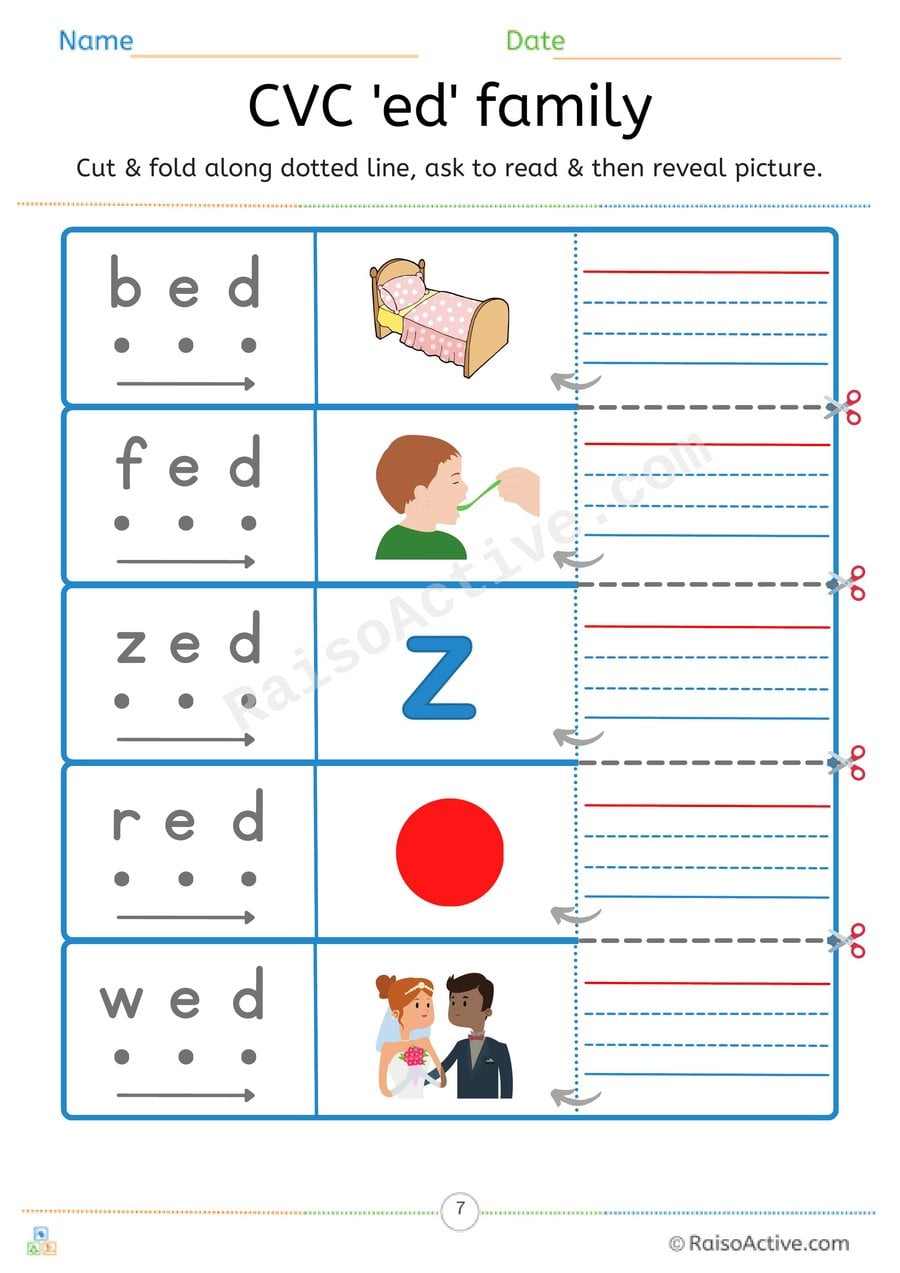
CVC 'ed' Word Family Read, Cut and Reveal Worksheet
Ages 4-7 · Pre-K–Grade 1Ages 4-7 · Reception–Year 2Ages 4-7 · LKG–Class 1Ages 4-7
Children read five 'ed' words (bed, fed, zed, red, wed) by blending three sounds, check each one against a hidden picture (a bed, a child being fed, a letter z, a red dot and a wedding) and write it, so they see that changing the first sound makes a new word.
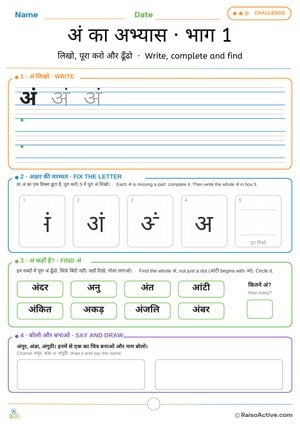
Hindi Letter अं (am) Practice 1: Write, Fix the Letter and Find | अं का अभ्यास · भाग 1
Ages 4-7 · Pre-K–Grade 1Ages 4-7 · Reception–Year 2Ages 4-7 · LKG–Class 1Ages 4-7
A challenge page: write अं between the lines, complete four letters that are each missing a part and then write the whole अं in box 5, find अं in words such as अंदर, अंत, अंकित, अंजलि and अंबर, and draw a picture. Children find the whole अं, not just a dot: आंटी begins with आं, not अं.

I Spy Letter and Number Matching Worksheet for Preschoolers
Ages 4-7 · Pre-K–Grade 1Ages 4-7 · Reception–Year 2Ages 4-7 · LKG–Class 1Ages 4-7
This worksheet helps children practice matching letters to numbers and improve their early literacy and numeracy skills.

Shape Frog Cut and Paste Worksheet for Preschoolers
Ages 4-7 · Pre-K–Grade 1Ages 4-7 · Reception–Year 2Ages 4-7 · LKG–Class 1Ages 4-7
This worksheet helps children learn to identify and manipulate basic shapes while following instructions to create a frog.
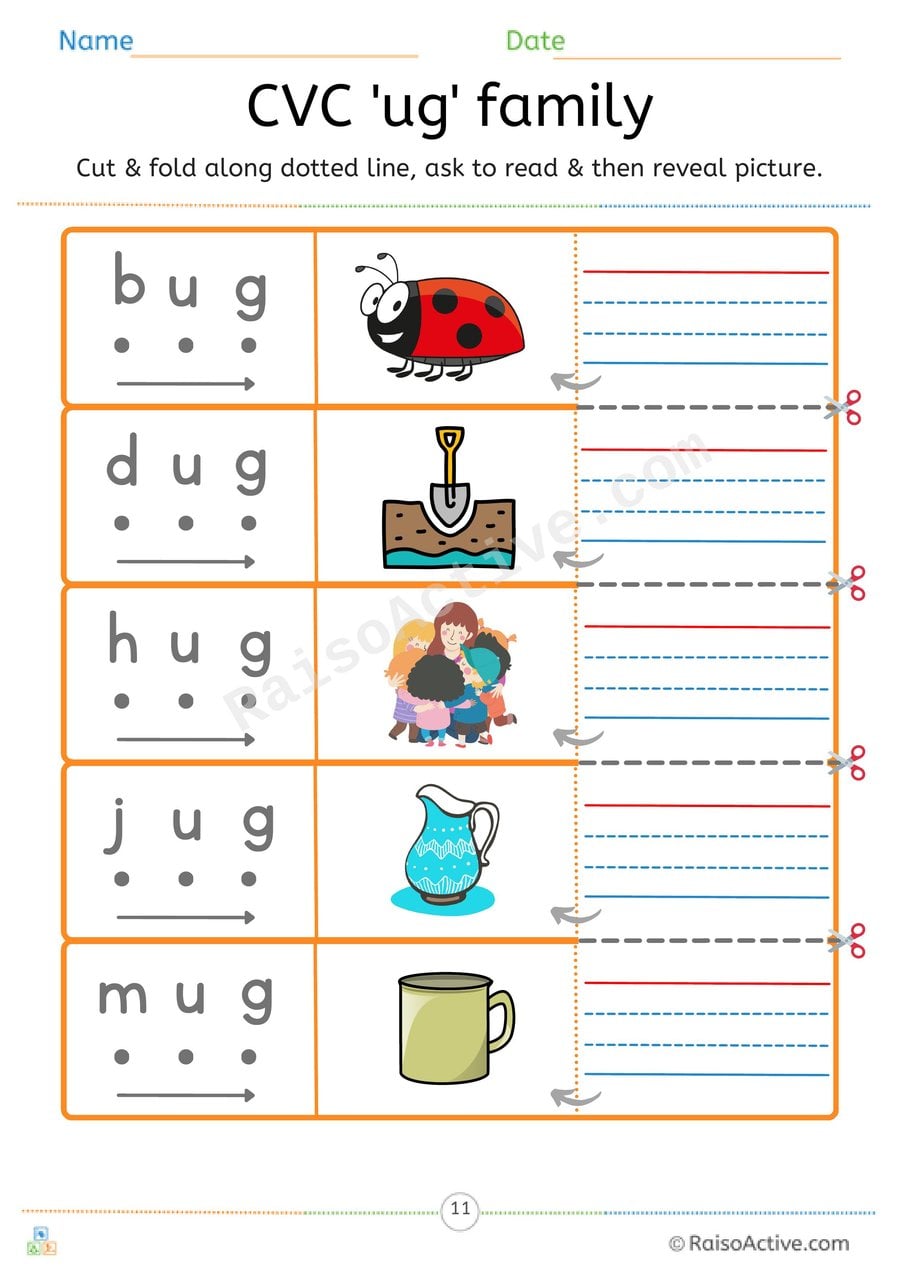
CVC 'ug' Word Family Read, Cut and Reveal Worksheet
Ages 4-7 · Pre-K–Grade 1Ages 4-7 · Reception–Year 2Ages 4-7 · LKG–Class 1Ages 4-7
Children read five 'ug' words (bug, dug, hug, jug, mug) by blending three sounds, check each one against a hidden picture (a ladybird, a spade in soil, a family hug, a jug and a mug) and write it, so they see that changing the first sound makes a new word.

Hard and Soft C Sound Sorting Worksheet
Ages 4-7 · Pre-K–Grade 1Ages 4-7 · Reception–Year 2Ages 4-7 · LKG–Class 1Ages 4-7
Children learn that c says /s/ before e, i or y and /k/ before a, o, u or a consonant, then circle soft c words in green (city, rice, pencil, cereal, face) and hard c words in red (cat, camel, crib, cake, corn, crab, cut).
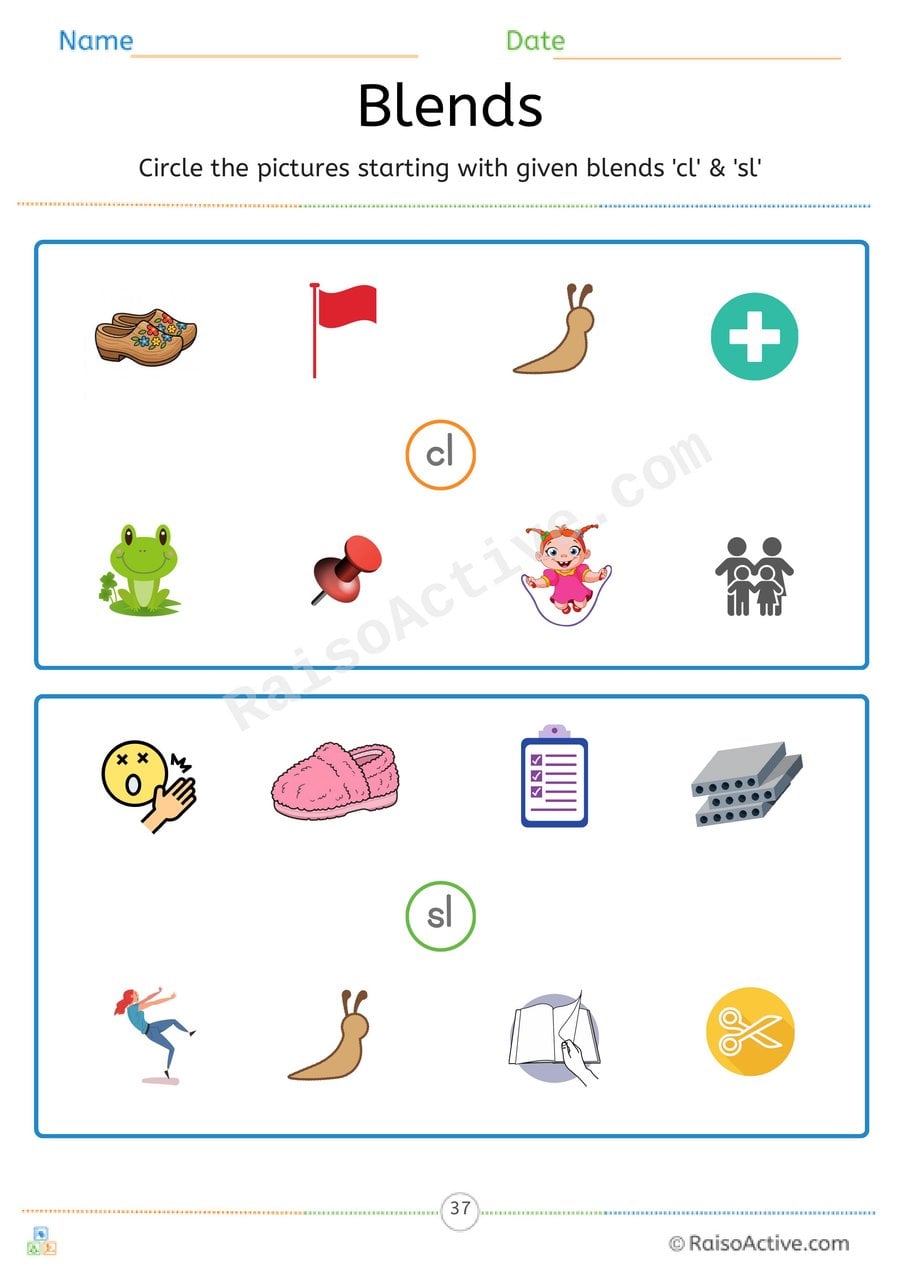
Beginning Blends cl and sl Circle the Pictures Worksheet
Ages 4-7 · Pre-K–Grade 1Ages 4-7 · Reception–Year 2Ages 4-7 · LKG–Class 1Ages 4-7
Children listen for the first two sounds and circle the pictures that start with cl (clogs, clan) and with sl (slap, slabs, slip, slug, slipper), leaving the others.

Easter Egg Pattern Matching Worksheet for Preschoolers
Ages 4-7 · Pre-K–Grade 1Ages 4-7 · Reception–Year 2Ages 4-7 · LKG–Class 1Ages 4-7
This worksheet helps children practice pattern recognition and matching skills by connecting patterns to the corresponding Easter eggs.
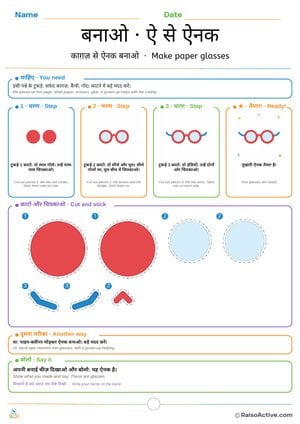
Make Paper Glasses: Hindi Letter ऐ (ai) Cut and Stick Craft | बनाओ · ऐ से ऐनक
Ages 4-7 · Pre-K–Grade 1Ages 4-7 · Reception–Year 2Ages 4-7 · LKG–Class 1Ages 4-7
Children cut out the numbered pieces and stick them in order to make a pair of glasses with two red rims, two lenses and two arms, then show it and say a full sentence about it. It links the letter ऐ with a real picture word, ऐनक, and practises scissor control and following steps.
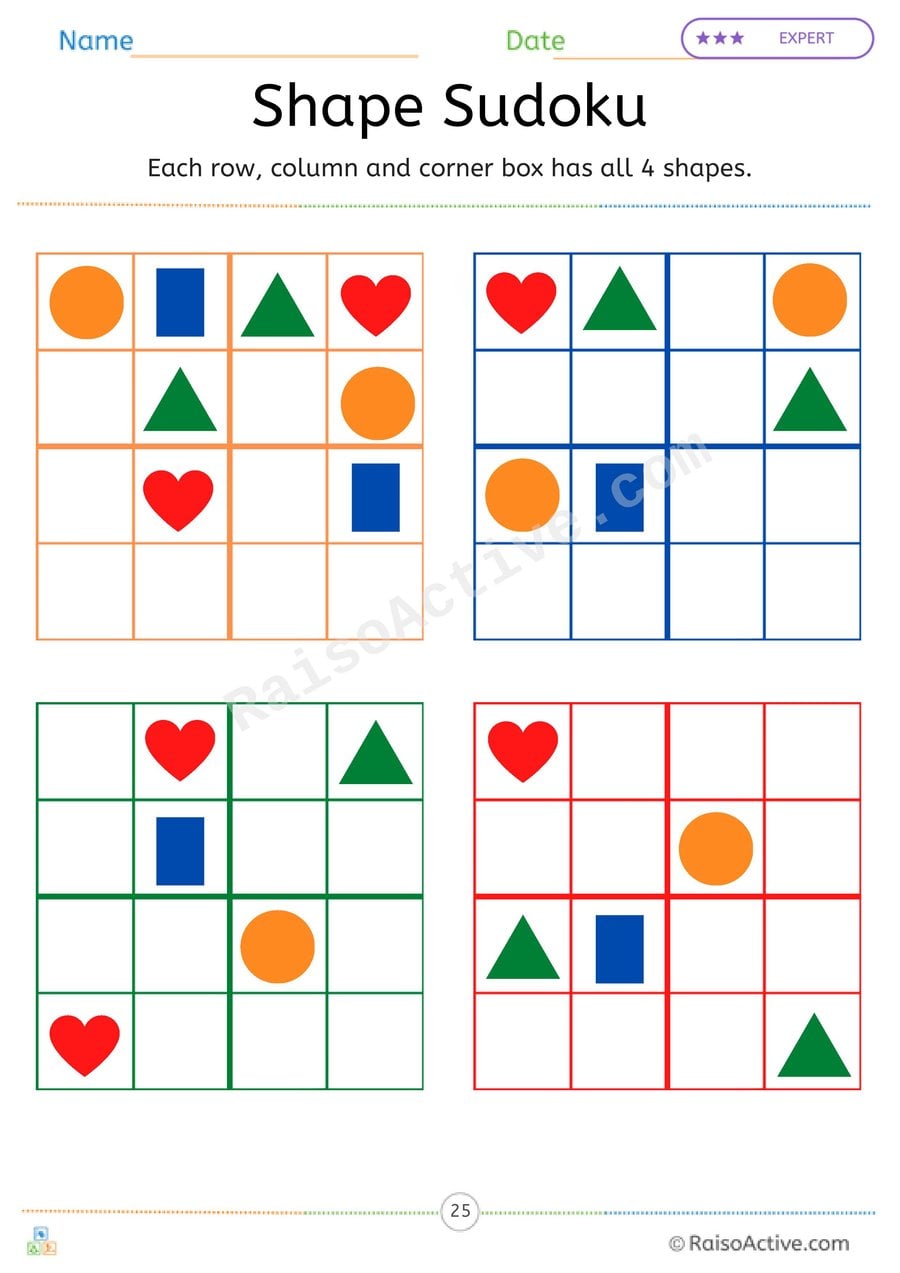
Shape Sudoku for Kids: 4x4 Shape Puzzles
Ages 4-7 · Pre-K–Grade 1Ages 4-7 · Reception–Year 2Ages 4-7 · LKG–Class 1Ages 4-7
This worksheet helps children develop logical reasoning skills by completing shape-based Sudoku puzzles.
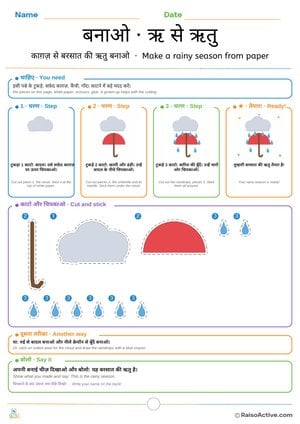
Make a Paper Rainy Season: Hindi Letter ऋ (ri) Cut and Stick Craft | बनाओ · ऋ से ऋतु
Ages 4-7 · Pre-K–Grade 1Ages 4-7 · Reception–Year 2Ages 4-7 · LKG–Class 1Ages 4-7
Children cut out the numbered pieces and stick them in order to make a rainy season scene with a cloud, umbrella and rain, then show it and say a full sentence about it. It links the letter ऋ with a real picture word, ऋतु (season), and practises scissor control and following steps.

Mystery Number Riddles Worksheet: Use the Clues
Ages 4-7 · Pre-K–Grade 1Ages 4-7 · Reception–Year 2Ages 4-7 · LKG–Class 1Ages 4-7
This worksheet helps children practice number recognition, following instructions, and applying logic to solve number puzzles.
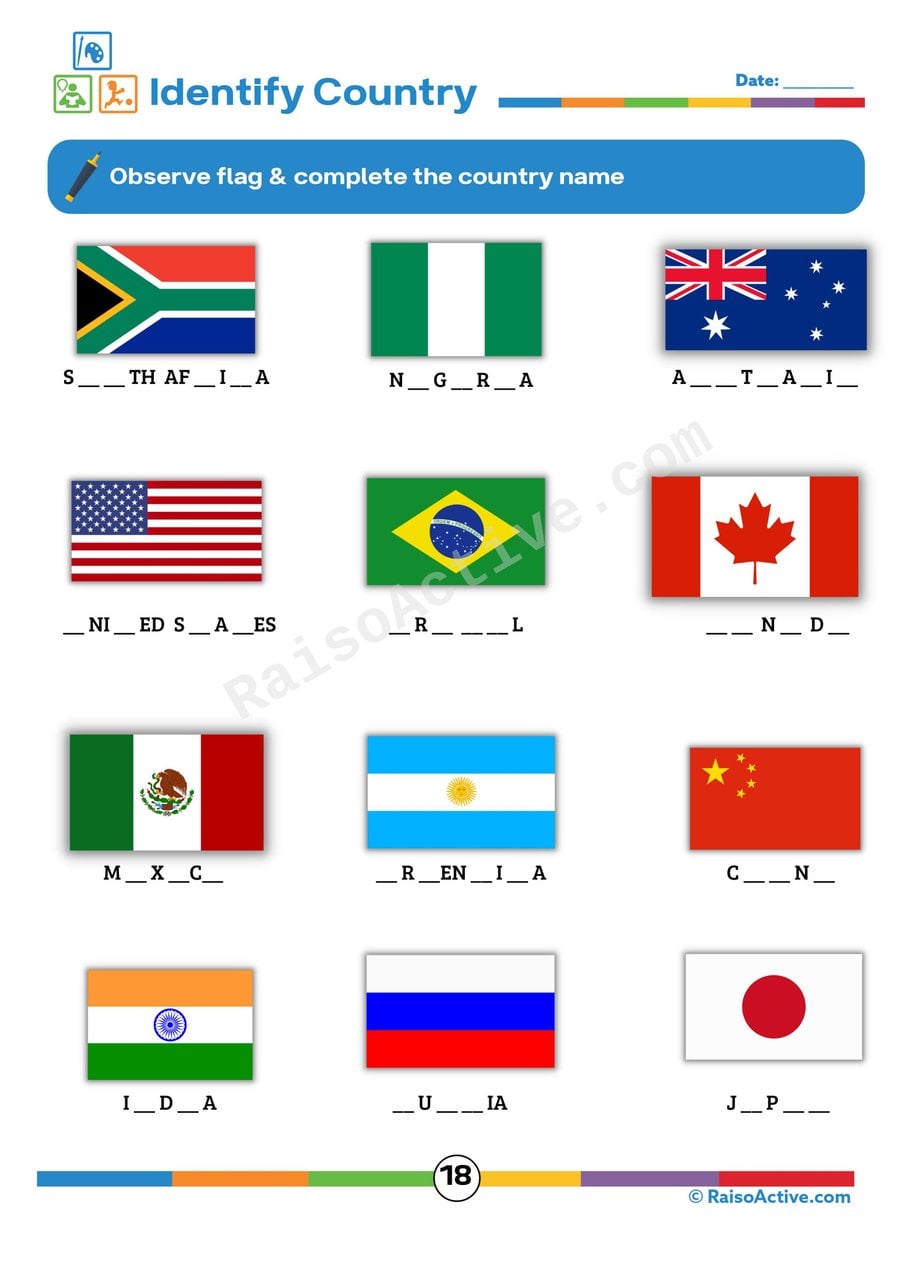
Identify the Country: Flag Matching Worksheet
Ages 4-7 · Pre-K–Grade 1Ages 4-7 · Reception–Year 2Ages 4-7 · LKG–Class 1Ages 4-7
Filling in the missing letters of each country's name while studying its flag gives children ages 4-7 practice with letter-sound correspondence and spelling patterns, since they must sound out the word and recall which letters are already provided as clues. It also builds early geography knowledge, helping children connect a visual symbol (the flag) to a country's name for the first time. This dual practice of decoding and world knowledge lays groundwork for both literacy and social studies skills.

Sight Word Coloring Worksheet for Preschoolers
Ages 4-7 · Pre-K–Grade 1Ages 4-7 · Reception–Year 2Ages 4-7 · LKG–Class 1Ages 4-7
This worksheet helps children recognize and read common sight words while practicing their coloring skills.
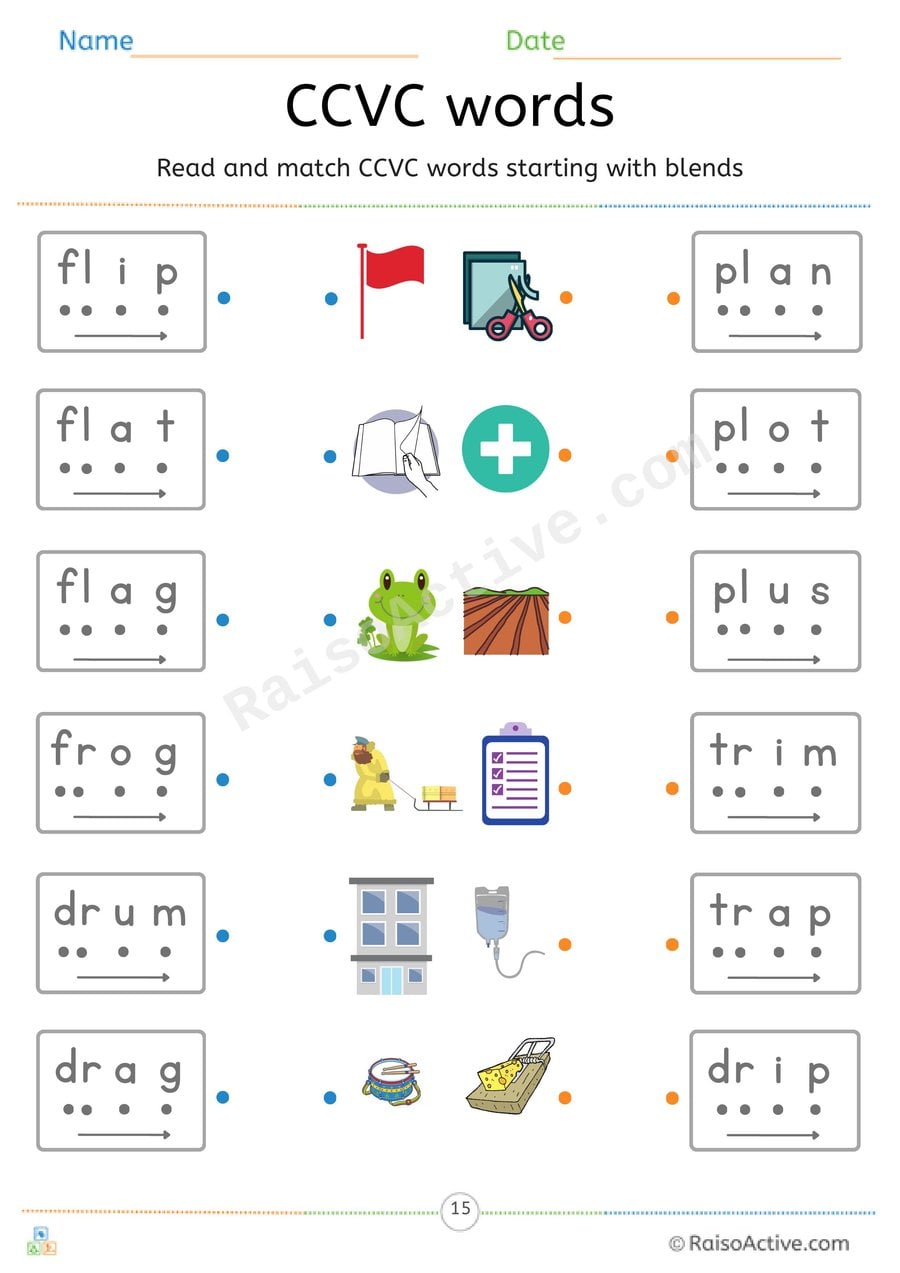
CCVC Words with fl, fr, dr, pl and tr Blends Read and Match Worksheet
Ages 4-7 · Pre-K–Grade 1Ages 4-7 · Reception–Year 2Ages 4-7 · LKG–Class 1Ages 4-7
Children read twelve CCVC words (flip, flat, flag, frog, drum, drag, plan, plot, plus, trim, trap, drip) and match each one to its picture.

Unscramble CVC Words and Missing First Letter Worksheet
Ages 4-7 · Pre-K–Grade 1Ages 4-7 · Reception–Year 2Ages 4-7 · LKG–Class 1Ages 4-7
Children unscramble the letters to write cat, pan and map, then write the missing first letter of gate, cow, bus, ant, hat, bed, car and sun.

G or J Sound Worksheet: Spell the /j/ Sound
Ages 4-7 · Pre-K–Grade 1Ages 4-7 · Reception–Year 2Ages 4-7 · LKG–Class 1Ages 4-7
Children learn that the /j/ sound is often spelt g before e, i or y and j before a, o or u, and write g or j in jam, gem, gym, ginger, jungle, gel, jacket, giraffe, jump, angel, cage and job.

Phonics Level 2 Certificate of Achievement: Super Reader
Ages 4-7 · Pre-K–Grade 1Ages 4-7 · Reception–Year 2Ages 4-7 · LKG–Class 1Ages 4-7
Children celebrate reading and spelling words with blends and digraphs, and tick what they can read: CVC words, blends and digraphs.

Hard and Soft G Sound Sorting Worksheet
Ages 4-7 · Pre-K–Grade 1Ages 4-7 · Reception–Year 2Ages 4-7 · LKG–Class 1Ages 4-7
Children learn that g often says /j/ before e, i or y and /g/ before a, o, u or a consonant, then circle soft g words in blue (gem, giraffe, gym, germ, bridge, ginger) and hard g words in pink (goat, game, gum, glass, goal, guest).
What kindergartners learn under Common Core
The kindergarten standards are grouped into English Language Arts (reading foundational skills, literature and informational text, writing, speaking and listening, language) and Mathematics (counting and cardinality, operations and algebraic thinking, number and operations in base ten, measurement and data, geometry). The foundational reading skills and the counting standards take most of the instructional time, and they are where worksheets help most.
- RF.K.1 Print concepts: left to right, spaces between words, uppercase and lowercase letters
- RF.K.2 Phonological awareness: rhyming, syllables, onset and rime, isolating first, middle and last sounds
- RF.K.3 Phonics: one sound per consonant, long and short vowels, Dolch pre-primer and primer sight words
- K.CC: count to 100 by ones and tens, write numbers 0–20, count objects to 20, compare two groups
- K.OA: represent addition and subtraction within 10, decompose numbers to 10, fluently add and subtract within 5
- K.G: name and describe squares, circles, triangles, rectangles, hexagons, cubes, cones, cylinders and spheres
How to use kindergarten worksheets at home
Kindergarten homework, where it exists, is usually a reading log and one sheet. Add at most one more: a phonics sheet on Monday, Wednesday and Friday and a math sheet on Tuesday and Thursday is a rhythm many families settle into. Fifteen minutes is enough. Read the passage or word list aloud first, have your child read it back, and for math put counters or coins next to the ten-frame so the numbers are physical before they are written.
Sight words and CVC reading
Two skills carry kindergarten reading. Sight words (the Dolch pre-primer list has 40, the primer list 52) are high-frequency words learned as wholes because many, such as the, of and said, do not follow regular phonics. CVC words (cat, sun, bed) are the first words a child decodes by blending three sounds. Worksheets that mix both in short decodable sentences such as 'The cat is on the bed' are the bridge to a first reader.
Frequently asked questions
What should a child know by the end of kindergarten?
By the end of kindergarten the Common Core standards expect a child to read and write all letters, know a sound for each consonant and the short vowels, read common sight words and decode CVC words, write a simple sentence, count to 100 by ones and tens, write numbers to 20, add and subtract within 10, compare two groups, and name basic 2D and 3D shapes. Many children read short decodable books by June.
How many sight words should a kindergartner know?
There is no fixed number in the Common Core standards, which ask for reading common high-frequency words by sight. Most kindergarten programs use the Dolch pre-primer list (40 words such as the, and, I, see) and the primer list (52 words such as she, said, came), so 50 to 90 words by the end of the year is typical. Fry's first 100 words is an alternative list some districts use.
What math is taught in kindergarten?
Kindergarten math under Common Core has five domains. Counting and Cardinality (K.CC): count to 100, write 0 to 20, count objects, compare groups. Operations and Algebraic Thinking (K.OA): add and subtract within 10. Number and Operations in Base Ten (K.NBT): teen numbers as ten plus ones. Measurement and Data (K.MD): compare length and weight, sort objects. Geometry (K.G): name and build 2D and 3D shapes. Most instructional time goes to counting and cardinality.
Is kindergarten too early for worksheets?
Not if they are short and used alongside hands-on learning. Kindergarten classrooms use worksheets in small doses: a practice page after a phonics lesson, a ten-frame sheet after counting with cubes. At home, one or two pages a day of 10 to 15 minutes is in line with what most teachers recommend. Worksheets replacing reading aloud, play or outdoor time would be a problem; supplementing them is not.
Are kindergarten worksheets free to print?
Yes. After creating a free account you can download any worksheet as a watermarked PDF, five per day. An annual subscription removes the watermark and daily limit for the full library of more than 1,000 worksheets and every printable pack. Pages are laid out to print on US Letter or A4.

Written by
Hemsweta Jain · Teacher Cheena
MBA and Early Childhood Educator, teaching since 2014 · Founder of RaisoActive, Mumbai
Written and reviewed by Hemsweta Jain (Teacher Cheena), who designs every RaisoActive worksheet.
Last reviewed
Printable packs for ages 5–6
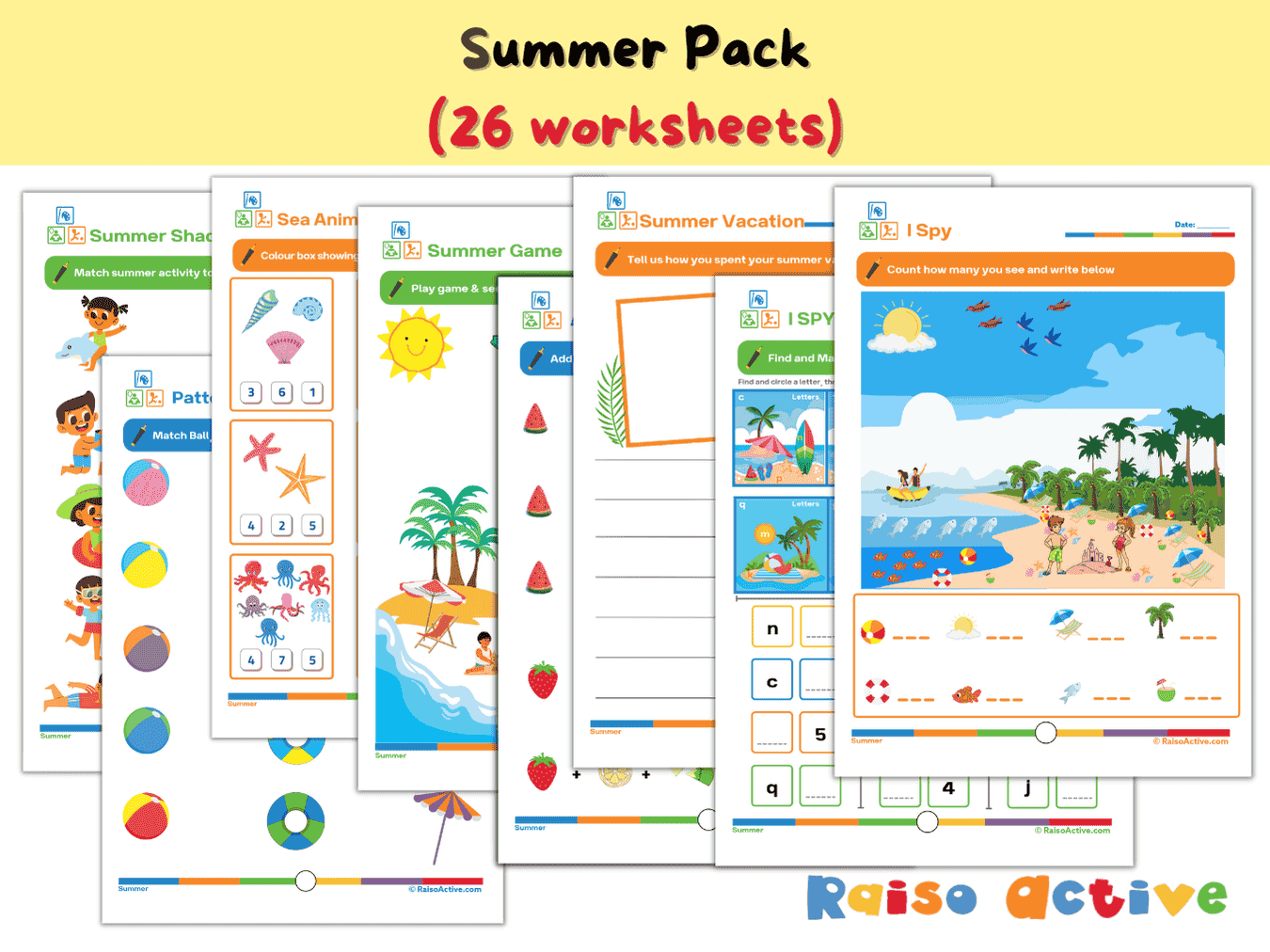

Summer Activity Pack: Math, Literacy, Puzzles & More for Preschool & Kindergarten
Ages 3-7 · Preschool–Grade 1Ages 3-7 · Nursery–Year 2Ages 3-7 · Nursery–Class 1Ages 3-7 · 26 pages
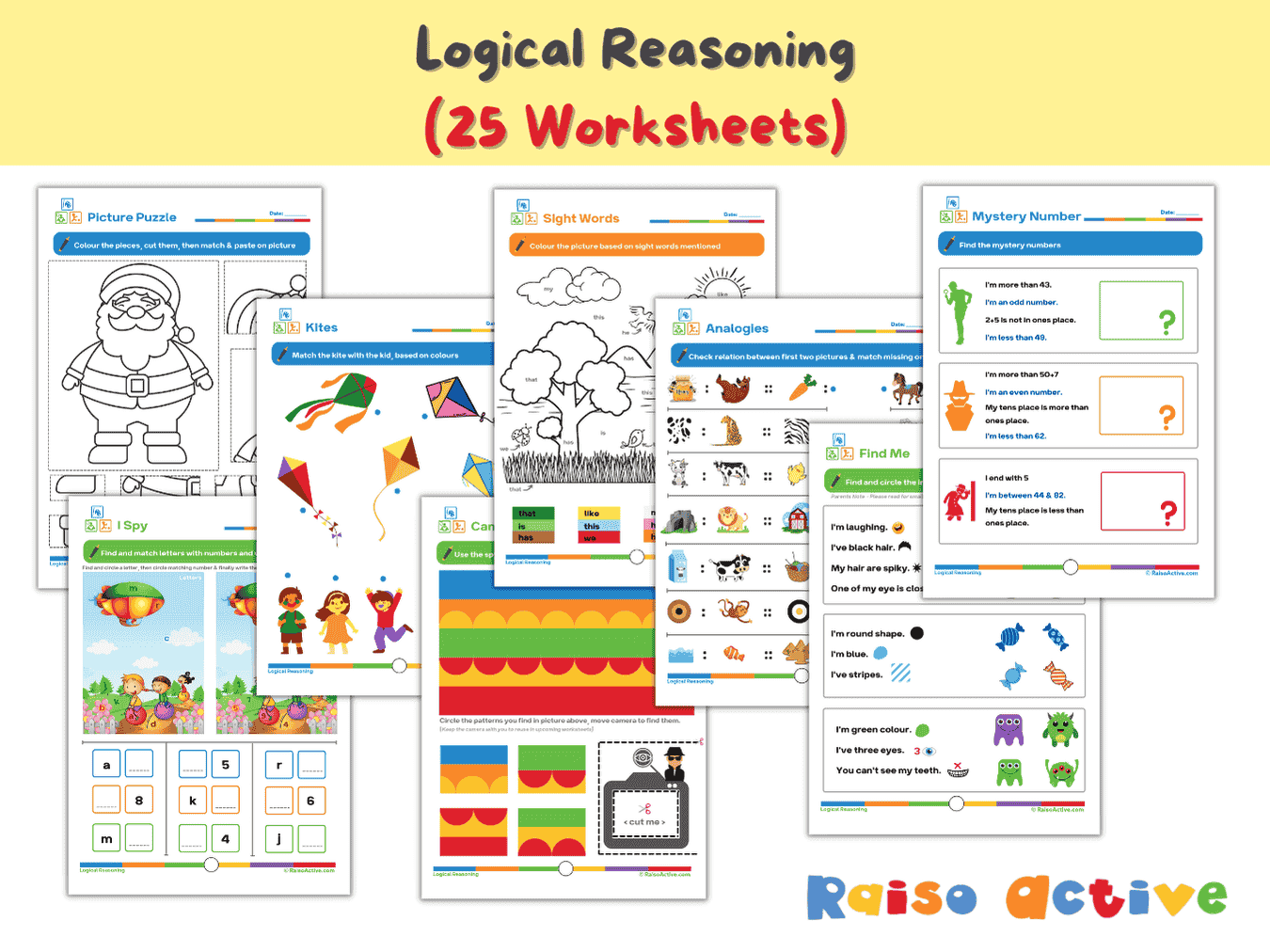

Logical Reasoning Activity Book for Preschool & Kindergarten | Patterns, Sudoku, Mazes & Coding
Ages 4-7 · Pre-K–Grade 1Ages 4-7 · Reception–Year 2Ages 4-7 · LKG–Class 1Ages 4-7 · 34 pages
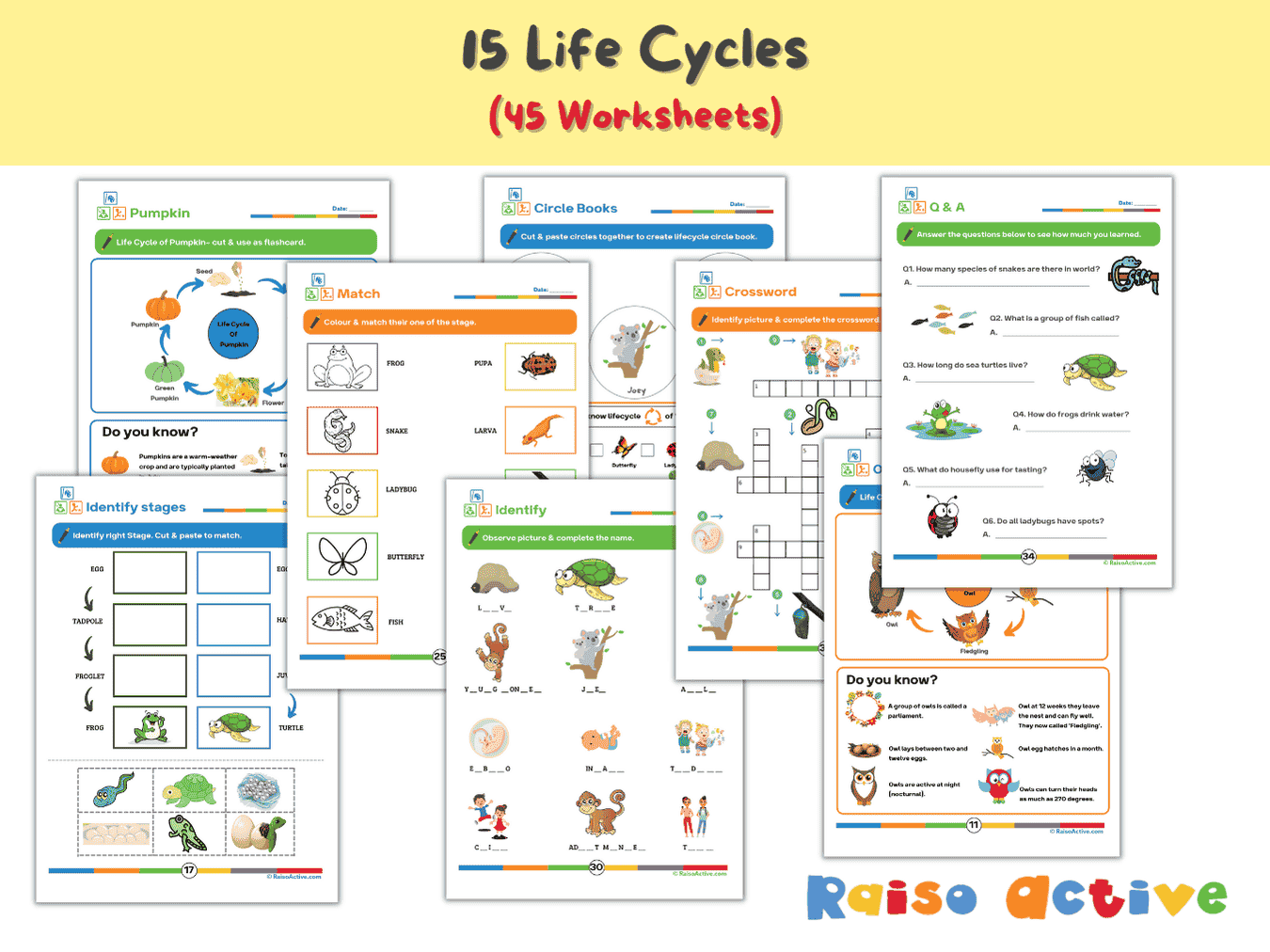

Lifecycles Activity Book & Flashcards for Preschool & Early Elementary
Ages 3-8 · Preschool–Grade 2Ages 3-8 · Nursery–Year 3Ages 3-8 · Nursery–Class 2Ages 3-8 · 46 pages
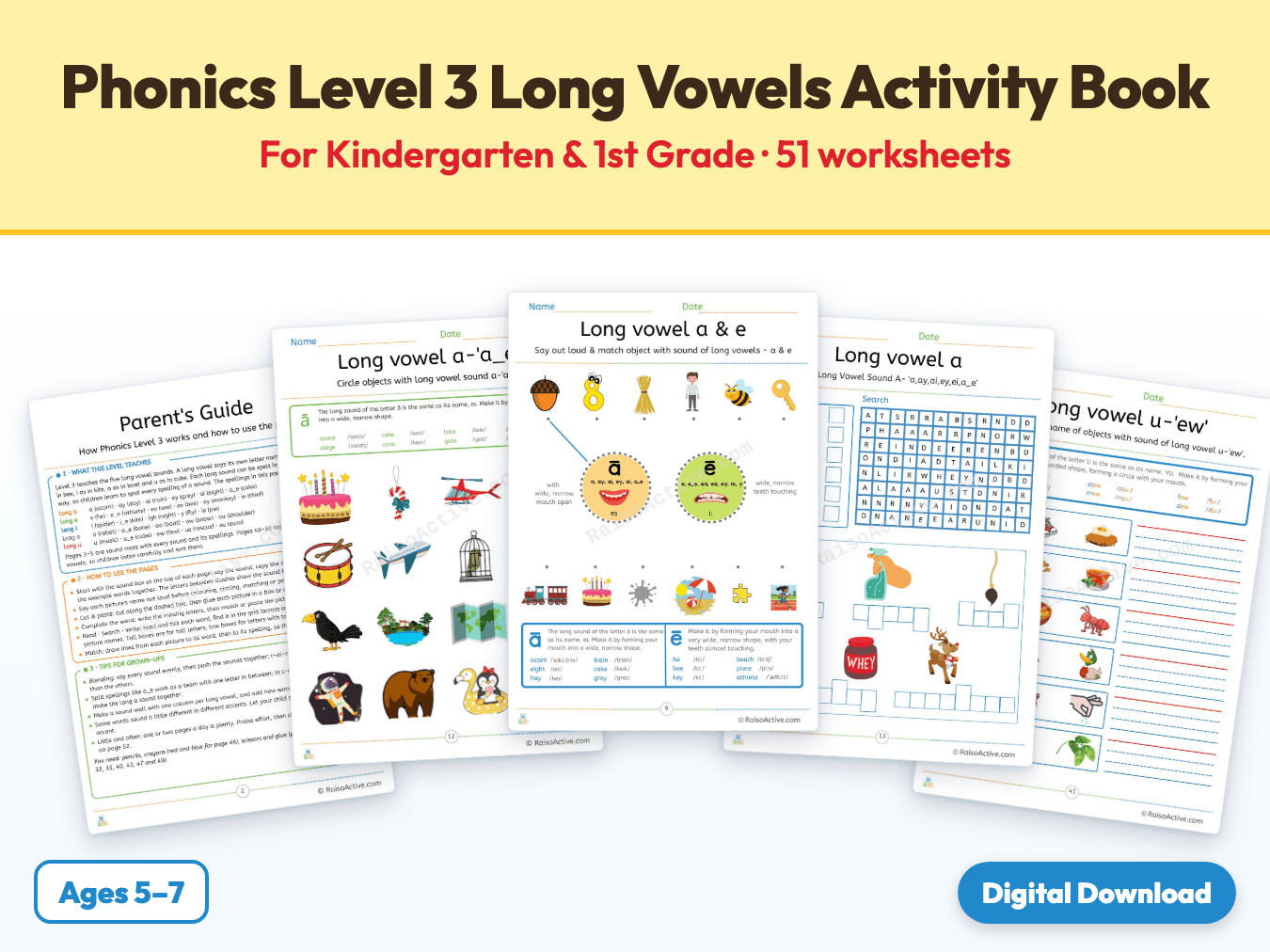

Phonics Level 3 Long Vowels Activity Book for Kindergarten & 1st Grade
Ages 5-7 · Kindergarten–Grade 1Ages 5-7 · Year 1–Year 2Ages 5-7 · UKG–Class 1Ages 5-7 · 52 pages
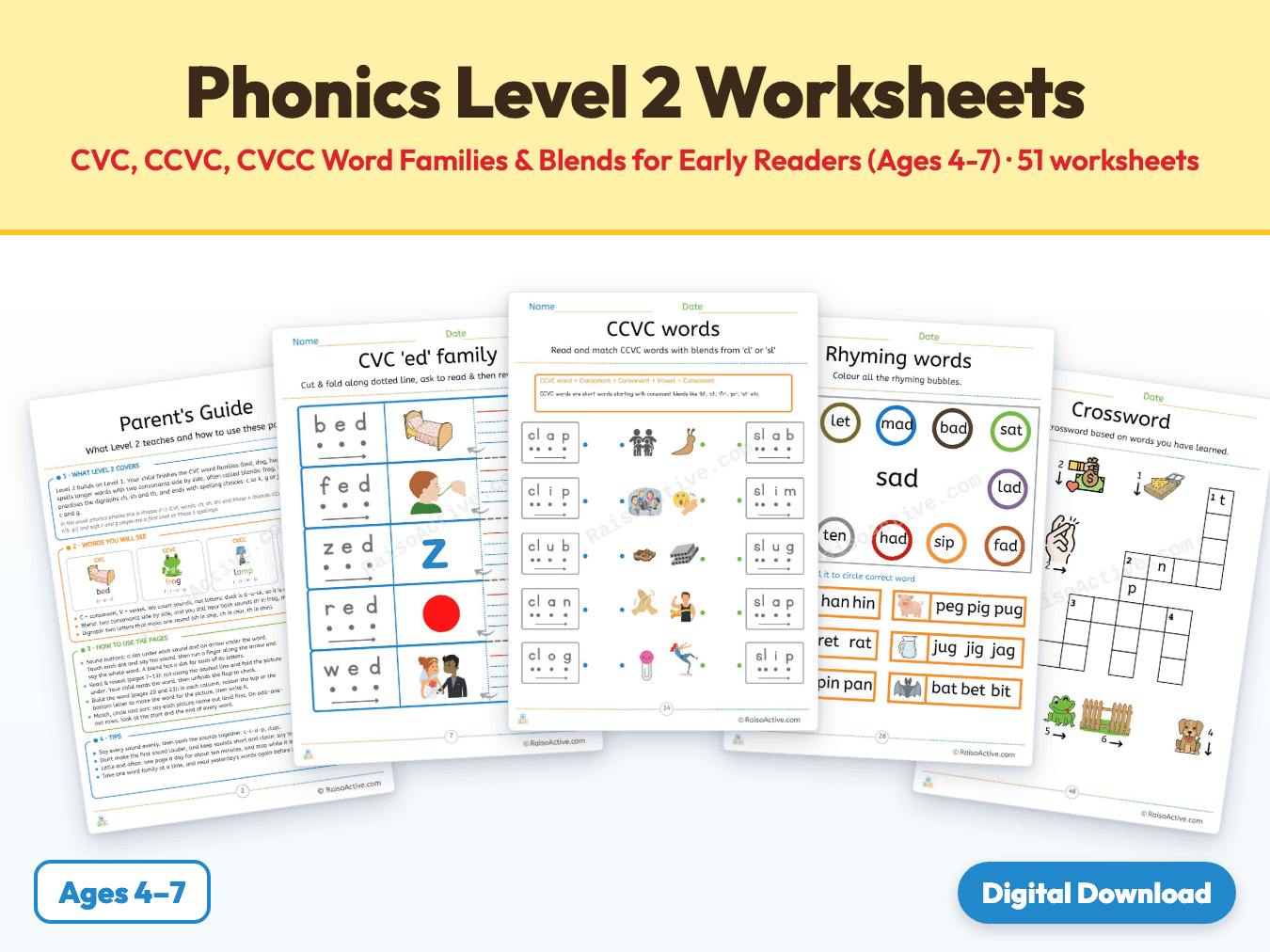
Phonics Level 2 Worksheets: CVC, CCVC, CVCC Word Families & Blends for Early Readers (Ages 4-7)
Ages 4-7 · Pre-K–Grade 1Ages 4-7 · Reception–Year 2Ages 4-7 · LKG–Class 1Ages 4-7 · 52 pages
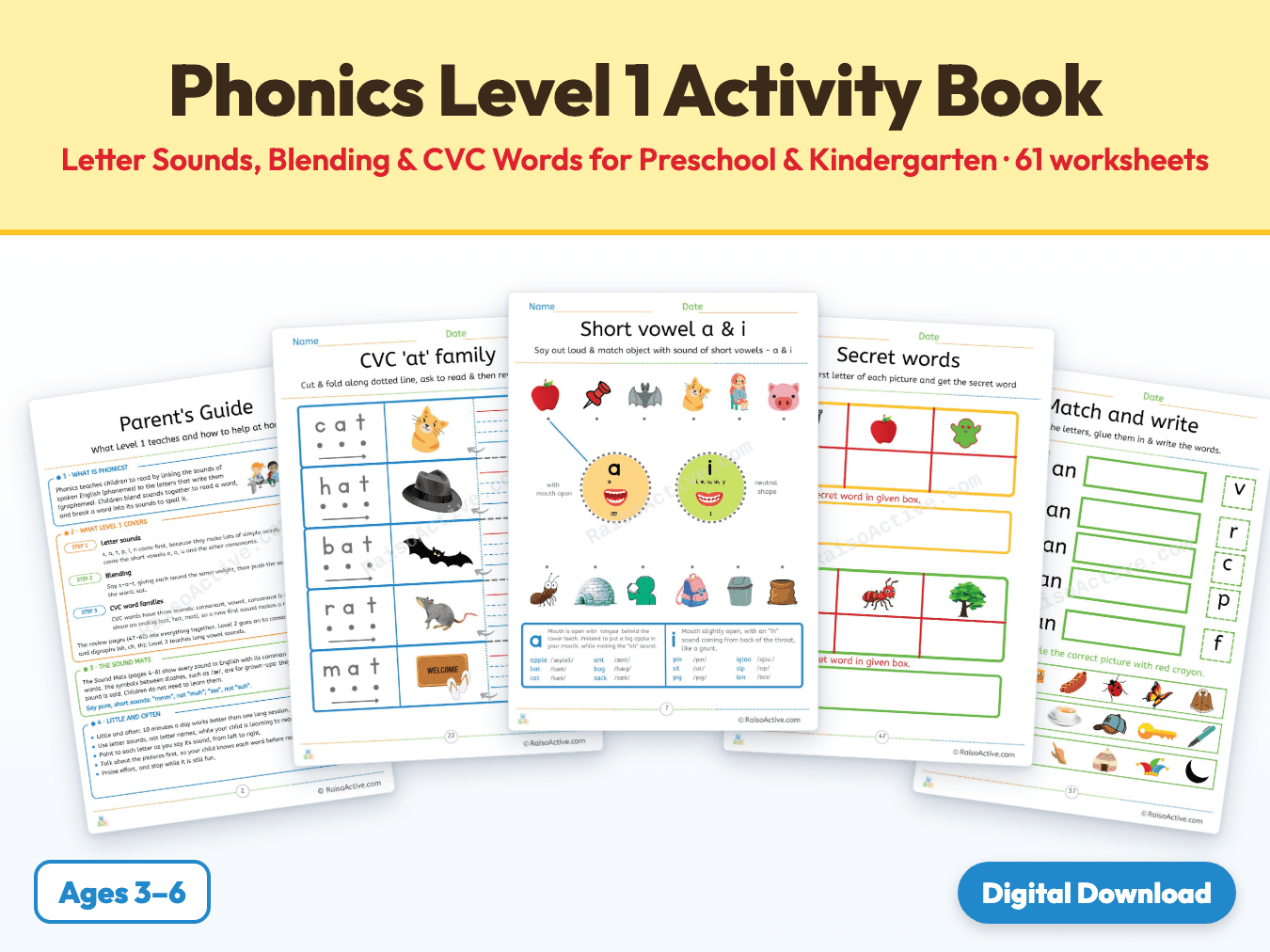
Phonics Level 1 Activity Book: Letter Sounds, Blending & CVC Words for Preschool & Kindergarten
Ages 3-6 · Preschool–KindergartenAges 3-6 · Nursery–Year 1Ages 3-6 · Nursery–UKGAges 3-6 · 62 pages
Guides for parents and teachers
See all guides
Sight Words by Age: The First 50 Words and How to Teach Them Without Flashcard Fatigue
Which sight words to teach first and why, the heart-word method, a read-trace-write-find routine, games, and a by-age table of typical sight-word progress.

Number Formation Rhymes 0–9 and How to Fix Reversals
Original number formation rhymes for 0–9, the correct stroke order for each digit, why 3, 5 and 7 get reversed most often, and multisensory fixes that work.
How to Teach CVC Blending: A Step-by-Step Method That Works in Two Weeks
A step-by-step method for teaching CVC blending, covering continuous sounds, word families, common errors, and a 14-day plan that most children finish reading CVC words.

Kindergarten Readiness Checklist: 25 Skills to Practice Before the First Day
A kindergarten readiness checklist of 25 literacy, math, motor, self-regulation and self-help skills, with an 8-week summer plan and notes on when not to worry.
Phase 2 Phonics at Home: Sound Order, Blending Games, Worksheets
Phase 2 phonics at home: the five sound sets in order, oral blending, tricky words, a two-week routine, common mistakes, and free worksheets.
Reception Year Explained: EYFS Learning and How to Help at Home
A teacher's plain-English guide to the Reception Year: the seven areas of learning, Early Learning Goals, Phase 2/3 phonics, the RBA and home routines.