Free printable worksheets · United States
Kindergarten English Worksheets (Ages 5–6)
Kindergarten english worksheets are practice sheets for children aged 5–6 in Kindergarten in the US. English covers letter and sound recognition, reading, vocabulary, grammar and writing, building from spoken language toward independent sentences. The sheets on this page cover letter recognition and phonics, reading comprehension, sentence writing and vocabulary and grammar.
Kindergarten is the year formal reading instruction begins under Common Core: a child is expected to know a sound for every consonant and the short vowels, decode simple three-letter words, write a basic sentence, count to 100 by ones and tens, and add and subtract within 10. Five-year-olds decode. The set should have three-letter words to read and write, the digraphs sh, ch and th, a growing list of sight words such as the, was and said, decodable sentences to read aloud and draw, a simple sentence to write with a capital letter and a period, and lowercase handwriting on lines. Answering a question about a sentence just read is the first comprehension work. Long vowel spellings mostly come next year.
1082+ worksheets · free PDF download · print on A4 or Letter
Kindergarten English Worksheets to print
Browse all worksheets for ages 5–6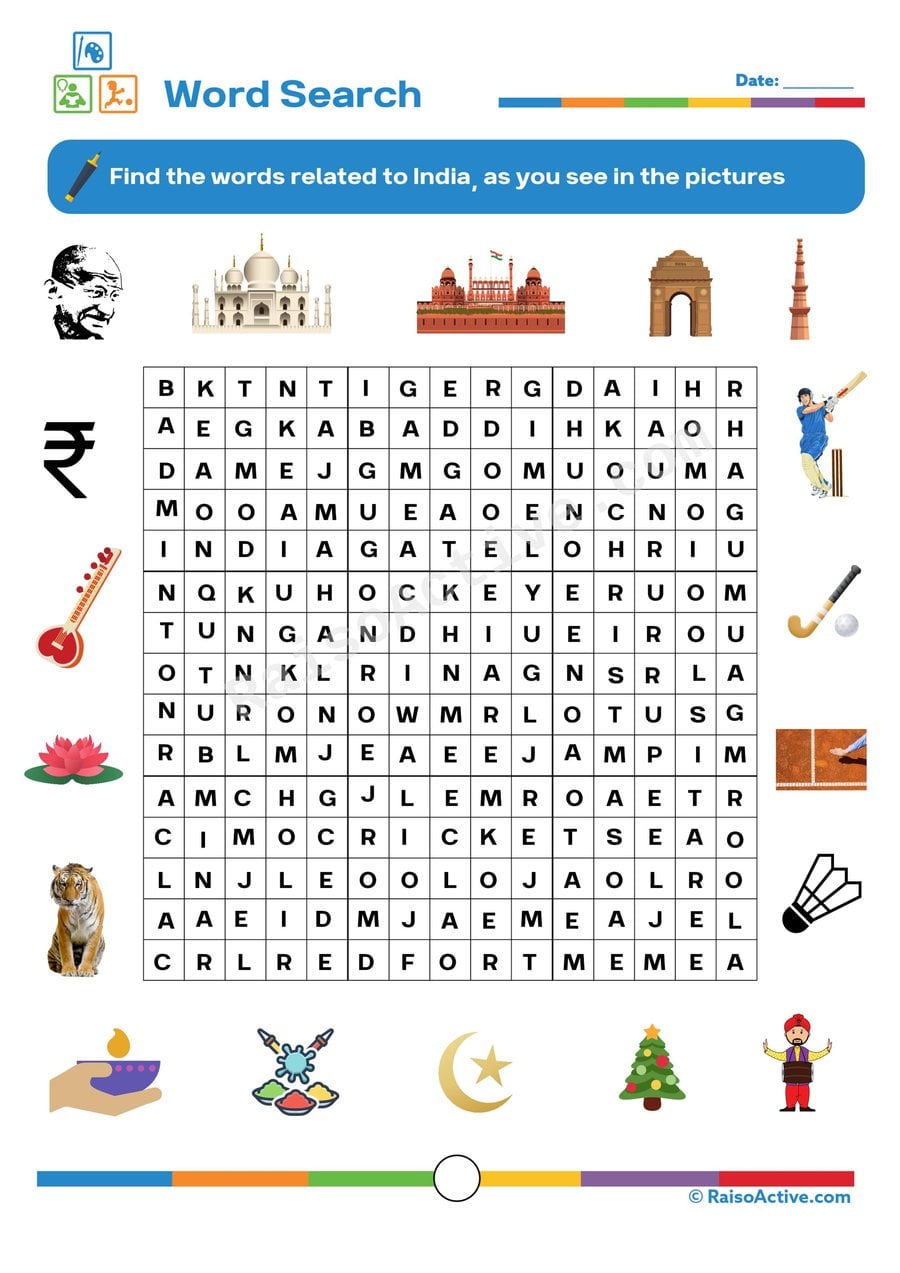
India Word Search Worksheet for Kids
Searching a letter grid for words connected to India, such as festival names, foods, or landmarks, builds visual scanning and word-recognition skills in children ages 4-7 while introducing vocabulary tied to Indian culture and geography. Because the target words vary in length and may run in different directions through the grid, children also practice sustained visual attention and letter-sequence tracking, both important pre-reading skills. This worksheet pairs literacy practice with cultural and social studies exposure in a single activity.
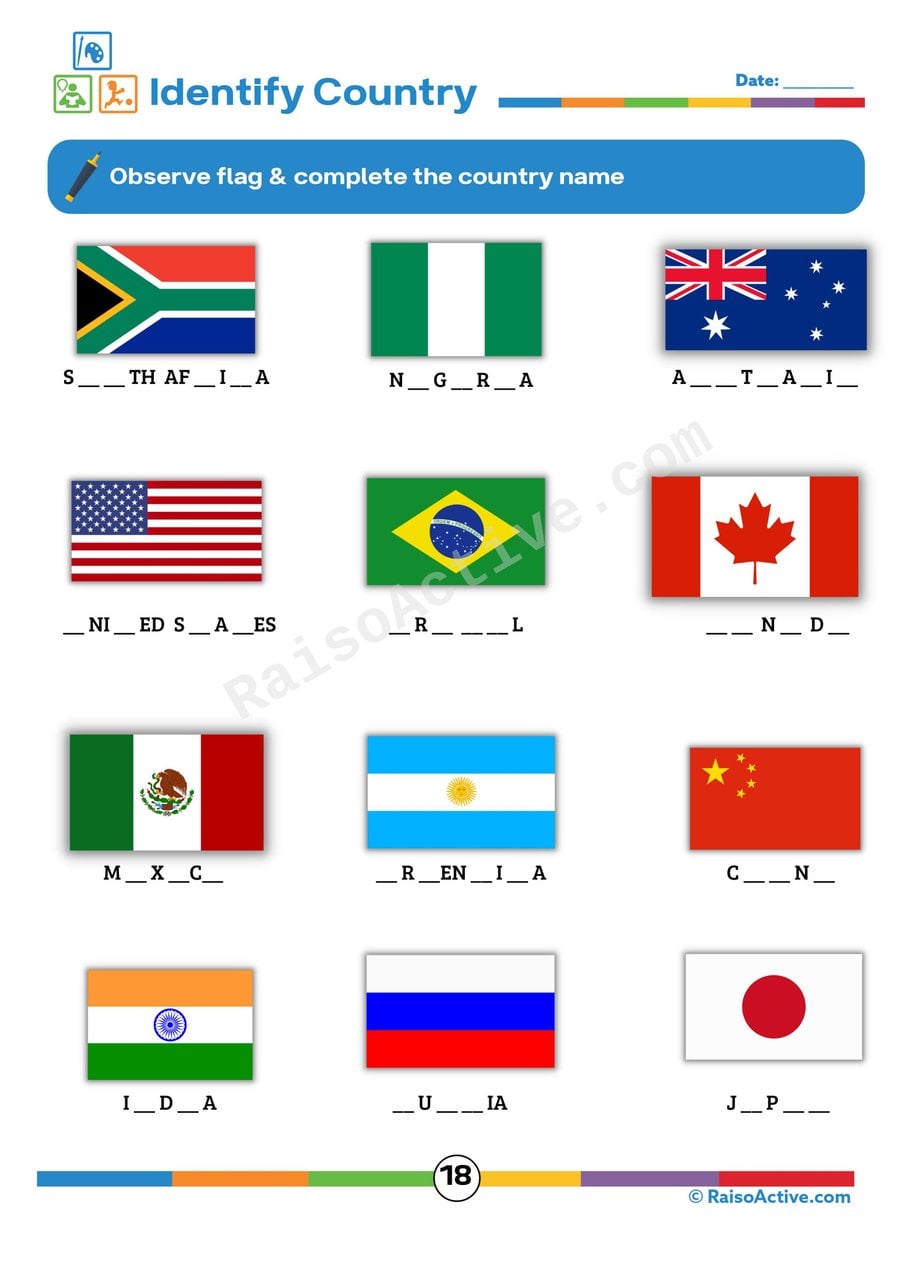
Identify the Country: Flag Matching Worksheet
Filling in the missing letters of each country's name while studying its flag gives children ages 4-7 practice with letter-sound correspondence and spelling patterns, since they must sound out the word and recall which letters are already provided as clues. It also builds early geography knowledge, helping children connect a visual symbol (the flag) to a country's name for the first time. This dual practice of decoding and world knowledge lays groundwork for both literacy and social studies skills.

Sun Safety Worksheet for Kids: Learn About Staying Safe in the Sun!
This worksheet has children ages 4-7 answer questions about sun safety, such as why sunscreen and hats matter, building early health literacy alongside writing practice as they put their understanding into their own words. Because the questions ask children to reason about why certain sun-safety habits matter rather than just label a picture, this worksheet develops early explanatory thinking, a step up from simple factual recall. Practicing writing full answers, even short ones, also builds sentence-forming skills appropriate for this age range.

Long Vowel Sounds: Matching Objects to Sounds - A & E Worksheet
This worksheet asks children ages 4-6 to listen for and match objects whose names contain the long 'a' sound, as in 'cake,' or the long 'e' sound, as in 'bee,' sharpening their ability to distinguish between vowel sounds that look and sound similar to a beginning reader. Practicing long vowels alongside short vowels builds the fuller phonics picture children need to decode a wider range of words as their reading vocabulary grows.

Sl Blend Words Worksheet: Read, Identify, and Circle!
Reading and circling words that begin with the 'sl' consonant blend helps children ages 4-6 hear that two consonants pressed together, like s and l, still form one connected sound at the start of a word. This is a more advanced phonics skill than single-letter sounds, since children must blend two consonants smoothly rather than separating them. Recognizing blends like 'sl' in words such as 'slide' or 'sled' builds the decoding fluency needed to read longer, less predictable words independently.

First Letter Fun: Identify and Write! A Fun Vocabulary Worksheet for Kids
This worksheet extends beginning-sound practice for children ages 4-6 slightly further than earlier versions, asking them to independently identify an object's name and write its first letter with less visual support. Isolating and writing initial sounds accurately is a strong predictor of later spelling and reading success, since it requires children to translate an auditory skill into a written one. Repeating this process across multiple pictures builds both vocabulary and growing independence in phonics reasoning.
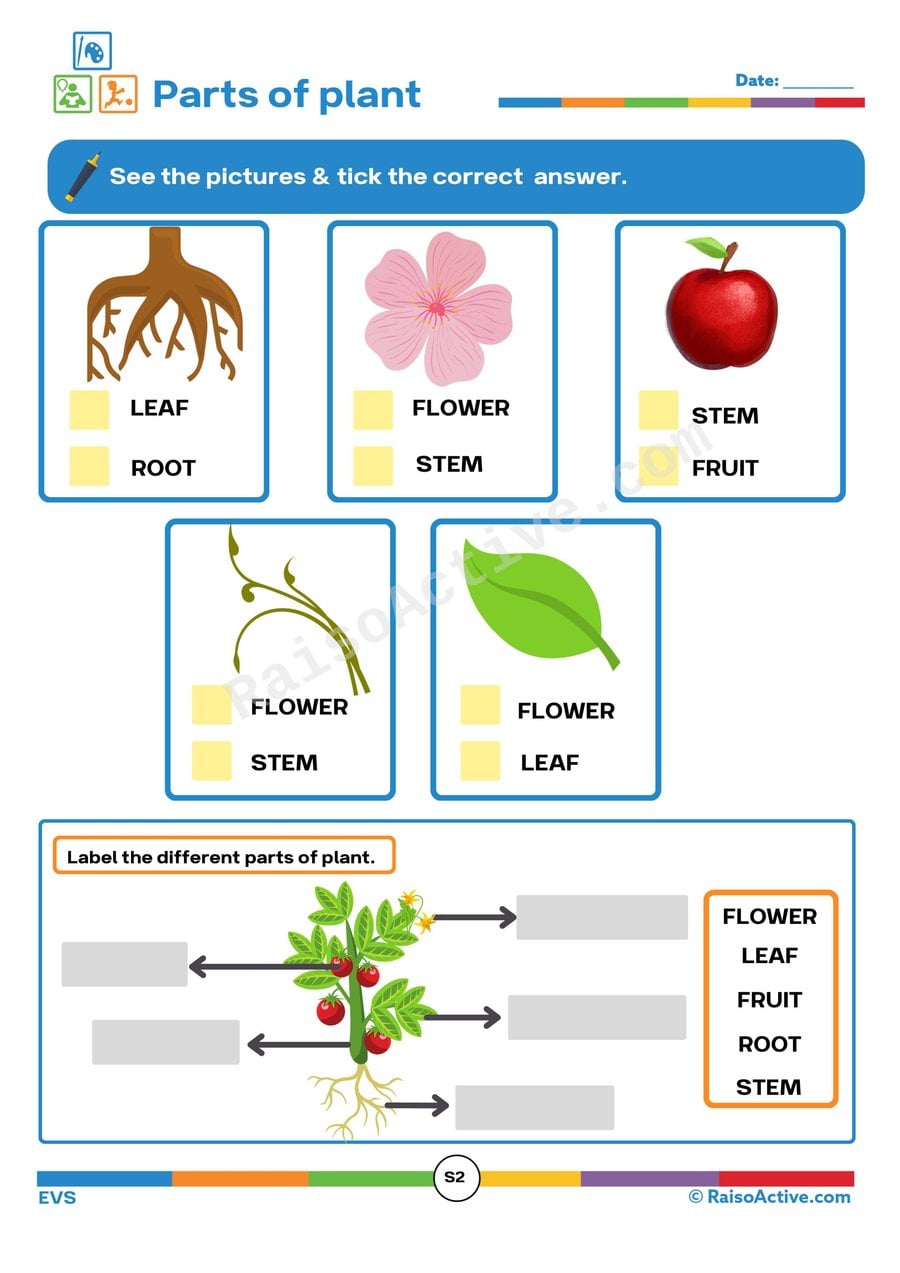
Parts of a Plant Worksheet for Kids
This worksheet helps children ages 4-6 identify and label the main parts of a plant — roots, stem, leaves, flower, and fruit — building foundational botany knowledge. Learning to associate each part with its picture and location on a plant diagram develops both vocabulary and an early understanding of plant structure, which supports later lessons on how plants grow and survive.

Hopscotch Numbers 1-50 Worksheet: Fill in the Missing Numbers!
This hopscotch-themed worksheet gives children ages 4-6 practice filling in missing numbers within the 1-50 range, extending their number sequencing beyond the more commonly rehearsed 1-20 range and building familiarity with two-digit number patterns like the '20s' or '30s.' Framing the numbers as a hopscotch grid connects the paper activity to a familiar physical game, helping children mentally picture themselves counting forward as they move up the grid. This kind of extended-range practice is an important bridge toward comfortable counting to 100.
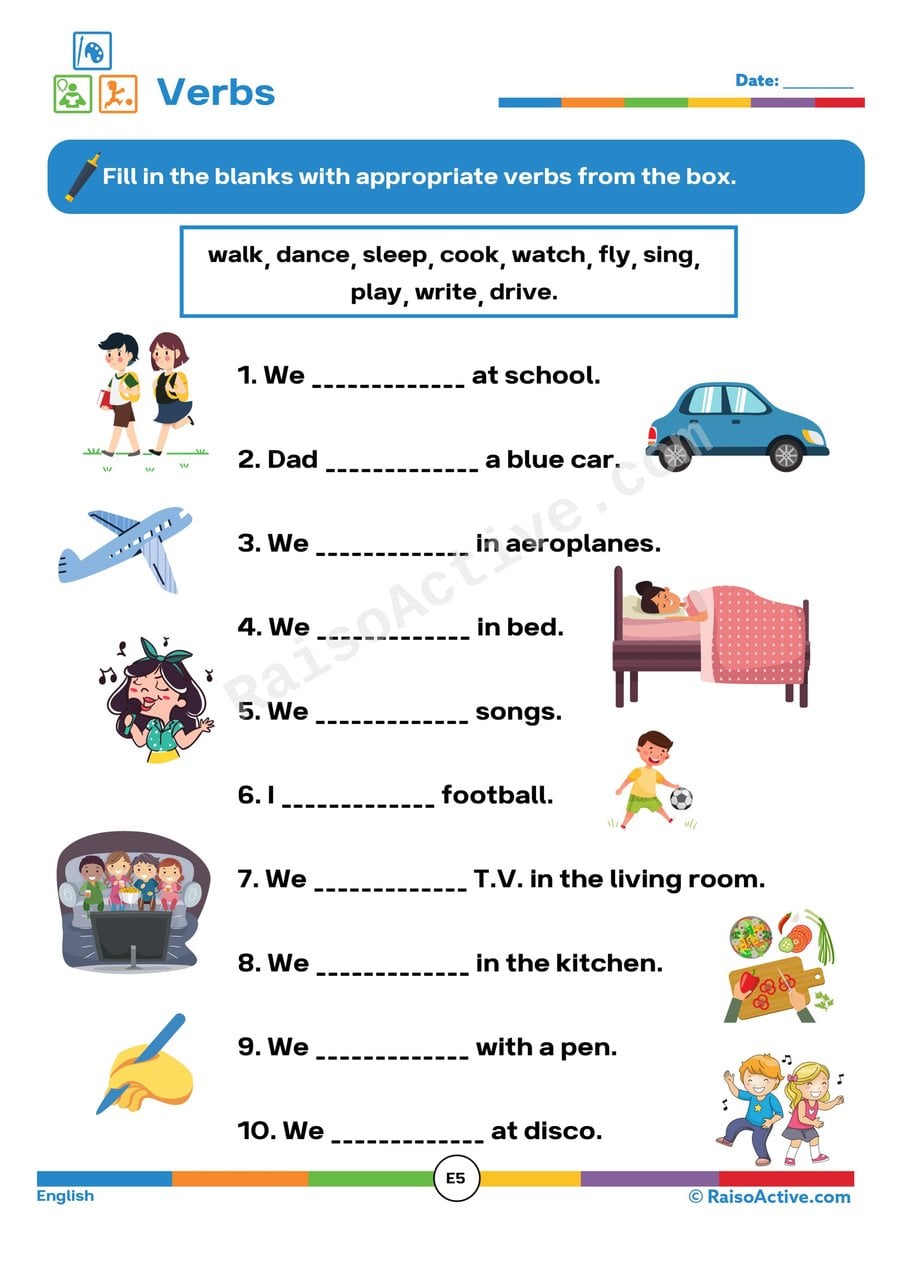
Action Verbs Worksheet: Fill in the Blanks!
This worksheet moves 4-6 year olds a step beyond matching verbs to pictures — now they have to read a full sentence, understand its meaning, choose the correct verb from a word box, and write it into the blank themselves. That combination of reading comprehension, vocabulary selection, and handwriting makes this noticeably more demanding than earlier action-word worksheets, and it's exactly the kind of sentence-completion task children will meet again in early elementary grammar lessons.

Fall Vocabulary Unscramble Worksheet for Preschoolers
This unscrambling activity asks children ages 4-6 to rearrange jumbled letters into correctly spelled fall vocabulary words, building letter-sound awareness and an early sense of correct spelling patterns. Because each word relates to a picture clue, children also practice connecting spoken vocabulary to its written form, a key step on the road to independent reading.
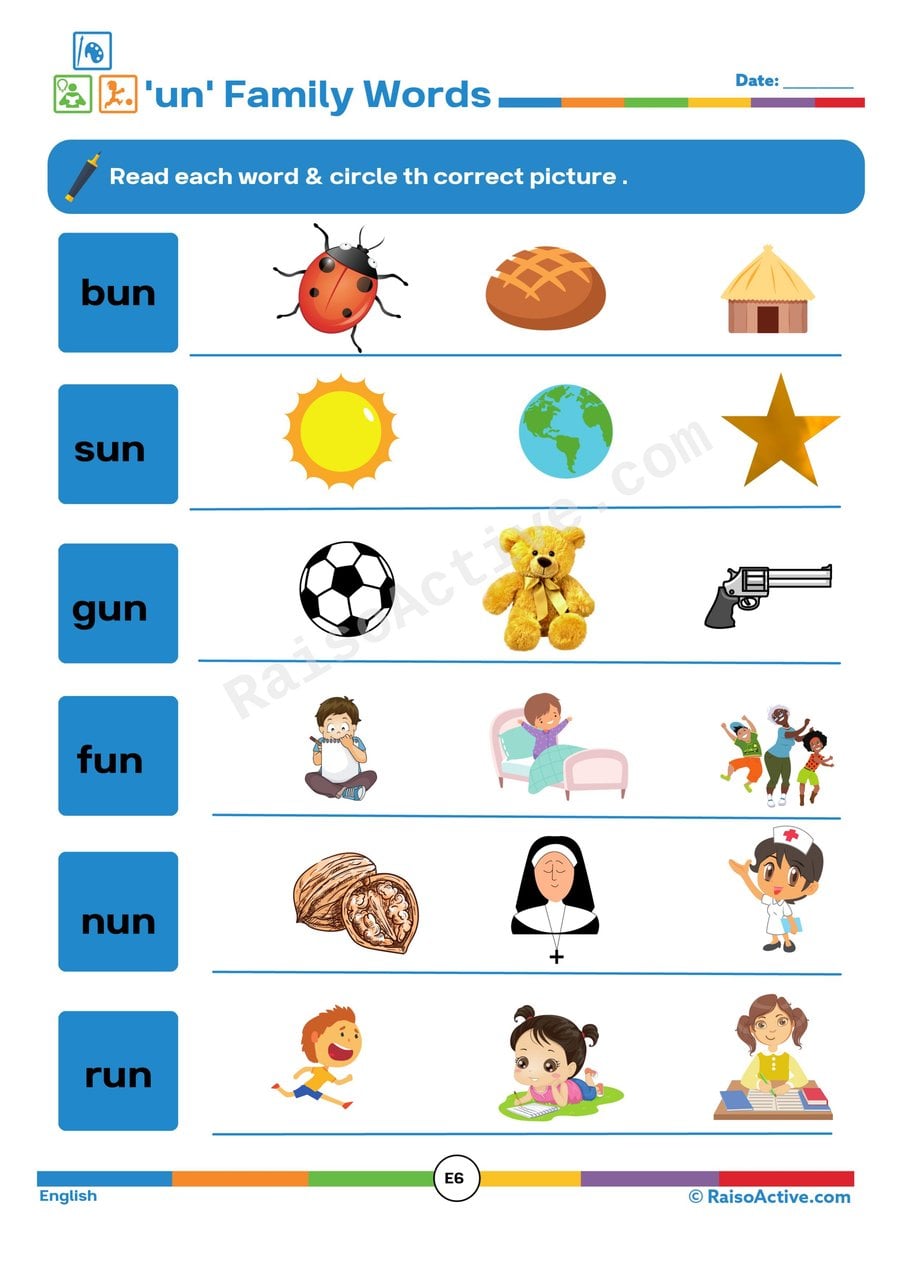
Fun 'un' Family Words Worksheet for Kids
Reading and matching words from the 'un' family, like fun, run, and sun, teaches children ages 4-6 to recognize a shared spelling pattern and use it to decode new words more quickly. Because this word family relies on consistent rhyming sounds, practicing it strengthens the connection between letter patterns and pronunciation that underlies early reading fluency.

Long Vowel U Sound Worksheet: Complete the Words & Paste Pictures!
This worksheet gives children ages 4-6 another pass at the long 'u' sound, this time completing words and then cutting and pasting a matching picture rather than drawing a connecting line. The physical cut-and-paste step adds an extra confirmation layer, since your child has to actively search through picture choices to find the one that truly matches their completed word, rather than simply glancing between a word and an already-placed picture. Repeating long 'u' practice in this new format helps solidify a sound that many children find more challenging than the other long vowels.
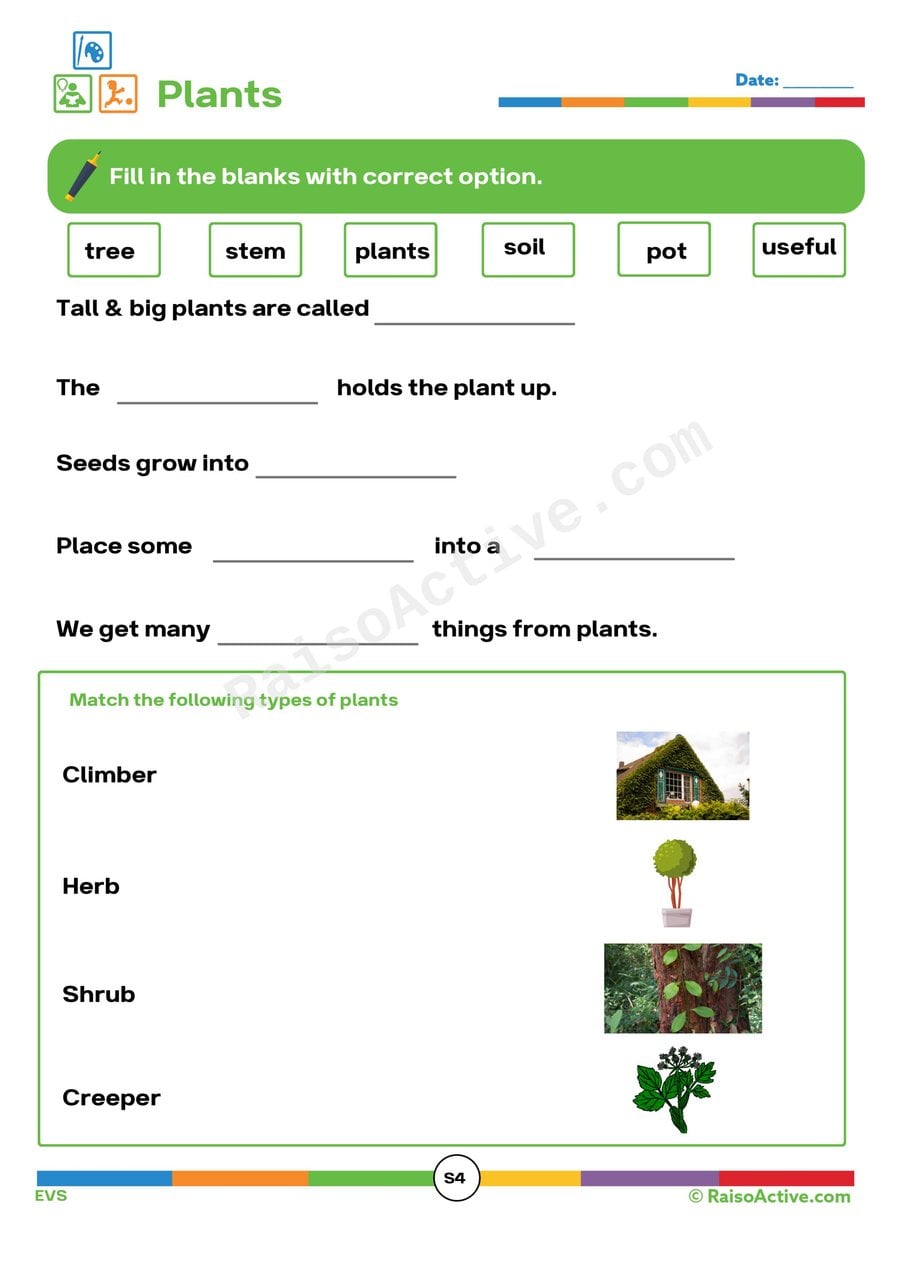
Plant Parts Worksheet for Preschoolers
This worksheet introduces 4-6 year olds to plant anatomy — roots, stem, leaves, and flower — and asks them to connect each part's name to its function, while a separate matching section links different plant types to their pictures. Learning that plants have parts with specific jobs (roots drink water, leaves make food from sunlight) is an early building block of life science, and naming these parts gives your child vocabulary they'll keep reusing throughout school science lessons.

N-Z Alphabet Worksheet: Missing Letters and Picture Matching
This worksheet continues alphabet mastery for children ages 4-6 by having them fill in missing letters from N to Z and match each one to a corresponding picture, extending the sequencing and picture-matching skills used in the first half of the alphabet into the second half. Completing both halves of the alphabet across companion worksheets like this builds full, confident recall of all 26 letters in order.

J and K Consonant Sounds Matching Worksheet for Preschoolers
The letters J and K are frequently mixed up by children ages 4-6 because both are less common consonants that don't appear in as many early words as letters like S or T, so this worksheet gives them focused, repeated practice distinguishing the two sounds. Matching each letter to a picture that starts with its sound builds the letter-sound association needed before a child can spell or read J and K words confidently. This kind of targeted practice on less-frequent letters fills a gap that broader phonics worksheets often skip over.

Short Vowel Fun: Complete the Words Worksheet for Kids
This worksheet has children ages 4-6 fill in missing short vowels to complete words based on pictures, then locate and color those same words within a grid, layering active spelling recall with visual word-search practice. Completing a word by choosing the correct short vowel requires your child to distinguish between five different vowel sounds — a, e, i, o, and u — which is a more demanding discrimination task than working with just one or two vowels at a time. Following that with a word search reinforces the completed spelling by having your child recognize and locate the exact same word again.
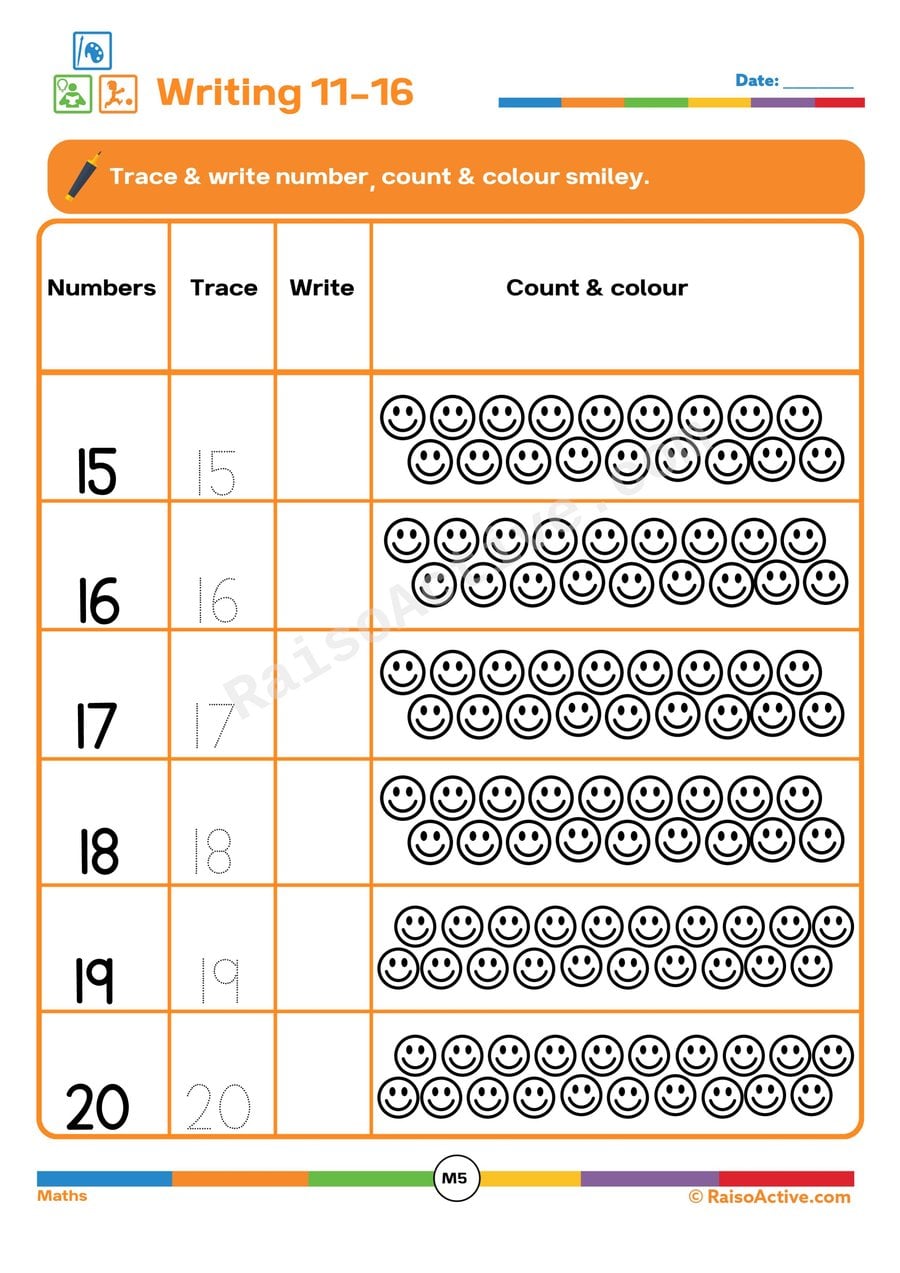
Number Tracing and Counting Worksheet for Kids
This worksheet layers three connected numeracy skills for children ages 4-6: tracing numerals to build correct number formation, writing numbers independently from memory, and counting objects to connect a written numeral to an actual quantity. Number formation practice at this age matters because children often develop habits — like starting a number from the wrong point — that are hard to unlearn later, so guided tracing helps establish correct strokes early. Pairing that with counting smiley faces ensures the numeral isn't just a shape being copied but a quantity being understood.

My Favorite Animal: Lifecycle Writing Worksheet for Kids
This writing worksheet asks children ages 4-6 to describe their favorite animal's life cycle using sequencing words like 'first,' 'then,' 'next,' and 'last,' essential building blocks for narrative and informational writing. Choosing their own animal makes the task personally engaging while still requiring them to organize factual information in a logical order. This combination of choice and structure helps children practice both content knowledge and the mechanics of sequential writing.

Life Cycle Stages Worksheet: Identify and Sequence!
This worksheet asks children ages 4-6 to identify what life-cycle stage is shown in each individual picture and then number a whole set of pictures into the correct growth sequence, moving beyond simple matching into independent ordering and logical reasoning. Because the worksheet likely mixes several different animals' or plants' stages, it also asks children to recognize what type of life cycle a picture belongs to before sequencing it.

Apple Picking Fun: A Reading Comprehension Worksheet for Kids
This worksheet builds early reading comprehension skills in children ages 4-6 by having them read a short story about apple picking and then answer simple questions that check their understanding of what happened. Answering questions after reading, rather than just decoding words, pushes children to hold the story's meaning in mind and recall specific details, a critical skill for all future reading. Coloring an apple afterward gives a relaxing, creative close to the comprehension task.
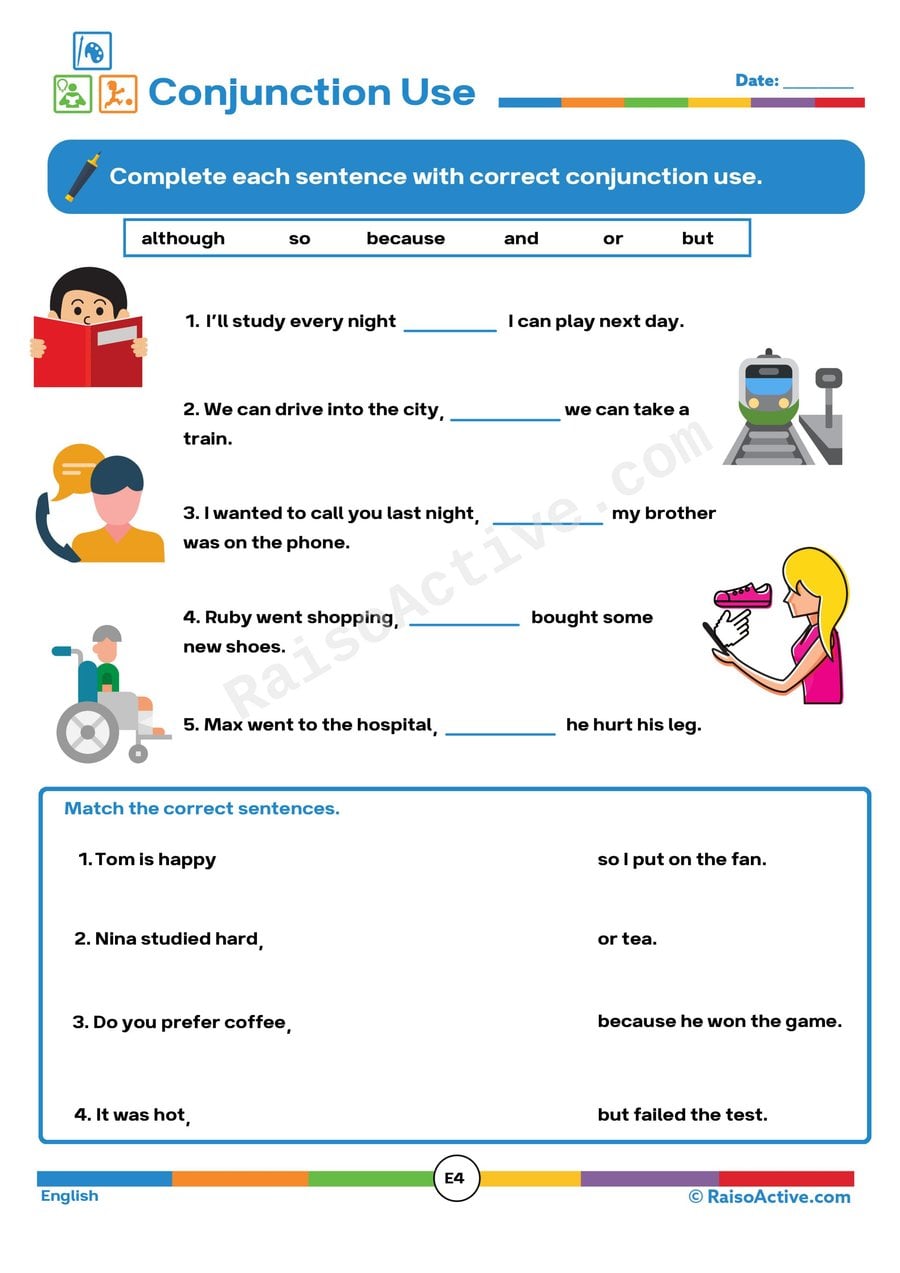
Conjunctions Worksheet: Complete the Sentences!
Choosing the correct conjunction to complete a sentence teaches children ages 4-6 how small connecting words like 'and,' 'but,' and 'or' link two ideas together into one longer, more complex thought. Practicing this helps move children from simple, short sentences toward the more sophisticated sentence structures they'll need for both reading comprehension and their own writing.
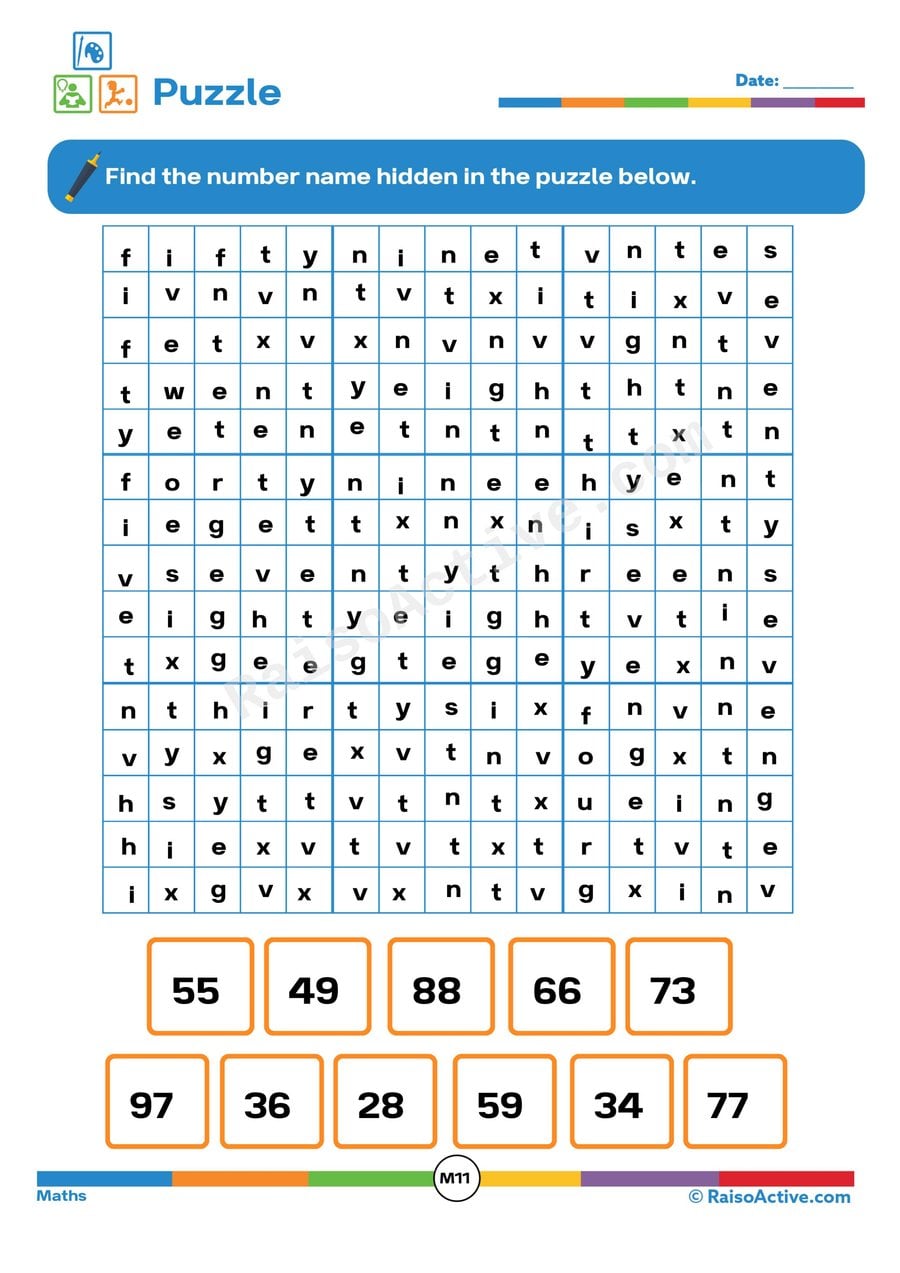
Number Name Word Search Worksheet for Kids
Searching a grid of letters to find hidden number names, like 'seven' or 'twelve,' asks children ages 4-6 to recognize whole written words by sight, a skill that goes beyond sounding out letters one at a time. This word search format also builds visual scanning and sustained attention, since children must check rows, columns, and sometimes diagonals systematically rather than glancing randomly. Matching each found word back to its corresponding number afterward reinforces the link between a number's name, its written word form, and its numeral.

Punctuation Adventure: End Punctuation Worksheet for Kids
Children ages 5-7 practice choosing between periods, question marks, and exclamation points based on the meaning and tone of a sentence, a skill that connects punctuation directly to how a sentence should sound when read aloud. This builds the foundation for expressive, correctly punctuated writing later in school.
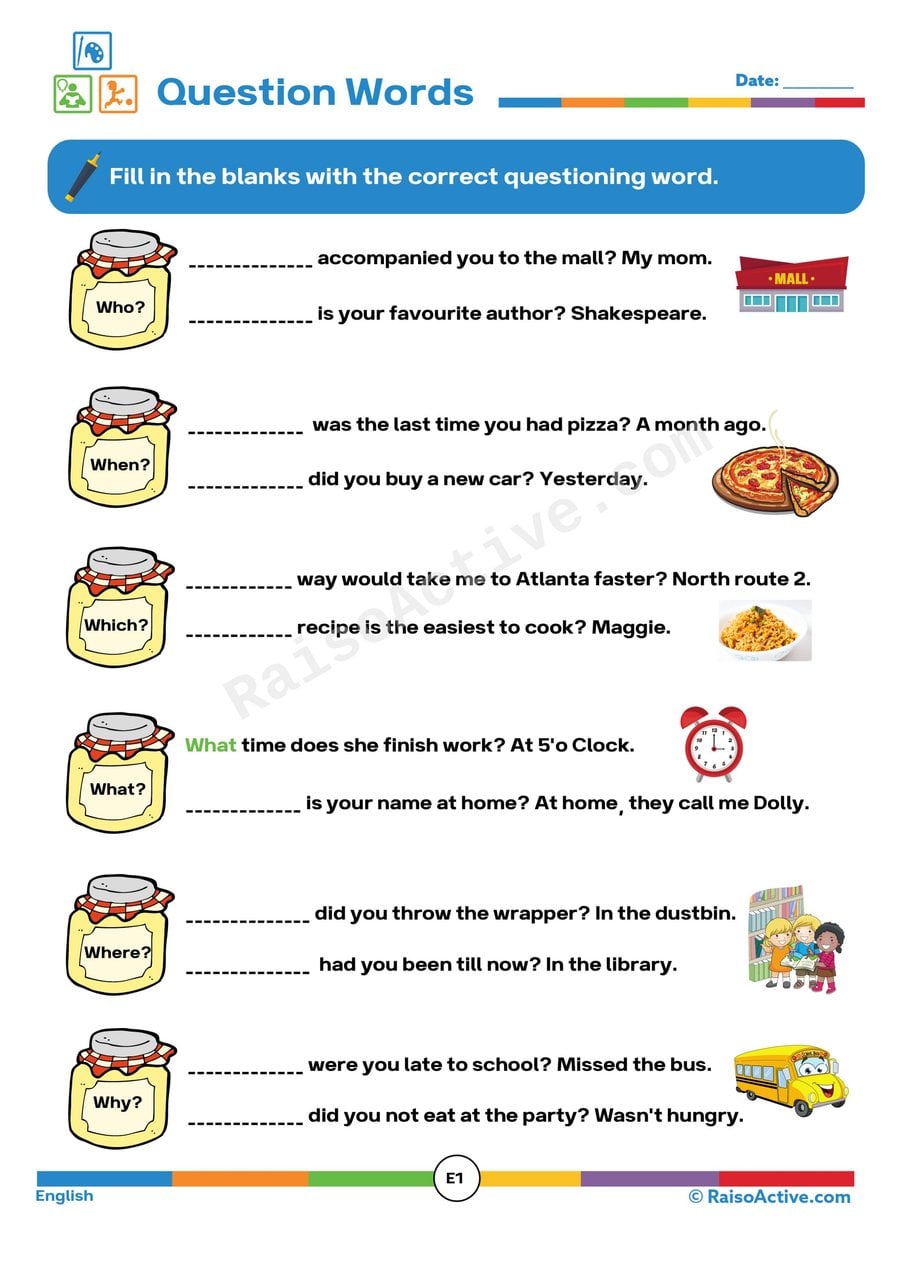
Question Words Worksheet for Early Learners
This worksheet teaches children ages 4-6 to recognize and correctly use the six core question words — who, what, when, where, why, and which — by choosing the right one to complete a sentence. Understanding what kind of information each question word asks for (a person, a time, a place, a reason) is an important early grammar and comprehension skill that also improves how children ask their own questions.
What Kindergarten english worksheets cover
Five-year-olds decode. The set should have three-letter words to read and write, the digraphs sh, ch and th, a growing list of sight words such as the, was and said, decodable sentences to read aloud and draw, a simple sentence to write with a capital letter and a period, and lowercase handwriting on lines. Answering a question about a sentence just read is the first comprehension work. Long vowel spellings mostly come next year.
- Read and write three-letter words such as cat, pin and hop
- Recognize common sight words like the, was and said
- Write a sentence with a capital letter and a period
- Read a decodable sentence aloud and draw what it says
- Hear and write sh, ch and th in words
How to use these worksheets at home or in class
One phonics sheet and one math sheet most days, about fifteen minutes altogether, matches the pace many kindergarten classrooms set. Read any word list or passage aloud together first, then let your child attempt it independently before checking the answers.
Start with the sheet that matches what your child can already do, then move one step up. Keep finished sheets in a folder: Kindergarten teachers often ask for evidence of practice, and children like seeing their own progress.
Is your child ready for Kindergarten english work?
A child entering kindergarten typically writes their first name, recognizes most letters, counts a small group of objects accurately, knows basic shapes and colors, and follows a two-step spoken direction without needing it repeated.
Frequently asked questions
How many sight words should a five-year-old know?
Programs differ, but 40 to 60 high-frequency words by the end of the year is a common expectation. The number matters less than reading them instantly inside a sentence, so introduce three to five a week and use them in decodable sentences rather than flashcard runs. Many so-called sight words can be sounded out once the digraphs are known, so keep phonics moving alongside.
What should a Kindergarten child be able to do in english?
Five-year-olds decode. The set should have three-letter words to read and write, the digraphs sh, ch and th, a growing list of sight words such as the, was and said, decodable sentences to read aloud and draw, a simple sentence to write with a capital letter and a period, and lowercase handwriting on lines. Answering a question about a sentence just read is the first comprehension work. Long vowel spellings mostly come next year. A child entering kindergarten typically writes their first name, recognizes most letters, counts a small group of objects accurately, knows basic shapes and colors, and follows a two-step spoken direction without needing it repeated.
Do these worksheets follow the Kindergarten curriculum?
The sheets cover letter recognition and phonics, reading comprehension, sentence writing and vocabulary and grammar, which sit inside the Common Core Kindergarten (RF.K, K.CC, K.OA, K.G) outcomes for Kindergarten. Reception / Year 1 (UK), UKG / Senior KG (India) use the same skills at this age, so the sheets also fit families following those programmes.
Are these Kindergarten english worksheets free?
Yes. Each worksheet downloads free as a watermarked PDF once you create an account, with a limit of five a day. An annual membership ($20) removes the watermark and the limit for the whole library of over 1,000 worksheets and every printable pack.

Written by
Hemsweta Jain · Teacher Cheena
MBA and Early Childhood Educator, teaching since 2014 · Founder of RaisoActive, Mumbai
Written and reviewed by Hemsweta Jain (Teacher Cheena), who designs every RaisoActive worksheet.
Last reviewed
Printable packs for ages 5–6
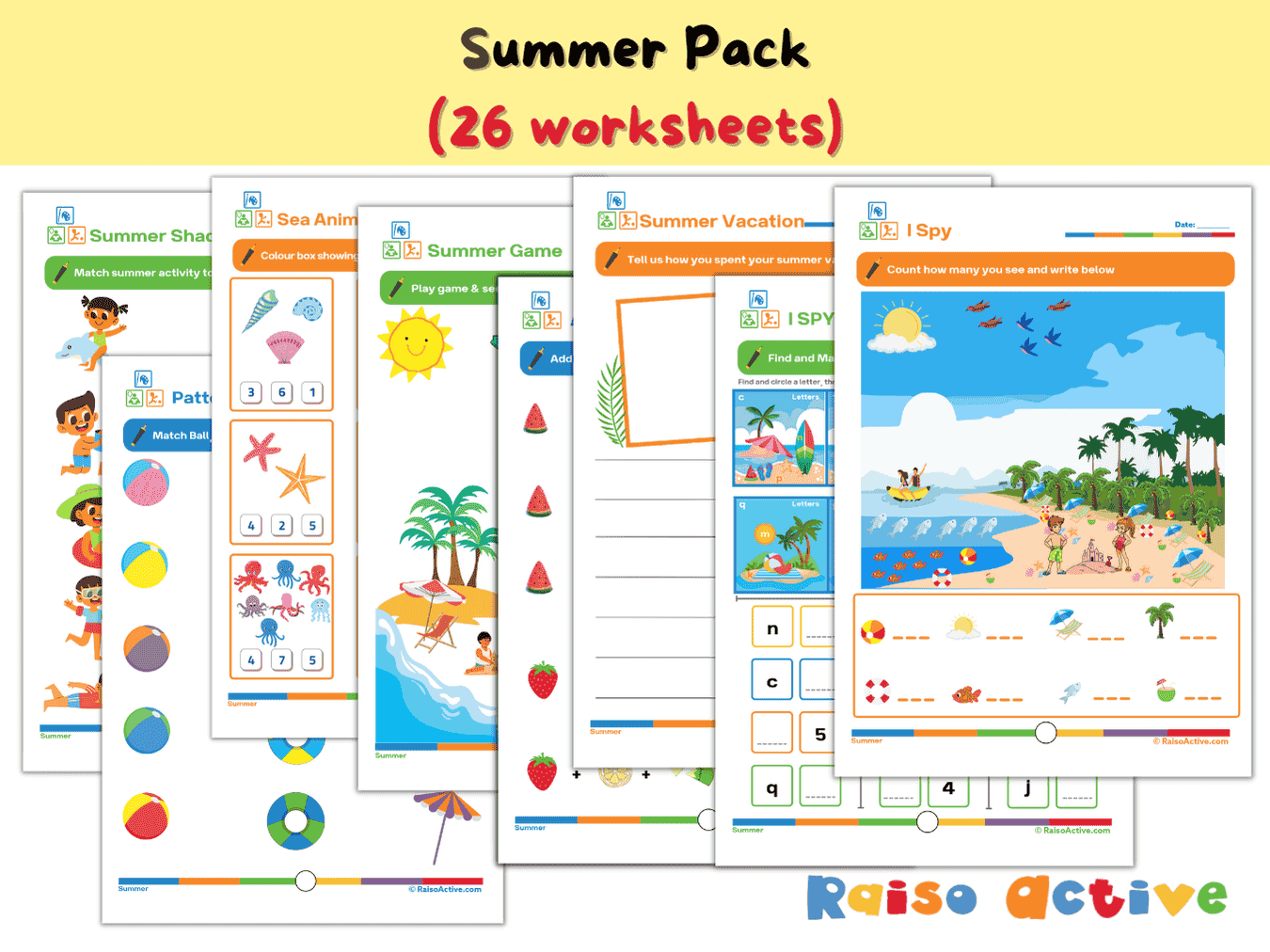
Summer Activity Pack: Math, Literacy, Puzzles & More for Preschool & Kindergarten
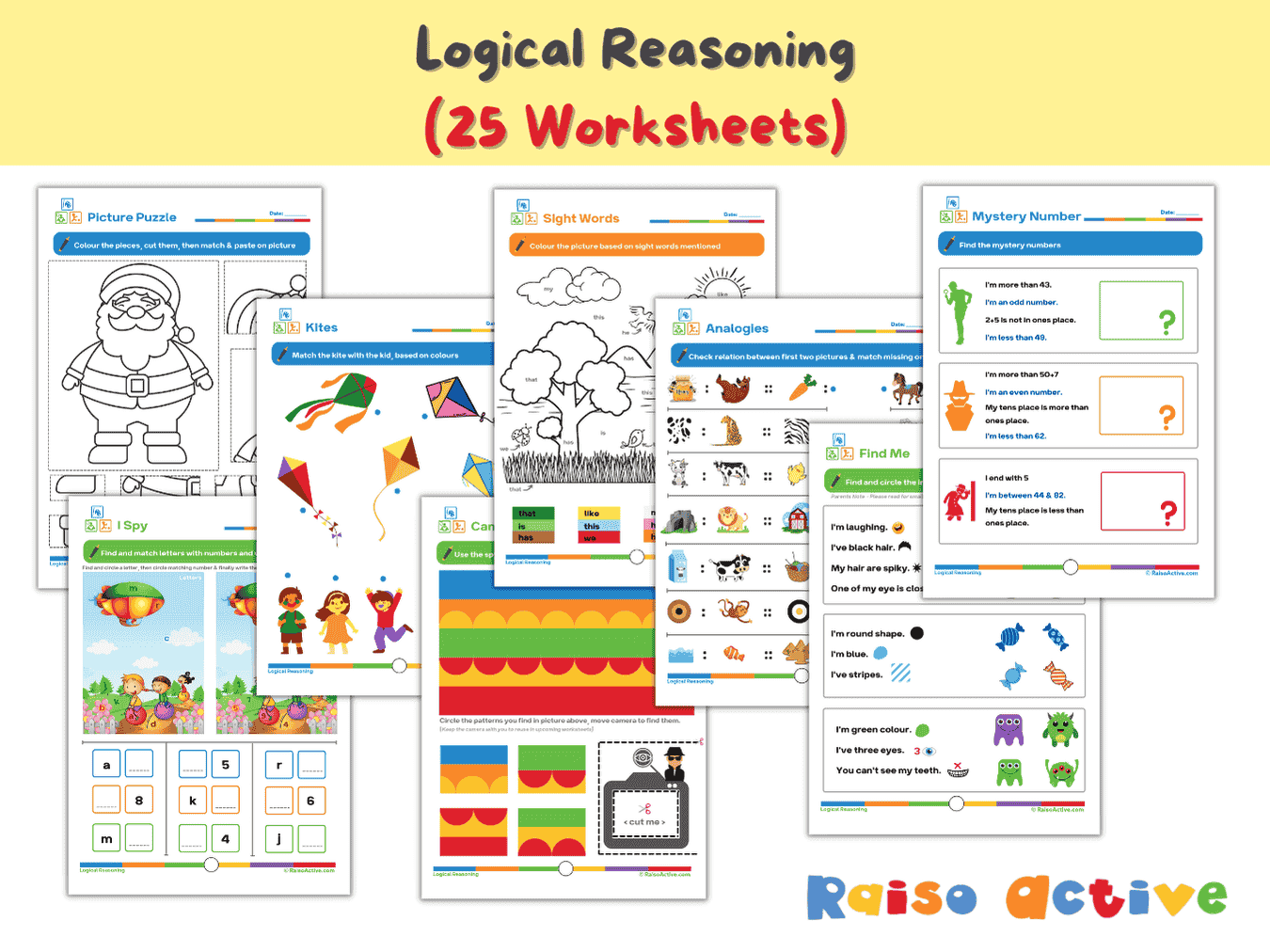
Logical Reasoning Activity Book for Preschool & Kindergarten | Patterns, Puzzles & Analogies
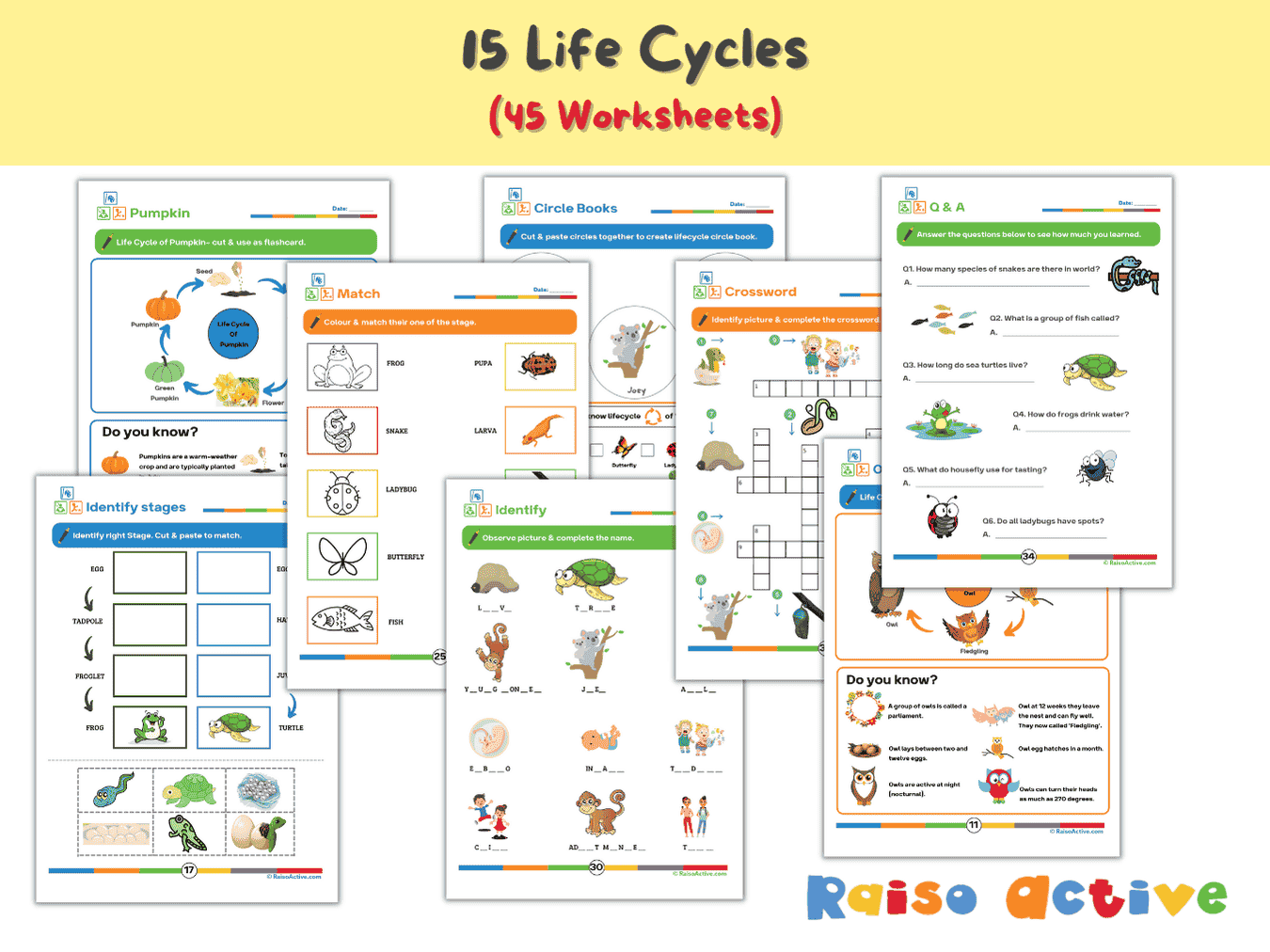
Lifecycles Activity Book & Flashcards for Preschool & Early Elementary
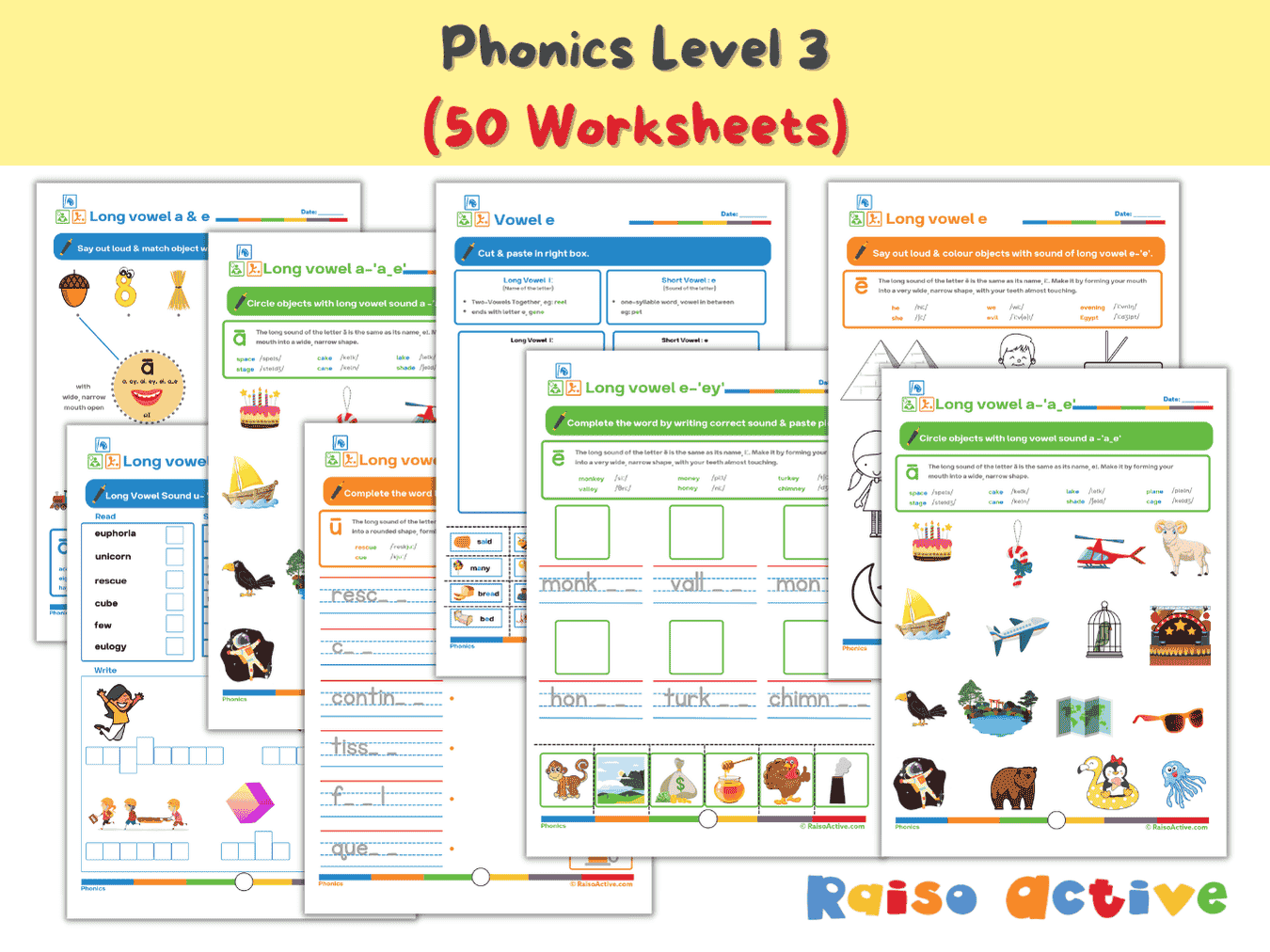
Phonics Level 3 Long Vowels Activity Book for Kindergarten & 1st Grade
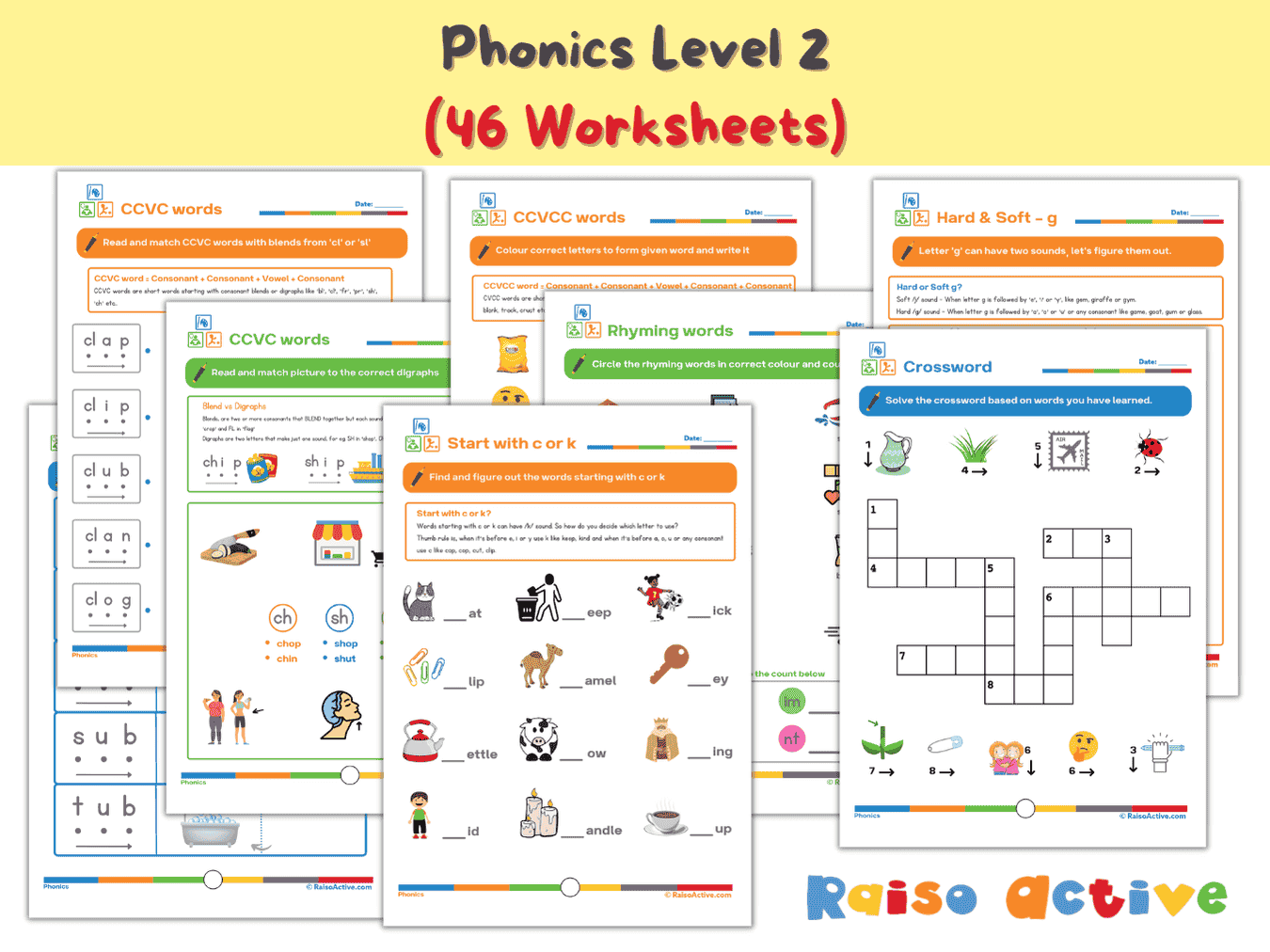
Phonics Level 2 Worksheets: CVC, CCVC, CVCC Word Families & Blends for Early Readers (Ages 4-7)
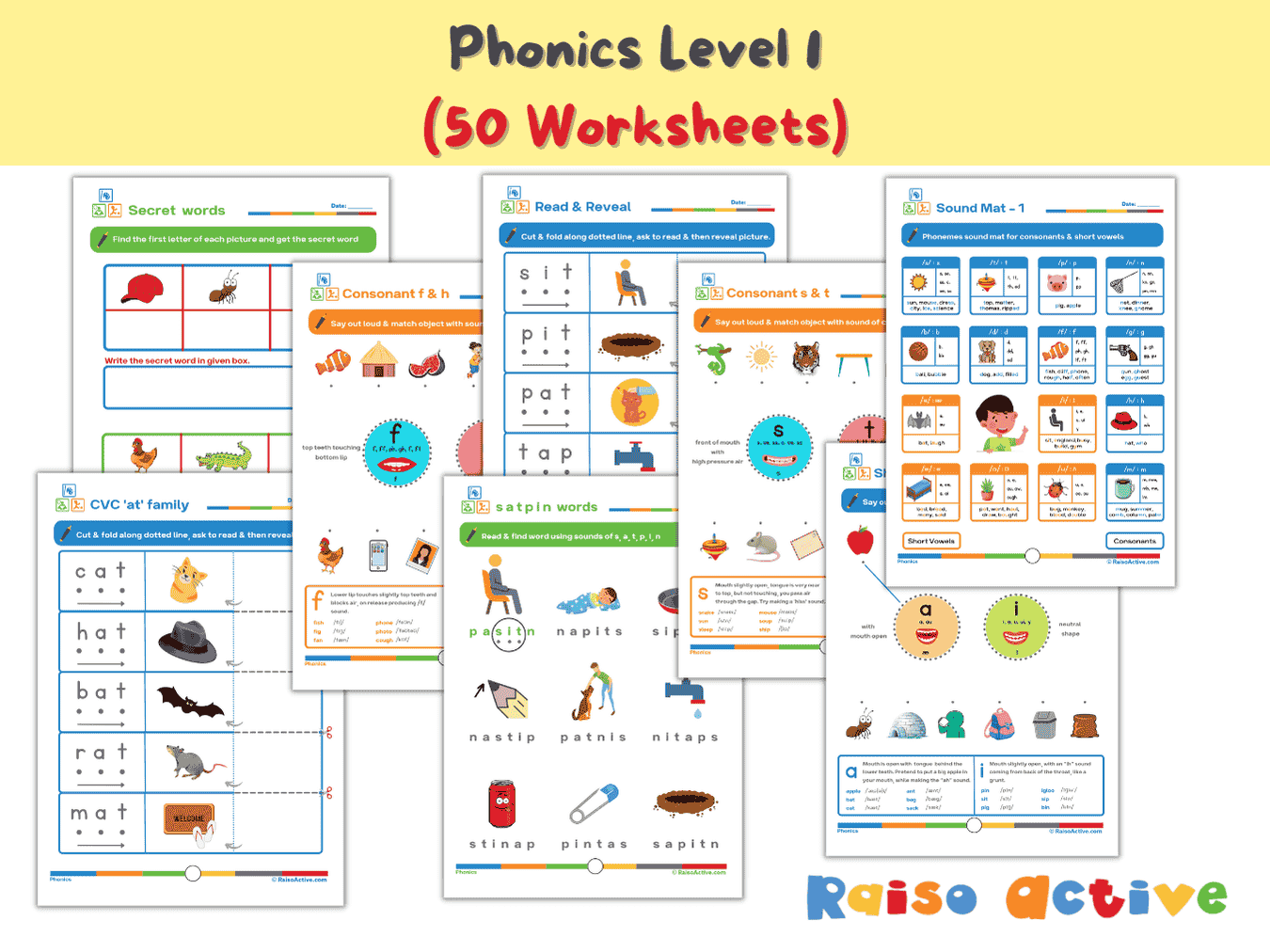
Phonics Level 1 Activity Book: Letter Sounds, Blending & CVC Words for Preschool & Kindergarten
Guides for parents and teachers
See all guides →Sight Words by Age: The First 50 Words and How to Teach Them Without Flashcard Fatigue
Which sight words to teach first and why, the heart-word method, a read-trace-write-find routine, games, and a by-age table of typical sight-word progress.
How to Teach CVC Blending: A Step-by-Step Method That Works in Two Weeks
A step-by-step method for teaching CVC blending, covering continuous sounds, word families, common errors, and a 14-day plan that most children finish reading CVC words.
Phase 2 Phonics at Home: Sound Order, Blending Games, Worksheets
Phase 2 phonics at home: the five sound sets in order, oral blending, tricky words, a two-week routine, common mistakes, and free worksheets.
Reception Year Explained: EYFS Learning and How to Help at Home
A teacher's plain-English guide to the Reception Year: the seven areas of learning, Early Learning Goals, Phase 2/3 phonics, the RBA and home routines.
UKG Syllabus Explained: English, Maths and EVS Month by Month
What UKG classes typically cover in English, maths and EVS, month by month, aligned to NEP 2020, with ways to support at home and signs your child is behind.
Bridging Two Worlds: A Complete Guide to Teaching Heritage Languages Alongside English
A practical guide to raising bilingual children who speak both their heritage language and English with confidence. Research-backed strategies, activities, and tips for Indian families.
Canonical: https://raisoactive.com/worksheets/kindergarten-english