Free printable worksheets · United States
Preschool English Worksheets (Ages 3–4)
Preschool english worksheets are practice sheets for children aged 3–4 in Preschool in the US. English covers letter and sound recognition, reading, vocabulary, grammar and writing, building from spoken language toward independent sentences. The sheets on this page cover letter recognition and phonics, reading comprehension, sentence writing and vocabulary and grammar.
Preschool builds readiness rather than academics: pre-writing strokes, uppercase letter recognition, counting objects to ten, naming shapes and colors, and cutting along a line, all introduced through short table activities inside a mostly play-based day. Grip is still forming, so most activities favor a thick crayon over a standard pencil. Three-year-olds learn that letters have names and their name starts with one. A set should cover recognizing uppercase letters, beginning with the ones in the child's own name, hearing the first sound of familiar words, spotting two pictures that rhyme, building vocabulary through opposites and categories, and tracing thick lines, curves and a few capitals with a crayon. Listening to a story and pointing to what happened is comprehension at this age. Lowercase and blending wait.
1079+ worksheets · free PDF download · print on A4 or Letter
Preschool English Worksheets to print
Browse all worksheets for ages 3–4
Clothing Pattern Match Worksheet for Preschoolers
This worksheet has children ages 3-5 study repeating patterns on clothing items — stripes, polka dots, or checks — and match each item to its identical twin, building visual discrimination and early pattern-sequencing skills. Distinguishing between similar-looking patterns also sharpens attention to detail, a skill that later supports letter and word recognition.

Letter L Tracing Worksheet for Preschoolers: Learn to Write!
This worksheet helps children ages 3-5 practice tracing the letter L's simple straight-line strokes while identifying words that start with the letter L, giving early success with one of the more approachable letters to write. Because L uses just two straight strokes, it's often a confidence-building letter for children still building fine motor control.

Summer Word Unscramble Worksheet for Preschoolers
This worksheet has children ages 3-5 unscramble jumbled letters to spell summer-themed words, practicing early phonics and spelling by sounding out letters and considering how they might combine into a familiar word. Because the letters are already given but out of order, children focus specifically on sequencing and sound-blending rather than recalling spelling from scratch, making this an accessible entry point into word-building. Writing the corrected word afterward reinforces handwriting alongside the phonics practice.

Learn the Letter N! Tracing and Coloring Worksheet for Preschoolers
This worksheet helps children ages 3-5 build the specific hand movements needed to form the letter N, tracing both its uppercase and lowercase shapes while also linking the letter to its sound through picture coloring. Repeated tracing strengthens the pencil grip and directional control that later support fluent handwriting.
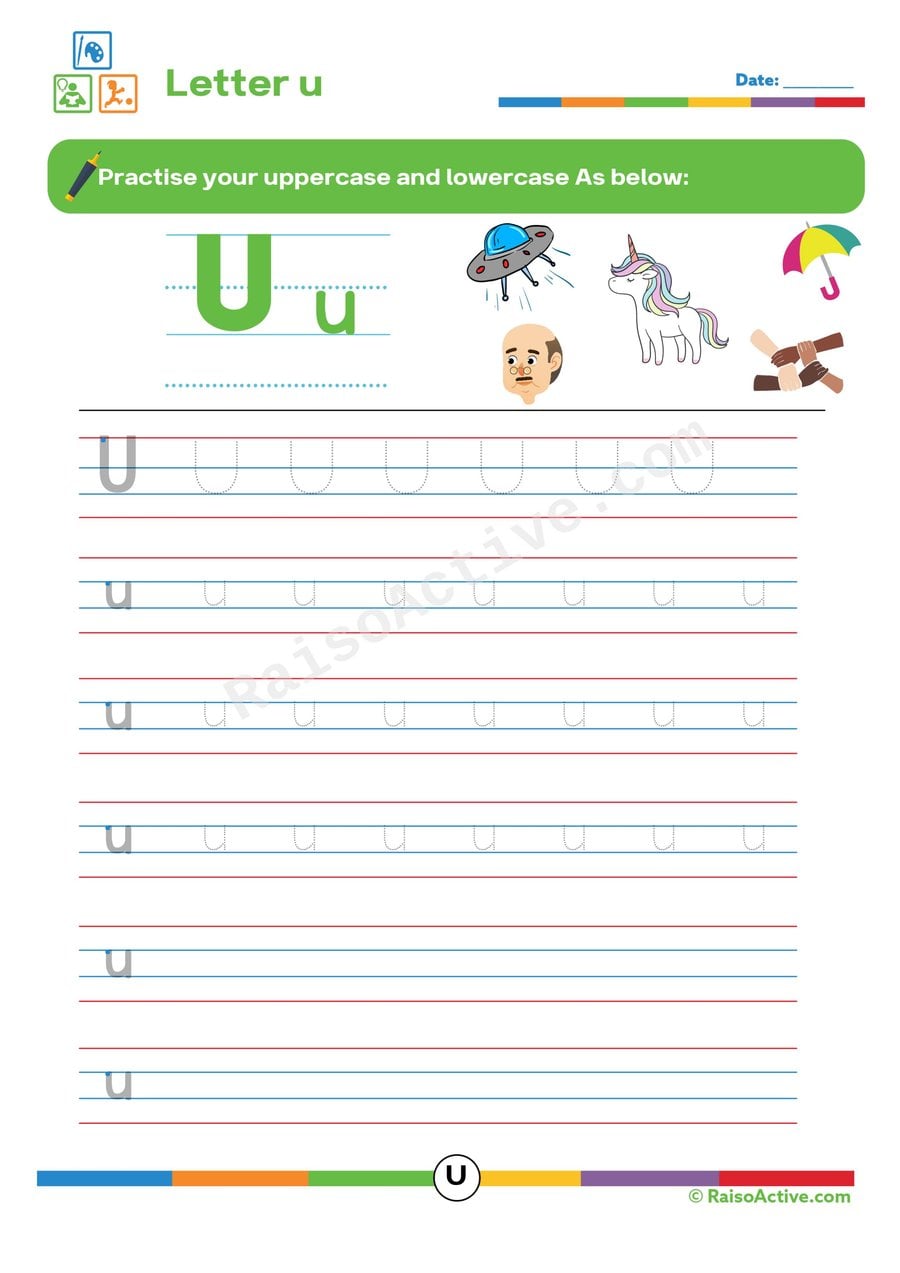
Letter U Tracing Worksheet for Preschoolers
U is a single smooth curve that dips down and back up, similar in motion to a shallow smile shape, giving 3-5 year olds continued practice with curved strokes after tackling letters like C and O. Tracing both uppercase U and lowercase u also shows children that, unlike many letters, U looks almost the same in both cases, just at a different size.

Trace and Write the Letter Q Worksheet for Preschoolers
This letter Q worksheet has children ages 3-5 practice both the uppercase and lowercase forms, combining a closed loop similar to O with a small extra tail stroke that makes Q visually distinct. Because Q is one of the less frequently practiced letters, this page gives focused repetition on a shape children often see less often in early reading materials. It also introduces the unusual /kw/ sound Q typically makes, as in 'queen' and 'quilt.'

Trace the Paths: A Fun Path Tracing Worksheet for Preschoolers!
This worksheet develops fine motor control and hand-eye coordination as children ages 3-5 trace a variety of dotted paths from a starting point to an end point, an essential pre-writing skill that builds the pencil control needed for forming letters. Following a winding line with steady pressure also strengthens visual tracking, which supports reading readiness.

Tracing Numbers 13-16 Worksheet for Preschoolers
Tracing the numbers 13 through 16 gives children practice with the trickier teen-number range, where number names and digit order don't always match intuitively, fourteen starts with the digit that comes second, for example, making handwriting practice here also a subtle exercise in number sense. For ages three to five, saying each number aloud while tracing helps cement both its written form and its place in the counting sequence.

Trace and Color the Letter B Worksheet for Preschoolers
Children ages 3-5 build handwriting readiness by tracing the letter B, practicing the straight vertical line and two connected curves that make up its shape. This combination of a straight stroke and rounded curves gives varied fine motor practice compared to letters made of only one type of line. Coloring pictures that start with B links the visual letter shape to its beginning sound, strengthening early phonics awareness.

Cr Blend Words Worksheet for Preschoolers: Read & Match!
This worksheet has children read words starting with the 'cr' blend, like 'crab' or 'crayon,' and then match each one to its picture, building both decoding skill and the vocabulary connection between a written word and a real object. For ages three to five, hearing and producing the blended 'cr' sound also improves overall speech clarity, since blended consonants are often among the later sounds children master.

Small Letter a-h Matching Worksheet for Preschoolers
This worksheet builds lowercase letter recognition for a through h by having children match each letter to a picture whose name starts with that sound. For three- to five-year-olds, focusing on lowercase forms specifically matters because most of the text children encounter in books is written in lowercase, making this recognition more directly useful for early reading than uppercase alone.

My Address Worksheet: Color the State and Fill in Your Details!
This worksheet introduces children ages 3-5 to their personal address as a piece of core safety knowledge, while the map-coloring task builds early geography skills by having them physically locate and color their home state within India. Practicing house number, street, city, and PIN code also gives meaningful, motivated handwriting practice since the words are personally relevant.

Letter Hh Tracing and Matching Worksheet for Preschoolers
Children ages 3-5 build letter recognition and handwriting readiness as they trace uppercase and lowercase Hh, identify the letter among different fonts, and match it to pictures of objects that start with the Hh sound. Practicing the letter across tracing, spotting, and sound-matching formats helps cement both its shape and its 'huh' sound more thoroughly than repetition of just one activity.
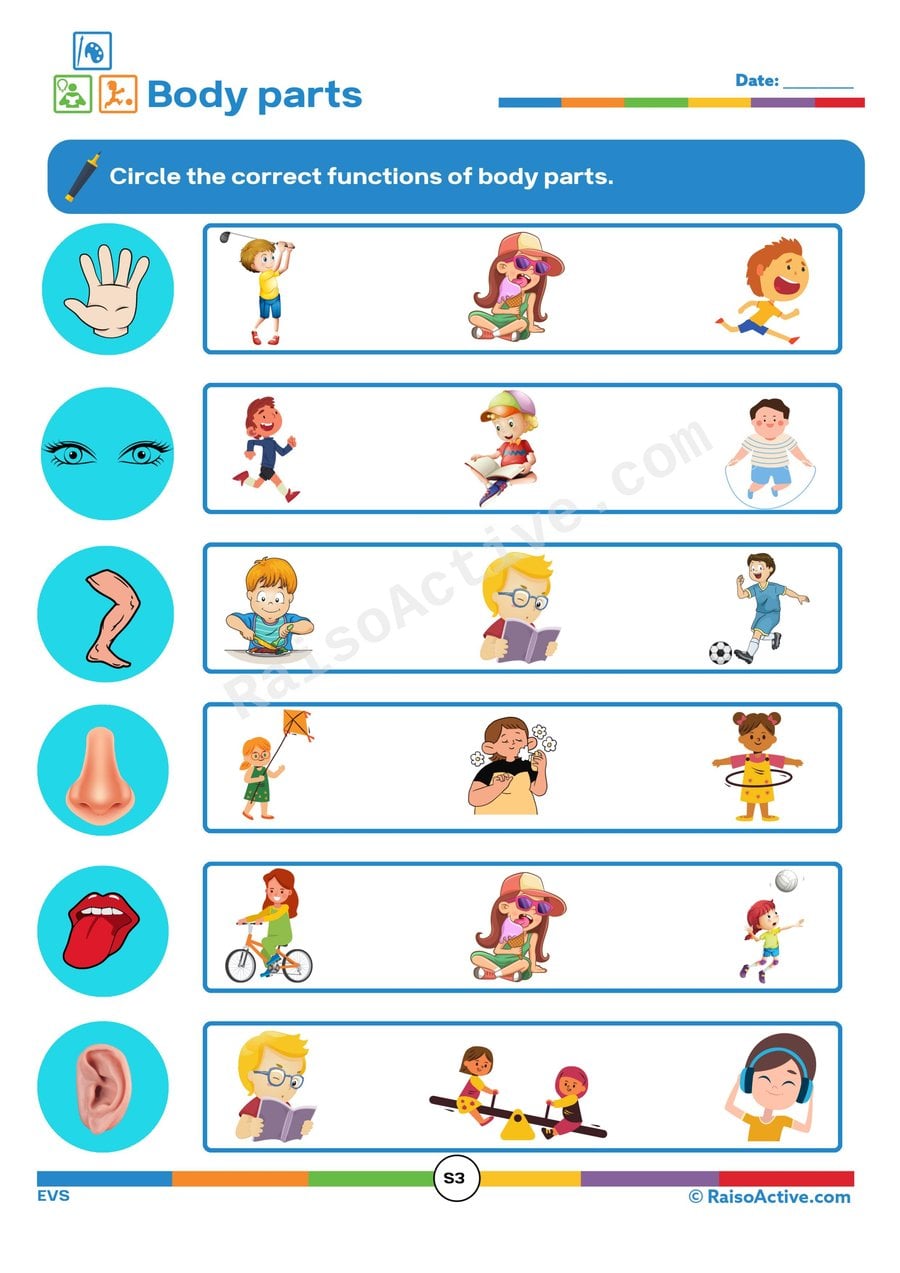
Body Parts Functions Worksheet for Kids
Children ages 3-5 practice connecting specific body parts to their real-world function, like eyes for seeing or ears for hearing, by circling the picture that shows what each body part is used for. This reinforces body awareness and vocabulary while building the reasoning skill of linking a body part to its purpose.
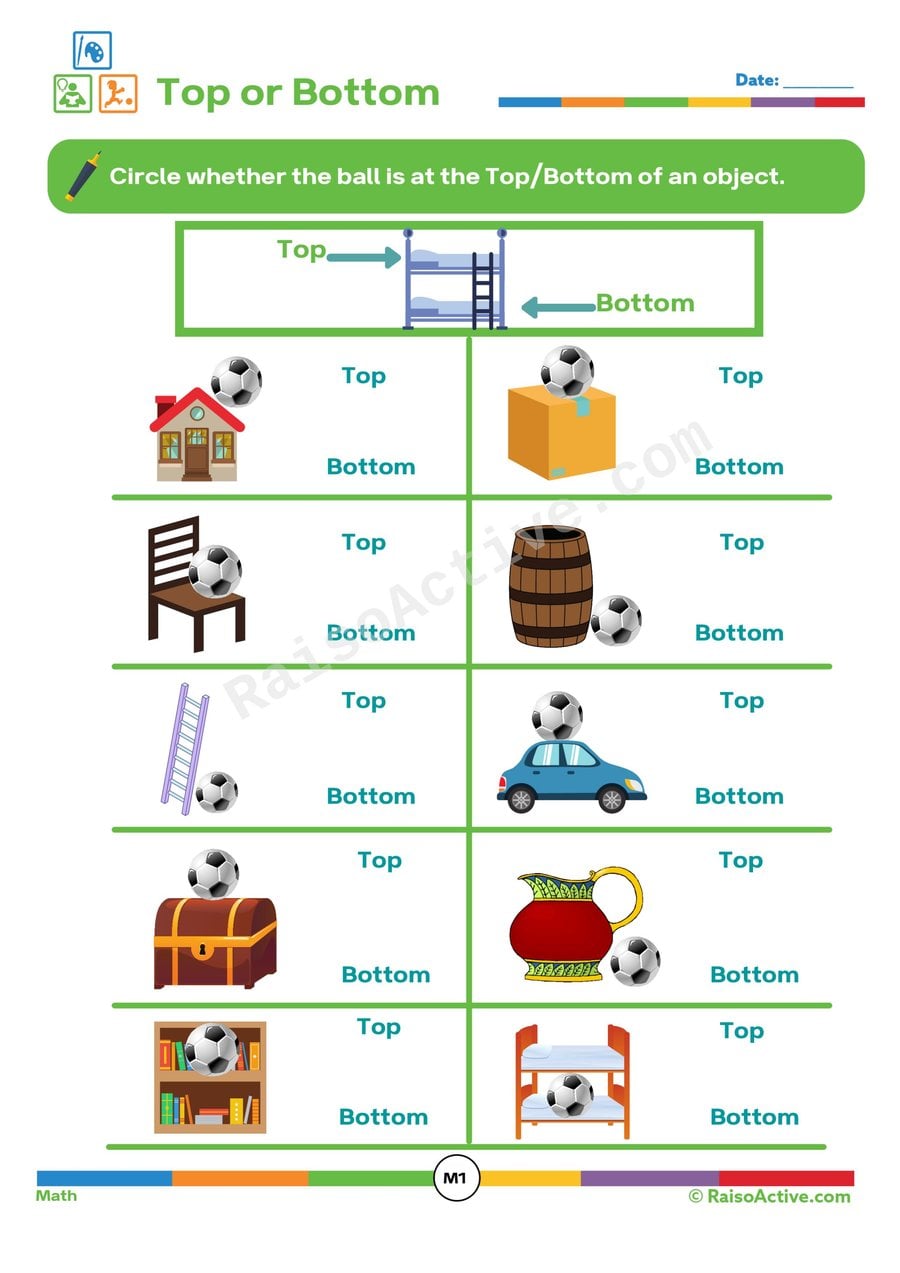
Top or Bottom? Fun Worksheet for Kids!
Deciding whether a ball is positioned at the top or bottom of another object teaches children ages 3-5 the spatial concepts of 'top' and 'bottom,' foundational positional vocabulary that supports later skills like reading a page from top to bottom or following multi-step directions. This worksheet asks children to look carefully at a picture and make a judgment about relative position, which strengthens visual-spatial reasoning alongside vocabulary development. Positional words like these are often first understood through pictures before children can reliably use them in their own speech.
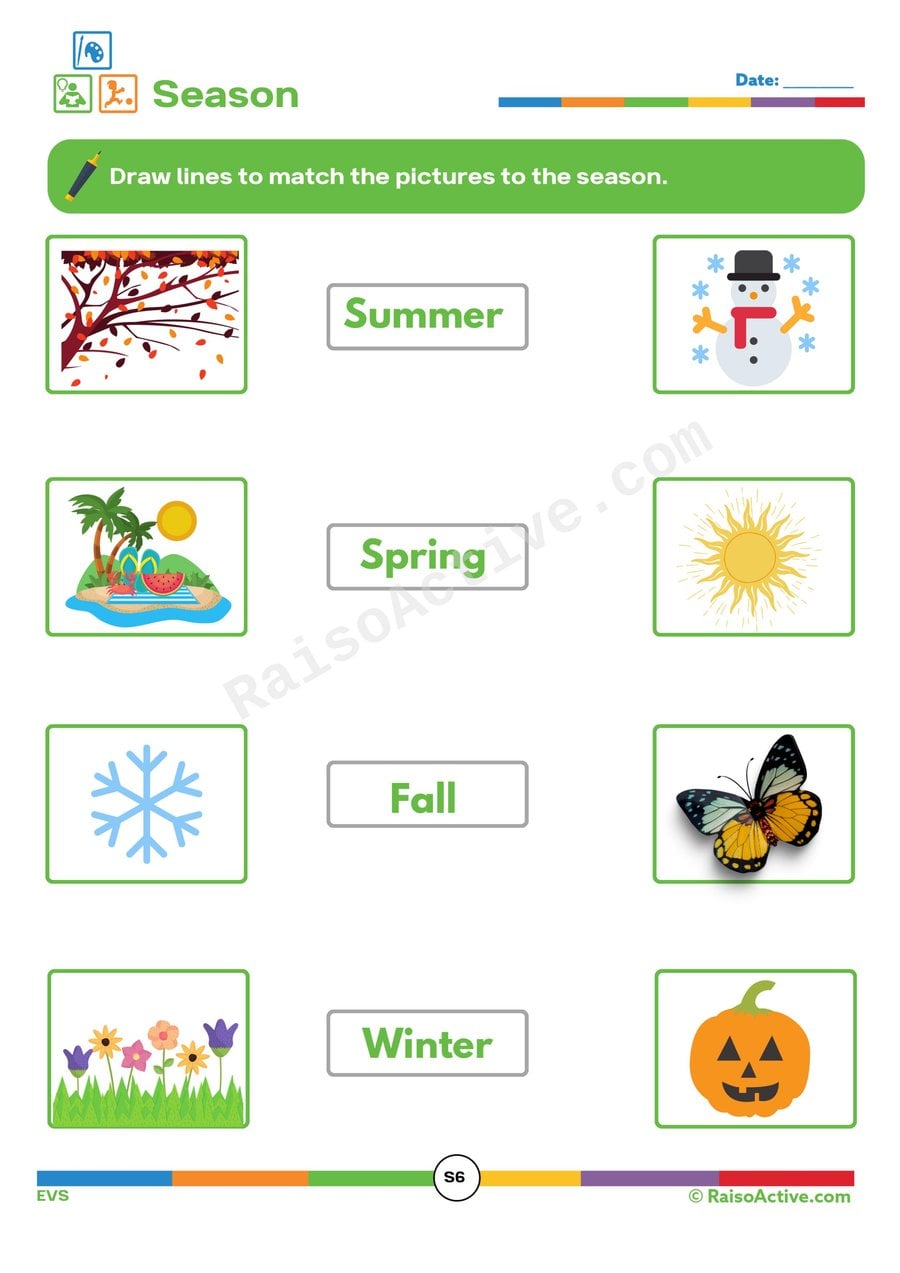
Seasons Matching Worksheet for Preschoolers
This worksheet helps children ages 3-5 learn to recognize the four seasons — summer, fall, winter, and spring — and match seasonal pictures, like snow or falling leaves, to the correct season name. Understanding that weather and nature change in a predictable yearly cycle is an early science concept that also connects naturally to a child's own experience of holidays and clothing changes throughout the year.

Fun with Letter F: Tracing, Finding, and Coloring Worksheet
Children ages 3-5 reinforce letter recognition and pencil control as they trace the letter F, search for it among other letters, and identify a picture starting with the F sound. Working through the same letter in multiple formats — writing, spotting, and sound-matching — helps move the letter from simple recognition toward automatic recall, an important pre-reading skill.

Adjective Adventure: Coloring and Sentence Fun Worksheet for Kids
Coloring only the adjectives in a set of words teaches children ages 3-5 to recognize descriptive words as their own grammatical category, distinct from naming words or action words, a foundational step toward understanding how sentences are built. Writing a sentence using a chosen adjective afterward pushes the recognition skill into active use, requiring children to apply what they identified rather than just spot it.

Trace and Write the Letter T Worksheet for Preschoolers
Tracing the uppercase letter T has children ages 3-5 practice one of the simplest two-stroke combinations in the alphabet, a vertical line crossed by a horizontal line at the top, which builds confidence with cross-stroke letters before tackling harder ones like F or X. Because T is a common letter in early reading and writing, mastering its formation supports a wide range of future words. The page also reinforces the /t/ sound heard in words like 'turtle,' 'toy,' and 'top.'

Healthy Eating Worksheet: Fruit Salad and Vegetable Soup!
This matching worksheet helps children ages 3-5 build food vocabulary by identifying pictures of fruits and vegetables and sorting them into the correct category — fruit salad ingredients or vegetable soup ingredients. Learning to classify foods by type, not just by whether they're healthy, supports early categorization skills that apply across many other subjects, from animals to shapes. The cooking-themed framing also connects the sorting task to a familiar, everyday context children may have experienced at home.

My Personal Details Worksheet: Fill in the Blanks!
This worksheet has children ages 3-5 write their own name, age, and other basic personal information into labeled blanks, building both early writing practice and a sense of personal identity. Learning to write and recognize one's own personal details is a genuinely meaningful, motivating writing task for young children, since it's about themselves rather than an abstract exercise.
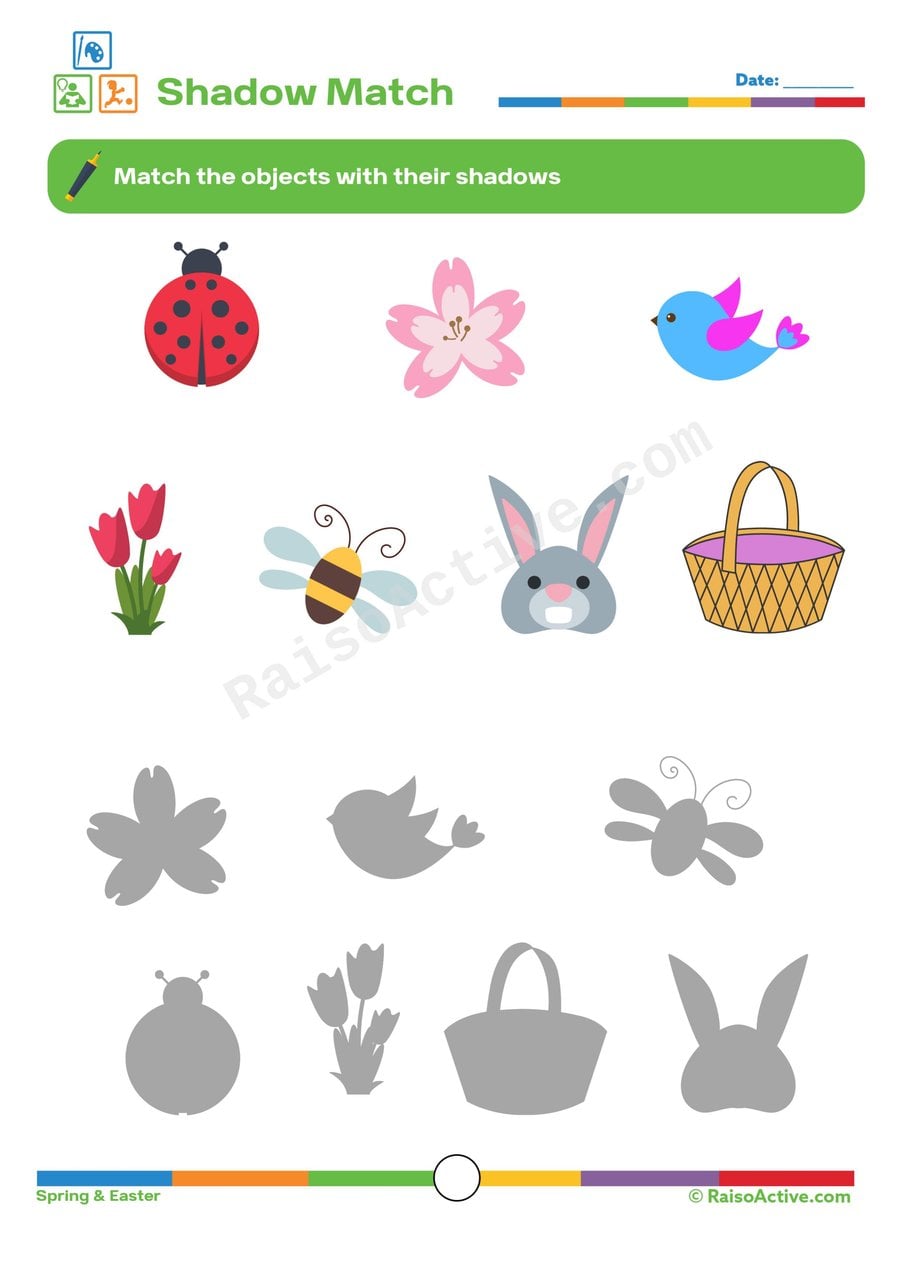
Spring Shadow Match Worksheet for Preschoolers
Children ages 3-5 practice visual discrimination by matching spring-themed objects to their correct silhouette shadows. Because shadows strip away color and detail, leaving only outline shape, this activity sharpens a child's ability to focus on form alone — a more advanced visual skill than matching by color or pattern.

This, That, These, and Those Worksheet: Practice with Demonstrative Pronouns
This worksheet introduces children ages 3-5 to demonstrative pronouns — 'this,' 'that,' 'these,' and 'those' — words used to point out objects based on their distance and number. Filling in the correct pronoun for each picture builds early grammar awareness and helps children notice the subtle rules of singular versus plural and near versus far that govern everyday speech.
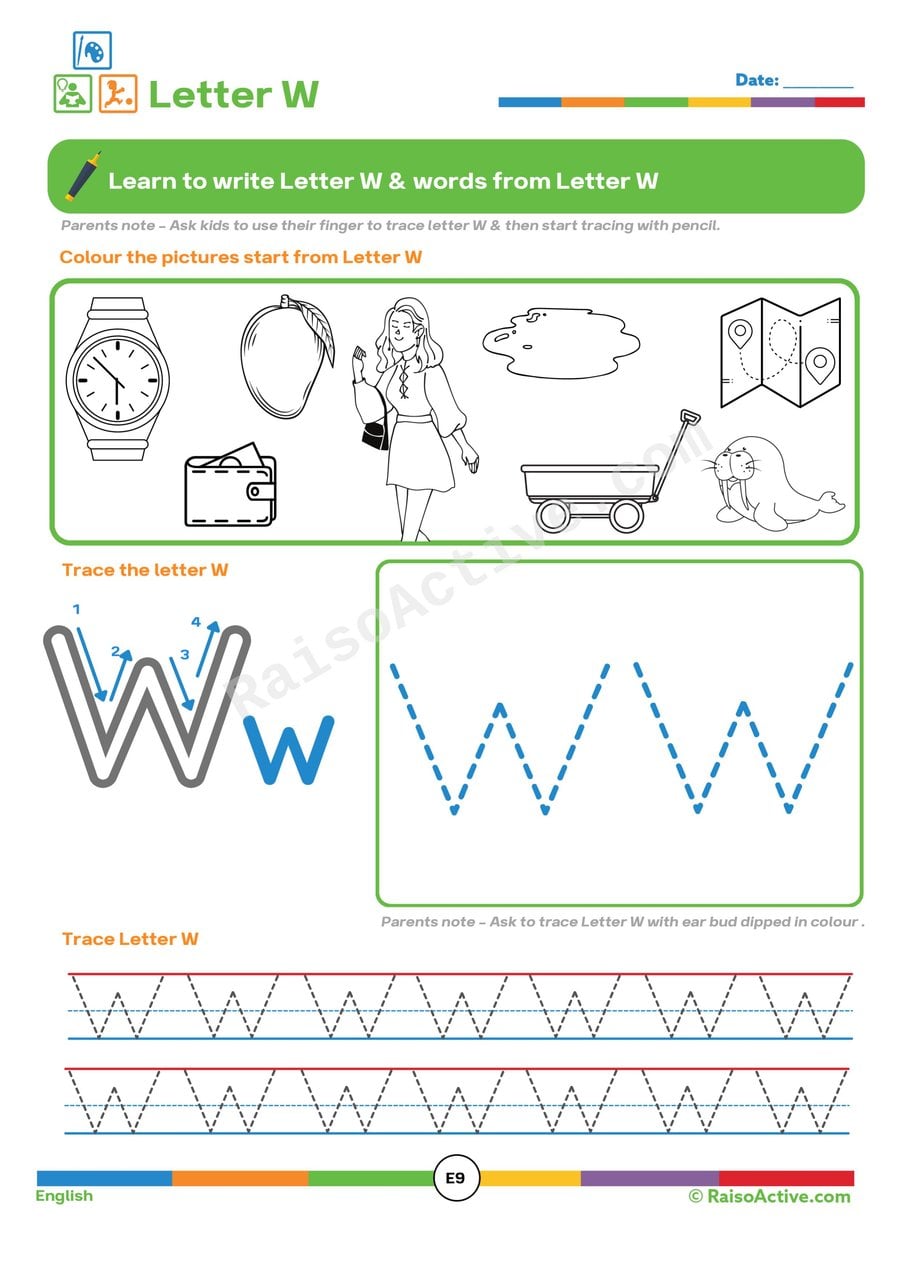
Letter W Worksheet: Trace, Color, and Learn!
Children ages 3-5 practice tracing both the uppercase and lowercase forms of the letter W, learning to distinguish the sharper zigzag of the capital from the rounded double-curve of the lowercase. This dual-case tracing builds the visual discrimination and fine motor precision needed to eventually read and write both forms correctly. Coloring W-word pictures ties the letter's shape to its beginning sound for early phonics development.
What Preschool english worksheets cover
Three-year-olds learn that letters have names and their name starts with one. A set should cover recognizing uppercase letters, beginning with the ones in the child's own name, hearing the first sound of familiar words, spotting two pictures that rhyme, building vocabulary through opposites and categories, and tracing thick lines, curves and a few capitals with a crayon. Listening to a story and pointing to what happened is comprehension at this age. Lowercase and blending wait.
- Recognize uppercase letters, starting with those in the child's name
- Say the first sound of a familiar word, like m for mom
- Find two pictures whose names rhyme
- Trace thick lines, curves and a few capital letters
- Sort pictures into opposite pairs such as big and small
How to use these worksheets at home or in class
Five minutes is a solid session for a three-year-old, ten minutes the practical ceiling. Offer a thick crayon or a short fat pencil, sit beside your child, and treat the sheet as one activity among blocks, stories and outdoor play rather than as schoolwork.
Start with the sheet that matches what your child can already do, then move one step up. Keep finished sheets in a folder: Preschool teachers often ask for evidence of practice, and children like seeing their own progress.
Is your child ready for Preschool english work?
A child ready for these activities holds a crayon and makes deliberate marks, sits at a table briefly, follows a single spoken instruction, and shows some interest in the letters of their own name or the numbers they hear counted aloud.
Frequently asked questions
How many letters should a three-year-old know?
There is no fixed number. By four, many children recognize the letters in their own name and a handful of other capitals, and that is a fine target. Reciting the alphabet song is not the same as recognizing letters out of order. Work on eight to ten letters that matter to the child, one letter per sheet with pictures, and add the letter sound once the name is known.
What should a Preschool child be able to do in english?
Three-year-olds learn that letters have names and their name starts with one. A set should cover recognizing uppercase letters, beginning with the ones in the child's own name, hearing the first sound of familiar words, spotting two pictures that rhyme, building vocabulary through opposites and categories, and tracing thick lines, curves and a few capitals with a crayon. Listening to a story and pointing to what happened is comprehension at this age. Lowercase and blending wait. A child ready for these activities holds a crayon and makes deliberate marks, sits at a table briefly, follows a single spoken instruction, and shows some interest in the letters of their own name or the numbers they hear counted aloud.
Do these worksheets follow the Preschool curriculum?
The sheets cover letter recognition and phonics, reading comprehension, sentence writing and vocabulary and grammar, which sit inside the Head Start Early Learning Outcomes Framework (ELOF) outcomes for Preschool. Nursery (UK), Nursery (India) use the same skills at this age, so the sheets also fit families following those programmes.
Are these Preschool english worksheets free?
Yes. Each worksheet downloads free as a watermarked PDF once you create an account, with a limit of five a day. An annual membership ($20) removes the watermark and the limit for the whole library of over 1,000 worksheets and every printable pack.

Written by
Hemsweta Jain · Teacher Cheena
MBA and Early Childhood Educator, teaching since 2014 · Founder of RaisoActive, Mumbai
Written and reviewed by Hemsweta Jain (Teacher Cheena), who designs every RaisoActive worksheet.
Last reviewed
Printable packs for ages 3–4
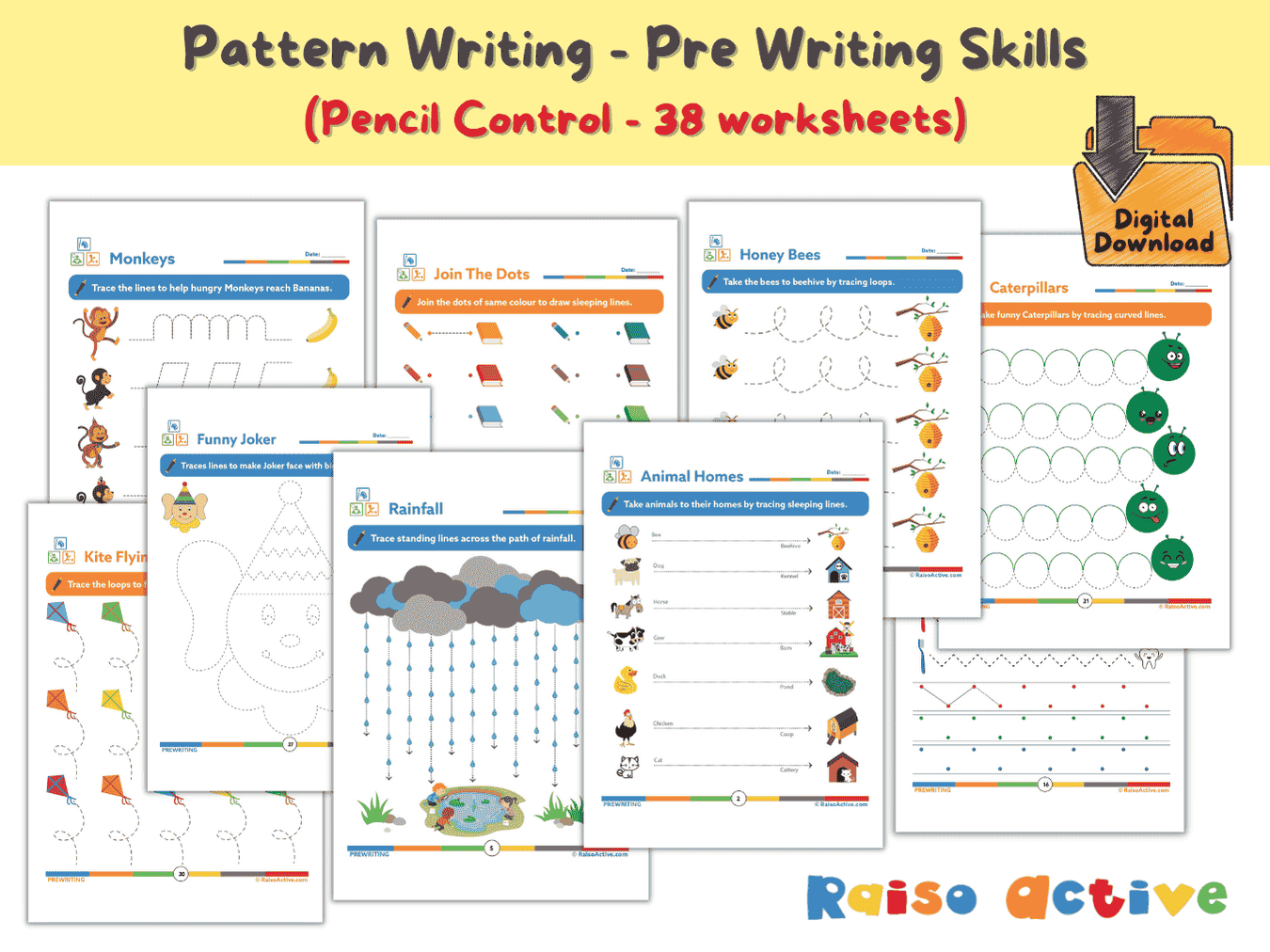
Pattern Writing Pre-writing Skills Activity Book for 3-4 Year Olds
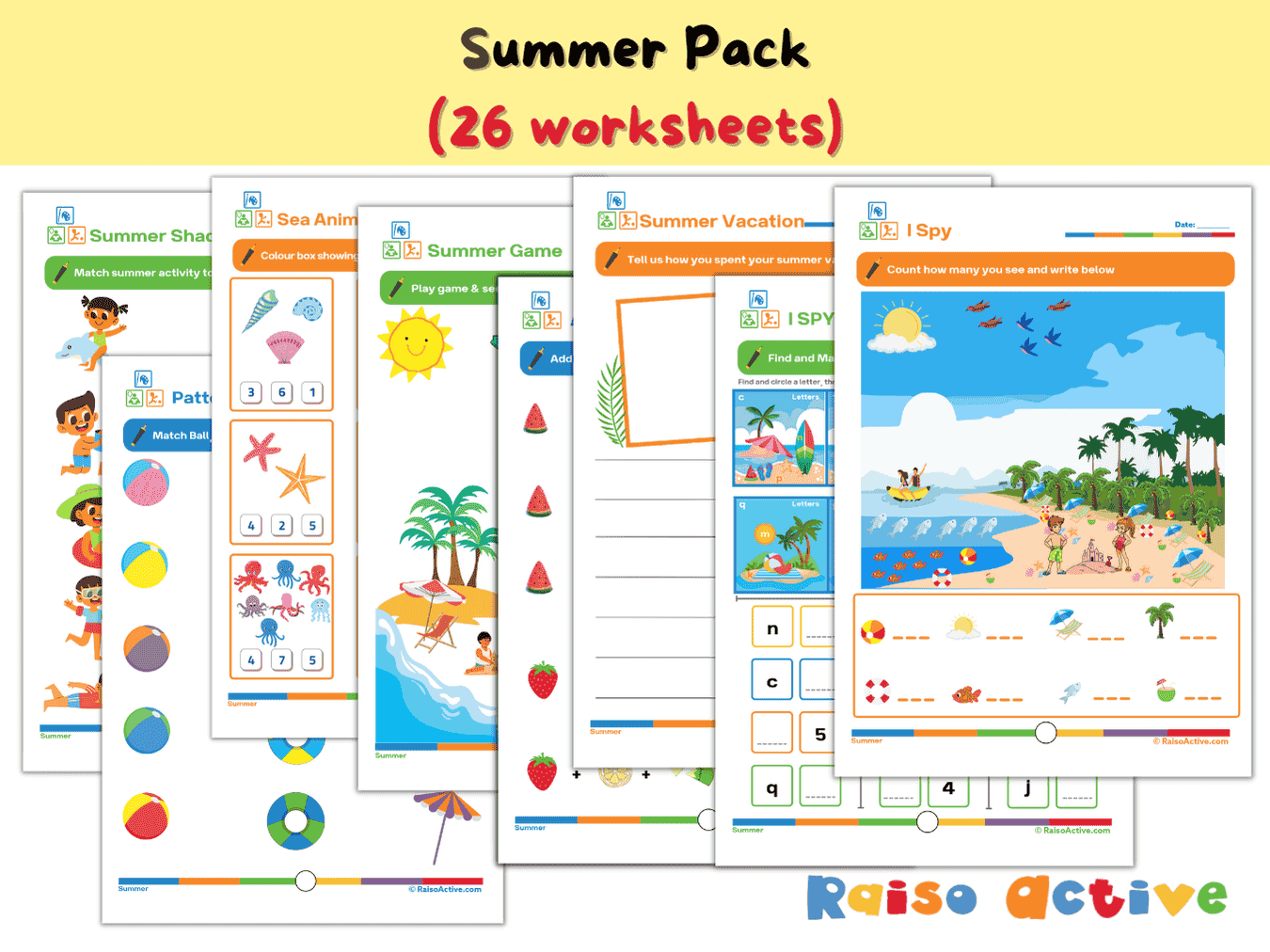
Summer Activity Pack: Math, Literacy, Puzzles & More for Preschool & Kindergarten
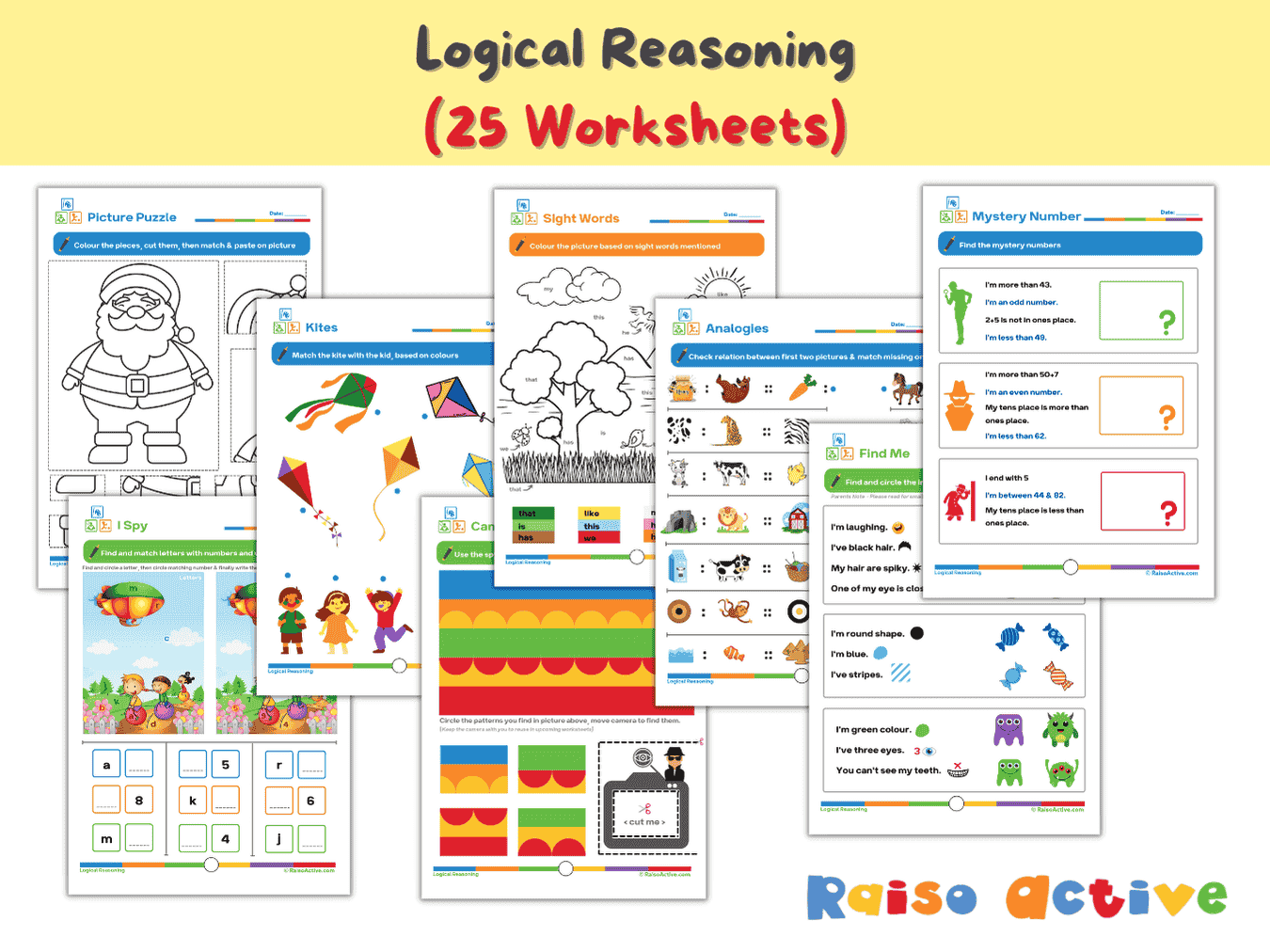
Logical Reasoning Activity Book for Preschool & Kindergarten | Patterns, Puzzles & Analogies
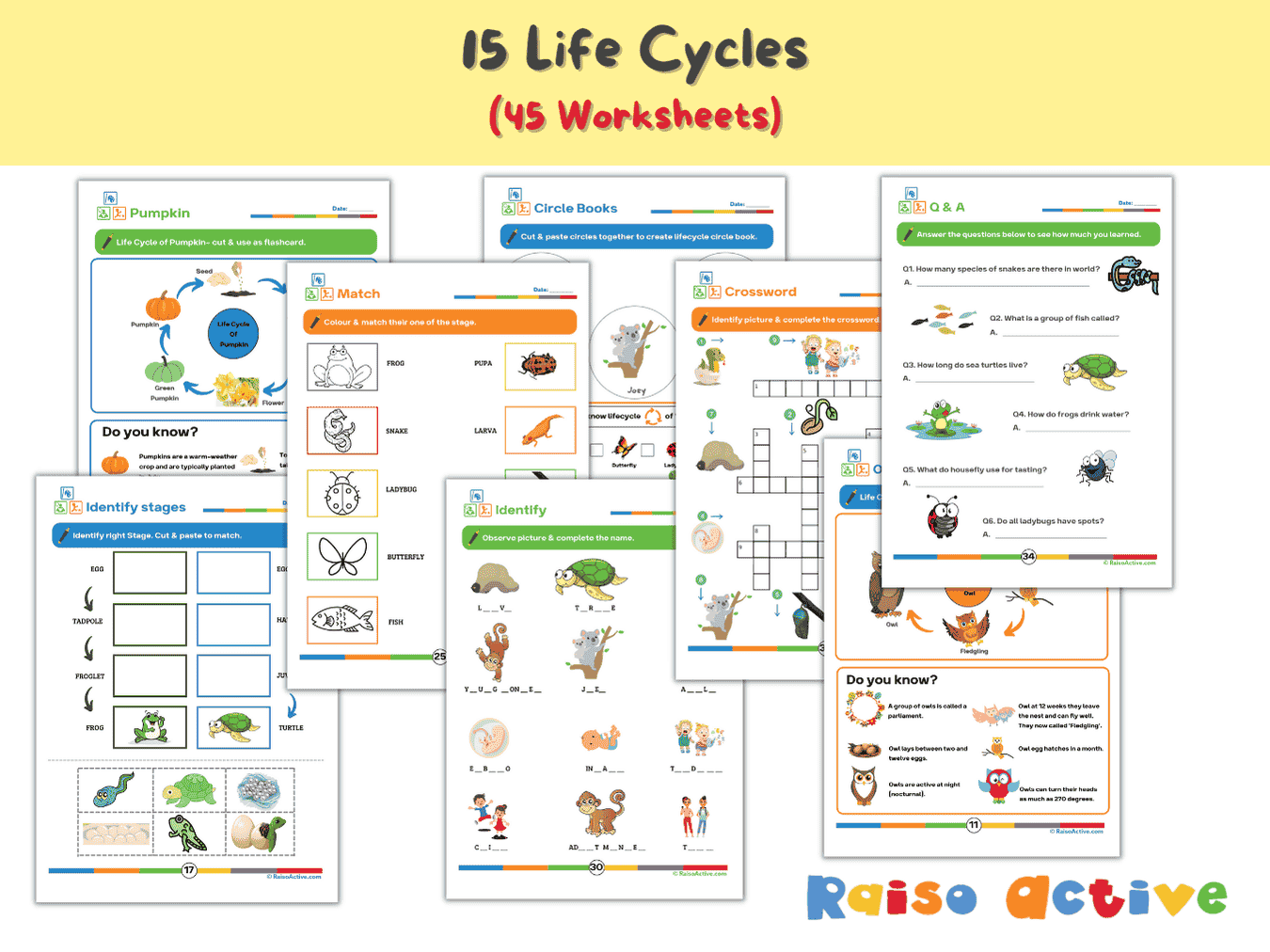
Lifecycles Activity Book & Flashcards for Preschool & Early Elementary
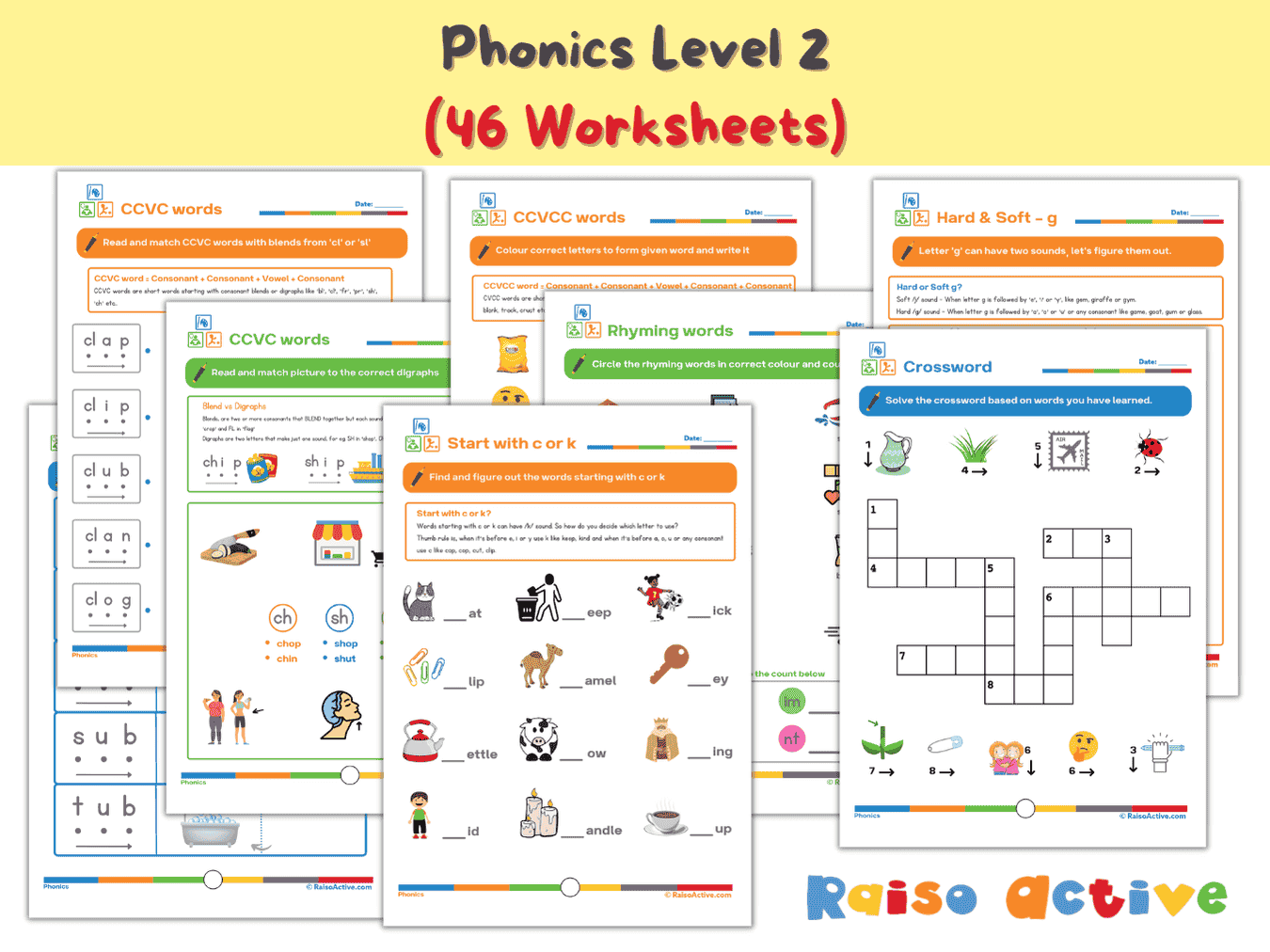
Phonics Level 2 Worksheets: CVC, CCVC, CVCC Word Families & Blends for Early Readers (Ages 4-7)
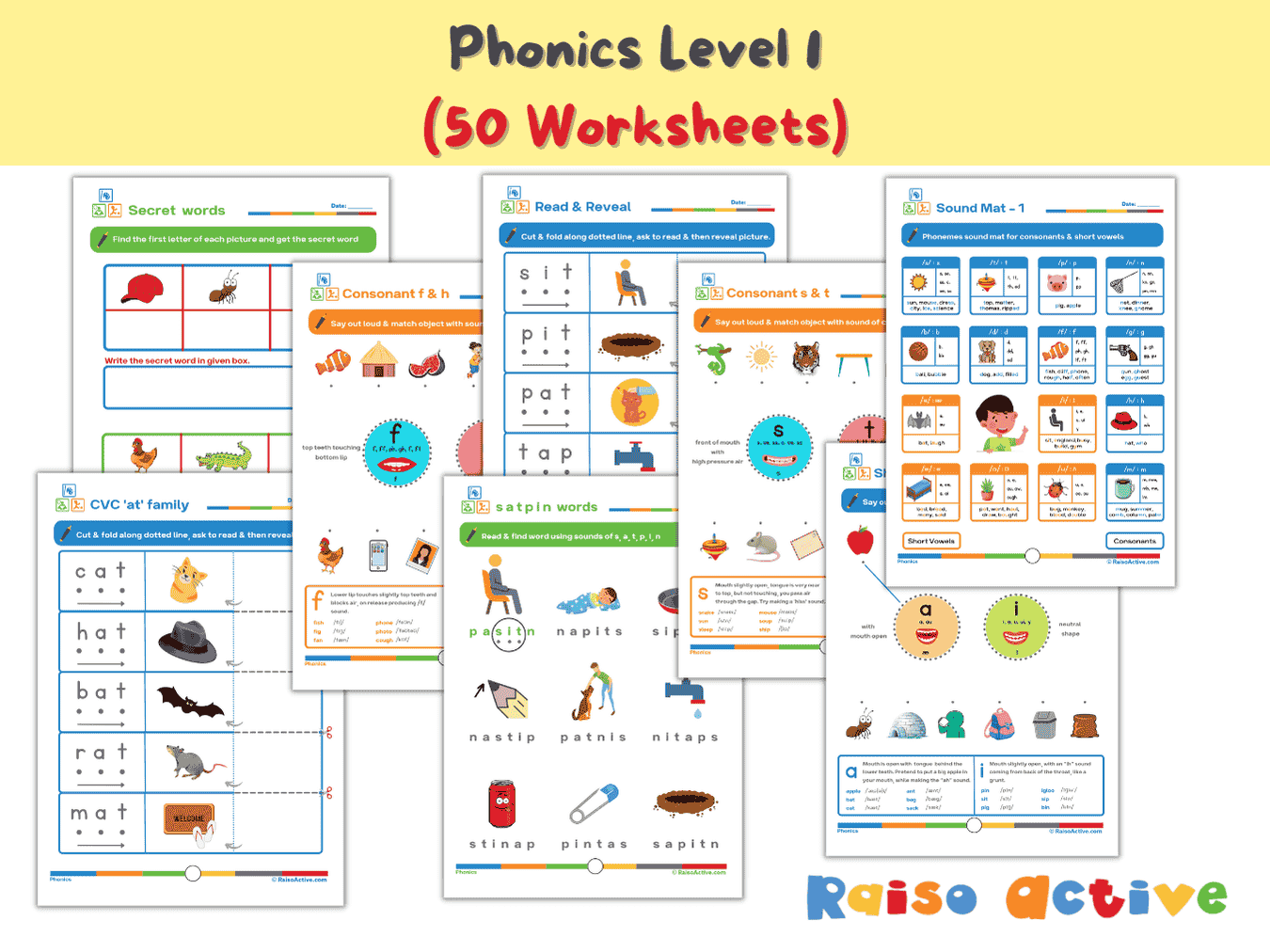
Phonics Level 1 Activity Book: Letter Sounds, Blending & CVC Words for Preschool & Kindergarten
Guides for parents and teachers
See all guides →Sight Words by Age: The First 50 Words and How to Teach Them Without Flashcard Fatigue
Which sight words to teach first and why, the heart-word method, a read-trace-write-find routine, games, and a by-age table of typical sight-word progress.
How to Teach CVC Blending: A Step-by-Step Method That Works in Two Weeks
A step-by-step method for teaching CVC blending, covering continuous sounds, word families, common errors, and a 14-day plan that most children finish reading CVC words.
Phase 2 Phonics at Home: Sound Order, Blending Games, Worksheets
Phase 2 phonics at home: the five sound sets in order, oral blending, tricky words, a two-week routine, common mistakes, and free worksheets.
Reception Year Explained: EYFS Learning and How to Help at Home
A teacher's plain-English guide to the Reception Year: the seven areas of learning, Early Learning Goals, Phase 2/3 phonics, the RBA and home routines.
UKG Syllabus Explained: English, Maths and EVS Month by Month
What UKG classes typically cover in English, maths and EVS, month by month, aligned to NEP 2020, with ways to support at home and signs your child is behind.
Bridging Two Worlds: A Complete Guide to Teaching Heritage Languages Alongside English
A practical guide to raising bilingual children who speak both their heritage language and English with confidence. Research-backed strategies, activities, and tips for Indian families.
Canonical: https://raisoactive.com/worksheets/preschool-english