Sight Word 'Saw' Worksheet: Trace, Find, and Color!
The word 'saw' is another high-frequency sight word that doesn't follow standard phonics patterns, so children ages 3-5 need this kind of layered, multi-format practice — coloring, tracing, searching, and sentence completion — to build automatic recognition. Repeated exposure to the same word through different activities strengthens the visual memory needed for instant sight-word recall, which is essential since sight words make up a large percentage of the words in early beginner books. The variety of formats here also keeps a young child's attention across a longer practice session than a single repetitive task would.
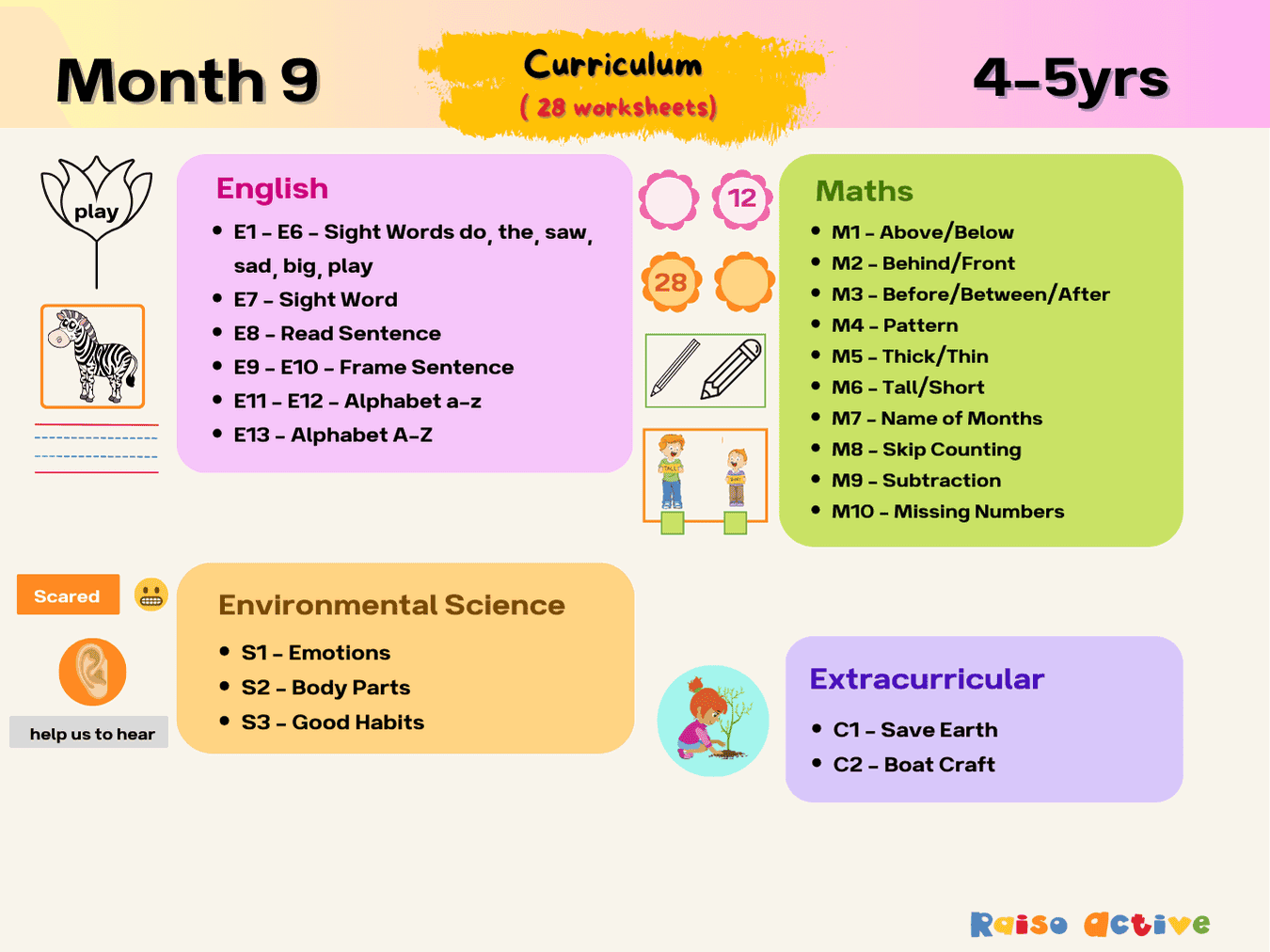
Part of the pack
Month 9: Play-Based Preschool Foundational Skills | Ages 4-5
This is page 6 of the pack. Ages 4-5 · Pre-KAges 4-5 · ReceptionAges 4-5 · LKGAges 4-5
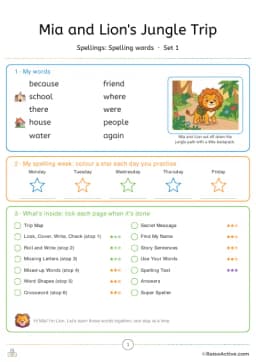
Made for your child
Spelling practice, made for your child
Their own spelling words turned into a pack: trace or look-cover-write-check, roll and write, a secret picture code, a word search, a crossword and a test, with their name in it.
Make a spelling packFree preview · free for members
Or start free: a word search with sight wordsCurriculum
- Fluency > Sight Words
How to use this worksheet
Begin by having your child color in the word 'saw,' saying it aloud as they color. Next, guide them through tracing the word several times, reinforcing the correct letter shapes and order. Move to the word search, helping your child find and highlight every instance of 'saw' hidden among other letters. Then read the fill-in-the-blank sentences together and have them write 'saw' in each correct spot. Finally, use a cotton swab dipped in watercolor to dab out the shape of the word one more time for extra sensory reinforcement.
Materials needed
- Pencil
- Crayons
- Ear bud
- Water color
Extension activities
- 1Make up a sentence together using the word 'saw,' like 'I saw a bird in the tree.'
- 2Look through a favorite book together and count how many times you spot the word 'saw.'
- 3Write the word multiple times on a blank sheet of paper, saying it aloud with each repetition.
- 4Create flashcards with the word 'saw' and quiz each other on quick recognition.
- 5Talk about the difference between 'see' and 'saw' as present and past tense, if your child is ready for that concept.

Written by
Hemsweta Jain · Teacher Cheena
MBA and Early Childhood Educator, teaching since 2014 · Founder of RaisoActive, Mumbai
Every RaisoActive worksheet is designed and checked by the founder before publishing.
Published · Last reviewed
More from Month 9: Play-Based Preschool Foundational Skills | Ages 4-5

Frame the Sentence: Sight Word Fun Worksheet for Preschoolers
Ages 4-5 · Pre-KAges 4-5 · ReceptionAges 4-5 · LKGAges 4-5
Constructing a full sentence from individual sight words is a meaningful step up from recognizing words in isolation, asking children ages 4-5 to understand how words function together to make meaning. This worksheet has children read a small bank of sight words and place them correctly into a sentence frame, which builds both reading comprehension and early grammar sense — understanding that word order matters. Because the words are provided rather than freely written, children can focus entirely on sentence structure without the added challenge of spelling from scratch.

Save Earth: A Cut and Paste Sorting Worksheet for Kids
Ages 3-5 · Preschool–Pre-KAges 3-5 · Nursery–ReceptionAges 3-5 · Nursery–LKGAges 3-5
This cut-and-paste activity introduces children ages 3-5 to the practical concept of waste sorting by having them classify pictured items as 'wet' or 'dry' waste - an early, hands-on entry point into environmental responsibility. Cutting along the lines and gluing each piece into its correct bin also builds scissor control and precise hand placement, both important fine motor milestones at this age.

Sight Word 'Said' Worksheet for Preschoolers: Tracing, Reading, and Writing Fun!
Ages 3-5 · Preschool–Pre-KAges 3-5 · Nursery–ReceptionAges 3-5 · Nursery–LKGAges 3-5
The word 'said' appears constantly in early readers, especially in dialogue, but its spelling doesn't match how it sounds, which makes it a classic sight word that children ages 3-5 must memorize by sight rather than decode. This worksheet reinforces that memorization through multiple formats — coloring, searching, tracing, filling in blanks, and even a dot-to-dot — giving the word repeated exposure in different contexts. Building instant recognition of high-frequency words like 'said' is one of the most efficient ways to boost a young reader's fluency.
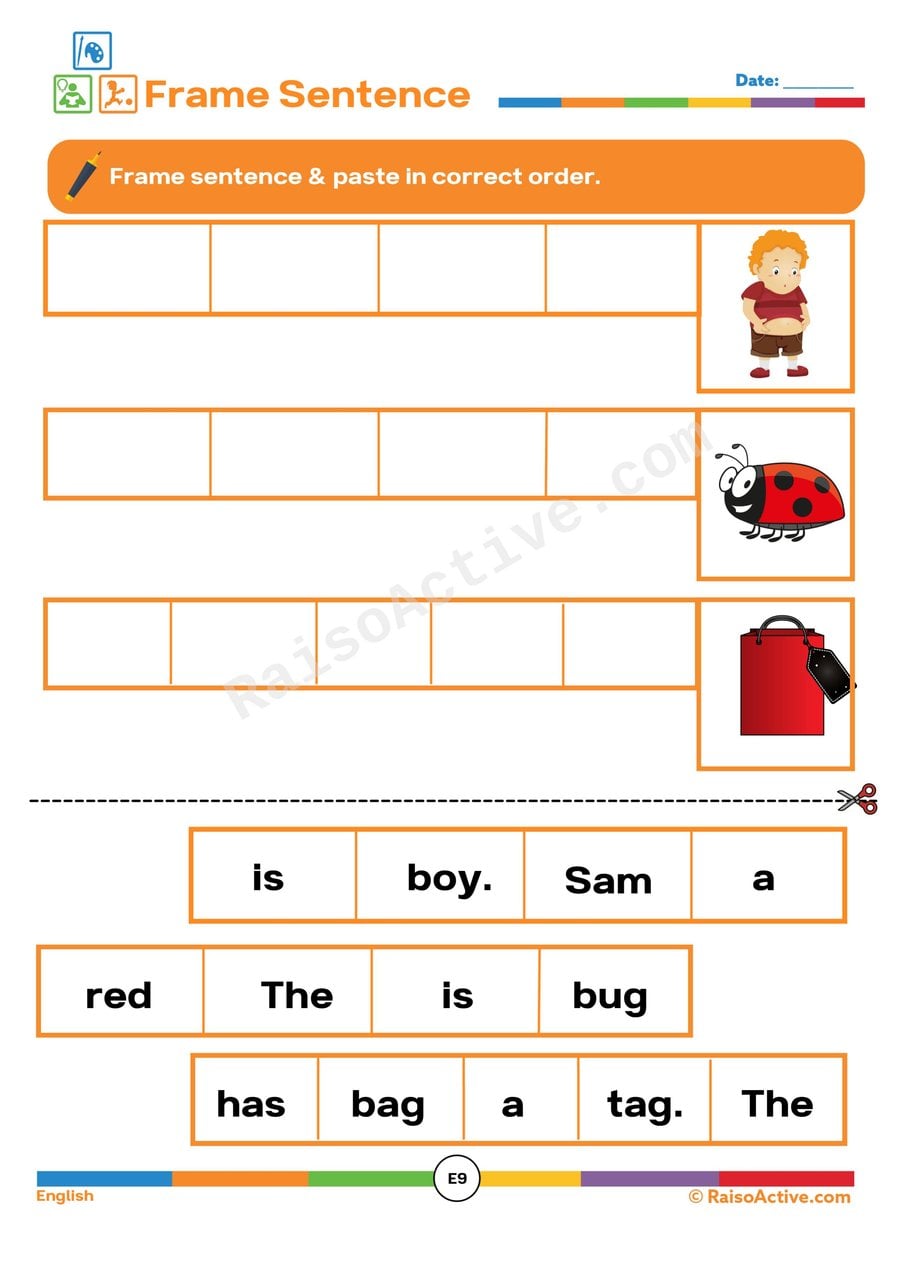
Sentence Building Worksheet: Sam is a boy!
Ages 3-5 · Preschool–Pre-KAges 3-5 · Nursery–ReceptionAges 3-5 · Nursery–LKGAges 3-5
This worksheet has children ages 3-5 practice constructing a simple sentence by cutting out individual words and pasting them in the correct order to complete a sentence frame, like 'Sam is a boy'. Physically arranging separate word pieces makes the abstract concept of sentence structure — subject, verb, object — tangible and manipulable for a young child.

Sight Word 'Play' Worksheet: Trace, Find, and Write!
Ages 3-5 · Preschool–Pre-KAges 3-5 · Nursery–ReceptionAges 3-5 · Nursery–LKGAges 3-5
This worksheet builds early sight-word recognition in children ages 3-5 by having them color, find, trace, and finally write the high-frequency word 'play'. Sight words like 'play' appear so often in early books that being able to recognize them instantly — without sounding them out — dramatically speeds up a beginning reader's fluency and comprehension.
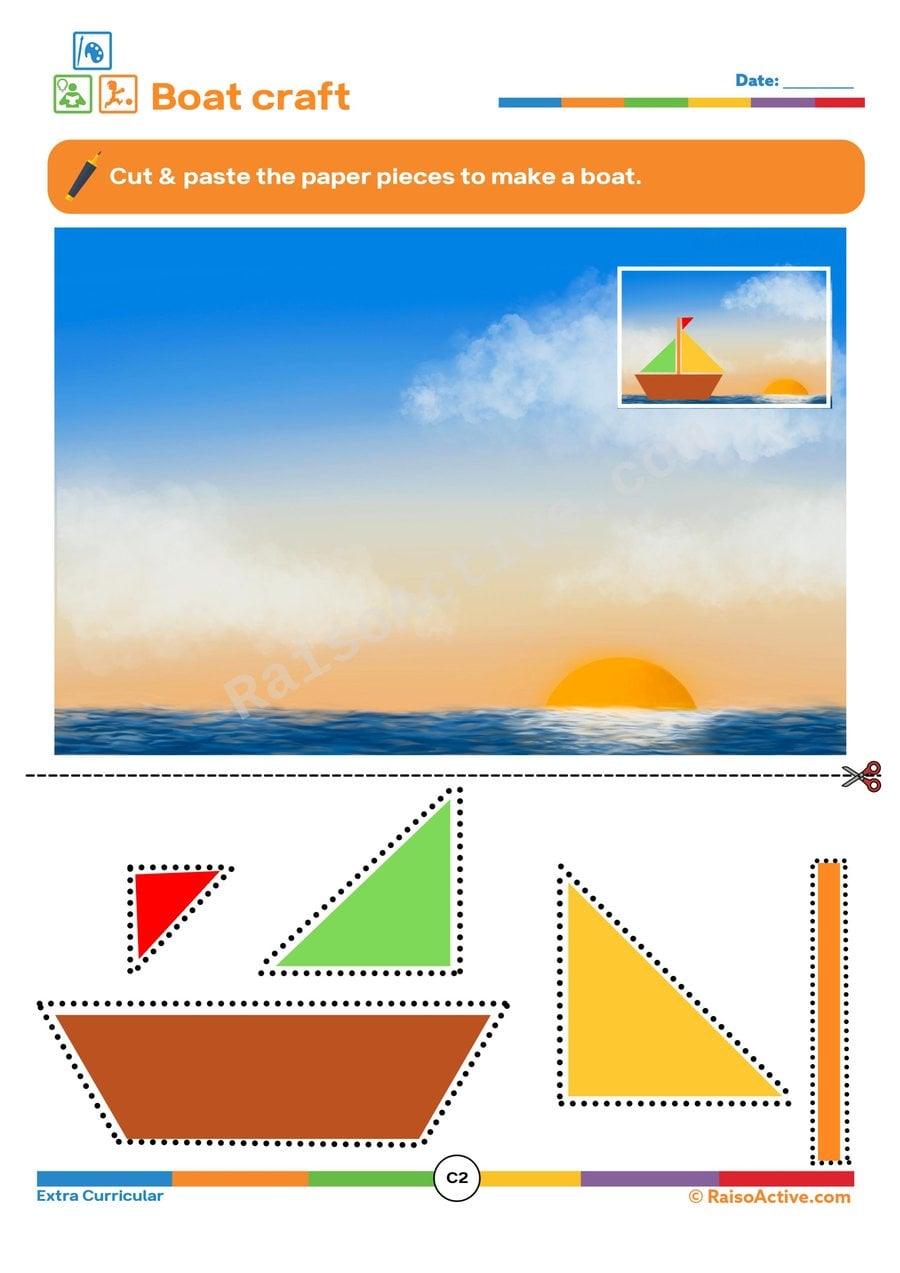
Boat Craft Worksheet: Cut and Paste a Boat!
Ages 3-5 · Preschool–Pre-KAges 3-5 · Nursery–ReceptionAges 3-5 · Nursery–LKGAges 3-5
This cut-and-paste craft asks children ages 3-5 to cut out individual shapes and assemble them into a complete boat scene, building fine motor control through scissor use and precise gluing while also reinforcing basic shape and color recognition along the way. Assembling a picture from separate cut pieces requires spatial reasoning too, since your child has to figure out where each shape belongs relative to the others to make the finished boat look right. Craft-based worksheets like this one turn fine motor practice into a creative, open-ended activity rather than a repetitive drill.
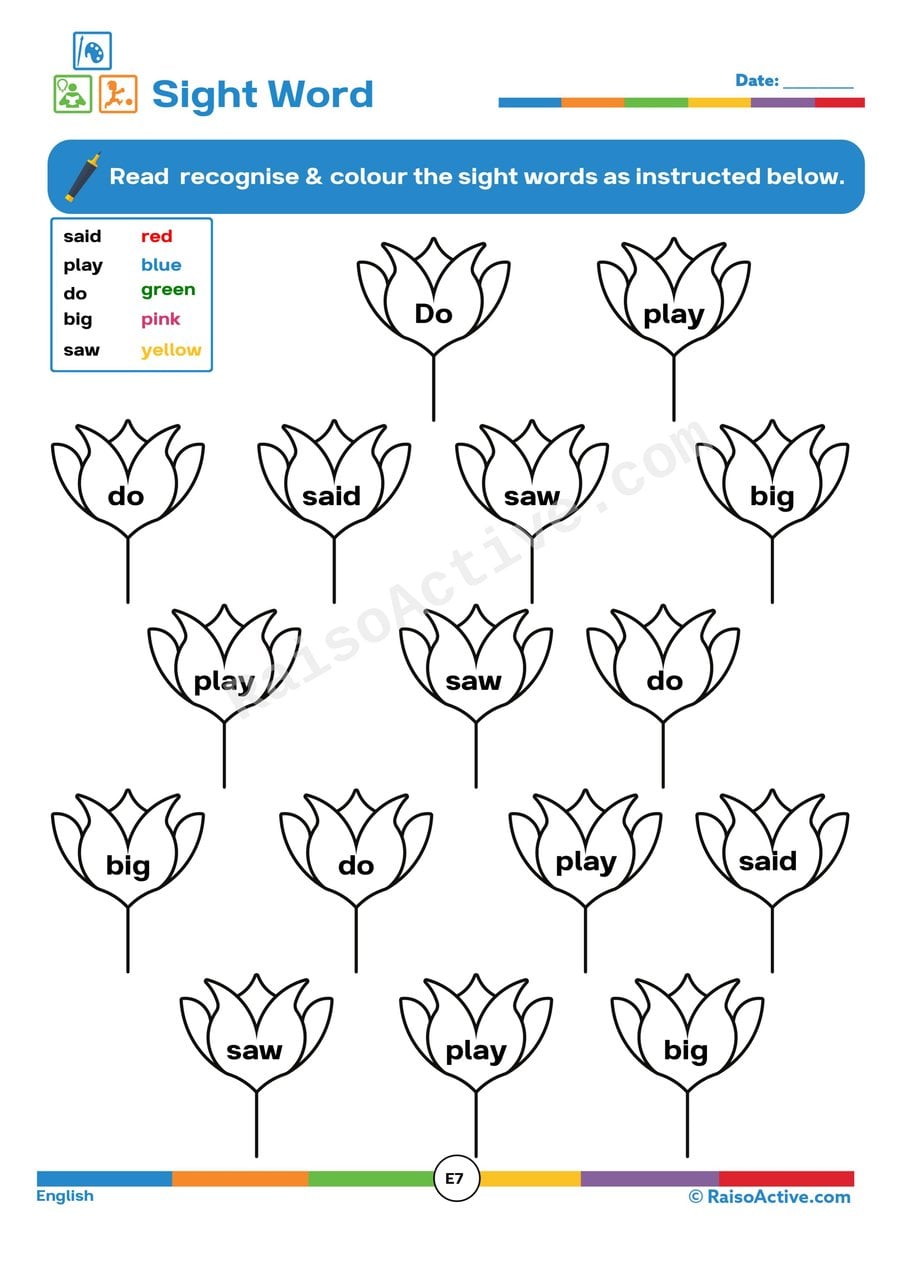
Sight Word Coloring Worksheet: Read and Color!
Ages 3-5 · Preschool–Pre-KAges 3-5 · Nursery–ReceptionAges 3-5 · Nursery–LKGAges 3-5
This worksheet combines sight-word recognition with a coloring activity, asking children ages 3-5 to read a list of common sight words and then find and color matching words hidden inside flower images. Turning word-hunting into a coloring task keeps young children engaged far longer than flashcard drills alone, while still delivering the repeated exposure that sight words require to become automatic.

Learn the Sight Word 'Do' - Tracing and Practice Worksheet
Ages 3-5 · Preschool–Pre-KAges 3-5 · Nursery–ReceptionAges 3-5 · Nursery–LKGAges 3-5
Sight words like 'do' can't be sounded out using regular phonics rules, so children ages 3-5 need repeated visual exposure and active practice to memorize them by sight — exactly what this multi-part worksheet provides through tracing, highlighting, filling blanks, and even dot-marking the word. Because sight words appear so frequently in early readers, automatic recognition of a word like 'do' removes a major stumbling block that would otherwise interrupt a child's reading flow on nearly every page. Practicing the same word in several different formats within one worksheet builds the strong repetition that sight-word memorization requires.
Related worksheets

Sight Word Coloring Worksheet for Preschoolers
Ages 4-7 · Pre-K–Grade 1Ages 4-7 · Reception–Year 2Ages 4-7 · LKG–Class 1Ages 4-7
This worksheet helps children recognize and read common sight words while practicing their coloring skills.

Sight Word 'Away' Worksheet: Learn to Read and Write!
Ages 3-5 · Preschool–Pre-KAges 3-5 · Nursery–ReceptionAges 3-5 · Nursery–LKGAges 3-5
Like many high-frequency words, 'away' doesn't follow standard phonics rules cleanly, so children ages 3-5 need to build instant visual recognition of it as a whole sight word rather than sounding it out each time. This worksheet delivers that repetition through several varied tasks — coloring, tracing, word-hunting, sentence completion, and letter reassembly — which keeps a young learner engaged while reinforcing the same word from multiple angles. Strong sight-word recognition for common words like 'away' is one of the biggest accelerators of early reading fluency.

Learn the Sight Word 'Is' - Tracing and Writing Worksheet for Preschoolers
Ages 4-5 · Pre-KAges 4-5 · ReceptionAges 4-5 · LKGAges 4-5
This worksheet helps children ages 4-5 build instant recognition of the sight word 'is' through a layered sequence of tracing, independent writing, sentence fill-in, coloring, and letter-order cut-and-paste practice. Because 'is' can't easily be sounded out using typical phonics rules, repeated multi-format exposure like this is exactly what helps a sight word move into a child's automatic reading vocabulary. Using the word inside real sentence blanks also connects the isolated word to meaningful, functional reading.

Sight Word Fun: 'Yes' Word Activities Worksheet for Preschoolers
Ages 3-5 · Preschool–Pre-KAges 3-5 · Nursery–ReceptionAges 3-5 · Nursery–LKGAges 3-5
Practicing the sight word 'yes' through tracing, writing, circling, and underlining gives children ages 3-5 several different ways to encounter the same high-frequency word, which builds the instant word recognition that supports early reading fluency. Repetition across different formats, rather than just one activity, helps the word move from a puzzle to be solved into a word recognized on sight.

Learn the Sight Word 'Had' | Fun Reading Worksheet for Preschoolers
Ages 4-5 · Pre-KAges 4-5 · ReceptionAges 4-5 · LKGAges 4-5
Children ages 4-5 build instant recognition of the sight word 'had', another high-frequency word that resists standard phonics decoding and must be memorized visually. This worksheet layers coloring, tracing, writing, grid-searching, and fill-in-the-blank practice, giving the word multiple forms of repeated exposure that solidify memory. Completing sentences with 'had' also shows children how the word is used naturally in storytelling, especially when talking about the past.

Learn the Sight Word 'Want' Worksheet for Preschoolers
Ages 3-5 · Preschool–Pre-KAges 3-5 · Nursery–ReceptionAges 3-5 · Nursery–LKGAges 3-5
The word 'want' doesn't sound out easily using regular phonics rules, which is exactly why children ages 3-5 need to memorize it by sight as a whole word — a core early reading strategy for high-frequency words. This worksheet builds that sight-word memory through several different tasks: tracing, finding the word among distractors, filling it into a sentence, and reassembling its letters, giving repeated exposure in varied formats rather than one repetitive drill. Mastering common sight words like 'want' dramatically speeds up early reading fluency since these words appear constantly in beginning books.

Read and Match: Sight Word Sentences Worksheet for Early Readers
Ages 4-5 · Pre-KAges 4-5 · ReceptionAges 4-5 · LKGAges 4-5
Children ages 4-5 practice reading simple sight-word sentences and matching them to the picture that shows their meaning, building early reading comprehension by connecting printed words directly to what they represent. This bridges the gap between recognizing individual sight words and understanding a full sentence's meaning.
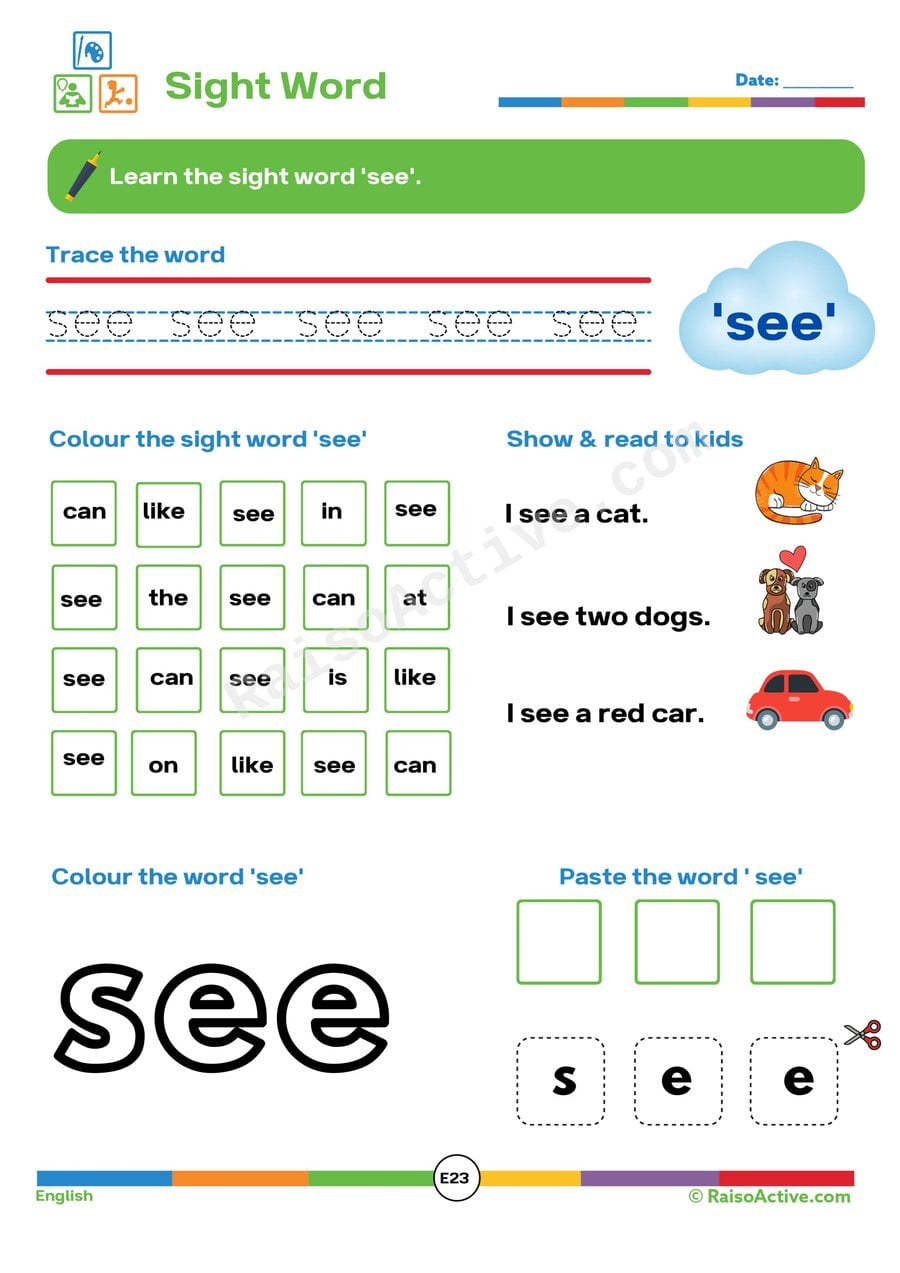
See Sight Word Worksheet: Trace, Color, and Paste!
Ages 3-5 · Preschool–Pre-KAges 3-5 · Nursery–ReceptionAges 3-5 · Nursery–LKGAges 3-5
Children ages 3-5 get repeated, varied practice with the high-frequency sight word 'see' through tracing, coloring, sentence reading, and a cut-and-paste spelling activity, building the instant word recognition that fluent reading depends on. Reading the accompanying sentences also gives early exposure to how the word functions in context, not just in isolation.
Guides for this topic

Sight Words by Age: The First 50 Words and How to Teach Them Without Flashcard Fatigue
Which sight words to teach first and why, the heart-word method, a read-trace-write-find routine, games, and a by-age table of typical sight-word progress.
How to Teach CVC Blending: A Step-by-Step Method That Works in Two Weeks
A step-by-step method for teaching CVC blending, covering continuous sounds, word families, common errors, and a 14-day plan that most children finish reading CVC words.

Best Worksheets for 3-Year-Olds: What Works and What to Avoid
What works on worksheets for 3-year-olds: short sessions, crayons, tracing lines, matching, cutting, a free weekly plan, and signs one is too advanced.
Reviews
Every worksheet for ages 3–5, no watermark
Members download the full library of 1,000+ worksheets and every activity pack without watermarks or daily limits. One year costs ₹999 in India or $20 elsewhere.
See membership plansOr download any worksheet free with a watermark (5 a day).