Sight Word Coloring Worksheet for Preschoolers
This worksheet helps children recognize and read common sight words while practicing their coloring skills.
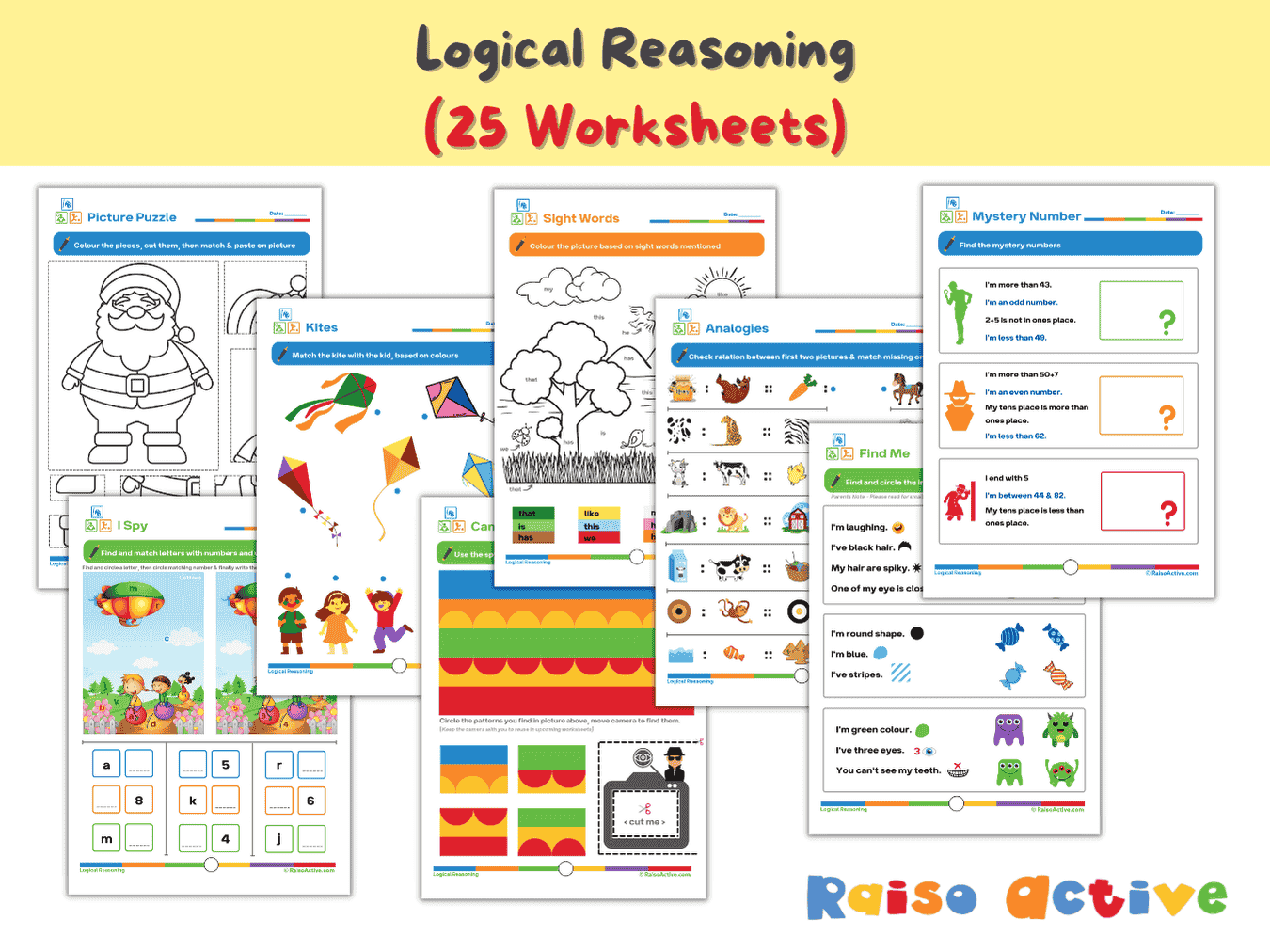
Part of the pack
Logical Reasoning Activity Book for Preschool & Kindergarten | Patterns, Sudoku, Mazes & Coding
This is page 22 of the pack. Ages 4-7 · Pre-K–Grade 1Ages 4-7 · Reception–Year 2Ages 4-7 · LKG–Class 1Ages 4-7
Made for your child
Spelling practice, made for your child
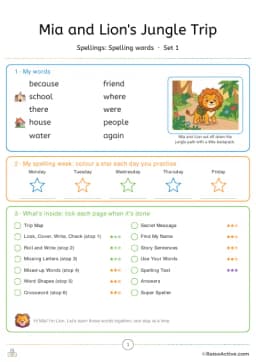
Their own spelling words turned into a pack: trace or look-cover-write-check, roll and write, a secret picture code, a word search, a crossword and a test, with their name in it.
Make a spelling packFree preview · free for members
Or start free: a word search with sight wordsCurriculum
- Cognitive - Attention > Observation Skills
How to use this worksheet
Color the pictures based on the sight words provided. Use the color key at the bottom to guide you.
Materials needed
- Pencil
- Crayons
Extension activities
- 1Have your child write the sight words on a separate sheet of paper.
- 2Create sentences using the sight words.

Written by
Hemsweta Jain · Teacher Cheena
MBA and Early Childhood Educator, teaching since 2014 · Founder of RaisoActive, Mumbai
Every RaisoActive worksheet is designed and checked by the founder before publishing.
Published · Last reviewed
More from Logical Reasoning Activity Book for Preschool & Kindergarten | Patterns, Sudoku, Mazes & Coding

Mystery Number Riddles Worksheet: Use the Clues
Ages 4-7 · Pre-K–Grade 1Ages 4-7 · Reception–Year 2Ages 4-7 · LKG–Class 1Ages 4-7
This worksheet helps children practice number recognition, following instructions, and applying logic to solve number puzzles.

Honeycomb Pattern Matching Worksheet for Preschoolers
Ages 4-7 · Pre-K–Grade 1Ages 4-7 · Reception–Year 2Ages 4-7 · LKG–Class 1Ages 4-7
This worksheet helps children practice pattern recognition and matching skills by cutting out hexagon shapes and matching them to complete a honeycomb.

Easter Egg Pattern Matching Worksheet for Preschoolers
Ages 4-7 · Pre-K–Grade 1Ages 4-7 · Reception–Year 2Ages 4-7 · LKG–Class 1Ages 4-7
This worksheet helps children practice pattern recognition and matching skills by connecting patterns to the corresponding Easter eggs.

Pizza Pattern Matching Worksheet for Preschoolers
Ages 4-7 · Pre-K–Grade 1Ages 4-7 · Reception–Year 2Ages 4-7 · LKG–Class 1Ages 4-7
This worksheet helps children practice visual discrimination and pattern recognition by matching pizza slices to complete the whole pizza.

Growing Patterns Worksheet: Draw What Comes Next
Ages 4-7 · Pre-K–Grade 1Ages 4-7 · Reception–Year 2Ages 4-7 · LKG–Class 1Ages 4-7
This worksheet helps children practice observing and identifying patterns, a foundational skill for early math and logical reasoning.

Spot the Difference Worksheet: Find 10 Differences in Town
Ages 4-7 · Pre-K–Grade 1Ages 4-7 · Reception–Year 2Ages 4-7 · LKG–Class 1Ages 4-7
This worksheet helps children practice visual discrimination and attention to detail by finding the differences between two similar images.

Sequencing Worksheet for Kids: First, Next, Last
Ages 4-7 · Pre-K–Grade 1Ages 4-7 · Reception–Year 2Ages 4-7 · LKG–Class 1Ages 4-7
Children put three-step stories in order using first, next and last, then work backwards to find what came before a picture. This builds sequencing, time vocabulary and cause and effect thinking.

Camera Spy: Find the Patterns Worksheet for Preschoolers
Ages 4-7 · Pre-K–Grade 1Ages 4-7 · Reception–Year 2Ages 4-7 · LKG–Class 1Ages 4-7
This worksheet helps children identify and recognize repeating patterns by using a 'spy camera' to find them.
Related worksheets

Learn the Sight Word 'Has' - Fun Tracing and Matching Worksheet!
Ages 3-5 · Preschool–Pre-KAges 3-5 · Nursery–ReceptionAges 3-5 · Nursery–LKGAges 3-5
'Has' is a high-frequency verb that children ages 3-5 encounter constantly in early sentences describing possession, like 'the dog has a bone,' making it an important addition to their sight word vocabulary. This worksheet builds recognition of the word through coloring, tracing, word searching, and sentence completion, giving repeated exposure across formats that reinforces memory more effectively than a single repetition. Practicing 'has' inside complete sentences also helps children understand its grammatical role, connecting a subject to something it possesses.

Learn to Write the Sight Word 'I' Worksheet for Preschoolers
Ages 3-5 · Preschool–Pre-KAges 3-5 · Nursery–ReceptionAges 3-5 · Nursery–LKGAges 3-5
This worksheet gives children ages 3-5 focused, repeated practice recognizing, tracing, and writing the sight word 'I,' one of the very first words most children learn to read and write since it appears constantly in their own speech. Because 'I' is a single letter that stands for a whole word, it's also a gentle introduction to the idea that capitalization carries meaning.

Sight Word 'Your' Worksheet: Tracing, Coloring, and Sentence Practice
Ages 4-5 · Pre-KAges 4-5 · ReceptionAges 4-5 · LKGAges 4-5
Children ages 4-5 build sight word automaticity for 'your' — a word that can't be sounded out with basic phonics rules and must instead be recognized instantly for fluent reading. Multiple exposure formats (coloring, tracing, searching, and using it in a sentence) help move the word from short-term recognition into long-term memory, a rehearsal strategy that is especially important for high-frequency 'trick' words.

Color the Sight Words! A Fun Coloring Worksheet for Preschoolers
Ages 3-5 · Preschool–Pre-KAges 3-5 · Nursery–ReceptionAges 3-5 · Nursery–LKGAges 3-5
This worksheet helps children ages 3-5 recognize common sight words by finding and coloring them within a brick-wall design according to a color key. Because sight words like 'the,' 'and,' or 'is' don't follow regular phonics rules, repeated visual exposure like this coloring task is one of the most effective ways for young children to memorize them by sight rather than sounding them out each time.

Learn the Sight Word 'Is' - Tracing and Writing Worksheet for Preschoolers
Ages 4-5 · Pre-KAges 4-5 · ReceptionAges 4-5 · LKGAges 4-5
This worksheet helps children ages 4-5 build instant recognition of the sight word 'is' through a layered sequence of tracing, independent writing, sentence fill-in, coloring, and letter-order cut-and-paste practice. Because 'is' can't easily be sounded out using typical phonics rules, repeated multi-format exposure like this is exactly what helps a sight word move into a child's automatic reading vocabulary. Using the word inside real sentence blanks also connects the isolated word to meaningful, functional reading.

Sight Word 'Get' Worksheet: Trace, Color, and Practice!
Ages 3-5 · Preschool–Pre-KAges 3-5 · Nursery–ReceptionAges 3-5 · Nursery–LKGAges 3-5
This multi-step worksheet builds deep familiarity with the sight word 'get' for children ages 3-5 through six different formats — tracing, coloring, sentence completion, circling, writing, and cut-and-paste spelling — giving far more repetition than a single tracing task would. High-frequency sight words like 'get' don't sound out easily, so this kind of repeated exposure across formats is exactly how early readers learn to recognize them instantly.

Learn to Read and Write the Sight Word 'Like' - Fun Worksheet for Kids!
Ages 3-5 · Preschool–Pre-KAges 3-5 · Nursery–ReceptionAges 3-5 · Nursery–LKGAges 3-5
Children ages 3-5 build sight-word fluency with the word 'like,' a common word used to express preference, through tracing, coloring, a word search, and sentence reading. Because 'like' doesn't follow simple phonics rules and appears constantly in early books and everyday speech, repeated multi-format exposure like this worksheet provides is exactly how young readers commit it to memory.
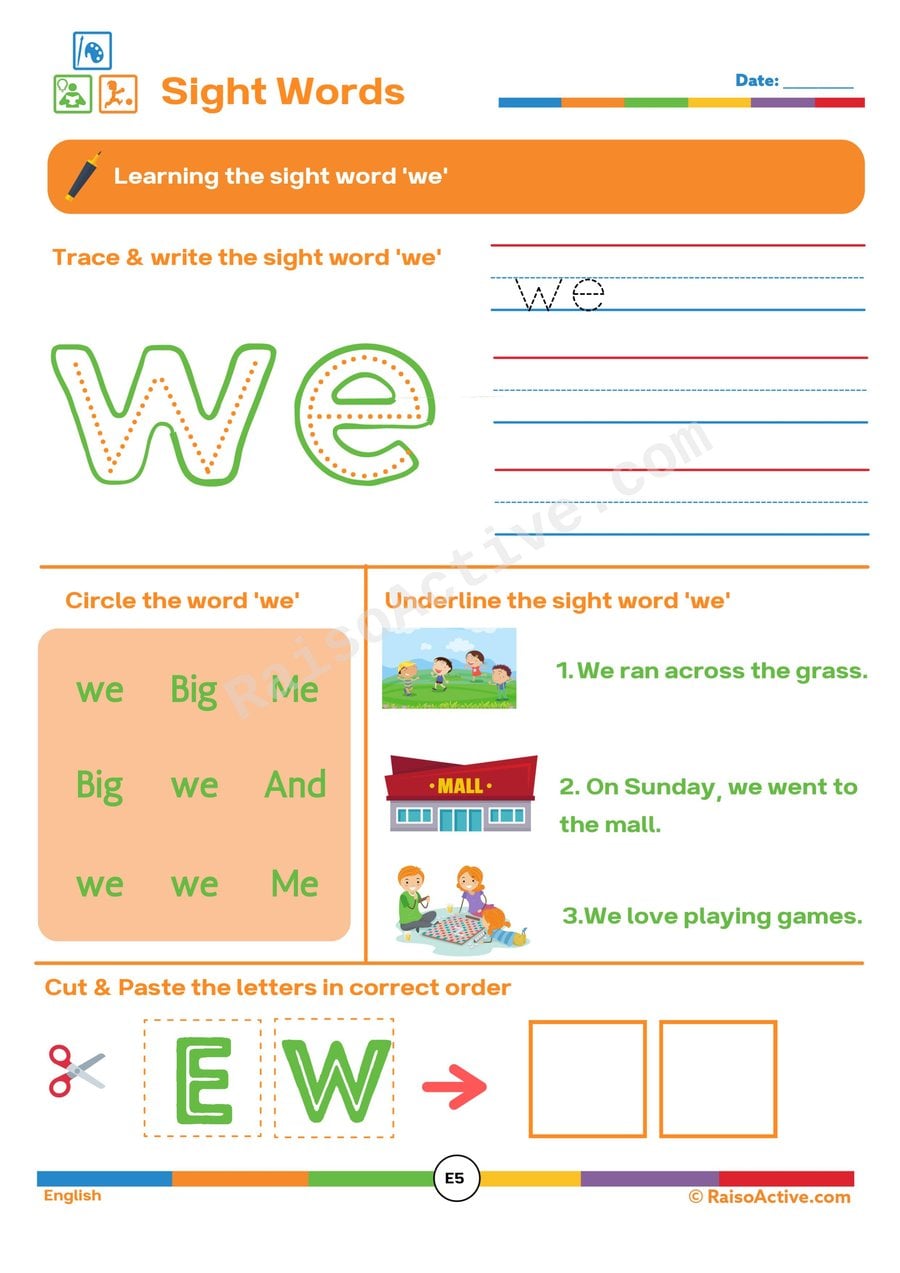
Sight Word 'We' Worksheet: Trace, Write, and Find!
Ages 3-5 · Preschool–Pre-KAges 3-5 · Nursery–ReceptionAges 3-5 · Nursery–LKGAges 3-5
This worksheet builds deep familiarity with the sight word 'we' in children ages 3-5 through four different practice formats — tracing, independent writing, circling, and finding the word within sentences — layered onto a single page. Repeating the same word across so many formats in one sitting is specifically designed to move 'we' from a word your child sounds out each time into one they recognize instantly on sight.
Guides for this topic

Sight Words by Age: The First 50 Words and How to Teach Them Without Flashcard Fatigue
Which sight words to teach first and why, the heart-word method, a read-trace-write-find routine, games, and a by-age table of typical sight-word progress.
How to Teach CVC Blending: A Step-by-Step Method That Works in Two Weeks
A step-by-step method for teaching CVC blending, covering continuous sounds, word families, common errors, and a 14-day plan that most children finish reading CVC words.

Best Worksheets for 3-Year-Olds: What Works and What to Avoid
What works on worksheets for 3-year-olds: short sessions, crayons, tracing lines, matching, cutting, a free weekly plan, and signs one is too advanced.
Reviews
Every worksheet for ages 4–7, no watermark
Members download the full library of 1,000+ worksheets and every activity pack without watermarks or daily limits. One year costs ₹999 in India or $20 elsewhere.
See membership plansOr download any worksheet free with a watermark (5 a day).