Learn the Sight Word 'Is' - Tracing and Writing Worksheet for Preschoolers
This worksheet helps children ages 4-5 build instant recognition of the sight word 'is' through a layered sequence of tracing, independent writing, sentence fill-in, coloring, and letter-order cut-and-paste practice. Because 'is' can't easily be sounded out using typical phonics rules, repeated multi-format exposure like this is exactly what helps a sight word move into a child's automatic reading vocabulary. Using the word inside real sentence blanks also connects the isolated word to meaningful, functional reading.
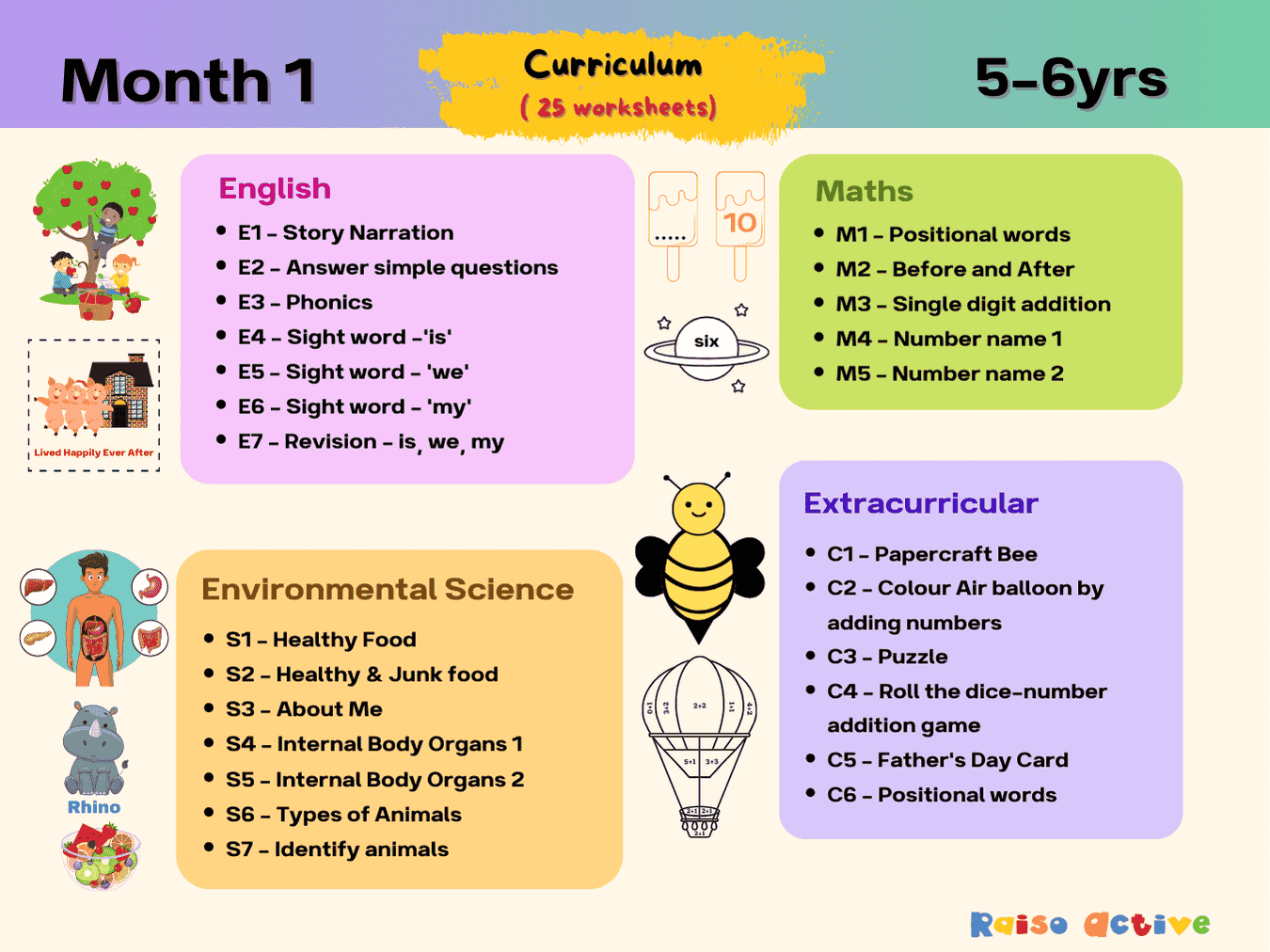
Part of the pack
Month 1: Learning & Development | Ages 5-6
This is page 7 of the pack. Ages 5-6 · KindergartenAges 5-6 · Year 1Ages 5-6 · UKGAges 5-6
Made for your child
Spelling practice, made for your child
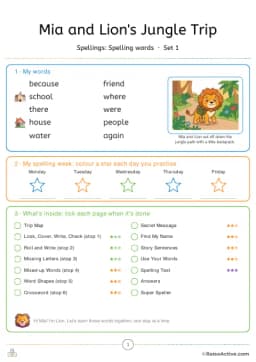
Their own spelling words turned into a pack: trace or look-cover-write-check, roll and write, a secret picture code, a word search, a crossword and a test, with their name in it.
Make a spelling packFree preview · free for members
Or start free: a word search with sight wordsCurriculum
- Fluency > Sight Words
How to use this worksheet
Start by having your child trace the dotted word 'is' with a pencil, following the correct left-to-right letter order. Next, have them try writing the word 'is' independently on the practice lines provided. Move to the fill-in-the-blank sentences, reading each one aloud and having your child write 'is' in the blank where it belongs. Finish by having your child color the circles containing the word 'is' and, if included, cut and paste the letters i-s in the correct order to spell the word one more time.
Materials needed
- Pencil
- Crayons
- Scissors
- Glue (optional)
Extension activities
- 1Find the word 'is' in a book.
- 2Write a sentence using the word 'is'.
- 3Create a flashcard for the word 'is'.
- 4Play an 'is' scavenger hunt through a favorite picture book, counting how many times the word appears on one page.
- 5Practice saying simple sentences aloud using 'is,' like 'the ball is red.'

Written by
Hemsweta Jain · Teacher Cheena
MBA and Early Childhood Educator, teaching since 2014 · Founder of RaisoActive, Mumbai
Every RaisoActive worksheet is designed and checked by the founder before publishing.
Published · Last reviewed
More from Month 1: Learning & Development | Ages 5-6

Apple Picking Fun: A Reading Comprehension Worksheet for Kids
Ages 4-6 · Pre-K–KindergartenAges 4-6 · Reception–Year 1Ages 4-6 · LKG–UKGAges 4-6
This worksheet builds early reading comprehension skills in children ages 4-6 by having them read a short story about apple picking and then answer simple questions that check their understanding of what happened. Answering questions after reading, rather than just decoding words, pushes children to hold the story's meaning in mind and recall specific details, a critical skill for all future reading. Coloring an apple afterward gives a relaxing, creative close to the comprehension task.

Healthy Eating Worksheet: Fruit Salad and Vegetable Soup!
Ages 3-5 · Preschool–Pre-KAges 3-5 · Nursery–ReceptionAges 3-5 · Nursery–LKGAges 3-5
This matching worksheet helps children ages 3-5 build food vocabulary by identifying pictures of fruits and vegetables and sorting them into the correct category — fruit salad ingredients or vegetable soup ingredients. Learning to classify foods by type, not just by whether they're healthy, supports early categorization skills that apply across many other subjects, from animals to shapes. The cooking-themed framing also connects the sorting task to a familiar, everyday context children may have experienced at home.
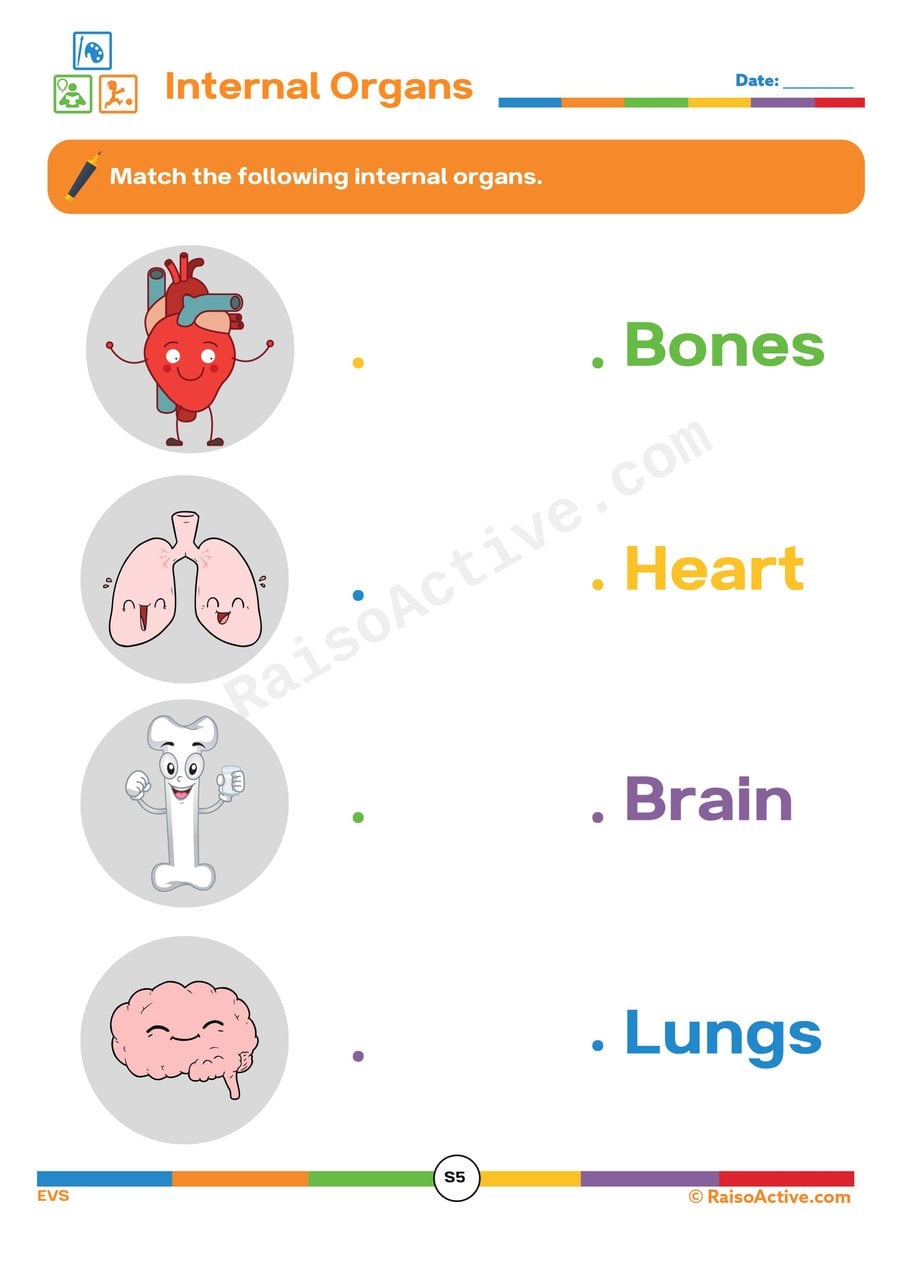
Match the Internal Organs Worksheet for Kids
Ages 3-5 · Preschool–Pre-KAges 3-5 · Nursery–ReceptionAges 3-5 · Nursery–LKGAges 3-5
Drawing lines to connect organ pictures to their correct names teaches children ages 3-5 an early introduction to human biology, helping them recognize that the body has specific parts inside it with their own names and jobs, beyond just the body parts they can see and touch. This matching task builds visual discrimination, since organs can look somewhat similar in simple illustrations, requiring children to look closely at shape and detail before connecting a picture to its label. Coloring the organs afterward adds a fine motor and creative finishing step to the science lesson.
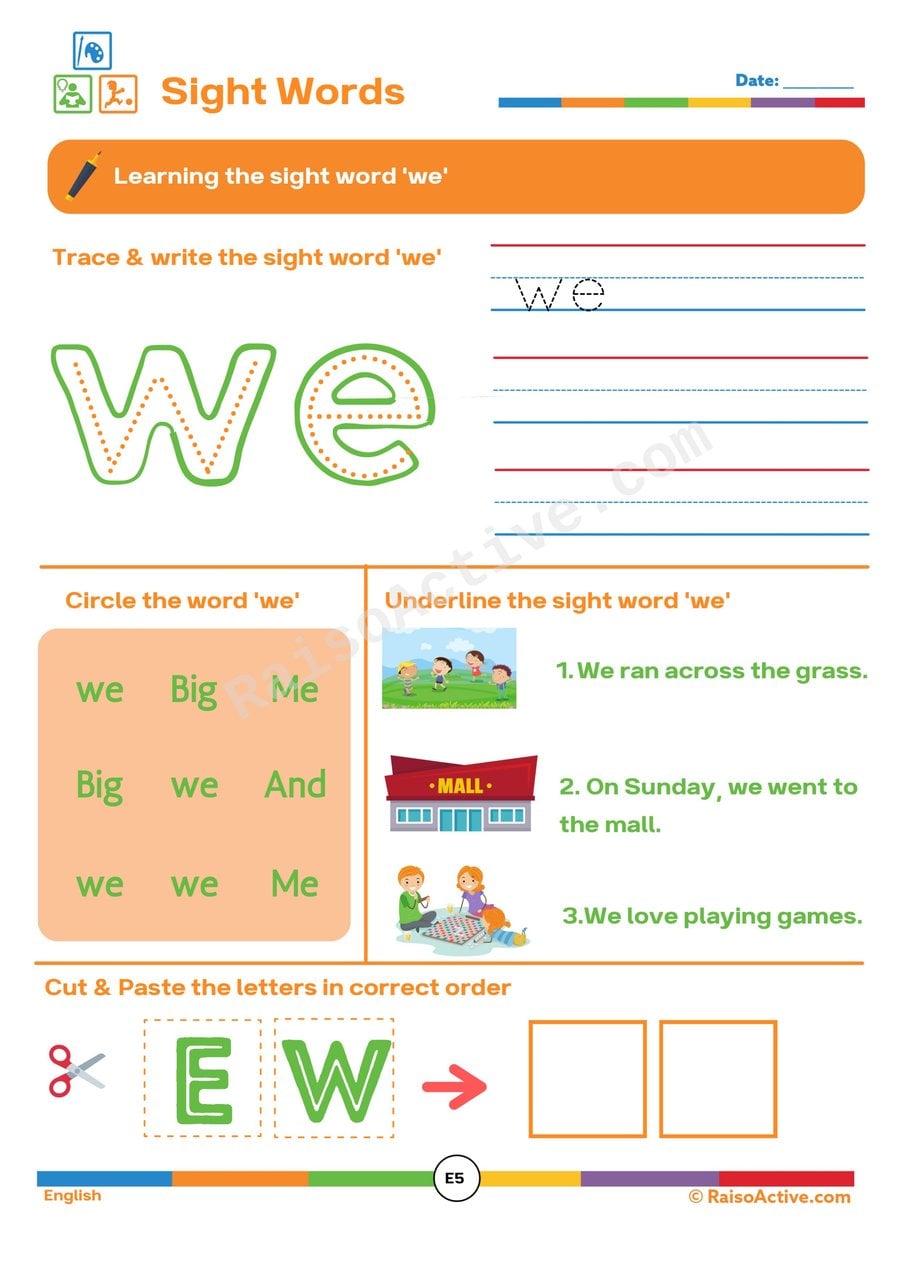
Sight Word 'We' Worksheet: Trace, Write, and Find!
Ages 3-5 · Preschool–Pre-KAges 3-5 · Nursery–ReceptionAges 3-5 · Nursery–LKGAges 3-5
This worksheet builds deep familiarity with the sight word 'we' in children ages 3-5 through four different practice formats — tracing, independent writing, circling, and finding the word within sentences — layered onto a single page. Repeating the same word across so many formats in one sitting is specifically designed to move 'we' from a word your child sounds out each time into one they recognize instantly on sight.
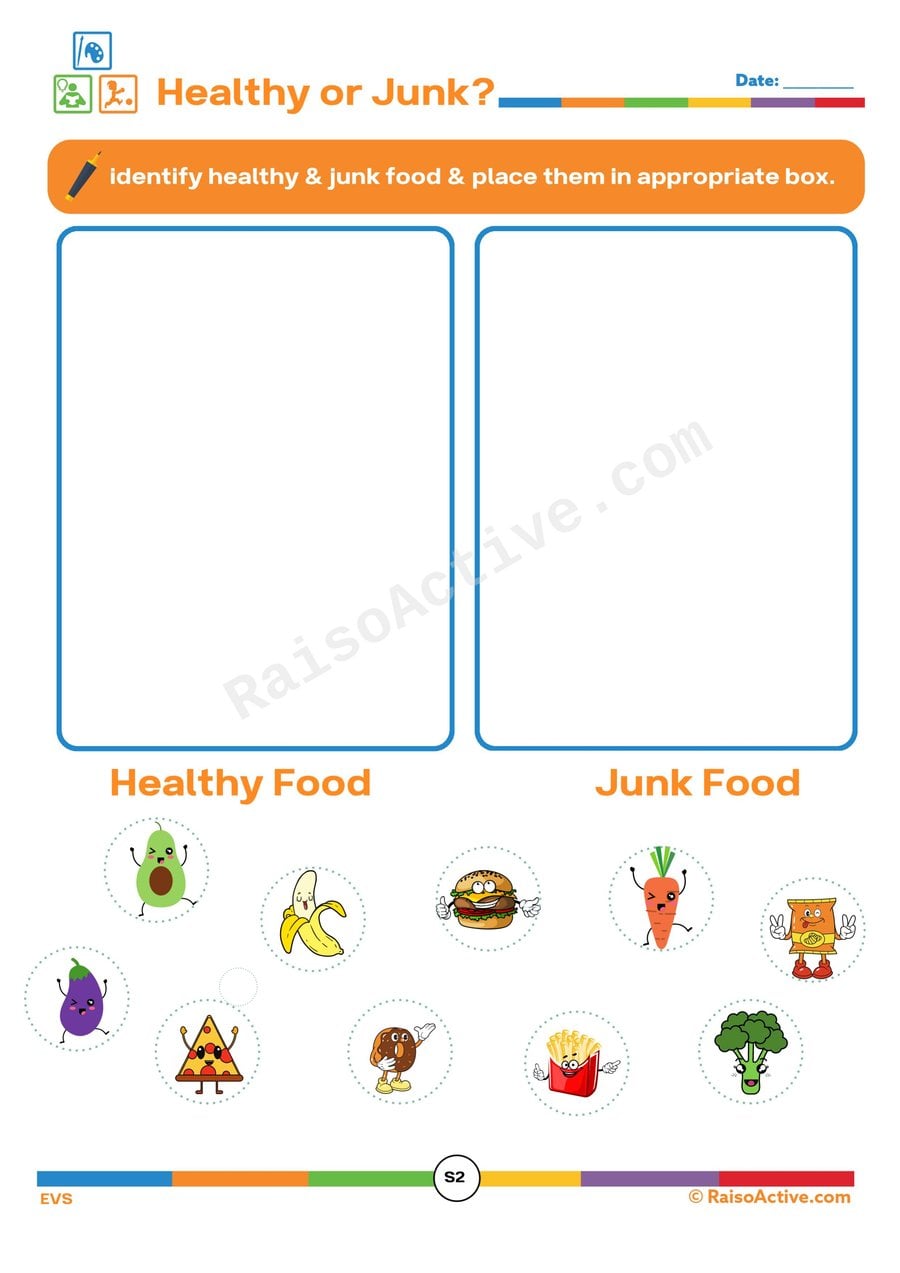
Healthy Food Sorting Worksheet for Preschoolers
Ages 3-5 · Preschool–Pre-KAges 3-5 · Nursery–ReceptionAges 3-5 · Nursery–LKGAges 3-5
Sorting food pictures into 'Healthy' and 'Junk Food' boxes teaches children ages 3-5 to classify items by a shared characteristic, an early categorization skill that underlies later science and math thinking. At the same time, it introduces basic nutrition concepts — that fruits, vegetables, and whole foods nourish the body differently than sugary or fried treats. Talking through each choice also builds vocabulary around food and health.
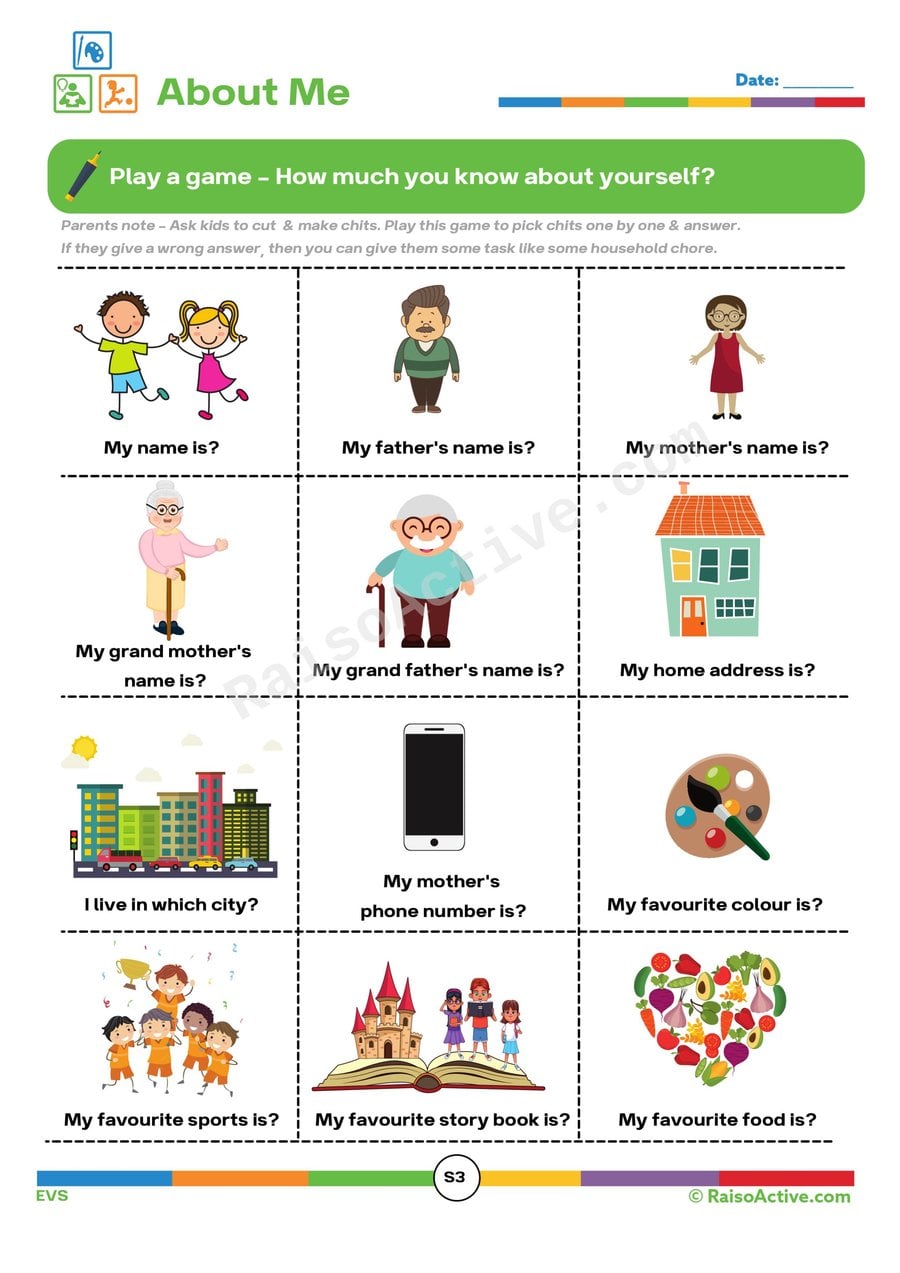
About Me Worksheet: Learn About Yourself!
Ages 3-5 · Preschool–Pre-KAges 3-5 · Nursery–ReceptionAges 3-5 · Nursery–LKGAges 3-5
This 'About Me' worksheet helps children ages 3-5 build self-awareness and early identity vocabulary by prompting them to describe their name, family, favorites, and feelings. Putting personal facts into words or pictures strengthens expressive language and gives children practice sharing information about themselves in a structured way. It's also a gentle first step into autobiographical writing, well before children can spell full sentences.

Solar System Number Matching Worksheet for Preschoolers
Ages 4-6 · Pre-K–KindergartenAges 4-6 · Reception–Year 1Ages 4-6 · LKG–UKGAges 4-6
This worksheet combines number-word recognition with a color-by-key coloring task for children ages 4-6, asking them to match number names written on planets to their corresponding numerals before coloring each planet according to a color code. Matching written number words in a space-themed context adds novelty that keeps repeated number-word practice fresh, while the color-key step reinforces careful, sequential following of visual instructions. Together, these two tasks combine literacy and numeracy practice in one engaging page.
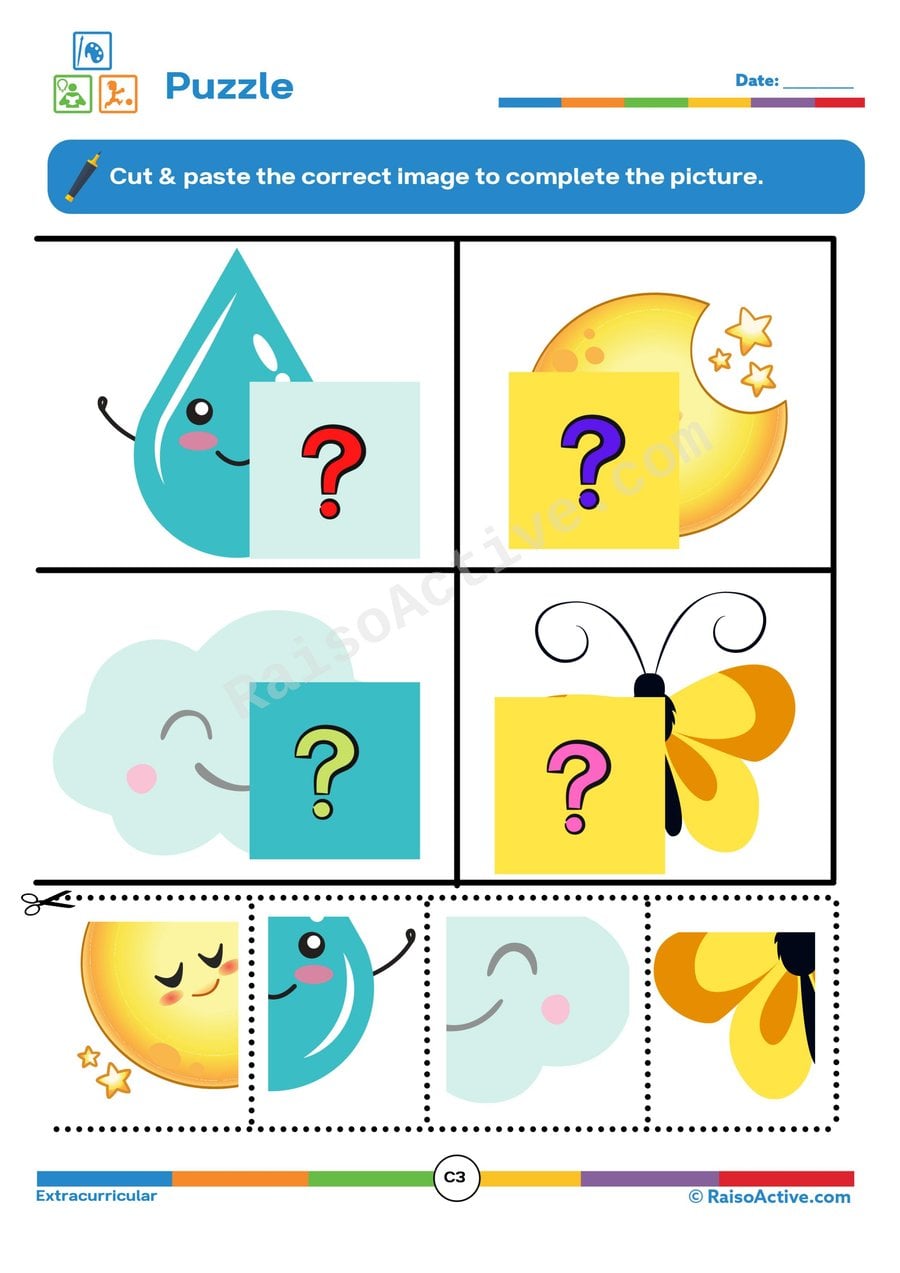
Cut and Paste Puzzle: Complete the Pictures!
Ages 3-5 · Preschool–Pre-KAges 3-5 · Nursery–ReceptionAges 3-5 · Nursery–LKGAges 3-5
This cut-and-paste puzzle challenges children ages 3-5 to visually compare cut-out image pieces to the gaps in a larger picture, strengthening visual discrimination and problem-solving as they figure out which piece fits where. Because more than one cut-out may look similar at a glance, children must attend closely to small details like color, shape, and orientation before gluing. This close visual comparison builds the same attention-to-detail skills used later in reading, where small differences between letters and words matter.
Related worksheets

Sight Word 'THE' Worksheet: Trace, Write, and Identify!
Ages 4-5 · Pre-KAges 4-5 · ReceptionAges 4-5 · LKGAges 4-5
This worksheet builds automatic recognition of the sight word 'the,' one of the most frequently occurring words in English text, through repeated tracing, writing, and identification practice. For four- and five-year-olds, memorizing high-frequency sight words like 'the' by sight — rather than sounding them out each time — is essential for building reading fluency, since these words appear on nearly every page a child will read.
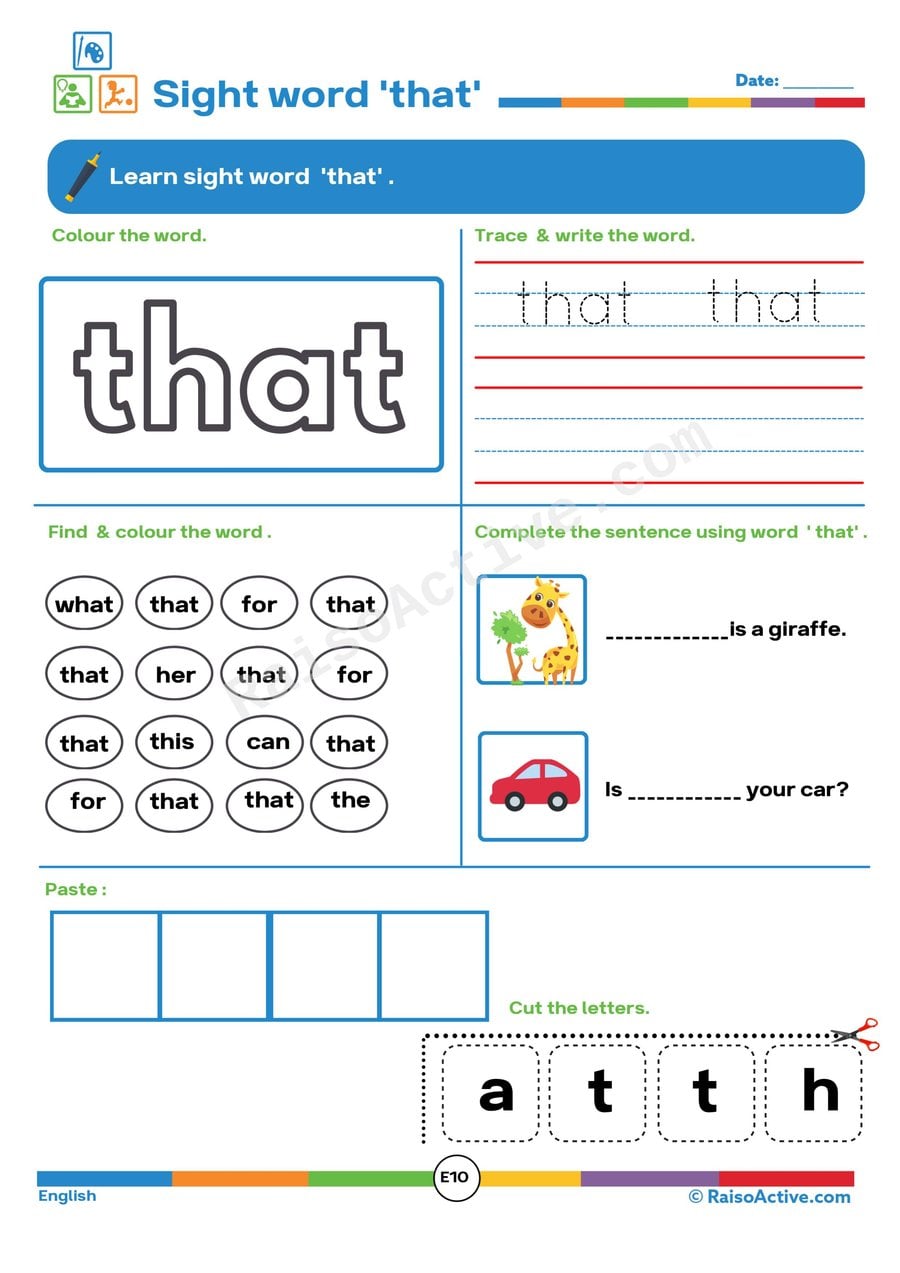
Sight Word 'That' Worksheet: Trace, Find, and Write!
Ages 4-5 · Pre-KAges 4-5 · ReceptionAges 4-5 · LKGAges 4-5
As one of the most frequently used words in early reading texts, 'that' needs to be recognized instantly rather than sounded out letter by letter, and this worksheet gives children ages 4-5 several different ways to practice that recognition. Combining tracing, visual searching, sentence completion, and cutting letters to spell the word reinforces the same target through multiple senses and formats, which strengthens memory retention for tricky sight words.
Sight Words Worksheet: Trace, Write, and Color 'She'!
Ages 4-6 · Pre-K–KindergartenAges 4-6 · Reception–Year 1Ages 4-6 · LKG–UKGAges 4-6
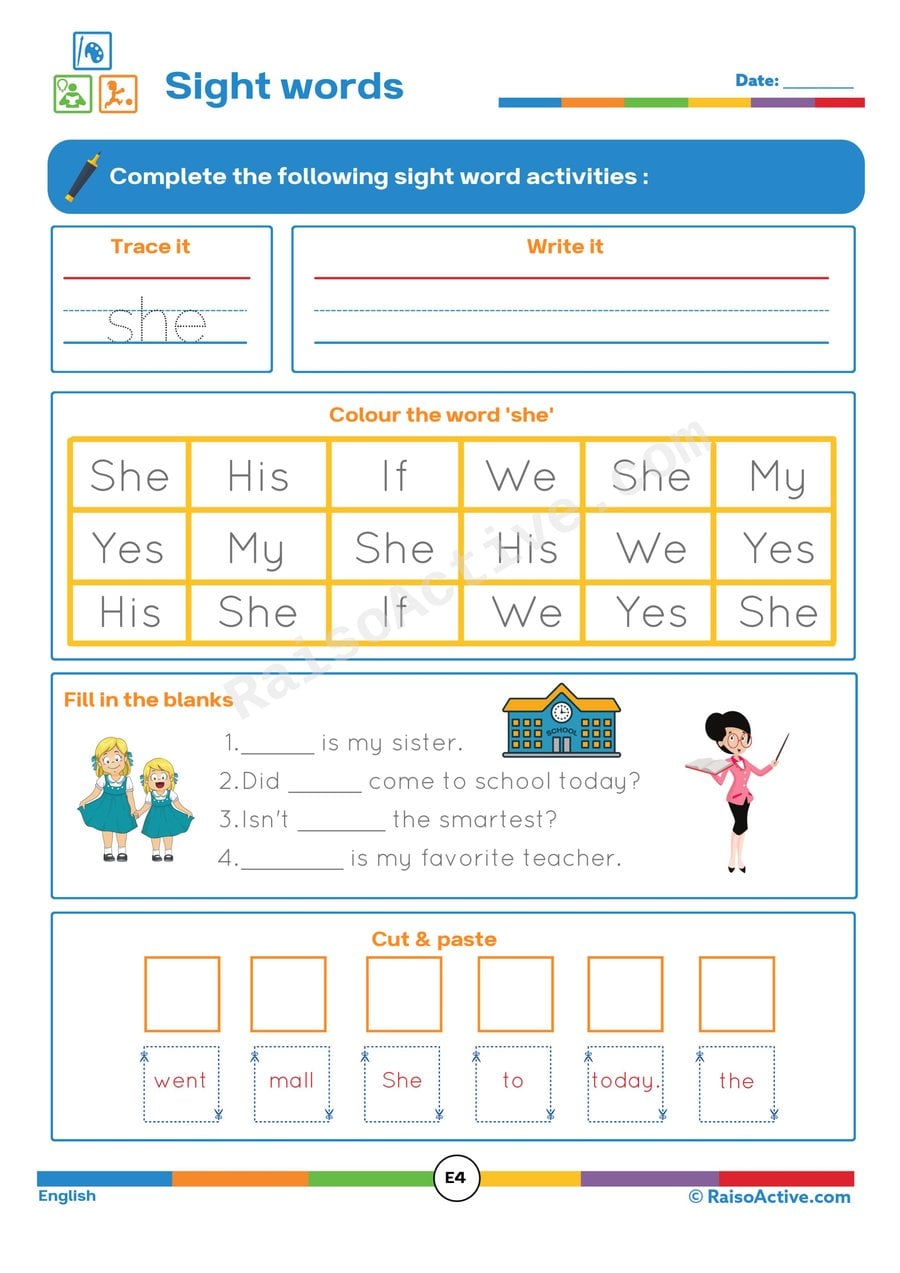
Tracing, writing, coloring, and completing sentences with the sight word 'she' gives children ages 4-6 repeated exposure to this common word across multiple activity types, which builds the instant recognition needed for reading fluency. The cut-and-paste sentence completion at the end adds sentence-level context, helping children see the word used meaningfully rather than in isolation.

Sight Word 'HE' Worksheet: Trace, Color, and Practice!
Ages 3-5 · Preschool–Pre-KAges 3-5 · Nursery–ReceptionAges 3-5 · Nursery–LKGAges 3-5
This worksheet helps children ages 3-5 learn to recognize, write, and use the sight word 'HE' in simple sentences, giving repeated exposure to a short, high-frequency word that appears in nearly every early reader book. Practicing the word across six different formats, tracing, coloring, circling, writing, filling in, and cutting and pasting, builds recognition through many different types of practice in one sitting.

Sight Words Coloring Worksheet: 'His', 'My', and 'Her' Fun!
Ages 3-5 · Preschool–Pre-KAges 3-5 · Nursery–ReceptionAges 3-5 · Nursery–LKGAges 3-5
This coloring activity helps children ages 3-5 recognize and internalize the common sight words 'his,' 'my,' and 'her' by following a color-coded key, an approach that builds sight word memory through repeated visual association rather than isolated flashcard drilling. Because sight words like these don't sound out easily using phonics rules, repeated exposure in a fun context like coloring is one of the most effective ways for young children to memorize them. The activity also reinforces fine motor control as children carefully color within the lines of each labeled section.

Color the Sight Words: 'She' and 'He' Worksheet for Preschoolers
Ages 3-5 · Preschool–Pre-KAges 3-5 · Nursery–ReceptionAges 3-5 · Nursery–LKGAges 3-5
This worksheet helps children ages 3-5 build instant sight-word recognition for the common pronouns 'she' and 'he' by having them scan a page and color each word according to a color code. Because sight words like these can't be sounded out easily, repeated visual exposure through an engaging coloring task helps children recognize them instantly by shape, which is essential for early reading fluency. Differentiating between two similar short words also sharpens visual discrimination.
Sight Word 'Have' Worksheet for Preschoolers
Ages 3-5 · Preschool–Pre-KAges 3-5 · Nursery–ReceptionAges 3-5 · Nursery–LKGAges 3-5
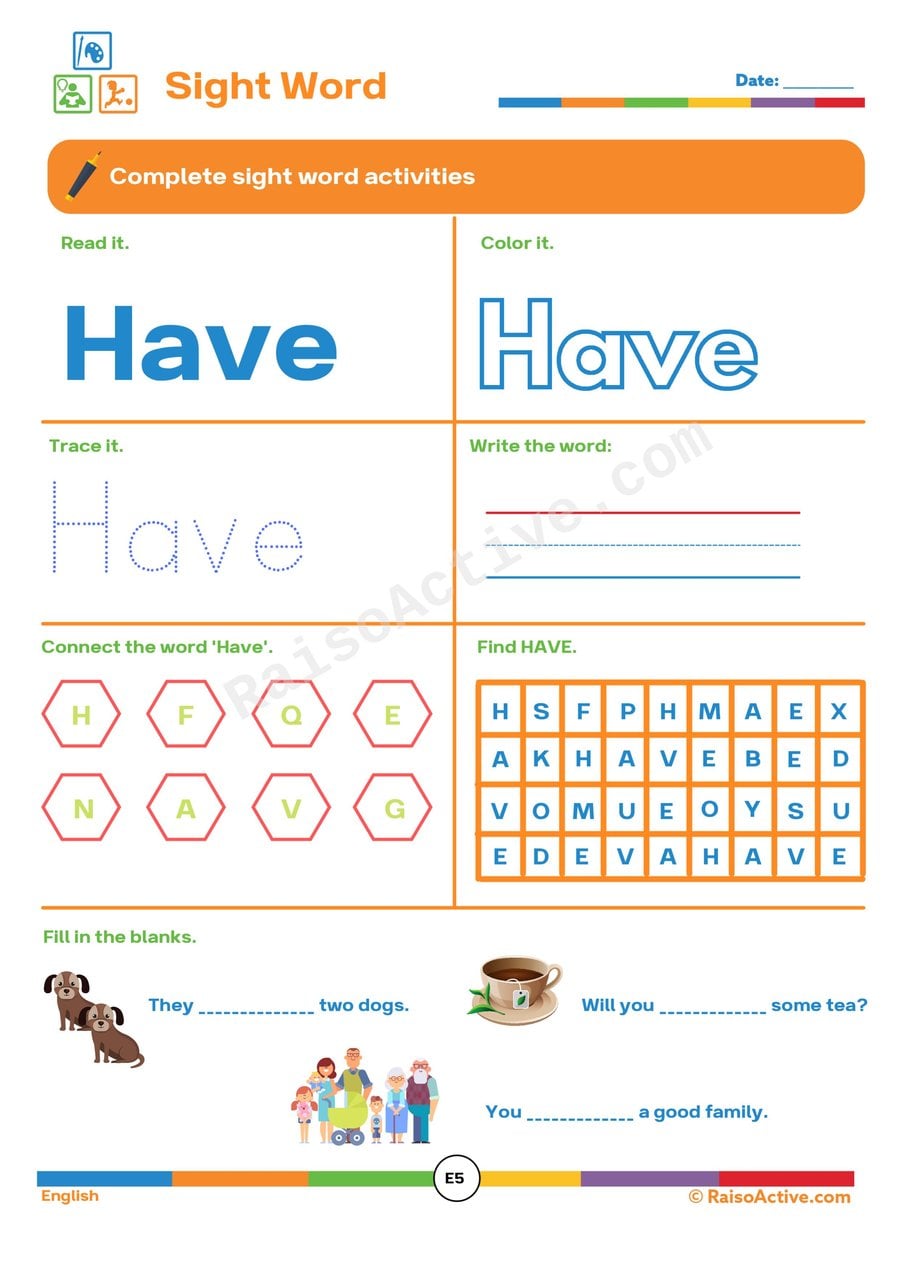
This multi-step worksheet builds deep familiarity with the sight word 'have' for children ages 3-5 by having them read, color, trace, write, and search for the word in several different formats. Repeating the same word across varied tasks — rather than practicing it once — is exactly how high-frequency sight words become instantly recognizable to early readers.

Learn to Read and Write the Sight Word 'Like' - Fun Worksheet for Kids!
Ages 3-5 · Preschool–Pre-KAges 3-5 · Nursery–ReceptionAges 3-5 · Nursery–LKGAges 3-5
Children ages 3-5 build sight-word fluency with the word 'like,' a common word used to express preference, through tracing, coloring, a word search, and sentence reading. Because 'like' doesn't follow simple phonics rules and appears constantly in early books and everyday speech, repeated multi-format exposure like this worksheet provides is exactly how young readers commit it to memory.
Guides for this topic

Sight Words by Age: The First 50 Words and How to Teach Them Without Flashcard Fatigue
Which sight words to teach first and why, the heart-word method, a read-trace-write-find routine, games, and a by-age table of typical sight-word progress.
How to Teach CVC Blending: A Step-by-Step Method That Works in Two Weeks
A step-by-step method for teaching CVC blending, covering continuous sounds, word families, common errors, and a 14-day plan that most children finish reading CVC words.
Phase 2 Phonics at Home: Sound Order, Blending Games, Worksheets
Phase 2 phonics at home: the five sound sets in order, oral blending, tricky words, a two-week routine, common mistakes, and free worksheets.
Reviews
Every worksheet for ages 4–5, no watermark
Members download the full library of 1,000+ worksheets and every activity pack without watermarks or daily limits. One year costs ₹999 in India or $20 elsewhere.
See membership plansOr download any worksheet free with a watermark (5 a day).