Phase 2 Phonics at Home: Sound Order, Blending Games, Worksheets
Author
RaisoActive - Kids Activities and Fun Learning
Published
Reading Time
5 min read
- Phase 2 phonics teaches 19 grapheme–phoneme correspondences in five sets, in a fixed order: s, a, t, p; i, n, m, d; g, o, c, k; ck, e, u, r; h, b, f, ff, l, ll, ss
- The sets are ordered so that a child can build real three-letter words within the first two sets (sat, tap, pat, pit)
- Oral blending — saying sounds separately and having your child say the whole word aloud, with no letters in sight — should come before any printed word
- A handful of tricky words (the, to, I, no, go, into) cannot be sounded out and are taught by sight alongside the sound sets
- A calm two-week routine of ten minutes a day, plus watching for two common mistakes, covers everything most children need at this stage
What Phase 2 Phonics Covers
Phase 2 phonics teaches the first 19 letter sounds in five sets, in a set order (s, a, t, p; i, n, m, d; g, o, c, k; ck, e, u, r; h, b, f, ff, l, ll, ss), plus oral blending and a small bank of tricky words that cannot be sounded out, such as the and to. It is usually the first phonics phase taught in Reception, most often across the autumn term.
Phase 2 is part of the Letters and Sounds programme (or a similar systematic synthetic phonics scheme most schools now use), which runs in numbered phases from Phase 1 (general sound awareness in Nursery) through to Phase 6 (spelling patterns in Year 2). Phase 2 is where reading actually begins: the point at which sounds turn into real words on a page. The Reception phonics worksheets on RaisoActive follow the same five sets in the same order.
This guide sets out the five Phase 2 sets in order, why oral blending has to come before print, how tricky words fit in, a two-week home routine, and the two mistakes that slow children down more than any other: using letter names instead of sounds, and adding an extra vowel sound (a schwa) onto consonants.
The Five Phase 2 Sets, in Order
The order of the five sets is not arbitrary. Set 1 (s, a, t, p) and Set 2 (i, n, m, d) between them make enough real words — sat, pat, tap, pit, tip, nap, pan, sit, pin, and more — that a child can start reading and building whole words after learning only eight sounds. Later sets add sounds that combine with the earlier ones to widen the pool of words further.
- Set 1: s, a, t, p — enough on their own for sat, tap, pat
- Set 2: i, n, m, d — adds pin, tin, man, dad, sand, and combines with Set 1 for sit, tip, mat, dip
- Set 3: g, o, c, k — adds got, dog, cat, cot, kid, and words like pig, tag, sock
- Set 4: ck, e, u, r — adds neck, back, sock, red, ten, run, mud, cup
- Set 5: h, b, f, ff, l, ll, ss — adds hat, big, fun, off, log, doll, miss, and a first look at double letters at the end of short words
is the number of grapheme–phoneme correspondences taught across the five Phase 2 sets, enough for a child to blend and read simple CVC words such as sat, pin, dog and mud without any further sounds
Source: Letters and Sounds, Phase 2
Introduce sounds through their sound and a picture (s for snake, m for mouse), not through the letter name. A useful home rule: if your child says "ess" instead of the hissing "sss" sound, gently model the sound back rather than correcting mid-word; letter names are taught later and mixing the two now slows blending down.
Oral Blending Before Print
Blending is the skill of holding separate sounds in mind and merging them into a word: hearing c-a-t and saying "cat". It is the single skill that turns letter knowledge into reading, and it can and should be practised with no letters on the page at all, using everyday words and toys.
- Say a familiar object in separate sounds — "shall we get your c-u-p?" — and see if your child can say the whole word before fetching it
- Play "Robot Talk": say three items in sounds (h-a-t, s-o-ck, p-e-n) and ask your child to point to or fetch the right one
- Segment instead of blend sometimes: say a word normally and ask your child to say it back in separate sounds, which is the reverse skill needed for early writing
- Keep the gap between sounds short; a long pause between each sound makes blending harder, not easier
- Move to printed letters only once oral blending with 3 sounds is reliable, then use the same words with letter cards or a worksheet
Children who can blend orally tend to read printed CVC words within days of seeing the letters, because the hard part (holding sounds in mind and merging them) is already secure. Children pushed straight to print without oral practice often "sound out" a word correctly and then guess a different word entirely, because the blending step never happened. Free CVC words worksheets are a good next step once oral blending is solid.
Tricky Words: The Ones You Cannot Sound Out
A handful of very common English words do not follow regular sound-letter rules and are taught by sight alongside the Phase 2 sets. Letters and Sounds calls these tricky words (later phases use the term common exception words). In Phase 2, the usual list is: the, to, I, no, go and into.
- the: the "th" sound is regular, but the vowel sound does not match any single letter taught yet
- I and no and go: single-letter or short words where the vowel is pronounced as its letter name rather than its short sound
- to: the "o" is pronounced "oo", not the short "o" sound taught in Set 3
- into: a compound of in and to, useful once both parts are familiar
Teach tricky words by sight through repetition in context — pointing to them in a shared book, or a matching game — rather than by trying to sound them out. Free sight words worksheets give short, repeated practice with exactly this small set of words.
A Two-Week Home Routine
Ten minutes a day is enough. This routine assumes your child's class is working through the sets in order; adjust the weeks to match wherever your school actually is, since schools vary in pace by a few weeks either way.
Two weeks, one focus each
Days 1–3: Learn the current set through sound and picture
Introduce four new sounds through a picture and an action, not a letter name. Play spot-the-sound around the house: "can you find something that starts with sss?"
Days 4–6: Oral blend with the new sounds
No letters yet. Say two or three familiar words in separate sounds and have your child blend them aloud. Use Robot Talk as a five-minute game at snack time.
Days 7–9: Bring in print
Show the same words with letters this time: point under each letter as you say its sound, then run your finger smoothly under the whole word for the blend. One or two worksheet pages fit well here.
Days 10–12: Build and change words
Use magnetic letters or letter cards to build a word (sat), then change one letter at a time (sat to sit to sip) and ask your child to read the new word each time.
Days 13–14: Mix in a tricky word and review
Add one tricky word from the current list into a simple sentence with the CVC words already learned, for example "I sit." Review all sounds taught so far with a quick sound-picture matching game.
- Letter names instead of sounds: if your child says "es-ay-tee" instead of "s-a-t", the blend will not work; go back to sound-and-picture practice with no letter names at all
- The added schwa: saying "suh-a-tuh" instead of a crisp "s-a-t" adds an extra vowel sound onto each consonant and makes blending much harder; model consonant sounds as short and clipped, cut off quickly rather than drawn out
- Keep sessions to ten minutes and stop while it is still going well
- Praise the attempt to blend, not just a correct answer; guessing confidently and self-correcting is part of learning to read
- Follow the class order rather than skipping ahead to Phase 3 sounds; a mismatch with school pacing causes more confusion than it saves time
Sound before letter, blend before print, order before speed.
Phase 2 works because it is sequenced: eight sounds make real words, oral blending comes before the eye has to do the work of reading, and tricky words are kept to a short, taught list rather than left to guesswork. A child who can blend three sounds aloud with no letters in sight is more ready to read than one who can name all 26 letters but cannot merge sounds into a word. Follow the five sets in order and the reading will follow.
Frequently Asked Questions
What order are the Phase 2 phonics sounds taught in?
Should I teach letter names or letter sounds first?
What is oral blending and why does it matter?
What are tricky words and why can't they be sounded out?
My child knows all the Phase 2 sounds but cannot blend. What should we do?
Are Phase 2 phonics worksheets free on RaisoActive?
Getting Started This Week
Check which set your child's class is currently on, then spend three or four days on oral blending with that set's sounds before reaching for a worksheet at all. Once blending is solid, print one page from the phonics collection or the letter tracing pages to pair sound with letter formation, and keep each session to ten minutes so it stays something your child looks forward to.
Free worksheets for this topic
Browse all worksheets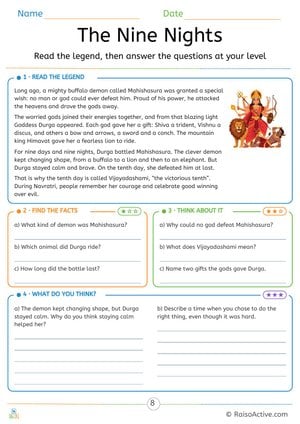
The Nine Nights: Durga and Mahishasura Reading Comprehension
Ages 7-11 · Grade 2–Grade 3Ages 7-11 · Year 3–Year 4Ages 7-11 · Class 2–Class 3Ages 7-11
Children read a retelling of the legend of Durga and Mahishasura, find facts in the text, answer inference questions about why things happened, and write their own opinion about staying calm and doing the right thing.
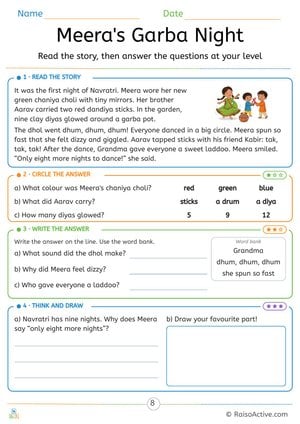
Meera's Garba Night: Navratri Reading Comprehension Story
Ages 4-6 · Pre-K–KindergartenAges 4-6 · Reception–Year 1Ages 4-6 · LKG–UKGAges 4-6
Children listen to or read a short story, recall details by circling answers, write answers using a word bank and explain a simple idea in their own words.
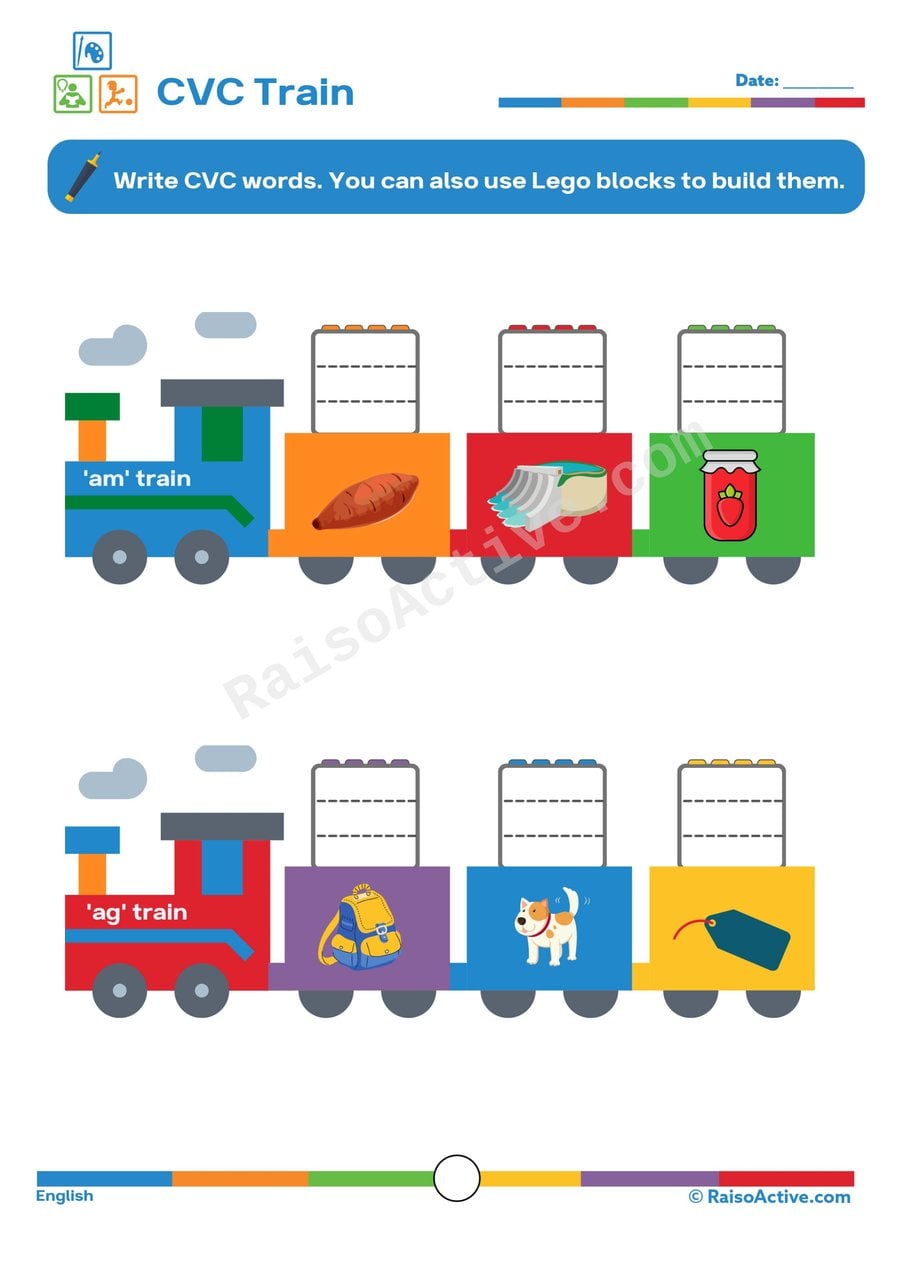
CVC Train Worksheet: Write and Build CVC Words!
Ages 4-6 · Pre-K–KindergartenAges 4-6 · Reception–Year 1Ages 4-6 · LKG–UKGAges 4-6
This worksheet gives children ages 4-6 focused practice blending letter sounds into consonant-vowel-consonant words, using train-car pictures as clues for words like 'dog,' 'hen,' or 'cup.' Because children both write the word and can optionally build it with Lego blocks, this worksheet reinforces the same phonics skill through two different physical actions — handwriting and hands-on construction — which helps the spelling patterns stick.
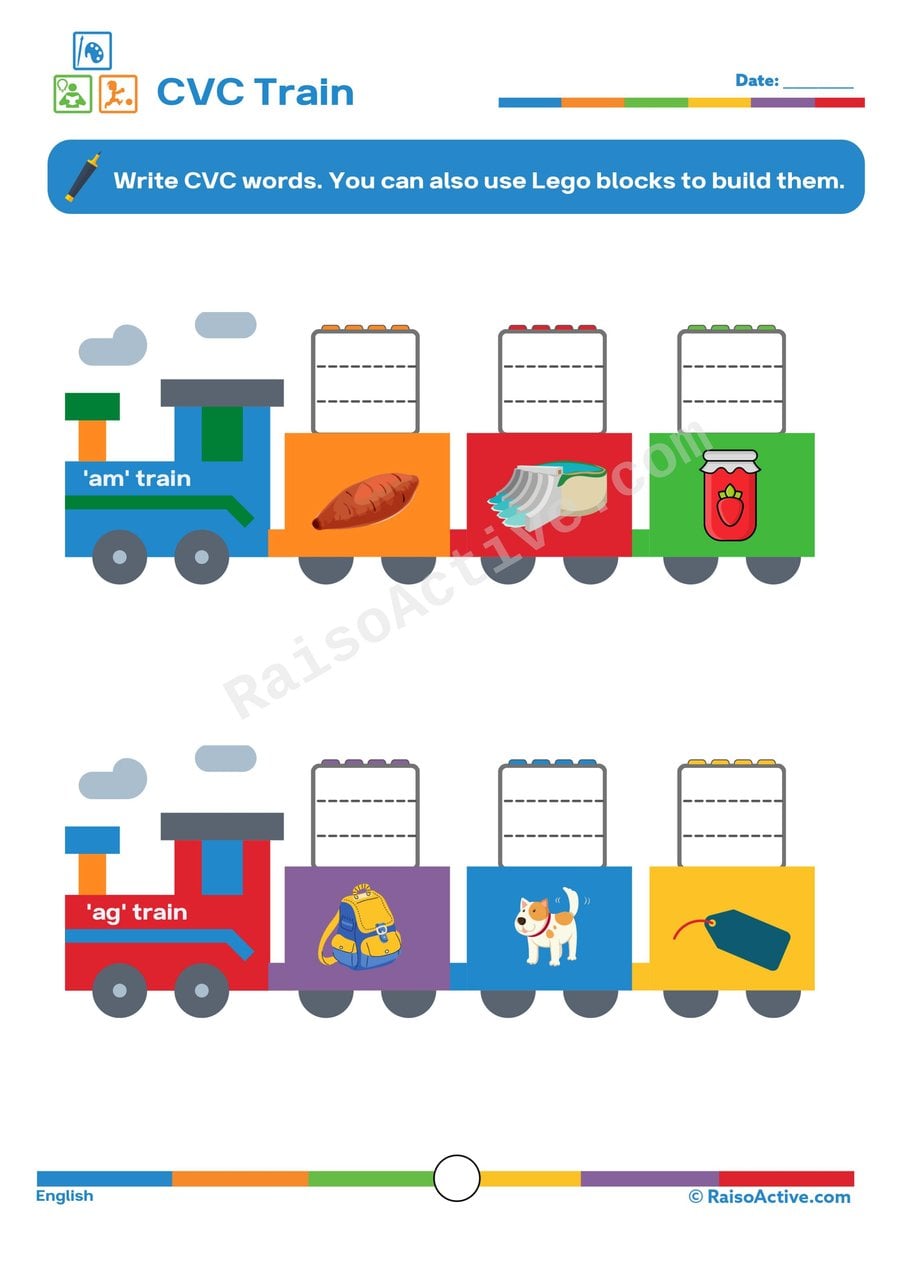
CVC Train Worksheet: Write CVC Words!
Ages 4-6 · Pre-K–KindergartenAges 4-6 · Reception–Year 1Ages 4-6 · LKG–UKGAges 4-6
Writing consonant-vowel-consonant words like 'cat,' 'sun,' or 'pig' under matching pictures gives children ages 4-6 direct practice with letter-sound blending, a core phonics skill that underpins independent reading. Because each train car pairs a picture clue with a blank space, children also practice translating a spoken word they can sound out into its correctly spelled written form.

Written by
Hemsweta Jain · Teacher Cheena
MBA and Early Childhood Educator, teaching since 2014 · Founder of RaisoActive, Mumbai
Published · Last reviewed
Related Resources
Printable Resources(10)
View all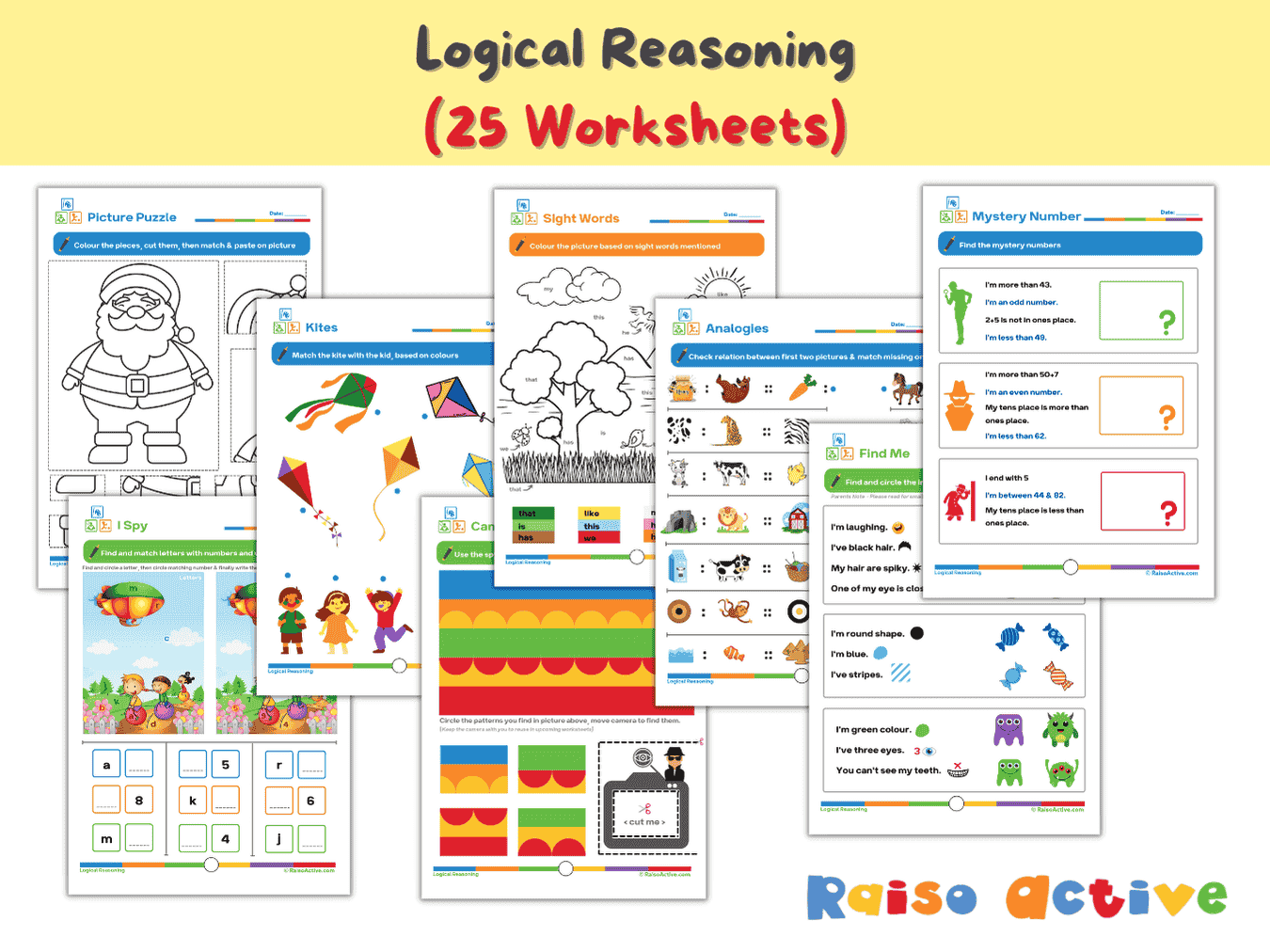

Logical Reasoning Activity Book for Preschool & Kindergarten | Patterns, Puzzles & Analogies
Ages 4-7 · Pre-K–Grade 1Ages 4-7 · Reception–Year 2Ages 4-7 · LKG–Class 1Ages 4-7 · 26 pages
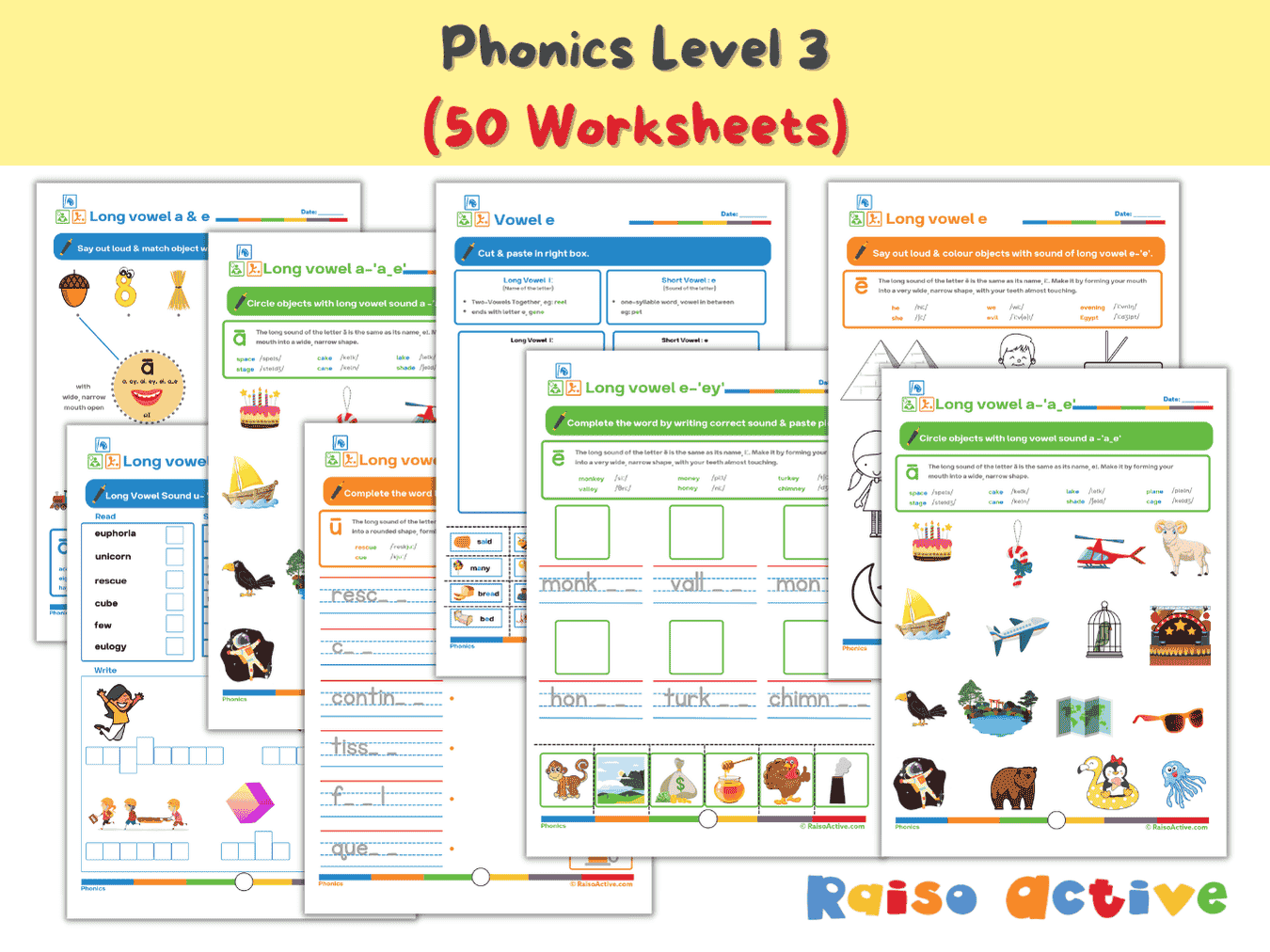

Phonics Level 3 Long Vowels Activity Book for Kindergarten & 1st Grade
Ages 5-7 · Kindergarten–Grade 1Ages 5-7 · Year 1–Year 2Ages 5-7 · UKG–Class 1Ages 5-7 · 51 pages
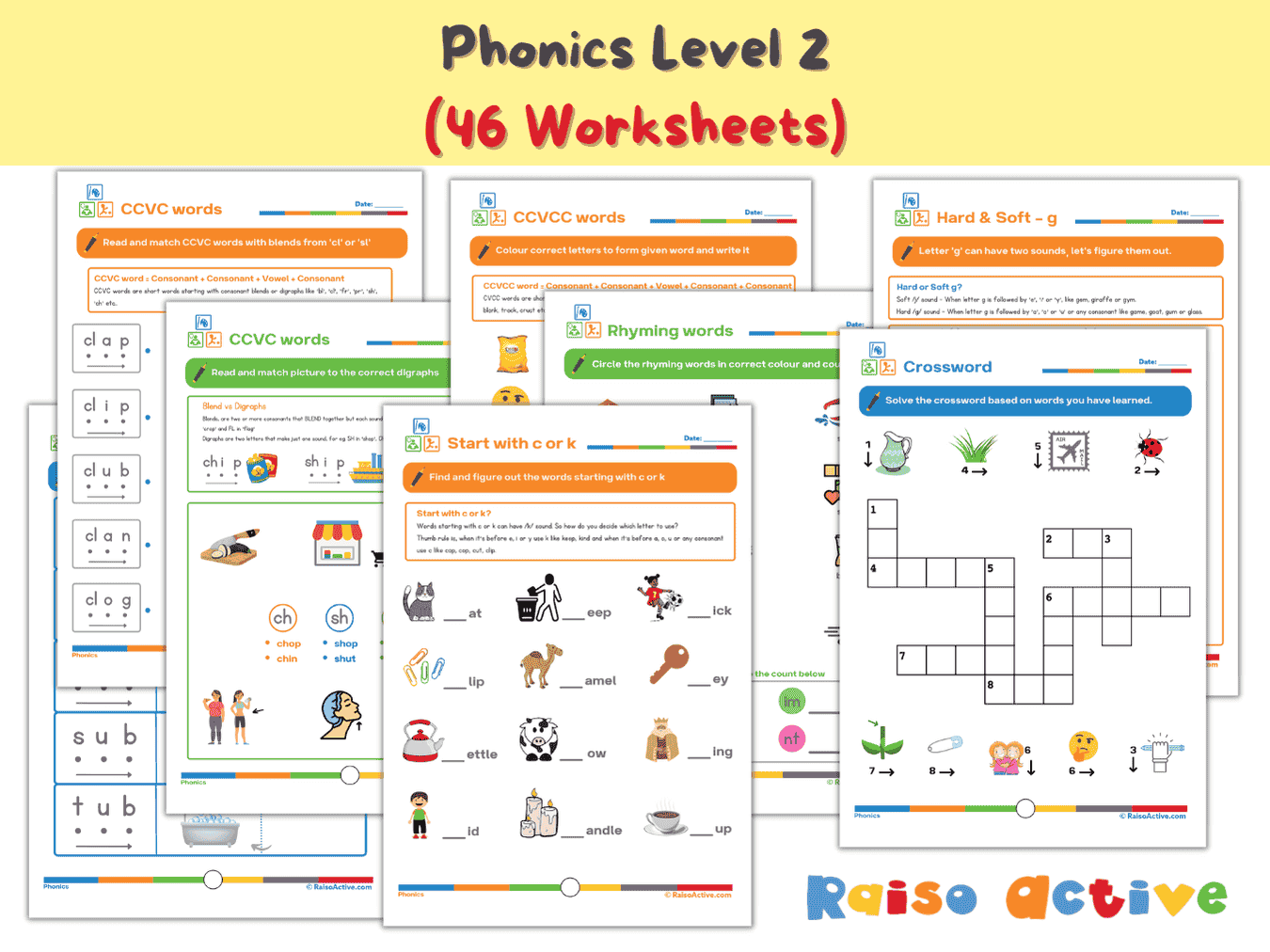
Phonics Level 2 Worksheets: CVC, CCVC, CVCC Word Families & Blends for Early Readers (Ages 4-7)
Ages 4-7 · Pre-K–Grade 1Ages 4-7 · Reception–Year 2Ages 4-7 · LKG–Class 1Ages 4-7 · 47 pages
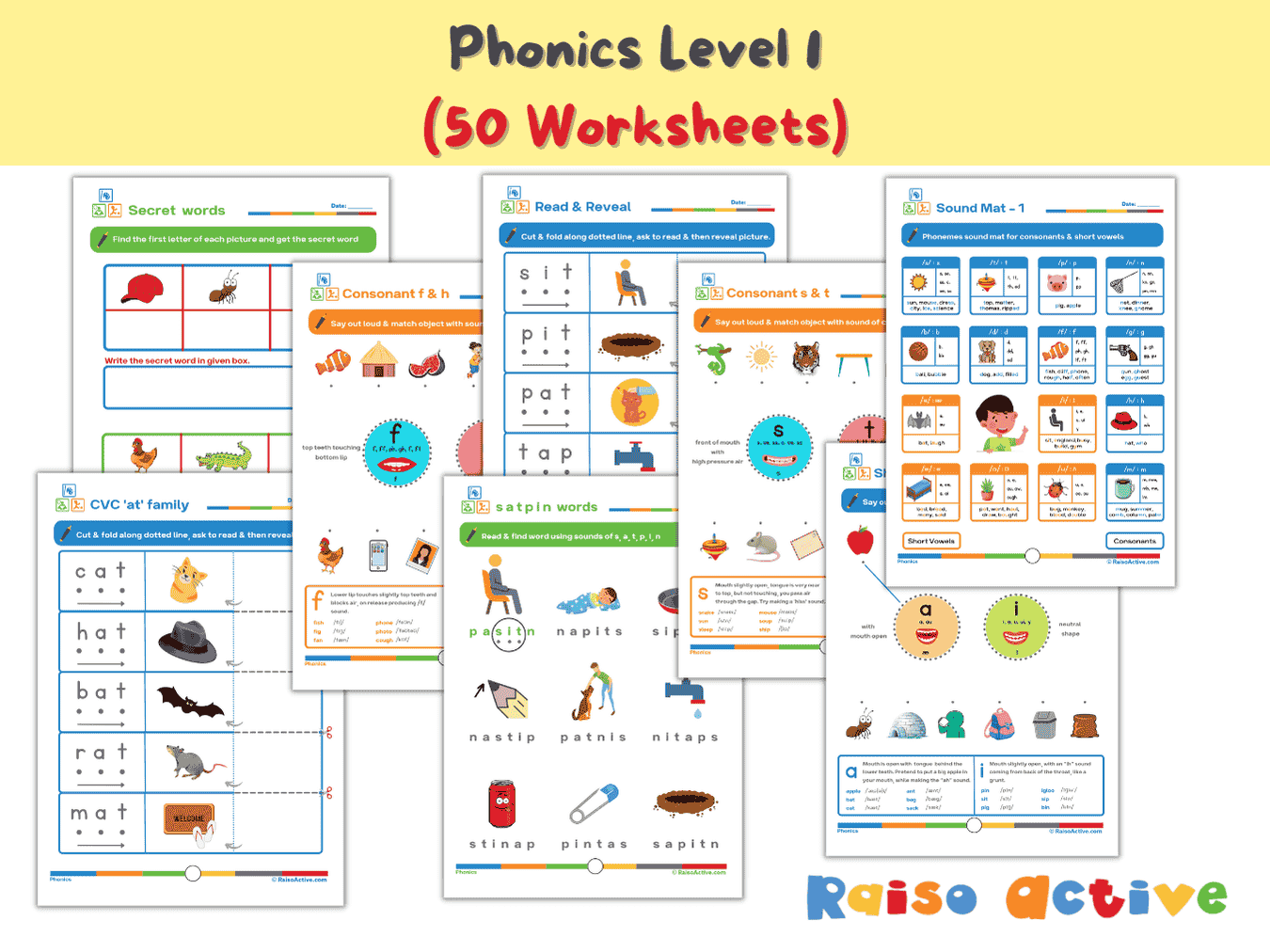
Phonics Level 1 Activity Book: Letter Sounds, Blending & CVC Words for Preschool & Kindergarten
Ages 3-6 · Preschool–KindergartenAges 3-6 · Nursery–Year 1Ages 3-6 · Nursery–UKGAges 3-6 · 60 pages


Month 9: Holistic Preschool Play Learning | Ages Up to 4
Ages 3-4 · PreschoolAges 3-4 · NurseryAges 3-4 · 30 pages
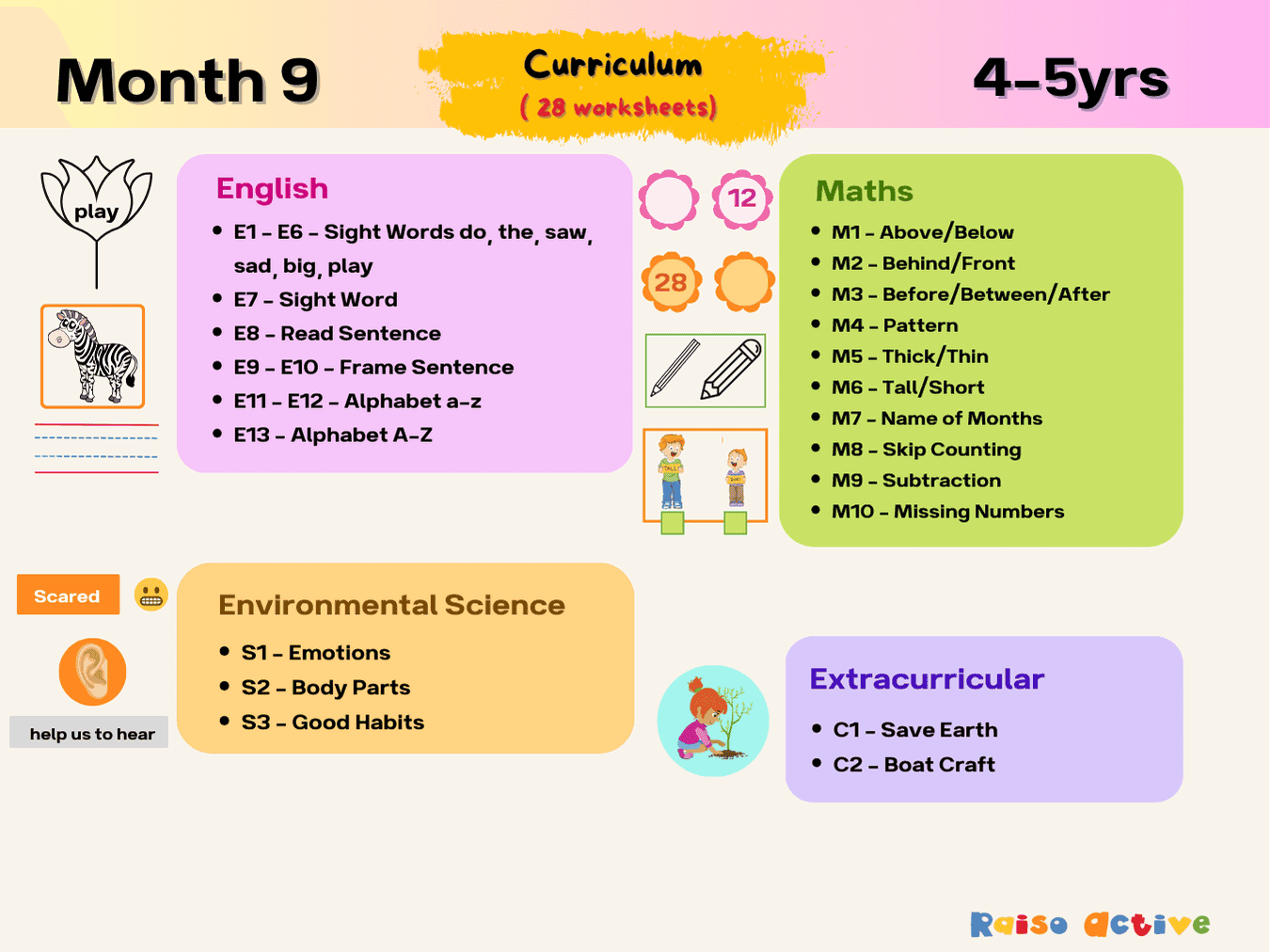
Month 9: Play-Based Preschool Foundational Skills | Ages 4-5
Ages 4-5 · Pre-KAges 4-5 · ReceptionAges 4-5 · LKGAges 4-5 · 31 pages
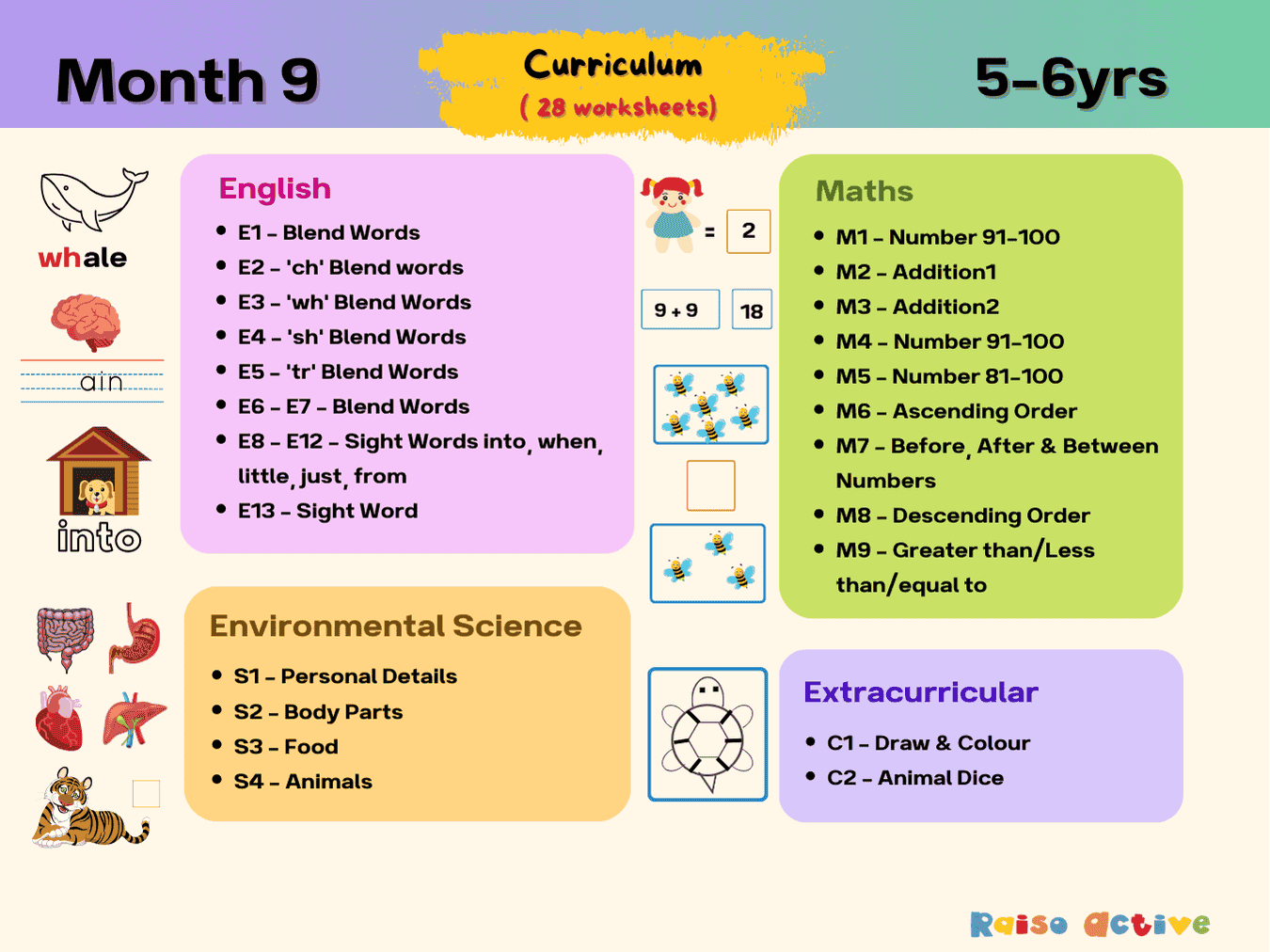
Month 9: Early Learning English Math Science | Ages 5-6
Ages 5-6 · KindergartenAges 5-6 · Year 1Ages 5-6 · UKGAges 5-6 · 31 pages
Month 9: Preschool Early Learning Activities | Ages 4-5
Ages 4-5 · Pre-KAges 4-5 · ReceptionAges 4-5 · LKGAges 4-5 · 31 pages
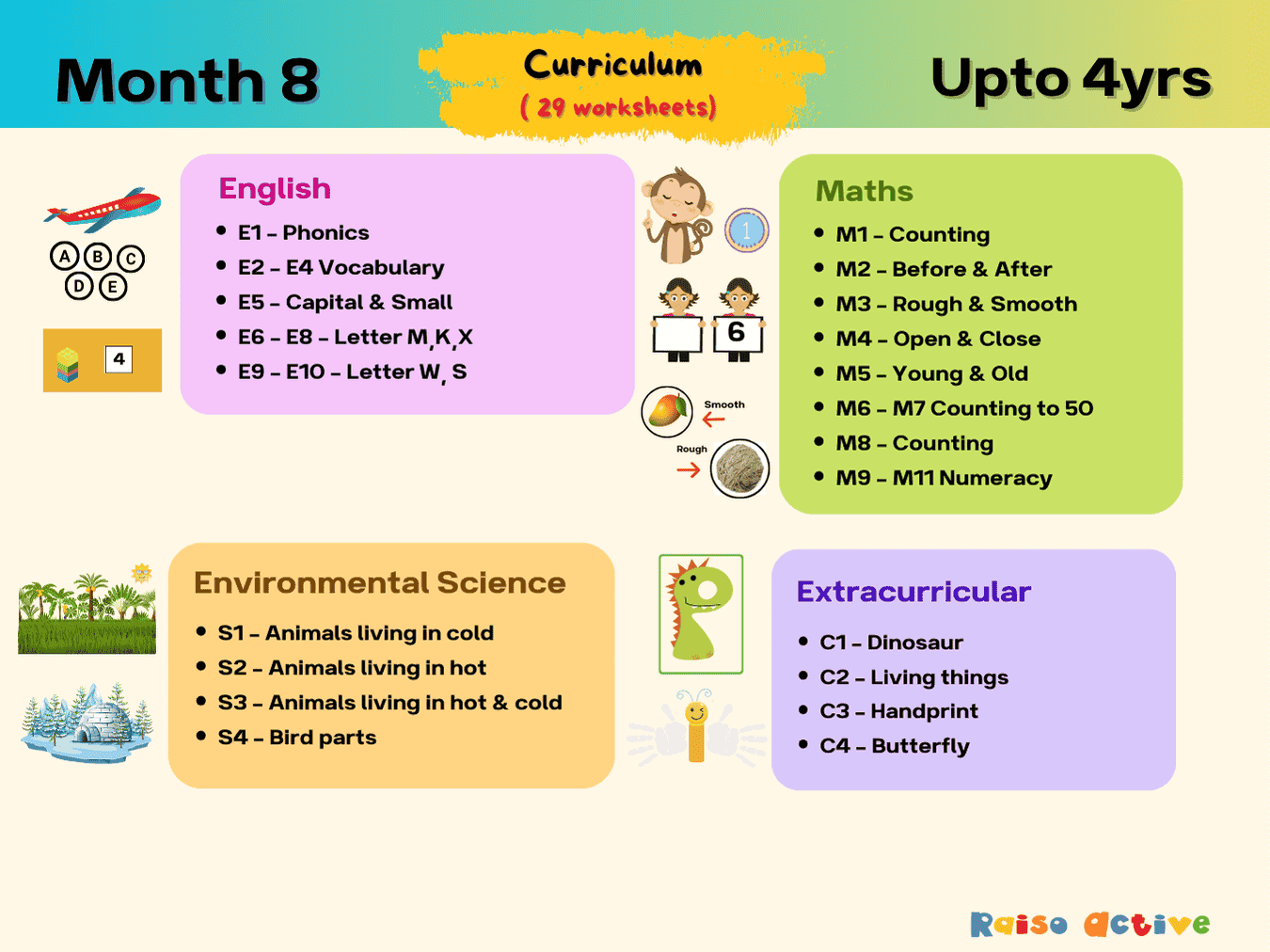
Month 8: Phonics, Math, Science, Creativity | Ages Up to 4
Ages 3-5 · Preschool–Pre-KAges 3-5 · Nursery–ReceptionAges 3-5 · Nursery–LKGAges 3-5 · 32 pages
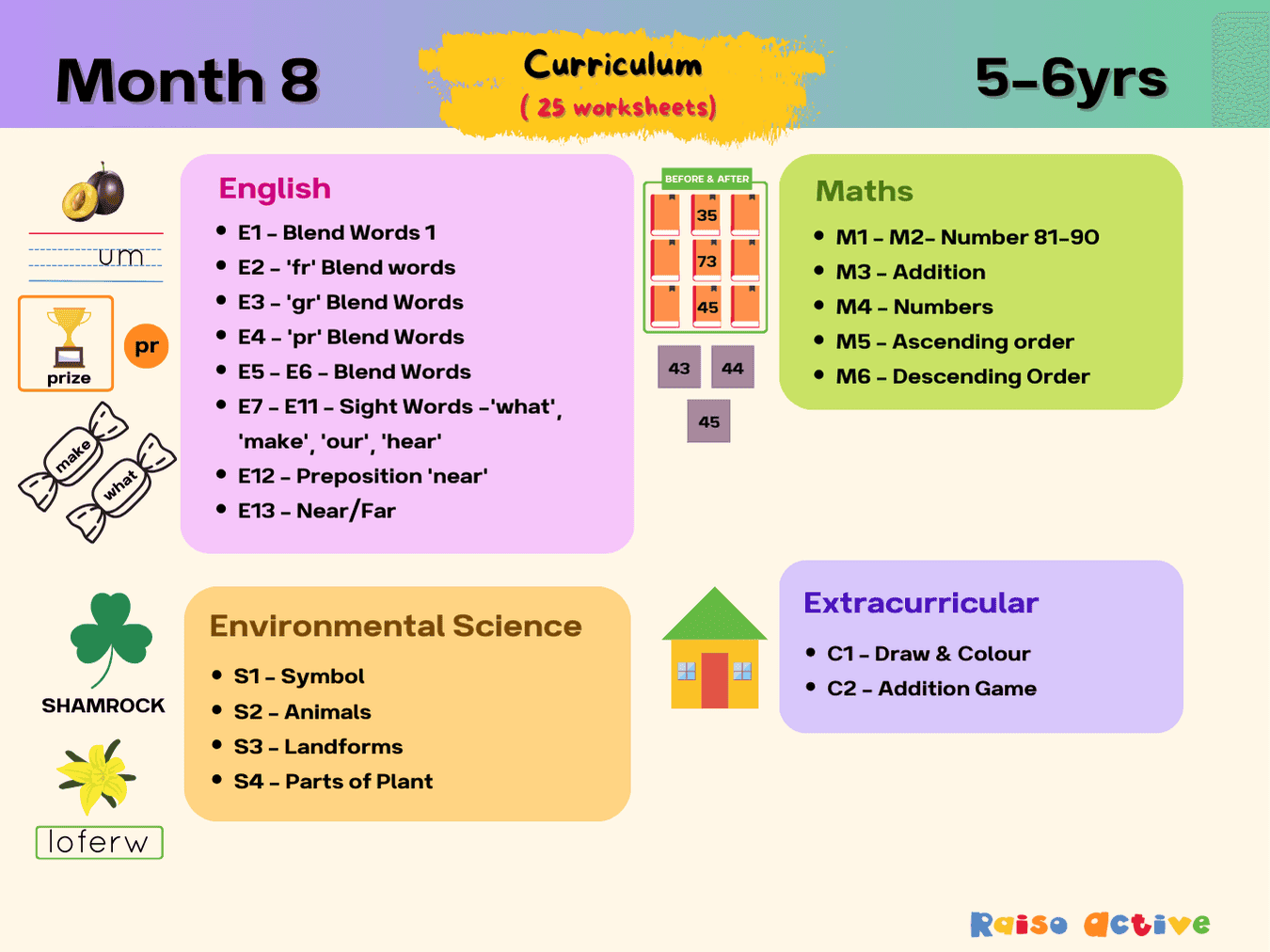
Month 8: Literacy, Math, Science Foundations | Ages 5-6
Ages 5-6 · KindergartenAges 5-6 · Year 1Ages 5-6 · UKGAges 5-6 · 28 pages