Free printable worksheets · US · UK · India
Worksheets for 6 Year Olds
Worksheets for 6 year olds are printable practice pages for children aged 6 to 7 in 1st Grade, Year 2 or Class 1, the first year of primary school. They cover place value with tens and ones, addition and subtraction within 20, reading short passages and answering questions, writing several sentences, sight words, telling time and counting money.
Six is the age independence arrives on paper. A six-year-old reads the instructions, works down a full page, and can check an answer, so the sheets here carry more per page than anything for younger children: a passage with five questions, twenty sums in a grid, a spiral review touching four skills. Reading shifts from decoding to understanding, and math shifts from counting to place value, the idea that 14 is one ten and four ones. Handwriting settles into a consistent size. Whether your child is in 1st Grade, Year 2 or Class 1 under CBSE or ICSE, the school day now has homework, and these worksheets are built to be that homework: single-skill, self-explanatory, printable on Letter or A4, and quick to check.
1950+ worksheets · free PDF download · print on A4 or Letter
Worksheets for 6 Year Olds to print
Browse all worksheets for ages 6–7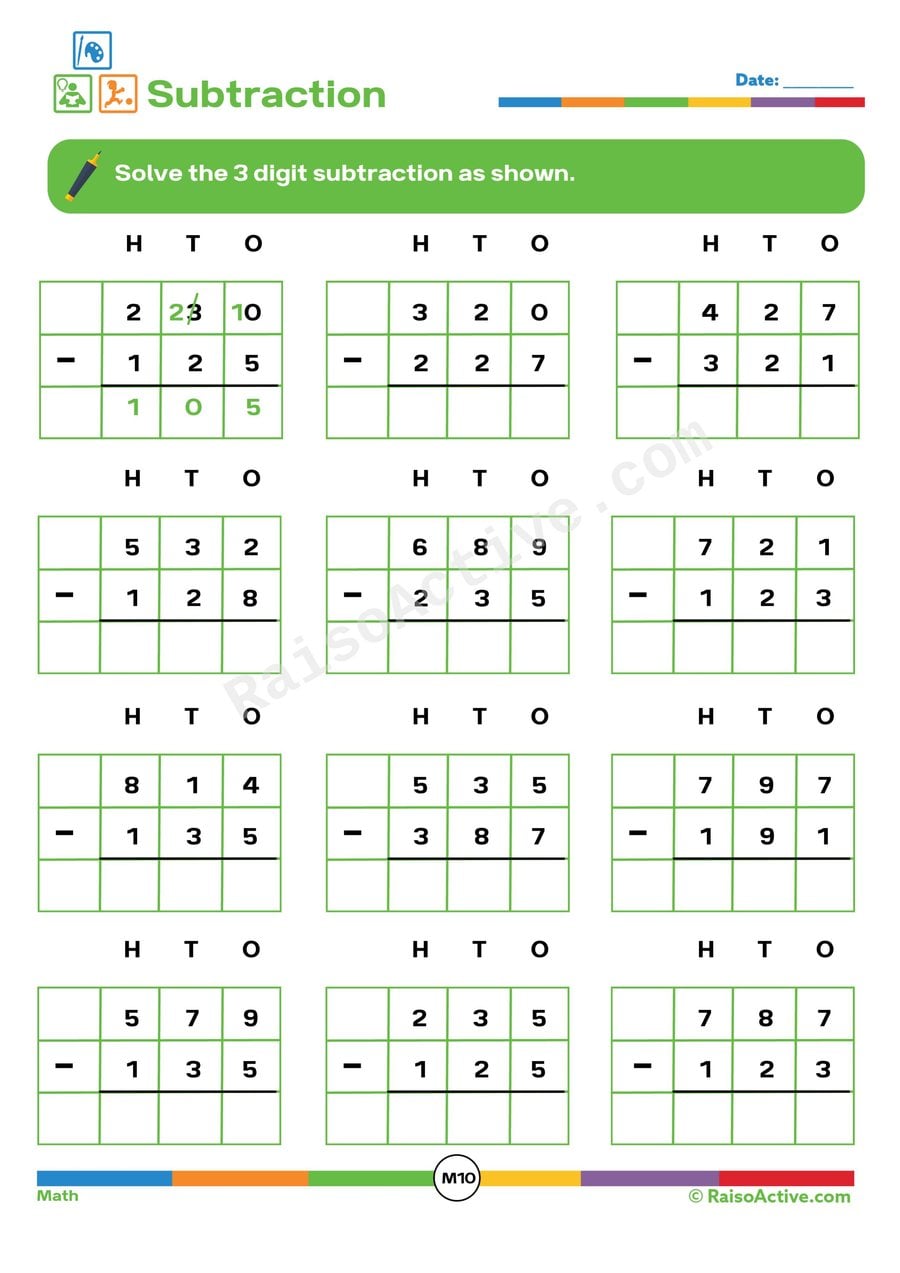
3-Digit Subtraction Worksheet for Kids
Subtracting three-digit numbers introduces children to borrowing, or regrouping, across place value columns, a more demanding skill than simple subtraction since it requires understanding that a ten can be 'broken' into ones when a column doesn't have enough to subtract from. For ages five to seven, this worksheet builds the procedural foundation for confident multi-digit subtraction going forward.
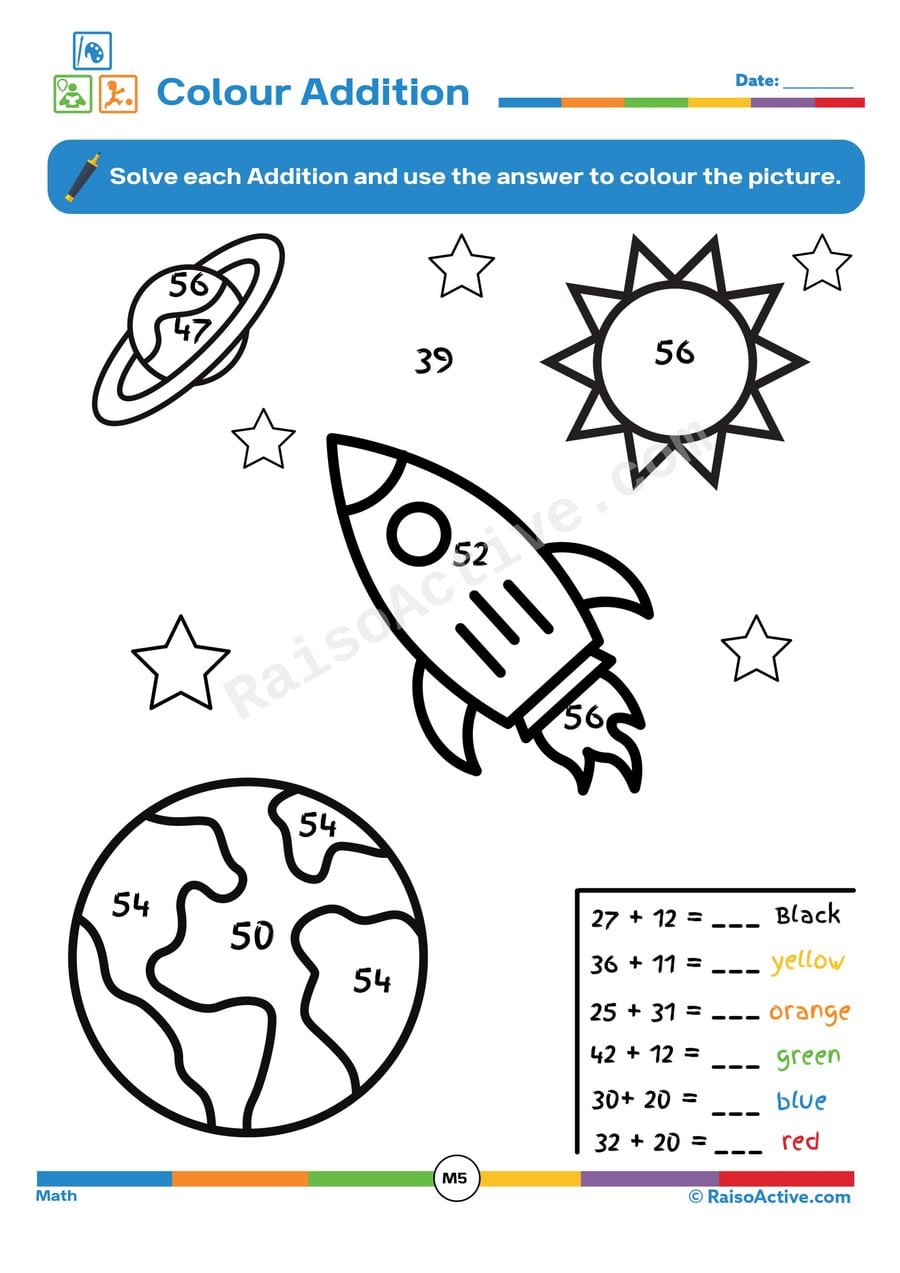
Color Addition Worksheet: Space Adventure!
This worksheet builds addition fluency by having children solve simple equations and then use each answer to determine which color to use in a corresponding section of a space-themed picture. For five- to seven-year-olds, this color-by-number format adds motivation to solve each problem accurately, since a wrong answer means the wrong color goes in the wrong spot and the final picture won't come together correctly.
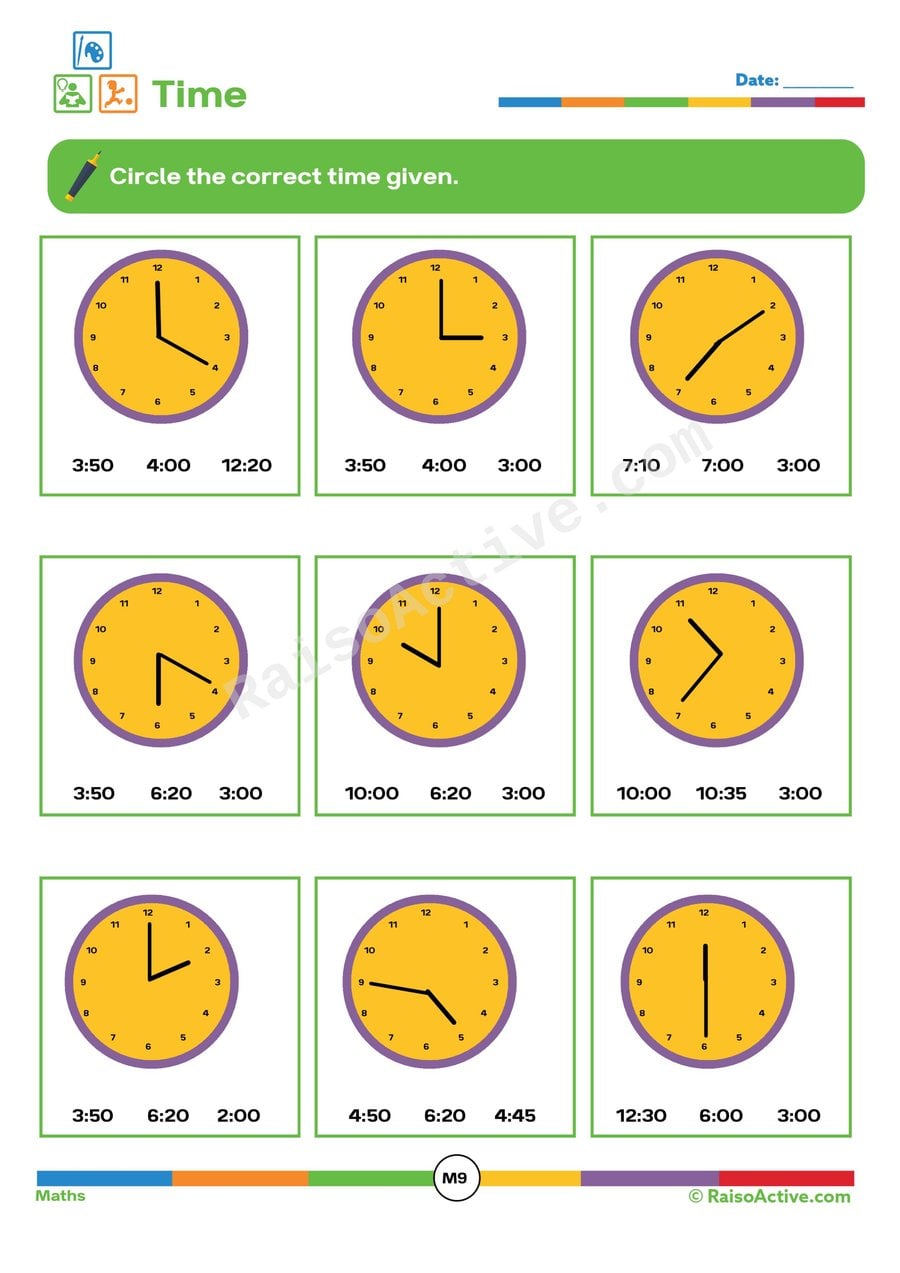
Time Telling Worksheet: Circle the Correct Time!
Reading an analog clock face and choosing the matching time from three written options builds clock-reading fluency for children ages 5-7, requiring them to interpret both the hour and minute hands together rather than guessing from a single hand.
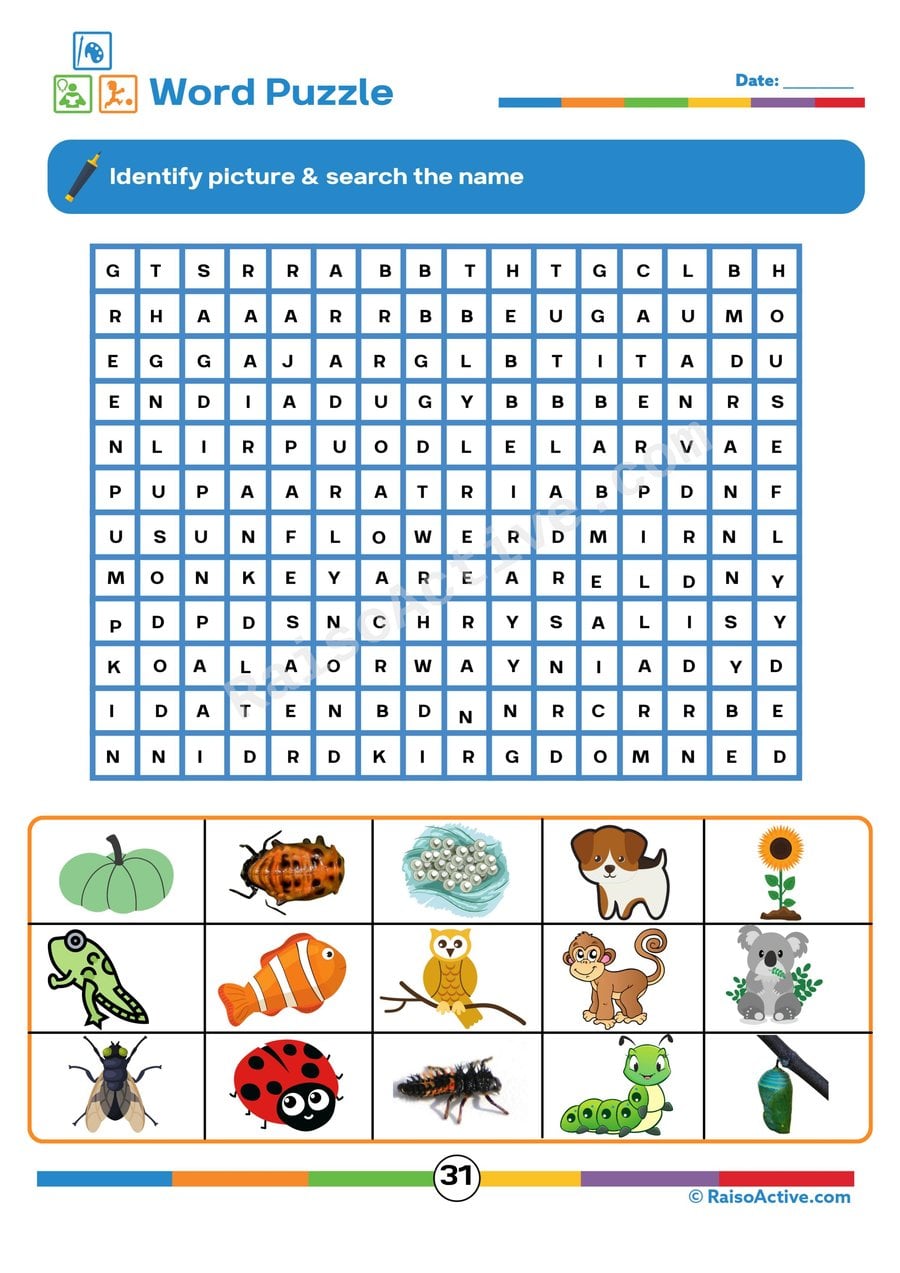
Word Search Worksheet: Find the Hidden Words!
Searching this life cycle-themed word grid strengthens children's letter-by-letter visual scanning and spelling recognition, both essential pre-reading skills for ages 5-7. As they hunt for words tied to animal growth stages — such as egg, larva, or adult — children reinforce life cycle vocabulary while training their eyes to track left-to-right and top-to-bottom across a busy grid. This dual focus on reading mechanics and science content makes the puzzle more valuable than a generic word search.

Punctuation Adventure: End Punctuation Worksheet for Kids
Children ages 5-7 practice choosing between periods, question marks, and exclamation points based on the meaning and tone of a sentence, a skill that connects punctuation directly to how a sentence should sound when read aloud. This builds the foundation for expressive, correctly punctuated writing later in school.

Personal Pronouns Worksheet for Kids: Circle and Underline!
Circling the subject pronoun and underlining the object pronoun in each sentence teaches children ages 5-7 to recognize that pronouns play different grammatical roles depending on their position in a sentence, an important step toward more advanced grammar understanding. This careful, close-reading task also builds attention to sentence structure that supports stronger writing later on.

Possessive Noun Worksheet: Identify and Choose the Correct Form!
This worksheet teaches the grammar rule for possessive nouns — adding an apostrophe-s to show ownership, like 'the dog's bone' — by having children choose the correctly formed possessive in each sentence. For five- to seven-year-olds who are already reading simple sentences, this is often their first formal introduction to how punctuation changes a word's meaning rather than just its sound.

Tense Time! Identifying Past, Present, and Future Tense Worksheet
This worksheet asks 5-7 year olds to read a full sentence and identify which tense it's written in — past, present, or future — based on the verb form and clue words used, which is a meaningfully harder skill than simply writing verbs in different tenses since it requires recognizing the grammar pattern rather than producing it. This kind of tense-identification practice is exactly what supports stronger reading comprehension and writing later, since understanding when something happens is core to following any story.
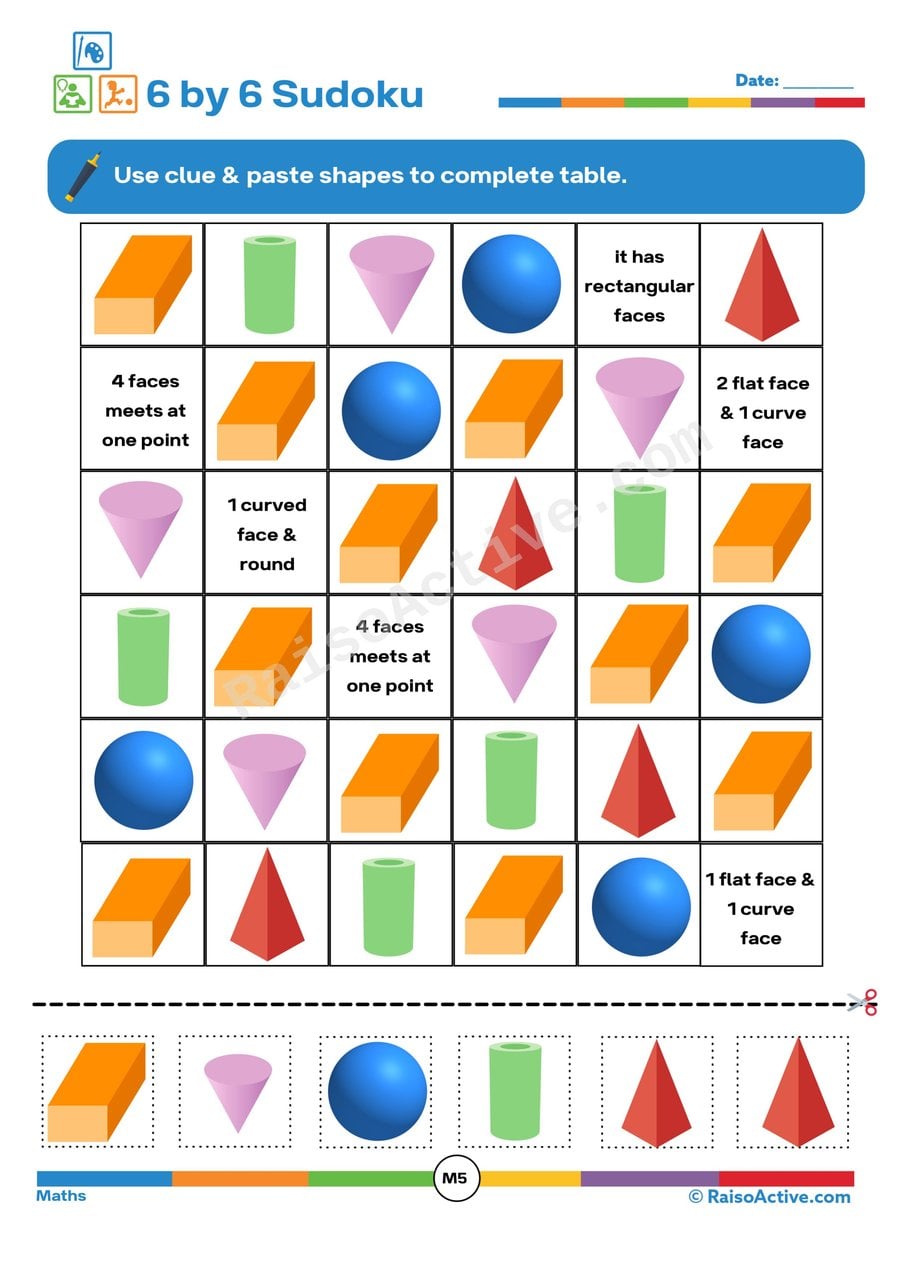
Month 11: Learning & Development | Ages 6-7 - Page 16
This page serves as the table of contents for Month 11 of the Ages 6-7 Learning & Development plan, giving parents and teachers a clear map of the skills and worksheets covered that month, from literacy and math practice to critical thinking activities. Reviewing it first sets expectations for the pacing and variety of learning a 6-7 year old will encounter across the month.

Roll a Story Worksheet: Create Fun Stories with Dice!
This dice-based storytelling worksheet helps children ages 4-7 practice narrative construction by rolling dice to randomly select a character, setting, and prop, then weaving those elements into an original story. Because the combination is different every time, children must think flexibly and creatively rather than relying on a memorized story, which builds oral language, sequencing, and imaginative reasoning skills that underpin later creative writing.
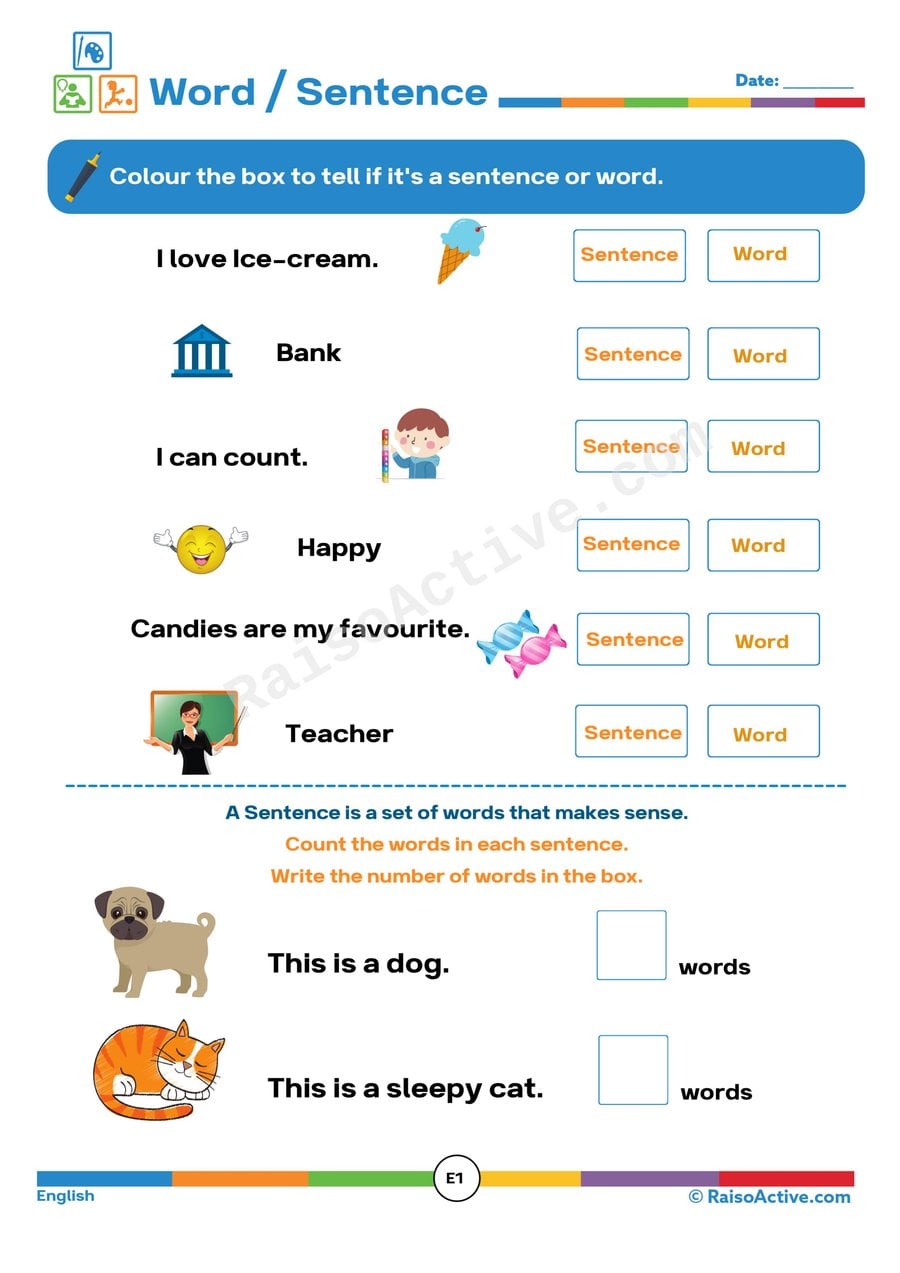
Month 1: Learning & Development | Ages 6-7 - Page 4
This overview page maps out everything covered in Month 1 of the ages 6-7 learning program, giving both children and parents a clear picture of what skills, from reading comprehension to number work to critical thinking, will be practiced across the month. Previewing a table of contents like this helps children ages 6-7 build early organizational awareness, understanding that learning happens in a structured sequence rather than as one-off, disconnected activities. Knowing what's coming also builds anticipation and motivation heading into each week's worksheets.

Find and Draw India's Major Rivers Worksheet for Kids
This activity teaches children ages 5-8 to locate and draw ten of India's major rivers on a blank map, building map-reading skills and geographic memory of the country's physical features. Translating a written list into hand-drawn lines on a map also strengthens the connection between abstract information (a river's name and rough course) and concrete spatial representation.
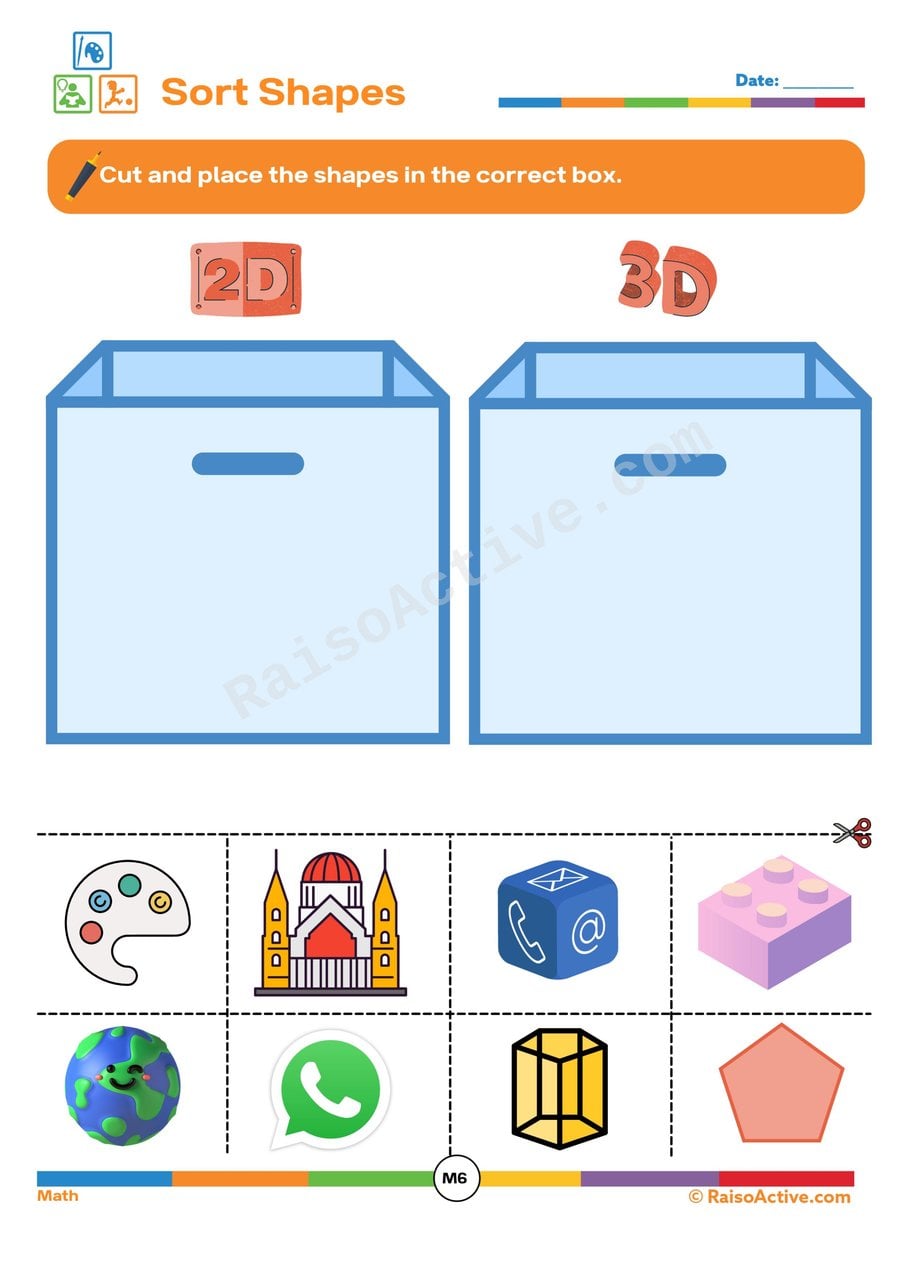
Month 3: Learning & Development | Ages 6-7 - Page 17
As part of a structured monthly learning sequence, this page gives children ages 6-7 continued practice across reading, observation, and critical thinking skills, building on the concepts introduced earlier in the Month 3 program. Working through a numbered page within a longer curriculum also helps children build the stamina and consistency needed for sustained, sequential learning.
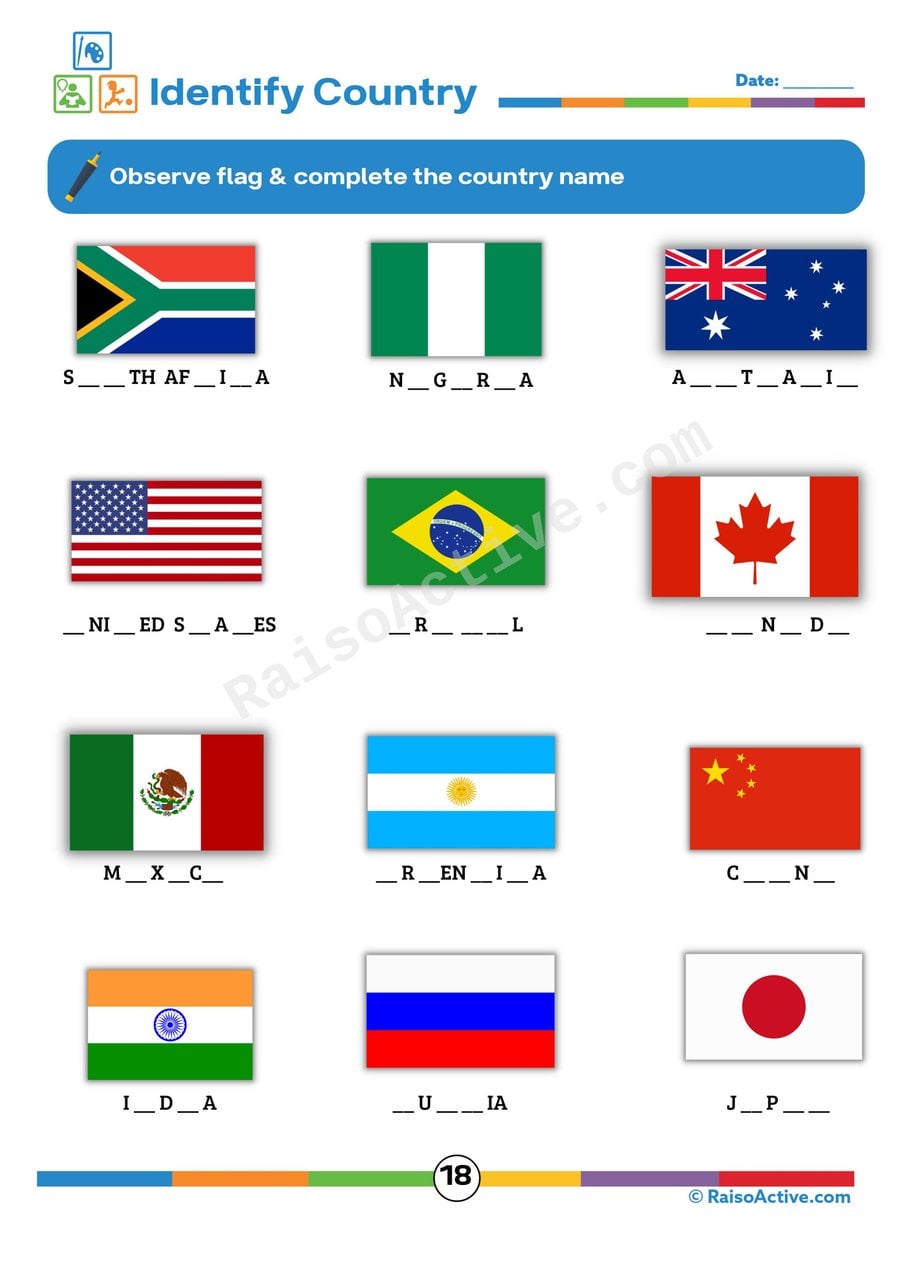
Identify the Country: Flag Matching Worksheet
Filling in the missing letters of each country's name while studying its flag gives children ages 4-7 practice with letter-sound correspondence and spelling patterns, since they must sound out the word and recall which letters are already provided as clues. It also builds early geography knowledge, helping children connect a visual symbol (the flag) to a country's name for the first time. This dual practice of decoding and world knowledge lays groundwork for both literacy and social studies skills.

Sun Safety Worksheet for Kids: Learn About Staying Safe in the Sun!
This worksheet has children ages 4-7 answer questions about sun safety, such as why sunscreen and hats matter, building early health literacy alongside writing practice as they put their understanding into their own words. Because the questions ask children to reason about why certain sun-safety habits matter rather than just label a picture, this worksheet develops early explanatory thinking, a step up from simple factual recall. Practicing writing full answers, even short ones, also builds sentence-forming skills appropriate for this age range.
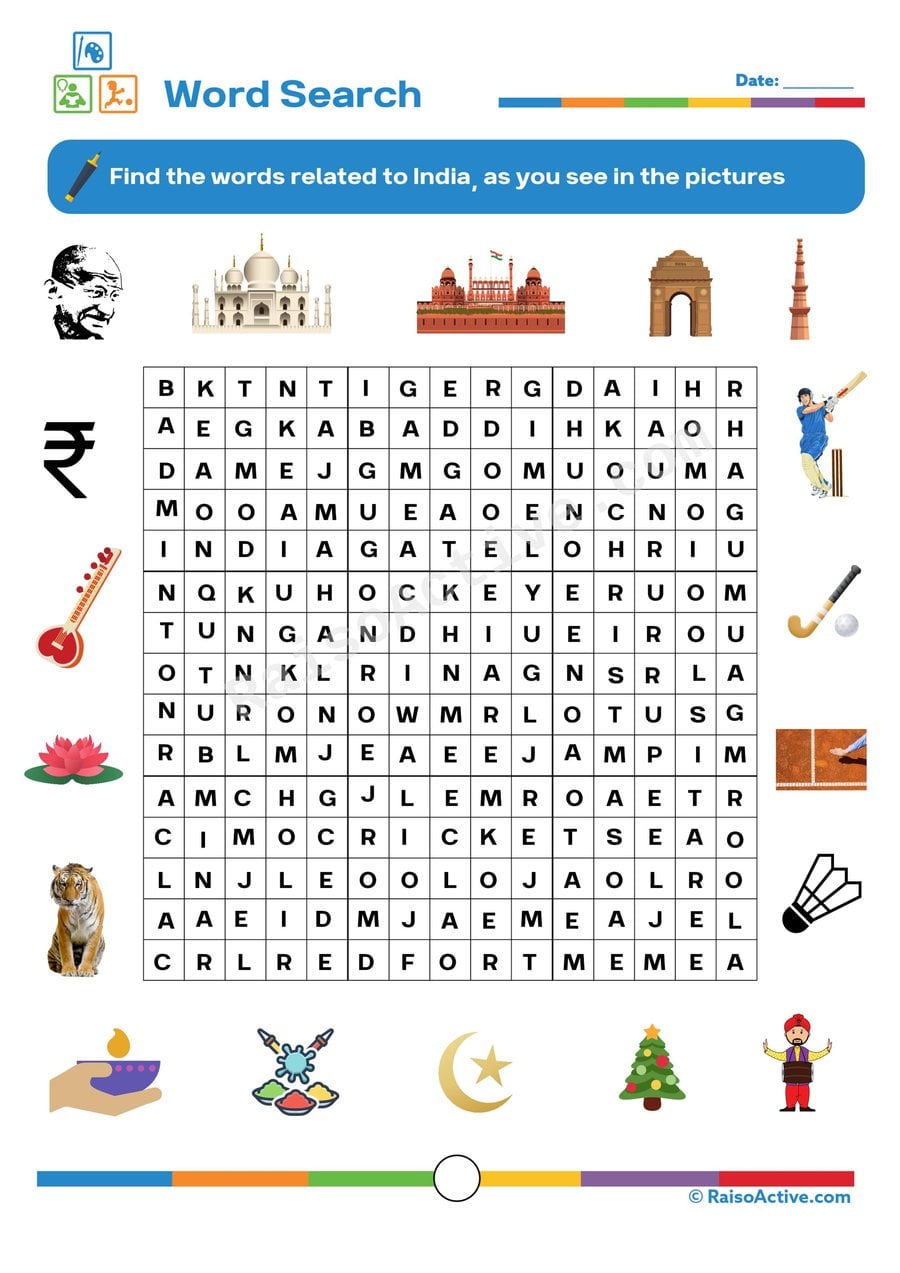
India Word Search Worksheet for Kids
Searching a letter grid for words connected to India, such as festival names, foods, or landmarks, builds visual scanning and word-recognition skills in children ages 4-7 while introducing vocabulary tied to Indian culture and geography. Because the target words vary in length and may run in different directions through the grid, children also practice sustained visual attention and letter-sequence tracking, both important pre-reading skills. This worksheet pairs literacy practice with cultural and social studies exposure in a single activity.

Word Problem Fun: Solving Burger and Bird Problems!
Solving addition and subtraction word problems featuring burgers and birds gives children ages 4-6 practice applying arithmetic to playful, concrete scenarios, strengthening the link between story context and the correct math operation.

Ascending Order Trucks Worksheet for Preschoolers
Children ages 4-6 practice arranging numbers in ascending order, from smallest to largest, using a playful truck-themed sequencing task. Understanding ascending order requires comparing multiple numbers at once and deciding their correct relative position, a more advanced skill than simple counting forward. This kind of number ordering builds critical number sense that supports later skills like comparing quantities and reading number lines.
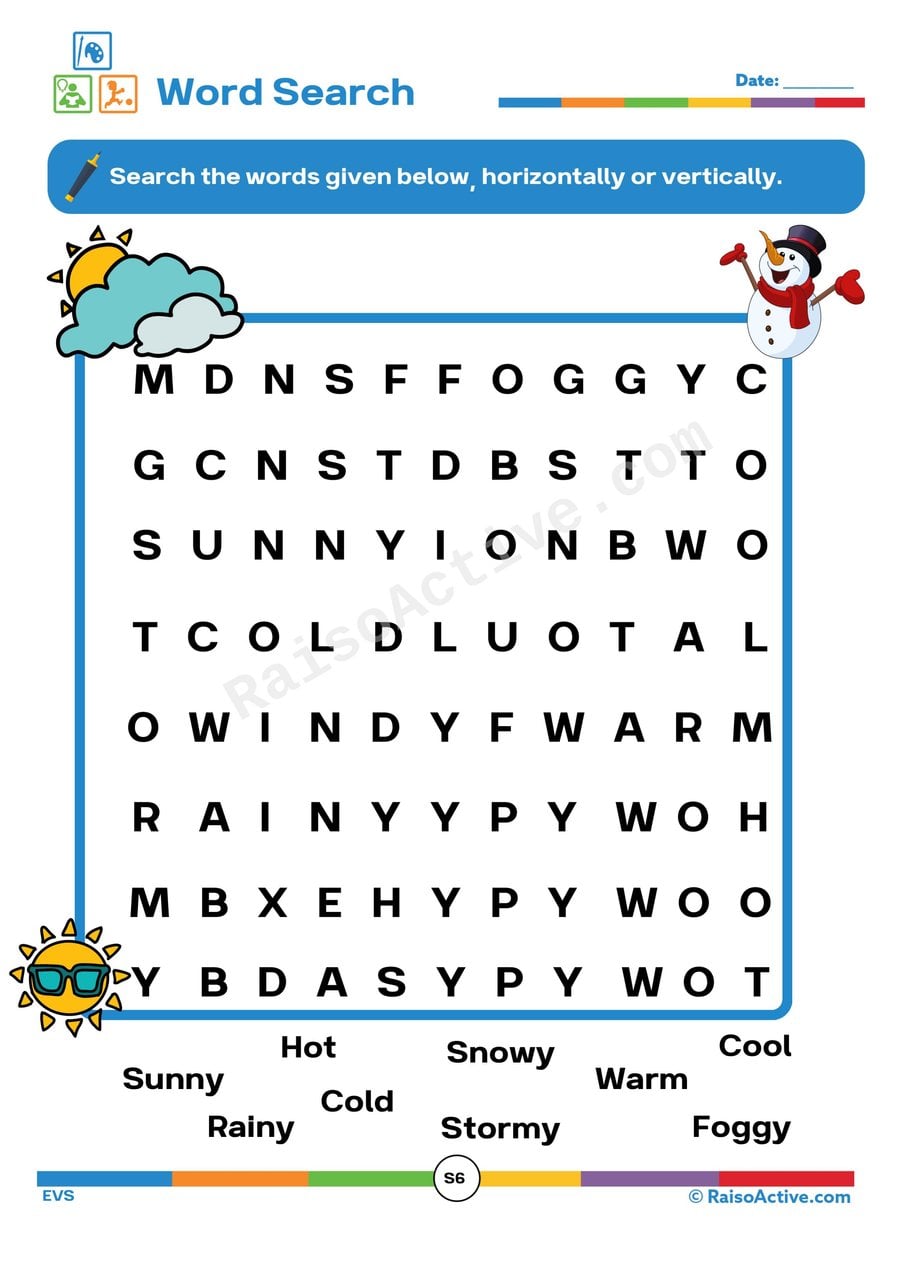
Weather Word Search Worksheet for Kids
This word search strengthens children's visual scanning and spelling recognition for ages 4-6 by having them locate weather-related vocabulary — like rain, wind, or cloud — hidden horizontally and vertically within a letter grid. Searching for words in more than one direction adds an extra layer of challenge beyond a simple left-to-right search, training children's eyes to scan more flexibly across a grid. Pairing this puzzle-solving with familiar weather vocabulary also reinforces words children already use to describe daily conditions.
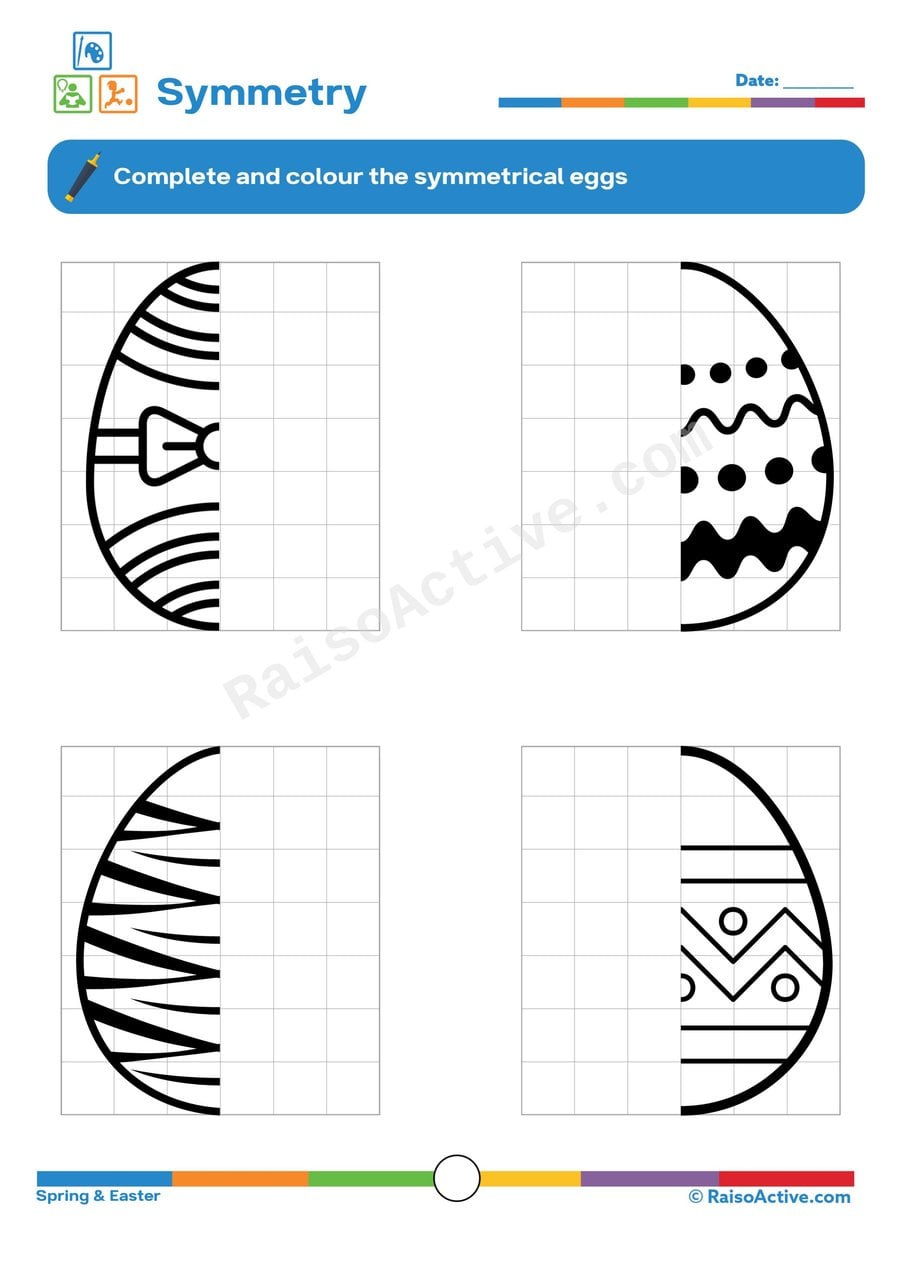
Symmetry Eggs Worksheet for Preschoolers
This worksheet introduces children ages 4-6 to the concept of symmetry by having them complete the missing mirrored half of an egg design. Drawing a matching reflection requires children to closely observe shape, size, and placement on one side and reproduce it accurately on the other — an early geometry skill that also sharpens visual attention to detail.

Stick Man Emotions Worksheet: Happy, Sad, Angry, and Surprised!
Children ages 4-6 practice reading facial expressions on this worksheet, matching stick-figure faces to their correct emotion labels by noticing details like mouth shape and eyebrow position. This strengthens emotional literacy — the ability to name and recognize feelings in others — which supports empathy and smoother social interactions as children move into more group play and classroom settings.

Number Names Worksheet: Matching and Writing Numbers
This worksheet strengthens the connection between a written number name and its numeral for 4-6 year olds — first by circling the numeral that matches a given name, then by writing the number name out themselves, which adds a spelling and handwriting layer on top of simple recognition. Because number-name spelling doesn't always follow easy sound-out rules, this repeated practice with both reading and writing the words builds genuine sight-word familiarity with number vocabulary.

All in One Worksheet: Following Instructions and Sentence Building
Children ages 4-6 practice reading and following short written instructions across several small tasks while also building basic sentence construction skills, combining early reading comprehension with beginning grammar practice. Learning to read a direction and complete exactly what it asks is a skill that carries directly into classroom worksheets and tests.

Ascending Order Fun: A Printable Worksheet for Numbers!
Arranging numbers from smallest to largest teaches children ages 4-6 to compare quantities and understand relative magnitude, a skill that underlies later work with number lines, place value, and basic operations. It also reinforces number recognition, since children must correctly identify each numeral before they can decide where it belongs in the sequence.
What a 6 year old can typically do
A typical six-year-old can read simple books with blends, digraphs and long-vowel patterns, answer who, what, where and why questions about a passage, write three or more related sentences with capitals and periods, spell common words, add and subtract within 20 with strategies rather than fingers, understand tens and ones to 100, tell time to the hour and half hour, count coins, and work for twenty to thirty minutes alone.
- Reading: decodable passages, comprehension questions, sequencing, 100+ sight words, long vowel patterns
- Writing: complete sentences, short narratives and descriptions, spelling patterns, punctuation
- Math: place value tens and ones, addition and subtraction within 20, comparing numbers, adding two-digit and one-digit numbers
- Measurement and geometry: time to the half hour, coins, length, 2D and 3D shapes, halves and quarters
- Review: spiral review and grid drill pages that keep earlier skills fresh
How to use worksheets with a 6 year old
Twenty minutes a day, alternating math and reading, is the pattern most 1st Grade, Year 2 and Class 1 teachers set for homework. Let your child read the directions and start unaided; step in only if they are stuck for more than a minute. Check together at the end and ask them to explain one answer.
Use grid drills as a two-minute warm-up for fact fluency, passage-response sheets for reading days, and a spiral review at the end of each week. Keep finished sheets by date. When a spiral review shows a skill slipping, pull one sheet on that skill the following week rather than repeating the whole topic.
Common difficulties at six
Subtraction within 20 is the most common weak spot, especially crossing ten (13 − 5). Reading that is accurate but slow is the second, and run-on sentences without punctuation the third. Daily short drills with the make-ten strategy, rereading the same passage across a week, and a three-item checklist (capital, spaces, period) resolve most of these within a term. Reversals of b/d and some numerals can persist to seven and are not yet a concern.
Frequently asked questions
What should a 6 year old know by the end of 1st Grade or Class 1?
By the end of 1st Grade, Year 2 or Class 1 most children are expected to read grade-level text with understanding, know a large bank of sight words, write several related sentences with correct punctuation, add and subtract within 20, understand place value to 100 (to 99 in CBSE Class 1), tell time to the half hour, count money and name and compare shapes. Common Core, the KS1 curriculum and NCF-FS 2022 describe closely matching outcomes.
How much homework should a 6 year old have?
A common guideline is around ten minutes per grade level, so ten to twenty minutes a night for a six-year-old, plus reading together. One math sheet and one reading sheet on alternate days fits that. More than thirty minutes tends to reduce willingness without improving learning at this age, so if homework is running long, shorten the session and tell the teacher.
What reading level should a 6 year old be at?
By six to seven most children read short texts with blends, digraphs and long-vowel patterns, a bank of a hundred or more sight words, and enough fluency to read with some expression. They should answer literal questions about a passage, retell events in order and begin to infer why a character did something. Decodable passages with response questions practice all of these together.
What math should a 6 year old be doing?
At six, math covers place value (tens and ones to 100), addition and subtraction within 20 using strategies such as doubles and making ten, word problems, comparing two-digit numbers with greater than and less than, adding a two-digit and a one-digit number, telling time to the hour and half hour, counting coins, measuring length and reasoning about shapes and halves. This matches Common Core Grade 1, KS1 Year 2 and CBSE Class 1.
Are worksheets still useful at six?
Yes, and at six they are more useful than at younger ages because the child can work independently. Grid drills build the fact fluency that later math depends on; passage-response sheets build comprehension; spiral reviews stop earlier skills fading. Twenty minutes a day of focused sheets, plus reading real books, is what most first-grade teachers recommend.
Are the worksheets for 6 year olds free to download?
Yes. Each sheet downloads free as a watermarked PDF after creating an account, with five downloads a day. An annual subscription (about $20 or ₹1000) removes the watermark and daily limit for the full library, which suits teachers printing class sets and parents following a 1st Grade or Class 1 syllabus through the year.

Written by
Hemsweta Jain · Teacher Cheena
MBA and Early Childhood Educator, teaching since 2014 · Founder of RaisoActive, Mumbai
Written and reviewed by Hemsweta Jain (Teacher Cheena), who designs every RaisoActive worksheet.
Last reviewed
Printable packs for ages 6–7
Summer Activity Pack: Math, Literacy, Puzzles & More for Preschool & Kindergarten
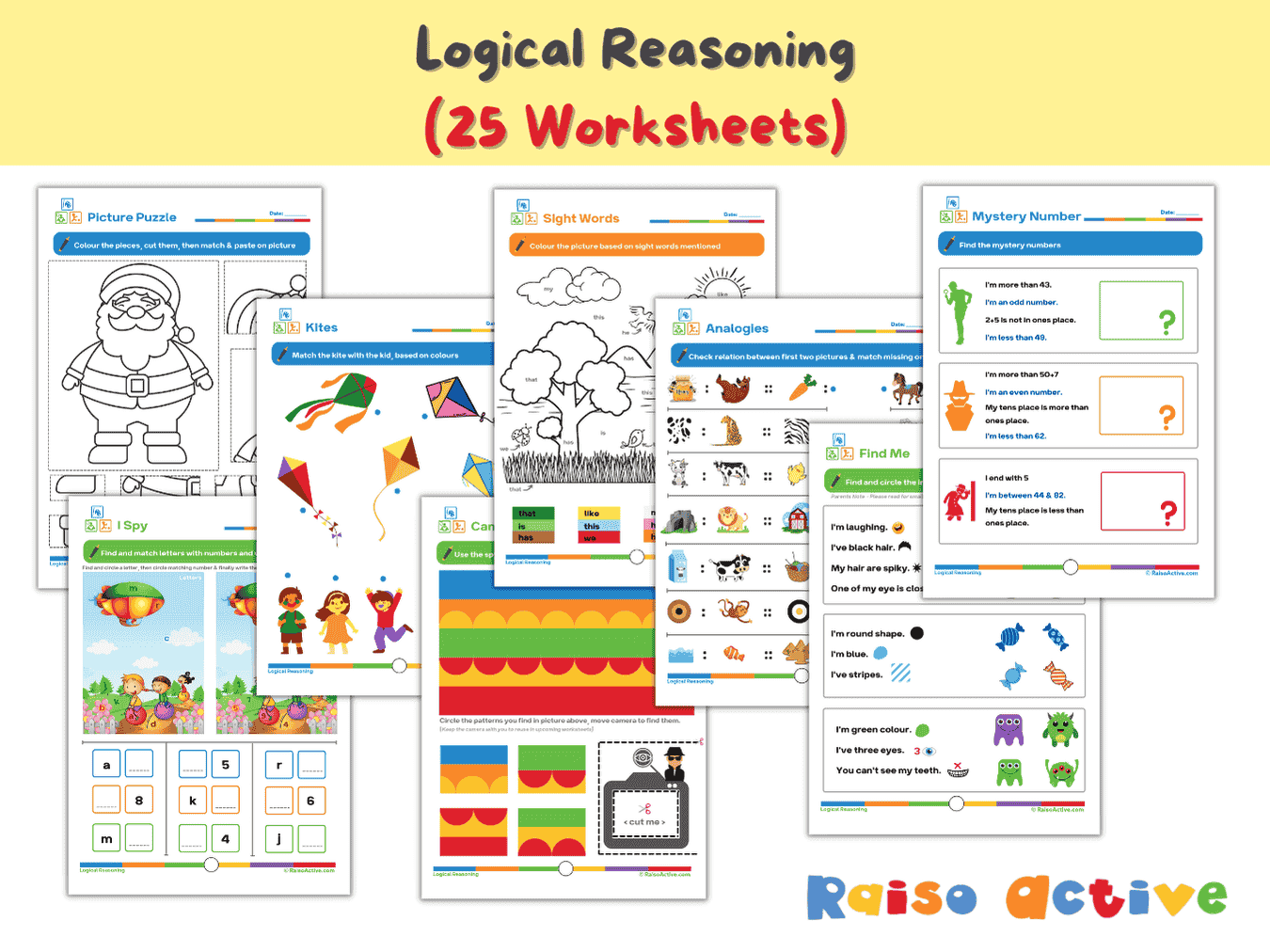
Logical Reasoning Activity Book for Preschool & Kindergarten | Patterns, Puzzles & Analogies
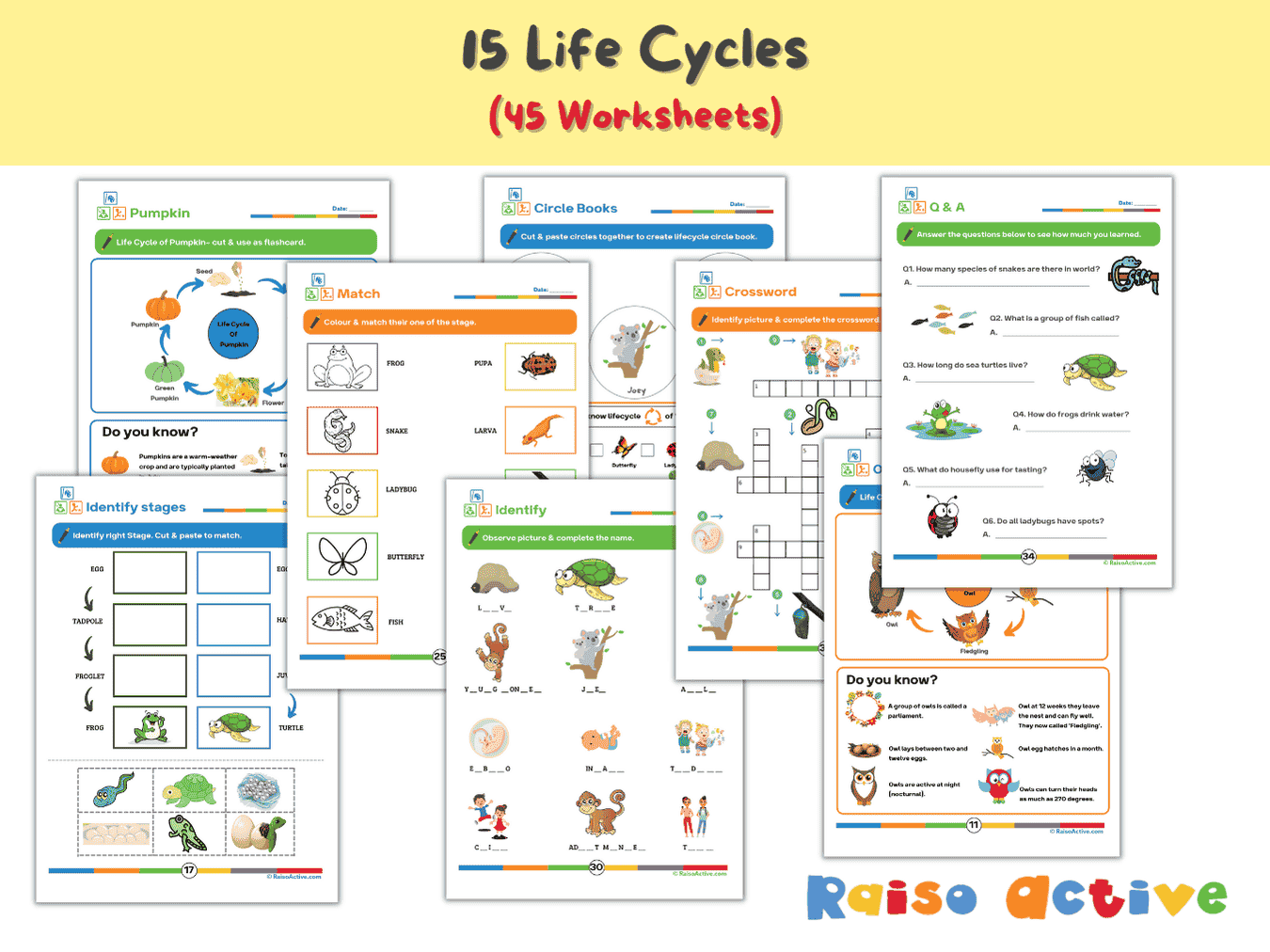
Lifecycles Activity Book & Flashcards for Preschool & Early Elementary
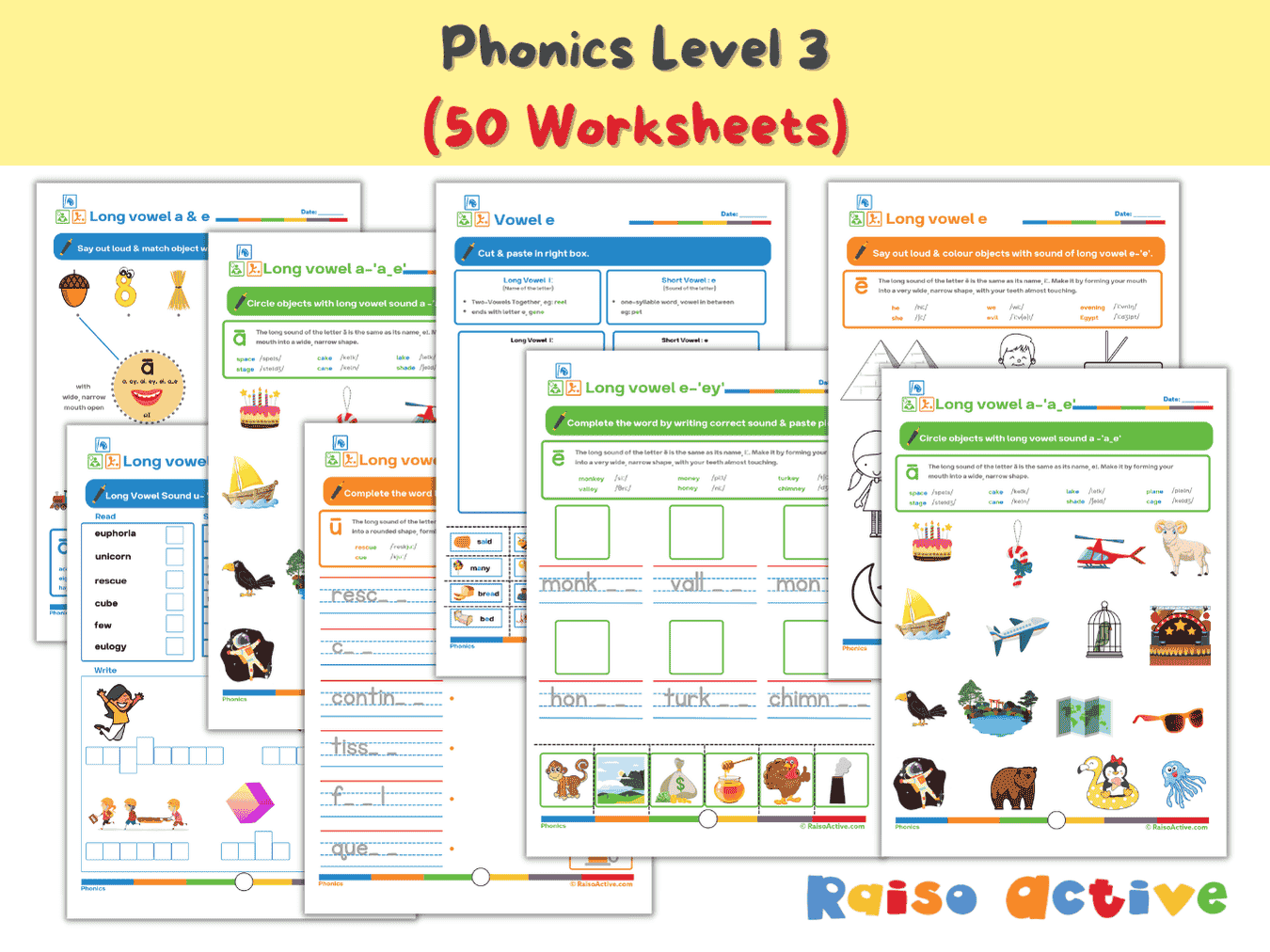
Phonics Level 3 Long Vowels Activity Book for Kindergarten & 1st Grade
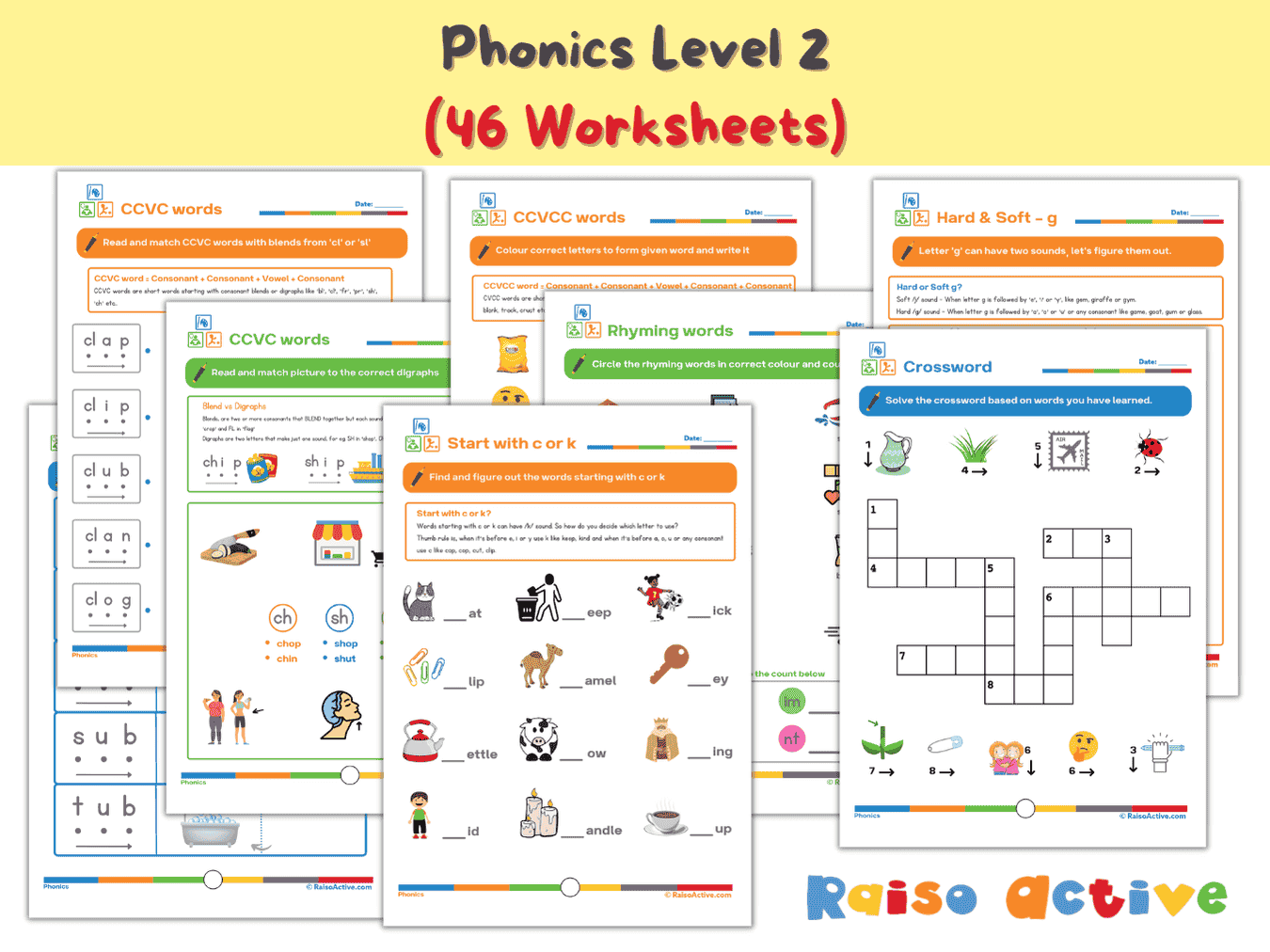
Phonics Level 2 Worksheets: CVC, CCVC, CVCC Word Families & Blends for Early Readers (Ages 4-7)
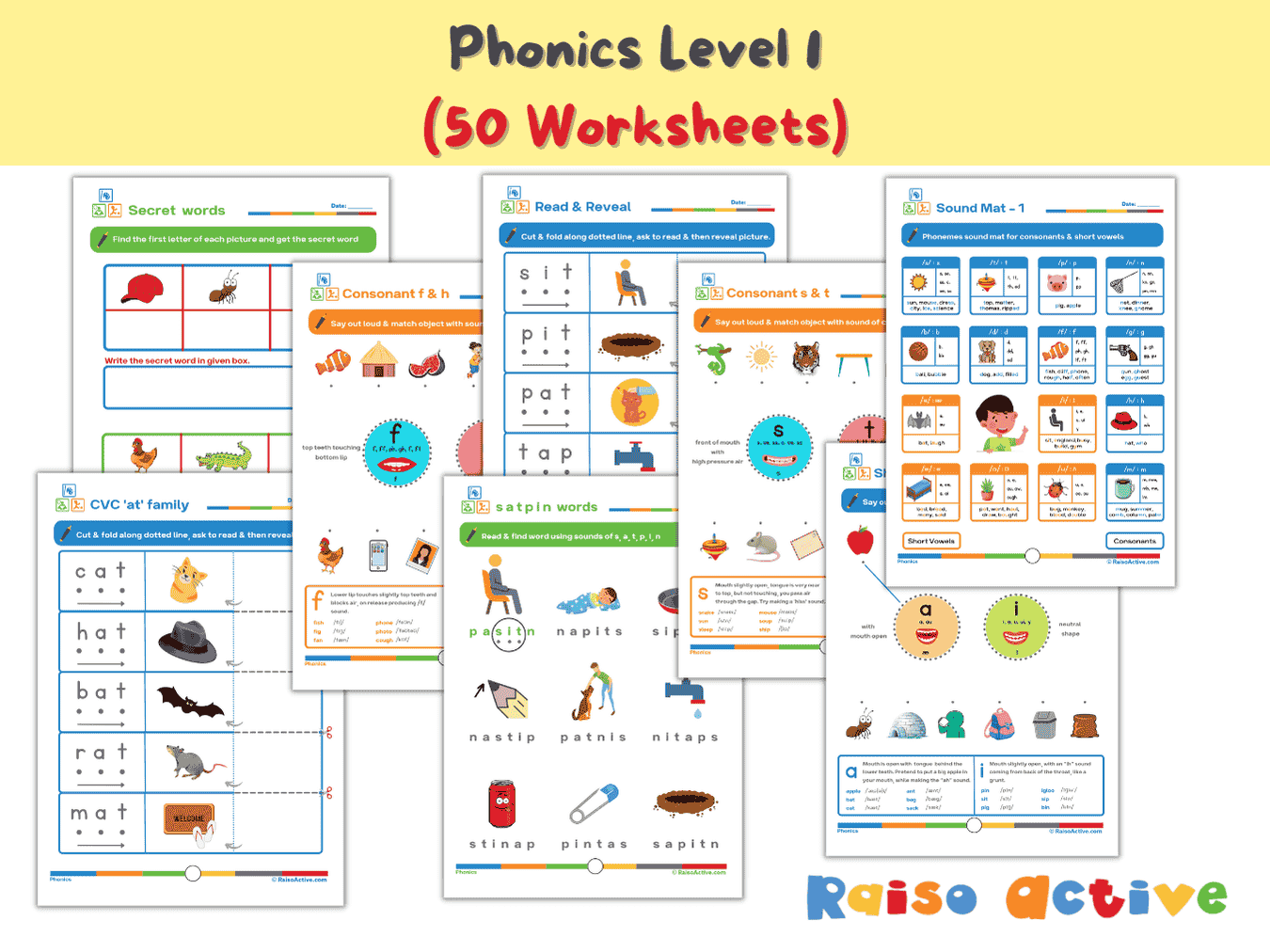
Phonics Level 1 Activity Book: Letter Sounds, Blending & CVC Words for Preschool & Kindergarten
Guides for parents and teachers
See all guides →Sight Words by Age: The First 50 Words and How to Teach Them Without Flashcard Fatigue
Which sight words to teach first and why, the heart-word method, a read-trace-write-find routine, games, and a by-age table of typical sight-word progress.
How to Teach CVC Blending: A Step-by-Step Method That Works in Two Weeks
A step-by-step method for teaching CVC blending, covering continuous sounds, word families, common errors, and a 14-day plan that most children finish reading CVC words.
Phase 2 Phonics at Home: Sound Order, Blending Games, Worksheets
Phase 2 phonics at home: the five sound sets in order, oral blending, tricky words, a two-week routine, common mistakes, and free worksheets.
UKG Syllabus Explained: English, Maths and EVS Month by Month
What UKG classes typically cover in English, maths and EVS, month by month, aligned to NEP 2020, with ways to support at home and signs your child is behind.
Documenting Learning Without Drowning in Data: A Practical Guide for Parents and Teachers
Learn practical ways to document your child's learning without overwhelm. Simple portfolios, observation tips, and printable trackers for ages 1-8.
Understanding Standardized Testing in Early Childhood: A Parent's Guide to Assessment Balance
Learn how standardised tests work in early childhood, when they help, when they harm, and how to balance formal assessment with observation-based learning.
Canonical: https://raisoactive.com/worksheets/worksheets-for-6-year-olds