Diya Odd One Out Worksheet for Kids
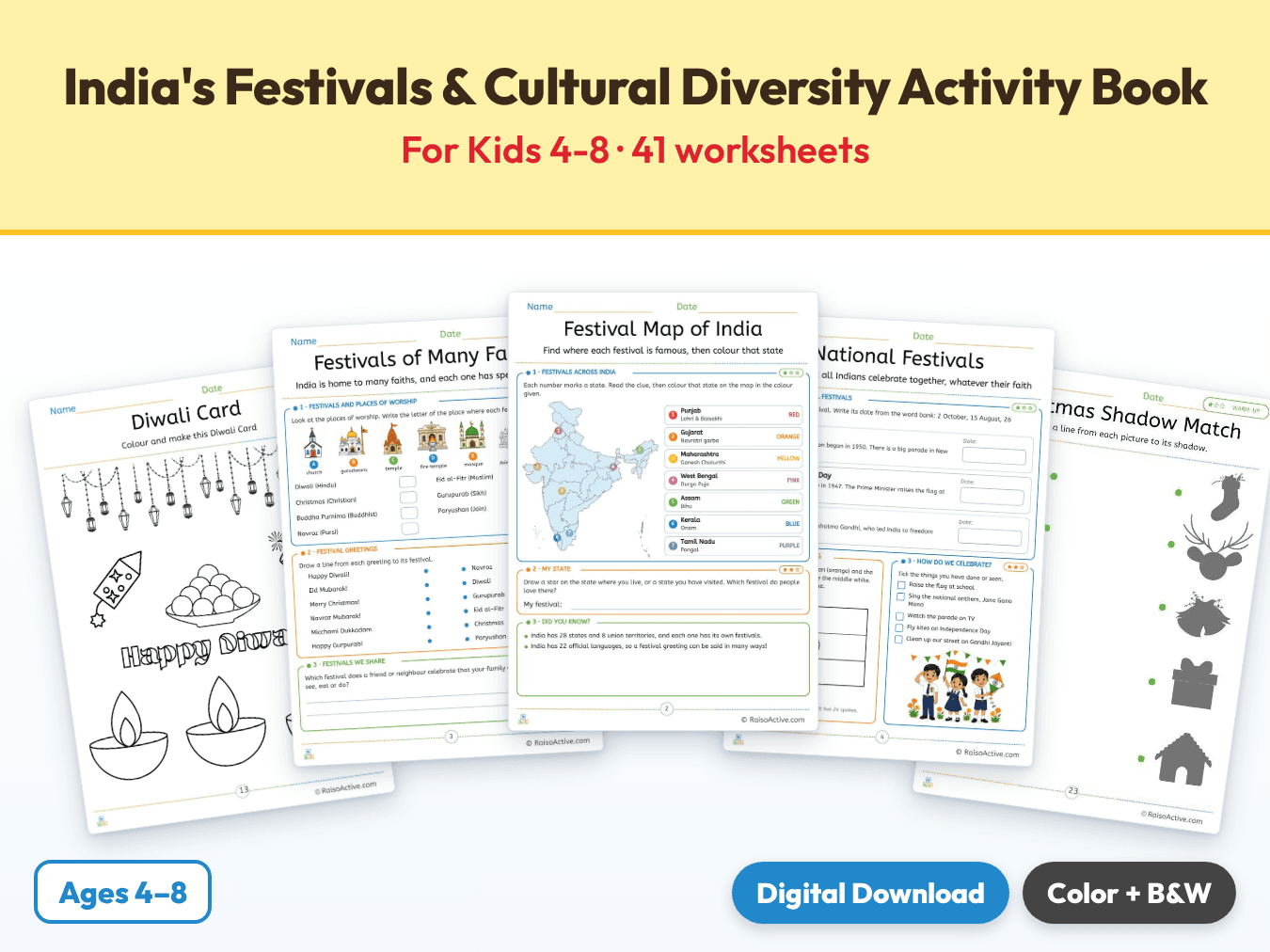
Children look closely at rows of diyas and find the one that is different in each row, building attention and visual discrimination.
Part of the pack
India's Festivals & Cultural Diversity Activity Book for Kids 4-8
This is page 15 of the pack. Ages 4-8 · Pre-K–Grade 2Ages 4-8 · Reception–Year 3Ages 4-8 · LKG–Class 2Ages 4-8
Curriculum
- Culture & Festivals > Diwali Activities
How to use this worksheet
Look at each row, circle the diya that is not like the others, then colour all the diyas.
Materials needed
- Pencil
- Crayons
Extension activities
- 1Make your own row with one odd diya for a friend
- 2Decorate a real or paper diya

Written by
Hemsweta Jain · Teacher Cheena
MBA and Early Childhood Educator, teaching since 2014 · Founder of RaisoActive, Mumbai
Every RaisoActive worksheet is designed and checked by the founder before publishing.
Published · Last reviewed
More from India's Festivals & Cultural Diversity Activity Book for Kids 4-8
Gift Basket Craft Worksheet for Kids
Ages 4-8 · Pre-K–Grade 2Ages 4-8 · Reception–Year 3Ages 4-8 · LKG–Class 2Ages 4-8
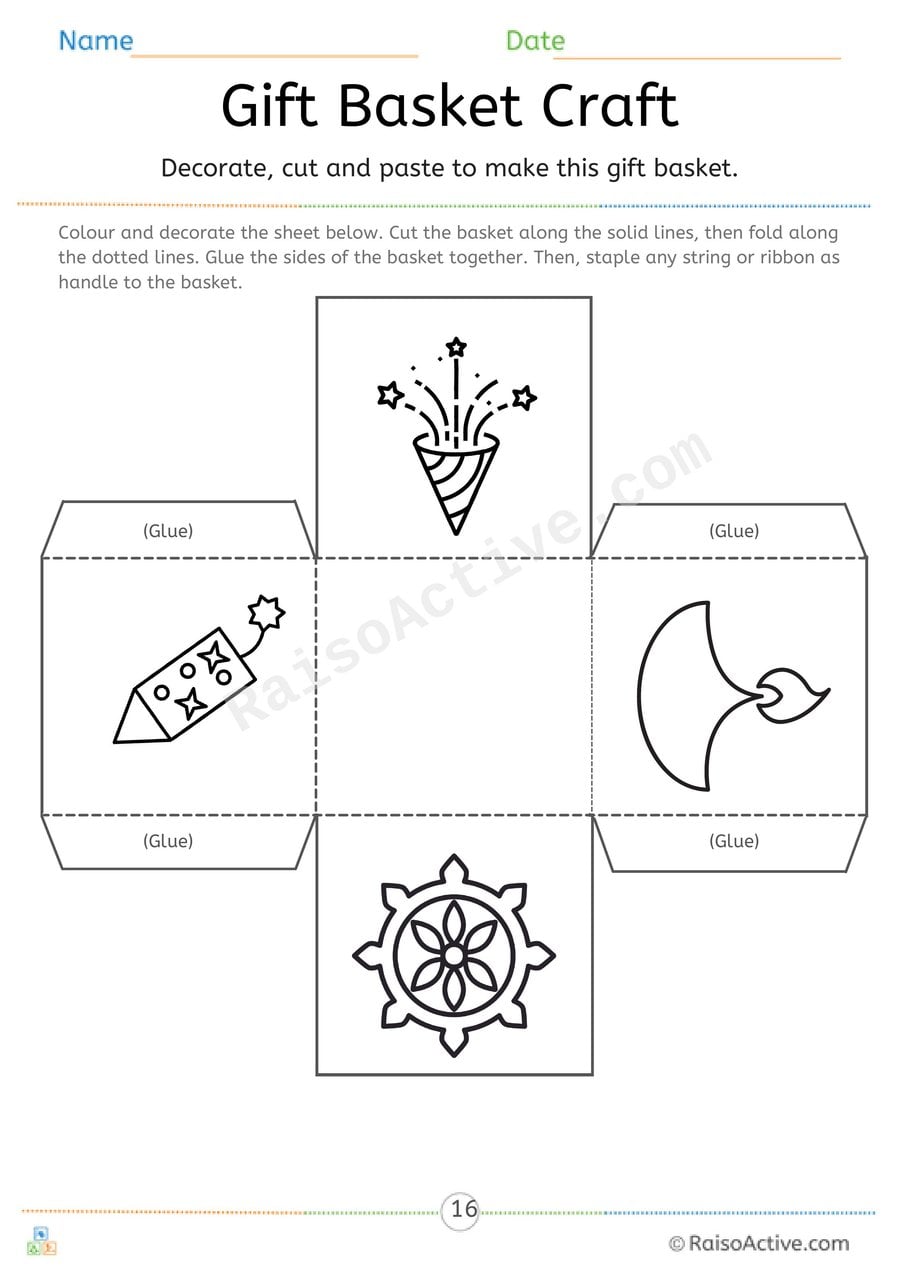
Children decorate, cut, fold and glue a paper gift basket, practising scissor skills and following steps, ready to fill with festival sweets or cards.
Diwali Sequencing Worksheet for Kids
Ages 4-8 · Pre-K–Grade 2Ages 4-8 · Reception–Year 3Ages 4-8 · LKG–Class 2Ages 4-8
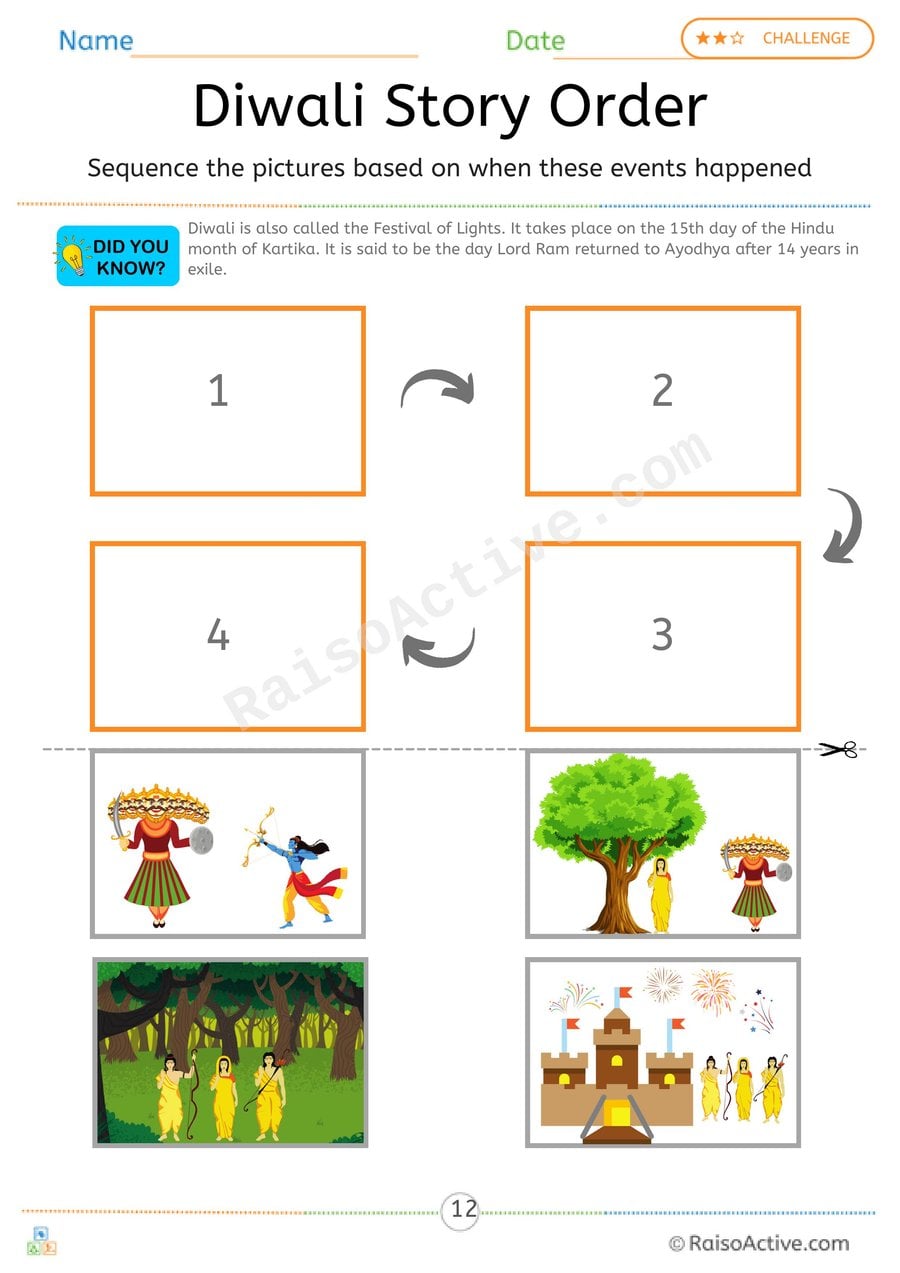
Children learn that Diwali, the Festival of Lights, marks Lord Ram's return to Ayodhya, and put four pictures of the story in the right order.

Festival Map of India: Where Each Festival Is Famous
Ages 4-8 · Pre-K–Grade 2Ages 4-8 · Reception–Year 3Ages 4-8 · LKG–Class 2Ages 4-8
Children learn that different states of India are famous for different festivals, such as Lohri in Punjab, Bihu in Assam, Onam in Kerala and Pongal in Tamil Nadu.

When Do We Celebrate? Indian Festivals and the Months of the Year
Ages 4-8 · Pre-K–Grade 2Ages 4-8 · Reception–Year 3Ages 4-8 · LKG–Class 2Ages 4-8
Children connect each festival to the month it falls in and learn that some festivals follow the moon, so their dates change each year.
Festive Sequence Maze Worksheet for Kids
Ages 4-8 · Pre-K–Grade 2Ages 4-8 · Reception–Year 3Ages 4-8 · LKG–Class 2Ages 4-8
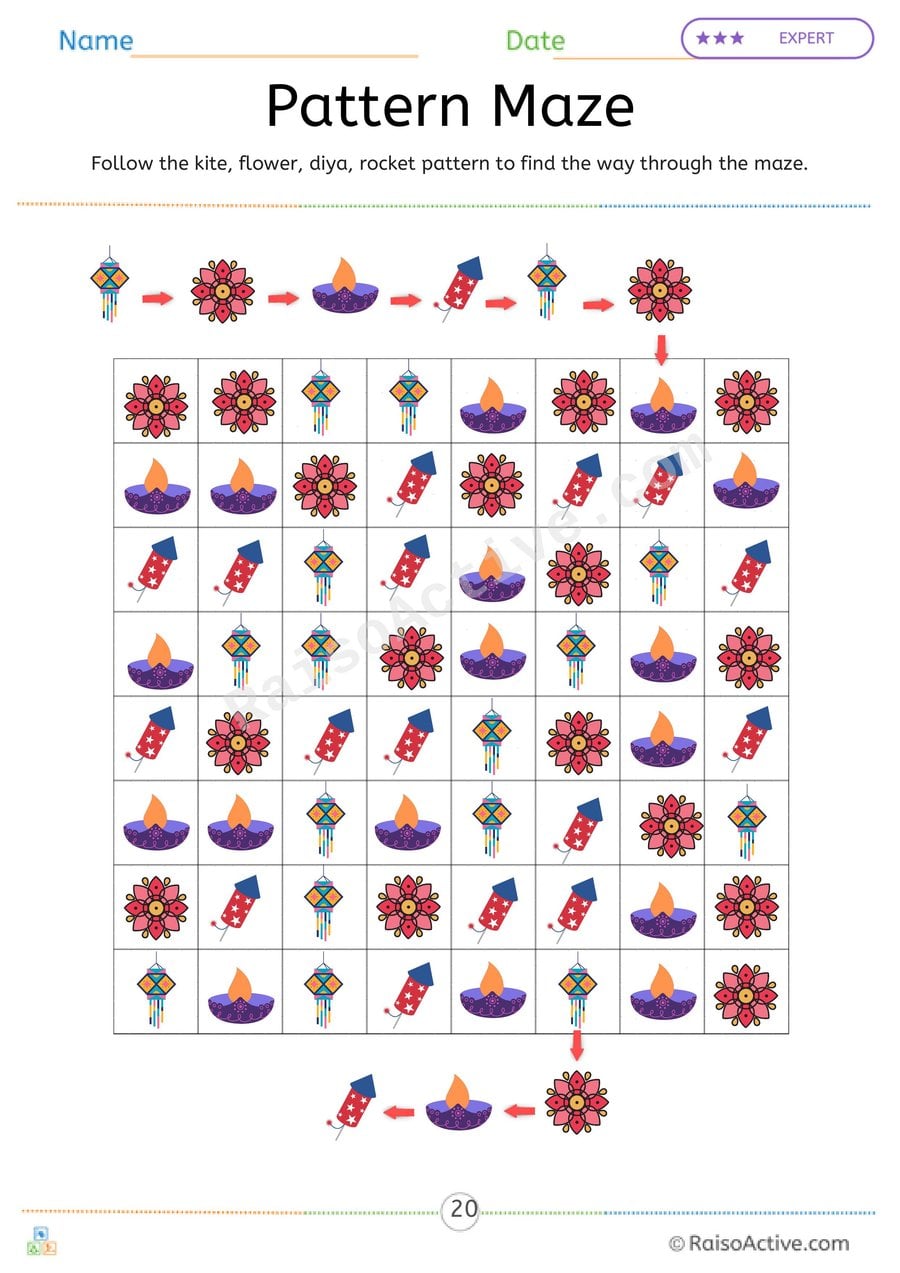
Children follow a repeating kite, flower, diya, rocket pattern square by square to find the only path through the maze, building logic and focus.

Makar Sankranti Story: Fill-in-the-Blanks Worksheet for Kids
Ages 4-8 · Pre-K–Grade 2Ages 4-8 · Reception–Year 3Ages 4-8 · LKG–Class 2Ages 4-8
Children read a short story about friends flying kites on Makar Sankranti, look closely at the picture and fill in the blanks from the word bank.

Navaratri Dance Count: A Fun Counting Worksheet for Kids!
Ages 4-8 · Pre-K–Grade 2Ages 4-8 · Reception–Year 3Ages 4-8 · LKG–Class 2Ages 4-8
Children learn that Navratri honours Goddess Durga and that people dance garba and dandiya for nine nights, then count matching dance poses.
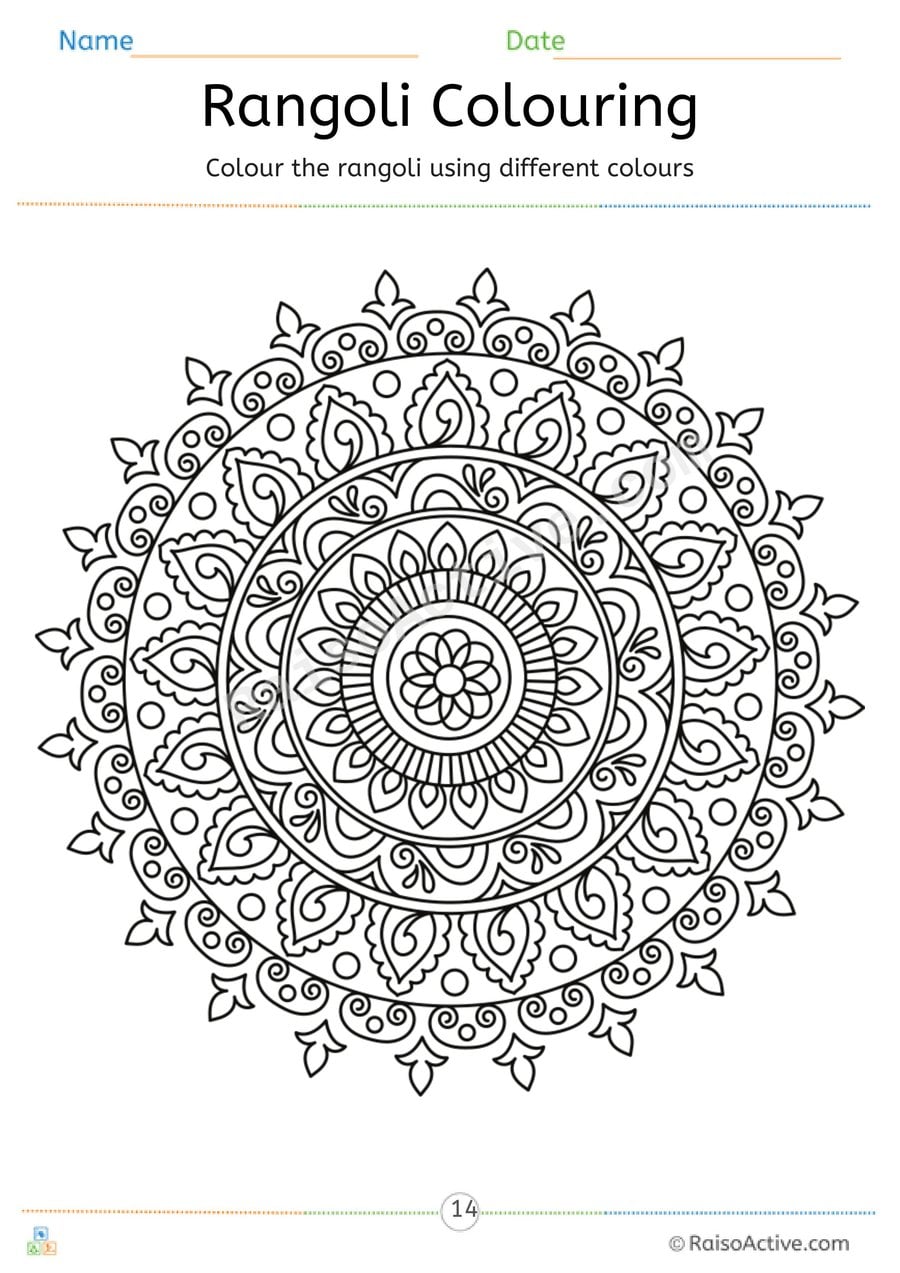
Rangoli Coloring Worksheet for Kids
Ages 4-8 · Pre-K–Grade 2Ages 4-8 · Reception–Year 3Ages 4-8 · LKG–Class 2Ages 4-8
Children colour a big round rangoli and learn that families draw rangoli at their doorways to welcome guests at Diwali and other festivals.
Related worksheets
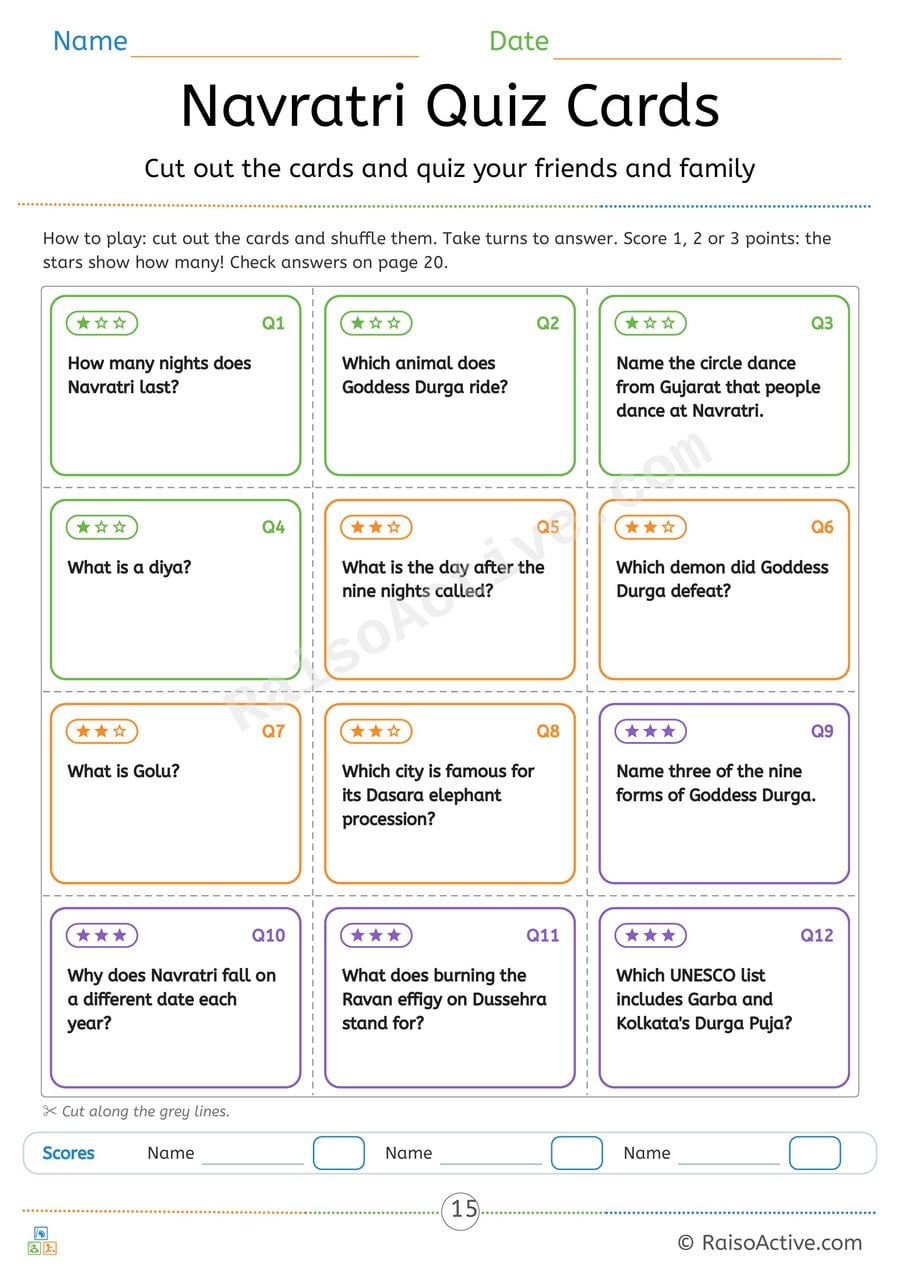
Navratri Quiz Cards: 12 Cut-Out Festival Questions
Ages 7-11 · Grade 2–Grade 3Ages 7-11 · Year 3–Year 4Ages 7-11 · Class 2–Class 3Ages 7-11
Children recall facts about Navratri, Durga, Golu, Dussehra and the UNESCO heritage list, from one-star questions to three-star questions that need explaining.
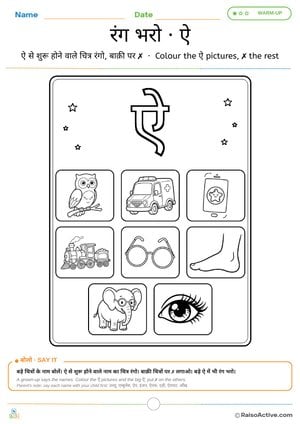
Colour the ऐ Words – Hindi Letter ऐ (ai) Colouring Worksheet | ऐ वाली चीज़ों में रंग भरो
Ages 3-7 · Preschool–Grade 1Ages 3-7 · Nursery–Year 2Ages 3-7 · Nursery–Class 1Ages 3-7
Children say each picture name aloud, decide whether it starts with ऐ, colour the matching pictures (ऐनक, ऐरावत and ऐप) and the big outline letter, and put a cross on the rest. Sorting by first sound trains the ear and colouring builds hand control.

Dussehra and First Letters: Vidyarambham Tracing and Letter Hunt
Ages 4-6 · Pre-K–KindergartenAges 4-6 · Reception–Year 1Ages 4-6 · LKG–UKGAges 4-6
Children learn about Vidyarambham, when little children write their first letters in rice on Vijayadashami, and about Dussehra, when Rama won against Ravana. They trace letters, sort things we use to learn, count to 10 and match letters to beginning sounds.
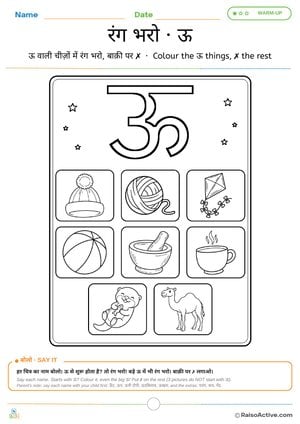
Colour the ऊ Things: Hindi Letter ऊ Colouring Page | रंग भरो · ऊ
Ages 3-7 · Preschool–Grade 1Ages 3-7 · Nursery–Year 2Ages 3-7 · Nursery–Class 1Ages 3-7
Children listen for the first sound of each picture name and decide whether it starts with ऊ. They colour the ऊ pictures, cross out the others and colour the big letter.
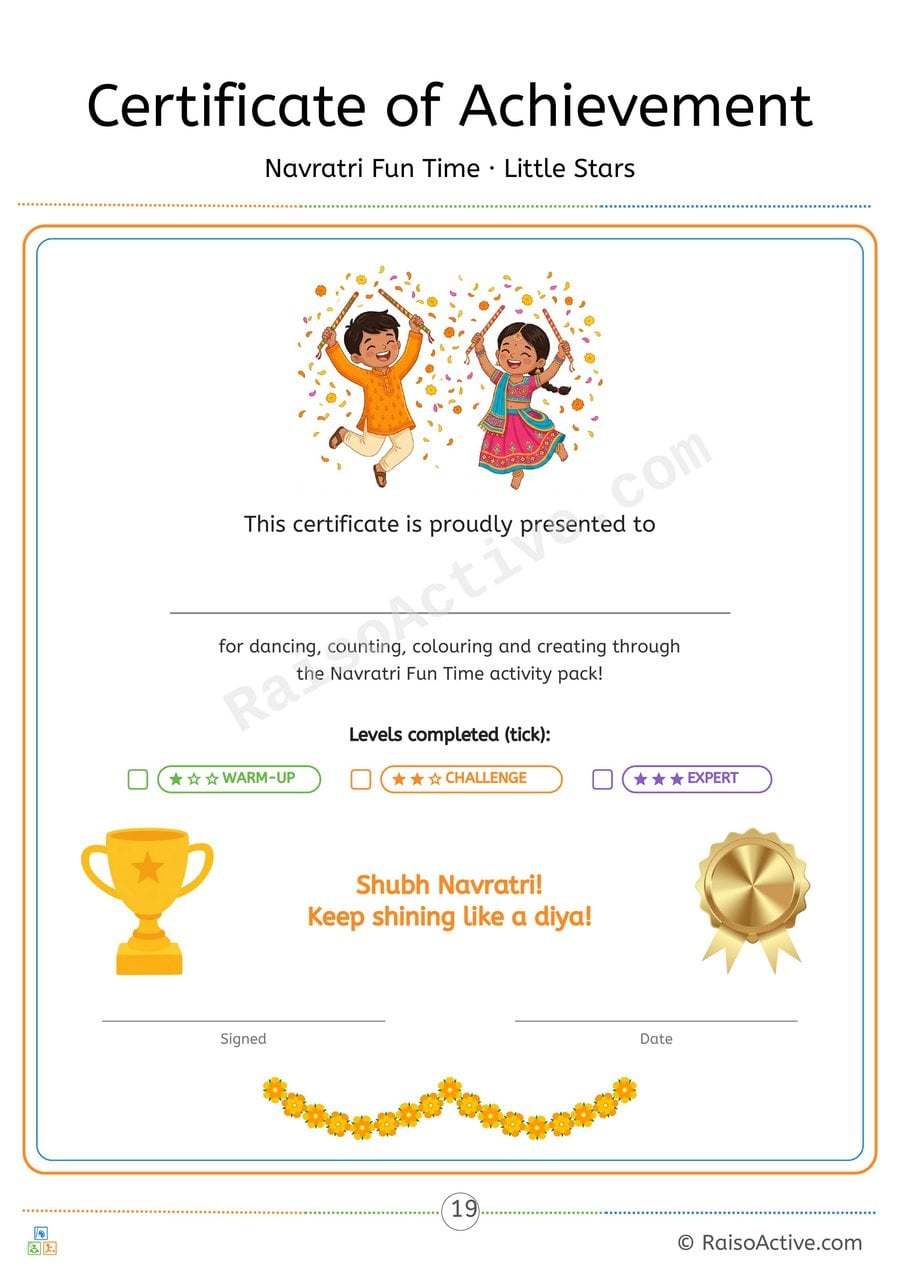
Navratri Fun Time Certificate of Achievement
Ages 4-6 · Pre-K–KindergartenAges 4-6 · Reception–Year 1Ages 4-6 · LKG–UKGAges 4-6
Children celebrate finishing the Navratri Fun Time pages and see which levels they completed.

Golu Doll Fun: Navratri Golu Counting and Sharing Worksheet
Ages 4-6 · Pre-K–KindergartenAges 4-6 · Reception–Year 1Ages 4-6 · LKG–UKGAges 4-6
Children learn that a golu is a display of dolls on steps set up for Navratri. They count the dolls on each step and find the total, then share cups of sundal among friends and count what is left over.
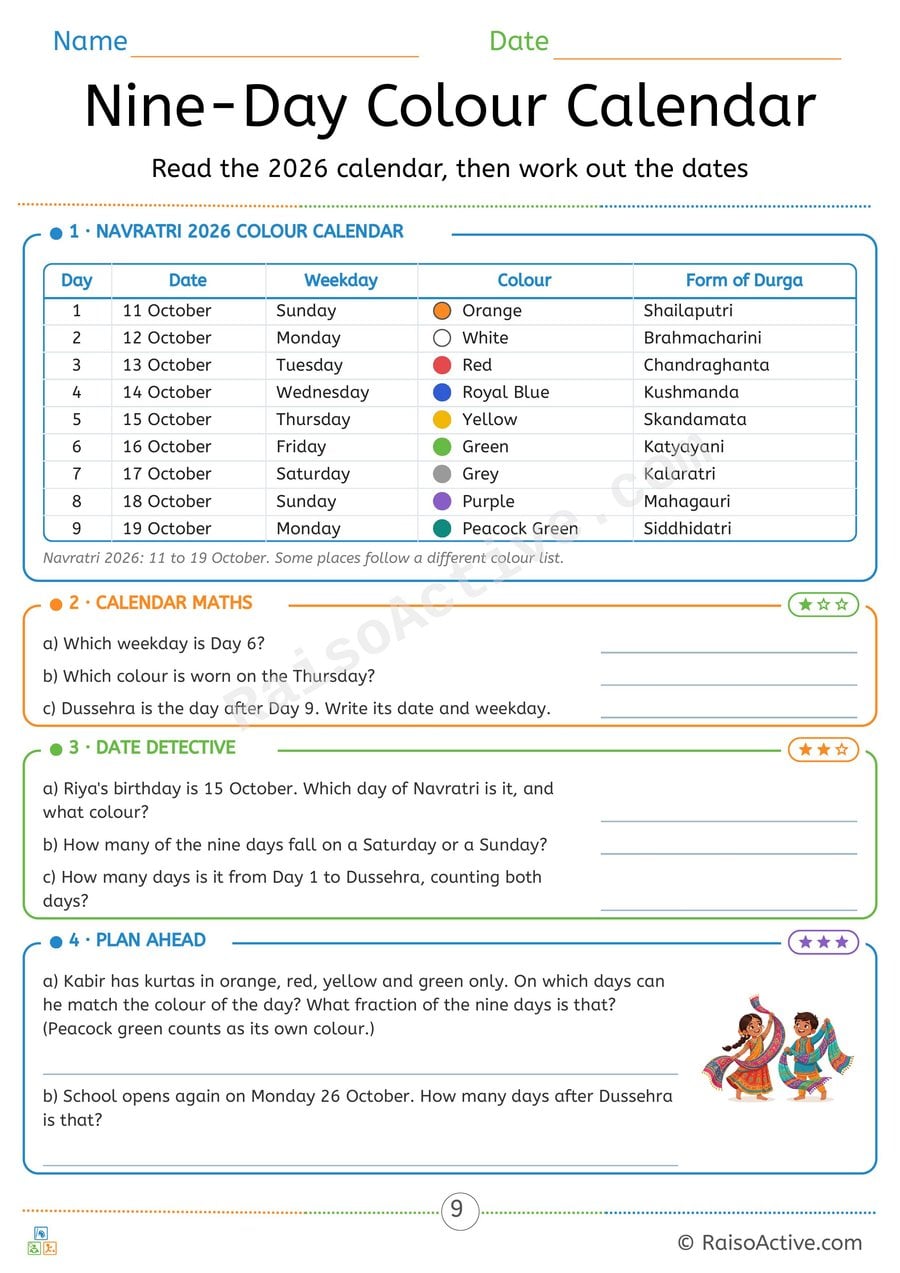
Navratri 2026 Colour Calendar: Dates, Days and Colours Maths
Ages 7-11 · Grade 2–Grade 3Ages 7-11 · Year 3–Year 4Ages 7-11 · Class 2–Class 3Ages 7-11
Children read a table of the nine days of Navratri 2026 with dates, weekdays, colours and forms of Durga, then answer calendar questions, count days including both ends, and use fractions to plan which colours they can wear.
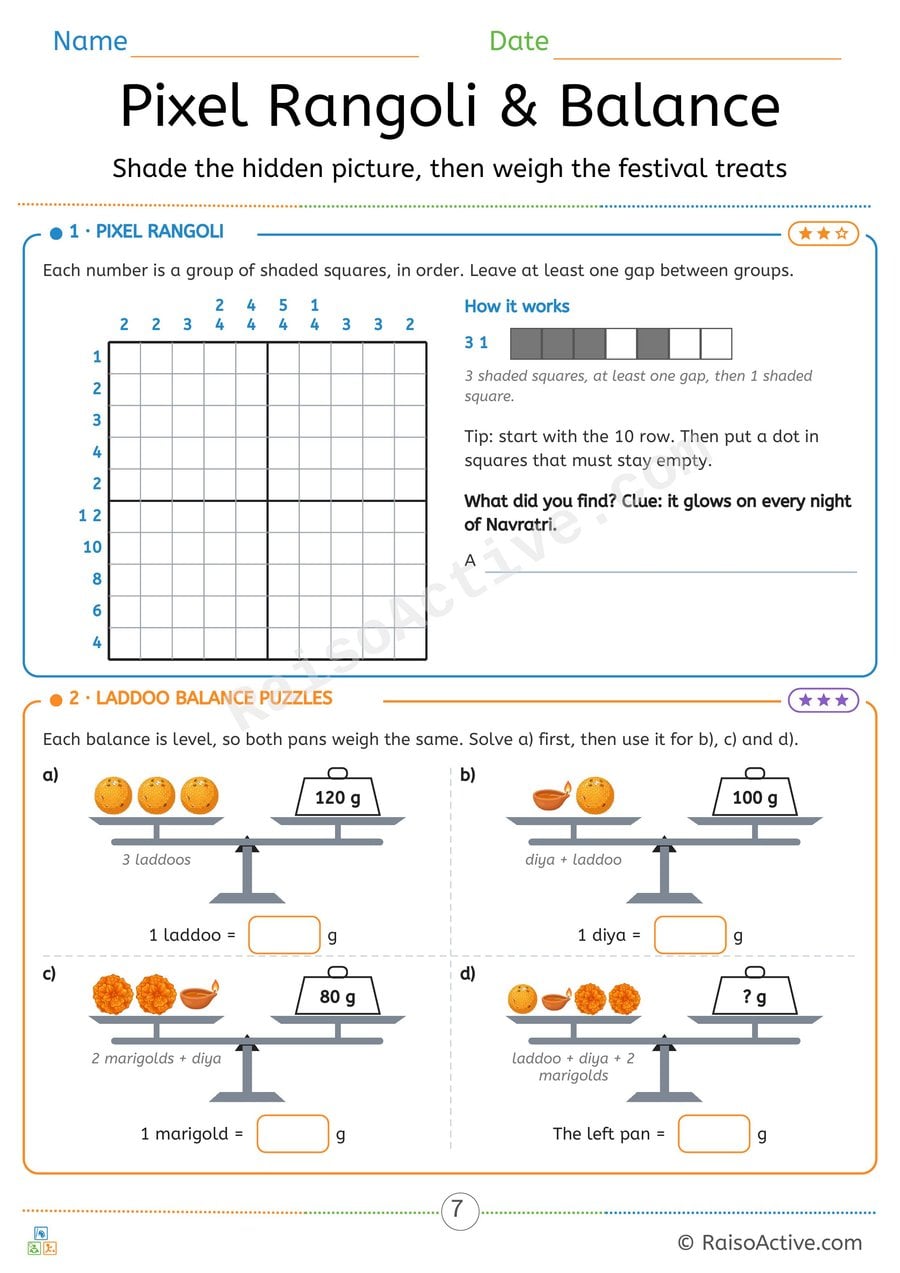
Pixel Rangoli and Laddoo Balance Puzzles for Navratri
Ages 7-11 · Grade 2–Grade 3Ages 7-11 · Year 3–Year 4Ages 7-11 · Class 2–Class 3Ages 7-11
Children use row and column clues to shade a 10 x 10 grid and reveal a hidden festival picture, then solve four balance puzzles in grams, using each answer to work out the next: a first step into algebra.
Guides for this topic

Best Worksheets for 3-Year-Olds: What Works and What to Avoid
What works on worksheets for 3-year-olds: short sessions, crayons, tracing lines, matching, cutting, a free weekly plan, and signs one is too advanced.
Fostering Creativity in Structured Learning: The Perfect Balance for Young Minds
Learn how to blend creativity with structured learning for children ages 1-8. Practical strategies, activities, and printable worksheets for parents and teachers.
Celebrating Diversity: How to Incorporate Cultural Awareness in Learning Activities for Young Children
Practical cultural awareness activities for young children aged 2-8. Explore Indian festivals, world cultures, food, music, and crafts to teach diversity and inclusion.
Reviews
Every worksheet for ages 4–8, no watermark
Members download the full library of 1,000+ worksheets and every activity pack without watermarks or daily limits. One year costs ₹999 in India or $20 elsewhere.
See membership plansOr download any worksheet free with a watermark (5 a day).