Gift Basket Craft Worksheet for Kids
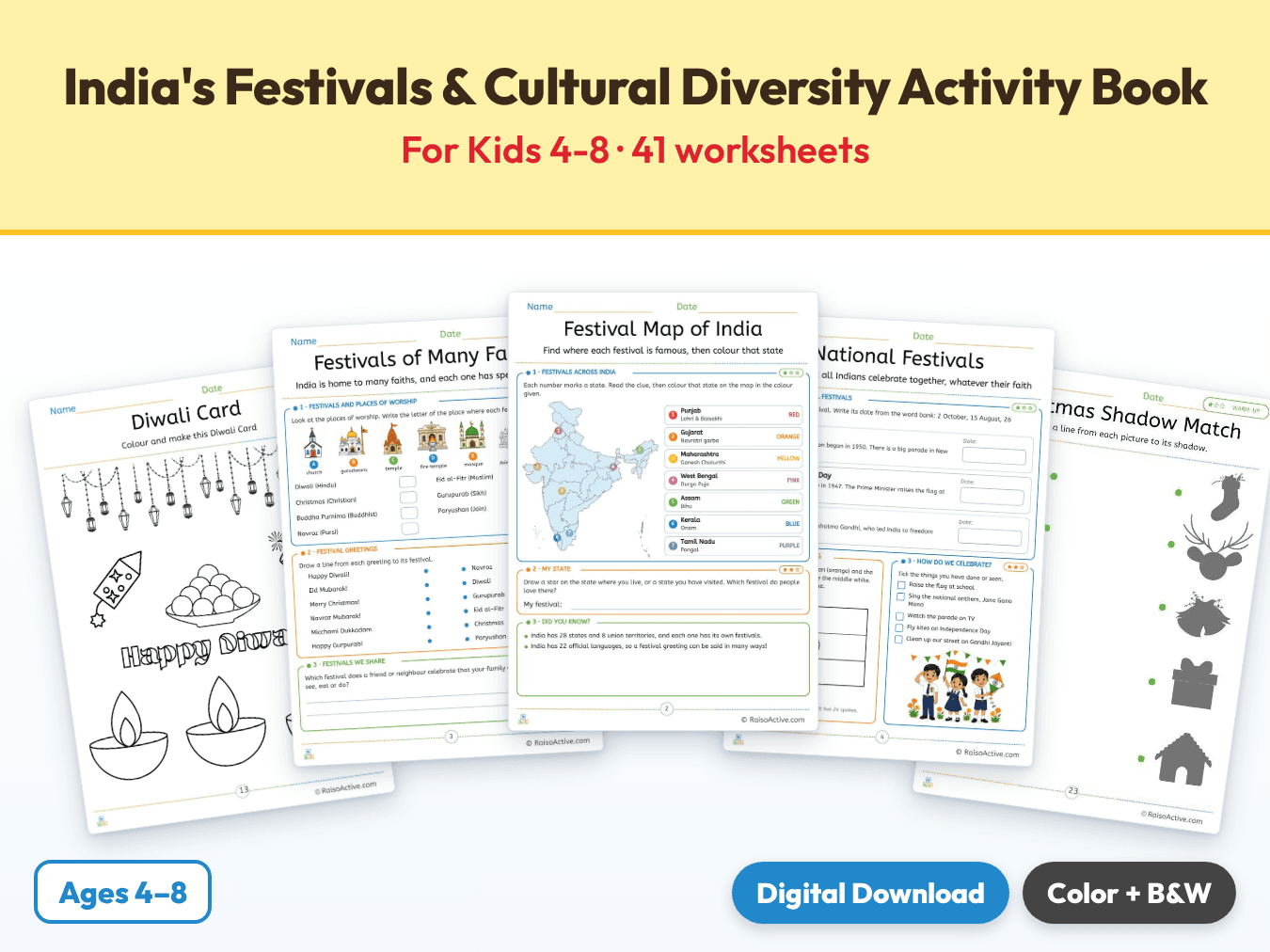
Children decorate, cut, fold and glue a paper gift basket, practising scissor skills and following steps, ready to fill with festival sweets or cards.
Part of the pack
India's Festivals & Cultural Diversity Activity Book for Kids 4-8
This is page 16 of the pack. Ages 4-8 · Pre-K–Grade 2Ages 4-8 · Reception–Year 3Ages 4-8 · LKG–Class 2Ages 4-8
Curriculum
- Culture & Festivals > Christmas Activities
How to use this worksheet
Colour the sheet, cut along the solid lines, fold on the dotted lines and glue the tabs. Staple a ribbon or string on as a handle.
Materials needed
- Crayons
- Scissors
- Glue
- Ribbon or string
- Stapler
Extension activities
- 1Fill the basket with sweets for a neighbour
- 2Make baskets in different colours for a festival table

Written by
Hemsweta Jain · Teacher Cheena
MBA and Early Childhood Educator, teaching since 2014 · Founder of RaisoActive, Mumbai
Every RaisoActive worksheet is designed and checked by the founder before publishing.
Published · Last reviewed
More from India's Festivals & Cultural Diversity Activity Book for Kids 4-8
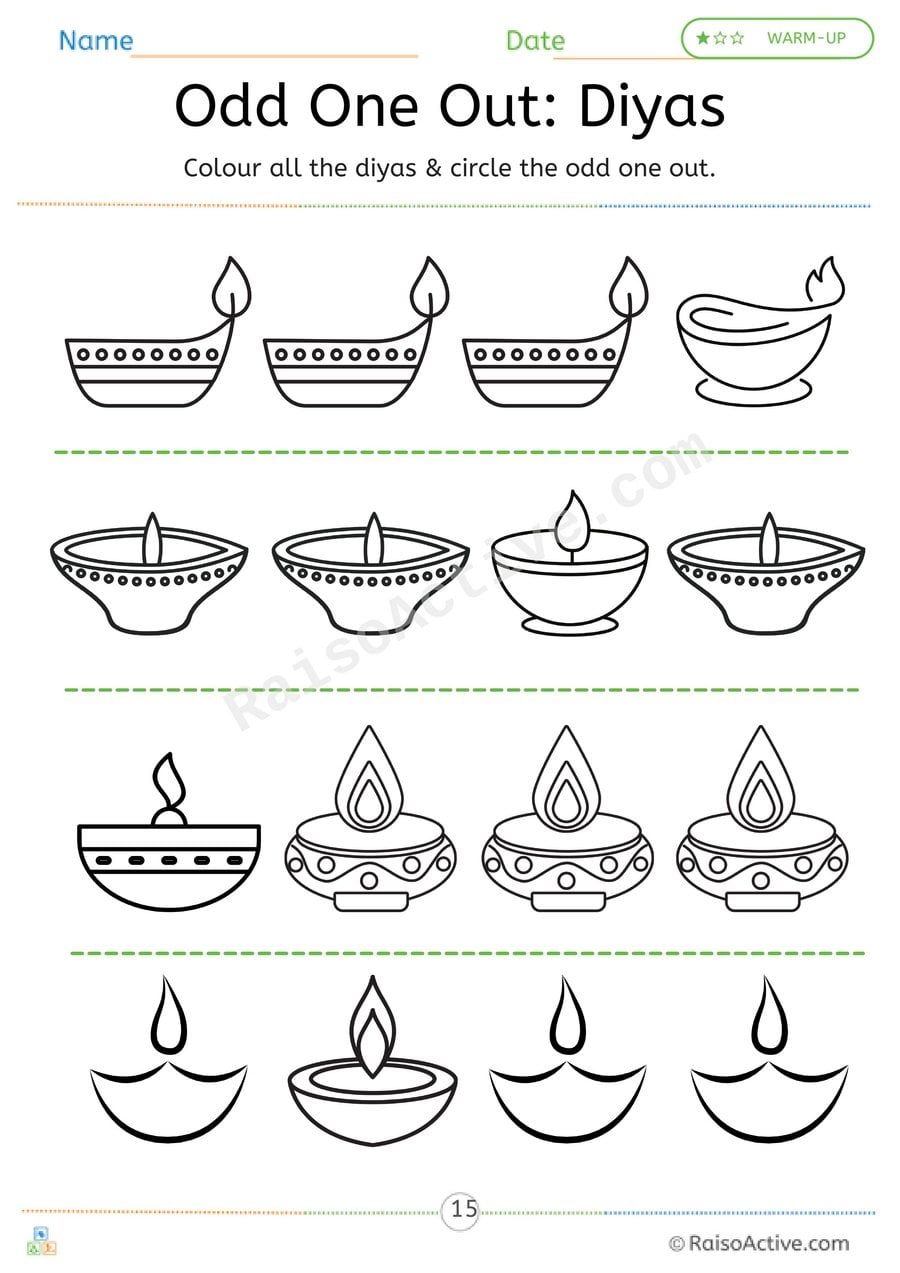
Diya Odd One Out Worksheet for Kids
Ages 4-8 · Pre-K–Grade 2Ages 4-8 · Reception–Year 3Ages 4-8 · LKG–Class 2Ages 4-8
Children look closely at rows of diyas and find the one that is different in each row, building attention and visual discrimination.

Festive Math: Counting Hands and Heads Worksheet
Ages 4-8 · Pre-K–Grade 2Ages 4-8 · Reception–Year 3Ages 4-8 · LKG–Class 2Ages 4-8
Children count the hands of Goddess Durga, Goddess Laxmi and Lord Ram and the heads of Ravana, and learn which festival each one belongs to.

Christmas Shadow Matching Worksheet for Preschoolers
Ages 4-8 · Pre-K–Grade 2Ages 4-8 · Reception–Year 3Ages 4-8 · LKG–Class 2Ages 4-8
Children match bells, stockings, reindeer, a gift and a gingerbread house to their shadows, building visual discrimination.

Ganesha Colouring Page for Ganesh Chaturthi
Ages 4-8 · Pre-K–Grade 2Ages 4-8 · Reception–Year 3Ages 4-8 · LKG–Class 2Ages 4-8
Children learn that Ganesh Chaturthi celebrates the arrival of Lord Ganesha and that people offer him modaks, his favourite sweet.
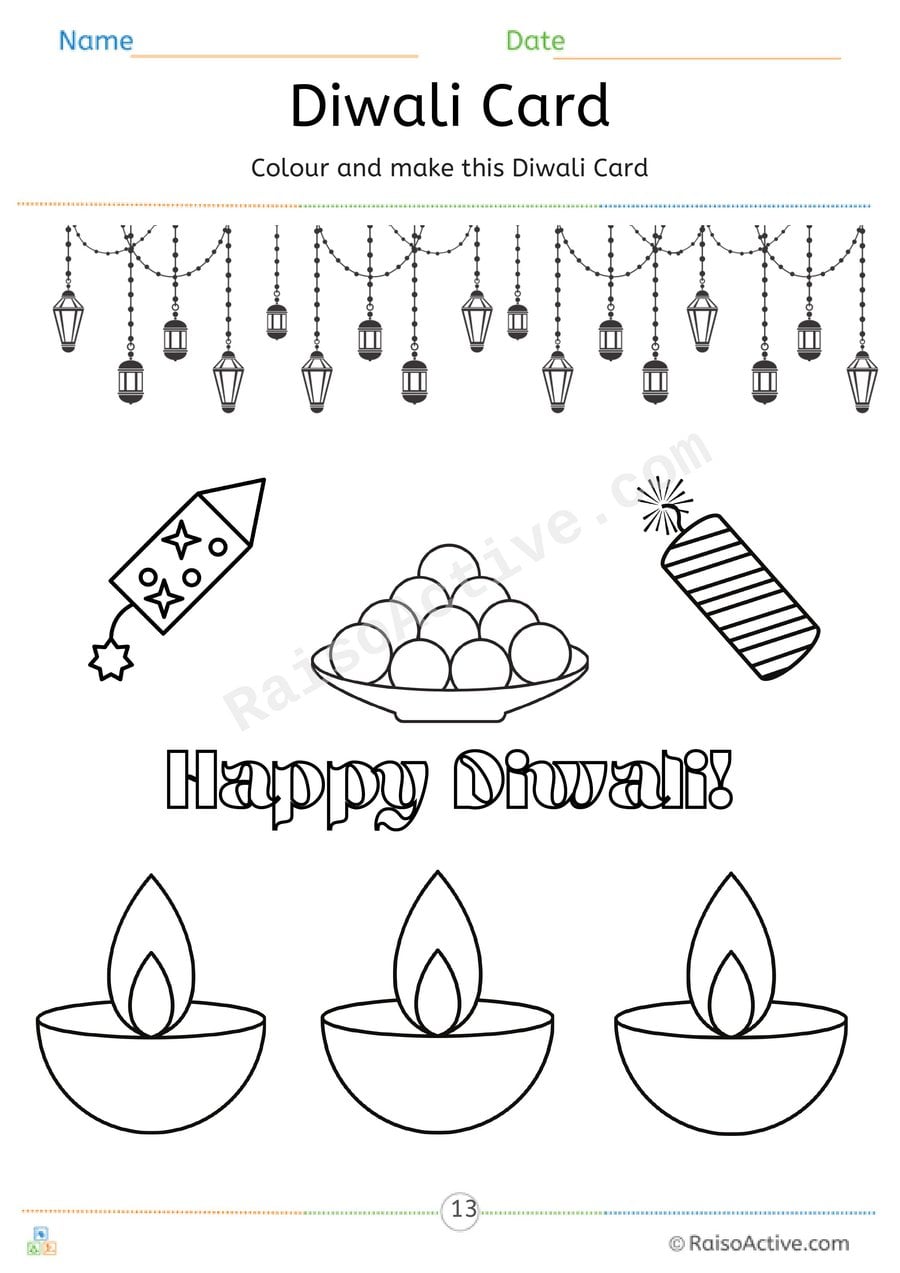
Happy Diwali Coloring Worksheet for Kids
Ages 4-8 · Pre-K–Grade 2Ages 4-8 · Reception–Year 3Ages 4-8 · LKG–Class 2Ages 4-8
Children colour a Happy Diwali card with lanterns, diyas, laddoos and crackers and talk about how families light up their homes.

Festival Fun Crossword Puzzle Worksheet for Kids
Ages 4-8 · Pre-K–Grade 2Ages 4-8 · Reception–Year 3Ages 4-8 · LKG–Class 2Ages 4-8
Children use picture clues and a word bank to fill a crossword with ten festivals, including Diwali, Eid, Christmas, Pongal, Lohri and Navratri.

Connect the Dots: Ganesha Face Worksheet for Kids
Ages 4-8 · Pre-K–Grade 2Ages 4-8 · Reception–Year 3Ages 4-8 · LKG–Class 2Ages 4-8
Children join the dots from 1 to 30 in order to finish Ganesha's face, practising number order and pencil control.

Help Ganesha Find His Father: A Fun Maze Worksheet
Ages 4-8 · Pre-K–Grade 2Ages 4-8 · Reception–Year 3Ages 4-8 · LKG–Class 2Ages 4-8
Children help Ganesha find his way through a round maze to his father, Lord Shiva, then colour and count modaks and spot Ganesha's mouse, Mooshak.
Related worksheets
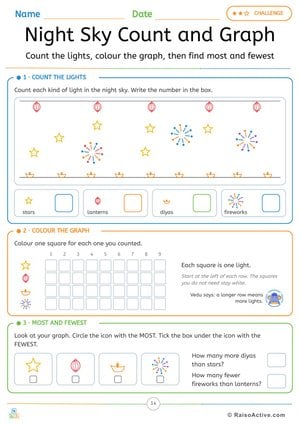
Diwali Night Sky Count and Graph: Pictograph Worksheet
Ages 4-6 · Pre-K–KindergartenAges 4-6 · Reception–Year 1Ages 4-6 · LKG–UKGAges 4-6
Children count four kinds of lights in a picture, colour one square for each in a graph, then find which has the most and which has the fewest and answer two comparing questions.
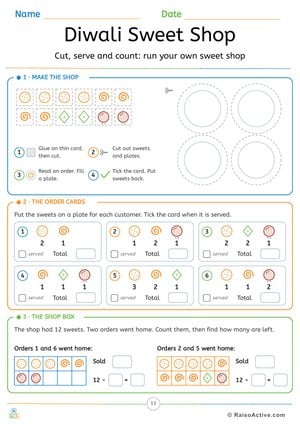
Diwali Sweet Shop Game: Cut, Serve and Count Orders
Ages 4-6 · Pre-K–KindergartenAges 4-6 · Reception–Year 1Ages 4-6 · LKG–UKGAges 4-6
Children cut out sweets and plates, then read six order cards and serve each customer the right number of sweets. They write the total, tick each served order and work out how many are left in the shop box.
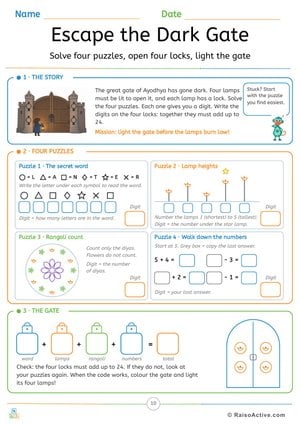
Escape the Dark Gate: Diwali Puzzle Challenge for Big Explorers
Ages 7-10 · Grade 2–Grade 3Ages 7-10 · Year 3–Year 4Ages 7-10 · Class 2–Class 3Ages 7-10
Children solve four puzzles: a secret word, lamp heights, a rangoli count and a number walk. Each gives one digit, and the four digits must add to 24 to open the gate of Ayodhya.
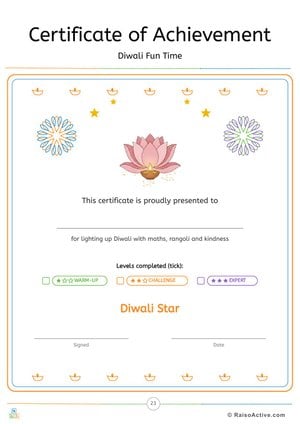
Diwali Fun Time Certificate of Achievement
Ages 4-6 · Pre-K–KindergartenAges 4-6 · Reception–Year 1Ages 4-6 · LKG–UKGAges 4-6
A printable certificate for children who finish pages in the Diwali Fun Time pack. It has boxes for the Warm-up, Challenge and Expert levels and a space for a signature and date.
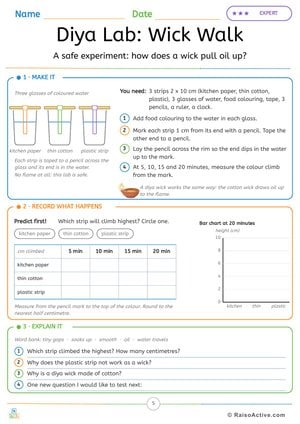
Diya Wick Experiment: How Does Oil Climb a Wick? (Safe Science Lab)
Ages 7-10 · Grade 2–Grade 3Ages 7-10 · Year 3–Year 4Ages 7-10 · Class 2–Class 3Ages 7-10
Children make three wick strips, predict which will climb highest, measure the climb at 5, 10, 15 and 20 minutes, draw a bar chart and explain why a cotton wick draws oil to a diya's flame. No flame is used.
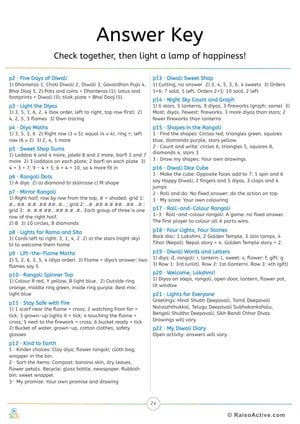
Diwali Fun Time Answer Key for Grown-ups
Ages 4-6 · Pre-K–KindergartenAges 4-6 · Reception–Year 1Ages 4-6 · LKG–UKGAges 4-6
A one-page answer key for grown-ups that lists the answers for pages 2 to 22, from the order of the five days to the sums, rangoli patterns, story order and safety choices.
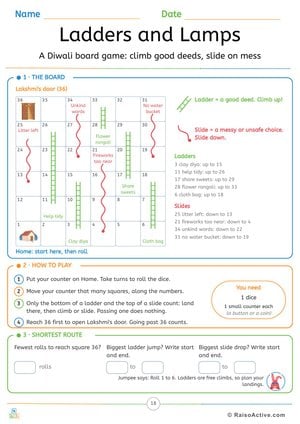
Ladders and Lamps: Diwali Board Game for Kids
Ages 7-10 · Grade 2–Grade 3Ages 7-10 · Year 3–Year 4Ages 7-10 · Class 2–Class 3Ages 7-10
Children play a ladders-and-lamps board game where good deeds like sharing sweets are ladders and messy or unsafe choices are slides, then work out the shortest route and the biggest ladder and slide.
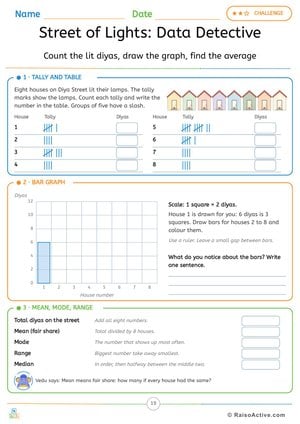
Street of Lights: Tally Chart, Bar Graph, Mean, Mode and Range
Ages 7-10 · Grade 2–Grade 3Ages 7-10 · Year 3–Year 4Ages 7-10 · Class 2–Class 3Ages 7-10
Children read tally marks for eight houses, write the numbers, draw a bar graph with a scale of 1 square for 2 diyas and find the total, mean, mode, range and median.
Guides for this topic

Celebrating Diversity: How to Incorporate Cultural Awareness in Learning Activities for Young Children
Practical cultural awareness activities for young children aged 2-8. Explore Indian festivals, world cultures, food, music, and crafts to teach diversity and inclusion.
How to Teach Cutting Skills to Your Preschooler: A Complete Guide for Parents and Teachers
Help your child master scissor skills safely. Expert guide covering readiness signs, scissor types, progression steps, pre-cutting exercises, and fun practice ideas for ages 2-6.

Building Future Citizens: How to Teach Social Studies to Young Children Through Creative Exploration
Practical ideas to teach social studies to kids ages 2-8: community helpers, Indian states, maps, festivals, and cultural diversity through play-based learning.
Reviews
Every worksheet for ages 4–8, no watermark
Members download the full library of 1,000+ worksheets and every activity pack without watermarks or daily limits. One year costs ₹999 in India or $20 elsewhere.
See membership plansOr download any worksheet free with a watermark (5 a day).