Free printable worksheets · US · UK · India
Number Tracing Worksheets 1–20
Number tracing worksheets are printable sheets for children aged 3 to 6 that show numerals 1 to 20 as dotted outlines with a starting point and stroke arrows, beside a group of objects to count. They teach numeral formation, number recognition, one-to-one counting, and the link between a written number and a quantity in Preschool, Nursery, LKG, Pre-K and Reception.
Numerals are harder to write than they look: ten symbols, most with curves, several that flip into each other, and no song to fix their order the way the alphabet song does for letters. A three-year-old tracing 1, 4 and 7 is learning that a number is drawn with a fixed sequence of strokes. A five-year-old is writing 1 to 20 from memory and turning the 3 and the 5 the wrong way. By six, in Kindergarten, Reception or UKG, the numerals should be automatic so attention can go to what they mean. Every sheet on this page pairs the numeral with a set of objects to count, because a number traced without a quantity beside it is only a picture. The 1–10 sheets suit Nursery, Preschool and LKG; the 11–20 sheets suit Pre-K, Reception and UKG.
767+ worksheets · free PDF download · print on A4 or Letter
Number Tracing Worksheets 1–20 to print
Browse all worksheets for ages 3–6
Spring Vocabulary Unscramble Worksheet for Preschoolers
This unscrambling worksheet has children ages 4-5 rearrange jumbled letters into correctly spelled spring vocabulary words, strengthening letter-sound awareness and reinforcing the idea that letters have a fixed, meaningful order. Working from a picture clue to a written word also builds the bridge between spoken vocabulary and early spelling.

Tracing and Counting Fun: Number 5 Worksheet for Preschoolers
Children ages 4-5 practice tracing and writing the number 5 while reinforcing counting up to five through a picture-based matching task. Repeating the number in multiple formats — tracing, writing, and counting — helps cement both the shape of the numeral and the quantity it represents.

Learn the Sight Word 'Are' Worksheet for Preschoolers
Children ages 4-5 build instant recognition of the high-frequency sight word 'are', a word that doesn't sound out phonetically and must be memorized by sight to support reading fluency. This multi-step worksheet reinforces the word through five different modes — coloring, searching a grid, tracing, writing, and a watercolor technique — giving repeated exposure that strengthens memory. Practicing 'are' in context through fill-in-the-blank sentences also helps children see how the word functions within real sentences.

Learn the Letter 'x' Worksheet: Tracing, Matching, and Coloring Fun!
This worksheet builds recognition of the less common letter x through tracing both uppercase and lowercase forms, then reinforces that recognition through matching pictures and highlighting the letter within a grid. For ages 4-5, letter x is genuinely rare at the start of everyday words, so this worksheet leans on strong examples like 'x-ray' to build familiarity despite limited real-world exposure.

Help the Hen! Alphabet Worksheet: Writing Missing Capital Letters
This maze-style worksheet asks children ages 4-5 to fill in missing capital letters in alphabetical order to help a hen find her way to the coop, turning alphabet sequencing practice into a small story-driven challenge. Recalling which capital letter comes next in the sequence — without a full alphabet chart to copy from — builds genuine alphabet mastery rather than passive letter recognition. The path-following format also adds a light visual tracking element that keeps the activity from feeling like a plain fill-in-the-blank drill.

Sequencing Numbers Train Worksheet for Preschoolers
Writing numbers 0-20 into a sequence of train cars pushes children ages 4-5 to internalize the full early counting range in fixed order, not just recite it aloud, which is a meaningfully different and more durable skill. Filling in the numbers by hand also builds numeral formation alongside sequencing, so children practice both remembering what comes next and writing it correctly. The train-car visual keeps a fairly long numeric range broken into manageable, engaging chunks rather than one intimidating list.

Make a Pancake! Sight Word 'Make' Worksheet for Preschoolers
Children ages 4-5 build automatic recognition of the high-frequency sight word 'make', practicing it through coloring, highlighting, tracing, and sentence completion for repeated, varied exposure. Since 'make' doesn't follow standard phonics rules cleanly, memorizing its shape by sight is essential for reading fluency. Completing sentences with 'make' also shows children how the word functions naturally in everyday spoken and written language, like making a pancake.

Learn to Write the Number 7: A Fun Tracing and Counting Worksheet!
This worksheet helps children ages 4-5 learn the correct stroke sequence for writing the number 7, while counting fingers and mangoes reinforces that the numeral stands for a specific quantity of seven items. Practicing both writing and counting for the same number in one sitting strengthens the link between number recognition and number formation.

First Letter Fun: Identify and Write the Beginning Sounds Worksheet
Naming each pictured object and writing its first letter helps children ages 4-5 practice phonemic awareness, the skill of isolating the very first sound in a word, which is a key building block for spelling and early reading. This worksheet turns that listening skill into a writing task, reinforcing the connection between a spoken sound and its written letter.

Trace and Write the Letter G Worksheet for Preschoolers
This worksheet isolates the uppercase G — a large curve with a small inward hook — so 4-5 year olds can build solid mastery of this one form before later tackling the more complex lowercase g with its descending tail. At this slightly older end of the preschool range, moving from traced copying to independent writing on the same page reflects a meaningful step up in handwriting expectations.

Number Sequencing Worksheet: Practice Counting and Ordering Numbers!
This worksheet gives children ages 4-5 focused practice writing numerals in order by filling in the missing numbers within several different counting sequences. Unlike simple counting aloud, writing each numeral by hand forces children to connect the spoken number word to its correct written symbol, reinforcing both number recognition and early handwriting control.
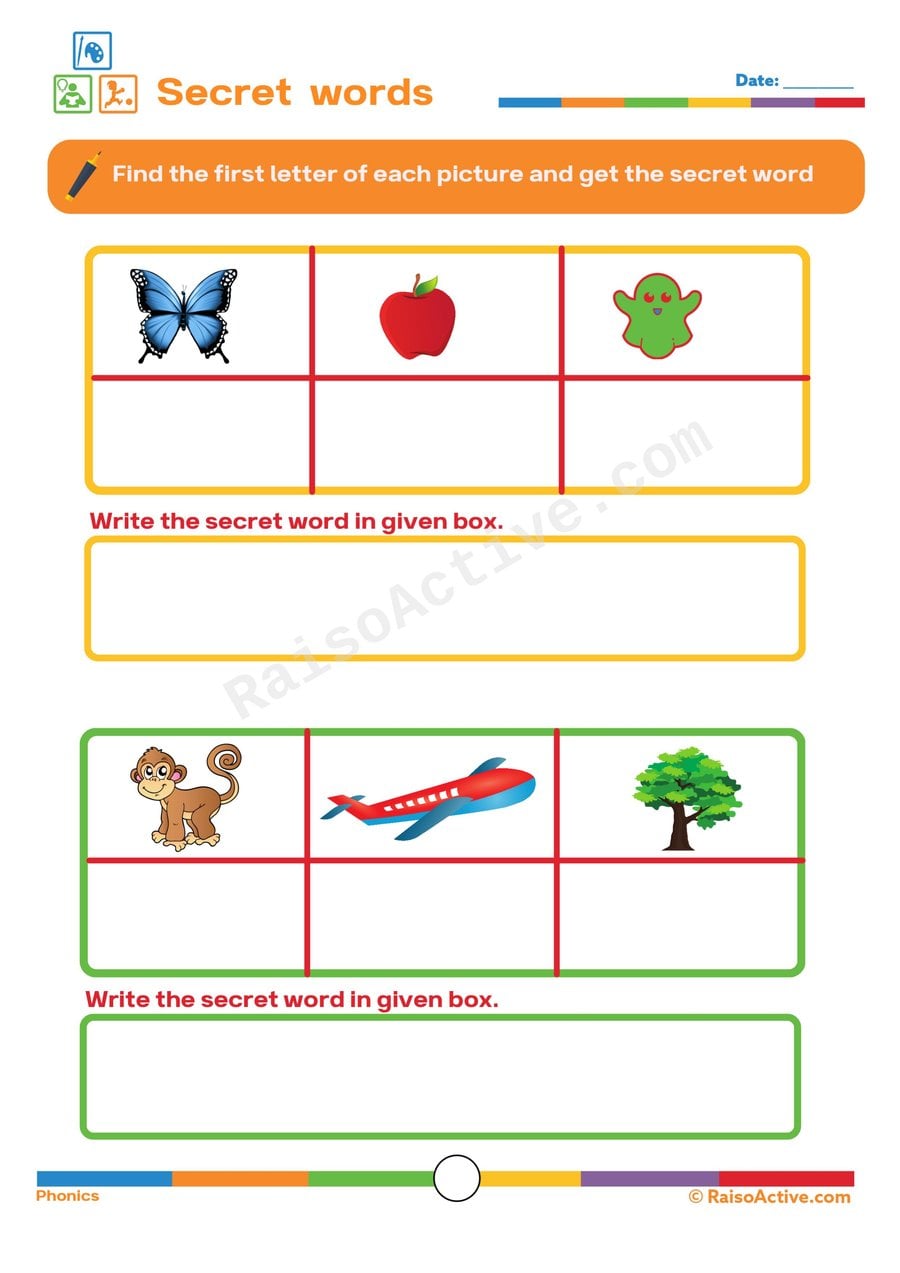
Secret Words Worksheet: Find the First Letter!
This worksheet challenges children ages 4-5 to identify the beginning sound of a series of pictures and write each first letter in sequence to spell out a hidden 'secret word', turning basic phonics practice into a small puzzle to solve. This task requires holding several individual sounds in mind and sequencing them correctly, a more advanced skill than identifying a single beginning sound in isolation. Successfully spelling the secret word gives children a satisfying, self-motivating payoff for careful listening and letter writing.

Find the 'ap' Words! A Fun Worksheet for Early Readers
Children ages 4-5 build phonics fluency by reading and writing CVC words in the 'ap' family, like 'cap', 'map', and 'nap'. Recognizing this consistent letter pattern teaches early readers to decode groups of letters as a chunk rather than sounding out every letter individually, speeding up reading over time. Writing each word after finding it also reinforces correct spelling and letter sequencing for early literacy.
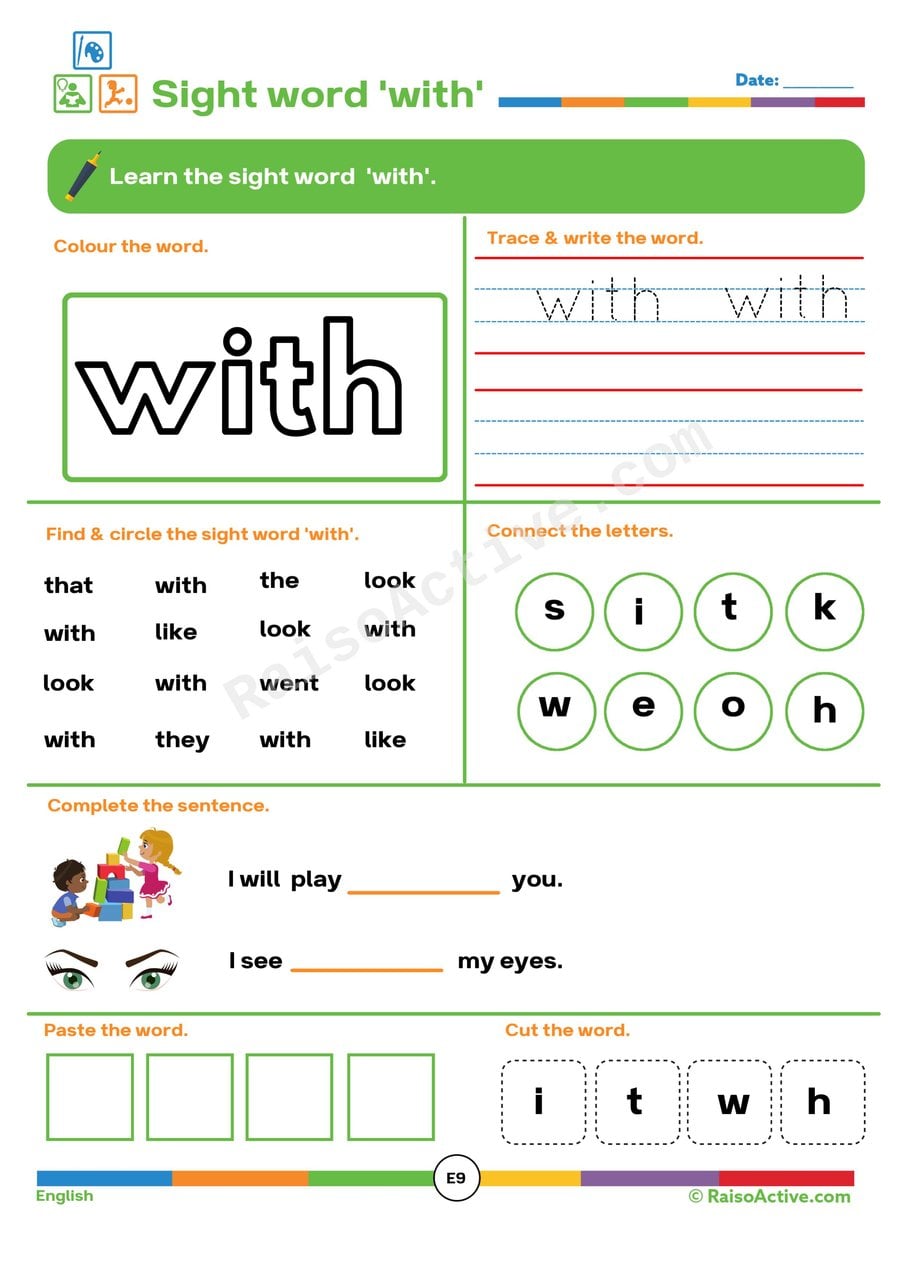
Sight Word 'With' Worksheet: Trace, Write, and Find!
This worksheet gives 4-5 year olds repeated, varied practice with the sight word 'with' — coloring it, tracing and writing it, finding it in a list, completing a sentence, and cutting and pasting it — because sight words like 'with' don't follow simple sound-out rules and need to be recognized instantly by sight rather than decoded each time. That instant recognition is what lets a young reader move smoothly through a sentence instead of stumbling on common connector words.
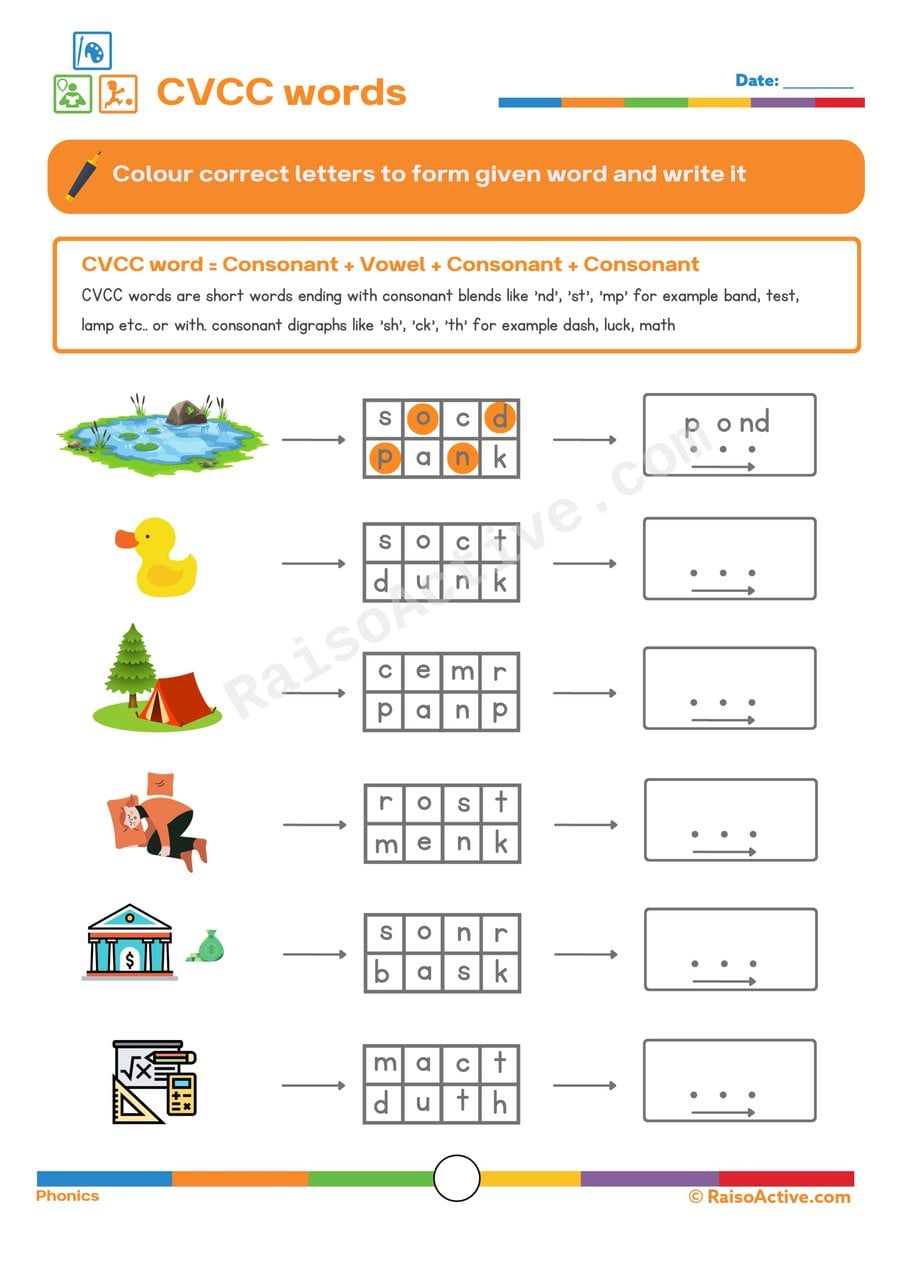
CVCC Word Fun: Color, Read, and Write!
This worksheet has children ages 4-5 identify and write CVCC words by coloring the correct letters shown in letter boxes and then writing the complete word based on a picture cue. Coloring specific letters before writing the whole word breaks decoding into a manageable first step, helping children build the word piece by piece rather than facing the whole spelling task all at once.
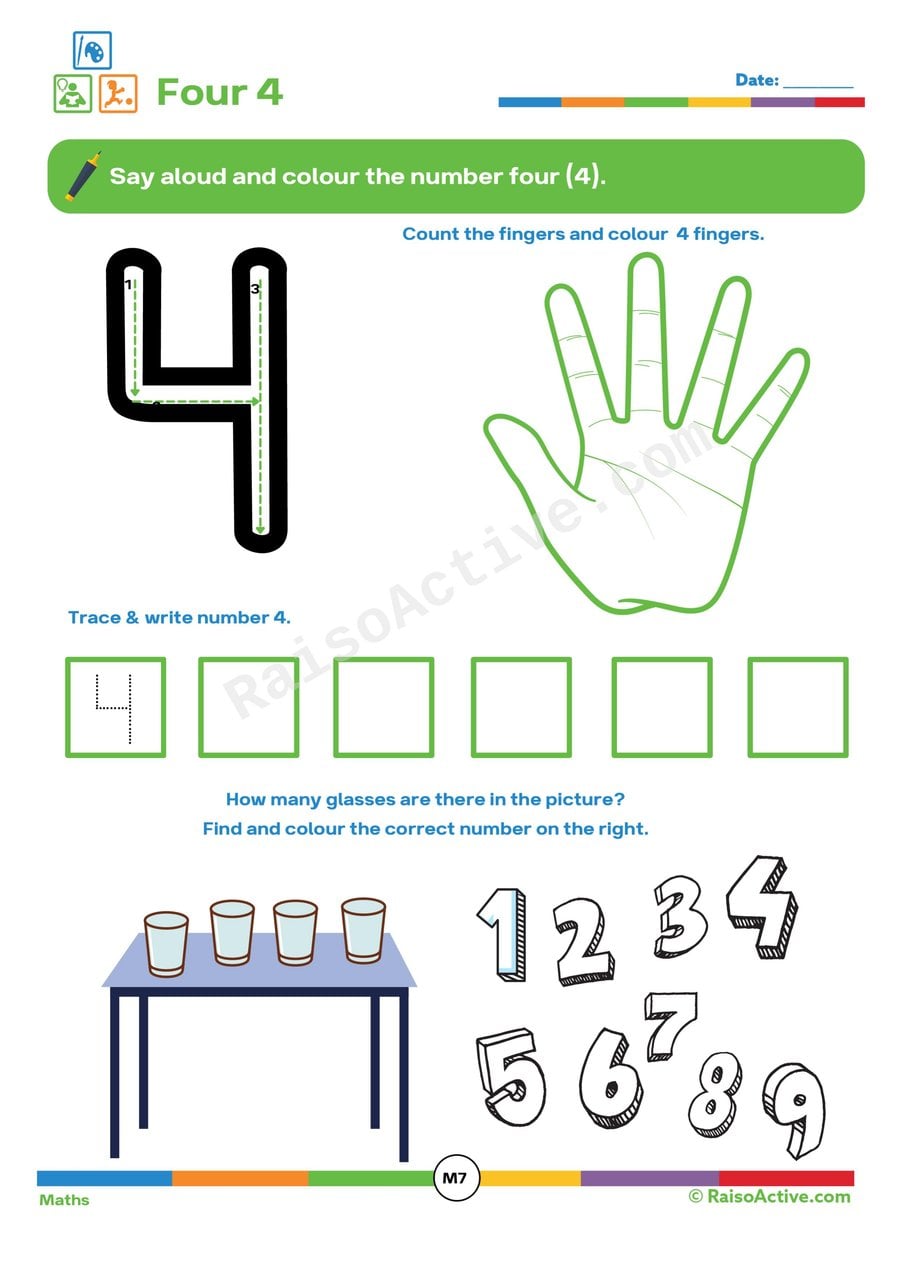
Number Four Worksheet: Trace, Count, and Color!
This worksheet helps children build the pencil control to write the number 4 correctly while linking that written numeral to the quantity it represents through counting fingers and objects on the page. For four- and five-year-olds, combining tracing with hands-on counting — like counting fingers on a hand or glasses in a row — reinforces that the number 4 always represents the same fixed amount, no matter what's being counted.
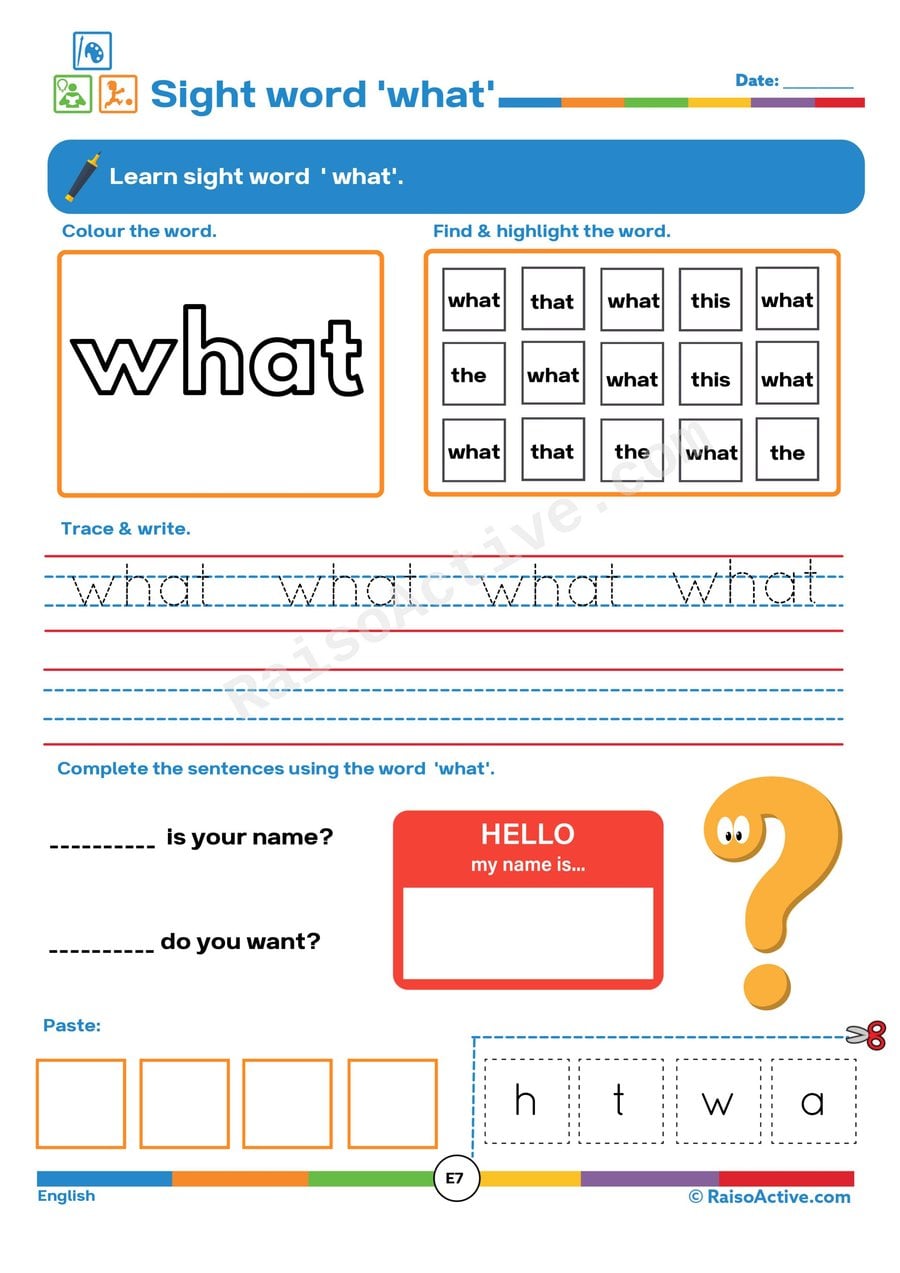
Sight Word 'What' Worksheet: Learn, Trace, and Find!
The word 'what' is a common question word that children ages 4-5 encounter constantly in both spoken conversation and early reading, making it an important addition to their sight word vocabulary. This worksheet builds recognition through several formats — coloring, tracing, word searching, sentence completion, and cut-and-paste spelling — giving the word repeated, varied exposure in a single sitting. Because 'what' is a question word, practicing it in sentences also gives children an early sense of how question structures differ from statement structures.

Trace and Count the Number 16 Worksheet for Preschoolers
This worksheet has children ages 4-5 trace the two-digit number 16 and then count and color a full set of sixteen squares, continuing to build counting stamina in the teens range that many children find more challenging than counting to 10. Because 16 combines a 1 and a 6, tracing it reinforces the same two-digit writing pattern practiced with numbers like 11 through 15, helping children generalize the pattern rather than treating each teen number as entirely new. Counting squares instead of round objects also quietly introduces basic shape vocabulary.

First Letter Sound Worksheet: Beginning Sounds Practice
This worksheet asks children ages 4-5 to identify the beginning sound of pictured objects, write the missing first letter to complete each word, and then combine those first letters to form a brand-new word. Practicing beginning sounds in this layered way — first in isolation, then combined — helps children see letters as flexible building blocks rather than fixed, memorized shapes.
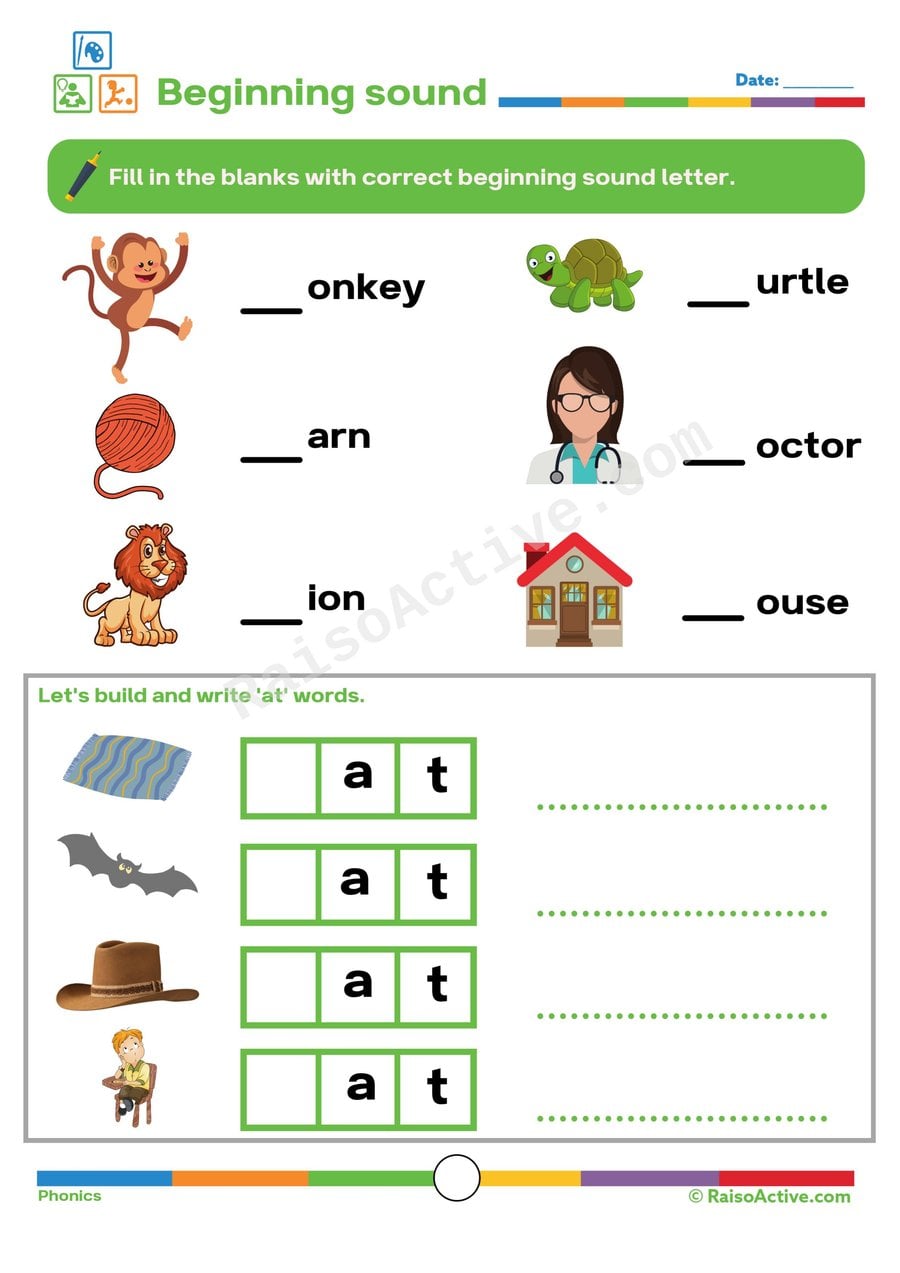
Beginning Sounds Worksheet: Fill in the Blanks!
This worksheet asks children ages 4-5 to identify the beginning sound of a pictured object and write the correct letter, then use that same skill to build new 'at' family words. Isolating and writing beginning sounds is a foundational phonics skill that bridges listening (hearing a sound) and writing (representing it with a letter) — a connection children need before they can spell independently.
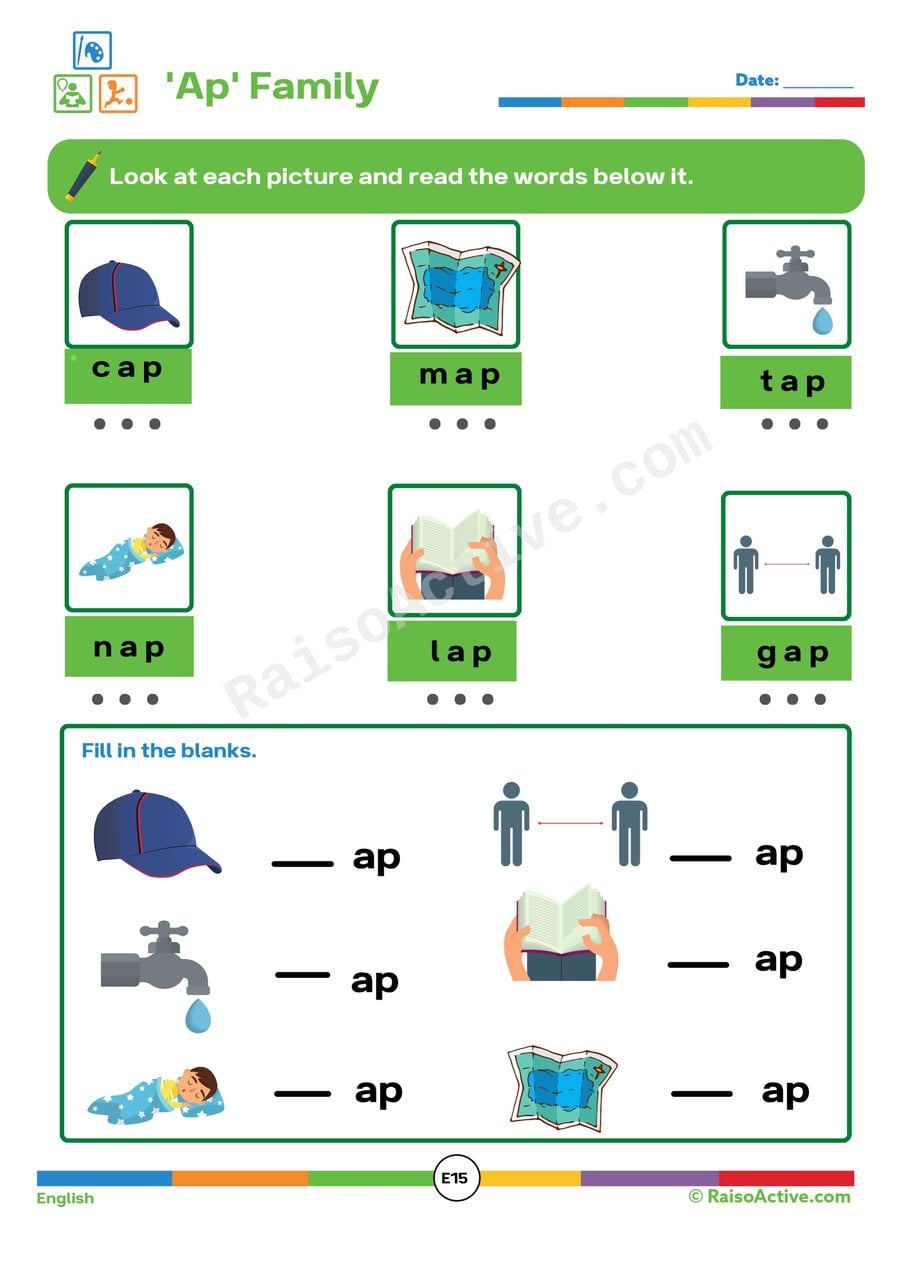
Ap Family Worksheet: Read and Fill in the Blanks!
Continuing the word-family approach, this worksheet helps children ages 4-5 read and complete 'ap' words such as cap, map, and tap by filling in a missing letter, reinforcing the pattern that a shared ending sound can appear across many different words. This kind of practice builds decoding speed and phonics confidence ahead of more independent reading.

Sight Word 'For' Worksheet: Learn to Read and Write!
The word 'for' appears constantly in early reading material but doesn't follow simple sound-it-out rules, so children ages 4-5 need repeated practice to recognize it instantly as a sight word. Working through tracing, a word search, and sentence completion in one sitting gives multiple angles of exposure, which research on early literacy shows helps cement tricky high-frequency words into memory.

Identify and Complete the Names Worksheet for Preschoolers
Children ages 4-5 build on early spelling skills by identifying pictures and completing their names using provided letter hints, strengthening both vocabulary and phonics awareness. Using hints rather than a fully blank space offers just enough support to keep the task achievable while still requiring active problem-solving.

Phonics Fun: Matching Letters and Words Worksheet for Preschoolers
Identifying the beginning sound of a pictured word and writing the matching letter teaches children ages 4-5 phonemic awareness, the ability to isolate individual sounds within spoken words, which is one of the strongest predictors of future reading success. Saying each word aloud after writing the letter reinforces the connection between the printed letter and its spoken sound, closing the loop between listening, writing, and speaking. This worksheet moves children from simply recognizing letters to actively applying letter-sound knowledge, a more advanced early literacy skill.
How numerals are formed
Every numeral except 4 and 5 is written in a single stroke starting at the top. The 1 is a downstroke; 7 is a horizontal then a diagonal; 4 is two strokes, a down-and-across then a vertical; 5 is a downstroke and curve then a top bar added last. The curved numerals 2, 3, 6, 8, 9 and 0 begin at the top and travel in a fixed direction. Teaching the starting point and direction is what prevents numbers being drawn from the bottom or built from pieces.
Order the sheets by stroke difficulty rather than by counting order: 1, 4, 7 first, then 0, 6, 9, then 2, 3, 5, 8. The teen numbers reuse those shapes with the 1 in front, so 11 to 20 are formation review plus place-value introduction.
- Age 3–4: trace 1–5 with large dotted numerals, count the pictures beside each
- Age 4–5: trace and copy 1–10, write the number that matches a group
- Age 5–6: trace, copy and write 11–20, count and write the total, ten-frame sheets
Pair tracing with counting
Before tracing a numeral, have the child count the objects on the sheet aloud, touching each once, and say the total. Then trace the numeral while saying its name. Then count out the same number of real objects on the table. This three-step routine takes a minute per numeral and ties the symbol to the amount, which is the point of the exercise. On count-and-write sheets, encourage crossing off each picture as it is counted so nothing is counted twice.
Common reversals and how to fix them
The numerals 3, 5 and 7 are reversed most often, followed by 2, 6 and 9, which are also confused with each other. Reversals are normal until about age 7 and have the same cause as b/d confusion: the child has not yet learned that orientation changes meaning. Fix them by starting point, not by pointing out the finished error: a 3 starts at the top and curves right twice, a 5 starts with a downstroke on the left, a 7 starts with the top bar going right.
Frequently asked questions
What age should a child start number tracing?
Around 3 and a half to 4, once the child can trace a straight line and a circle and can count a few objects with one touch each. Tracing 1 to 5 in Nursery or Preschool, 1 to 10 in Pre-K, Reception or LKG, and 11 to 20 in Kindergarten or UKG matches most curricula. Tracing numerals before the child understands them as amounts produces neat symbols with no meaning attached.
What numbers should a 4-year-old be able to write?
By 4, the end of Nursery or Preschool, a child can usually trace the numerals 1 to 10 and write 1, 4 and 7 unaided, with wobble. By 5, at the end of Pre-K, Reception or LKG, writing 0 to 10 from memory with some reversals is typical. Writing 0 to 20 correctly is a Kindergarten goal in Common Core (K.CC.A.3) and an end-of-Reception expectation in the EYFS.
Why does my child write numbers backwards?
Number reversals, especially 3, 5 and 7, are a normal part of learning to write between ages 4 and 7. Objects keep their identity when turned around, so a child has no reason yet to expect symbols to be different. Reversals fade as the child learns a fixed starting point and stroke direction for each numeral. Practice with starting dots and arrows, and prompt with the movement rather than correcting the finished figure.
Should I teach number tracing 1–10 or 1–20 first?
One to ten first, and only move to 11 to 20 once the child can count to 20 aloud and count a group of ten objects reliably. The teen numerals are the same shapes with a 1 in front, so formation is quick, but understanding that 14 means ten and four takes longer. Ten-frame and count-and-write sheets in the 11 to 20 range support that step.
How is number tracing different from counting worksheets?
Number tracing teaches how to write the symbol; counting worksheets teach how many the symbol stands for. The best number tracing worksheets do both by putting objects beside the numeral, and this page is arranged so each numeral is traced, then matched to a quantity, then written independently. A child who can write 8 beautifully but counts a group of eight as seven needs the counting hub, not more tracing.
Are the number tracing worksheets free?
Yes. With an account you can download any number tracing sheet as a watermarked PDF at no cost, up to five a day. A yearly subscription (₹1000 or $20) removes the watermark and the cap on the full library of more than 1,000 worksheets plus all printable packs. The sheets print correctly on A4 and US Letter.

Written by
Hemsweta Jain · Teacher Cheena
MBA and Early Childhood Educator, teaching since 2014 · Founder of RaisoActive, Mumbai
Written and reviewed by Hemsweta Jain (Teacher Cheena), who designs every RaisoActive worksheet.
Last reviewed
Printable packs for ages 3–6
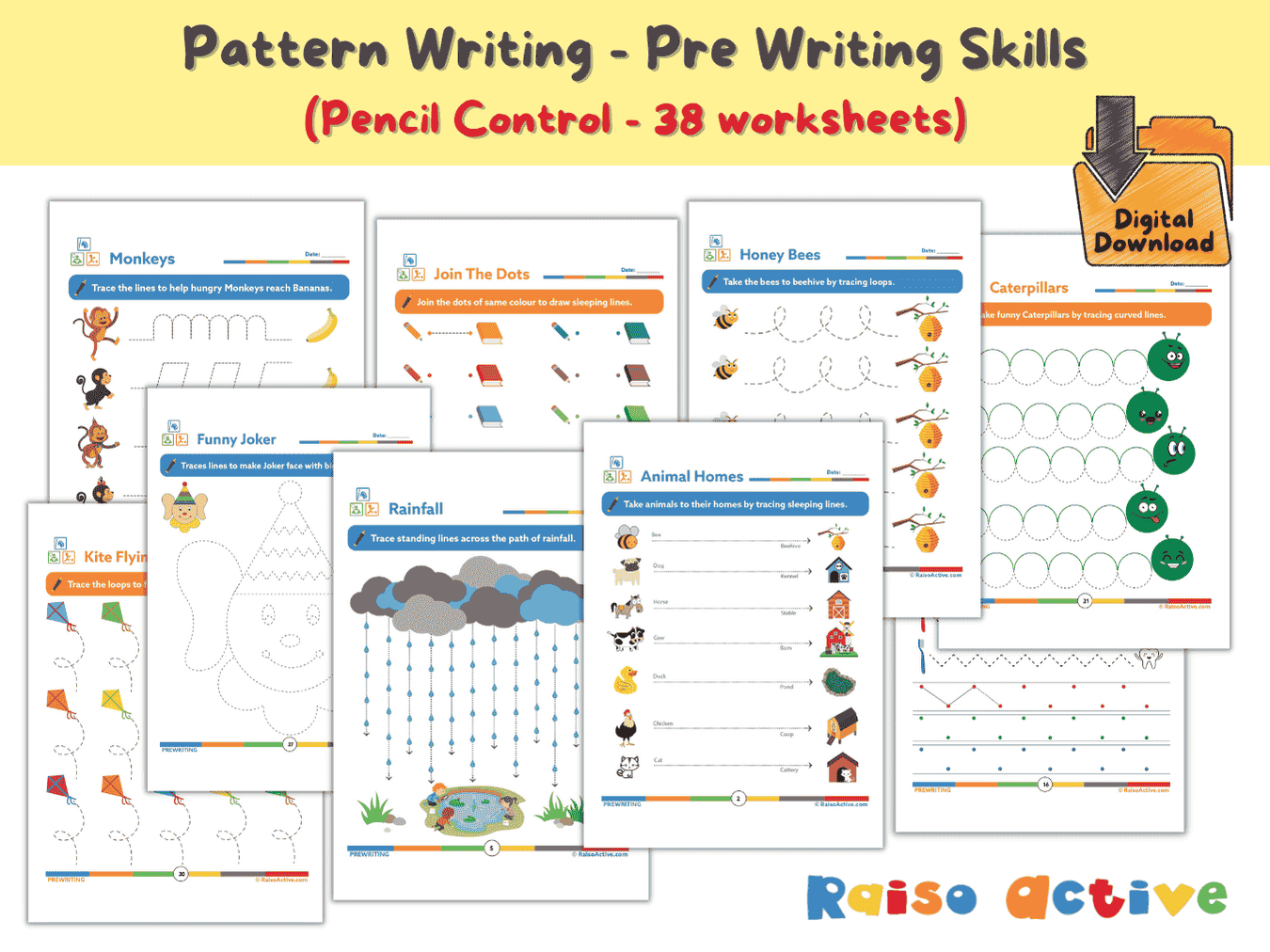
Pattern Writing Pre-writing Skills Activity Book for 3-4 Year Olds
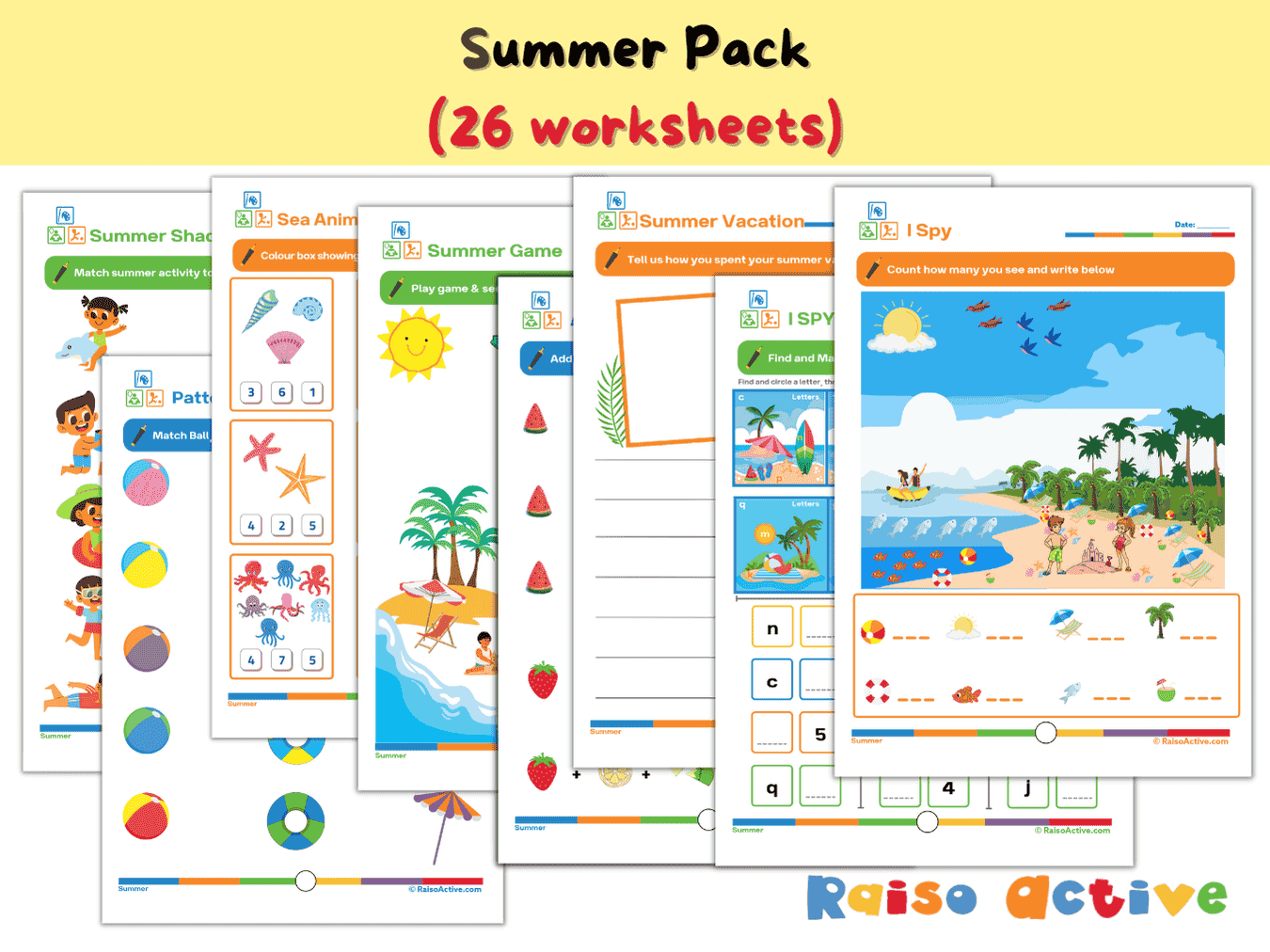
Summer Activity Pack: Math, Literacy, Puzzles & More for Preschool & Kindergarten
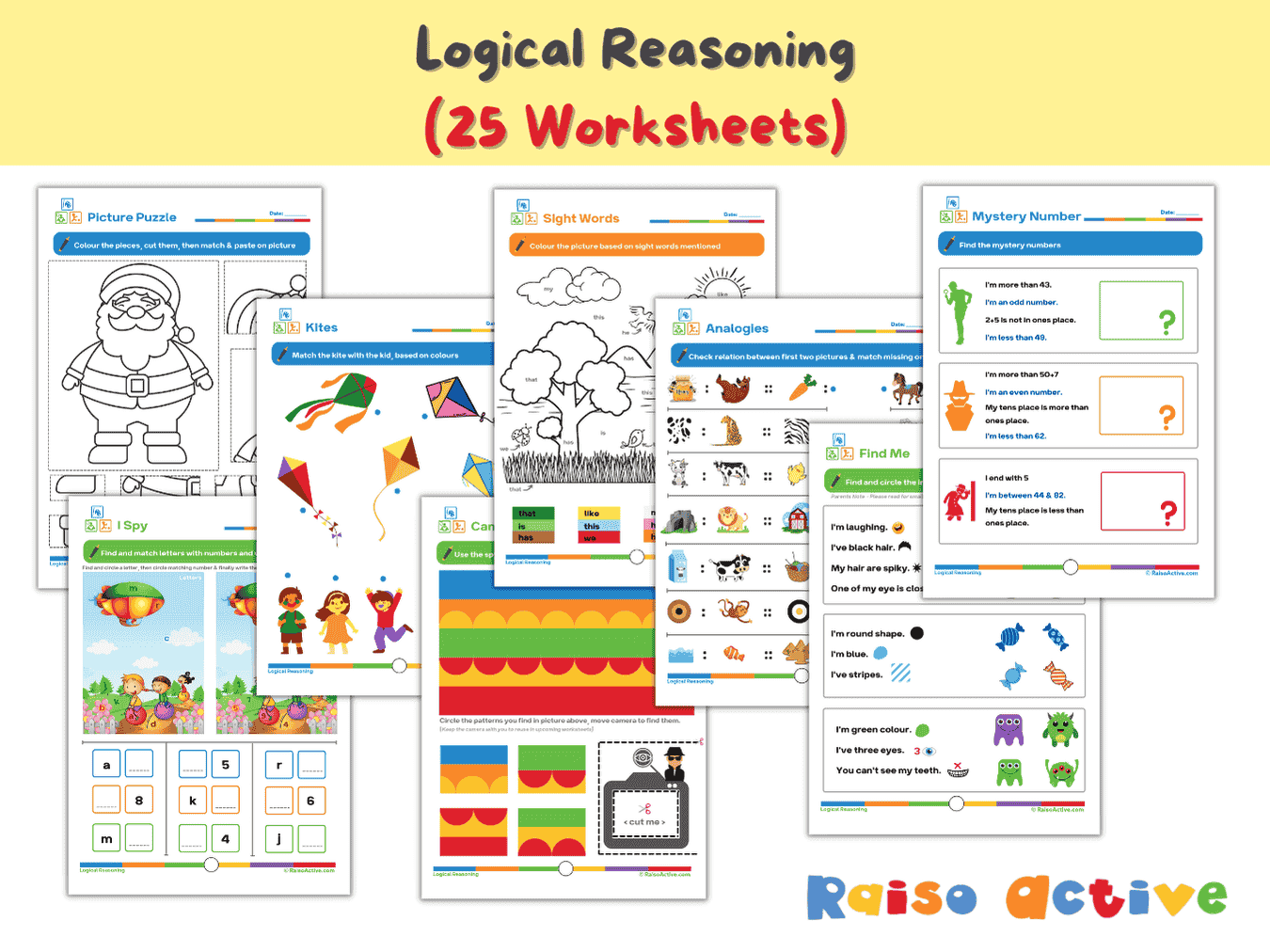
Logical Reasoning Activity Book for Preschool & Kindergarten | Patterns, Puzzles & Analogies
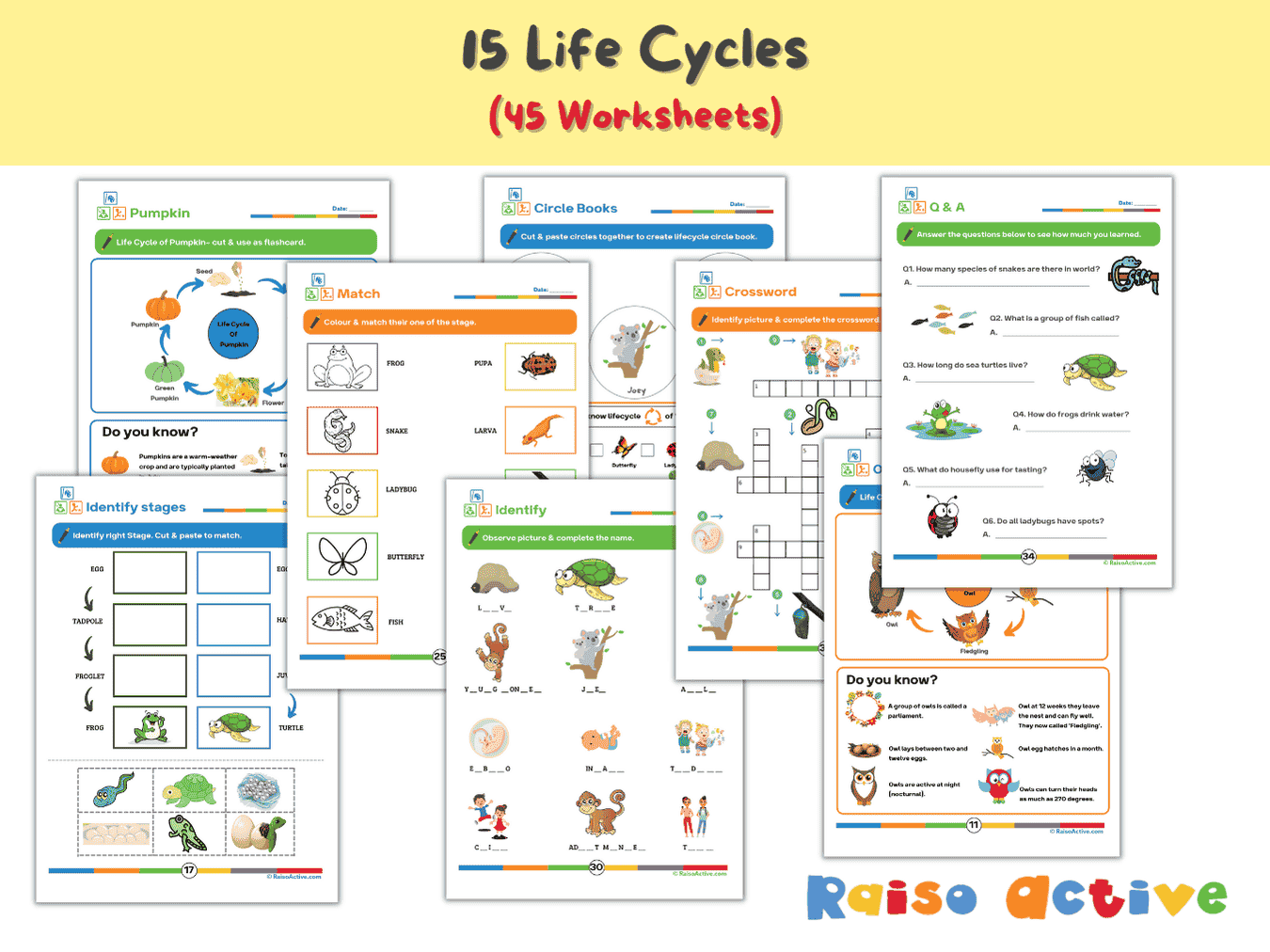
Lifecycles Activity Book & Flashcards for Preschool & Early Elementary
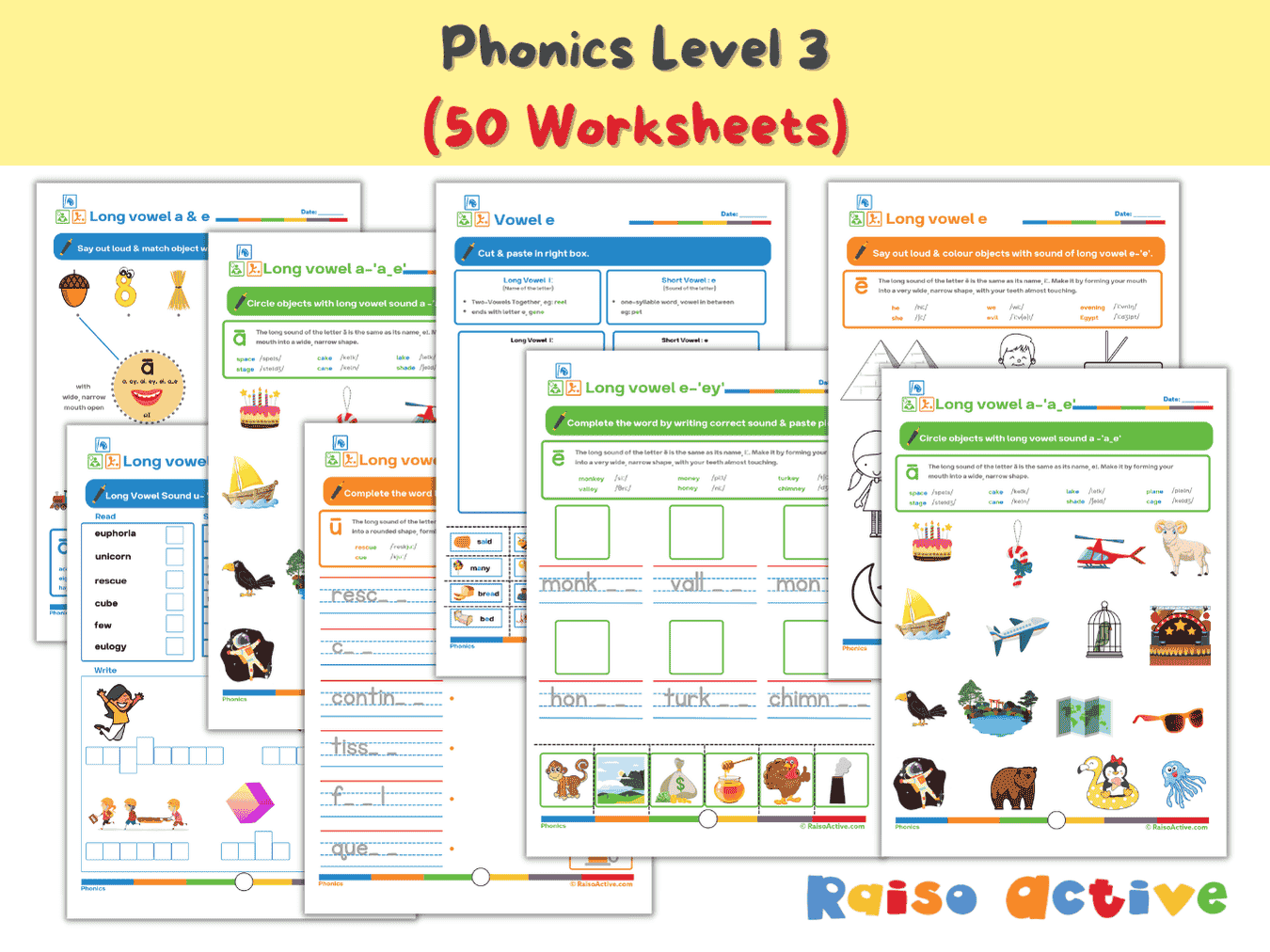
Phonics Level 3 Long Vowels Activity Book for Kindergarten & 1st Grade
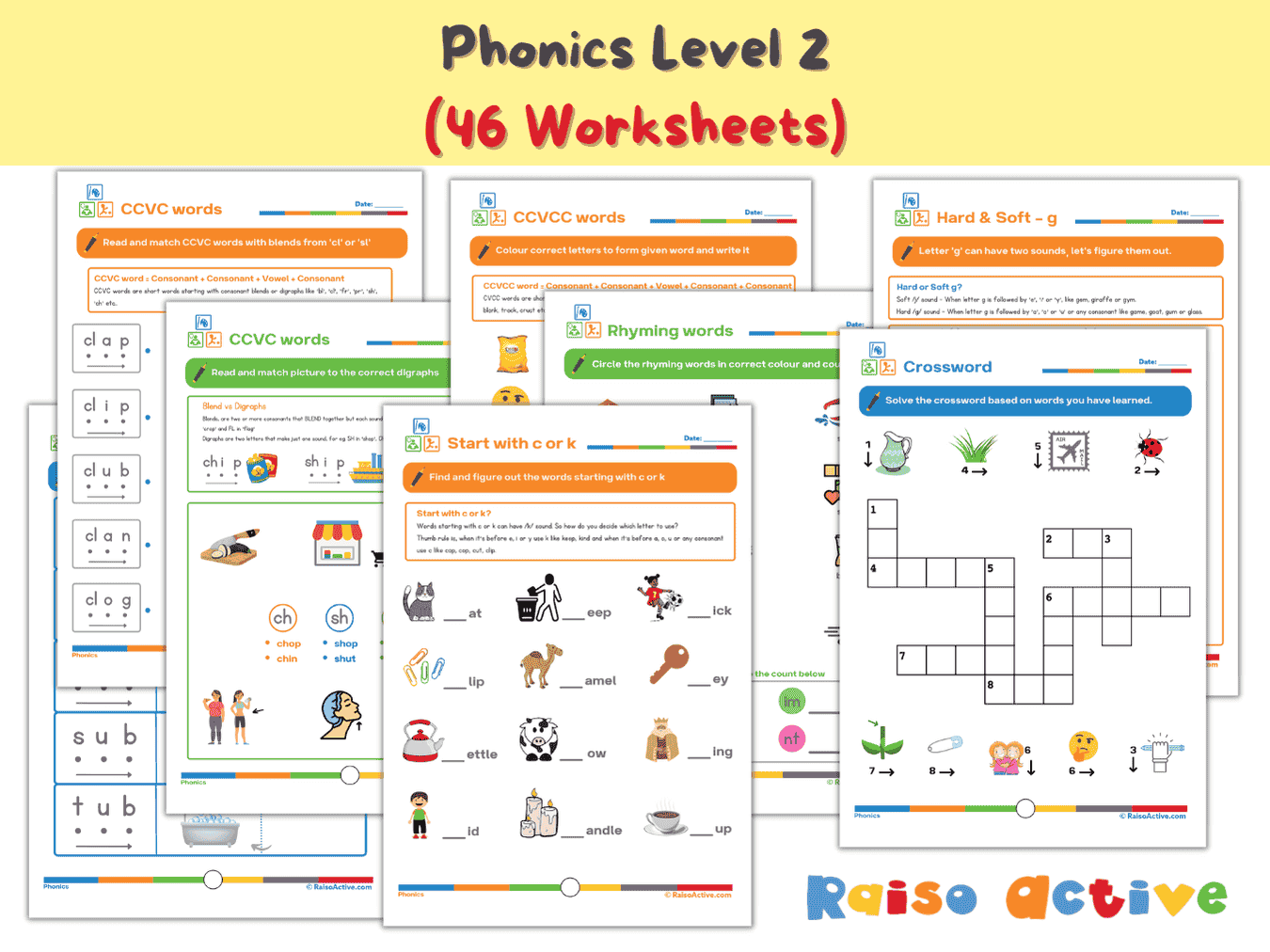
Phonics Level 2 Worksheets: CVC, CCVC, CVCC Word Families & Blends for Early Readers (Ages 4-7)
Guides for parents and teachers
See all guides →Number Formation Rhymes 0–9 and How to Fix Reversals
Original number formation rhymes for 0–9, the correct stroke order for each digit, why 3, 5 and 7 get reversed most often, and multisensory fixes that work.
Pre-Writing Strokes in Order: From Standing Lines to Loops (With Printable Patterns)
The developmental order of pre-writing strokes, from vertical lines to loops, and why practicing them in sequence makes letter formation much easier to learn.
Kindergarten Readiness Checklist: 25 Skills to Practice Before the First Day
A kindergarten readiness checklist of 25 literacy, math, motor, self-regulation and self-help skills, with an 8-week summer plan and notes on when not to worry.
Best Worksheets for 3-Year-Olds: What Works and What to Avoid
What works on worksheets for 3-year-olds: short sessions, crayons, tracing lines, matching, cutting, a free weekly plan, and signs one is too advanced.
What Should a 4-Year-Old Know Before LKG? A Readiness Checklist
A calm, teacher-written LKG readiness checklist for 4-year-olds: language, pattern writing, numbers to 10, self-help and social skills, plus a 6-week plan.
Resources for Children with Multiple Disabilities: A Comprehensive Guide for Families
Discover essential resources for children with multiple disabilities. Therapies, inclusive learning, assistive technology, and printable activities for ages 1-8.
Canonical: https://raisoactive.com/worksheets/number-tracing