Free printable worksheets · United States
Preschool Math Worksheets
Preschool math worksheets are printable early-number activities for children aged 3 to 4. They cover counting objects from 1 to 10 with one-to-one correspondence, recognizing and matching numerals to sets, naming circles, squares and triangles, sorting by color, size and shape, copying simple AB patterns, and comparing big and small or more and fewer.
Three-year-olds can usually recite numbers to 10, and that is where the confusion starts: reciting is not counting. The step that matters in preschool math is one-to-one correspondence, touching each object once and saying one number for it, and it takes months of practice with real things before it is reliable on paper. The Head Start framework lists it alongside recognizing small quantities without counting, matching a numeral to a set, sorting, patterning and comparing size, all of which develop between three and four. Preschool math worksheets should therefore be mostly pictures: sets of objects to count and circle, shapes to find, groups to sort, and simple patterns to continue. The sheets here keep numbers within 10, use large clear objects, and ask for a circle or a line rather than written numerals.
907+ worksheets · free PDF download · print on A4 or Letter
Preschool Math Worksheets to print
Browse all worksheets for ages 3–4
Clothing Pattern Match Worksheet for Preschoolers
This worksheet has children ages 3-5 study repeating patterns on clothing items — stripes, polka dots, or checks — and match each item to its identical twin, building visual discrimination and early pattern-sequencing skills. Distinguishing between similar-looking patterns also sharpens attention to detail, a skill that later supports letter and word recognition.

Front or Behind Sorting Worksheet for Preschoolers
Positional words like 'front' and 'behind' describe relationships between objects rather than the objects themselves, which makes them a genuinely trickier concept for a 3-5 year old than sorting by color or size. Deciding where each picture belongs and sorting it into the right box builds early spatial reasoning that later supports following multi-step directions and understanding maps or diagrams.
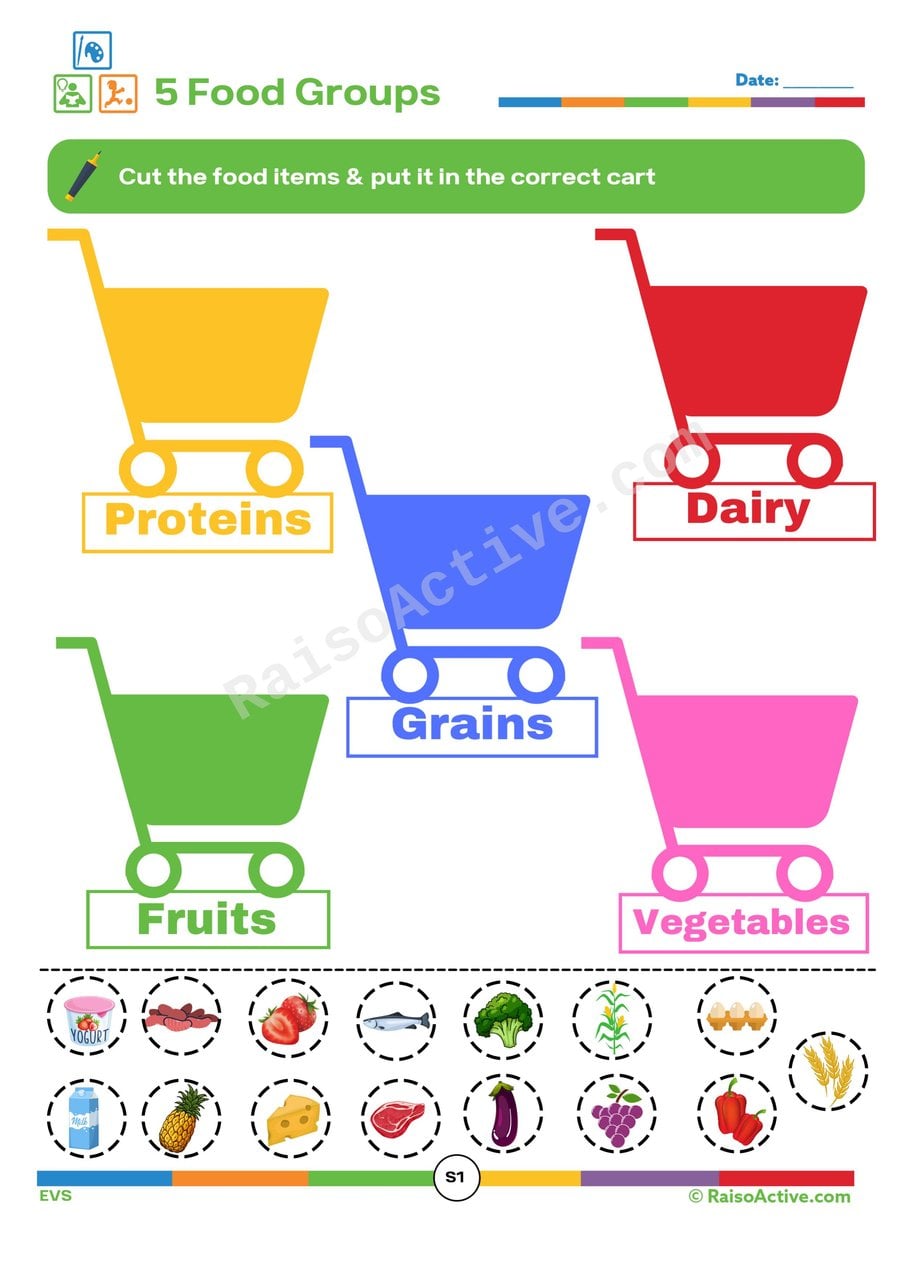
Food Groups Sorting Worksheet for Preschoolers
This worksheet helps children ages 3-5 learn about the different food groups and practice categorizing food items by cutting out pictures and pasting them into the correct group. Sorting foods this way builds early classification skills while also introducing the idea that different foods serve different purposes for the body, laying groundwork for healthy eating habits.
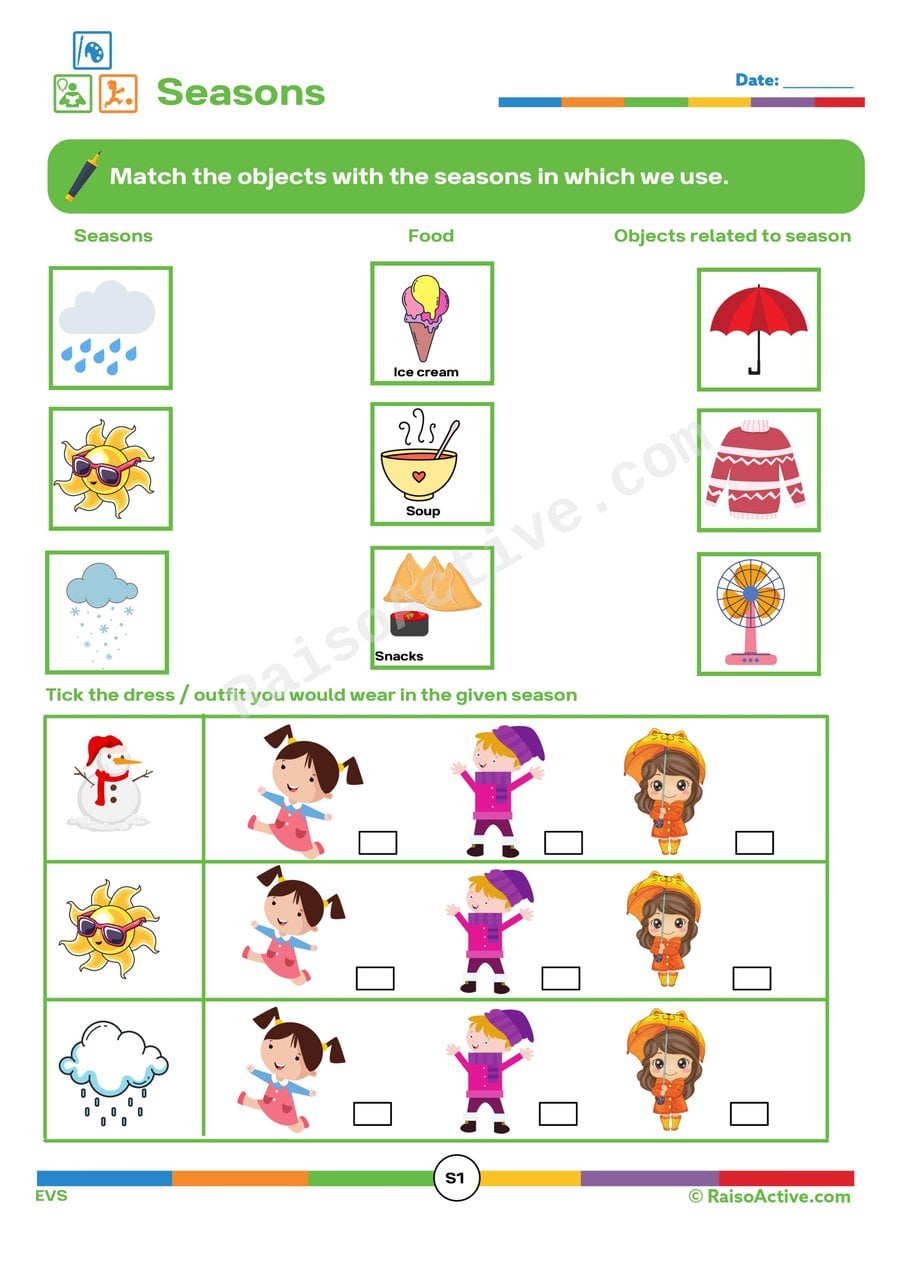
Seasons Matching Worksheet for Preschoolers
Understanding that different seasons bring different weather, clothing, and activities is an early science and life-skills concept for children ages 3-5, and this worksheet builds that understanding by having them match objects to the correct season and consider what they'd wear in each. Making these connections requires observation and categorization skills, since a child has to recall or reason through why a snowman belongs with winter or shorts belong with summer rather than simply memorizing a fixed answer. This kind of seasonal reasoning also lays groundwork for later science topics like weather patterns and the calendar year.

Transportation Worksheet: Match the Vehicles! (Ages 3-5)
This worksheet asks children ages 3-5 to sort vehicles into four transportation categories — road, track, air, and water — which builds classification skills beyond simple pairs. Because kids must decide which of four groups a vehicle belongs to instead of just two, it stretches their reasoning a level further than basic matching. It also grows vocabulary around trains and tracks, a category many transportation worksheets skip.
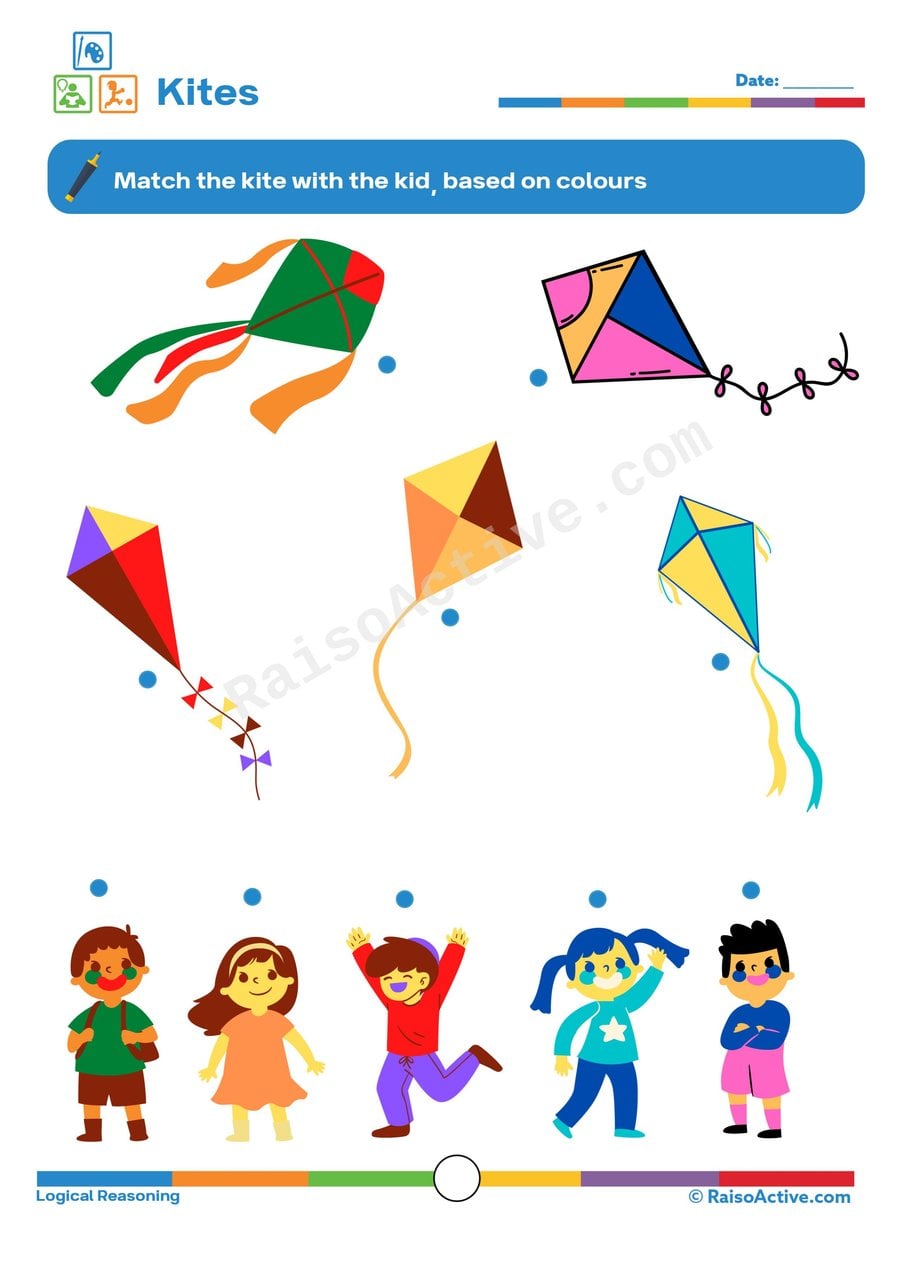
Kite Color Matching Worksheet for Preschoolers
This color-matching worksheet asks children ages 3-5 to connect each kite to the child flying a matching-colored kite, reinforcing color recognition and visual discrimination as they scan multiple color options across the page. Because children must compare several colors at once rather than matching a single pair, the task demands more sustained visual attention than a simple two-item match. Practicing color vocabulary in a playful, seasonal context also keeps repetition from feeling like rote drilling.

Classroom Objects Worksheet: Circle the Classroom Items!
This worksheet builds vocabulary and visual discrimination in children ages 3-5 by asking them to scan a mixed set of pictures and identify only the ones that belong in a classroom. Sorting relevant from irrelevant items in this way strengthens categorization skills and attention to detail, since children must compare each picture against their own knowledge of what a classroom contains. It also reinforces school-readiness vocabulary like 'desk,' 'crayons,' and 'books.'
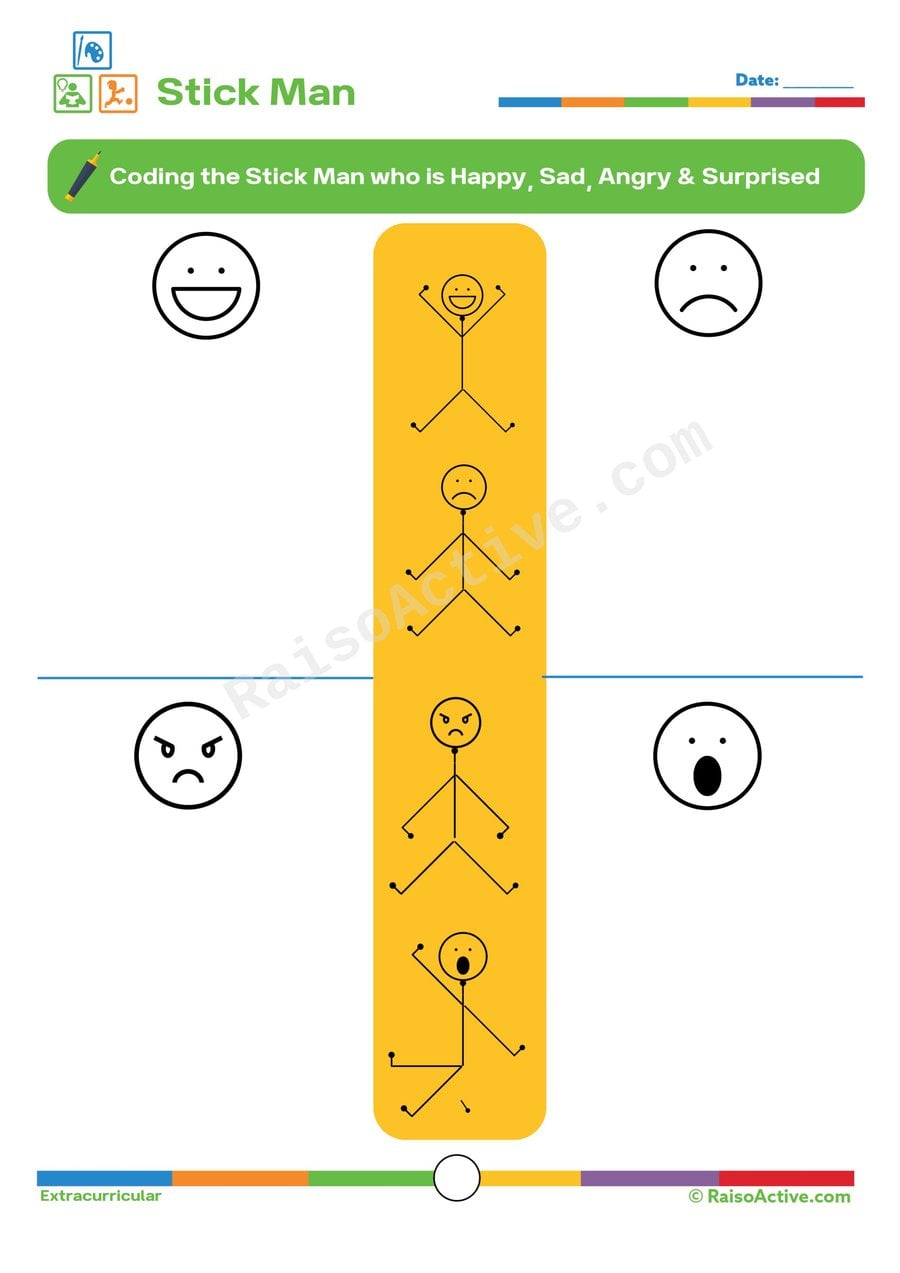
Stick Man Emotions Worksheet: Happy, Sad, Angry & Surprised!
Matching simple stick-figure faces to emotion words helps children ages 3-5 build an early emotional vocabulary, connecting facial cues like a curved mouth or raised eyebrows to specific feeling words. This kind of emotion recognition is a foundational social-emotional skill, helping children name what they and others are feeling instead of just reacting.

Wild or Domestic? Animal Sorting Worksheet for Preschoolers
This worksheet helps children ages 3-5 learn to differentiate between wild and domestic animals by looking closely at each picture and deciding where the animal lives and how it relates to people. Sorting animals into these two categories builds early classification skills, an important foundation for later scientific thinking.

Tall and Short Worksheet: Comparing Sizes for Preschoolers
Comparing objects and circling the tallest and shortest one in each row teaches children ages 3-5 comparative size vocabulary, an early math skill that goes beyond simply describing single objects as big or small. This worksheet requires children to look across an entire row and rank items relative to one another, which builds visual comparison skills that later support measurement concepts like longer, shorter, and equal. Using varied pictures for each comparison also keeps children engaged while practicing the same underlying skill repeatedly.

Count the Sweet Treats! A Fun Counting Worksheet for Preschoolers
Preschoolers ages 3-5 practice one-to-one correspondence by counting groups of sweet treats, like cupcakes or candies, and writing the total number for each group. Counting appealing, familiar objects like treats keeps motivation high while reinforcing the core skill of matching each counted item to exactly one number word. Writing the resulting number afterward connects the counting process to number symbol recognition.

Shape Matching Worksheet: Circle, Square, Triangle, and Rectangle!
Children ages 3-5 practice recognizing and naming four basic shapes — circle, square, triangle, and rectangle — by matching everyday objects to their shape, then applying that recognition to a themed snowman picture. Counting the circles and triangles that make up the snowman afterward layers a numeracy task on top of the geometry, connecting shape recognition to early counting practice.

Easter Egg Match: Add and Find the Matching Designs!
This worksheet blends early addition with visual matching as children ages 3-5 combine two separate shape groups and then search for the Easter egg design that shows the same total. Because the 'answer' is a picture rather than a written number, children practice quantity comparison and pattern-matching without needing to know written numerals yet.
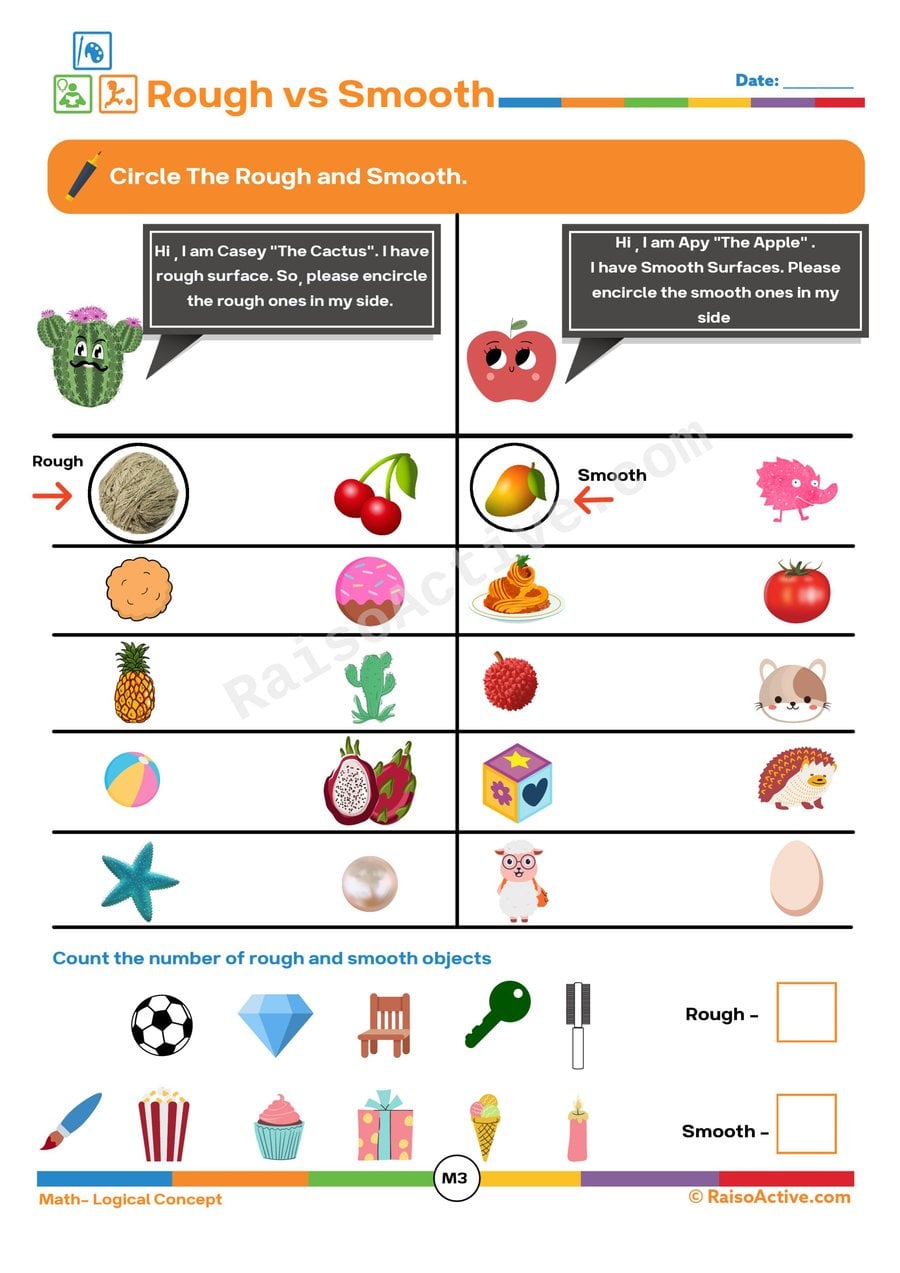
Rough vs. Smooth Worksheet: Circle and Count!
Preschoolers ages 3-5 build early scientific observation by identifying and comparing rough versus smooth textures among a set of pictured objects, engaging their sense of touch conceptually even through a visual worksheet. Counting the rough and smooth objects afterward links this sensory classification to basic number practice. Learning to sort by texture is an early step toward broader material-properties understanding in science.
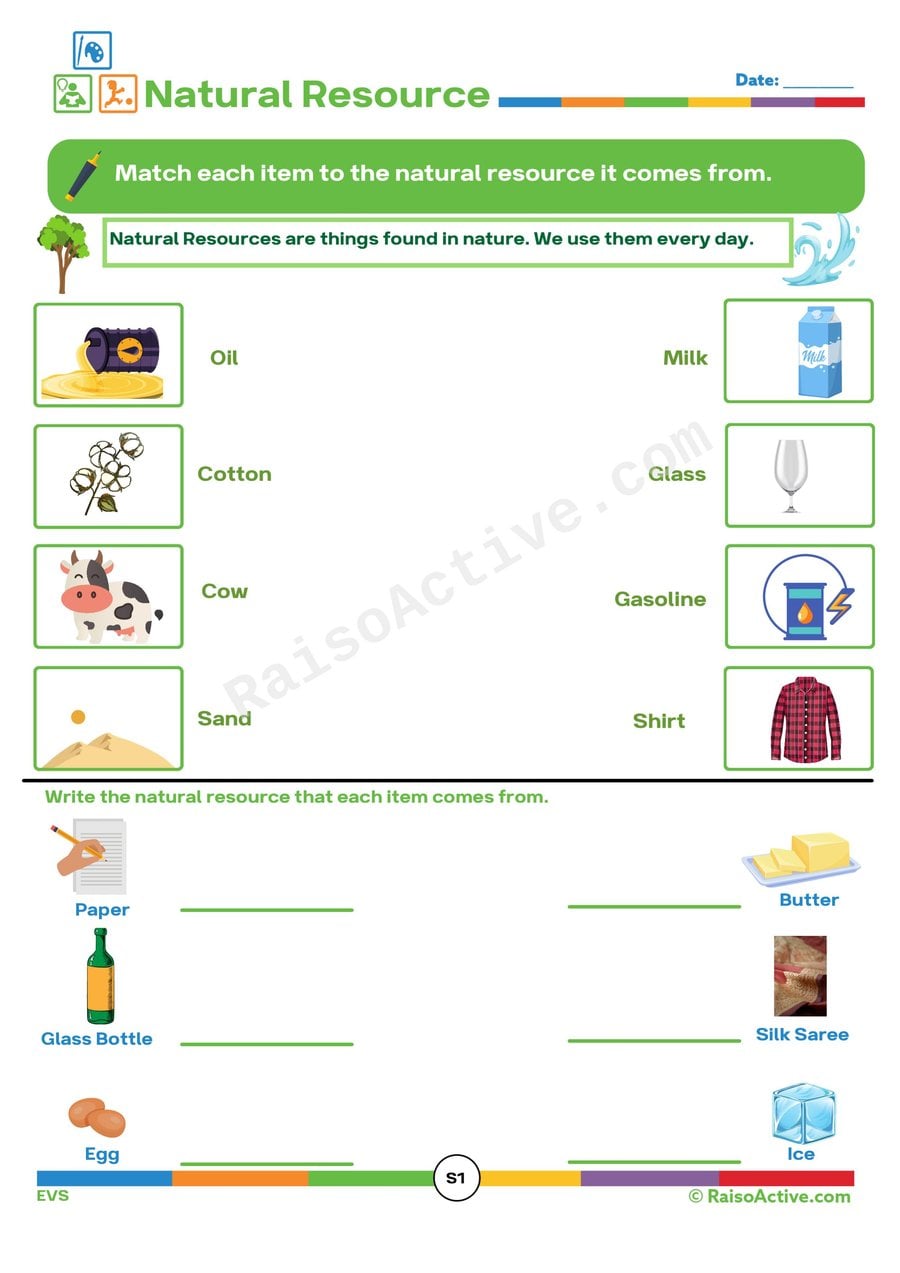
Natural Resources Matching Worksheet for Kids
This worksheet deepens understanding of natural resources by asking children to match everyday items, like paper or bread, to the natural resource they originally come from, such as trees or wheat. For ages 3-5, tracing a familiar object back to its natural source builds early cause-and-effect thinking alongside science vocabulary.

Count and Match! Number Recognition Worksheet for Preschoolers
This worksheet has preschoolers ages 3-5 practice one-to-one correspondence — touching or pointing to each object exactly once while counting — before writing the total and matching it to the correct numeral in a circle. Counting accurately requires more coordination than it looks like at this age, since children must track which objects they've already counted while saying numbers in the right order. Adding the final matching step reinforces that a written numeral represents a specific, countable quantity rather than just a symbol to memorize.

Read & Match Worksheet: Matching Sentences to Pictures
Matching a sentence to its picture through drawing a line or coloring builds reading comprehension for children ages 3-5, requiring them to process the sentence's full meaning rather than recognizing familiar words in isolation. Following this with coloring keeps the activity engaging while giving repeated visual exposure to each completed sentence-and-picture pair.

Counting Fun: Match the Numbers Worksheet for Preschoolers!
This worksheet layers three related counting skills, counting a group of objects, matching that group to its printed numeral, and matching the numeral to a set of fingers, so children see the same quantity represented three different ways. Seeing one number expressed as objects, digits, and fingers helps cement true number sense rather than just memorized counting words.
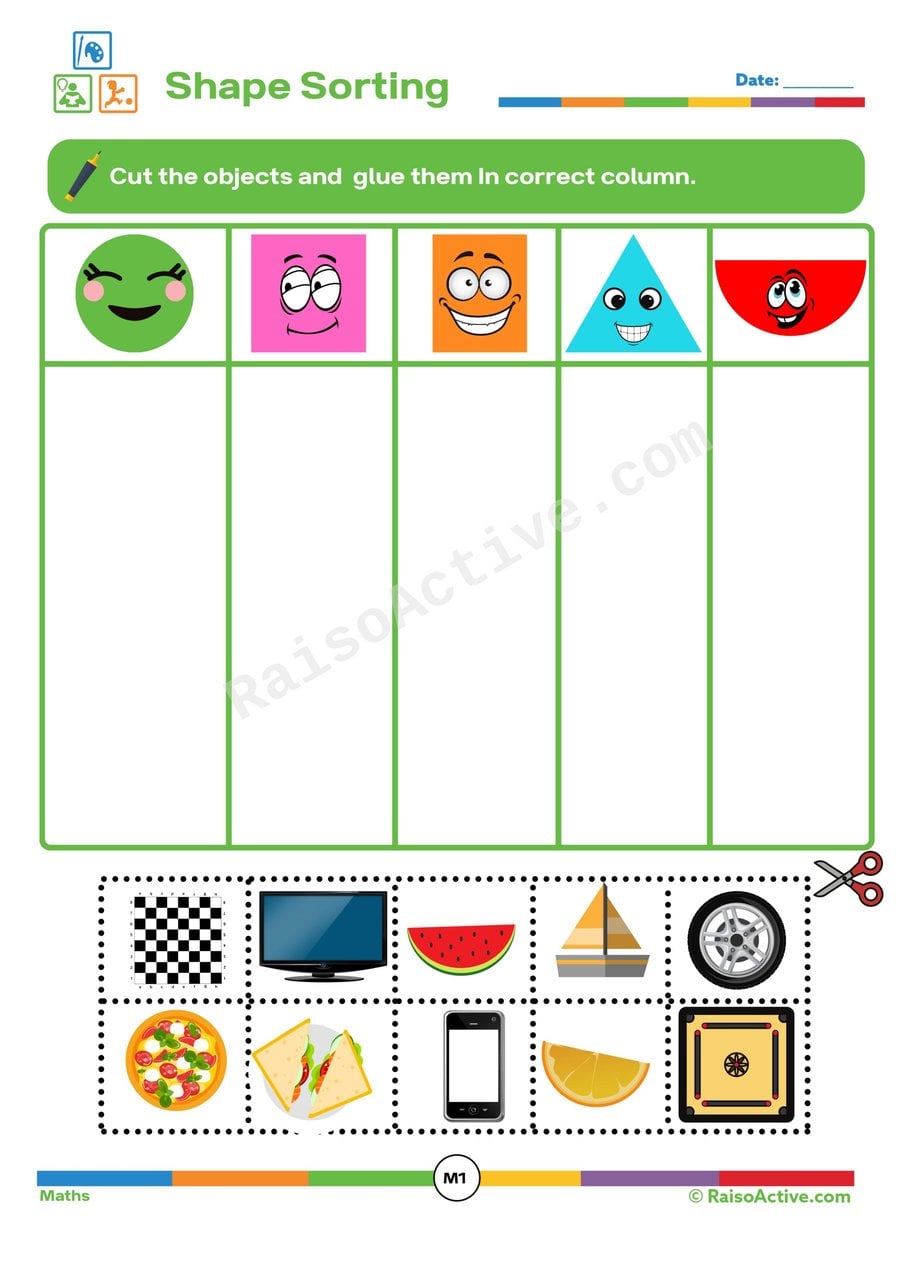
Shape Sorting Worksheet: Cut and Paste Fun!
This cut-and-paste activity asks 3-5 year olds to do more than just name a shape — they have to look at a jumble of circles, squares, and triangles, decide which column each one belongs to, and physically place it there. That sorting step is what builds real shape classification, not just shape labeling, since your child must compare each new piece against the ones already in the column. Cutting the shapes out along their curves and corners is also genuine scissor practice, since curved cuts (circles) are notably harder for small hands than straight ones (triangles, squares).

I Spy Letter and Number Matching Worksheet for Preschoolers
Finding and circling a target letter, then finding and circling its matching number before writing the letter in a blank space, gives children ages 3-5 combined practice in visual scanning, letter recognition, and number recognition within a single multi-step task. Because the activity moves between two different symbol systems, letters and numbers, children build flexible attention and the ability to switch between related but distinct types of thinking. Writing the letter as a final step also reinforces handwriting practice on top of the visual search components.
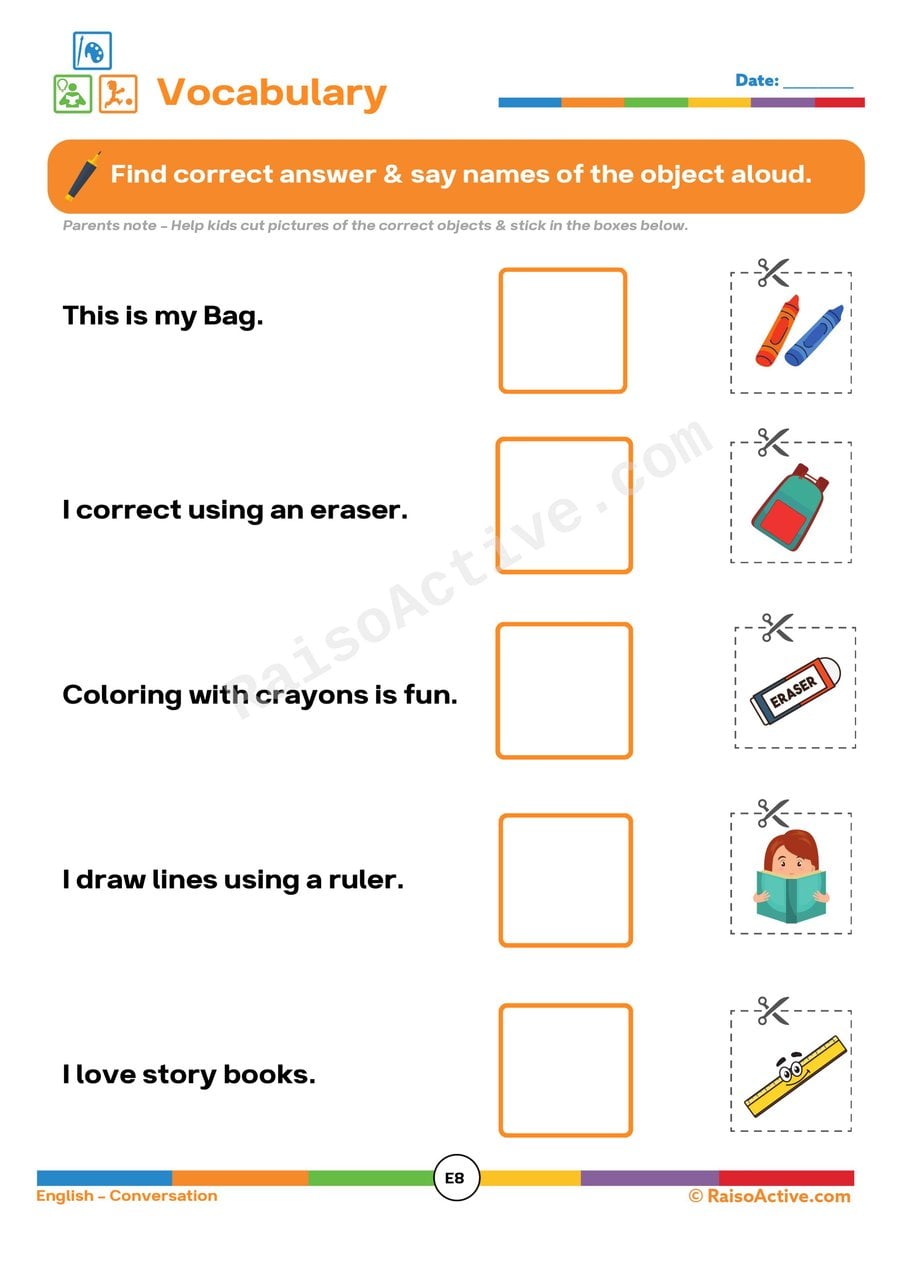
Vocabulary Fun: Match the Pictures! (Ages 3-5)
Cutting out pictures and matching them to sentences builds early reading comprehension in children ages 3-5, since they must listen to or read a sentence and connect its meaning to the correct image rather than just recognizing an isolated word. This combination of cutting, listening, and matching strengthens vocabulary retention because the word is reinforced through multiple senses at once: hearing it, seeing it in print, and seeing its picture. Pasting the correct picture into place also adds fine motor practice to the vocabulary lesson.

CVC 'am' Family Words Matching Worksheet for Preschoolers
This worksheet gives children ages 3-5 practice reading 'am' family CVC words and matching them to their corresponding pictures through coloring and line-drawing. Repetition with a single word family — sam, ham, jam, ram — helps children internalize the pattern quickly, building the foundation for tackling new word families with growing independence.

Diamond Shape Counting and Matching Worksheet for Preschoolers
This diamond-themed worksheet helps 3-5 year olds tell a diamond apart from squares, circles, and triangles by its four slanted sides and pointed top and bottom, a shape many preschoolers find trickier than rounder or more symmetrical ones. Counting the diamonds one at a time builds one-to-one correspondence, and matching same-sized diamonds strengthens visual discrimination, the skill of spotting small differences between similar-looking shapes.
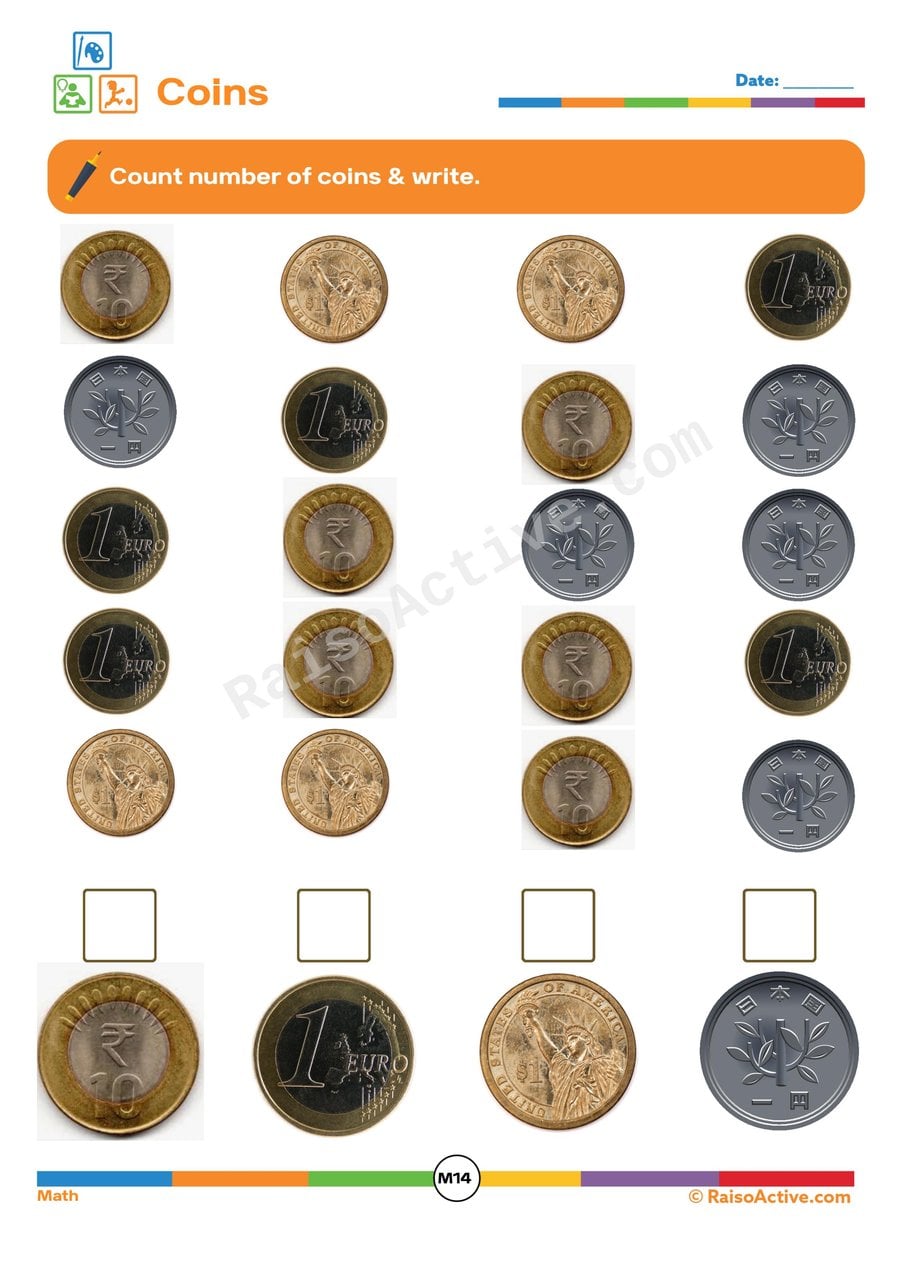
Coin Counting Worksheet for Preschoolers
Counting coins introduces children ages 3-5 to an early form of real-world numeracy, since recognizing different coin types by sight and counting how many of each appear builds both visual discrimination and one-to-one counting practice with a practical, everyday application. This worksheet keeps the task simple by having children count quantities of each coin type rather than calculating monetary value, which is developmentally appropriate for this age before formal money-math skills are introduced. It also plants the early seed of understanding that different coins look different and can be sorted by type.
What preschool math includes
Early math at three and four is broader than numbers. The Head Start Early Learning Outcomes Framework describes counting and cardinality, operations and algebraic thinking (which at this age means combining and separating small groups, and patterns), measurement (comparing size, length and weight) and geometry and spatial sense (shapes and position words). Most state preschool guidelines follow the same four strands.
- Counting: rote counting to 10 and beyond, one-to-one counting of up to 5 then 10 objects, knowing the last number is how many
- Numerals: recognizing 1 to 5, then 1 to 10; matching a numeral to a set
- Shapes: circle, square, triangle and rectangle in any orientation; finding shapes in pictures
- Sorting and patterns: sorting by one attribute; copying and continuing AB patterns
- Comparison and measurement: big and small, long and short, more and fewer, heavy and light
Counting with one-to-one correspondence
Watch a three-year-old count a row of five blocks: the finger moves faster than the words, or slower, and the answer is seven or four. That is normal. One-to-one correspondence develops through touching, moving and lining up objects, so worksheets help most when the child puts a finger or a dot on each picture as they count. Sheets with objects in a neat row are easier than scattered arrangements, and sets of 3 to 5 should be secure before sets to 10.
How to use these worksheets at home
Count out loud all day: steps, spoons, buttons on a coat. Then use a sheet to do the same thing on paper, with a crayon dot on every object. Five minutes is enough at three. For shapes, go on a shape hunt around the room before the sheet. For sorting, tip out a box of buttons or blocks first. Skip any sheet that asks for numeral writing until your child can hold a crayon comfortably and trace lines.
Frequently asked questions
What math should a 3-year-old know?
Typical three-year-old math milestones are counting to 5 or 10 by rote, counting 3 or 4 objects with one-to-one correspondence, recognizing when there are one, two or three things without counting, naming a circle and maybe a square, sorting by color, and using words like big, small, more and all gone. By four most children count to 10 with correspondence and recognize several numerals. These are ranges, not requirements.
What is one-to-one correspondence?
One-to-one correspondence is matching one number word to one object while counting, so that five blocks are counted as one, two, three, four, five with no skipped or double-counted blocks. It is the foundation of real counting and develops between ages two and four through handling objects. A child who has it can also match one cup to one plate at the table, or one sticker to each picture on a page.
Should preschoolers write numbers?
Not until their pencil control is ready, which for most children is closer to four than three. Preschool math is about quantity and counting, not numeral writing; recognizing the numeral 3 and matching it to three objects comes well before writing it. Tracing large numerals with a finger, in sand or on a screen, is a good bridge. Formal numeral writing to 10 is a Pre-K and kindergarten skill.
What is the difference between preschool math and Pre-K math?
Preschool math (ages 3–4) works within 5 and then 10, with the emphasis on counting objects, sorting, shapes and size words. Pre-K math (ages 4–5) extends rote counting to 20, adds numeral writing to 10, compares sets to say which has more, introduces ABC patterns and positional words, and begins combining and separating small groups, which leads into kindergarten addition. Pre-K sheets also assume a working pencil grip.
Are preschool math worksheets free?
Yes. All worksheets download free as watermarked PDFs after you create an account, with a limit of five a day. An annual subscription removes the watermark and the daily cap for the whole library of over 1,000 worksheets and the printable activity-book packs. Sheets print on US Letter or A4.

Written by
Hemsweta Jain · Teacher Cheena
MBA and Early Childhood Educator, teaching since 2014 · Founder of RaisoActive, Mumbai
Written and reviewed by Hemsweta Jain (Teacher Cheena), who designs every RaisoActive worksheet.
Last reviewed
Printable packs for ages 3–4
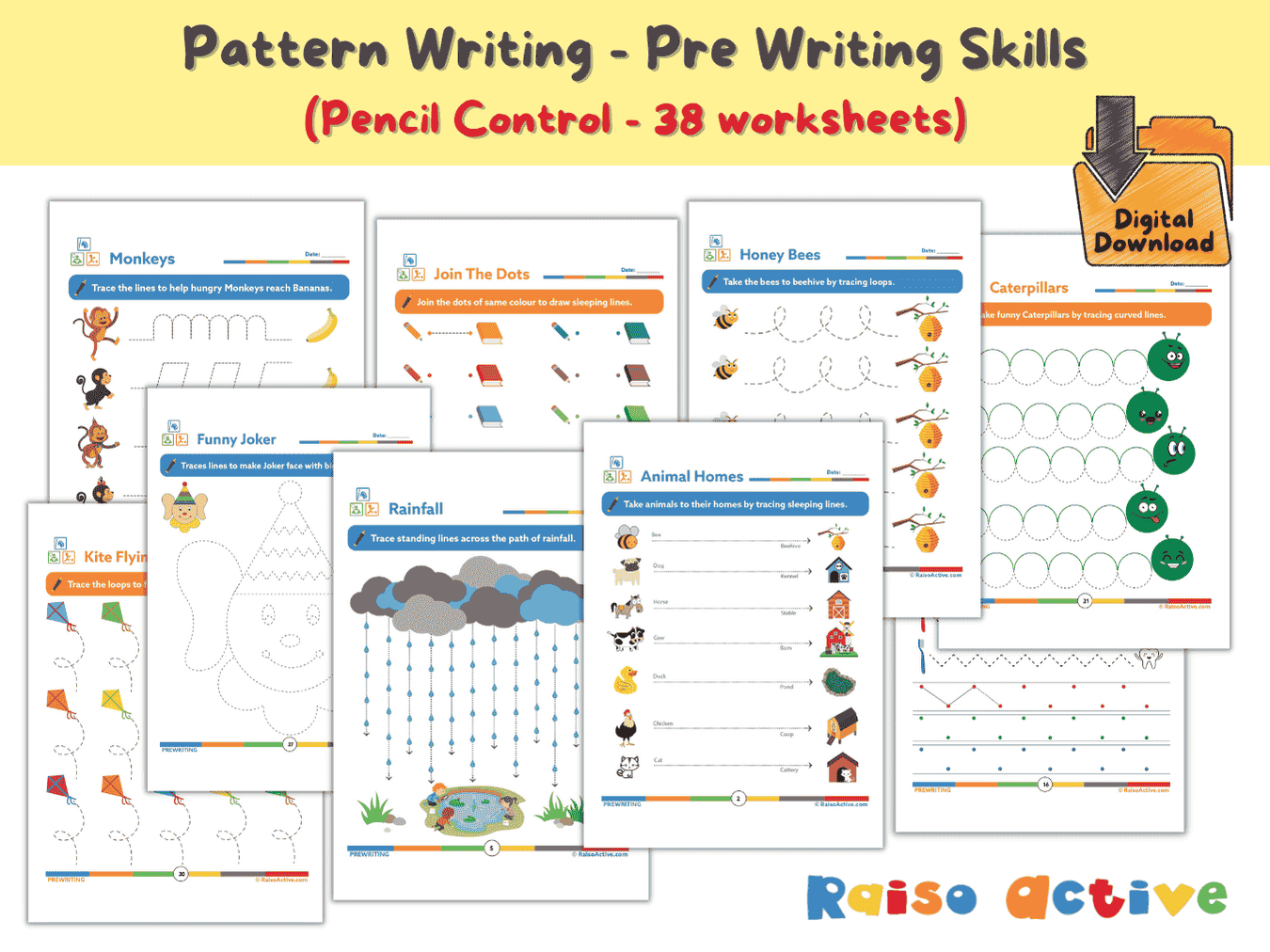
Pattern Writing Pre-writing Skills Activity Book for 3-4 Year Olds
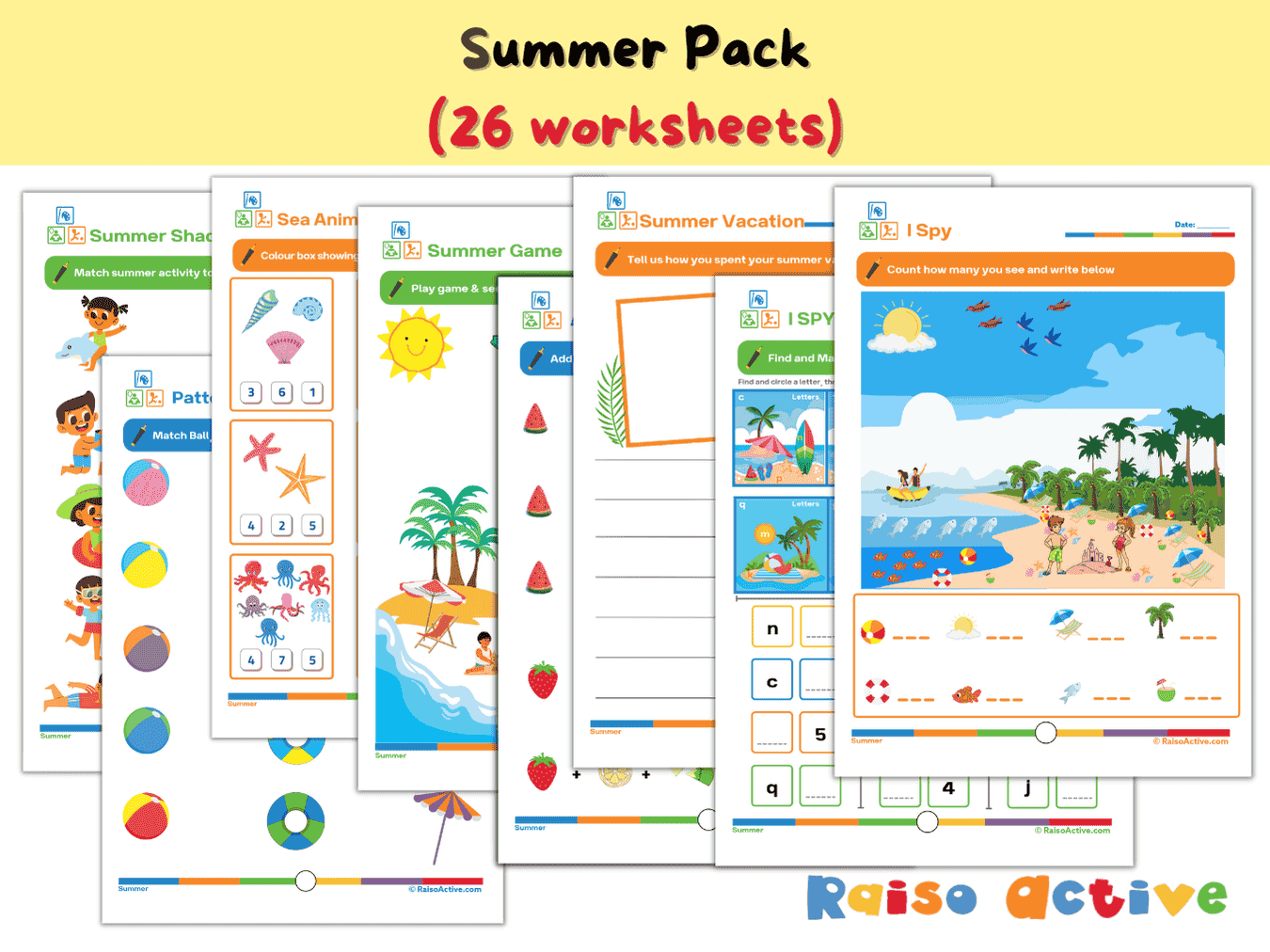
Summer Activity Pack: Math, Literacy, Puzzles & More for Preschool & Kindergarten
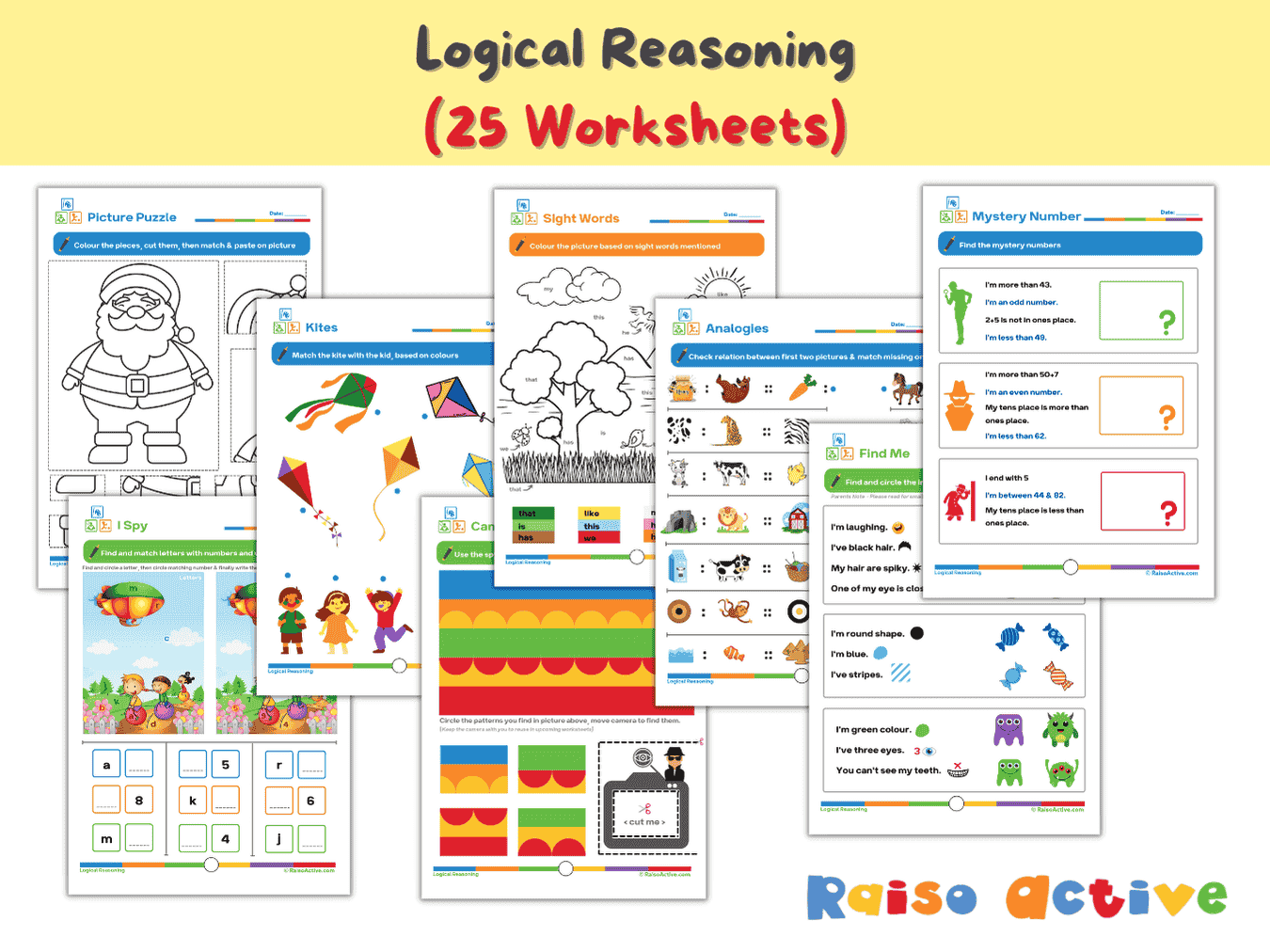
Logical Reasoning Activity Book for Preschool & Kindergarten | Patterns, Puzzles & Analogies
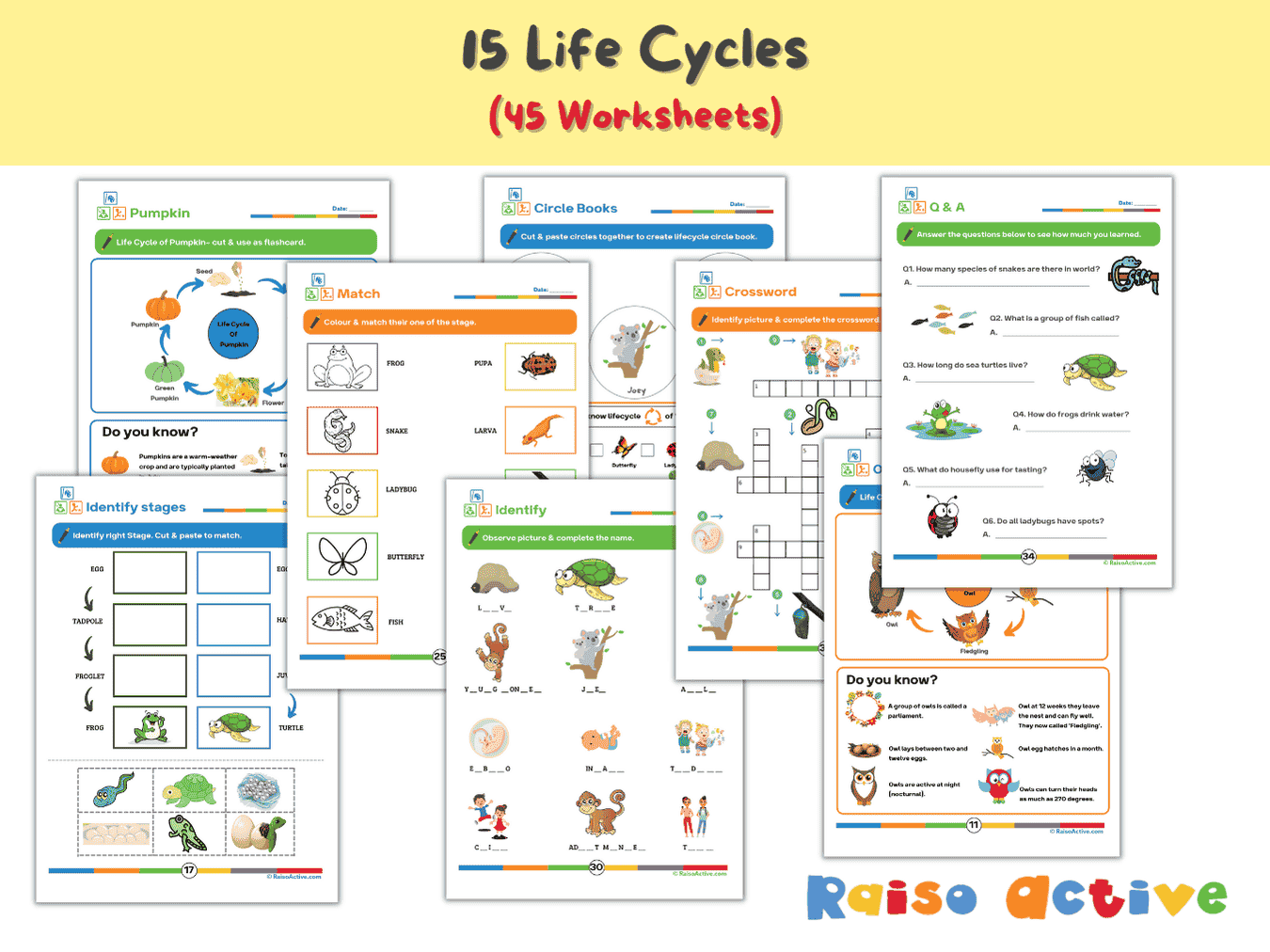
Lifecycles Activity Book & Flashcards for Preschool & Early Elementary
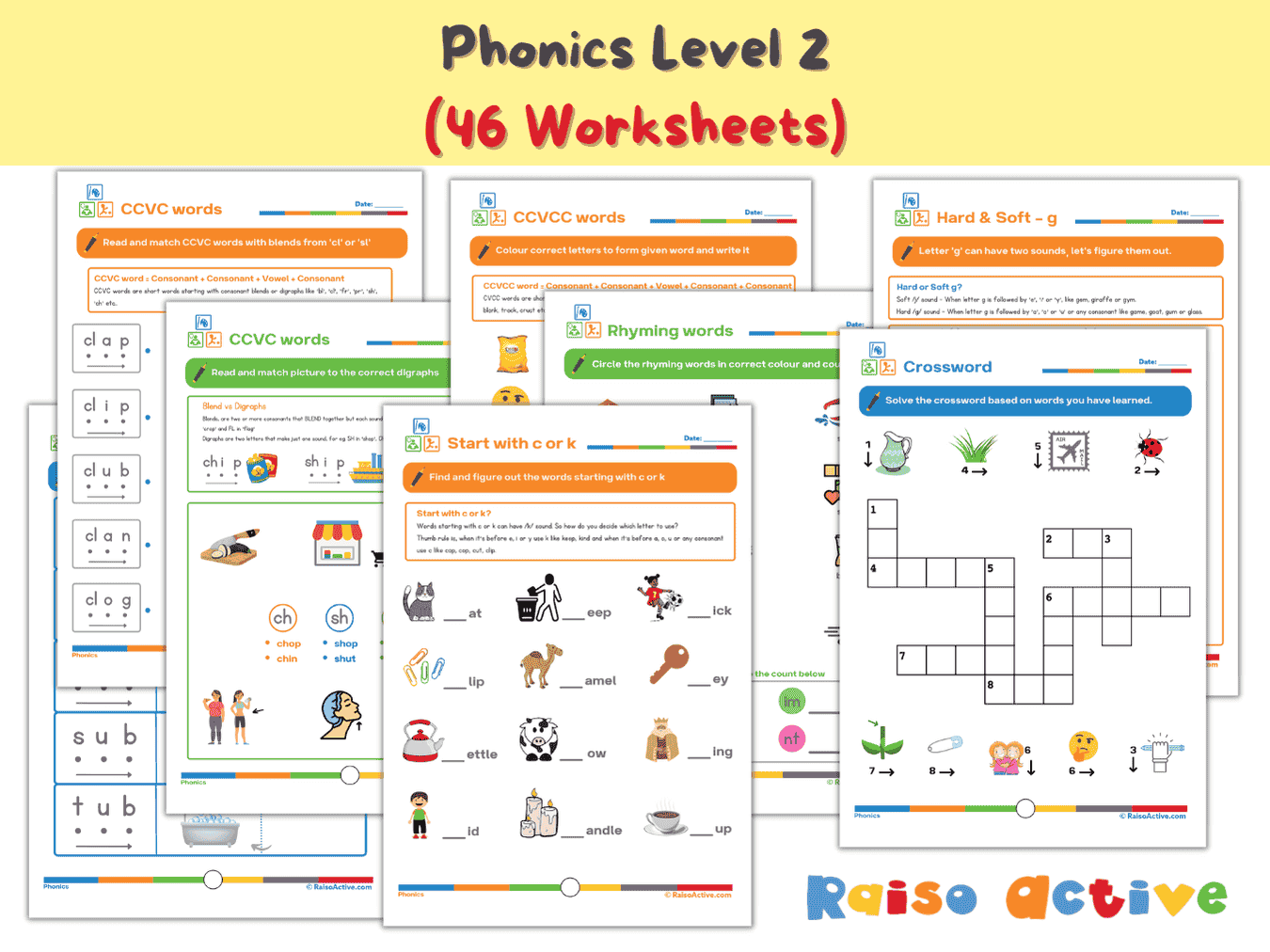
Phonics Level 2 Worksheets: CVC, CCVC, CVCC Word Families & Blends for Early Readers (Ages 4-7)
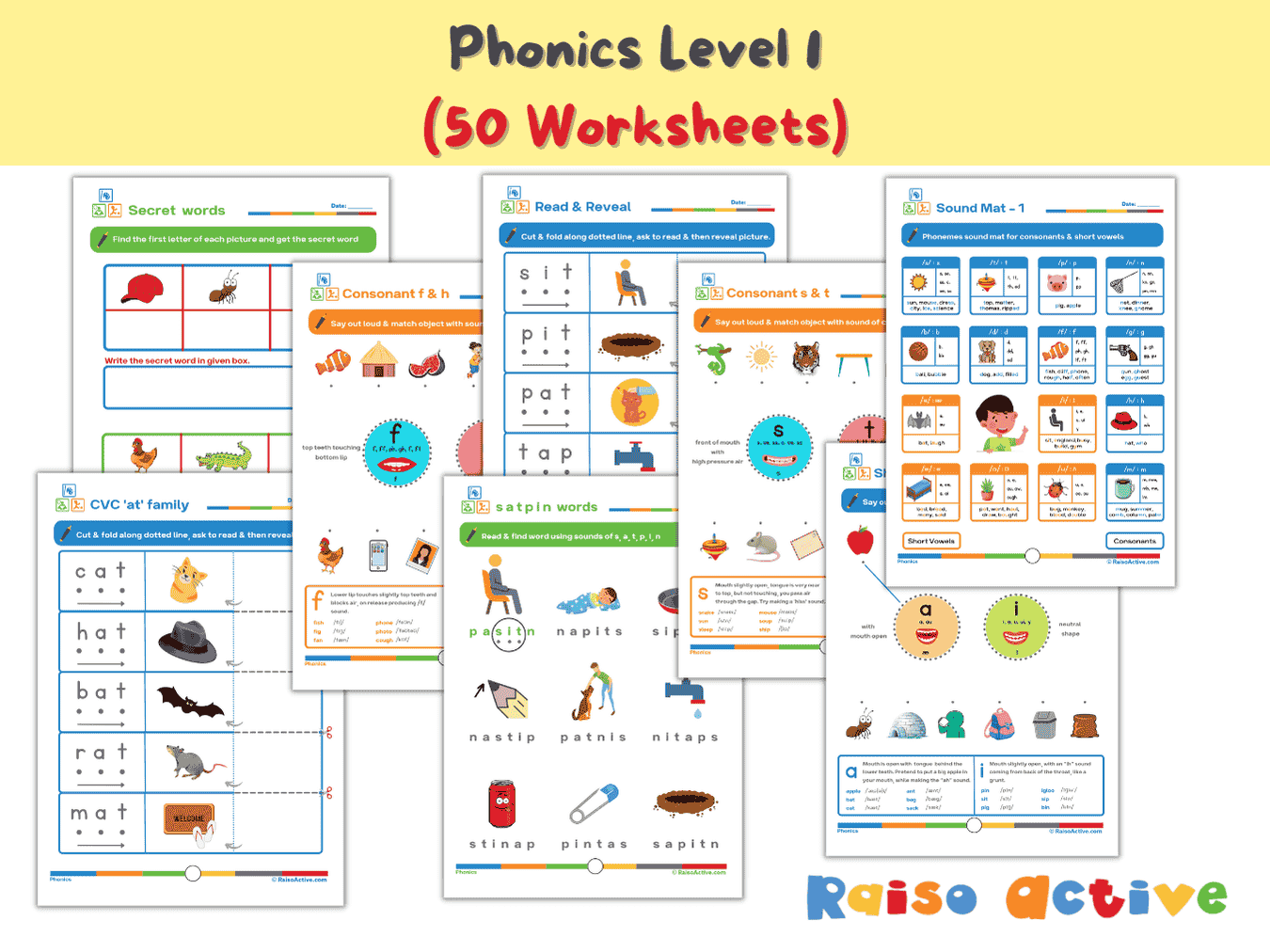
Phonics Level 1 Activity Book: Letter Sounds, Blending & CVC Words for Preschool & Kindergarten
Guides for parents and teachers
See all guides →Number Formation Rhymes 0–9 and How to Fix Reversals
Original number formation rhymes for 0–9, the correct stroke order for each digit, why 3, 5 and 7 get reversed most often, and multisensory fixes that work.
Kindergarten Readiness Checklist: 25 Skills to Practice Before the First Day
A kindergarten readiness checklist of 25 literacy, math, motor, self-regulation and self-help skills, with an 8-week summer plan and notes on when not to worry.
UKG Syllabus Explained: English, Maths and EVS Month by Month
What UKG classes typically cover in English, maths and EVS, month by month, aligned to NEP 2020, with ways to support at home and signs your child is behind.
What Should a 4-Year-Old Know Before LKG? A Readiness Checklist
A calm, teacher-written LKG readiness checklist for 4-year-olds: language, pattern writing, numbers to 10, self-help and social skills, plus a 6-week plan.
Age-Appropriate Problem-Solving Activities: Building Critical Thinkers from the Ground Up
Discover fun, age-appropriate problem-solving activities for children ages 1-8. Build critical thinking, logic, and reasoning skills through play-based learning.
Montessori Activities for 3-4 Year Olds: A Complete Guide to Purposeful Learning
Discover practical Montessori activities for 3-4 year olds — practical life, sensorial, language, and maths — with Indian kitchen adaptations and budget shelf ideas.
Canonical: https://raisoactive.com/worksheets/preschool-math