Number Formation Rhymes 0–9 and How to Fix Reversals
Author
RaisoActive - Kids Activities and Fun Learning
Published
Reading Time
6 min read
- A short rhyme paired with the correct stroke order gives a child both a starting point and a story to say while writing each digit
- 3, 5 and 7 are reversed most often because each one starts with a curve or diagonal that is easy to flip left-to-right in a still-developing visual memory
- Multisensory practice — big arm movements, sand or textured tracing, saying the rhyme aloud while writing — corrects reversals faster than pointing them out after the fact
- Occupational therapists generally treat numeral reversals as a typical part of learning up to around age 7
- A five-minute daily routine, done consistently, resolves most reversals faster than occasional correction ever does
A Rhyme and a Stroke Order for Every Digit
Pairing each digit with a short rhyme and a fixed starting point gives a child something to say while their hand moves, which anchors the stroke order in memory far better than watching an adult write it once. Below is an original rhyme for each digit, 0 through 9, along with the stroke order it describes — useful whether your child's classroom calls this stage Kindergarten, Reception, or UKG.
A rhyme only works if it matches the motion exactly, so read each one while tracing the digit yourself before teaching it, and always start from the same point every time. Consistency in the starting dot matters more than almost anything else described in this guide, and it pays off directly in everyday counting once a child can write the numerals they are counting with confidence.
- 0: "Start up high, curve all the way round, back to the top is where zero is found." Start near the top, curve counterclockwise all the way around, and close where you began.
- 1: "Straight down tall, like a soldier so proud — that's the only stroke a one is allowed." A single straight line, top to bottom.
- 2: "Curve at the top, slide down to the floor, then a flat little path right out the door." Curve from the top down to the bottom-left, then a flat line across to the right.
- 3: "Two little bumps, both facing the sun — curve, then curve again, and three is done." Two curves stacked one above the other, both opening to the left.
- 4: "Down, then across, then straight down through — that crossing line is how you make four." A diagonal line down, a flat line across, then a separate vertical line down through it.
- 5: "Down first, then swing out wide and around, finish with a hat sitting flat on the ground." A short line down, a curve out and around at the bottom, then a flat line across the top.
- 6: "Swoop down low, then curl into a loop — round at the bottom is how six makes its group." A curving line down that loops into a small circle at the bottom.
- 7: "Straight across the top, then slide on down — a corner turn is all seven needs found." A flat line across the top, then a diagonal line down to the bottom-left.
- 8: "Loop at the top, cross in the middle, loop at the bottom — that's the eight riddle." Two loops stacked on top of each other, crossing once in the middle.
- 9: "A little loop up top, then straight down below — that's the whole story of how nine will go." A small circle at the top, then a straight line down from it.
Why 3, 5 and 7 Get Reversed the Most
Left and right are not built into a young child's brain the way up and down are — a child learns which way is left long after they reliably know which way is down, because gravity gives constant, obvious feedback for one and nothing at all for the other. A digit like 3, which opens to the left with two curves, is genuinely easy to picture flipped, because a mirrored 3 is still a completely coherent, familiar-looking shape — it just faces the wrong way.
5 and 7 reverse for a related but slightly different reason: both start with a stroke that has a clear direction — a line down for 5, a line across for 7 — and a child who has not yet locked in the starting point can begin the digit from the wrong side of the page and produce a shape that is internally consistent but mirrored. Straight, single-direction digits like 1 are almost never reversed, because there is no left-right choice to get backwards in the first place.
Multisensory Fixes That Work Faster Than Correction Alone
Pointing out a reversal after it happens teaches a child what not to do, but it does not teach the correct motion, which is what actually needs to change. Multisensory practice — engaging touch, movement and sound at the same time as sight — builds the correct motion into muscle memory instead of relying on visual memory alone, which is exactly the memory that is still developing at this age.
- Big before small: trace the digit in the air with a whole-arm sweep, then in a tray of sand, salt or shaving foam, before ever picking up a pencil — the same big-to-small progression used for general handwriting practice works just as well for numbers
- Say it while you write it: reciting the rhyme aloud during every attempt links the words, the sound and the motion together
- Mark the starting point: a small dot or sticker at the exact starting spot removes the guesswork that often causes a reversal in the first place
- Compare, don't just correct: show the correct digit and a mirrored version side by side and ask "which way does ours go?" — this builds the visual discrimination a simple correction skips
- Trace over a model, then copy it, then write it alone: fading the support gradually works better than switching straight from guided tracing to independent writing
When Reversals Stop Being Typical
Occasional reversals of numbers and letters are a normal part of learning to write for most children through kindergarten and into the early primary years, and many pediatric occupational therapists treat them as typical up to around age 7. What matters more than any single reversal is the trend: a five-year-old who still flips 3, 5 and 7 sometimes is well within the ordinary range for 4-year-olds and 5-year-olds alike, while a seven- or eight-year-old whose reversals have not decreased with consistent practice is worth mentioning to a teacher.
Persistent reversals alone are not a reliable sign of dyslexia or another learning difference — plenty of children reverse numbers for a while and go on to write and read with no difficulty at all. A pattern worth raising with a teacher or pediatrician looks like reversals that continue well past age 7 alongside other signs, such as ongoing letter confusion, slow reading progress, or difficulty with rhyming and sound blending.
A Five-Minute Daily Practice Routine
Step 1: Warm Up With Big Movements
Trace the digit you are working on in the air with a full arm movement, three times, saying the rhyme each time. This wakes up the shoulder and wrist before asking for small, precise pencil control.
Step 2: Trace While Saying the Rhyme
Trace a printed or dotted version of the digit while saying its rhyme aloud, starting from the marked dot every single time. Two or three careful traces beat ten rushed ones.
Step 3: Write It Alone, Still Talking
Have your child write the digit independently while still saying the rhyme out loud. The words carry the stroke order even after the visual guide is removed.
Step 4: Check the Starting Point
If the result is reversed, don't erase it immediately — ask your child to point to where they started. Most reversals trace back to a wrong starting point, and naming it out loud helps more than a quiet correction.
Step 5: Revisit Yesterday's Tricky Digit
Finish by writing the digit that was hardest the day before, one more time. A short daily callback keeps a stubborn reversal from settling back in overnight.
- **For 3**: draw two small dots, one above the other, slightly to the right, and have your child curve toward each dot in turn — this fixes the direction the bumps should open
- **For 5**: mark the starting dot at the top-left and insist the first stroke always goes straight down before anything else happens, since starting with the hat or the curve is what usually causes the flip
- **For 7**: have your child say "across, then down" as two distinct, separate actions rather than one continuous motion, which reinforces that the flat line always comes first
- Keep a small mirror nearby for a child who reverses often — comparing their written digit to its reflection is a quick, concrete way to show what "backwards" actually looks like
- Resist erasing and demanding a redo every single time — occasional, calm correction paired with the routine above changes the habit faster than frequent erasing, which mostly adds frustration
A reversal shows where a child's hand and visual memory currently are — it is a normal stage, not a red flag on its own.
Number reversals fade fastest with short, repeated, multisensory practice rather than with correction alone or with worry. Keep the rhyme, the starting dot and the daily five minutes consistent, and most children move past 3, 5 and 7 reversals well before the age when they would be worth raising with a teacher.
Number reversal questions parents ask
Is number reversal a sign of dyslexia?
What age should number reversals stop?
My child writes 3 backwards every single time. What do I do?
Do left-handed children reverse numbers more often?
Should I make my child erase and rewrite every reversed number?
Reversals Fade With Practice, Not Panic
A backwards 3 or 7 on a page of otherwise careful number practice is a snapshot of where a child's hand and eye currently are, not a permanent trait. Keep the rhymes consistent, mark the starting point every time, and give it a few unhurried weeks of number tracing before expecting the reversals to disappear on their own — the same numerals will soon show up correctly formed across every page of kindergarten math practice that follows.
Free worksheets for this topic
Browse all worksheets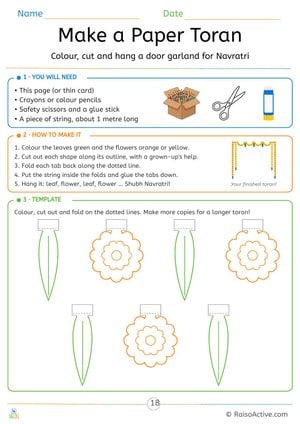
Make a Paper Toran: Navratri Craft Template
Ages 4-6 · Pre-K–KindergartenAges 4-6 · Reception–Year 1Ages 4-6 · LKG–UKGAges 4-6
Children follow step-by-step instructions to colour, cut, fold and glue a festival decoration, building scissor skills and fine motor control.
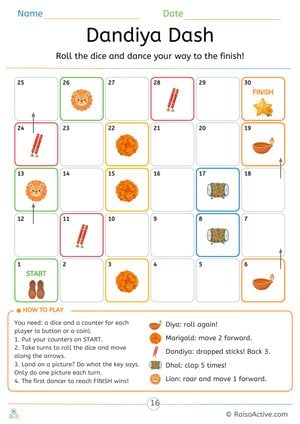
Dandiya Dash: Navratri Board Game for Kids
Ages 4-6 · Pre-K–KindergartenAges 4-6 · Reception–Year 1Ages 4-6 · LKG–UKGAges 4-6
Children count dots on a dice, count on along a number track to 30, take turns and follow simple game rules.
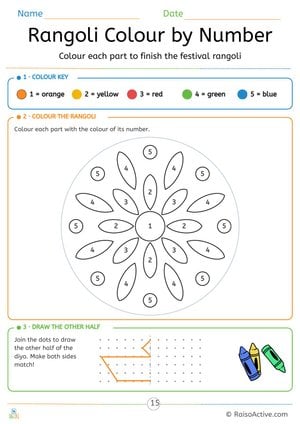
Navratri Rangoli Colour by Number and Symmetry Diya
Ages 4-6 · Pre-K–KindergartenAges 4-6 · Reception–Year 1Ages 4-6 · LKG–UKGAges 4-6
Children match numbers to colours using a key, colour a rangoli pattern carefully and draw the other half of a shape so both sides match.
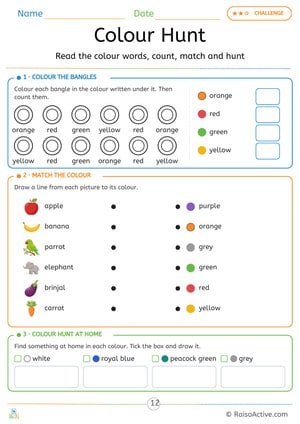
Navratri Colour Hunt: Colour Words, Matching and Bangles
Ages 4-6 · Pre-K–KindergartenAges 4-6 · Reception–Year 1Ages 4-6 · LKG–UKGAges 4-6
Children read colour words, colour bangles to match, count how many of each colour, match everyday things to their colours and find colours around the home.

Written by
Hemsweta Jain · Teacher Cheena
MBA and Early Childhood Educator, teaching since 2014 · Founder of RaisoActive, Mumbai
Published · Last reviewed
Related Resources
Printable Resources(10)
View all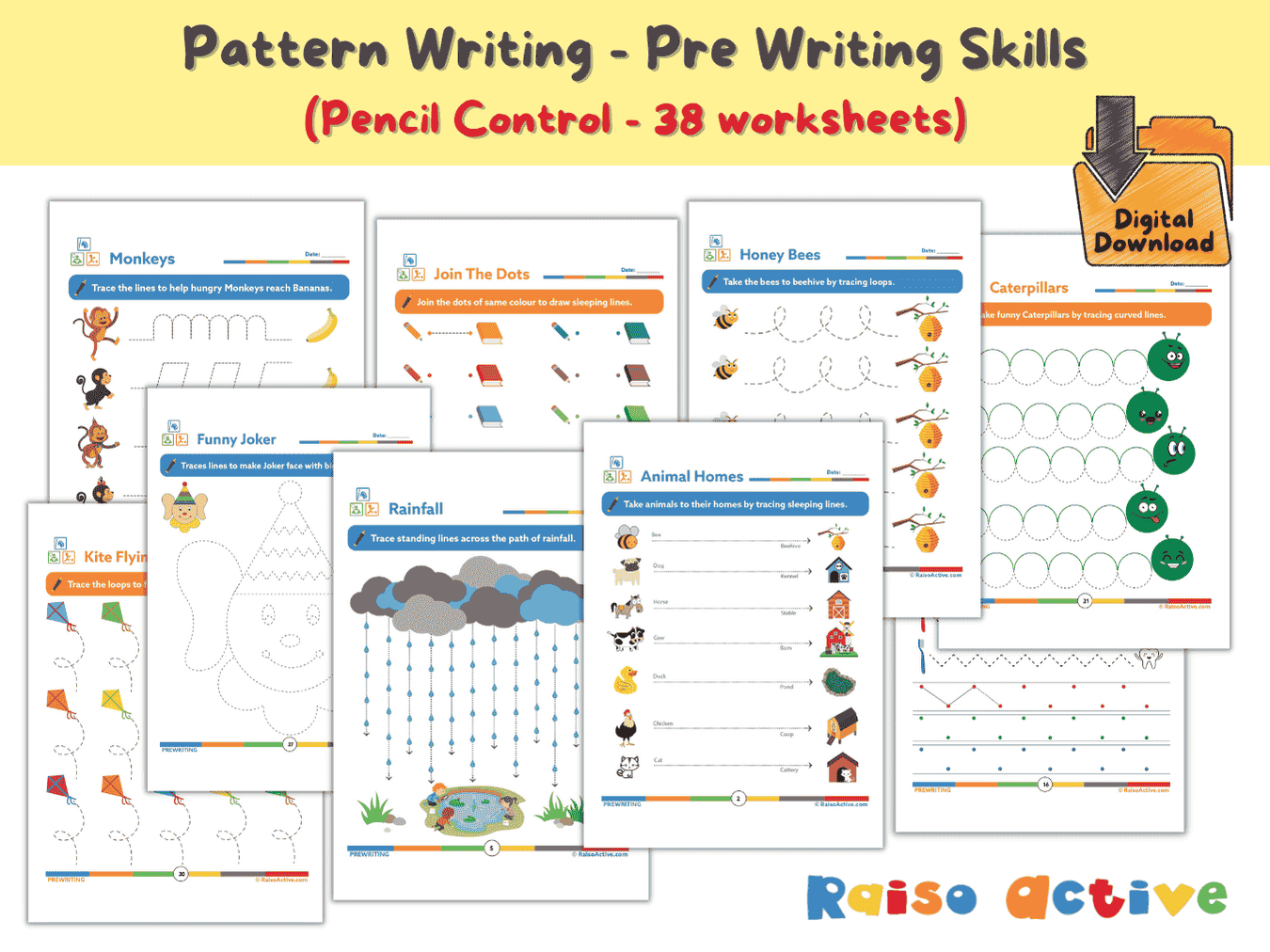

Pattern Writing Pre-writing Skills Activity Book for 3-4 Year Olds
Ages 3-4 · PreschoolAges 3-4 · NurseryAges 3-4 · 44 pages
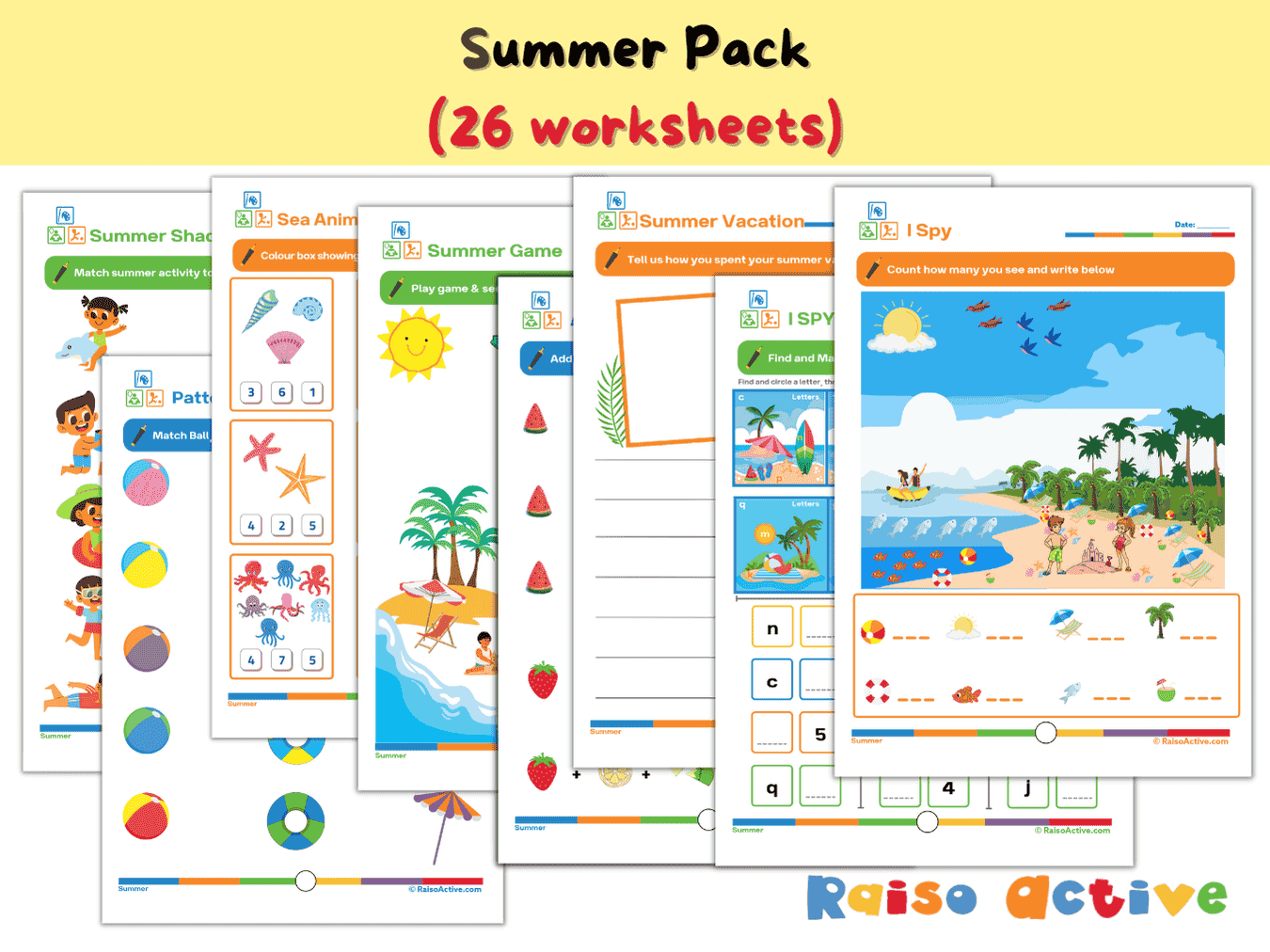

Summer Activity Pack: Math, Literacy, Puzzles & More for Preschool & Kindergarten
Ages 3-7 · Preschool–Grade 1Ages 3-7 · Nursery–Year 2Ages 3-7 · Nursery–Class 1Ages 3-7 · 26 pages
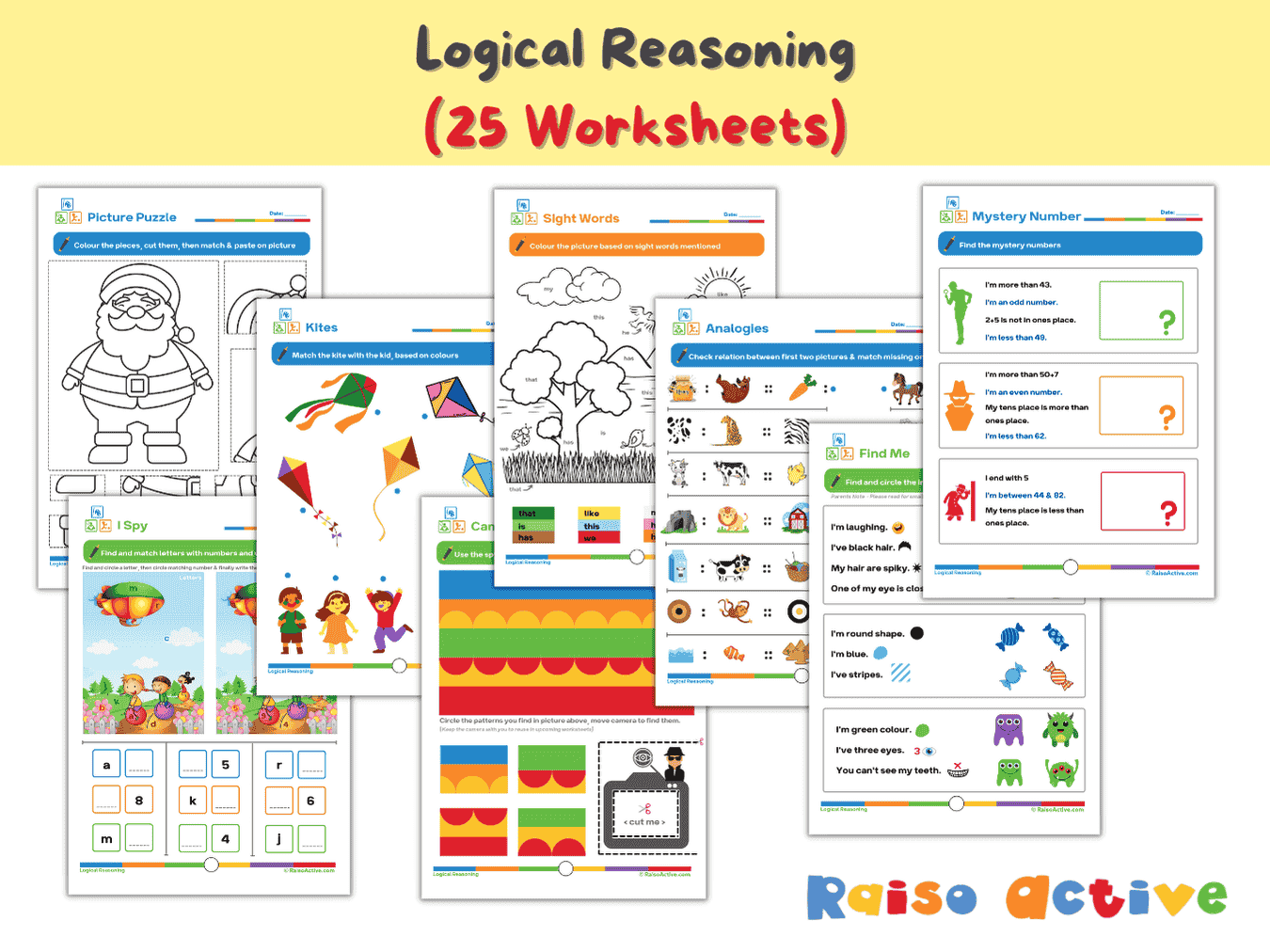

Logical Reasoning Activity Book for Preschool & Kindergarten | Patterns, Puzzles & Analogies
Ages 4-7 · Pre-K–Grade 1Ages 4-7 · Reception–Year 2Ages 4-7 · LKG–Class 1Ages 4-7 · 26 pages
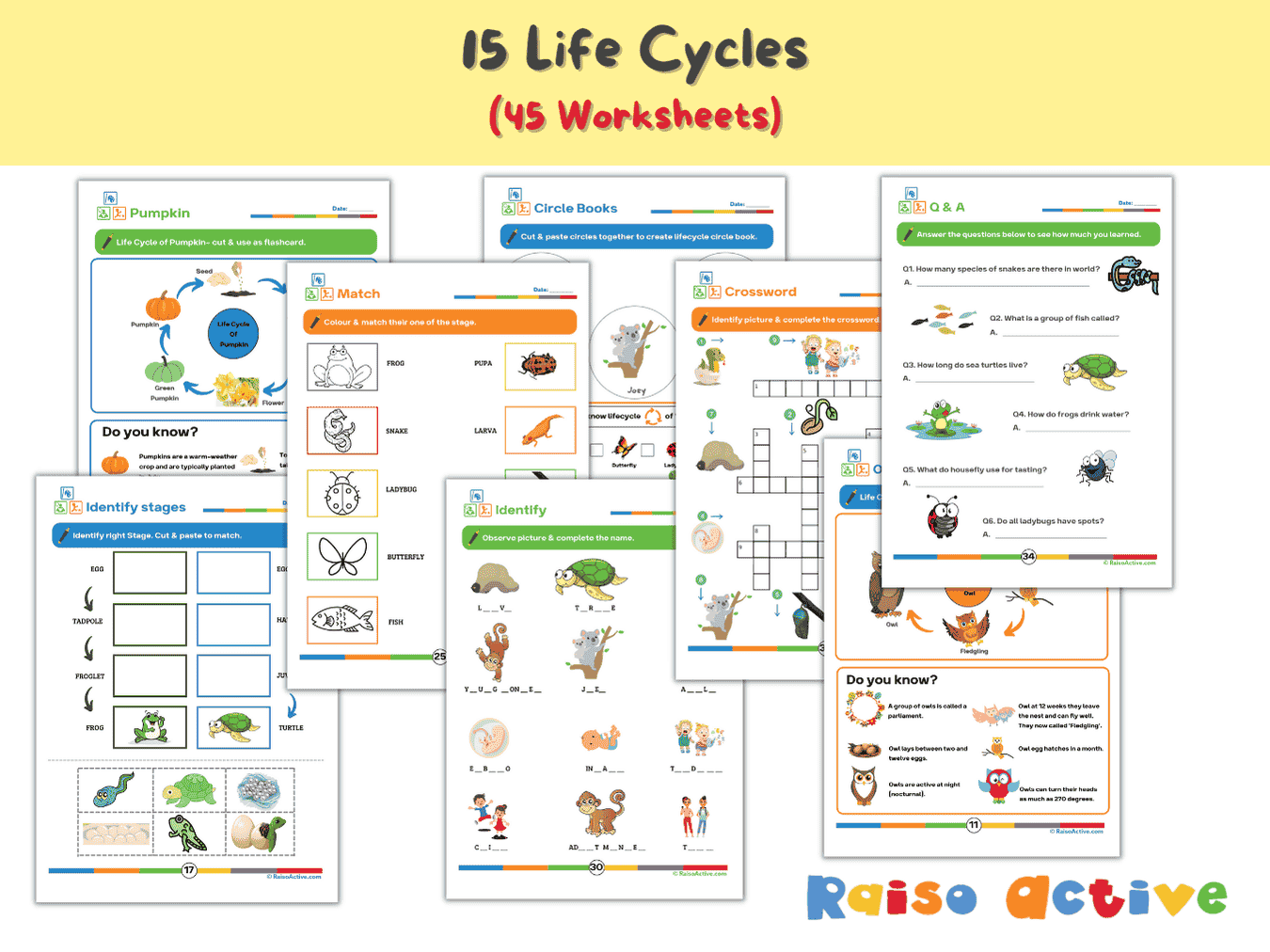

Lifecycles Activity Book & Flashcards for Preschool & Early Elementary
Ages 3-8 · Preschool–Grade 2Ages 3-8 · Nursery–Year 3Ages 3-8 · Nursery–Class 2Ages 3-8 · 46 pages
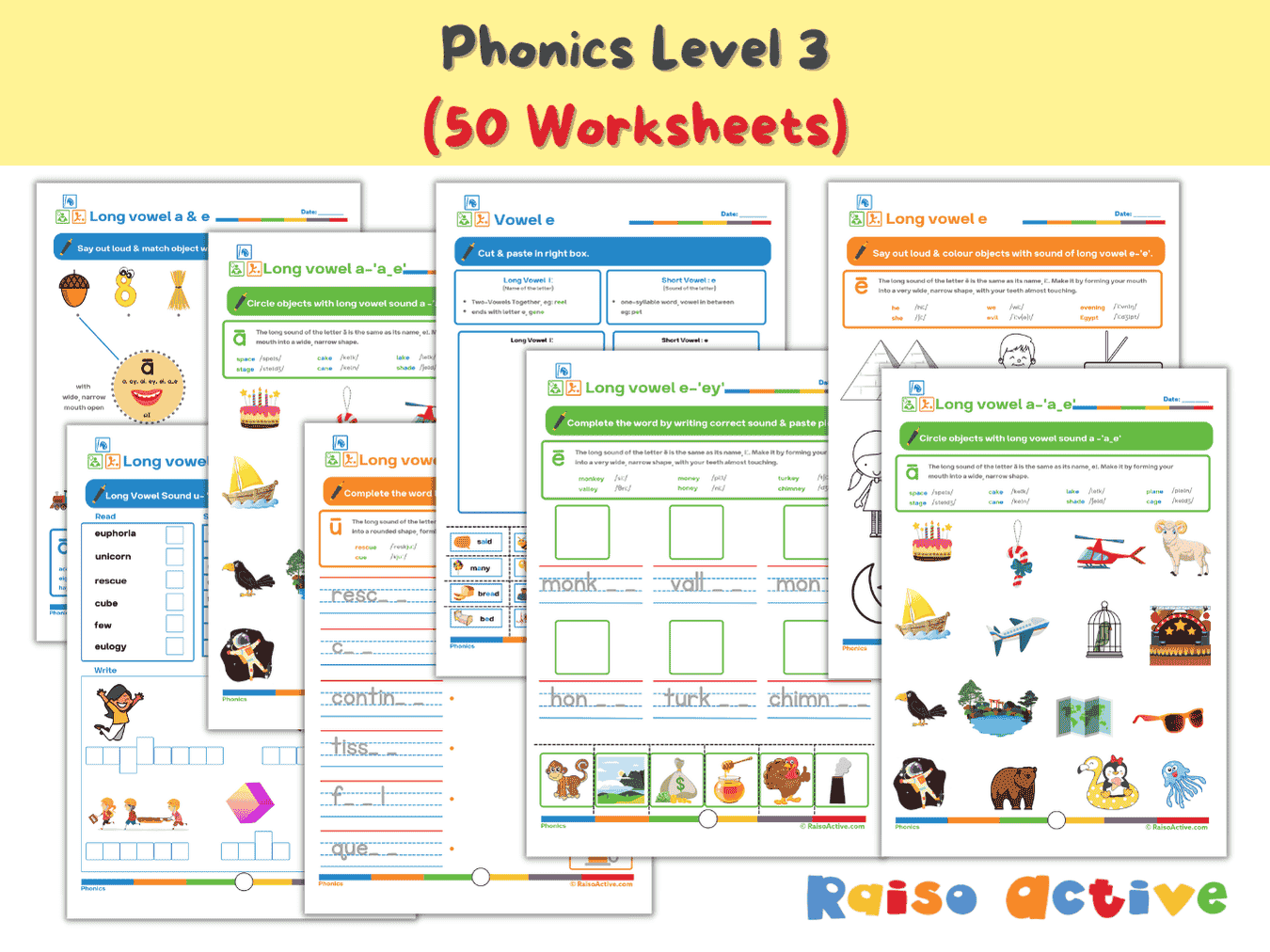

Phonics Level 3 Long Vowels Activity Book for Kindergarten & 1st Grade
Ages 5-7 · Kindergarten–Grade 1Ages 5-7 · Year 1–Year 2Ages 5-7 · UKG–Class 1Ages 5-7 · 51 pages
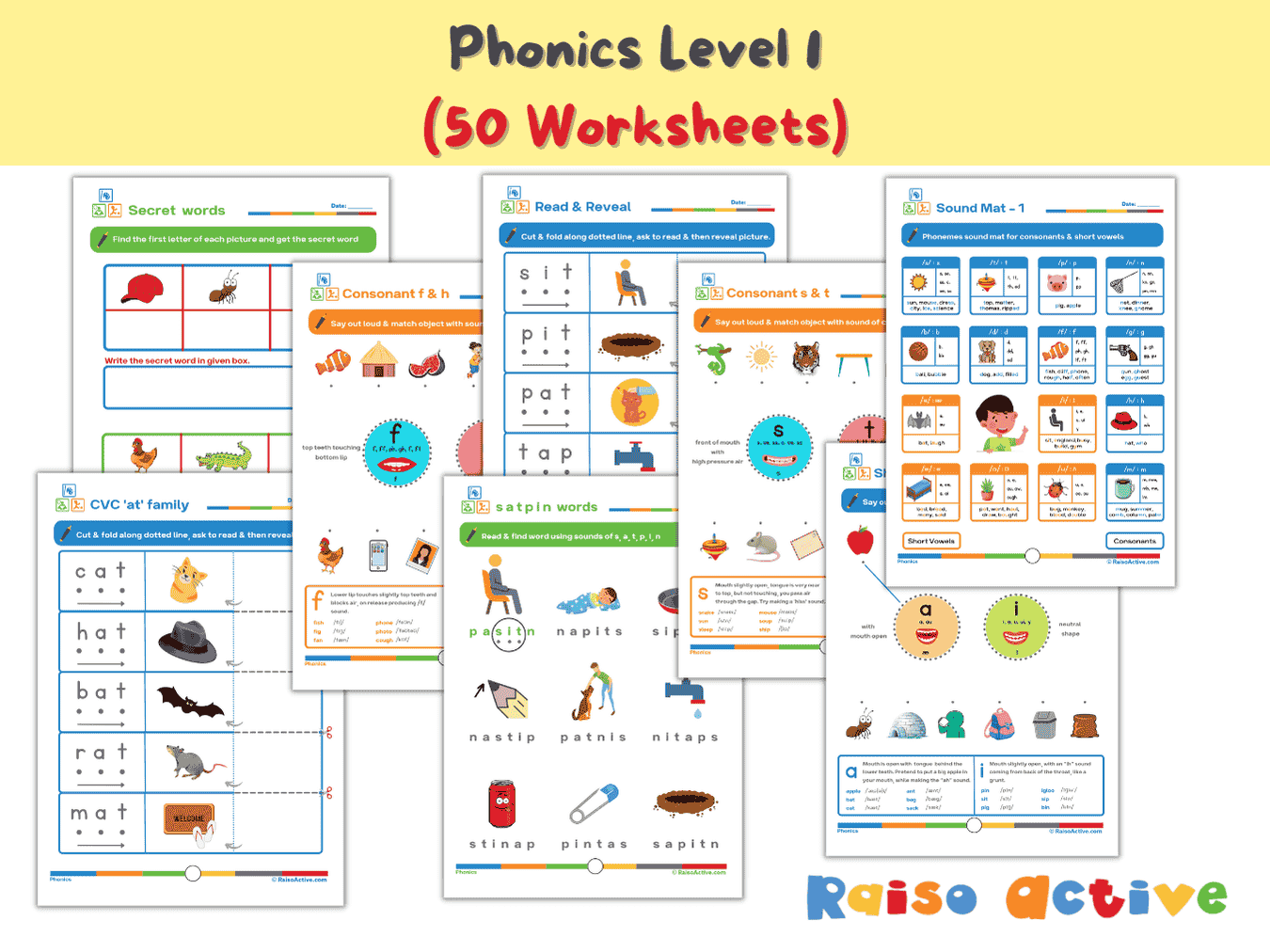
Phonics Level 1 Activity Book: Letter Sounds, Blending & CVC Words for Preschool & Kindergarten
Ages 3-6 · Preschool–KindergartenAges 3-6 · Nursery–Year 1Ages 3-6 · Nursery–UKGAges 3-6 · 60 pages
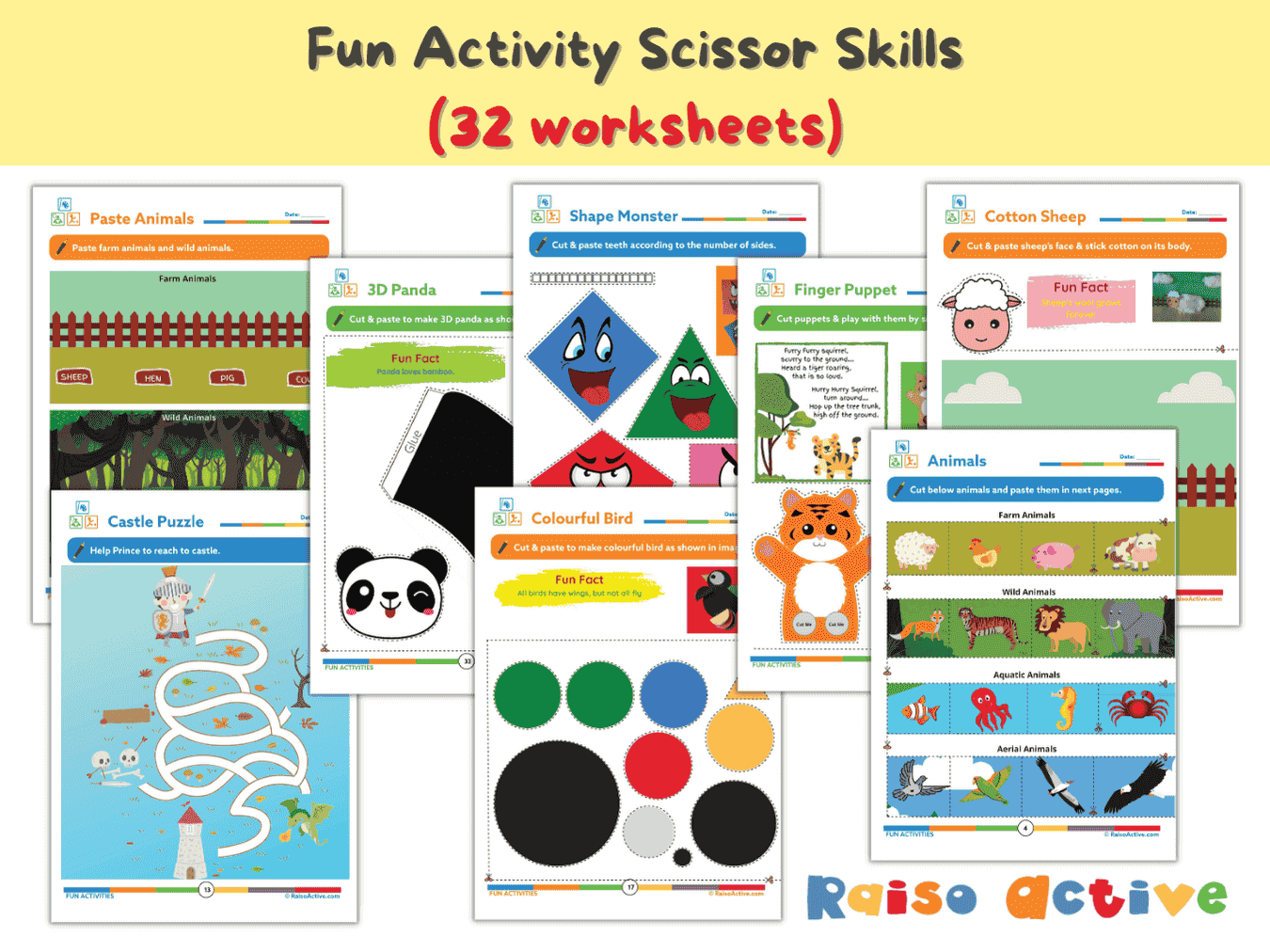
Preschool Scissor Skills Activity Book: Fine Motor & Craft Fun for Ages 3-6
Ages 3-6 · Preschool–KindergartenAges 3-6 · Nursery–Year 1Ages 3-6 · Nursery–UKGAges 3-6 · 35 pages
Festivals & Cultural Diversity Activity Book for Kids (Ages 4-8)
Ages 4-8 · Pre-K–Grade 2Ages 4-8 · Reception–Year 3Ages 4-8 · LKG–Class 2Ages 4-8 · 30 pages
Halloween & Fall Activity Book: Math, Literacy & Cognitive Skills for Ages 4-8
Ages 4-8 · Pre-K–Grade 2Ages 4-8 · Reception–Year 3Ages 4-8 · LKG–Class 2Ages 4-8 · 23 pages
India Activity Book for Kids: Explore Geography, Culture & Symbols (Ages 5-8)
Ages 5-8 · Kindergarten–Grade 2Ages 5-8 · Year 1–Year 3Ages 5-8 · UKG–Class 2Ages 5-8 · 8 pages