Free printable worksheets · US · UK · India
Letter Tracing Worksheets A–Z
Letter tracing worksheets are printable sheets for children aged 3 to 6 that show each letter of the alphabet as a dotted outline with a starting point and stroke arrows. They teach correct formation of uppercase and lowercase letters, stroke direction, pencil control and letter recognition, and prepare children in Preschool, Nursery, LKG, Pre-K and Reception for independent handwriting.
Letters are not equally hard to write, and the alphabet song is not the order to trace them in. Straight-line capitals (L, T, I, H, E, F) need only vertical and horizontal strokes and are the right place for a three-year-old to begin. Curved capitals (C, O, G, Q, S) come next, then diagonals (A, V, W, K, X). Lowercase letters follow at around five, because they mix heights, need finer control and include the b/d/p/q family that children confuse. This page groups the A–Z letter tracing worksheets that way rather than alphabetically, so a parent in Nursery, Pre-K or LKG can start with the letters a child can succeed at. By six, in Kindergarten, Reception or UKG, most letters should be written from memory and only the awkward ones still traced.
580+ worksheets · free PDF download · print on A4 or Letter
Letter Tracing Worksheets A–Z to print
Browse all worksheets for ages 3–6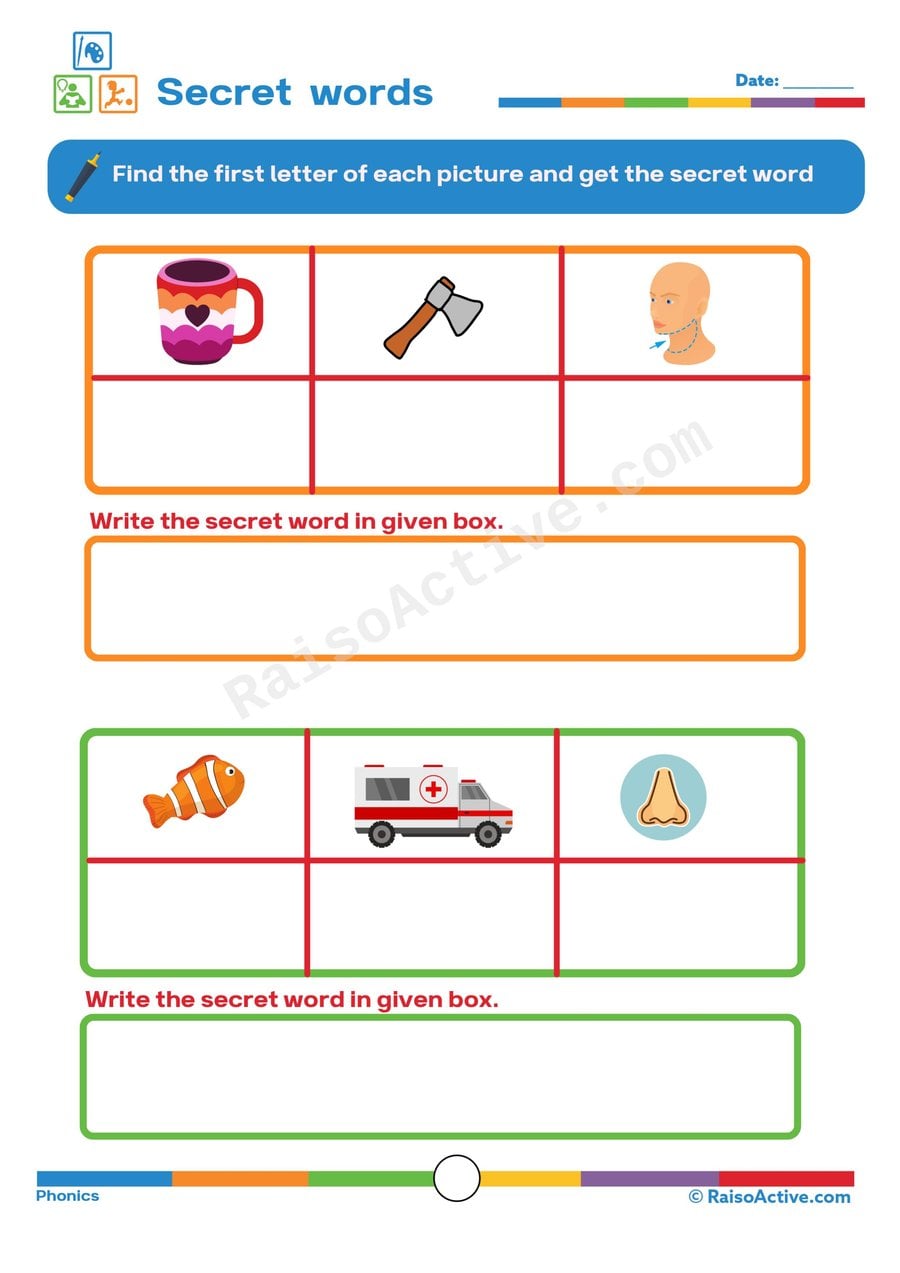
Secret Words Worksheet: Find the First Letter!
This beginning-sounds worksheet asks children ages 4-5 to listen closely to a series of pictures, name the very first sound in each word, and record the matching letter — a core phonemic awareness skill that precedes fluent reading. Because each correct letter contributes to spelling out a hidden 'secret word,' children get an immediate, motivating reason to focus on sound isolation rather than treating it as an abstract drill. This step also builds early spelling instincts, since children practice matching sound to symbol one letter at a time.

Learn the Letter 'x' Worksheet: Tracing, Matching, and Coloring Fun!
This worksheet builds recognition of the less common letter x through tracing both uppercase and lowercase forms, then reinforces that recognition through matching pictures and highlighting the letter within a grid. For ages 4-5, letter x is genuinely rare at the start of everyday words, so this worksheet leans on strong examples like 'x-ray' to build familiarity despite limited real-world exposure.
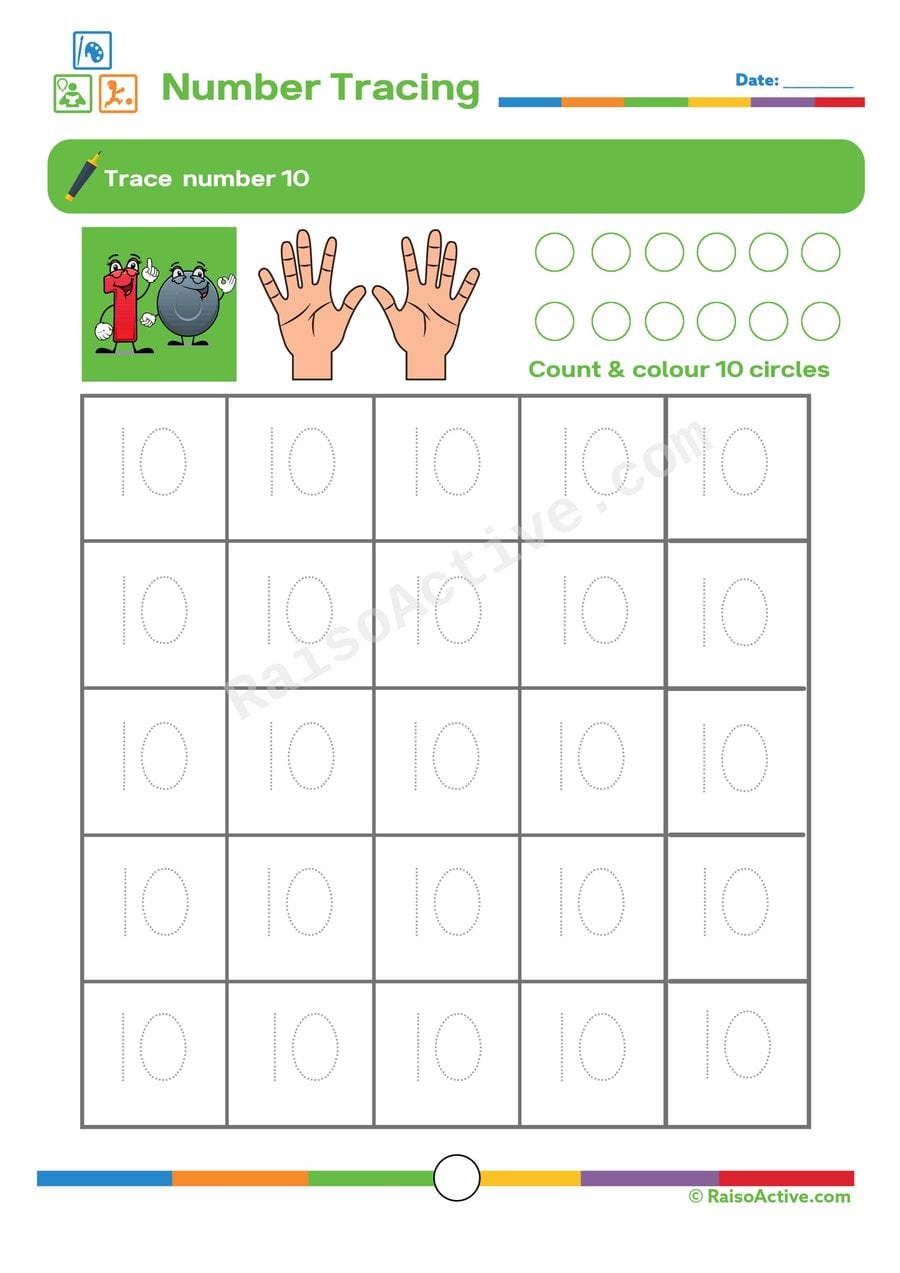
Trace and Count to 10! Number Tracing Worksheet
This worksheet has children ages 4-5 trace the number 10, their first two-digit number in a structured sequence, and then count and color a full set of ten circles, reinforcing that 10 represents a complete group of two fives or one full set of fingers on both hands. Practicing 10 also marks an important transition point, since children who can confidently count, write, and represent 10 are ready to begin extending their counting into the teens. This combination of tracing and counting to a meaningful benchmark number builds solid number sense.
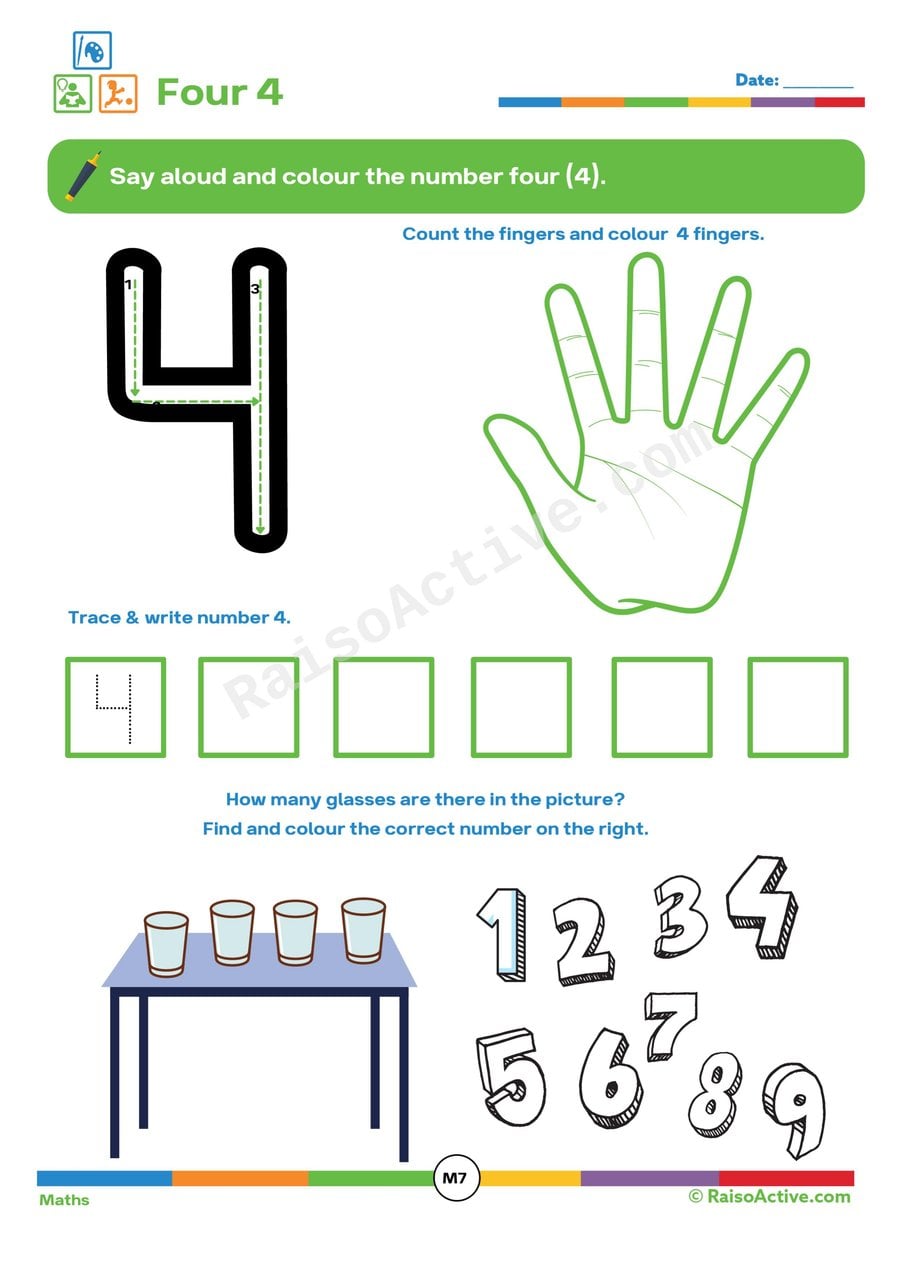
Number Four Worksheet: Trace, Count, and Color!
This worksheet helps children build the pencil control to write the number 4 correctly while linking that written numeral to the quantity it represents through counting fingers and objects on the page. For four- and five-year-olds, combining tracing with hands-on counting — like counting fingers on a hand or glasses in a row — reinforces that the number 4 always represents the same fixed amount, no matter what's being counted.

Trace and Write Numbers: Sixteen to Twenty Worksheet
This worksheet helps children ages 4-5 practice tracing and writing the number words from sixteen to twenty, completing the teen and early twenty number-word range that builds toward full number fluency to 20. Repeated tracing of these longer words also continues to build the handwriting stamina needed for more complex writing tasks ahead.

Trace and Count the Number 16 Worksheet for Preschoolers
This worksheet has children ages 4-5 trace the two-digit number 16 and then count and color a full set of sixteen squares, continuing to build counting stamina in the teens range that many children find more challenging than counting to 10. Because 16 combines a 1 and a 6, tracing it reinforces the same two-digit writing pattern practiced with numbers like 11 through 15, helping children generalize the pattern rather than treating each teen number as entirely new. Counting squares instead of round objects also quietly introduces basic shape vocabulary.

Find the 'ap' Words! A Fun Worksheet for Early Readers
Children ages 4-5 build phonics fluency by reading and writing CVC words in the 'ap' family, like 'cap', 'map', and 'nap'. Recognizing this consistent letter pattern teaches early readers to decode groups of letters as a chunk rather than sounding out every letter individually, speeding up reading over time. Writing each word after finding it also reinforces correct spelling and letter sequencing for early literacy.
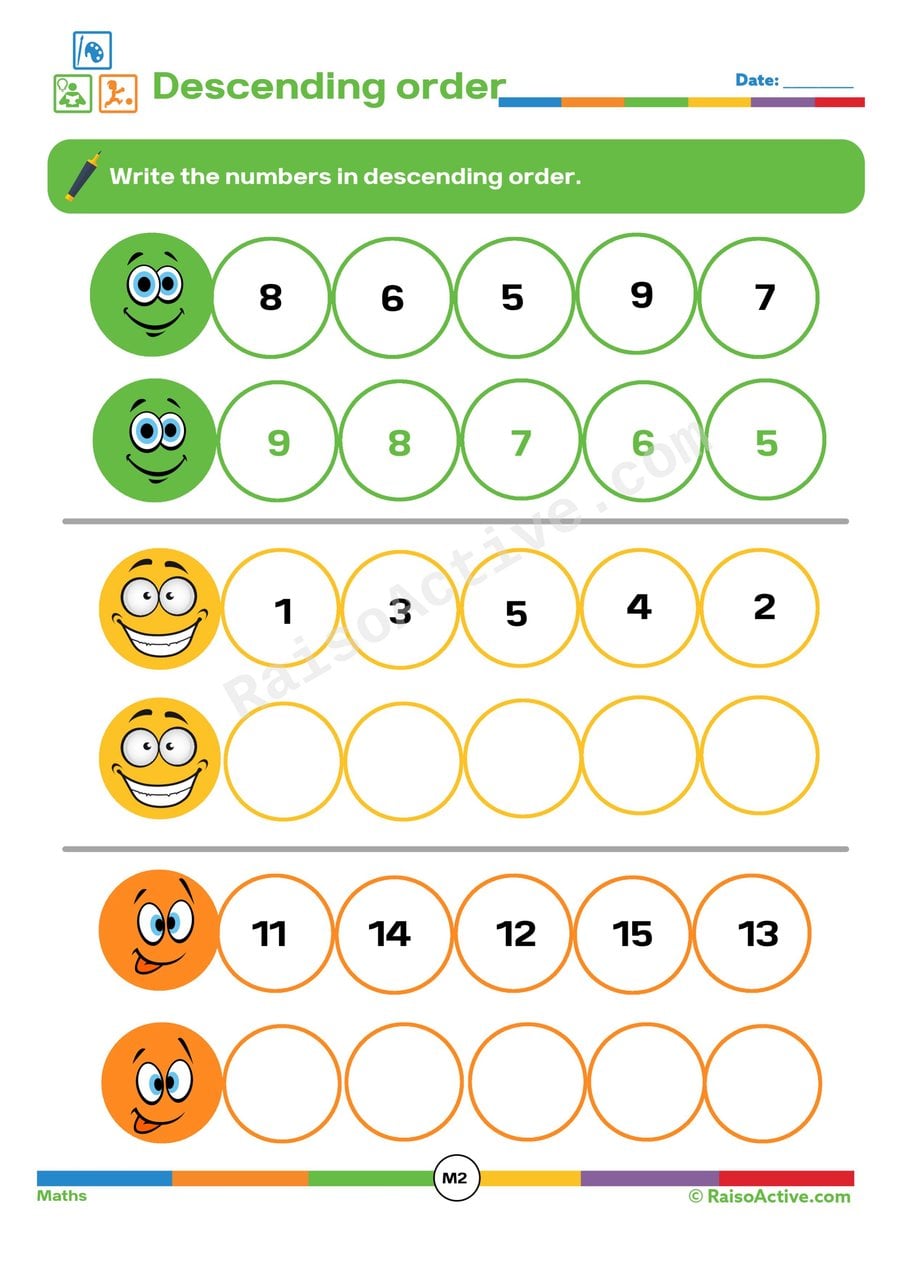
Descending Order Worksheet: Numbers 5-15
Writing numbers in descending order asks 4-5 year olds to hold a full sequence in mind and reverse it — a genuinely different mental task from the more familiar ascending count, since children have to think about 'what comes before' rather than 'what comes after.' Practicing this with numbers 5 through 15 also reinforces number formation and one-to-one number-word correspondence, since each digit has to be written accurately as your child works backward.
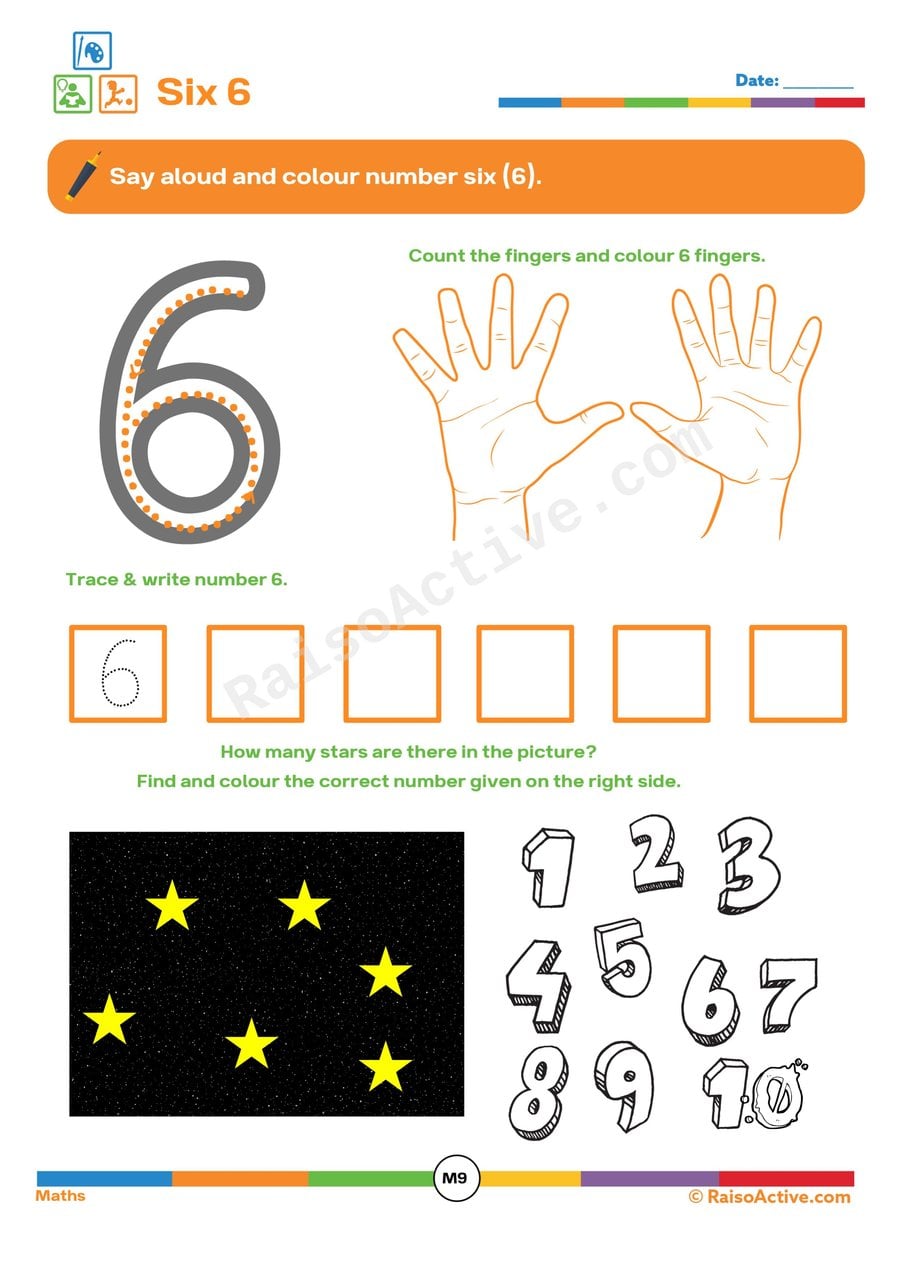
Number Six (6) Worksheet: Trace, Write, and Count!
Children ages 4-5 practice tracing and independently writing the number six while reinforcing the quantity it represents by counting a group of stars. Moving from guided tracing to independent writing, then to counting practice, builds both the motor skill and the number sense needed for early math confidence.

Middle Sound Worksheet: Circle and Write the Missing Letter!
Identifying the middle sound in a word is generally the hardest phonemic awareness skill for children ages 4-5, harder than beginning or ending sounds, since the middle sound is surrounded on both sides and easy to lose track of while segmenting. This worksheet builds that specific skill by having children circle the letter that makes the middle sound in given words, then apply the same skill to complete new words based on pictures. Because middle sounds in CVC words are almost always the vowel, this worksheet also doubles as valuable short vowel discrimination practice.

Frame the Sentence: Sight Word Fun Worksheet for Preschoolers
Constructing a full sentence from individual sight words is a meaningful step up from recognizing words in isolation, asking children ages 4-5 to understand how words function together to make meaning. This worksheet has children read a small bank of sight words and place them correctly into a sentence frame, which builds both reading comprehension and early grammar sense — understanding that word order matters. Because the words are provided rather than freely written, children can focus entirely on sentence structure without the added challenge of spelling from scratch.

Sight Word Fun: Fill-in-the-Blank Worksheet for Preschoolers
Reading a sentence with a missing sight word and selecting the correct choice builds early reading fluency for children ages 4-5, since recognizing common sight words by sight — rather than sounding them out — speeds up overall reading comprehension.

A-Z Letter Sequence Worksheet: Fill in the Missing Letters!
By age 4-5, children move from reciting the alphabet by rote to actually recognizing individual letters out of sequence, and this fill-in-the-blank worksheet tests that deeper knowledge by asking them to supply missing capital letters in a scrambled order. Locating where a gap belongs strengthens letter-order memory and visual letter recognition, both essential precursors to reading and independent writing. It also builds attention to detail, since children must scan neighboring letters to figure out what's missing.
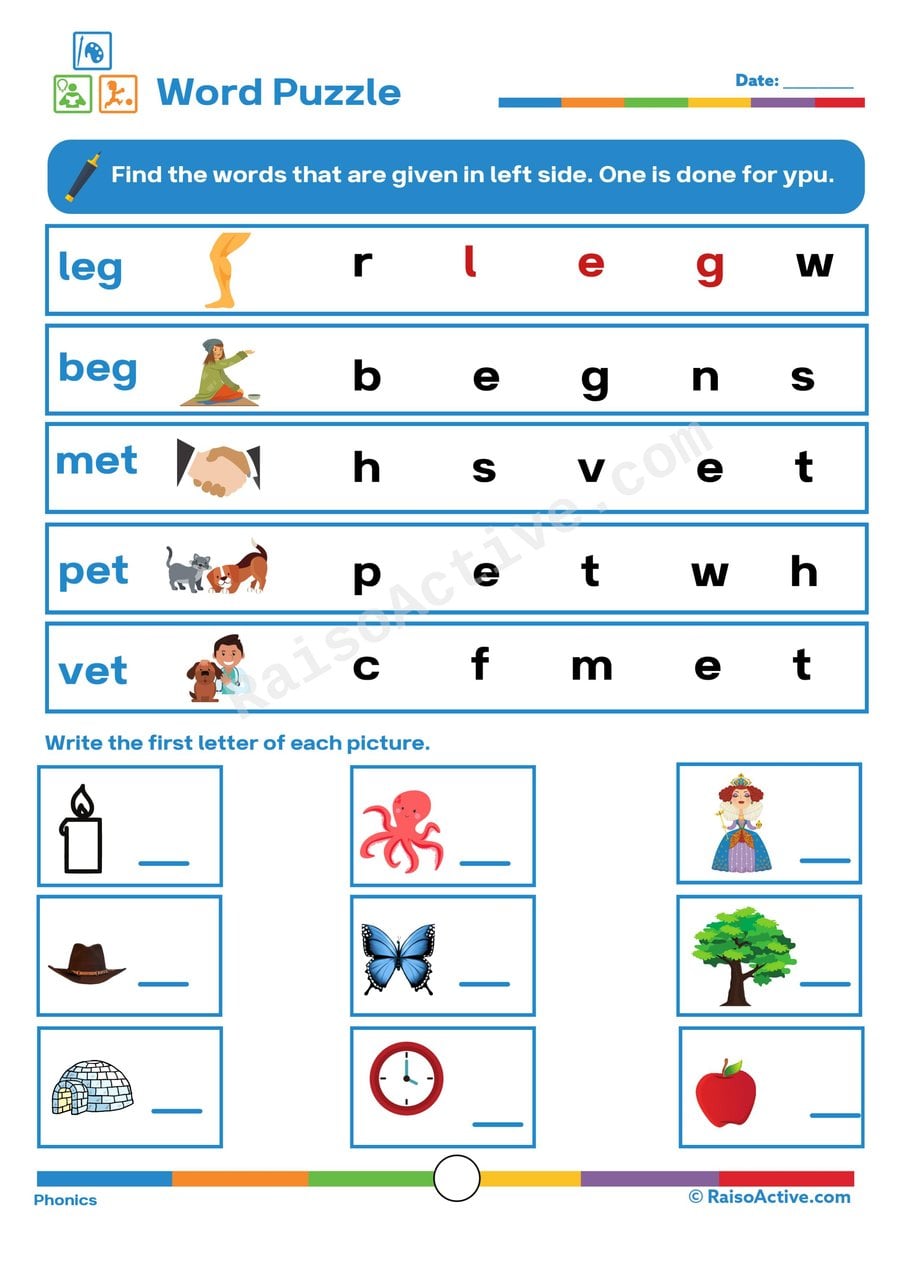
Word Puzzle Fun: Find and Write the First Letter!
This worksheet asks children ages 4-5 to locate hidden words in a picture puzzle and then identify and write the first letter of each corresponding picture, combining visual search skills with beginning-sound phonics. Searching a puzzle for target words builds visual scanning and attention, a skill that supports reading fluency later on, while writing the beginning letter reinforces the sound-to-symbol connection central to early spelling. Doing both together keeps young learners engaged while practicing two skills at once.

Learn to Write the Number 7: A Fun Tracing and Counting Worksheet!
This worksheet helps children ages 4-5 learn the correct stroke sequence for writing the number 7, while counting fingers and mangoes reinforces that the numeral stands for a specific quantity of seven items. Practicing both writing and counting for the same number in one sitting strengthens the link between number recognition and number formation.

First Letter Sound Worksheet: Beginning Sounds Practice
This worksheet asks children ages 4-5 to identify the beginning sound of pictured objects, write the missing first letter to complete each word, and then combine those first letters to form a brand-new word. Practicing beginning sounds in this layered way — first in isolation, then combined — helps children see letters as flexible building blocks rather than fixed, memorized shapes.

Number Sequencing Worksheet: Practice Counting and Ordering Numbers!
This worksheet gives children ages 4-5 focused practice writing numerals in order by filling in the missing numbers within several different counting sequences. Unlike simple counting aloud, writing each numeral by hand forces children to connect the spoken number word to its correct written symbol, reinforcing both number recognition and early handwriting control.

Trace and Write the Letter G Worksheet for Preschoolers
This worksheet isolates the uppercase G — a large curve with a small inward hook — so 4-5 year olds can build solid mastery of this one form before later tackling the more complex lowercase g with its descending tail. At this slightly older end of the preschool range, moving from traced copying to independent writing on the same page reflects a meaningful step up in handwriting expectations.
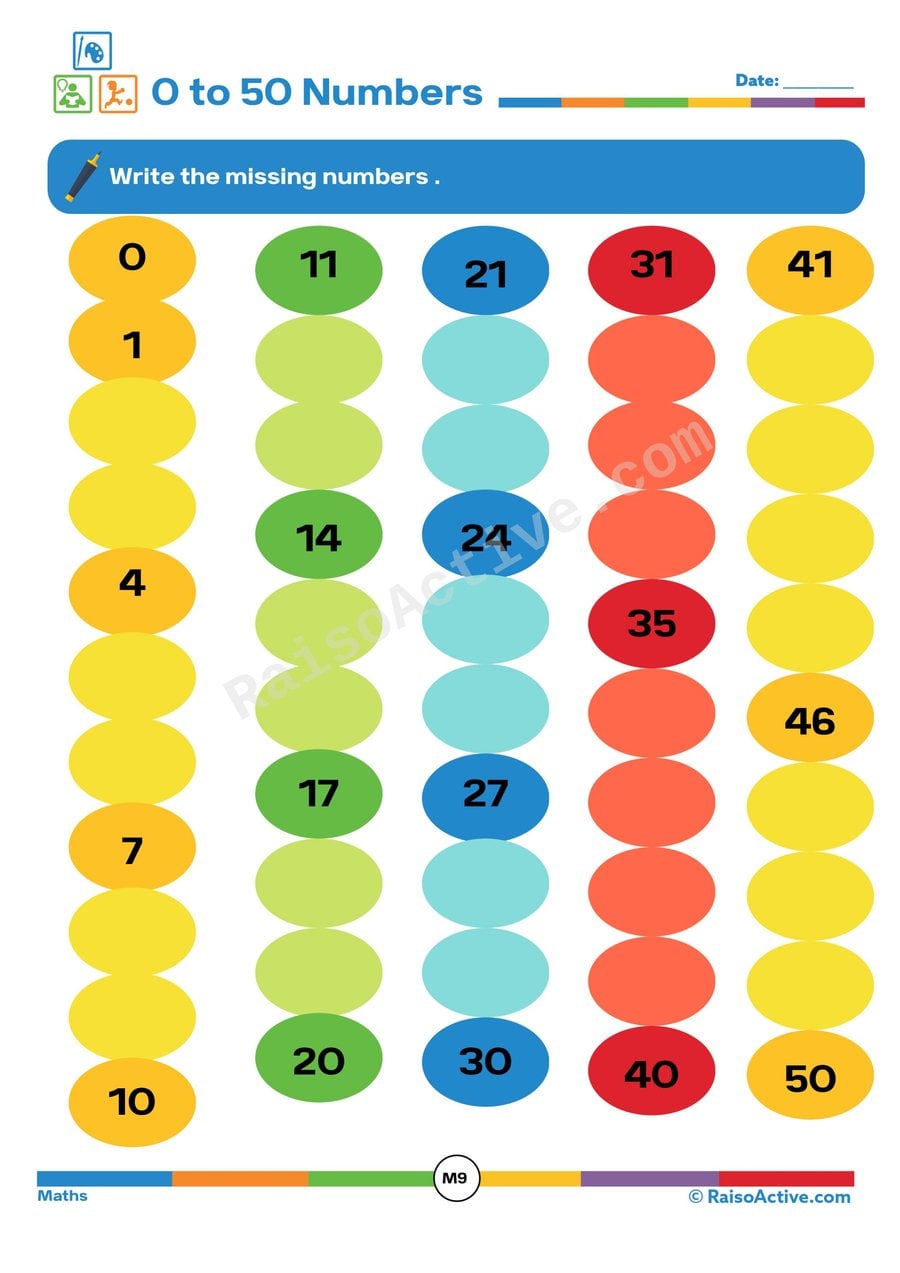
Missing Numbers Worksheet: 0 to 50
Filling in missing numbers across the 0-50 range asks children ages 4-5 to hold a much longer counting sequence in mind than typical 1-20 worksheets, strengthening both number recognition and the pattern sense needed to predict what comes next at any point in the range. This kind of extended practice also introduces children to the way numbers group into decades, like the 20s or 30s, which becomes important for later place-value understanding. Successfully completing a long sequence like this builds real counting stamina and confidence.
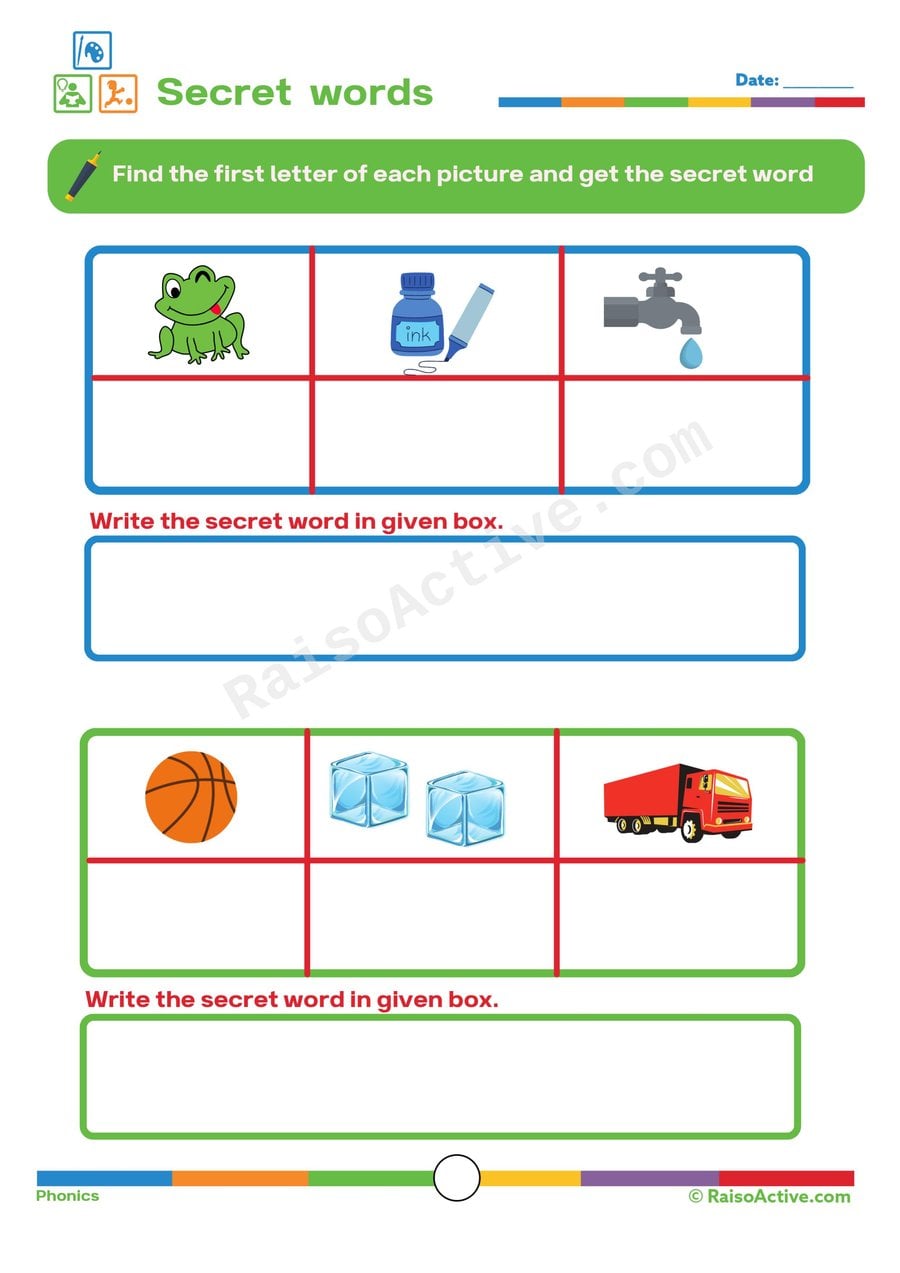
Secret Words Worksheet: Beginning Sounds Fun!
This version of the Secret Words activity challenges children ages 4-5 to identify the beginning sound of each picture and use that letter to help spell out a hidden word, reinforcing both phonemic awareness and early spelling skills. Because the task requires holding several letters in sequence before the full word appears, it also gently builds working memory alongside sound-symbol knowledge. This combination of skills is exactly what children need before they can spell simple words independently.

A-M Alphabet Worksheet: Write and Paste the Correct Picture!
This worksheet has children ages 4-5 identify and write the missing letters from A to M, then match each letter to a corresponding picture, combining alphabet sequencing with beginning-sound picture matching in one activity. Filling in missing letters, rather than tracing a complete alphabet, requires children to actively recall what comes next rather than simply copying a model.

Sight Word 'THE' Worksheet: Trace, Write, and Identify!
This worksheet builds automatic recognition of the sight word 'the,' one of the most frequently occurring words in English text, through repeated tracing, writing, and identification practice. For four- and five-year-olds, memorizing high-frequency sight words like 'the' by sight — rather than sounding them out each time — is essential for building reading fluency, since these words appear on nearly every page a child will read.

Number Tracing Worksheet: Trace and Count the Number 20!
This worksheet has children ages 4-5 trace the number 20, a milestone number that marks the top of the common preschool counting range, and then count and color a full set of twenty pentagons. Reaching and confidently counting to 20 shows that a child has built solid one-to-one correspondence across an extended set, a skill they'll rely on heavily once they begin adding and subtracting in early math. Counting pentagons instead of simpler shapes also gives a light introduction to five-sided shapes.

Identify and Complete the Names Worksheet for Preschoolers
Children ages 4-5 build on early spelling skills by identifying pictures and completing their names using provided letter hints, strengthening both vocabulary and phonics awareness. Using hints rather than a fully blank space offers just enough support to keep the task achievable while still requiring active problem-solving.
Which letters to trace first
Begin with uppercase. Capitals all start at the top, sit between the same two lines and are made of large distinct strokes, so they are easier to form and easier to recognize. The order that works is straight lines first, then curves, then diagonals. Within each group start with letters in the child's own name, since those carry meaning and get written most often.
Move to lowercase once most capitals are traced cleanly, usually between 4 and 5. Group lowercase by starting stroke: the c-family (c, a, d, g, o, q) all begin with the same counterclockwise curve; the l-family (l, t, i, j) are a single downstroke; the r-family (r, n, m, h, b, p) start with a downstroke and bounce back up.
- Straight-line capitals: L, T, I, H, E, F
- Curved capitals: C, O, G, Q, S, U, J, D, P, B, R
- Diagonal capitals: A, V, W, K, X, Y, Z, M, N
- Lowercase c-family, then l-family, then r-family, then the rest
How to use letter tracing worksheets
Say the letter name and its sound before tracing so the movement attaches to something. Put a finger on the starting dot, follow the arrows with a finger first, then with a pencil. Three or four repetitions of one letter is enough for a session; a full row of twenty traces produces a tired hand and a sloppy last ten. After tracing, ask for one copy of the letter with no dots beside the traced row, which is the real test.
Letter reversals and other common difficulties
Writing b for d, p for q, or a mirrored s is normal up to about age 7 and does not indicate a reading difficulty. The confusions arise because these are the only objects a child has met that change identity when flipped. Consistent starting points fix most of it: b starts with a downstroke then a bump, d starts with the c-curve. Letters formed bottom to top, or capitals mixed into words, also resolve with attention to the starting dot rather than correction of the finished mark.
Frequently asked questions
What age should a child start letter tracing?
Most children are ready at 3 and a half to 4, once they can trace a straight line and a circle and can name at least a few letters. Before that, line and shape tracing builds the control needed. Starting uppercase letter tracing in Nursery or Preschool and lowercase in Pre-K, Reception or LKG matches how most programs sequence it.
Should children learn uppercase or lowercase letters first?
Uppercase first for tracing and writing, because capitals are made of simpler strokes, all start at the top and are easier to tell apart. Lowercase should be introduced for recognition at the same time, since most printed text is lowercase, but lowercase formation is usually taught a year later when finer control is available. By the end of Kindergarten or Reception both cases are expected.
What letters should a 5-year-old be able to write?
By 5, at the end of Pre-K, Reception or LKG, a child can typically write all uppercase letters recognizably, write their own first name with a capital and lowercase letters, and form most lowercase letters with some size and spacing errors. Reversals of b, d, p and q and occasional mirrored letters are still expected. Consistent lowercase formation is a Kindergarten and UKG goal.
Is it a problem if my child writes letters backwards?
Not before age 7. Reversals of b/d, p/q and mirrored letters are a normal stage in learning that orientation matters for letters when it does not for objects. Teach a fixed starting point and stroke sequence for each confusable letter, and prompt with the movement rather than pointing out the error. If reversals are still frequent after 7 or 8, a teacher or specialist assessment is worth considering.
How many letters should be practiced in one session?
One new letter, plus one or two previously learned ones for review, in about ten minutes. Trace each letter three or four times with attention to the starting point, then write it once without dots. Children learn formation better from a few careful repetitions than from a full page of traces, and daily short sessions across a school year cover all 52 letter forms comfortably.
Are the letter tracing worksheets free to download?
Yes. Each A–Z sheet can be downloaded as a watermarked PDF without charge after signing up, up to five sheets a day. An annual subscription (₹1000 or $20) removes the watermark and the limit across the library of more than 1,000 worksheets and every printable pack. The sheets fit both A4 and US Letter.

Written by
Hemsweta Jain · Teacher Cheena
MBA and Early Childhood Educator, teaching since 2014 · Founder of RaisoActive, Mumbai
Written and reviewed by Hemsweta Jain (Teacher Cheena), who designs every RaisoActive worksheet.
Last reviewed
Printable packs for ages 3–6
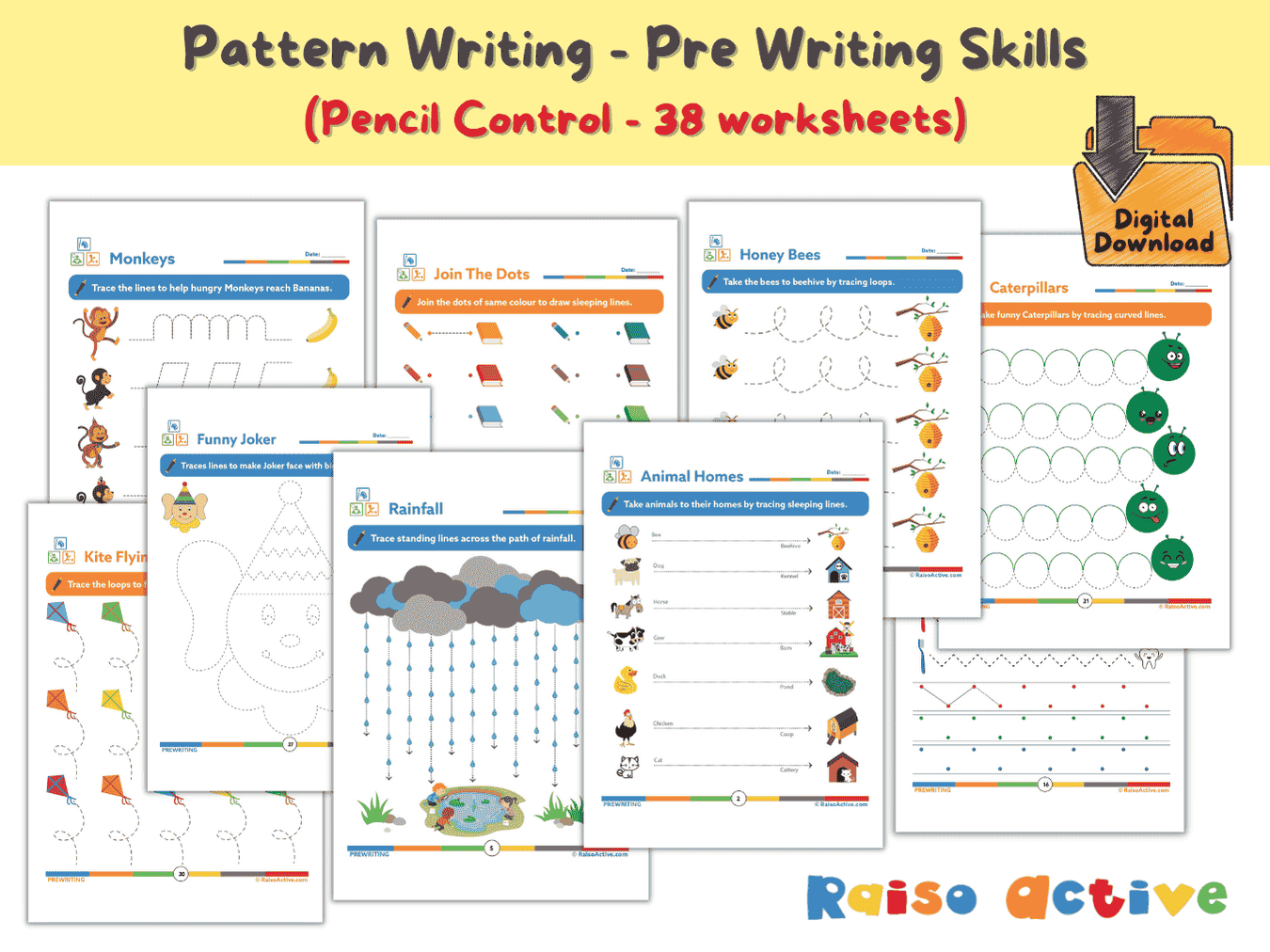
Pattern Writing Pre-writing Skills Activity Book for 3-4 Year Olds
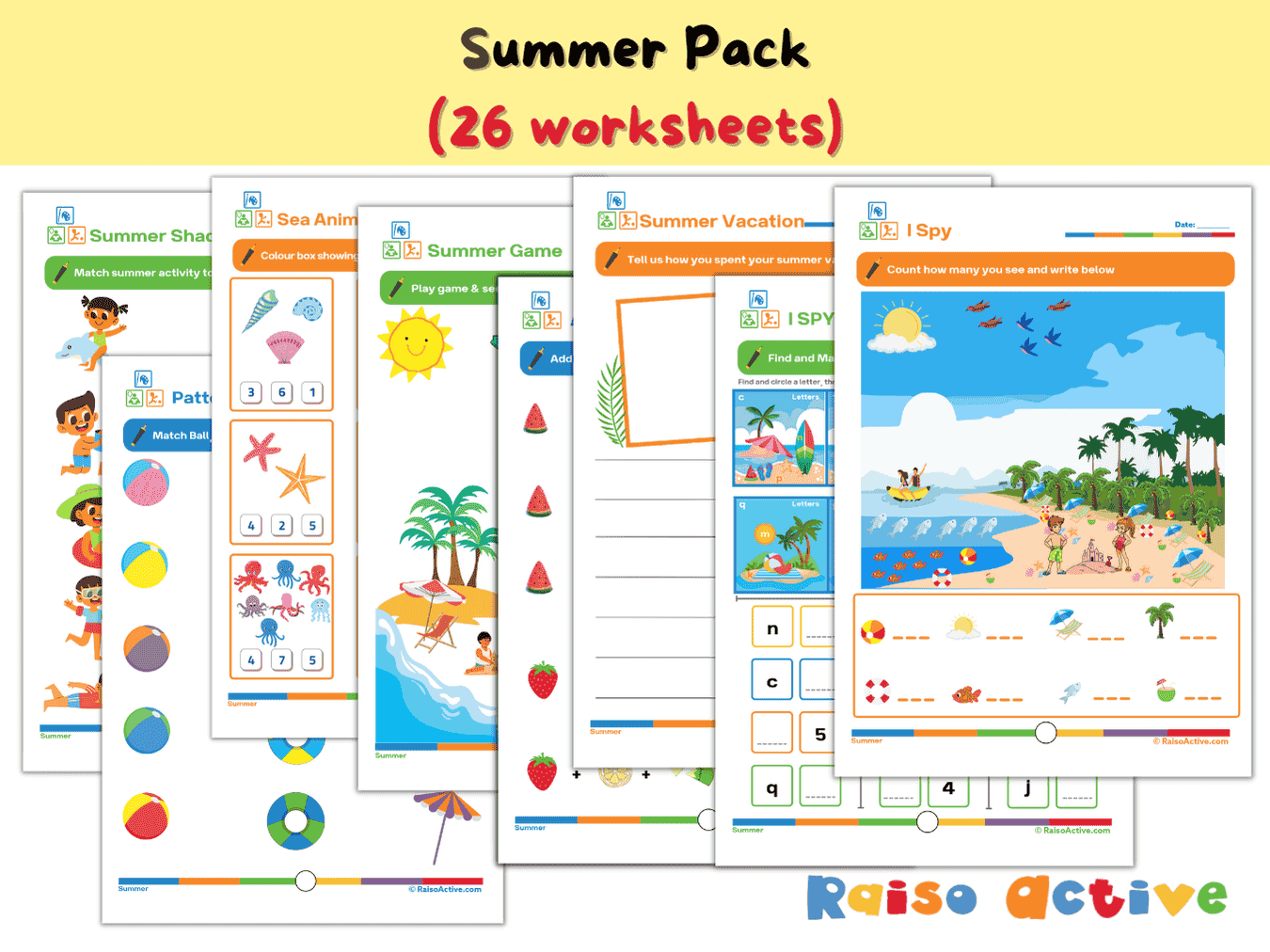
Summer Activity Pack: Math, Literacy, Puzzles & More for Preschool & Kindergarten
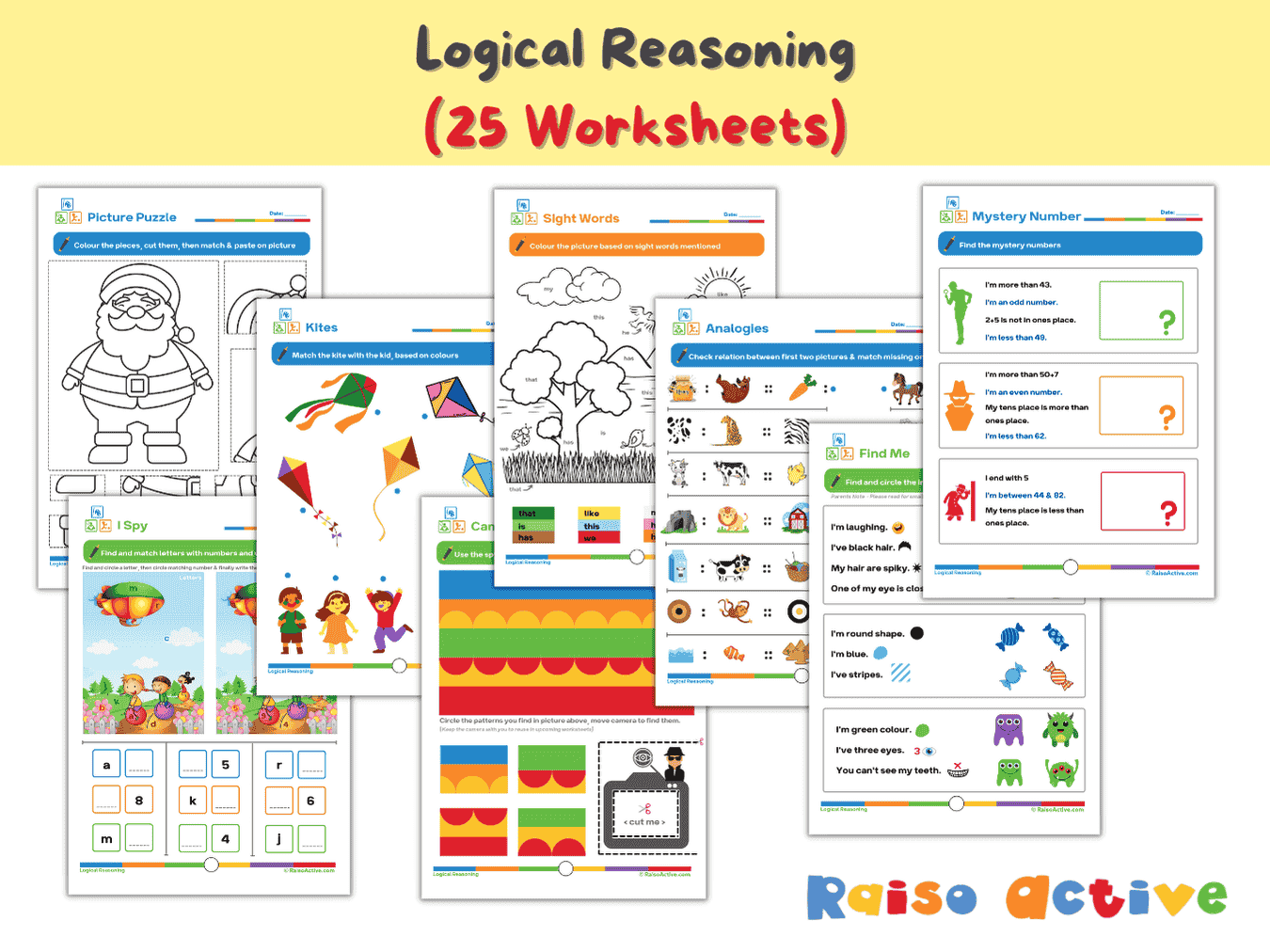
Logical Reasoning Activity Book for Preschool & Kindergarten | Patterns, Puzzles & Analogies
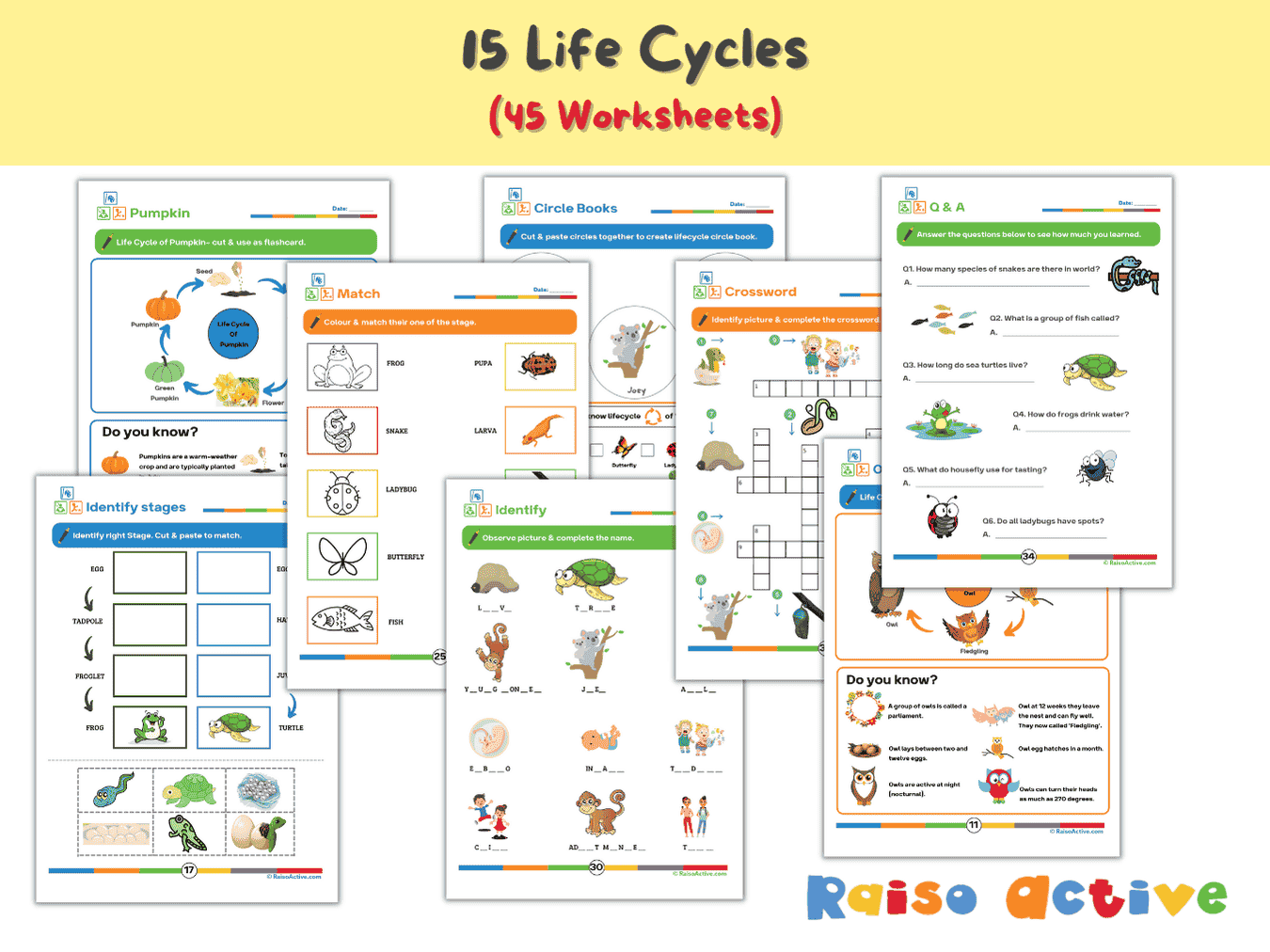
Lifecycles Activity Book & Flashcards for Preschool & Early Elementary
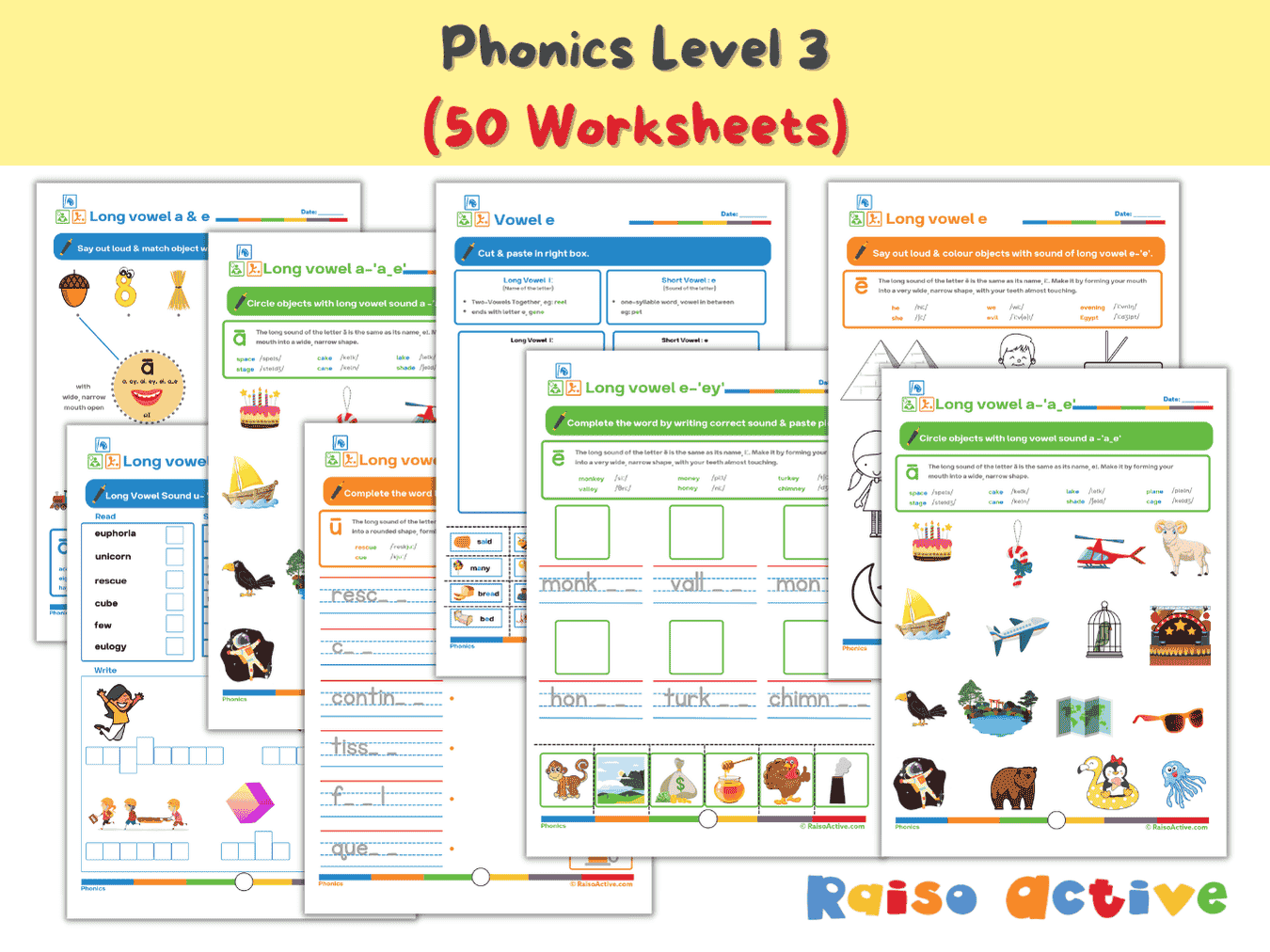
Phonics Level 3 Long Vowels Activity Book for Kindergarten & 1st Grade
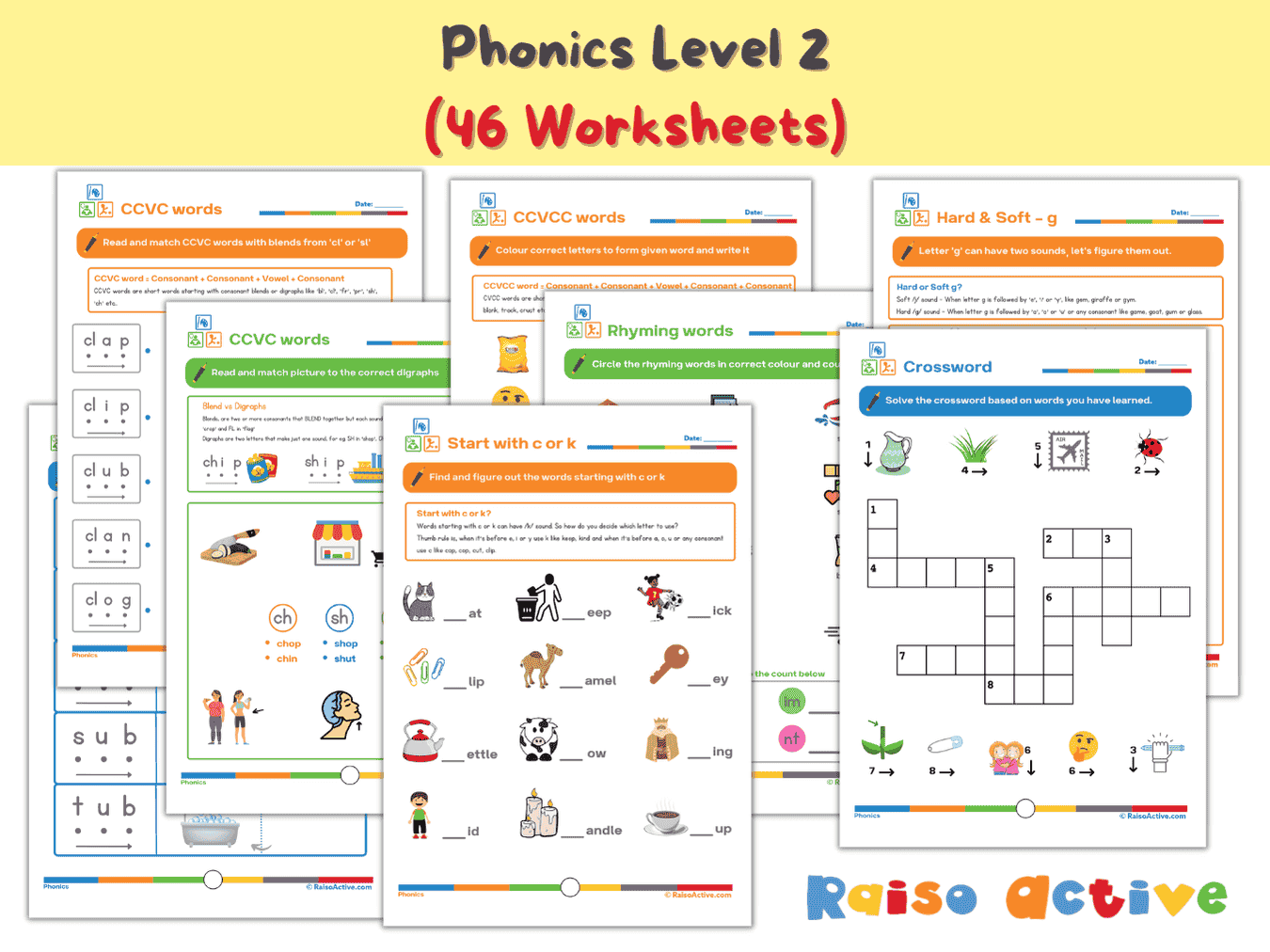
Phonics Level 2 Worksheets: CVC, CCVC, CVCC Word Families & Blends for Early Readers (Ages 4-7)
Guides for parents and teachers
See all guides →Number Formation Rhymes 0–9 and How to Fix Reversals
Original number formation rhymes for 0–9, the correct stroke order for each digit, why 3, 5 and 7 get reversed most often, and multisensory fixes that work.
Pre-Writing Strokes in Order: From Standing Lines to Loops (With Printable Patterns)
The developmental order of pre-writing strokes, from vertical lines to loops, and why practicing them in sequence makes letter formation much easier to learn.
Kindergarten Readiness Checklist: 25 Skills to Practice Before the First Day
A kindergarten readiness checklist of 25 literacy, math, motor, self-regulation and self-help skills, with an 8-week summer plan and notes on when not to worry.
Best Worksheets for 3-Year-Olds: What Works and What to Avoid
What works on worksheets for 3-year-olds: short sessions, crayons, tracing lines, matching, cutting, a free weekly plan, and signs one is too advanced.
Phase 2 Phonics at Home: Sound Order, Blending Games, Worksheets
Phase 2 phonics at home: the five sound sets in order, oral blending, tricky words, a two-week routine, common mistakes, and free worksheets.
Reception Year Explained: EYFS Learning and How to Help at Home
A teacher's plain-English guide to the Reception Year: the seven areas of learning, Early Learning Goals, Phase 2/3 phonics, the RBA and home routines.
Canonical: https://raisoactive.com/worksheets/letter-tracing