Free printable worksheets · United States
Pre-K Letter Tracing Worksheets (Ages 4–5)
Pre-K letter tracing worksheets are practice sheets for children aged 4–5 in Pre-Kindergarten in the US. Letter tracing is following the dotted outline of a printed letter with a pencil, in the correct stroke order, to learn how it is formed. The sheets on this page cover uppercase letter formation, lowercase letter formation, starting points and stroke direction and spacing between letters.
Pre-K is the bridge to kindergarten, so activities target the entry skills teachers consistently ask for: writing a first name, naming most uppercase and some lowercase letters, knowing a few letter sounds, counting to twenty, and managing scissors and a pencil comfortably. At four to five, letter tracing covers every uppercase letter, each shown with a starting dot and a numbered arrow for its strokes, and a child works through several letters a week rather than one. Spacing starts to matter: letters should sit close together on a row without touching. Lowercase letters, beginning with the easier round ones like o, c and a, are usually introduced in the second half of the year, traced the same way uppercase ones were.
579+ worksheets · free PDF download · print on A4 or Letter
Pre-K Letter Tracing Worksheets to print
Browse all worksheets for ages 4–5
Trace and Count: Number 18 Worksheet for Preschoolers
This worksheet has children ages 4-5 trace the number 18 and then count and color a full set of eighteen hearts, continuing to build stamina for counting well into the teens range. Because eighteen is close to twenty, successfully counting this many objects without losing track shows real progress in sustained attention and one-to-one correspondence. Using hearts instead of a more neutral shape also adds a small, engaging visual theme to an otherwise repetitive counting task.

Alphabet Adventures: Write the First Letter - A to T Worksheet
This worksheet builds early phonemic awareness in children ages 4-5 by asking them to identify a pictured object, say its name aloud, and isolate the very first sound to write as a letter. Practicing this across a wide range of letters, A through T, gives children repeated exposure to the letter-sound connection that underlies all future reading and spelling. It also strengthens letter formation as children physically write each capital letter.
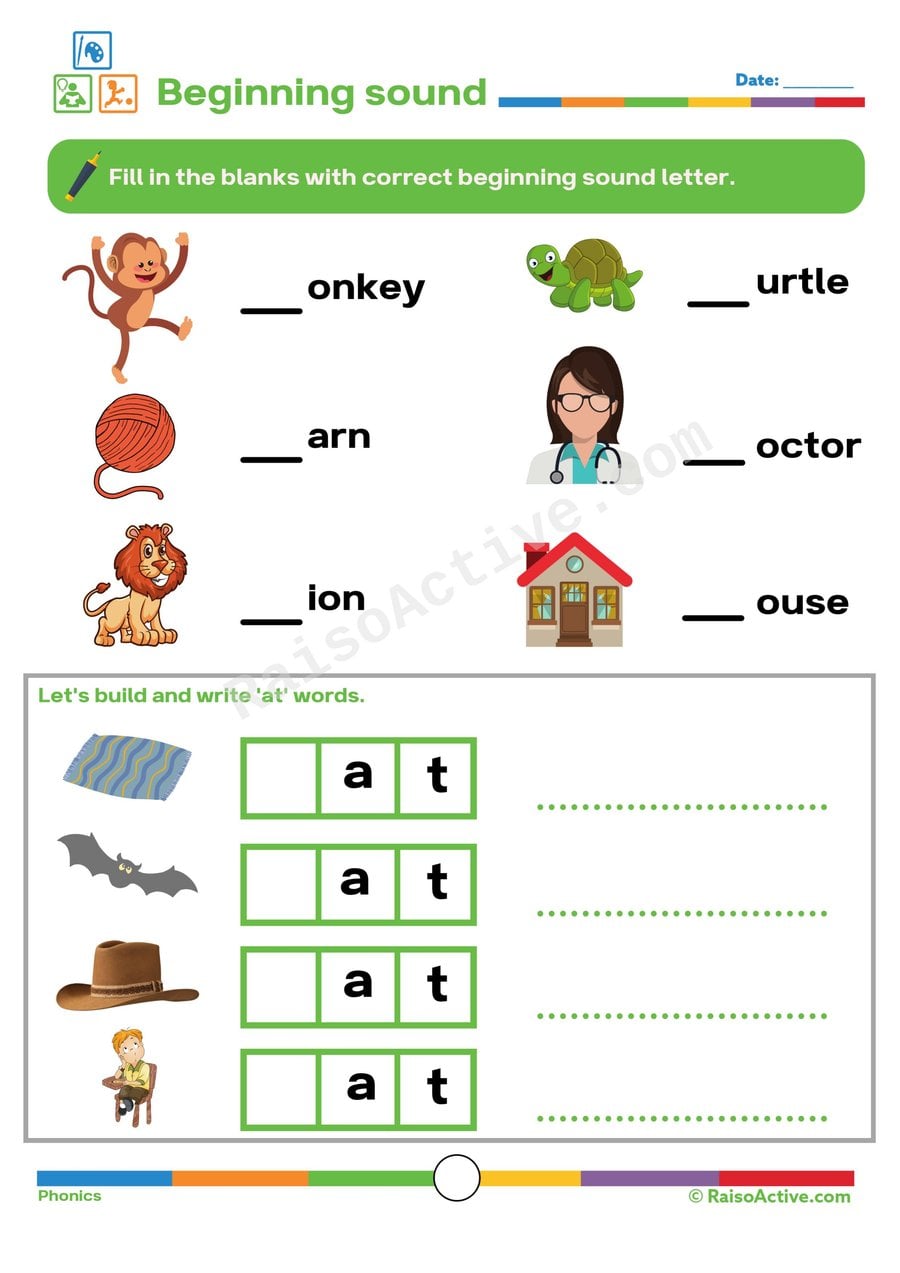
Beginning Sounds Worksheet: Fill in the Blanks!
This worksheet asks children ages 4-5 to identify the beginning sound of a pictured object and write the correct letter, then use that same skill to build new 'at' family words. Isolating and writing beginning sounds is a foundational phonics skill that bridges listening (hearing a sound) and writing (representing it with a letter) — a connection children need before they can spell independently.
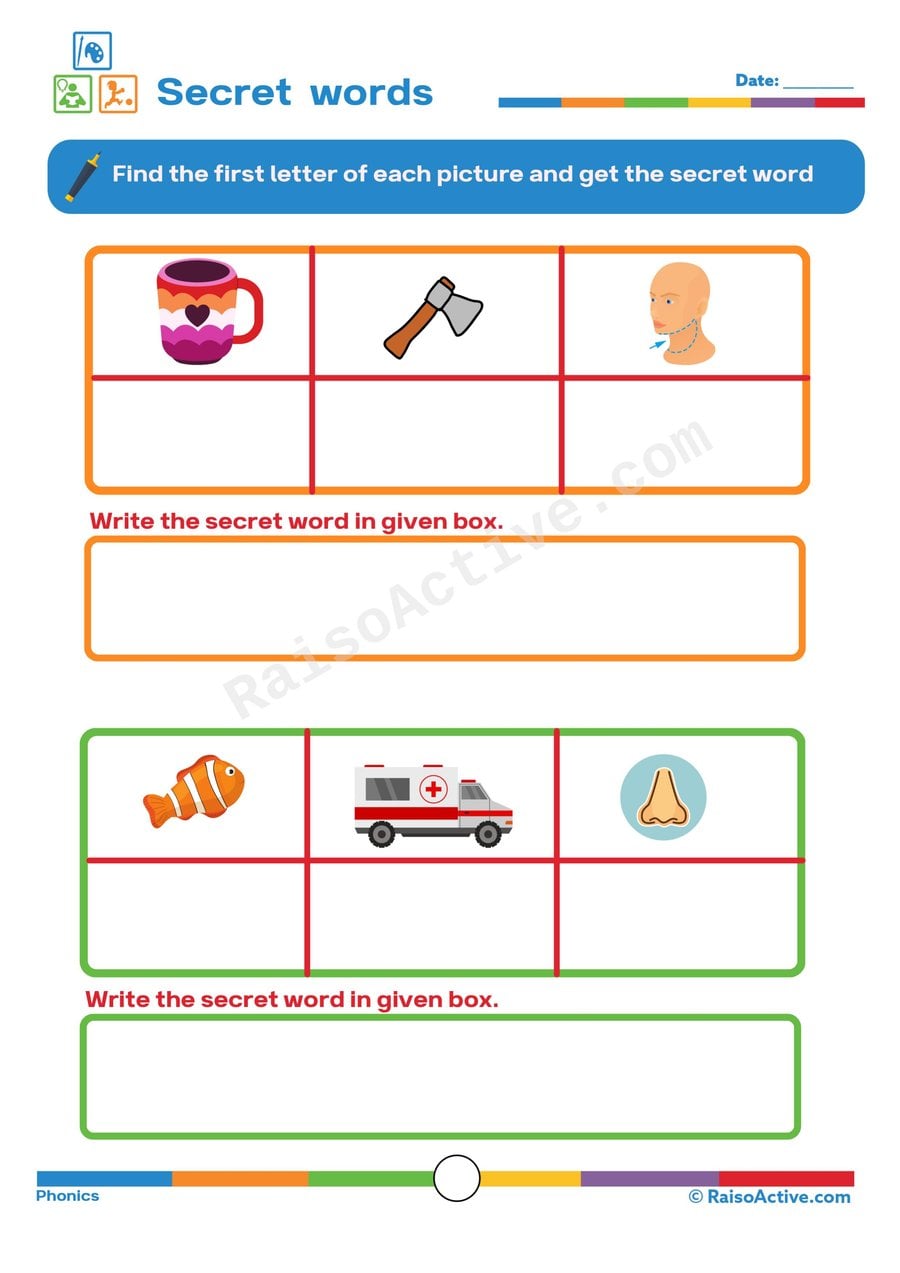
Secret Words Worksheet: Find the First Letter!
This beginning-sounds worksheet asks children ages 4-5 to listen closely to a series of pictures, name the very first sound in each word, and record the matching letter — a core phonemic awareness skill that precedes fluent reading. Because each correct letter contributes to spelling out a hidden 'secret word,' children get an immediate, motivating reason to focus on sound isolation rather than treating it as an abstract drill. This step also builds early spelling instincts, since children practice matching sound to symbol one letter at a time.

Learn the Sight Word 'Had' | Fun Reading Worksheet for Preschoolers
Children ages 4-5 build instant recognition of the sight word 'had', another high-frequency word that resists standard phonics decoding and must be memorized visually. This worksheet layers coloring, tracing, writing, grid-searching, and fill-in-the-blank practice, giving the word multiple forms of repeated exposure that solidify memory. Completing sentences with 'had' also shows children how the word is used naturally in storytelling, especially when talking about the past.

Frame Sentences Worksheet: Fill-in-the-Blanks with Pictures!
Children ages 4-5 practice connecting spoken vocabulary to written words as they use picture clues to fill in missing words within a sentence frame. This builds early sentence construction and reinforces that a sentence needs the right word in the right place to make sense, a stepping stone toward independent writing.

A-Z Letter Sequence Worksheet: Fill in the Missing Letters!
By age 4-5, children move from reciting the alphabet by rote to actually recognizing individual letters out of sequence, and this fill-in-the-blank worksheet tests that deeper knowledge by asking them to supply missing capital letters in a scrambled order. Locating where a gap belongs strengthens letter-order memory and visual letter recognition, both essential precursors to reading and independent writing. It also builds attention to detail, since children must scan neighboring letters to figure out what's missing.

Spring Vocabulary Unscramble Worksheet for Preschoolers
This unscrambling worksheet has children ages 4-5 rearrange jumbled letters into correctly spelled spring vocabulary words, strengthening letter-sound awareness and reinforcing the idea that letters have a fixed, meaningful order. Working from a picture clue to a written word also builds the bridge between spoken vocabulary and early spelling.

Sequencing Numbers Train Worksheet for Preschoolers
This train-themed worksheet asks children ages 4-5 to fill in missing numbers within a given sequence, which builds a much deeper number sense than simply counting from one — they must recognize what number comes before or after a given value anywhere in the run. Practicing sequencing this way strengthens working memory and prepares children for later mental math skills like skip counting and addition. The train-car format also keeps the abstract task of ordering numbers visually organized and engaging.

Sight Word 'For' Worksheet: Learn to Read and Write!
The word 'for' appears constantly in early reading material but doesn't follow simple sound-it-out rules, so children ages 4-5 need repeated practice to recognize it instantly as a sight word. Working through tracing, a word search, and sentence completion in one sitting gives multiple angles of exposure, which research on early literacy shows helps cement tricky high-frequency words into memory.

Trace and Write Numbers: Sixteen to Twenty Worksheet
This worksheet helps children ages 4-5 practice tracing and writing the number words from sixteen to twenty, completing the teen and early twenty number-word range that builds toward full number fluency to 20. Repeated tracing of these longer words also continues to build the handwriting stamina needed for more complex writing tasks ahead.
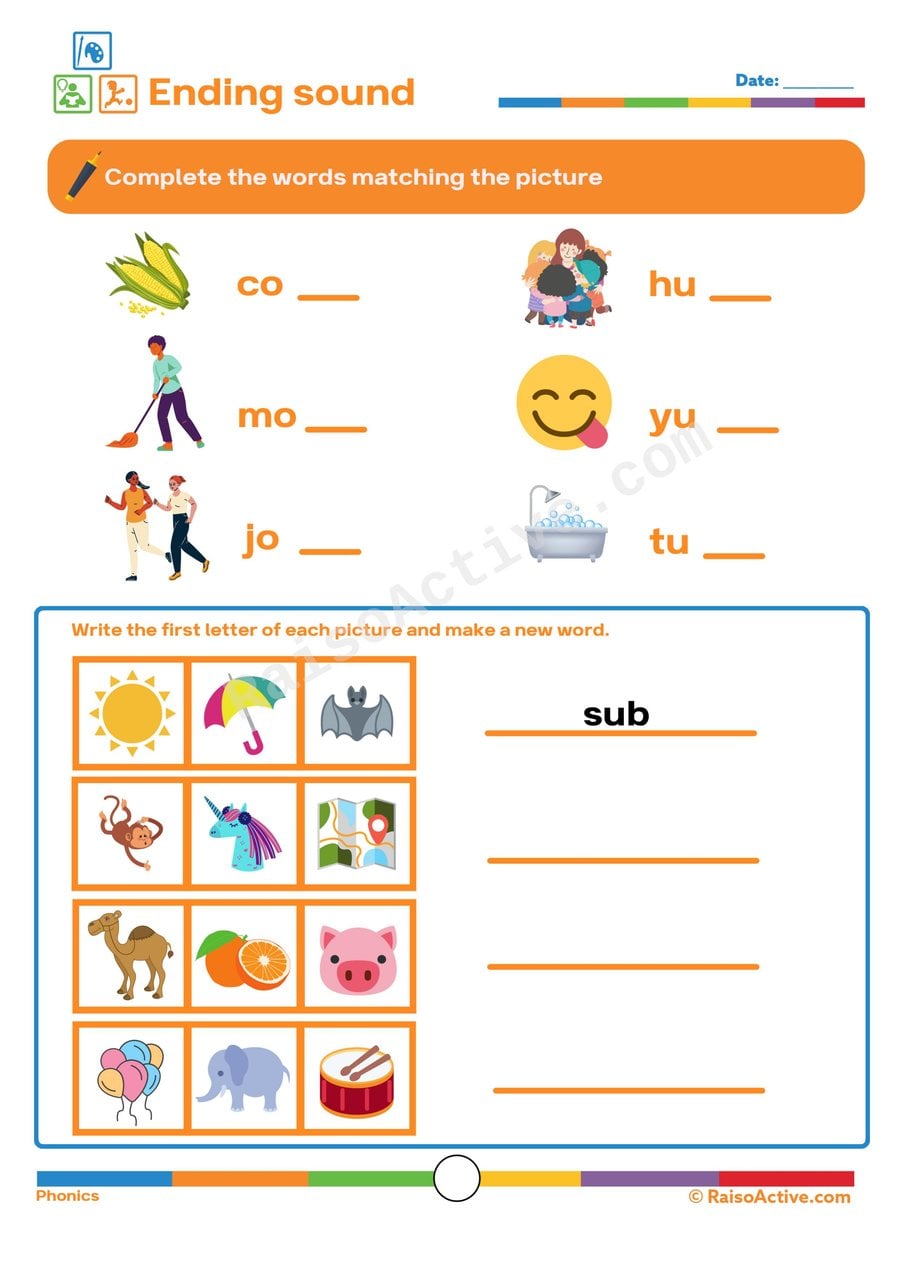
Ending Sound Worksheet: Complete the Words!
This worksheet builds on ending sound practice for children ages 4-5 by having them complete words based on pictures and then use the very first letter of each picture to build an entirely new word, adding a layer of creative word-building on top of straightforward phonics practice. Completing words by ending sound requires the same phonemic segmentation skill as beginning sound work, just applied to the trickier final position in a word. The second half of the worksheet, where beginning letters are strung together to form a new word, adds a satisfying puzzle element that rewards careful, accurate sounding-out in the first section.

Learn the Letter 'x' Worksheet: Tracing, Matching, and Coloring Fun!
This worksheet builds recognition of the less common letter x through tracing both uppercase and lowercase forms, then reinforces that recognition through matching pictures and highlighting the letter within a grid. For ages 4-5, letter x is genuinely rare at the start of everyday words, so this worksheet leans on strong examples like 'x-ray' to build familiarity despite limited real-world exposure.

Learn to Write the Number 7: A Fun Tracing and Counting Worksheet!
This worksheet helps children ages 4-5 learn the correct stroke sequence for writing the number 7, while counting fingers and mangoes reinforces that the numeral stands for a specific quantity of seven items. Practicing both writing and counting for the same number in one sitting strengthens the link between number recognition and number formation.
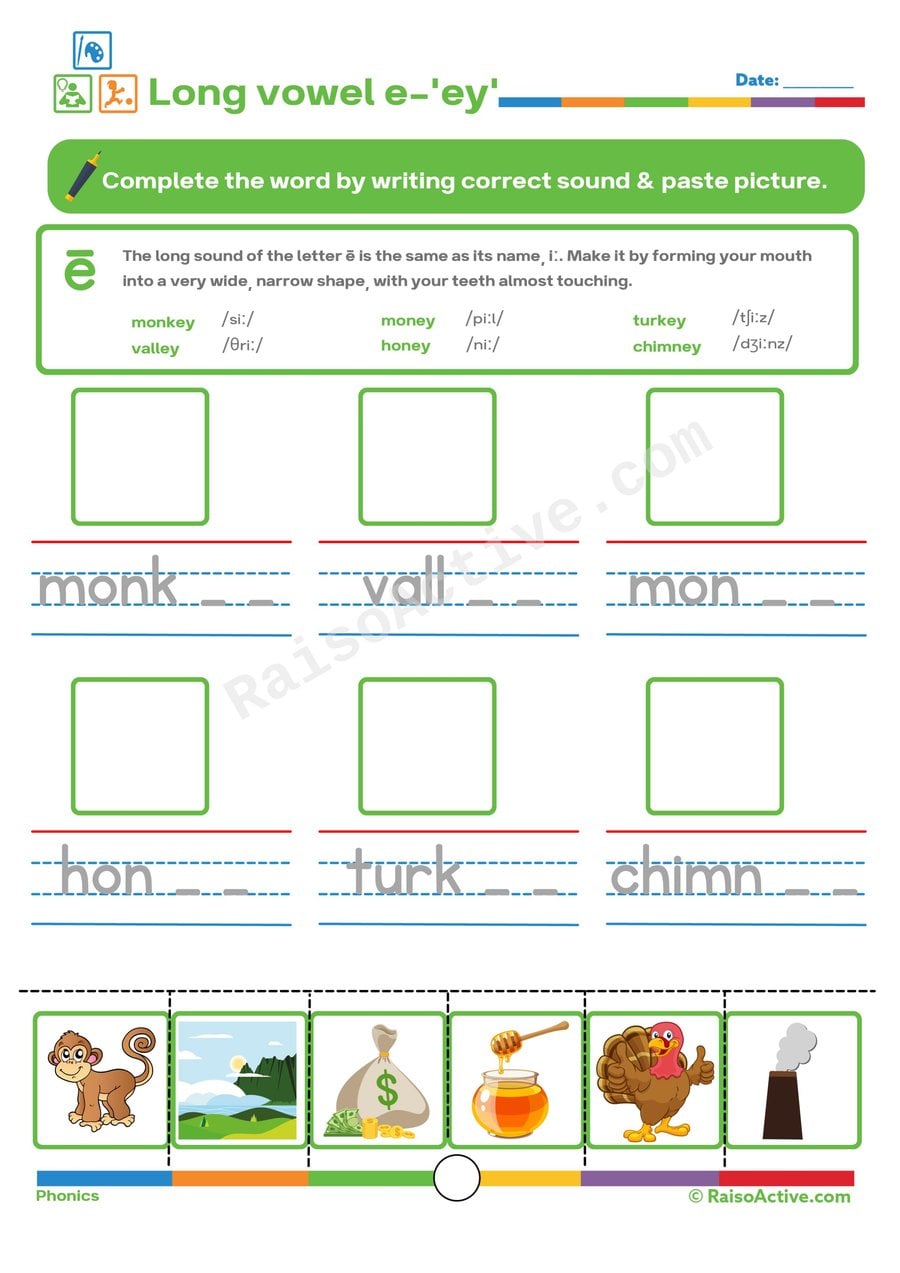
Long Vowel E Worksheet: Write, Match & Paste!
This worksheet gives children ages 4-5 practice with the long 'e' sound, as in 'bee' or 'leaf,' by having them fill in a missing letter to complete a word, match that word to its correct picture, and paste the picture into place. Combining spelling, reading, and picture matching in one activity reinforces the long 'e' sound from multiple angles, helping the sound-spelling connection stick more firmly than any single task alone.
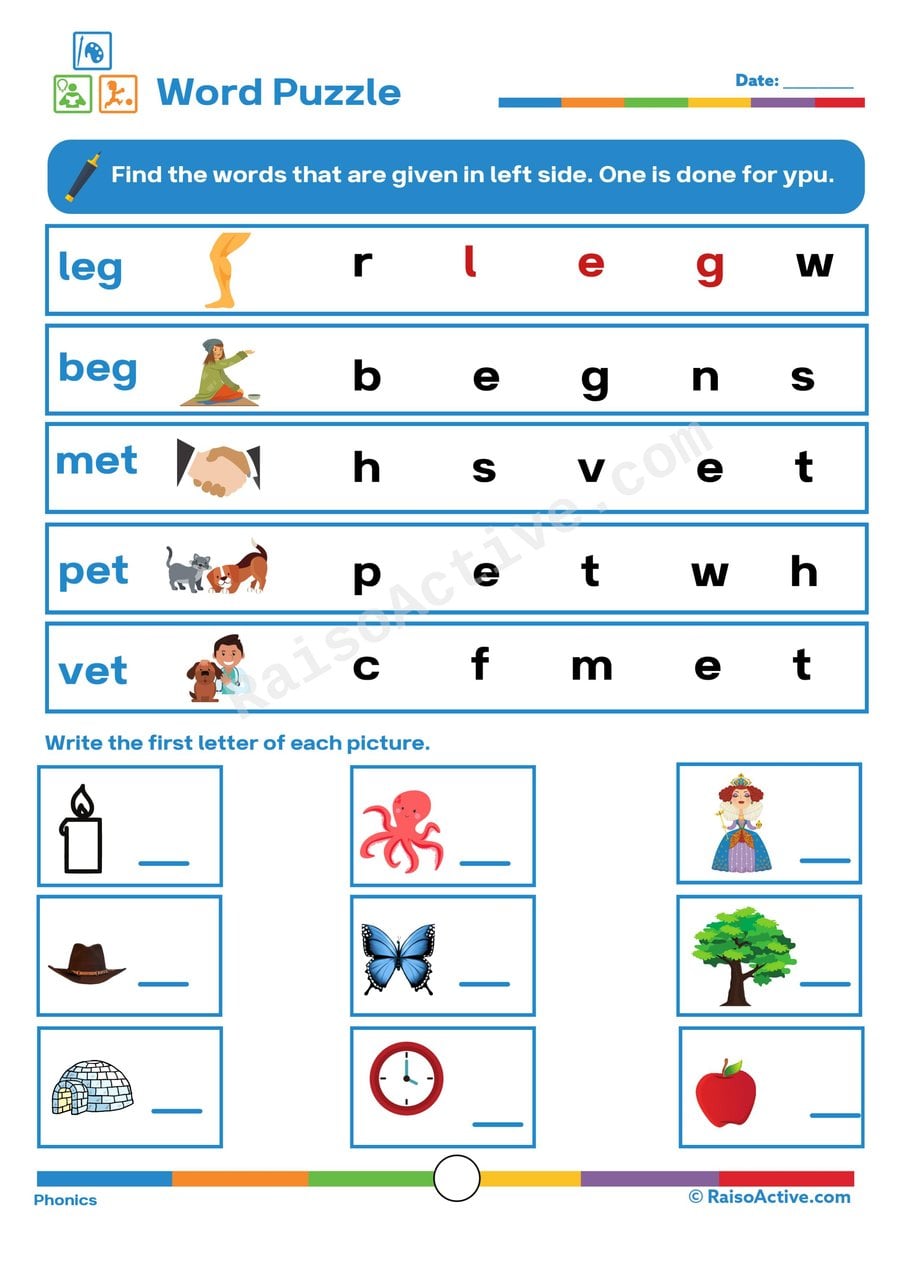
Word Puzzle Fun: Find and Write the First Letter!
This worksheet asks children ages 4-5 to locate hidden words in a picture puzzle and then identify and write the first letter of each corresponding picture, combining visual search skills with beginning-sound phonics. Searching a puzzle for target words builds visual scanning and attention, a skill that supports reading fluency later on, while writing the beginning letter reinforces the sound-to-symbol connection central to early spelling. Doing both together keeps young learners engaged while practicing two skills at once.

Number Sequencing Worksheet: Practice Counting and Ordering Numbers!
This worksheet gives children ages 4-5 focused practice writing numerals in order by filling in the missing numbers within several different counting sequences. Unlike simple counting aloud, writing each numeral by hand forces children to connect the spoken number word to its correct written symbol, reinforcing both number recognition and early handwriting control.

Sight Word 'There' Worksheet for Preschoolers: Tracing, Coloring, and Sentence Building
Because 'there' can't be decoded using typical phonics rules and is easily confused with the similar-sounding 'their' and 'they're,' children ages 4-5 need repeated, varied exposure to memorize it as a sight word. Practicing it through coloring, tracing, searching, and sentence-building helps move the word from momentary recognition into automatic recall needed for fluent reading.
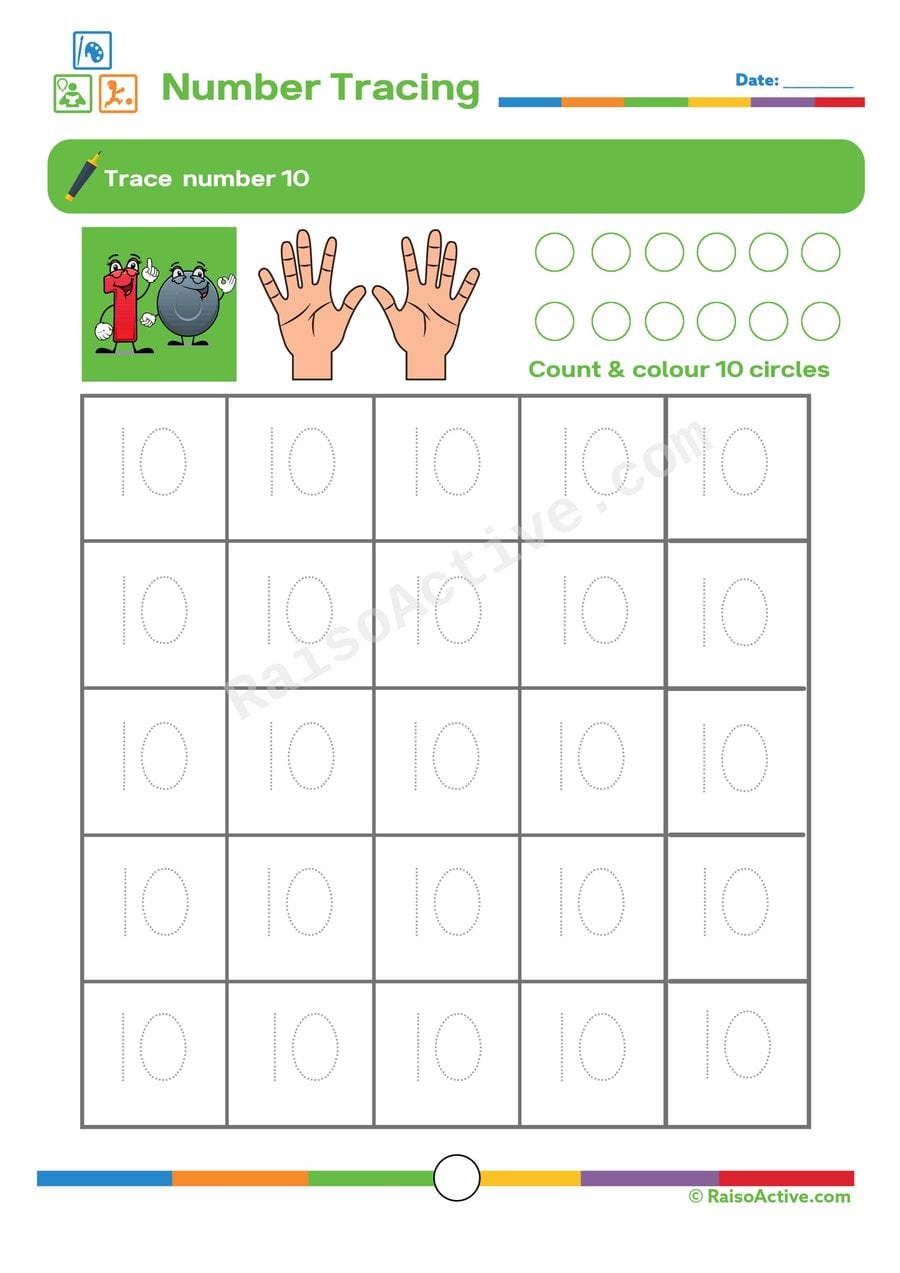
Trace and Count to 10! Number Tracing Worksheet
This worksheet has children ages 4-5 trace the number 10, their first two-digit number in a structured sequence, and then count and color a full set of ten circles, reinforcing that 10 represents a complete group of two fives or one full set of fingers on both hands. Practicing 10 also marks an important transition point, since children who can confidently count, write, and represent 10 are ready to begin extending their counting into the teens. This combination of tracing and counting to a meaningful benchmark number builds solid number sense.
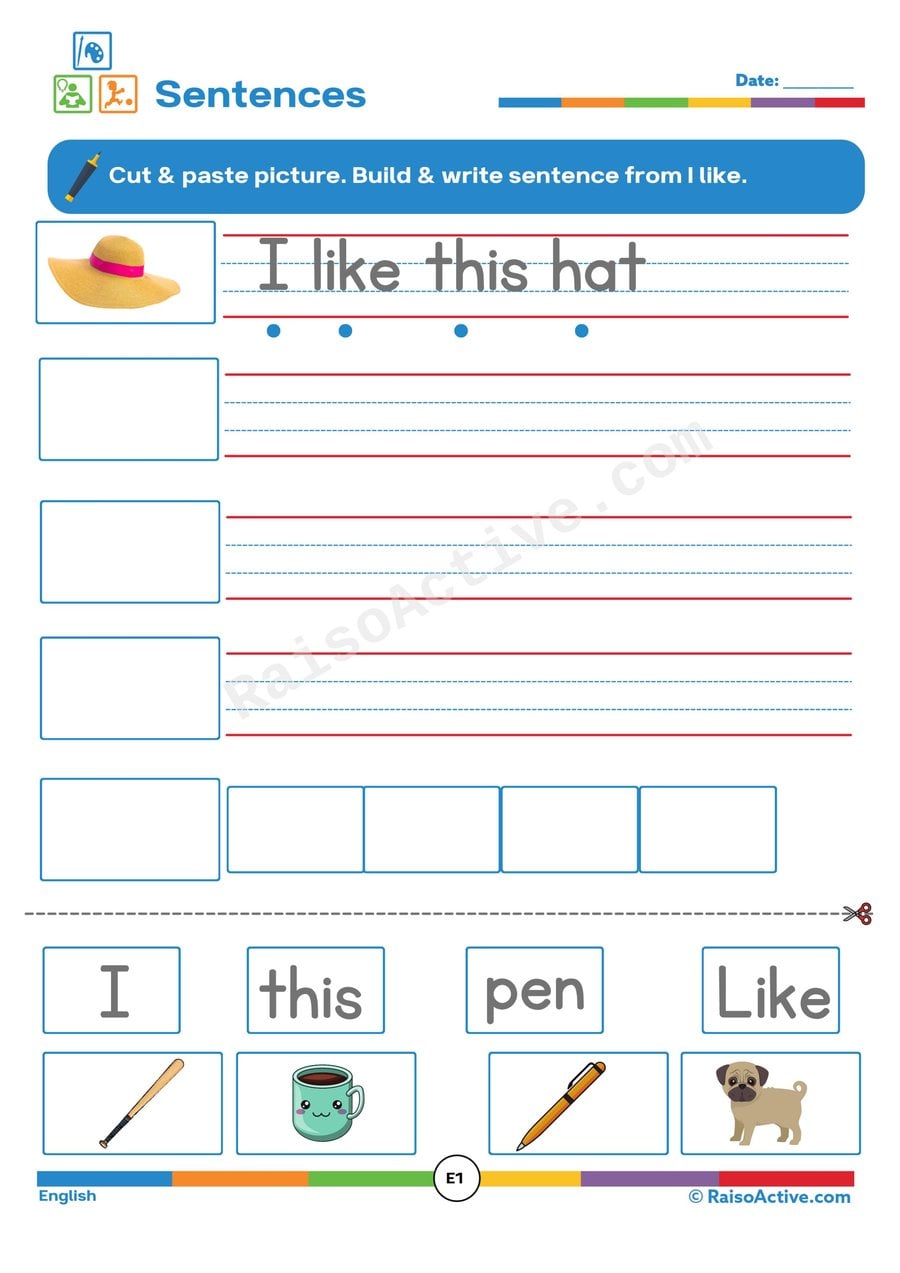
I Like Sentences Worksheet: Cut, Paste, and Write!
This worksheet builds early sentence construction and fine motor skills together, having children cut out a picture and word cards, paste them into a simple 'I like ___' sentence frame, and then copy the full sentence in their own writing. For ages 4-5, physically assembling a sentence from separate word pieces before writing it independently helps children understand that sentences are built from individual words in a specific order.

Secret Words Worksheet: Beginning Sounds Practice
Turning beginning-sound practice into a 'secret word' mystery gives children ages 4-5 a strong motivational hook for identifying starting letters and building simple words from them. Isolating the first sound in a picture's name and writing the corresponding letter is a core phonemic awareness skill, and stacking several of those letters together to spell a new mystery word adds an extra layer of problem-solving on top. This worksheet essentially turns phonics practice into a short decoding puzzle, which tends to hold attention better than a plain matching page.

Learn the Sight Word 'the' - Fun Worksheet for Early Readers!
'The' is one of the most frequently occurring words in the English language, and because it doesn't follow regular phonics rules, children ages 4-5 need to learn it by sight rather than by sounding it out. This worksheet builds that instant recognition through several different modes — coloring, tracing, searching, and using it in a sentence — which research on early literacy shows helps sight words stick more firmly than a single repetition. Mastering 'the' specifically gives children a huge boost in reading fluency, since it appears in nearly every simple sentence they'll encounter.

Number Writing Worksheet 0-10: Trace, Count, and Write!
This worksheet combines three numeracy skills in one sitting: recognizing printed numerals 0 through 10, forming them correctly through tracing, and matching a quantity of objects to its written number. For 4-5 year-olds, connecting the abstract symbol '7' to seven actual objects is the key leap between rote counting and true number sense.
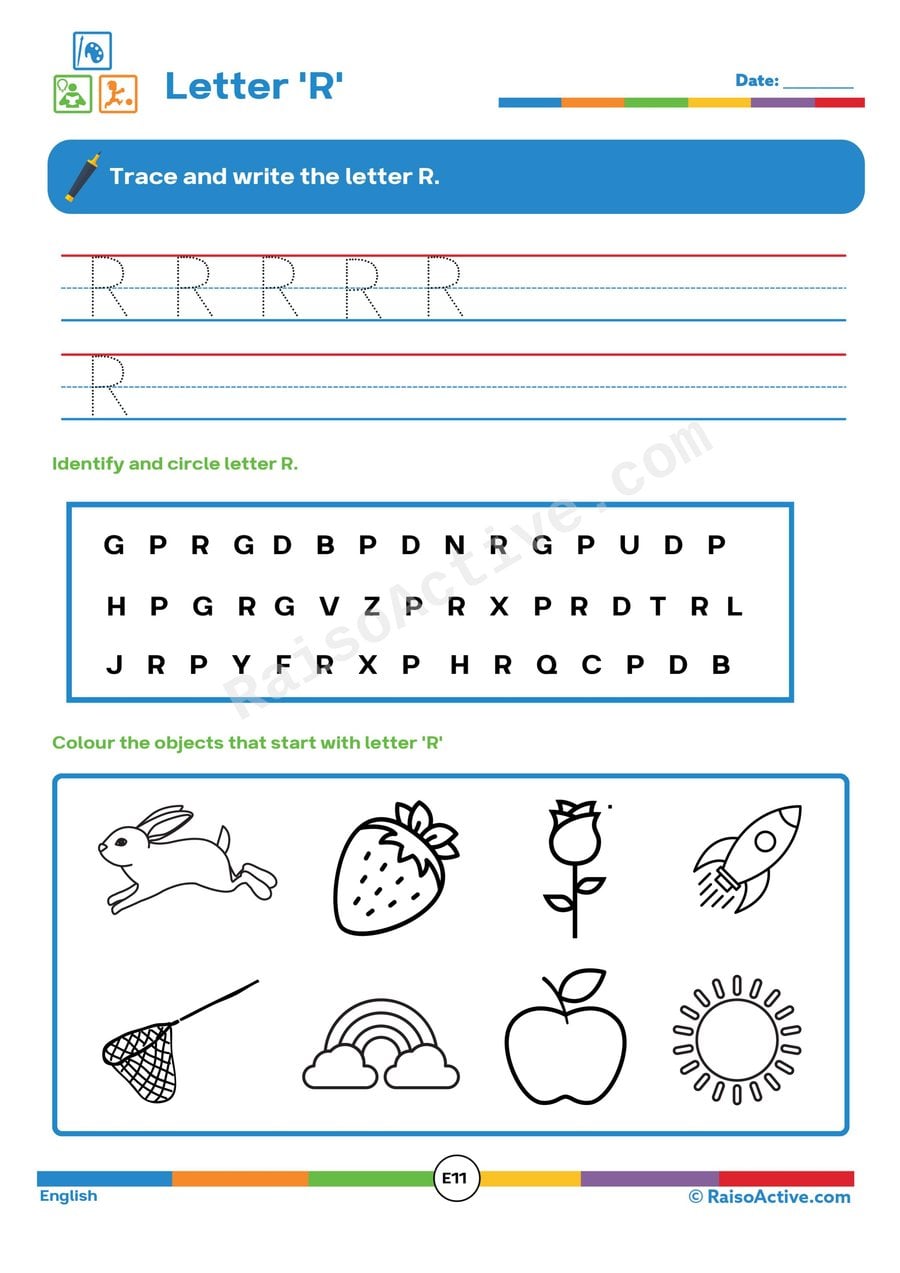
Letter R Worksheet: Trace, Identify, and Color!
This worksheet helps children ages 4-5 practice tracing and writing the letter R, spotting it among a group of other letters, and recognizing objects that begin with the R sound. Working across three related tasks for one letter, tracing, searching, and identifying pictures, gives repeated exposure that helps the letter shape and sound become automatic.
What Pre-K letter tracing worksheets cover
At four to five, letter tracing covers every uppercase letter, each shown with a starting dot and a numbered arrow for its strokes, and a child works through several letters a week rather than one. Spacing starts to matter: letters should sit close together on a row without touching. Lowercase letters, beginning with the easier round ones like o, c and a, are usually introduced in the second half of the year, traced the same way uppercase ones were.
- Trace every uppercase letter following its numbered stroke arrows
- Keep traced letters close together without letting them touch
- Trace lowercase o, c and a starting at the top
- Trace a full first name in capital letters
How to use these worksheets at home or in class
Ten minutes a day, starting with name tracing before moving to letters or numbers, builds the steady habit this stage rewards. Say a letter's sound alongside its name while tracing, and count out loud while touching each object in turn.
Start with the sheet that matches what your child can already do, then move one step up. Keep finished sheets in a folder: Pre-K teachers often ask for evidence of practice, and children like seeing their own progress.
Is your child ready for Pre-K letter tracing work?
Before this stage a child should trace basic shapes and lines, recognize a few letters from their own name, count a small set of objects by pointing to each one, and sustain a simple table task for several minutes.
Frequently asked questions
Should a four-year-old trace uppercase or lowercase letters first?
Uppercase first, because the strokes are mostly straight lines and large curves that a four-year-old's hand can manage, while several lowercase letters are smaller and share confusable shapes such as b, d, p and q. Most letter-tracing programs finish the uppercase alphabet before introducing lowercase, and even then start with the easiest round letters. Trying to teach both cases for every letter at once tends to slow both down rather than speed either up.
What should a Pre-K child be able to do in letter tracing?
At four to five, letter tracing covers every uppercase letter, each shown with a starting dot and a numbered arrow for its strokes, and a child works through several letters a week rather than one. Spacing starts to matter: letters should sit close together on a row without touching. Lowercase letters, beginning with the easier round ones like o, c and a, are usually introduced in the second half of the year, traced the same way uppercase ones were. Before this stage a child should trace basic shapes and lines, recognize a few letters from their own name, count a small set of objects by pointing to each one, and sustain a simple table task for several minutes.
Do these worksheets follow the Pre-K curriculum?
The sheets cover uppercase letter formation, lowercase letter formation, starting points and stroke direction and spacing between letters, which sit inside the State pre-K early learning standards; Head Start ELOF outcomes for Pre-K. Reception (UK), LKG / Junior KG (India) use the same skills at this age, so the sheets also fit families following those programmes.
Are these Pre-K letter tracing worksheets free?
Yes. Each worksheet downloads free as a watermarked PDF once you create an account, with a limit of five a day. An annual membership ($20) removes the watermark and the limit for the whole library of over 1,000 worksheets and every printable pack.

Written by
Hemsweta Jain · Teacher Cheena
MBA and Early Childhood Educator, teaching since 2014 · Founder of RaisoActive, Mumbai
Written and reviewed by Hemsweta Jain (Teacher Cheena), who designs every RaisoActive worksheet.
Last reviewed
Printable packs for ages 4–5
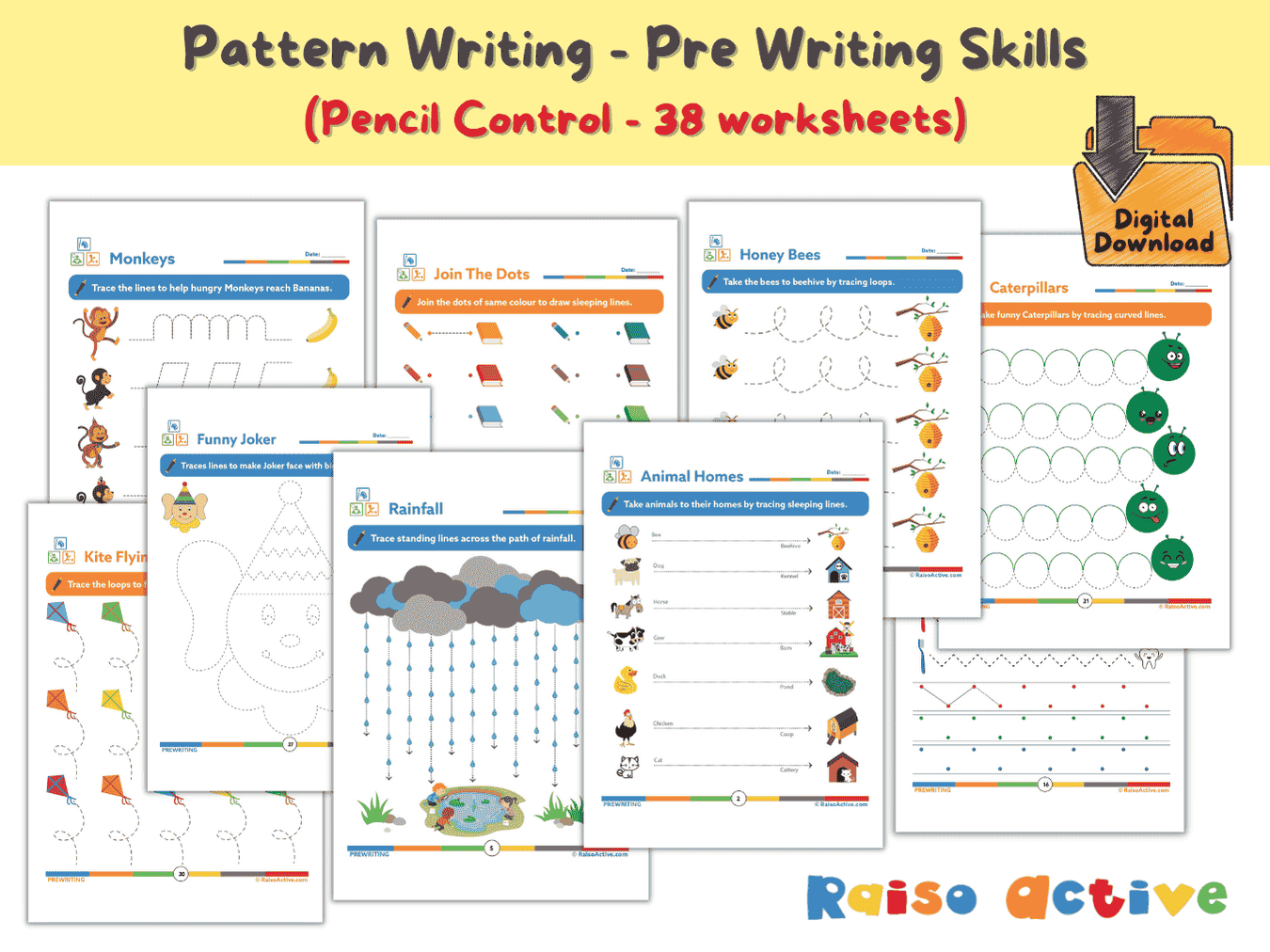
Pattern Writing Pre-writing Skills Activity Book for 3-4 Year Olds
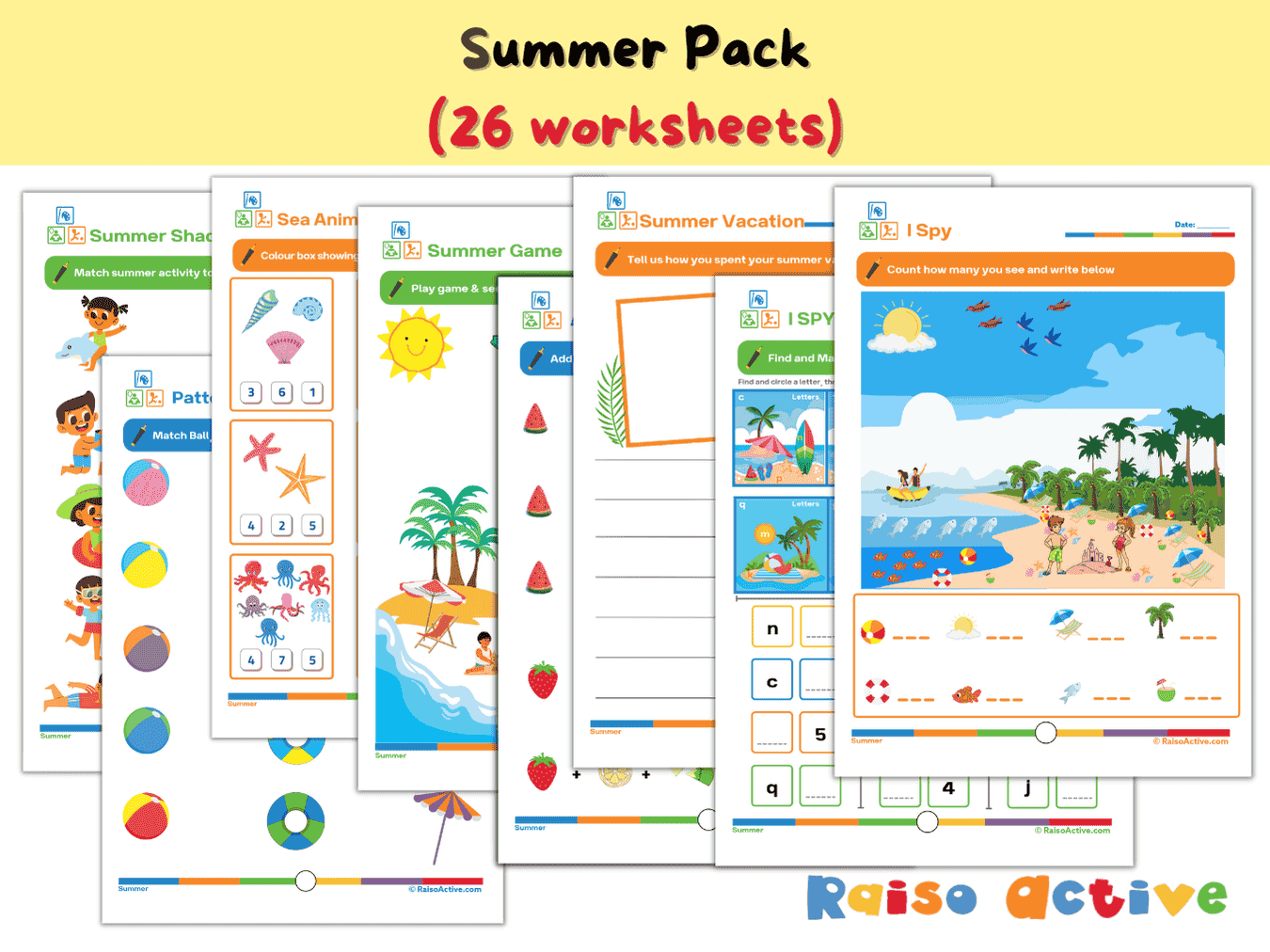
Summer Activity Pack: Math, Literacy, Puzzles & More for Preschool & Kindergarten
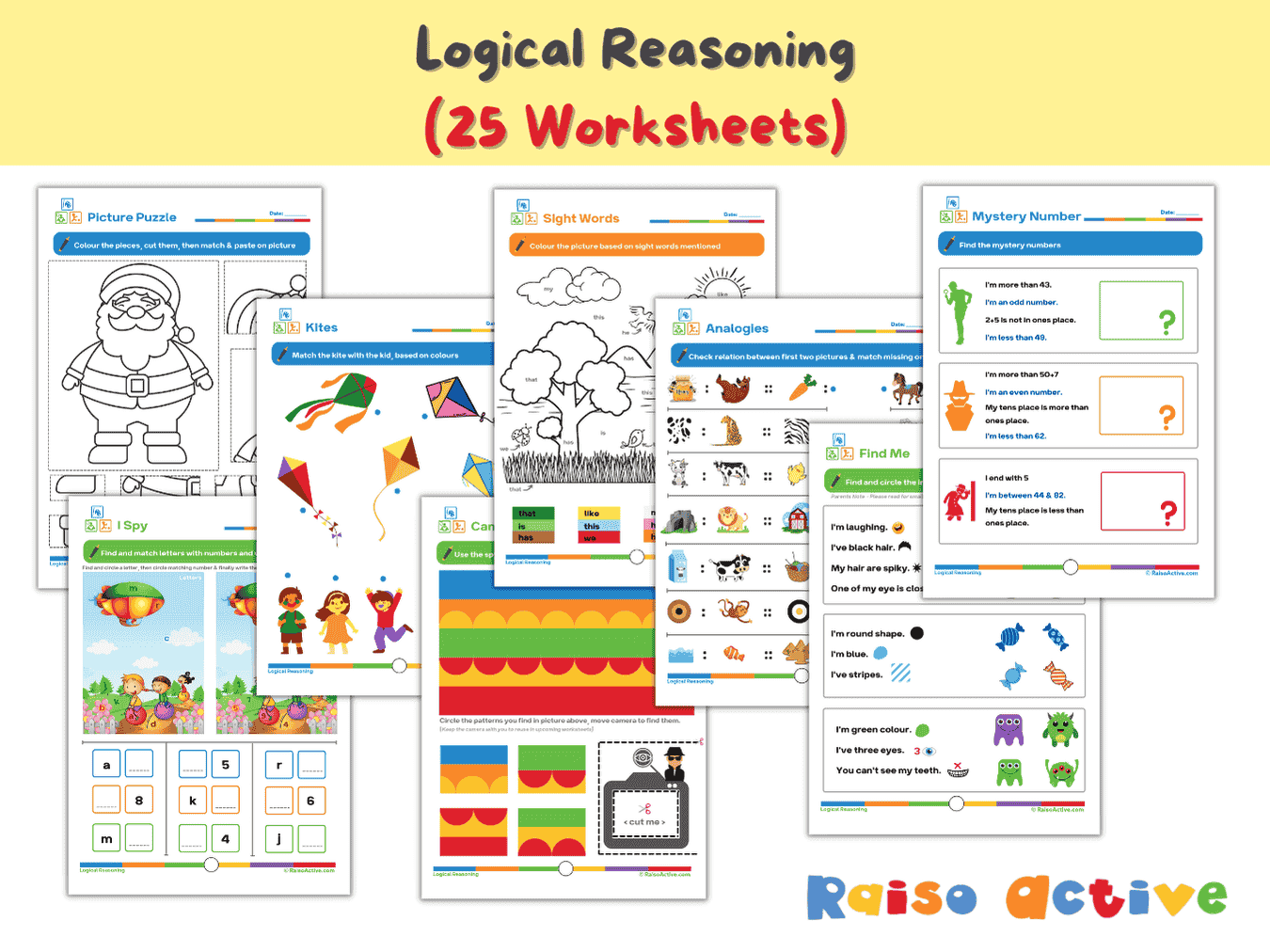
Logical Reasoning Activity Book for Preschool & Kindergarten | Patterns, Puzzles & Analogies
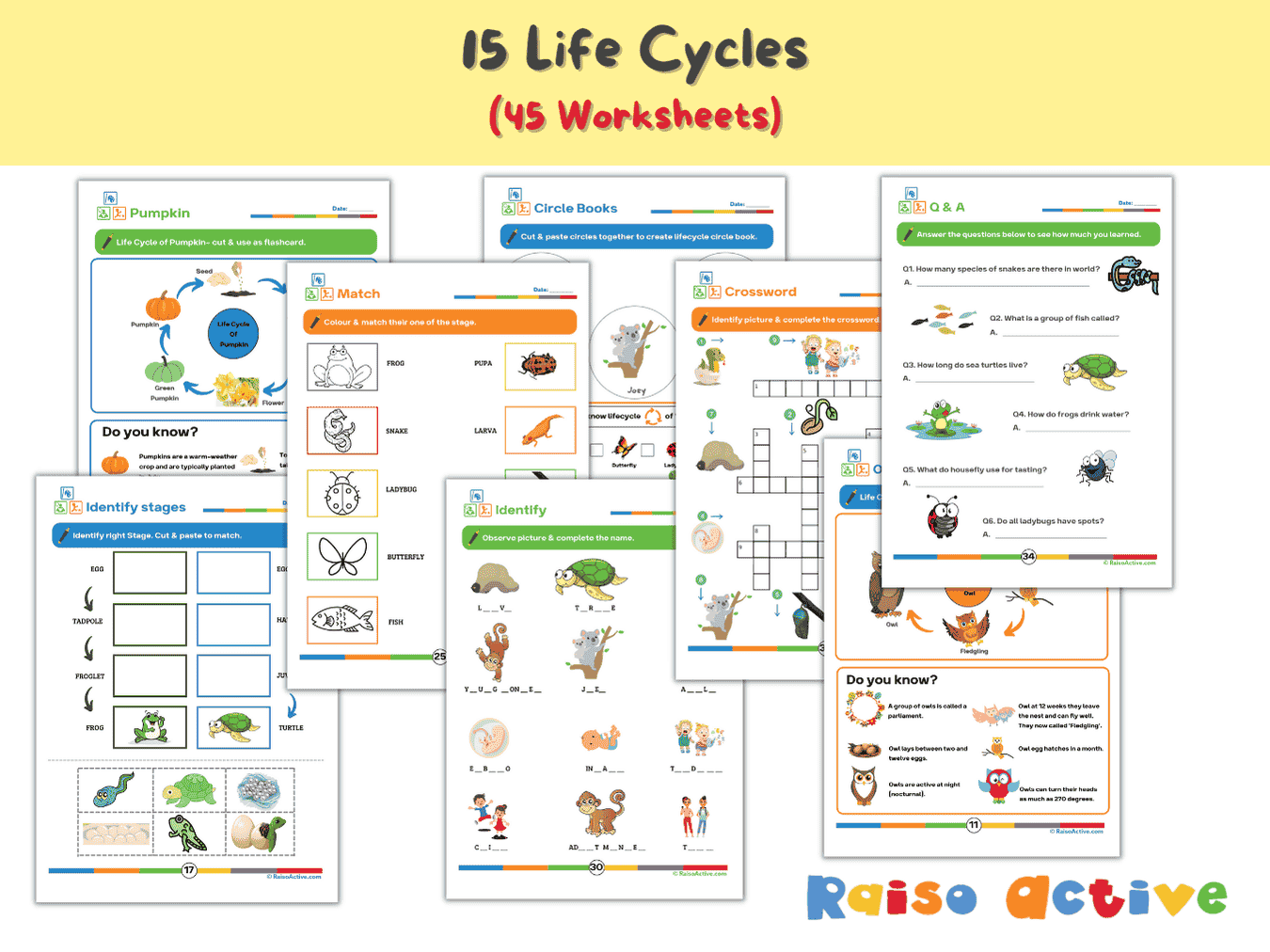
Lifecycles Activity Book & Flashcards for Preschool & Early Elementary
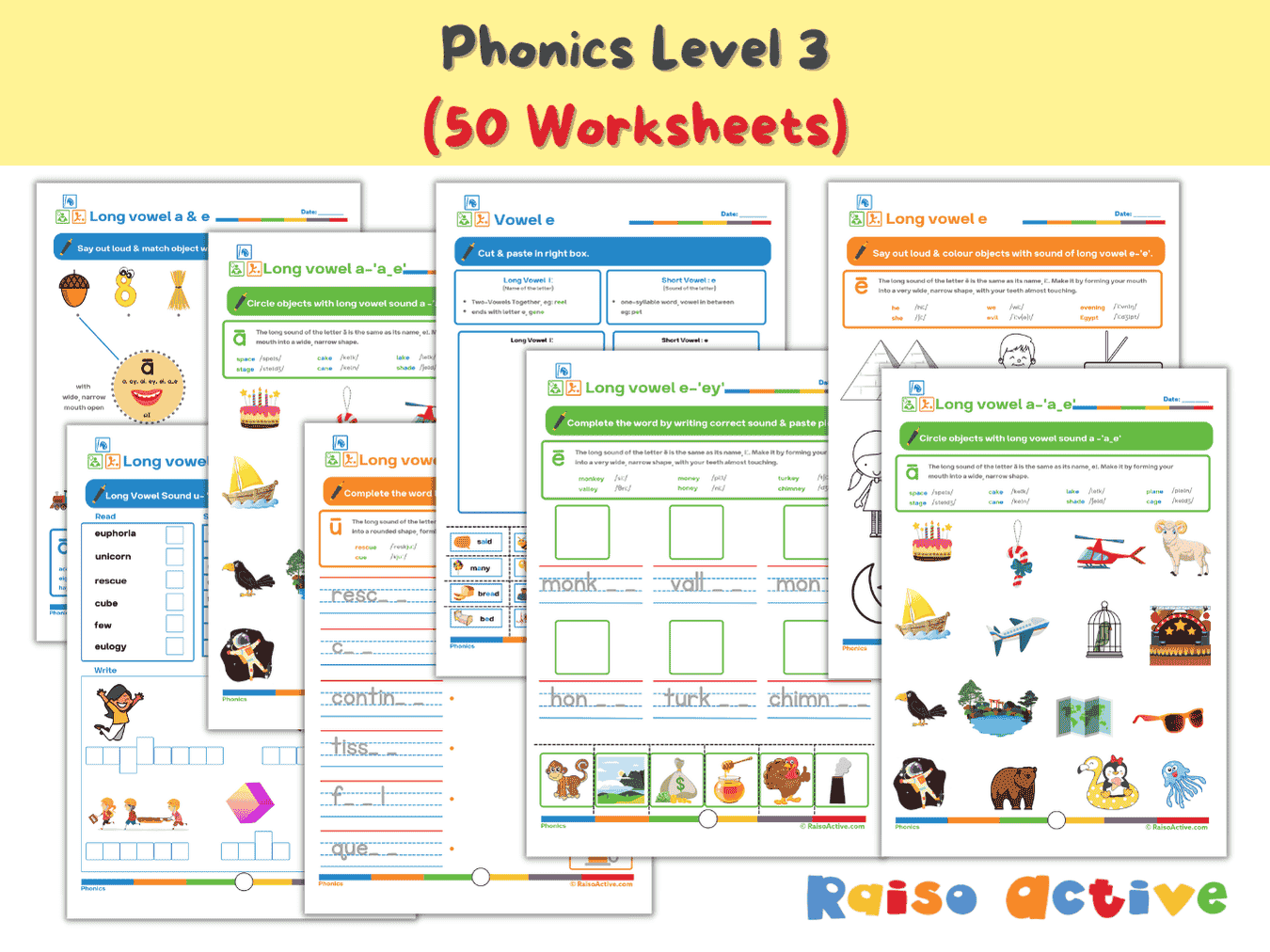
Phonics Level 3 Long Vowels Activity Book for Kindergarten & 1st Grade
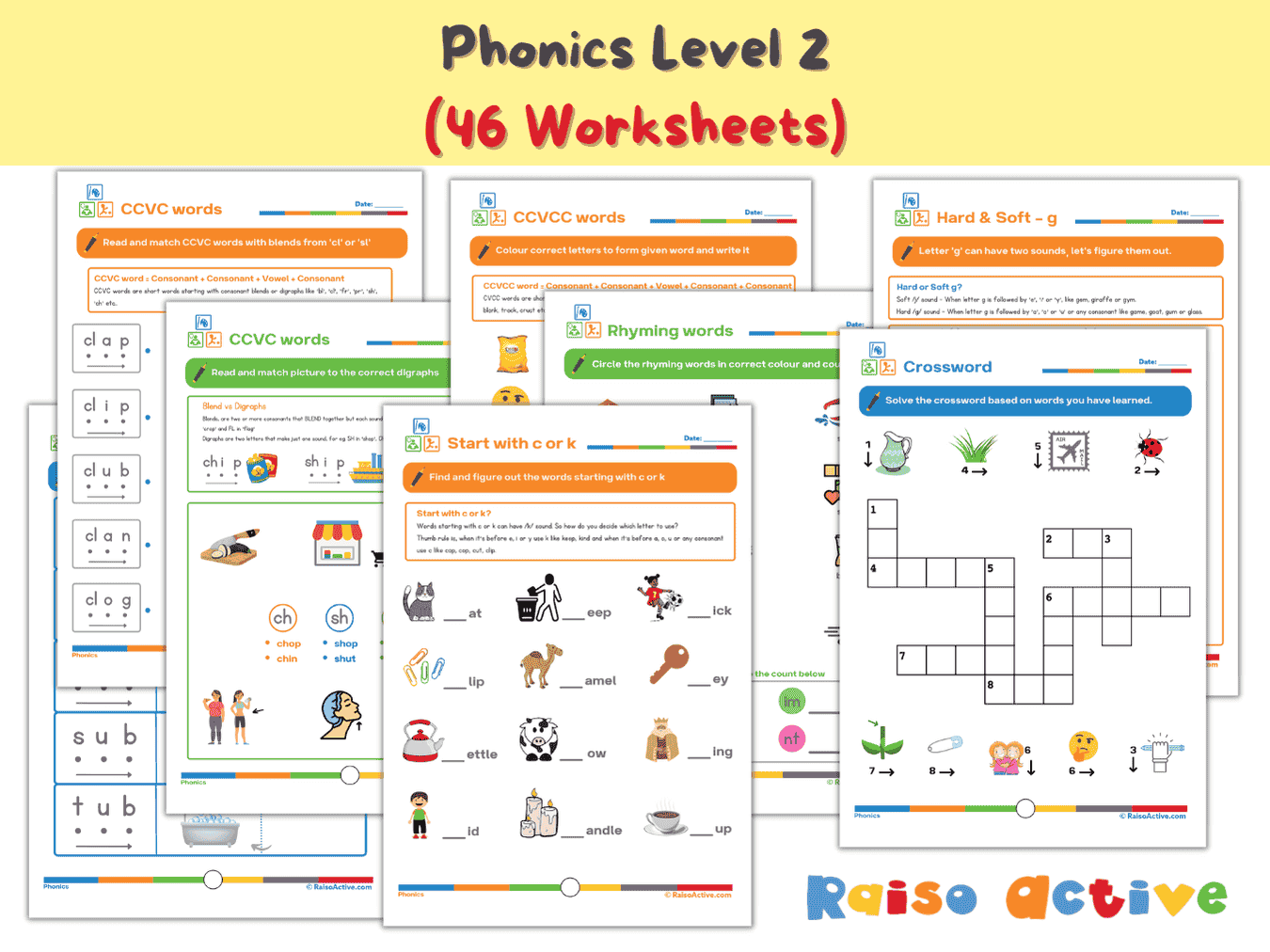
Phonics Level 2 Worksheets: CVC, CCVC, CVCC Word Families & Blends for Early Readers (Ages 4-7)
Guides for parents and teachers
See all guides →Number Formation Rhymes 0–9 and How to Fix Reversals
Original number formation rhymes for 0–9, the correct stroke order for each digit, why 3, 5 and 7 get reversed most often, and multisensory fixes that work.
Pre-Writing Strokes in Order: From Standing Lines to Loops (With Printable Patterns)
The developmental order of pre-writing strokes, from vertical lines to loops, and why practicing them in sequence makes letter formation much easier to learn.
Kindergarten Readiness Checklist: 25 Skills to Practice Before the First Day
A kindergarten readiness checklist of 25 literacy, math, motor, self-regulation and self-help skills, with an 8-week summer plan and notes on when not to worry.
Best Worksheets for 3-Year-Olds: What Works and What to Avoid
What works on worksheets for 3-year-olds: short sessions, crayons, tracing lines, matching, cutting, a free weekly plan, and signs one is too advanced.
Reception Year Explained: EYFS Learning and How to Help at Home
A teacher's plain-English guide to the Reception Year: the seven areas of learning, Early Learning Goals, Phase 2/3 phonics, the RBA and home routines.
What Should a 4-Year-Old Know Before LKG? A Readiness Checklist
A calm, teacher-written LKG readiness checklist for 4-year-olds: language, pattern writing, numbers to 10, self-help and social skills, plus a 6-week plan.
Canonical: https://raisoactive.com/worksheets/pre-k-letter-tracing