Free printable worksheets · United States
Pre-K Alphabet Worksheets (Ages 4–5)
Pre-K alphabet worksheets are practice sheets for children aged 4–5 in Pre-Kindergarten in the US. Alphabet worksheets build recognition of the 26 letters, their names and order, and the difference between uppercase and lowercase forms. The sheets on this page cover letter recognition A–Z, letter names versus letter sounds, sequencing letters in order and matching uppercase to lowercase.
Pre-K is the bridge to kindergarten, so activities target the entry skills teachers consistently ask for: writing a first name, naming most uppercase and some lowercase letters, knowing a few letter sounds, counting to twenty, and managing scissors and a pencil comfortably. At four to five, a child works toward naming all 26 uppercase letters on sight, in any order, and starts matching each one to its lowercase partner. Worksheets should include finding a named letter on a busy page, filling in a missing letter in a short run such as C, D, __, F, and pairing uppercase to lowercase across two shuffled columns. Reading whole words, or naming every lowercase letter alone without its uppercase partner nearby, is still ahead.
1053+ worksheets · free PDF download · print on A4 or Letter
Pre-K Alphabet Worksheets to print
Browse all worksheets for ages 4–5
Phonic Sounds Worksheet: Circle the Picture That Starts with the Alphabet Sound!
This worksheet reinforces beginning-sound recognition for children ages 4-5 by presenting a letter at the start of each row and asking them to find the one picture among several that begins with that same sound. Because each row contains multiple pictures, children must test several beginning sounds against the target letter before settling on the correct one, which builds more precise listening skills than simpler one-picture matching tasks. This process also strengthens the letter-sound mapping that underlies early decoding.

Find the 'ap' Words! A Fun Worksheet for Early Readers
Children ages 4-5 build phonics fluency by reading and writing CVC words in the 'ap' family, like 'cap', 'map', and 'nap'. Recognizing this consistent letter pattern teaches early readers to decode groups of letters as a chunk rather than sounding out every letter individually, speeding up reading over time. Writing each word after finding it also reinforces correct spelling and letter sequencing for early literacy.
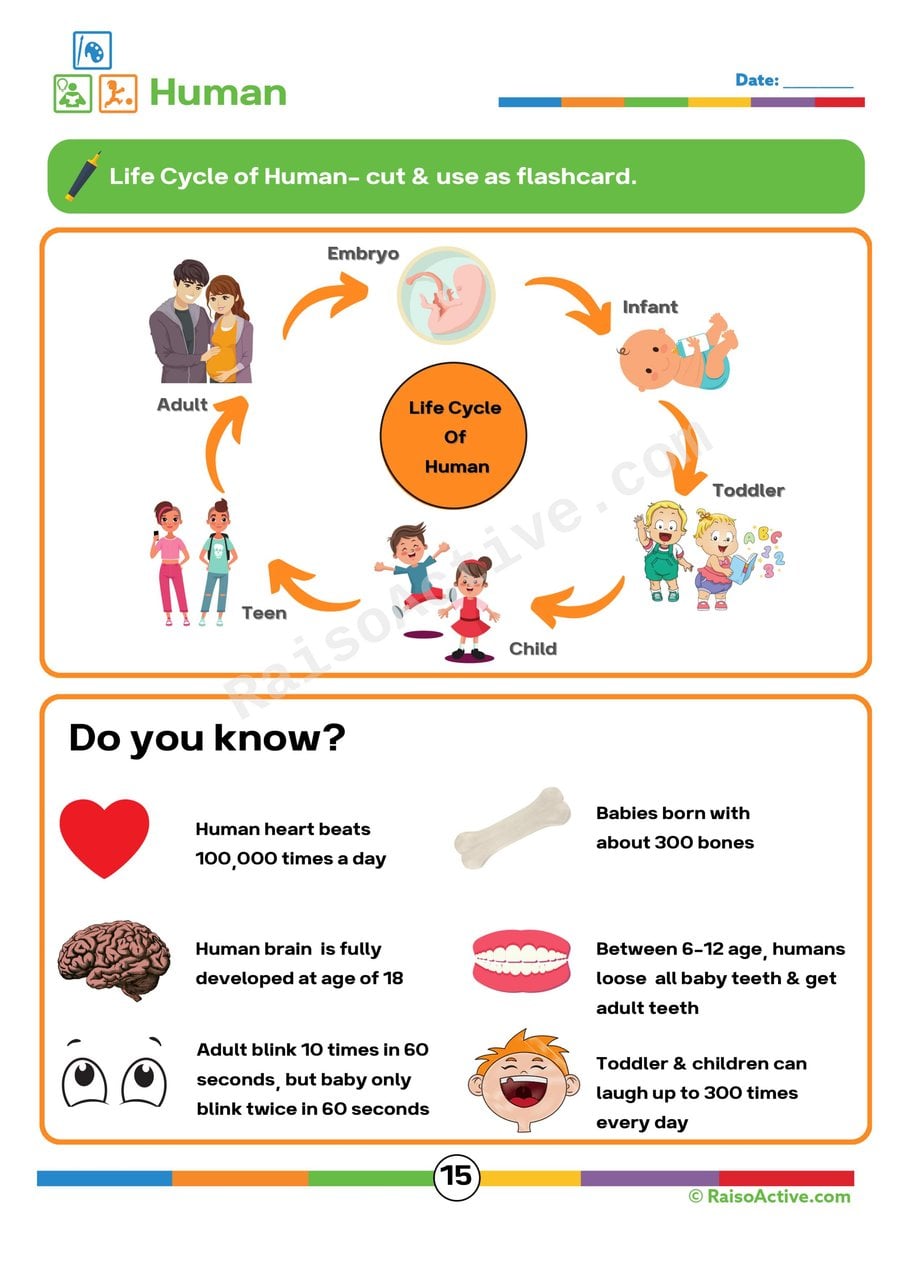
Human Life Cycle Flashcards for Kids
Children ages 3-6 explore the stages of human development — from embryo to infant, child, and adult — using flashcards that build both sequencing skills and personal understanding of growth. Because this topic relates directly to the child's own life, it offers a uniquely relatable entry point into the broader science concept of life cycles.

Rhyming Words Worksheet: Color and Circle the Rhymes!
This worksheet builds phonological awareness in children ages 4-5 by having them color word bubbles that rhyme with 'sad' and then circle the word in each box that rhymes with its picture. Practicing rhyme recognition across two different formats — coloring a themed rhyme set and then identifying new rhymes independently — deepens a skill that's strongly linked to later reading and spelling success.

Superhero Grouping in Tens: A Fun Counting Worksheet for Preschoolers!
Using a superhero theme, this worksheet helps children ages 4-5 practice counting objects accurately and matching a counted group to its written number, an early step toward understanding place value through grouping in tens. Circling objects according to a given number afterward reinforces the connection between a numeral and the actual quantity it represents, rather than just reciting numbers in order.

Tracing and Counting Fun: Number 5 Worksheet for Preschoolers
Children ages 4-5 practice tracing and writing the number 5 while reinforcing counting up to five through a picture-based matching task. Repeating the number in multiple formats — tracing, writing, and counting — helps cement both the shape of the numeral and the quantity it represents.

Read and Match: Sight Word Sentences Worksheet for Early Readers
Children ages 4-5 practice reading simple sight-word sentences and matching them to the picture that shows their meaning, building early reading comprehension by connecting printed words directly to what they represent. This bridges the gap between recognizing individual sight words and understanding a full sentence's meaning.

Number Writing Worksheet 0-10: Trace, Count, and Write!
This worksheet combines three numeracy skills in one sitting: recognizing printed numerals 0 through 10, forming them correctly through tracing, and matching a quantity of objects to its written number. For 4-5 year-olds, connecting the abstract symbol '7' to seven actual objects is the key leap between rote counting and true number sense.

Long Vowel 'a' Matching Worksheet for Preschoolers
This matching worksheet gives children ages 4-5 focused practice recognizing the long 'a' sound by connecting pictures to their correctly spelled words, without the added complexity of writing or searching. Because matching removes the writing demand, it's a gentler entry point into long vowel recognition for children who are still building spelling confidence, letting them focus purely on hearing and identifying the sound. This kind of low-pressure, high-repetition matching helps establish the long 'a' sound firmly before your child moves on to writing or spelling it independently.
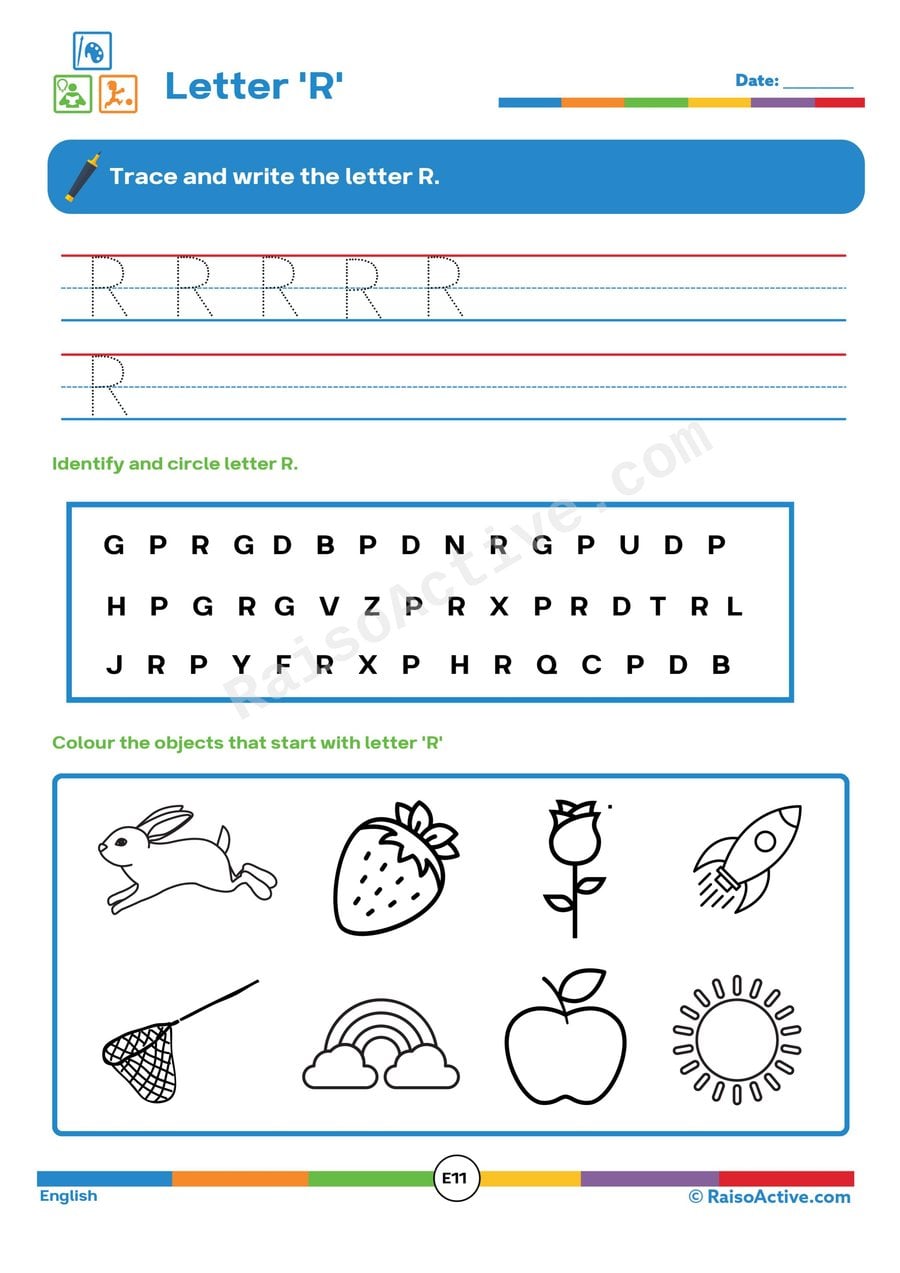
Letter R Worksheet: Trace, Identify, and Color!
This worksheet helps children ages 4-5 practice tracing and writing the letter R, spotting it among a group of other letters, and recognizing objects that begin with the R sound. Working across three related tasks for one letter, tracing, searching, and identifying pictures, gives repeated exposure that helps the letter shape and sound become automatic.

Sight Word 'THE' Worksheet: Trace, Write, and Identify!
This worksheet builds automatic recognition of the sight word 'the,' one of the most frequently occurring words in English text, through repeated tracing, writing, and identification practice. For four- and five-year-olds, memorizing high-frequency sight words like 'the' by sight — rather than sounding them out each time — is essential for building reading fluency, since these words appear on nearly every page a child will read.

Number Names Matching Worksheet for Preschoolers
This worksheet layers two skills for children ages 4-5: unscrambling the letters of a number-name word and then matching that word to its correct numeral. Unscrambling requires children to recognize familiar letter sequences, an early word-recognition skill, while matching reinforces that written number words correspond to specific quantities. Together these tasks push number-word literacy a step further than simple copying or tracing.

Sight Word 'For' Worksheet: Learn to Read and Write!
The word 'for' appears constantly in early reading material but doesn't follow simple sound-it-out rules, so children ages 4-5 need repeated practice to recognize it instantly as a sight word. Working through tracing, a word search, and sentence completion in one sitting gives multiple angles of exposure, which research on early literacy shows helps cement tricky high-frequency words into memory.
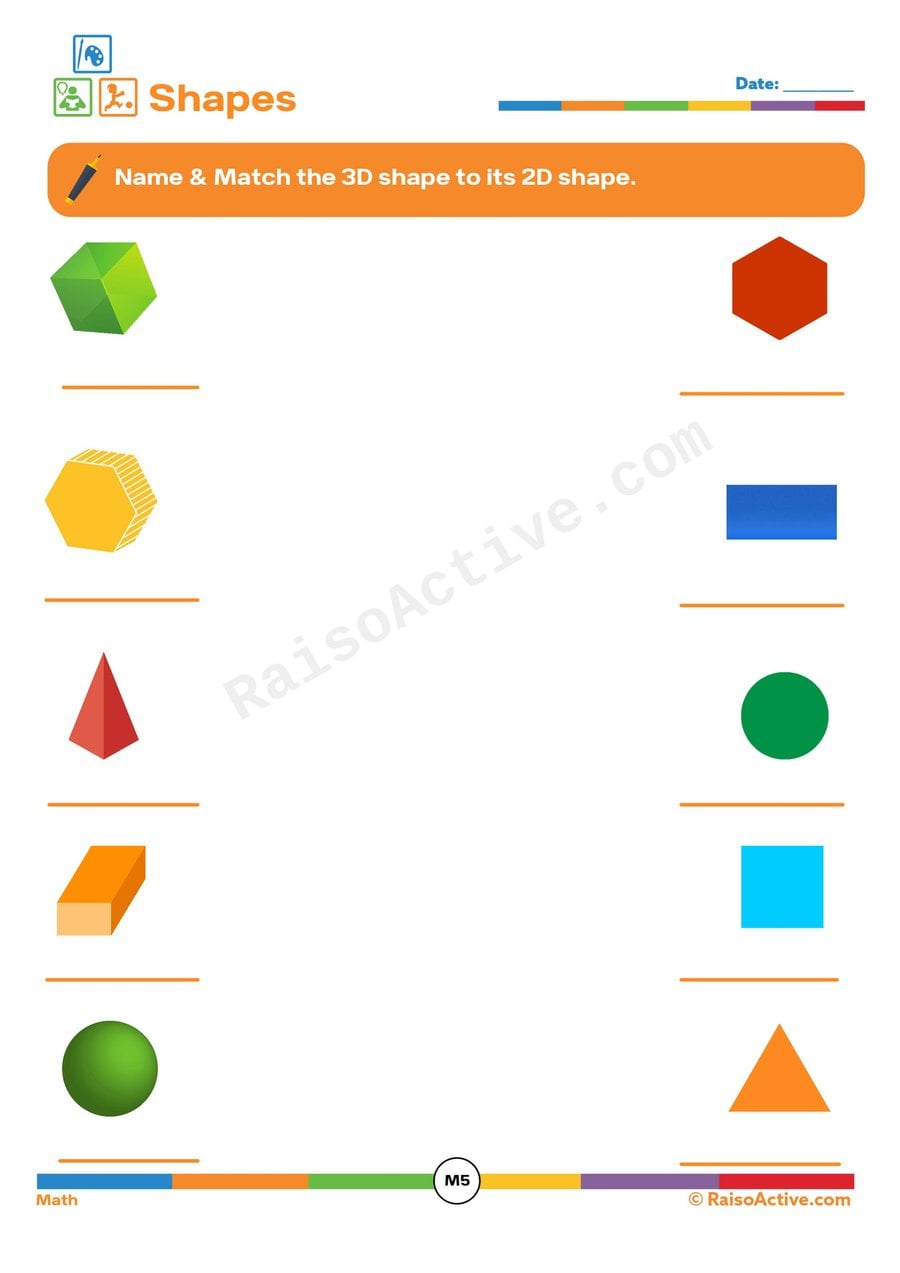
Shape Match: 3D to 2D Shapes Worksheet
This worksheet builds an important geometric connection by asking children to match 3D shapes, like a cube or sphere, to the 2D shape that appears on their flat faces, such as a square or circle. For ages 4-5, understanding that solid shapes are made up of flat shapes is a foundational geometry concept that bridges basic shape recognition with more advanced spatial reasoning.

Earlier and Later Time Worksheet: Telling Time Practice
Comparing clock times to determine which is earlier or later is an early step toward telling time for children ages 4-5, requiring them to read a clock face and reason about the order of events across a day. This worksheet builds that skill in two directions: first identifying a time earlier than a given reference point, then identifying a time later than a different clock shown. Practicing both directions helps children understand that 'earlier' and 'later' are relative concepts depending on what they're being compared to, not fixed labels attached to specific times.

Help the Hen! Alphabet Worksheet: Writing Missing Capital Letters
This maze-style worksheet asks children ages 4-5 to fill in missing capital letters in alphabetical order to help a hen find her way to the coop, turning alphabet sequencing practice into a small story-driven challenge. Recalling which capital letter comes next in the sequence — without a full alphabet chart to copy from — builds genuine alphabet mastery rather than passive letter recognition. The path-following format also adds a light visual tracking element that keeps the activity from feeling like a plain fill-in-the-blank drill.

Learn the Sight Word 'the' - Fun Worksheet for Early Readers!
'The' is one of the most frequently occurring words in the English language, and because it doesn't follow regular phonics rules, children ages 4-5 need to learn it by sight rather than by sounding it out. This worksheet builds that instant recognition through several different modes — coloring, tracing, searching, and using it in a sentence — which research on early literacy shows helps sight words stick more firmly than a single repetition. Mastering 'the' specifically gives children a huge boost in reading fluency, since it appears in nearly every simple sentence they'll encounter.

Color the Pictures! Kk, Ll, and Mm Letter Sounds Worksheet
Coloring a circle beneath a picture only when its name starts with a target letter sound builds beginning-sound discrimination for children ages 4-5 across three letters — K, L, and M — sharpening their ability to isolate initial phonemes.

Long Vowel 'ee' Sound Matching Worksheet for Preschoolers
This worksheet has children ages 4-5 complete long 'ee' words by writing missing letters, then draw lines matching each finished word to its picture. Focusing on the specific 'ee' spelling of the long 'e' sound, as in 'tree' and 'bee', helps children start noticing that vowel sounds can have several different letter patterns representing the same sound.

Frame the Sentence: Sight Word Fun Worksheet for Preschoolers
Constructing a full sentence from individual sight words is a meaningful step up from recognizing words in isolation, asking children ages 4-5 to understand how words function together to make meaning. This worksheet has children read a small bank of sight words and place them correctly into a sentence frame, which builds both reading comprehension and early grammar sense — understanding that word order matters. Because the words are provided rather than freely written, children can focus entirely on sentence structure without the added challenge of spelling from scratch.
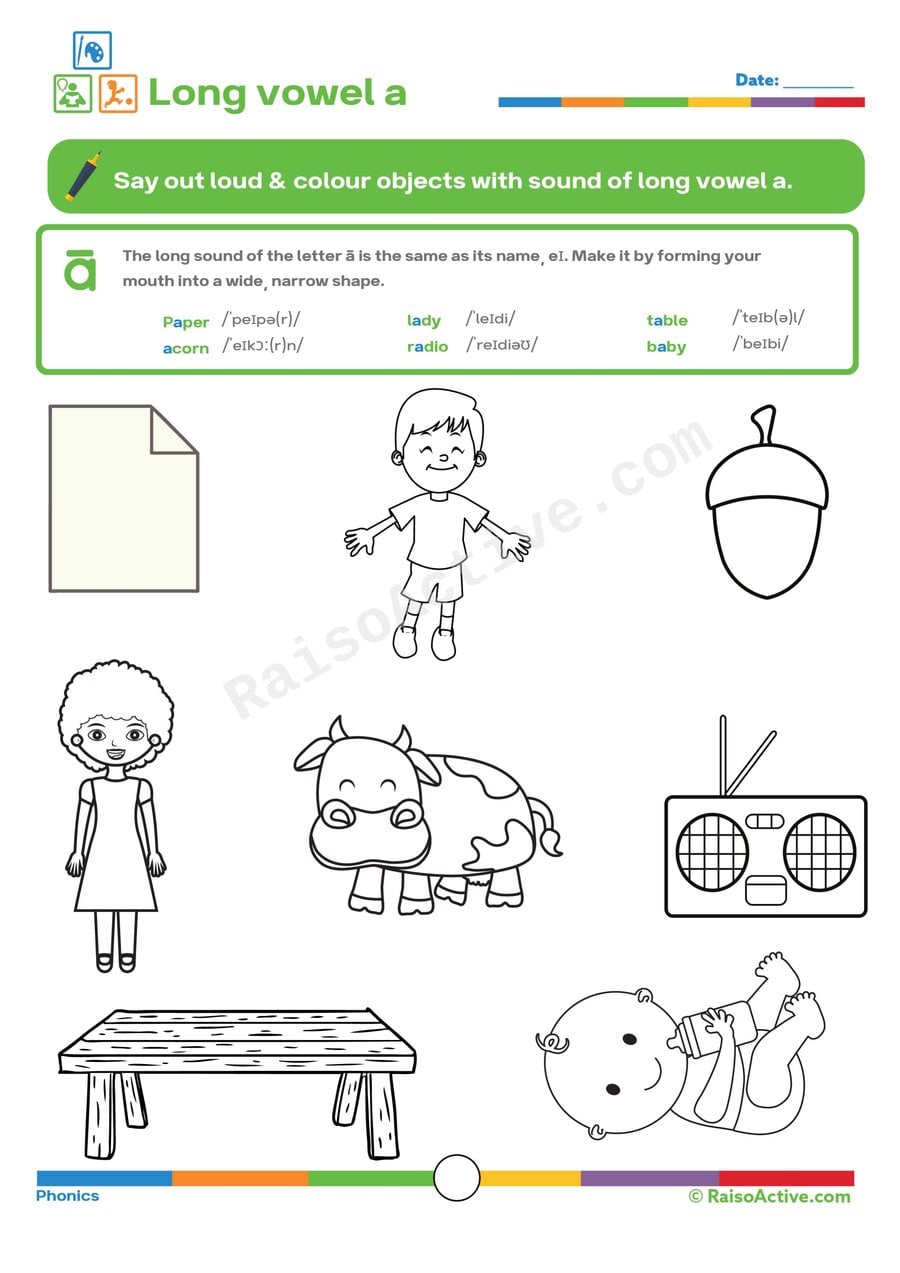
Long Vowel A Coloring Worksheet: Say the Sounds!
This coloring worksheet has children ages 4-5 say each pictured object's name aloud and decide whether it contains the long 'a' sound, as in 'acorn' or 'cake,' before coloring only the matching pictures. Turning a listening task into a coloring activity keeps young children engaged while training their ear to isolate a specific vowel sound within a spoken word - an essential pre-reading skill.

Learn the Sight Word 'Had' | Fun Reading Worksheet for Preschoolers
Children ages 4-5 build instant recognition of the sight word 'had', another high-frequency word that resists standard phonics decoding and must be memorized visually. This worksheet layers coloring, tracing, writing, grid-searching, and fill-in-the-blank practice, giving the word multiple forms of repeated exposure that solidify memory. Completing sentences with 'had' also shows children how the word is used naturally in storytelling, especially when talking about the past.

Middle Sound Worksheet: Circle and Write the Missing Letter!
Identifying the middle sound in a word is generally the hardest phonemic awareness skill for children ages 4-5, harder than beginning or ending sounds, since the middle sound is surrounded on both sides and easy to lose track of while segmenting. This worksheet builds that specific skill by having children circle the letter that makes the middle sound in given words, then apply the same skill to complete new words based on pictures. Because middle sounds in CVC words are almost always the vowel, this worksheet also doubles as valuable short vowel discrimination practice.

Trace and Write Numbers: Sixteen to Twenty Worksheet
This worksheet helps children ages 4-5 practice tracing and writing the number words from sixteen to twenty, completing the teen and early twenty number-word range that builds toward full number fluency to 20. Repeated tracing of these longer words also continues to build the handwriting stamina needed for more complex writing tasks ahead.
What Pre-K alphabet worksheets cover
At four to five, a child works toward naming all 26 uppercase letters on sight, in any order, and starts matching each one to its lowercase partner. Worksheets should include finding a named letter on a busy page, filling in a missing letter in a short run such as C, D, __, F, and pairing uppercase to lowercase across two shuffled columns. Reading whole words, or naming every lowercase letter alone without its uppercase partner nearby, is still ahead.
- Name all 26 uppercase letters shown in random order
- Fill in a missing letter in a short alphabet run
- Match each uppercase letter to its lowercase partner
- Find a named letter hidden on a busy page
How to use these worksheets at home or in class
Ten minutes a day, starting with name tracing before moving to letters or numbers, builds the steady habit this stage rewards. Say a letter's sound alongside its name while tracing, and count out loud while touching each object in turn.
Start with the sheet that matches what your child can already do, then move one step up. Keep finished sheets in a folder: Pre-K teachers often ask for evidence of practice, and children like seeing their own progress.
Is your child ready for Pre-K alphabet work?
Before this stage a child should trace basic shapes and lines, recognize a few letters from their own name, count a small set of objects by pointing to each one, and sustain a simple table task for several minutes.
Frequently asked questions
Should a four-year-old know the alphabet in order or just recognize letters?
Both, but recognition out of order matters more for reading. A child who can only recite the alphabet song may not be able to point to a G on request, which is the skill that actually helps with reading and writing. Worksheets that show letters scrambled test recognition directly; sequencing tasks like filling a missing letter in a short run build the order alongside it. Aim for both, with recognition as the priority.
What should a Pre-K child be able to do in alphabet?
At four to five, a child works toward naming all 26 uppercase letters on sight, in any order, and starts matching each one to its lowercase partner. Worksheets should include finding a named letter on a busy page, filling in a missing letter in a short run such as C, D, __, F, and pairing uppercase to lowercase across two shuffled columns. Reading whole words, or naming every lowercase letter alone without its uppercase partner nearby, is still ahead. Before this stage a child should trace basic shapes and lines, recognize a few letters from their own name, count a small set of objects by pointing to each one, and sustain a simple table task for several minutes.
Do these worksheets follow the Pre-K curriculum?
The sheets cover letter recognition A–Z, letter names versus letter sounds, sequencing letters in order and matching uppercase to lowercase, which sit inside the State pre-K early learning standards; Head Start ELOF outcomes for Pre-K. Reception (UK), LKG / Junior KG (India) use the same skills at this age, so the sheets also fit families following those programmes.
Are these Pre-K alphabet worksheets free?
Yes. Each worksheet downloads free as a watermarked PDF once you create an account, with a limit of five a day. An annual membership ($20) removes the watermark and the limit for the whole library of over 1,000 worksheets and every printable pack.

Written by
Hemsweta Jain · Teacher Cheena
MBA and Early Childhood Educator, teaching since 2014 · Founder of RaisoActive, Mumbai
Written and reviewed by Hemsweta Jain (Teacher Cheena), who designs every RaisoActive worksheet.
Last reviewed
Printable packs for ages 4–5
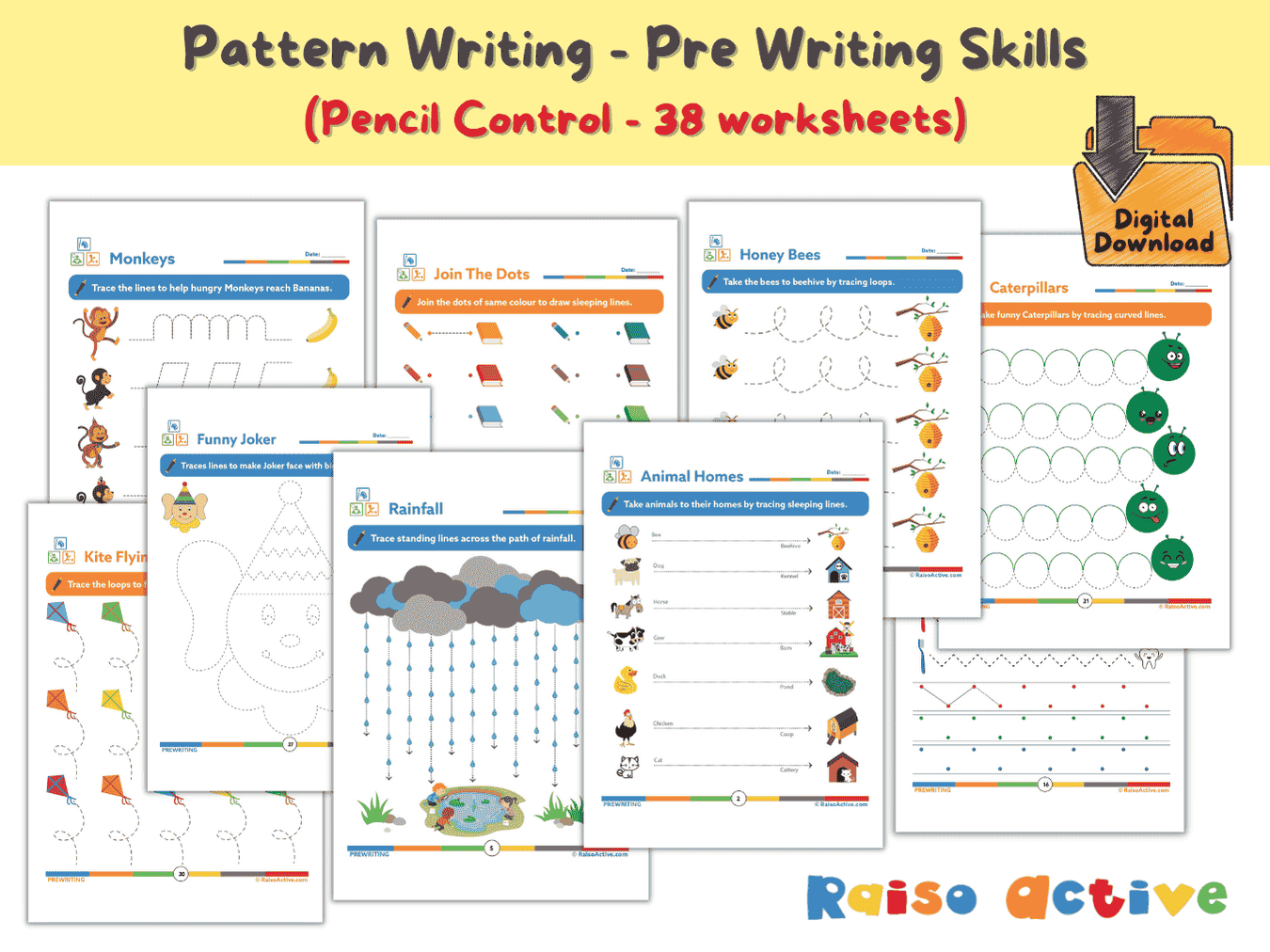
Pattern Writing Pre-writing Skills Activity Book for 3-4 Year Olds
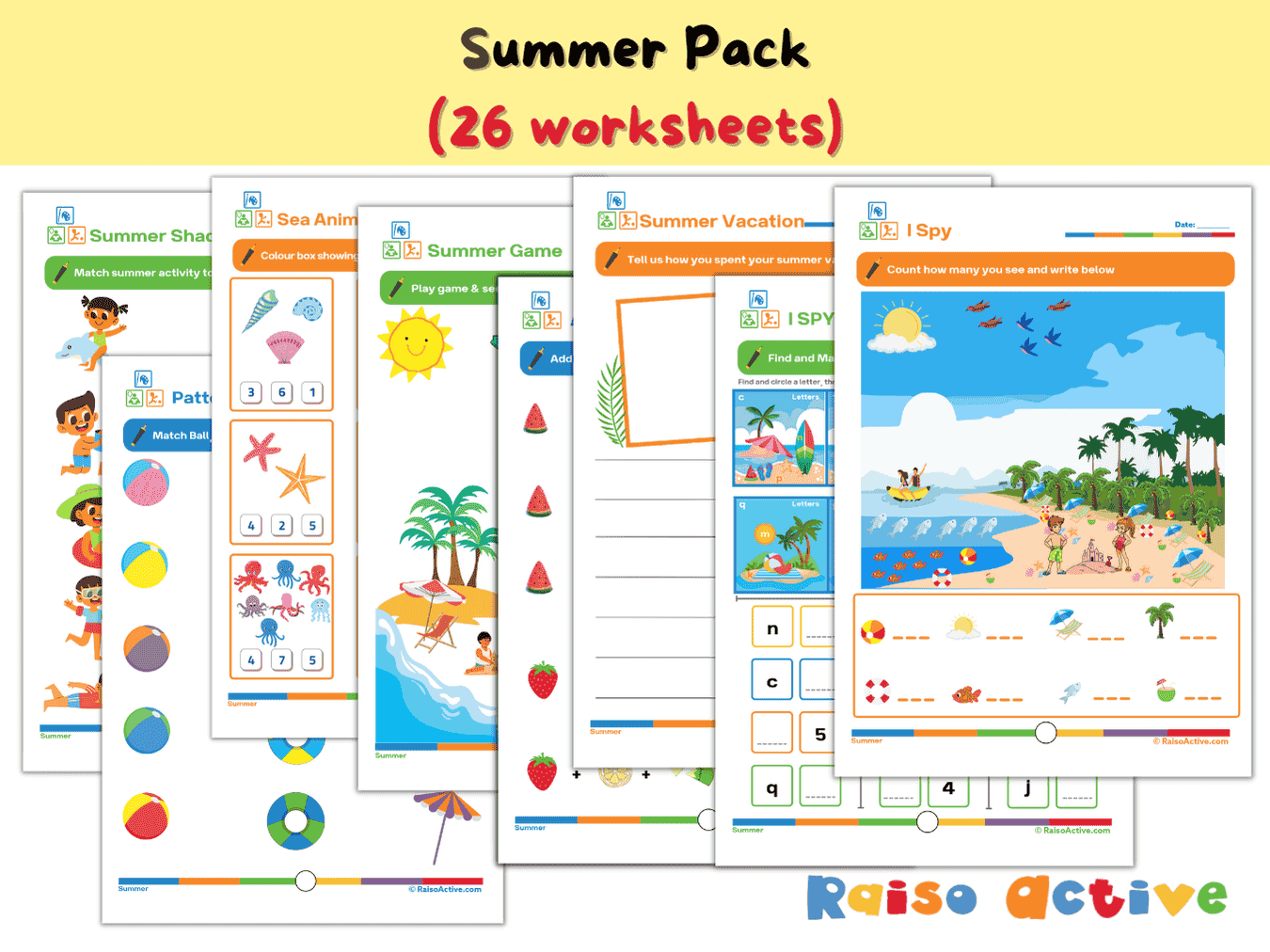
Summer Activity Pack: Math, Literacy, Puzzles & More for Preschool & Kindergarten
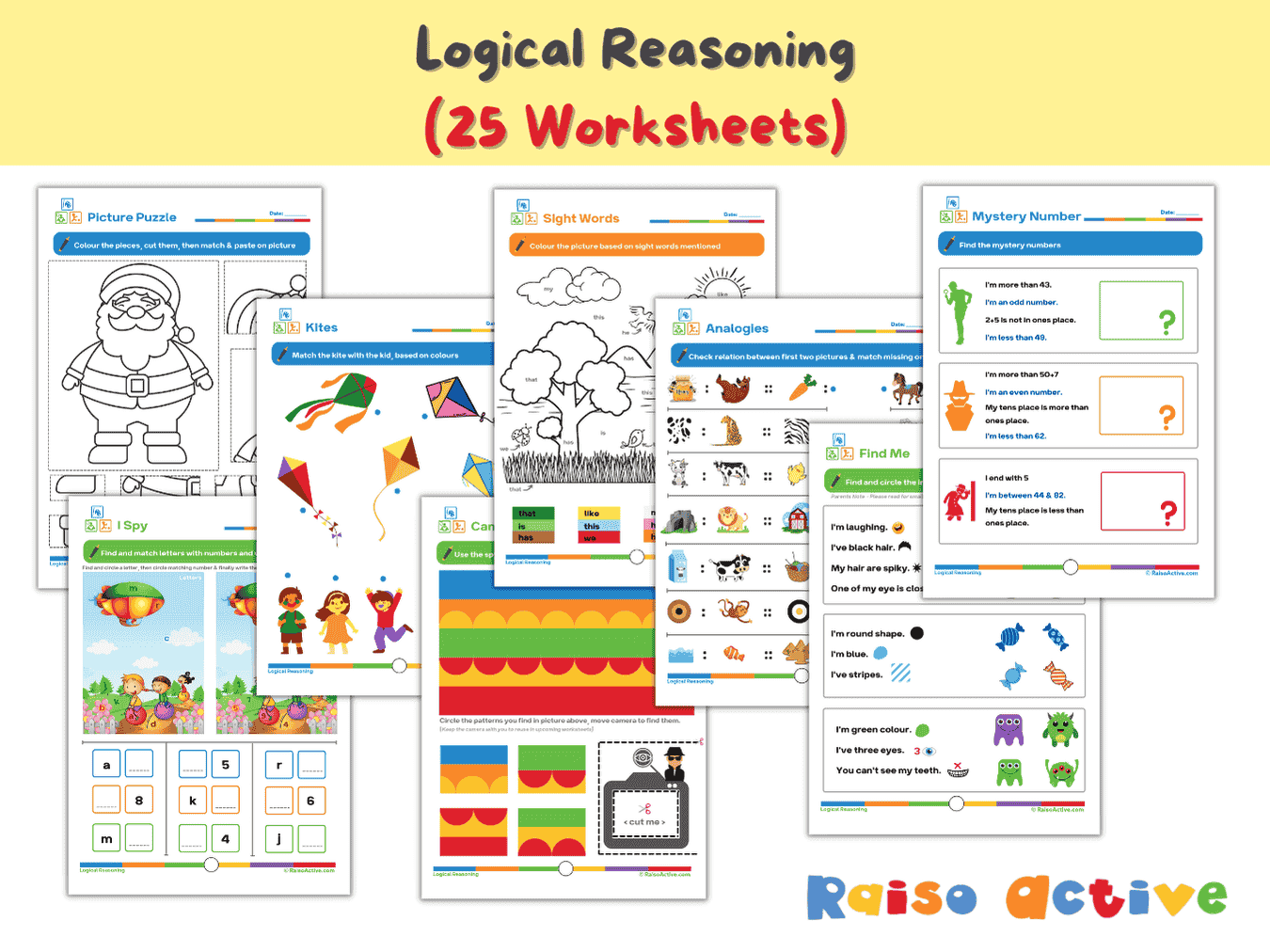
Logical Reasoning Activity Book for Preschool & Kindergarten | Patterns, Puzzles & Analogies
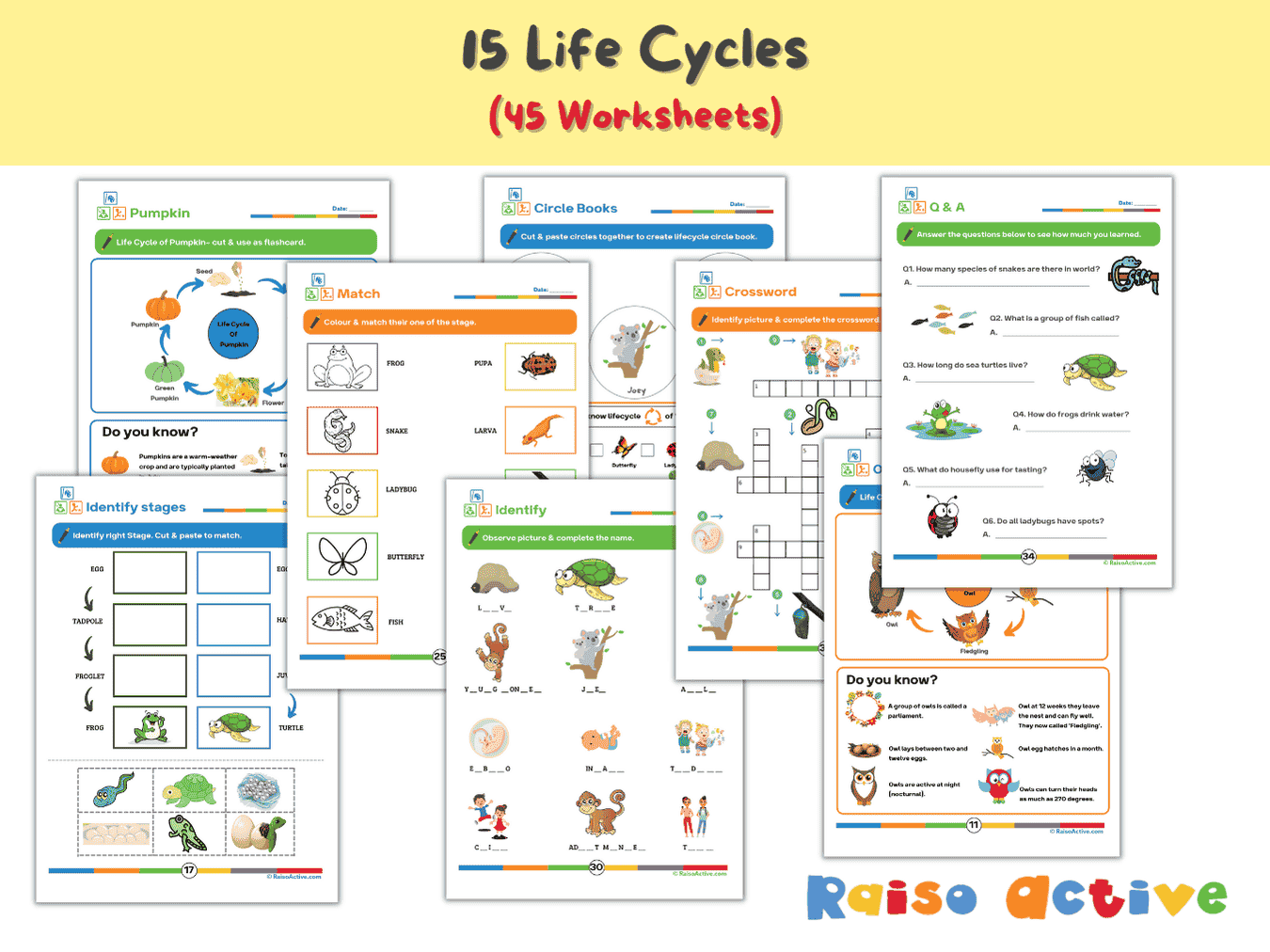
Lifecycles Activity Book & Flashcards for Preschool & Early Elementary
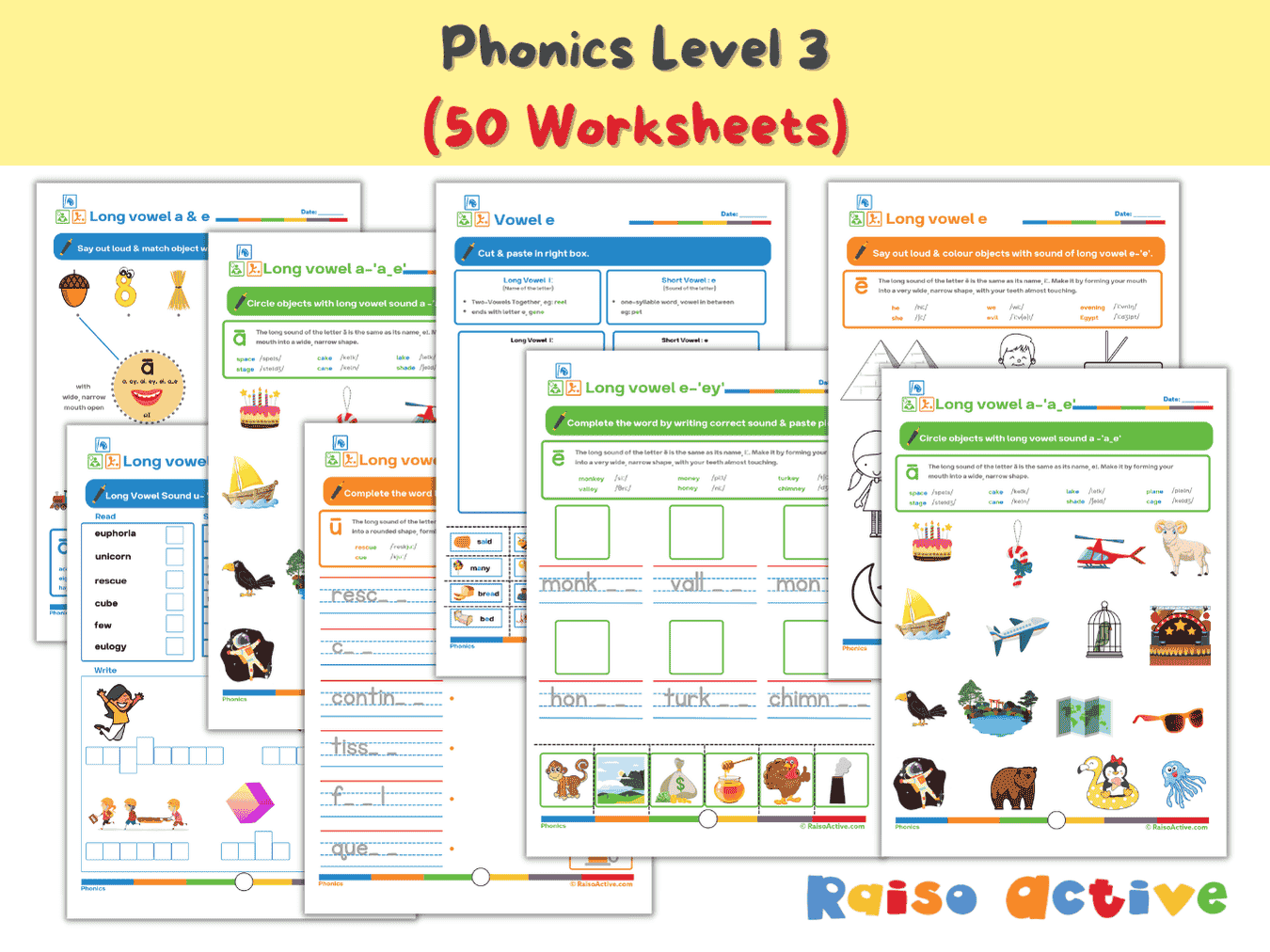
Phonics Level 3 Long Vowels Activity Book for Kindergarten & 1st Grade
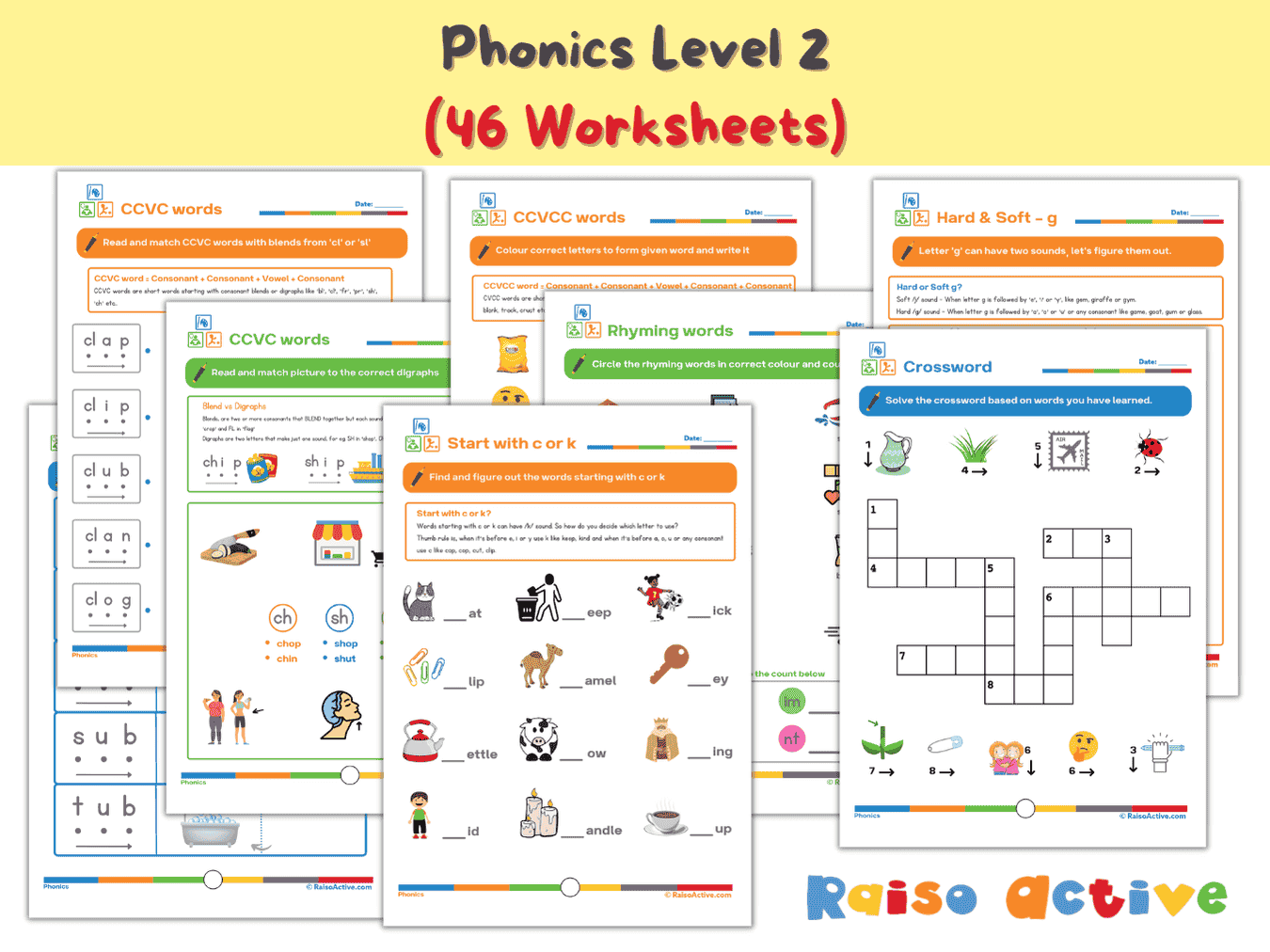
Phonics Level 2 Worksheets: CVC, CCVC, CVCC Word Families & Blends for Early Readers (Ages 4-7)
Guides for parents and teachers
See all guides →Kindergarten Readiness Checklist: 25 Skills to Practice Before the First Day
A kindergarten readiness checklist of 25 literacy, math, motor, self-regulation and self-help skills, with an 8-week summer plan and notes on when not to worry.
Phase 2 Phonics at Home: Sound Order, Blending Games, Worksheets
Phase 2 phonics at home: the five sound sets in order, oral blending, tricky words, a two-week routine, common mistakes, and free worksheets.
Reception Year Explained: EYFS Learning and How to Help at Home
A teacher's plain-English guide to the Reception Year: the seven areas of learning, Early Learning Goals, Phase 2/3 phonics, the RBA and home routines.
What Should a 4-Year-Old Know Before LKG? A Readiness Checklist
A calm, teacher-written LKG readiness checklist for 4-year-olds: language, pattern writing, numbers to 10, self-help and social skills, plus a 6-week plan.
Bridging Two Worlds: A Complete Guide to Teaching Heritage Languages Alongside English
A practical guide to raising bilingual children who speak both their heritage language and English with confidence. Research-backed strategies, activities, and tips for Indian families.
How to Help Your Child with Letter Reversals: A Complete Guide for Parents and Teachers
Letter reversals are normal until age 7-8. Learn the best multisensory strategies, anchor letter tricks, and activities to help children write b, d, p, and q correctly.
Canonical: https://raisoactive.com/worksheets/pre-k-alphabet