Reception Year Explained: EYFS Learning and How to Help at Home
Author
RaisoActive - Kids Activities and Fun Learning
Published
Reading Time
7 min read
- Reception is the final year of the Early Years Foundation Stage (EYFS), for children turning 5 during the school year, and it runs on seven areas of learning rather than subjects
- The Early Learning Goals (ELGs) are the 17 end-of-year checkpoints teachers use; most are about communication, physical control and personal, social and emotional development, not academic content
- Phonics follows Letters and Sounds (or a school's chosen scheme) through Phase 2 and Phase 3, moving from single sounds to blending and simple word reading
- The Reception Baseline Assessment (RBA) happens in the first six weeks and is a settling-in tool for the school, not a test your child can pass or fail
- A short daily home routine of reading, counting and mark-making supports the EYFS areas far better than formal drilling
What the Reception Year Actually Covers
The Reception Year is the second and final year of the Early Years Foundation Stage (EYFS) in England, for children who turn 5 during that school year. It is organised around seven areas of learning rather than school subjects, assessed against 17 Early Learning Goals at the end of the year, and taught mainly through structured play. Phonics (Letters and Sounds Phase 2 and 3) and number sense are the two academic threads that run through the whole year.
Reception sits between Nursery and Year 1, and it is often the point where parents feel the biggest shift: a school uniform, a school day, a class teacher. The EYFS framework is deliberately designed to soften that shift rather than sharpen it. Children learn to write by mark-making and pattern work before letters, learn number by handling real objects before numerals, and are assessed by observation, not by sitting tests. The free Reception worksheets on RaisoActive follow that same order.
This guide sets out the seven areas of learning, what the Early Learning Goals mean in plain English, how Phase 2 and 3 phonics work, what the Reception Baseline Assessment is (and is not), and a simple home routine that supports all of it without turning your kitchen table into a classroom.
The Seven Areas of Learning
The EYFS framework groups learning into three prime areas, which are foundational and develop first, and four specific areas, which are built on top of them. Hemsweta Jain (Teacher Cheena), RaisoActive's founder and an early-childhood educator since 2014, points out to parents that schools weight the prime areas more heavily in Reception than most parents expect, because a child who cannot yet sit, listen and communicate cannot make full use of a literacy or maths lesson.
The three prime areas
- Communication and Language: listening attention, understanding instructions, and speaking in connected sentences
- Physical Development: gross motor skills (running, climbing, balance) and fine motor skills (pencil grip, scissors, buttons)
- Personal, Social and Emotional Development: managing feelings, forming friendships, and building independence and self-confidence
The four specific areas
- Literacy: word reading, comprehension of stories, and writing through mark-making toward letters and simple words
- Mathematics: number to 10 and beyond, numerical patterns, and comparing quantities and shapes
- Understanding the World: people, communities, the natural world, and past and present
- Expressive Arts and Design: creating with materials, and being imaginative and expressive through art, music and role play
Every activity a Reception teacher plans is usually mapped to two or three of these areas at once. A cooking activity might touch Understanding the World, Mathematics (measuring) and Communication and Language (following steps) in the same twenty minutes. Worksheets play only a small part in a Reception day; most learning still happens through play, conversation and continuous provision around the classroom.
The Early Learning Goals in Plain English
At the end of Reception, teachers judge each child against 17 Early Learning Goals (ELGs), one or more per area of learning, using ongoing observation rather than a test. A child is recorded as having met each goal or not yet reached it (working towards). The ELGs describe a typical level of development at the end of Reception, not a pass mark.
- Comprehension, Word Reading and Writing: can talk about a story, blend and read simple words, and write recognisable letters including their own name
- Number and Numerical Patterns: subitises small amounts, counts confidently to 20, and can add and subtract using objects to at least 10
- Fine Motor Skills: holds a pencil effectively and uses scissors safely
- Managing Self and Building Relationships: shows independence in dressing and hygiene, follows rules, and plays cooperatively
- Speaking and Listening and Attention: expresses ideas in full sentences and holds attention during a story or explanation
None of the ELGs ask for a child to read fluently, write in full sentences, or work with numbers beyond 20. If your child is "working towards" a goal in July, that is a description of where the class average sits, not a diagnosis; Year 1 teaching picks up from wherever a child is. The EYFS worksheets collection is organised loosely around the same seven areas, so you can see where a page fits.
Phonics in Reception: Phase 2 and Phase 3
Most schools teach phonics using Letters and Sounds or a similar systematic synthetic phonics scheme, moving through numbered phases. Reception typically covers Phase 2 in the autumn term and Phase 3 across spring and summer, though the exact pace varies by school and scheme.
- Phase 2 (usually first): the sets s, a, t, p; i, n, m, d; g, o, c, k; ck, e, u, r; h, b, f, ff, l, ll, ss — 19 grapheme–phoneme correspondences in total, taught for oral blending and simple CVC words
- Phase 3 (usually second): the remaining single letters (j, v, w, x, y, z, qu) plus digraphs and trigraphs such as ch, sh, th, ng, ai, ee, igh, oa, oo, ar, or, ur, ow, oi, ear, air, ure
- Both phases include a growing bank of tricky (common exception) words that cannot be sounded out fully, such as the, to, I, no, go and into
is the number of grapheme–phoneme correspondences taught across the Phase 2 sound sets, enough for a child to read and spell simple CVC words such as sat, pin, dog and mud by the end of the phase
Source: Letters and Sounds, Phase 2
The single most useful thing a parent can do is practise oral blending: saying sounds separately (c-a-t) and having your child say the whole word, without any letters on the page at all. Children who can blend orally read printed words far more easily once the letters are added. Free phonics worksheets that pair a picture with a three-letter word give short daily practice once your child is ready to see the letters alongside the sounds.
The Reception Baseline Assessment: What It Is and Is Not
The Reception Baseline Assessment (RBA) is a short, practical activity that most schools in England carry out within the first six weeks of a child starting Reception. A teacher sits one-to-one with each child and works through a set of tasks covering early literacy, communication and language, and mathematics, using pictures, objects and simple questions rather than a written test. It typically takes 15 to 20 minutes.
The RBA is not shared with parents as a score, and it is not used to set targets or streams for individual children in Reception. Its stated purpose is to give schools a starting point so that pupil progress can be measured later on, at the end of Key Stage 2, as a school-level accountability measure. There is nothing for a child to revise, and no benefit to preparing for it beyond the normal settling-in routines of the first few weeks: a good night's sleep, a calm morning, and having met the teacher once before term starts.
A Home Routine That Supports the Reception Year
Reception days are long and full for a 4- or 5-year-old, so the most effective home support is short, consistent and playful rather than an extra lesson bolted onto the school day. Aim for ten to fifteen minutes, not thirty.
A simple weekday routine
Read together, every day
One picture book, chosen by your child as often as by you. Ask what happened and what they liked; this builds the comprehension half of the Literacy ELG far more than early writing does.
Practise sounds, not just letters
Say a word in separate sounds (d-o-g) and ask your child to blend it, or say a word and ask them to break it into sounds. No paper needed for this step.
Handle real numbers
Count stairs, plates or toy cars, touching each one. Ask "how many?" and "one more than?" rather than reciting numbers in order, which is a separate and easier skill.
Keep pencils short and fun
Five minutes of mark-making, pattern lines or name-writing with a chunky pencil or crayon. Stop while it is still enjoyable; a tired hand produces reversed letters and frustration.
Protect play and rest
A full school day is tiring at this age. An early bedtime and unstructured play time do more for Personal, Social and Emotional Development than any additional worksheet.
- Follow your child's current phonics phase rather than racing ahead; a child drilled on Phase 4 sounds while the class is on Phase 3 often becomes confused, not advanced
- Use a chunky pencil or triangular grip pencil rather than a thin one; Reception hands tire quickly
- Let your child choose which worksheet or book to do first; small choices build the independence the ELGs are looking for
- If a page causes tears, put it away and try something easier the next day
- Talk about school routines (coat, peg, lunch tray) as much as letters and numbers; self-help skills are part of the EYFS too
Reception measures a whole child, not a reading age.
The seven areas of learning, the 17 Early Learning Goals and the phonics phases are all designed around how a 4- or 5-year-old actually develops: physical control and emotional security first, academic skills built on top. A child who listens, plays well with others, holds a pencil comfortably and blends sounds orally is on track, whatever page of a workbook they have or have not reached. Support the routine, follow the school's phonics pace, and let Reception do the rest.
Frequently Asked Questions
What age is the Reception Year for?
What should my child know by the end of Reception?
Is the Reception Baseline Assessment something I need to prepare for?
What is the difference between Phase 2 and Phase 3 phonics?
How much homework should a Reception child get?
Are RaisoActive worksheets suitable for Reception children?
Where to Start This Week
Pick one area your child is least confident in from the seven above, and give it ten minutes a day for a week rather than spreading effort thin. If it is phonics, start with oral blending before adding letters; if it is pencil control, start with tracing rather than letters. Browse the Reception maths and Reception phonics collections for pages that match your child's current phase, and keep sessions short enough that they end wanting more.
Free worksheets for this topic
Browse all worksheets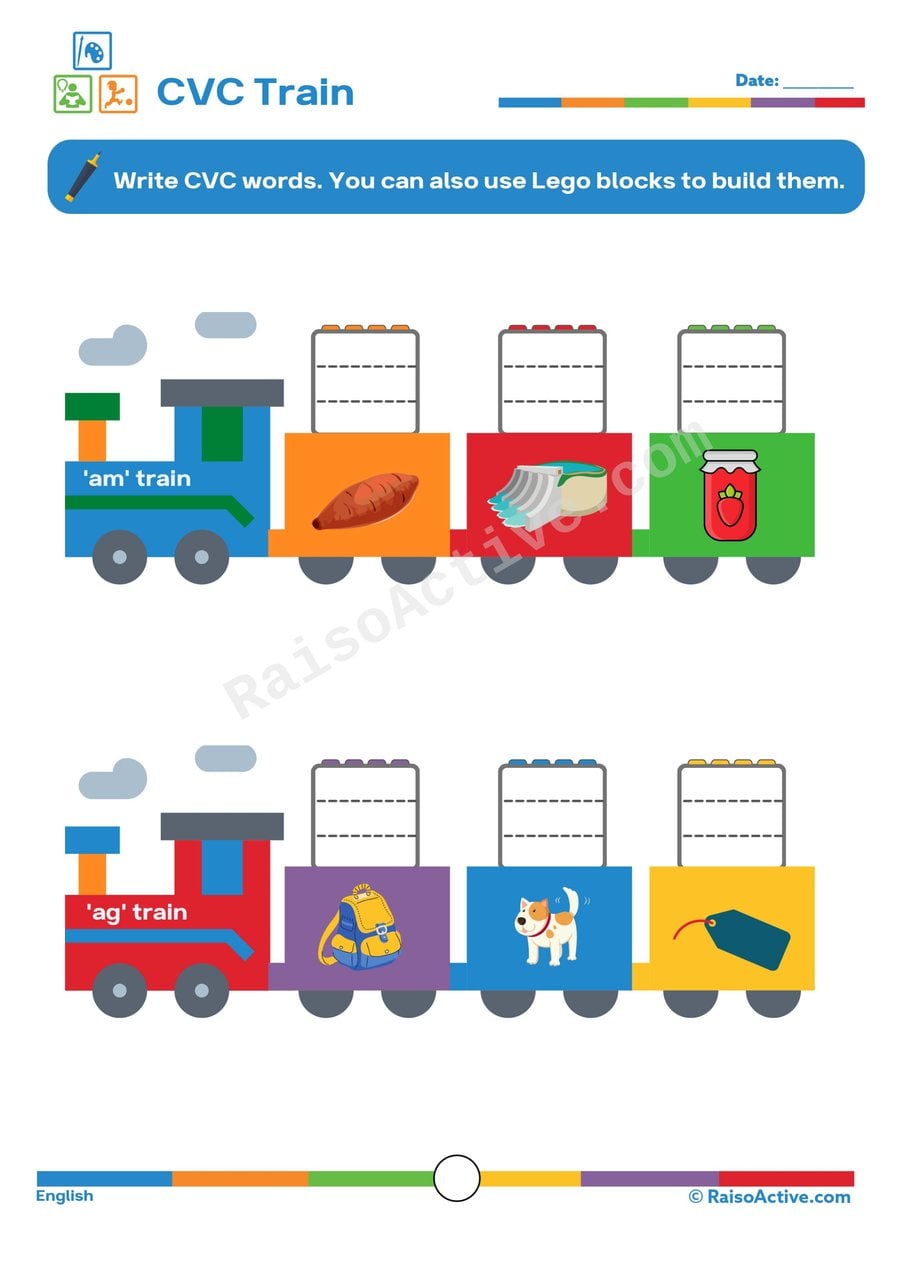
CVC Train Worksheet: Write and Build CVC Words!
Ages 4-6 · Pre-K–KindergartenAges 4-6 · Reception–Year 1Ages 4-6 · LKG–UKGAges 4-6
This worksheet gives children ages 4-6 focused practice blending letter sounds into consonant-vowel-consonant words, using train-car pictures as clues for words like 'dog,' 'hen,' or 'cup.' Because children both write the word and can optionally build it with Lego blocks, this worksheet reinforces the same phonics skill through two different physical actions — handwriting and hands-on construction — which helps the spelling patterns stick.
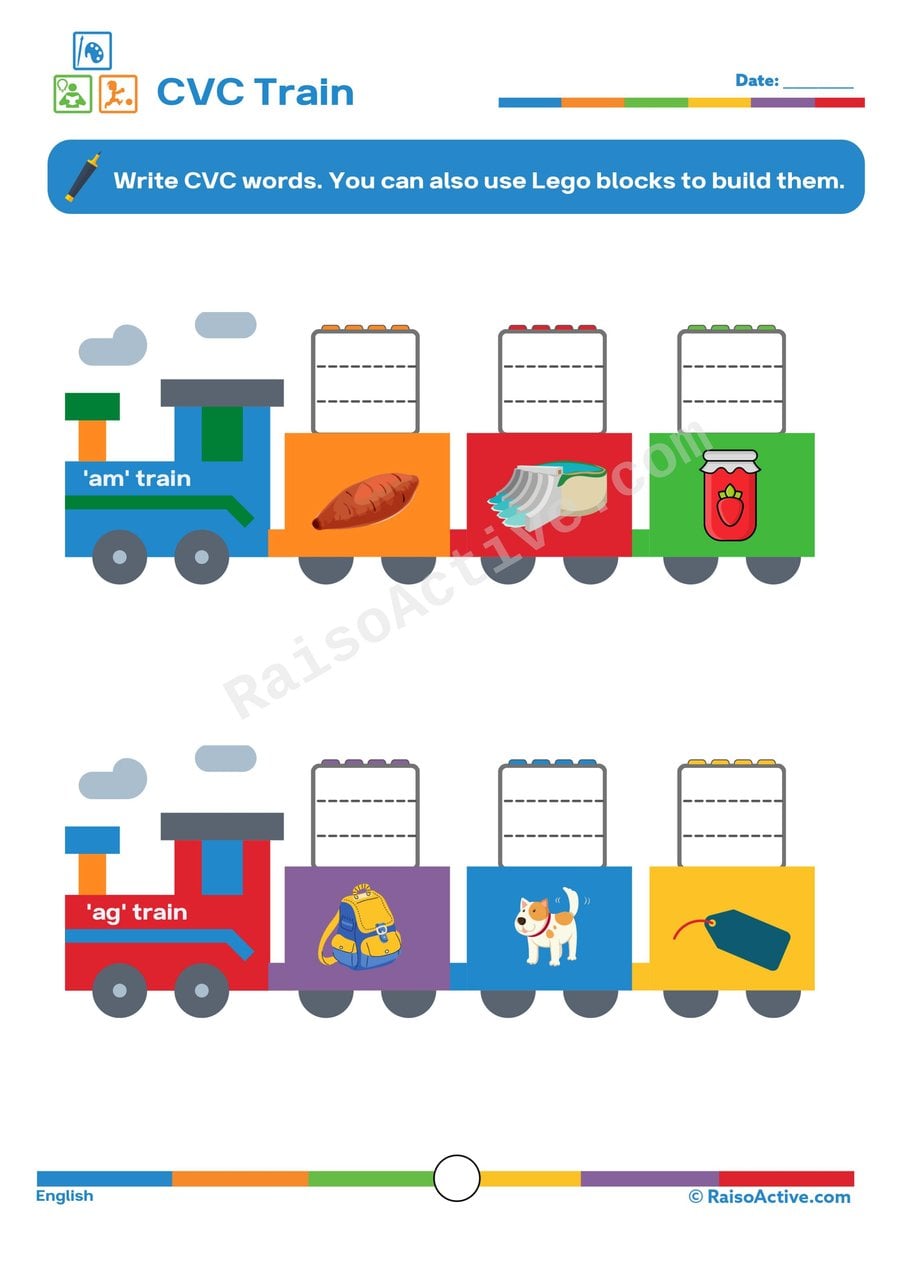
CVC Train Worksheet: Write CVC Words!
Ages 4-6 · Pre-K–KindergartenAges 4-6 · Reception–Year 1Ages 4-6 · LKG–UKGAges 4-6
Writing consonant-vowel-consonant words like 'cat,' 'sun,' or 'pig' under matching pictures gives children ages 4-6 direct practice with letter-sound blending, a core phonics skill that underpins independent reading. Because each train car pairs a picture clue with a blank space, children also practice translating a spoken word they can sound out into its correctly spelled written form.
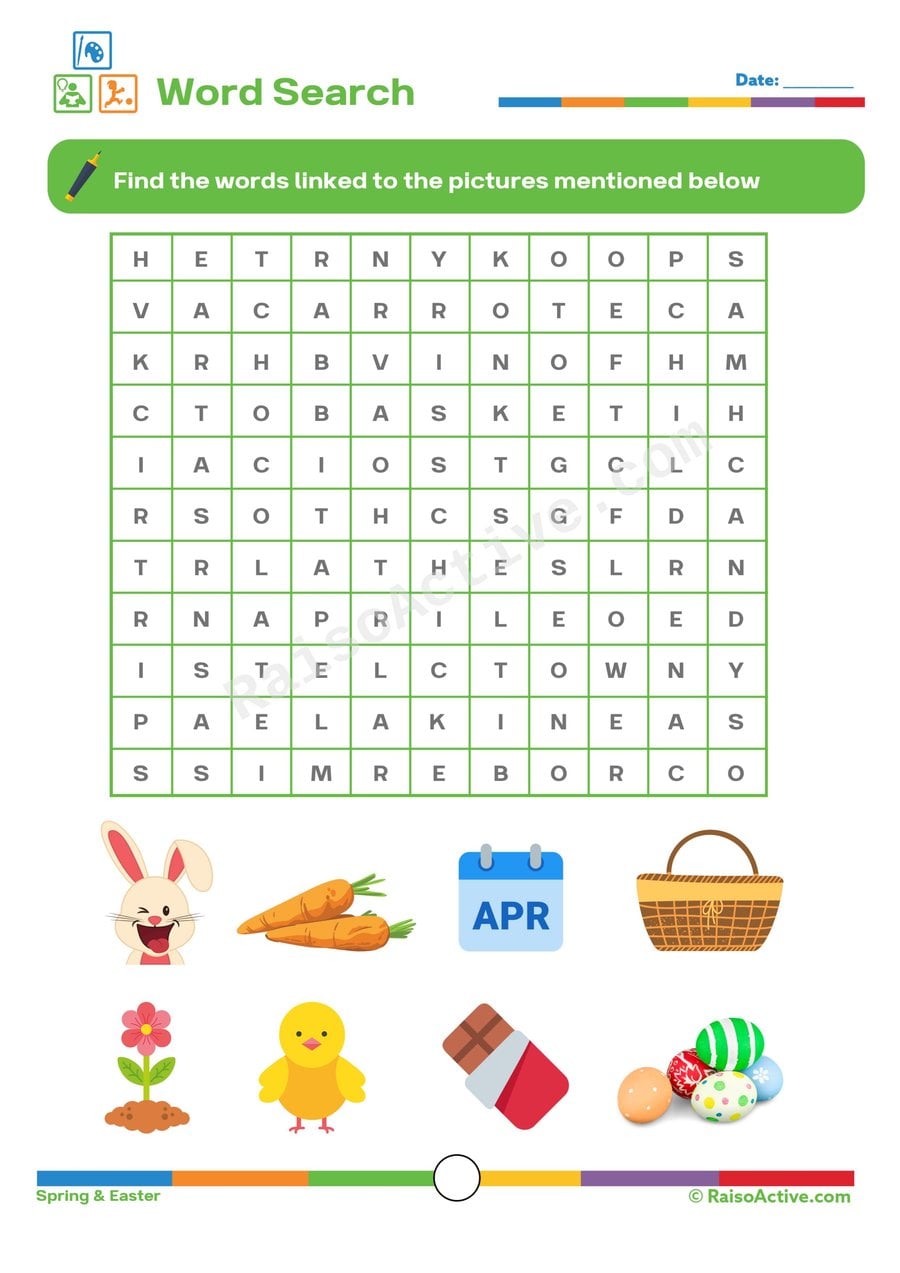
Spring Word Search Worksheet for Preschoolers
Ages 3-5 · Preschool–Pre-KAges 3-5 · Nursery–ReceptionAges 3-5 · Nursery–LKGAges 3-5
This Spring Word Search sharpens visual scanning and letter-tracking skills for children ages 3-5 as they hunt for season words hidden inside a grid of letters. Searching row by row and diagonally builds the same left-to-right tracking habit needed for reading, while recognizing whole words like 'FLOWER' or 'RAIN' strengthens early sight-word memory and spring vocabulary.

I Spy Letters and Numbers Worksheet: Find, Match, and Write!
Ages 4-5 · Pre-KAges 4-5 · ReceptionAges 4-5 · LKGAges 4-5
This worksheet blends letter and number recognition for children ages 4-5, asking them to spot a hidden letter within a picture, find its matching number, and then write both symbols down, combining visual search with early literacy and numeracy in a single activity. Working with letters and numbers side by side reinforces that both are symbols that carry specific meaning and can be found, matched, and recorded.

Written by
Hemsweta Jain · Teacher Cheena
MBA and Early Childhood Educator, teaching since 2014 · Founder of RaisoActive, Mumbai
Published · Last reviewed
Related Resources
Printable Resources(10)
View all
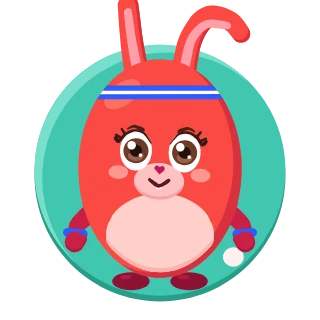
Pattern Writing Pre-writing Skills Activity Book for 3-4 Year Olds
Ages 3-4 · PreschoolAges 3-4 · NurseryAges 3-4 · 44 pages
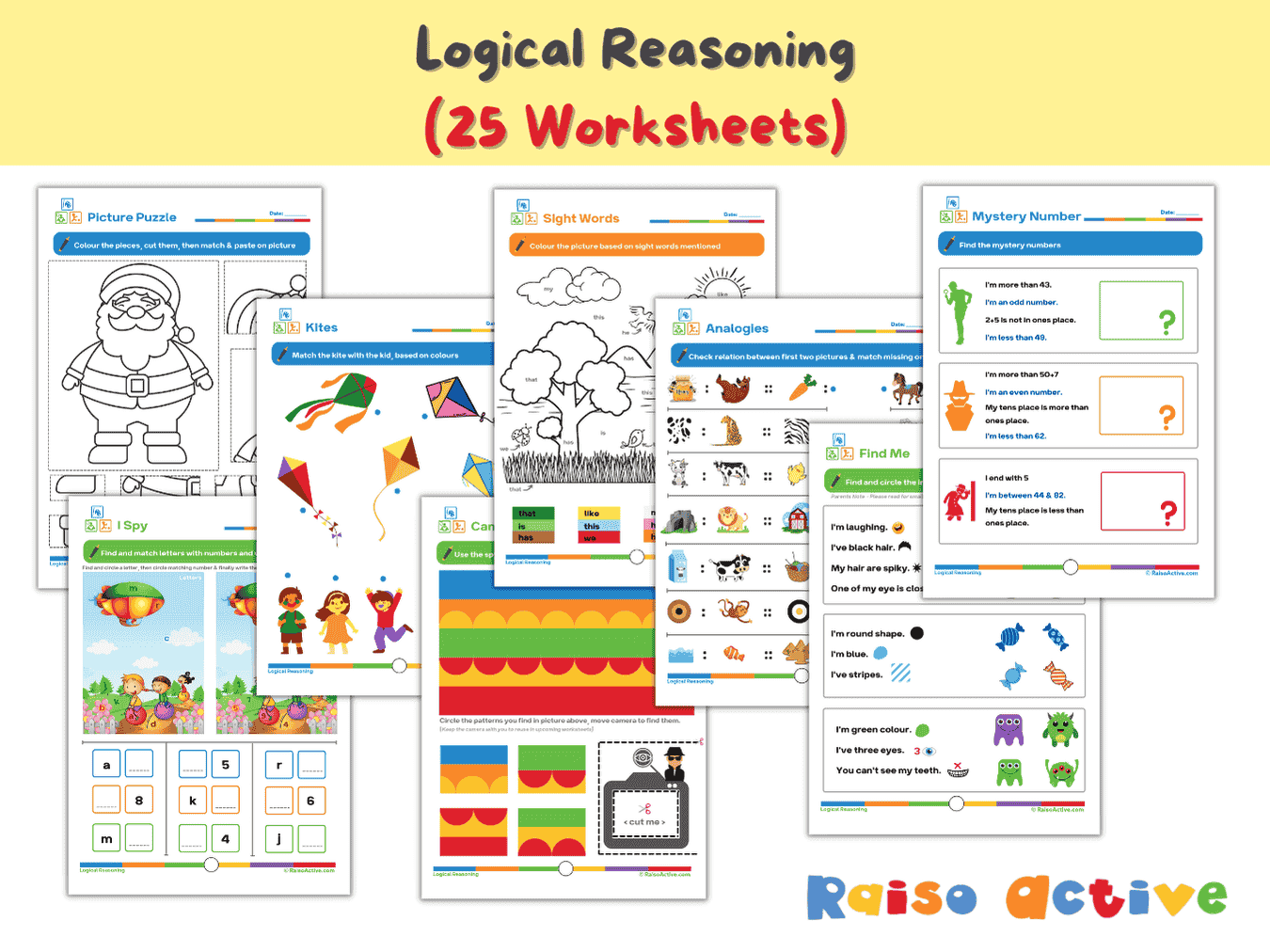
Logical Reasoning Activity Book for Preschool & Kindergarten | Patterns, Puzzles & Analogies
Ages 4-7 · Pre-K–Grade 1Ages 4-7 · Reception–Year 2Ages 4-7 · LKG–Class 1Ages 4-7 · 26 pages
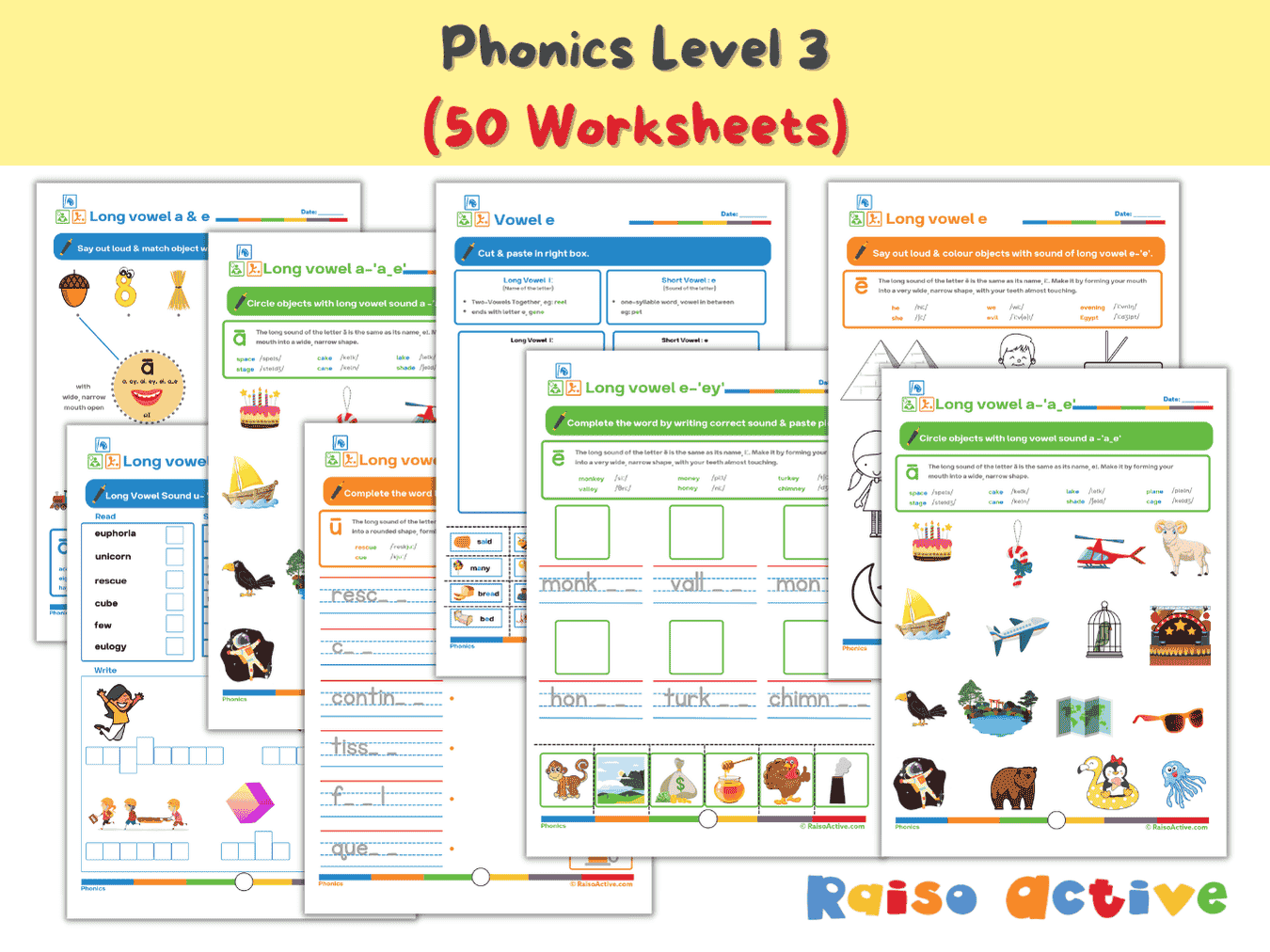

Phonics Level 3 Long Vowels Activity Book for Kindergarten & 1st Grade
Ages 5-7 · Kindergarten–Grade 1Ages 5-7 · Year 1–Year 2Ages 5-7 · UKG–Class 1Ages 5-7 · 51 pages
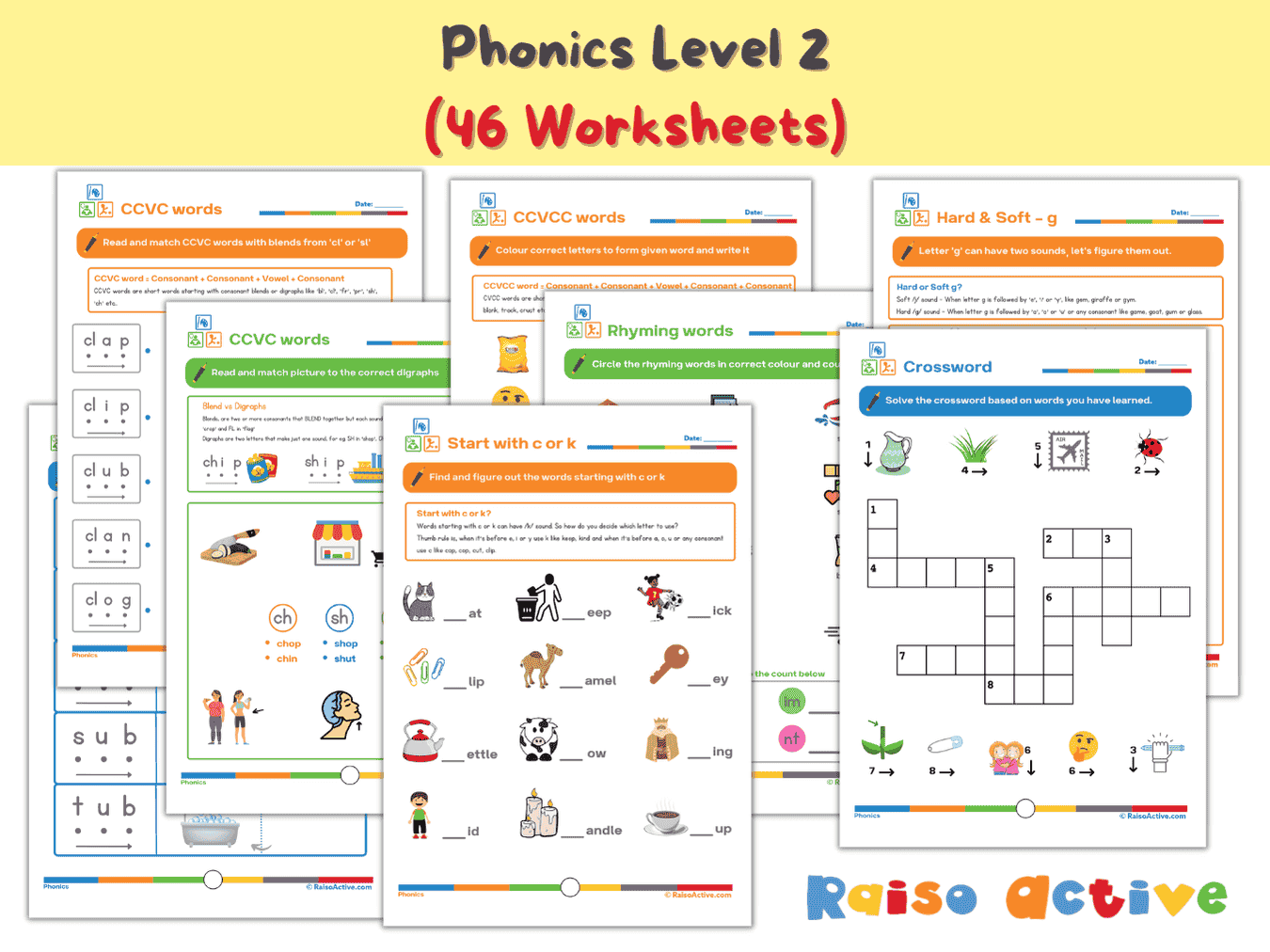
Phonics Level 2 Worksheets: CVC, CCVC, CVCC Word Families & Blends for Early Readers (Ages 4-7)
Ages 4-7 · Pre-K–Grade 1Ages 4-7 · Reception–Year 2Ages 4-7 · LKG–Class 1Ages 4-7 · 47 pages
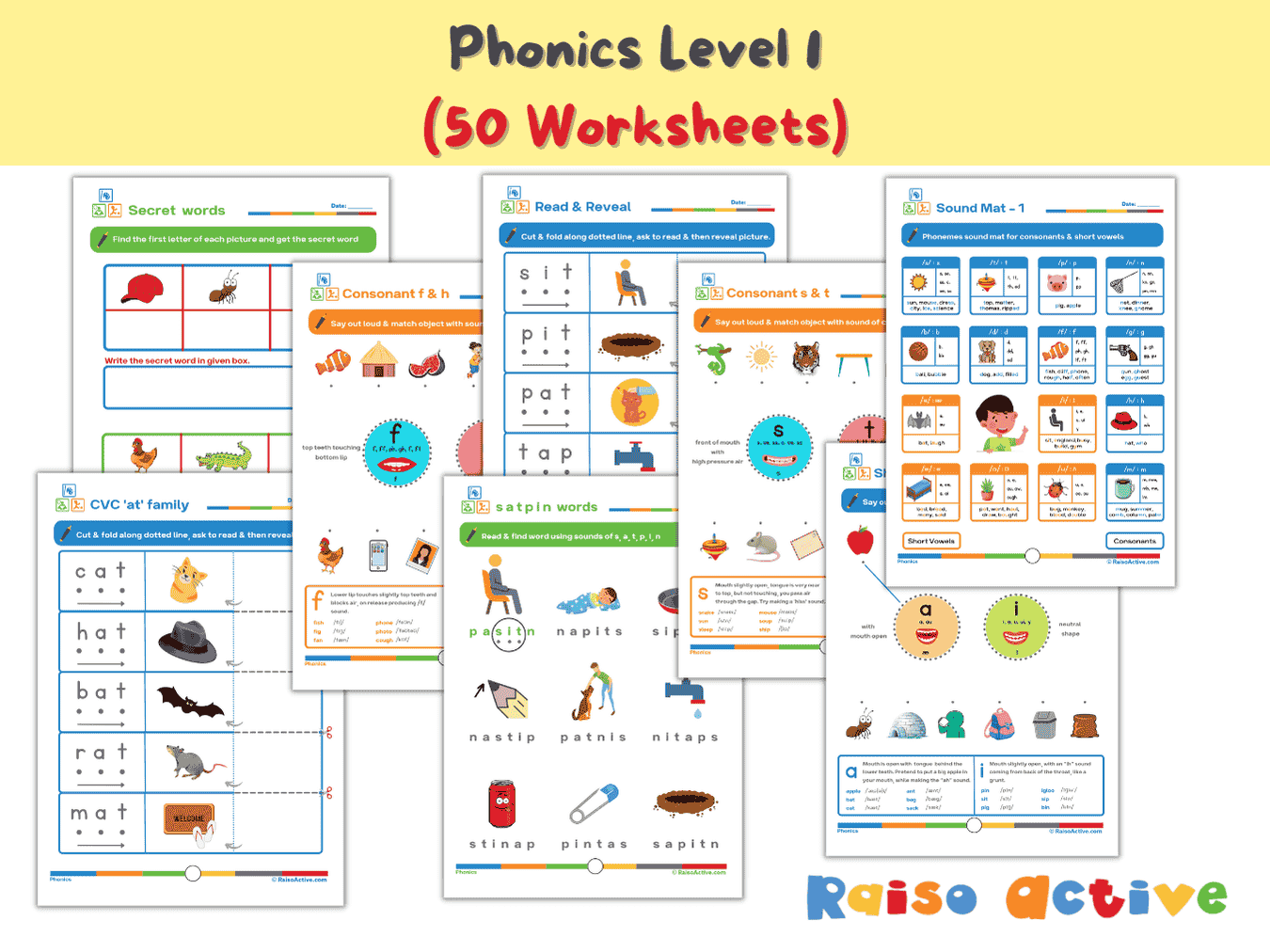
Phonics Level 1 Activity Book: Letter Sounds, Blending & CVC Words for Preschool & Kindergarten
Ages 3-6 · Preschool–KindergartenAges 3-6 · Nursery–Year 1Ages 3-6 · Nursery–UKGAges 3-6 · 60 pages
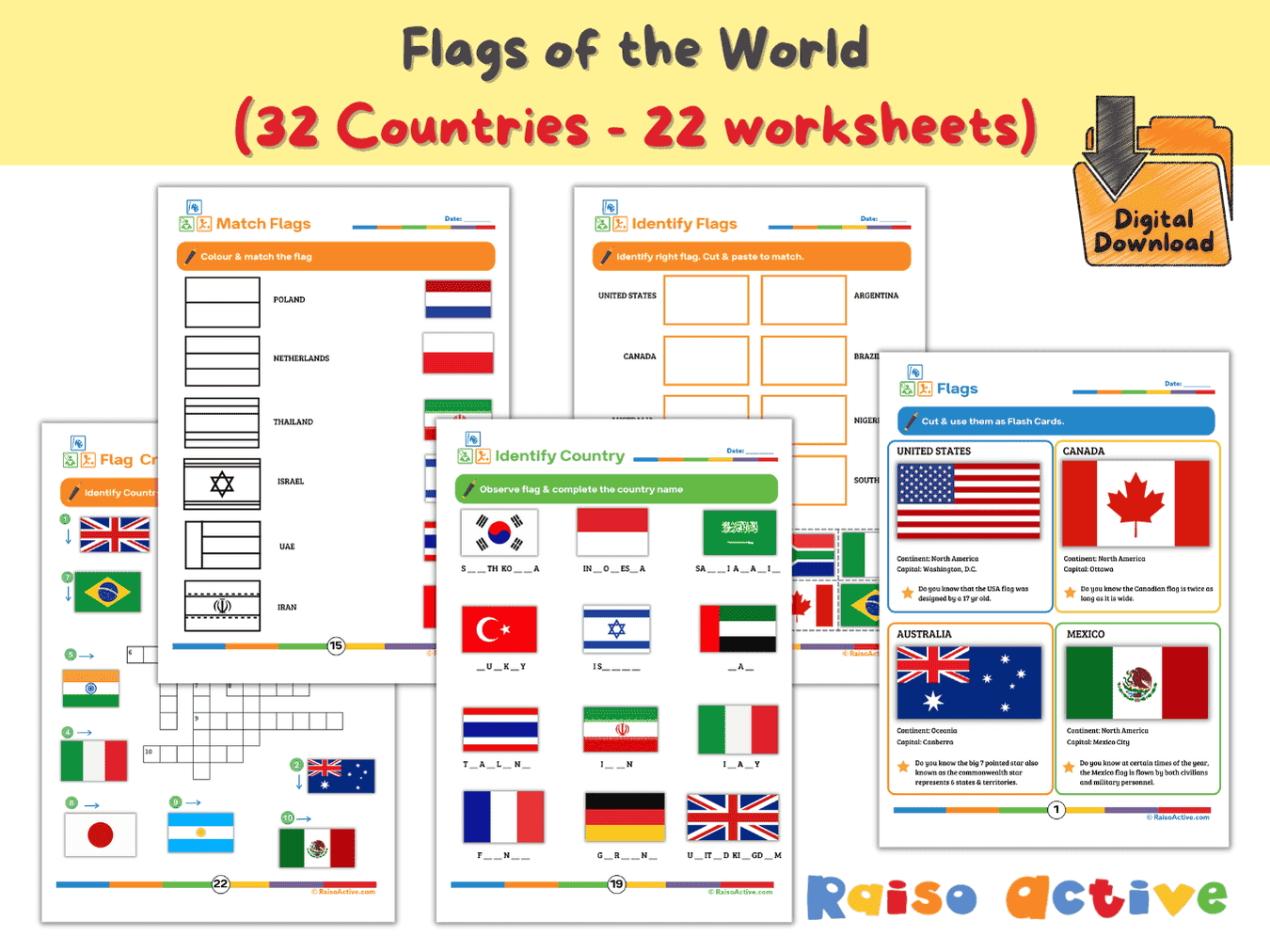

Flags of the World Activity Book & Flashcards for Kids (Ages 5-9)
Ages 5-8 · Kindergarten–Grade 2Ages 5-8 · Year 1–Year 3Ages 5-8 · UKG–Class 2Ages 5-8 · 23 pages

Month 9: Holistic Preschool Play Learning | Ages Up to 4
Ages 3-4 · PreschoolAges 3-4 · NurseryAges 3-4 · 30 pages
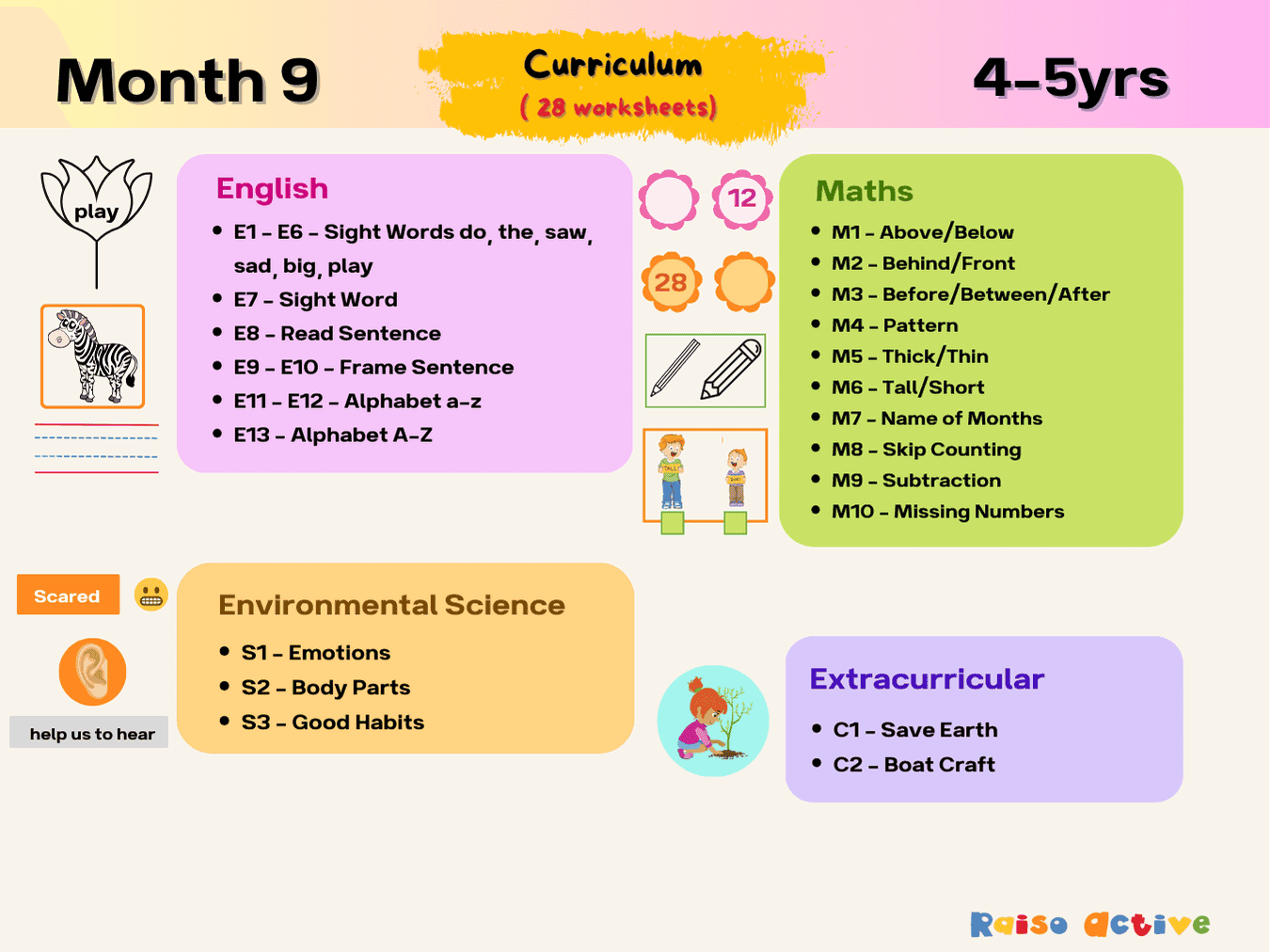
Month 9: Play-Based Preschool Foundational Skills | Ages 4-5
Ages 4-5 · Pre-KAges 4-5 · ReceptionAges 4-5 · LKGAges 4-5 · 31 pages
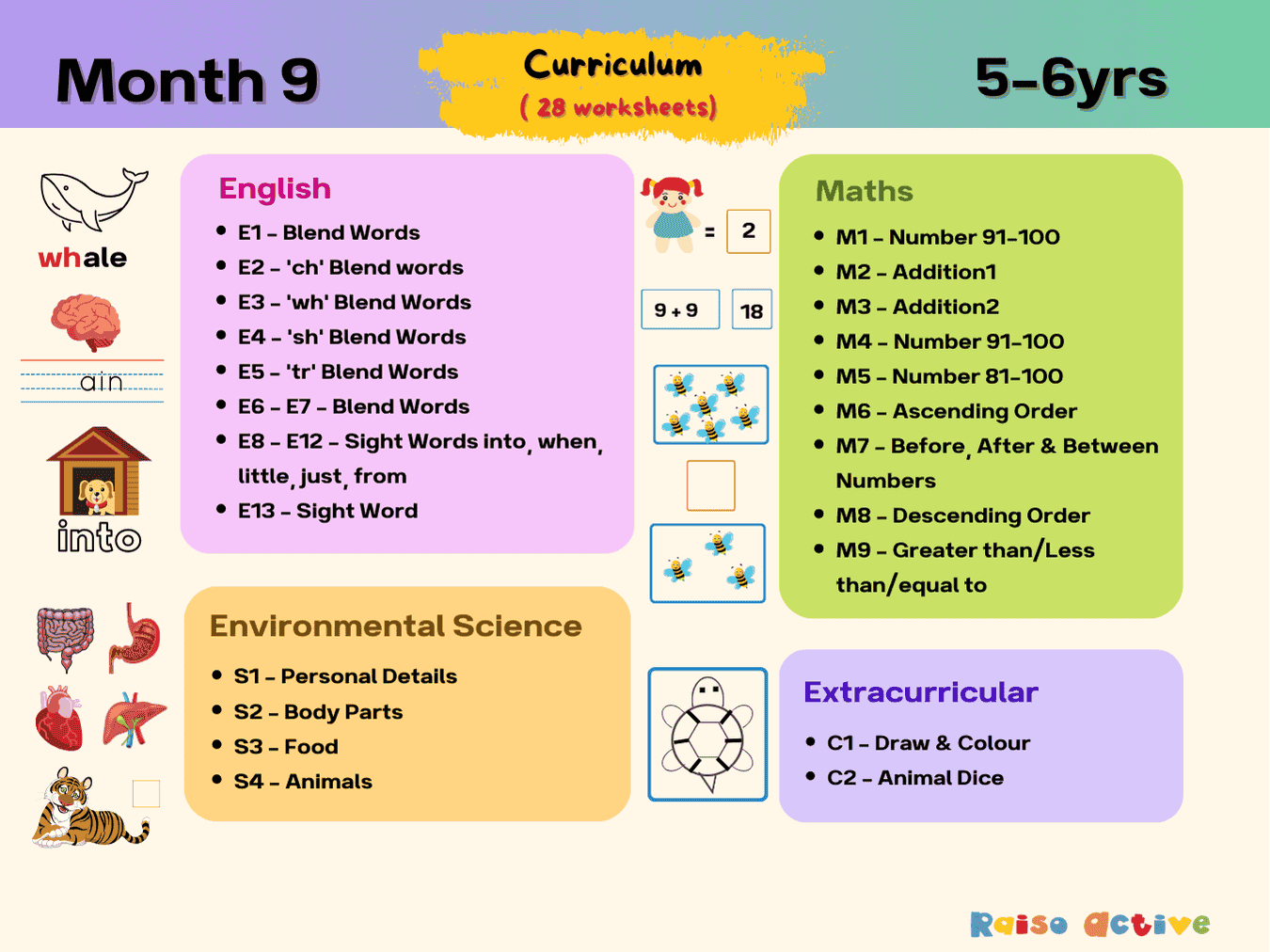
Month 9: Early Learning English Math Science | Ages 5-6
Ages 5-6 · KindergartenAges 5-6 · Year 1Ages 5-6 · UKGAges 5-6 · 31 pages
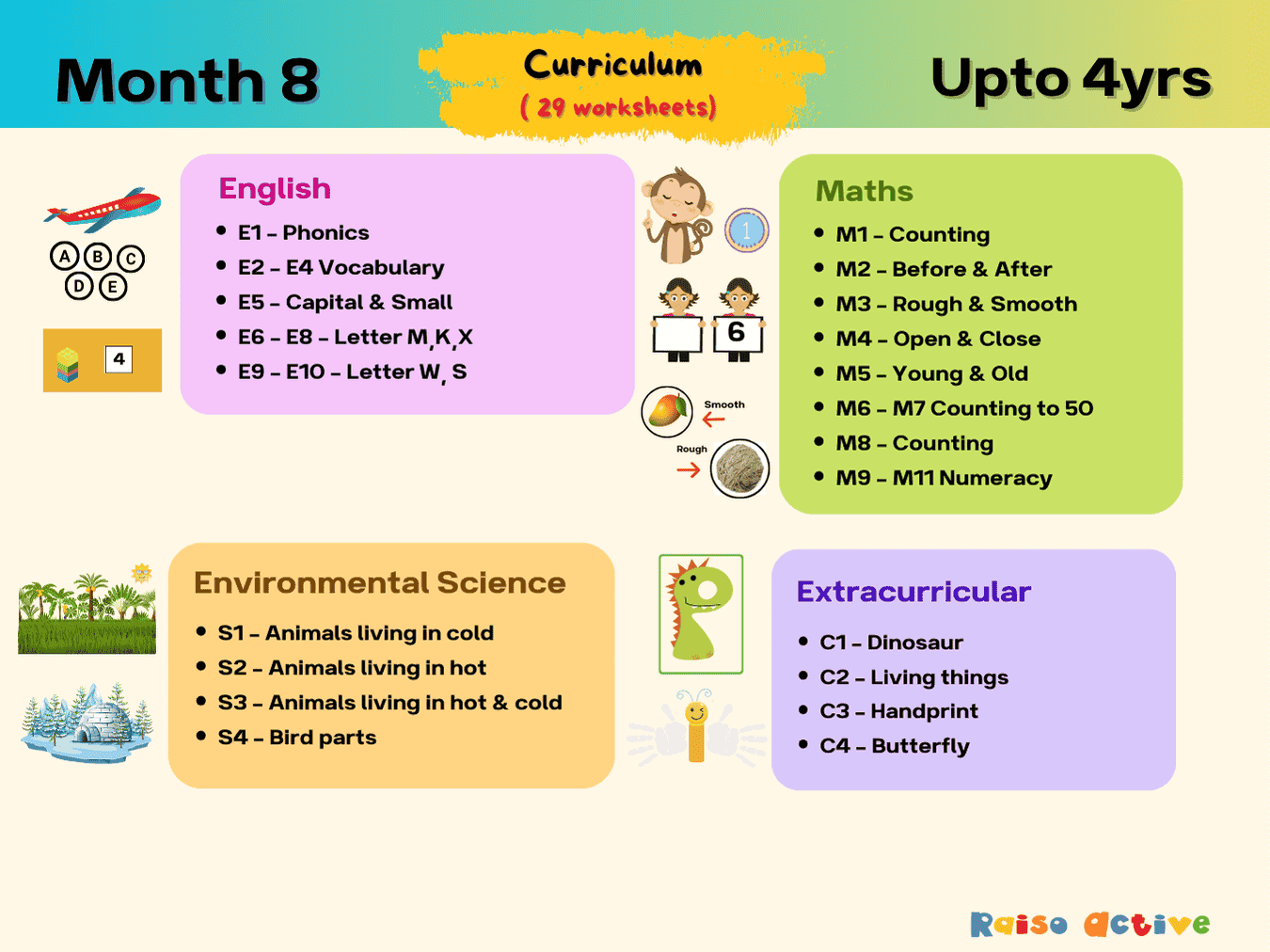
Month 8: Phonics, Math, Science, Creativity | Ages Up to 4
Ages 3-5 · Preschool–Pre-KAges 3-5 · Nursery–ReceptionAges 3-5 · Nursery–LKGAges 3-5 · 32 pages