Free printable worksheets · United Kingdom
Reception Maths Worksheets
Reception maths worksheets are printable number practice for children aged 4 to 5 in Reception, the final EYFS year. They cover the two Mathematics Early Learning Goals: Number (subitising, a deep understanding of numbers to 10, number bonds to 5 and then 10) and Numerical Patterns (counting beyond 20, comparing quantities, odd and even, doubling), plus 2D shapes.
Reception maths is about depth, not speed. The revised EYFS framework deliberately narrows the Number goal to a deep understanding of numbers to 10, because a child who can instantly see that five is three and two, or that 7 is one less than 8, is far better placed for Year 1 than one who can chant to 100 without understanding. Subitising, recognising a small quantity without counting, is the starting point; then comes composing and decomposing numbers, then number bonds to 5 and, for some children, to 10. Numerical Patterns extends counting beyond 20, compares quantities, and introduces odd and even, doubling and sharing. Most classes also teach shape, pattern and measures through play. These sheets follow that order, with pictures and ten-frames doing most of the work.
916+ worksheets · free PDF download · print on A4 or Letter
Reception Maths Worksheets to print
Browse all worksheets for ages 4–5
Addition and Subtraction Sums Worksheet for Preschoolers
Practicing addition and subtraction problems within 10 together, rather than in separate worksheets, helps children see the two operations as related, that subtraction can undo addition, which builds more flexible number sense than drilling each skill in isolation. For ages four to six, working within small numbers keeps the focus on understanding the operations rather than on managing large quantities.
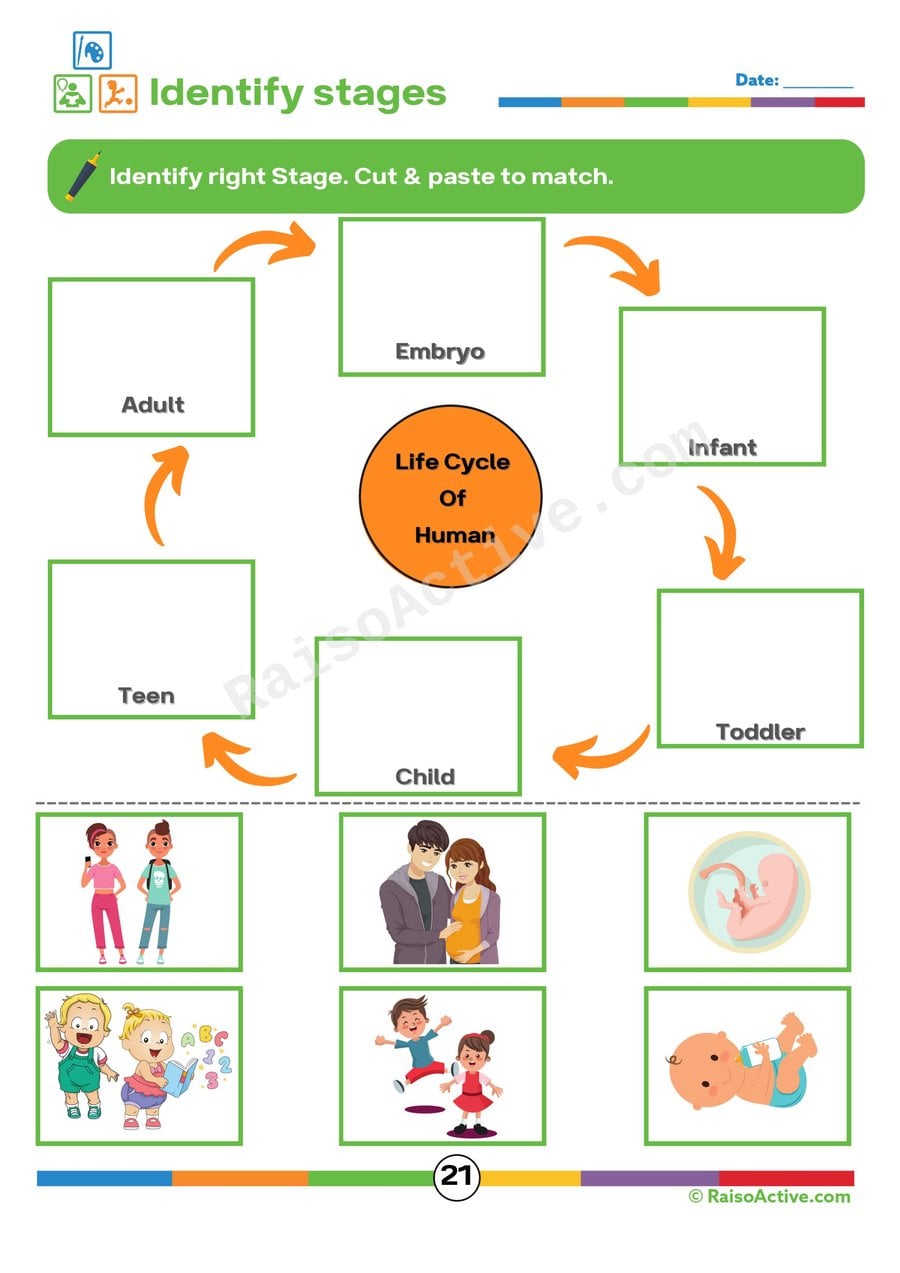
Human Life Cycle Stages Worksheet for Kids
This worksheet helps children ages 4-6 understand that people, like animals, grow and change over time by matching pictures to the stages of human development — baby, child, teenager, and adult. It introduces early classification and comparison skills while giving children a concrete way to talk about growth they can observe in their own family.

Word Problems Worksheet: Practice Subtraction with Fun Pictures!
This subtraction word problem worksheet gives children ages 4-6 practice translating a short story into a math equation, using pictures of objects being taken away to make the abstract idea of subtraction concrete. Reading, counting, and subtracting in sequence builds the same problem-solving pathway children will rely on for more advanced word problems later in school. Visual supports, like crossed-out or removed objects in the pictures, help children see subtraction as an action rather than just a symbol.
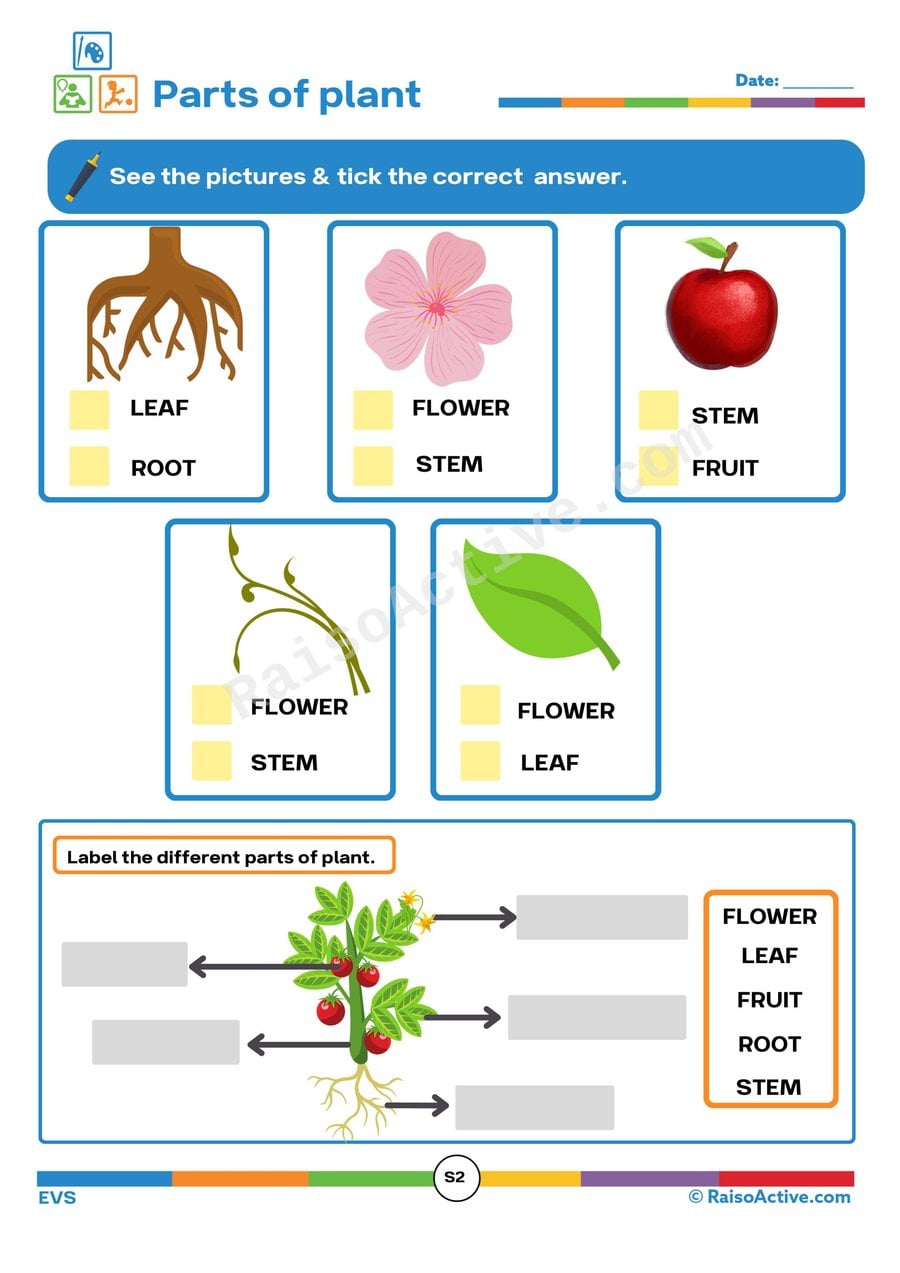
Parts of a Plant Worksheet for Kids
This worksheet helps children ages 4-6 identify and label the main parts of a plant — roots, stem, leaves, flower, and fruit — building foundational botany knowledge. Learning to associate each part with its picture and location on a plant diagram develops both vocabulary and an early understanding of plant structure, which supports later lessons on how plants grow and survive.
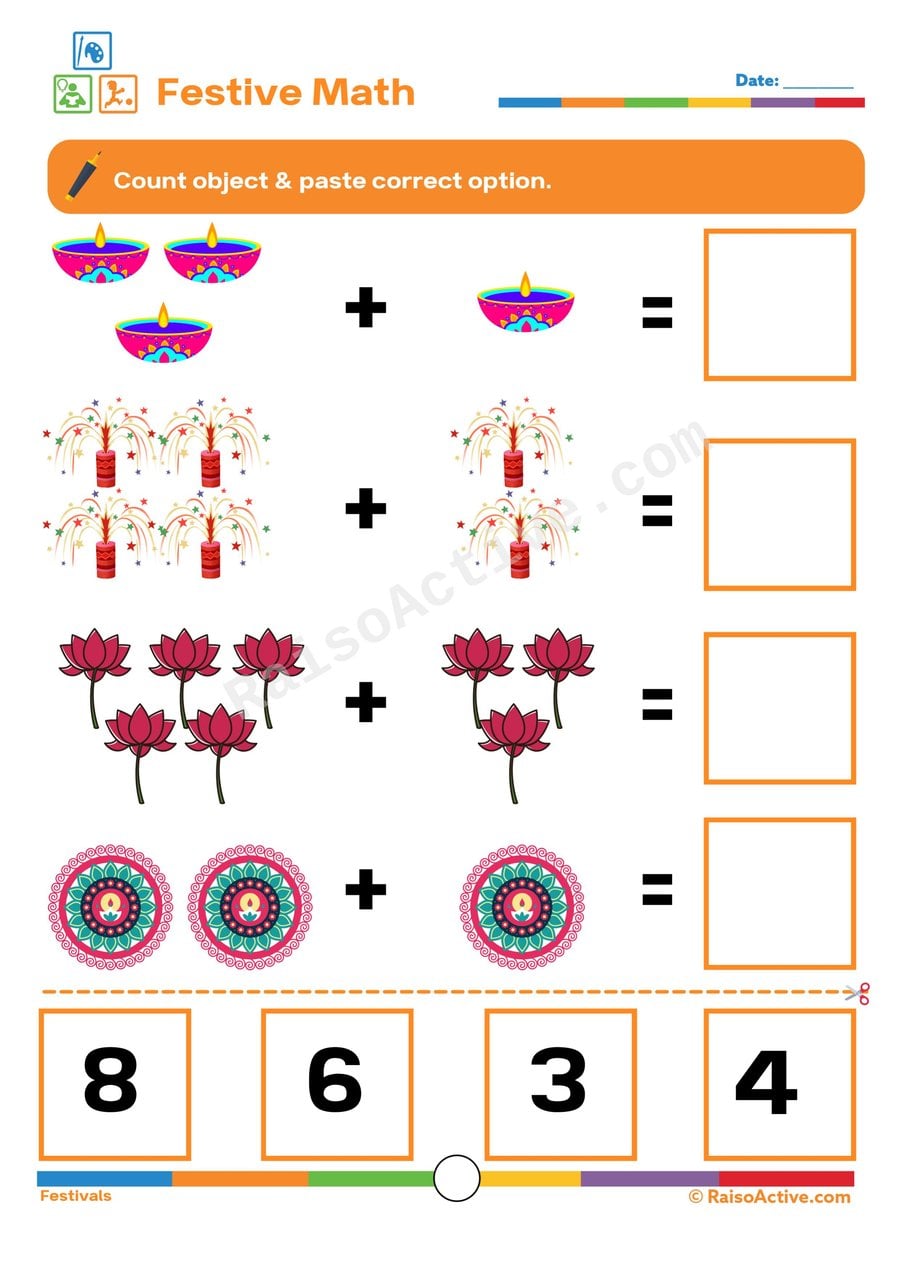
Festive Math: Count and Add Objects Worksheet
Children ages 4-6 practice counting groups of festival-themed objects and combining them through simple addition, building early number sense and the concept that addition means putting two groups together. Counting festive imagery keeps the math concrete and visual, which is especially important before children can add using abstract numerals alone.
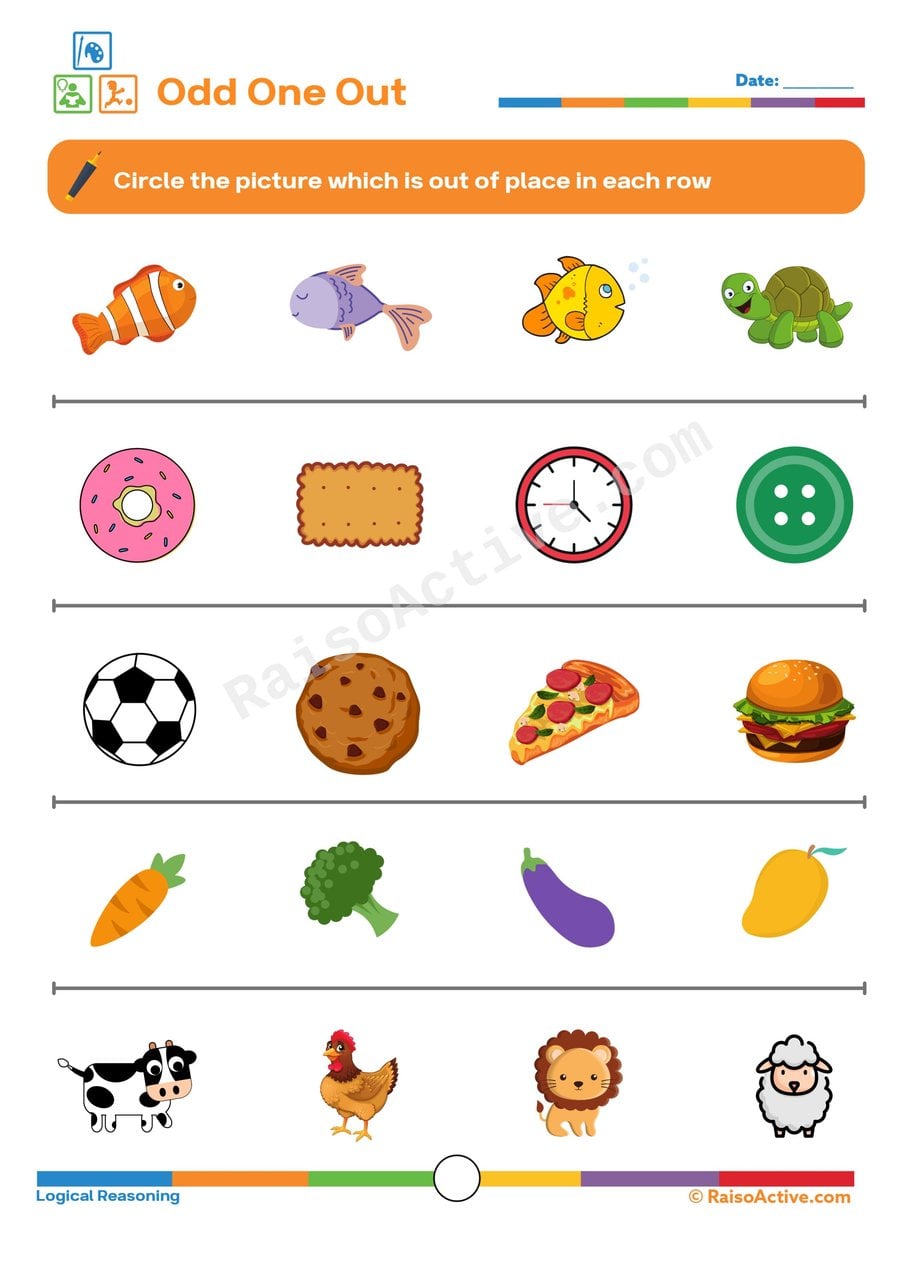
Odd One Out Worksheet: Spot the Differences!
Identifying which picture in a row is different from the others builds visual discrimination and logical reasoning in children ages 4-6, requiring them to compare multiple objects at once and notice a distinguishing feature rather than just spotting an obvious mismatch. This skill directly supports later academic tasks like sorting, categorizing, and comparing, since children must articulate what makes an item different, not just recognize that it is. Explaining their reasoning out loud after choosing also builds early verbal reasoning and communication skills.
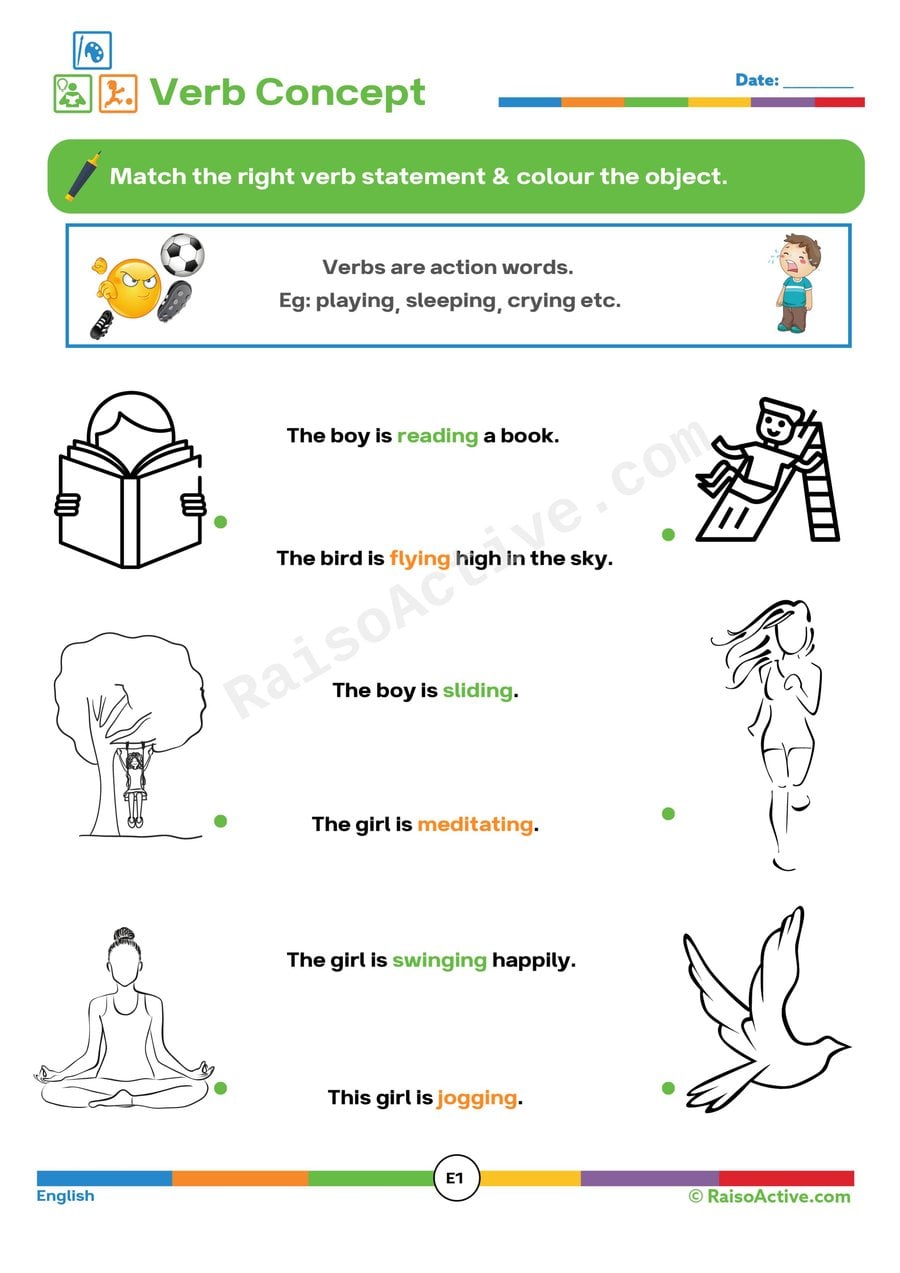
Action Verbs Worksheet: Match and Color!
This worksheet has 4-6 year olds read a short sentence, pick out the action word inside it, and match that sentence to the picture showing the action happening — a skill that bridges early reading with grammar. Identifying the verb specifically (rather than just understanding the sentence generally) is a more advanced task than simple picture-word matching, since children have to isolate one word's job within a whole sentence. Coloring the matched picture afterward gives an easy, low-pressure way to confirm the match was correct.

Taste Bud Sorting Worksheet: Identify and Sort Foods by Taste!
This worksheet introduces children ages 4-6 to four basic taste categories — salty, sour, bitter, and sweet — by having them sort pictured foods into the correct group. Beyond taste vocabulary, sorting foods by an invisible property like flavor (rather than an obvious one like color or shape) pushes children to draw on memory and prior experience, building more advanced classification skills.

Let's Solve Word Problems! - Addition Worksheet for Kids
This word problem worksheet moves children ages 4-6 beyond bare number addition into applied math, asking them to read a short story-style problem, count the objects described, and add the quantities together. Translating words into numbers and then into an equation is a key early step toward algebraic thinking, since it requires children to identify what's being asked before they can solve it. Counting the pictured objects first also keeps the addition grounded in something concrete rather than abstract digits alone.

Family Words Worksheet: Picture Matching and Word Recognition
Children ages 4-6 practice recognizing and reading words from the 'family' word group, like 'candle' becoming 'candle-family' patterns or similar word-family endings, by matching written words to their corresponding pictures. Word family practice builds phonics pattern recognition, helping children read new words faster by spotting familiar chunks within them.

Missing Numbers Worksheet: Before, Between, and After
This worksheet asks children ages 4-6 to fill in missing numbers that come before, between, or after given numbers in a sequence, building a deeper understanding of number order than simple counting alone. Recognizing what number is missing from a sequence requires children to mentally hold the number line and reason about relative position, a skill that supports later addition and subtraction.
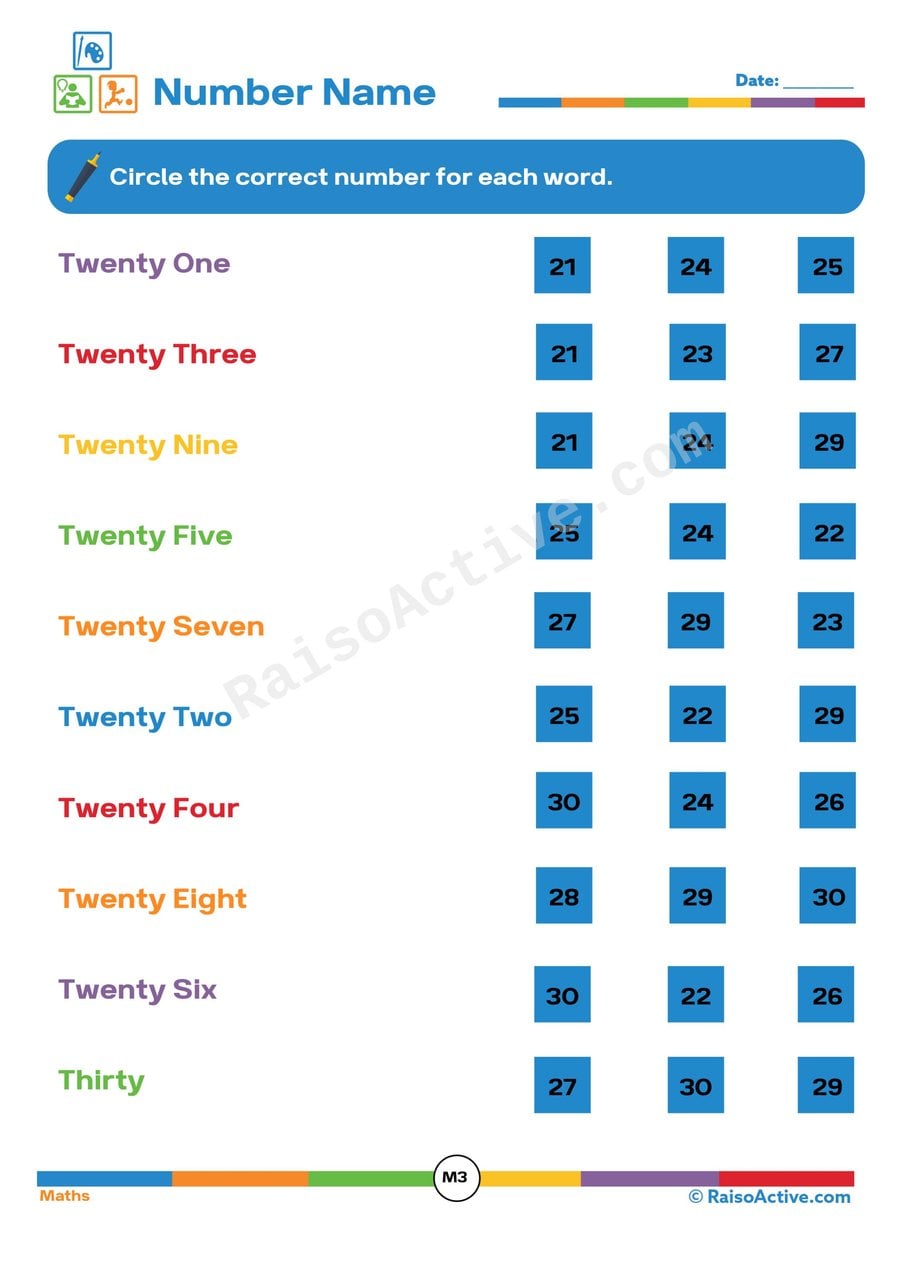
Number Names Matching Worksheet for Kids
This worksheet helps children ages 4-6 connect written number words, like 'five' or 'nine,' to their numeral form by reading each word and circling the matching digit. Recognizing number names in text is a skill separate from counting objects, and it becomes important as soon as children start encountering numbers written out in books, signs, or math word problems.

Animal Homes Worksheet: Match the Animals to Their Habitats!
Children ages 4-6 build early life-science knowledge as they match each animal to the habitat where it actually lives, such as a fish to water or a bird to a nest. This worksheet moves beyond simple animal identification into understanding the relationship between a living thing and its environment, an important building block for later ecosystem and habitat topics in science class.

Subtraction Fun: Candy and Treats Worksheet for Kids!
This worksheet gives children ages 4-6 concrete practice with subtraction by counting pictured candies and treats, then taking away a stated amount to find the difference. Using a visually appealing, countable context like candy makes the abstract idea of 'taking away' easier to grasp than numbers alone, helping children build the one-to-one counting and comparison skills that subtraction depends on.

Festive Math Fun: Counting and Addition Worksheet for Kids
Children ages 4-6 sharpen counting accuracy and practice basic addition using festive Christmas visuals, including a snowman scene where sums are recorded directly on its body. This worksheet also introduces subtraction-style thinking by having children count what remains after some objects are 'struck out,' giving an early, concrete preview of take-away math.

Princess's Number Path: Fill in the Missing Numbers Worksheet
Filling in missing numbers along a themed path gives children ages 4-6 practice with number sequencing — understanding that numbers follow a fixed, predictable order and being able to identify what comes before or after a given number. This skill goes beyond simple counting, since a child has to hold the number sequence in their head and apply it to gaps rather than just reciting numbers in order from the start. The princess-and-prince storyline gives the exercise a narrative hook that keeps young children engaged through what might otherwise feel like a repetitive counting task.

Stick Man Emotions Worksheet: Happy, Sad, Angry, and Surprised!
Children ages 4-6 practice reading facial expressions on this worksheet, matching stick-figure faces to their correct emotion labels by noticing details like mouth shape and eyebrow position. This strengthens emotional literacy — the ability to name and recognize feelings in others — which supports empathy and smoother social interactions as children move into more group play and classroom settings.
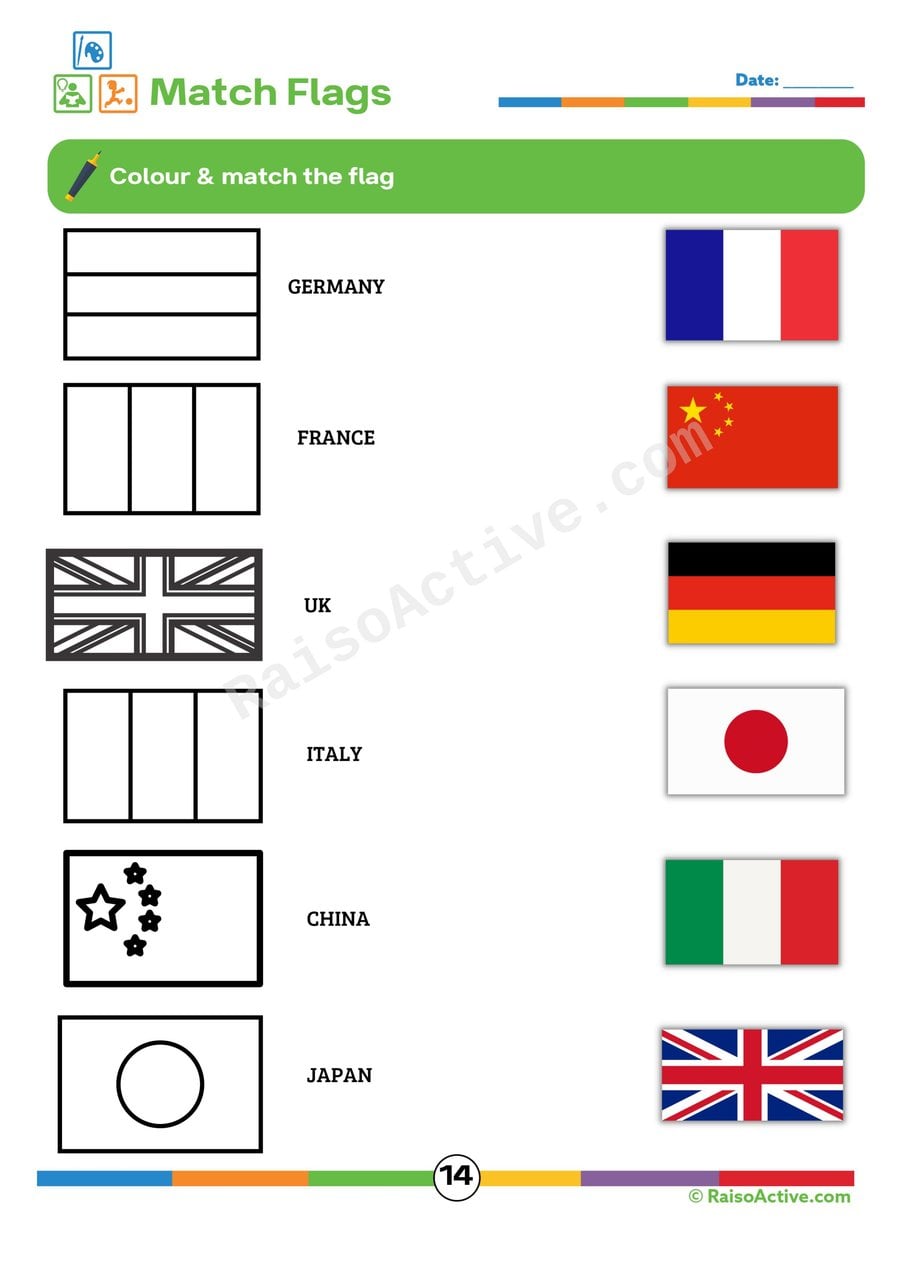
Match the Flags Worksheet: Color and Learn!
This worksheet helps children ages 4-6 recognize different country flags by coloring them accurately and matching each one to its correct country name. Coloring flags with real colors, rather than free choice, adds a layer of factual precision to the usual creative coloring task, reinforcing that flags carry specific, meaningful designs.

Word Problems Worksheet: Solving Addition and Subtraction
Solving a mix of addition and subtraction word problems trains children ages 4-6 to decide which operation a story calls for, based on whether it describes combining groups or taking something away, a key reasoning skill before formal equation writing.

S and T Sounds Worksheet: Matching Sounds to Objects
This matching worksheet helps children ages 4-6 build beginning-sound awareness for the letters 's' and 't' by listening to each sound and connecting it to the correct object. Distinguishing between these two common consonant sounds strengthens the foundational skill of linking a spoken sound to its written letter, which is essential before children can spell or decode independently. Matching by sound, rather than by sight alone, keeps the focus on auditory phonics rather than memorized shapes.

Tens and Ones Matching Worksheet for Preschoolers
Children ages 4-6 begin exploring the concept of tens and ones by matching groups of objects to their corresponding number sentences, an early step toward understanding place value in two-digit numbers. Cutting and pasting pictures into the correct boxes reinforces the matching logic while adding fine motor practice. This groundwork prepares children for later math concepts like regrouping and multi-digit addition.
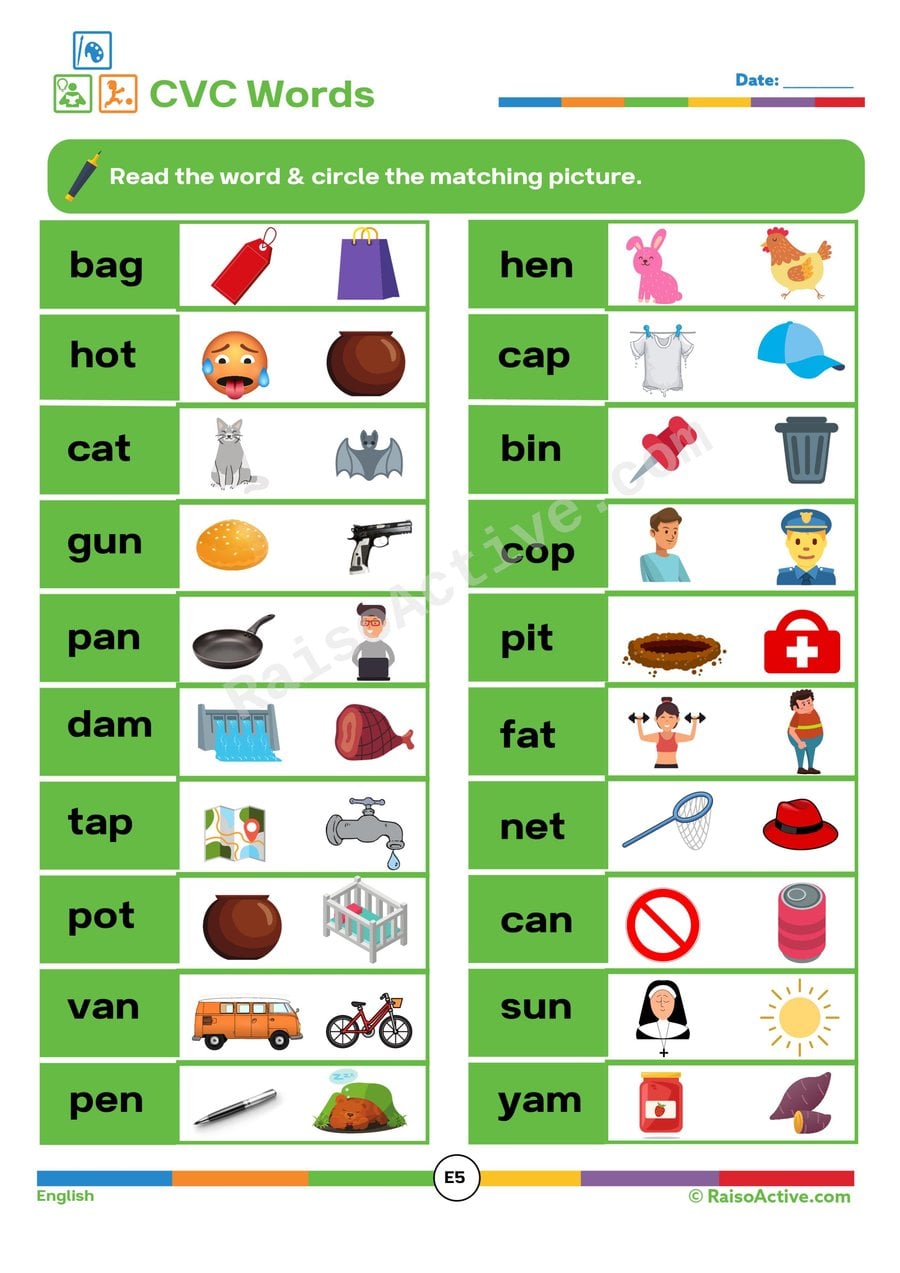
CVC Word Matching Worksheet: Read and Circle!
Sounding out each consonant-vowel-consonant word letter by letter strengthens decoding, and matching that word to its picture connects decoding to meaning — an essential step for children ages 4-6 becoming independent readers.
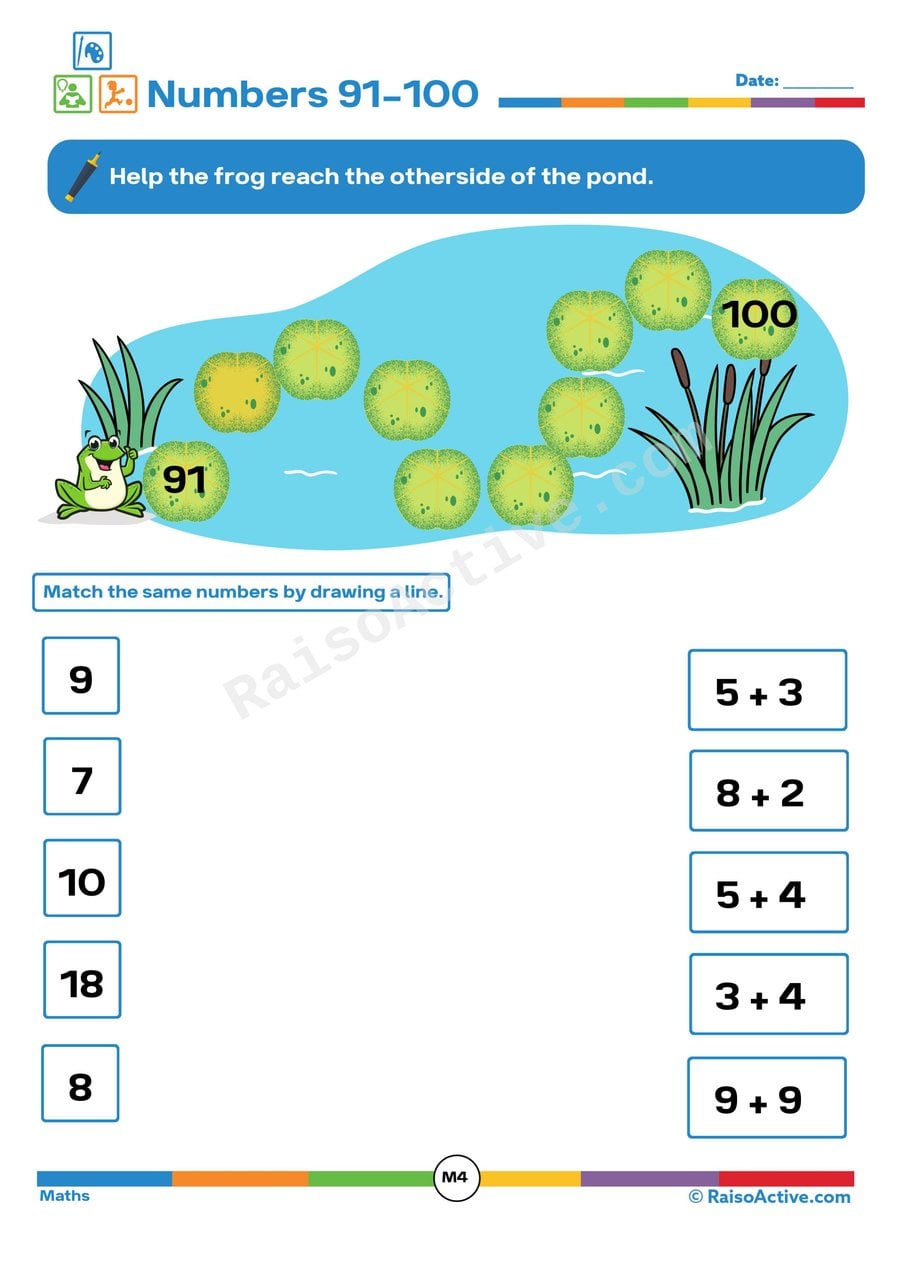
Numbers 91-100 Worksheet: Help the Frog!
Numbers in the 90s are a milestone range for children ages 4-6, since they require holding two-digit number recognition steady while approaching the conceptually significant number 100. This worksheet has children match numbers on lily pads to their corresponding value or sum, reinforcing number recognition within this higher range through a playful matching format. Building fluency with numbers up to 100 lays essential groundwork for place value concepts like tens and ones that children will tackle soon after.
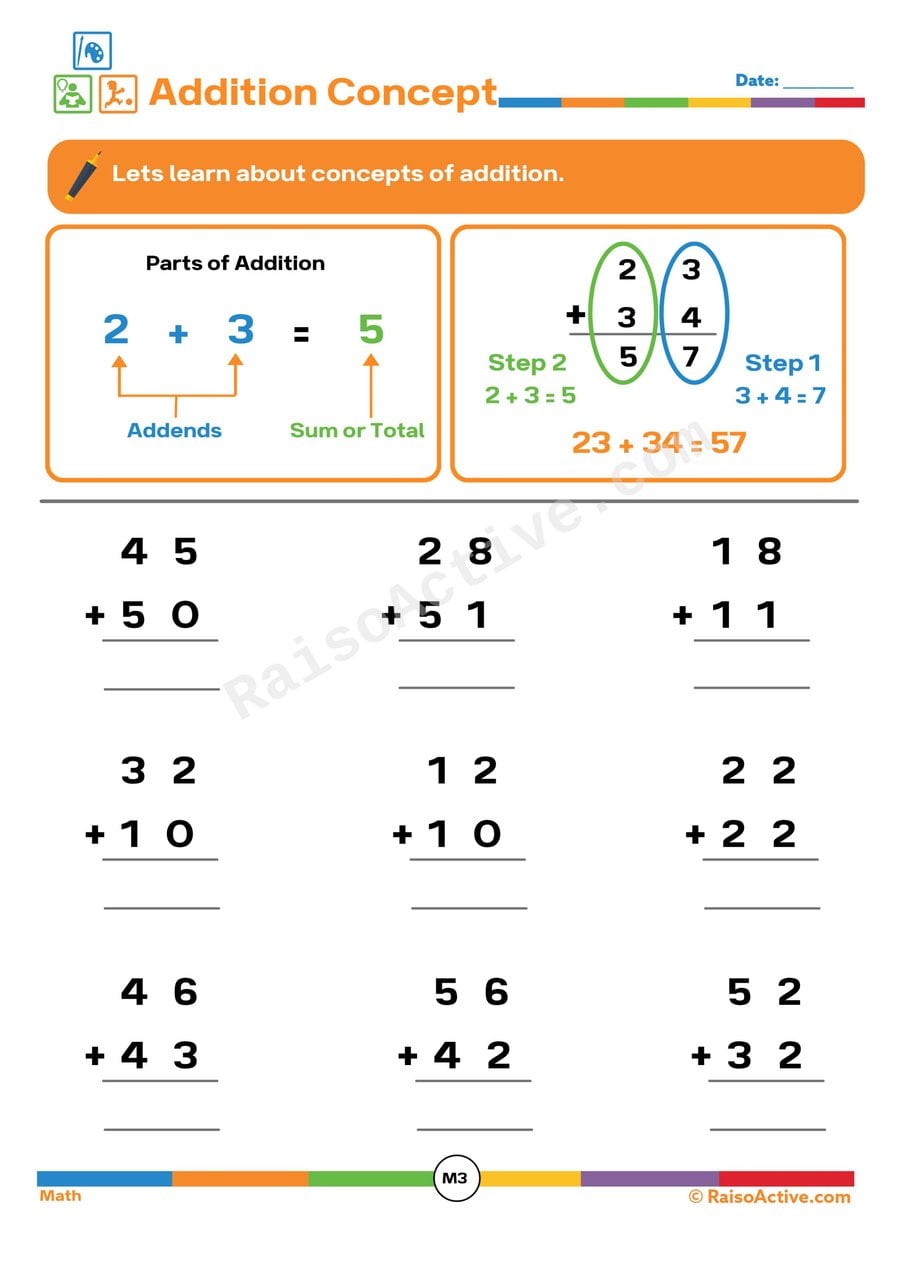
Addition Concepts Worksheet for Preschoolers
Preschoolers ages 4-6 build early number sense by visually combining two small groups into one total, the concrete foundation every later addition fact depends on. Seeing objects physically joined together, rather than just numbers on a page, helps children grasp that addition means 'putting together' before they ever memorize a sum.
What the Mathematics Early Learning Goals expect
The 2021 EYFS framework replaced the old Numbers and Shape, Space and Measures goals with two: Number and Numerical Patterns. Shape and measure are still taught, but they are no longer formally assessed at the end of Reception. The two goals are short and specific, and they are what a Reception teacher works towards across the whole year.
- Number: deep understanding of numbers to 10 and their composition; subitise to 5; recall number bonds to 5 and some to 10, including double facts
- Numerical Patterns: count verbally beyond 20 and recognise the counting pattern; compare quantities (greater than, less than, the same); explore odd and even, doubling and sharing
- Also taught: 2D and 3D shapes, repeating patterns, length, weight, capacity, time words and positional language
Subitising, ten-frames and number bonds
Subitising means seeing how many without counting, the way an adult sees a five on a dice. Reception works on perceptual subitising (up to 5 objects at a glance) and conceptual subitising (seeing 7 as a 5 and a 2). Ten-frames make this visible: a two-by-five grid where counters show a number and the empty spaces show how many more make 10. Most Reception number worksheets use ten-frames, dice patterns and fingers for exactly this reason.
How to use these worksheets at home
Put real objects on the table first: count out seven buttons, split them into groups, then do the sheet. Use the language the school uses, which is more, fewer, the same, one more, one less and altogether, rather than plus and equals. Five to ten minutes is enough, and the goal is confidence with small numbers, not racing to 100. If the child counts every dot on a dice face, spend more time on subitising before moving on.
Frequently asked questions
What maths should a child know by the end of Reception?
The Early Learning Goals expect a child to have a deep understanding of numbers to 10, subitise up to 5, recall number bonds to 5 and some to 10 (including doubles), count verbally beyond 20, recognise the pattern of the counting system, compare two quantities, and explore odd and even numbers, doubling and sharing. Shape, pattern and measure are taught but not formally assessed.
What is subitising and why does Reception focus on it?
Subitising is recognising how many objects are in a small group without counting them one by one. Most adults do it automatically for up to four or five items. The EYFS framework makes it a goal because it builds a sense of quantity that counting alone does not; a child who subitises sees numbers as amounts that can be split and combined, which is the foundation of addition and subtraction.
Should a Reception child be doing addition sums?
Not as written sums with plus and equals signs, which belong in Year 1. Reception children combine and partition small groups practically: three cars and two cars make five altogether; seven buttons split into four and three. Number bonds to 5, then to 10, are learned this way. Worksheets at this stage show pictures and ten-frames rather than number sentences, though some schools introduce the symbols in the summer term.
How do Reception maths worksheets differ from Year 1 maths worksheets?
Reception sheets stay within 10 for most of the year and use pictures, dice patterns and ten-frames so that every number is something to see and count. Year 1 sheets move to numbers to 100, written number sentences with plus, minus and equals signs, number bonds to 20 recalled from memory, and formal place value with tens and ones. The National Curriculum, not the EYFS, sets Year 1 content.
Are these Reception maths worksheets free?
Yes. Sign up for a free account and download any sheet as a watermarked PDF, five a day. An annual subscription removes the watermark and the daily limit for the whole library of more than 1,000 worksheets and the printable packs. All sheets are laid out for A4 paper.

Written by
Hemsweta Jain · Teacher Cheena
MBA and Early Childhood Educator, teaching since 2014 · Founder of RaisoActive, Mumbai
Written and reviewed by Hemsweta Jain (Teacher Cheena), who designs every RaisoActive worksheet.
Last reviewed
Printable packs for ages 4–5
Pattern Writing Pre-writing Skills Activity Book for 3-4 Year Olds
Summer Activity Pack: Math, Literacy, Puzzles & More for Preschool & Kindergarten
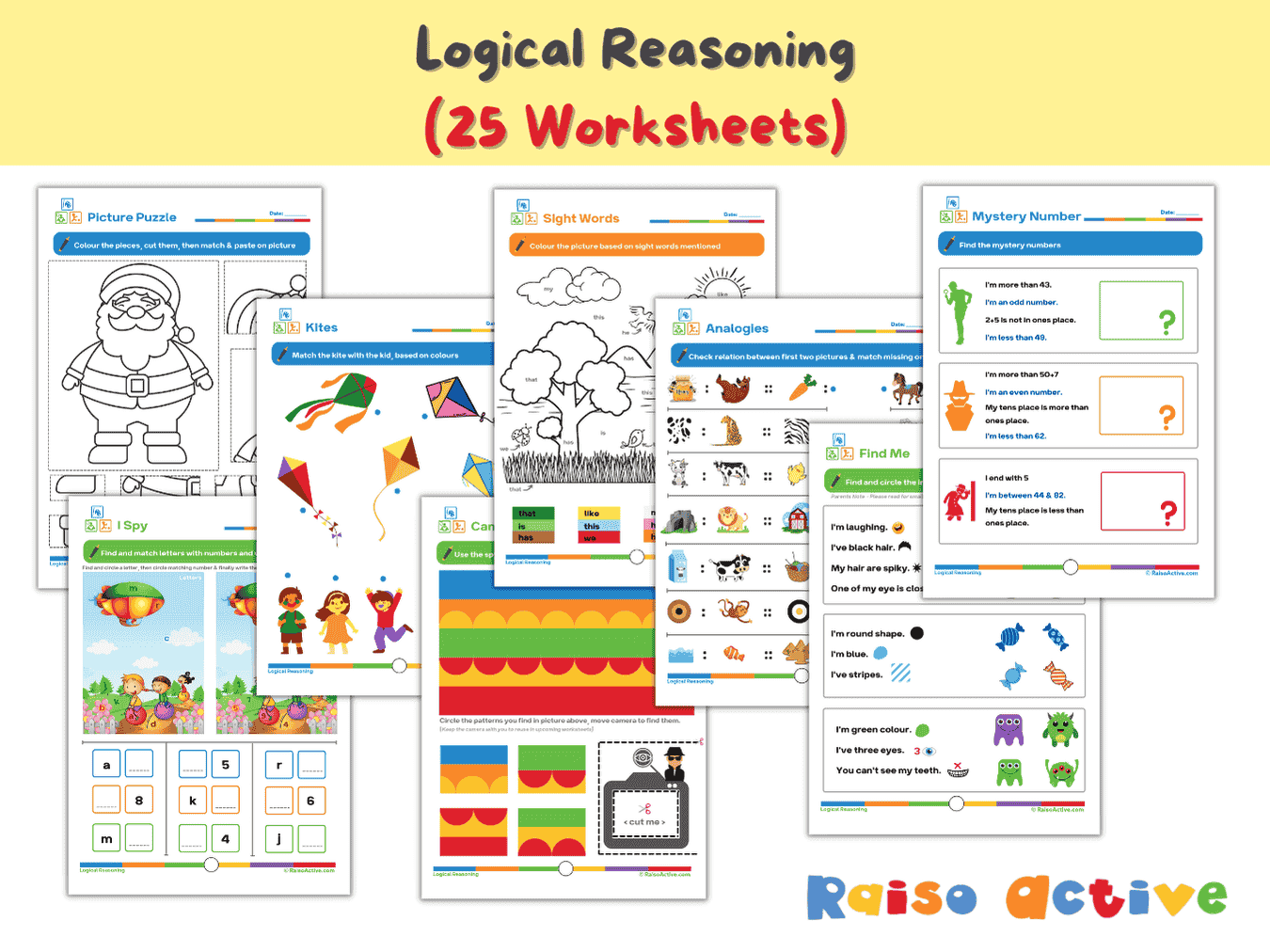
Logical Reasoning Activity Book for Preschool & Kindergarten | Patterns, Puzzles & Analogies
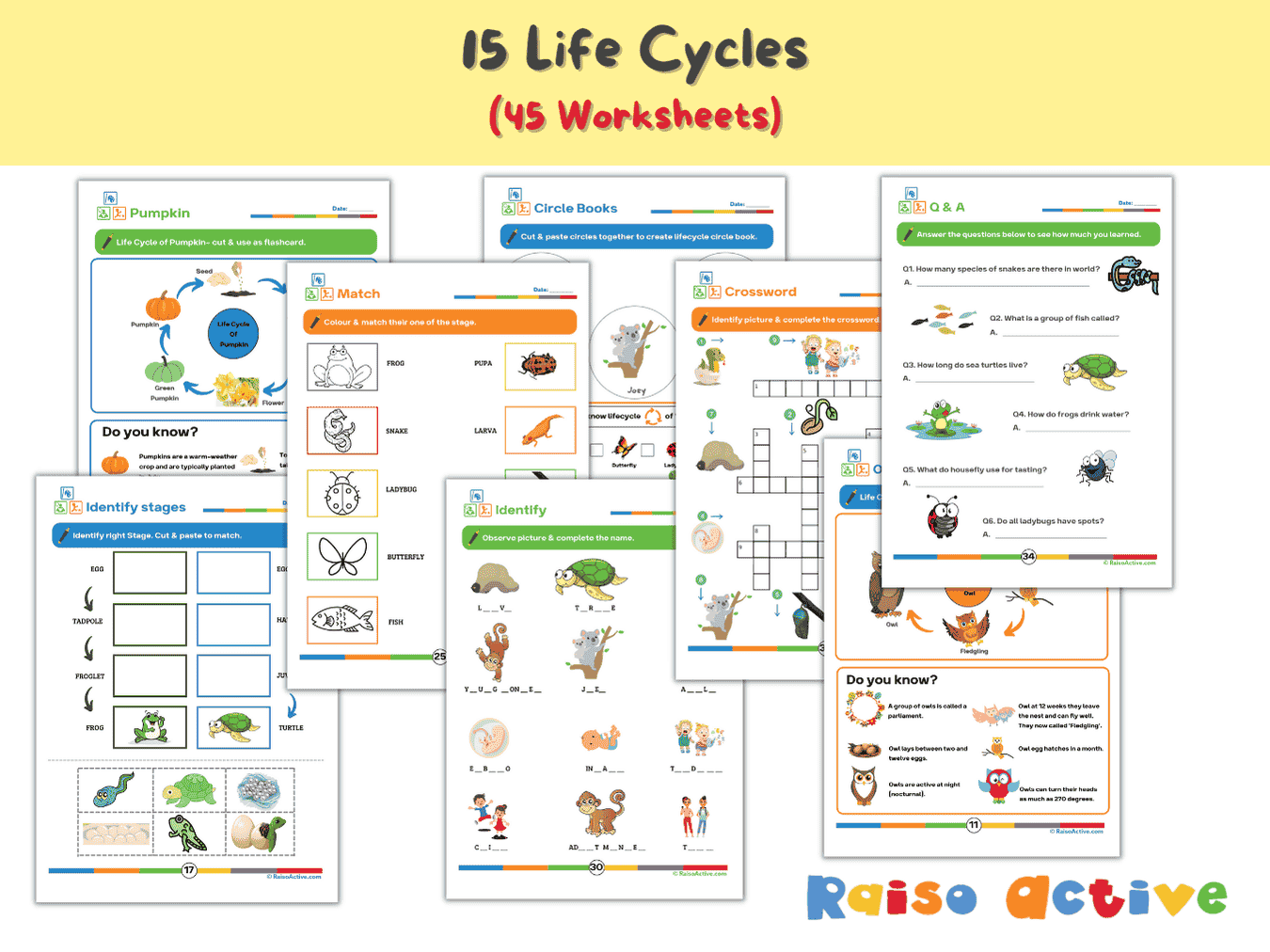
Lifecycles Activity Book & Flashcards for Preschool & Early Elementary
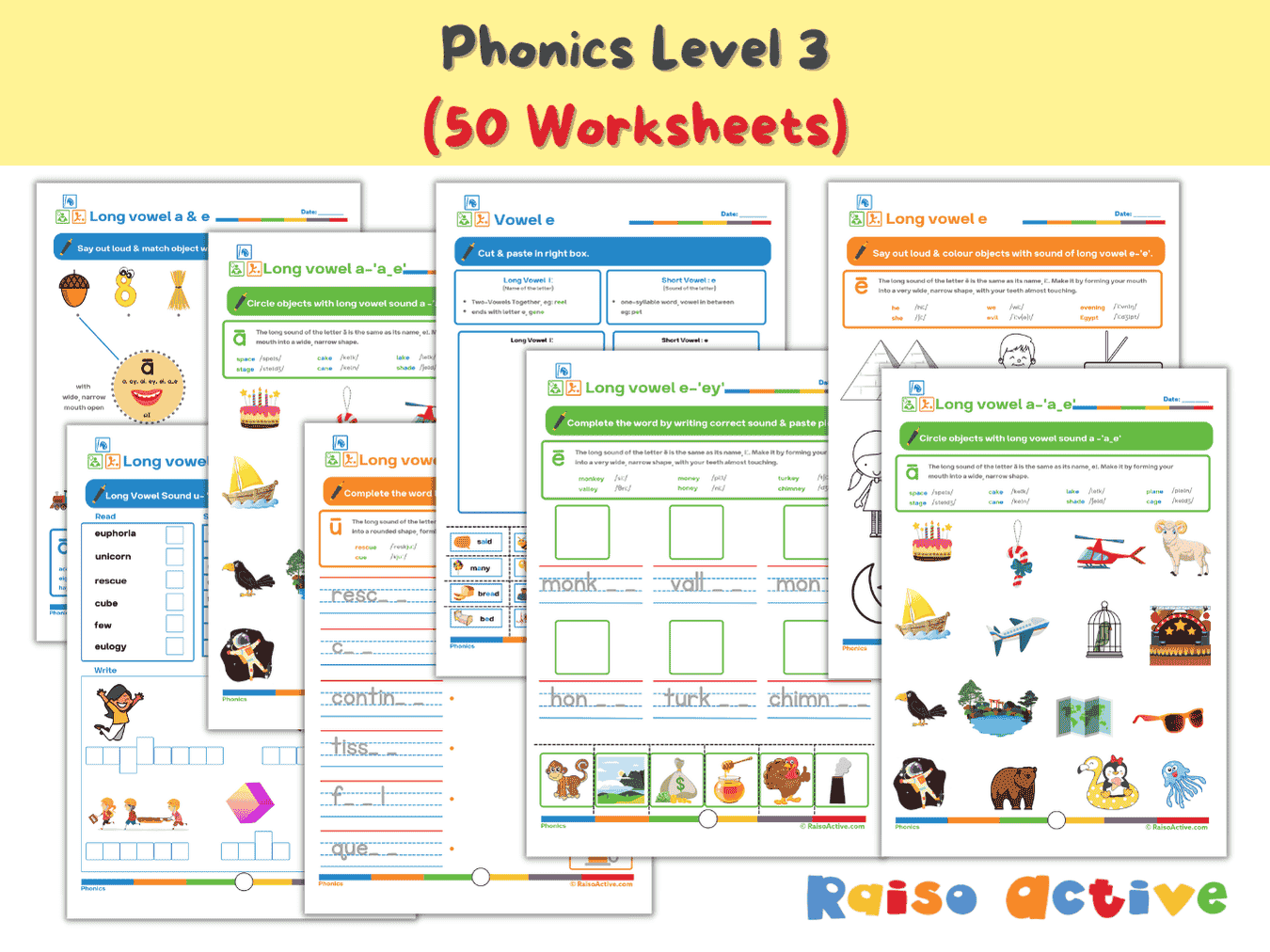
Phonics Level 3 Long Vowels Activity Book for Kindergarten & 1st Grade
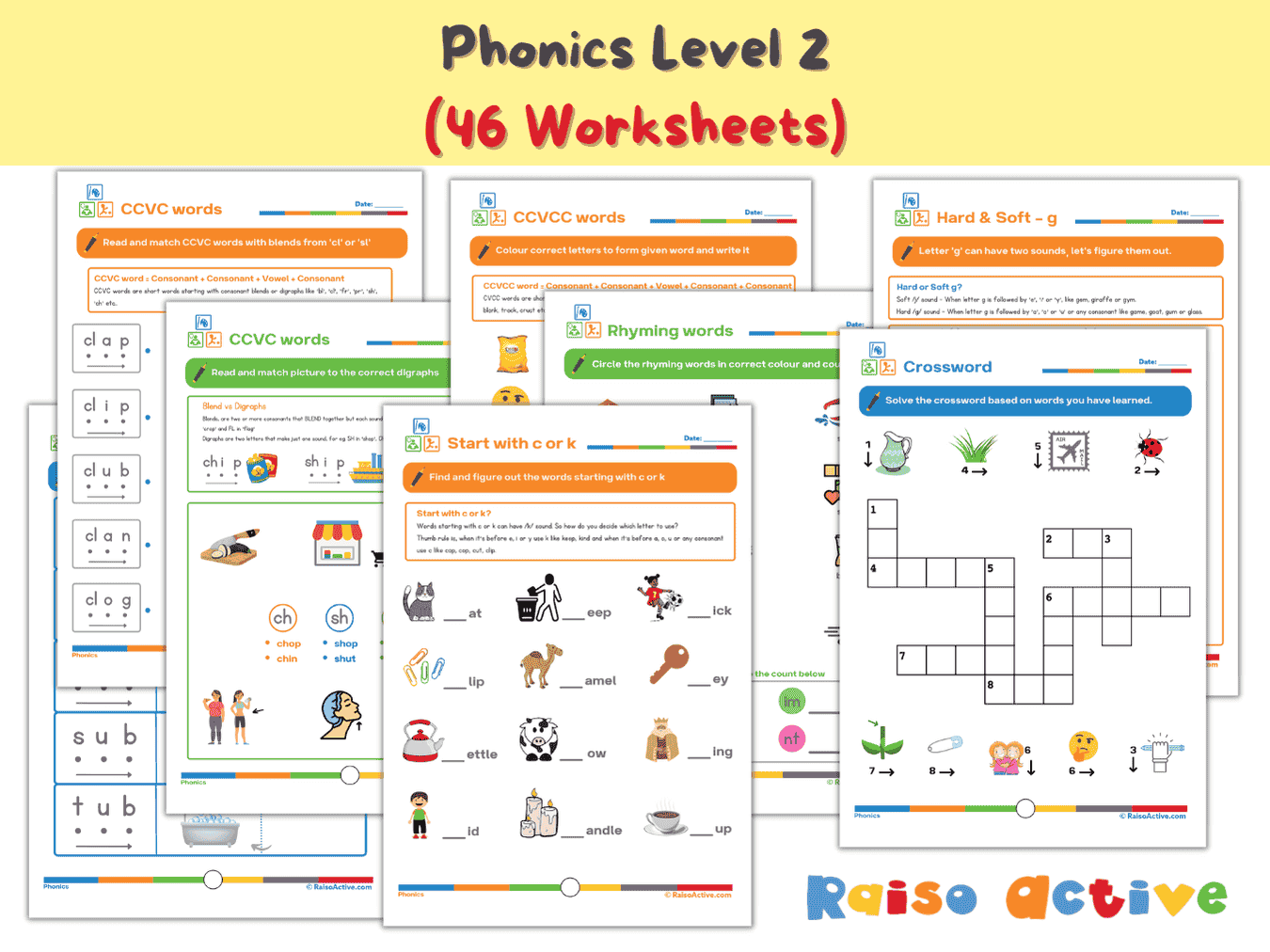
Phonics Level 2 Worksheets: CVC, CCVC, CVCC Word Families & Blends for Early Readers (Ages 4-7)
Guides for parents and teachers
See all guides →Number Formation Rhymes 0–9 and How to Fix Reversals
Original number formation rhymes for 0–9, the correct stroke order for each digit, why 3, 5 and 7 get reversed most often, and multisensory fixes that work.
UKG Syllabus Explained: English, Maths and EVS Month by Month
What UKG classes typically cover in English, maths and EVS, month by month, aligned to NEP 2020, with ways to support at home and signs your child is behind.
Christmas and Winter Activities That Combine Fun and Learning: Creating Magical Educational Experiences
Discover Christmas and winter activities that combine festive fun with real learning. Crafts, counting, literacy, and printable worksheets for ages 2 to 8 — perfect for home and school.
Age-Appropriate Halloween Learning Activities: Balancing Spooks and Skills for Young Learners
Discover fun, age-appropriate Halloween learning activities for young children. Spooky crafts, counting games, literacy ideas, and printable worksheets for ages 2 to 8.
The Power of Music: How Musical Activities Accelerate Learning Development in Young Children
Discover how musical activities accelerate brain development, phonics, maths, and emotional regulation in children ages 1–8. Practical tips for Indian homes and classrooms.
What's the Best Alternative to ABCmouse? A Complete Parent's Guide to Free and Affordable Educational Apps
ABCmouse runs ~Rs 4,000-5,000/year with US spellings and curriculum. Compare free & affordable Indian-friendly apps like Khan Academy Kids and DIKSHA.
Canonical: https://raisoactive.com/worksheets/reception-maths