Christmas Pattern Worksheet: Circle the Next Picture!
This seasonal worksheet gives children ages 4-6 practice identifying a repeating pattern using Christmas-themed pictures and predicting which picture logically comes next. Pattern prediction requires children to notice a repeating rule and apply it forward, a skill that underlies later math concepts like skip counting and multiplication tables. The festive imagery adds seasonal excitement that can make repeated pattern practice feel like a holiday game.
Part of the pack
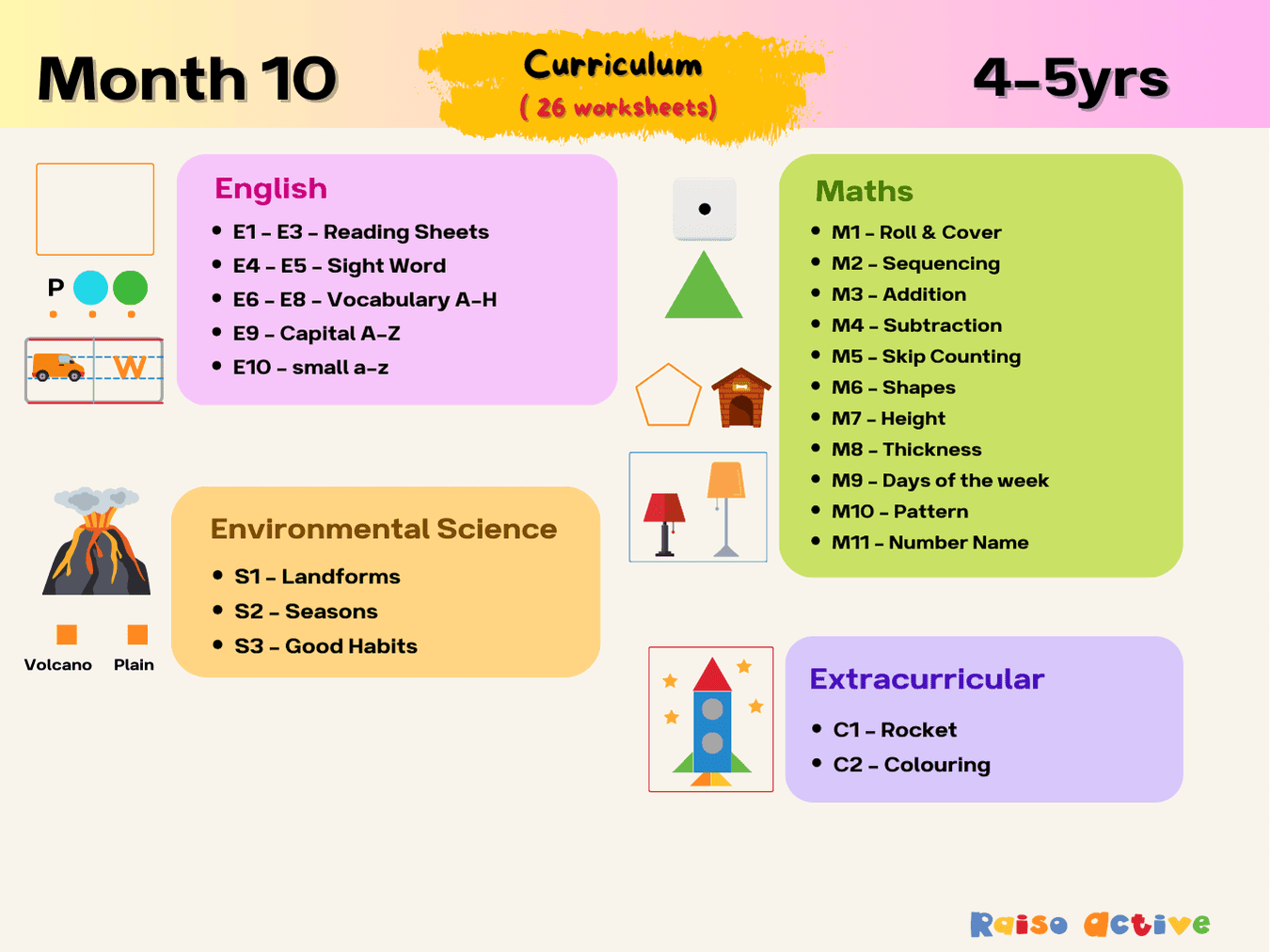
Month 10: Learning & Development | Ages 4-5
This is page 23 of the pack. Ages 4-5 · Pre-KAges 4-5 · ReceptionAges 4-5 · LKGAges 4-5

Made for your child
Numbers to 20, made for your child
A maths pack with your child's name in it: pictures that explain, practice at three levels, puzzles and story sums about them. Print a new set whenever they finish.
Make a maths packFree preview · free for members
Curriculum
- Patterns > Patterns
How to use this worksheet
Look at the first row of pictures together and say each item's name aloud in the order it appears, like 'star, bell, star, bell.' Ask your child to predict which picture should come next in the sequence based on the pattern they hear. Have your child circle the correct picture from the choices given to complete that row. Continue through each remaining row, always saying the pattern aloud together before circling an answer.
Materials needed
- Pencil
- Crayons
Extension activities
- 1Create your own patterns using Christmas-themed objects.
- 2Find patterns in your home or classroom.
- 3Decorate a simple paper tree with ornaments arranged in a repeating pattern.
- 4String jingle bells and ribbon in a repeating pattern to make a holiday garland.
- 5Play a clapping-and-stomping holiday rhythm pattern game together.

Written by
Hemsweta Jain · Teacher Cheena
MBA and Early Childhood Educator, teaching since 2014 · Founder of RaisoActive, Mumbai
Every RaisoActive worksheet is designed and checked by the founder before publishing.
Published · Last reviewed
More from Month 10: Learning & Development | Ages 4-5
Seasons Matching Worksheet for Preschoolers
Ages 3-5 · Preschool–Pre-KAges 3-5 · Nursery–ReceptionAges 3-5 · Nursery–LKGAges 3-5
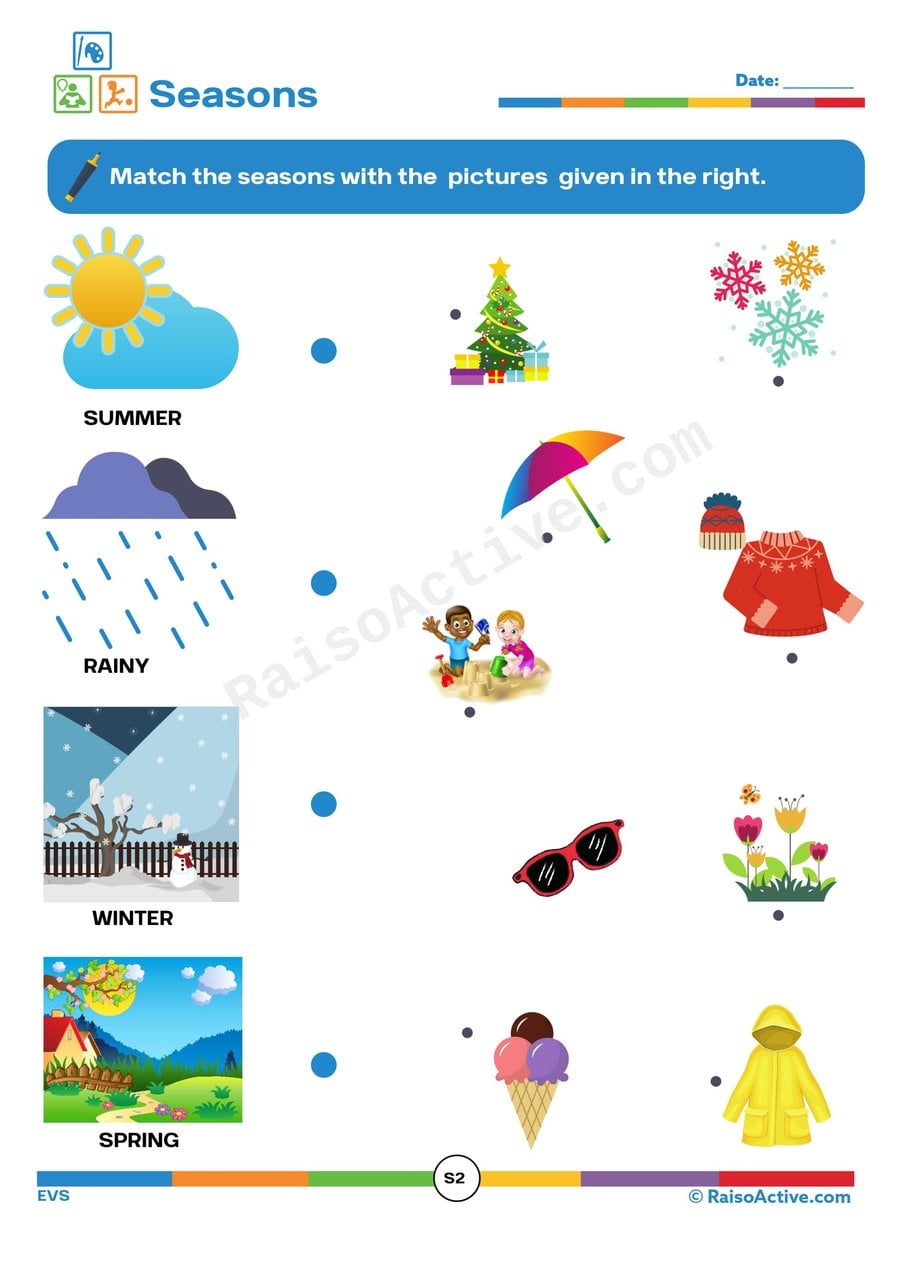
This matching worksheet helps children ages 3-5 connect the names of the four seasons — summer, rainy, winter, spring — to their corresponding visual scenes, reinforcing both seasonal vocabulary and the observational skills needed to identify a season from its weather and imagery. Because seasons cycle throughout the year, understanding them early gives children a framework for talking about time, weather, and change that they'll keep building on in future grades. Drawing a connecting line between the word and image also strengthens the link between written vocabulary and visual meaning.

Good Habits Worksheet for Kids: Circle the Correct Option!
Ages 3-5 · Preschool–Pre-KAges 3-5 · Nursery–ReceptionAges 3-5 · Nursery–LKGAges 3-5
This worksheet helps children ages 3-5 build early social-emotional judgment by looking at everyday scenes and deciding whether they show a good habit or a bad one. Making this kind of good/bad judgment about behavior, rather than just labeling objects, is an early form of moral and social reasoning that supports self-regulation later on. Using a simple thumbs-up or thumbs-down visual cue makes the abstract idea of 'good habits' concrete and easy to judge.

Color the Sight Words: 'She' and 'He' Worksheet for Preschoolers
Ages 3-5 · Preschool–Pre-KAges 3-5 · Nursery–ReceptionAges 3-5 · Nursery–LKGAges 3-5
This worksheet helps children ages 3-5 build instant sight-word recognition for the common pronouns 'she' and 'he' by having them scan a page and color each word according to a color code. Because sight words like these can't be sounded out easily, repeated visual exposure through an engaging coloring task helps children recognize them instantly by shape, which is essential for early reading fluency. Differentiating between two similar short words also sharpens visual discrimination.
F, G, H Letter Sounds Cut and Paste Worksheet
Ages 4-5 · Pre-KAges 4-5 · ReceptionAges 4-5 · LKGAges 4-5
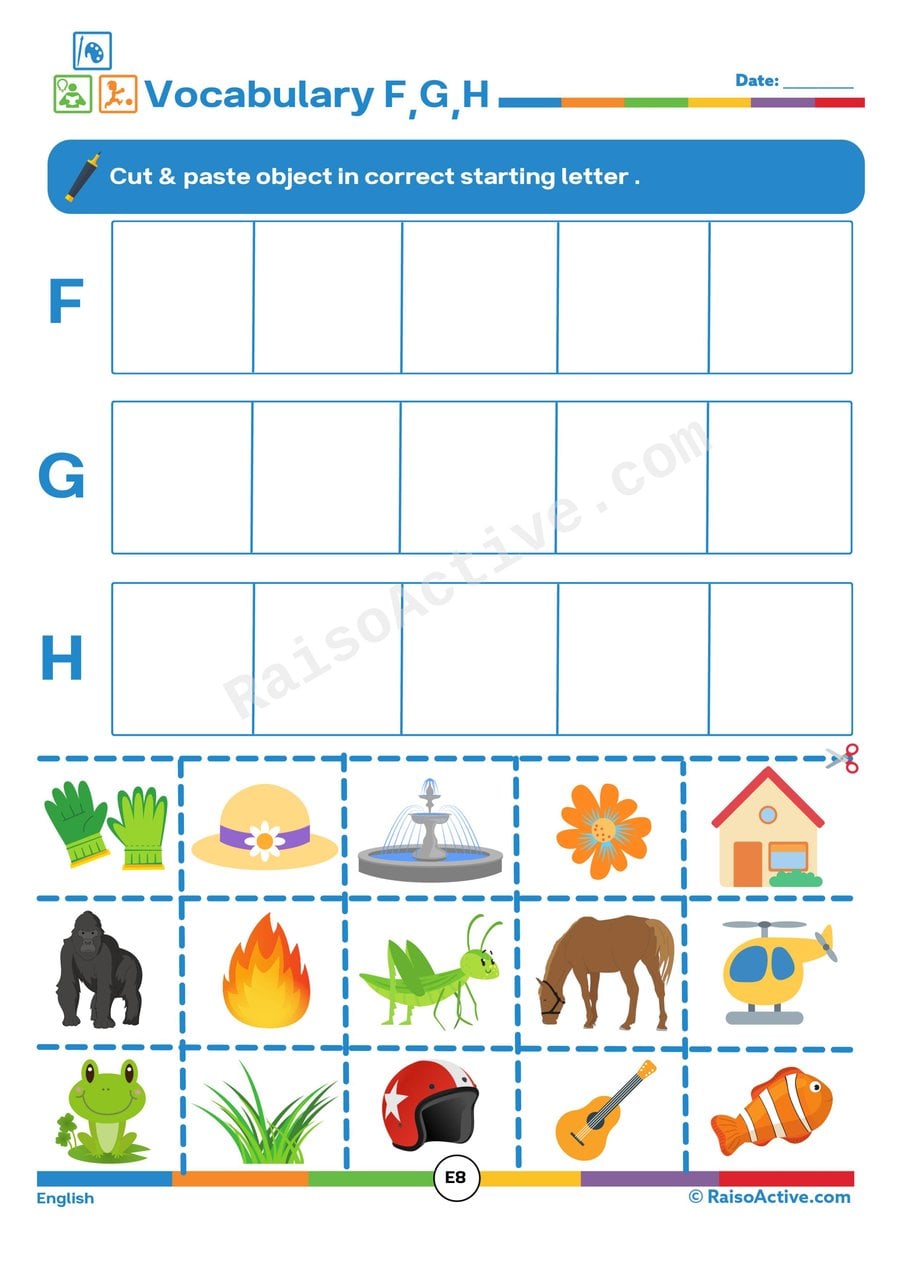
This worksheet builds phonemic awareness in children ages 4-5 by asking them to isolate the beginning sound of each picture and sort it under the correct letter — F, G, or H. Sorting across three letters at once, rather than just one, requires children to hold multiple sound-letter associations in mind and choose between them, which is a step up in difficulty from single-letter worksheets. This kind of comparative sound-sorting strengthens the phonics foundation needed for early reading.
Summer Coloring Worksheet: Color the Beach Scene!
Ages 3-5 · Preschool–Pre-KAges 3-5 · Nursery–ReceptionAges 3-5 · Nursery–LKGAges 3-5
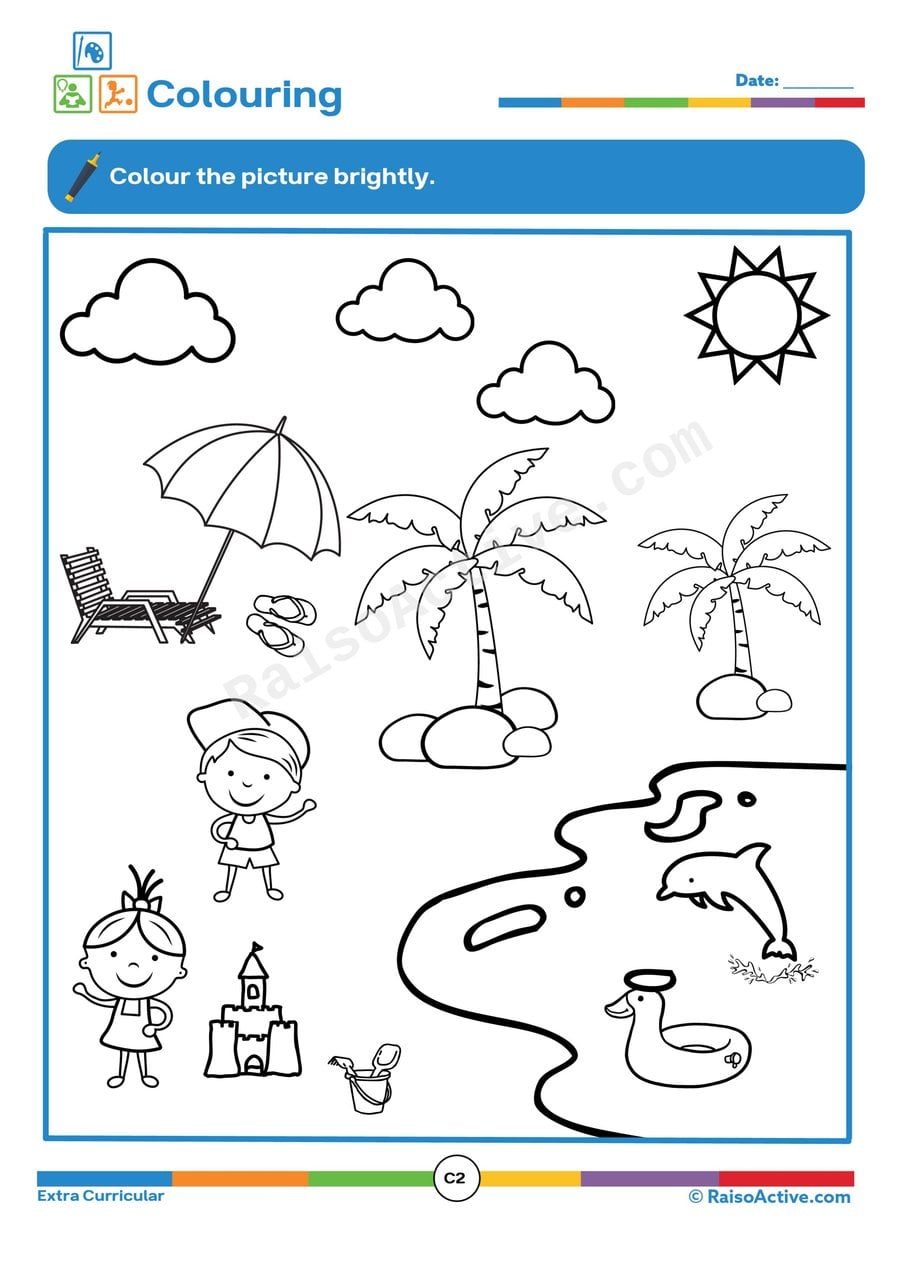
This coloring worksheet lets children ages 3-5 practice staying within lines and choosing appropriate colors while reinforcing recognition of summer-themed objects like sand, sun, and beach toys. Coloring a themed scene rather than a random picture also builds vocabulary, since children naturally name and discuss each object as they decide what color to use. This combination of fine motor practice and vocabulary reinforcement makes even a simple coloring page more purposeful than free coloring alone.
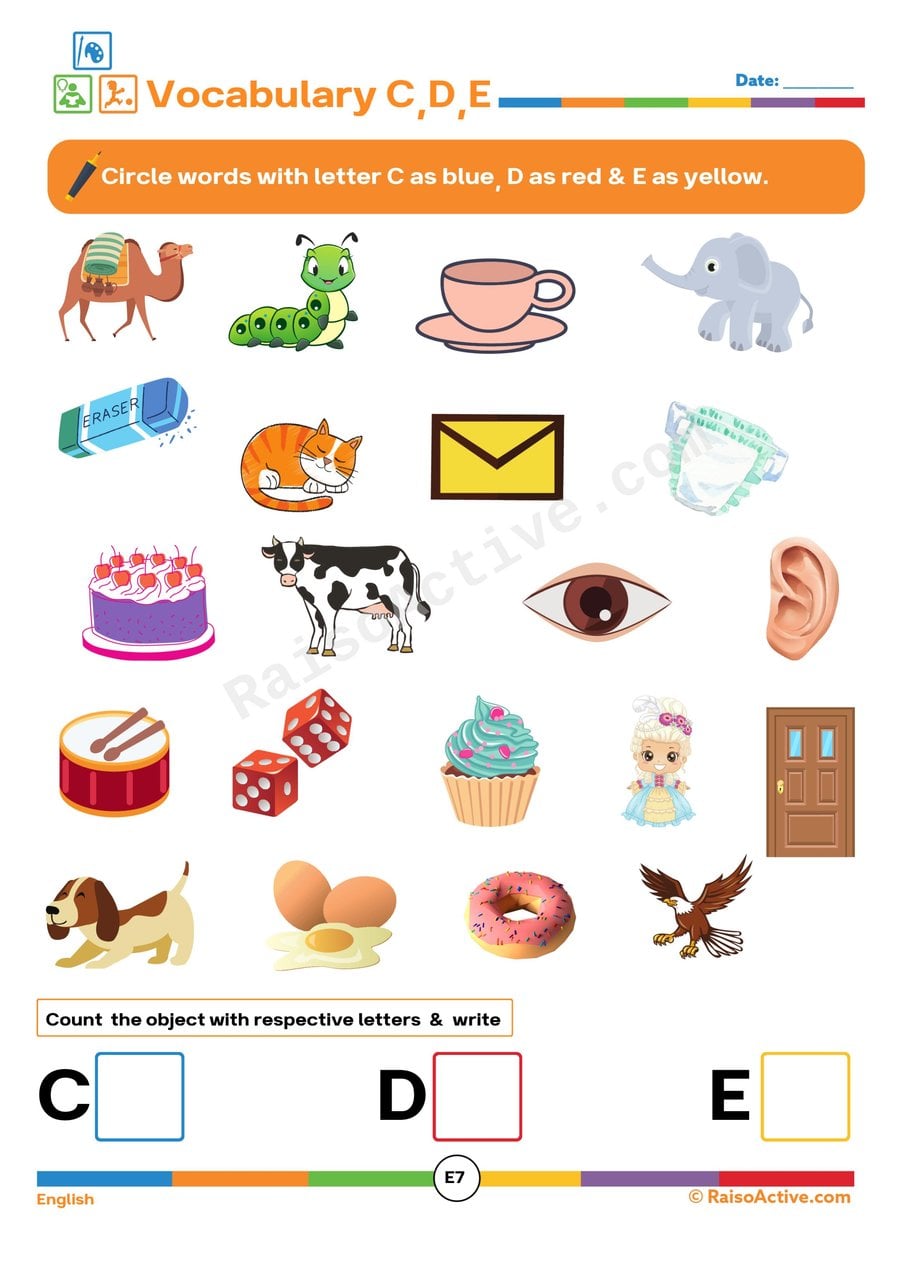
C, D, E Letter Sounds Worksheet: Circle and Count!
Ages 3-5 · Preschool–Pre-KAges 3-5 · Nursery–ReceptionAges 3-5 · Nursery–LKGAges 3-5
This activity gives children ages 3-5 focused practice recognizing the beginning sounds of the letters C, D, and E, asking them to circle matching pictures in different colors for each letter before counting the results. Combining phonics with counting means children practice two skills in one sitting: identifying initial letter sounds and recording a numeric total, both foundational for kindergarten readiness. Color-coding each letter also helps children visually organize the three sounds instead of mixing them together.

Number Sequencing Worksheet: Practice Counting and Ordering Numbers!
Ages 4-5 · Pre-KAges 4-5 · ReceptionAges 4-5 · LKGAges 4-5
This worksheet gives children ages 4-5 focused practice writing numerals in order by filling in the missing numbers within several different counting sequences. Unlike simple counting aloud, writing each numeral by hand forces children to connect the spoken number word to its correct written symbol, reinforcing both number recognition and early handwriting control.
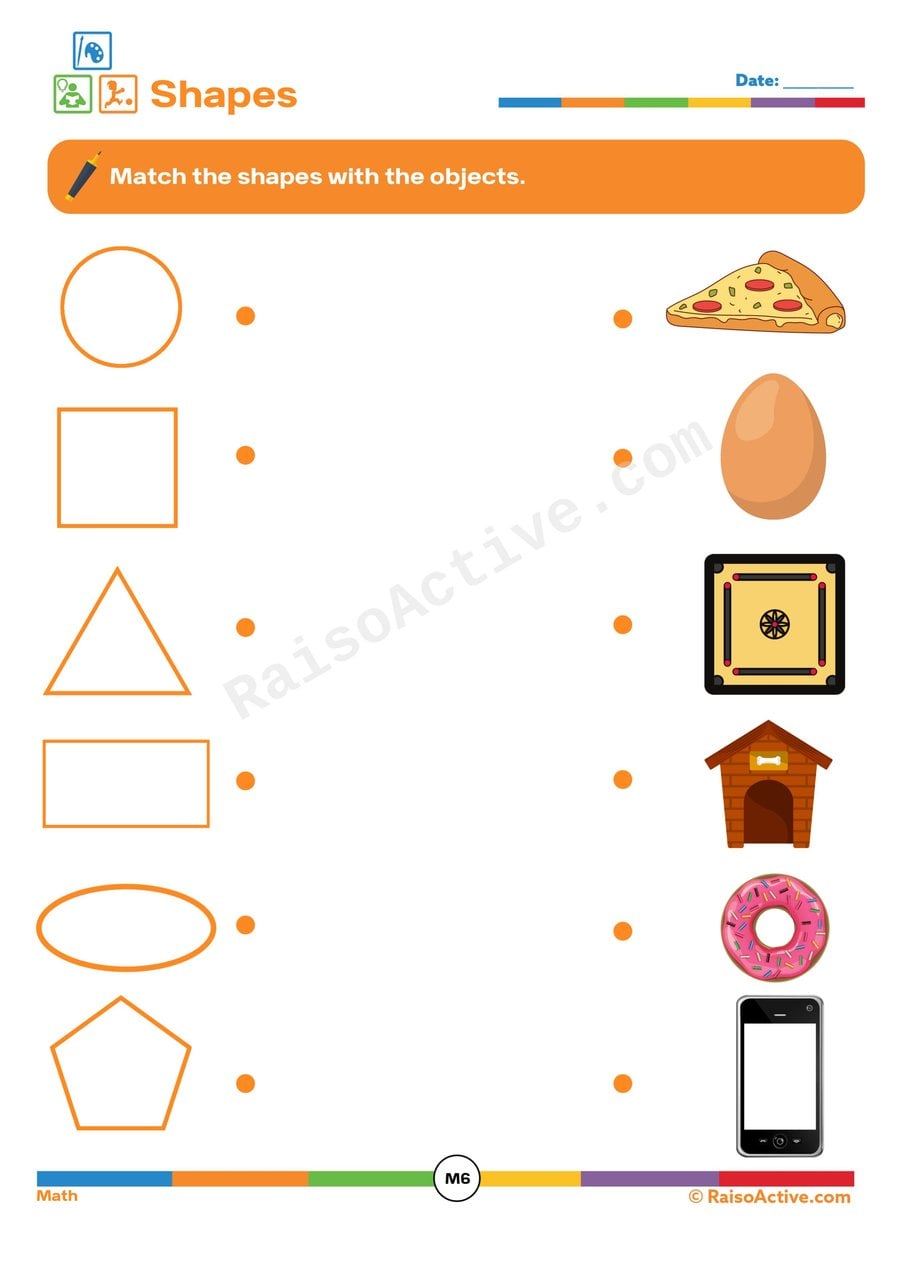
Shape Matching Worksheet for Preschoolers
Ages 3-5 · Preschool–Pre-KAges 3-5 · Nursery–ReceptionAges 3-5 · Nursery–LKGAges 3-5
This worksheet strengthens shape recognition for children ages 3-5 by asking them to connect abstract shape outlines to the real-world objects that share that same shape. Recognizing that a shape like a circle or rectangle can apply to very different objects, such as a clock and a door, helps children generalize shape concepts beyond a single example. Drawing the connecting line between matched pairs also reinforces visual tracking and pencil control.
Related worksheets

Clothing Pattern Matching Worksheet for Preschoolers
Ages 3-5 · Preschool–Pre-KAges 3-5 · Nursery–ReceptionAges 3-5 · Nursery–LKGAges 3-5
By comparing clothing items and connecting each one to its pattern match, children ages 3-5 build visual discrimination skills, learning to notice fine differences in stripes, dots, or repeated shapes. This close-looking practice supports the same attention-to-detail children will later need to tell similar-looking letters and numbers apart.

Complete the Pattern Worksheet: Ladybugs, Snails, and More!
Ages 3-5 · Preschool–Pre-KAges 3-5 · Nursery–ReceptionAges 3-5 · Nursery–LKGAges 3-5
Continuing a visual pattern like 'ladybug, snail, ladybug' asks preschoolers to notice a repeating rule and predict what comes next, an early form of the logical reasoning that later supports algebra and sequencing in reading. Because the pictures here are garden creatures, this worksheet also builds vocabulary and observation skills as children study small differences between the pieces before choosing the correct one.
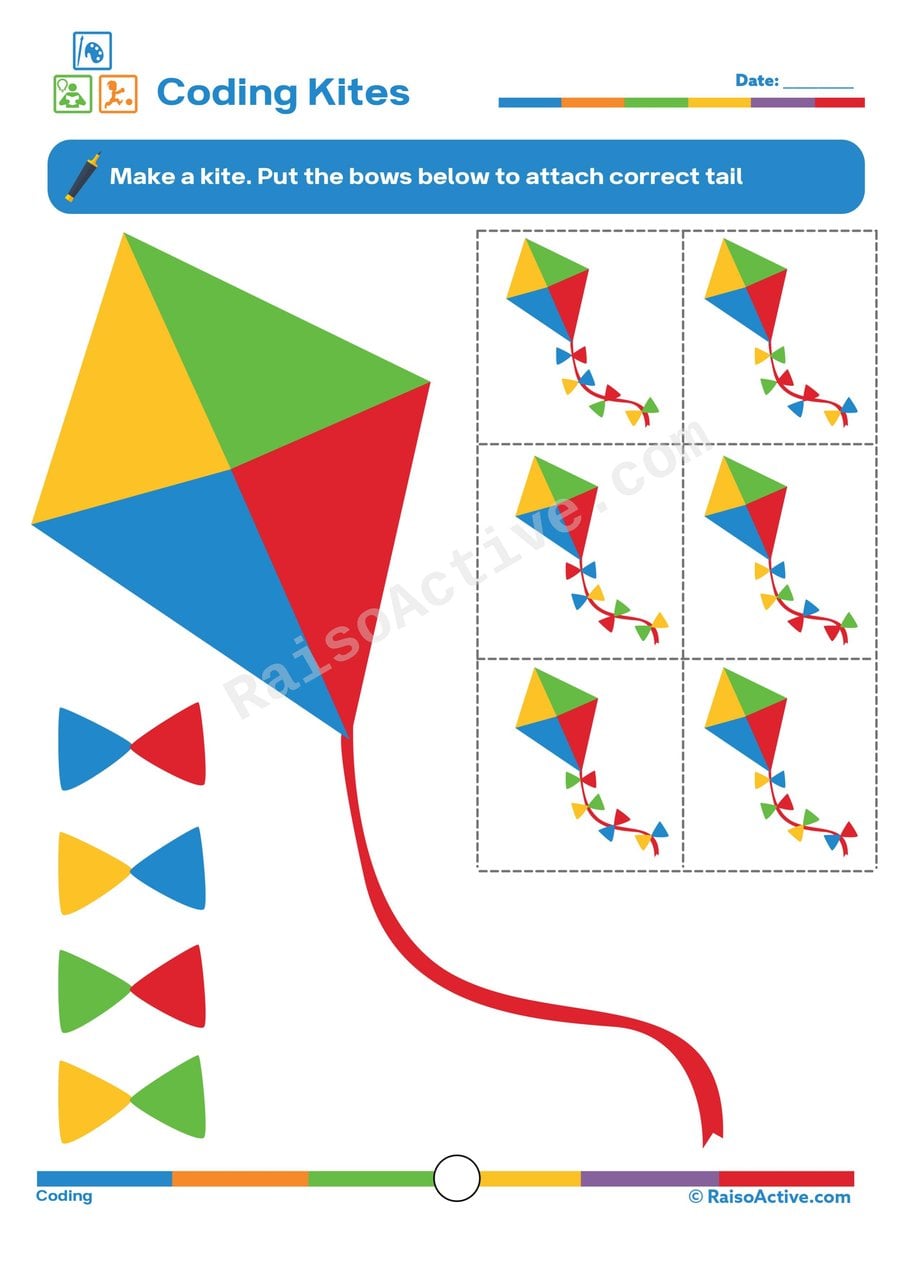
Coding Kites Worksheet: Match the Bows!
Ages 3-5 · Preschool–Pre-KAges 3-5 · Nursery–ReceptionAges 3-5 · Nursery–LKGAges 3-5
By matching each colorful bow to the kite sharing its color pattern, children ages 3-5 practice visual pattern recognition — an early form of the same logical sequencing used in beginner coding concepts. Cutting, matching, and gluing the correct bow also reinforces color-word vocabulary and precise hand-eye coordination.

Balloon Pattern Matching Worksheet for Preschoolers
Ages 3-5 · Preschool–Pre-KAges 3-5 · Nursery–ReceptionAges 3-5 · Nursery–LKGAges 3-5
This worksheet strengthens pattern recognition in children ages 3-5 by having them study a repeating sequence of colored balloons and locate the matching arrangement elsewhere on the page. Recognizing and reproducing a pattern is an early pre-algebra skill, laying groundwork for later number patterns and logical sequencing.
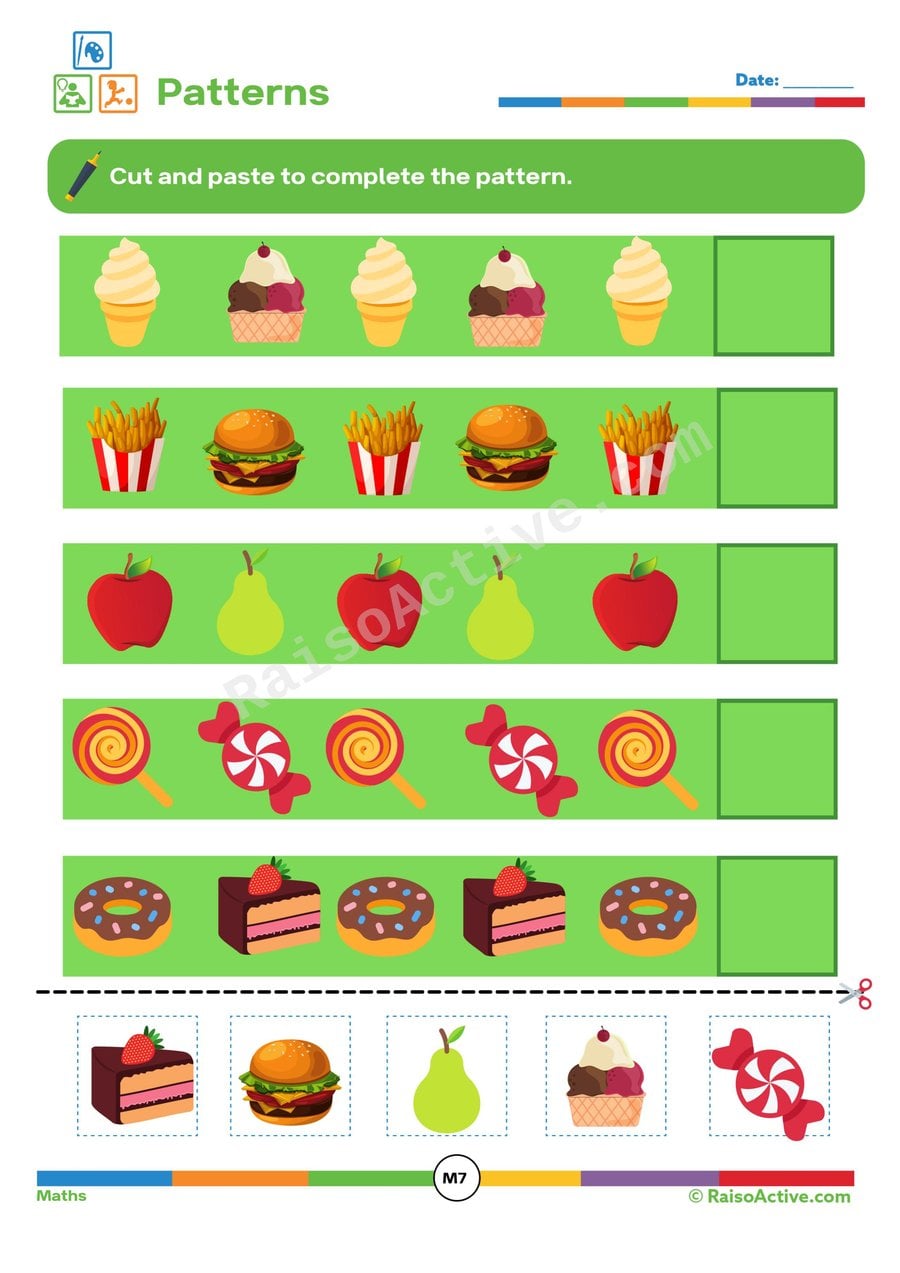
Yummy Food Patterns Worksheet for Preschoolers
Ages 3-5 · Preschool–Pre-KAges 3-5 · Nursery–ReceptionAges 3-5 · Nursery–LKGAges 3-5
This worksheet introduces pattern recognition — a core pre-math skill — by having children identify what food item comes next in a repeating sequence like apple-banana-apple-banana. Spotting and continuing patterns teaches children to predict what comes next based on a rule, an early form of the logical reasoning used later in math and science.
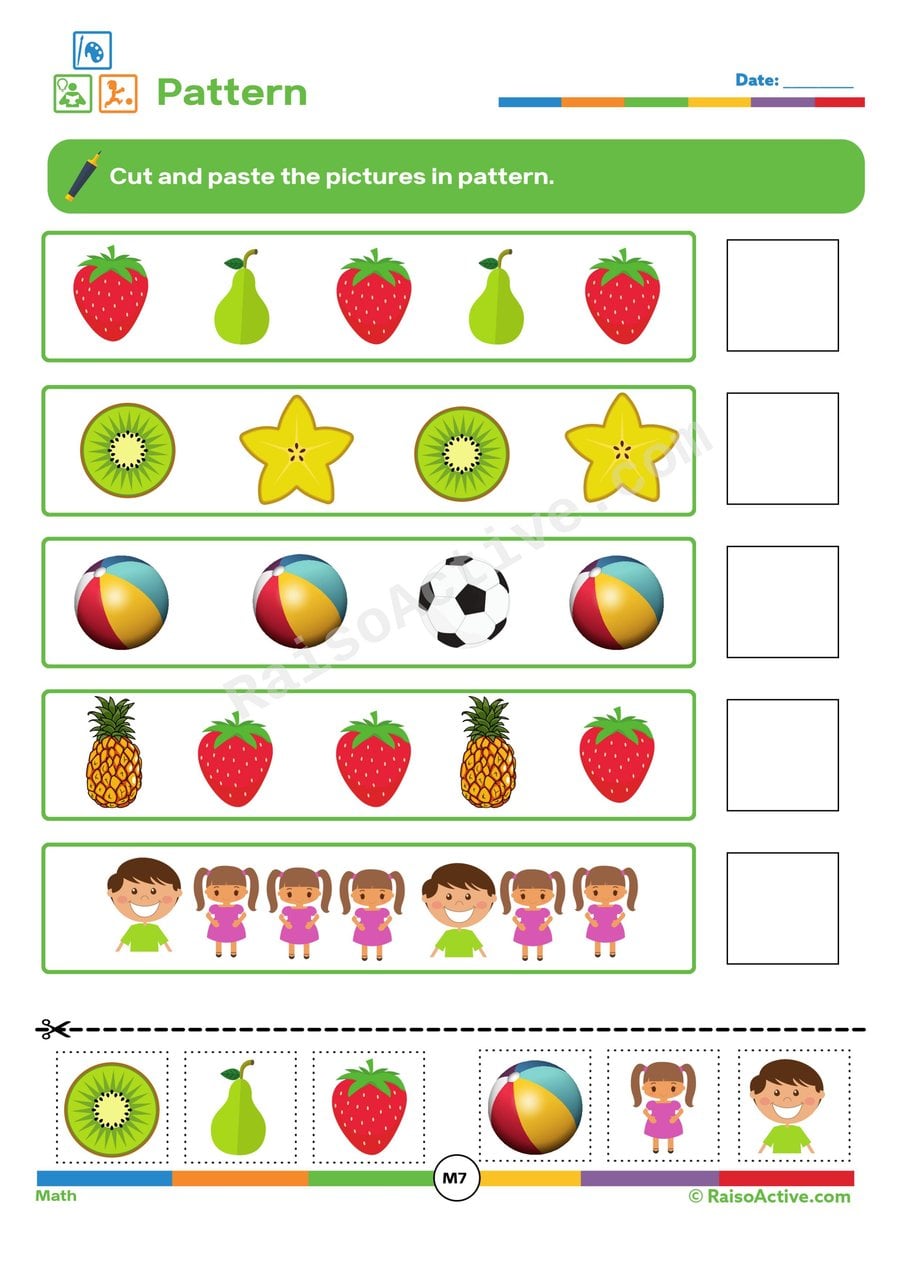
Fruit and Friends Pattern Worksheet
Ages 3-5 · Preschool–Pre-KAges 3-5 · Nursery–ReceptionAges 3-5 · Nursery–LKGAges 3-5
Identifying a repeating sequence of fruits or characters and choosing the correct picture to continue it builds pattern-recognition skills for children ages 3-5, an early form of logical reasoning that connects directly to later math concepts like skip counting.

Simple Pattern Worksheet for Preschoolers: Fill in the Sequence!
Ages 3-5 · Preschool–Pre-KAges 3-5 · Nursery–ReceptionAges 3-5 · Nursery–LKGAges 3-5
Recognizing and continuing a pattern is one of the earliest building blocks of mathematical and logical thinking for children ages 3-5, since it requires noticing a repeating rule and predicting what comes next based on that rule. This worksheet uses both shapes and numbers to build pattern awareness, asking children to fill in missing elements in a sequence and then match related number sequences together. Pattern recognition like this underpins later skills in math, reading, and even everyday problem-solving, since spotting repeating structures is a skill that transfers well beyond this one worksheet.

Pattern Power! What Comes Next? Worksheet for Preschoolers
Ages 3-5 · Preschool–Pre-KAges 3-5 · Nursery–ReceptionAges 3-5 · Nursery–LKGAges 3-5
This worksheet builds pattern recognition, an early algebraic thinking skill, as children ages 3-5 study a repeating sequence of shapes, letters, or numbers and figure out what belongs next. Spotting what repeats and predicting what comes after it trains logical reasoning and attention to detail that later transfers directly to math sequences and number patterns.
Guides for this topic

Pre-Writing Strokes in Order: From Standing Lines to Loops (With Printable Patterns)
The developmental order of pre-writing strokes, from vertical lines to loops, and why practicing them in sequence makes letter formation much easier to learn.

Age-Appropriate Problem-Solving Activities: Building Critical Thinkers from the Ground Up
Discover fun, age-appropriate problem-solving activities for children ages 1-8. Build critical thinking, logic, and reasoning skills through play-based learning.

Fostering Creativity in Structured Learning: The Perfect Balance for Young Minds
Learn how to blend creativity with structured learning for children ages 1-8. Practical strategies, activities, and printable worksheets for parents and teachers.
Reviews
Every worksheet for ages 4–6, no watermark
Members download the full library of 1,000+ worksheets and every activity pack without watermarks or daily limits. One year costs ₹999 in India or $20 elsewhere.
See membership plansOr download any worksheet free with a watermark (5 a day).