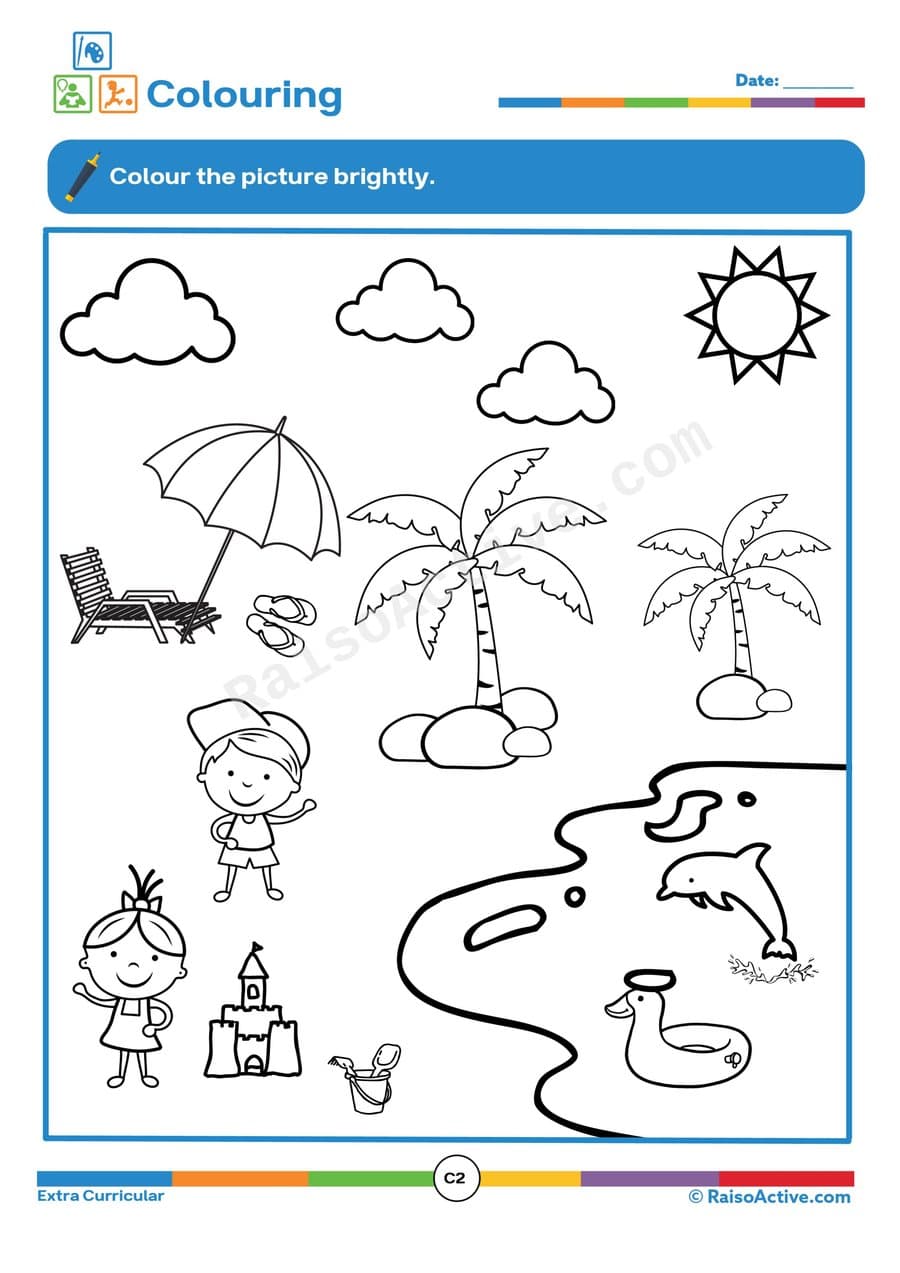
Summer Coloring Worksheet: Color the Beach Scene!
This coloring worksheet lets children ages 3-5 practice staying within lines and choosing appropriate colors while reinforcing recognition of summer-themed objects like sand, sun, and beach toys. Coloring a themed scene rather than a random picture also builds vocabulary, since children naturally name and discuss each object as they decide what color to use. This combination of fine motor practice and vocabulary reinforcement makes even a simple coloring page more purposeful than free coloring alone.
Part of the pack
Month 10: Learning & Development | Ages 4-5Curriculum
How to use this worksheet
Look at the beach scene together and name each object your child can see, like the sun, sand, waves, or beach umbrella. Encourage them to choose bright, realistic colors for each part of the picture. Have your child color the scene carefully, trying to stay within the lines as they go. When finished, talk together about what makes this scene look like summer.
Materials needed
- Crayons
- Colored Pencils
- Pencil
Extension activities
- •Draw your own beach scene from imagination, adding new objects not on the original worksheet.
- •Talk about what you like to do at the beach or during summer more generally.
- •Make a simple sensory bin with sand or rice to mimic the beach texture.
- •Create a summer-themed collage using colored paper cutouts.
- •Plan a pretend beach day at home, including sunglasses, a towel, and pretend swimming.
Tips for parents and teachers
Encourage children to stay within the lines and use a variety of colors, but don't over-correct if the coloring goes outside the lines occasionally, since control develops gradually at this age. Discuss the objects in the picture and what they represent, turning the coloring session into a conversation about summer activities and memories. If your child has experienced a real beach trip, invite them to compare the picture to what they remember.

Written by
Hemsweta Jain · Teacher Cheena
MBA and Early Childhood Educator, teaching since 2014 · Founder of RaisoActive, Mumbai
Every RaisoActive worksheet is designed and checked by the founder before publishing.
Published · Last reviewed
Related worksheets

Clothing Pattern Match Worksheet for Preschoolers
This worksheet has children ages 3-5 study repeating patterns on clothing items — stripes, polka dots, or checks — and match each item to its identical twin, building visual discrimination and early pattern-sequencing skills. Distinguishing between similar-looking patterns also sharpens attention to detail, a skill that later supports letter and word recognition.

Trace the Numbers 1-9 Worksheet for Preschoolers
Tracing the numerals 1 through 9 gives children ages 3-5 repeated, guided practice with the specific pencil strokes each number requires, building the fine motor control and muscle memory needed for independent number writing. Because tracing follows a fixed, correct path, it also reinforces accurate numeral recognition, helping children tell visually similar digits apart.
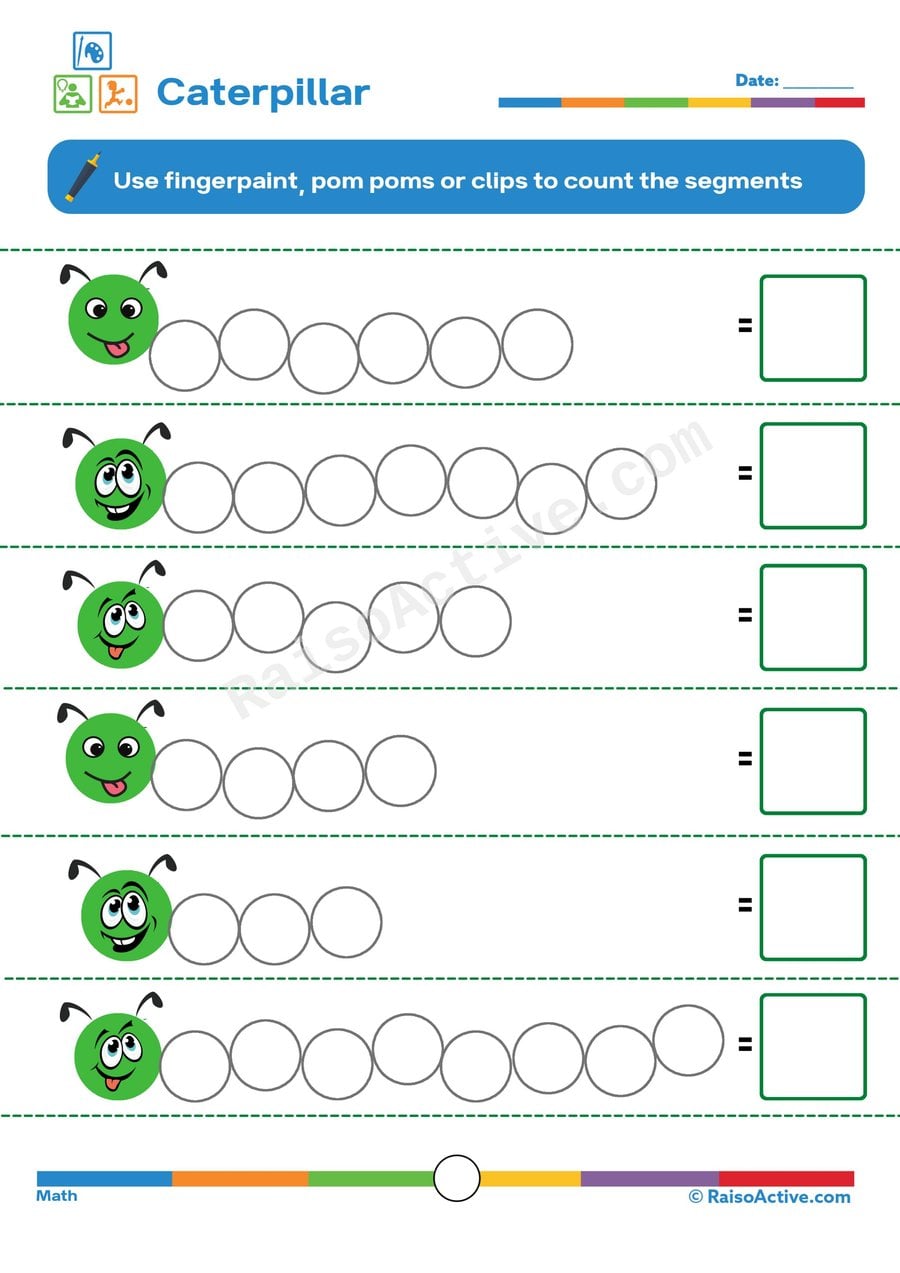
Caterpillar Counting Worksheet for Preschoolers
Counting the segments of each caterpillar teaches children ages 3-5 one-to-one correspondence — touching or marking each segment exactly once while saying a number — which is the core skill underlying accurate counting. Writing the final total in a box also connects the physical act of counting to its written numeral, reinforcing early number-writing practice.
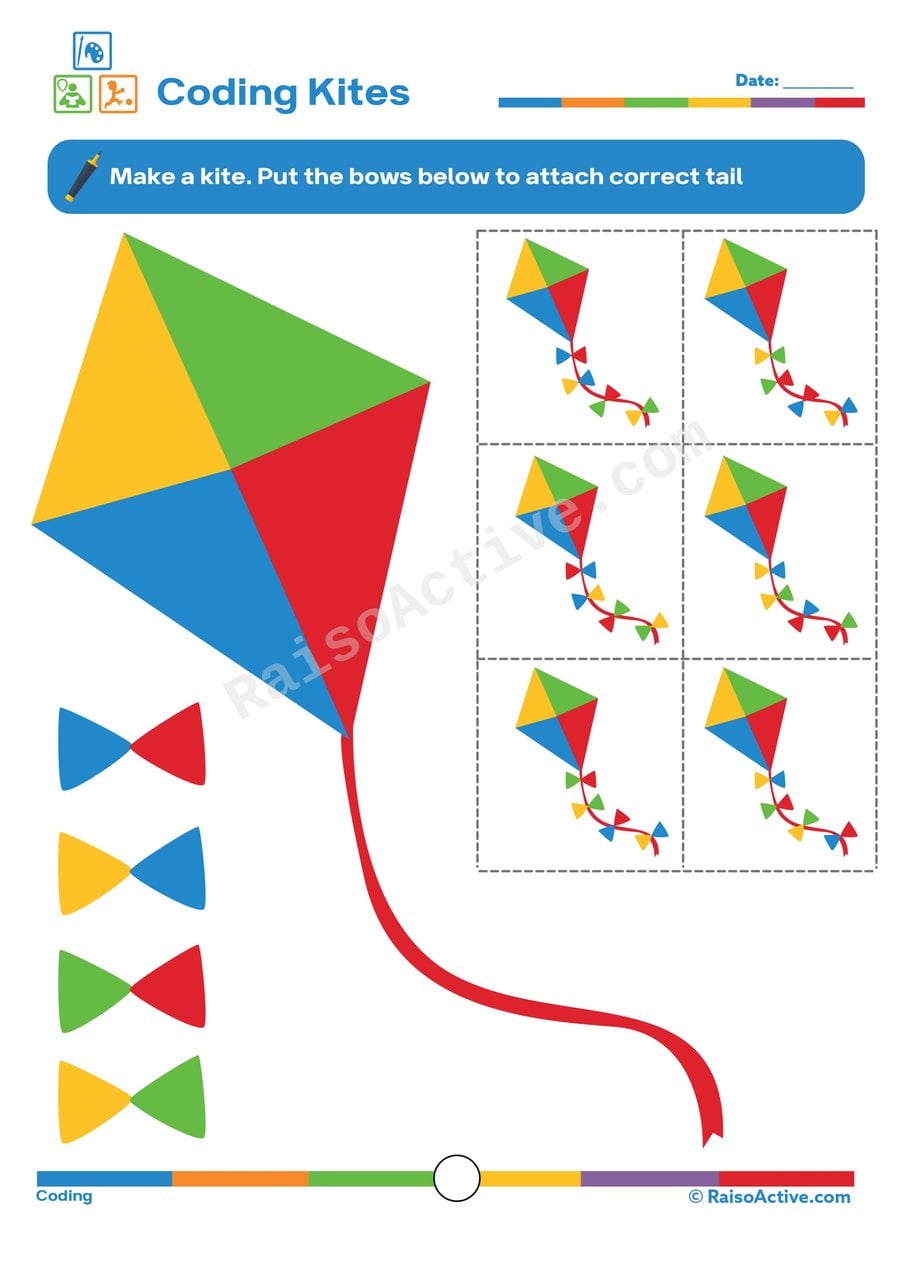
Coding Kites Worksheet: Match the Bows!
This activity sharpens visual observation in children ages 3-5 as they compare color sequences on each kite to a set of loose bows and find the exact match. Careful, systematic comparison — checking each color in order rather than glancing quickly — builds an attention-to-detail habit that transfers directly to early reading and number work.
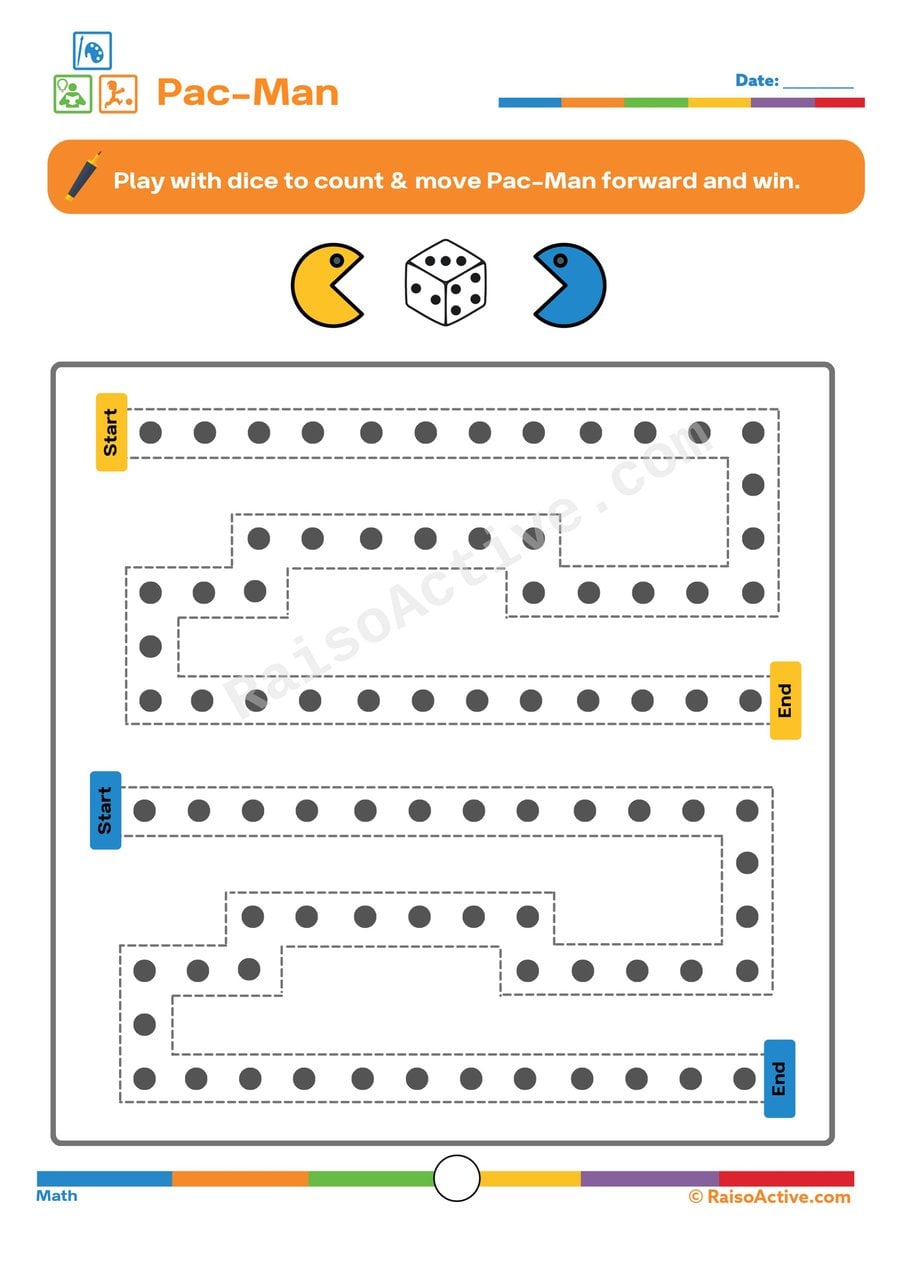
Pac-Man Maze Worksheet: Count and Move!
This dice-counting maze gives children ages 3-5 repeated practice matching a rolled number to the correct number of moves, reinforcing accurate counting under a bit of playful pressure. Tracking Pac-Man's current position after each roll also builds short-term spatial memory, since children must remember where they left off before moving again.

Stick Man Emotions Worksheet: Happy, Sad, Angry, and Surprised!
Children ages 4-6 practice reading facial expressions on this worksheet, matching stick-figure faces to their correct emotion labels by noticing details like mouth shape and eyebrow position. This strengthens emotional literacy — the ability to name and recognize feelings in others — which supports empathy and smoother social interactions as children move into more group play and classroom settings.

Lock and Key Matching Worksheet for Preschoolers
Matching each key to the lock sharing the same letter helps children ages 3-5 practice letter recognition in a playful, puzzle-like context rather than rote drilling. Because each key must be checked against several similar-looking locks before finding the right match, this worksheet also builds visual scanning and careful comparison skills that support problem-solving.
Dad's Beard: A Fun Shaving Activity for Kids!
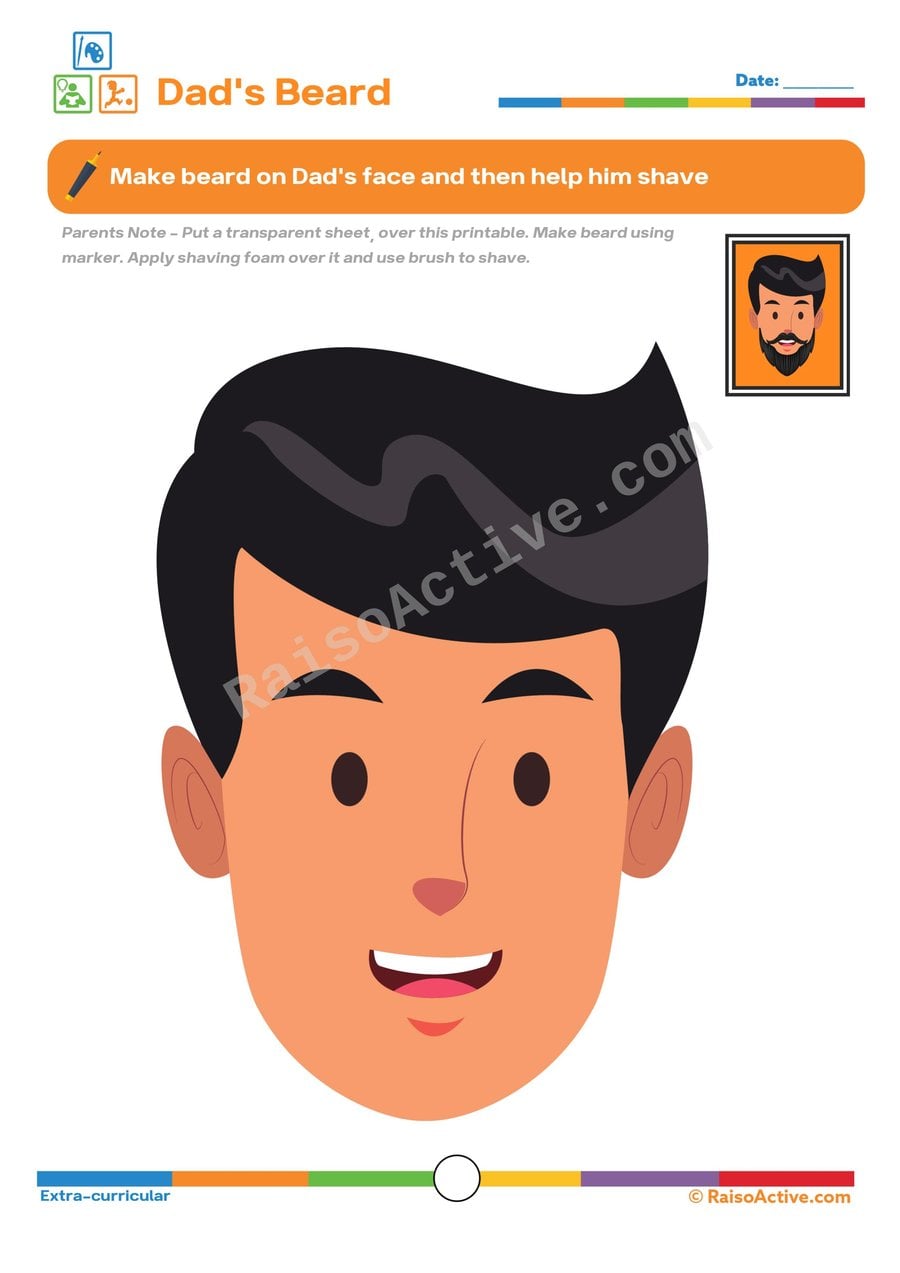
This playful pretend-shaving activity builds fine motor control and bilateral coordination in children ages 3-5, as they draw a beard with a marker and then 'shave' it away using foam and a brush in careful, controlled strokes. It also introduces a simple science idea — that shaving foam can be applied and removed in layers — while giving children a hands-on, sensory way to imitate an everyday grown-up routine.
Guides for this topic
Best Worksheets for 3-Year-Olds: What Works and What to Avoid
What works on worksheets for 3-year-olds: short sessions, crayons, tracing lines, matching, cutting, a free weekly plan, and signs one is too advanced.
Fostering Creativity in Structured Learning: The Perfect Balance for Young Minds
Learn how to blend creativity with structured learning for children ages 1-8. Practical strategies, activities, and printable worksheets for parents and teachers.
Discovering Wonder: Nature-Based Learning Activities That Captivate Young Children
Explore nature-based learning activities for children ages 2–7 — leaf rubbings, bug hunts, nature journals, and seasonal Indian outdoor ideas that spark wonder.
Reviews
Every worksheet for ages 3–5, no watermark
Members download the full library of 1,000+ worksheets and every activity pack without watermarks or daily limits. One year costs ₹1,000 in India or $20 elsewhere.
See membership plansOr download any worksheet free with a watermark (5 a day).