Free printable worksheets · United Kingdom
Reception Worksheets (Ages 4–5)
Reception worksheets are practice sheets for children aged 4 to 5 in the first year of primary school in England, the final year of the EYFS. They cover Phase 2 phonics sounds and blending, correct letter formation, counting and writing numbers to 10 and then 20, subitising small groups, comparing quantities, and naming 2D shapes.
Reception is the year phonics starts in earnest. Within the first few weeks most schools begin Phase 2 of Letters and Sounds or an equivalent validated scheme, teaching around four new sounds a week starting with s, a, t, p, i, n, and children begin blending them into words such as sat, pin and tap. In maths the emphasis is depth before breadth: numbers to 10 are explored through subitising, composing and comparing before counting extends to 20. Children also complete the Reception Baseline Assessment in their first six weeks. It is a short, one-to-one activity used to measure school-level progress, not a test to prepare for. The sheets on this page follow the Phase 2 teaching order and the number progression that Reception classes use.
1952+ worksheets · free PDF download · print on A4 or Letter
Reception Worksheets to print
Browse all worksheets for ages 4–5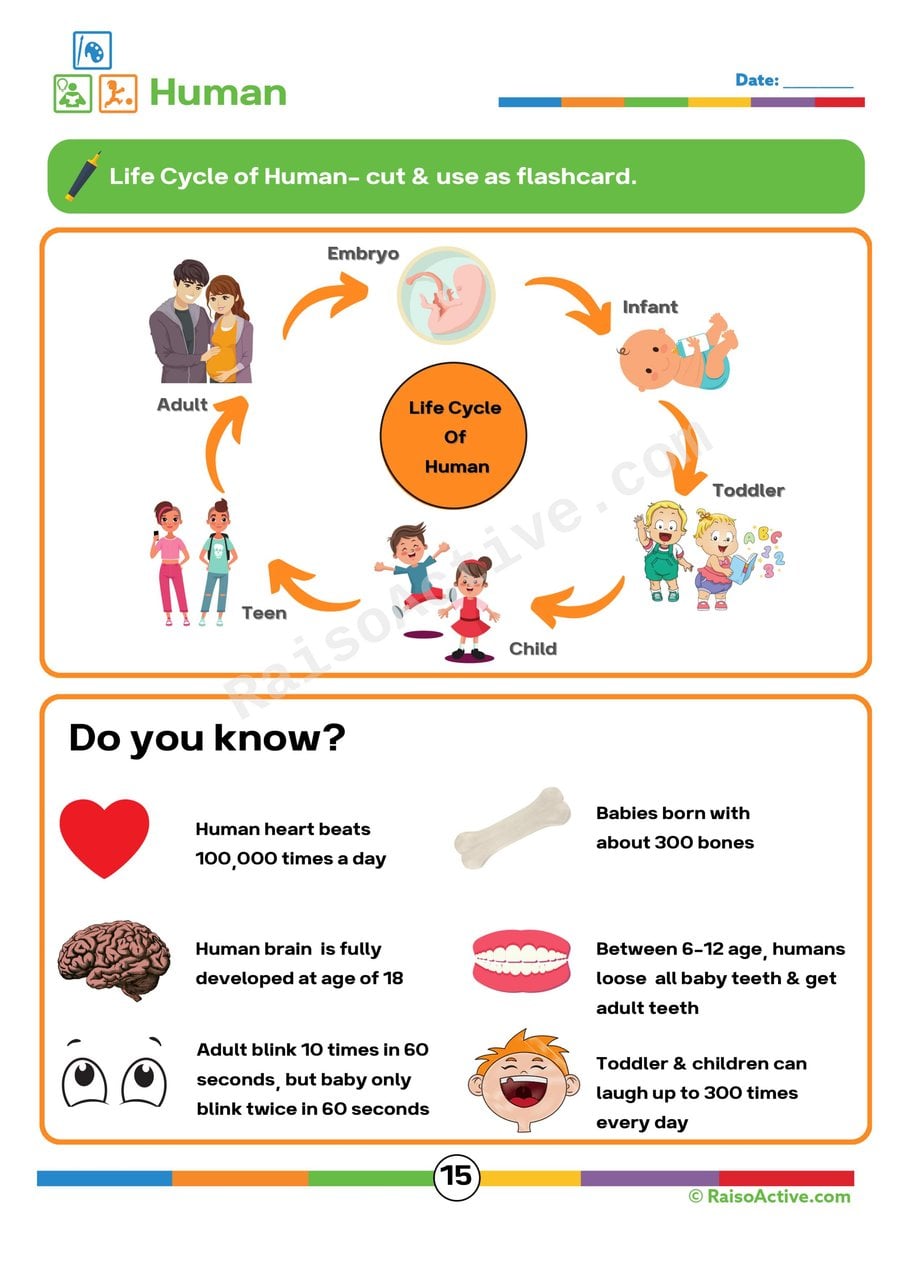
Human Life Cycle Flashcards for Kids
Children ages 3-6 explore the stages of human development — from embryo to infant, child, and adult — using flashcards that build both sequencing skills and personal understanding of growth. Because this topic relates directly to the child's own life, it offers a uniquely relatable entry point into the broader science concept of life cycles.

Counting Fun: Number Names Worksheet for Preschoolers!
This number-names worksheet pushes children from simply counting objects to connecting a quantity with its written word, a step that bridges early numeracy with beginning literacy. Ages four and five are ready to start recognizing that 'three' is both a group of three dots and a specific string of letters, which strengthens both number sense and sight-word recognition.

Rhyming Words Worksheet: Color and Circle the Rhymes!
This worksheet builds phonological awareness in children ages 4-5 by having them color word bubbles that rhyme with 'sad' and then circle the word in each box that rhymes with its picture. Practicing rhyme recognition across two different formats — coloring a themed rhyme set and then identifying new rhymes independently — deepens a skill that's strongly linked to later reading and spelling success.

Alphabet Adventures: 'A' and 'B' Picture Sorting Worksheet
This worksheet strengthens phonemic awareness in children ages 4-5 by having them listen for and identify pictures whose names begin with the letters 'A' or 'B,' then sort them accordingly. Focusing on just two letters at a time, rather than the whole alphabet, gives children a manageable, focused way to practice isolating beginning sounds before tackling more letters.

Earlier and Later Time Worksheet: Telling Time Practice
Comparing clock times to determine which is earlier or later is an early step toward telling time for children ages 4-5, requiring them to read a clock face and reason about the order of events across a day. This worksheet builds that skill in two directions: first identifying a time earlier than a given reference point, then identifying a time later than a different clock shown. Practicing both directions helps children understand that 'earlier' and 'later' are relative concepts depending on what they're being compared to, not fixed labels attached to specific times.

Comparing Numbers: Apples, Soccer Balls, and More! - Math Worksheet
This worksheet teaches children to compare two quantities using the symbols greater than (>), less than (<), and equal to (=) by counting groups of everyday objects like apples and soccer balls. For four- and five-year-olds, learning to read and use comparison symbols is an early step toward understanding mathematical relationships beyond simple counting.
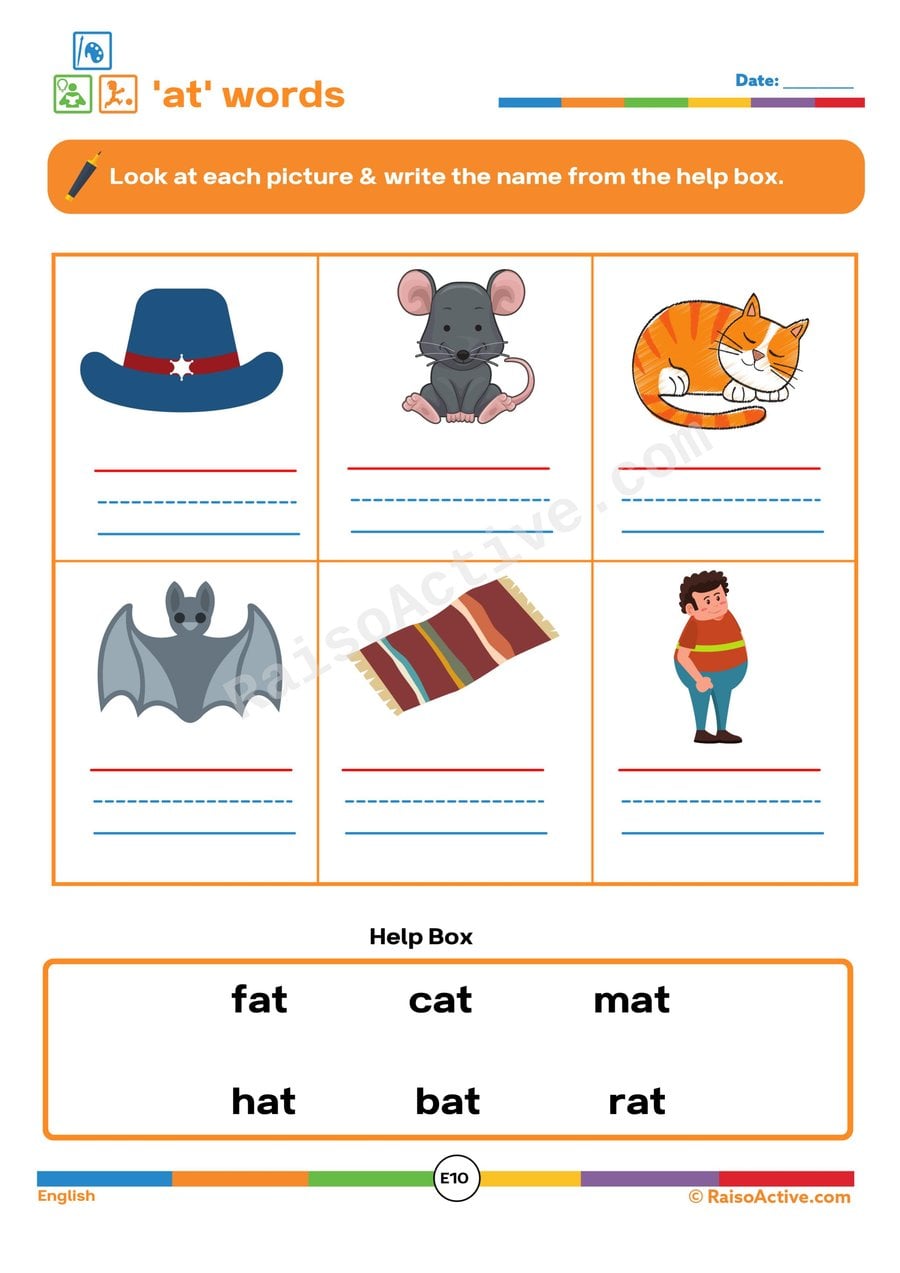
Fun 'at' Word Worksheet for Preschoolers
The 'at' word family (cat, hat, bat) is often one of the very first CVC patterns children ages 4-5 encounter, and this worksheet asks them to go a step further than simple reading by identifying and writing the correct word to match each picture themselves. Choosing the right word from a word bank and writing it out, rather than just reading a word that's already printed, requires children to actively recall spelling rather than passively recognize it. This active recall step is an important bridge between reading CVC words and eventually spelling them independently from memory.

Long Vowel U Sound Cut and Paste Worksheet for Preschoolers
This worksheet has children ages 4-5 cut out pictures and paste each one into the box matching its long 'u' sound within a word. Combining sound identification with a hands-on cut-and-paste format keeps this phonics practice tactile and engaging, while the fine motor cutting work builds skills that support later handwriting.

Before and After Numbers Worksheet: Counting Bananas!
Figuring out which number comes immediately before and after a given number strengthens children ages 4-5's understanding of number order and the counting sequence, a concept that's more abstract than simply counting objects one by one. Coloring a matching number of bananas for each answer adds a concrete, visual check, letting children confirm their number sense by physically representing the quantity. This worksheet bridges rote number-sequence memorization with real quantity understanding.

Skip Counting by 10 Worksheet: Fill in the Blanks!
This worksheet builds skip counting fluency by 10s, a foundational skill that helps children recognize number patterns and prepares them for place value concepts and faster counting strategies later on. For ages 4-5, seeing numbers grouped in tens on signs reinforces both sequencing and the visual structure of our base-ten number system.

Frame the Sentence: Sight Word Fun Worksheet for Preschoolers
Constructing a full sentence from individual sight words is a meaningful step up from recognizing words in isolation, asking children ages 4-5 to understand how words function together to make meaning. This worksheet has children read a small bank of sight words and place them correctly into a sentence frame, which builds both reading comprehension and early grammar sense — understanding that word order matters. Because the words are provided rather than freely written, children can focus entirely on sentence structure without the added challenge of spelling from scratch.
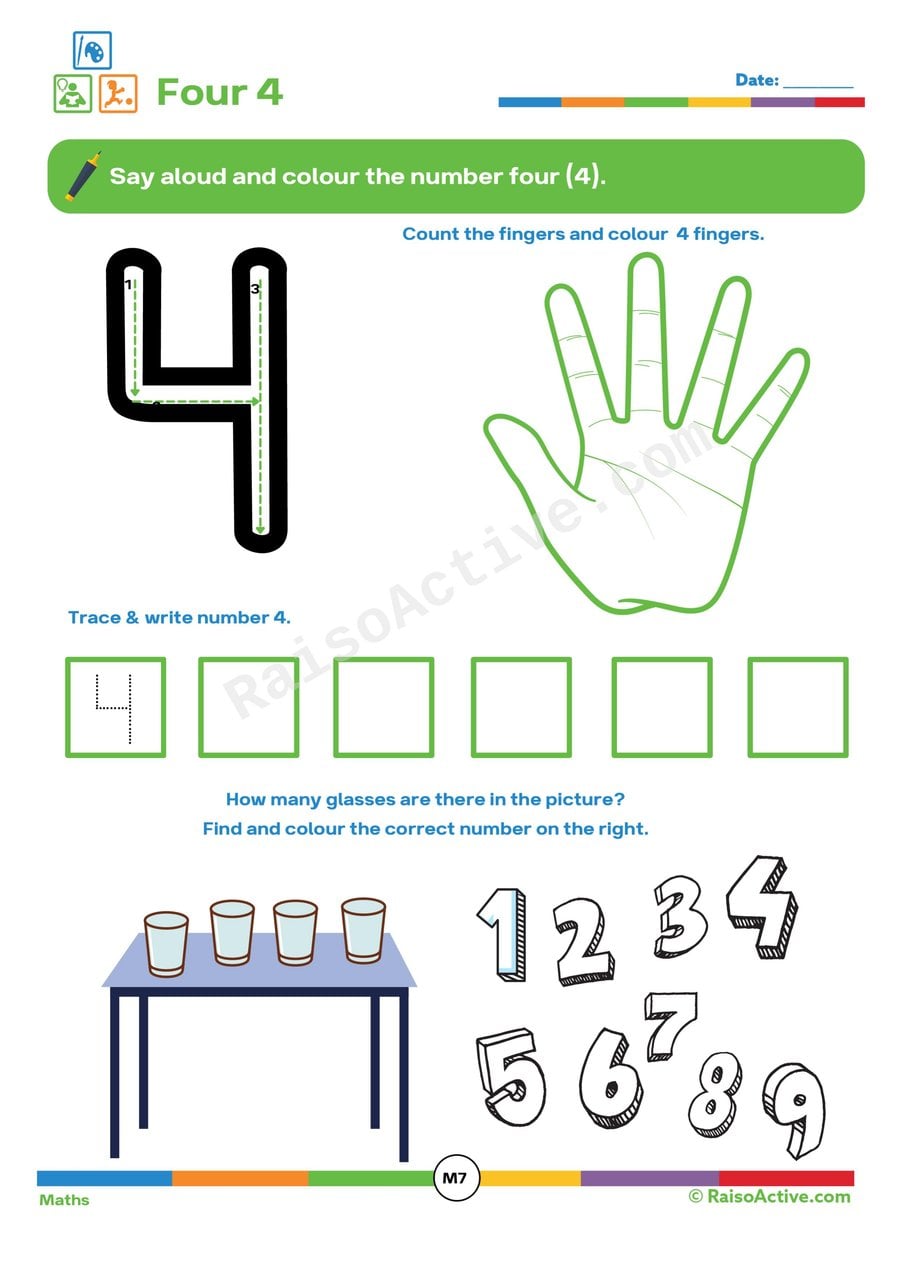
Number Four Worksheet: Trace, Count, and Color!
This worksheet helps children build the pencil control to write the number 4 correctly while linking that written numeral to the quantity it represents through counting fingers and objects on the page. For four- and five-year-olds, combining tracing with hands-on counting — like counting fingers on a hand or glasses in a row — reinforces that the number 4 always represents the same fixed amount, no matter what's being counted.

Before, After, and Between Numbers Worksheet for Preschoolers
This worksheet extends basic number sequencing for children ages 4-5 by adding the concept of 'between,' which requires holding two numbers in mind at once and figuring out what falls in the middle — a more demanding mental task than simple before-and-after questions. Along with number fill-ins, the worksheet includes a picture identification task and a simple drawing exercise, giving children practice applying ordinal thinking ('comes after') beyond pure numerals. Together these tasks build the flexible number sense children need before tackling addition and subtraction.

Learn the Sight Word 'Are' Worksheet for Preschoolers
Children ages 4-5 build instant recognition of the high-frequency sight word 'are', a word that doesn't sound out phonetically and must be memorized by sight to support reading fluency. This multi-step worksheet reinforces the word through five different modes — coloring, searching a grid, tracing, writing, and a watercolor technique — giving repeated exposure that strengthens memory. Practicing 'are' in context through fill-in-the-blank sentences also helps children see how the word functions within real sentences.

Shapes Worksheet: Cut and Paste, Complete the Sequence!
This worksheet combines shape identification with pattern completion, asking children ages 4-5 to cut out and paste shapes into matching boxes and then draw the missing shape needed to finish a simple sequence. Together these tasks build geometric vocabulary, precise cutting and gluing control, and the logical reasoning needed to predict what comes next in a repeating pattern.

Lowercase Letter Tracing Worksheet: Practice Writing the Alphabet
This worksheet moves beyond a single letter to practice a full set of lowercase letters in sequence, asking 4-5 year olds to apply consistent size, spacing, and stroke habits across multiple different shapes rather than mastering just one. This kind of broader review is an important checkpoint skill at the older end of preschool, closer to the demands of actual kindergarten handwriting practice.

Lowercase Letter Matching Worksheet for Preschoolers
This worksheet trains children ages 4-5 to connect an uppercase letter to its lowercase counterpart, a skill that's genuinely tricky since many lowercase letters look quite different from their capital form (like G and g, or Q and q). Matching cases correctly is essential groundwork for reading real books and sentences, which are written mostly in lowercase.

Matching Uppercase and Lowercase Letters: q-z Worksheet
This worksheet builds letter recognition by having children match uppercase letters from Q to Z with their corresponding lowercase forms, a pairing that can be tricky since several lowercase letters in this range, like 'q' and 'g,' don't closely resemble their capital counterparts. For four- and five-year-olds, mastering the second half of the alphabet's upper-lowercase pairs completes the foundational letter knowledge needed before reading fluently.

Summer Addition Worksheet for Preschoolers: Counting and Adding Fun!
Adding two small groups of summer-themed pictures — ice creams, beach balls, sunglasses — gives a 4-5 year old a concrete, countable version of addition before they ever see the plus sign written abstractly. Counting each group separately and then counting the combined total builds the core idea that addition means 'put together and count again', which underlies every later addition strategy.

CCVC Word Matching Worksheet: Read, Color, and Match!
This worksheet introduces children ages 4-5 to CCVC words — words that start with two consonants blended together before a vowel, like 'stop' or 'frog' — and asks them to read, color, and match each one to its picture. Because blending two consonants at the start of a word is harder than single-consonant CVC words, this practice stretches decoding skills just beyond the basics while still supporting success through coloring and picture cues.

Before and After Numbers Worksheet for Preschoolers
This worksheet builds number-sequencing skills for children ages 4-5 by asking them to identify which number comes immediately before and after a given number, along with counting and matching exercises. Understanding 'before' and 'after' requires children to hold a mental number line in their head and reason about relative position, a more abstract skill than simple counting or number recognition. This kind of sequencing practice is foundational for later addition and subtraction, where children need to move fluently forward and backward through numbers.
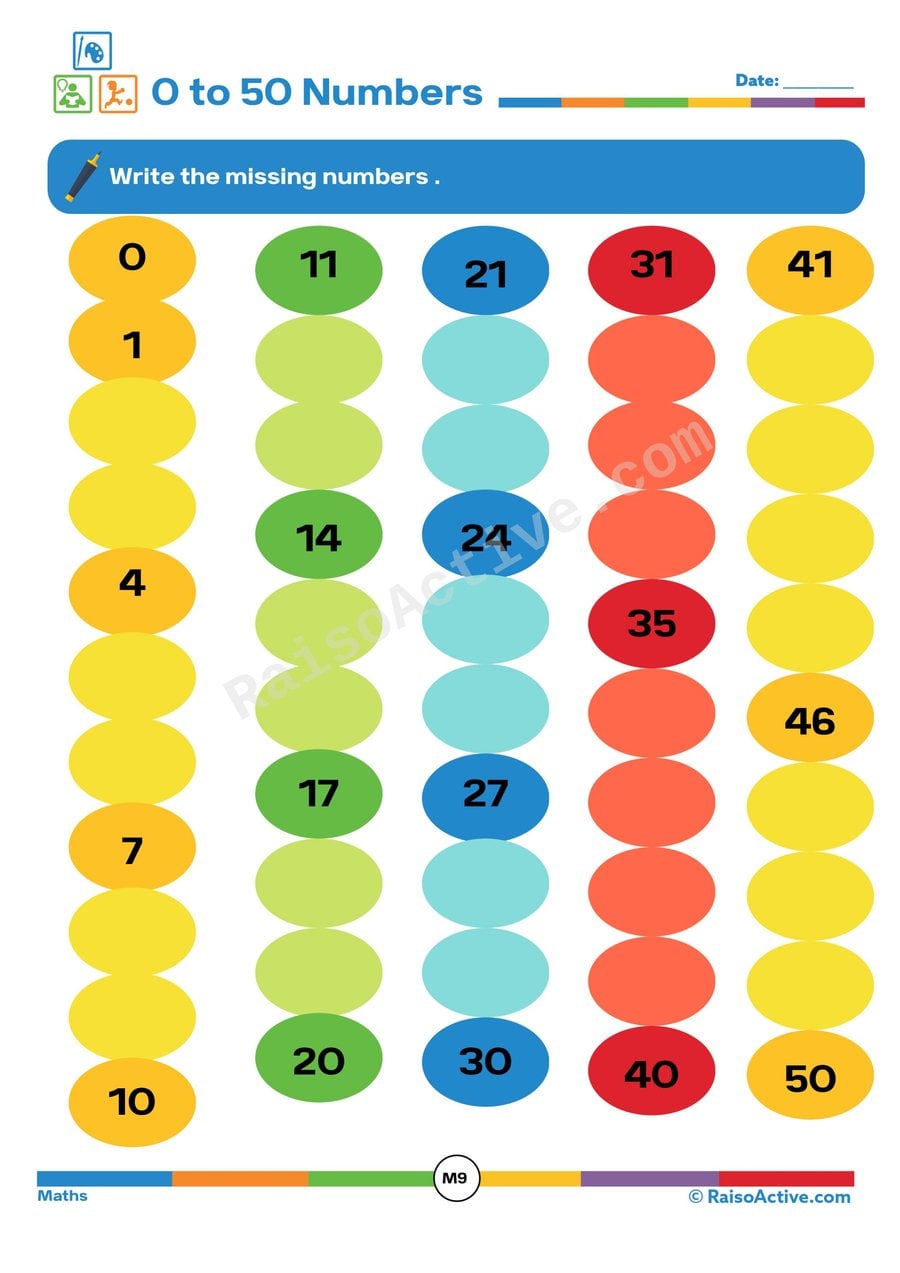
Missing Numbers Worksheet: 0 to 50
Filling in missing numbers across the 0-50 range asks children ages 4-5 to hold a much longer counting sequence in mind than typical 1-20 worksheets, strengthening both number recognition and the pattern sense needed to predict what comes next at any point in the range. This kind of extended practice also introduces children to the way numbers group into decades, like the 20s or 30s, which becomes important for later place-value understanding. Successfully completing a long sequence like this builds real counting stamina and confidence.
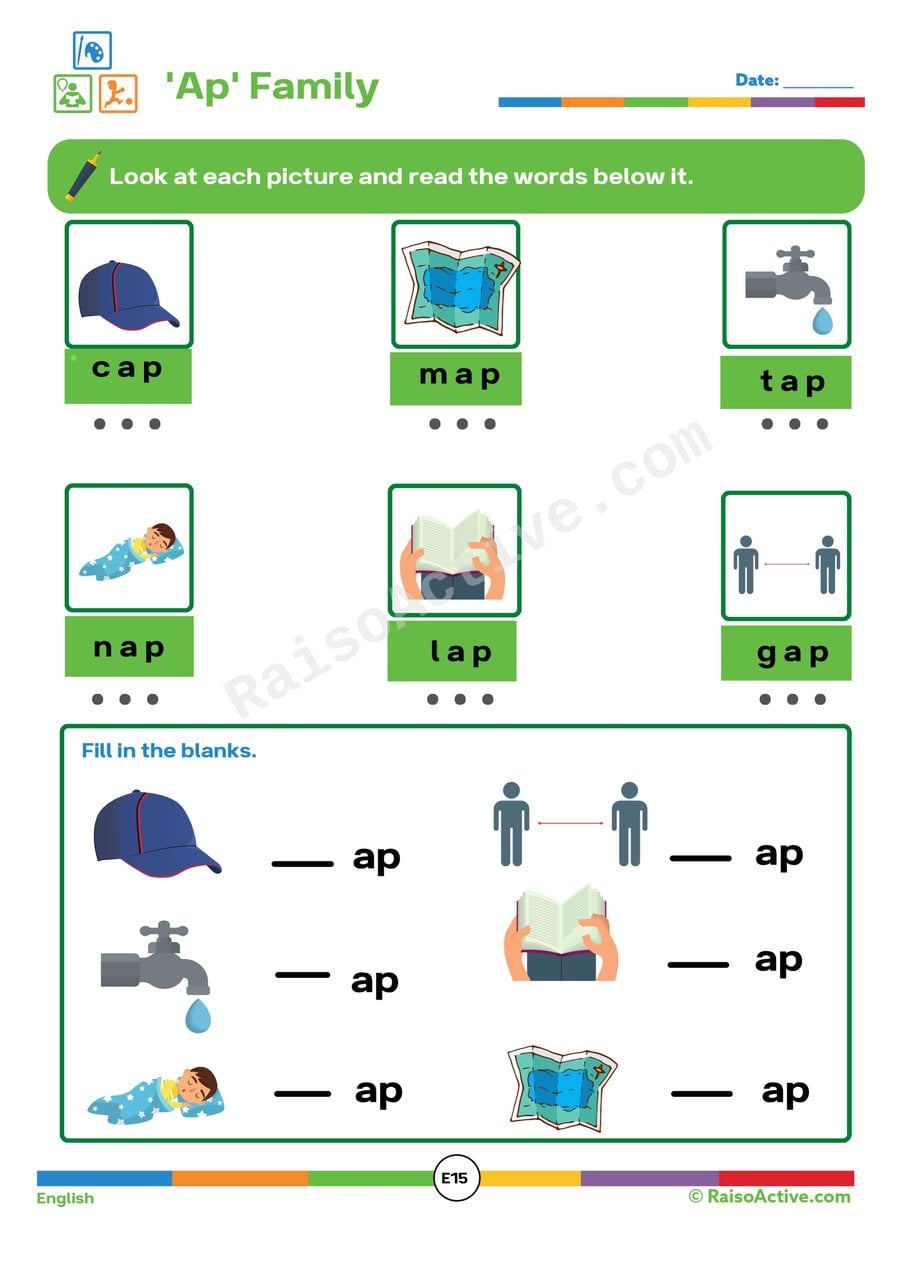
Ap Family Worksheet: Read and Fill in the Blanks!
Continuing the word-family approach, this worksheet helps children ages 4-5 read and complete 'ap' words such as cap, map, and tap by filling in a missing letter, reinforcing the pattern that a shared ending sound can appear across many different words. This kind of practice builds decoding speed and phonics confidence ahead of more independent reading.

Superhero Grouping in Tens: A Fun Counting Worksheet for Preschoolers!
Using a superhero theme, this worksheet helps children ages 4-5 practice counting objects accurately and matching a counted group to its written number, an early step toward understanding place value through grouping in tens. Circling objects according to a given number afterward reinforces the connection between a numeral and the actual quantity it represents, rather than just reciting numbers in order.
What your child learns in Reception
By the end of Reception children are assessed against the Early Learning Goals. In Literacy that means saying a sound for each letter of the alphabet and at least ten digraphs, reading words by blending, and writing simple phrases that others can read. In Mathematics it means a deep understanding of number to 10, including number bonds to 5 and some to 10, subitising to 5, and counting beyond 20.
- Phonics: Phase 2 sounds in order (s a t p i n m d g o c k ck e u r h b f ff l ll ss), then Phase 3 digraphs and trigraphs
- Blending and segmenting CVC words; tricky words such as the, to, I, no, go
- Letter formation with correct starting points, in print or pre-cursive as the school prefers
- Number: subitising to 5, counting objects to 10 and then 20, one more and one less, comparing groups
- Shape, space and measures: circles, squares, triangles and rectangles; longer and shorter, heavier and lighter
How to use Reception worksheets at home
Match the sheet to the sound or number your child is learning that week; most schools send home a phonics letter or list. Say the sound aloud together before tracing it, and blend the word before writing it. In maths, put real objects next to the sheet so counting is physical first and written second. One sheet, ten minutes, three or four times a week is enough alongside the reading book from school.
The Reception Baseline Assessment
Every child starting Reception in an English state school completes the Reception Baseline Assessment within six weeks of arrival. It is a short set of practical tasks in early maths and language, done one to one with a teacher, and its only purpose is to give a starting point for measuring the school's progress by the end of Key Stage 2. There is no pass mark, no score is reported to parents, and no preparation is needed.
Frequently asked questions
What phonics sounds are taught in Reception?
Reception covers Phase 2 and Phase 3 of Letters and Sounds or an equivalent validated scheme. Phase 2 introduces the first sounds in the order s, a, t, p, i, n, m, d, g, o, c, k, ck, e, u, r, h, b, f, ff, l, ll, ss. Phase 3 adds the remaining single letters and the consonant and vowel digraphs and trigraphs such as ch, sh, th, ng, ai, ee, igh, oa and oo.
What should a child know by the end of Reception?
By the end of Reception the Early Learning Goals expect a child to read simple words and sentences by blending sounds, write recognisable letters and short phrases, know number bonds to 5 and some to 10 without counting, subitise up to 5 objects, count past 20 and compare two quantities. Children are also expected to hold a pencil with a tripod grip and manage dressing and toileting independently.
How much homework should a Reception child have?
Very little. Most Reception classes send home a reading book and a list of the week's sounds, and that is enough. A single worksheet of about ten minutes, done two or three times a week to practise those sounds or that week's numbers, is plenty. Anything that turns into a battle is not worth doing at this age.
Is it normal for a Reception child to write letters backwards?
Yes. Reversing b and d, p and q, or writing whole words in mirror image is common until about age seven and is not by itself a sign of dyslexia. Consistent modelling of where each letter starts, tracing sheets with a marked starting dot, and plenty of large-scale movement all help. Mention it to the class teacher if reversals are still frequent in Year 2.
Are Reception worksheets free to print?
Yes. Create a free account and download any worksheet as a watermarked PDF, up to five a day. Sheets are laid out for A4 paper. A yearly subscription removes the watermark and the daily limit across the whole library, including the printable activity-book packs.

Written by
Hemsweta Jain · Teacher Cheena
MBA and Early Childhood Educator, teaching since 2014 · Founder of RaisoActive, Mumbai
Written and reviewed by Hemsweta Jain (Teacher Cheena), who designs every RaisoActive worksheet.
Last reviewed
Printable packs for ages 4–5
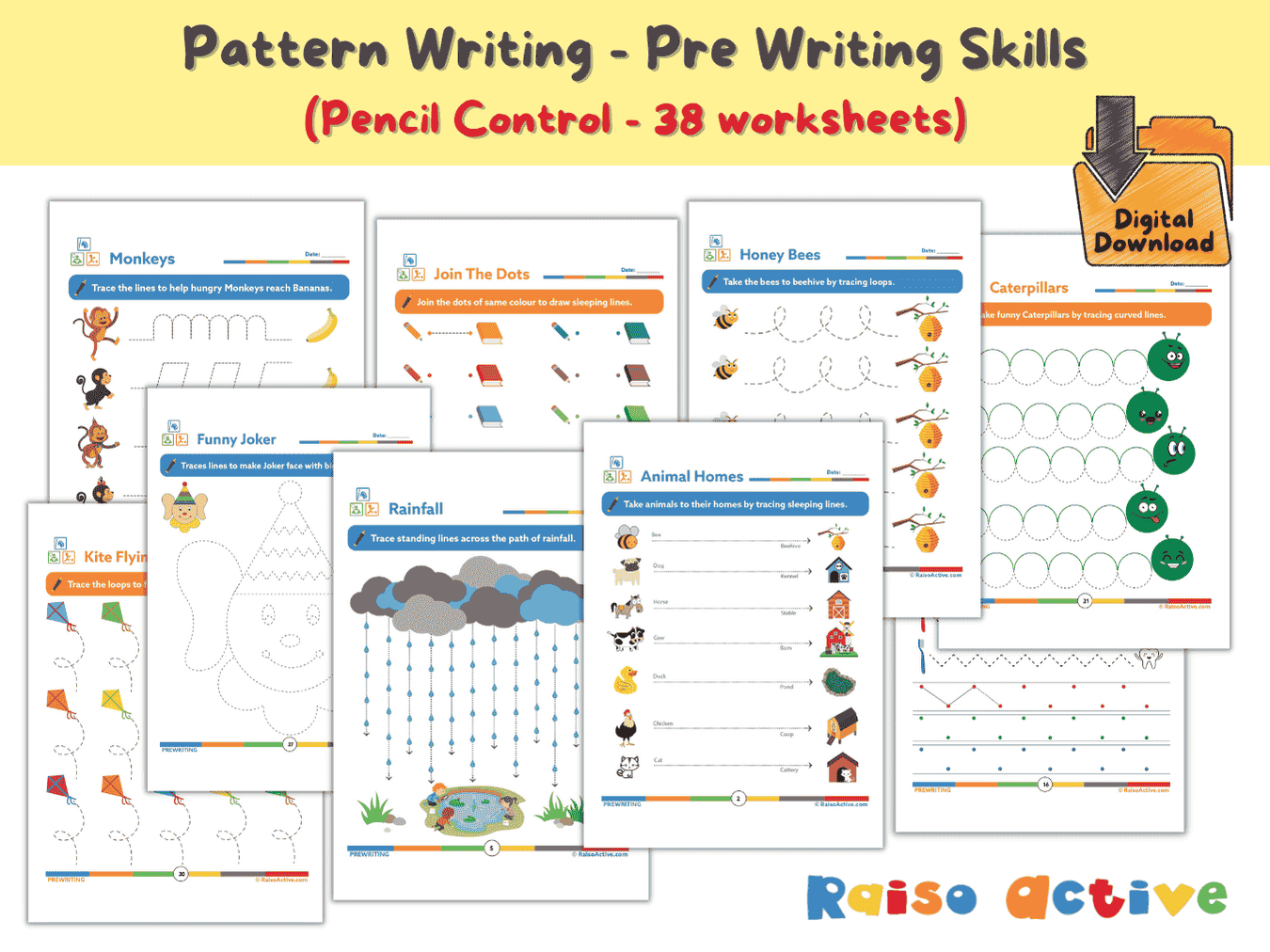
Pattern Writing Pre-writing Skills Activity Book for 3-4 Year Olds
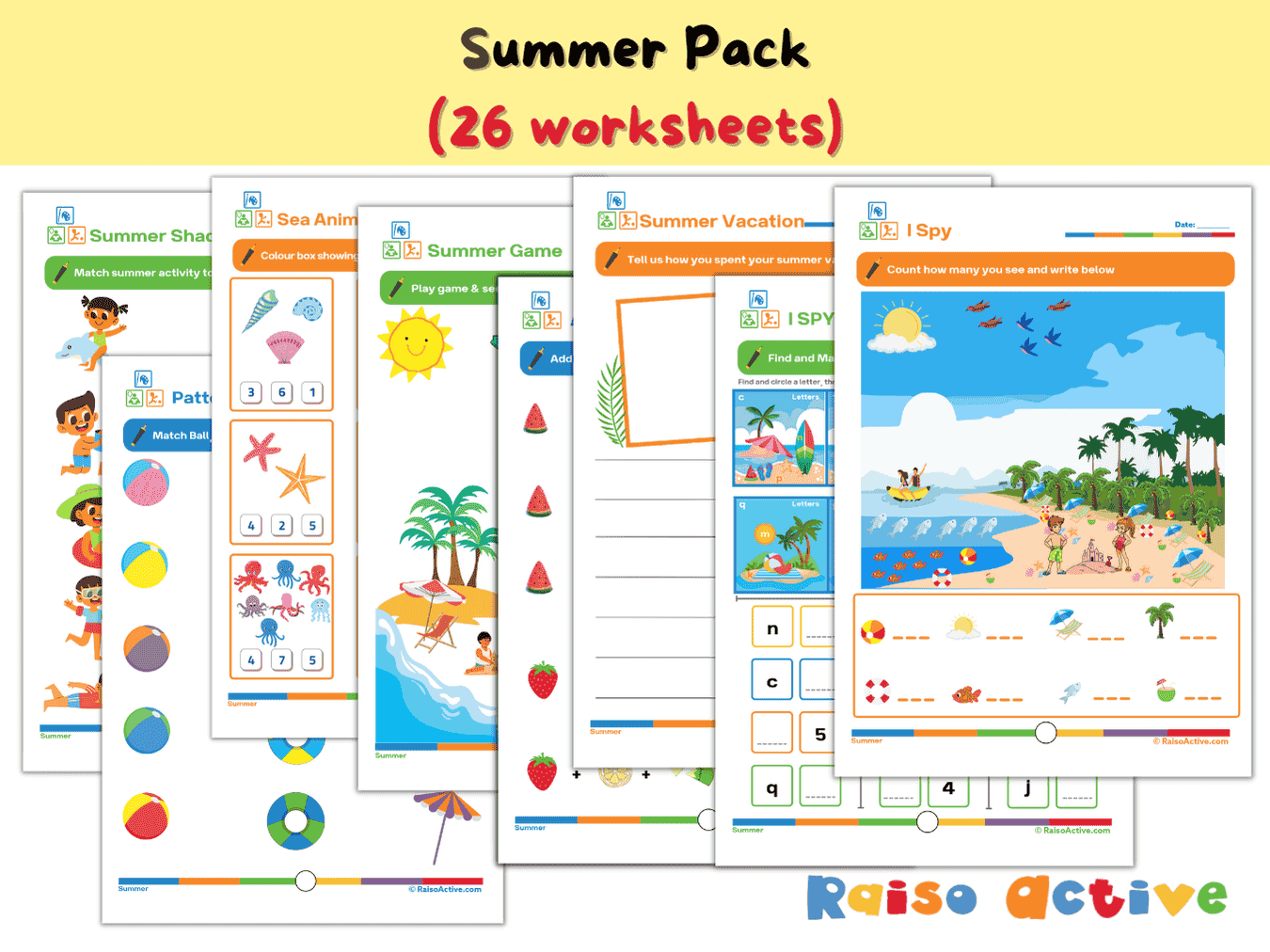
Summer Activity Pack: Math, Literacy, Puzzles & More for Preschool & Kindergarten
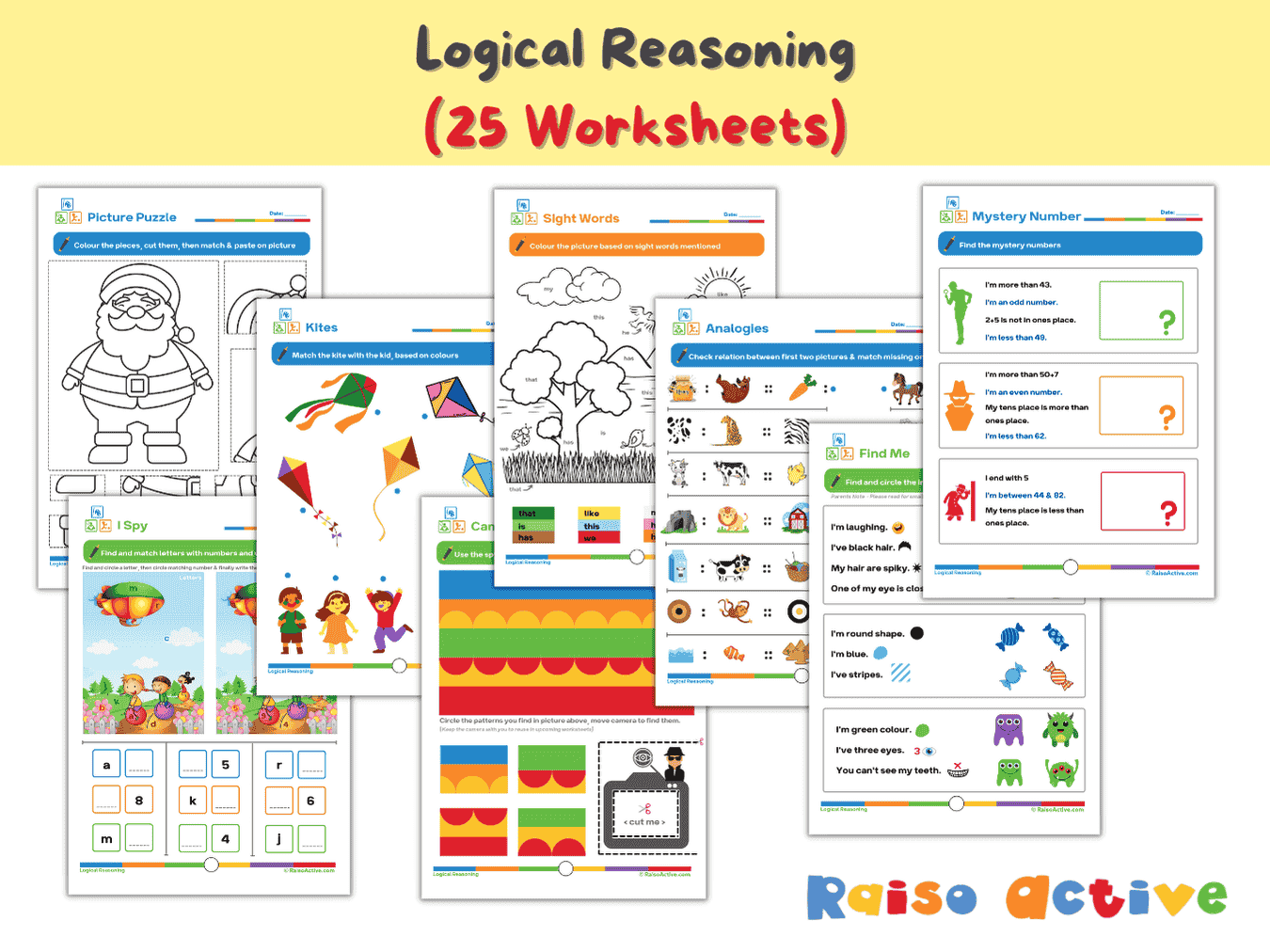
Logical Reasoning Activity Book for Preschool & Kindergarten | Patterns, Puzzles & Analogies
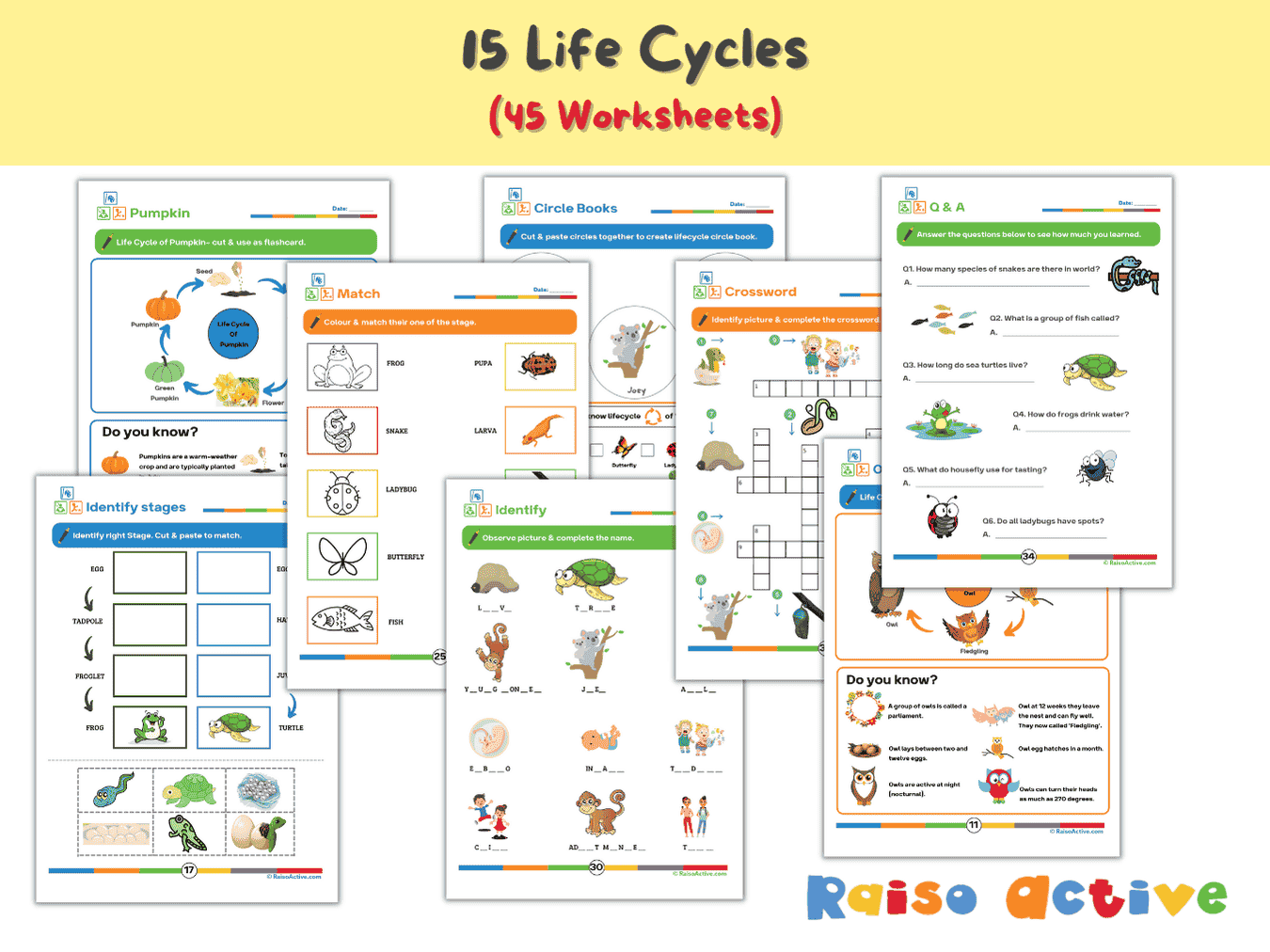
Lifecycles Activity Book & Flashcards for Preschool & Early Elementary
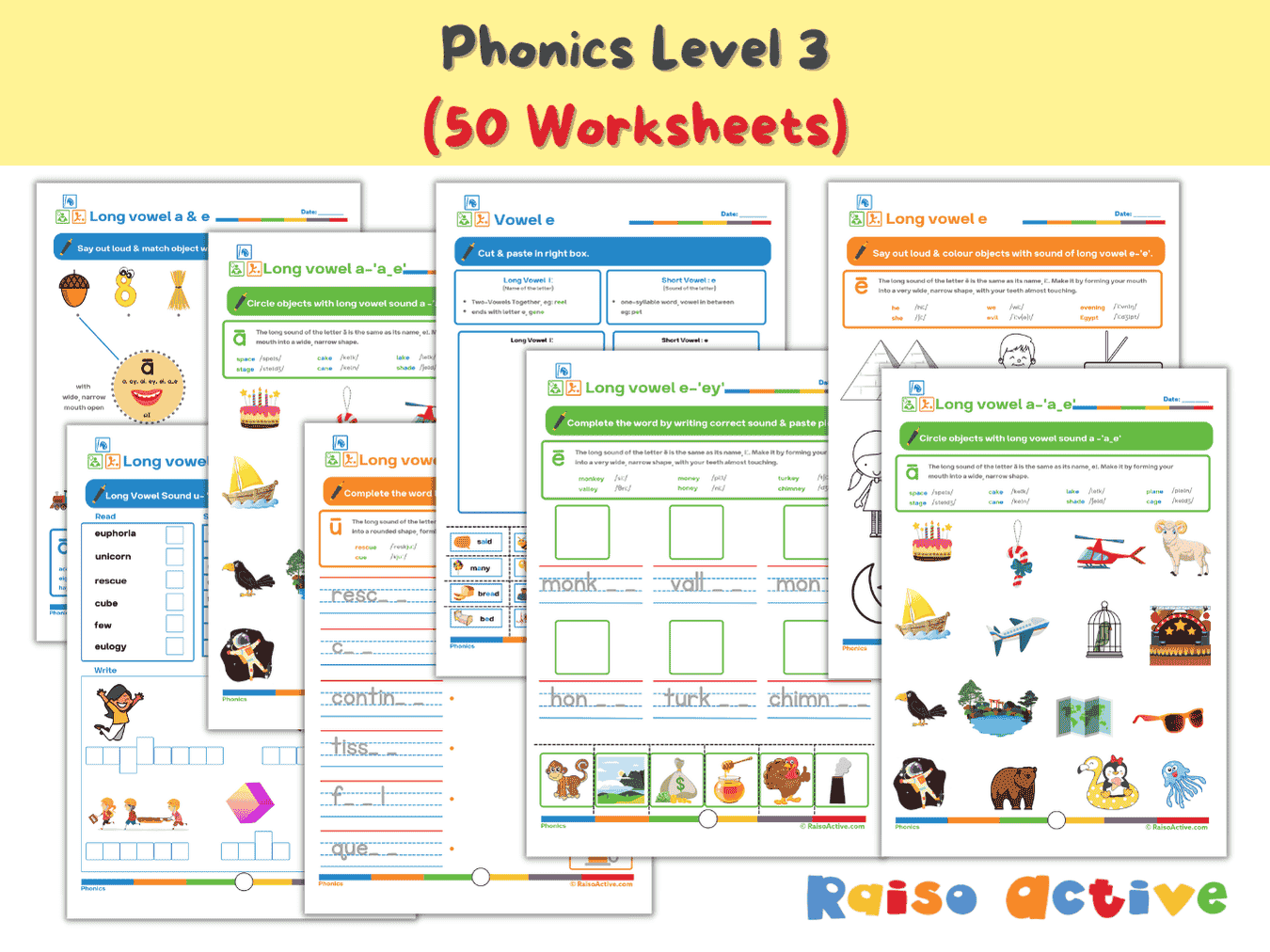
Phonics Level 3 Long Vowels Activity Book for Kindergarten & 1st Grade
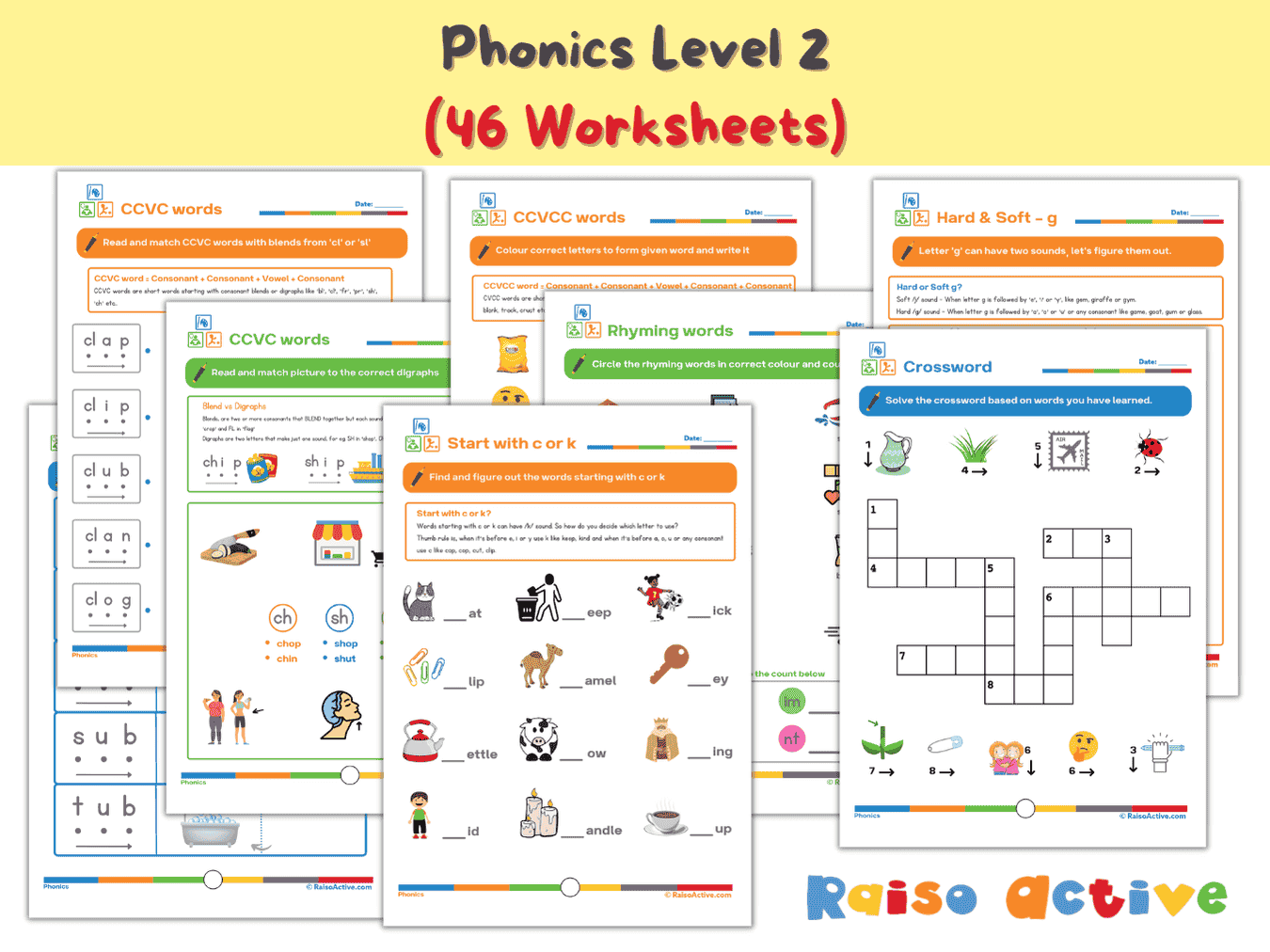
Phonics Level 2 Worksheets: CVC, CCVC, CVCC Word Families & Blends for Early Readers (Ages 4-7)
Guides for parents and teachers
See all guides →Sight Words by Age: The First 50 Words and How to Teach Them Without Flashcard Fatigue
Which sight words to teach first and why, the heart-word method, a read-trace-write-find routine, games, and a by-age table of typical sight-word progress.
Number Formation Rhymes 0–9 and How to Fix Reversals
Original number formation rhymes for 0–9, the correct stroke order for each digit, why 3, 5 and 7 get reversed most often, and multisensory fixes that work.
How to Teach CVC Blending: A Step-by-Step Method That Works in Two Weeks
A step-by-step method for teaching CVC blending, covering continuous sounds, word families, common errors, and a 14-day plan that most children finish reading CVC words.
Kindergarten Readiness Checklist: 25 Skills to Practice Before the First Day
A kindergarten readiness checklist of 25 literacy, math, motor, self-regulation and self-help skills, with an 8-week summer plan and notes on when not to worry.
Phase 2 Phonics at Home: Sound Order, Blending Games, Worksheets
Phase 2 phonics at home: the five sound sets in order, oral blending, tricky words, a two-week routine, common mistakes, and free worksheets.
Reception Year Explained: EYFS Learning and How to Help at Home
A teacher's plain-English guide to the Reception Year: the seven areas of learning, Early Learning Goals, Phase 2/3 phonics, the RBA and home routines.
Canonical: https://raisoactive.com/worksheets/reception