Free printable worksheets · United Kingdom
Reception Colouring Worksheets (Ages 4–5)
Reception colouring worksheets are practice sheets for children aged 4–5 in Reception in the UK. Colouring is filling a printed outline with colour using a crayon or pencil, practicing pressure control, staying inside a line and naming colours. The sheets on this page cover staying inside an outline, crayon or pencil pressure control, colour recognition and naming and filling a large area evenly.
Reception is the year phonics teaching properly begins, usually with Phase 2 of Letters and Sounds or an equivalent scheme, so a child starts blending sounds such as s, a, t and p into short words within weeks. Number work stays within ten, built through subitising and comparing rather than counting alone. At four to five, colouring pages become reading pages. A key at the top says 1 is red and 2 is blue, or A is yellow and B is green, and the child has to read the symbol in each region before filling it. Regions get smaller, crayons give way to thick coloured pencils, and a page is finished in one sitting of ten minutes. Colour by sight word and dense mystery grids come a year later.
325+ worksheets · free PDF download · print on A4 or Letter
Reception Colouring Worksheets to print
Browse all worksheets for ages 4–5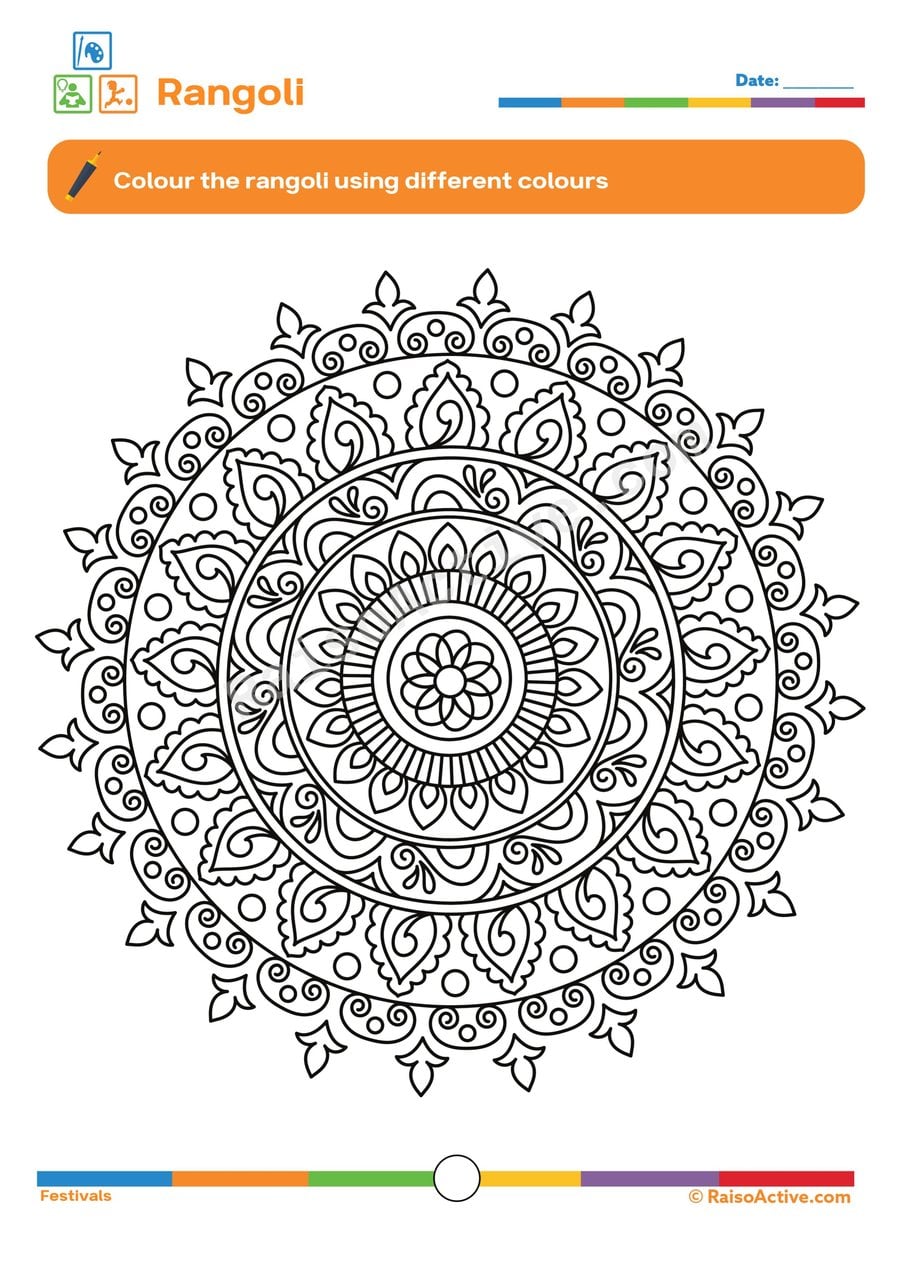
Rangoli Coloring Worksheet for Kids
Children ages 3-6 practice fine motor control and pattern following as they color a symmetrical rangoli design using multiple colors. Because rangoli patterns are built from repeating shapes, this activity also introduces early geometry and symmetry awareness in a hands-on, visual way.

Rhyming Words Worksheet: Color and Circle the Rhymes!
This worksheet builds phonological awareness in children ages 4-5 by having them color word bubbles that rhyme with 'sad' and then circle the word in each box that rhymes with its picture. Practicing rhyme recognition across two different formats — coloring a themed rhyme set and then identifying new rhymes independently — deepens a skill that's strongly linked to later reading and spelling success.
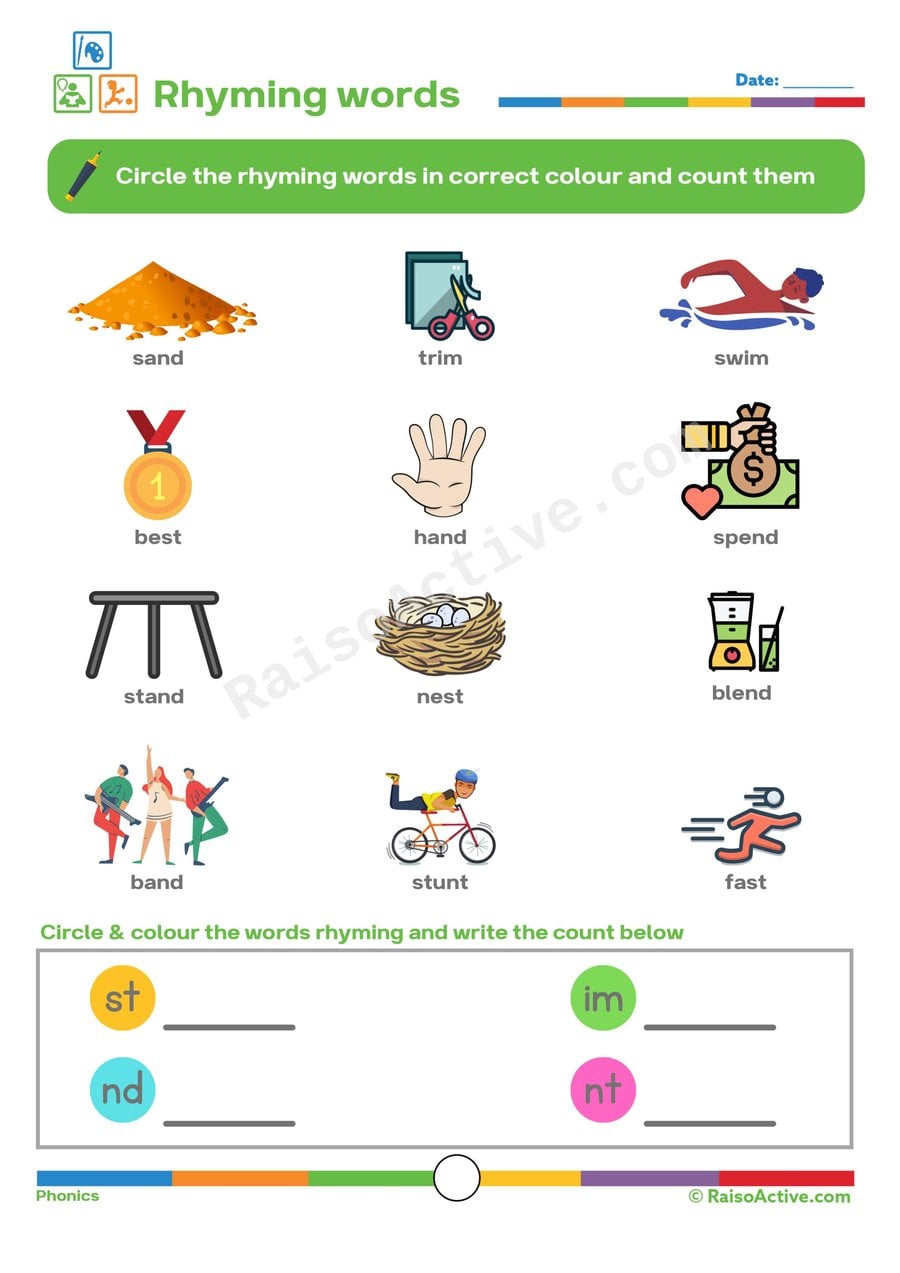
Rhyming Words Worksheet: Find and Count!
Rhyming awareness is one of the earliest and most predictive phonological awareness skills for children ages 4-5, since recognizing that two words share an ending sound pattern lays the groundwork for later word-family and spelling instruction. This worksheet has children identify rhyming pairs by color-coding them and then count the total number of pairs they found, adding a light counting and math element on top of the core phonics task. Combining rhyme detection with counting keeps the activity varied while reinforcing that rhyming pairs come in twos, a small but meaningful numeracy connection.

Blend Words: Color the Correct Picture Worksheet for Preschoolers
This worksheet gives children ages 4-5 practice reading consonant blend words — words that start with two consonant sounds blended together, like 'bl' or 'sn' — and coloring the picture that matches each one. Consonant blends are trickier to decode than single-letter sounds, so this focused, low-pressure coloring format lets children practice blending without the added challenge of writing at the same time.

Letter Sounds Worksheet: Color the Letter That Begins the Word!
This worksheet strengthens phonemic awareness in children ages 4-5 by asking them to isolate the very first sound of a picture's name and match it to its printed letter. Identifying beginning sounds is one of the strongest early predictors of reading success, since it teaches children that spoken words are made of individual sounds that map onto letters. The coloring component adds a motivating, low-pressure way to record each answer.

Color the Pictures! Kk, Ll, and Mm Letter Sounds Worksheet
Coloring a circle beneath a picture only when its name starts with a target letter sound builds beginning-sound discrimination for children ages 4-5 across three letters — K, L, and M — sharpening their ability to isolate initial phonemes.
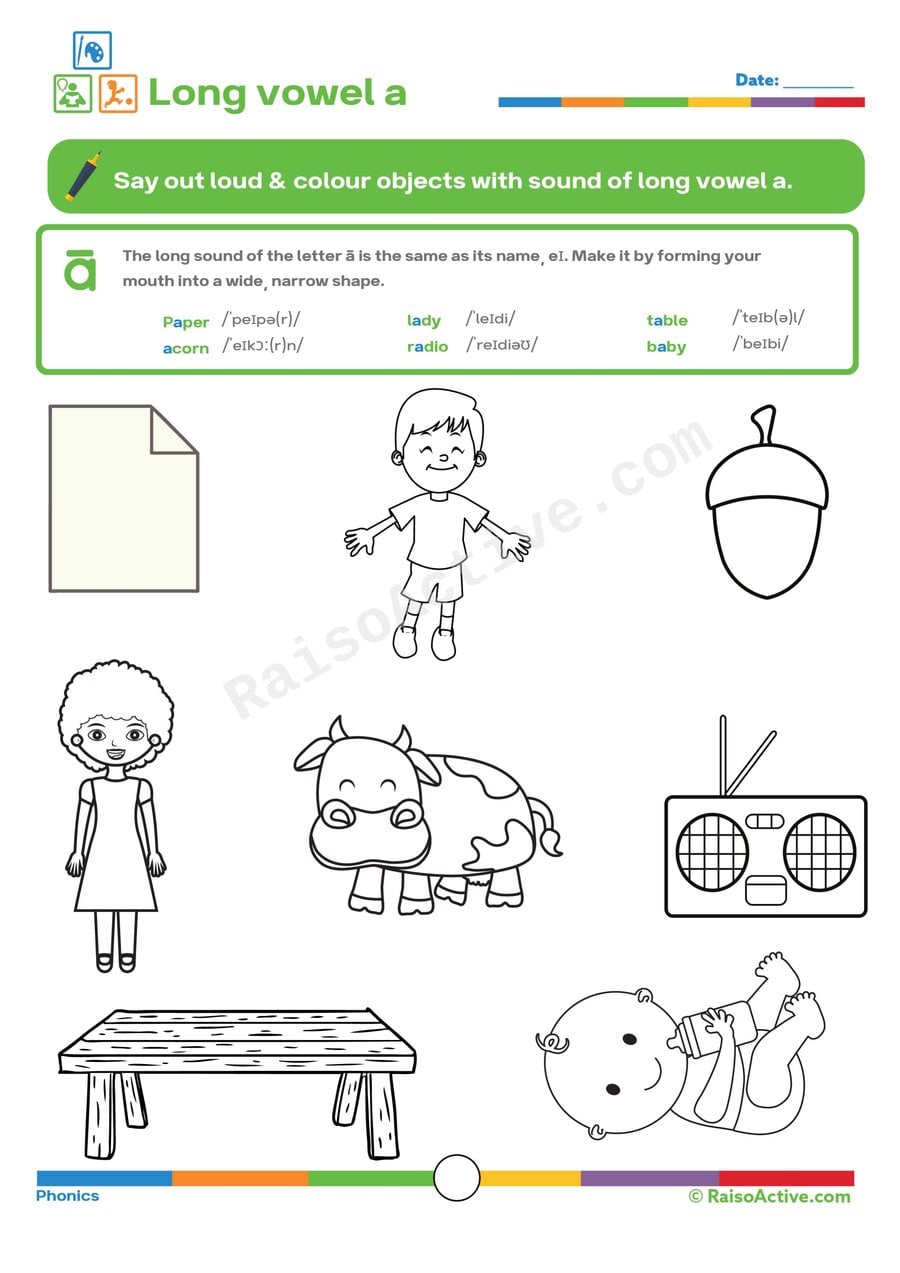
Long Vowel A Coloring Worksheet: Say the Sounds!
This coloring worksheet has children ages 4-5 say each pictured object's name aloud and decide whether it contains the long 'a' sound, as in 'acorn' or 'cake,' before coloring only the matching pictures. Turning a listening task into a coloring activity keeps young children engaged while training their ear to isolate a specific vowel sound within a spoken word - an essential pre-reading skill.

Christmas Blend Words Coloring Worksheet for Preschoolers
Coloring words by their beginning blend sound on a Christmas tree turns phonics practice into a festive, motivating activity for children ages 4-5, reinforcing that blends like 'br,' 'cl,' or 'sn' keep their combined sound even though they're made of two consonants. Because each color represents a different blend, children must listen carefully to each word before choosing a crayon, strengthening auditory discrimination alongside seasonal fun.
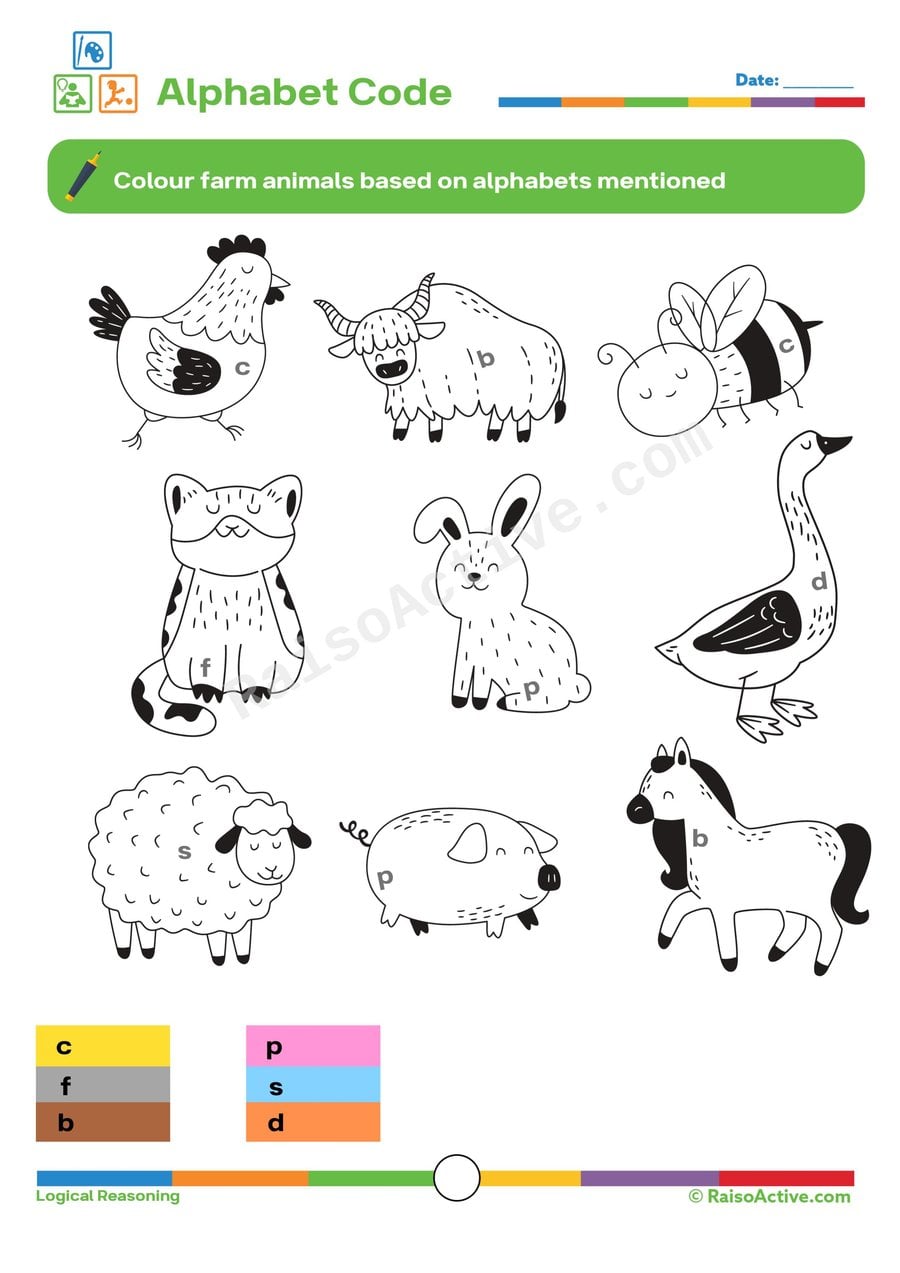
Color the Farm Animals! Alphabet Code Worksheet
Children ages 3-5 practice letter recognition and instruction-following by coloring farm animals according to a color code tied to specific letters. Matching a letter to its assigned color adds an extra layer of symbolic thinking beyond simple coloring, since children must hold both a letter and a color in mind at once.
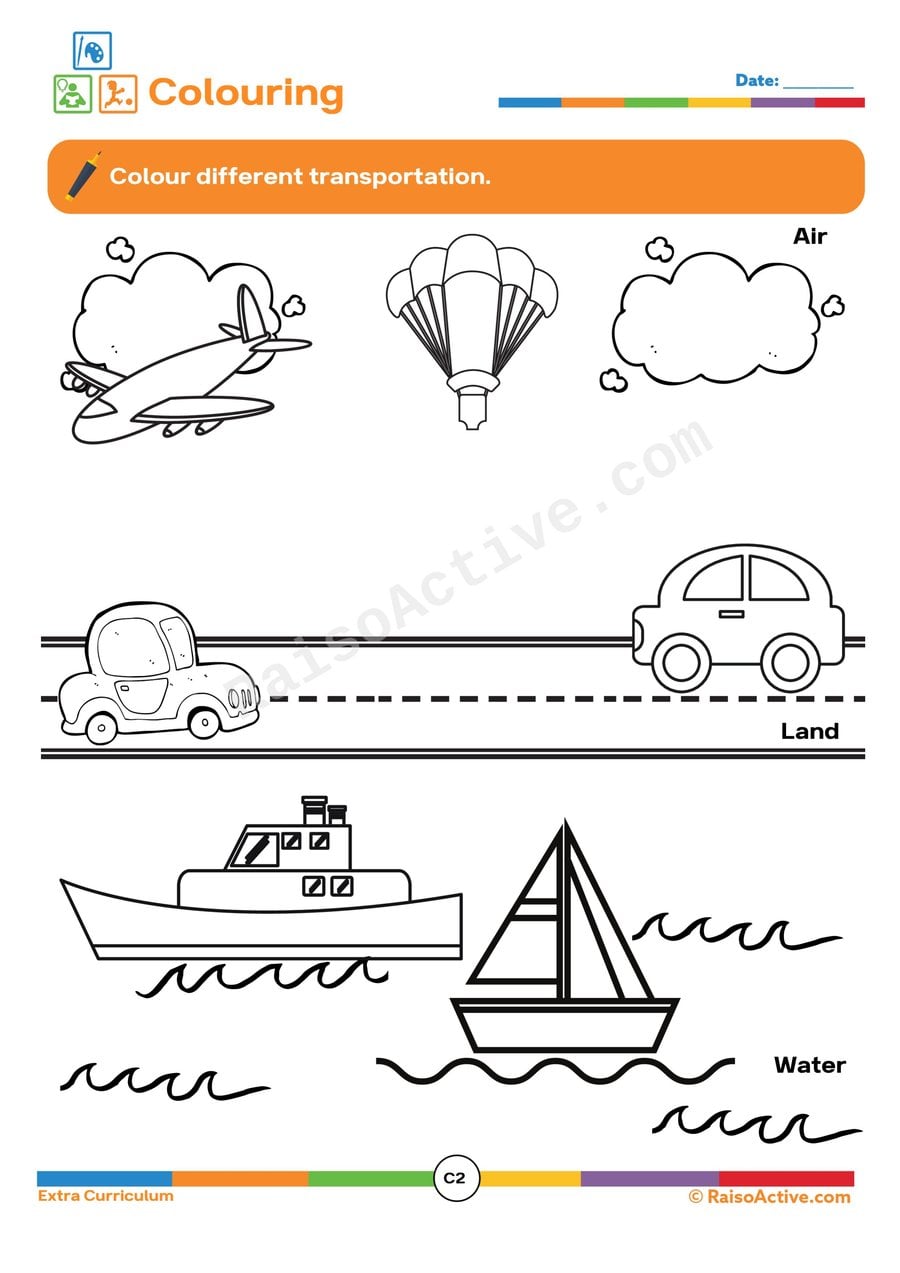
Color the Transportation Worksheet for Kids
Coloring vehicles that travel by air, land, and water helps children ages 3-5 build an early classification system for how transportation is grouped by environment, not just by shape or size. Naming where each vehicle travels while coloring also reinforces vocabulary and observation skills, since children must look closely at each picture's features to decide its category.

Spring Table Color by Number Worksheet for Preschoolers
This color-by-number worksheet has children ages 3-5 practice matching numerals to a specific color key and then applying that color accurately across a picture, reinforcing both number recognition and one-to-one correspondence between a symbol and an action. Rolling a dice to determine which color to use next also adds an element of chance that keeps the repetitive coloring task engaging.

Sight Word Coloring Worksheet: Make, For, Here, Our, From, and What!
This worksheet helps children ages 3-5 build automatic recognition of six common sight words — make, for, here, our, from, and what — words that show up constantly in early reading but don't always follow predictable phonics rules. Finding and coloring matching words hidden within pencil shapes trains visual discrimination between similar-looking short words, a skill that directly supports reading fluency.
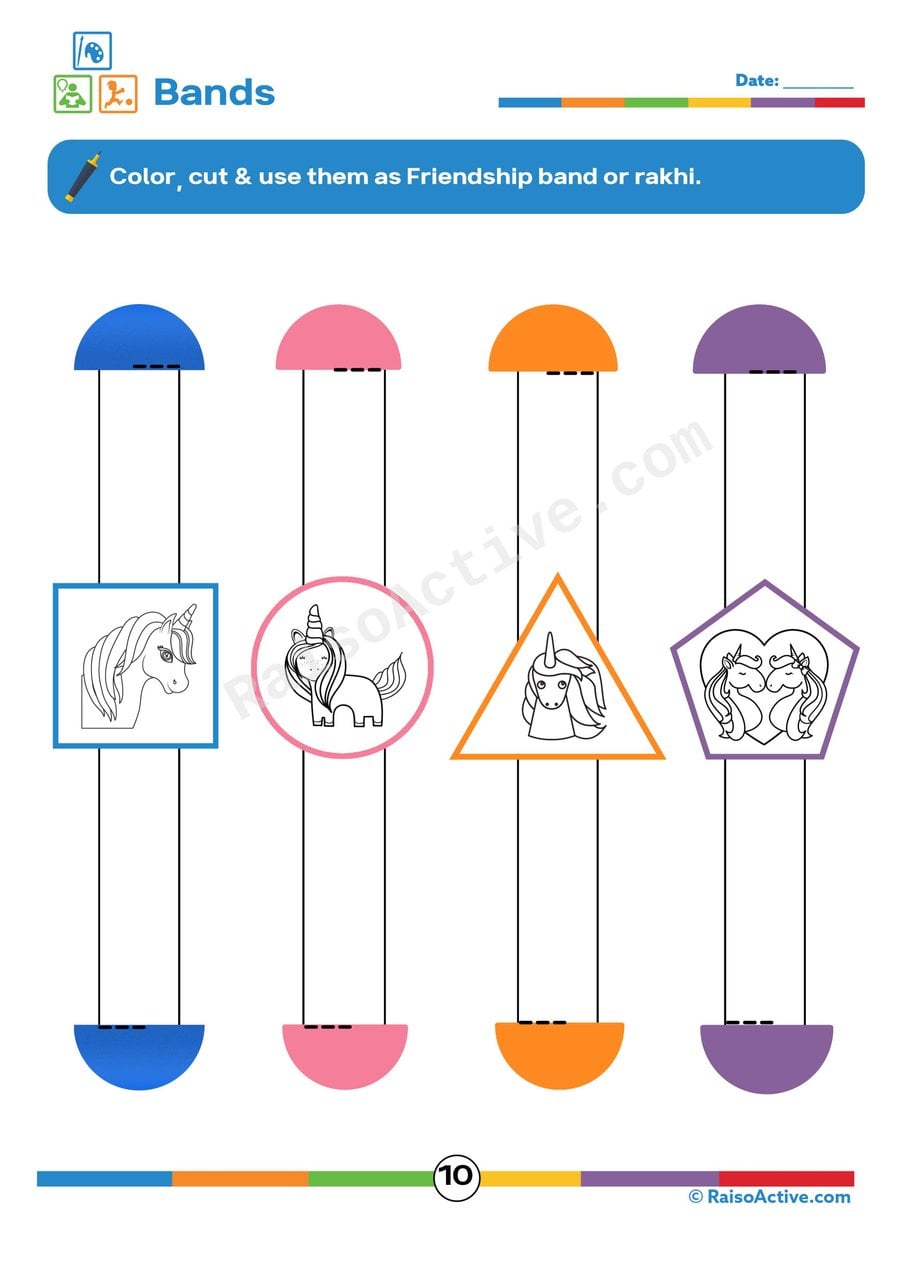
Unicorn Friendship Bands Worksheet for Kids
Children ages 3-5 practice coloring within defined shapes and controlled scissor cutting as they bring unicorn-themed friendship bands to life. The combination of coloring first and cutting second means they must track the same shape through two different fine motor tasks, reinforcing hand control and attention to detail.
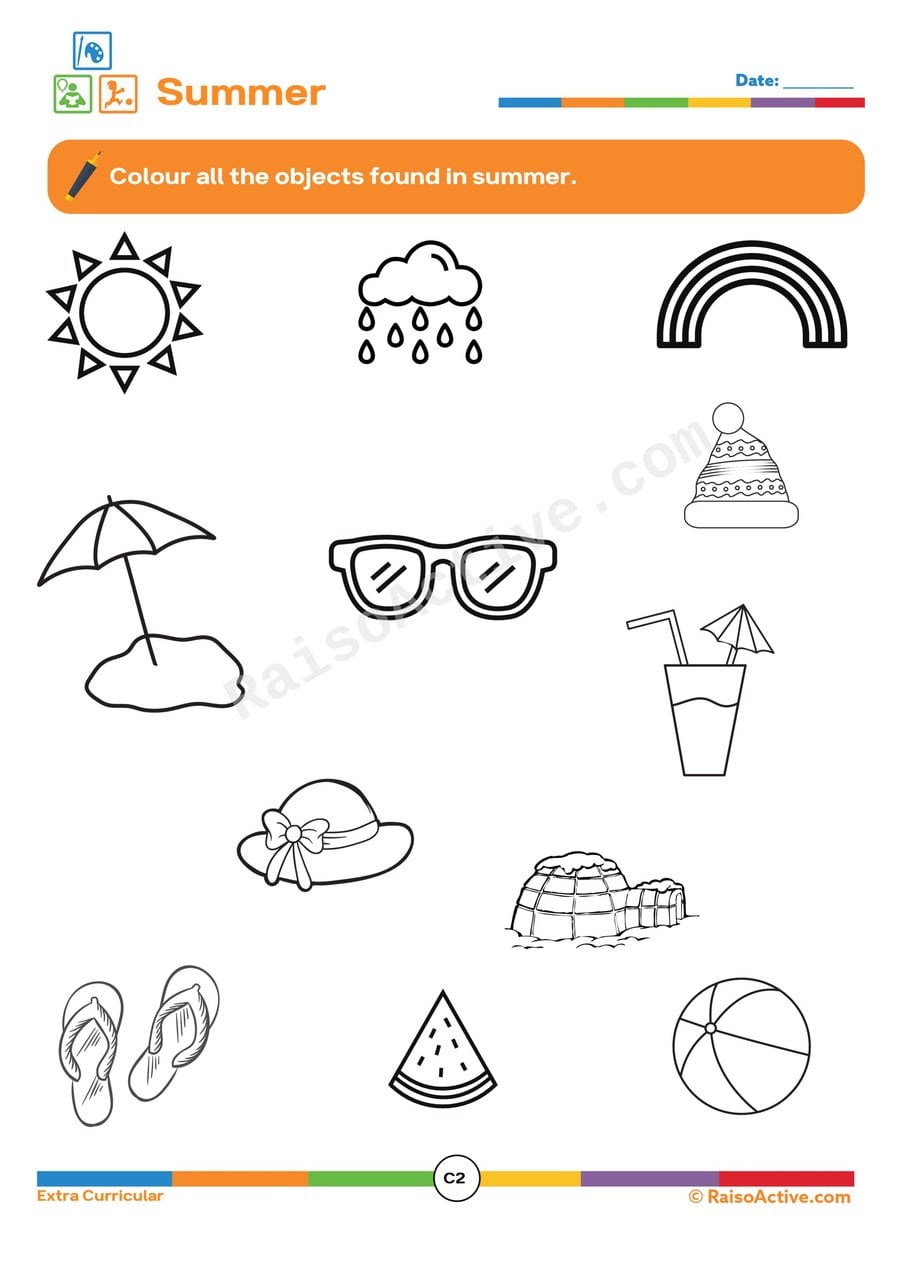
Summer Fun Coloring Worksheet for Preschoolers
Children ages 3-5 practice associating specific objects, like sunglasses, ice cream, or a swimsuit, with the summer season, building early seasonal awareness alongside fine motor coloring practice. Recognizing which objects belong to which season is a foundational step toward understanding weather, time, and the changing year.

Find the Similar Objects! Coloring Worksheet for Preschoolers
Preschoolers ages 3-5 sharpen visual discrimination by scanning sets of objects to spot which ones are identical, a skill that underlies later letter and word recognition. Comparing shapes, colors, and small details strengthens attention to detail and careful observation. Coloring the matching pairs also reinforces the finding with a hands-on, satisfying finish.

Symmetry Fun Worksheet for Kids: Complete and Color!
This symmetry worksheet challenges children ages 3-5 to study a half-drawn Christmas picture and draw the missing mirror-image half, introducing the early geometry concept that two sides of a shape can match exactly. Completing and then coloring the picture also builds visual comparison skills, since children must check their drawn half against the original before filling it in with color.
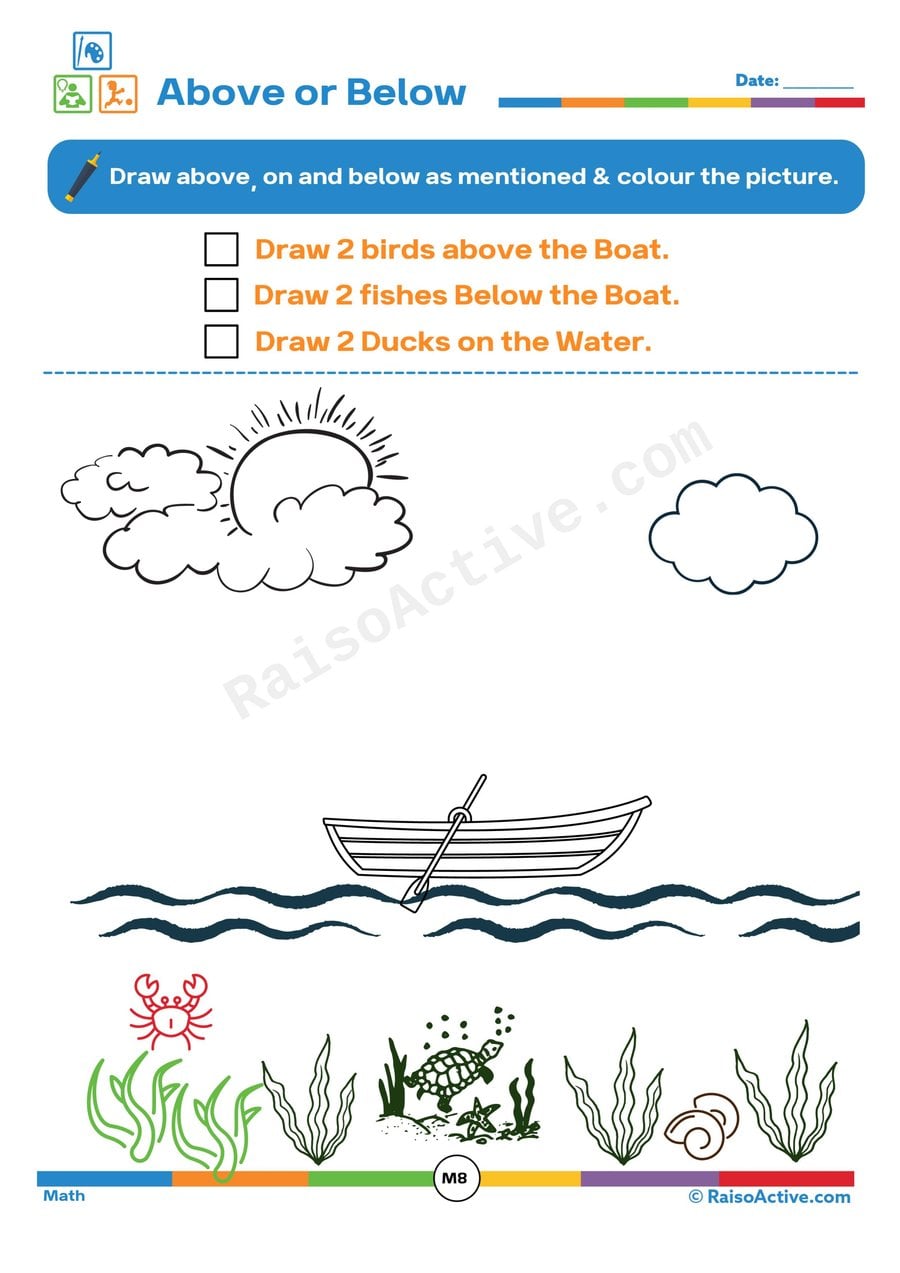
Above or Below Worksheet: Draw and Color!
This worksheet asks children ages 3-5 to apply the positional concepts of 'above,' 'below,' and 'on' by actively drawing new objects into a scene rather than simply pointing or circling. Drawing an item in a specific spatial position, like a bird above a boat, requires children to translate a verbal instruction into an accurate visual placement, which is a more demanding test of spatial understanding than passive matching. Coloring the finished scene afterward adds a satisfying creative finish to the activity.

Merry Christmas Coloring Worksheet for Preschoolers
Filling in Christmas-themed pictures with crayons or colored pencils helps children ages 3-5 refine their pencil grip and hand control while practicing the concept of staying within a defined boundary. Because the pictures include multiple familiar holiday objects, this worksheet also gives children a chance to build vocabulary by naming each item as they color it. Repeated coloring practice at this age steadily improves the wrist and finger strength needed for later writing tasks.
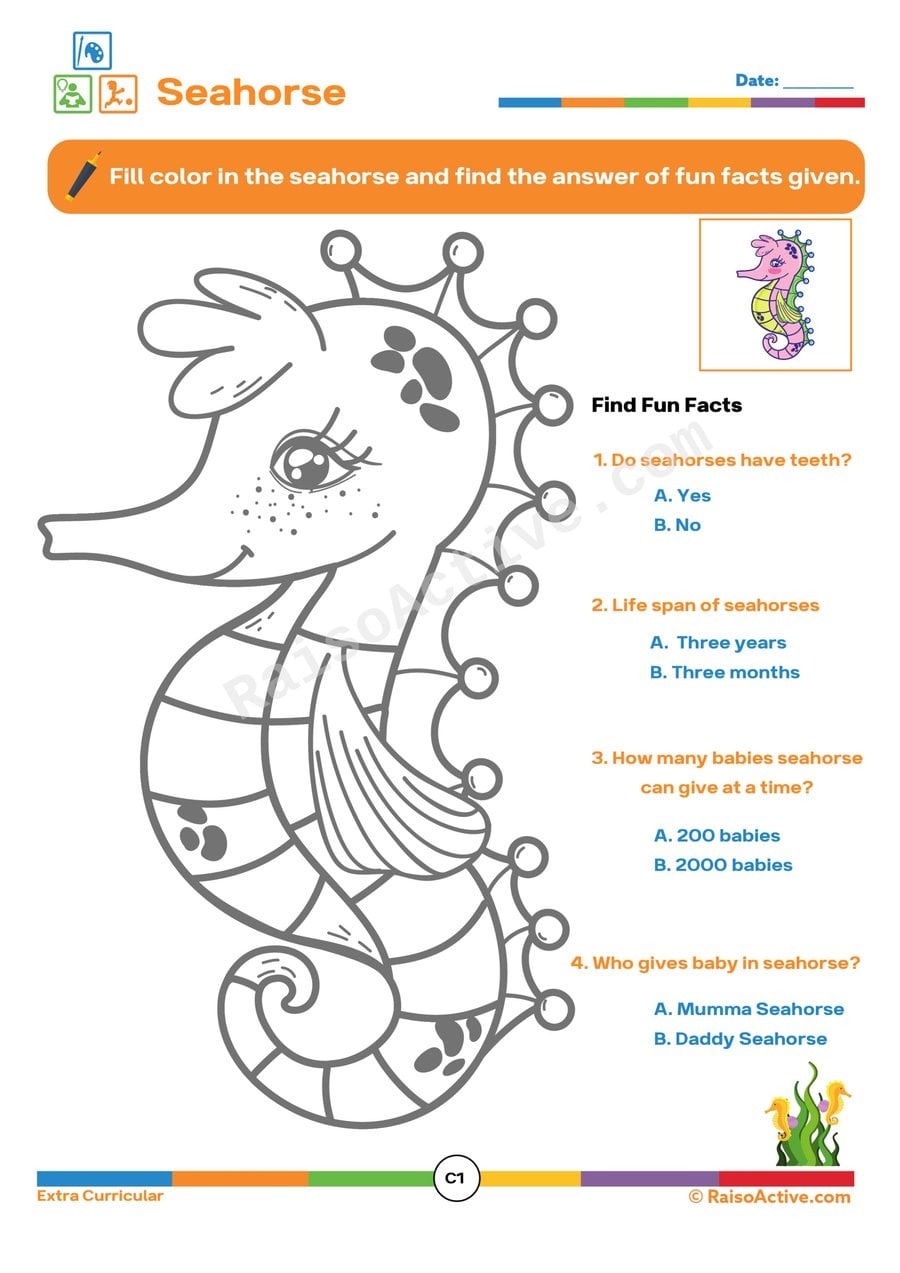
Seahorse Fun Facts Worksheet for Kids
This worksheet combines coloring practice with early reading comprehension by having children ages 3-5 color a seahorse illustration and then answer simple fact-based questions about it by circling the correct choice. Learning specific facts about an unusual sea creature — like that seahorses swim upright or that males carry the eggs — builds background science knowledge that supports later reading comprehension in nonfiction texts. The coloring portion also keeps fine motor practice woven into a subject-focused activity.
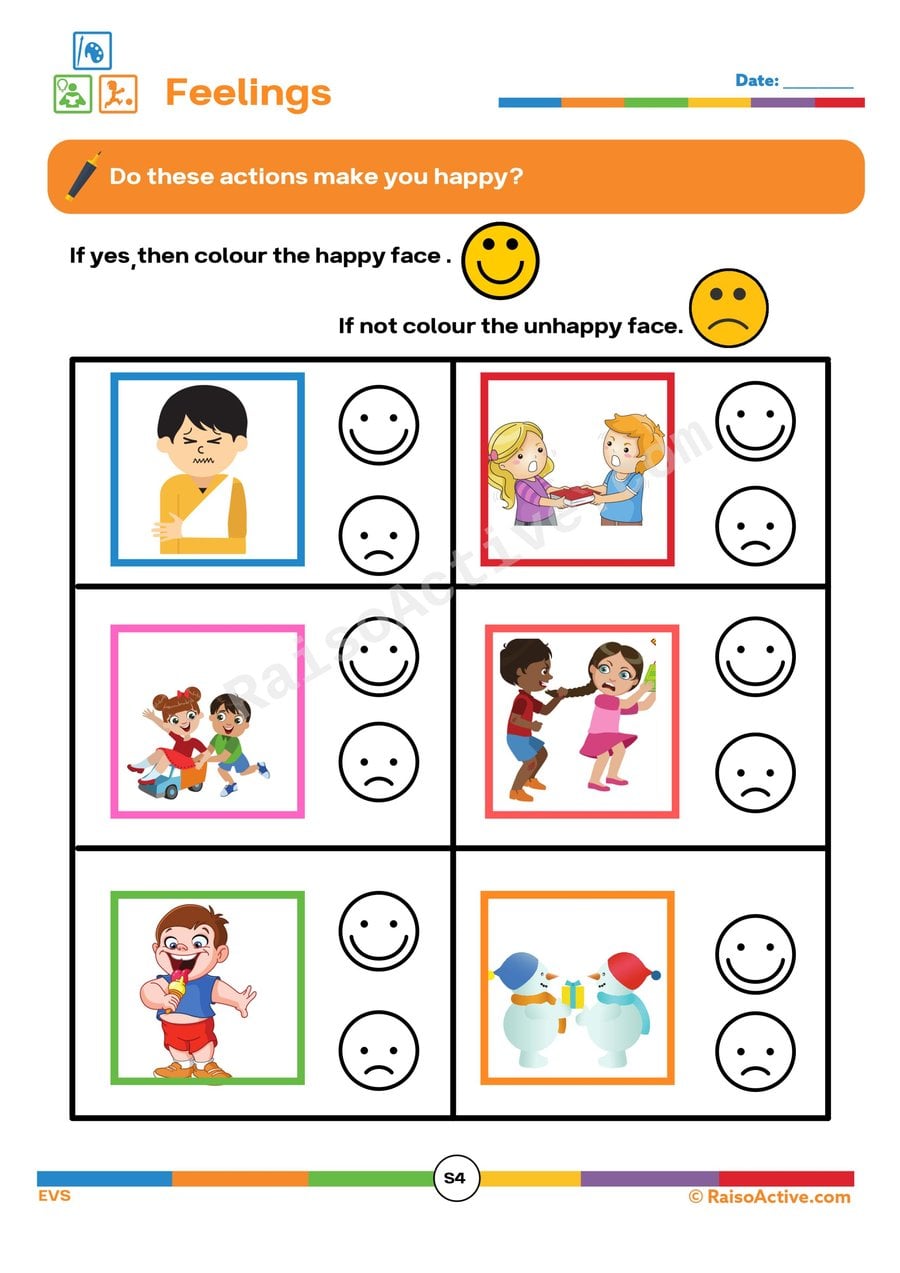
Feelings Worksheet: Happy or Sad?
Children ages 3-5 build emotional vocabulary and self-awareness as they decide whether different everyday situations would make them feel happy or sad. Naming and sorting emotions based on a scenario is an early social-emotional skill that helps children recognize and eventually talk about their own feelings more clearly.
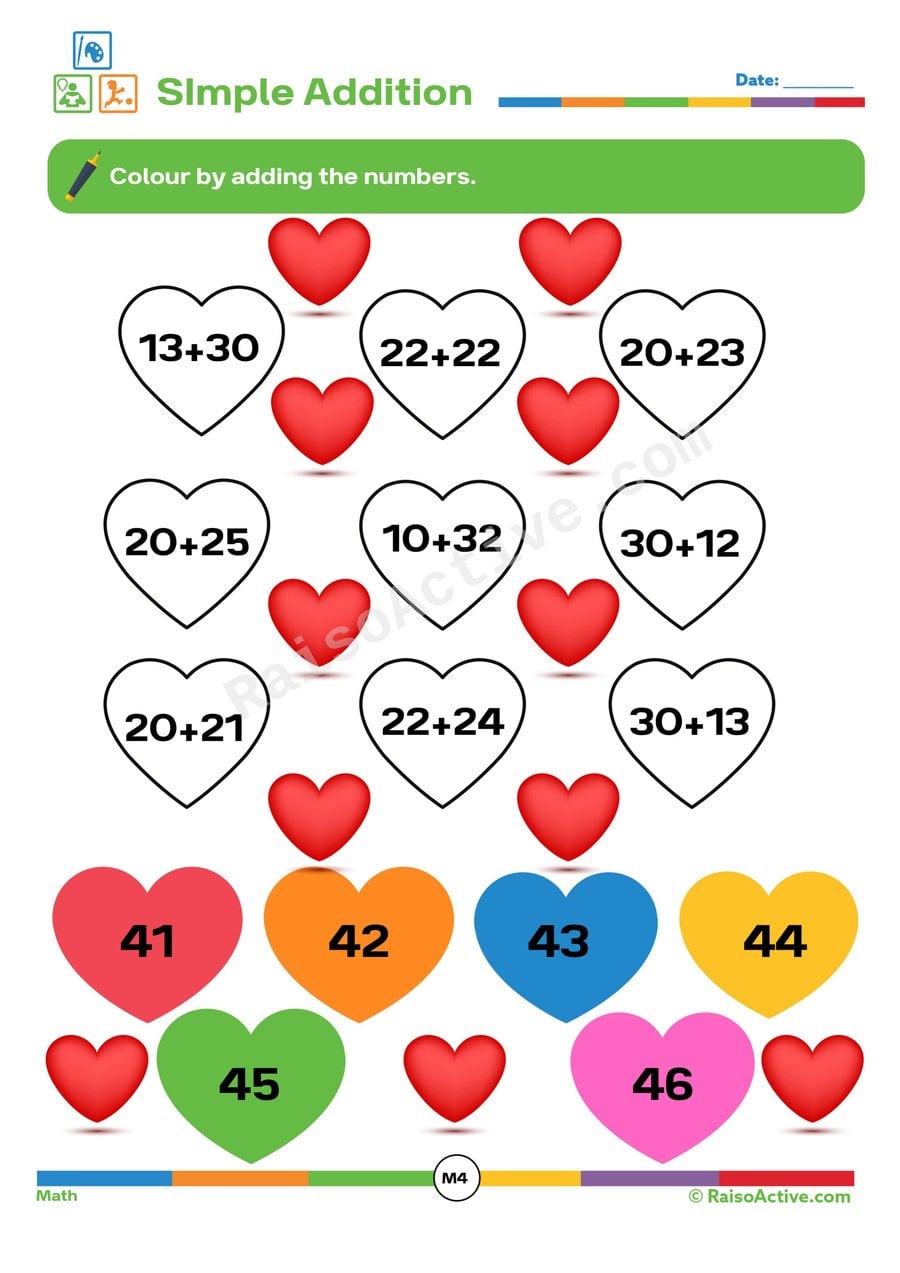
Simple Addition Worksheet: Color by Sums!
Children ages 4-6 practice quick single-digit addition facts while also following a color key, combining early math fluency with visual attention to detail. Solving each problem before coloring gives an immediate, satisfying way to check their own accuracy as the picture comes together.
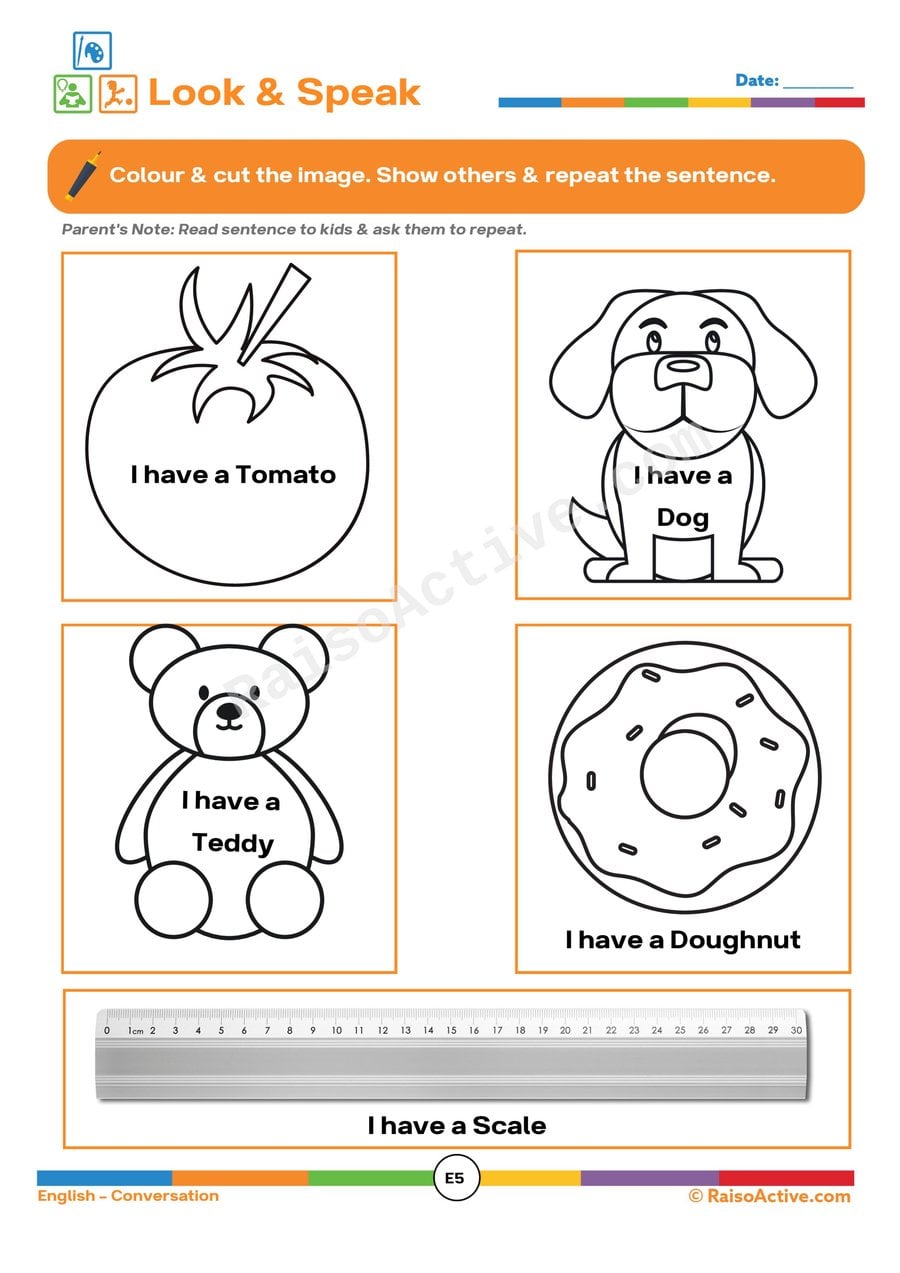
Look & Speak: Color and Repeat the Words Worksheet
This worksheet builds early vocabulary and oral language skills by having children color familiar images and then read and repeat a simple sentence describing each one aloud. For ages 3-5, the combination of coloring, reading, and speaking reinforces new words through multiple senses, helping vocabulary stick more effectively than reading alone.
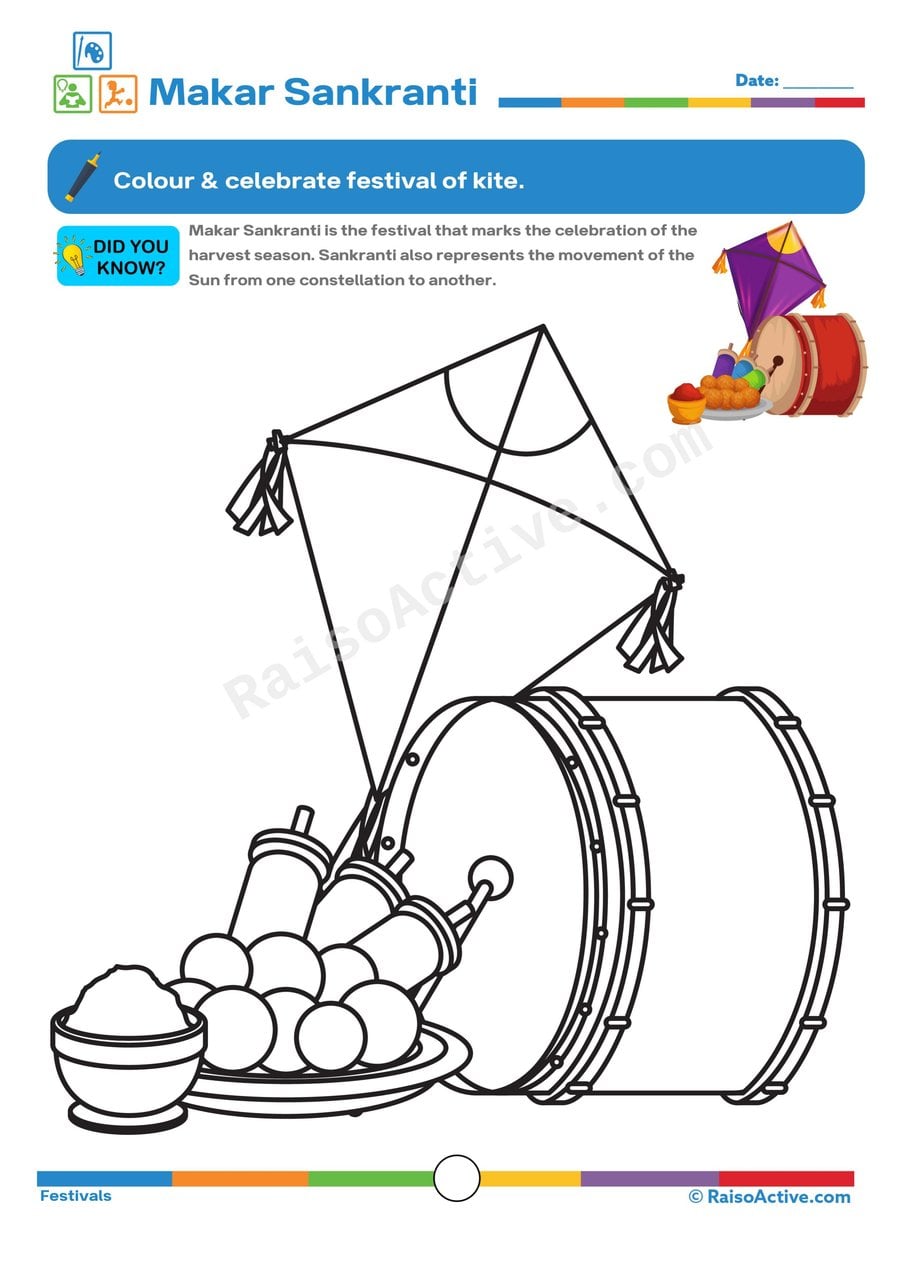
Makar Sankranti Coloring Worksheet for Kids
Coloring the kites, drums, and festive scenes on this Makar Sankranti worksheet gives children ages 3-5 practice with crayon grip and staying within outlines, while introducing them to one of India's major harvest festivals. As they color, they begin to associate specific symbols, like kites and sesame sweets, with the celebration, building early cultural awareness alongside fine motor control.
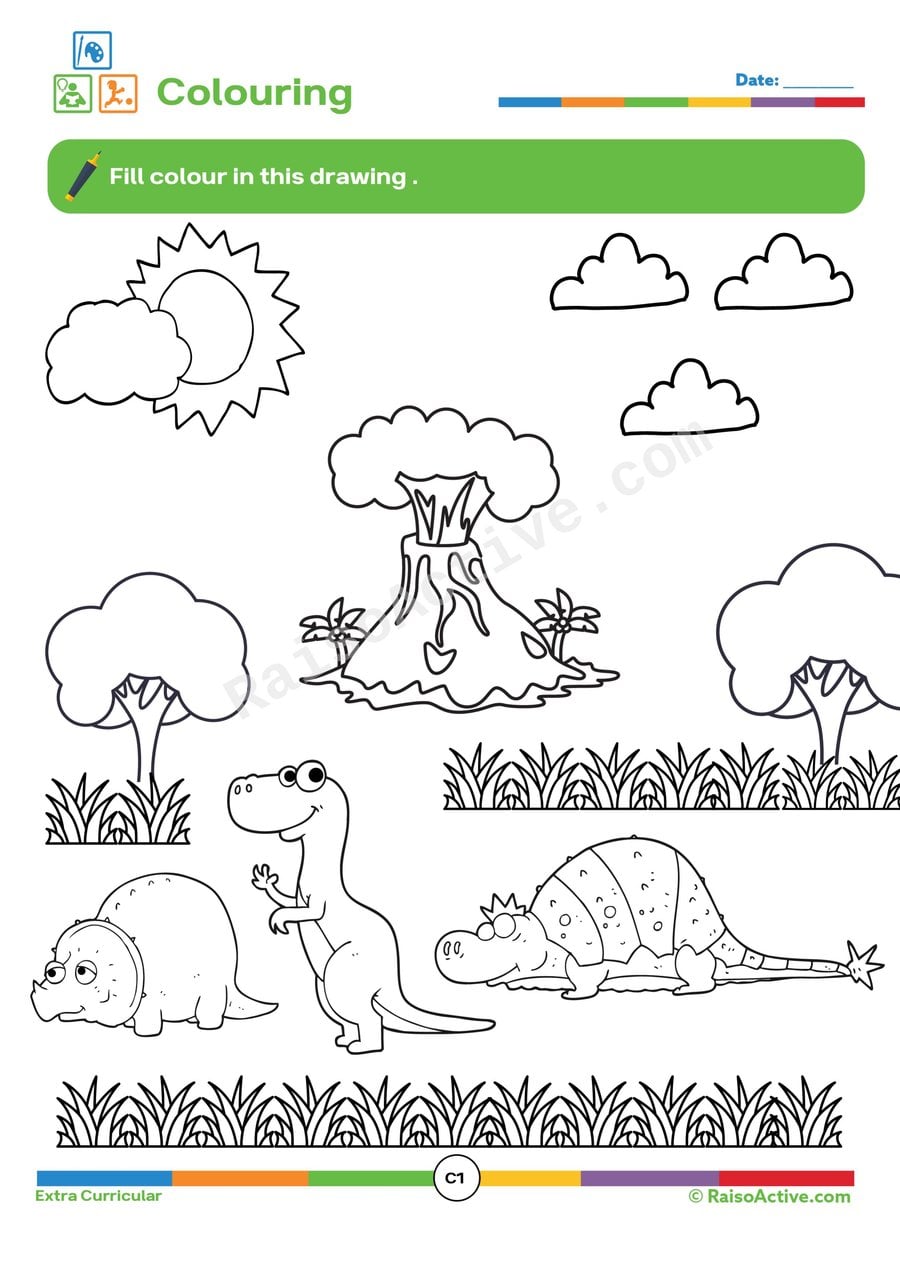
Dinosaur Coloring Worksheet for Kids
This dinosaur coloring page gives children ages 3-5 focused practice with fine motor control and color choice as they fill in a detailed illustration. Staying within defined lines and boundaries strengthens the hand and wrist muscles needed for future handwriting. Choosing colors thoughtfully for different parts of the dinosaur also builds early decision-making and creative expression.
What Reception colouring worksheets cover
At four to five, colouring pages become reading pages. A key at the top says 1 is red and 2 is blue, or A is yellow and B is green, and the child has to read the symbol in each region before filling it. Regions get smaller, crayons give way to thick coloured pencils, and a page is finished in one sitting of ten minutes. Colour by sight word and dense mystery grids come a year later.
- Colour by number using numerals 1 to 5
- Colour by capital letter, then by lowercase letter
- Colour by beginning sound: everything that starts with "b" is blue
- Fill medium-sized regions with a thick coloured pencil
- Finish a whole page in one ten-minute sitting
How to use these worksheets at home or in class
A short daily sound-matching or blending sheet paired with one number activity, around ten minutes total, mirrors the classroom rhythm. Say each sound clearly before your child traces or writes it, and keep the pace playful rather than test-like.
Start with the sheet that matches what your child can already do, then move one step up. Keep finished sheets in a folder: Reception teachers often ask for evidence of practice, and children like seeing their own progress.
Is your child ready for Reception colouring work?
A child moving into this stage typically holds a pencil with a developing grip, recognises several letters by sound rather than only by shape, and can count a small group of objects one at a time without skipping any.
Frequently asked questions
What does a colour by number page teach a four-year-old?
Three things. Reading the numeral in each region and finding it in the key practices number recognition, usually 1 to 5 at this age. Filling the region with the right colour practices matching and following an instruction with two steps. And the colouring itself works the grip and the small wrist movements that letter writing will need. Pages with fewer, larger regions suit the start of the year; ten regions and numerals to 10 suit the end.
What should a Reception child be able to do in colouring?
At four to five, colouring pages become reading pages. A key at the top says 1 is red and 2 is blue, or A is yellow and B is green, and the child has to read the symbol in each region before filling it. Regions get smaller, crayons give way to thick coloured pencils, and a page is finished in one sitting of ten minutes. Colour by sight word and dense mystery grids come a year later. A child moving into this stage typically holds a pencil with a developing grip, recognises several letters by sound rather than only by shape, and can count a small group of objects one at a time without skipping any.
Do these worksheets follow the Reception curriculum?
The sheets cover staying inside an outline, crayon or pencil pressure control, colour recognition and naming and filling a large area evenly, which sit inside the EYFS Early Learning Goals; Letters and Sounds Phase 2–3 outcomes for Reception. Pre-K / Kindergarten (US), LKG (India) use the same skills at this age, so the sheets also fit families following those programmes.
Are these Reception colouring worksheets free?
Yes. Each worksheet downloads free as a watermarked PDF once you create an account, with a limit of five a day. An annual membership ($20) removes the watermark and the limit for the whole library of over 1,000 worksheets and every printable pack.

Written by
Hemsweta Jain · Teacher Cheena
MBA and Early Childhood Educator, teaching since 2014 · Founder of RaisoActive, Mumbai
Written and reviewed by Hemsweta Jain (Teacher Cheena), who designs every RaisoActive worksheet.
Last reviewed
Printable packs for ages 4–5
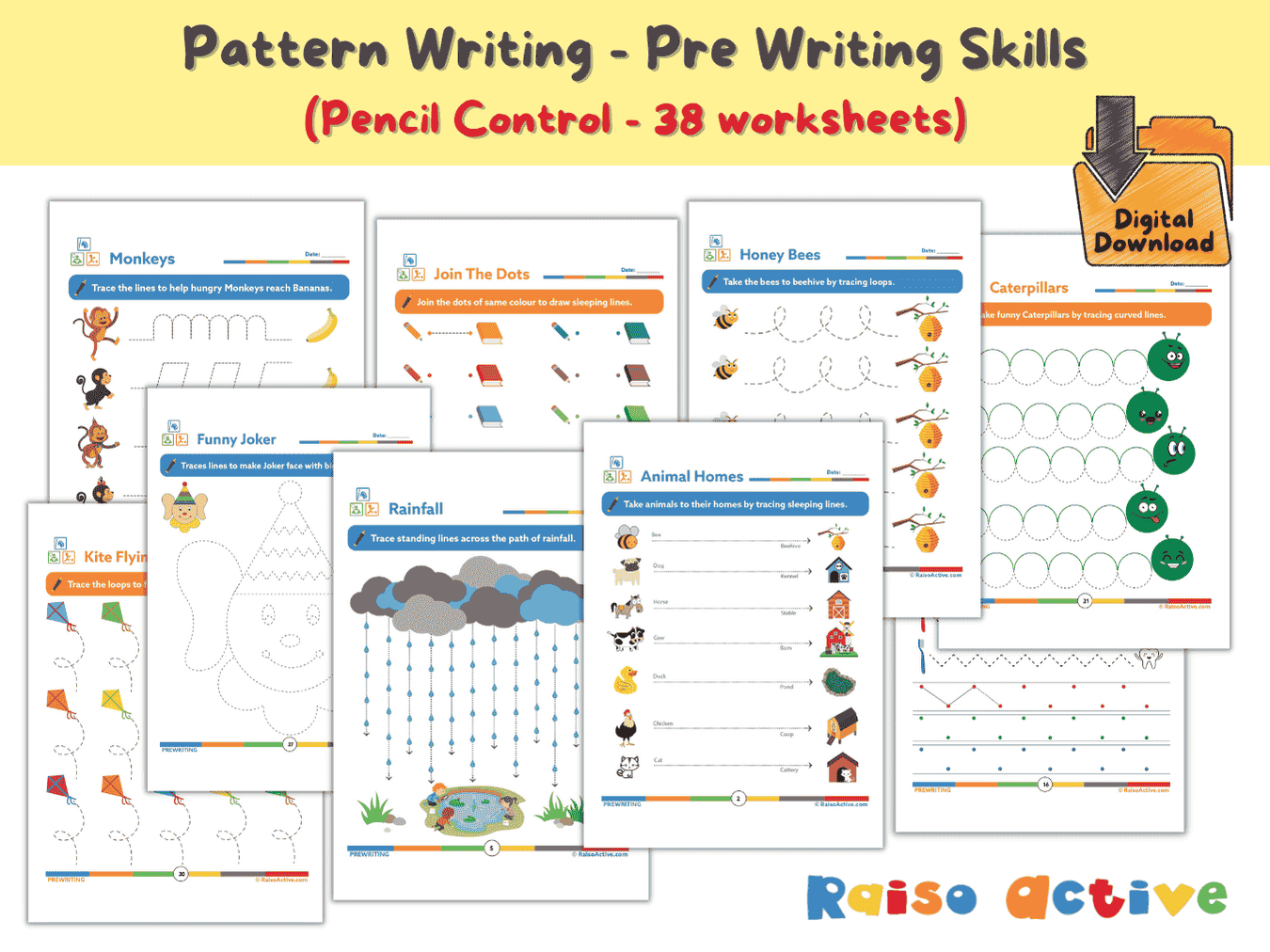
Pattern Writing Pre-writing Skills Activity Book for 3-4 Year Olds
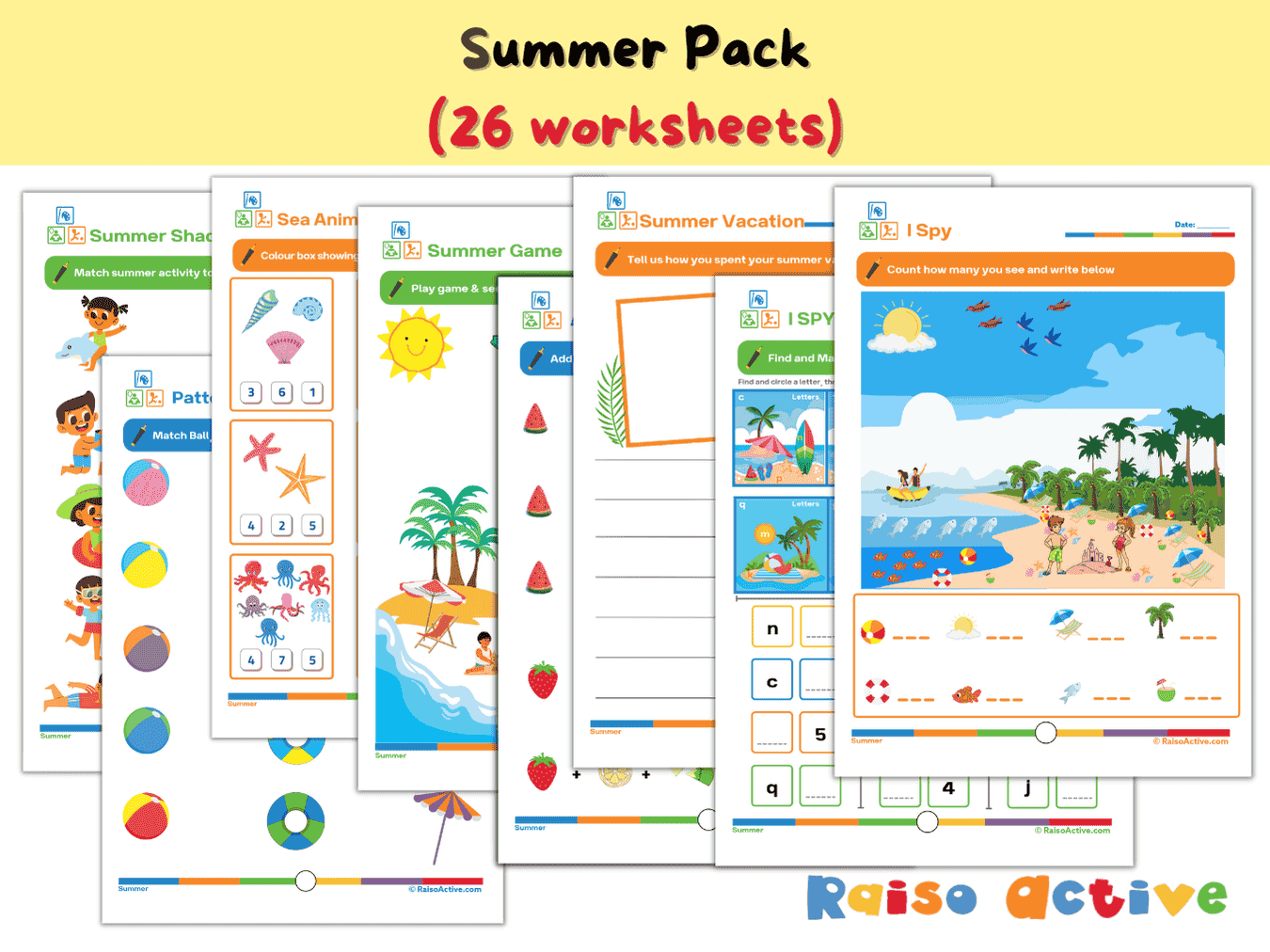
Summer Activity Pack: Math, Literacy, Puzzles & More for Preschool & Kindergarten
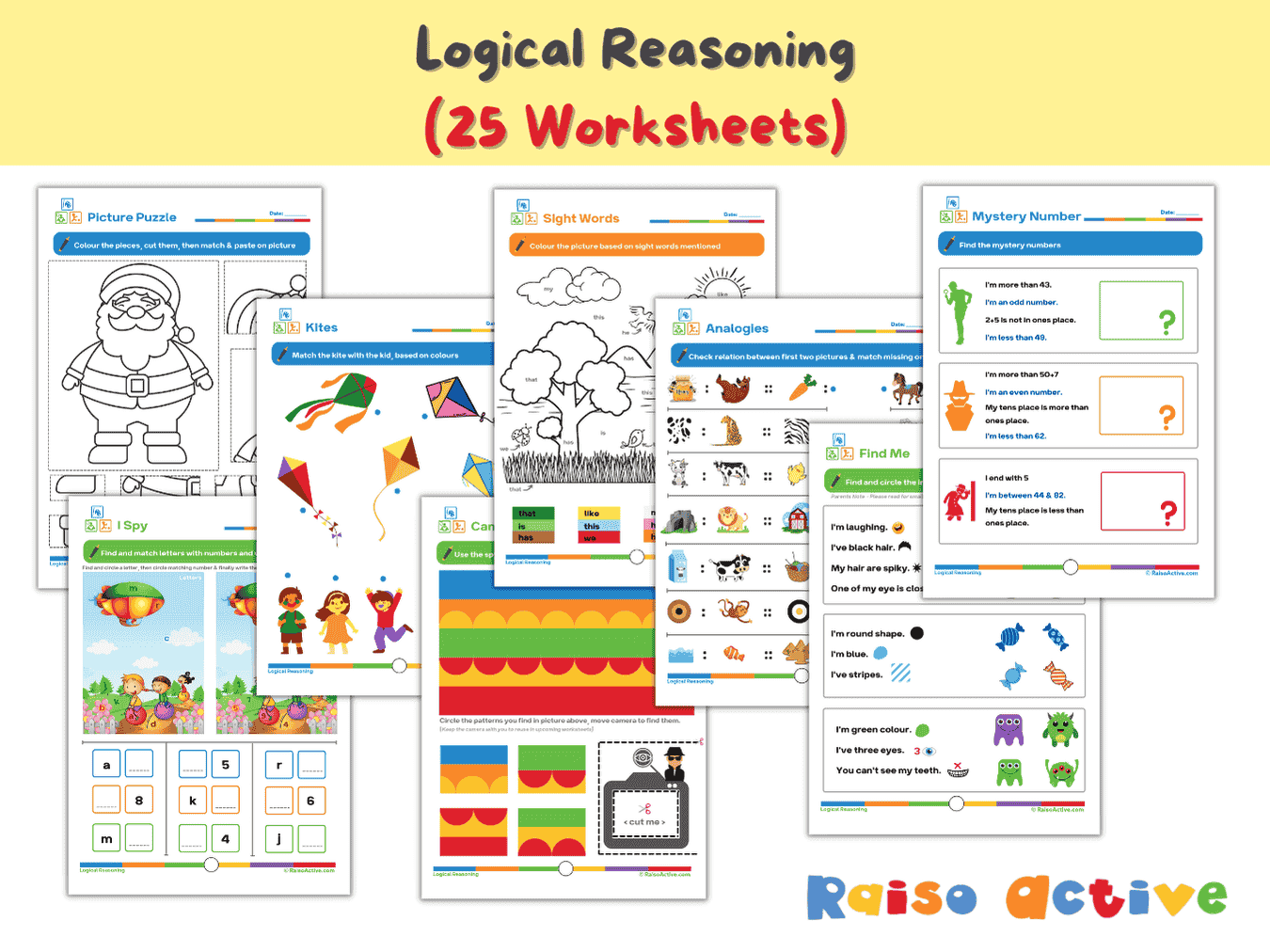
Logical Reasoning Activity Book for Preschool & Kindergarten | Patterns, Puzzles & Analogies
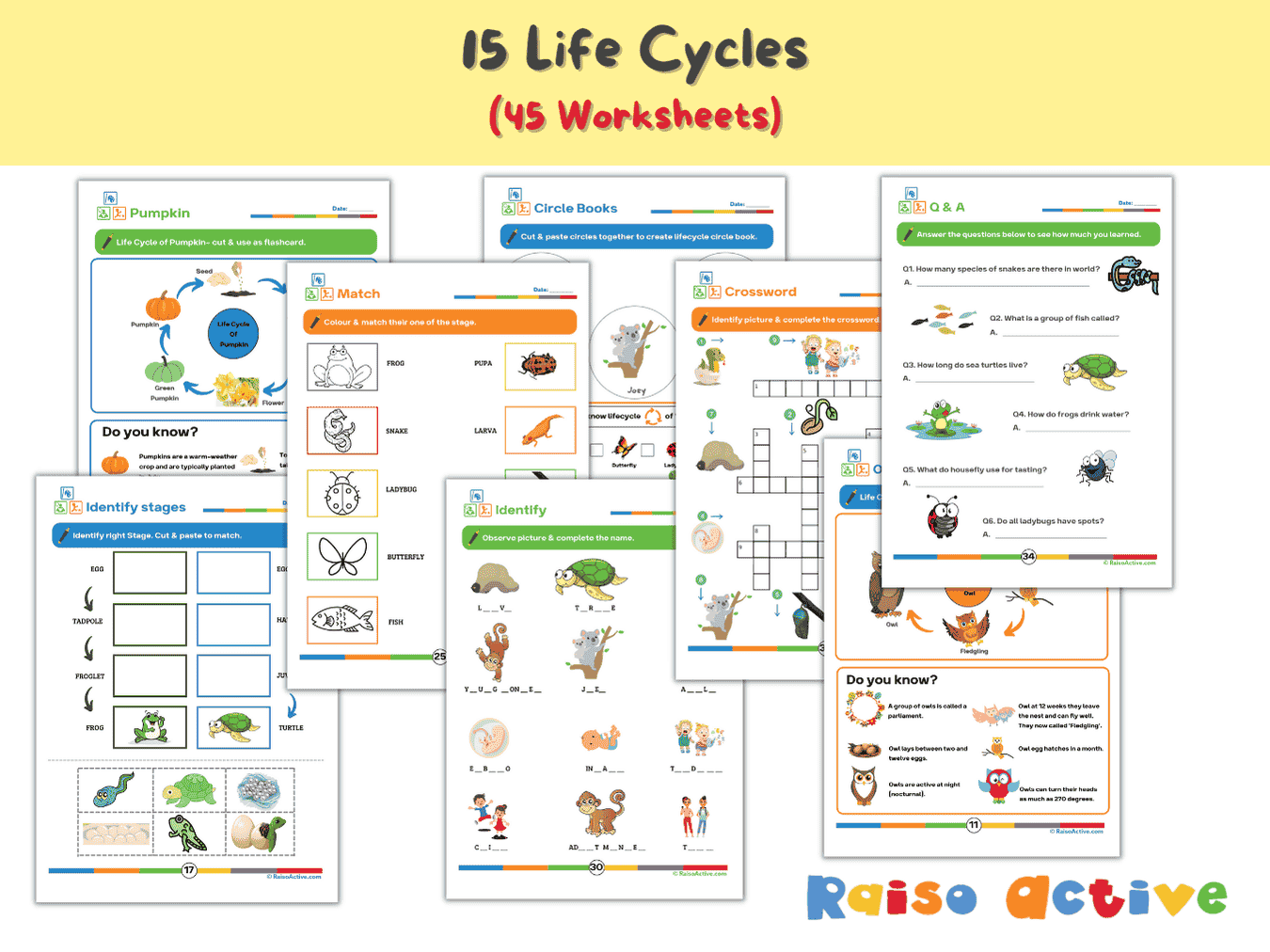
Lifecycles Activity Book & Flashcards for Preschool & Early Elementary
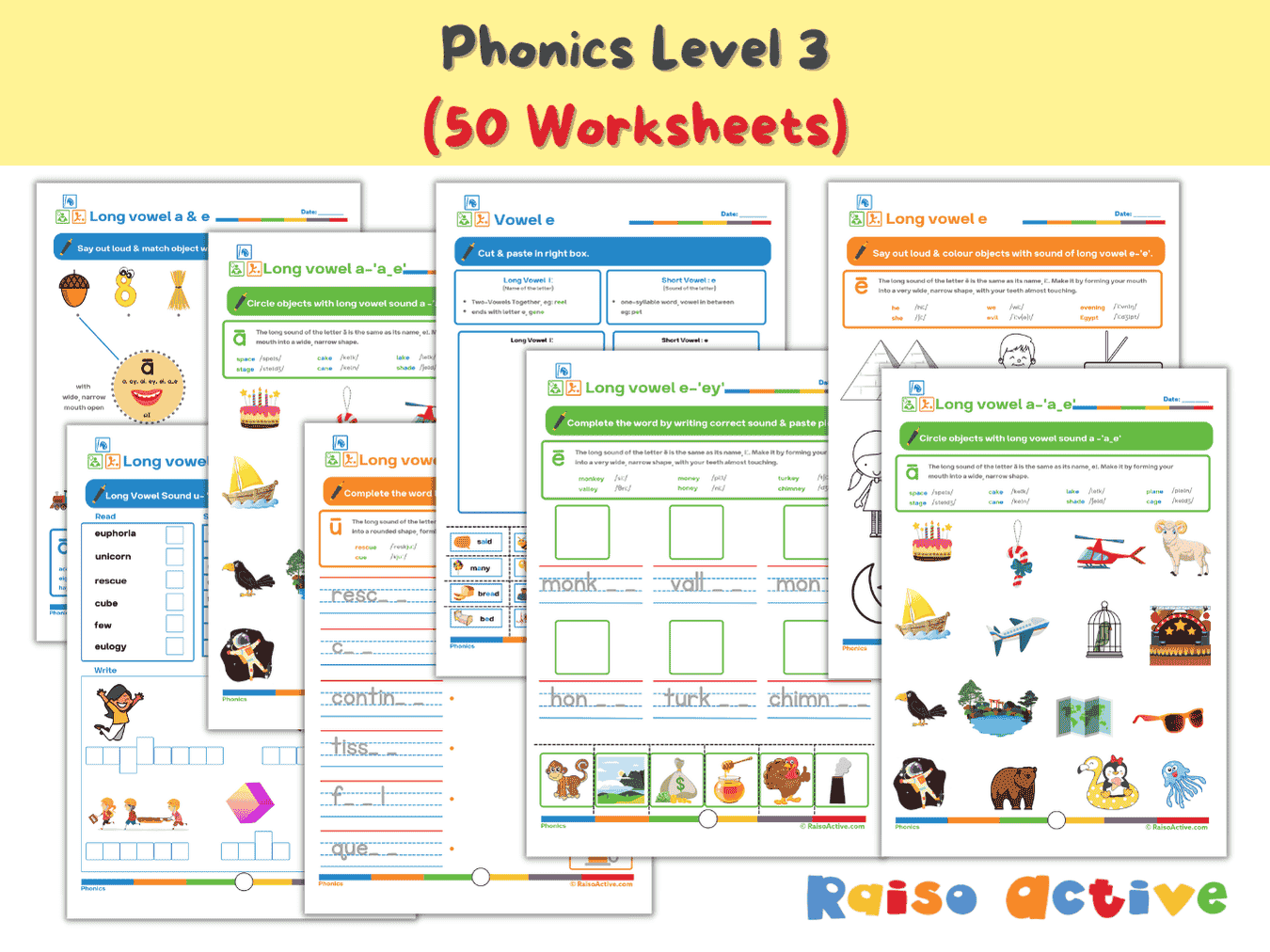
Phonics Level 3 Long Vowels Activity Book for Kindergarten & 1st Grade
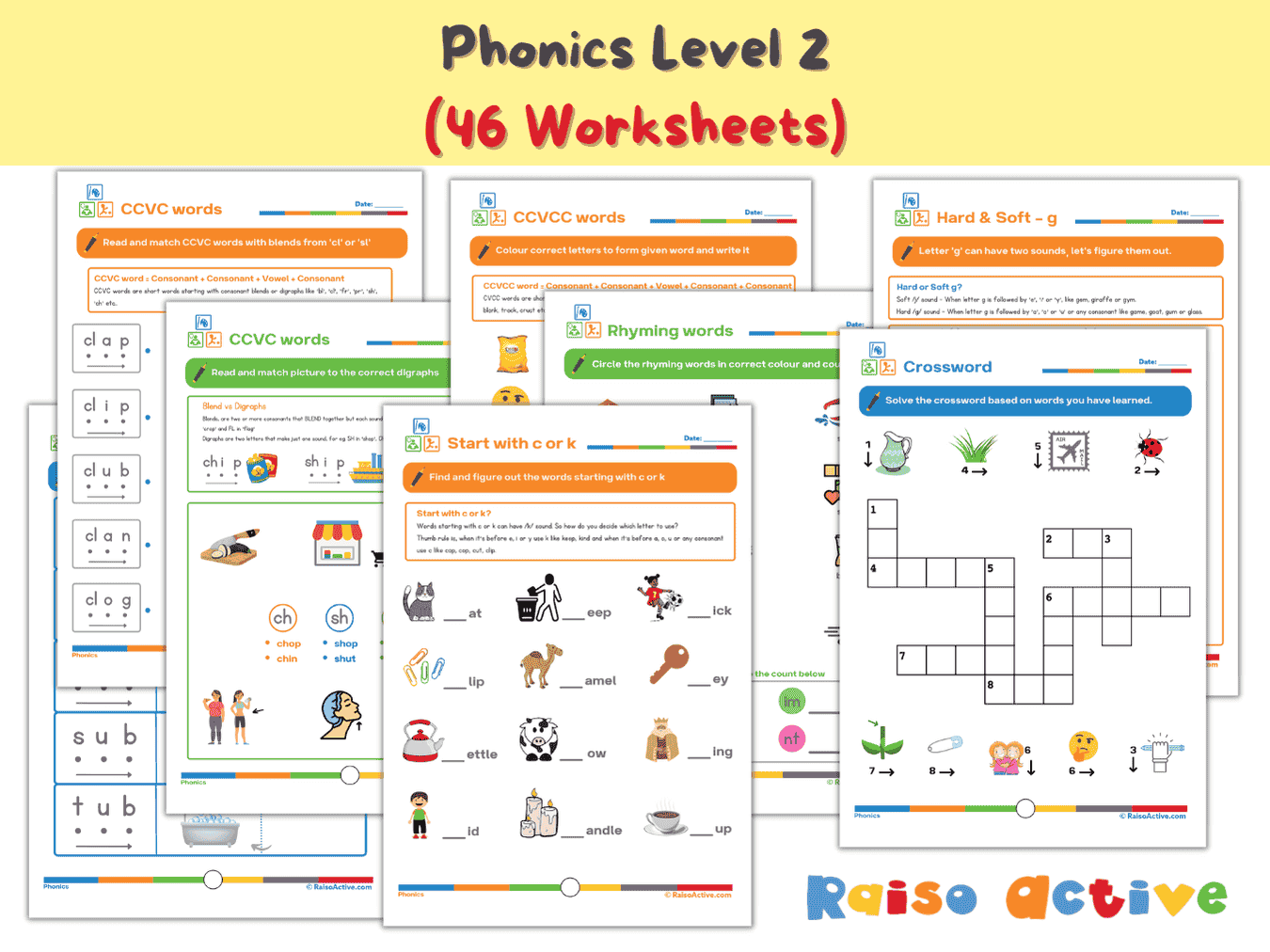
Phonics Level 2 Worksheets: CVC, CCVC, CVCC Word Families & Blends for Early Readers (Ages 4-7)
Guides for parents and teachers
See all guides →Best Worksheets for 3-Year-Olds: What Works and What to Avoid
What works on worksheets for 3-year-olds: short sessions, crayons, tracing lines, matching, cutting, a free weekly plan, and signs one is too advanced.
Portfolio Assessment with Young Children: A Comprehensive Guide to Meaningful Documentation
Learn how portfolio assessment captures your child's growth through meaningful documentation. Practical tips, templates, and age-appropriate strategies for ages 1-8.
Fostering Creativity in Structured Learning: The Perfect Balance for Young Minds
Learn how to blend creativity with structured learning for children ages 1-8. Practical strategies, activities, and printable worksheets for parents and teachers.
Preparing Your Child for a Rapidly Changing World: Essential Skills for Future Success
Discover the essential 21st century skills your child needs for future success. Practical tips on creativity, critical thinking, digital literacy & emotional intelligence for ages 1-8.
Celebrating Diversity: How to Incorporate Cultural Awareness in Learning Activities for Young Children
Practical cultural awareness activities for young children aged 2-8. Explore Indian festivals, world cultures, food, music, and crafts to teach diversity and inclusion.
How to Balance Structured Learning with Free Play: A Complete Guide for Parents and Educators
Learn how much free play vs structured learning young children need by age, signs of over-scheduling, and practical tips for Indian parents to design a balanced day.
Canonical: https://raisoactive.com/worksheets/reception-coloring