How to Balance Structured Learning with Free Play: A Complete Guide for Parents and Educators
Author
RaisoActive - Kids Activities and Fun Learning
Published
Updated
Reading Time
19 min read

- Free play is self-directed, intrinsically motivated activity — it has no adult agenda and is essential for healthy development
- Research consistently shows that play-based learning builds language, problem-solving, creativity, and social-emotional skills
- Most early childhood experts recommend that young children spend at least 2-3 hours in unstructured free play every day
- Indian parenting culture often over-schedules children with tuitions and classes — there are clear signs to watch for
- Structured learning and free play are not opposites; a balanced daily rhythm includes both purposefully
The Great Debate: Play or Academics?
If you are the parent of a young child in India today, you have almost certainly felt the pressure. Relatives ask if your three-year-old is learning to write. Neighbours mention which coaching centre their kindergartner attends. Social media fills your feed with videos of toddlers reciting multiplication tables. Meanwhile, a small voice inside you wonders: is all this early academics actually good for my child — or are they missing something important by not simply playing?
You are not imagining the tension. This is one of the most debated questions in early childhood education worldwide. And the good news is that decades of research have given us a clear, nuanced answer: children under eight need both structured learning and generous amounts of free play — and knowing how to blend the two is the single most powerful thing you can do for your child's development.
This guide will walk you through what free play actually is (hint: it is more than just running around), what the research says about its benefits, how much of each type of time different ages need, what structured learning should actually look like for young children, and how to design your day so both flourish together. We will also speak honestly about the Indian context, where over-scheduling is increasingly common and its costs are becoming visible.
Want practical parenting ideas in your inbox?
Join our newsletter for weekly activity ideas, free printable worksheets, and expert early learning tips — made for Indian parents.
What Free Play Actually Means — And What It Is Not
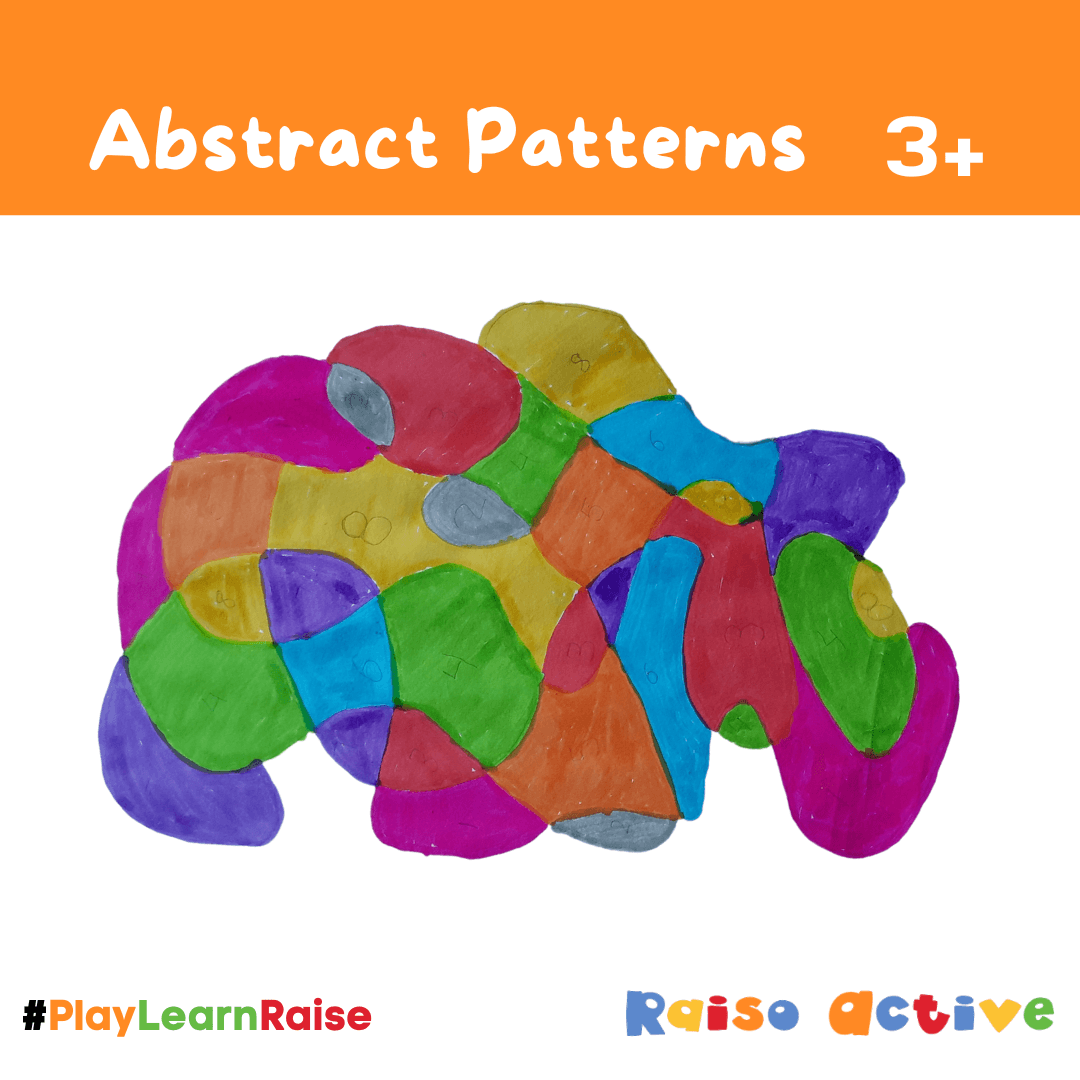
Free play is not simply the absence of learning. It is a specific kind of activity defined by three core qualities: it is self-directed (the child chooses what to do), it is intrinsically motivated (the child does it for its own sake, not for a reward or grade), and it has no adult agenda (there is no predetermined outcome the adult is steering toward).
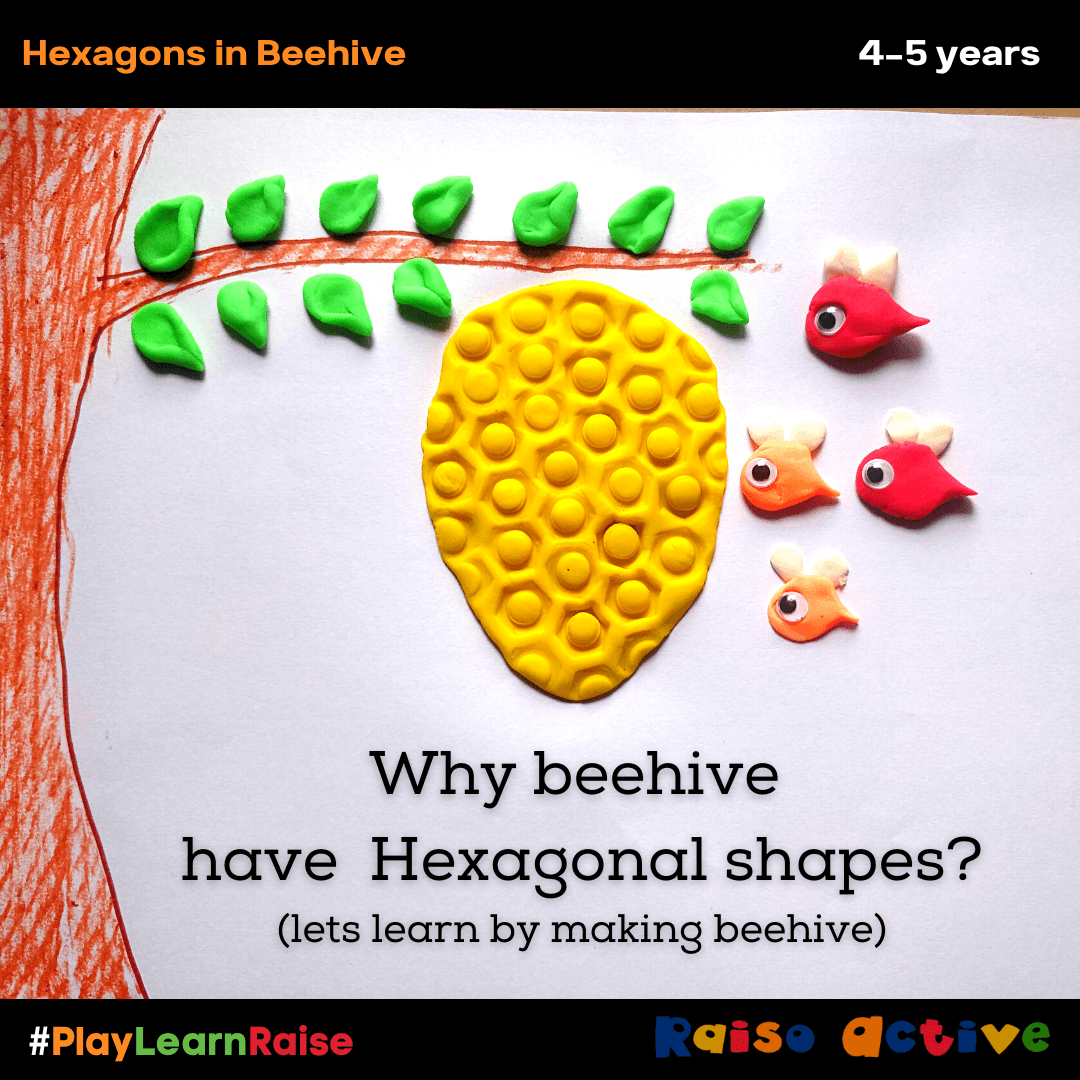
When your five-year-old spends thirty minutes arranging stones in the garden, narrating an elaborate story to herself, that is free play. When your toddler stacks and topples the same tower of cups twenty times, that is free play. When a group of children invent their own rules for a game of make-believe, that is free play. What unites all these moments is that the child is the author — she decides the direction, the rules, the pace, and when it ends.
By contrast, adult-led play — where a parent guides a child through a specific educational game or a structured craft — is not free play, even if it is enjoyable and hands-on. That is structured activity, and it has enormous value too. But it is important to understand the difference, because children need generous helpings of both.
Free play can happen indoors or outdoors, alone or with peers, with elaborate toys or with nothing at all. Sand, water, sticks, old cardboard boxes, and kitchen utensils have fuelled some of history's most imaginative play. The material matters far less than the freedom.
What Does Research Tell Us About Play-Based Learning?
The evidence in favour of free play is deep, diverse, and remarkably consistent across cultures. Neuroscientists, developmental psychologists, and educators have studied play for over a century — and the findings keep pointing in the same direction.
Language development: When children engage in pretend play, they use complex vocabulary, construct narratives, and practise the give-and-take of conversation. Studies show that the quality and quantity of language used during free play rivals — and often exceeds — that used during adult-directed instruction for young children.
Executive function: Free play, particularly imaginative play with rules (like playing 'school' or 'market'), directly builds self-regulation, impulse control, and working memory — the very skills that predict academic success far better than early literacy or numeracy drills. When a child plays a shopkeeper and must remember prices, count pretend money, and negotiate with a customer, she is doing hard cognitive work.
Social-emotional skills: Unstructured play with peers is where children learn to share, negotiate, handle conflict, manage disappointment, and experience genuine empathy. These skills cannot be taught through worksheets — they are built through the messy, real-time social laboratory of play.
Creativity and problem-solving: Play is the original design thinking studio. When children have unstructured time and open-ended materials, they experiment, fail, adapt, and try again — building the creative resilience that formal education struggles to teach.
of brain development occurs after birth and before age five — and neuroscientists confirm that play is the primary driver of synaptic growth and neural connection formation during this critical window.
Source: Harvard Center on the Developing Child
How Much Free Play Do Children Need? A Guide by Age
Different ages have different needs, but the principle holds across all of early childhood: more free play than most Indian parents currently provide. Here is what experts recommend:
Ages 1-2 (Toddlers): Almost all of the day should be free exploration and play. Structured time — if any — might be 5-10 minutes of a simple sensory activity or story time. At this age, everything a child does is learning. Toddlers do not need formal instruction of any kind.
Ages 3-4 (Preschool): The American Academy of Paediatrics and most early childhood frameworks recommend 2-3 hours of free, unstructured play daily. Structured learning time — songs, stories, simple art, early maths concepts — should be kept to short bursts of 10-15 minutes at a time, with a total of no more than 45-60 minutes across the whole day.
Ages 5-6 (Kindergarten): This is a transitional age. A healthy day might include 90 minutes of structured learning (spread across the day in short sessions), 60-90 minutes of outdoor play, and 60-90 minutes of free indoor play. Many kindergartens internationally follow a play-based curriculum for the majority of the day, even at this age.
Ages 7-8 (Early Primary): By now, children can sustain structured learning for longer periods — but they still need at least 60-90 minutes of unstructured play daily, in addition to recess and physical activity. The after-school hours should not be entirely consumed by homework and tuition.
reduction in free play time for children in urban India over the past two decades, driven by shrinking open spaces, increased screen time, and pressure to begin academics earlier.
Source: Child in India Report, CRY (2022)
Free play is not wasted time — it is the most productive thing a young child can do.
When a toddler spends an hour building and knocking down a block tower, she is developing spatial reasoning, cause-and-effect thinking, persistence, and hand-eye coordination. This is not less valuable than a worksheet — for her age, it is more valuable. The challenge for parents is to trust what looks like 'just playing.'
What Should Structured Learning Look Like for Young Children?
Structured learning does not mean sitting at a desk with a workbook for hours on end. For children under eight, developmentally appropriate structured learning is short, purposeful, playful, and responsive to the child. It has a clear learning intention, but it does not require a child to be passive, silent, or still for extended periods.
Good structured learning for a four-year-old might look like: sitting with a parent for ten minutes to work through a simple counting activity, then colouring a worksheet about numbers, then moving immediately into free play. The structured portion is brief and engaging. It gives the child a specific skill or concept to work with. And it does not crowd out the free time that allows that learning to consolidate.
High-quality worksheets, when chosen well and used in moderation, are genuinely valuable tools. A good worksheet for this age group practises one clear skill, provides visual interest, allows for some personal expression (choosing colours, for example), and can be completed in 10-15 minutes. It is a bridge between guided instruction and independent practice — not a replacement for hands-on experience.
The false choice that many parents face — 'either we do proper academics or we just play' — dissolves when you understand that structured learning and free play serve different developmental functions and a child needs both. The question is not which one to choose; it is how to design a day that honours both.
Structured learning for young children should be short, playful, and purposeful — not lengthy or passive.
Ten to fifteen minutes of focused, well-designed structured activity followed by free play is more effective for a preschooler than forty-five minutes of seat work. Short structured sessions also preserve the energy and motivation children need for free exploration. More time at the desk does not equal more learning — at this age, it often means less.
The Indian Context: Why We Over-Schedule — And What It Costs
India's competitive education system creates genuine anxiety for parents, and that anxiety often expresses itself in early, intensive academic preparation. The pressure to get a child into a 'good school' can begin before the child is even three years old. Tuition classes, abacus courses, handwriting practice, and activity classes stack up — and free play quietly disappears from the schedule.
There are also cultural dimensions. In many Indian families, a child who is 'studying' is seen as productive, while a child who is 'just playing' may be seen as wasting time. Grandparents who were themselves educated through rote learning may express concern if a child is not seated with books for significant portions of the day. These pressures are real — and navigating them with family members requires both compassion and confidence.
The costs of over-scheduling are becoming increasingly visible. Child psychologists in Indian cities are reporting rising rates of anxiety, school refusal, and learning reluctance in children as young as five — often traced to excessive academic pressure and insufficient unstructured time. Children who have never learned to entertain themselves, manage boredom, or initiate their own activity often struggle more in school, not less, because they have not developed the self-regulation and intrinsic motivation that free play builds.
- Constant boredom complaints — cannot initiate their own activity without screen time
- Difficulty playing alone or with peers without adult direction
- Anxiety or meltdowns around transitions, changes to routine, or perceived failure
- Excessive focus on rules and 'doing it right' — reluctance to experiment or take creative risks
- Fatigue, irritability, or emotional dysregulation after school — the tank is empty
- Resistance to learning activities that should feel enjoyable at their age
Over-scheduling does not give children an academic head start — it often creates a deficit.
Children who spend their early years in constant structured activities without sufficient free time miss the developmental experiences that build self-regulation, creativity, and social intelligence. These are precisely the skills that determine long-term academic success. The child who spends age four playing freely is building the foundation the child who spends age four in tuition classes is sacrificing.
- Share specific examples: 'When she built that block tower today, she was practising maths concepts — planning, counting, and spatial reasoning'
- Use language that resonates: 'Play-based learning is what India's new National Education Policy (NEP 2020) recommends for children under eight'
- Invite family to observe: let grandparents watch a free play session and notice how much thinking and language happens
- Frame it positively: 'We are giving him time to develop his imagination, which is what helps children do well in school later'
- Be patient — changing deeply held beliefs takes time, and most family members act from love and genuine concern
How to Design a Day That Includes Both
A balanced daily rhythm does not require a rigid timetable — in fact, over-scheduled days with five-minute transitions between labelled activities can themselves become a form of control that eliminates genuine free time. What you are aiming for is a loose, predictable rhythm that reserves large blocks of uninterrupted time for free play and weaves structured learning into natural moments.
Building a Balanced Daily Rhythm for Ages 3-6
Start the morning with free play
Resist the urge to launch immediately into structured activities after breakfast. Give your child 30-45 minutes of unstructured free play first — outdoors if possible. This allows them to process the night's sleep, regulate their energy, and arrive at structured activities in a calm, receptive state.
Schedule one short structured session in the morning
Choose a time when your child is naturally alert — typically mid-morning for most young children. Aim for 15-20 minutes of purposeful structured activity: a simple worksheet, a guided activity, a reading aloud session. Keep it engaging and finish before energy flags. Never force continuation if a child is genuinely struggling.
Follow structured time with free play
After the structured session, transition immediately into at least 45-60 minutes of free play. This is not a reward — it is a developmental necessity. The brain consolidates new learning during free, unstructured exploration. Resist the temptation to fill this time with another adult-directed activity.
Prioritise outdoor play every day
Outdoor play — even in a small courtyard, balcony, or nearby park — offers benefits that indoor play cannot replicate: gross motor development, vitamin D, exposure to natural stimuli, and the freedom to be louder and more physically expressive. Aim for at least one outdoor play session daily, even if it is only 20-30 minutes.
Add a second short structured session in the afternoon (optional for 5+)
For children aged five and above who are in school or approaching it, a second brief structured session after a rest period can be appropriate. Keep it to 20-30 minutes maximum. This might be a worksheet, a puzzle, or a focused reading activity. For children under five, skip this entirely.
Allow unstructured indoor play in the late afternoon
The hour before dinner is often a child's most creative play time — they are winding down from the day's stimulation and processing experiences. This is prime time for imaginative play, art, and building. Protect this time fiercely from screens and adult-directed activities.
Build in predictability, not rigidity
Children thrive on routine because it gives them a sense of security and allows them to anticipate transitions. But a good routine has wide, flexible blocks — not minute-by-minute scheduling. The goal is that your child generally knows 'after breakfast we play outside, then we do some learning, then we have lunch' — not a timetable that looks like a school timetable.
Outdoor vs Indoor Play: Both Matter, for Different Reasons
In many Indian cities, shrinking living spaces, traffic, heat, and safety concerns mean that outdoor play has become a luxury rather than a daily given. This is a genuine challenge — and it is worth solving creatively, because outdoor play offers specific developmental benefits that indoor play cannot fully replicate.
Outdoor play develops large motor skills (running, jumping, climbing, balancing) that support the fine motor control needed for writing. It exposes children to natural materials — mud, water, leaves, stones — that stimulate multi-sensory exploration. It provides the physical release of energy that makes children calmer and more receptive during structured learning. And it builds spatial awareness and risk assessment in ways that indoor environments cannot match.
Indoor free play, meanwhile, is where imaginative and constructive play flourishes. Building with blocks, creating art, playing with dolls and figures, cooking in a pretend kitchen — these activities develop narrative thinking, fine motor skills, and creativity. Both kinds of play have their place, and both deserve protected time in the daily rhythm.
- Use the early morning or late afternoon to avoid peak heat — even 20 minutes outside is valuable
- A building terrace, small balcony with a tub of sand or water, or society compound all count as outdoor play spaces
- Connect with other neighbourhood families so children have outdoor play companions — social outdoor play is most beneficial
- Nature play does not require a garden: a potted plant to tend, water to pour and measure, or leaves to sort and classify all bring the outdoors in
- Monsoon play is one of India's great childhood joys — with appropriate clothes, rain play is magical and developmentally rich
Where Worksheets and Structured Activities Fit In a Balanced Day
Worksheets have a somewhat mixed reputation in early childhood discussions — sometimes dismissed as boring or developmentally inappropriate, other times overused as a substitute for richer learning experiences. The truth is more nuanced: well-designed worksheets are valuable tools when used in the right amount, at the right age, and for the right purpose.
A good worksheet for a young child practises a specific, clearly defined skill — forming a letter, counting objects, matching shapes, tracing a path. It is visually appealing and achievable in 10-15 minutes. It does not ask a child to sit passively for long periods, and it leaves some room for personal expression. Used this way, worksheets provide structured practice that consolidates skills introduced through play and hands-on experience.
The problems arise when worksheets become the primary mode of early learning — when a child's day is mostly sitting with workbooks rather than playing, exploring, and discovering. At that point, structured academic activity has crowded out the free play that children need to develop executive function, social skills, and creativity. The worksheet is not the villain; the imbalance is.
- +Child eagerly engages with both learning activities and free play
- +Structured time is short, purposeful, and ends before resistance builds
- +Child can initiate and sustain their own play without adult prompting
- +Child shows curiosity, creativity, and willingness to try new things
- +Learning activities feel like a natural part of the day, not a chore
- +Child is emotionally regulated and generally content
- -Child resists or melts down at the mention of learning activities
- -Structured time routinely extends past 30 minutes without a break
- -Child cannot play independently and constantly seeks adult entertainment
- -Child is anxious about making mistakes or getting things 'wrong'
- -Learning activities dominate the day, leaving little unscheduled time
- -Child is frequently irritable, anxious, or emotionally overwhelmed
Get Free Worksheets and Play Activity Ideas Every Week
Subscribe to the RaisoActive newsletter and receive hand-picked printable worksheets, play-based activity ideas, and expert early learning tips delivered to your inbox. Designed for Indian parents and educators of children ages 1-8.
Frequently Asked Questions
My child starts school next year. Should I be reducing free play to prepare them?
How do I handle pressure from my child's preschool to do more academic work at home?
My child seems to prefer screens over free play. How do I encourage real play?
Is it okay to play with my child during free play, or should I stay out?
At what age should I start introducing structured learning activities?
How do I explain the importance of free play to my in-laws who think my child should be studying more?
Free worksheets for this topic
Browse all worksheets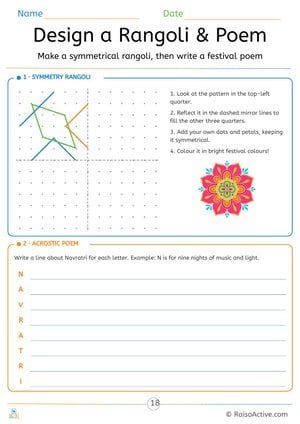
Navratri Symmetry Rangoli and Acrostic Poem
Ages 7-11 · Grade 2–Grade 3Ages 7-11 · Year 3–Year 4Ages 7-11 · Class 2–Class 3Ages 7-11
Children reflect a pattern in two mirror lines to complete a four-way symmetrical rangoli on a dot grid, add their own symmetrical details, and write an acrostic poem with one line for each letter of NAVRATRI.
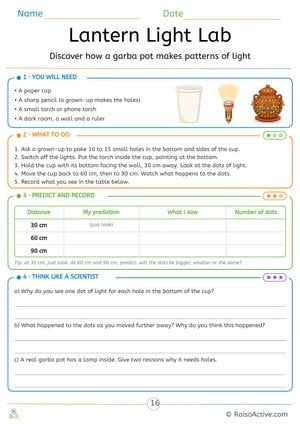
Lantern Light Lab: Navratri Garba Pot Light Experiment
Ages 7-11 · Grade 2–Grade 3Ages 7-11 · Year 3–Year 4Ages 7-11 · Class 2–Class 3Ages 7-11
Children make holes in a paper cup, shine a torch through it and see one spot of light for each hole. They predict and record what happens as they move further from the wall, and explain the results and why a real garba pot needs holes.
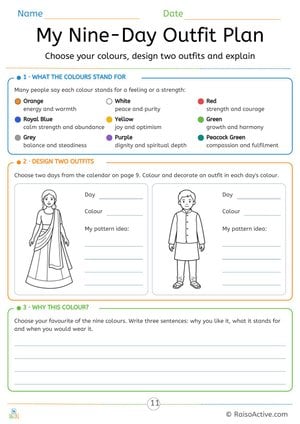
My Nine-Day Outfit Plan: Navratri Colours Design and Writing
Ages 7-11 · Grade 2–Grade 3Ages 7-11 · Year 3–Year 4Ages 7-11 · Class 2–Class 3Ages 7-11
Children read what each of the nine colours is often said to stand for, choose two days from the calendar, colour and pattern a lehenga-style outfit and a kurta outfit in those colours, and write three sentences explaining their favourite colour.

Soap & Pepper Science Experiment Worksheet for Preschoolers
Ages 3-5 · Preschool–Pre-KAges 3-5 · Nursery–ReceptionAges 3-5 · Nursery–LKGAges 3-5
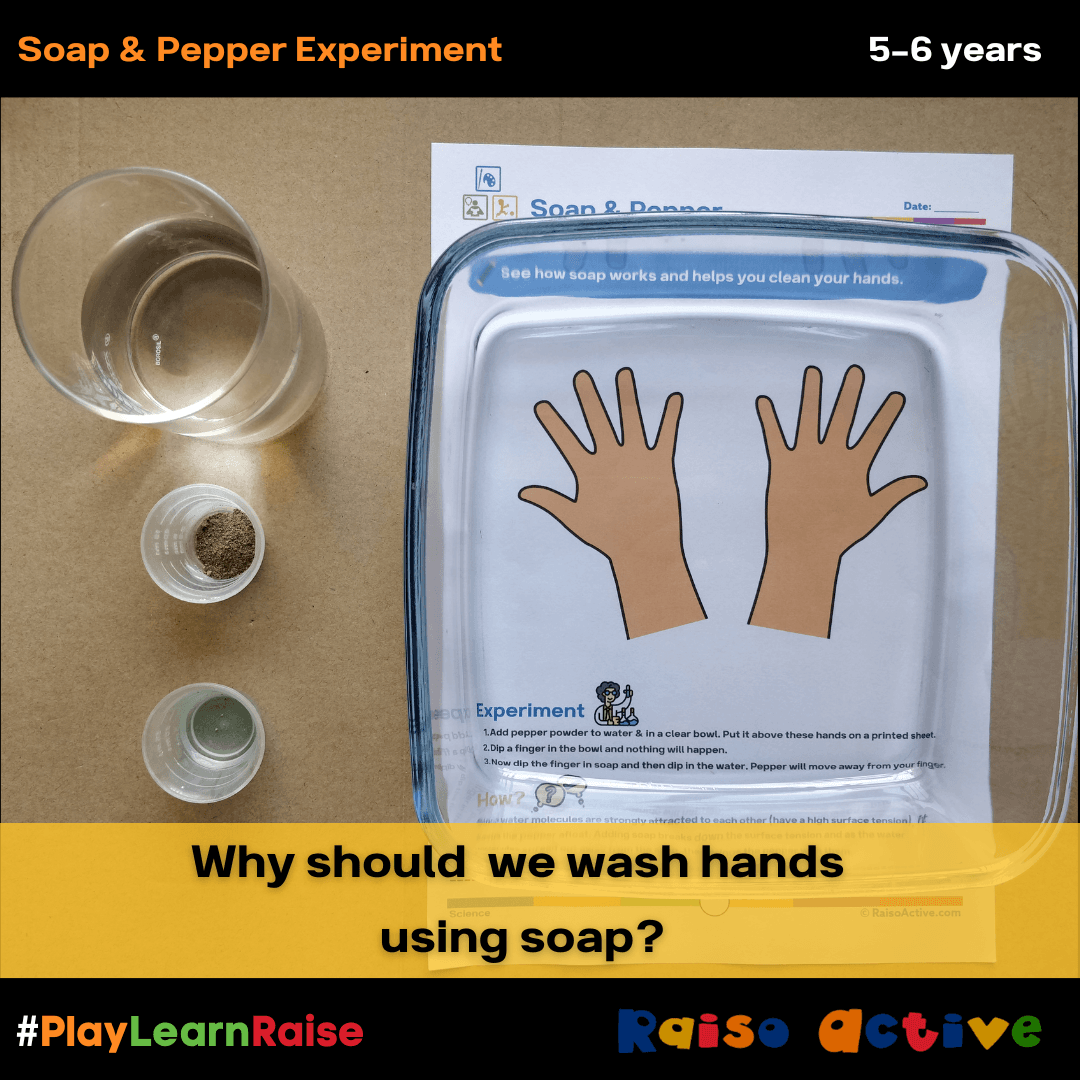
This simple experiment introduces children ages 3-5 to the basic science of surface tension and how soap breaks it, using pepper flakes sprinkled on water as a visual demonstration. Watching the pepper scatter away the instant soap touches the water gives children a concrete, memorable example of cause and effect, an early building block for scientific thinking.

Written by
Hemsweta Jain · Teacher Cheena
MBA and Early Childhood Educator, teaching since 2014 · Founder of RaisoActive, Mumbai
Published · Last reviewed
Related Resources
Printable Resources(10)
View all

Summer Activity Pack: Math, Literacy, Puzzles & More for Preschool & Kindergarten
Ages 3-7 · Preschool–Grade 1Ages 3-7 · Nursery–Year 2Ages 3-7 · Nursery–Class 1Ages 3-7 · 26 pages

Phonics Level 3 Long Vowels Activity Book for Kindergarten & 1st Grade
Ages 5-7 · Kindergarten–Grade 1Ages 5-7 · Year 1–Year 2Ages 5-7 · UKG–Class 1Ages 5-7 · 51 pages
Phonics Level 2 Worksheets: CVC, CCVC, CVCC Word Families & Blends for Early Readers (Ages 4-7)
Ages 4-7 · Pre-K–Grade 1Ages 4-7 · Reception–Year 2Ages 4-7 · LKG–Class 1Ages 4-7 · 47 pages
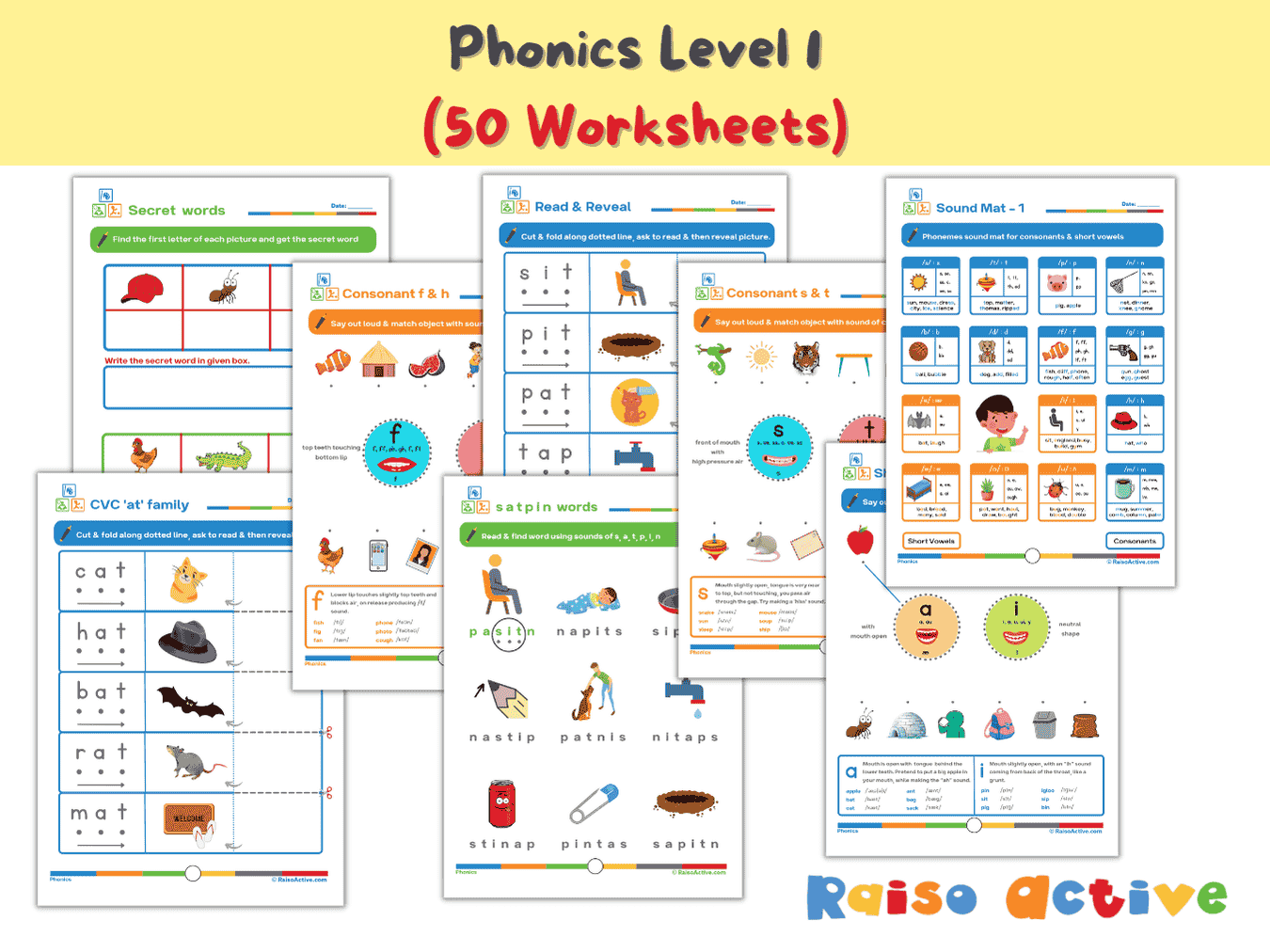
Phonics Level 1 Activity Book: Letter Sounds, Blending & CVC Words for Preschool & Kindergarten
Ages 3-6 · Preschool–KindergartenAges 3-6 · Nursery–Year 1Ages 3-6 · Nursery–UKGAges 3-6 · 60 pages
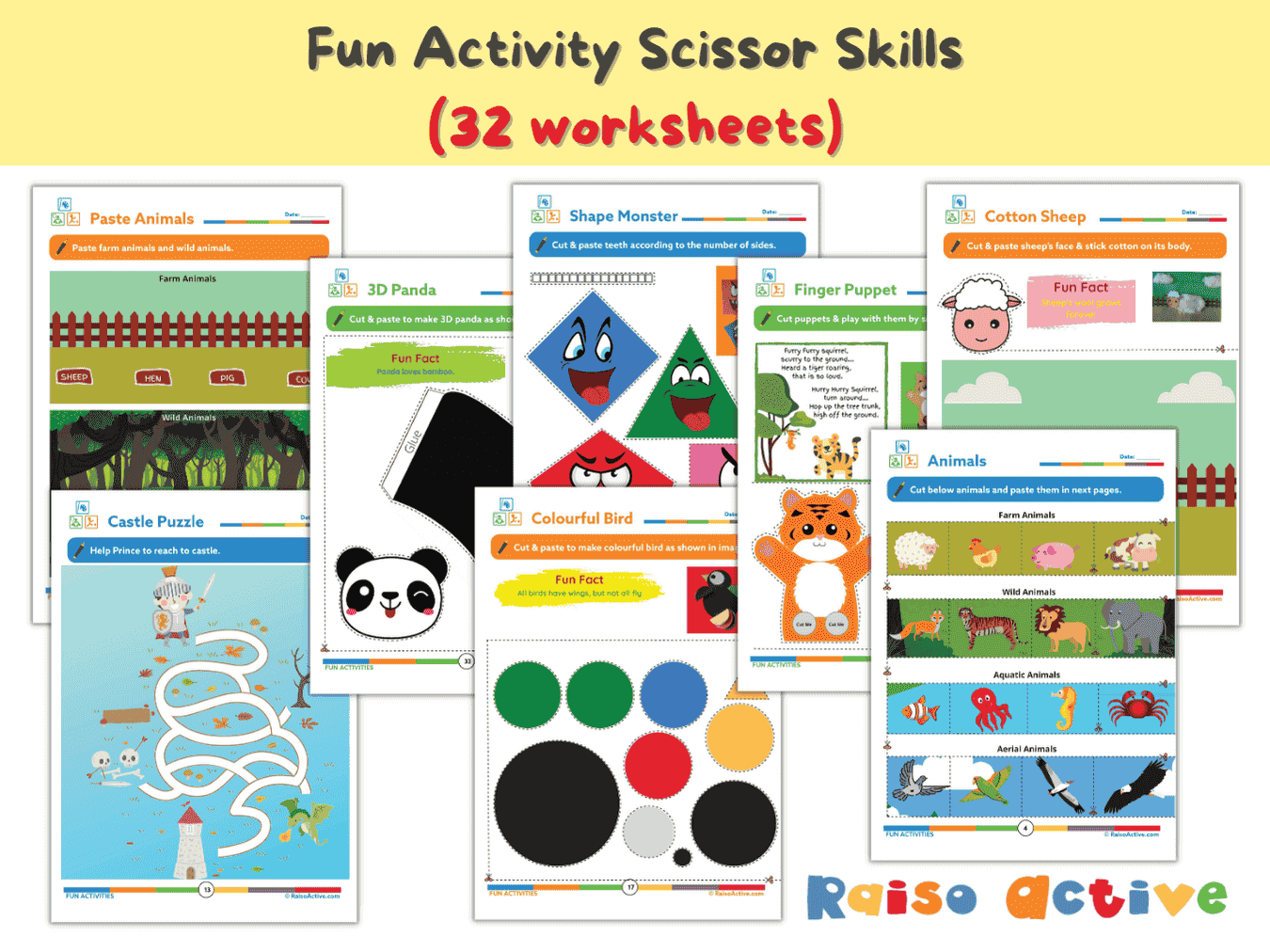

Preschool Scissor Skills Activity Book: Fine Motor & Craft Fun for Ages 3-6
Ages 3-6 · Preschool–KindergartenAges 3-6 · Nursery–Year 1Ages 3-6 · Nursery–UKGAges 3-6 · 35 pages
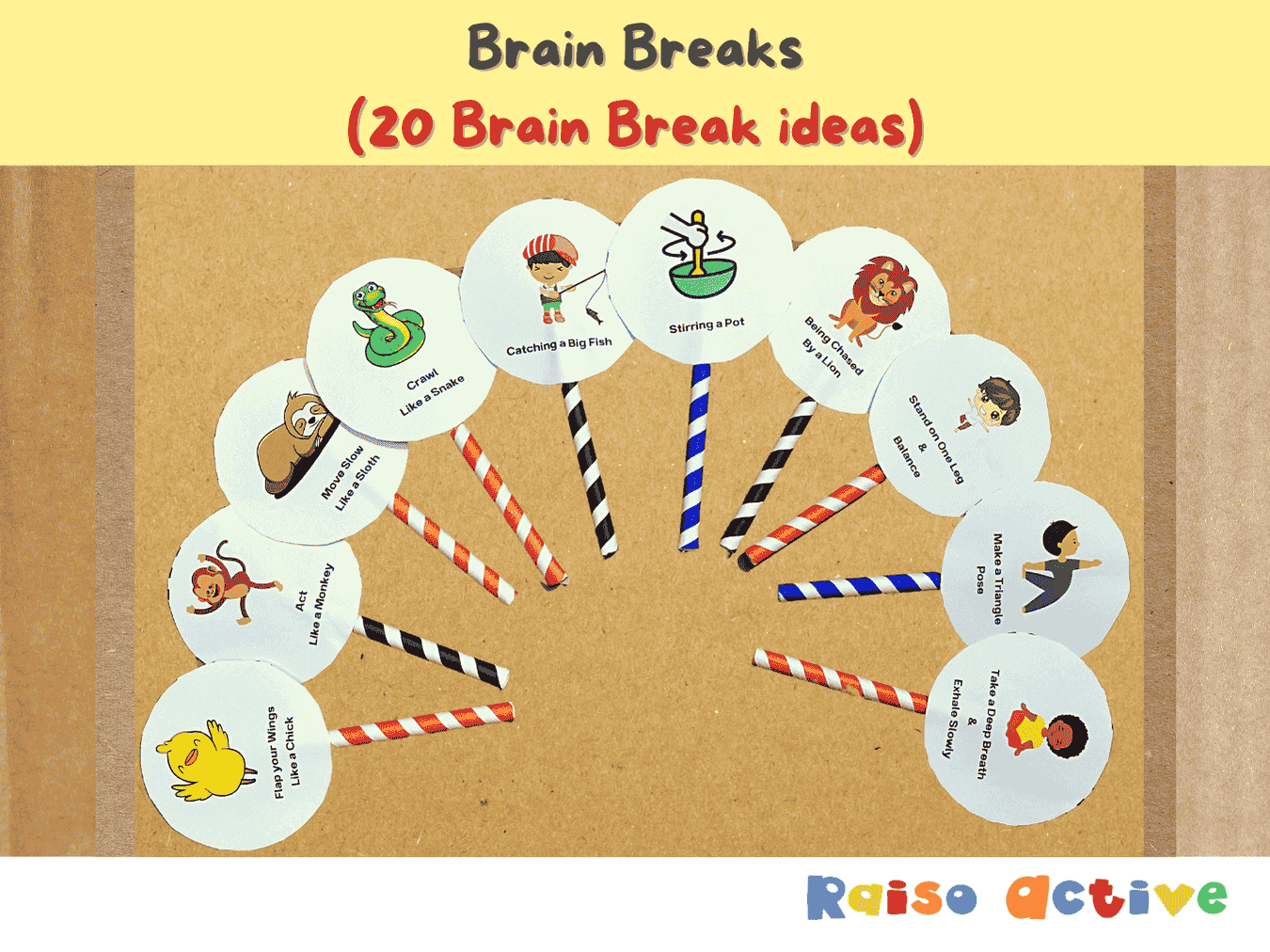
Gross Motor Movement & Imaginative Play Flashcards for Toddlers & Preschoolers
Ages 2-5 · Preschool–Pre-KAges 2-5 · Nursery–ReceptionAges 2-5 · Nursery–LKGAges 2-5 · 5 pages
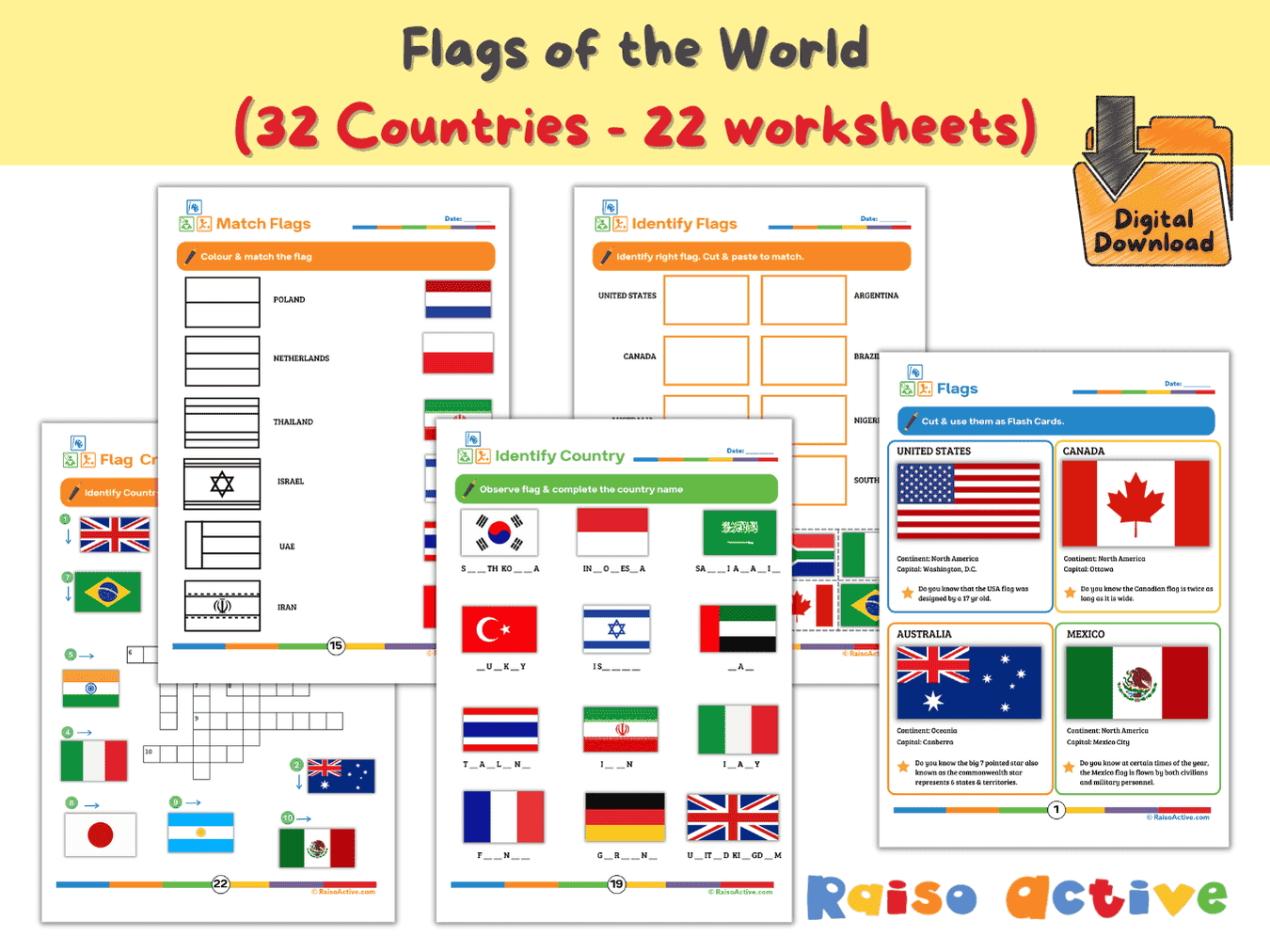

Flags of the World Activity Book & Flashcards for Kids (Ages 5-9)
Ages 5-8 · Kindergarten–Grade 2Ages 5-8 · Year 1–Year 3Ages 5-8 · UKG–Class 2Ages 5-8 · 23 pages

Month 9: Holistic Preschool Play Learning | Ages Up to 4
Ages 3-4 · PreschoolAges 3-4 · NurseryAges 3-4 · 30 pages
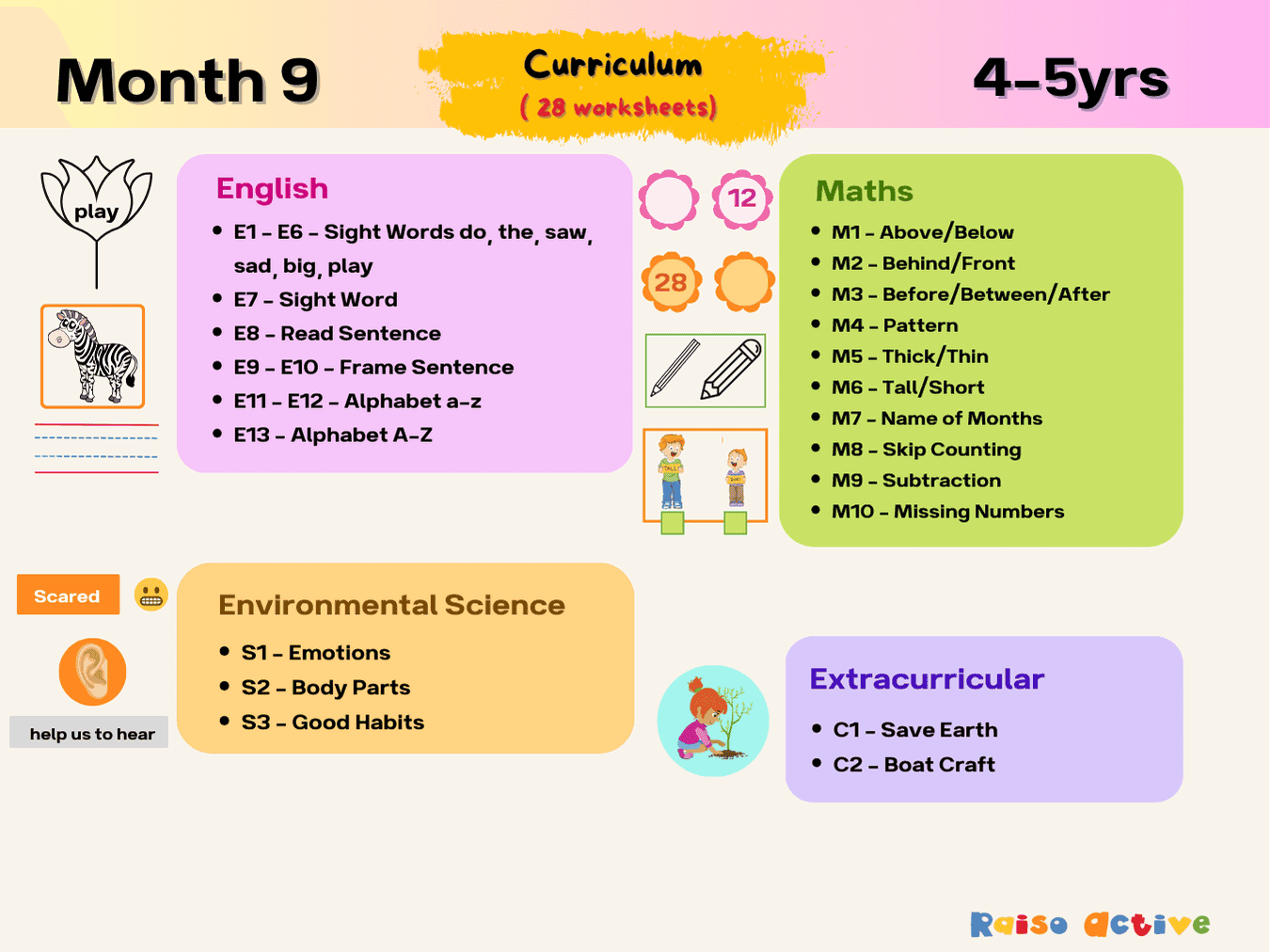
Month 9: Play-Based Preschool Foundational Skills | Ages 4-5
Ages 4-5 · Pre-KAges 4-5 · ReceptionAges 4-5 · LKGAges 4-5 · 31 pages
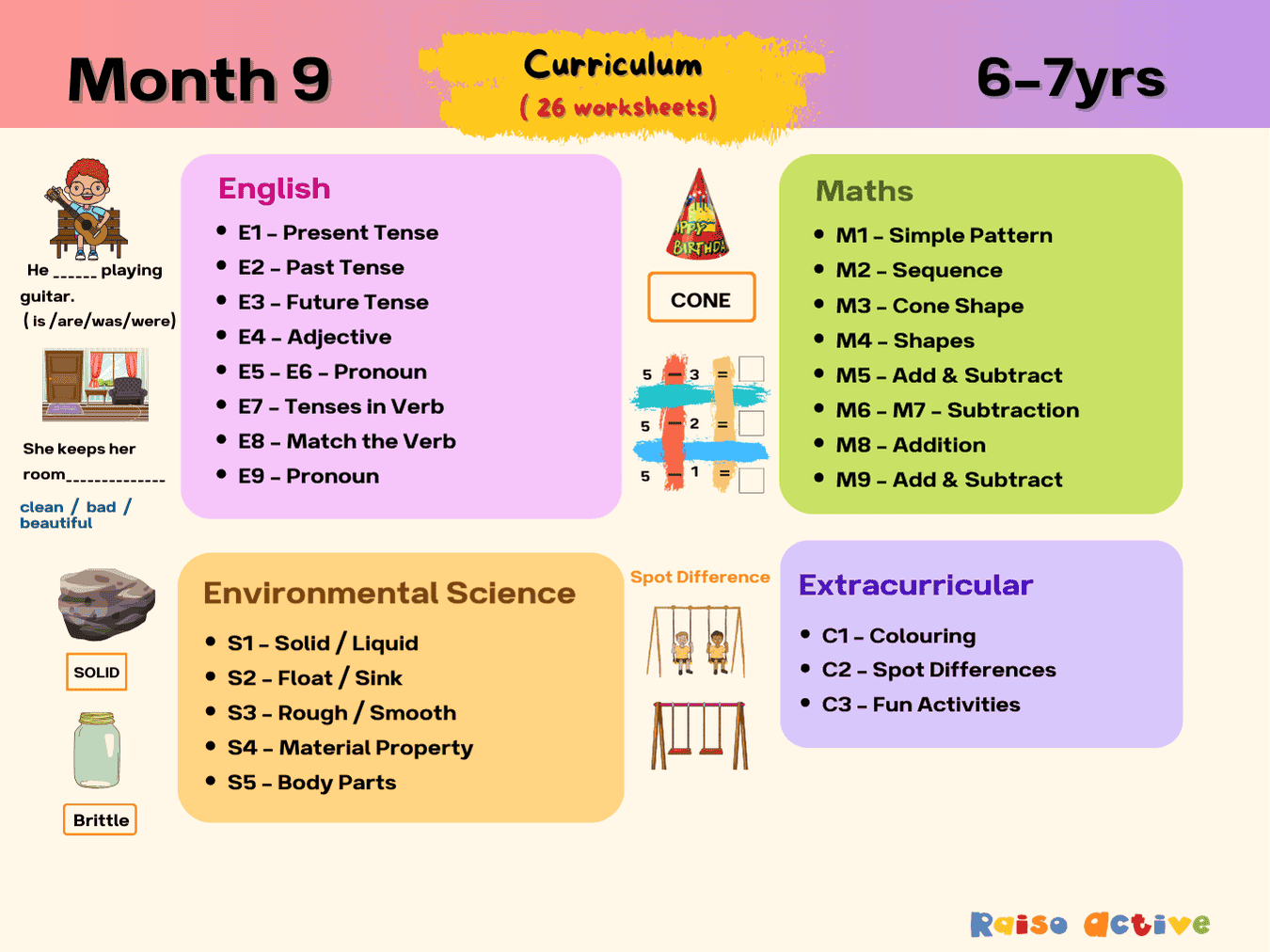
Month 9: Multi-Subject Early Learning | Ages 6-7
Ages 6-7 · Grade 1Ages 6-7 · Year 2Ages 6-7 · Class 1Ages 6-7 · 29 pages