Are Worksheets Appropriate for Preschoolers? A Comprehensive Guide for Parents and Educators
Author
RaisoActive - Kids Activities and Fun Learning
Published
Updated
Reading Time
13 min read

- Worksheets can be appropriate for preschoolers when used thoughtfully, in moderation, and alongside hands-on play
- Research shows children ages 3-5 learn best through multi-sensory, play-based experiences — worksheets should complement, not replace these
- The quality and design of the worksheet matters far more than whether worksheets are used at all
- Developmentally appropriate worksheets build pre-writing skills, pattern recognition, and early maths concepts
- This guide helps you choose the right worksheets and use them in ways that support — not hinder — your child's development
The Great Worksheet Debate: Finding the Middle Ground
Few topics in early childhood education spark as much passionate debate as worksheets for preschoolers. On one side, parents worry that their child will "fall behind" without structured practice. On the other, educators caution that too many worksheets can drain the joy from learning. Social media amplifies both voices, leaving many parents feeling confused and guilty no matter what they choose.
The reality is far more nuanced than either extreme suggests. Worksheets are neither inherently harmful nor universally beneficial for preschoolers. Their appropriateness depends on how they are designed, how they are used, and how they fit into a child's overall learning experience. A well-chosen worksheet used at the right moment can reinforce a concept beautifully. The same worksheet forced on a child who is not ready can create frustration and resistance.
In this comprehensive guide, we will move past the polarised debate and look at what research actually tells us about worksheets and young children. You will learn how to evaluate worksheets, when to use them, when to skip them, and how to create a balanced learning environment that honours both structure and play.
Want age-appropriate learning resources?
Join our newsletter for weekly tips on balanced early learning, free printables, and expert guidance for parents of children ages 1-8.
What Does Research Say About Worksheets for Preschoolers?
Early childhood researchers generally agree on one point: young children learn best through active, hands-on experiences that engage multiple senses. This is well established in developmental psychology and is the foundation of approaches like Montessori, Reggio Emilia, and Waldorf education.
However, this does not mean worksheets have no place. A growing body of research suggests that brief, targeted, developmentally appropriate paper-based activities can effectively reinforce concepts that children have first explored through play. The key word is "reinforce" — worksheets work best as a follow-up to concrete experiences, not as a first introduction to new concepts.
of brain development occurs before age 5, making the quality of early learning experiences — including how worksheets are used — critically important for long-term outcomes.
Source: Harvard Center on the Developing Child
Neuroscience research shows that young children form neural connections most effectively through multi-sensory engagement. When a child traces a letter in sand, moulds it with clay, and then practises it on a worksheet, the brain creates stronger, more durable pathways than through any single activity alone. The worksheet becomes one tool in a rich toolkit — not the entire toolkit.
Worksheets are most effective when they follow hands-on exploration, not replace it.
Introduce a concept through play, sensory activities, or real-world experiences first. Then use a worksheet to consolidate and practise what the child has already begun to understand. This sequence — explore first, practise second — aligns with how young brains naturally learn.
When Worksheets Help: The Right Time, Right Way
Used appropriately, worksheets can genuinely support preschoolers' development in several important areas. Understanding these benefits helps you choose worksheets with purpose rather than using them out of habit or anxiety.
Building Pre-Writing and Fine Motor Skills
Tracing lines, curves, and eventually letters on paper helps children develop the hand strength, pencil grip, and hand-eye coordination they will need for writing. These are legitimate developmental skills, and worksheets designed for tracing and pre-writing can be excellent practice tools — especially when paired with activities like threading beads, tearing paper, or moulding clay.
Reinforcing Pattern Recognition and Early Maths
Worksheets that ask children to identify patterns, sort shapes, count objects, or match items can reinforce mathematical thinking in a focused way. After a child has sorted real buttons by colour or counted mangoes in a fruit basket, a worksheet that practises the same skill provides structured repetition that deepens understanding.
Developing Focus and Task Completion
Sitting down to complete a short, age-appropriate worksheet helps preschoolers practise sustained attention and the satisfaction of finishing a task. These are important school-readiness skills. The emphasis here is on short and age-appropriate — five minutes of focused work is a significant achievement for a three-year-old.
- Your child approaches it willingly, without coaxing or bribing
- They can complete most of it independently with minimal frustration
- They show pride or satisfaction when finished
- They sometimes want to do "one more"
- The activity takes 5-15 minutes, not 30+ minutes of struggle
When Worksheets Hinder: Red Flags to Watch For
Worksheets become problematic when they are overused, developmentally inappropriate, or used as a substitute for the rich, sensory-based learning that preschoolers need. Here are the warning signs that worksheets are doing more harm than good.
- **Tears and tantrums**: If your child regularly cries, throws worksheets, or says "I hate this," the activity is not working
- **Loss of curiosity**: A child who used to ask "why?" constantly but now just waits for instructions may be over-reliant on structured activities
- **Fear of mistakes**: If your child erases obsessively, asks "Is this right?" constantly, or refuses to try, the worksheets may be creating anxiety rather than confidence
- **Physical complaints**: Complaints of hand pain, headaches, or tiredness during worksheet time may signal that the task is too demanding for their developmental stage
- **Avoidance of all learning**: When worksheets dominate learning time, some children begin to associate all learning with drudgery
If you recognise these signs, it does not mean you have done something wrong. It simply means it is time to adjust. Pull back on worksheets, increase play-based activities, and reintroduce structured practice gradually once your child's enthusiasm returns.
Worksheet Dos and Don'ts for Preschoolers
- +Use worksheets as one part of a varied learning diet
- +Choose worksheets with large spaces, simple instructions, and visual appeal
- +Let your child colour, draw, or decorate worksheets creatively
- +Follow your child's interest and readiness cues
- +Praise effort and process: "You worked so hard on this!"
- +Limit worksheet time to 10-15 minutes per session
- -Make worksheets the primary or only learning activity
- -Use worksheets with tiny print, cluttered layouts, or complex multi-step instructions
- -Insist on staying within lines or using "correct" colours
- -Push worksheets because other children the same age are doing them
- -Focus only on accuracy: "You got 3 wrong"
- -Force a child to sit through 30+ minutes of worksheet practice
How to Choose Age-Appropriate Worksheets
Not all worksheets are created equal. The difference between a worksheet that supports learning and one that frustrates a child often comes down to design and developmental alignment. Here is what to look for at different ages.
Choosing the Right Worksheet by Age
Ages 2.5-3: Pre-worksheet activities
At this age, most children are not ready for traditional worksheets. Focus on activities that build the foundations: finger painting, tearing and pasting paper, scribbling with thick crayons, and sticker activities. If you do use worksheets, choose ones with very large images, simple dot-to-dot activities (1-5), or basic matching tasks.
Ages 3-4: Simple, sensory-friendly worksheets
Look for worksheets with large, clear images and minimal text. Tracing straight lines and curves, colouring simple shapes, matching identical pictures, and sorting by one attribute (colour or shape) are appropriate. Limit sessions to 5-10 minutes. Always pair with a hands-on activity first.
Ages 4-5: Building skills with variety
Children at this stage can handle tracing letters and numbers, completing simple patterns (AB, ABB), counting objects up to 10, cutting along straight and curved lines, and basic phonics matching. Sessions can extend to 10-15 minutes. Offer choices between different worksheets to build autonomy.
Ages 5-6: Preparing for school with confidence
Pre-schoolers preparing for formal school can benefit from letter formation practice, number writing, simple addition and subtraction with pictures, rhyming words, and beginning sight words. At this stage, worksheets can serve as a bridge between play-based preschool learning and the more structured demands of primary school.
The best worksheet for your child is one they can do mostly independently with a sense of accomplishment.
If a child needs constant help, the worksheet is too advanced. If they finish in seconds without thinking, it is too easy. The sweet spot is a worksheet that offers a manageable challenge — difficult enough to require effort, easy enough to succeed. This builds both skills and confidence.
The Play-Based Alternative: What to Do Instead of (or Alongside) Worksheets
If you decide to reduce worksheet time or want to balance it with richer experiences, here are play-based activities that teach the same skills worksheets target — often more effectively.
- Instead of tracing worksheets: Trace letters in sand, shaving cream, or rice. Form letters with play dough, sticks, or string.
- Instead of counting worksheets: Count real objects — roti on plates, shoes in the rack, birds at the window. Play shopkeeper games with real items and play money.
- Instead of colouring worksheets: Offer blank paper and open-ended art supplies. Let children create their own pictures and tell stories about them.
- Instead of matching worksheets: Play sorting and matching games with household objects — socks, spoons, dal varieties, or fruit.
- Instead of cutting worksheets: Cut out pictures from old magazines, snip playdough with safety scissors, or cut leaves and grass for collages.
- **Morning**: Free play and exploration (30-60 minutes) — blocks, pretend play, outdoor time
- **Mid-morning**: One focused activity (10-15 minutes) — this could be a worksheet, a craft, or a guided game
- **Before lunch**: Story time and conversation (15-20 minutes) — builds vocabulary and comprehension naturally
- **Afternoon**: Sensory play or art (20-30 minutes) — playdough, water play, painting, sand play
- **Evening**: Gentle structured activity if the child is willing — a simple worksheet, a puzzle, or a board game
Worksheets in the Indian Preschool Context
In India, there is often significant pressure — from schools, relatives, and other parents — to start formal academics early. Many preschools send home daily worksheets, and parents of three-year-olds worry if their child is not yet writing the alphabet. This pressure is understandable but worth examining critically.
India's National Education Policy (NEP) 2020 explicitly recommends a play-based, activity-centred approach for the foundational stage (ages 3-8). The policy discourages formal reading and writing instruction before age 6, instead emphasising pre-literacy and pre-numeracy skills through games, stories, music, and hands-on exploration. This means that a balanced approach — where worksheets support but do not dominate learning — is actually more aligned with national educational goals than a worksheet-heavy approach.
of Indian parents surveyed believed that formal academics should begin before age 4, despite NEP 2020 and global research recommending a play-based approach until age 6.
Source: ASER Centre, Annual Status of Education Report
If your child's preschool sends home a heavy worksheet load, you do not need to skip them entirely — but you also do not need to treat them as compulsory homework. Complete what feels right for your child, supplement with play-based activities, and remember that readiness, not pressure, produces the best learning outcomes.
There is no evidence that early worksheet-heavy instruction leads to better academic outcomes — in fact, research suggests the opposite.
Longitudinal studies consistently show that children who spend their preschool years in play-rich environments perform as well or better academically by age 7-8 than those who began formal instruction at age 3-4. More importantly, they tend to have stronger motivation, creativity, and emotional well-being. Worksheets in moderation are fine; worksheets as the primary learning method are not optimal.
Developmentally Appropriate Worksheets to Try
If you are looking for worksheets that are thoughtfully designed for preschoolers — with large, clear layouts, engaging visuals, and just the right level of challenge — here are some of our favourites.
Creative Ways to Make Worksheets More Engaging
If your child is lukewarm about worksheets, a few simple tweaks can transform the experience from "boring work" to "fun challenge." These ideas work especially well for children aged 3-6.
- **Use different tools**: Instead of a pencil, try crayons, dot markers, stickers, stamp pads, or even painting with a cotton bud
- **Add a story**: Turn the worksheet into a narrative — "The caterpillar needs to follow the dotted line to find the leaf. Can you help?"
- **Make it social**: Do the worksheet together or let your child "teach" a stuffed animal how to do it
- **Offer choice**: Let your child pick from 2-3 worksheets rather than assigning one
- **Celebrate completion**: Display finished worksheets on a "proud wall" or in a special folder the child decorates
Get Free Preschool Worksheets Every Week
Subscribe to the RaisoActive newsletter for age-appropriate, beautifully designed worksheets, play-based activity ideas, and expert tips for parents and teachers of children ages 1-8.
Frequently Asked Questions
At what age should I start giving my child worksheets?
How many worksheets per day is appropriate for a preschooler?
My child's preschool uses only worksheets and no play. Should I be concerned?
Are digital worksheets or apps better than paper worksheets for preschoolers?
My child is in UKG and struggles with worksheets. Is there a problem?
How do Montessori and play-based approaches view worksheets?
Free worksheets for this topic
Browse all worksheets
Pumpkin Lines Dice Game: Halloween Pre-Writing Worksheet
Ages 4-8 · Pre-K–Grade 2Ages 4-8 · Reception–Year 3Ages 4-8 · LKG–Class 2Ages 4-8
Children practise wavy, zigzag and looped pre-writing lines while playing a simple dice game.
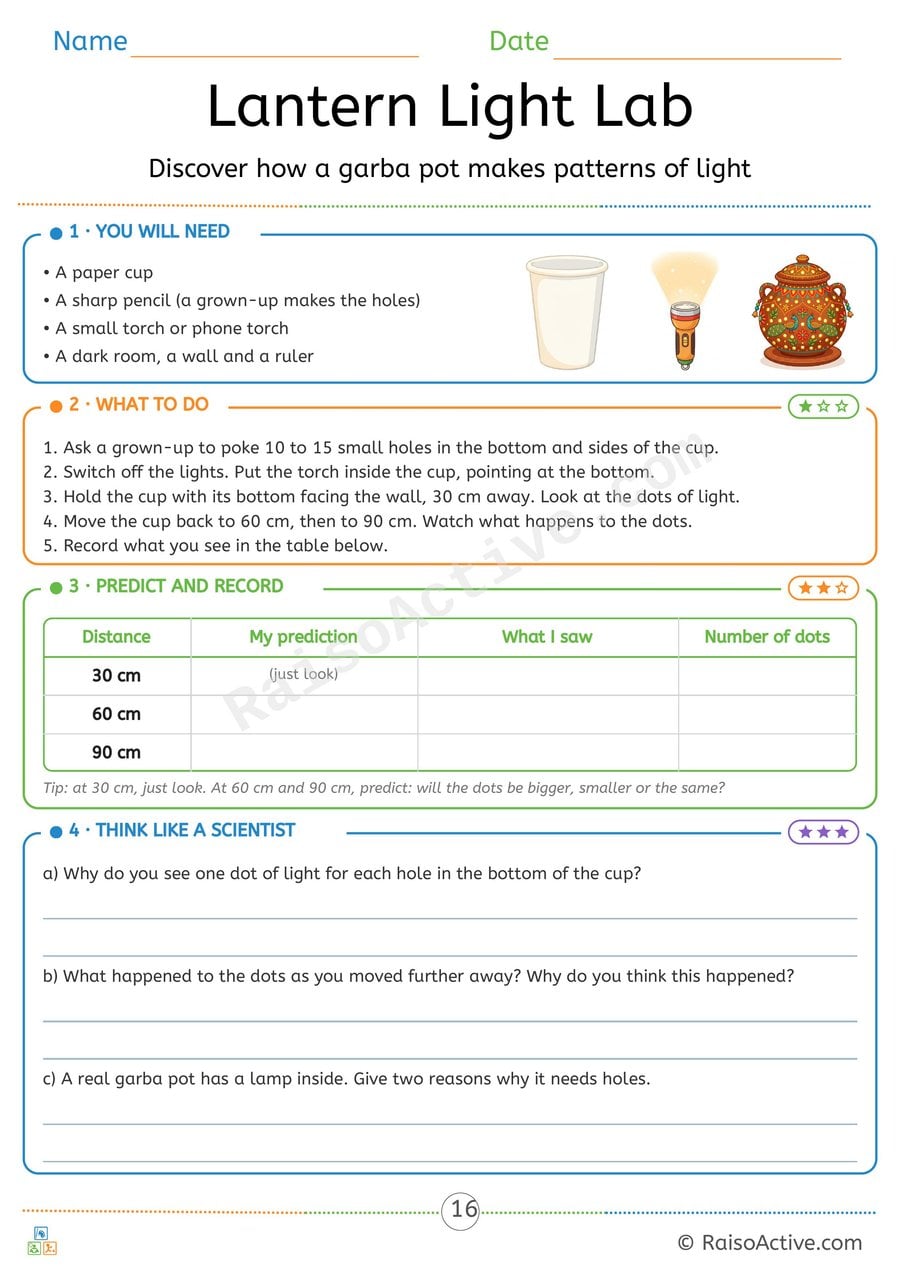
Lantern Light Lab: Navratri Garba Pot Light Experiment
Ages 7-11 · Grade 2–Grade 3Ages 7-11 · Year 3–Year 4Ages 7-11 · Class 2–Class 3Ages 7-11
Children make holes in a paper cup, shine a torch through it and see one spot of light for each hole. They predict and record what happens as they move further from the wall, and explain the results and why a real garba pot needs holes.
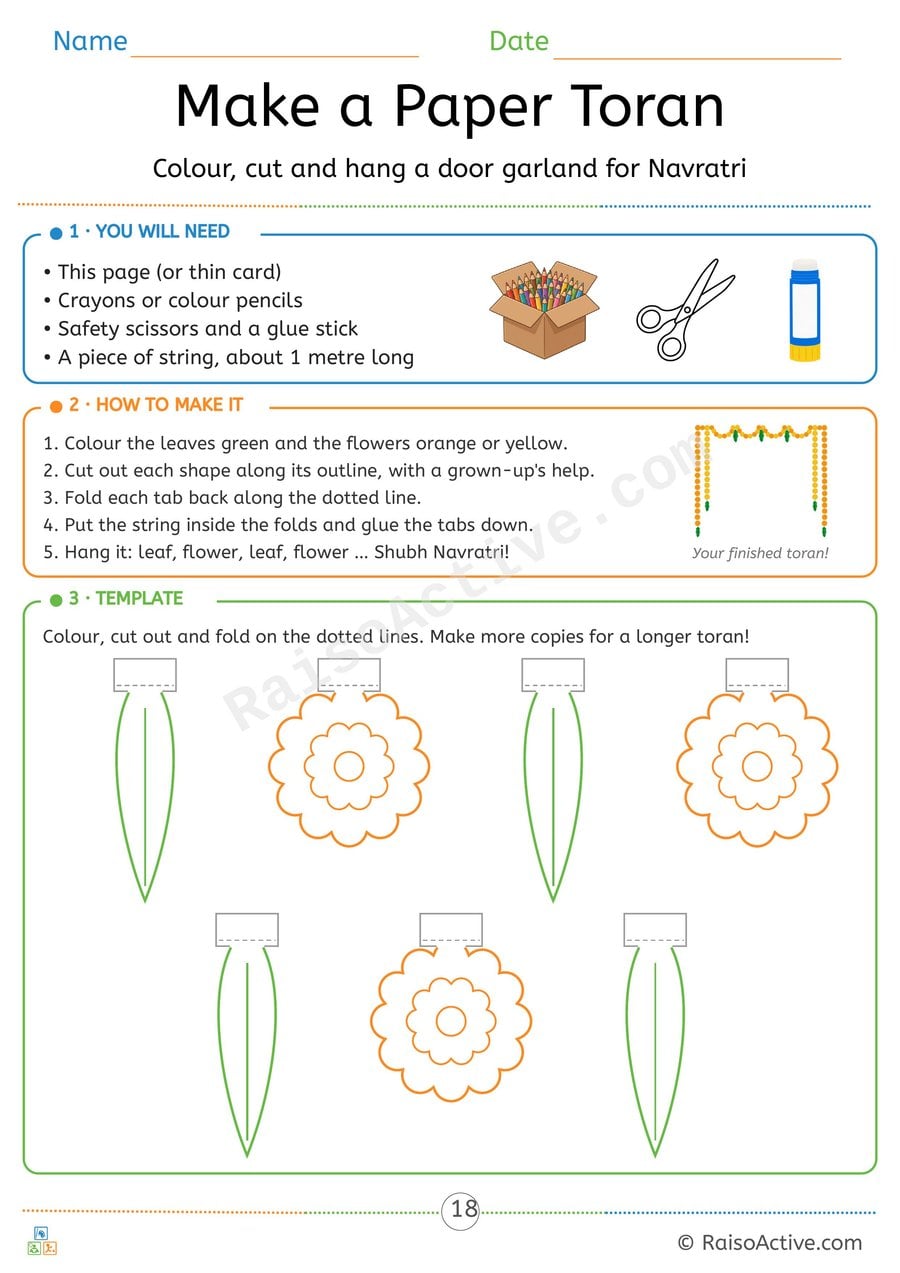
Make a Paper Toran: Navratri Craft Template
Ages 4-6 · Pre-K–KindergartenAges 4-6 · Reception–Year 1Ages 4-6 · LKG–UKGAges 4-6
Children follow step-by-step instructions to colour, cut, fold and glue a festival decoration, building scissor skills and fine motor control.

Navratri Rangoli Colour by Number and Symmetry Diya
Ages 4-6 · Pre-K–KindergartenAges 4-6 · Reception–Year 1Ages 4-6 · LKG–UKGAges 4-6
Children match numbers to colours using a key, colour a rangoli pattern carefully and draw the other half of a shape so both sides match.

Written by
Hemsweta Jain · Teacher Cheena
MBA and Early Childhood Educator, teaching since 2014 · Founder of RaisoActive, Mumbai
Published · Last reviewed
Related Resources
Printable Resources(10)
View all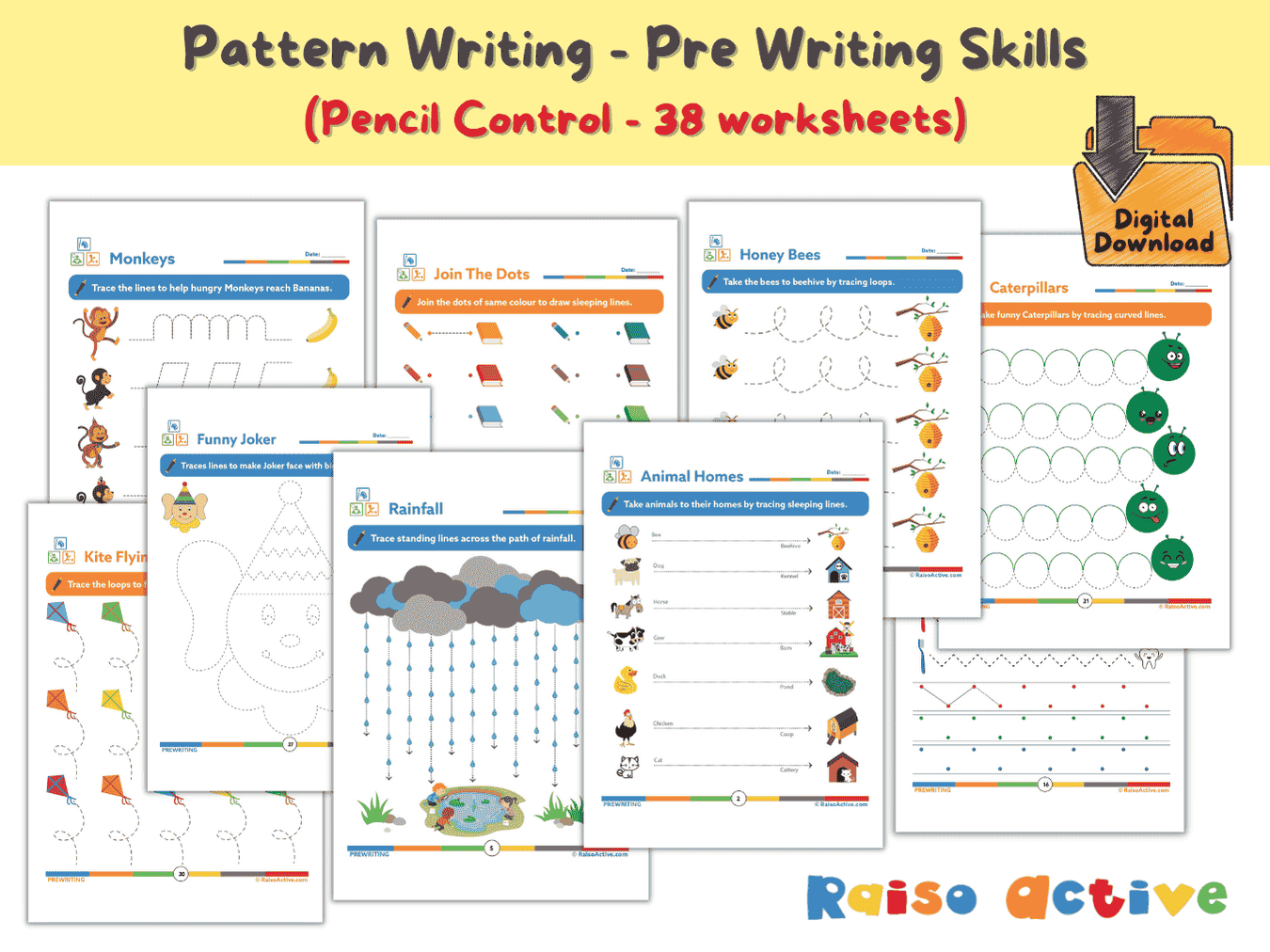

Pattern Writing Pre-writing Skills Activity Book for 3-4 Year Olds
Ages 3-4 · PreschoolAges 3-4 · NurseryAges 3-4 · 44 pages
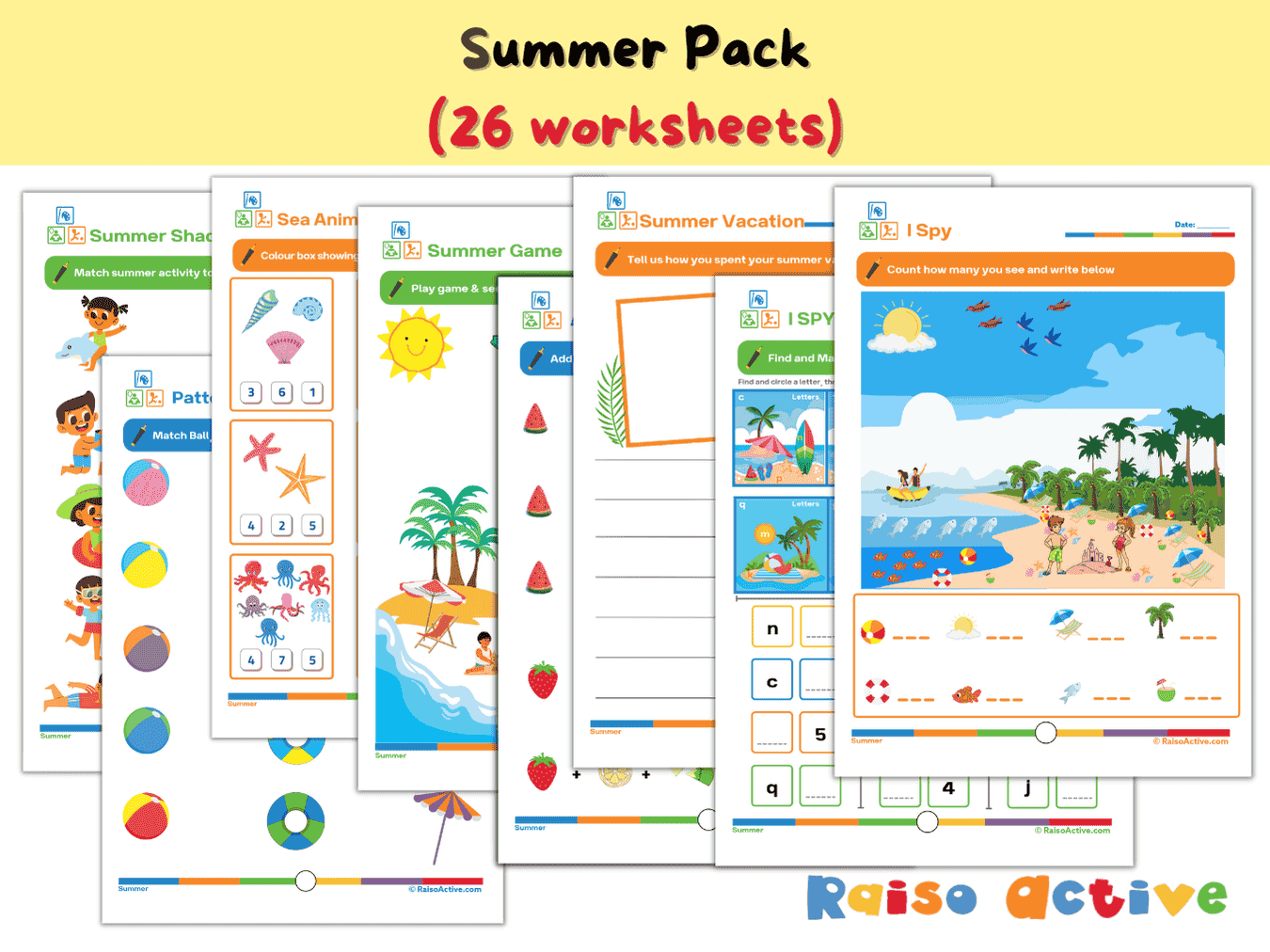

Summer Activity Pack: Math, Literacy, Puzzles & More for Preschool & Kindergarten
Ages 3-7 · Preschool–Grade 1Ages 3-7 · Nursery–Year 2Ages 3-7 · Nursery–Class 1Ages 3-7 · 26 pages
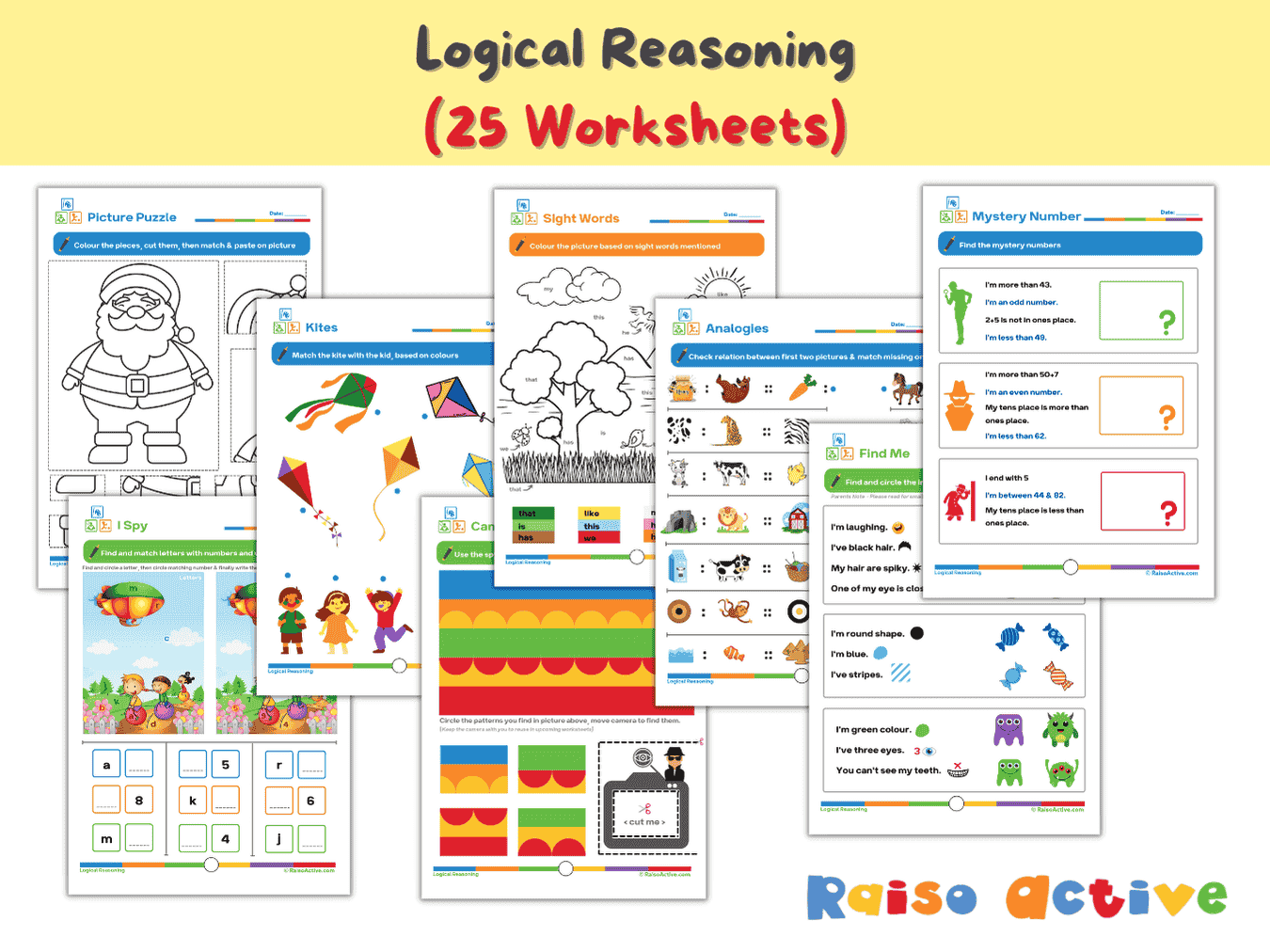

Logical Reasoning Activity Book for Preschool & Kindergarten | Patterns, Puzzles & Analogies
Ages 4-7 · Pre-K–Grade 1Ages 4-7 · Reception–Year 2Ages 4-7 · LKG–Class 1Ages 4-7 · 26 pages
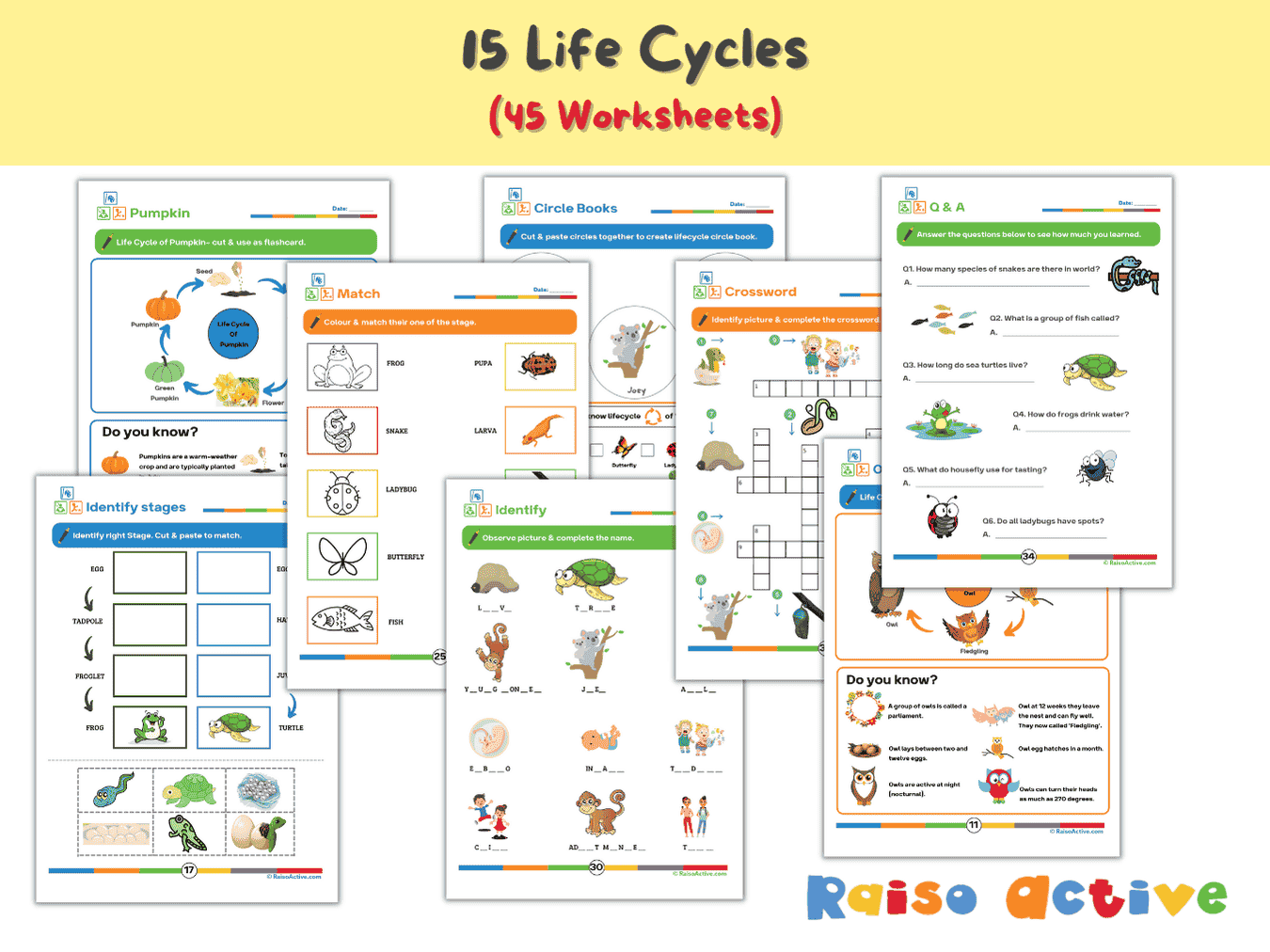

Lifecycles Activity Book & Flashcards for Preschool & Early Elementary
Ages 3-8 · Preschool–Grade 2Ages 3-8 · Nursery–Year 3Ages 3-8 · Nursery–Class 2Ages 3-8 · 46 pages
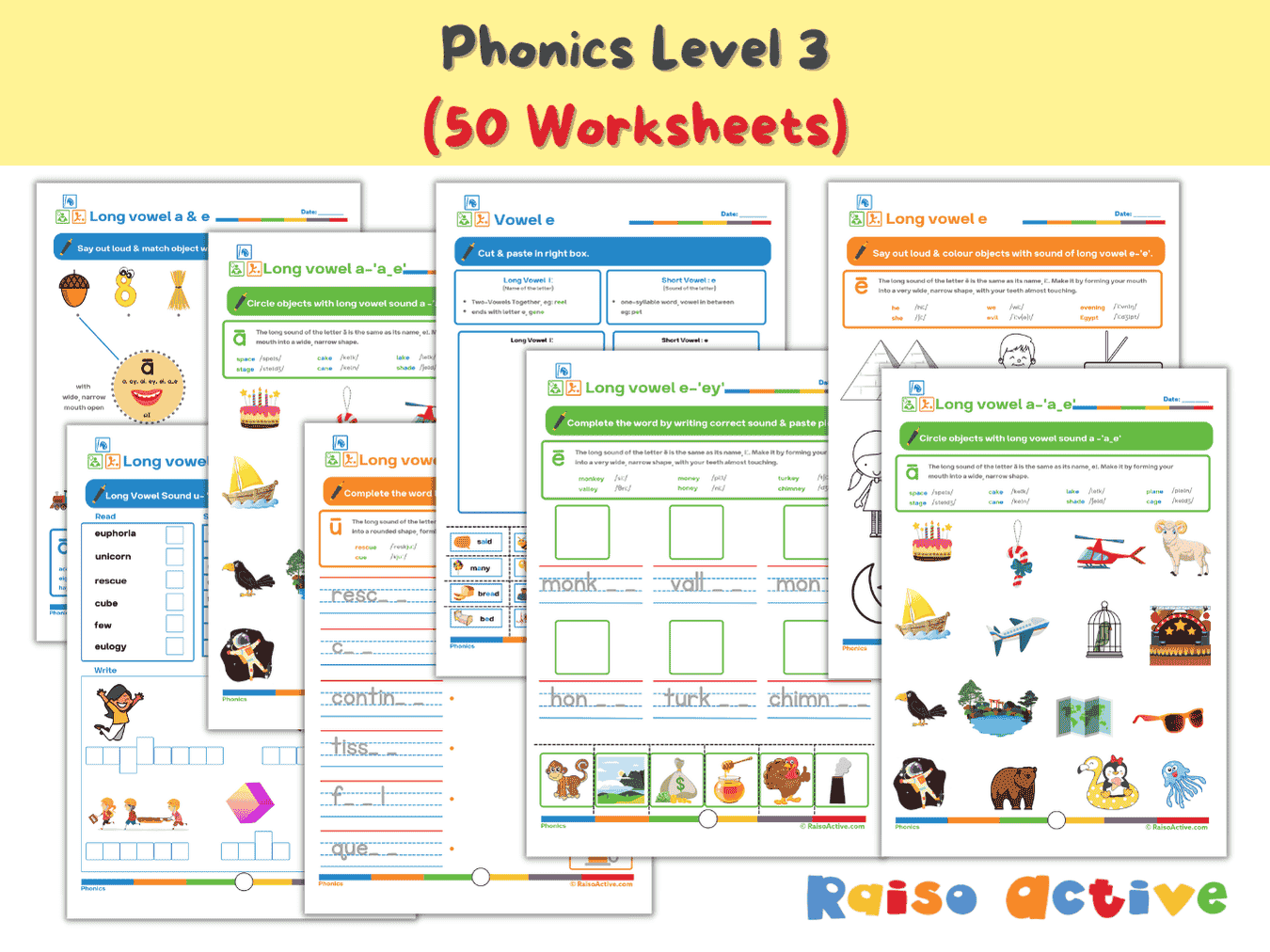

Phonics Level 3 Long Vowels Activity Book for Kindergarten & 1st Grade
Ages 5-7 · Kindergarten–Grade 1Ages 5-7 · Year 1–Year 2Ages 5-7 · UKG–Class 1Ages 5-7 · 51 pages
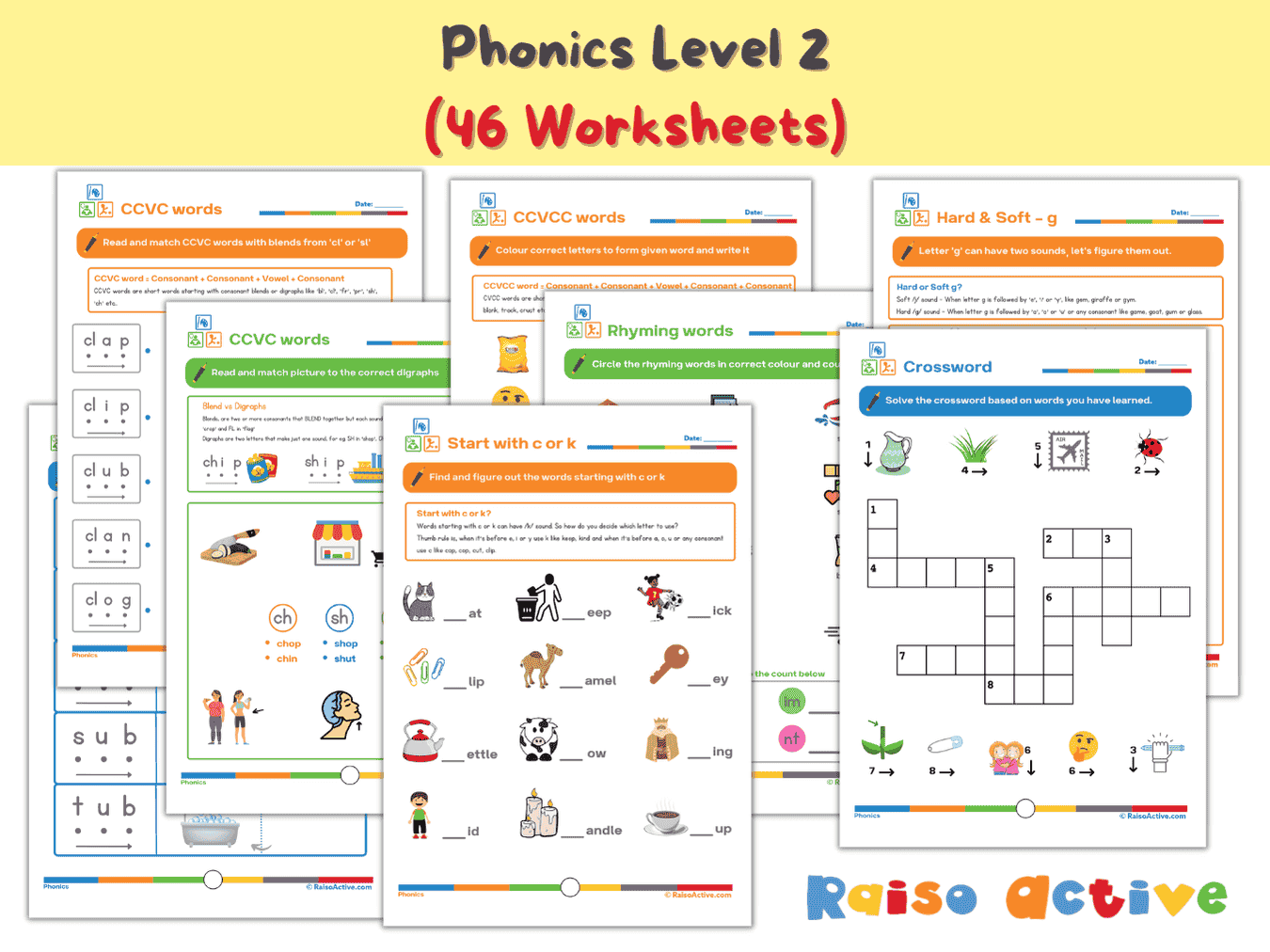
Phonics Level 2 Worksheets: CVC, CCVC, CVCC Word Families & Blends for Early Readers (Ages 4-7)
Ages 4-7 · Pre-K–Grade 1Ages 4-7 · Reception–Year 2Ages 4-7 · LKG–Class 1Ages 4-7 · 47 pages
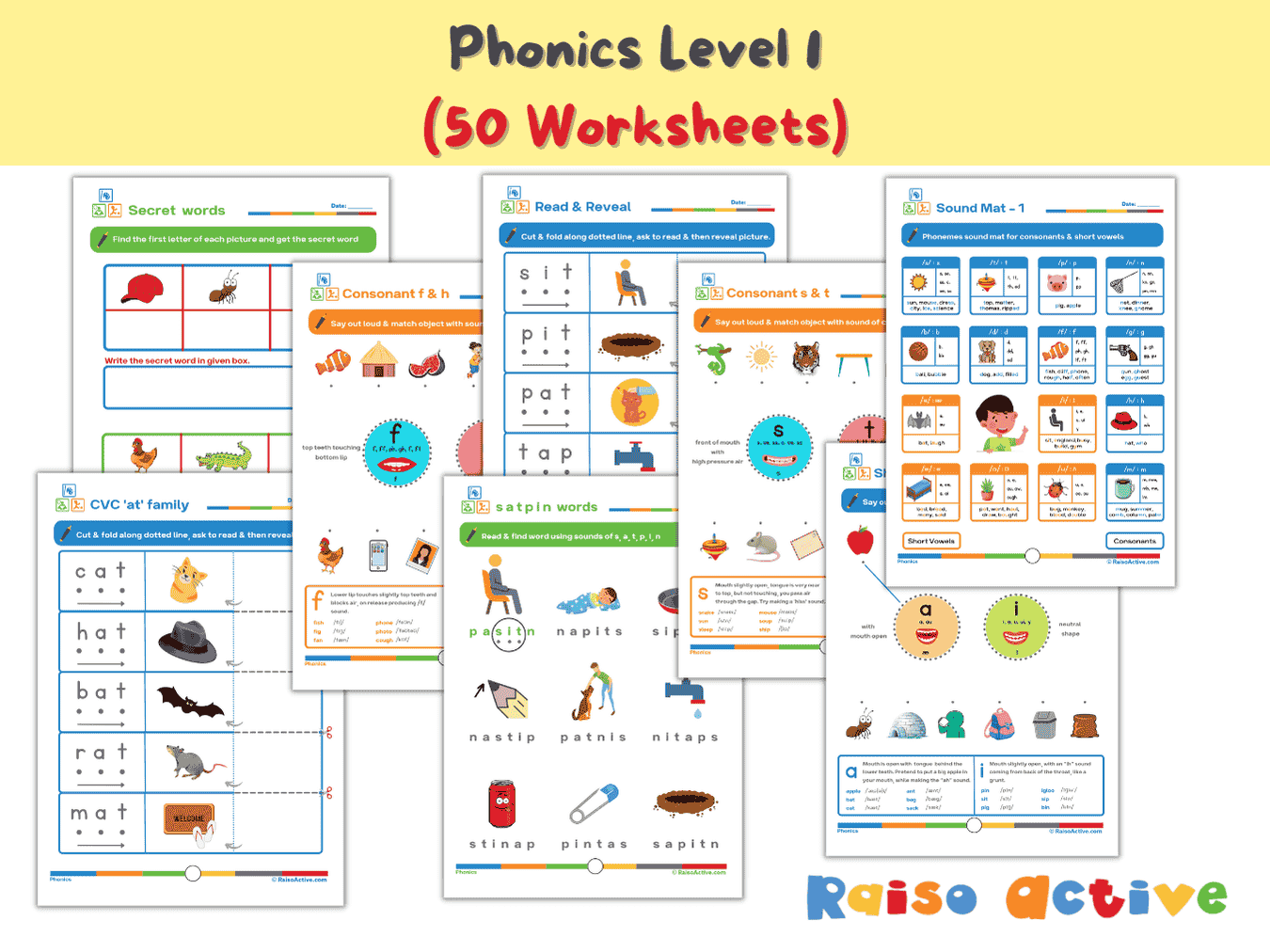
Phonics Level 1 Activity Book: Letter Sounds, Blending & CVC Words for Preschool & Kindergarten
Ages 3-6 · Preschool–KindergartenAges 3-6 · Nursery–Year 1Ages 3-6 · Nursery–UKGAges 3-6 · 60 pages
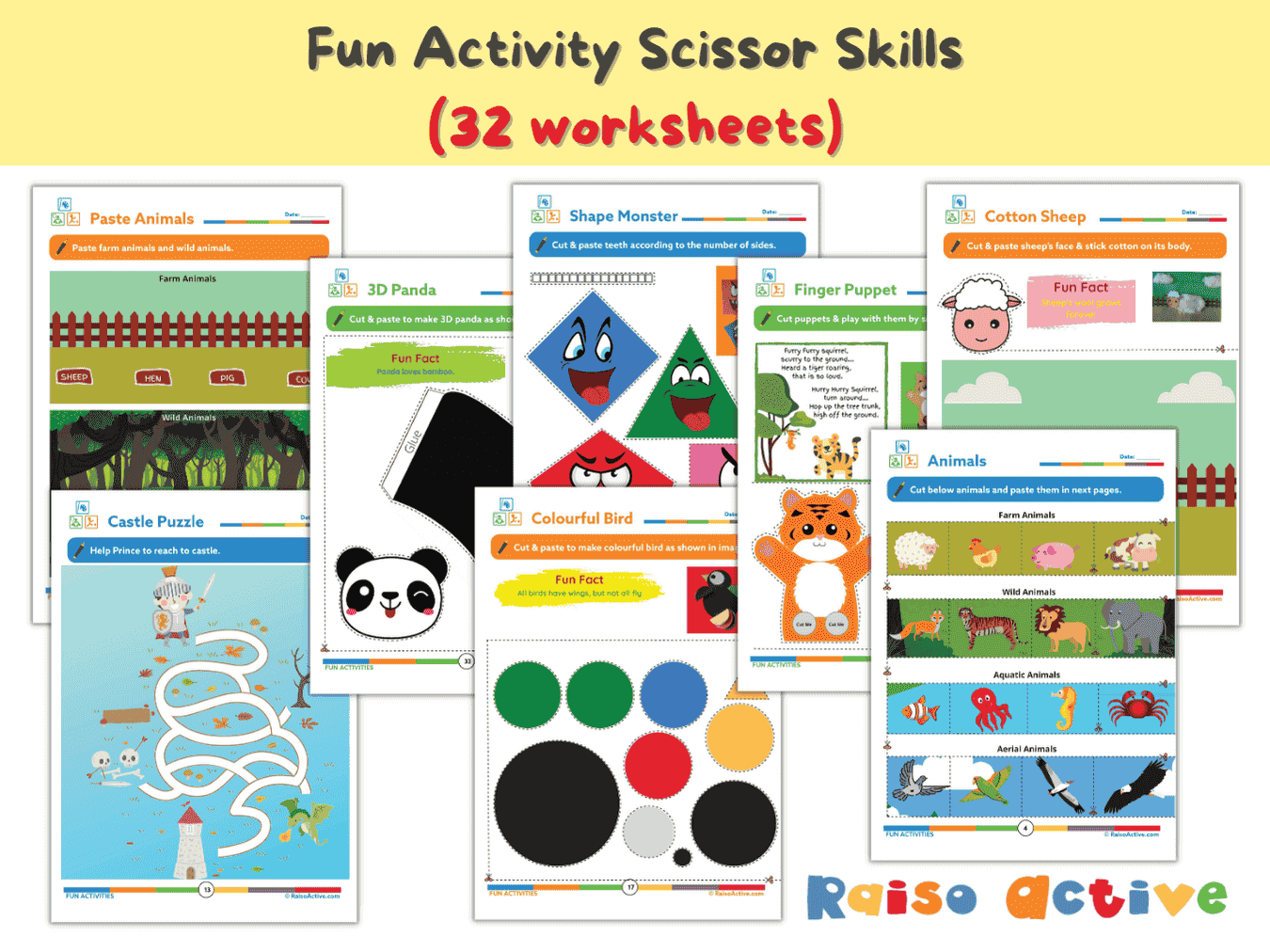
Preschool Scissor Skills Activity Book: Fine Motor & Craft Fun for Ages 3-6
Ages 3-6 · Preschool–KindergartenAges 3-6 · Nursery–Year 1Ages 3-6 · Nursery–UKGAges 3-6 · 35 pages
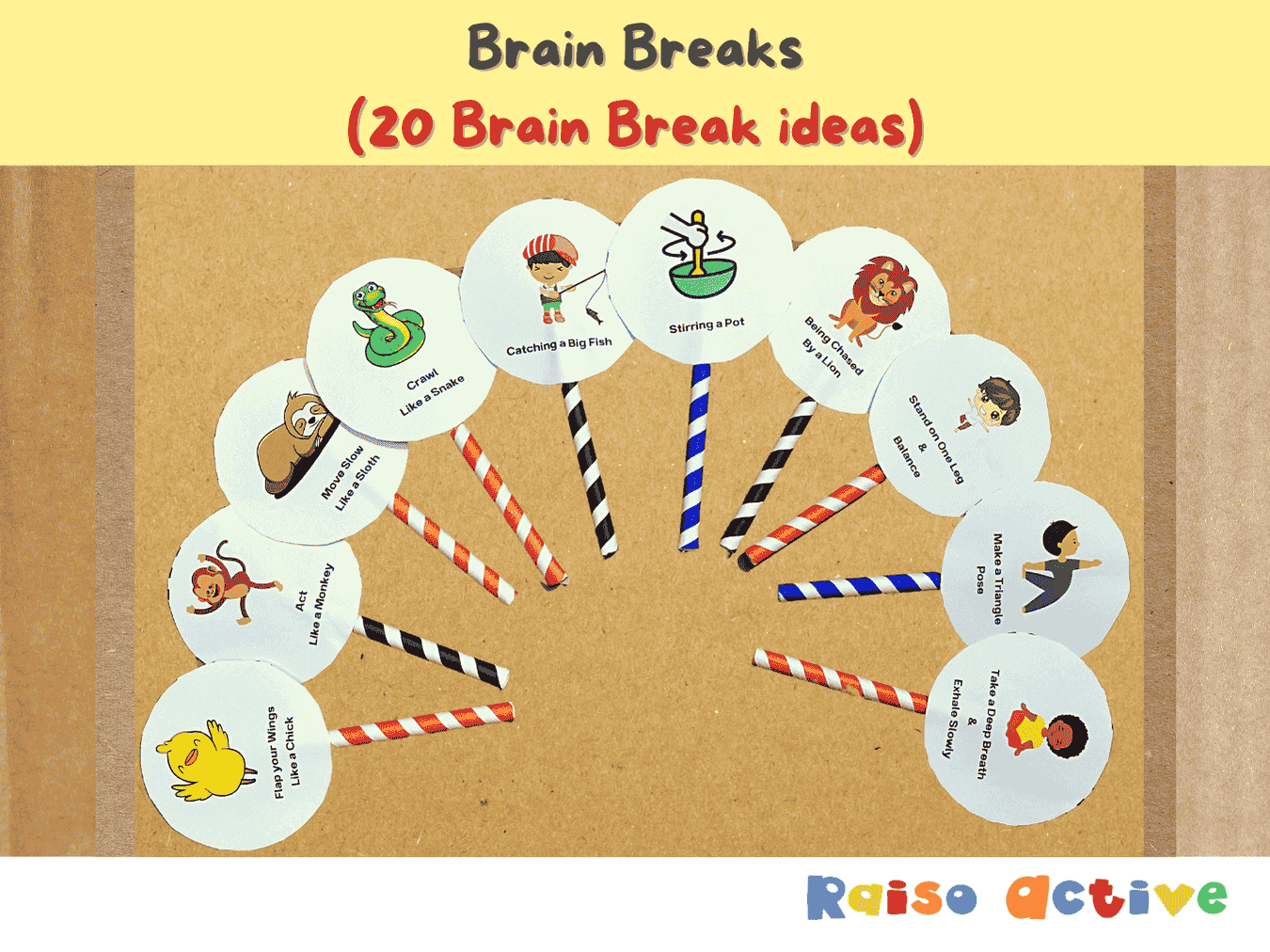
Gross Motor Movement & Imaginative Play Flashcards for Toddlers & Preschoolers
Ages 2-5 · Preschool–Pre-KAges 2-5 · Nursery–ReceptionAges 2-5 · Nursery–LKGAges 2-5 · 5 pages
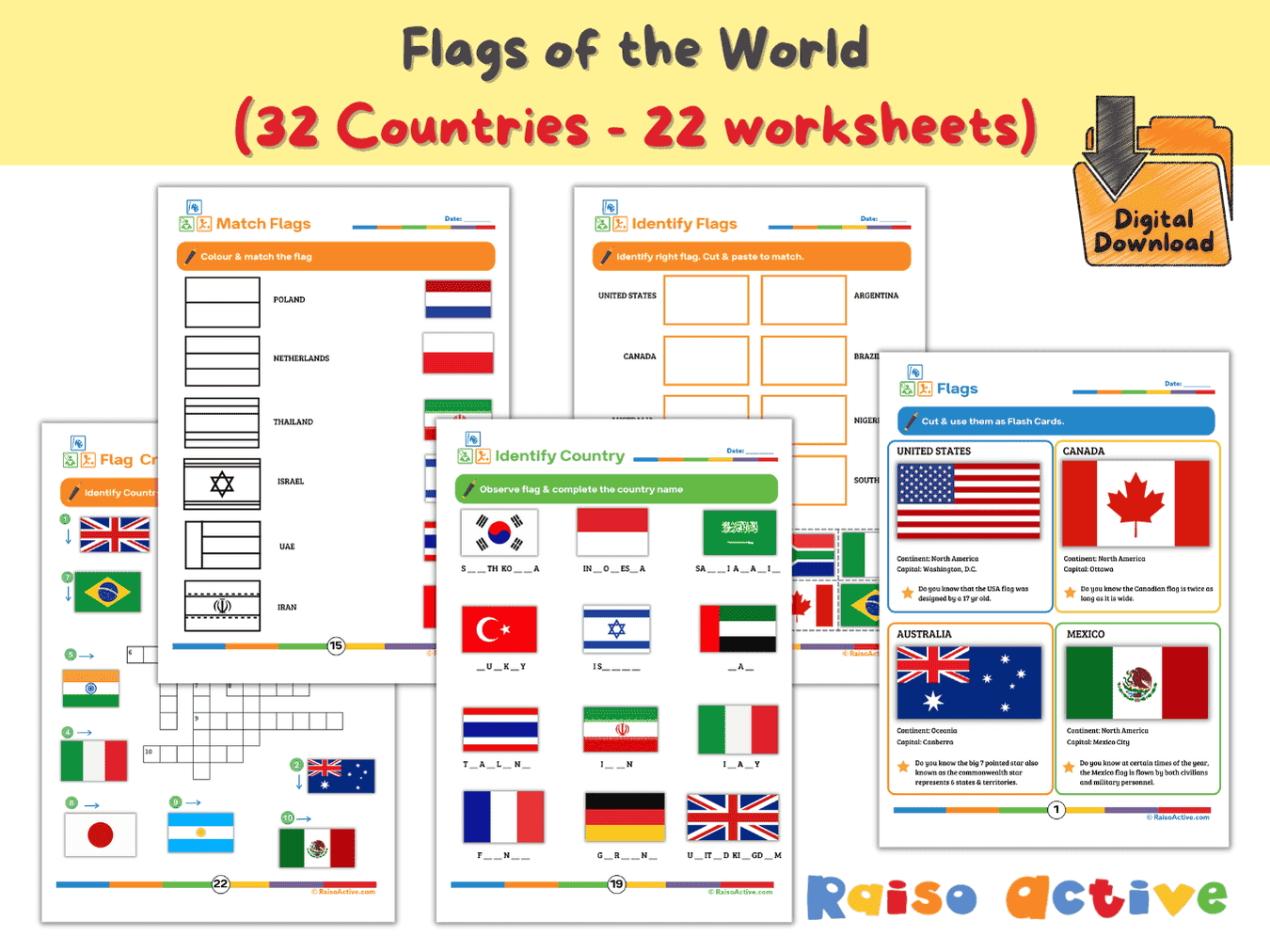
Flags of the World Activity Book & Flashcards for Kids (Ages 5-9)
Ages 5-8 · Kindergarten–Grade 2Ages 5-8 · Year 1–Year 3Ages 5-8 · UKG–Class 2Ages 5-8 · 23 pages