Free printable worksheets · US · UK · India
Counting Worksheets (Ages 2–6)
Counting worksheets are printable sheets for children aged 2 to 6 that develop number sense from reciting number words to knowing how many are in a group. They practice one-to-one correspondence, cardinality, recognizing small quantities without counting, matching a numeral to a set, and counting to 10, 20 and 100, from Preschool and Nursery through Kindergarten, Reception and UKG.
A two-year-old who says "one, two, three, five, eight" is counting in the way that matters at two: reciting the words in a rough order. A three-year-old is learning to touch one object for each word and to stop at the end, which is harder than it looks and is where most early counting errors sit. A five-year-old knows that the last word said is the size of the group, can count out seven from a pile of twelve, and can see three or four dots without counting. This page follows that sequence from rote counting to rational counting and on to counting to 20, 50 and 100 in Kindergarten, Reception and UKG. The counting worksheets are labeled by range, and the count-and-match sheets in the 1–10 range are the starting point in Nursery, Preschool and LKG.
- 428 worksheets
- Free PDF download
- Print on A4 or Letter
Made for your child
Counting to 10, made for your child
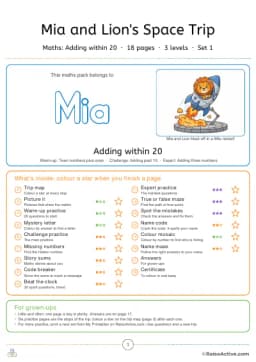
A maths pack with your child's name in it: pictures that explain, practice at three levels, puzzles and story sums about them. Print a new set whenever they finish.
Make a maths packFree preview · free for members
Counting Worksheets to print
Browse all worksheets for ages 2–6
Count and Match: A Fun Numeracy Worksheet for Preschoolers!
Ages 3-5 · Preschool–Pre-KAges 3-5 · Nursery–ReceptionAges 3-5 · Nursery–LKGAges 3-5
This worksheet combines two foundational counting skills for children ages 3-5: counting a group of objects and writing the total, and then matching that same quantity to an equivalent group elsewhere on the page. Writing the numeral after counting reinforces that a number symbol represents an actual quantity, not just a word to memorize. Matching equal groups afterward adds an extra layer of number sense, showing children that the same quantity can look different depending on what's being counted.

Summer Fun: Find, Match, and Write Letters and Numbers Worksheet
Ages 3-5 · Preschool–Pre-KAges 3-5 · Nursery–ReceptionAges 3-5 · Nursery–LKGAges 3-5
This worksheet combines three skills in one activity for children ages 3-5: finding a target letter, matching it to a corresponding number, and then writing the letter independently. Working through find, match, and write in sequence builds sustained attention across multiple steps, which is an important readiness skill for the multi-part instructions children will encounter in kindergarten. It also reinforces both letter recognition and number recognition side by side rather than practicing them separately.

Measuring Objects: A Fun Measurement Worksheet for Preschoolers!
Ages 3-5 · Preschool–Pre-KAges 3-5 · Nursery–ReceptionAges 3-5 · Nursery–LKGAges 3-5
Preschoolers ages 3-5 explore early measurement concepts by using a given reference item to figure out how many of that item it takes to span the length of different objects. This non-standard measurement approach — counting units rather than reading a ruler — is exactly how measurement is first introduced in early math curricula, building intuition before formal units are taught. Comparing object sizes this way also strengthens counting accuracy under a real, purposeful task.

Thick and Thin Worksheet: Identifying Object Thickness
Ages 3-5 · Preschool–Pre-KAges 3-5 · Nursery–ReceptionAges 3-5 · Nursery–LKGAges 3-5
This worksheet asks children ages 3-5 to compare objects and identify which is thickest and which is thinnest in each set, building early comparative reasoning and size-based vocabulary. Comparing objects along a specific dimension like thickness — rather than just overall size — sharpens observational skills and introduces the kind of precise descriptive language children will need for later measurement concepts.
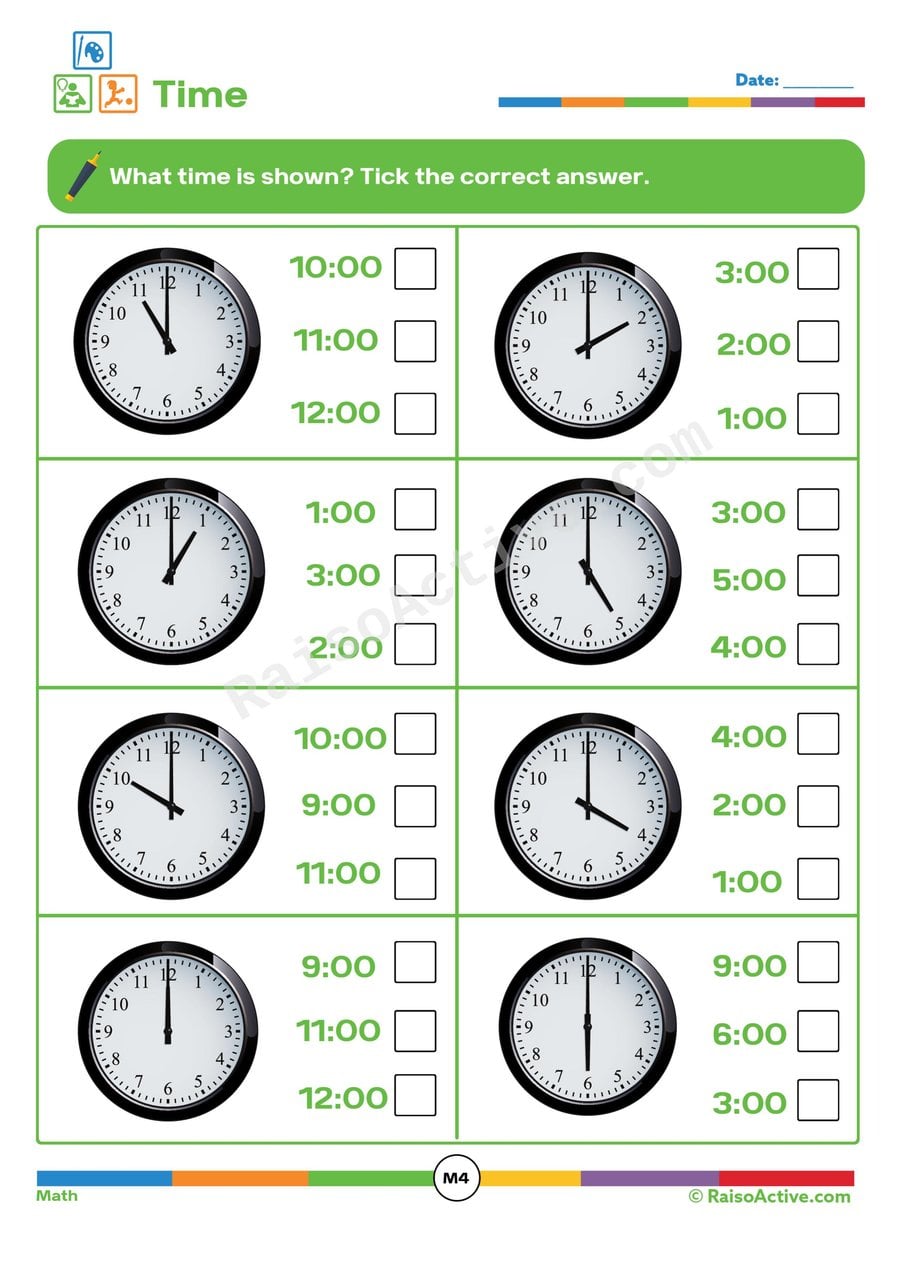
Time Telling Worksheet: What Time Is It? (3-5)
Ages 3-5 · Preschool–Pre-KAges 3-5 · Nursery–ReceptionAges 3-5 · Nursery–LKGAges 3-5
This worksheet introduces children ages 3-5 to analog clock reading at its simplest level, asking them to look at a clock face and choose the correct time from a set of answer options rather than writing it independently. Multiple-choice format lowers the barrier for this genuinely difficult skill, letting younger children build early clock familiarity before they're expected to read time unaided.

Shape Count Worksheet: Count and Decorate the Crown!
Ages 3-5 · Preschool–Pre-KAges 3-5 · Nursery–ReceptionAges 3-5 · Nursery–LKGAges 3-5
Counting diamond shapes and matching each group to its correct number builds one-to-one correspondence and numeral recognition in children ages 3-5, while identifying the shape itself reinforces basic geometry vocabulary. Coloring, cutting, and gluing the diamonds onto a crown afterward adds a craft element that rewards accurate counting with a wearable, decorative result. Combining counting, shape recognition, and a craft project gives this worksheet several layers of skill practice within one engaging activity.

I Spy Summer Fun Worksheet: Counting and Identifying Objects!
Ages 3-5 · Preschool–Pre-KAges 3-5 · Nursery–ReceptionAges 3-5 · Nursery–LKGAges 3-5
This 'I Spy Summer Fun' worksheet helps young learners (ages 3-5) master one-to-one correspondence, a crucial foundational math skill, by counting specific summer-themed objects within a busy scene. Children will practice associating a number name with each item they touch or point to, building early number sense and visual discrimination. This activity strengthens their ability to accurately count quantities up to 20, preparing them for more complex mathematical concepts.

Penguin Addition Worksheet for Preschoolers: Counting and Circling
Ages 3-5 · Preschool–Pre-KAges 3-5 · Nursery–ReceptionAges 3-5 · Nursery–LKGAges 3-5
Counting groups of penguins, combining them, and circling the correct sum from several options builds early addition fluency for children ages 3-5, using a fun animal theme to keep counting practice engaging.

Count and Write: Fun Counting Worksheet for Preschoolers
Ages 3-5 · Preschool–Pre-KAges 3-5 · Nursery–ReceptionAges 3-5 · Nursery–LKGAges 3-5
This counting worksheet has children ages 3-5 count small groups of objects and write the matching numeral in a box, directly linking the physical act of counting to the written symbol that represents a quantity. Writing the number immediately after counting — rather than just counting aloud — reinforces that numerals are a shorthand for real, countable amounts.
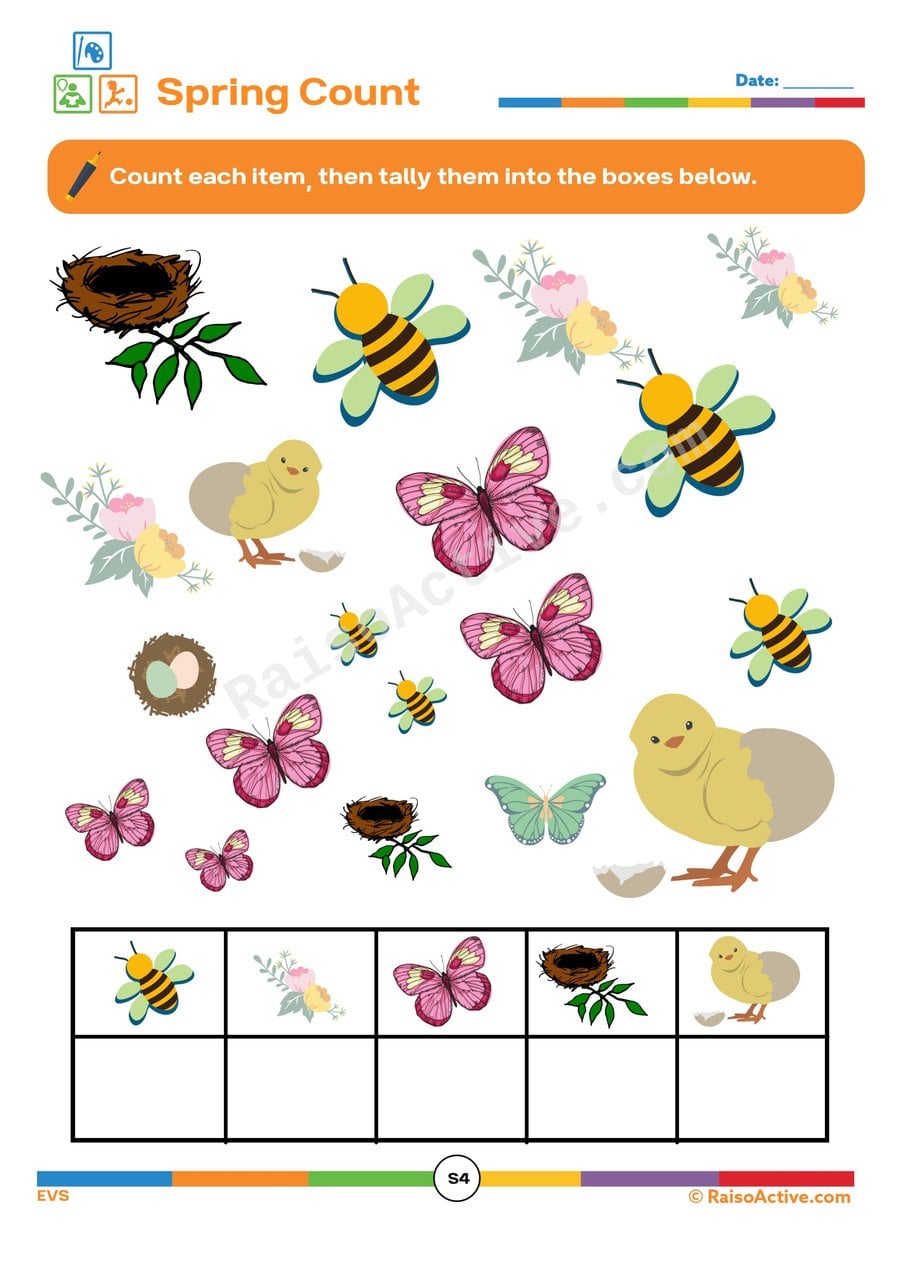
Spring Count: Tally the Spring Items Worksheet
Ages 3-5 · Preschool–Pre-KAges 3-5 · Nursery–ReceptionAges 3-5 · Nursery–LKGAges 3-5
Introduces tally marks as a way of recording a count, teaching children ages 3-5 to count spring-themed objects and represent the total visually in groups of five — an early step toward understanding how numbers can be organized.

Count and Match! Number Recognition Worksheet for Preschoolers
Ages 3-5 · Preschool–Pre-KAges 3-5 · Nursery–ReceptionAges 3-5 · Nursery–LKGAges 3-5
This worksheet has preschoolers ages 3-5 practice one-to-one correspondence — touching or pointing to each object exactly once while counting — before writing the total and matching it to the correct numeral in a circle. Counting accurately requires more coordination than it looks like at this age, since children must track which objects they've already counted while saying numbers in the right order. Adding the final matching step reinforces that a written numeral represents a specific, countable quantity rather than just a symbol to memorize.
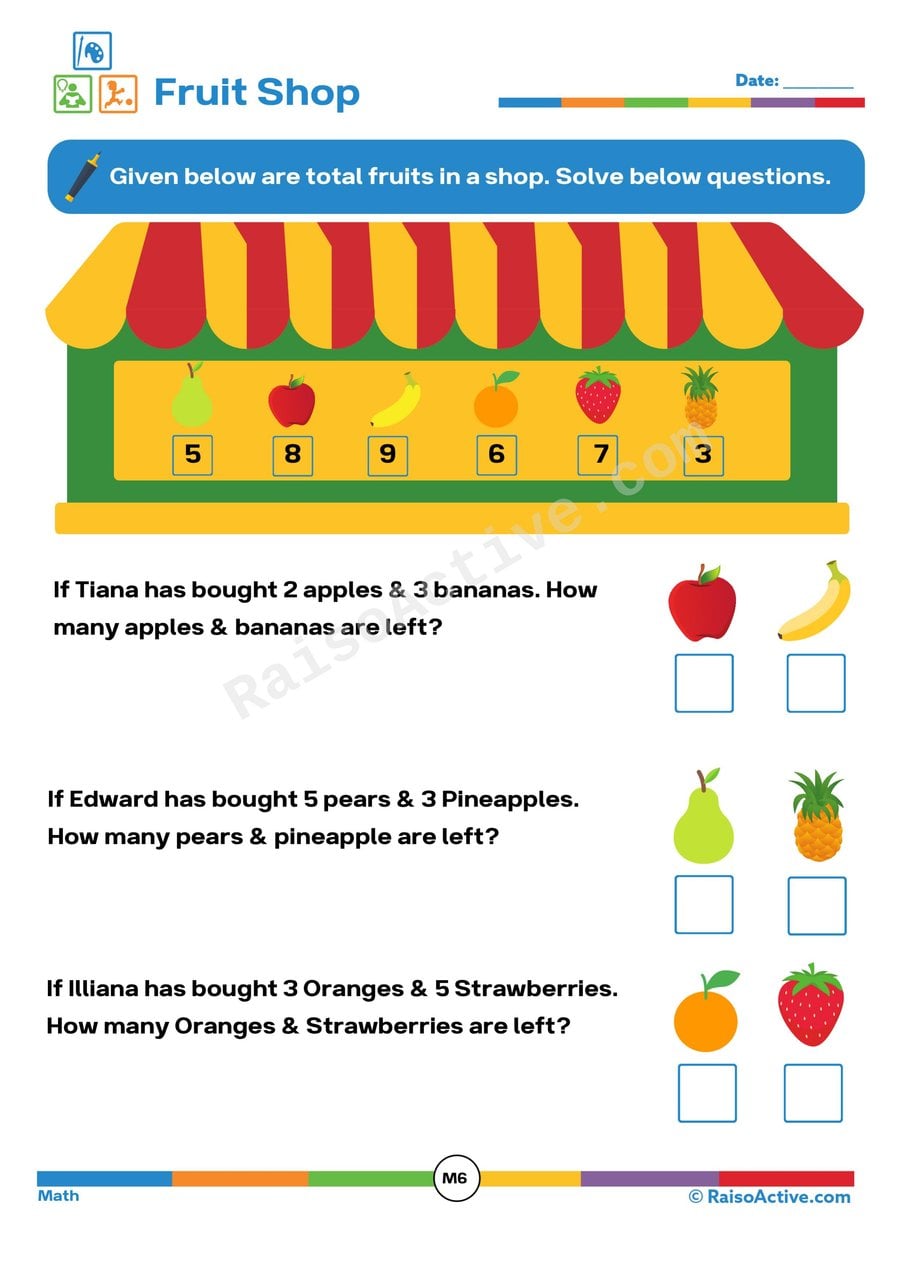
Fruit Shop Counting Worksheet for Kids
Ages 3-5 · Preschool–Pre-KAges 3-5 · Nursery–ReceptionAges 3-5 · Nursery–LKGAges 3-5
This worksheet applies subtraction to a real-world shopping scenario for 3-5 year olds, asking them to count a total number of fruits, read a short word problem about fruits being bought, and then subtract to find how many remain — combining reading comprehension with the counting and subtraction skills practiced elsewhere. Framing the math inside a relatable 'fruit shop' story helps your child see subtraction as something that happens in everyday situations, not just on a worksheet.

Tall and Short Worksheet: Comparing Sizes for Preschoolers
Ages 3-5 · Preschool–Pre-KAges 3-5 · Nursery–ReceptionAges 3-5 · Nursery–LKGAges 3-5
Comparing height is one of the earliest measurement concepts children encounter, and this worksheet asks children ages 3-5 to visually judge which of two objects is taller or shorter without using any numbers or rulers. This kind of direct visual comparison builds the intuitive sense of relative size that formal measurement skills will later be built on top of. Practicing the comparison in both directions — identifying the taller object in one set and the shorter object in another — also reinforces that 'tall' and 'short' are relative terms, not fixed labels.
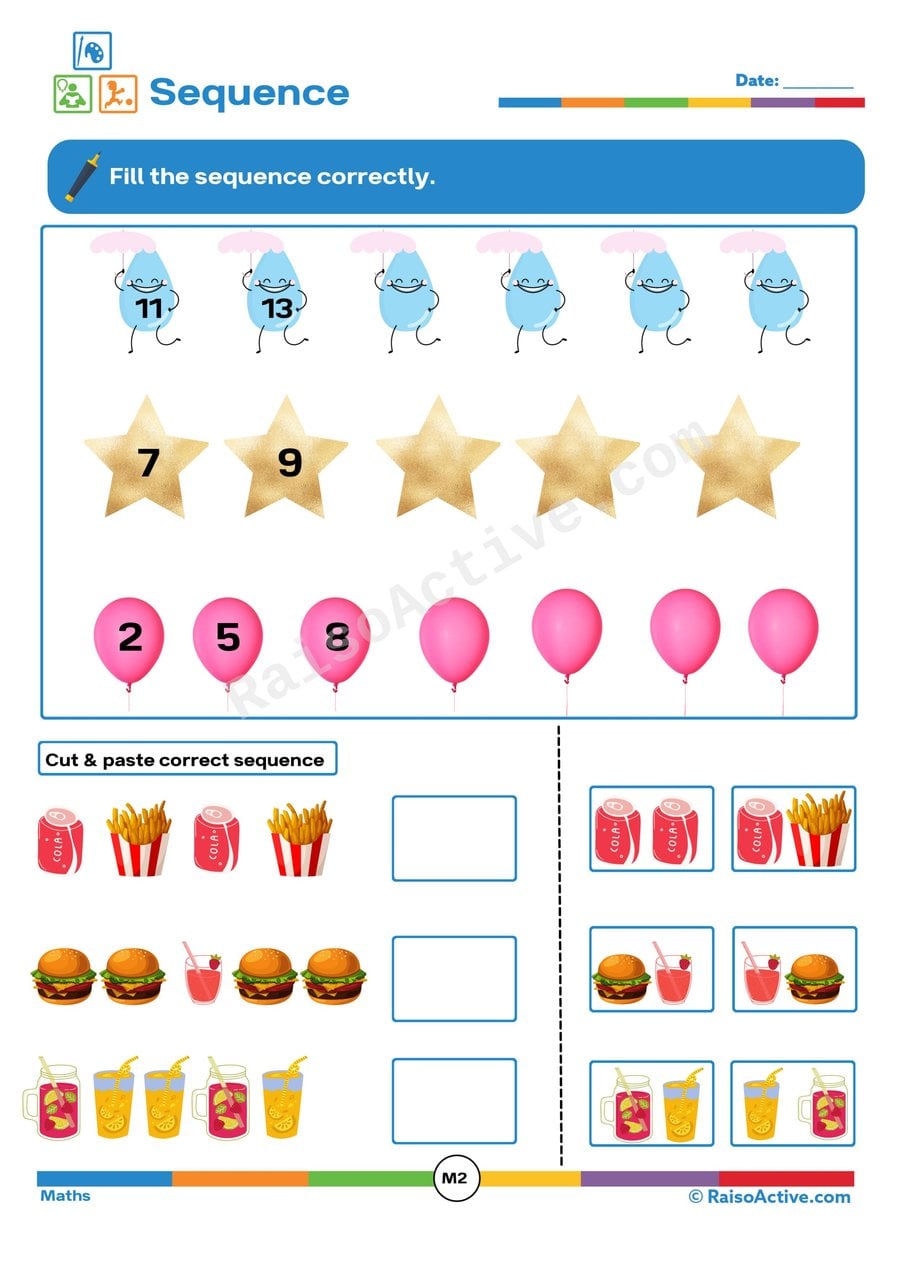
Fill the Sequence Worksheet for Preschoolers
Ages 3-5 · Preschool–Pre-KAges 3-5 · Nursery–ReceptionAges 3-5 · Nursery–LKGAges 3-5
This two-part worksheet has children ages 3-5 first fill in missing numbers within a counting sequence and then cut out and paste the correct completed sequence, combining number-order recognition with fine motor cutting and pasting practice. Understanding that numbers follow a fixed, unchanging order is a critical foundation for counting accurately and, later, for addition and subtraction.
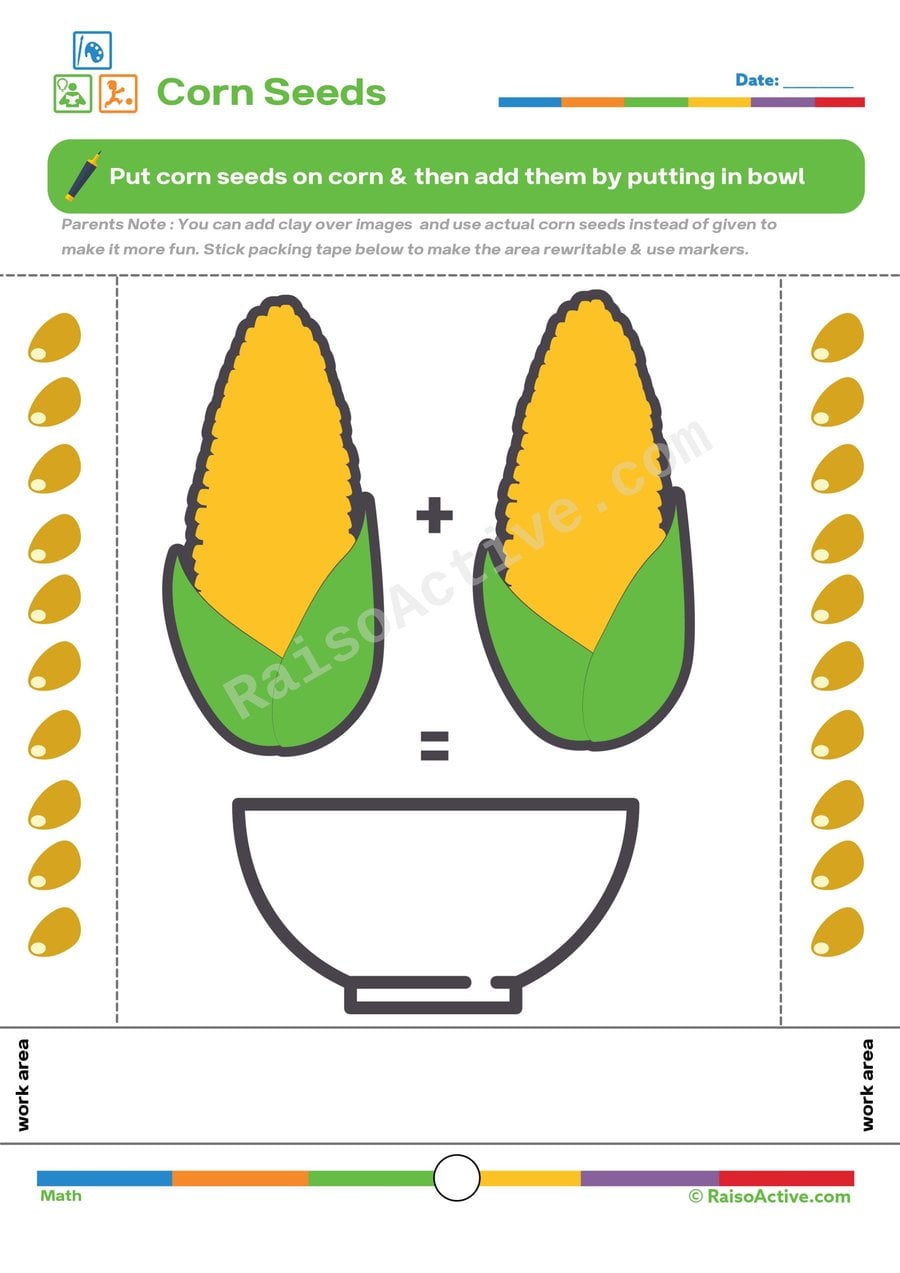
Corn Seed Addition Worksheet for Preschoolers
Ages 3-5 · Preschool–Pre-KAges 3-5 · Nursery–ReceptionAges 3-5 · Nursery–LKGAges 3-5
Counting corn seeds on two ears of corn and combining them into one total teaches children ages 3-5 the core concept of addition as joining groups together, using a concrete, countable image rather than abstract numerals alone. This worksheet also builds one-to-one correspondence, since accurate addition depends on touching or pointing to each seed exactly once while counting.

Number Names Matching Worksheet for Preschoolers
Ages 3-5 · Preschool–Pre-KAges 3-5 · Nursery–ReceptionAges 3-5 · Nursery–LKGAges 3-5
This worksheet helps children ages 3-5 connect written number names, like 'three' or 'seven,' to the numeral they represent, an important step beyond simply recognizing digits since it introduces reading actual number words. Decoding a color clue to figure out and write each number name first adds an extra layer of visual attention before the matching step even begins.
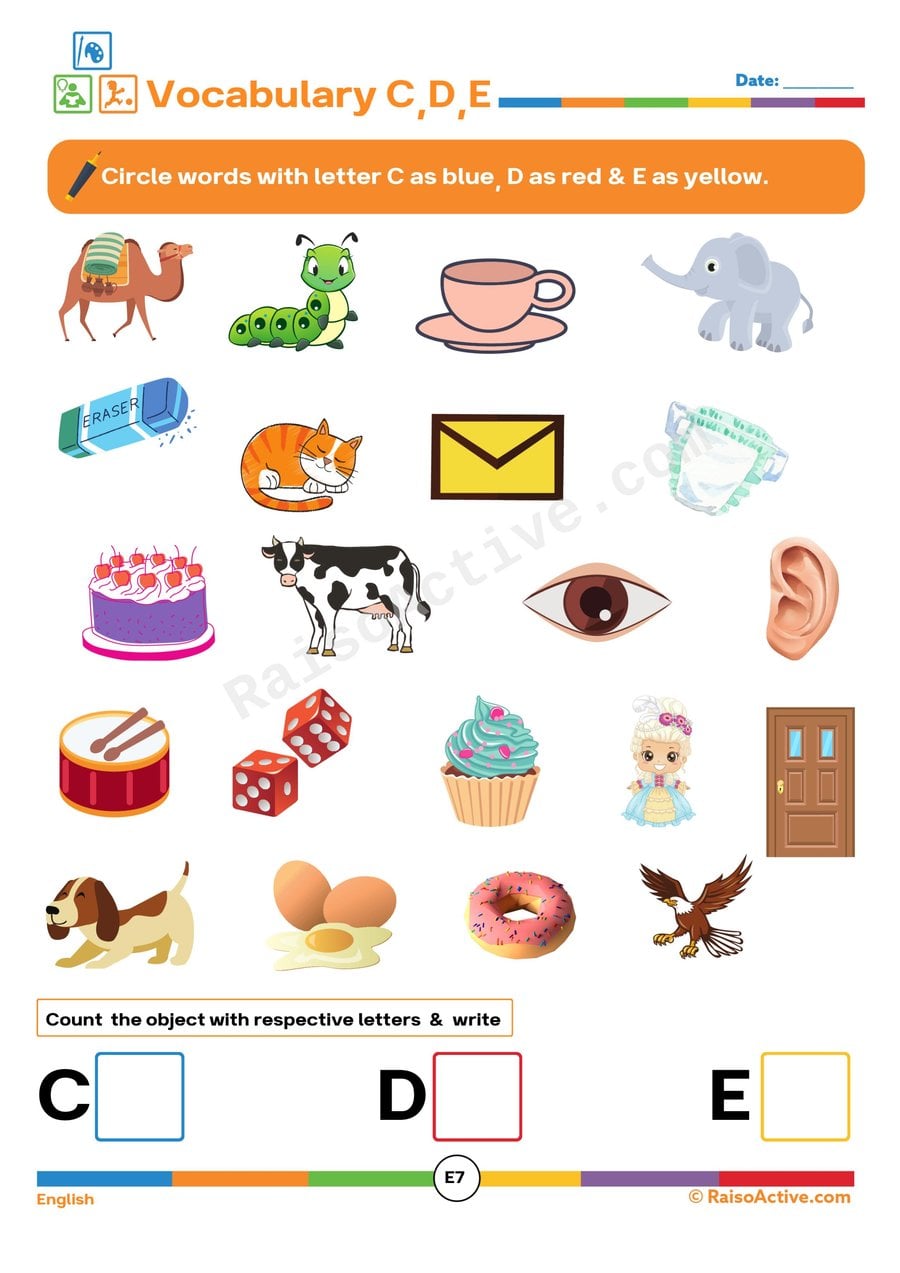
C, D, E Letter Sounds Worksheet: Circle and Count!
Ages 3-5 · Preschool–Pre-KAges 3-5 · Nursery–ReceptionAges 3-5 · Nursery–LKGAges 3-5
This activity gives children ages 3-5 focused practice recognizing the beginning sounds of the letters C, D, and E, asking them to circle matching pictures in different colors for each letter before counting the results. Combining phonics with counting means children practice two skills in one sitting: identifying initial letter sounds and recording a numeric total, both foundational for kindergarten readiness. Color-coding each letter also helps children visually organize the three sounds instead of mixing them together.
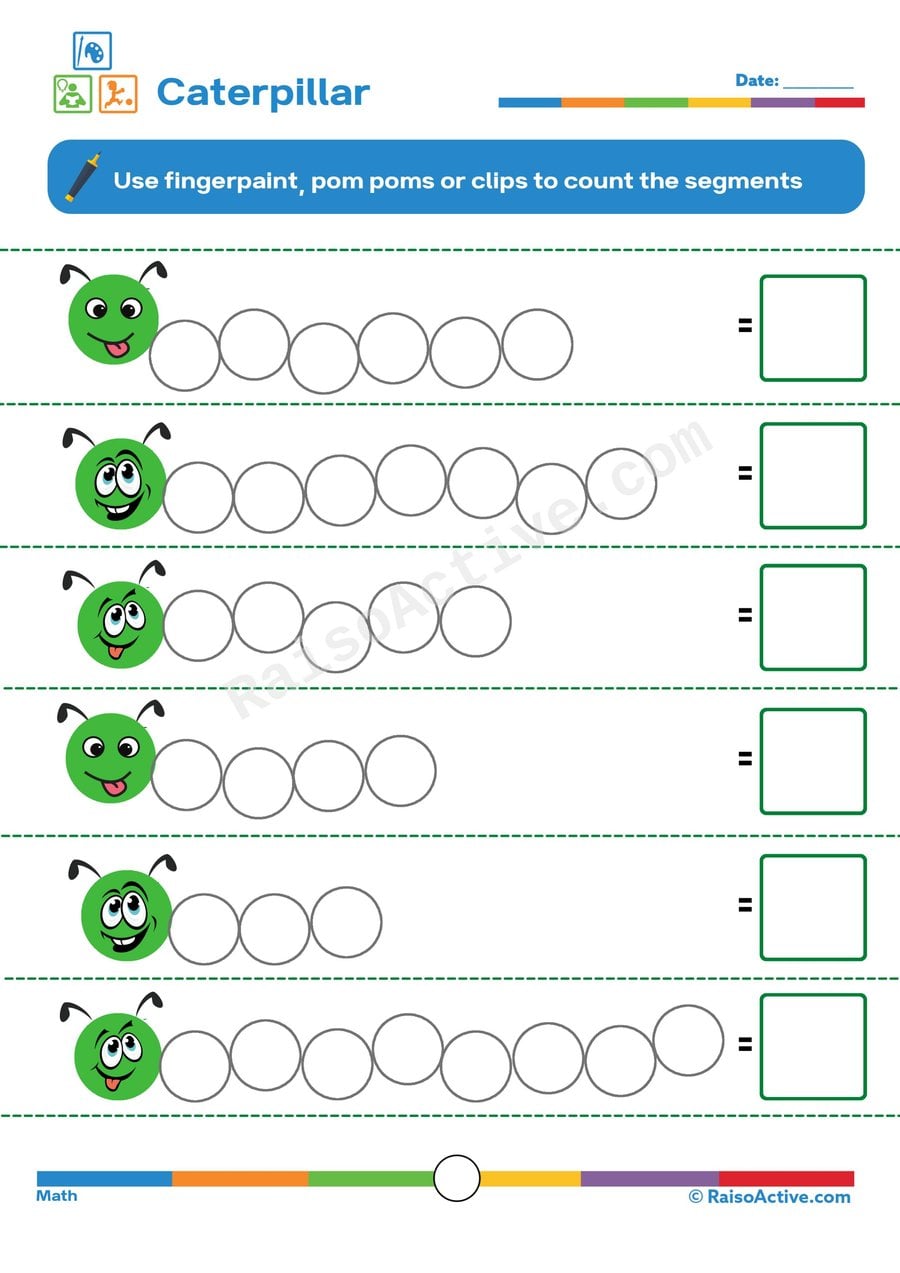
Caterpillar Counting Worksheet for Preschoolers
Ages 3-5 · Preschool–Pre-KAges 3-5 · Nursery–ReceptionAges 3-5 · Nursery–LKGAges 3-5
Counting the segments of each caterpillar teaches children ages 3-5 one-to-one correspondence — touching or marking each segment exactly once while saying a number — which is the core skill underlying accurate counting. Writing the final total in a box also connects the physical act of counting to its written numeral, reinforcing early number-writing practice.

Number Names Matching Worksheet for Preschoolers
Ages 3-5 · Preschool–Pre-KAges 3-5 · Nursery–ReceptionAges 3-5 · Nursery–LKGAges 3-5
This worksheet helps children ages 3-5 connect written number words — like 'three' or 'seven' — to their matching numerals, an important step beyond simple numeral recognition toward full number literacy. Drawing a line from a number name to the numeral it stands for requires children to read or recall the word and hold it in mind while scanning for its match, which builds working memory alongside early reading and number skills.
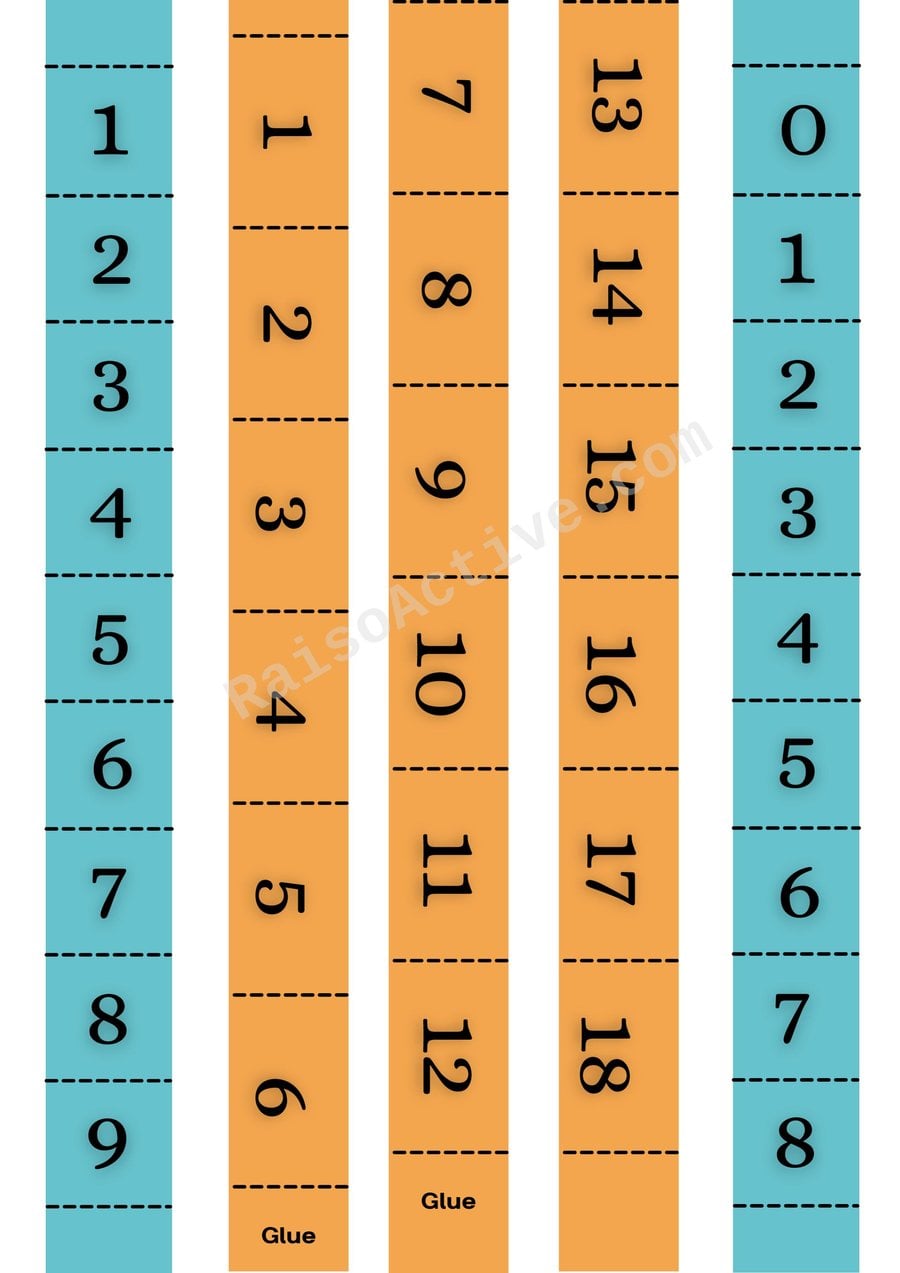
Number Matching Worksheet: 0-18
Ages 3-5 · Preschool–Pre-KAges 3-5 · Nursery–ReceptionAges 3-5 · Nursery–LKGAges 3-5
This activity strengthens numeral recognition for children ages 3-5 by having them find and pair matching numbers from 0 to 18 printed on separate strips. Because the numbers are scattered rather than in order, children must recognize each digit shape on its own rather than relying on counting sequence, which builds true number recognition instead of rote list-reciting.

Number Names Matching Worksheet for Preschoolers
Ages 3-5 · Preschool–Pre-KAges 3-5 · Nursery–ReceptionAges 3-5 · Nursery–LKGAges 3-5
This matching worksheet builds early number-word literacy for children ages 3-5 by asking them to connect each numeral with its written name. Learning that '5' and 'five' refer to the same quantity strengthens number sense and lays groundwork for reading math vocabulary later in school. The side-by-side layout also sharpens visual scanning and one-to-one matching skills.

Count and Match: Numbers Worksheet for Preschoolers
Ages 3-5 · Preschool–Pre-KAges 3-5 · Nursery–ReceptionAges 3-5 · Nursery–LKGAges 3-5
This worksheet builds number recognition and one-to-one counting in children ages 3-5 by having them count sets of objects and then identify or match the correct numeral. Counting stationery items and circling the matching number reinforces that a numeral represents an exact quantity, not just a symbol to memorize. Matching fruits to candy quantities on a second section adds variety and repeated practice with different object types.

Emotions Worksheet: Count, Color, and Identify Feelings!
Ages 3-5 · Preschool–Pre-KAges 3-5 · Nursery–ReceptionAges 3-5 · Nursery–LKGAges 3-5
Identifying emotions from facial expressions and then counting and coloring them builds emotional literacy, the ability to name feelings like happy, sad, or surprised, alongside basic counting practice, giving children a vocabulary for something they experience daily but may not yet know how to describe. For ages three to five, naming emotions explicitly is an important early step in self-regulation and empathy.

Subtraction Fun: Counting and Subtracting Worksheet for Kids
Ages 3-5 · Preschool–Pre-KAges 3-5 · Nursery–ReceptionAges 3-5 · Nursery–LKGAges 3-5
This worksheet gives 3-5 year olds direct practice subtracting the smaller number from the larger one, using accompanying pictures to make each subtraction problem visible and countable rather than purely abstract. Working through picture-supported subtraction repeatedly at this age builds the number sense needed before children can subtract using numerals alone, without a picture to lean on.
Rote counting, rational counting and cardinality
Rote counting is reciting number words in order without objects, the way a child sings a song. Rational counting is pairing each word with exactly one object, in order, without skipping or double-counting; this is one-to-one correspondence and it emerges between 3 and 4. Cardinality is the understanding that the last number counted tells how many there are, so a child asked "how many?" after counting to six says "six" rather than counting again. Cardinality is the milestone that makes addition possible.
Subitizing is seeing a small quantity, up to about four or five, without counting, and later seeing larger groups as combinations (a six as two threes). Dot and ten-frame sheets build it, and it is what lets a child in 1st Grade, Year 1 or Class 1 add without counting from one.
- Age 2–3: counting to 5 by rote, matching one spoon to one bowl
- Age 3–4: counting 5 objects with one touch each, counting to 10 aloud
- Age 4–5: counting to 20, counting out a requested number, matching numerals to sets, subitizing to 4
- Age 5–6: counting to 100 by ones and tens, counting from a number other than one, ten frames, tallies
How to use counting worksheets
Have the child touch or cross off each picture as it is counted, so that the one-to-one link is physical. Ask "how many?" at the end and watch whether they answer at once or recount; recounting means cardinality is not yet secure and more sheets in the same range are needed before moving up. Count real objects before the sheet and again after, and vary the arrangement (a line, a circle, a scatter) since children who can count a row often lose track of a scattered group.
Counting to 10, 20, 50 and 100
Counting to 10 is a Nursery and Preschool target, reached by most children at 3 to 4. Counting to 20 is expected by the end of Pre-K, Reception or LKG. The teens are the hardest stretch because the words do not follow the pattern (eleven, twelve, thirteen rather than ten-one), and many children skip fifteen or sixteen for months. Counting to 50 and then 100 by ones and tens is a Kindergarten and UKG goal, and the hundred-chart sheets on this page make the repeating pattern of the decades visible.
Frequently asked questions
How high should a child be able to count by age 4?
By 4, at the end of Nursery or Preschool, most children can recite numbers to 10 and some to 20, and can accurately count a group of 4 or 5 objects with one touch per object. Counting to 20 by rote and accurately counting 10 objects is typical by the end of Pre-K, Reception or LKG at 5, and counting to 100 by the end of Kindergarten or UKG at 6.
What is one-to-one correspondence in counting?
One-to-one correspondence is matching exactly one number word to each object being counted, without skipping any object or counting one twice. It usually develops between 3 and 4 and is the difference between reciting numbers and actually counting. Children who lack it will count a group of five as six or four, depending on how their finger moved. Touching or crossing off each item as it is counted builds it fastest.
Why does my child count objects correctly but not know how many there are?
This is the gap between counting and cardinality, and it is a normal stage around age 3 to 4. The child has learned the procedure of touching and saying numbers but has not yet understood that the last number names the whole group. Ask "how many?" after every count, hold up the matching number of fingers, and count out groups on request ("give me four") until the answer comes without recounting.
What is subitizing and why does it matter?
Subitizing is recognizing how many are in a small group instantly, without counting, the way adults read the dots on a die. Children can usually subitize up to three by age 3 and up to five by 5. It matters because it lets a child treat a group as a unit, which is what addition requires: seeing 3 and 2 as 5 rather than counting one, two, three, four, five. Dot cards and ten frames build it.
When should a child move from counting to addition worksheets?
When the child can count a group of ten objects accurately, answer "how many?" without recounting, count out a requested number from a larger pile, and count on from a number other than one. These usually come together at 5, in Kindergarten, Reception or UKG. Starting addition before cardinality is secure produces children who solve every sum by counting from one on their fingers.
Are the counting worksheets free to download?
Yes. After creating an account, every counting sheet can be downloaded as a watermarked PDF at no cost, with a limit of five downloads a day. An annual subscription (₹1000 or $20) removes the watermark and the cap for the full library of more than 1,000 worksheets and all printable packs. Sheets print on A4 and US Letter without resizing.

Written by
Hemsweta Jain · Teacher Cheena
MBA and Early Childhood Educator, teaching since 2014 · Founder of RaisoActive, Mumbai
Written and reviewed by Hemsweta Jain (Teacher Cheena), who designs every RaisoActive worksheet.
Last reviewed
Printable packs for ages 2–6
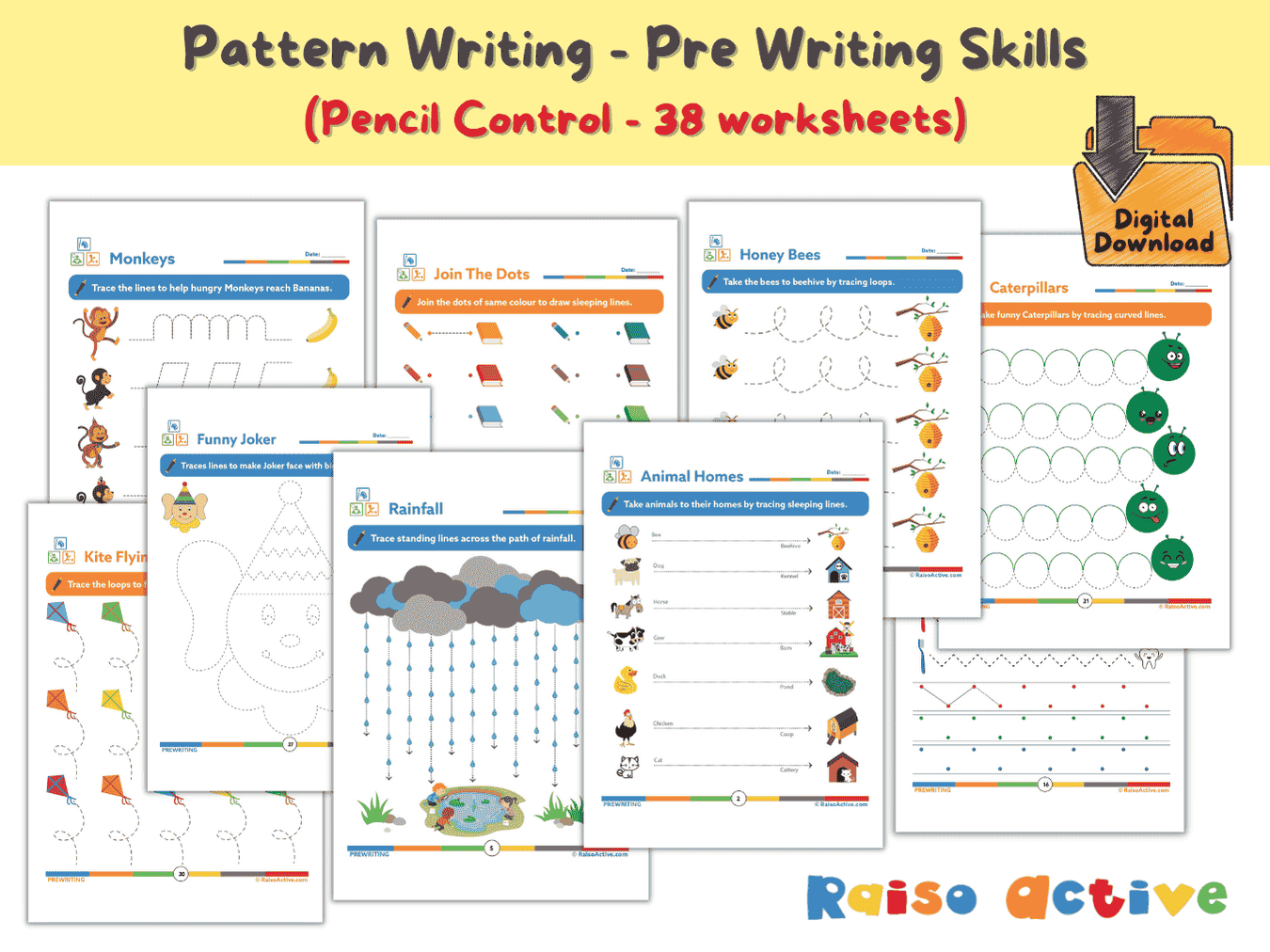

Pattern Writing Pre-writing Skills Activity Book for 3-4 Year Olds
Ages 3-4 · PreschoolAges 3-4 · NurseryAges 3-4 · 44 pages
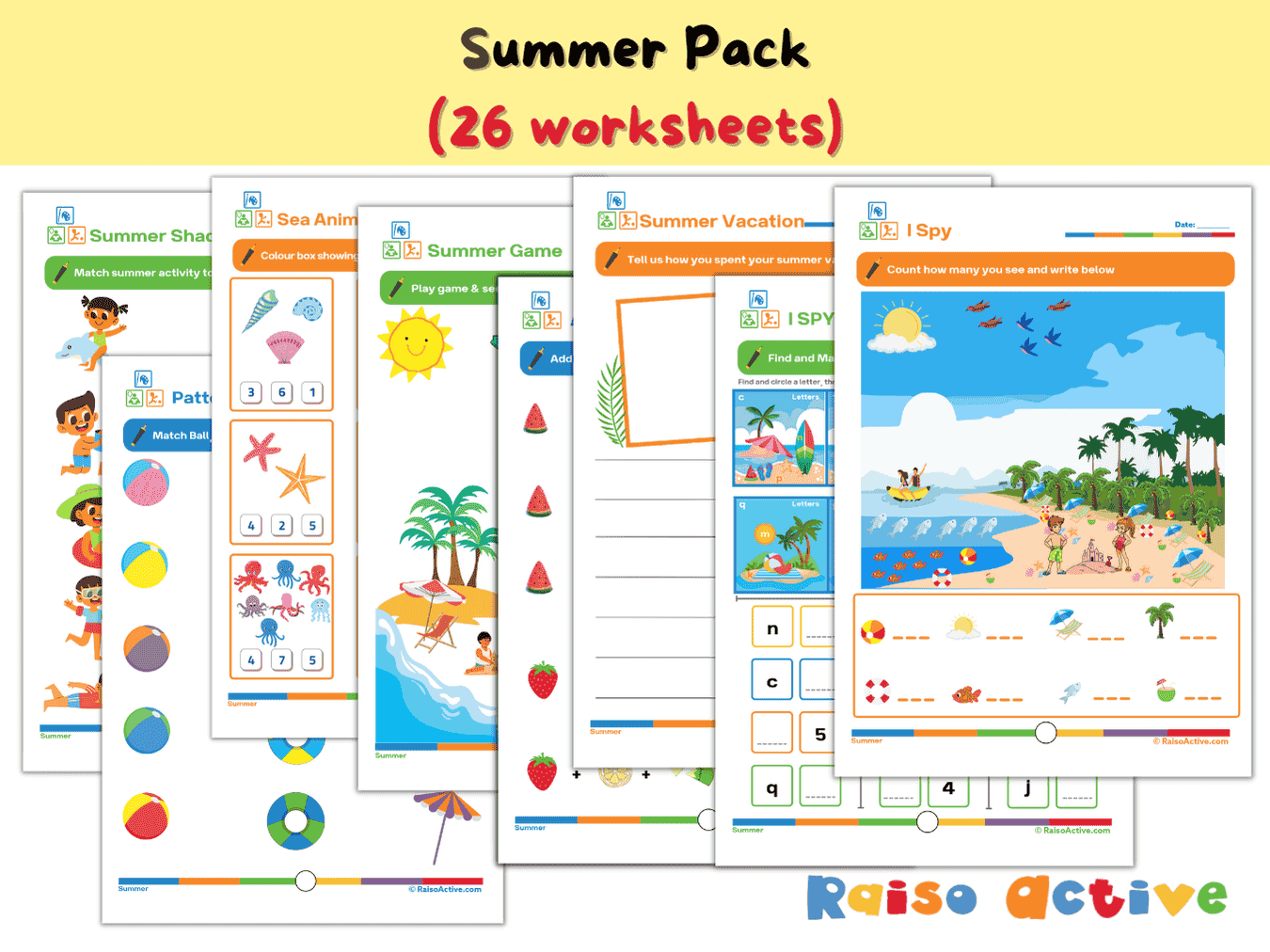

Summer Activity Pack: Math, Literacy, Puzzles & More for Preschool & Kindergarten
Ages 3-7 · Preschool–Grade 1Ages 3-7 · Nursery–Year 2Ages 3-7 · Nursery–Class 1Ages 3-7 · 26 pages
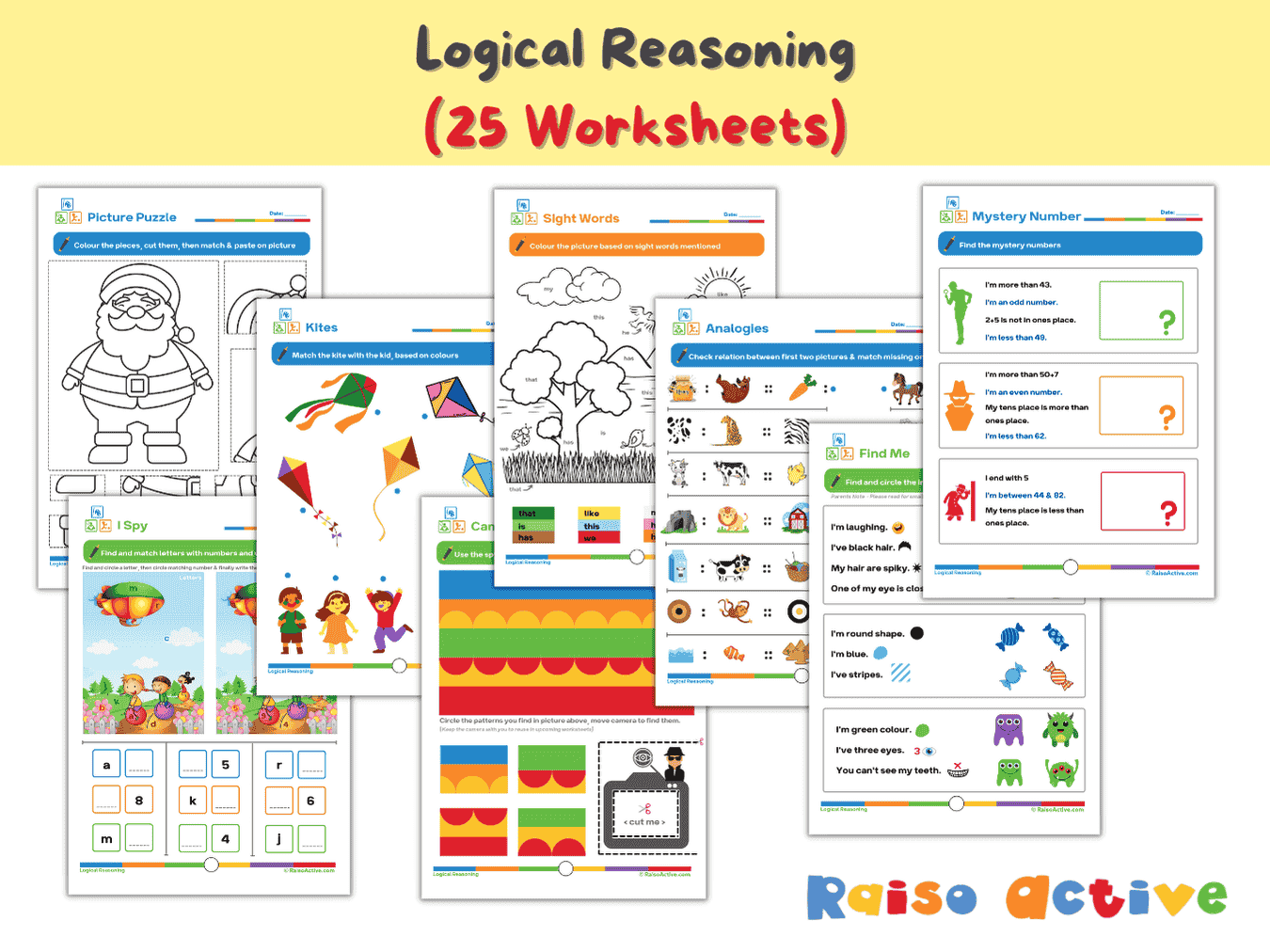

Logical Reasoning Activity Book for Preschool & Kindergarten | Patterns, Sudoku, Mazes & Coding
Ages 4-7 · Pre-K–Grade 1Ages 4-7 · Reception–Year 2Ages 4-7 · LKG–Class 1Ages 4-7 · 34 pages
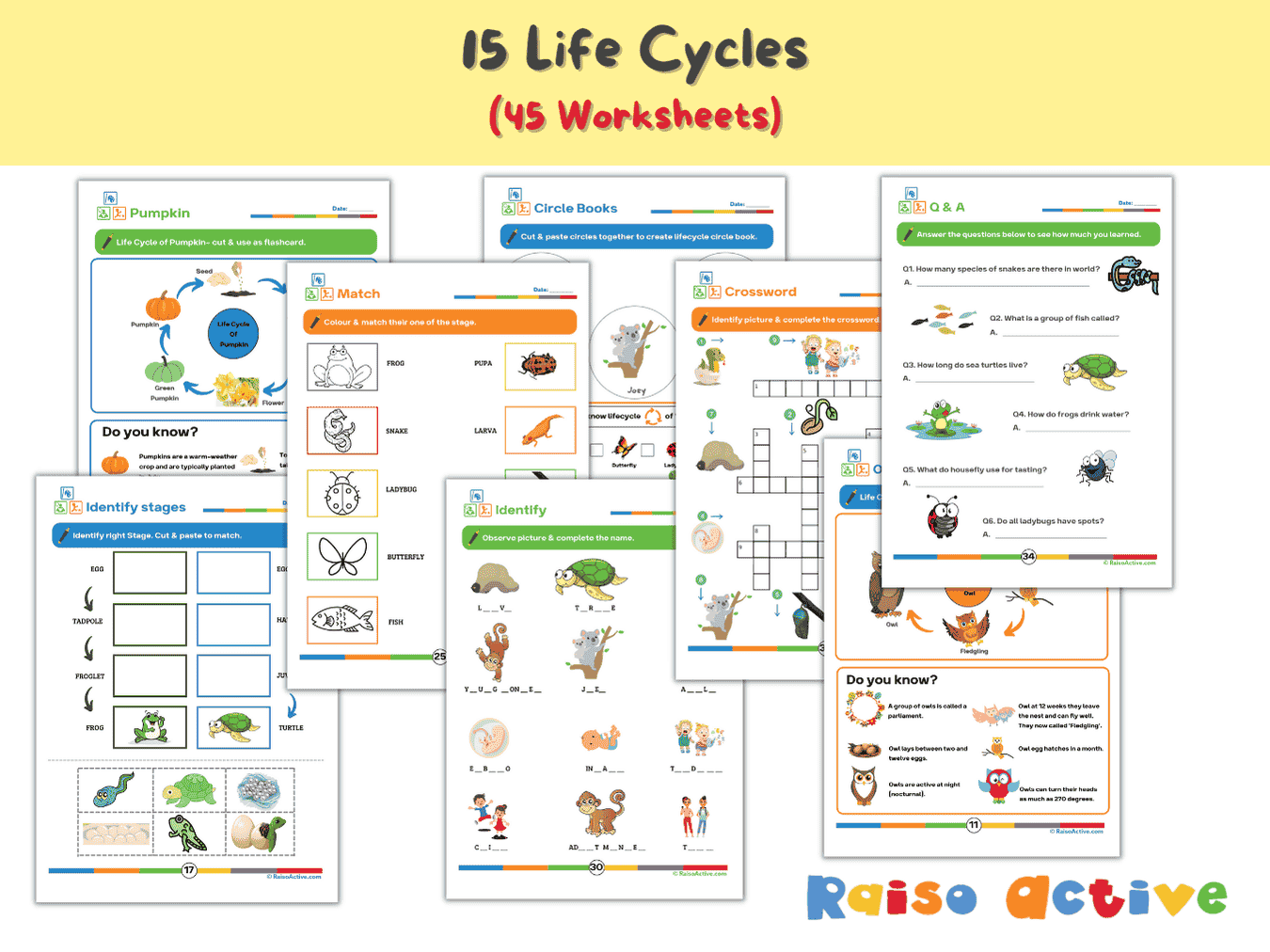

Lifecycles Activity Book & Flashcards for Preschool & Early Elementary
Ages 3-8 · Preschool–Grade 2Ages 3-8 · Nursery–Year 3Ages 3-8 · Nursery–Class 2Ages 3-8 · 46 pages
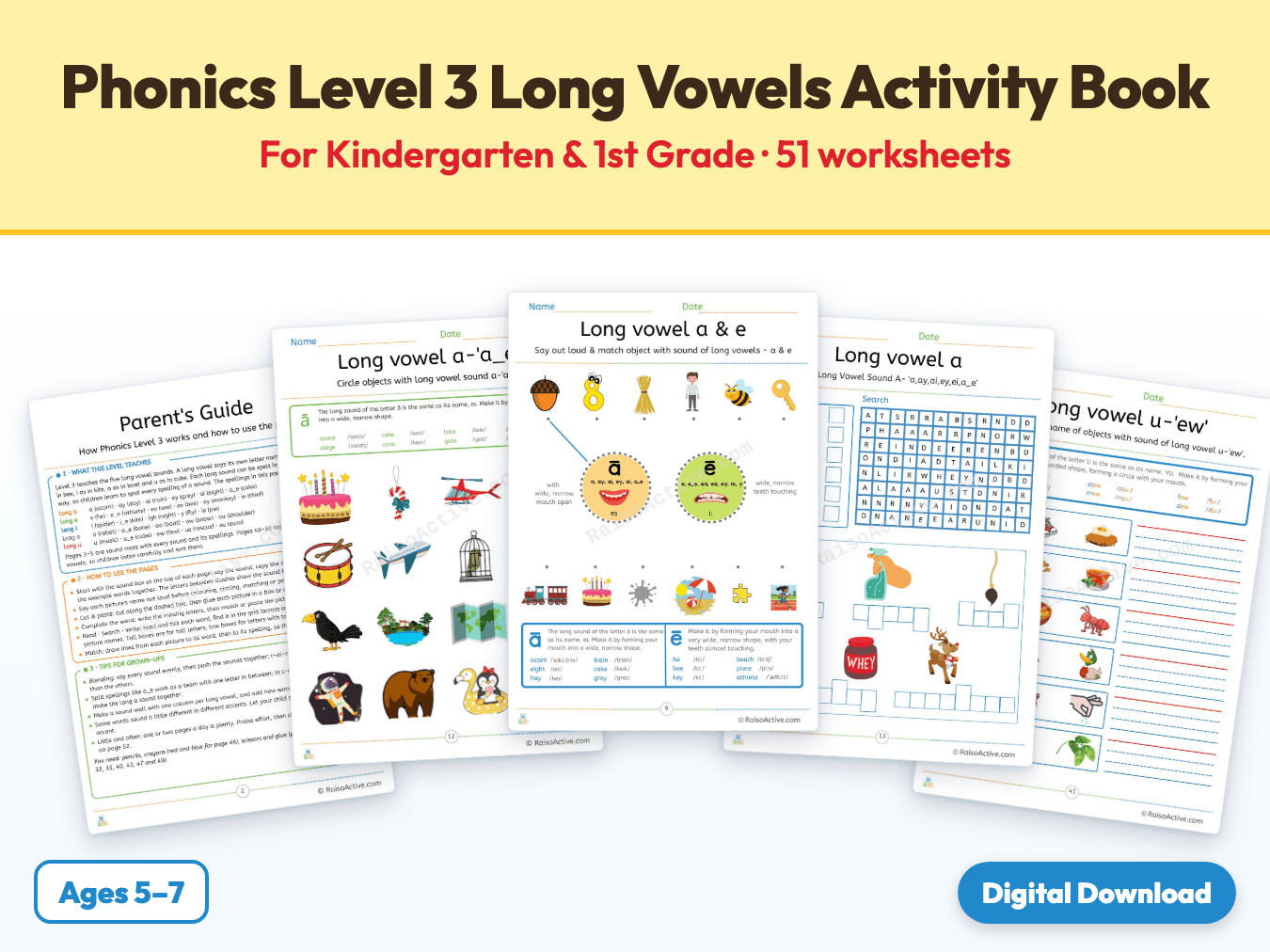

Phonics Level 3 Long Vowels Activity Book for Kindergarten & 1st Grade
Ages 5-7 · Kindergarten–Grade 1Ages 5-7 · Year 1–Year 2Ages 5-7 · UKG–Class 1Ages 5-7 · 52 pages
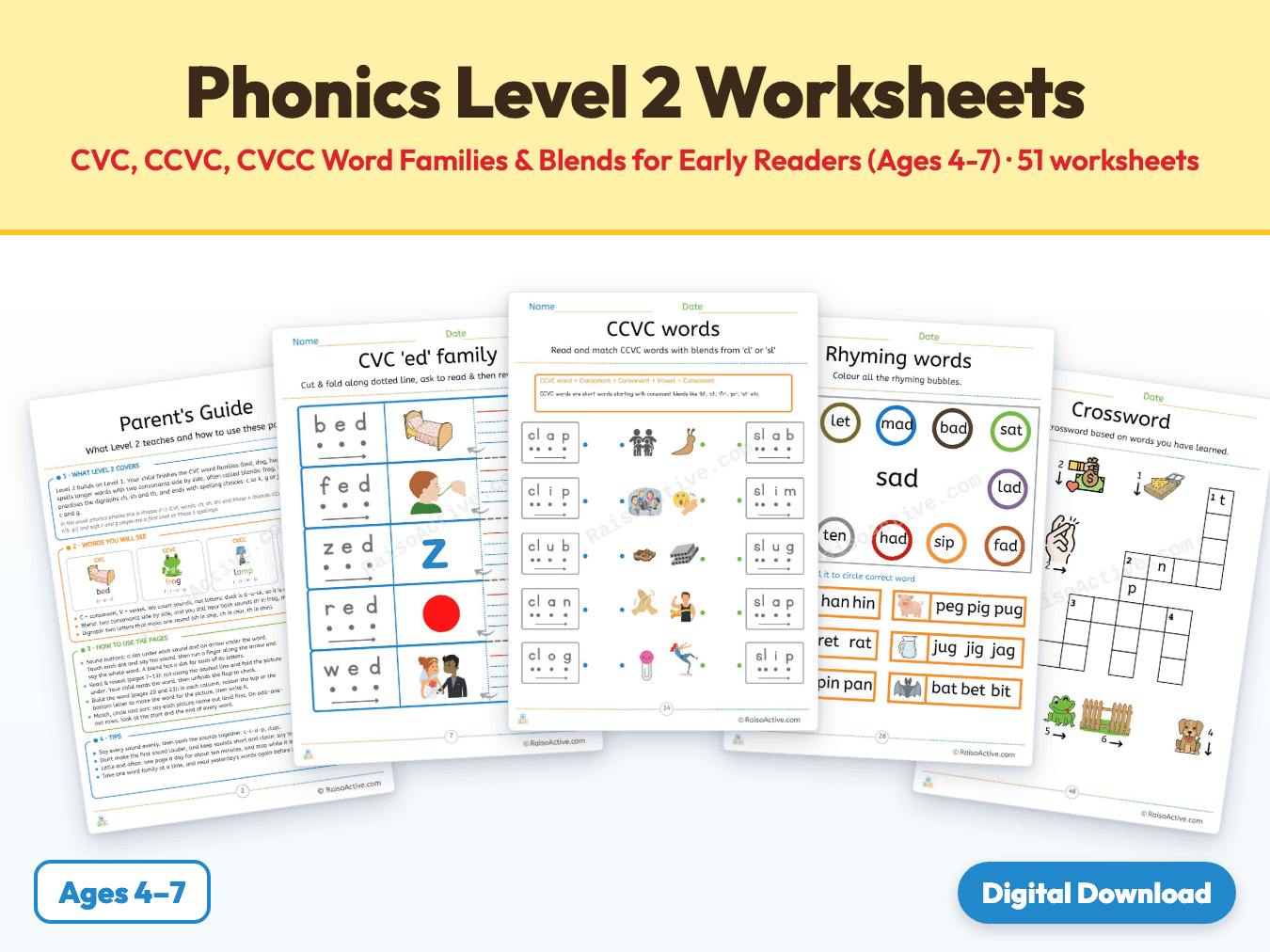
Phonics Level 2 Worksheets: CVC, CCVC, CVCC Word Families & Blends for Early Readers (Ages 4-7)
Ages 4-7 · Pre-K–Grade 1Ages 4-7 · Reception–Year 2Ages 4-7 · LKG–Class 1Ages 4-7 · 52 pages
Guides for parents and teachers
See all guides
Number Formation Rhymes 0–9 and How to Fix Reversals
Original number formation rhymes for 0–9, the correct stroke order for each digit, why 3, 5 and 7 get reversed most often, and multisensory fixes that work.

Kindergarten Readiness Checklist: 25 Skills to Practice Before the First Day
A kindergarten readiness checklist of 25 literacy, math, motor, self-regulation and self-help skills, with an 8-week summer plan and notes on when not to worry.

UKG Syllabus Explained: English, Maths and EVS Month by Month
What UKG classes typically cover in English, maths and EVS, month by month, aligned to NEP 2020, with ways to support at home and signs your child is behind.
What Should a 4-Year-Old Know Before LKG? A Readiness Checklist
A calm, teacher-written LKG readiness checklist for 4-year-olds: language, pattern writing, numbers to 10, self-help and social skills, plus a 6-week plan.
Christmas and Winter Activities That Combine Fun and Learning: Creating Magical Educational Experiences
Discover Christmas and winter activities that combine festive fun with real learning. Crafts, counting, literacy, and printable worksheets for ages 2 to 8 — perfect for home and school.
Age-Appropriate Halloween Learning Activities: Balancing Spooks and Skills for Young Learners
Discover fun, age-appropriate Halloween learning activities for young children. Spooky crafts, counting games, literacy ideas, and printable worksheets for ages 2 to 8.