Free printable worksheets · US · UK · India
Worksheets for 3 Year Olds
Worksheets for 3 year olds are printable practice pages for children aged 3 to 4 in preschool, Nursery or Playgroup, the first year most children hold a crayon with a finger grip. They cover pre-writing lines and curves, coloring within large outlines, shape and color recognition, matching, counting to 5 and recognizing the letters in the child's name.
Three is the age the crayon moves from the fist to the fingers, and everything on this hub follows from that. Once a child can hold a crayon with something like a tripod grip, they can trace a standing line, then a sleeping line, then a curve, and those strokes are the raw material of letters and numerals a year later. Attention stretches to ten minutes at a table. Counting becomes meaningful to about five, colors and shapes get names, and matching sheets sharpen the visual discrimination reading will depend on. Most three-year-olds recognize the first letter of their own name, which is where letter work should start. Whether your child is in preschool, UK Nursery or an Indian Nursery class, one short sheet a day is the right dose.
1943+ worksheets · free PDF download · print on A4 or Letter
Worksheets for 3 Year Olds to print
Browse all worksheets for ages 3–4
Month 6: Toddler Preschool Foundational Skills | Ages Up to 4 - Page 19
As part of an ongoing toddler foundational skills series, this page gives children up to age 4 low-pressure practice with coloring and simple fine motor prompts, building the pencil and crayon grip control that comes before formal writing instruction. Repeated, varied activity pages like this one help very young children build attention span and comfort with sitting down to a focused task, both important readiness skills for structured learning ahead.

Pattern Writing Pre-writing Skills Activity Book for 3-4 Year Olds - Page 40
As one of the later pages in the pre-writing patterns activity book, this page asks 3-4 year olds to apply everything practiced on earlier pages, steady pressure, consistent spacing, and accurate prediction, to a pattern that combines skills built up gradually through the book. Reaching this stage of the book is itself a marker of growing stamina, since completing a full row of repeated strokes reliably takes more sustained focus than the simpler early pages required.

Pattern Writing Pre-writing Skills Activity Book for 3-4 Year Olds - Page 19
This page from the pre-writing patterns activity book asks 3-4 year olds to keep their pencil pressure steady and consistent while repeating a stroke across a full row, a subtler skill than simply getting the shape right. Learning to apply even, moderate pressure prevents the tearing or overly faint lines common in early writing attempts, and this kind of repeated practice builds that control gradually.

Pattern Writing Pre-writing Skills Activity Book for 3-4 Year Olds - Page 11
This page from the pre-writing patterns activity book strengthens hand and finger muscles for 3-4 year olds through repeated stroke motions, building the physical stamina and grip strength a child needs before sustained handwriting becomes comfortable. Repeating the same basic movement many times across a row also builds muscle memory, so the motion starts to feel automatic rather than something the child has to consciously plan each time.

Pattern Writing Pre-writing Skills Activity Book for 3-4 Year Olds - Page 17
This page from the pre-writing patterns activity book asks 3-4 year olds to continue a repeating stroke pattern, which trains their brain to predict what comes next in a visual sequence before their hand draws it. That predicting-then-executing process is a form of early motor planning, the same skill that later lets a child anticipate the next stroke needed to form a letter without stopping to think about each individual line.

Pattern Writing Pre-writing Skills Activity Book for 3-4 Year Olds - Page 33
This later page in the pre-writing patterns activity book asks 3-4 year olds to track a repeating pattern visually from left to right across the row before their pencil catches up, building the same visual tracking direction used in reading English text. Because this comes further into the book, it also builds a small dose of persistence, since completing a full row of repeated strokes takes more sustained attention than a single short trace.

Clothing Pattern Match Worksheet for Preschoolers
This worksheet has children ages 3-5 study repeating patterns on clothing items — stripes, polka dots, or checks — and match each item to its identical twin, building visual discrimination and early pattern-sequencing skills. Distinguishing between similar-looking patterns also sharpens attention to detail, a skill that later supports letter and word recognition.
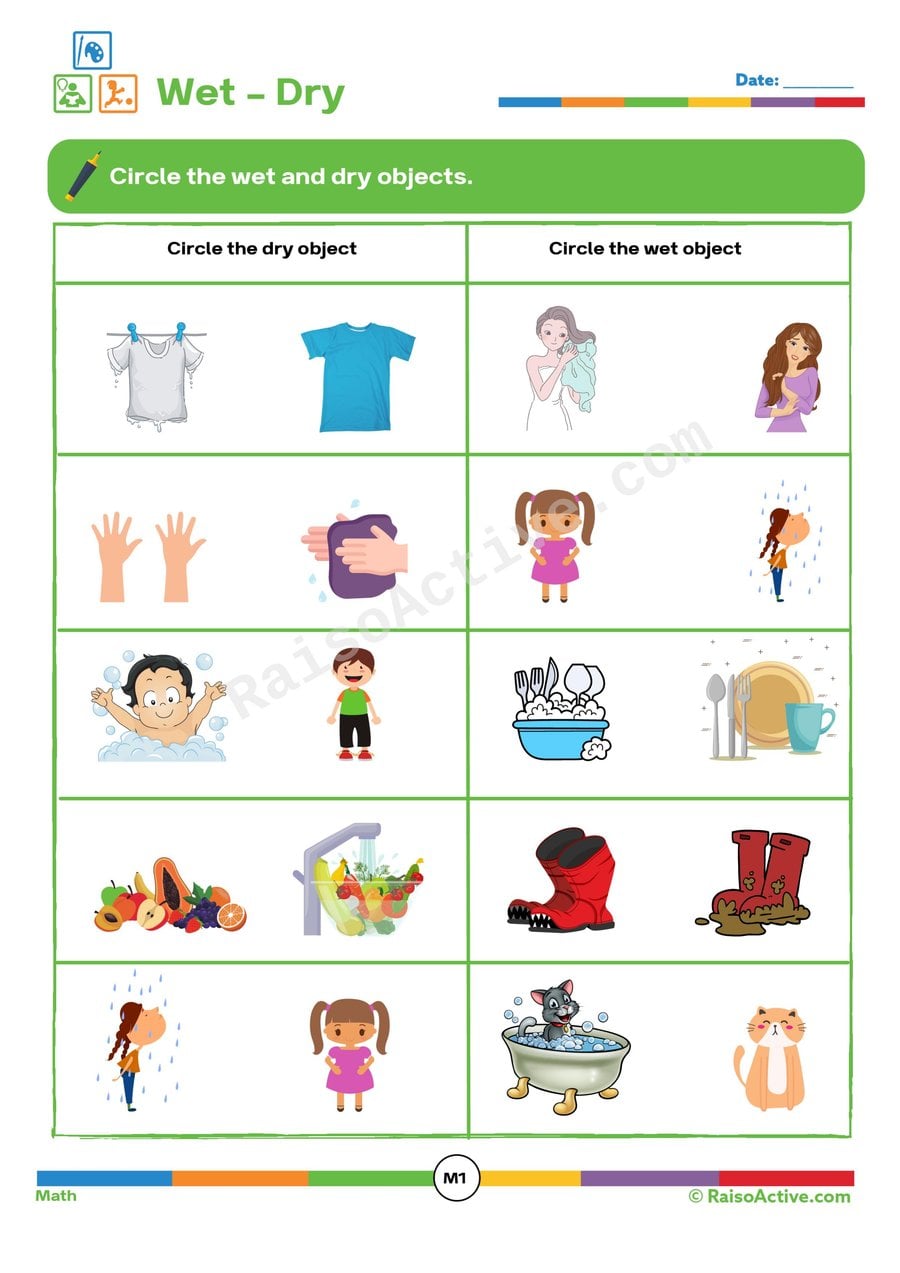
Wet and Dry Objects Worksheet for Preschoolers
Children ages 3-5 practice a foundational science observation skill by visually sorting pictured objects into 'wet' and 'dry' categories, building early classification reasoning based on physical properties they can relate to from everyday life. This kind of property-based sorting is a stepping stone toward more advanced science classification later on.

Trace the Standing Lines to Reach the Ice Cream! A Pre-Writing Worksheet
This worksheet builds pencil control in children ages 3-5 by having them trace vertical, 'standing' lines connecting children to their ice cream cones, a companion skill to horizontal line tracing that together forms the basis for writing many letters and numbers. Vertical strokes require a different hand motion than horizontal ones, so practicing both directions gives children a fuller foundation for handwriting readiness.

Fall Crossword Puzzle Worksheet for Preschoolers
This fall-themed crossword uses pictures instead of written clues, helping children ages 3-5 connect an image directly to its written word while practicing early letter formation. Counting the boxes in each answer also builds an intuitive sense of word length before formal spelling instruction begins.

Trace and Write the Letter I Worksheet for Preschoolers
This worksheet has children ages 3-5 trace the uppercase letter I, one of the simplest letters in the alphabet consisting of a single straight vertical line, making it a good confidence-building exercise alongside more complex letters. Because I is also a complete word on its own, when written as a personal pronoun, this worksheet quietly introduces the idea that a single letter can sometimes stand alone as a word. The page reinforces the short /i/ sound in words like 'igloo' and 'insect.'

Read & Reveal: CVC Word Fun Worksheet for Preschoolers
Reading CVC words is the first real decoding milestone for children ages 3-5, and this 'Read & Reveal' worksheet turns that practice into a mini mystery. Children sound out each three-letter word, then lift the flap to see if their guess matches the hidden picture, which builds phonemic blending and self-checking skills at the same time. The reveal mechanic also keeps motivation high during repetitive phonics drills, which matters a great deal for a wiggly preschool attention span.

Pumpkin Life Cycle Flashcards: Learn About Pumpkins!
These flashcards walk children ages 3-5 through the stages a pumpkin passes through, from seed to sprout to vine to ripe pumpkin, building an early understanding of plant growth and the passage of time. Sequencing the cards in order also introduces the concept that living things change in a predictable pattern, a foundational science idea.

Color the Circles: Vocabulary Worksheet for Preschoolers
Matching a chart of letter-color pairings to circles below reinforces alphabet recognition for children ages 3-5 while training them to hold a two-step visual instruction in mind — find the letter, then find its color — while coloring.
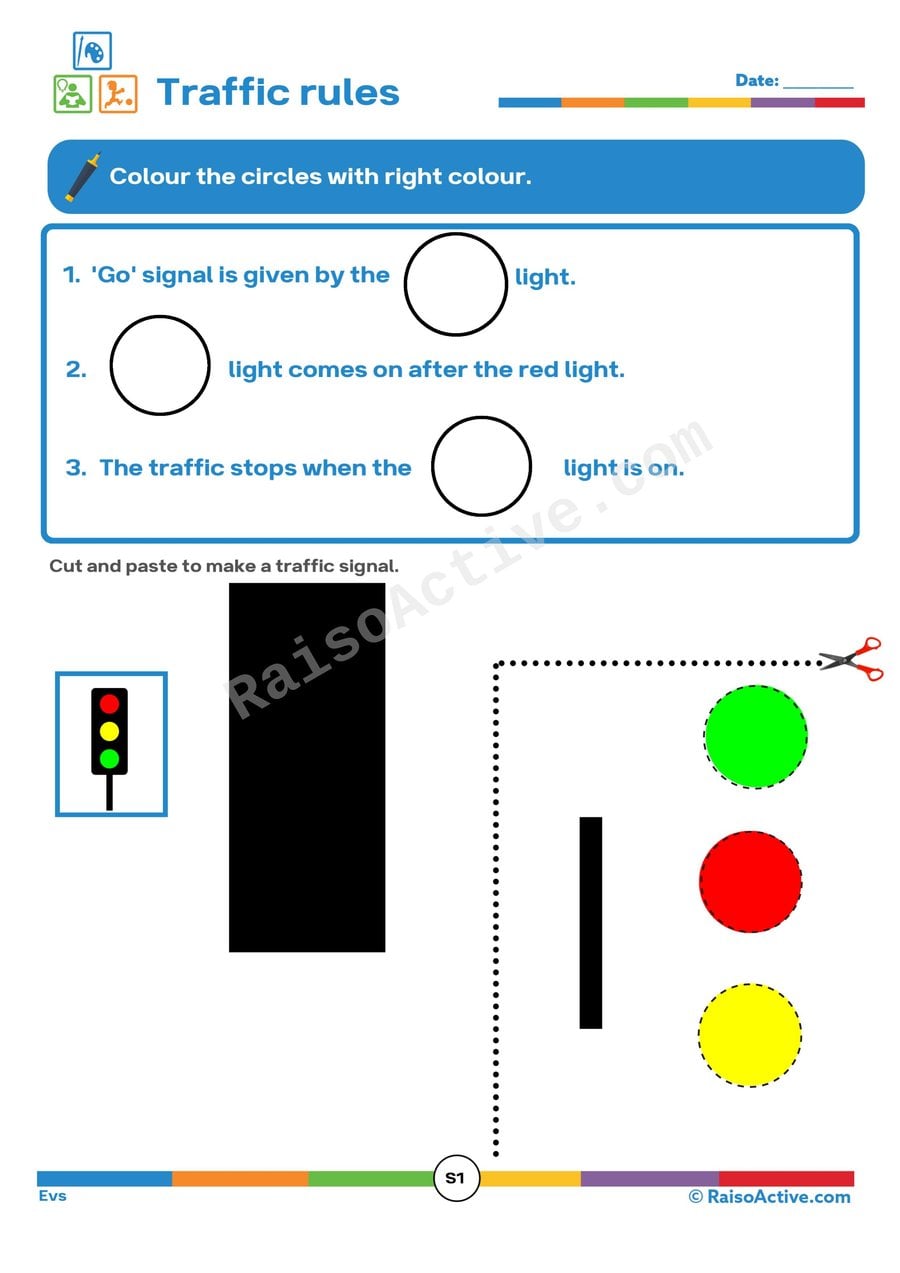
Traffic Light Colors Worksheet for Kids
Coloring the traffic light and completing the signal teaches children ages 3-5 what each color means, connecting red, yellow, and green to stop, wait, and go in a way that supports real road safety awareness. Cutting and pasting the finished signal also gives extra fine motor practice tied directly to the lesson.
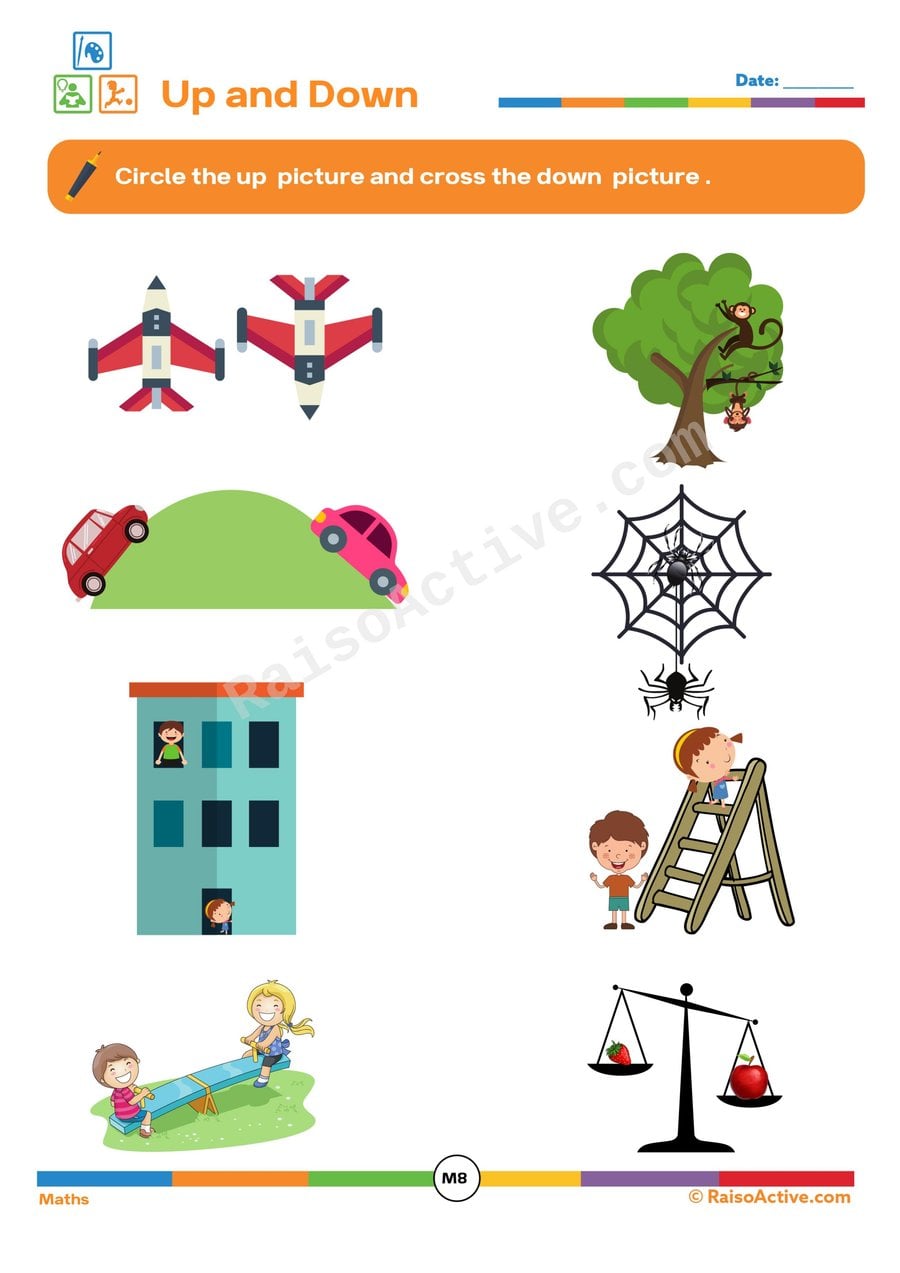
Up and Down Worksheet: Circle the Up Picture!
This worksheet helps children ages 3-5 understand the concepts of 'up' and 'down' by examining pairs of pictures and identifying which one shows something moving or positioned upward. Comparing two opposite pictures side by side also builds early skills in noticing contrast and difference, which supports later comparison-based reasoning in math and science.

Healthy Maze Worksheet for Kids: Help the Girl Find Healthy Food!
This maze worksheet combines fine motor path-tracing with healthy-eating awareness for children ages 3-5, as they guide a character through a maze while avoiding unhealthy food obstacles to reach a healthy treat. Embedding a decision-making theme into the maze, rather than a neutral path, gives children a reason to think about food choices while also practicing visual scanning and planning. This combination makes an abstract nutrition lesson feel like part of a fun, goal-directed game.

Parent's Guide: Fun Activities for Early Learning!
This parent's guide compiles a set of short activities spanning early literacy, spatial reasoning, and problem-solving, giving caregivers ready-made ways to build foundational skills through everyday play. For ages 3-5, mixing activity types across one guide, like word games and puzzles, keeps a young child's attention while covering multiple developmental areas in a single session or across a week.

Hard and Soft 'g' Sounds Worksheet for Preschoolers
This worksheet teaches children ages 3-5 that the letter 'g' can make two different sounds — a hard /g/ as in 'goat' and a soft /j/ as in 'giraffe' — and asks them to sort words by color to show which sound applies. Understanding that one letter can represent more than one sound is an important step beyond basic phonics, preparing children for the many spelling irregularities they'll encounter as readers.

Scarecrow Cut and Paste Worksheet for Preschoolers
This scarecrow-building activity gives children ages 3-5 focused practice in cutting and gluing basic shapes — circles, triangles, rectangles — into place to assemble a recognizable figure. Matching each shape to its correct spot on the scarecrow outline also reinforces spatial reasoning, since children must judge size and orientation before pasting. Naming the shapes aloud as they work connects the craft to early geometry vocabulary rather than treating it as pure art time.

Color the Sea Animals Worksheet for Preschoolers
This worksheet helps children ages 3-5 learn to recognize different sea animals, like fish, crabs, and octopuses, while practicing fine motor coloring skills that build hand strength and control. Naming and coloring each creature also introduces early marine science vocabulary in a low-pressure, creative format.

Front and Behind Worksheet: Identifying Positional Words
Understanding 'front' and 'behind' gives children ages 3-5 the spatial vocabulary they need to follow instructions and describe the world around them accurately, an important stepping stone toward later concepts like ordinal position and basic geometry. This worksheet asks them to apply the words to specific pictures rather than just hear them in passing, which cements the connection between the word and the physical relationship it describes. Positional language like this also supports following multi-step directions at home and in the classroom.

Parent's Guide: Fun Activities for Letter Recognition, Conversation & More!
This guide is a collection of hands-on activities parents can use to build letter recognition, phonics awareness, basic conversation skills, and spatial vocabulary in three- to five-year-olds through everyday play rather than worksheet drills. Because it's built around games like hiding letters or setting up a pretend shop, it teaches these early literacy and language skills through movement and imagination, which holds young children's attention far longer than seated tasks.

Before and After Shapes Worksheet: Coloring and Identifying Shapes
This worksheet combines shape identification with sequencing for children ages 3-5, asking them to color shapes accurately and then determine which shape comes before or after a given one in a sequence. Applying 'before' and 'after' to shapes rather than pictures of events pushes children to think about order in a more abstract way. Coloring within defined shape outlines also builds hand control and attention to boundaries.
What a 3 year old can typically do
A typical three-year-old can copy a vertical and horizontal line and a circle, color a large shape with some attempt to stay inside, match identical pictures and simple shapes, sort by color or size, count three to five objects by touching them, name several colors and basic shapes, and recognize the first letter of their name. Cutting with child scissors along a thick straight line usually appears during this year.
- Pre-writing: standing, sleeping and slanting lines, curves, circles, simple zigzags
- Coloring: large outlines with a jumbo crayon, gradually staying nearer the line
- Shapes and colors: circle, square, triangle; red, blue, yellow, green and more
- Matching and sorting: same pictures, shadow matching, big and small, one attribute at a time
- Counting: 1 to 5 objects with touch counting, recognizing numerals 1 to 3
- Letters: the letters in the child's own name, mostly by recognition
How to use worksheets with a 3 year old
Give one page, a jumbo crayon or triangular pencil, and ten minutes. Demonstrate the stroke with your finger first, then let your child try. Praise finishing rather than neatness. If the pencil grip slips back into a fist, switch to a coloring or sticker page for the rest of the session and return to lines another day.
Rotate types across the week: pattern lines, coloring, matching, counting, and a free-choice page. Laminate a favorite line sheet for reuse with a whiteboard marker. Keep scissors work separate and supervised: a thick straight line to cut along is enough at three. Avoid full alphabet or number-writing sheets until four.
What to avoid at three
Avoid thin pencils, small print, pages with many tasks, and writing letters or numerals from memory. Avoid correcting reversals or messy coloring; both are expected until five or six. A three-year-old who refuses the page is telling you the task or the timing is wrong, so shorten the session or swap to something sticker-based. Worksheets belong alongside play, stories and outdoor time, not in place of them.
Frequently asked questions
What should a 3 year old know before preschool or Nursery?
By three most children can speak in short sentences, follow two-step instructions, name a few colors, count to three or five, match identical pictures, hold a crayon with fingers, draw a circle, and play alongside other children. Letter recognition beyond their own name, counting to ten with meaning and controlled coloring develop during the preschool or Nursery year, not before it.
Are worksheets good for 3 year olds?
Short, single-task worksheets are helpful at three when they match what the hand can do: tracing large lines, coloring big shapes, matching and simple counting. They give purposeful practice at holding a crayon and finishing a task. Worksheets that ask for letter writing, small tracing or long sitting are not suitable yet. Ten minutes a day alongside plenty of play is the right balance.
What pre-writing skills does a 3 year old need?
Pre-writing at three means controlling a crayon well enough to make a vertical line, a horizontal line, a circle and, later in the year, a cross and a slanted line. These are the strokes every letter and numeral is built from. Tracing large dotted lines, coloring, using stickers and playing with playdough all build the finger strength and control that pre-writing requires.
How long should a 3 year old do worksheets each day?
Five to ten minutes once a day is enough for a three-year-old, and skipping days is fine. One page finished with attention teaches more than several rushed pages. If the child asks for another, give one; if they wander off, the session is over. Consistency across weeks matters more than the length of any one session.
Should a 3 year old be writing letters?
Not from memory. Three-year-olds can recognize a few letters, usually those in their name, and may trace a large capital letter once their lines and circles are steady. Writing letters independently is a four- to five-year-old skill (Pre-K, Reception or LKG). Focus at three on pre-writing strokes, coloring and recognizing letters in books and signs.
Are the worksheets for 3 year olds free?
Yes. Every page can be downloaded free as a watermarked PDF after creating an account, with five downloads a day. An annual subscription removes the watermark and the daily limit for the full library, which is the usual choice for preschools and Nursery teachers printing a page for the whole class.

Written by
Hemsweta Jain · Teacher Cheena
MBA and Early Childhood Educator, teaching since 2014 · Founder of RaisoActive, Mumbai
Written and reviewed by Hemsweta Jain (Teacher Cheena), who designs every RaisoActive worksheet.
Last reviewed
Printable packs for ages 3–4
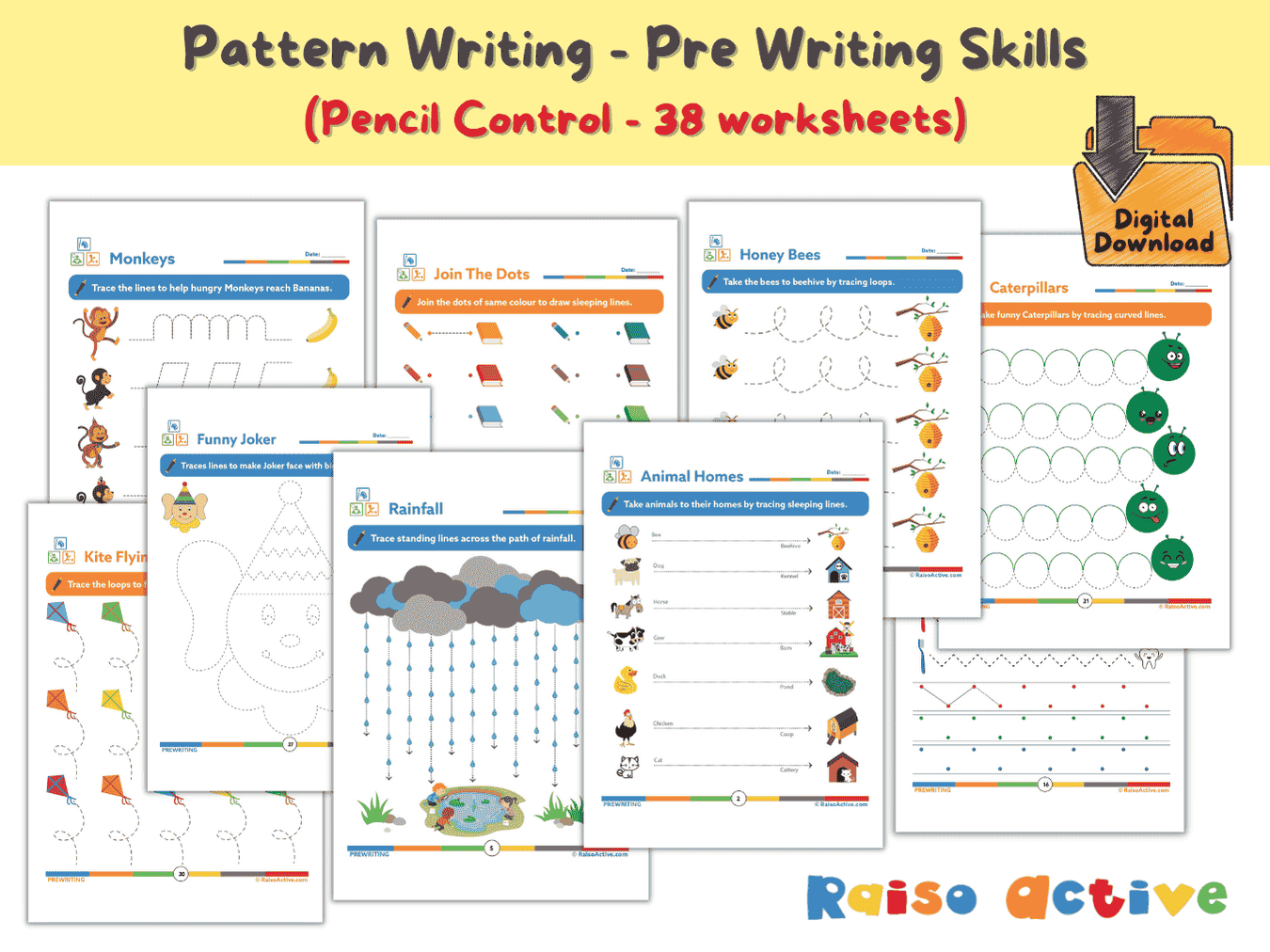
Pattern Writing Pre-writing Skills Activity Book for 3-4 Year Olds
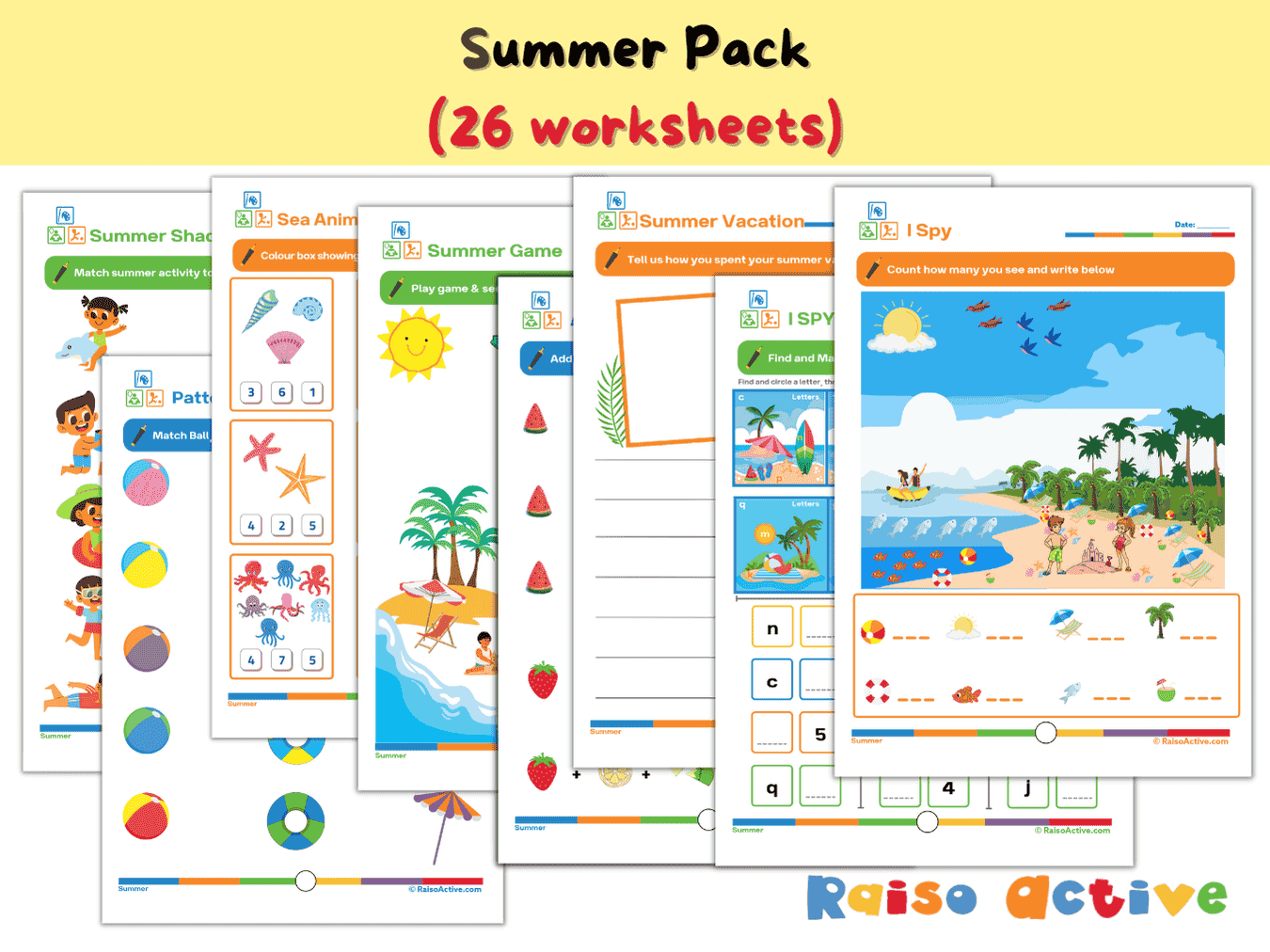
Summer Activity Pack: Math, Literacy, Puzzles & More for Preschool & Kindergarten
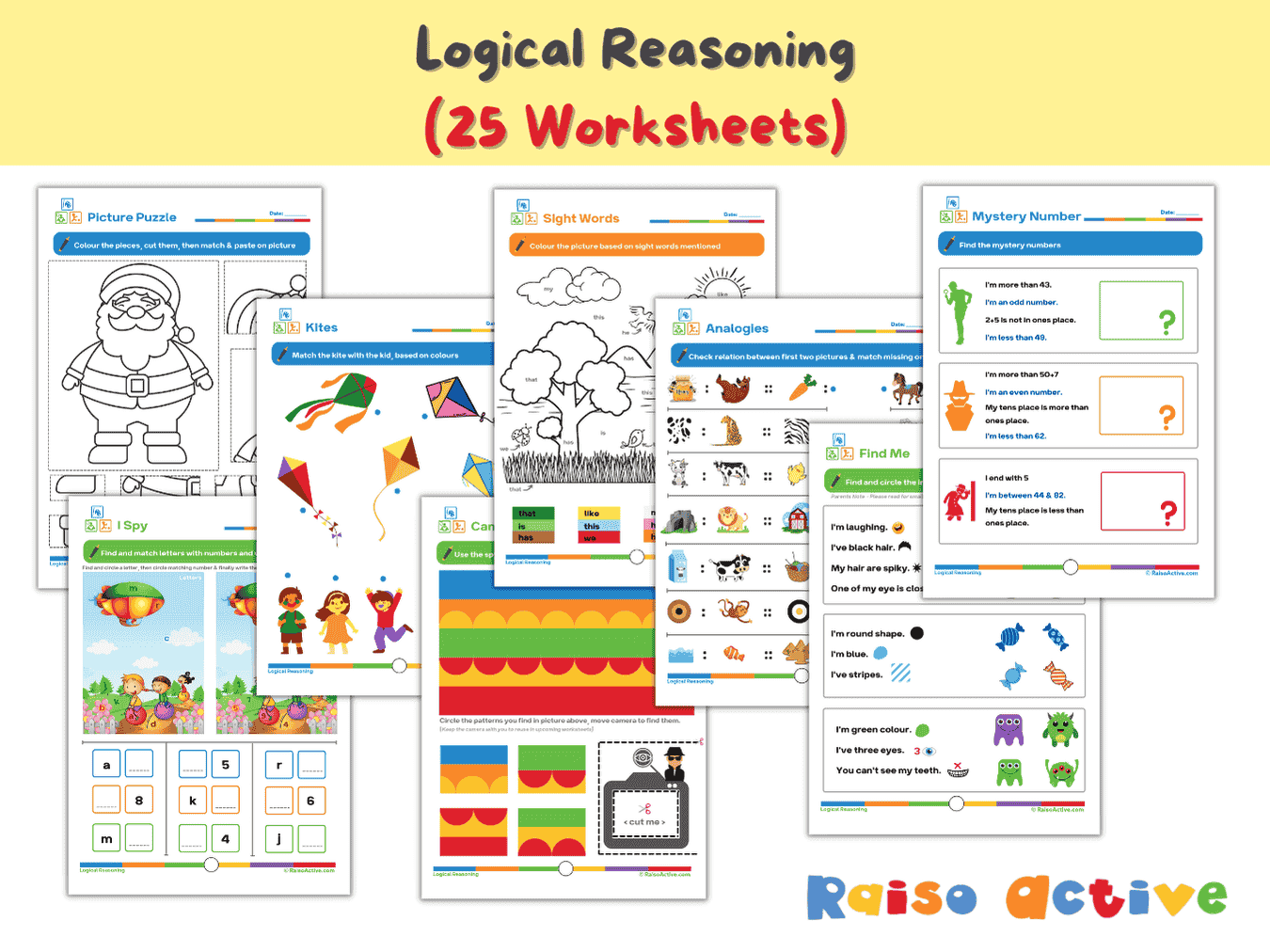
Logical Reasoning Activity Book for Preschool & Kindergarten | Patterns, Puzzles & Analogies
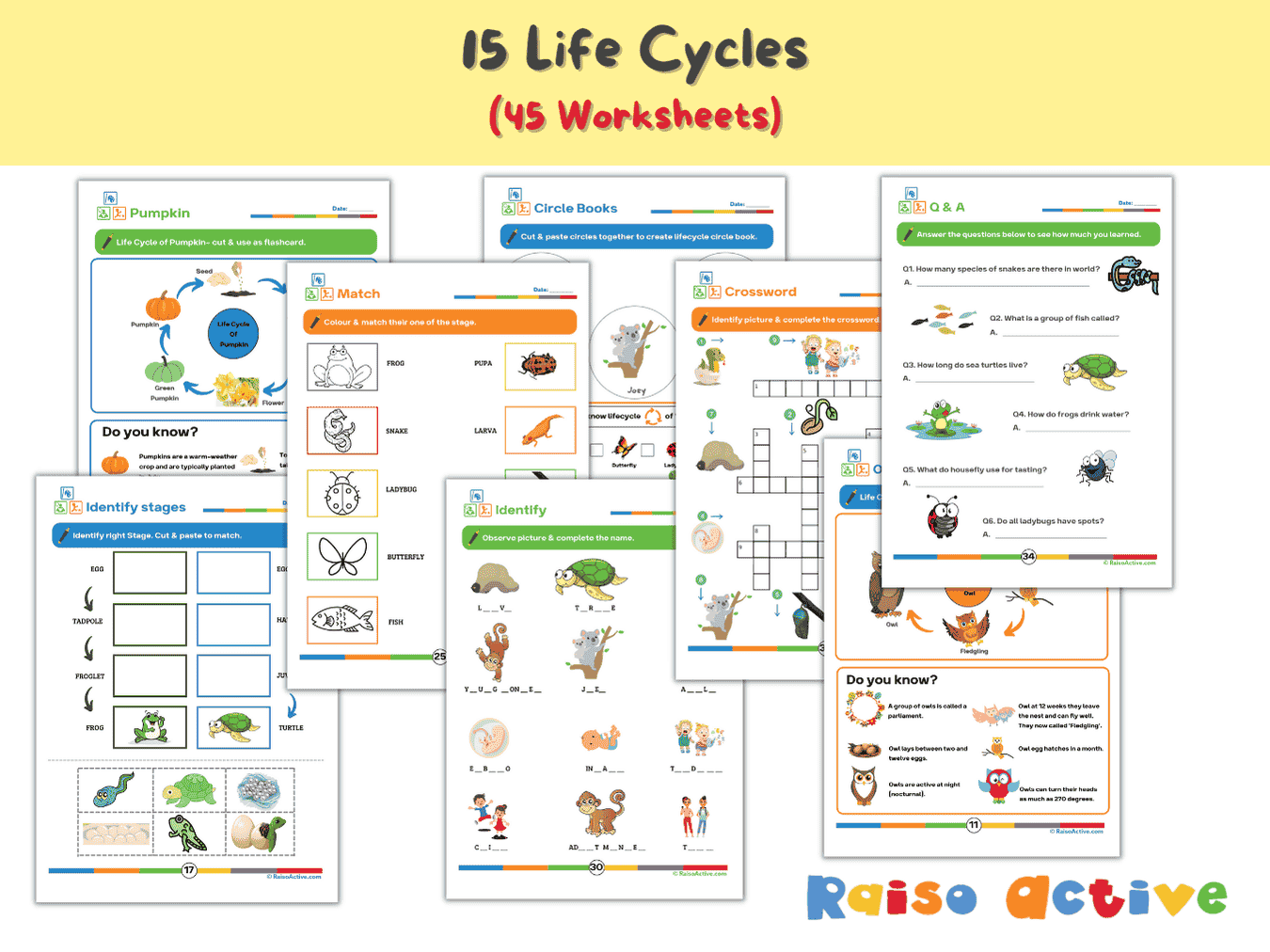
Lifecycles Activity Book & Flashcards for Preschool & Early Elementary
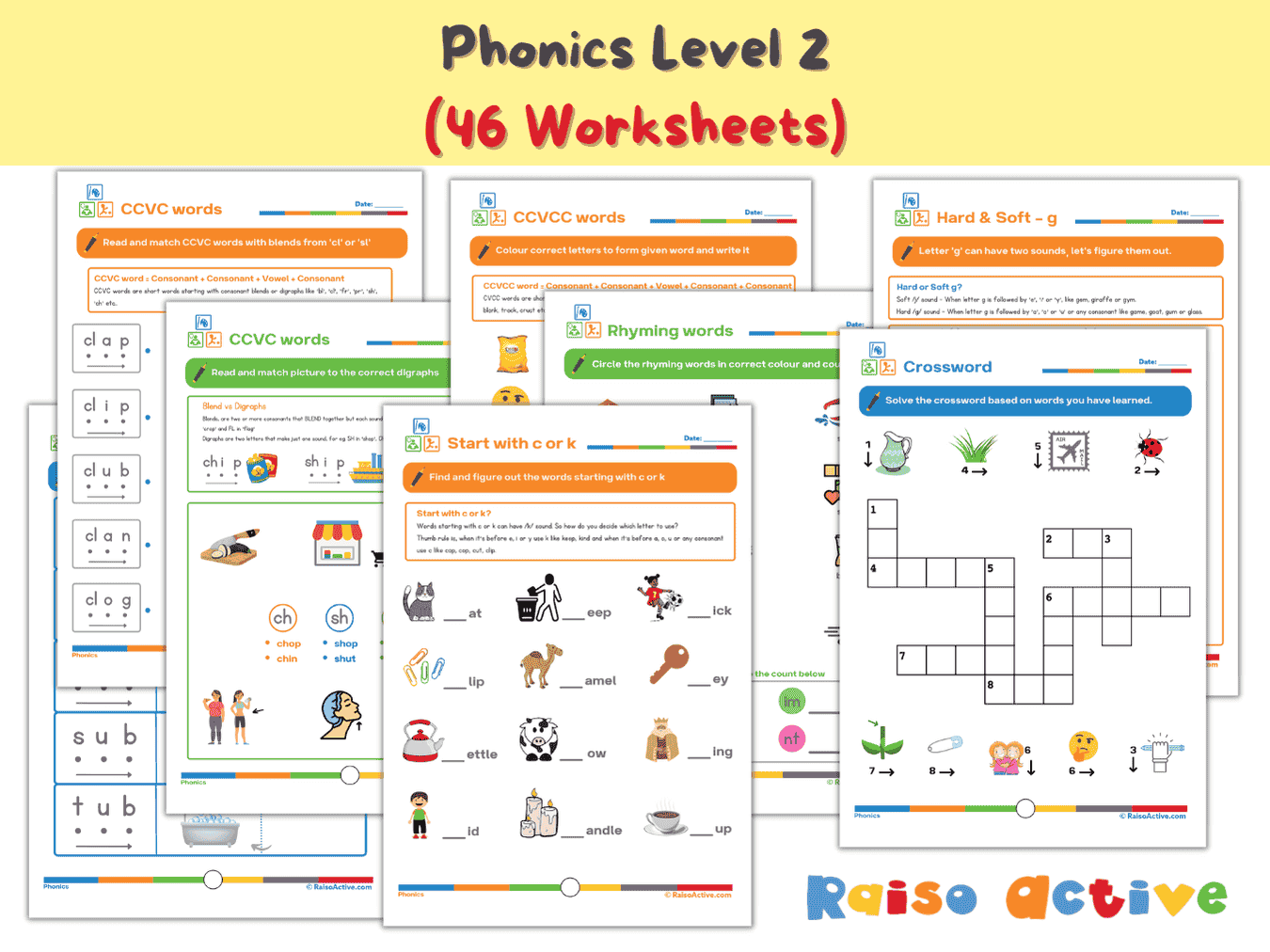
Phonics Level 2 Worksheets: CVC, CCVC, CVCC Word Families & Blends for Early Readers (Ages 4-7)
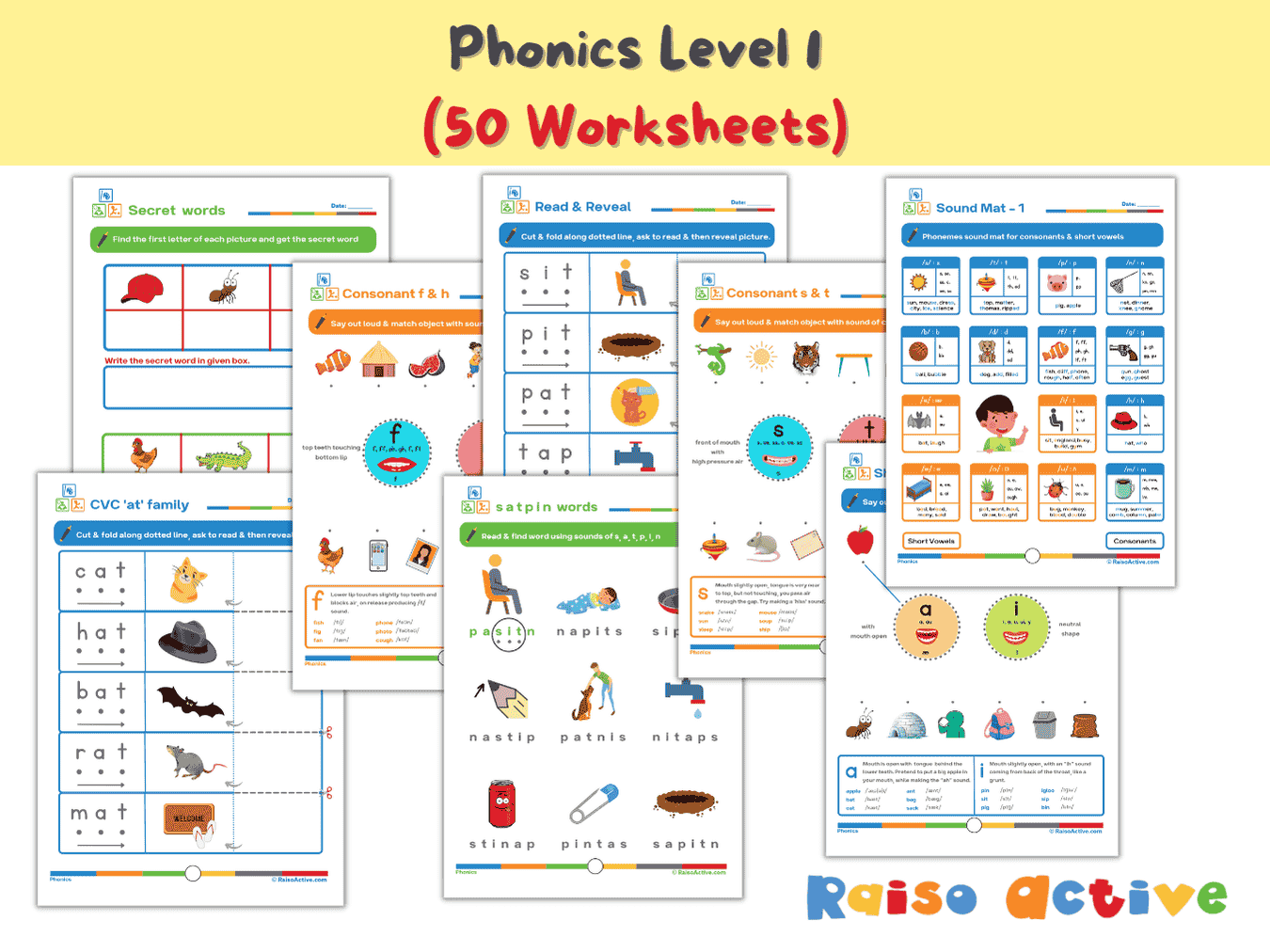
Phonics Level 1 Activity Book: Letter Sounds, Blending & CVC Words for Preschool & Kindergarten
Guides for parents and teachers
See all guides →Sight Words by Age: The First 50 Words and How to Teach Them Without Flashcard Fatigue
Which sight words to teach first and why, the heart-word method, a read-trace-write-find routine, games, and a by-age table of typical sight-word progress.
Number Formation Rhymes 0–9 and How to Fix Reversals
Original number formation rhymes for 0–9, the correct stroke order for each digit, why 3, 5 and 7 get reversed most often, and multisensory fixes that work.
Pre-Writing Strokes in Order: From Standing Lines to Loops (With Printable Patterns)
The developmental order of pre-writing strokes, from vertical lines to loops, and why practicing them in sequence makes letter formation much easier to learn.
Kindergarten Readiness Checklist: 25 Skills to Practice Before the First Day
A kindergarten readiness checklist of 25 literacy, math, motor, self-regulation and self-help skills, with an 8-week summer plan and notes on when not to worry.
Best Worksheets for 3-Year-Olds: What Works and What to Avoid
What works on worksheets for 3-year-olds: short sessions, crayons, tracing lines, matching, cutting, a free weekly plan, and signs one is too advanced.
Reception Year Explained: EYFS Learning and How to Help at Home
A teacher's plain-English guide to the Reception Year: the seven areas of learning, Early Learning Goals, Phase 2/3 phonics, the RBA and home routines.
Canonical: https://raisoactive.com/worksheets/worksheets-for-3-year-olds