Happy or Sad Teeth: Dental Sorting Worksheet for Kids
This sorting worksheet has children ages 3-5 cut out pictures of foods and place them next to either a happy or sad tooth, teaching which foods support healthy teeth (like fruits, vegetables, and dairy) and which contribute to cavities (like candy and soda). Making the effects of food choices visible through a simple happy/sad symbol helps young children connect everyday eating decisions to a health outcome they can understand.
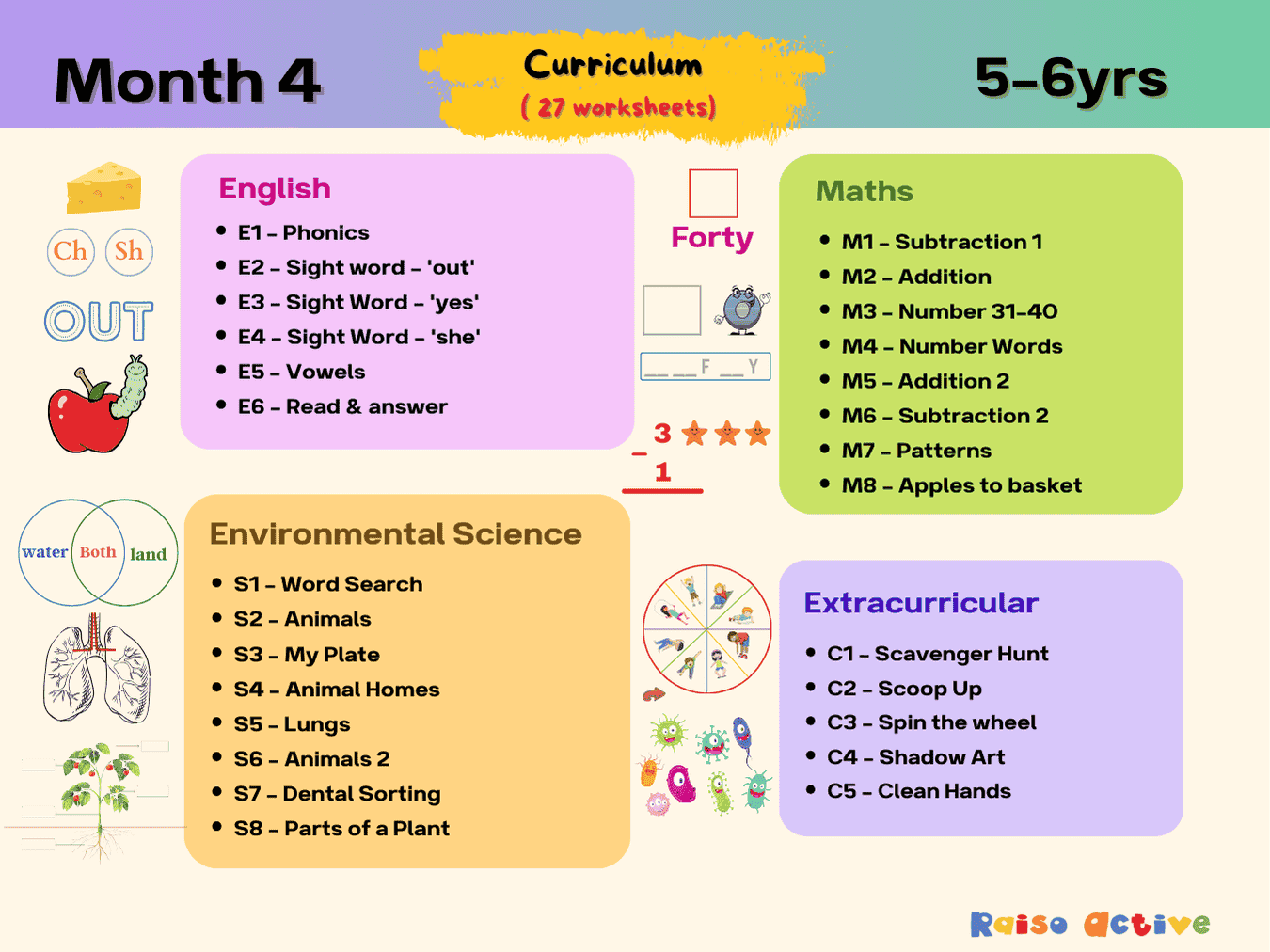
Part of the pack
Month 4: Learning & Development | Ages 5-6
This is page 24 of the pack. Ages 5-6 · KindergartenAges 5-6 · Year 1Ages 5-6 · UKGAges 5-6
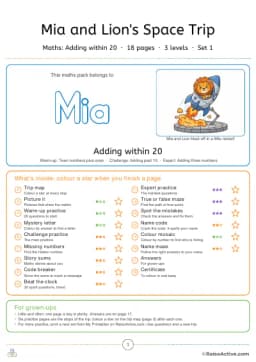
Made for your child
Counting to 10, made for your child
A maths pack with your child's name in it: pictures that explain, practice at three levels, puzzles and story sums about them. Print a new set whenever they finish.
Make a maths packFree preview · free for members
Curriculum
- Health & Hygiene > Dental Health
How to use this worksheet
Look at the food pictures at the bottom of the page together and name each item. Help your child cut out each picture carefully. For each food, ask 'do you think this is good for your teeth or not?' before gluing it next to the happy tooth (good for teeth) or the sad tooth (bad for teeth). Once every food is sorted and glued, review the page together and talk about why each food ended up where it did.
Materials needed
- Scissors
- Glue
- Pencil or crayons
Extension activities
- 1Look through your own kitchen and sort a few real foods into 'happy tooth' and 'sad tooth' categories.
- 2Make a simple weekly chart tracking tooth-healthy food choices at meals.
- 3Draw a picture of a tooth-healthy meal your child would like to eat.
- 4Practice brushing teeth together right after finishing the worksheet to connect the lesson to the real routine.
- 5Read a book about visiting the dentist or taking care of teeth to extend the conversation.

Written by
Hemsweta Jain · Teacher Cheena
MBA and Early Childhood Educator, teaching since 2014 · Founder of RaisoActive, Mumbai
Every RaisoActive worksheet is designed and checked by the founder before publishing.
Published · Last reviewed
More from Month 4: Learning & Development | Ages 5-6
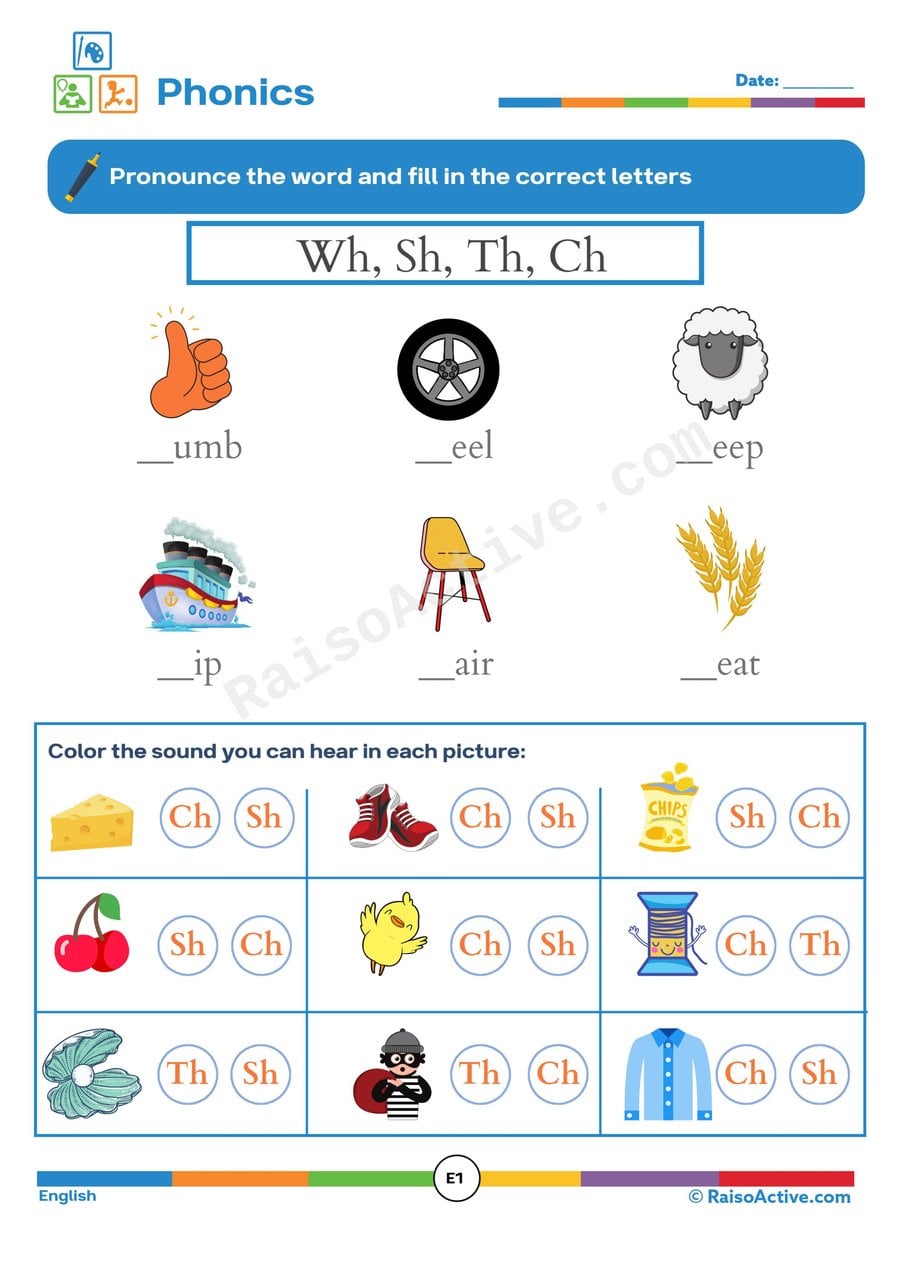
Wh, Sh, Th, Ch Sounds Worksheet for Preschoolers
Ages 4-5 · Pre-KAges 4-5 · ReceptionAges 4-5 · LKGAges 4-5
Filling in missing letters to complete words with the digraphs wh, sh, th, and ch teaches children ages 4-5 to recognize these blended consonant sounds, which behave differently from single letter sounds and require dedicated practice to master. Coloring the picture that matches the correct sound afterward reinforces the connection between the blended sound and its spelling.
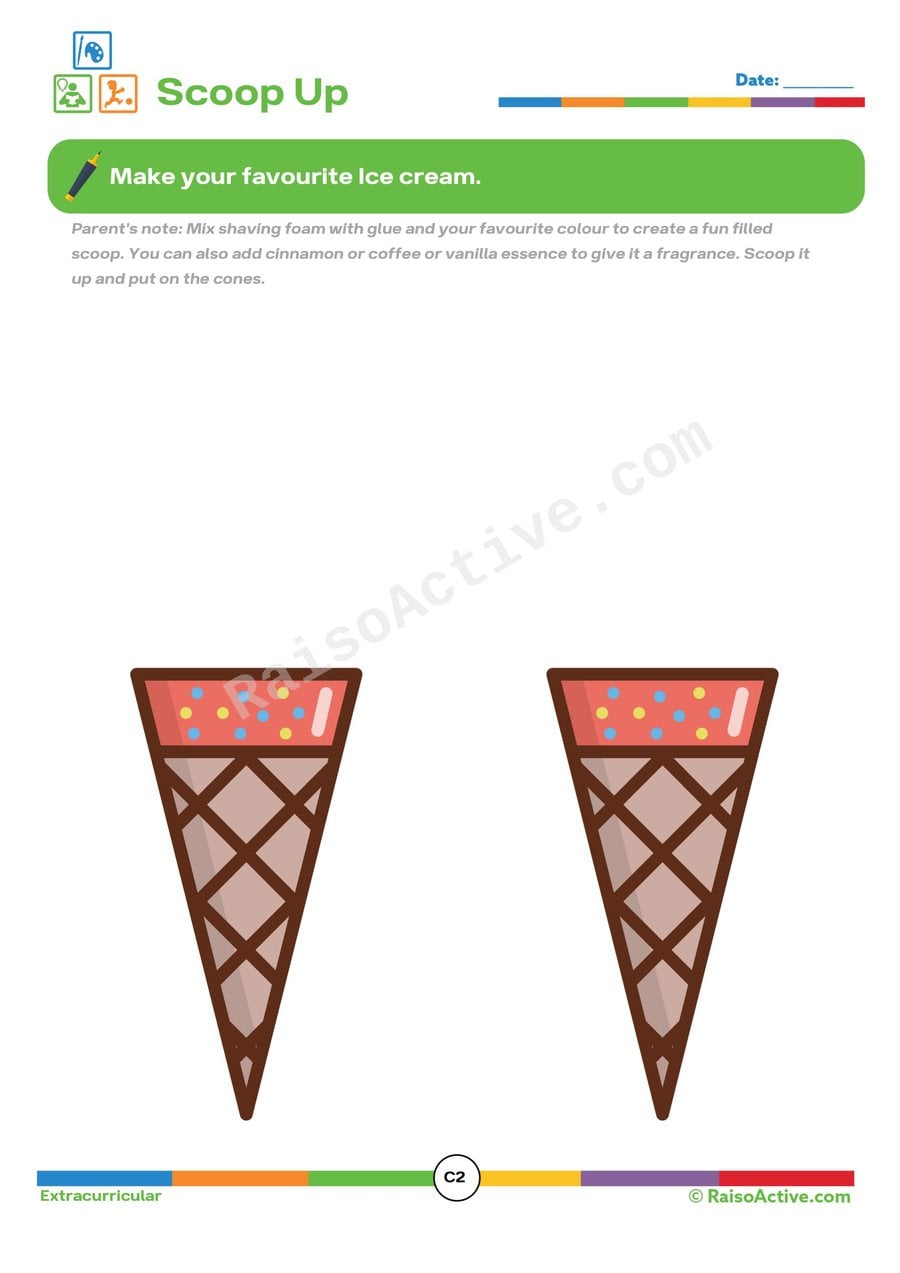
Make Your Own Ice Cream Worksheet for Kids
Ages 3-5 · Preschool–Pre-KAges 3-5 · Nursery–ReceptionAges 3-5 · Nursery–LKGAges 3-5
This sensory craft activity has children ages 3-5 follow a multi-step sequence — mixing shaving foam and glue with color, adding scent, and building an ice cream cone — building both the ability to follow sequential instructions and fine motor skill through mixing, spreading, and shaping the 'ice cream' scoop. Exploring an unusual texture like colored shaving foam also supports sensory development in a low-pressure, playful way.

Subtraction Worksheet: Counting and Subtracting for Preschoolers
Ages 4-5 · Pre-KAges 4-5 · ReceptionAges 4-5 · LKGAges 4-5
This worksheet introduces children ages 4-5 to the concept of subtraction as 'taking away' by having them count a group of objects, cross out the number indicated, and write how many remain. Building this concrete, visual understanding of subtraction before introducing abstract number sentences helps children grasp what the minus sign actually means rather than just memorizing a procedure.
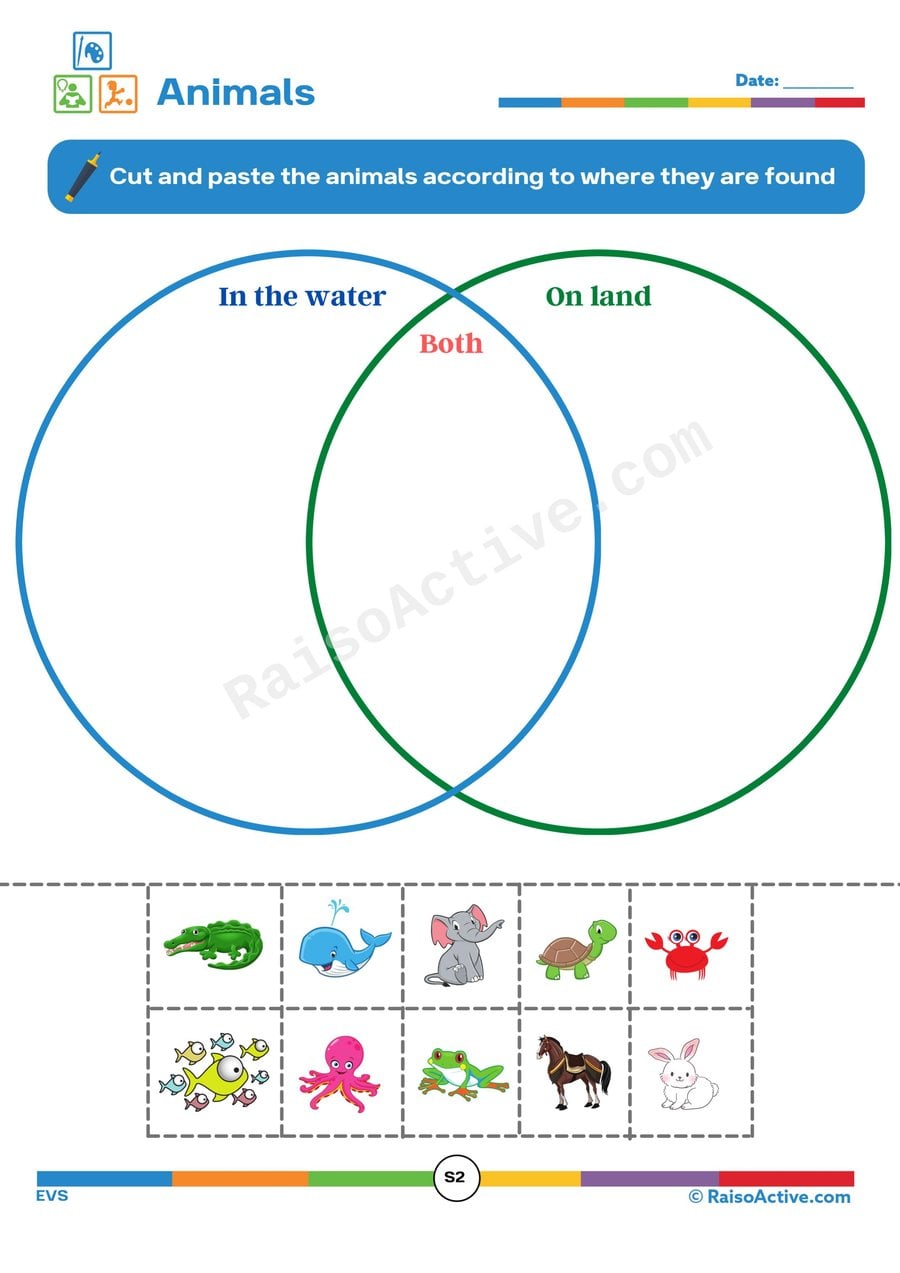
Animals: Sorting Worksheet for Preschoolers
Ages 3-5 · Preschool–Pre-KAges 3-5 · Nursery–ReceptionAges 3-5 · Nursery–LKGAges 3-5
This sorting worksheet has children ages 3-5 cut out animal pictures and paste each one into either a water or land habitat circle, building an early classification skill around where different animals naturally live. Sorting animals by habitat, rather than by type or size, introduces the idea that an animal's environment is a meaningful category on its own.

Clean Hands Worksheet: Germs and Handwashing Experiment
Ages 4-6 · Pre-K–KindergartenAges 4-6 · Reception–Year 1Ages 4-6 · LKG–UKGAges 4-6
This worksheet teaches children ages 4-6 the science behind why handwashing matters through a simple, visual experiment demonstrating how germs (represented by something like glitter or oil) transfer between hands and spread easily, then how washing removes them. Seeing germs 'in action' makes an invisible concept concrete, helping children understand the real reason behind a daily hygiene habit rather than just following a rule.

Living and Non-Living Things Word Search Worksheet for Kids
Ages 4-6 · Pre-K–KindergartenAges 4-6 · Reception–Year 1Ages 4-6 · LKG–UKGAges 4-6
This word search worksheet has children ages 4-6 hunt for and identify living and non-living things, then sort them by color-coding — living things in red and non-living things in blue — building both spelling recognition and an early science classification skill. Distinguishing living from non-living is one of the foundational categories in early science education, underlying later lessons about biology and the natural world.
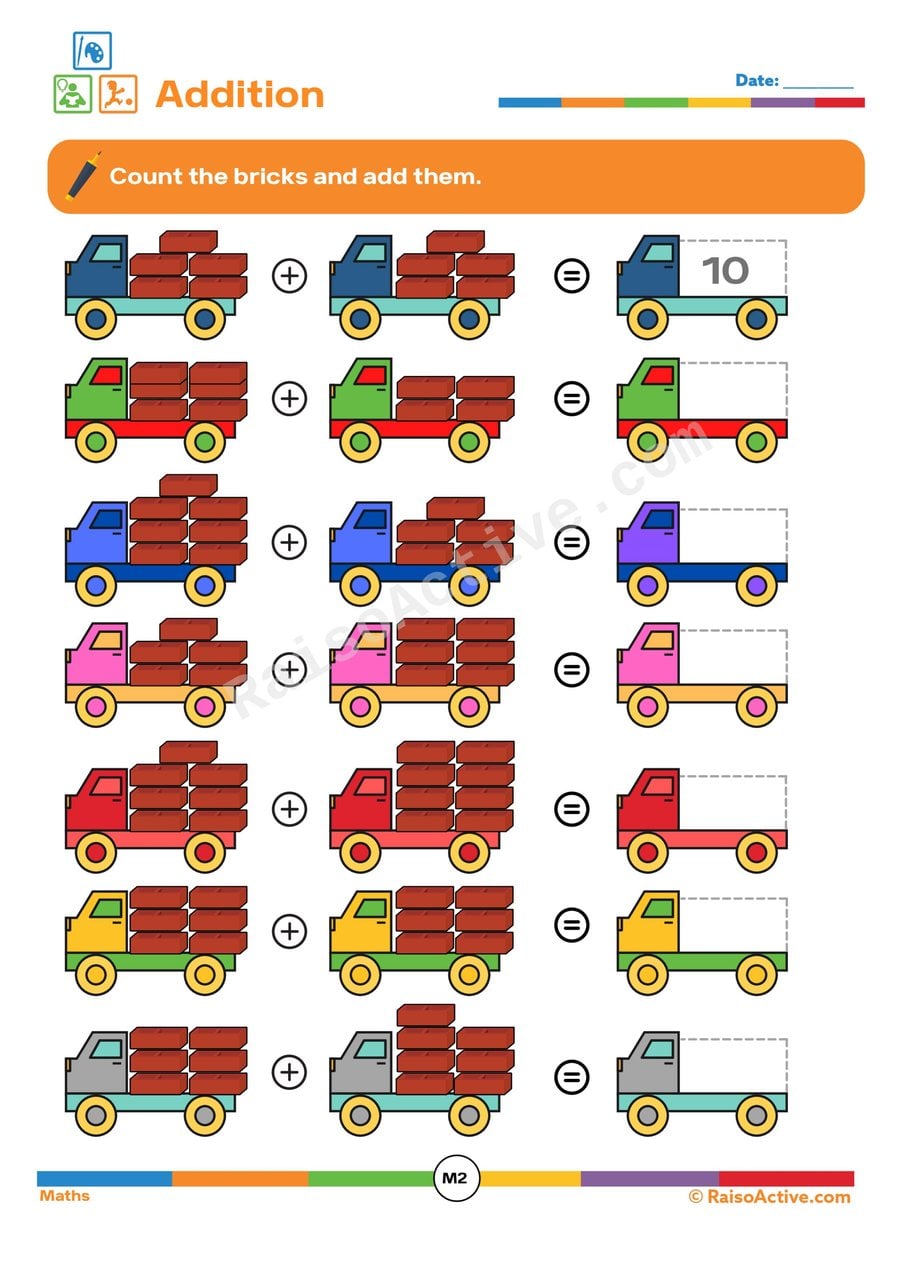
Truckload Addition Worksheet for Preschoolers
Ages 4-5 · Pre-KAges 4-5 · ReceptionAges 4-5 · LKGAges 4-5
Counting bricks loaded on two trucks and adding the totals together teaches children ages 4-5 basic addition through a playful, visual context that makes the abstract idea of combining quantities easier to grasp. This truck theme also keeps counting practice engaging for children who love vehicles, building both number sense and sustained attention.

Animal Homes Worksheet: Cut and Paste Activity for Kids
Ages 3-5 · Preschool–Pre-KAges 3-5 · Nursery–ReceptionAges 3-5 · Nursery–LKGAges 3-5
This cut-and-paste worksheet teaches children ages 3-5 to match specific animals to their correct habitats — like a fish to water or a bird to a tree — building early understanding of how animals are suited to where they live. Sorting by habitat rather than by animal type (like farm versus wild) adds a layer of reasoning about why an environment fits a particular animal.
Related worksheets
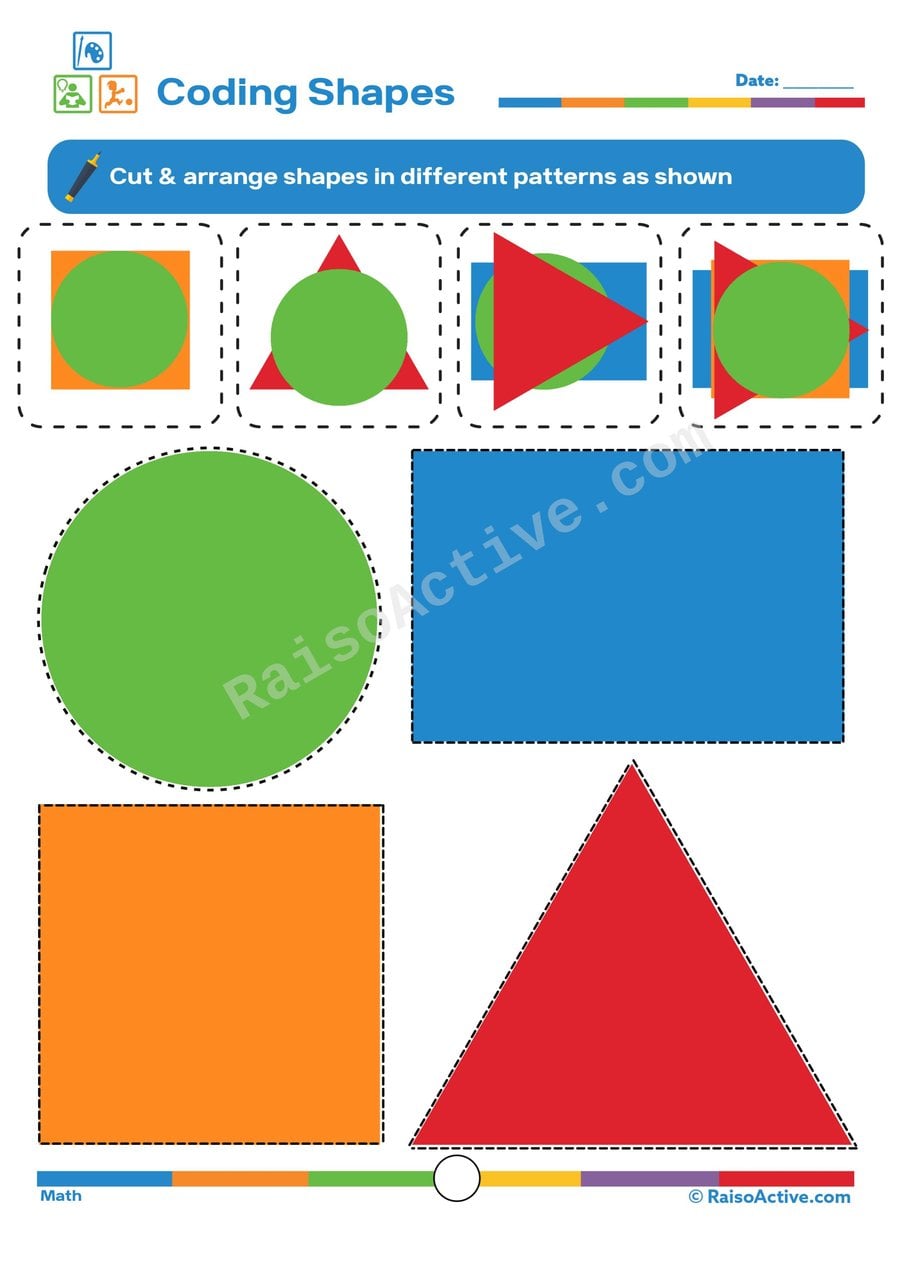
Coding Shapes Worksheet: Cut and Arrange Shapes!
Ages 3-5 · Preschool–Pre-KAges 3-5 · Nursery–ReceptionAges 3-5 · Nursery–LKGAges 3-5
This cut-and-paste worksheet has children ages 3-5 recreate example shape sequences by cutting out individual pieces and arranging them to match, combining shape recognition with the ordered, step-by-step thinking used in early coding and pattern logic. The physical act of cutting and precisely placing each piece also strengthens fine motor control and spatial planning.
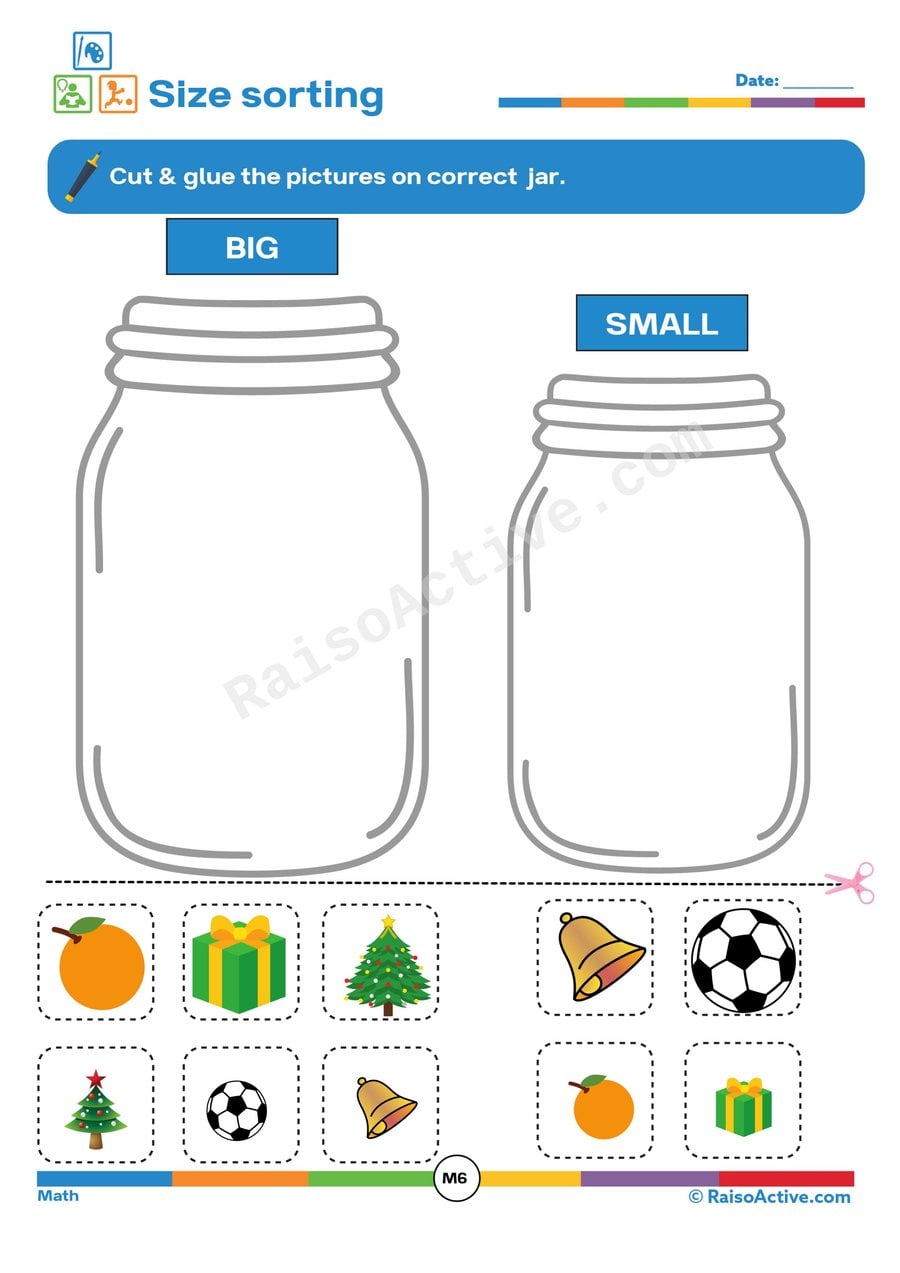
Size Sorting Worksheet: Big vs. Small!
Ages 3-5 · Preschool–Pre-KAges 3-5 · Nursery–ReceptionAges 3-5 · Nursery–LKGAges 3-5
Deciding whether a cut-out picture is big or small and gluing it into the correct jar builds comparative reasoning for children ages 3-5, an early step toward understanding relative size before moving into formal measurement.

Kite Color Matching Worksheet for Preschoolers
Ages 4-7 · Pre-K–Grade 1Ages 4-7 · Reception–Year 2Ages 4-7 · LKG–Class 1Ages 4-7
This worksheet helps children practice color recognition and visual discrimination by matching kites to children based on the colors.

Animal's World: Sorting Animals by Land, Water, and Air - Printable Worksheet
Ages 4-6 · Pre-K–KindergartenAges 4-6 · Reception–Year 1Ages 4-6 · LKG–UKGAges 4-6
This sorting worksheet teaches children ages 4-6 to classify animals into three habitat categories — land, water, and air — based on where each animal naturally lives and moves. Classifying by habitat rather than by appearance alone encourages children to think about an animal's features, like fins, wings, or legs, and connect them to function. This three-way sort is more complex than a simple two-category sort, building more advanced categorization skills.
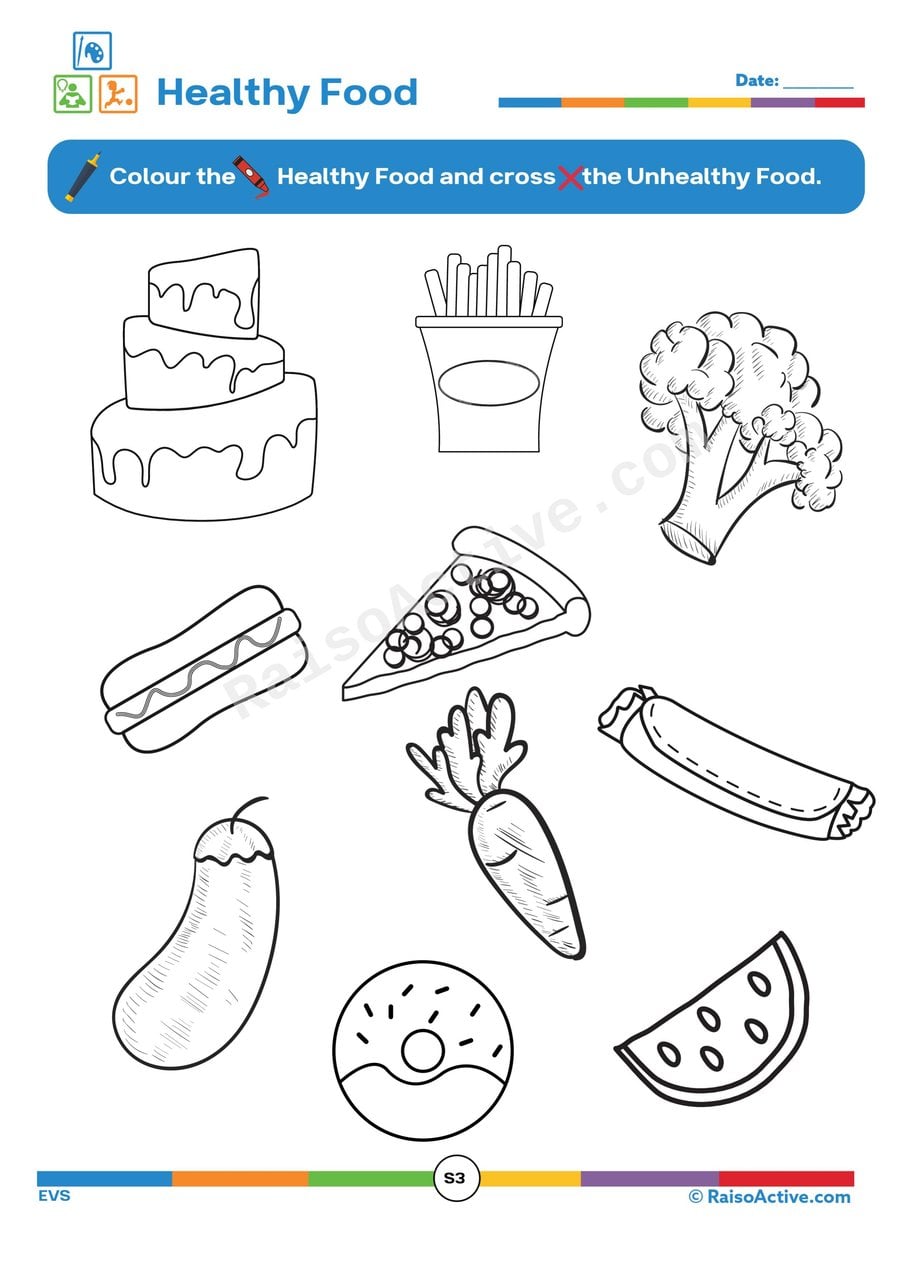
Healthy Food Fun: Color and Cross Out Worksheet
Ages 3-5 · Preschool–Pre-KAges 3-5 · Nursery–ReceptionAges 3-5 · Nursery–LKGAges 3-5
This worksheet builds nutrition awareness in children ages 3-5 by having them make an active choice about each pictured food — coloring the healthy ones and crossing out the unhealthy ones — rather than passively looking at a list. Requiring two different physical responses for two categories reinforces the distinction more strongly than a single sorting action would. Talking through the reasoning behind each choice also builds early critical thinking about cause and effect between food choices and health.
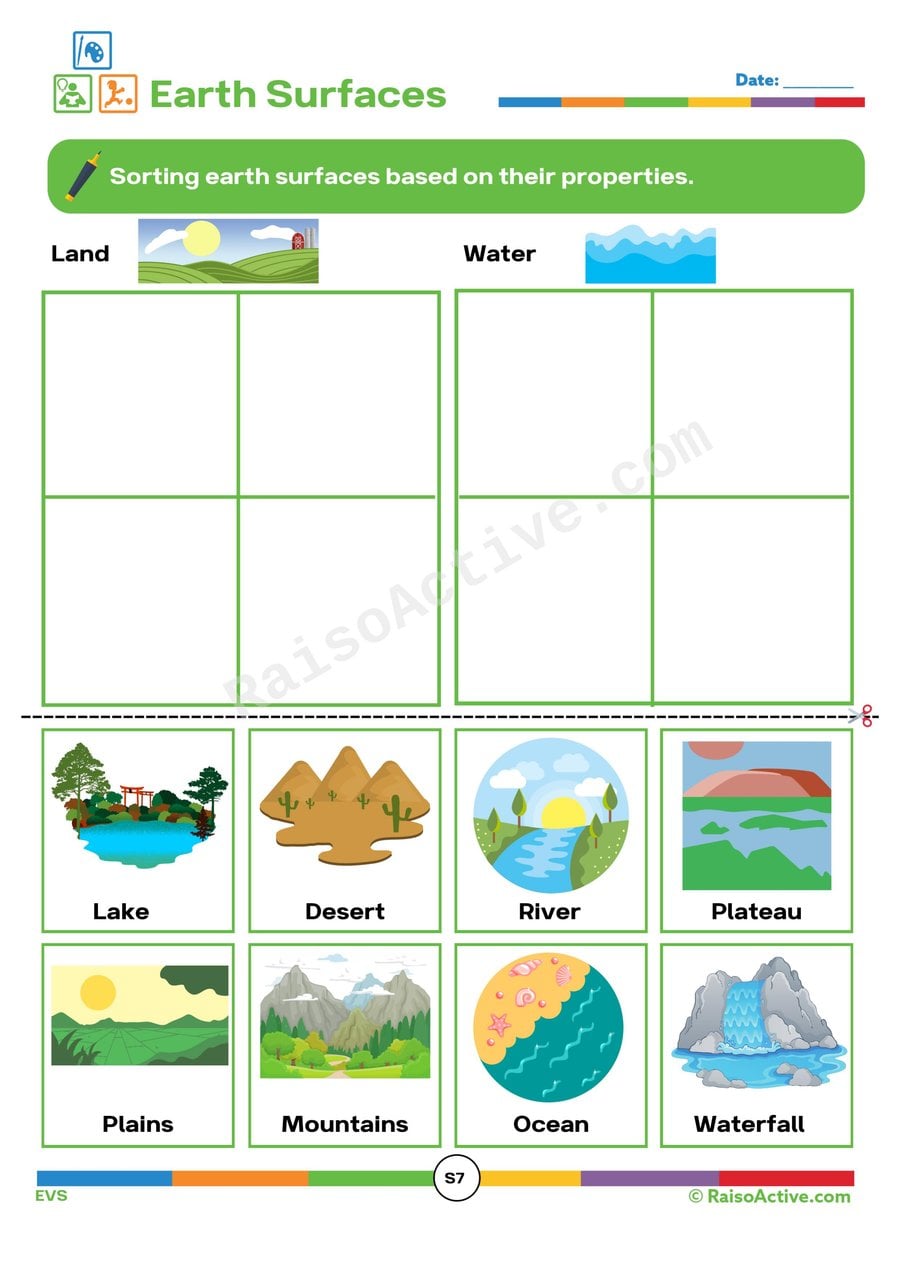
Earth Surfaces Sorting Worksheet for Kids
Ages 4-6 · Pre-K–KindergartenAges 4-6 · Reception–Year 1Ages 4-6 · LKG–UKGAges 4-6
Sorting pictures into 'land' and 'water' categories builds early classification skills and basic earth science vocabulary for children ages 4-6, helping them notice physical differences between surfaces they see in daily life.

Color the Numbers: Sorting Worksheet for Preschoolers
Ages 3-5 · Preschool–Pre-KAges 3-5 · Nursery–ReceptionAges 3-5 · Nursery–LKGAges 3-5
This worksheet helps children ages 3-5 practice number recognition by reading a color key and coloring each numeral in the circle below according to its assigned color, combining early sorting logic with numeral identification. Applying a symbolic rule — 'this number means this color' — across a whole page trains children to hold and consistently apply an instruction, a skill that carries over into following multi-step directions elsewhere.

Taste Bud Sorting Worksheet: Identify and Sort Foods by Taste!
Ages 4-6 · Pre-K–KindergartenAges 4-6 · Reception–Year 1Ages 4-6 · LKG–UKGAges 4-6
This worksheet introduces children ages 4-6 to four basic taste categories — salty, sour, bitter, and sweet — by having them sort pictured foods into the correct group. Beyond taste vocabulary, sorting foods by an invisible property like flavor (rather than an obvious one like color or shape) pushes children to draw on memory and prior experience, building more advanced classification skills.
Guides for this topic

Age-Appropriate Problem-Solving Activities: Building Critical Thinkers from the Ground Up
Discover fun, age-appropriate problem-solving activities for children ages 1-8. Build critical thinking, logic, and reasoning skills through play-based learning.

Teaching Health and Safety to Young Children: Building Lifelong Protective Habits
Practical guide to teaching safety to kids: hygiene activities, road safety, body safety, fire drills & more. Age-appropriate strategies for children ages 1-8.

Montessori Activities for 3-4 Year Olds: A Complete Guide to Purposeful Learning
Discover practical Montessori activities for 3-4 year olds — practical life, sensorial, language, and maths — with Indian kitchen adaptations and budget shelf ideas.
Reviews
Every worksheet for ages 3–5, no watermark
Members download the full library of 1,000+ worksheets and every activity pack without watermarks or daily limits. One year costs ₹999 in India or $20 elsewhere.
See membership plansOr download any worksheet free with a watermark (5 a day).