Living and Non-Living Things Word Search Worksheet for Kids
This word search worksheet has children ages 4-6 hunt for and identify living and non-living things, then sort them by color-coding — living things in red and non-living things in blue — building both spelling recognition and an early science classification skill. Distinguishing living from non-living is one of the foundational categories in early science education, underlying later lessons about biology and the natural world.
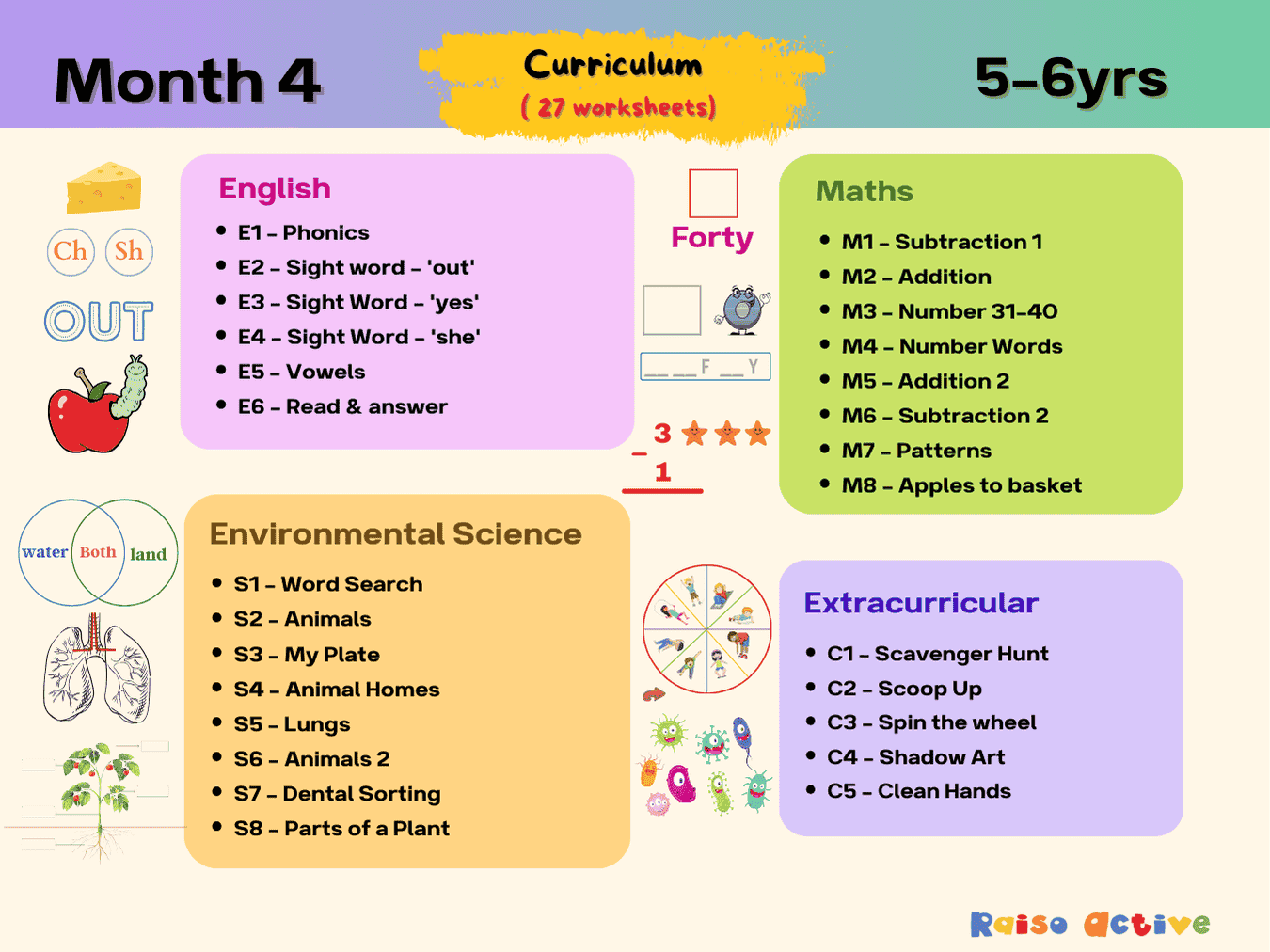
Part of the pack
Month 4: Learning & Development | Ages 5-6
This is page 18 of the pack. Ages 5-6 · KindergartenAges 5-6 · Year 1Ages 5-6 · UKGAges 5-6
Made for your child
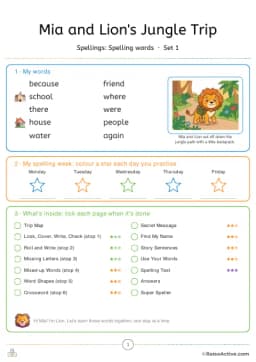
Spelling practice, made for your child
Their own spelling words turned into a pack: trace or look-cover-write-check, roll and write, a secret picture code, a word search, a crossword and a test, with their name in it.
Make a spelling packFree preview · free for members
Or start free: a word search with sight wordsCurriculum
- Living Things - Animals > Living & Non-Living Things
How to use this worksheet
Look at the word list together before starting and read each word aloud, asking your child whether it names something living or non-living. Have them scan the letter grid to find and circle each word, using a red crayon for living things and a blue crayon for non-living things as they find them. Continue until every word on the list has been found and color-coded. Review the finished grid together, asking your child to explain why each item belongs in its category.
Materials needed
- Pencil
- Red crayon
- Blue crayon
Extension activities
- 1Go on a nature walk and sort everything you see into a 'living' or 'non-living' list.
- 2Sort toys and household objects at home into living and non-living piles (using pictures for living things like animals).
- 3Draw one new living thing and one new non-living thing that weren't on the worksheet's word list.
- 4Create a homemade word search using new living and non-living vocabulary words.
- 5Talk about what living things need to survive — food, water, air — and compare that to non-living objects.

Written by
Hemsweta Jain · Teacher Cheena
MBA and Early Childhood Educator, teaching since 2014 · Founder of RaisoActive, Mumbai
Every RaisoActive worksheet is designed and checked by the founder before publishing.
Published · Last reviewed
More from Month 4: Learning & Development | Ages 5-6
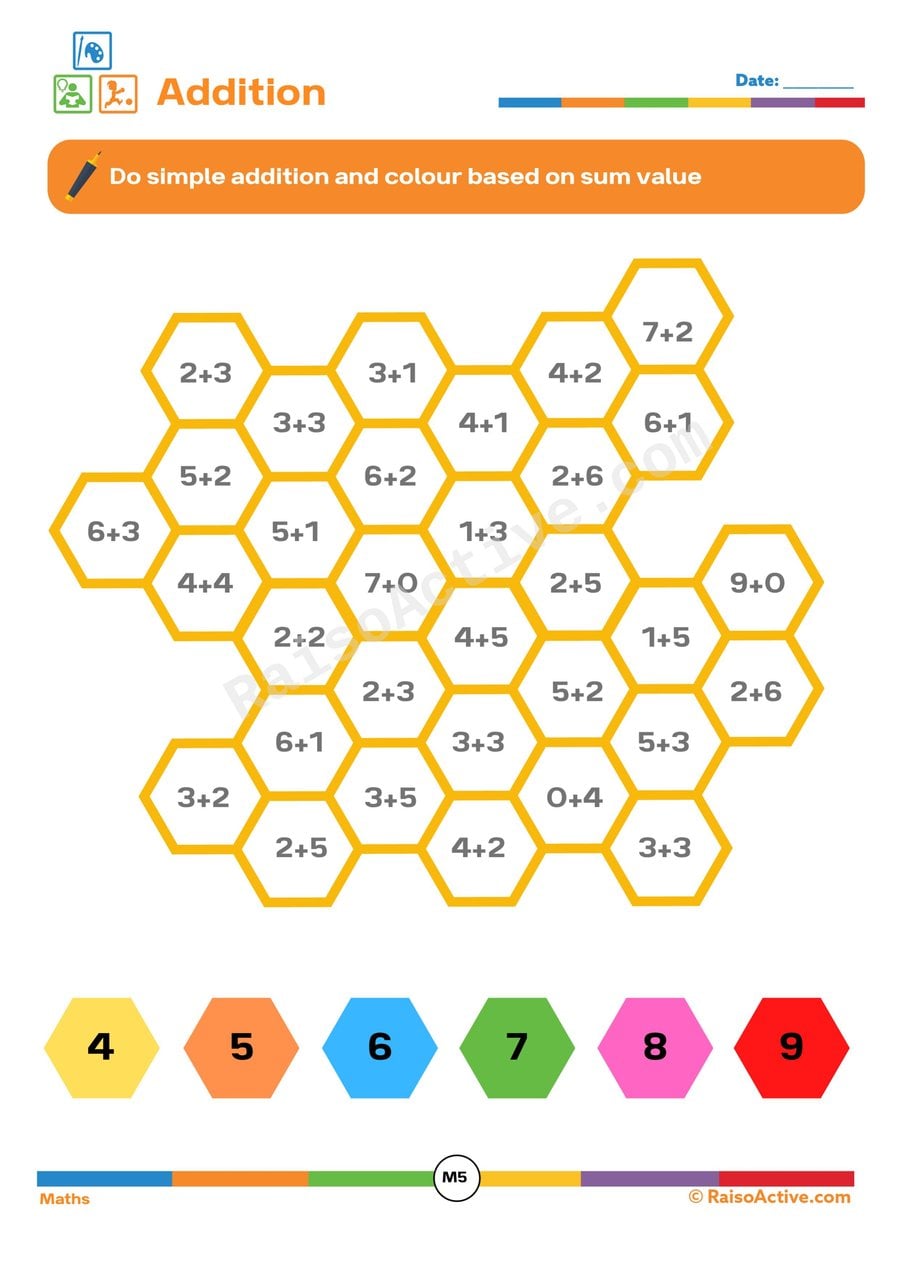
Addition Coloring Worksheet: Color by Sum!
Ages 4-6 · Pre-K–KindergartenAges 4-6 · Reception–Year 1Ages 4-6 · LKG–UKGAges 4-6
This worksheet combines addition practice with a color-by-number format, giving children ages 4-6 motivation to solve simple addition problems in each hexagon since the correct sum determines which color to use. Repeated, low-pressure practice adding small numbers builds fluency and speed, while the reveal of a colorful picture at the end rewards accurate calculation.
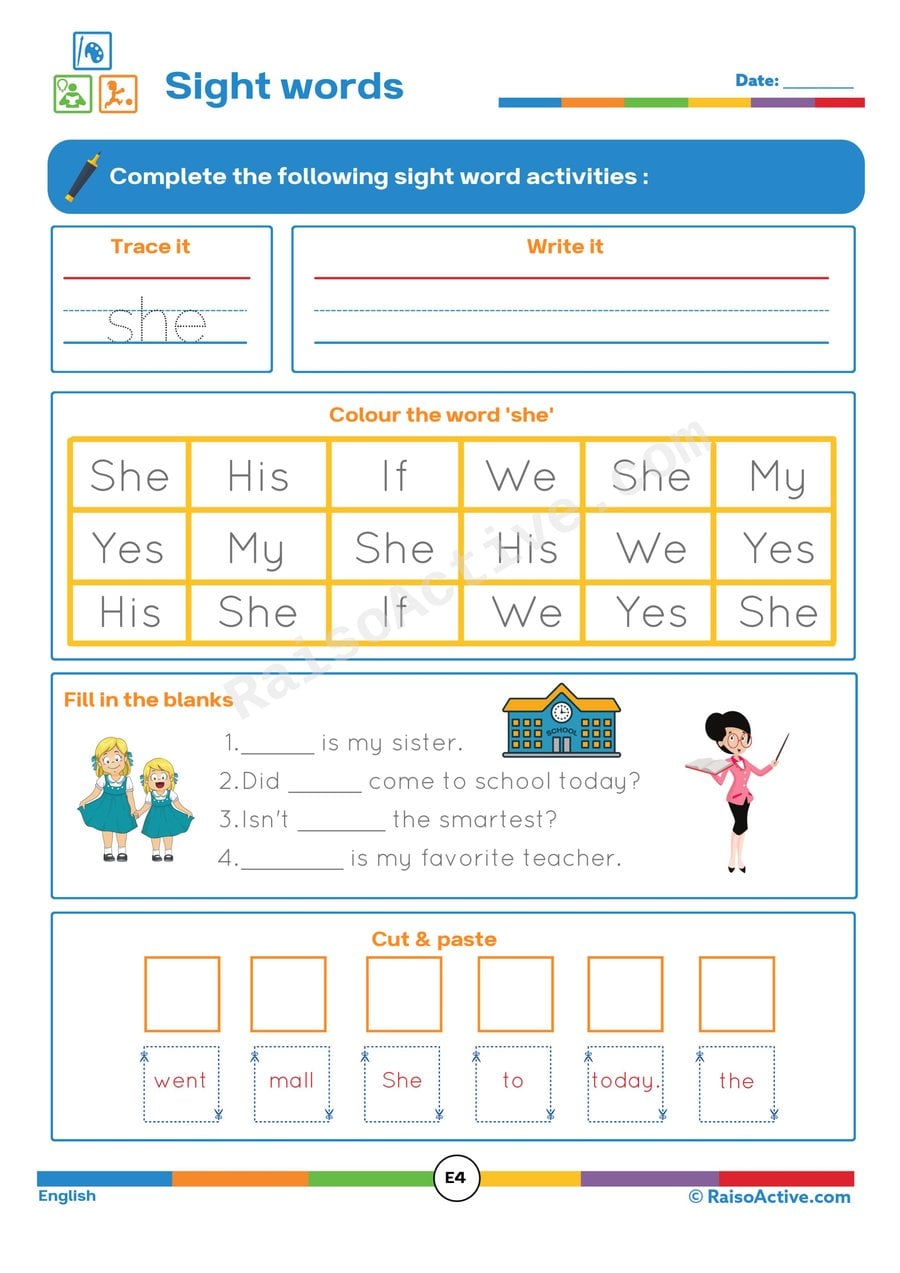
Sight Words Worksheet: Trace, Write, and Color 'She'!
Ages 4-6 · Pre-K–KindergartenAges 4-6 · Reception–Year 1Ages 4-6 · LKG–UKGAges 4-6
Tracing, writing, coloring, and completing sentences with the sight word 'she' gives children ages 4-6 repeated exposure to this common word across multiple activity types, which builds the instant recognition needed for reading fluency. The cut-and-paste sentence completion at the end adds sentence-level context, helping children see the word used meaningfully rather than in isolation.
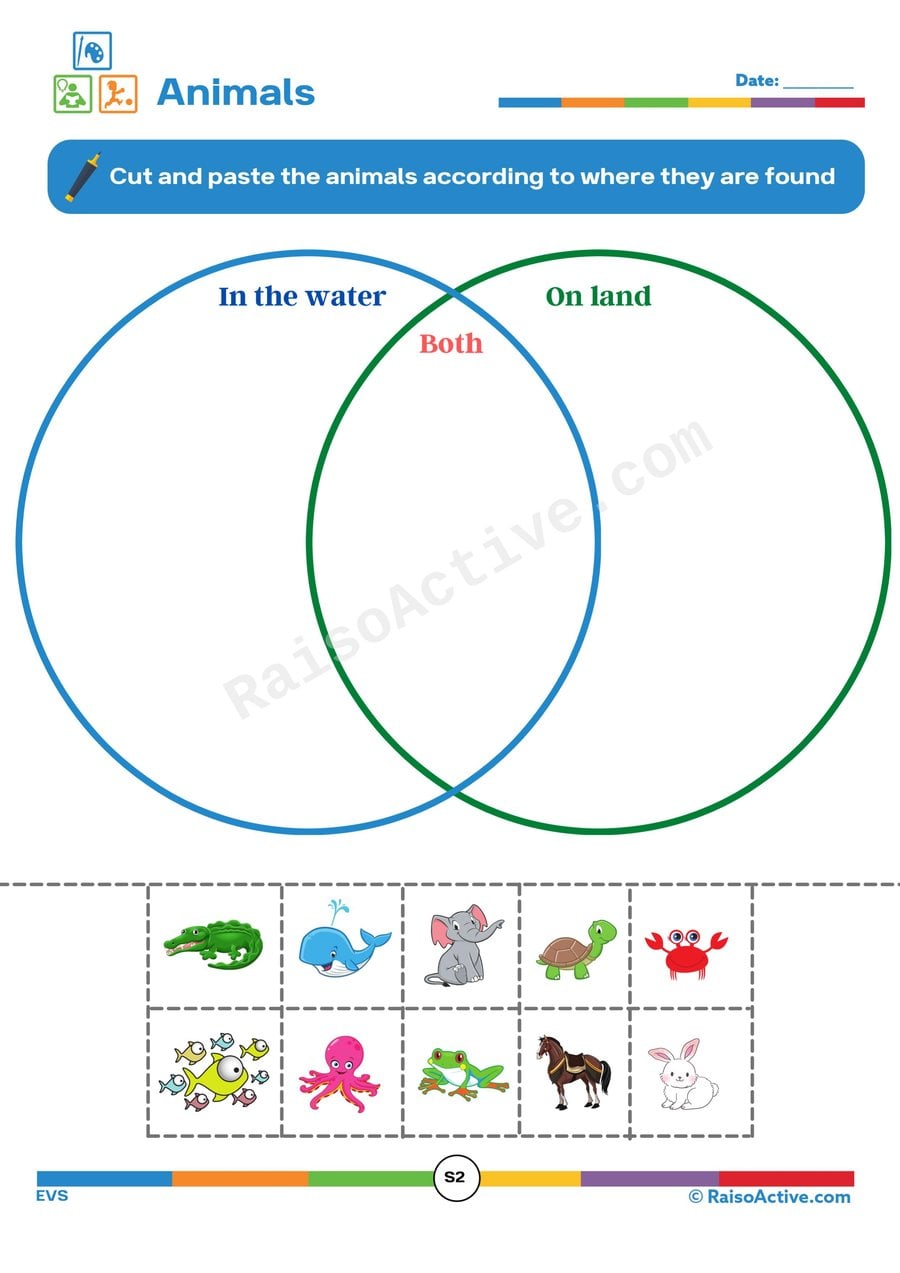
Animals: Sorting Worksheet for Preschoolers
Ages 3-5 · Preschool–Pre-KAges 3-5 · Nursery–ReceptionAges 3-5 · Nursery–LKGAges 3-5
This sorting worksheet has children ages 3-5 cut out animal pictures and paste each one into either a water or land habitat circle, building an early classification skill around where different animals naturally live. Sorting animals by habitat, rather than by type or size, introduces the idea that an animal's environment is a meaningful category on its own.

Subtraction Worksheet: Counting and Subtracting for Preschoolers
Ages 4-5 · Pre-KAges 4-5 · ReceptionAges 4-5 · LKGAges 4-5
This worksheet introduces children ages 4-5 to the concept of subtraction as 'taking away' by having them count a group of objects, cross out the number indicated, and write how many remain. Building this concrete, visual understanding of subtraction before introducing abstract number sentences helps children grasp what the minus sign actually means rather than just memorizing a procedure.

Vowel Fun: Crossword and Word Fill-in Worksheet for Early Readers
Ages 4-6 · Pre-K–KindergartenAges 4-6 · Reception–Year 1Ages 4-6 · LKG–UKGAges 4-6
Solving a crossword and filling in sentence blanks gives children ages 4-6 practice spelling and reading simple words, while identifying the vowels in each completed word sharpens their awareness of these key building blocks of every syllable. Combining a puzzle format with vowel identification keeps the phonics practice feeling like a game rather than a drill.
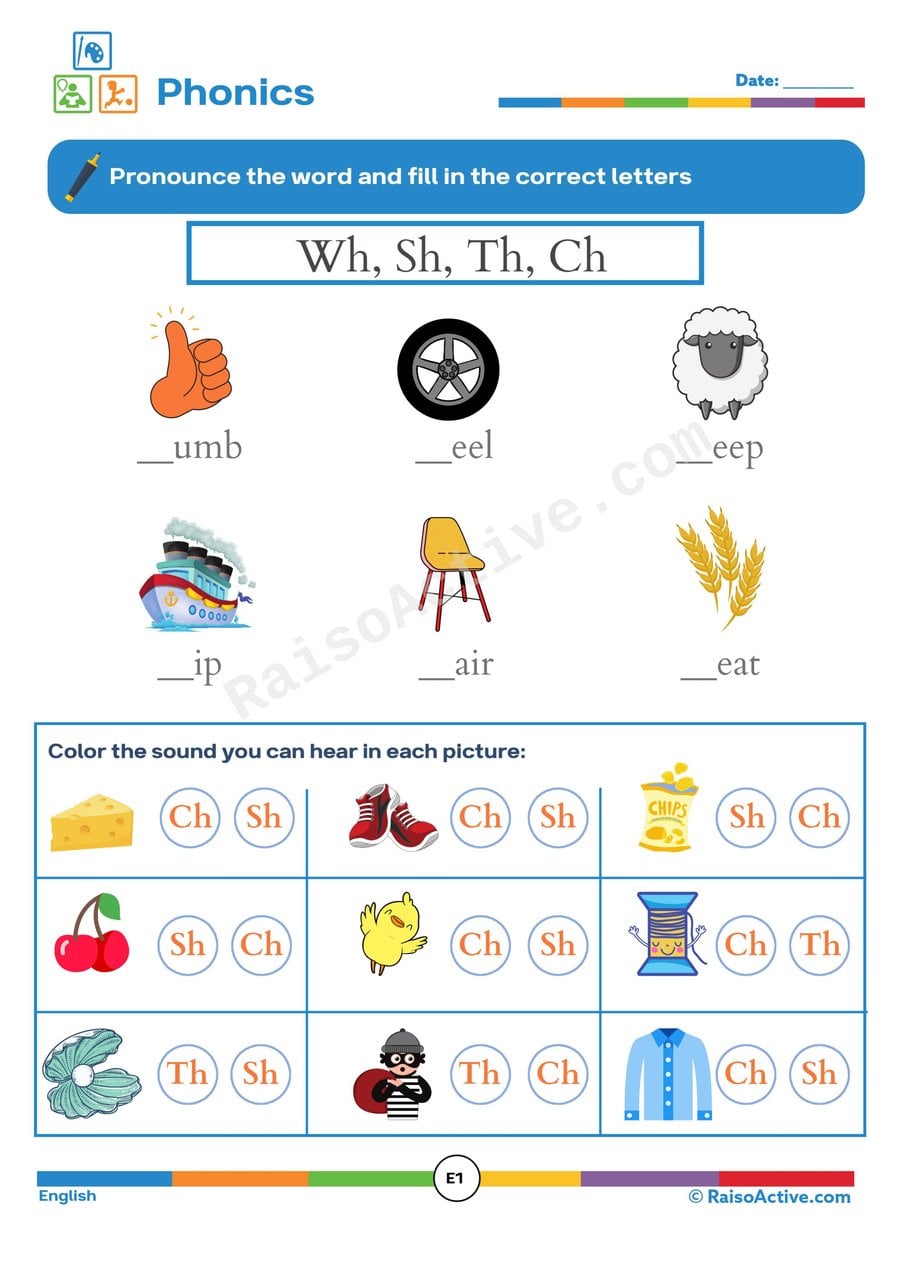
Wh, Sh, Th, Ch Sounds Worksheet for Preschoolers
Ages 4-5 · Pre-KAges 4-5 · ReceptionAges 4-5 · LKGAges 4-5
Filling in missing letters to complete words with the digraphs wh, sh, th, and ch teaches children ages 4-5 to recognize these blended consonant sounds, which behave differently from single letter sounds and require dedicated practice to master. Coloring the picture that matches the correct sound afterward reinforces the connection between the blended sound and its spelling.

Subtraction Fun: Counting and Subtracting Worksheet for Kids
Ages 4-6 · Pre-K–KindergartenAges 4-6 · Reception–Year 1Ages 4-6 · LKG–UKGAges 4-6
This worksheet teaches children ages 4-6 the concept of subtraction by having them count a group of stars, cross out a specified number, and write how many remain — making the abstract idea of 'taking away' visible and countable rather than purely symbolic. Physically crossing out objects before writing the answer helps children understand subtraction as an action, which is more intuitive at this age than memorizing subtraction facts.

Happy or Sad Teeth: Dental Sorting Worksheet for Kids
Ages 3-5 · Preschool–Pre-KAges 3-5 · Nursery–ReceptionAges 3-5 · Nursery–LKGAges 3-5
This sorting worksheet has children ages 3-5 cut out pictures of foods and place them next to either a happy or sad tooth, teaching which foods support healthy teeth (like fruits, vegetables, and dairy) and which contribute to cavities (like candy and soda). Making the effects of food choices visible through a simple happy/sad symbol helps young children connect everyday eating decisions to a health outcome they can understand.
Related worksheets
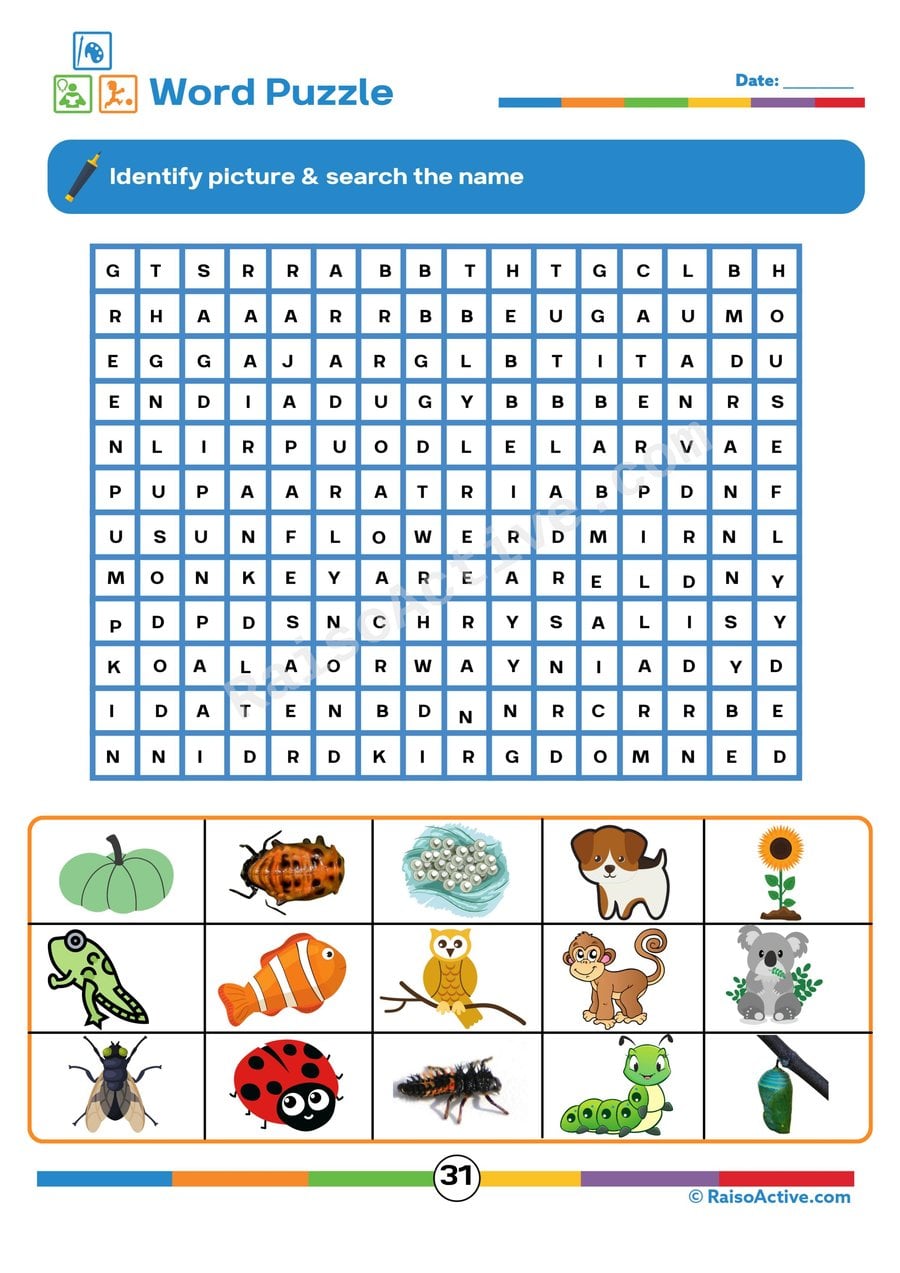
Word Search Worksheet: Find the Hidden Words!
Ages 5-7 · Kindergarten–Grade 1Ages 5-7 · Year 1–Year 2Ages 5-7 · UKG–Class 1Ages 5-7
Searching this life cycle-themed word grid strengthens children's letter-by-letter visual scanning and spelling recognition, both essential pre-reading skills for ages 5-7. As they hunt for words tied to animal growth stages — such as egg, larva, or adult — children reinforce life cycle vocabulary while training their eyes to track left-to-right and top-to-bottom across a busy grid. This dual focus on reading mechanics and science content makes the puzzle more valuable than a generic word search.

Fall Crossword Puzzle Worksheet for Preschoolers
Ages 3-5 · Preschool–Pre-KAges 3-5 · Nursery–ReceptionAges 3-5 · Nursery–LKGAges 3-5
This fall-themed crossword uses pictures instead of written clues, helping children ages 3-5 connect an image directly to its written word while practicing early letter formation. Counting the boxes in each answer also builds an intuitive sense of word length before formal spelling instruction begins.

Classroom Objects Worksheet: Circle the Classroom Items!
Ages 3-5 · Preschool–Pre-KAges 3-5 · Nursery–ReceptionAges 3-5 · Nursery–LKGAges 3-5
This worksheet builds vocabulary and visual discrimination in children ages 3-5 by asking them to scan a mixed set of pictures and identify only the ones that belong in a classroom. Sorting relevant from irrelevant items in this way strengthens categorization skills and attention to detail, since children must compare each picture against their own knowledge of what a classroom contains. It also reinforces school-readiness vocabulary like 'desk,' 'crayons,' and 'books.'
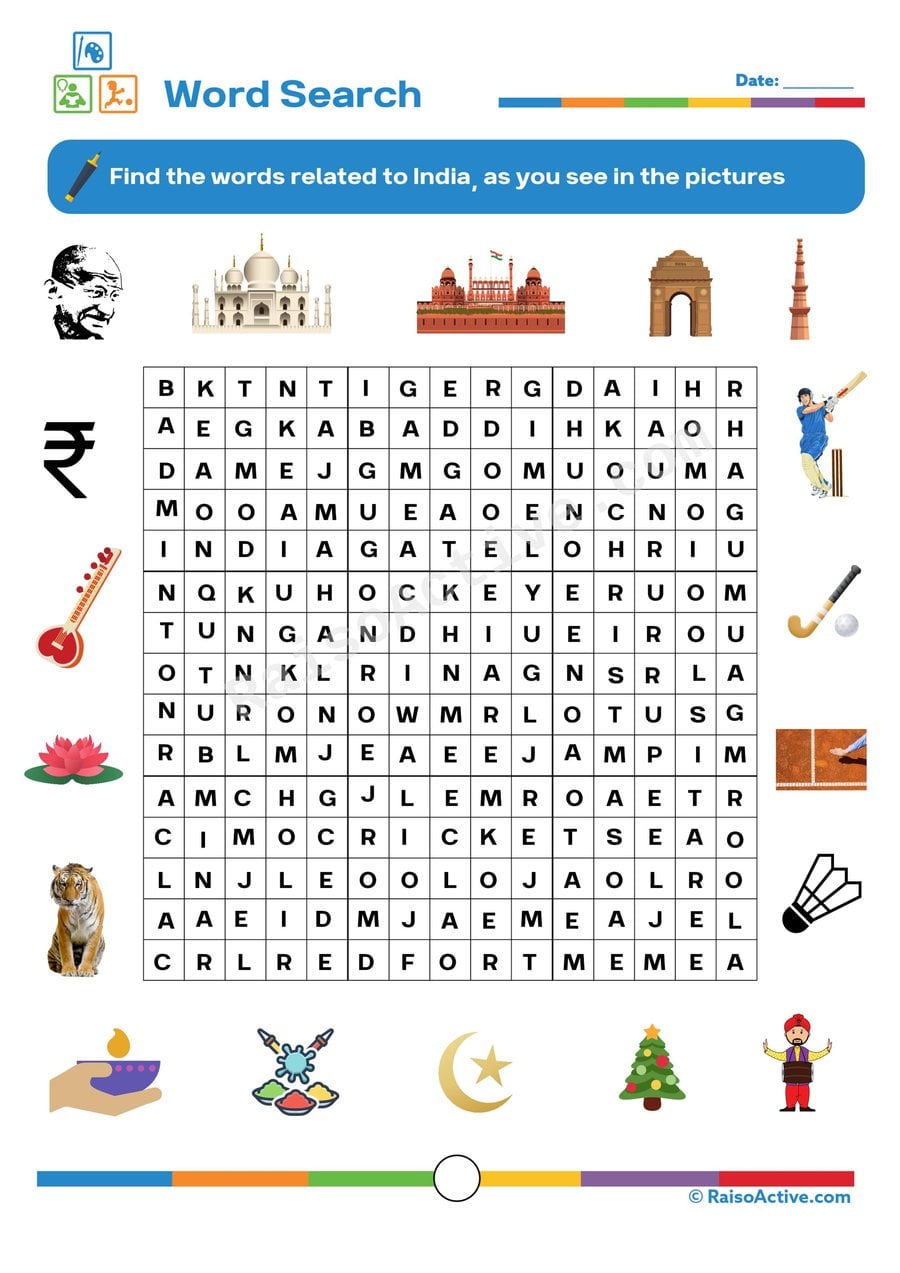
India Word Search Worksheet for Kids
Ages 4-7 · Pre-K–Grade 1Ages 4-7 · Reception–Year 2Ages 4-7 · LKG–Class 1Ages 4-7
Searching a letter grid for words connected to India, such as festival names, foods, or landmarks, builds visual scanning and word-recognition skills in children ages 4-7 while introducing vocabulary tied to Indian culture and geography. Because the target words vary in length and may run in different directions through the grid, children also practice sustained visual attention and letter-sequence tracking, both important pre-reading skills. This worksheet pairs literacy practice with cultural and social studies exposure in a single activity.
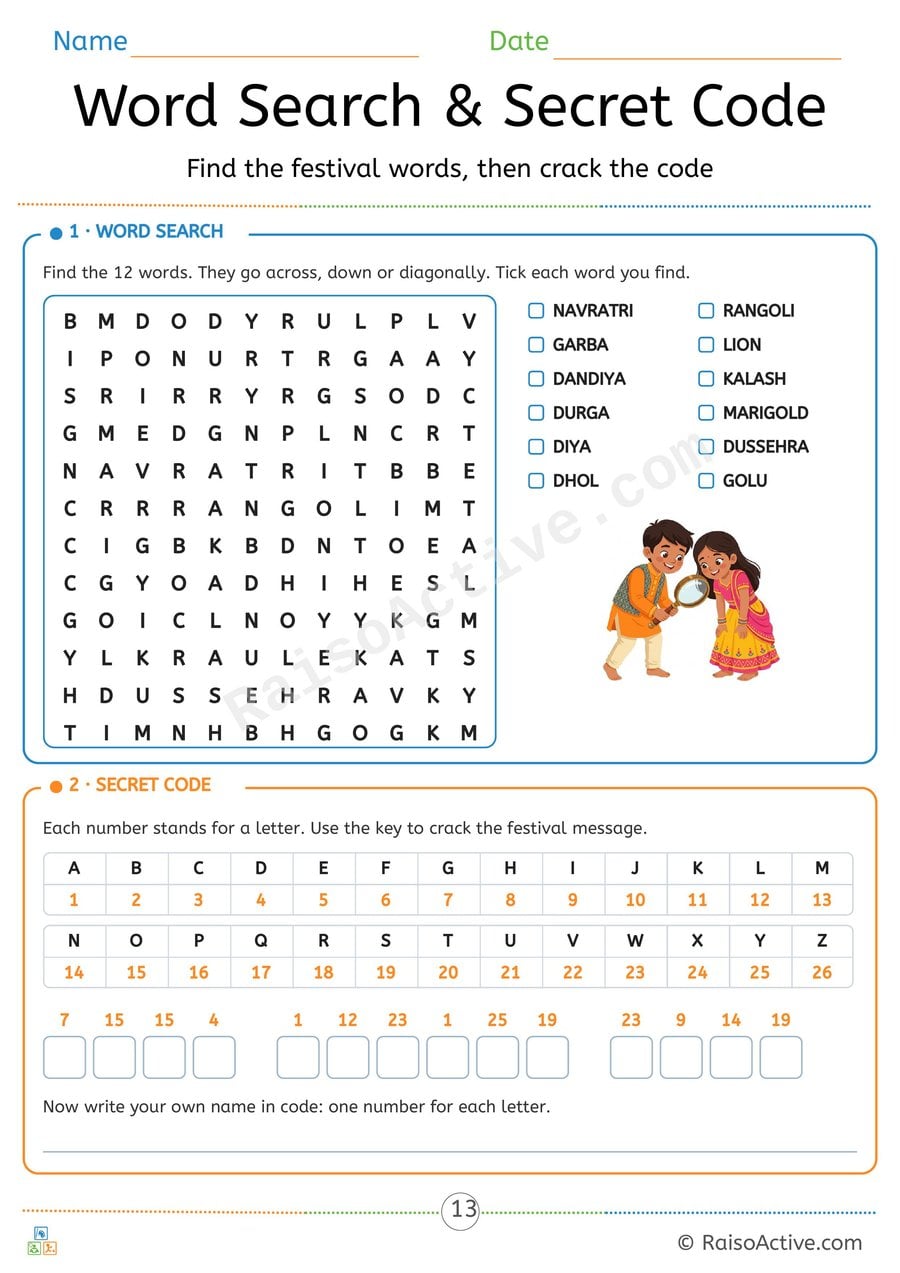
Navratri Word Search and Secret Code Puzzle
Ages 7-11 · Grade 2–Grade 3Ages 7-11 · Year 3–Year 4Ages 7-11 · Class 2–Class 3Ages 7-11
Children find 12 festival words that run across, down and diagonally, and use an A = 1 to Z = 26 key to decode a message about the festival. Then they write their own name in code.
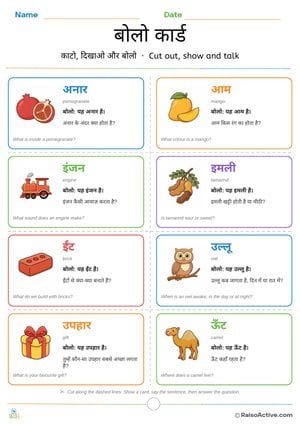
Hindi Bolo Cards: Cut-Out Speaking Cards for Vowels Part 1 | बोलो कार्ड
Ages 3-7 · Preschool–Grade 1Ages 3-7 · Nursery–Year 2Ages 3-7 · Nursery–Class 1Ages 3-7
Eight picture cards (अनार, आम, इंजन, इमली, ईंट, उल्लू, उपहार, ऊँट), each with the sentence बोलो: यह ___ है! and a question to talk about, for example what colour is a mango? Children practise speaking in full sentences.

Landforms Worksheet: Identify and Tick the Correct Answer!
Ages 3-5 · Preschool–Pre-KAges 3-5 · Nursery–ReceptionAges 3-5 · Nursery–LKGAges 3-5
Looking at pictures of landforms like volcanoes, glaciers, and islands and choosing the correct name from two options teaches children ages 3-5 early earth science vocabulary while building visual discrimination between different natural features. Because each landform has a distinct silhouette, shape, and texture, children practice careful observation of details, like noticing that a volcano has a cone shape while an island is surrounded by water. This worksheet introduces basic geography concepts in a way that's grounded in pictures rather than abstract explanation.
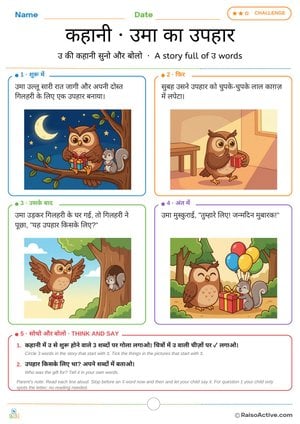
Letter उ Story: Uma's Birthday Gift | कहानी उमा का उपहार
Ages 3-7 · Preschool–Grade 1Ages 3-7 · Nursery–Year 2Ages 3-7 · Nursery–Class 1Ages 3-7
Uma the owl stays up all night to make a gift for her friend the squirrel, then flies to her home and says it is a birthday present just for her. Children listen, look at the four pictures, spot the words that start with उ and retell what happened in their own words.
Guides for this topic

Sight Words by Age: The First 50 Words and How to Teach Them Without Flashcard Fatigue
Which sight words to teach first and why, the heart-word method, a read-trace-write-find routine, games, and a by-age table of typical sight-word progress.
How to Teach CVC Blending: A Step-by-Step Method That Works in Two Weeks
A step-by-step method for teaching CVC blending, covering continuous sounds, word families, common errors, and a 14-day plan that most children finish reading CVC words.

Growing Green Hearts: A Comprehensive Guide to Teaching Environmental Awareness to Preschoolers
Practical guide to teaching preschoolers ages 2-6 about nature, recycling, water conservation, and Earth Day with Indian context and simple home activities.
Reviews
Every worksheet for ages 4–6, no watermark
Members download the full library of 1,000+ worksheets and every activity pack without watermarks or daily limits. One year costs ₹999 in India or $20 elsewhere.
See membership plansOr download any worksheet free with a watermark (5 a day).