Free printable worksheets · US · UK · India
English Worksheets for Kids (Ages 2–7)
English worksheets for kids are printable sheets for children aged 2 to 7 that take a child from recognizing the alphabet to reading short passages. They cover letter recognition and formation, letter sounds, blending, sight words, sentence writing with capitals and periods, and reading comprehension, across Preschool to 1st Grade, Nursery to Year 2, and Nursery to Class 1.
Learning to read in English is unusual among school subjects because the steps must happen in sequence and each one is invisible until the next fails. A child cannot blend sounds they cannot hear, cannot read a sentence made of words they cannot decode, and cannot answer a question about a passage they read one word at a time. At three the work is spoken: rhymes, first sounds, alphabet names. At five it is decoding: sounding out c-a-t and writing the word back. At seven it is fluency and meaning: reading a page silently and explaining what happened. The worksheets here are arranged along that sequence, so a parent in Kindergarten, Reception or UKG can find the step their child is on and the one that comes next.
1099+ worksheets · free PDF download · print on A4 or Letter
English Worksheets for Kids to print
Browse all worksheets for ages 2–7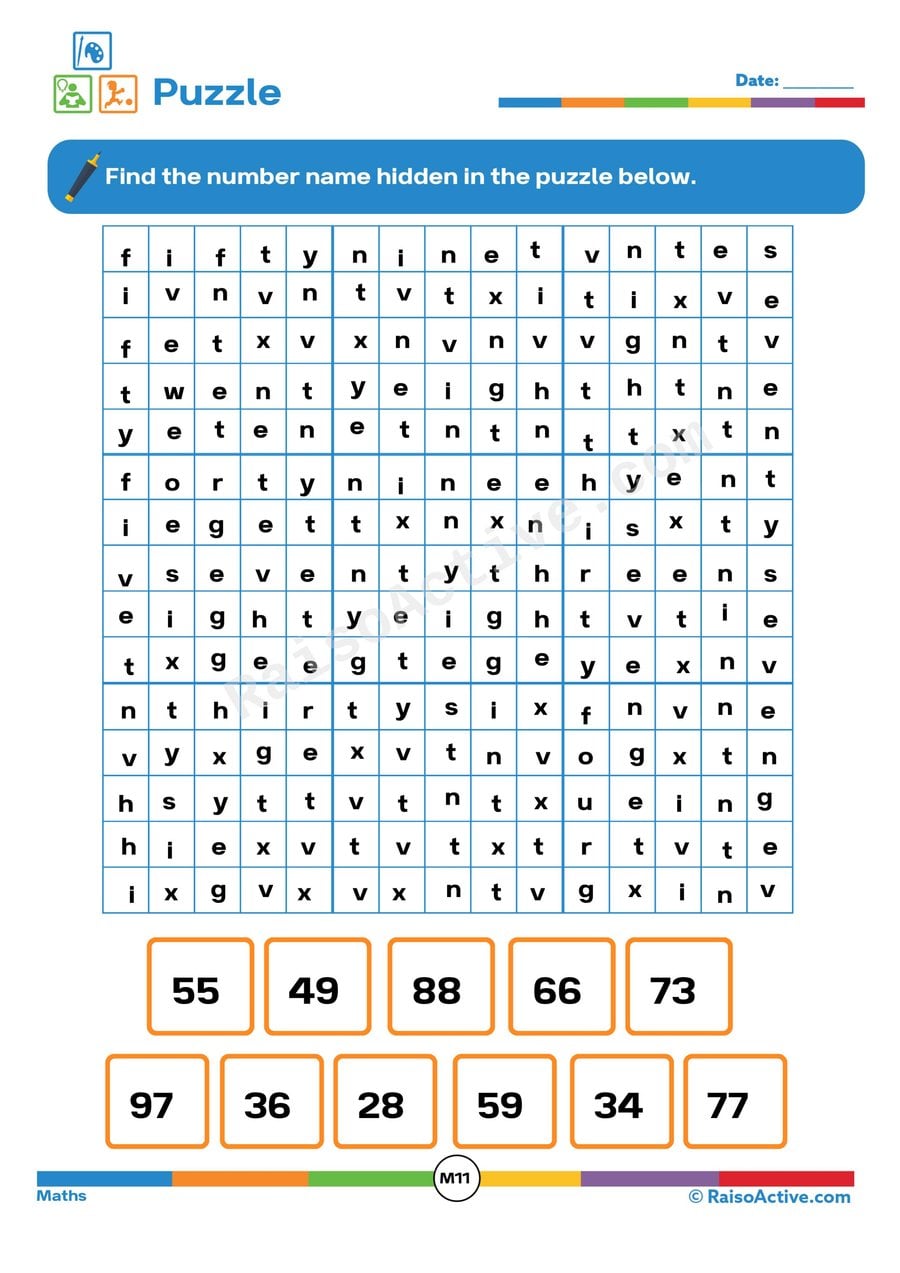
Number Name Word Search Worksheet for Kids
Searching a grid of letters to find hidden number names, like 'seven' or 'twelve,' asks children ages 4-6 to recognize whole written words by sight, a skill that goes beyond sounding out letters one at a time. This word search format also builds visual scanning and sustained attention, since children must check rows, columns, and sometimes diagonals systematically rather than glancing randomly. Matching each found word back to its corresponding number afterward reinforces the link between a number's name, its written word form, and its numeral.
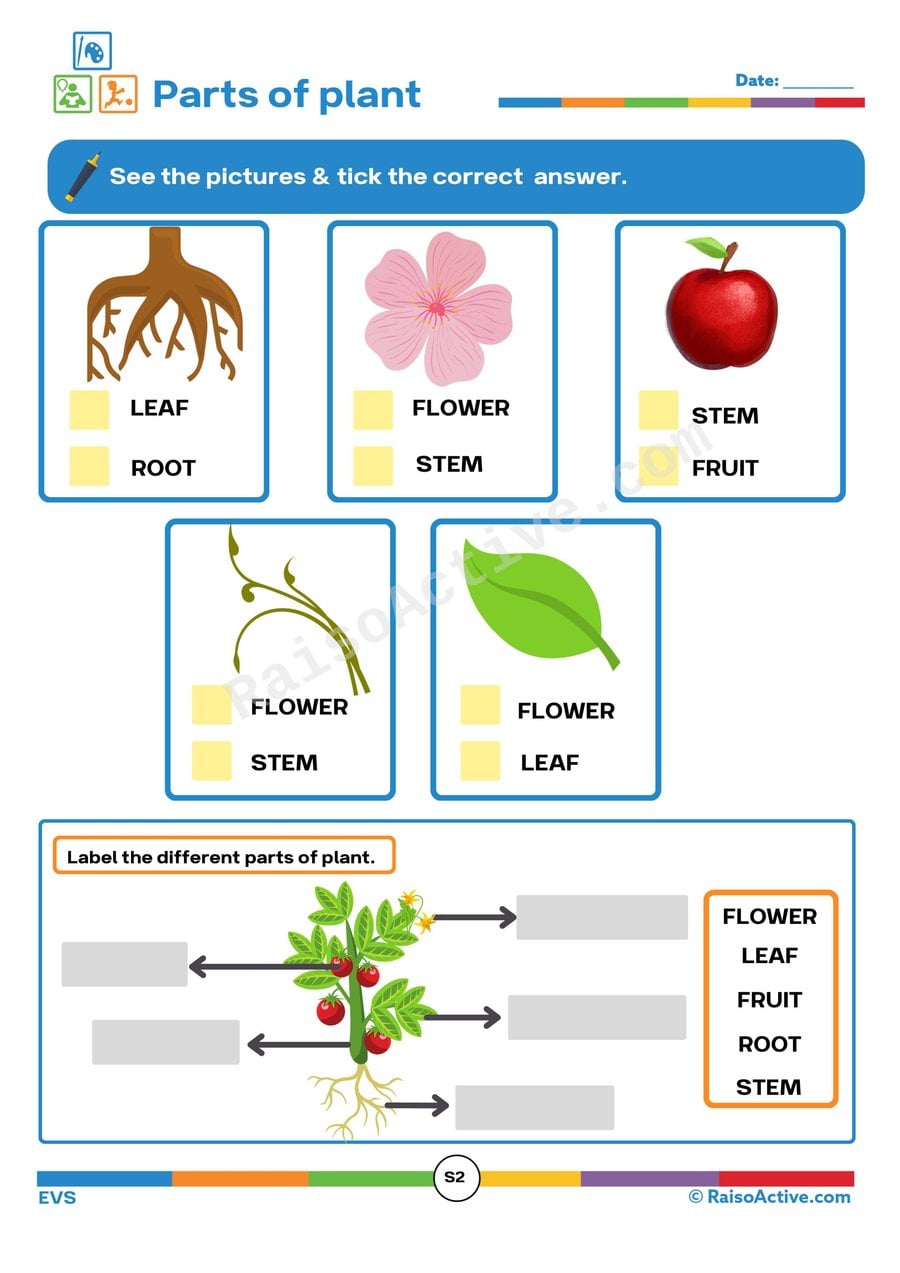
Parts of a Plant Worksheet for Kids
This worksheet helps children ages 4-6 identify and label the main parts of a plant — roots, stem, leaves, flower, and fruit — building foundational botany knowledge. Learning to associate each part with its picture and location on a plant diagram develops both vocabulary and an early understanding of plant structure, which supports later lessons on how plants grow and survive.

First Letter Fun: Identify and Write! A Fun Vocabulary Worksheet for Kids
This worksheet extends beginning-sound practice for children ages 4-6 slightly further than earlier versions, asking them to independently identify an object's name and write its first letter with less visual support. Isolating and writing initial sounds accurately is a strong predictor of later spelling and reading success, since it requires children to translate an auditory skill into a written one. Repeating this process across multiple pictures builds both vocabulary and growing independence in phonics reasoning.
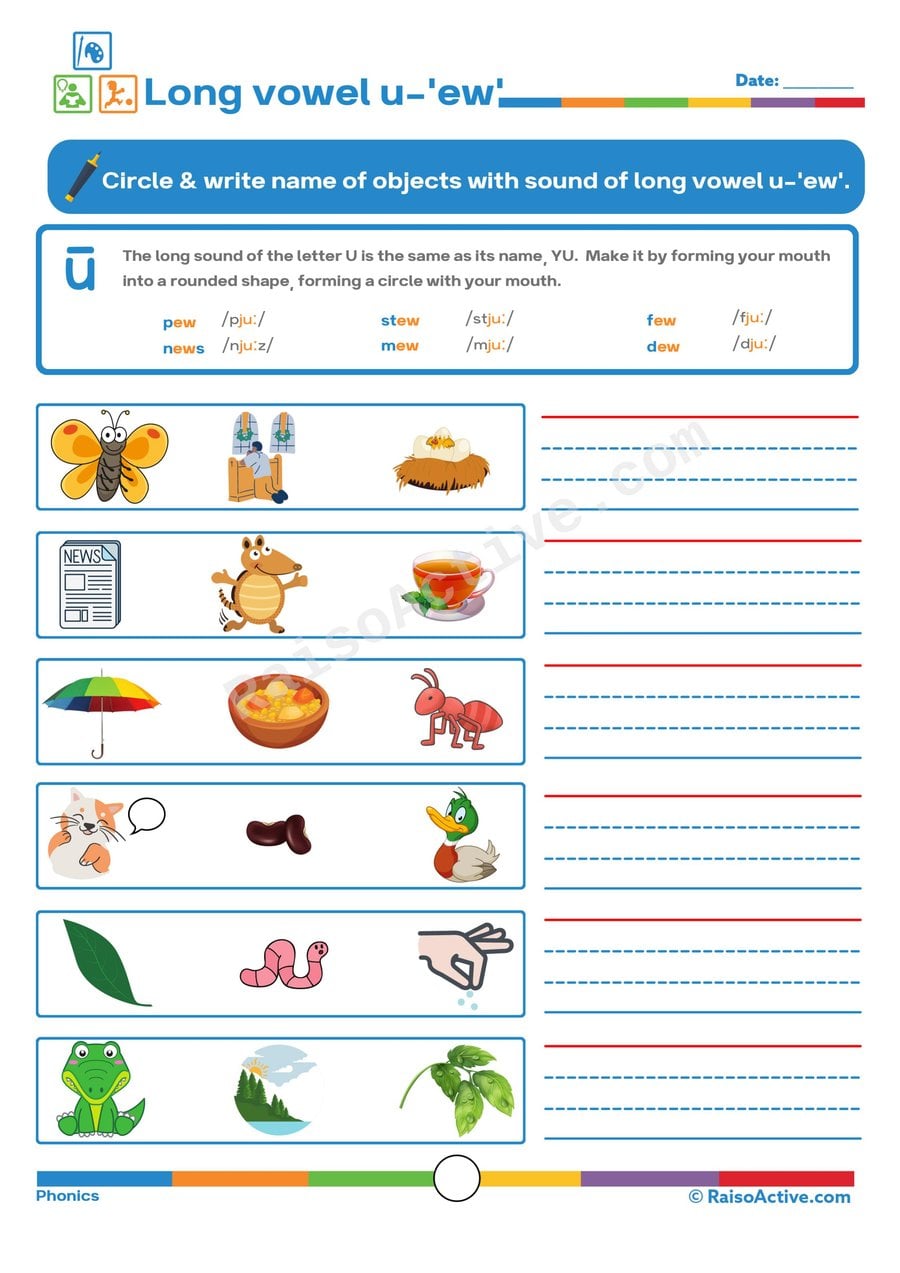
Long Vowel U 'ew' Worksheet: Circle and Write
This worksheet has children ages 4-6 identify pictures whose names contain the long 'u' sound spelled with the letters 'ew,' as in 'few' or 'new,' building awareness of this less common spelling pattern for a sound they may already recognize from simpler spellings. Circling the matching pictures practices listening skills, while writing the words afterward reinforces the specific 'ew' spelling through repeated handwriting. Focusing on a single spelling pattern like 'ew' helps children build pattern recognition they can apply to new, unfamiliar words later.

Alphabet Adventures: Complete the Vocabulary Table!
This worksheet helps children ages 4-6 strengthen letter-picture-word associations by filling in missing letters, finding matching pictures for each letter, and pasting them into a vocabulary table. Combining letter recall, picture matching, and gluing into one multi-step task pushes children beyond simple letter recognition into actively building and organizing vocabulary, an important step toward independent reading and writing.

Noun, Pronoun, or Adjective? Match the Words! Worksheet for Kids
This worksheet introduces children ages 4-6 to three foundational parts of speech — nouns, pronouns, and adjectives — by asking them to sort individual words into the correct grammatical category. Learning to tell these word types apart early gives children a vocabulary for talking about language itself, which supports both reading comprehension and their own sentence writing later on. Matching words to pictures also keeps an abstract grammar concept grounded in something concrete and visual.

Adjective Adventure: Matching Sentences Worksheet for Kids
This worksheet teaches 4-6 year olds that adjectives are the words that describe nouns, asking them to fill in a missing adjective in a sentence and then physically mark the noun and adjective separately by underlining and circling. That separation step — telling apart which word names a thing and which word describes it — is a genuinely useful grammar distinction that most children haven't consciously noticed before, even though they use adjectives constantly in speech.

Number Names Worksheet: Writing and Matching Numbers 51-60!
Writing out number names like 'fifty-one' or 'fifty-eight' next to their numerals helps children ages 4-6 connect the spoken word for a number to both its written word form and its digit form, a three-way link that strengthens overall number sense in the 51-60 range. This worksheet also revisits missing-number sequencing and color-coding, giving repeated exposure to the same number range through several different tasks. Building fluency with two-digit number names prepares children for reading numbers in books, on clocks, and in everyday life.
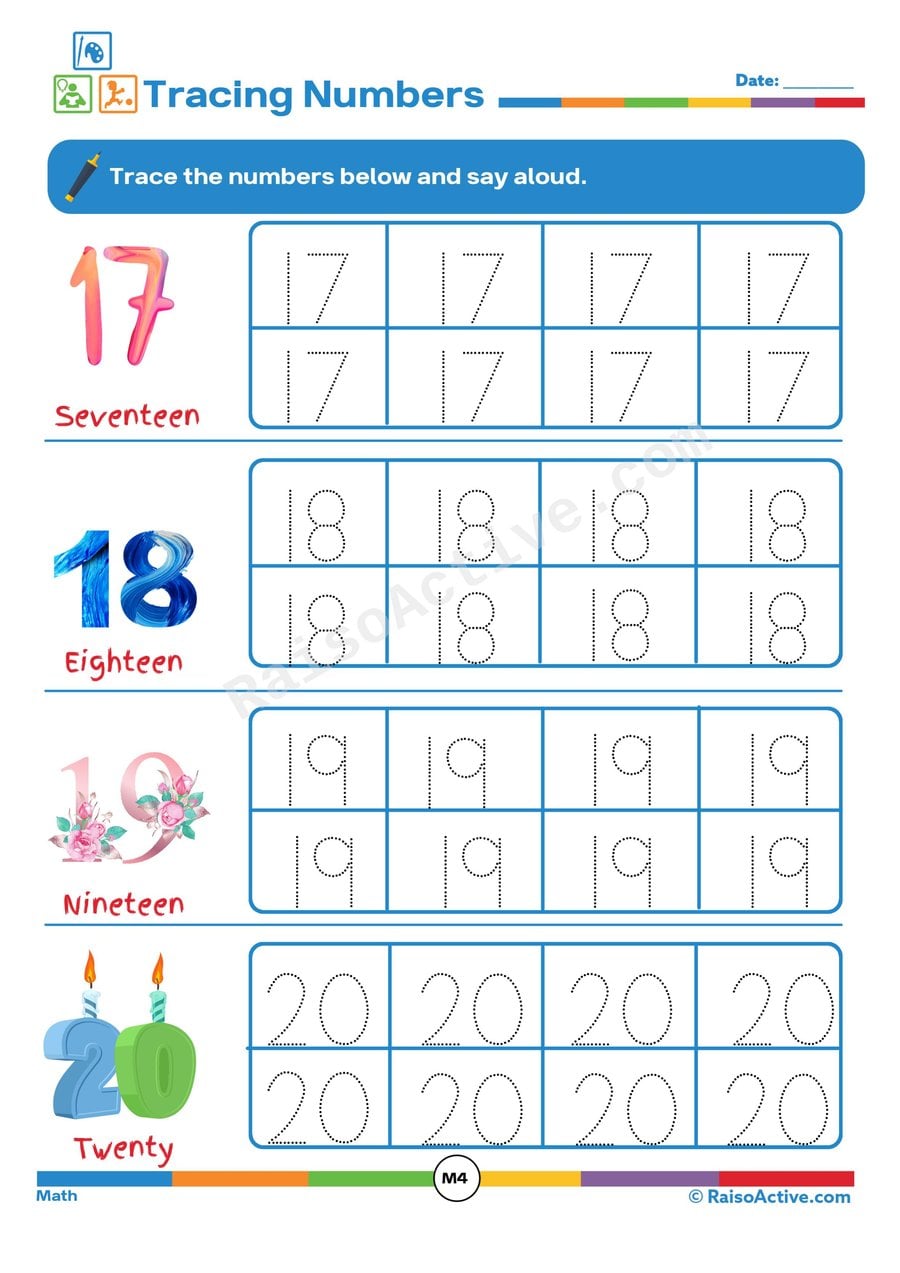
Trace and Learn Numbers 17-20 Worksheet
This tracing worksheet helps children ages 4-6 build number-writing fluency and number-name recognition for 17 through 20, a range that's often trickier than smaller numbers because it involves two-digit sequencing and less familiar number words like 'seventeen' and 'nineteen'. Tracing the dotted numerals builds the fine motor control and muscle memory needed for independent number writing, while saying each number aloud reinforces the link between the written numeral and its spoken name. This range also sets up the transition into the twenties and beyond.

Trace and Write Numbers 11-15: Counting and Writing Worksheet
This worksheet helps children ages 4-6 practice tracing and writing the number words from eleven to fifteen, moving beyond single-digit numbers into the trickier teen range where number names don't always follow an obvious pattern. Matching the number of dots on dice to the correct written number name also reinforces that these longer number words still represent a specific countable quantity.

Pronoun Power: Fill-in-the-Blanks Worksheet for Kids
Children ages 4-6 practice using indefinite pronouns like 'someone', 'anything', or 'everybody' correctly within sentences, an early grammar skill that helps their spoken and written language sound more natural and precise. Filling in blanks with the right pronoun requires reading comprehension, since children must understand the sentence's meaning to choose correctly. The coloring step adds a quick visual check that reinforces the correct answer.
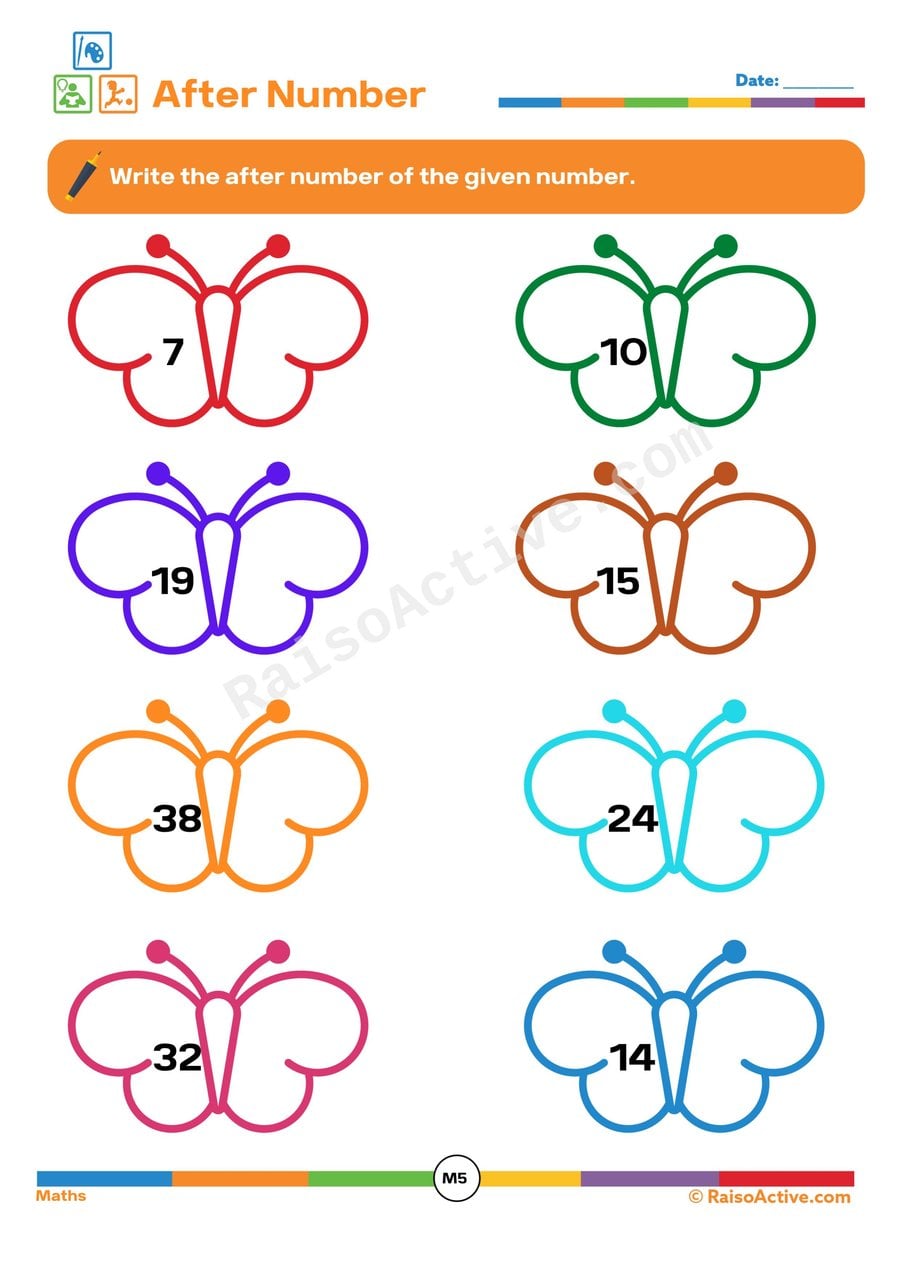
After Number Worksheet: Butterfly Fun!
This worksheet targets a specific early-numeracy milestone: understanding that every number has a number that comes immediately after it in sequence. For ages 4-6, practicing 'what comes next' strengthens the mental number line children rely on for later addition, since knowing that 7 comes after 6 is the foundation of counting on.

Frame Sentences Worksheet: Read and Tick the Correct Sentence!
This worksheet strengthens early grammar awareness in children ages 4-6 by having them compare two or more versions of a sentence and judge which one is written correctly. Spotting the difference between a correct and incorrect sentence builds the same skimming and comparing skills that support later spelling and editing work.
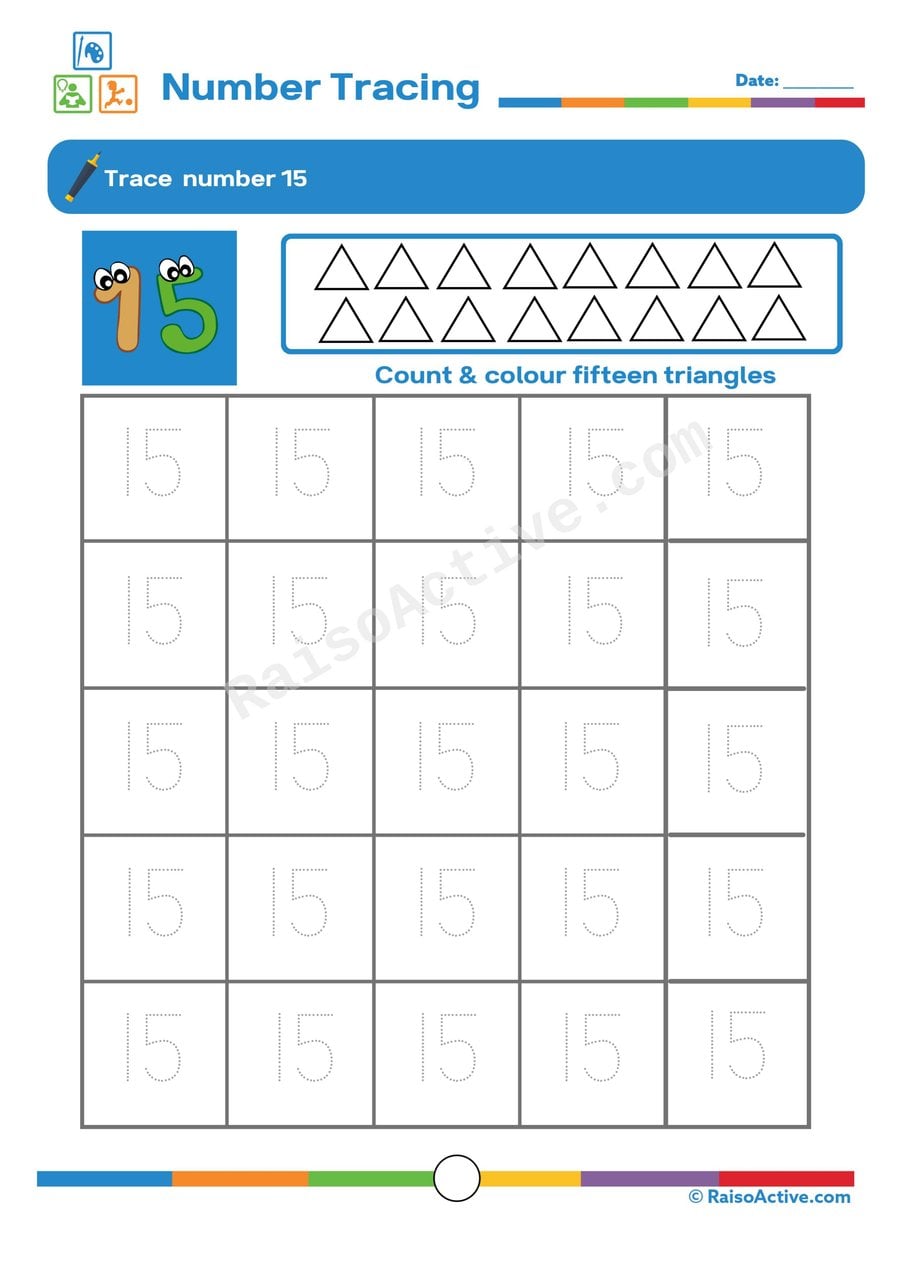
Number Tracing Worksheet: Trace and Count to 15!
This worksheet has children ages 4-6 trace the number 15 and then count and color a full set of fifteen triangles, extending their counting range further into the teens than many earlier worksheets. Counting all the way to fifteen requires children to keep track across a larger set without losing their place, building the working memory and sustained attention needed for extended counting. Introducing triangles instead of circles or balls also lets this worksheet quietly reinforce basic shape recognition alongside the counting task.
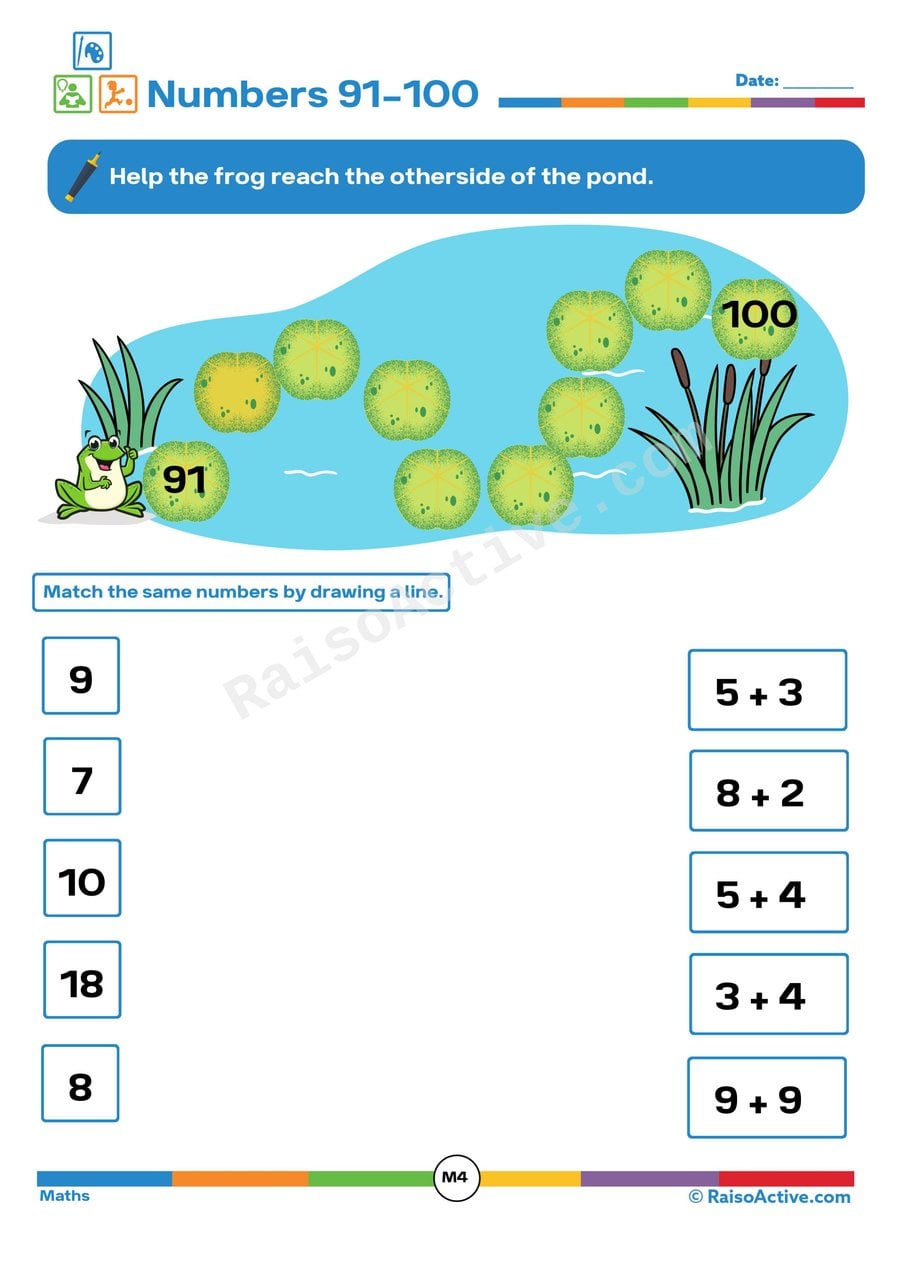
Numbers 91-100 Worksheet: Help the Frog!
Numbers in the 90s are a milestone range for children ages 4-6, since they require holding two-digit number recognition steady while approaching the conceptually significant number 100. This worksheet has children match numbers on lily pads to their corresponding value or sum, reinforcing number recognition within this higher range through a playful matching format. Building fluency with numbers up to 100 lays essential groundwork for place value concepts like tens and ones that children will tackle soon after.

Sentence Matching Worksheet: Read and Match the Sentences!
Reading a short sentence and pasting it beneath its matching picture builds reading comprehension for children ages 4-6, requiring them to understand the full meaning of a sentence rather than recognizing isolated words. This task also reinforces fine motor precision as children position and glue a small strip of text accurately within a defined space.

Living and Non-Living Things Word Search Worksheet for Kids
This word search worksheet has children ages 4-6 hunt for and identify living and non-living things, then sort them by color-coding — living things in red and non-living things in blue — building both spelling recognition and an early science classification skill. Distinguishing living from non-living is one of the foundational categories in early science education, underlying later lessons about biology and the natural world.

Blend Words Worksheet: Circle the Correct Picture!
This worksheet strengthens blending skills for children ages 4-6, asking them to say a consonant blend like 'bl' or 'st' together with different word endings and identify which resulting word matches a picture. Blending two consonant sounds smoothly before adding a vowel is a more advanced phonics skill than single-letter sounds, and this practice directly supports decoding multisyllabic and blended words during independent reading.

Sight Word Search and Reading Comprehension Worksheet for Preschoolers
This worksheet combines three literacy skills for children ages 4-6 in one activity: reading a short story and spotting sight words within it, answering comprehension questions about what happened, and finding those same sight words hidden in a word search grid. Practicing the same words across reading, comprehension, and search formats gives children multiple angles of exposure that build genuine reading confidence rather than rote memorization.

Abbreviations Worksheet: Matching and Writing Practice
This worksheet introduces children ages 4-6 to common abbreviations — like Mr., Dr., or St. — by having them match each shortened form to the correct sentence context and then write it in correctly. Understanding that some words have a shortened written form is an important early literacy concept, since abbreviations appear constantly in books, signs, and everyday writing. Practicing both matching and writing reinforces the connection between recognizing an abbreviation and producing it correctly from memory.

Abbreviations Worksheet for Kids: Road, Doctor, and More!
This worksheet introduces children ages 4-6 to abbreviations like Rd. for Road and Dr. for Doctor, teaching them that a shortened form can stand in for a longer, familiar word. Recognizing abbreviations is an early vocabulary and reading skill children will meet constantly on street signs, envelopes, and forms.

CVC 'an' Family Matching Worksheet for Early Readers
This worksheet strengthens phonics skills in children ages 4-6 by having them read, color, and match CVC words from the 'an' family, such as 'can', 'man', and 'fan'. Practicing an entire word family together helps children notice the shared 'an' pattern, an efficient shortcut that lets them decode a whole group of new words once they master just one.

Match the Countries with Their Symbols Worksheet
Children ages 4-6 build early social studies awareness by matching country flags to their well-known national symbols, connecting visual recognition with basic geography and cultural knowledge. This kind of matching exercise strengthens careful observation, since children must compare colors, shapes, and details across both the flag and the symbol image. It also plants the seed for understanding that different countries have distinct identities and traditions.
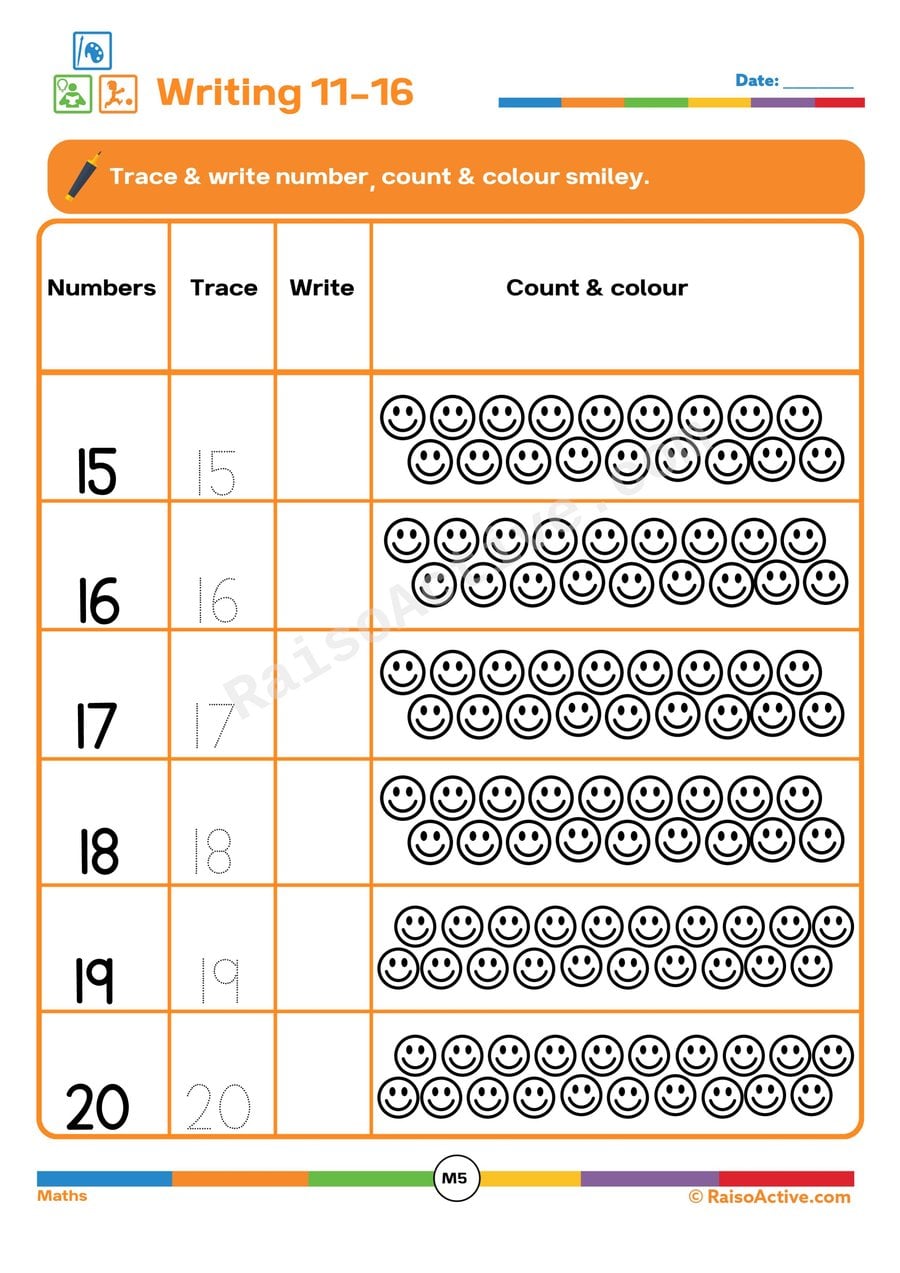
Number Tracing and Counting Worksheet for Kids
This worksheet layers three connected numeracy skills for children ages 4-6: tracing numerals to build correct number formation, writing numbers independently from memory, and counting objects to connect a written numeral to an actual quantity. Number formation practice at this age matters because children often develop habits — like starting a number from the wrong point — that are hard to unlearn later, so guided tracing helps establish correct strokes early. Pairing that with counting smiley faces ensures the numeral isn't just a shape being copied but a quantity being understood.
What your child learns from age 2 to 7
The path runs alphabet, sounds, blending, sight words, sentences, comprehension. Alphabet work means naming and forming the 26 letters in both cases. Sounds work attaches one sound to each letter and then to common pairs such as sh and ee. Blending pushes those sounds together into words, first three letters, then four and five. Sight words are the high-frequency words that resist sounding out (the, said, was) and have to be learned by shape.
Sentences and comprehension arrive together in 1st Grade, Year 2 and Class 1. A child writes a sentence with a capital letter, finger spaces and a period, then reads a short passage and answers who, what and why questions in their own words. Vocabulary sheets on opposites, plurals and rhyming words run alongside the whole sequence.
- Ages 2–3: listening to rhymes, matching pictures, scribbling and first strokes
- Ages 3–4: alphabet names, uppercase recognition, first sounds of familiar words
- Ages 4–5: lowercase letters, letter sounds, rhyming, tracing and copying words
- Ages 5–6: blending CVC words, sight words, writing words and short sentences
- Ages 6–7: digraphs and long vowels, reading passages, comprehension questions, plurals and opposites
How to use English worksheets at home
Say everything aloud. Reading sheets work when the child voices each sound and then the whole word; writing sheets work when the child says the sentence before writing it. Keep sessions to one sheet and ten minutes, and if a reading page is decoded correctly but the child cannot say what it meant, that is the signal to go back a step and read it again more slowly.
Mix the strands across the week: one letter or phonics sheet, one writing sheet, one reading or vocabulary sheet. A child who only traces letters will not learn to read, and a child who only reads will write slowly, so the English worksheets for kids on this page are meant to be rotated rather than worked through in order.
Common difficulties and what they mean
Reversing b and d, writing letters bottom to top, and mixing capitals into the middle of words are all normal until around 7 and correct with practice rather than concern. Guessing a word from its first letter and the picture is a habit worth stopping early: cover the picture and ask the child to sound through to the end. Reading quickly but without understanding usually means the passage is too hard, so drop to a shorter one.
Frequently asked questions
What should a child be able to read and write by age 6?
By age 6, the end of Kindergarten, Year 1 or UKG, most children can read three- and four-letter phonetic words, recognize 40 to 60 common sight words, read a short decodable sentence aloud, write their name and a simple sentence with a capital letter and period, and form most lowercase letters correctly. Reading a short paragraph and answering a question about it is expected by the end of the following year.
What order should I teach English to a young child?
Spoken language first: songs, rhymes and talking about pictures. Then letter names and shapes, followed by letter sounds. Once a child knows about eight to ten sounds, begin blending them into short words while continuing to add sounds. Sight words come alongside blending, sentence writing once words are being read, and comprehension questions once short passages can be read without help.
Should my child learn letter names or letter sounds first?
Both are needed, and neither order harms a child. Names come naturally from the alphabet song and are what most Preschool and Nursery programs teach first. Sounds are what reading actually uses, and structured phonics programs in Reception, Kindergarten and LKG start with them. If your child already knows the names, add the sounds; if starting fresh, teach the sound and the name together for each letter.
How much English practice does a 5-year-old need each day?
About 10 to 15 minutes of focused practice on a worksheet, plus reading a book aloud together. One sheet a day is plenty; the reading aloud matters as much as the sheet because it supplies the vocabulary and sentence patterns that decoding alone does not. Stop before the child tires, since a frustrated session teaches avoidance rather than reading.
Do these English worksheets use American or British spelling?
The worksheet instructions use American spelling. The words being practiced at ages 2 to 7 are almost all short phonetic words and sight words that are spelled identically in every English-speaking country, so the sheets are used as they are in the United States, the United Kingdom and India. Where a term differs, such as "full stop" for period, the sheet shows the punctuation mark itself.
Are the English worksheets free to download?
Yes. Every sheet is available as a watermarked PDF without charge after creating an account, with a limit of five downloads a day. An annual subscription (₹1000 or $20) lifts the limit and removes the watermark on all worksheets and printable packs. Pages are laid out to print cleanly on both A4 and US Letter.

Written by
Hemsweta Jain · Teacher Cheena
MBA and Early Childhood Educator, teaching since 2014 · Founder of RaisoActive, Mumbai
Written and reviewed by Hemsweta Jain (Teacher Cheena), who designs every RaisoActive worksheet.
Last reviewed
Printable packs for ages 2–7
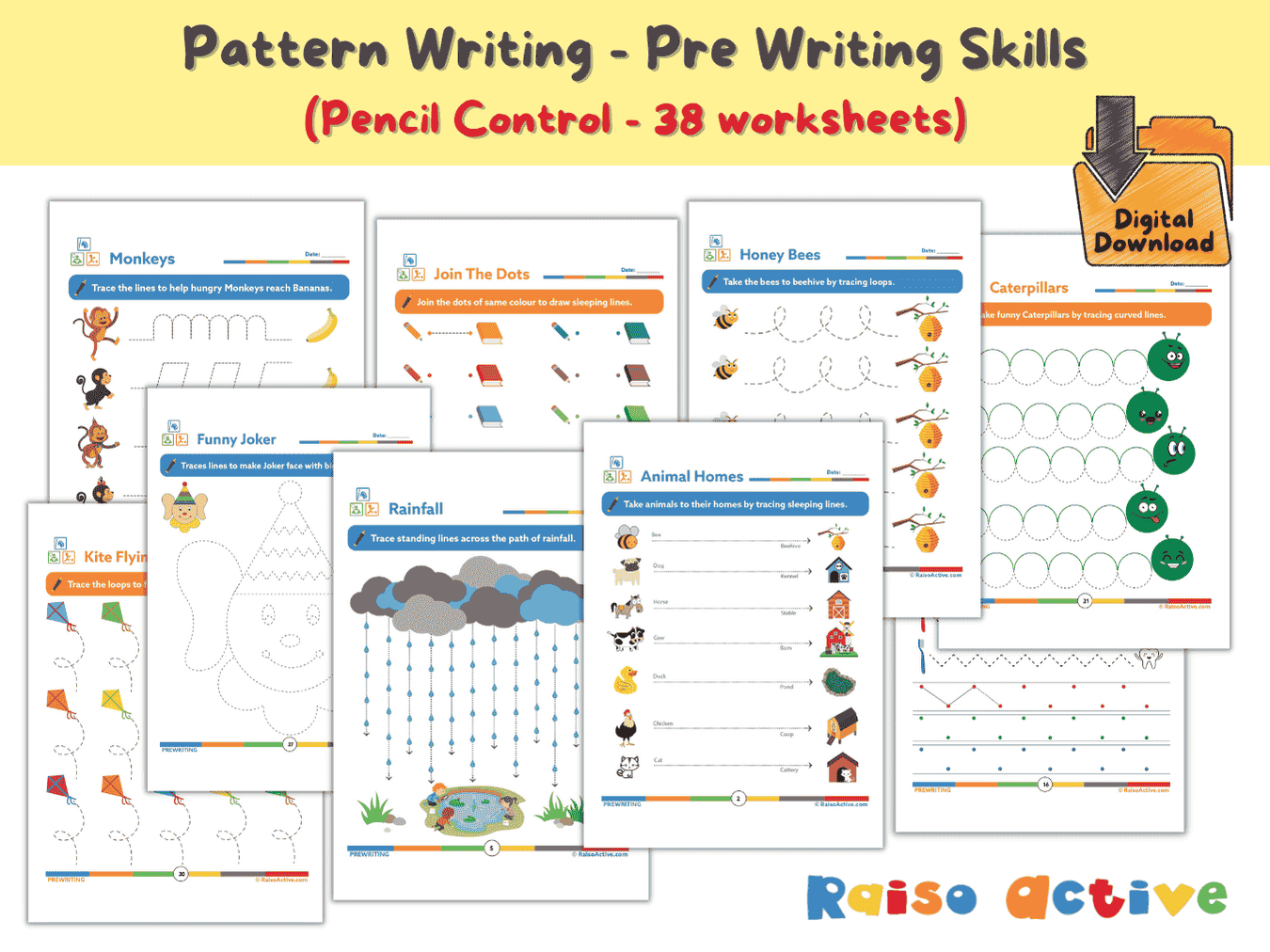
Pattern Writing Pre-writing Skills Activity Book for 3-4 Year Olds
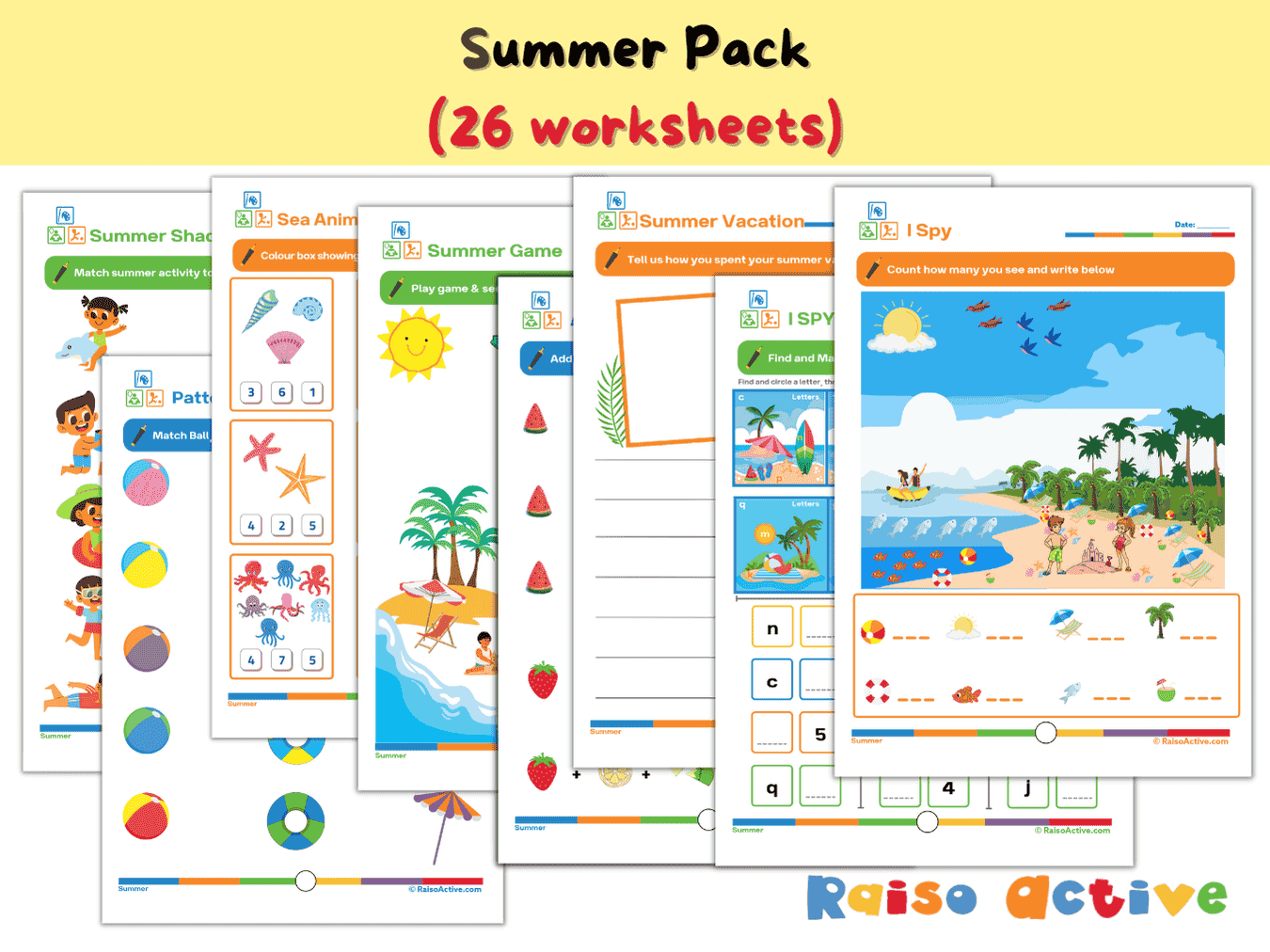
Summer Activity Pack: Math, Literacy, Puzzles & More for Preschool & Kindergarten
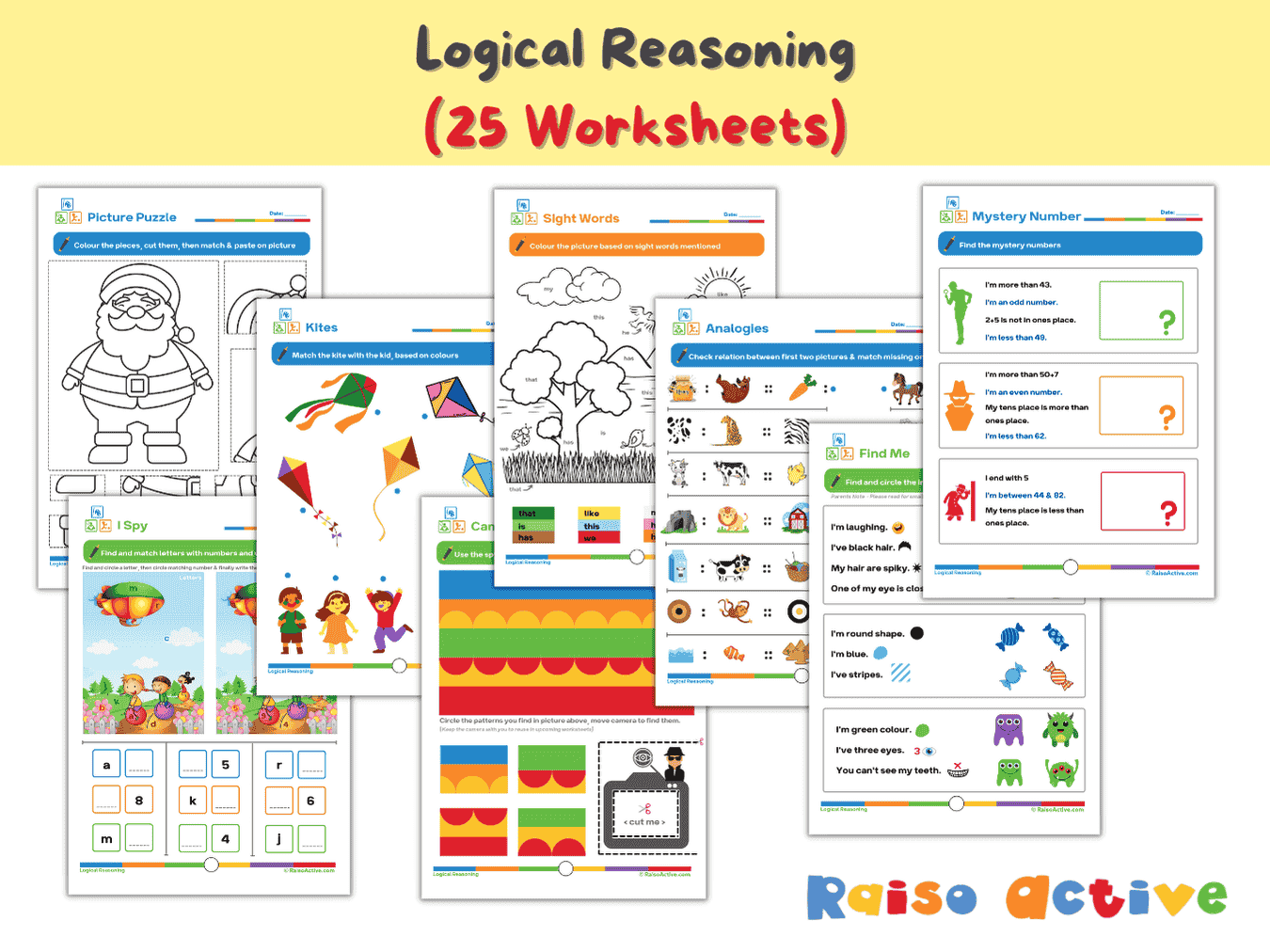
Logical Reasoning Activity Book for Preschool & Kindergarten | Patterns, Puzzles & Analogies
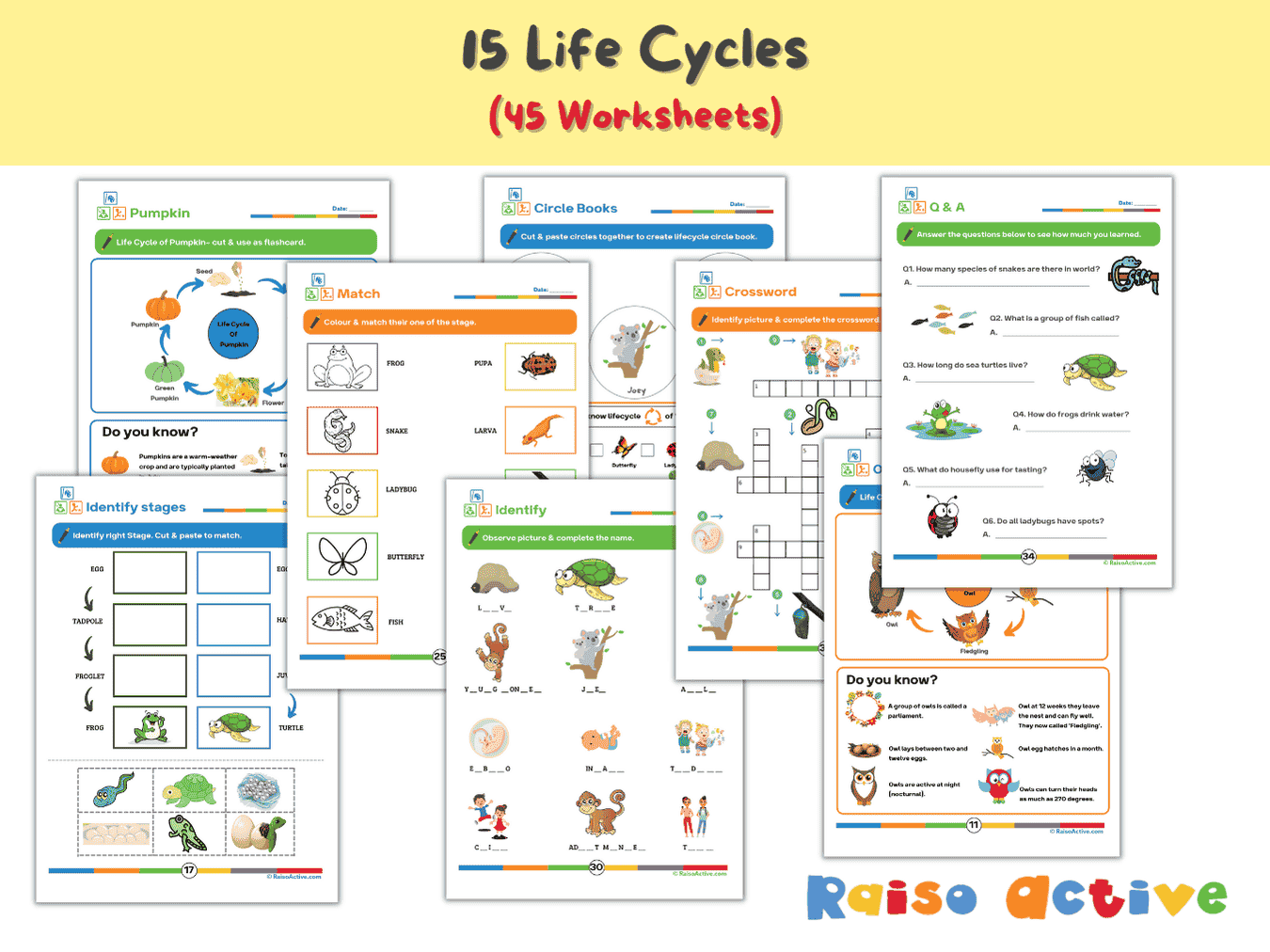
Lifecycles Activity Book & Flashcards for Preschool & Early Elementary
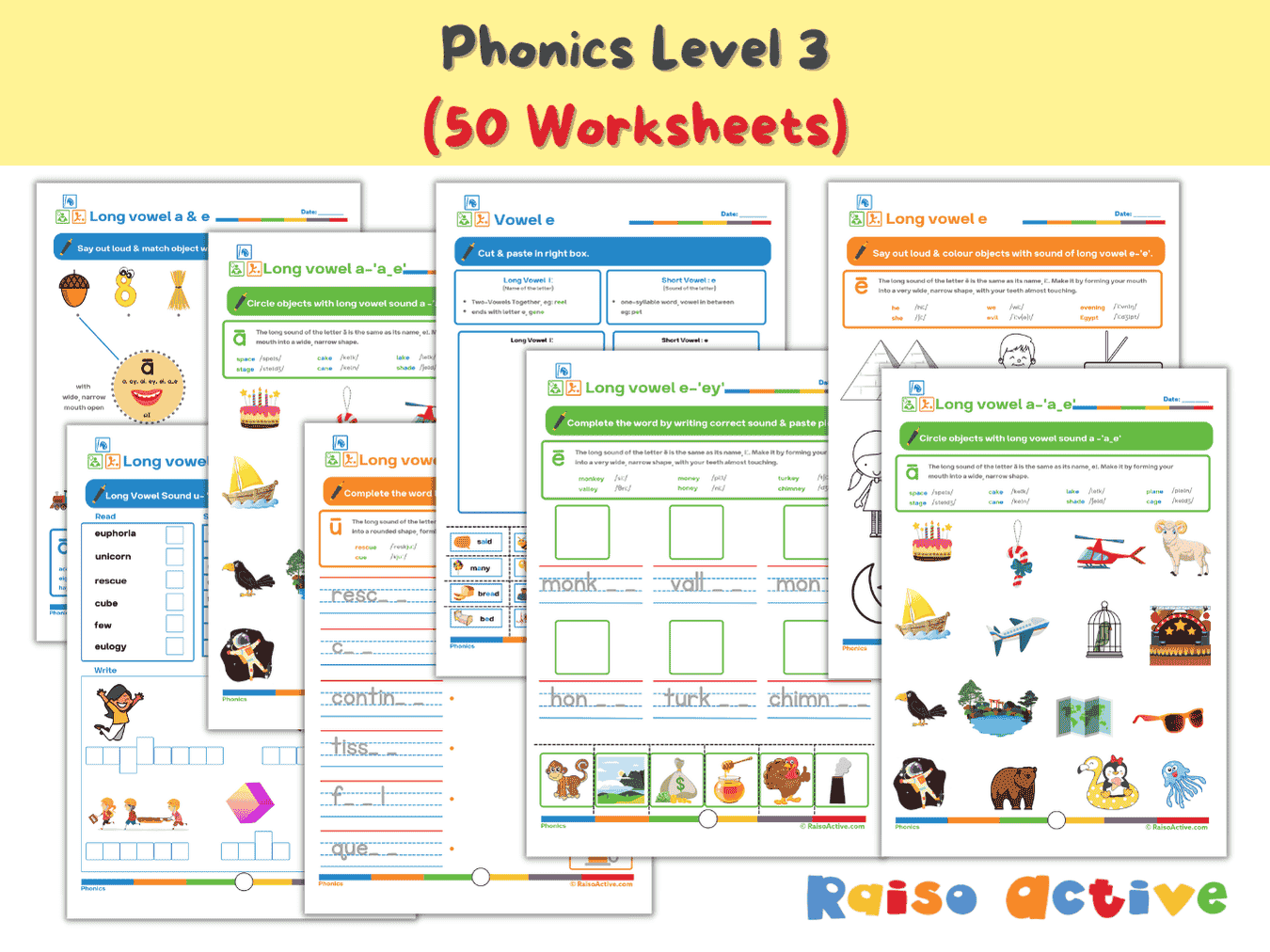
Phonics Level 3 Long Vowels Activity Book for Kindergarten & 1st Grade
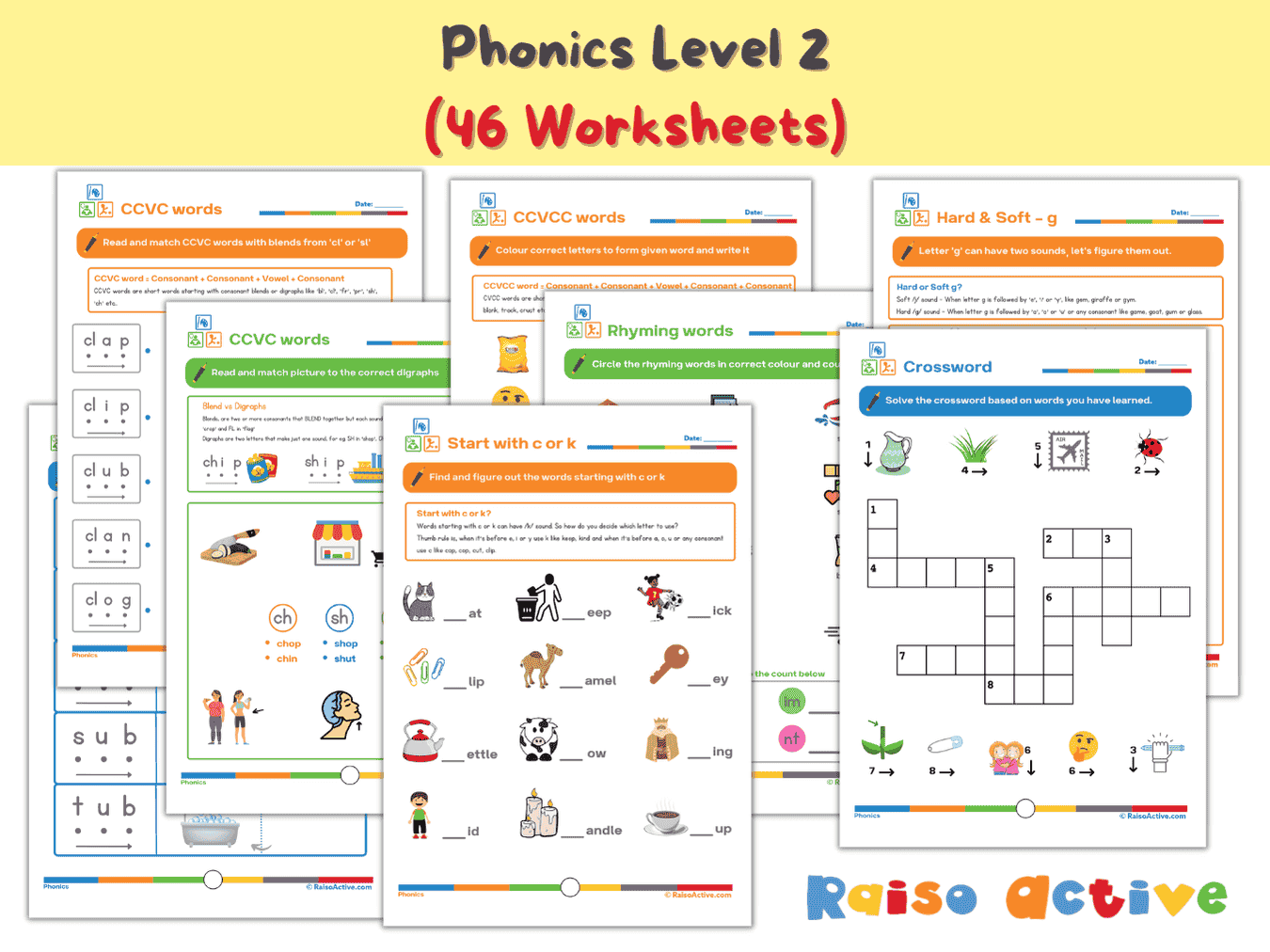
Phonics Level 2 Worksheets: CVC, CCVC, CVCC Word Families & Blends for Early Readers (Ages 4-7)
Guides for parents and teachers
See all guides →Sight Words by Age: The First 50 Words and How to Teach Them Without Flashcard Fatigue
Which sight words to teach first and why, the heart-word method, a read-trace-write-find routine, games, and a by-age table of typical sight-word progress.
How to Teach CVC Blending: A Step-by-Step Method That Works in Two Weeks
A step-by-step method for teaching CVC blending, covering continuous sounds, word families, common errors, and a 14-day plan that most children finish reading CVC words.
Phase 2 Phonics at Home: Sound Order, Blending Games, Worksheets
Phase 2 phonics at home: the five sound sets in order, oral blending, tricky words, a two-week routine, common mistakes, and free worksheets.
Reception Year Explained: EYFS Learning and How to Help at Home
A teacher's plain-English guide to the Reception Year: the seven areas of learning, Early Learning Goals, Phase 2/3 phonics, the RBA and home routines.
UKG Syllabus Explained: English, Maths and EVS Month by Month
What UKG classes typically cover in English, maths and EVS, month by month, aligned to NEP 2020, with ways to support at home and signs your child is behind.
Bridging Two Worlds: A Complete Guide to Teaching Heritage Languages Alongside English
A practical guide to raising bilingual children who speak both their heritage language and English with confidence. Research-backed strategies, activities, and tips for Indian families.
Canonical: https://raisoactive.com/worksheets/english