
Adjective Adventure: Matching Sentences Worksheet for Kids
This worksheet teaches 4-6 year olds that adjectives are the words that describe nouns, asking them to fill in a missing adjective in a sentence and then physically mark the noun and adjective separately by underlining and circling. That separation step — telling apart which word names a thing and which word describes it — is a genuinely useful grammar distinction that most children haven't consciously noticed before, even though they use adjectives constantly in speech.
Part of the pack
Month 5: Essential English, Math, Science | Ages 6-7Curriculum
How to use this worksheet
Look at the first picture and sentence together, reading the sentence aloud with the blank left open. Ask your child what word could describe the picture — big, red, happy — and have them choose one that fits before writing it in. Once the sentence is complete, have them underline the noun the adjective is describing and circle the adjective itself. Repeat this for each remaining picture and sentence, checking together that the underline and circle are on the correct words each time.
Materials needed
- Pencil
- Crayons
Extension activities
- •Have your child draw their own picture and write a sentence about it using an adjective.
- •Play a describing game where you describe an object using only adjectives and your child guesses what it is.
- •Take turns describing family members or pets using as many adjectives as you can think of.
- •Look at a picture book together and find as many describing words as possible on one page.
- •Make an adjective collage using magazine pictures paired with words that describe them.
Tips for parents and teachers
Use the pictures as clues if your child isn't sure what adjective fits, and sound out unfamiliar words together rather than supplying the answer immediately. If underlining the noun versus circling the adjective gets mixed up, revisit the definitions with a simple example — 'red' describes, 'ball' is the thing. Praise their effort throughout, since distinguishing nouns from adjectives is a genuinely new grammar concept at this age.

Written by
Hemsweta Jain · Teacher Cheena
MBA and Early Childhood Educator, teaching since 2014 · Founder of RaisoActive, Mumbai
Every RaisoActive worksheet is designed and checked by the founder before publishing.
Published · Last reviewed
Related worksheets

Adjective Adventure: Circle the Correct Words Worksheet
Children ages 4-6 practice identifying adjectives, the describing words that tell more about a noun, by reading sentences and circling the word that adds detail or description. Learning to spot adjectives is a foundational grammar skill that also helps children add more vivid, specific description to their own writing and speech.

Adjective Adventure: Coloring and Sentence Fun Worksheet for Kids
Coloring only the adjectives in a set of words teaches children ages 3-5 to recognize descriptive words as their own grammatical category, distinct from naming words or action words, a foundational step toward understanding how sentences are built. Writing a sentence using a chosen adjective afterward pushes the recognition skill into active use, requiring children to apply what they identified rather than just spot it.

Adjective Adventure: Circle the Adjectives Worksheet for Kids
This worksheet introduces the concept of adjectives as descriptive words that tell us more about a noun, asking children to identify and circle words that describe pictured objects. For ages 4-6, recognizing adjectives builds richer, more expressive vocabulary and lays groundwork for more descriptive writing and speaking later on.

Adjective Worksheet: Circle and Fill in the Blanks!
Working from a picture and a sentence together, children ages 4-6 practice choosing an adjective that accurately describes what they see and then writing it into the sentence - a skill that strengthens both vocabulary and the understanding that descriptive words add detail and meaning to a sentence. This bridges picture comprehension with written language, an important step as children move from purely oral vocabulary to using descriptive words in their own writing.

Clothing Pattern Match Worksheet for Preschoolers
This worksheet has children ages 3-5 study repeating patterns on clothing items — stripes, polka dots, or checks — and match each item to its identical twin, building visual discrimination and early pattern-sequencing skills. Distinguishing between similar-looking patterns also sharpens attention to detail, a skill that later supports letter and word recognition.
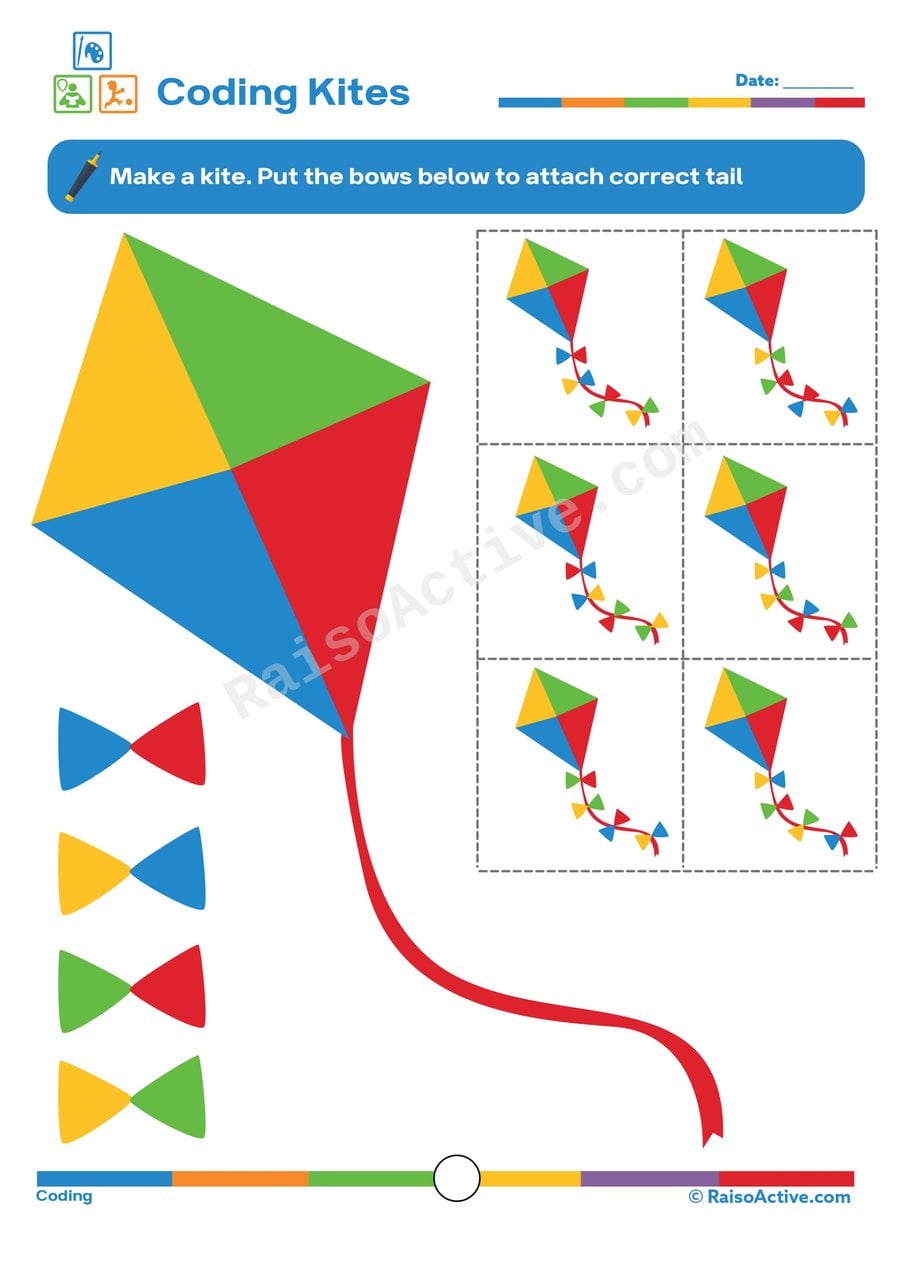
Coding Kites Worksheet: Match the Bows!
This activity sharpens visual observation in children ages 3-5 as they compare color sequences on each kite to a set of loose bows and find the exact match. Careful, systematic comparison — checking each color in order rather than glancing quickly — builds an attention-to-detail habit that transfers directly to early reading and number work.

Stick Man Emotions Worksheet: Happy, Sad, Angry, and Surprised!
Children ages 4-6 practice reading facial expressions on this worksheet, matching stick-figure faces to their correct emotion labels by noticing details like mouth shape and eyebrow position. This strengthens emotional literacy — the ability to name and recognize feelings in others — which supports empathy and smoother social interactions as children move into more group play and classroom settings.

Lock and Key Matching Worksheet for Preschoolers
Matching each key to the lock sharing the same letter helps children ages 3-5 practice letter recognition in a playful, puzzle-like context rather than rote drilling. Because each key must be checked against several similar-looking locks before finding the right match, this worksheet also builds visual scanning and careful comparison skills that support problem-solving.
Reviews
Every worksheet for ages 4–6, no watermark
Members download the full library of 1,000+ worksheets and every activity pack without watermarks or daily limits. One year costs ₹1,000 in India or $20 elsewhere.
See membership plansOr download any worksheet free with a watermark (5 a day).