Plant Parts Worksheet for Preschoolers
This worksheet introduces 4-6 year olds to plant anatomy — roots, stem, leaves, and flower — and asks them to connect each part's name to its function, while a separate matching section links different plant types to their pictures. Learning that plants have parts with specific jobs (roots drink water, leaves make food from sunlight) is an early building block of life science, and naming these parts gives your child vocabulary they'll keep reusing throughout school science lessons.
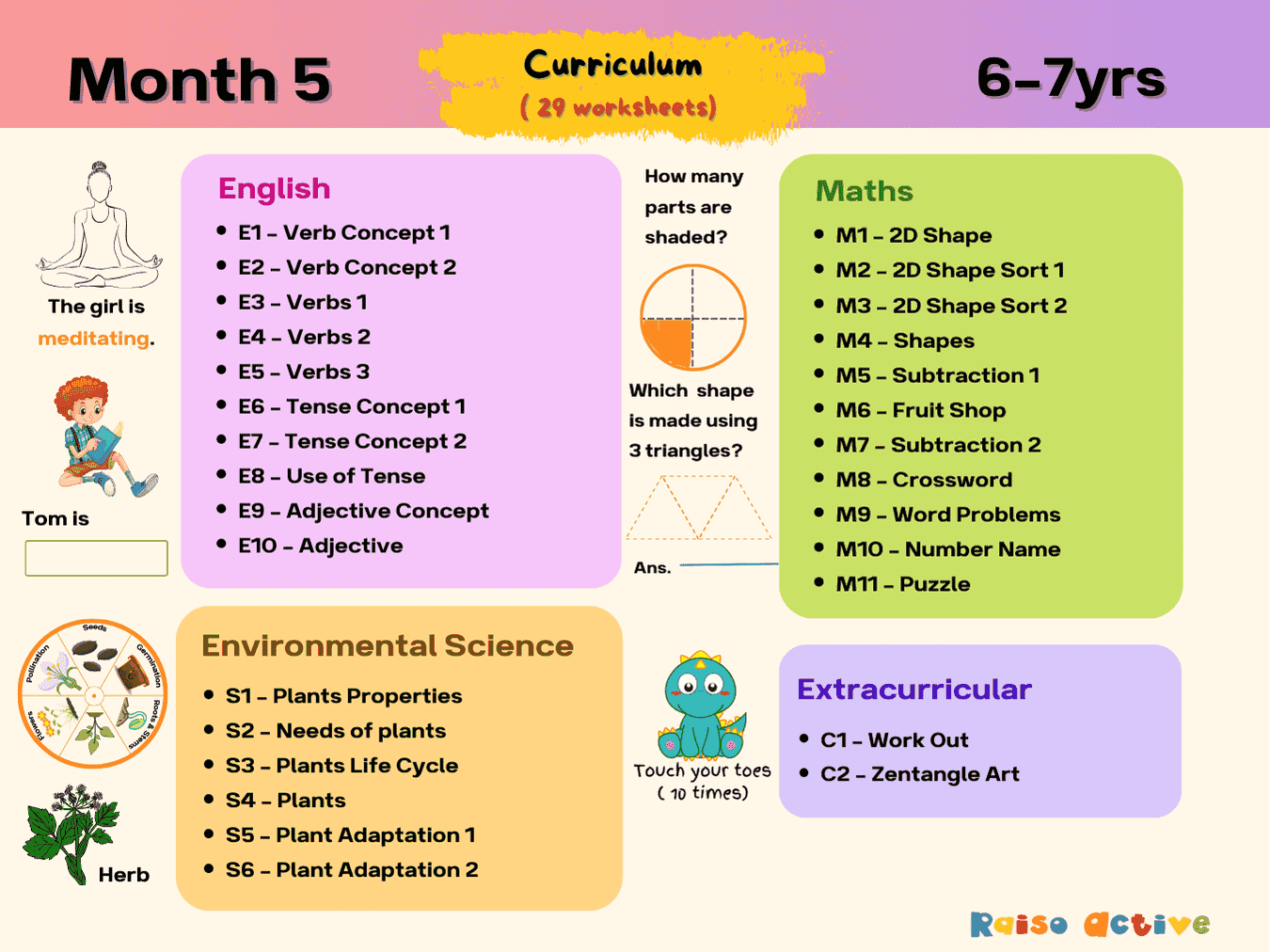
Part of the pack
Month 5: Essential English, Math, Science | Ages 6-7
This is page 28 of the pack. Ages 6-7 · Grade 1Ages 6-7 · Year 2Ages 6-7 · Class 1Ages 6-7
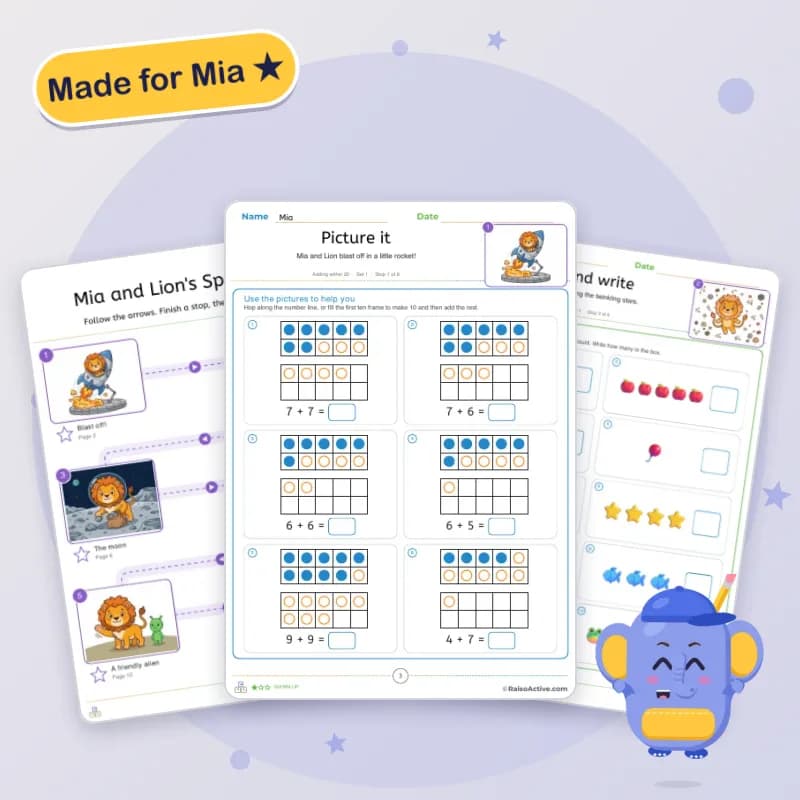
Made for your child
Numbers to 20, made for your child
A maths pack with your child's name in it: pictures that explain, practice at three levels, puzzles and story sums about them. Print a new set whenever they finish.
Make a maths packFree preview · free for members
See all 7 personalised packsAbout this worksheet
- Topic:
- Plants
- Skill:
- Plant Science (Living Things - Plants): Learn about plant parts, life cycles, and adaptations.
- Pack:
- Page 28 of 32 in Month 5: Essential English, Math, Science | Ages 6-7.
How to use this worksheet
Look at the plant diagram together and point out each labeled part before your child fills in any blanks. Read the fill-in-the-blank sentences aloud, helping your child sound out the missing plant-part words as they write them in. For the matching section, look at each plant picture together and have your child draw a line connecting it to its correct plant type. Finish by pointing to a real plant or picture in the house and asking your child to name its parts from memory.
Materials needed
- Pencil
- Crayons
Extension activities
- 1Go on a short nature walk and point out roots, stems, leaves, and flowers on real plants you pass.
- 2Plant a seed in a cup of soil together and check on it daily, watching for the first parts to appear.
- 3Draw and label a plant from memory, adding as many parts as your child can recall.
- 4Go through the kitchen and identify which vegetables are roots (carrots), stems (celery), or leaves (lettuce).
- 5Read a simple picture book about how plants grow and pause to name each part as it appears.

Written by
Hemsweta Jain · Teacher Cheena
MBA and Early Childhood Educator, teaching since 2014 · Founder of RaisoActive, Mumbai
Every RaisoActive worksheet is designed and checked by the founder before publishing.
Published · Last reviewed
More from Month 5: Essential English, Math, Science | Ages 6-7
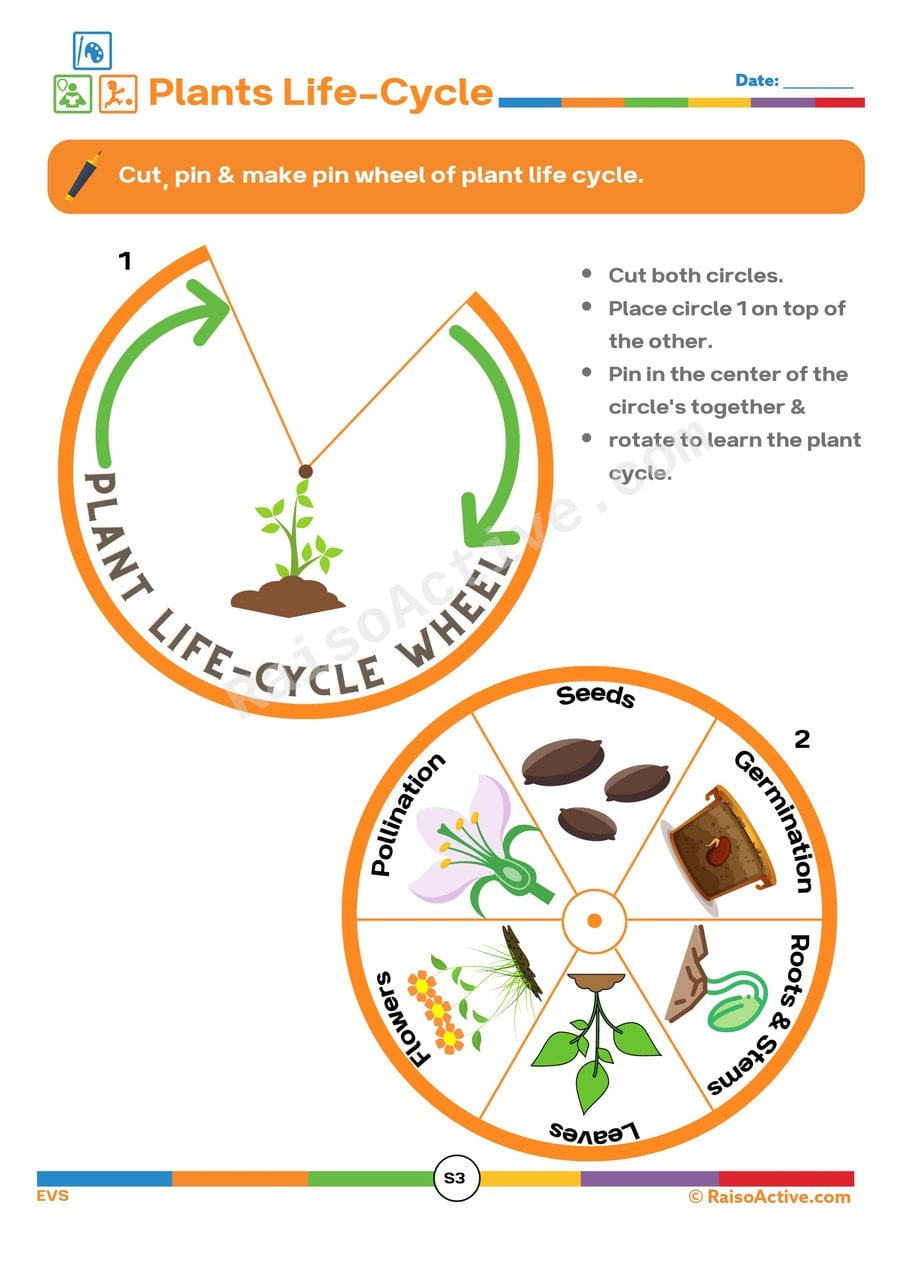
Plant Life Cycle Wheel: Cut, Pin & Learn!
Ages 4-6
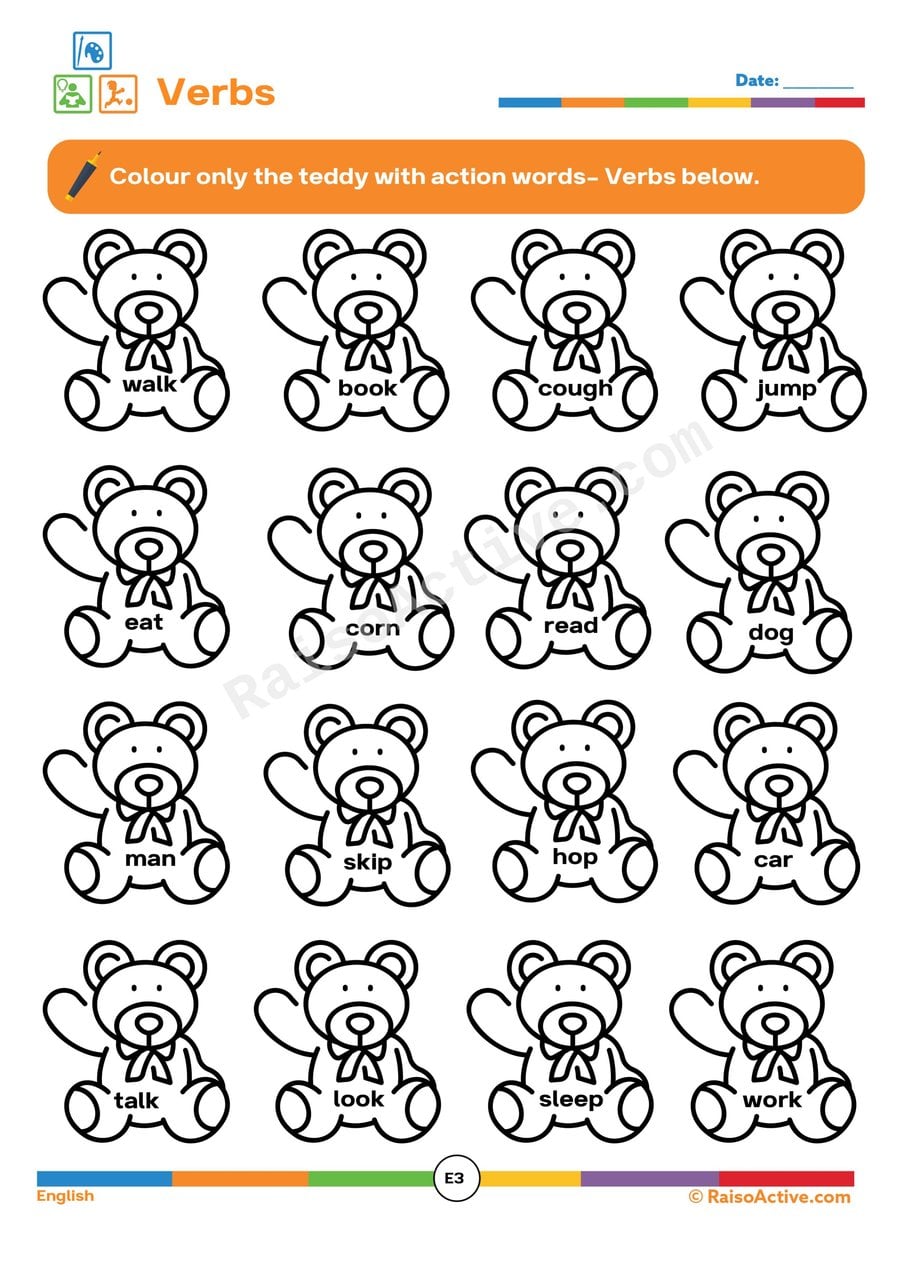
Action Word Coloring Worksheet for Preschoolers
Ages 3-5

Crossword Math Worksheet: Fill in the Missing Numbers!
Ages 4-6

Plant Adaptation Worksheet for Kids: Matching Examples
Ages 4-6

Number Names Worksheet: Matching and Writing Numbers
Ages 4-6
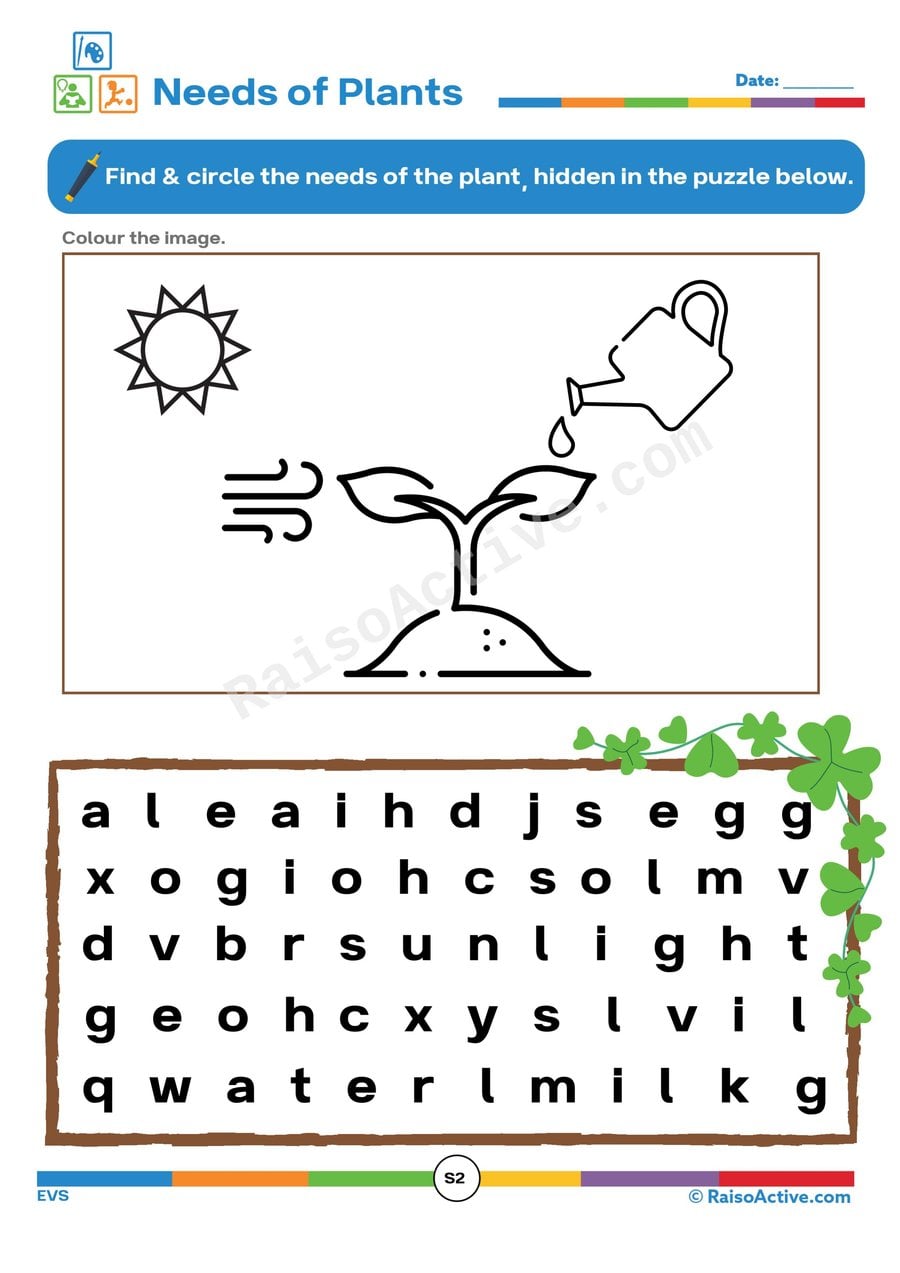
Plant Needs Word Search Worksheet for Kids
Ages 3-5
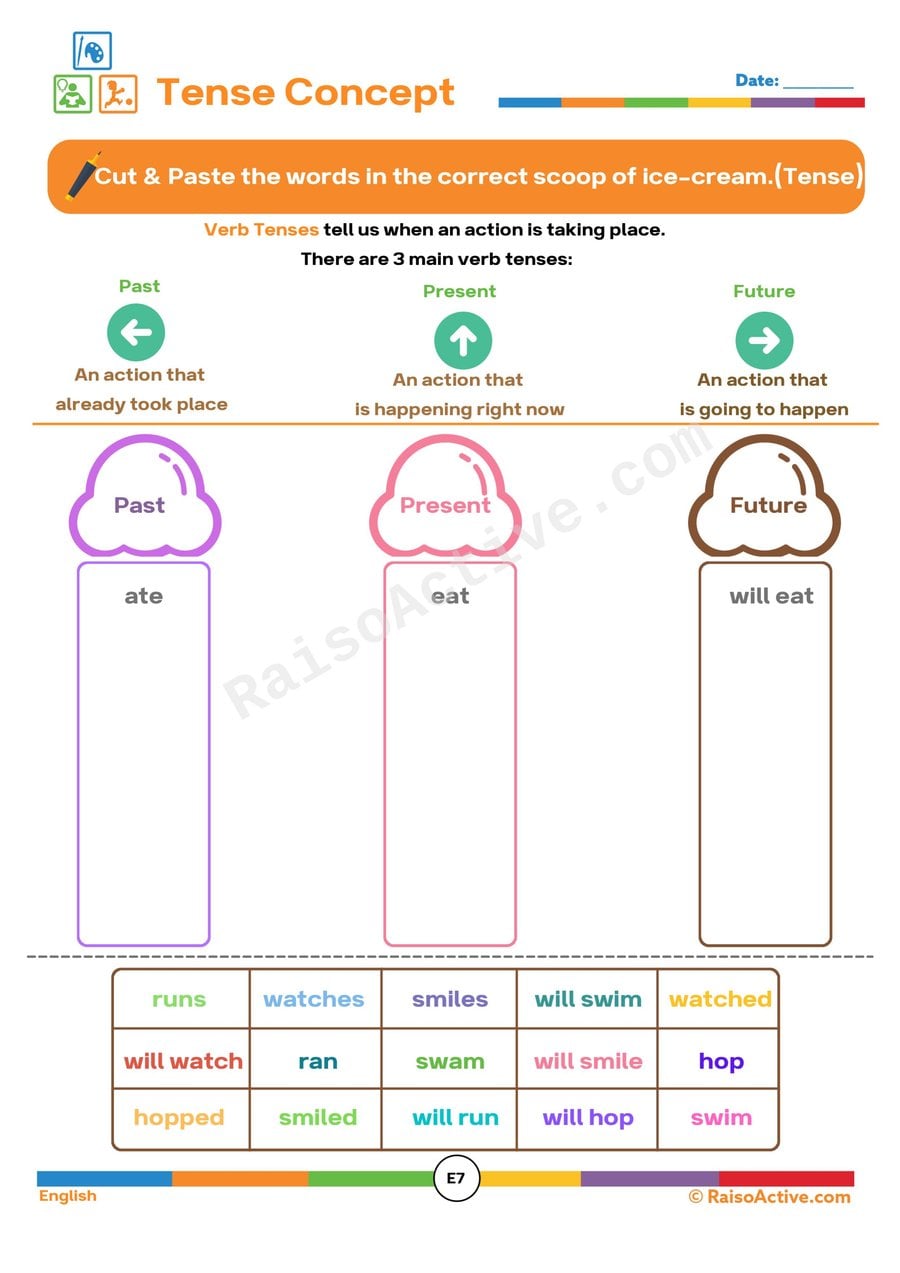
Tense Time! Cut and Paste the Verbs Worksheet
Ages 4-6

Subtraction Fun: Cross Out and Count the Cupcakes!
Ages 4-5
Related worksheets

Parts of a Plant Cut and Paste Worksheet for Kids
Ages 3-5

Case Closed! Puzzle Detectives Certificate
Ages 7-8

The Pigpen Cipher: Make a Decoder Card and Read the Secret Motto
Ages 9-10

My Detective Case Board: Clue Tracker and Junior Detective Badge
Ages 7-8

Sequence Lab: Number and Shape Sequences, Find the Rule and the Error
Ages 9-10

Riddles for Kids Worksheet: Exhibit Riddles, Number Riddles and Write Your Own
Ages 7-8

What Comes Next? Pattern and Number Sequence Worksheet for Ages 7-8
Ages 7-8

The Suspect Line-up: Deduction Puzzle With Cut-out Suspect Cards
Ages 7-8
Guides for this topic

Best Worksheets for 3-Year-Olds: What Works and What to Avoid
What works on worksheets for 3-year-olds: short sessions, crayons, tracing lines, matching, cutting, a free weekly plan, and signs one is too advanced.

Age-Appropriate Problem-Solving Activities: Building Critical Thinkers from the Ground Up
Discover fun, age-appropriate problem-solving activities for children ages 1-8. Build critical thinking, logic, and reasoning skills through play-based learning.
Critical Thinking Activities That Actually Work for Young Children: Building Tomorrow's Thinkers Today
Discover proven critical thinking activities for young children. Age-wise logic games, questioning techniques, and hands-on ideas to build thinking skills at home.
Reviews
Every worksheet for ages 4–6, no watermark
Members download the full library of 1,000+ worksheets and every activity pack without watermarks or daily limits. One year costs ₹999 in India or $20 elsewhere.
See membership plansOr download any worksheet free with a watermark (5 a day).