Plant Adaptation Worksheet for Kids: Matching Examples
This worksheet introduces 4-6 year olds to plant adaptations — the specific features that help plants survive in their environment, like thick leaves that store water or thorns that deter animals — by having them match real plant examples to the correct type of adaptation and then write it in. This is a genuinely abstract science concept for this age group, since it requires connecting a visible feature to an invisible purpose (why does a cactus have thick, waxy skin?), making it more conceptually demanding than simple plant-part labeling.
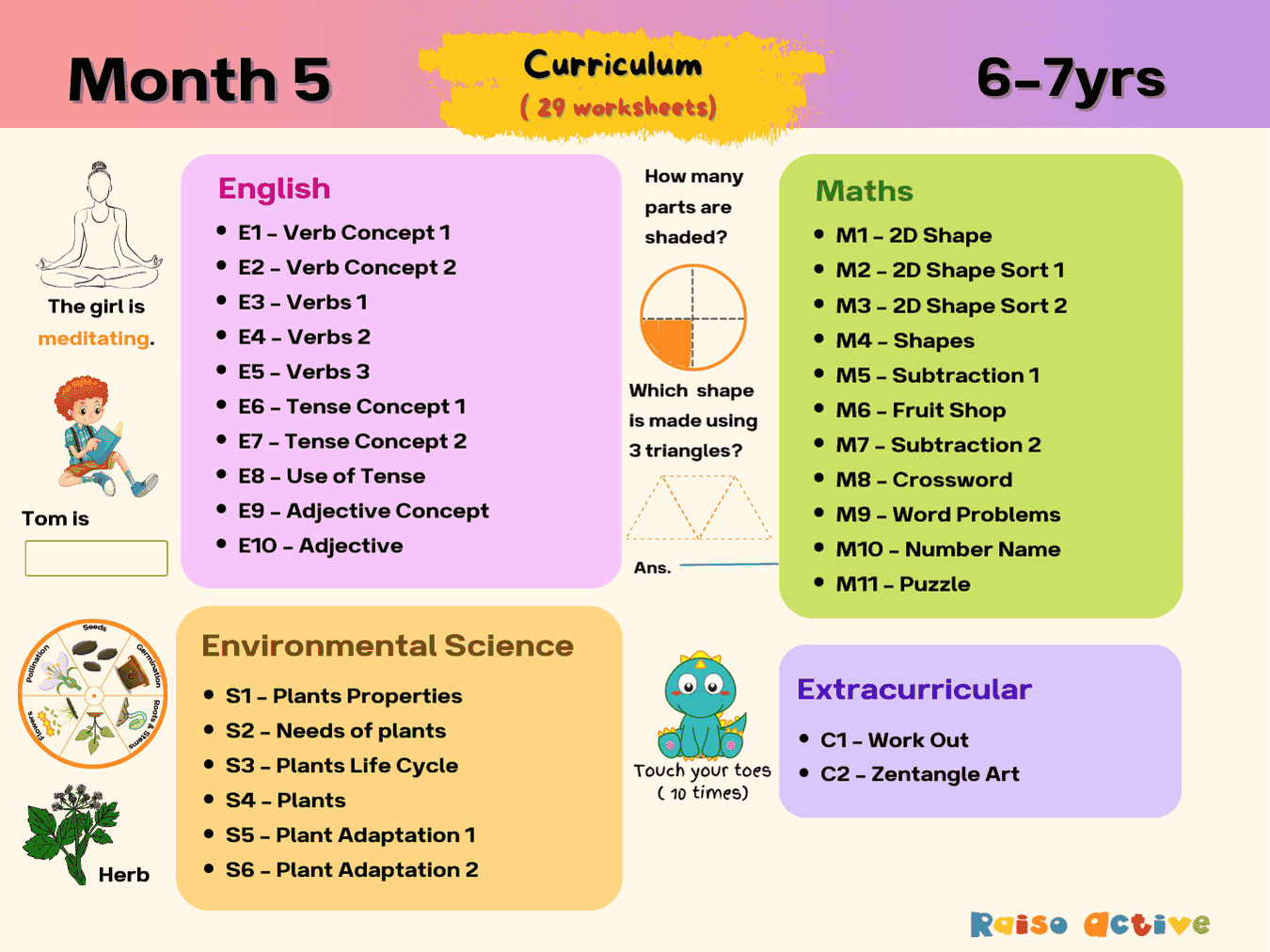
Part of the pack
Month 5: Essential English, Math, Science | Ages 6-7
This is page 30 of the pack. Ages 6-7 · Grade 1Ages 6-7 · Year 2Ages 6-7 · Class 1Ages 6-7
Made for your child
A whole activity pack made with their name
60 pages to spot, build, trace and write their own name, plus pages about their favourites, feelings and family. See a free preview with their name.
Make an All About Me packFree preview · free for members
Or start free: a name tracing sheet with their nameCurriculum
- Living Things - Plants > Plant Science
How to use this worksheet
Look at the first plant example together and describe what you notice about it — its leaves, stem, or another visible feature. Talk through what that feature might help the plant do, like storing water or staying safe from being eaten. Once your child has an idea, have them write the name of the matching adaptation type in the blank space. Repeat with each remaining example, discussing the 'why' behind each adaptation before writing the answer.
Materials needed
- Pencil
Extension activities
- 1Look up pictures of a few unusual plants together and talk about how they might have adapted to their environment.
- 2Draw and label a plant along with the specific adaptation that helps it survive.
- 3Compare a cactus (if you have one) or picture of one to a houseplant and talk about how their needs differ.
- 4Take a walk and look for any local plants with obvious adaptations, like thorns or waxy leaves.
- 5Talk about how animals also have adaptations, and compare a plant adaptation to an animal one.

Written by
Hemsweta Jain · Teacher Cheena
MBA and Early Childhood Educator, teaching since 2014 · Founder of RaisoActive, Mumbai
Every RaisoActive worksheet is designed and checked by the founder before publishing.
Published · Last reviewed
More from Month 5: Essential English, Math, Science | Ages 6-7
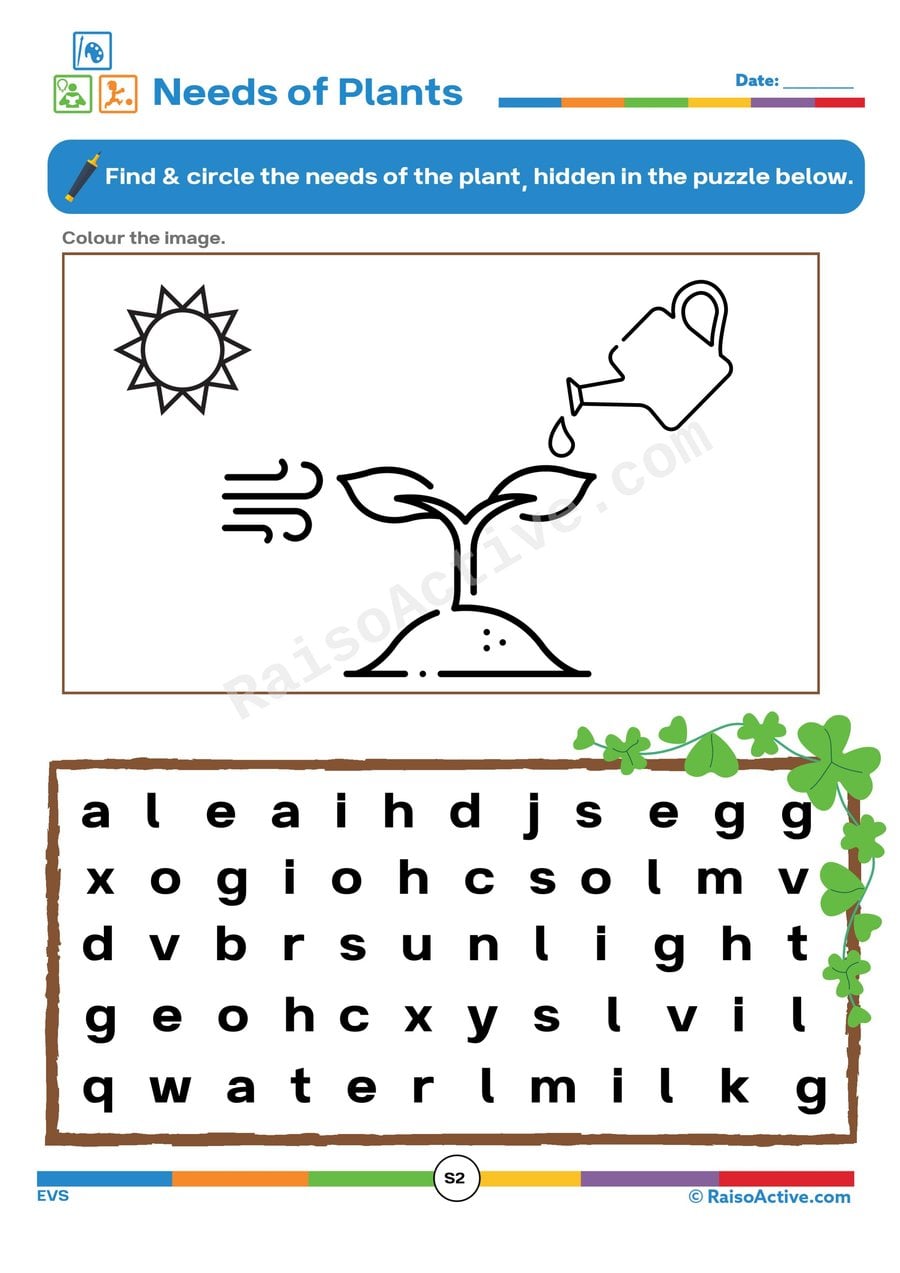
Plant Needs Word Search Worksheet for Kids
Ages 3-5 · Preschool–Pre-KAges 3-5 · Nursery–ReceptionAges 3-5 · Nursery–LKGAges 3-5
This word search introduces 3-5 year olds to the specific things plants need to survive — sunlight, water, soil, air — while building early reading skills through visual word scanning and letter recognition. Hunting for whole words hidden in a grid of letters is a genuinely different reading task than sounding out an isolated word, since your child has to recognize a word's overall letter pattern among distracting surrounding letters.
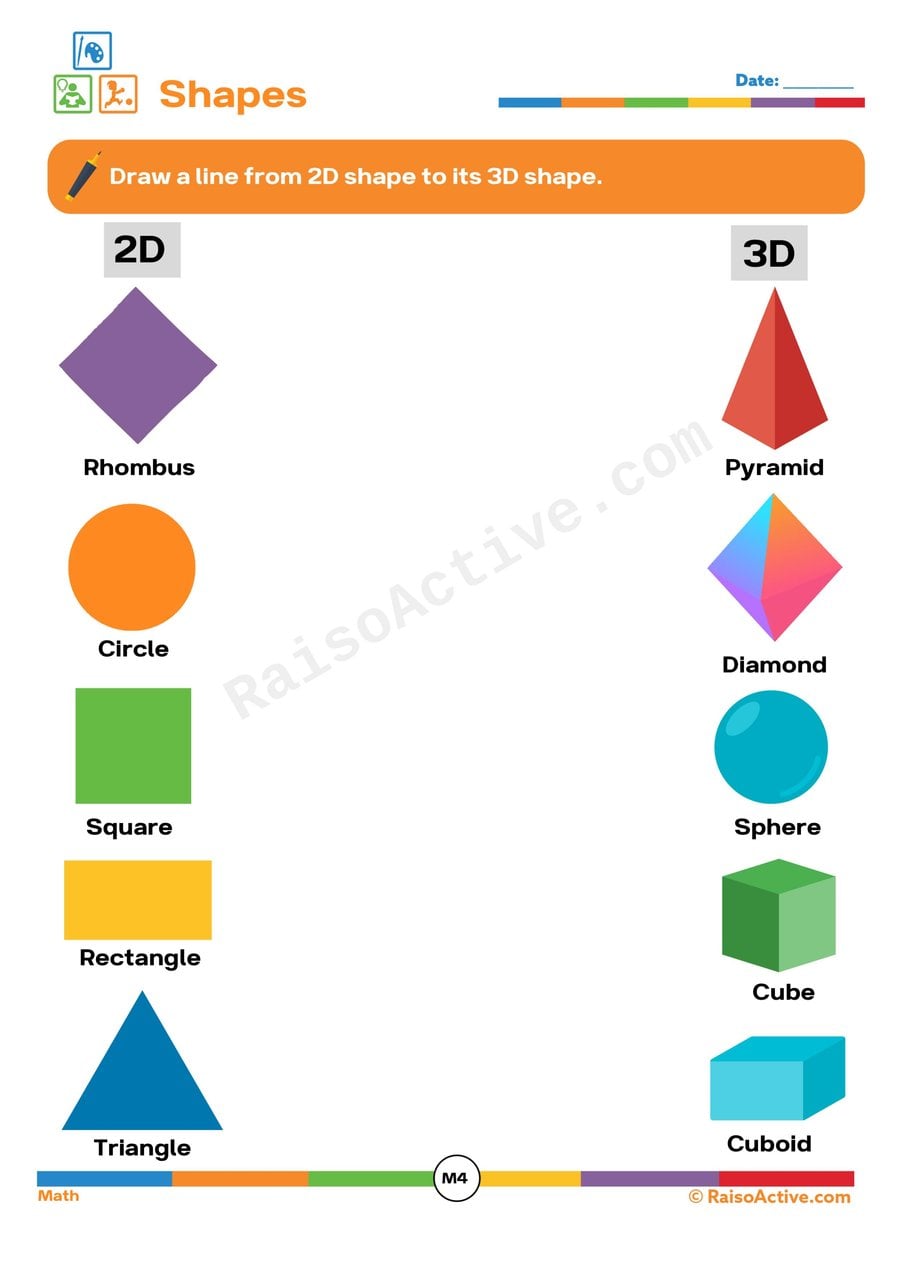
Shape Match: 2D to 3D Shapes Worksheet
Ages 4-6 · Pre-K–KindergartenAges 4-6 · Reception–Year 1Ages 4-6 · LKG–UKGAges 4-6
This worksheet introduces 4-6 year olds to the relationship between flat 2D shapes and solid 3D shapes — connecting a circle to a sphere, a square to a cube — which is an important spatial reasoning leap, since a 3D shape's flat 'face' is what actually corresponds to its related 2D shape. Making this connection explicit helps children understand that the shapes they've been learning aren't just flat pictures but also describe the surfaces of real, solid objects around them.
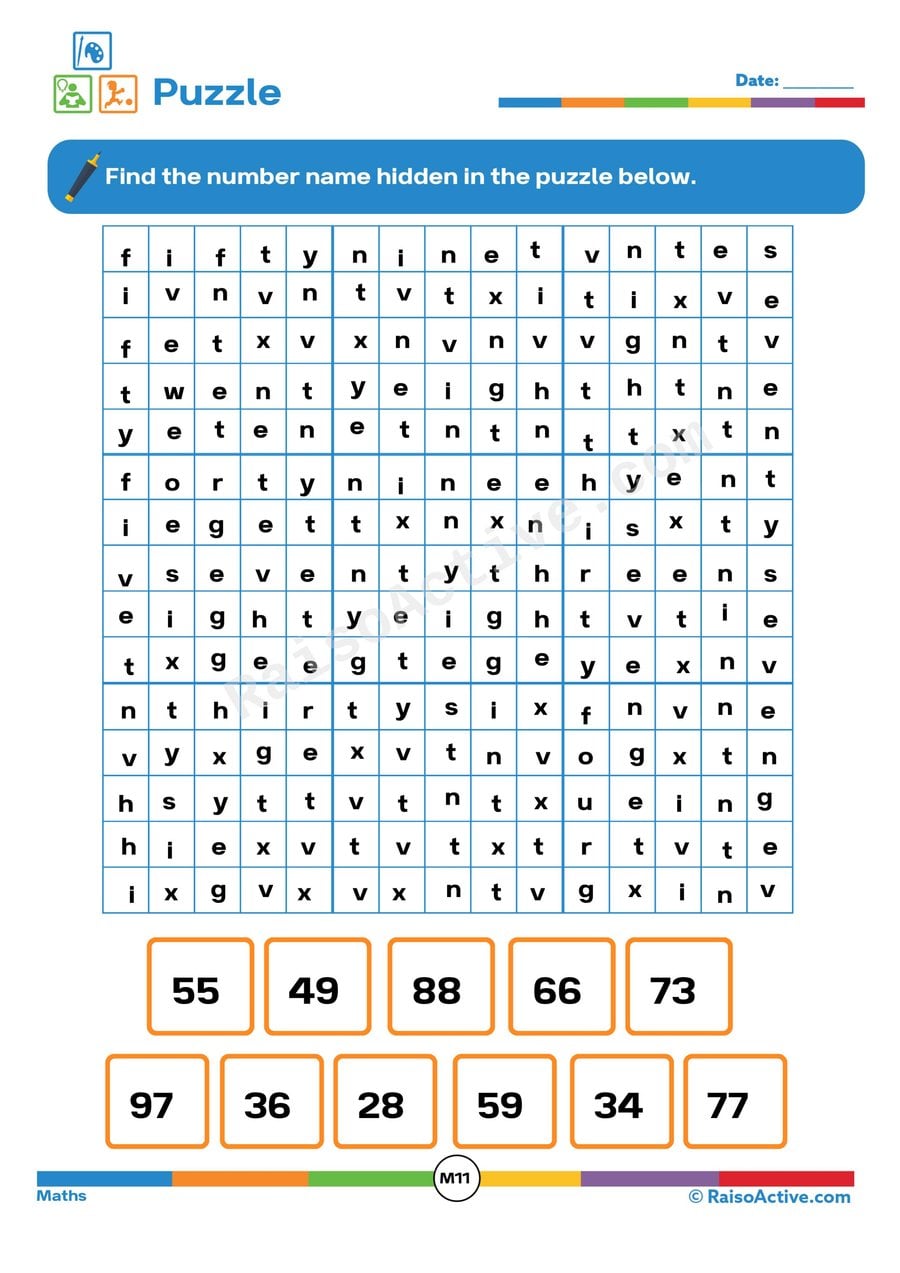
Number Name Word Search Worksheet for Kids
Ages 4-6 · Pre-K–KindergartenAges 4-6 · Reception–Year 1Ages 4-6 · LKG–UKGAges 4-6
Searching a grid of letters to find hidden number names, like 'seven' or 'twelve,' asks children ages 4-6 to recognize whole written words by sight, a skill that goes beyond sounding out letters one at a time. This word search format also builds visual scanning and sustained attention, since children must check rows, columns, and sometimes diagonals systematically rather than glancing randomly. Matching each found word back to its corresponding number afterward reinforces the link between a number's name, its written word form, and its numeral.

Adjective Adventure: Matching Sentences Worksheet for Kids
Ages 4-6 · Pre-K–KindergartenAges 4-6 · Reception–Year 1Ages 4-6 · LKG–UKGAges 4-6
This worksheet teaches 4-6 year olds that adjectives are the words that describe nouns, asking them to fill in a missing adjective in a sentence and then physically mark the noun and adjective separately by underlining and circling. That separation step — telling apart which word names a thing and which word describes it — is a genuinely useful grammar distinction that most children haven't consciously noticed before, even though they use adjectives constantly in speech.
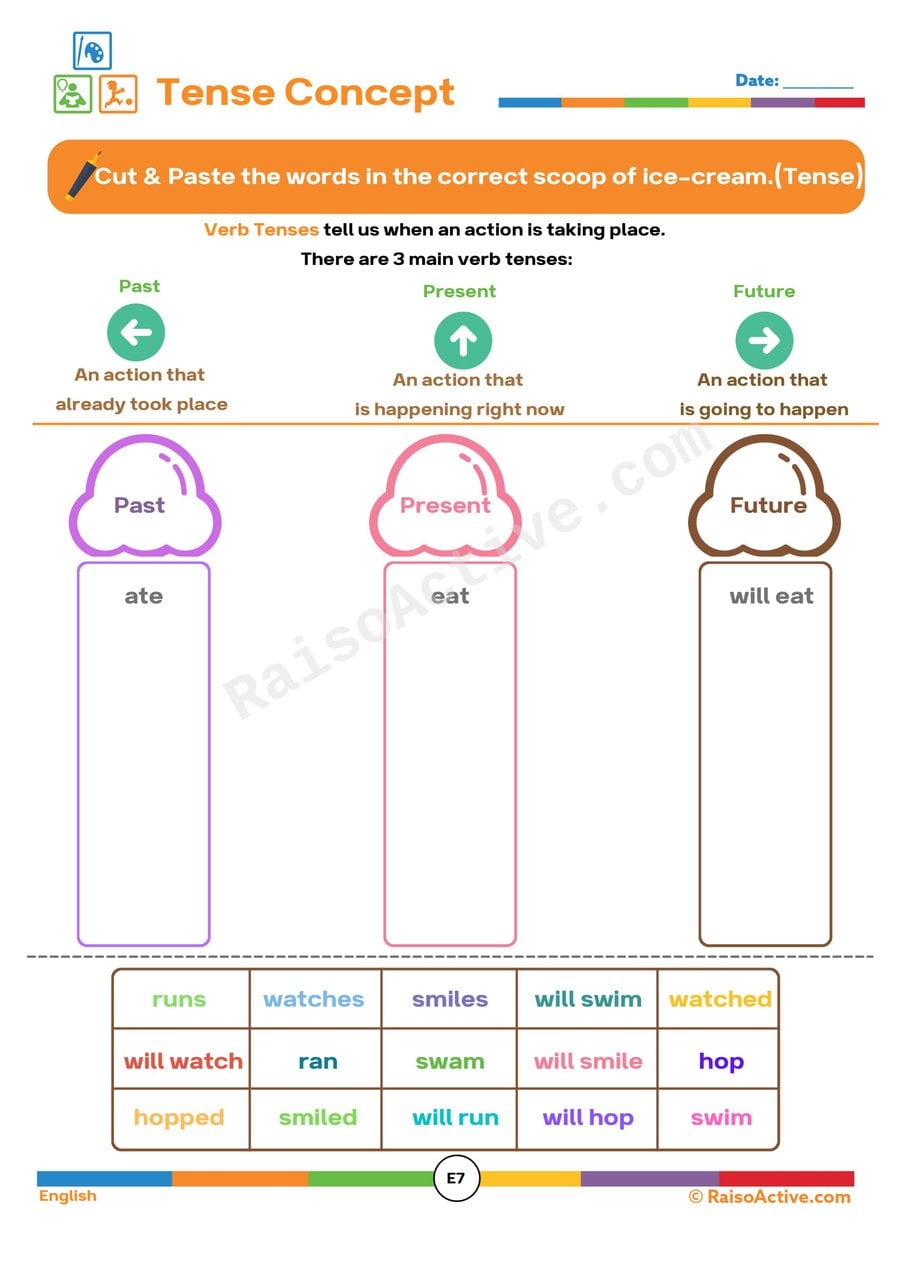
Tense Time! Cut and Paste the Verbs Worksheet
Ages 4-6 · Pre-K–KindergartenAges 4-6 · Reception–Year 1Ages 4-6 · LKG–UKGAges 4-6
Sorting verbs into past, present, and future ice cream scoops teaches 4-6 year olds that verbs physically change form to show when something happens — a foundational grammar concept that often trips kids up because English tense endings are inconsistent (walked, but went, not goed). Because your child has to read each word, decide its tense, and then correctly cut and place it, the worksheet demands genuine comprehension rather than pattern-matching by ending alone, especially where irregular verbs are involved.

Shape Sorting Fun: Matching Shapes by Properties Worksheet
Ages 4-5 · Pre-KAges 4-5 · ReceptionAges 4-5 · LKGAges 4-5
This worksheet has 4-5 year olds match written shape descriptions — number of sides, number of corners — to the correct shapes, then count how many of each shape appear in an accompanying picture. Reasoning from a property description back to the shape itself is a step up from simple naming, since it requires your child to hold the definition in mind and scan for a match, and the counting task afterward adds a quantity check to the geometry practice.

Action Verbs Worksheet: Cut and Paste the Correct Verb!
Ages 3-5 · Preschool–Pre-KAges 3-5 · Nursery–ReceptionAges 3-5 · Nursery–LKGAges 3-5
This cut-and-paste worksheet asks young children to look at a picture of an action, choose the matching verb from a set of cutouts at the bottom of the page, and glue it into the blank — practicing verb-to-image matching alongside genuine scissor and glue control. Because the verbs aren't pre-placed, your child has to actively decide which word fits each picture rather than simply confirming an existing pairing, which makes the vocabulary work more demanding than a standard matching worksheet.
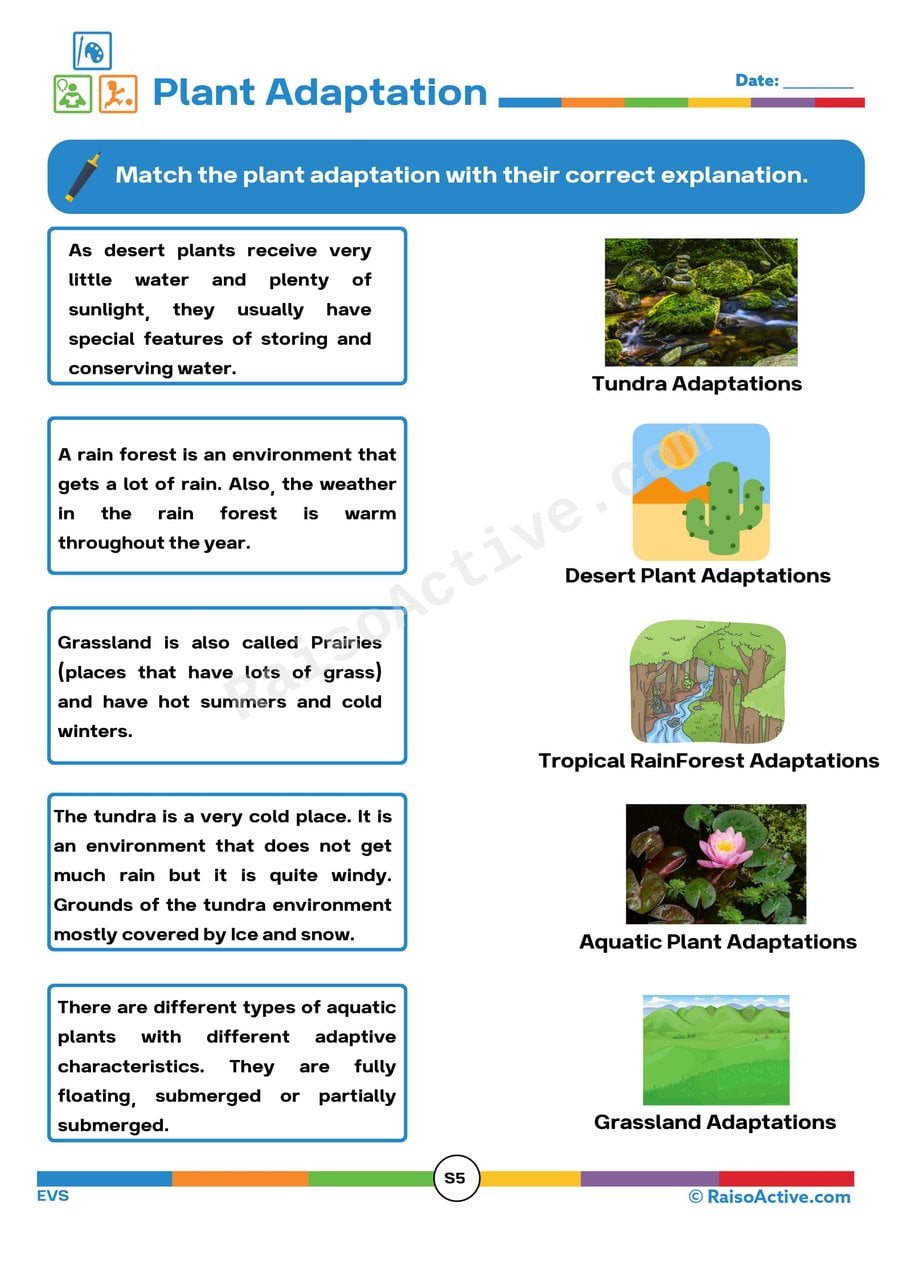
Plant Adaptation Matching Worksheet for Kids
Ages 4-6 · Pre-K–KindergartenAges 4-6 · Reception–Year 1Ages 4-6 · LKG–UKGAges 4-6
This worksheet has 4-6 year olds match written descriptions of plant adaptations to the correct pictures, building on the idea that plants develop specific features — thick leaves, deep roots, bright flowers — to help them survive in their particular environment. Matching a description to an image requires your child to connect an abstract idea (why does this feature help?) to a concrete picture, which is a genuine step up from simple plant-part identification.
Related worksheets

Navratri Picture Sudoku and Story Sequencing: Think It Through
Ages 4-6 · Pre-K–KindergartenAges 4-6 · Reception–Year 1Ages 4-6 · LKG–UKGAges 4-6
Children use logic to complete a 4x4 picture sudoku where each row and column has each picture once, and put four story pictures in order.
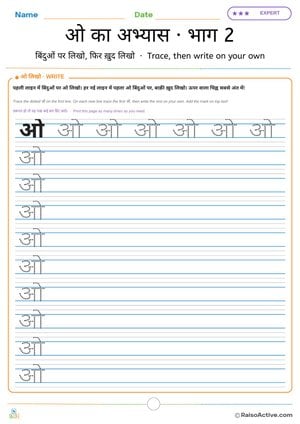
Hindi Letter ओ (o) Practice 2: Trace, then Write on Your Own | ओ का अभ्यास · भाग 2
Ages 5-7 · Kindergarten–Grade 1Ages 5-7 · Year 1–Year 2Ages 5-7 · UKG–Class 1Ages 5-7
An expert page for confident writers: trace the dotted ओ on the first line, then on each new line trace the first ओ and write the rest on your own, adding the mark on top last.
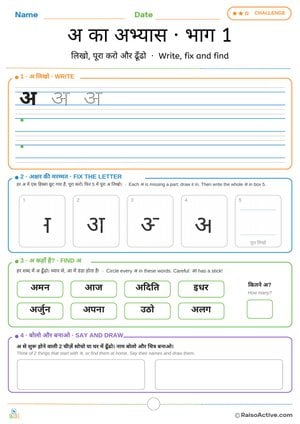
Hindi Letter अ Practice Part 1: Write, Fix and Find | अ का अभ्यास · भाग 1
Ages 3-7 · Preschool–Grade 1Ages 3-7 · Nursery–Year 2Ages 3-7 · Nursery–Class 1Ages 3-7
Children write अ on guide lines, complete four partly drawn letters, circle अ in eight words (while avoiding its look-alike आ), count how many they found, then think of two more words at home that start with अ and draw them.

Navratri Picture Cards: Cut-Out Memory Match Game
Ages 4-6 · Pre-K–KindergartenAges 4-6 · Reception–Year 1Ages 4-6 · LKG–UKGAges 4-6
Children learn six Navratri words, match each picture to its word and clue, and practise memory and cutting skills.
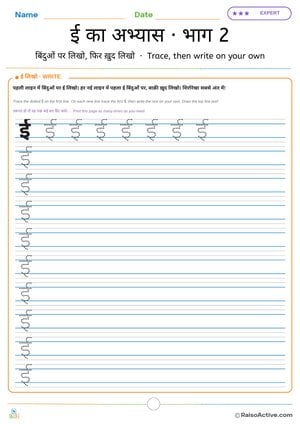
Hindi Letter ई Practice Part 2: Trace and Write on Your Own | ई का अभ्यास · भाग 2
Ages 3-7 · Preschool–Grade 1Ages 3-7 · Nursery–Year 2Ages 3-7 · Nursery–Class 1Ages 3-7
Children build writing fluency by tracing the dotted line ई on the first line and then writing the letter on their own, line after line, as the dotted help fades. The headline (शिरोरेखा) is drawn last, as in Hindi handwriting.
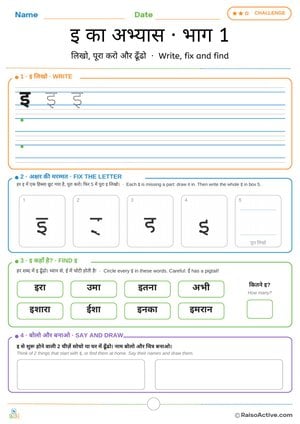
Hindi Letter इ Practice Part 1: Write, Fix and Find | इ का अभ्यास · भाग 1
Ages 3-7 · Preschool–Grade 1Ages 3-7 · Nursery–Year 2Ages 3-7 · Nursery–Class 1Ages 3-7
Children write इ on guide lines, complete four partly drawn letters, circle इ in eight words (while avoiding its look-alike ई), count how many they found, then think of two more words at home that start with इ and draw them.

Elephant Shapes: Fun Sorting Worksheet for Preschoolers!
Ages 3-5 · Preschool–Pre-KAges 3-5 · Nursery–ReceptionAges 3-5 · Nursery–LKGAges 3-5
This playful sorting worksheet has children ages 3-5 use an elephant's 'trunk' (their own hand reaching through a cut circle) to pick and sort shapes, building both shape recognition and simple classification skills. Physically selecting and grouping shapes by type, rather than just naming them on sight, helps solidify the concept that shapes can share a category even when their size or color differs.
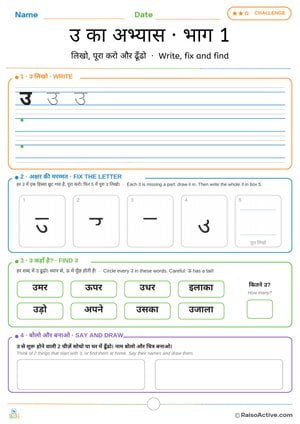
Hindi Letter उ Practice Part 1: Write, Fix and Find | उ का अभ्यास · भाग 1
Ages 3-7 · Preschool–Grade 1Ages 3-7 · Nursery–Year 2Ages 3-7 · Nursery–Class 1Ages 3-7
Children write उ on guide lines, complete four partly drawn letters, circle उ in eight words (while avoiding its look-alike ऊ), count how many they found, then think of two more words at home that start with उ and draw them.
Guides for this topic

Best Worksheets for 3-Year-Olds: What Works and What to Avoid
What works on worksheets for 3-year-olds: short sessions, crayons, tracing lines, matching, cutting, a free weekly plan, and signs one is too advanced.
Documenting Learning Without Drowning in Data: A Practical Guide for Parents and Teachers
Learn practical ways to document your child's learning without overwhelm. Simple portfolios, observation tips, and printable trackers for ages 1-8.

Age-Appropriate Problem-Solving Activities: Building Critical Thinkers from the Ground Up
Discover fun, age-appropriate problem-solving activities for children ages 1-8. Build critical thinking, logic, and reasoning skills through play-based learning.
Reviews
Every worksheet for ages 4–6, no watermark
Members download the full library of 1,000+ worksheets and every activity pack without watermarks or daily limits. One year costs ₹999 in India or $20 elsewhere.
See membership plansOr download any worksheet free with a watermark (5 a day).