Best Worksheets for 3-Year-Olds: What Works and What to Avoid
Author
RaisoActive - Kids Activities and Fun Learning
Published
Reading Time
7 min read
- The worksheets that work best for 3-year-olds ask for one simple action, tracing lines rather than letters, matching, coloring, or cutting a thick straight edge, and take five minutes or less
- A 3-year-old's hand is ready for a chunky crayon held in a fist or early tripod grip, not a pencil, and for large targets, not small print
- Sit-beside, five-minute sessions work; long sessions and correction do not, at this age
- A weekly plan spreading tracing, matching, coloring, and cutting across the week beats doing the same skill every day
- The clearest sign a worksheet is wrong for this age is small print, multi-step instructions, or a "correct answer" the child cannot reach without help
What a Good Worksheet for a 3-Year-Old Looks Like
A worksheet works for a 3-year-old when it asks for one kind of action only (trace, match, color, or cut), uses large targets and thick lines, and takes five to ten minutes. Tracing lines and simple shapes, not letters, is the right pre-writing task at this age; matching, coloring inside a large shape, and cutting a thick straight edge with safety scissors round out the skills that a 3-year-old's hand and attention span can actually support.
Three is an early age for paper-based activities, whether your family calls this stage Preschool (US), Nursery (UK) or Nursery/Playgroup (India). A 3-year-old's fine motor control, attention span and grip strength are still developing quickly, and worksheets designed for 4- or 5-year-olds — letter writing, small boxes to fill in, multi-step instructions — usually cause more frustration than learning. The worksheets for 3-year-olds collection on RaisoActive is built around exactly the constraints in this guide.
This guide walks through what a 3-year-old is developmentally ready for, why crayons beat pencils and tracing lines beat letters, a printable weekly plan that spreads the right skills across the week, and the red flags that tell you a worksheet was written for an older child.
Developmental Readiness at Age 3
Most 3-year-olds are still building the basic hand and attention skills that paper activities depend on, rather than refining them. Knowing what is typical helps you choose worksheets that fit rather than fight your child's stage.
- Grip: a whole-hand or early tripod grip on a crayon, not yet the mature three-finger grip most children develop between 4 and 5
- Attention: focused engagement for roughly five to ten minutes on a seated table activity, often less for a first attempt at something new
- Hand control: can draw a rough circle and copy a straight line after seeing one, but cannot yet stay inside a small or narrow space reliably
- Scissors: many 3-year-olds are just beginning to open and close safety scissors with one hand while the other holds the paper; straight snips before curved cuts
- Following instructions: one-step instructions ("color the sun yellow") are reliable; two-step instructions are hit-or-miss and should not be required for the task to work
None of this means a 3-year-old is behind; it means the activity has to meet the child. A worksheet that assumes a mature pencil grip and sustained fifteen-minute focus was not written for this age, whatever the label on the page says.
Five-Minute Sessions, Not Twenty
The single biggest adjustment parents make when starting worksheets with a 3-year-old is shortening the session. Five minutes of full engagement teaches more than twenty minutes with a bored, squirming child, and it protects the child's attitude toward "table time" for the years of schooling still ahead.
- Sit beside your child, not across from them; do a line or a snip yourself so it feels shared
- Choose one page, not a packet; a single finished page is a win at this age
- Stop while it is still going well, even mid-page, rather than pushing for completion
- Narrate what your child is doing ("you're tracing all the way to the star") instead of correcting the line
- End with something physical — a stretch, a song, a snack — so the table is associated with a happy transition, not a chore
Crayons Over Pencils, Tracing Lines Before Letters
A chunky crayon, a jumbo triangular crayon, or a thick washable marker suits a 3-year-old's grip far better than a standard pencil. Thin pencils require finger strength and a grip pattern most 3-year-olds have not developed yet, and thirty seconds with one is often enough to tire the hand and end the activity in frustration.
The same logic applies to what the crayon is asked to do. Tracing straight, curved and zigzag lines builds the exact hand control that letter formation will need later, without asking the hand to also manage the fine detail of a letter shape. Save letter writing for closer to age 4 or 5, once the underlying tracing skill is secure; a 3-year-old forced to copy letters usually develops a tense, awkward grip that takes longer to correct than if letters had simply waited a year.
Matching, Coloring and Cutting: The Other Core Skills
Beyond tracing, three more activity types round out a 3-year-old's worksheet diet, each building a different piece of readiness for later schoolwork.
- Matching: pairing identical pictures, or a picture to its shadow or outline, builds visual discrimination — the skill of telling similar shapes apart, which later supports letter recognition
- Coloring: staying mostly inside a large, simple shape builds hand control and crayon pressure without any "correct" outcome to get wrong
- Cutting: snipping fringes on the edge of a page, then cutting a thick straight line with child-safe scissors, builds the two-handed coordination needed for later, more precise cutting
- Sorting: grouping big and small, or same and different, is a matching activity in disguise and works well as a five-minute warm-up
Free matching worksheets, coloring pages and cutting practice sheets give a ready-made rotation across these skills without needing to plan a new activity every day.
A Printable Weekly Plan
Spreading the four core skills across the week, rather than repeating one every day, keeps sessions fresh and gives each skill a rest between practices. This plan assumes five sessions of five to ten minutes; skip a day if your child is unwell, tired or simply not interested, and pick up the next skill rather than the missed one.
A five-day rotation
Monday: Tracing lines
One page of straight or curved dotted lines with a chunky crayon. Start wide and short; move to longer paths only when the crayon stays on the track most of the way.
Tuesday: Matching
A picture-to-picture or shadow-matching page. Talk through why each pair matches out loud before your child draws the connecting line.
Wednesday: Coloring
One large, simple shape or picture. Praise staying mostly inside the line and finishing, not neatness; a 3-year-old's coloring should look like a 3-year-old's.
Thursday: Cutting practice
Fringe-cutting on the edge of a page, or one thick straight line, with child-safe scissors and close supervision. Two minutes of cutting is often enough on a first attempt.
Friday: Free choice and real-object play
Let your child pick any page from the week, or skip paper entirely for threading beads, playdough, or sorting toys by size — all of it builds the same fine motor and matching skills without a worksheet at all.
- Keep a folder of finished pages dated by day; it shows progress far better than any grade or sticker chart at this age
- Offer two pages and let your child choose one; a small choice increases willingness to sit down
- If your child scribbles across the whole page instead of doing the task, that is normal exploration at 3, not a worksheet failure
- Never erase or redo your child's line to "fix" it; the goal is participation and hand control, not a tidy page
- Put worksheets away the moment interest fades; returning to it fresh tomorrow works better than persisting today
Signs a Worksheet Is Too Advanced
Not every worksheet labeled for preschoolers is actually right for a 3-year-old; many are written for the older end of a 3-to-5 age range. A few quick checks tell you whether a page will work before you print it.
- Small print or narrow spaces: if the tracing path, matching boxes, or coloring shapes are small enough to need careful fine control, the page is likely built for a 4- or 5-year-old
- Letters or numbers to write: writing (as opposed to tracing a wide path or recognizing a shape) is generally a skill for closer to age 4
- More than one instruction on the page: "circle the big one, then color it green" asks for two steps; a 3-year-old's page should ask for one
- A single correct answer that requires reasoning: matching a shadow is fine; solving which object does not belong in a group of four is usually too abstract
- No room for a large crayon stroke: if the target is smaller than a child's fingertip, it was not designed with a chunky crayon grip in mind
If two or more of these apply, set the page aside for six months to a year rather than pushing through it now. A worksheet is a tool, not a milestone; the same page that frustrates a 3-year-old today is often an easy win at 4.
Match the page to the hand, not the hand to the page.
At 3, the goal is not academic content; it is building the grip, attention span, and visual skills that make every later worksheet possible. A short, simple page that a 3-year-old finishes happily does more for their development than an advanced page that ends in tears. Choose crayons over pencils, lines over letters, and five minutes over twenty, and the skills that matter will build steadily on their own.
Frequently Asked Questions
What kind of worksheets are appropriate for a 3-year-old?
Should a 3-year-old use a pencil or a crayon for worksheets?
How long should a worksheet session last for a 3-year-old?
My 3-year-old scribbles instead of following the worksheet. Is that normal?
Should a 3-year-old learn to write letters?
Are worksheets for 3-year-olds free on RaisoActive?
Where to Start This Week
Print one tracing page and one coloring page, and try the five-minute, sit-beside approach described above before deciding whether your child is "ready" for worksheets. Most 3-year-olds are, once the page matches their hand and attention span rather than an older sibling's workbook. Browse the preschool and nursery collections for more pages built to the same constraints, and rotate through tracing, matching, coloring and cutting rather than repeating just one.
Free worksheets for this topic
Browse all worksheets
Clothing Pattern Match Worksheet for Preschoolers
Ages 3-5 · Preschool–Pre-KAges 3-5 · Nursery–ReceptionAges 3-5 · Nursery–LKGAges 3-5
This worksheet has children ages 3-5 study repeating patterns on clothing items — stripes, polka dots, or checks — and match each item to its identical twin, building visual discrimination and early pattern-sequencing skills. Distinguishing between similar-looking patterns also sharpens attention to detail, a skill that later supports letter and word recognition.
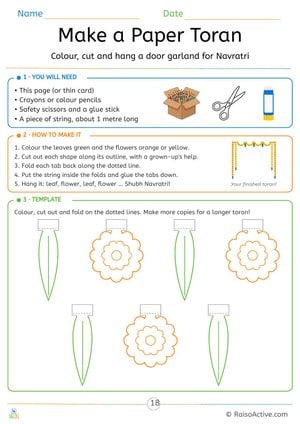
Make a Paper Toran: Navratri Craft Template
Ages 4-6 · Pre-K–KindergartenAges 4-6 · Reception–Year 1Ages 4-6 · LKG–UKGAges 4-6
Children follow step-by-step instructions to colour, cut, fold and glue a festival decoration, building scissor skills and fine motor control.

Navratri Picture Cards: Cut-Out Memory Match Game
Ages 4-6 · Pre-K–KindergartenAges 4-6 · Reception–Year 1Ages 4-6 · LKG–UKGAges 4-6
Children learn six Navratri words, match each picture to its word and clue, and practise memory and cutting skills.
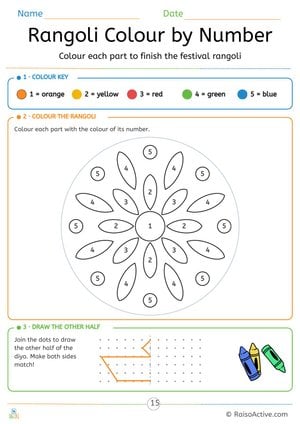
Navratri Rangoli Colour by Number and Symmetry Diya
Ages 4-6 · Pre-K–KindergartenAges 4-6 · Reception–Year 1Ages 4-6 · LKG–UKGAges 4-6
Children match numbers to colours using a key, colour a rangoli pattern carefully and draw the other half of a shape so both sides match.

Written by
Hemsweta Jain · Teacher Cheena
MBA and Early Childhood Educator, teaching since 2014 · Founder of RaisoActive, Mumbai
Published · Last reviewed
Related Resources
Printable Resources(10)
View all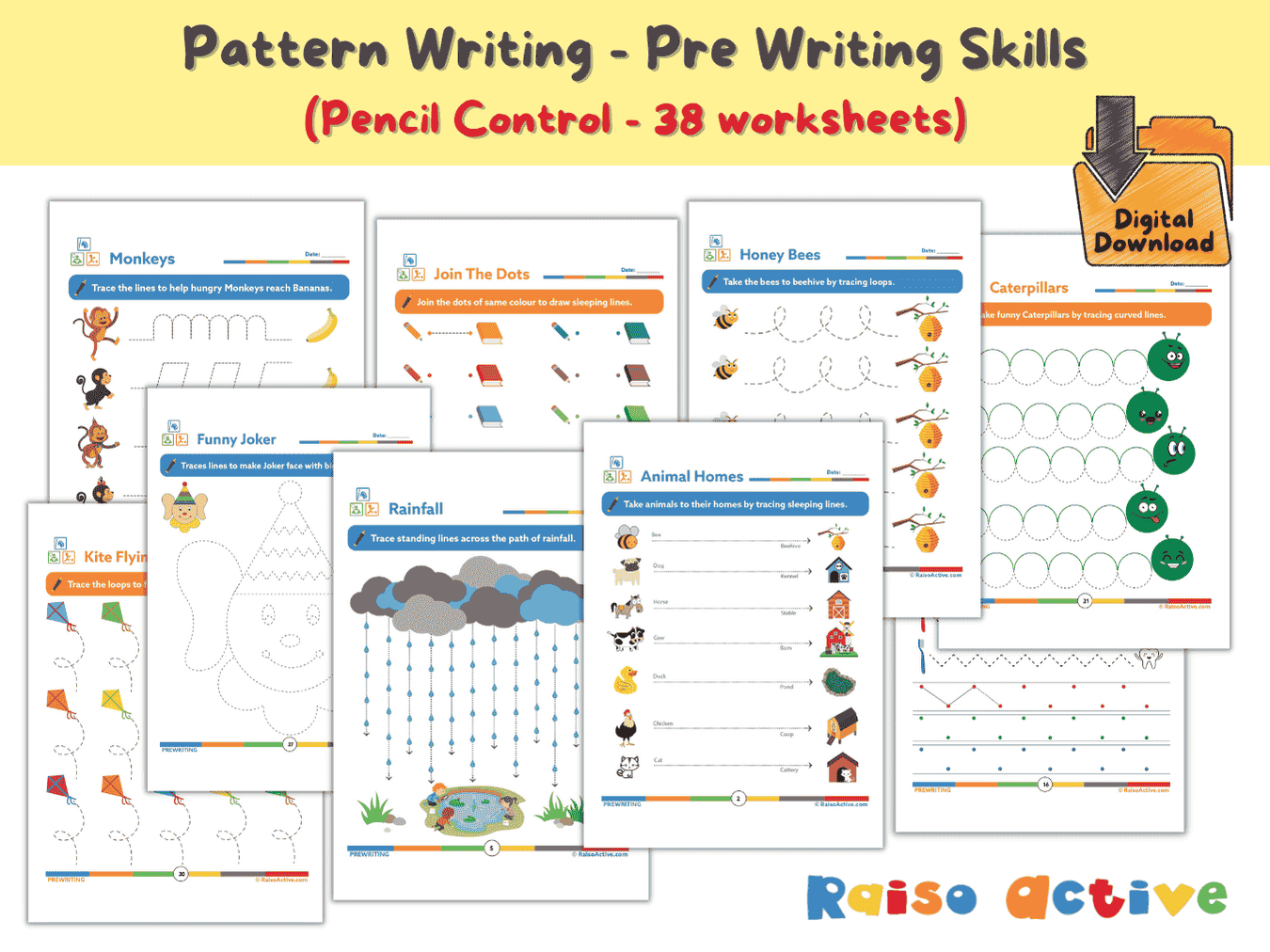

Pattern Writing Pre-writing Skills Activity Book for 3-4 Year Olds
Ages 3-4 · PreschoolAges 3-4 · NurseryAges 3-4 · 44 pages
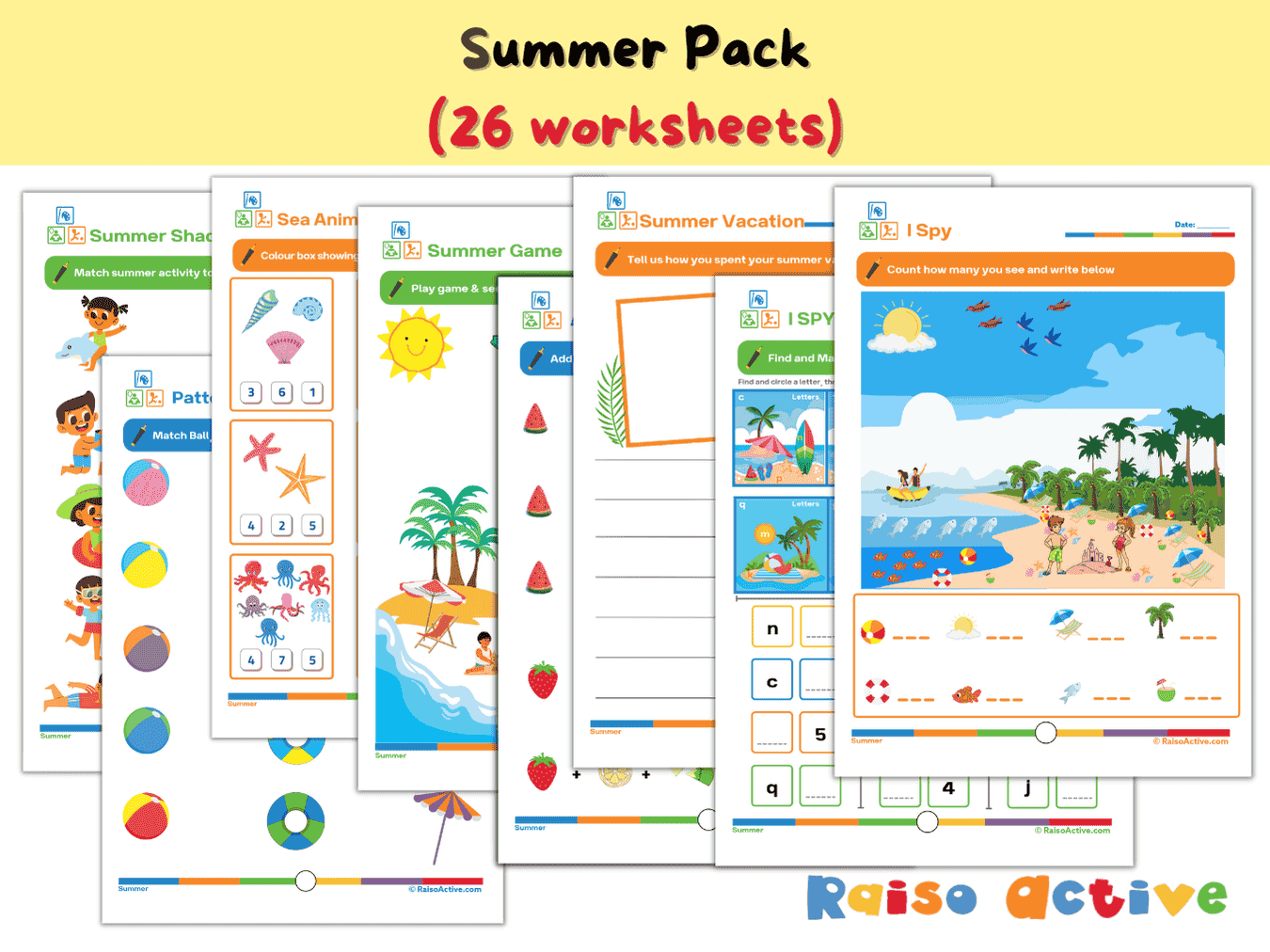

Summer Activity Pack: Math, Literacy, Puzzles & More for Preschool & Kindergarten
Ages 3-7 · Preschool–Grade 1Ages 3-7 · Nursery–Year 2Ages 3-7 · Nursery–Class 1Ages 3-7 · 26 pages
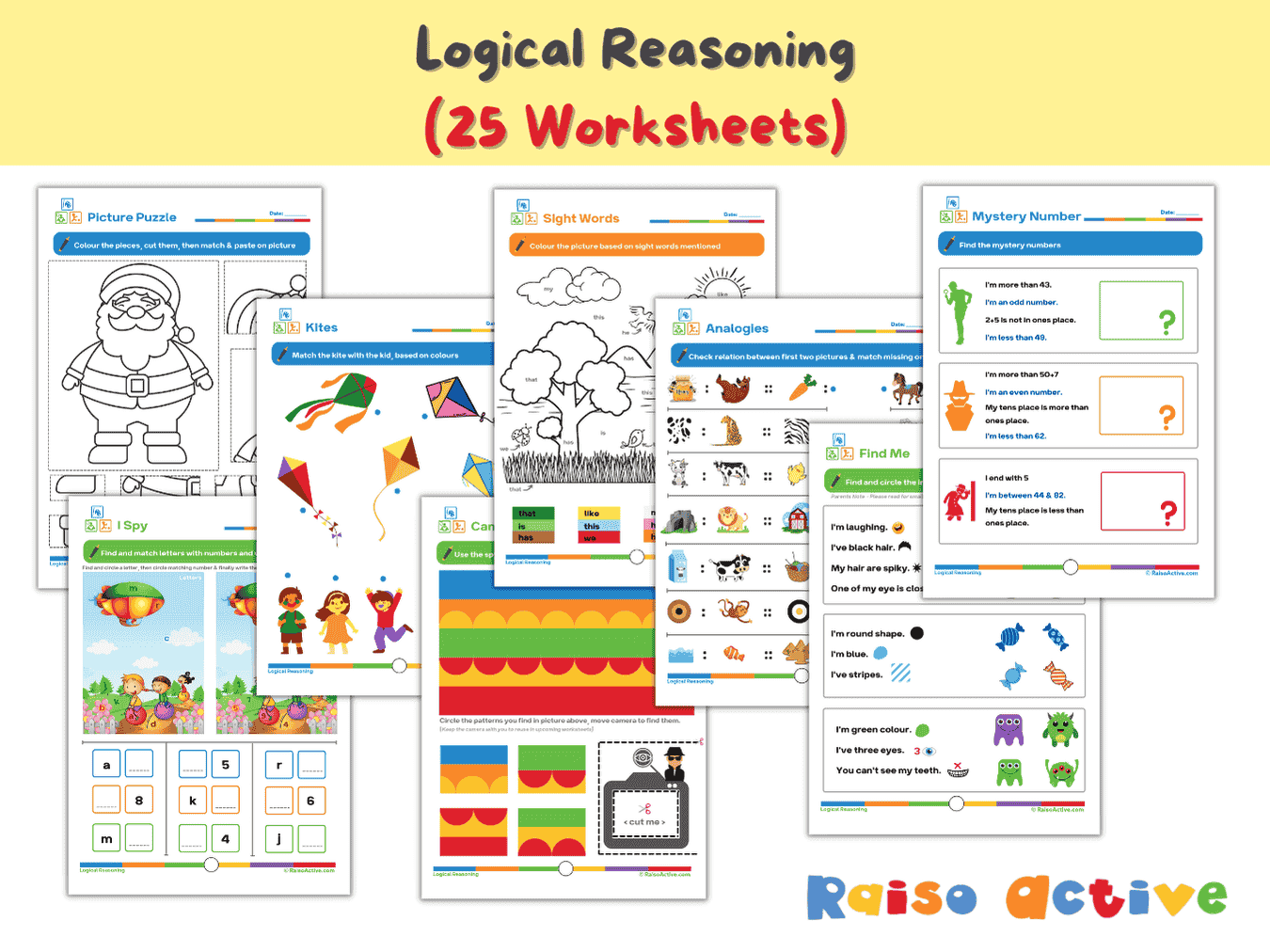

Logical Reasoning Activity Book for Preschool & Kindergarten | Patterns, Puzzles & Analogies
Ages 4-7 · Pre-K–Grade 1Ages 4-7 · Reception–Year 2Ages 4-7 · LKG–Class 1Ages 4-7 · 26 pages
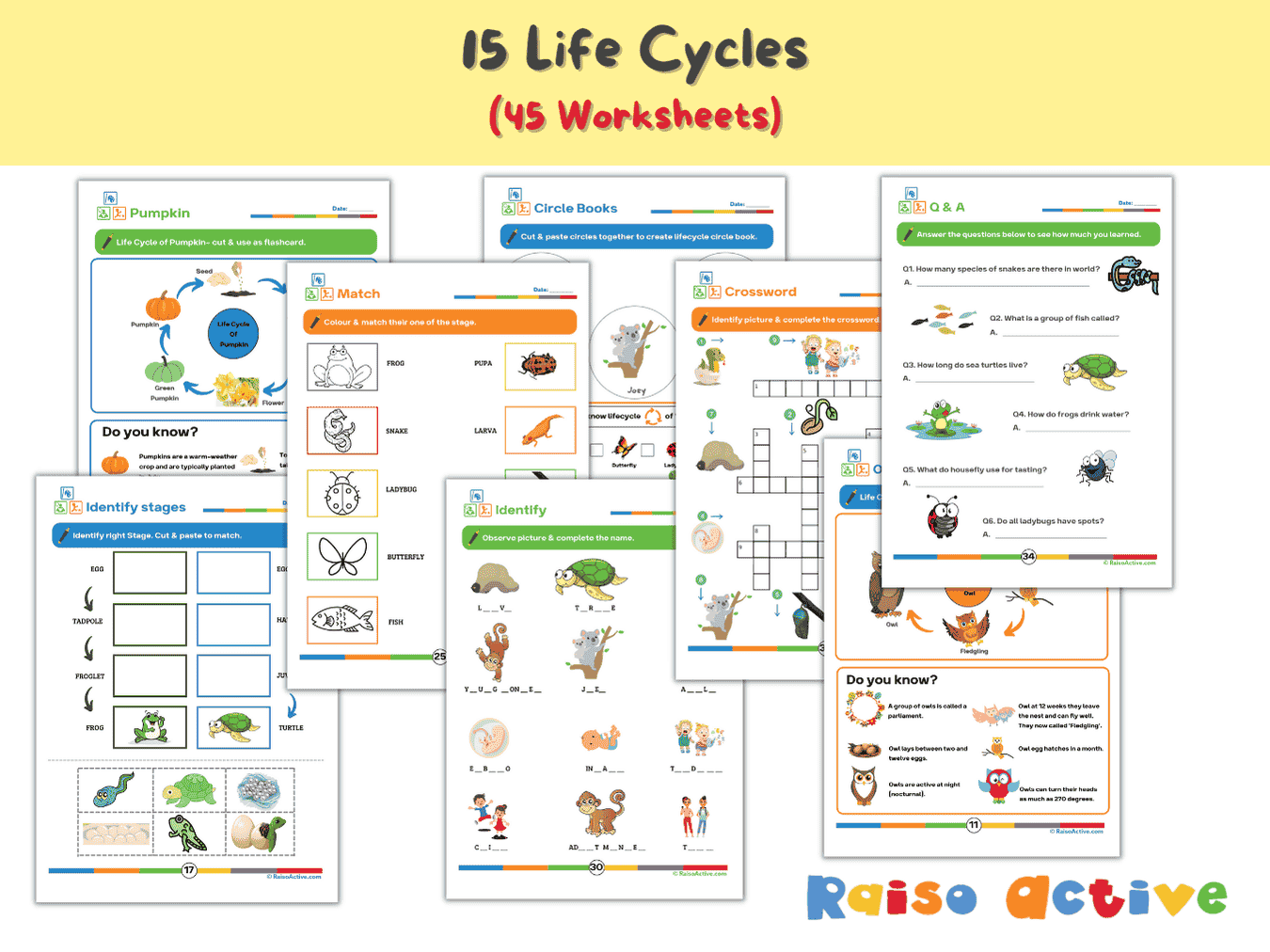

Lifecycles Activity Book & Flashcards for Preschool & Early Elementary
Ages 3-8 · Preschool–Grade 2Ages 3-8 · Nursery–Year 3Ages 3-8 · Nursery–Class 2Ages 3-8 · 46 pages
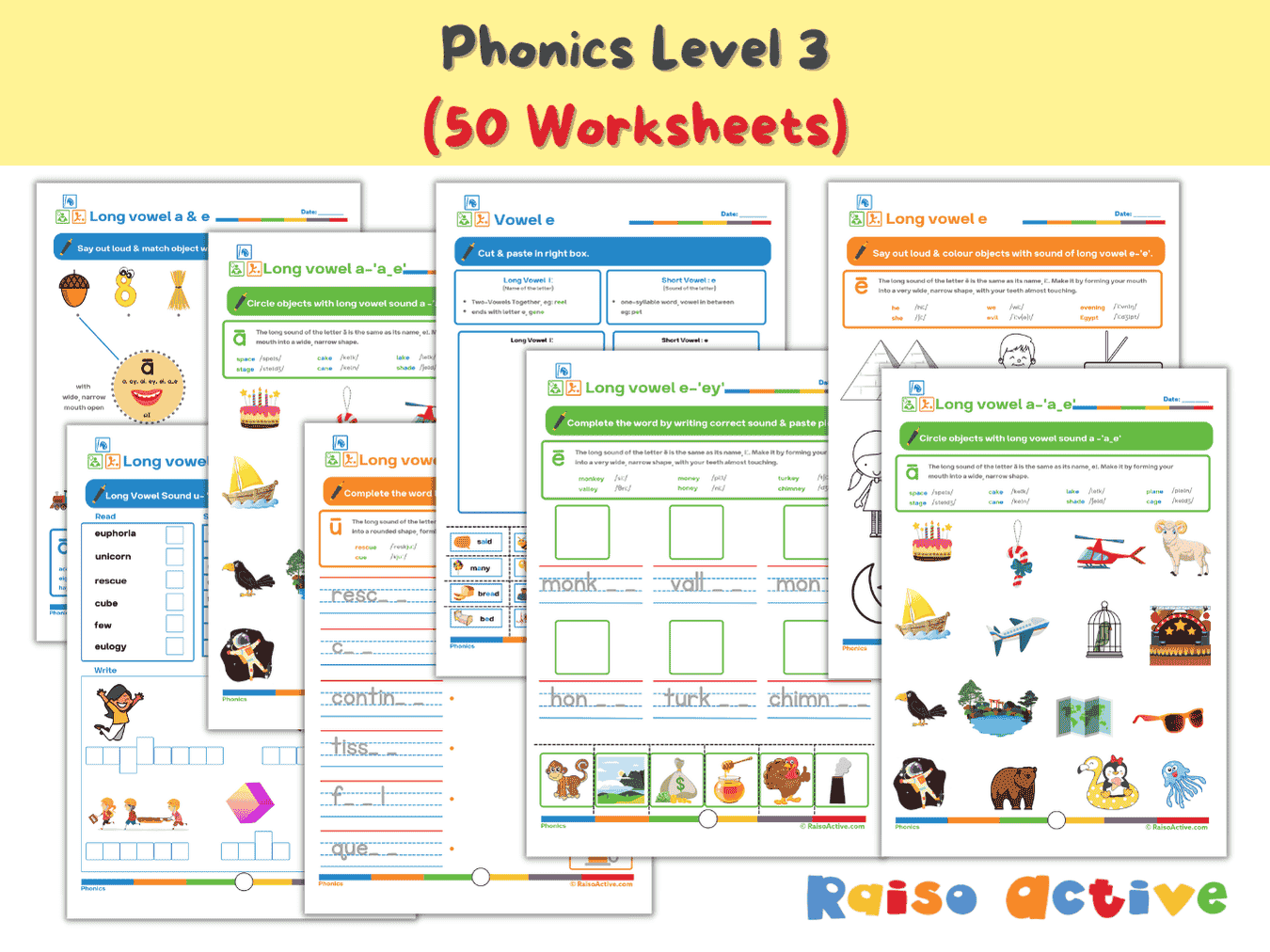

Phonics Level 3 Long Vowels Activity Book for Kindergarten & 1st Grade
Ages 5-7 · Kindergarten–Grade 1Ages 5-7 · Year 1–Year 2Ages 5-7 · UKG–Class 1Ages 5-7 · 51 pages
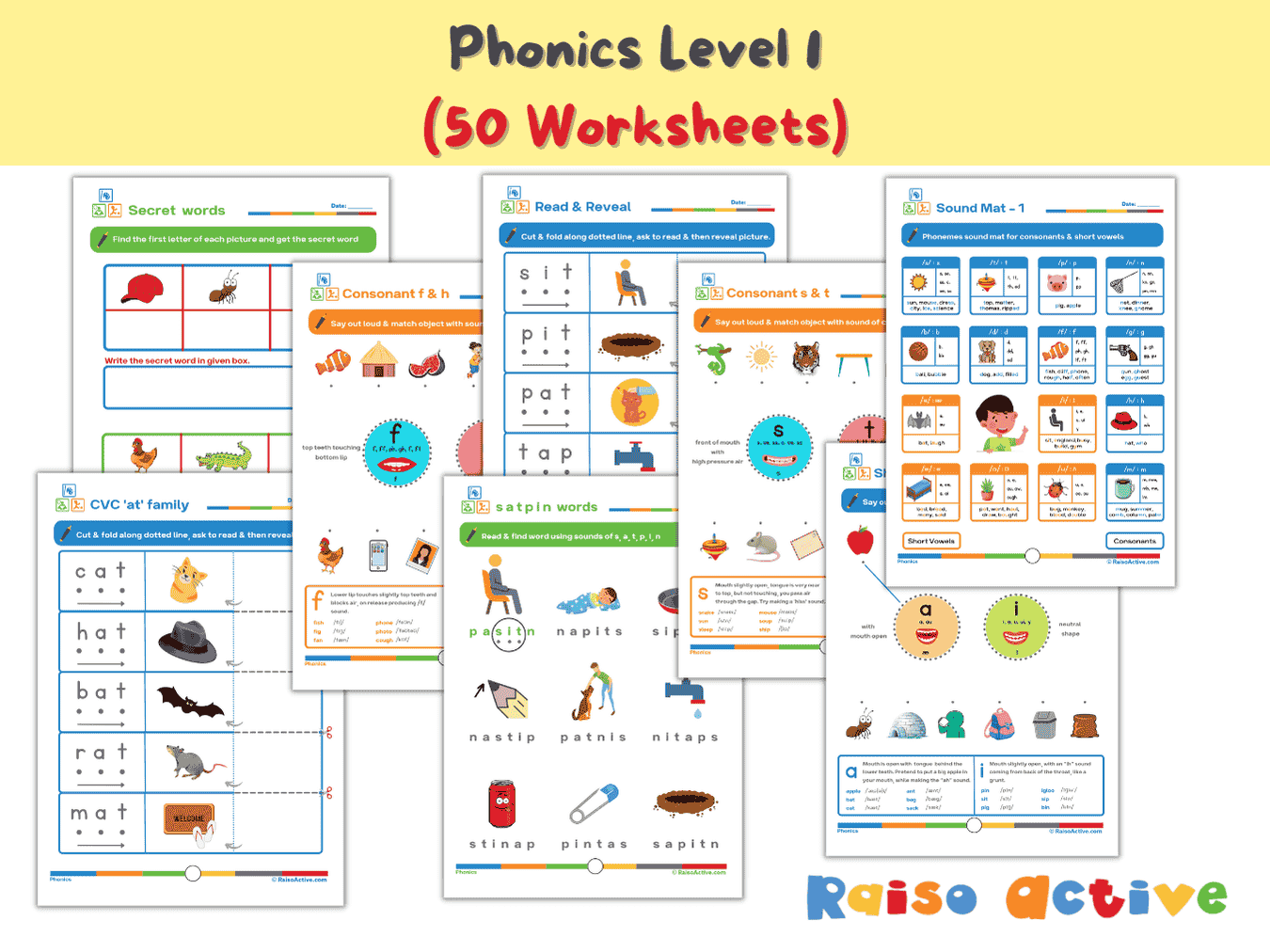
Phonics Level 1 Activity Book: Letter Sounds, Blending & CVC Words for Preschool & Kindergarten
Ages 3-6 · Preschool–KindergartenAges 3-6 · Nursery–Year 1Ages 3-6 · Nursery–UKGAges 3-6 · 60 pages
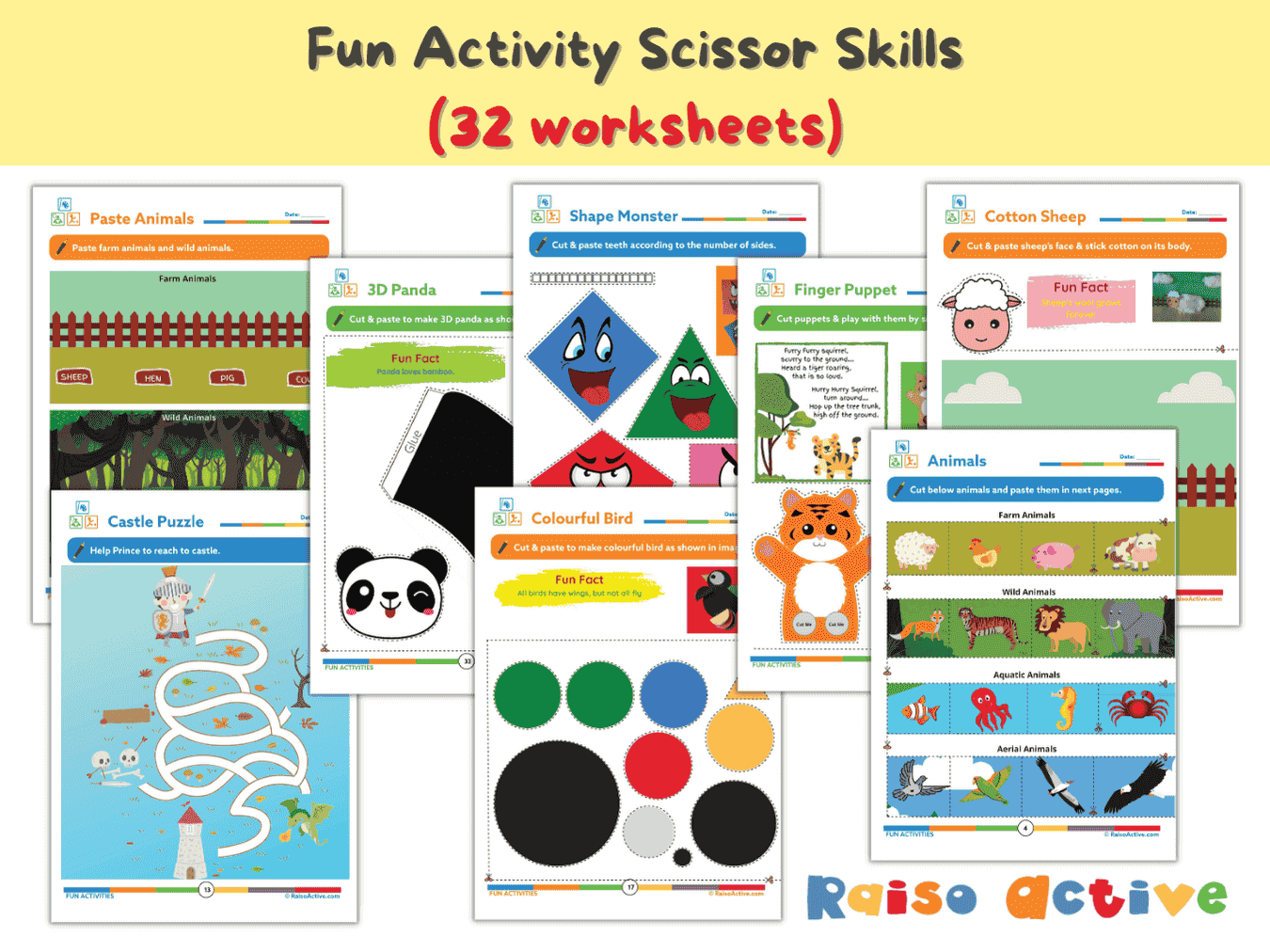
Preschool Scissor Skills Activity Book: Fine Motor & Craft Fun for Ages 3-6
Ages 3-6 · Preschool–KindergartenAges 3-6 · Nursery–Year 1Ages 3-6 · Nursery–UKGAges 3-6 · 35 pages
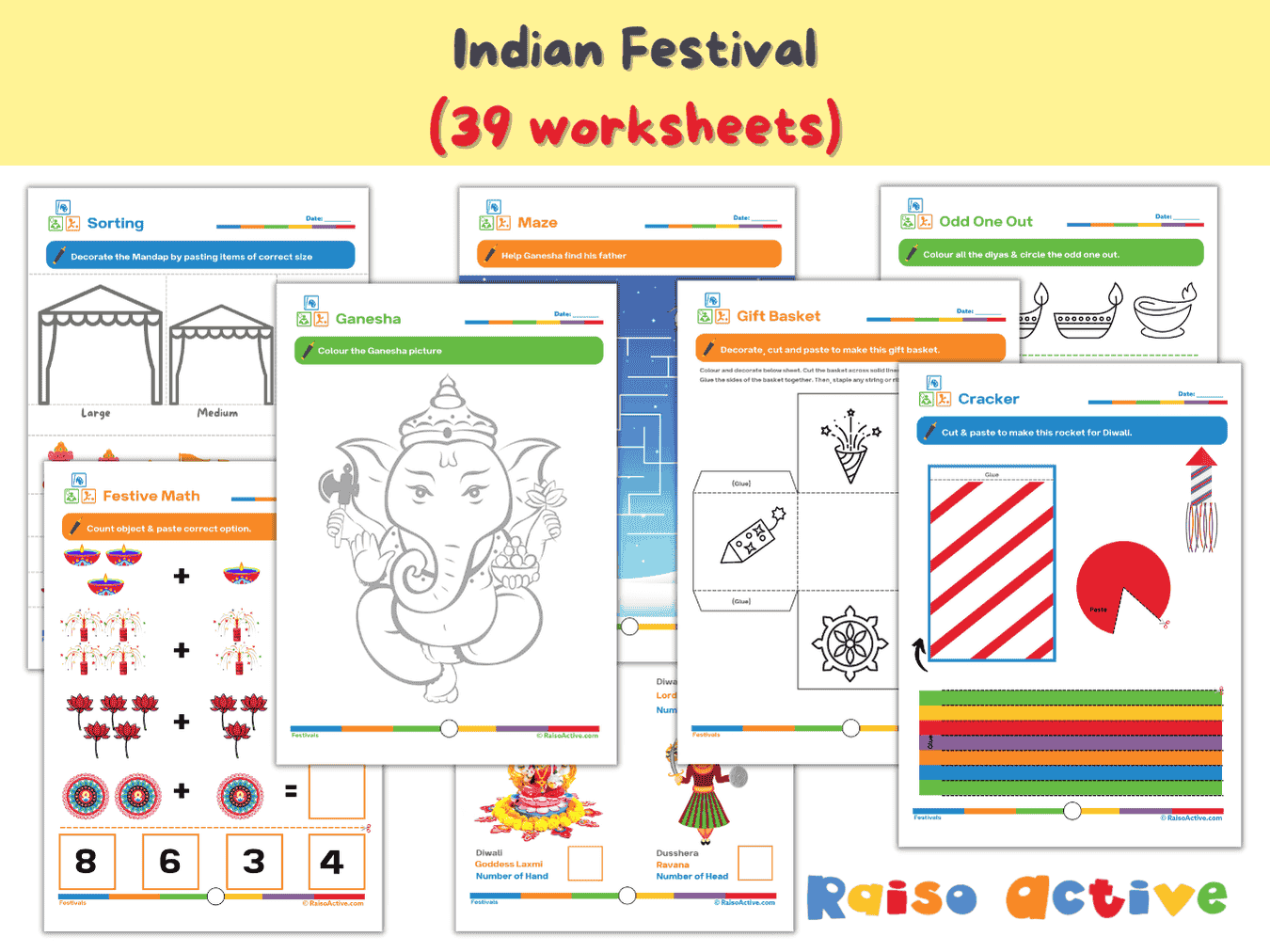
Festivals & Cultural Diversity Activity Book for Kids (Ages 4-8)
Ages 4-8 · Pre-K–Grade 2Ages 4-8 · Reception–Year 3Ages 4-8 · LKG–Class 2Ages 4-8 · 30 pages
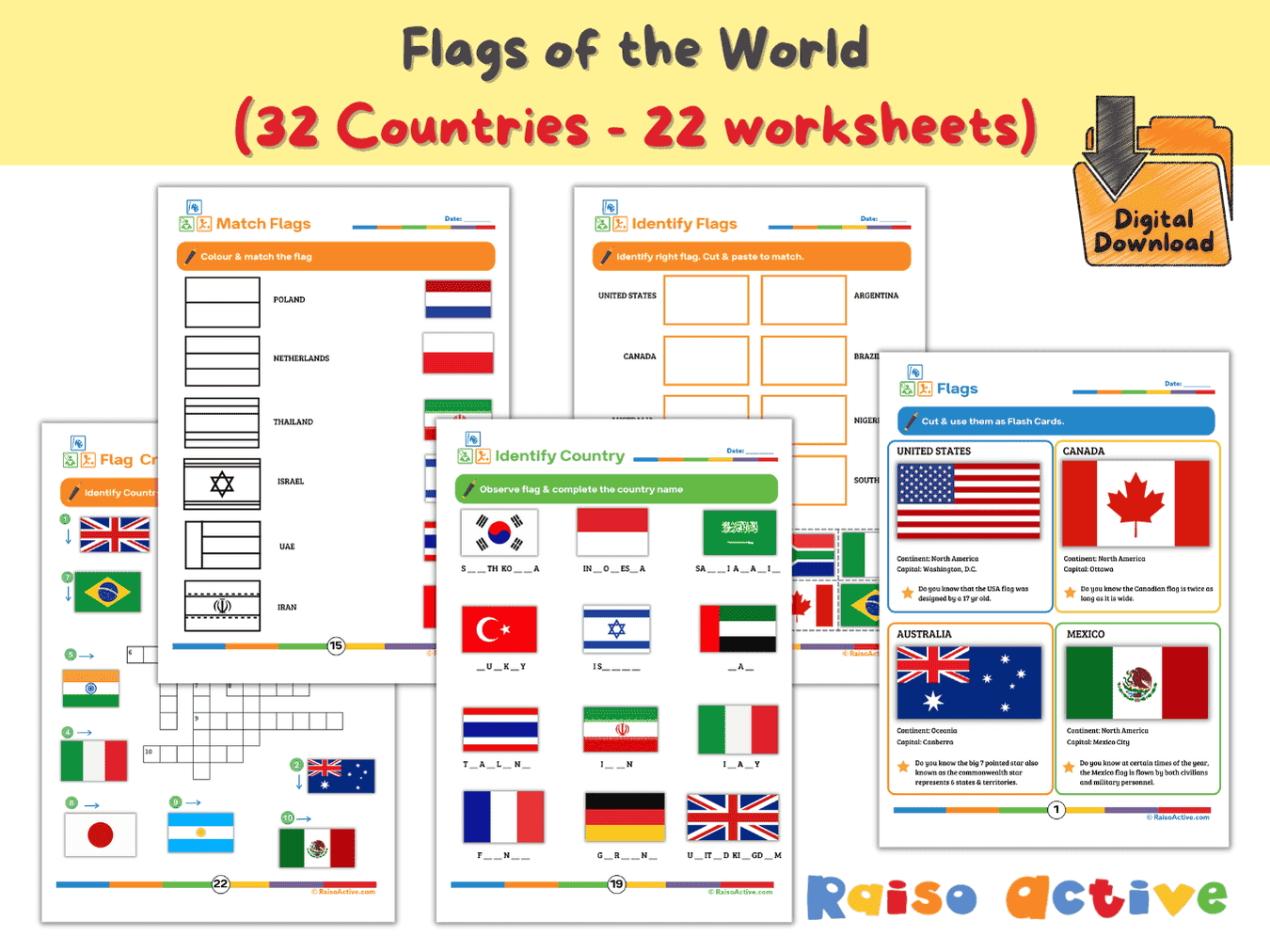
Flags of the World Activity Book & Flashcards for Kids (Ages 5-9)
Ages 5-8 · Kindergarten–Grade 2Ages 5-8 · Year 1–Year 3Ages 5-8 · UKG–Class 2Ages 5-8 · 23 pages
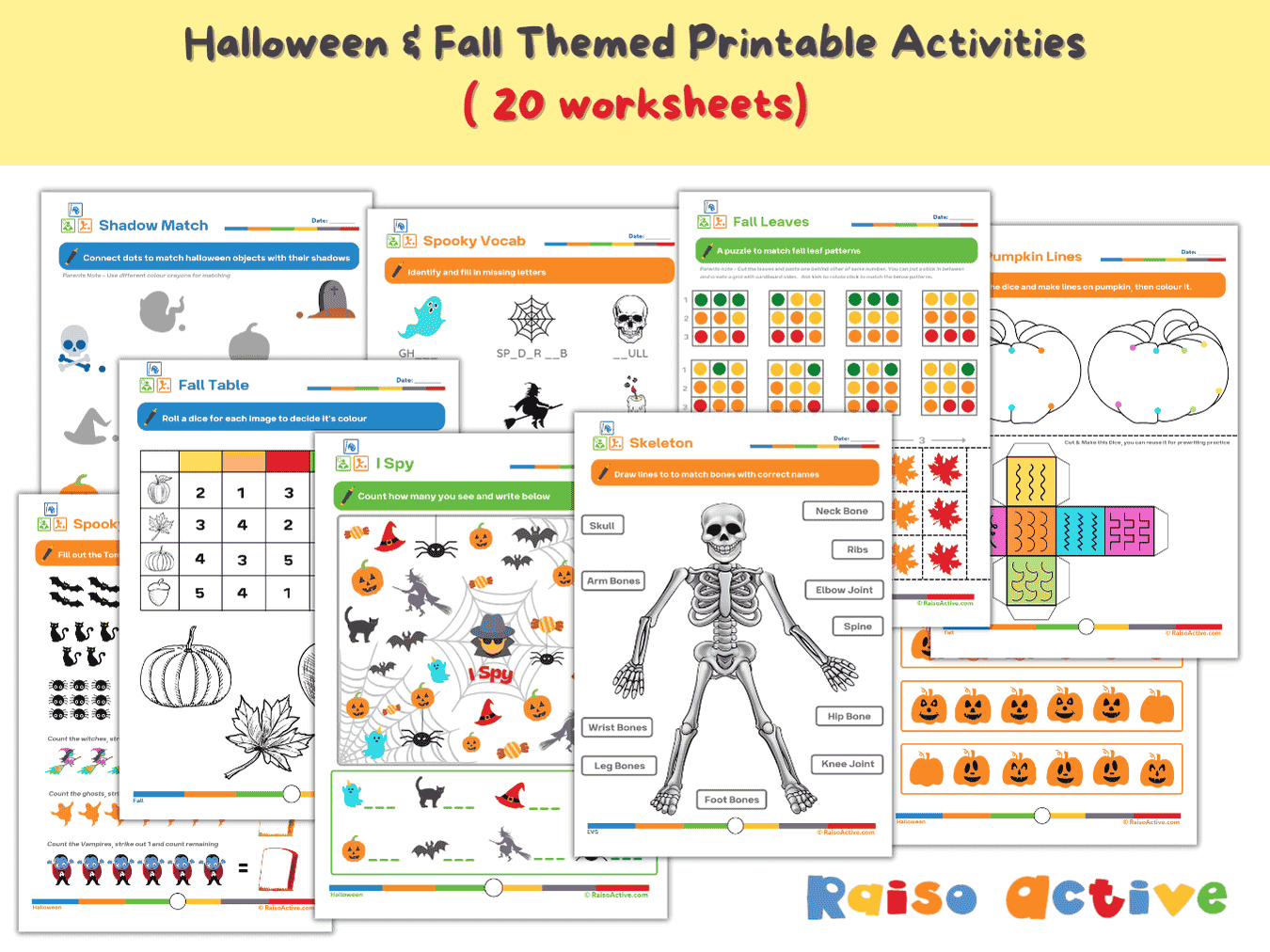
Halloween & Fall Activity Book: Math, Literacy & Cognitive Skills for Ages 4-8
Ages 4-8 · Pre-K–Grade 2Ages 4-8 · Reception–Year 3Ages 4-8 · LKG–Class 2Ages 4-8 · 23 pages