Free printable worksheets · US · UK · India
Matching Worksheets (Ages 2–6)
Matching worksheets are printable activities for children aged 2 to 6 in which the child pairs items that belong together, usually by drawing a line between them. Types include picture-to-picture, shadow matching, uppercase-to-lowercase letters, number-to-quantity and word-to-picture. They develop visual discrimination, letter and number recognition, one-to-one correspondence, vocabulary and pencil control.
Matching is the earliest thinking task that can be put on paper. A two-year-old can point to two identical pictures; a three-year-old can draw a wobbly line between them; a four-year-old can match a picture to its shadow or a capital letter to its lowercase partner; and a five- or six-year-old can match a numeral to a quantity, a word to a picture, or a clock to a time. Because the format stays the same while the content changes, Toddler and Preschool programs in the US, Nursery and Reception classes in the UK, and Playgroup through UKG in India all lean on matching sheets to introduce new material. These worksheets are grouped by that progression, with large targets for the youngest children and shuffled columns for older ones.
540+ worksheets · free PDF download · print on A4 or Letter
Matching Worksheets to print
Browse all worksheets for ages 2–6
Clothing Pattern Match Worksheet for Preschoolers
This worksheet has children ages 3-5 study repeating patterns on clothing items — stripes, polka dots, or checks — and match each item to its identical twin, building visual discrimination and early pattern-sequencing skills. Distinguishing between similar-looking patterns also sharpens attention to detail, a skill that later supports letter and word recognition.

Doctor's Tools: Circle the Items! - Worksheet for Kids
This worksheet builds visual discrimination and category knowledge by asking children to identify which pictured items belong to a doctor's toolkit, like a stethoscope or thermometer, versus items that don't. For ages 3-5, sorting objects by their real-world function is an early classification skill, and the community-helper theme also builds vocabulary around health and care.
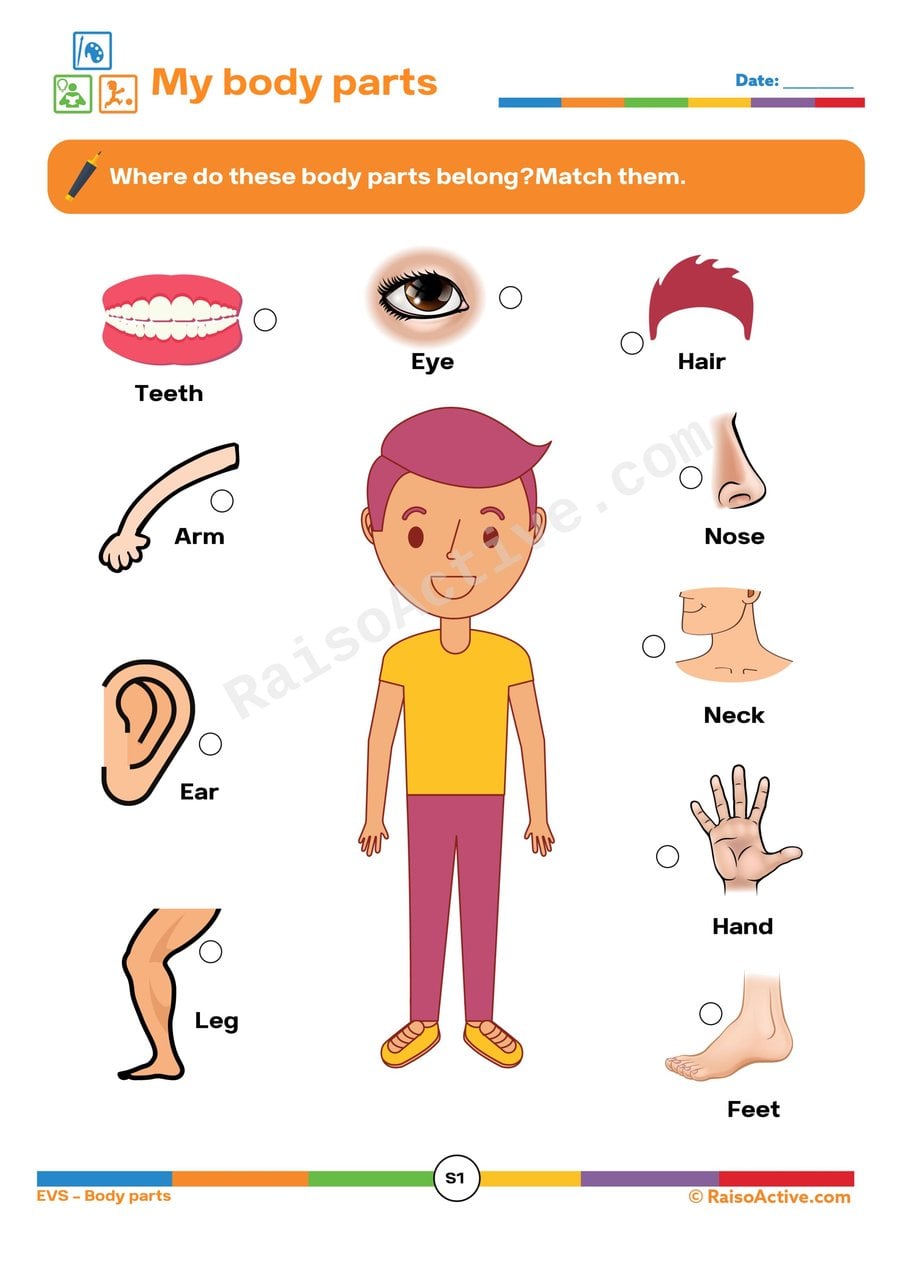
Match the Body Parts! A Fun Worksheet for Kids
Drawing lines from body part pictures to their correct location on a human figure helps children ages 3-5 build vocabulary for parts of the body, like arms, legs, and ears, while practicing visual-spatial matching between a small picture and its larger corresponding location. This worksheet strengthens the link between a spoken body part name and its physical location, a skill children also use constantly in daily routines like getting dressed or washing up. Matching pictures to a full-body diagram, rather than just naming parts in isolation, builds a more complete mental map of the body.

Match the Pictures: Letter Matching Worksheet for Preschoolers
Connecting pictures to their matching letters helps children ages 3-5 build the foundation of phonics, learning that a printed letter represents the beginning sound of a spoken word. Circling the animals that specifically start with the letter B adds a second layer of practice, requiring children to apply that letter-sound knowledge rather than just matching shapes. This two-step approach moves children from simple visual matching toward true letter-sound recognition, a critical pre-reading skill.
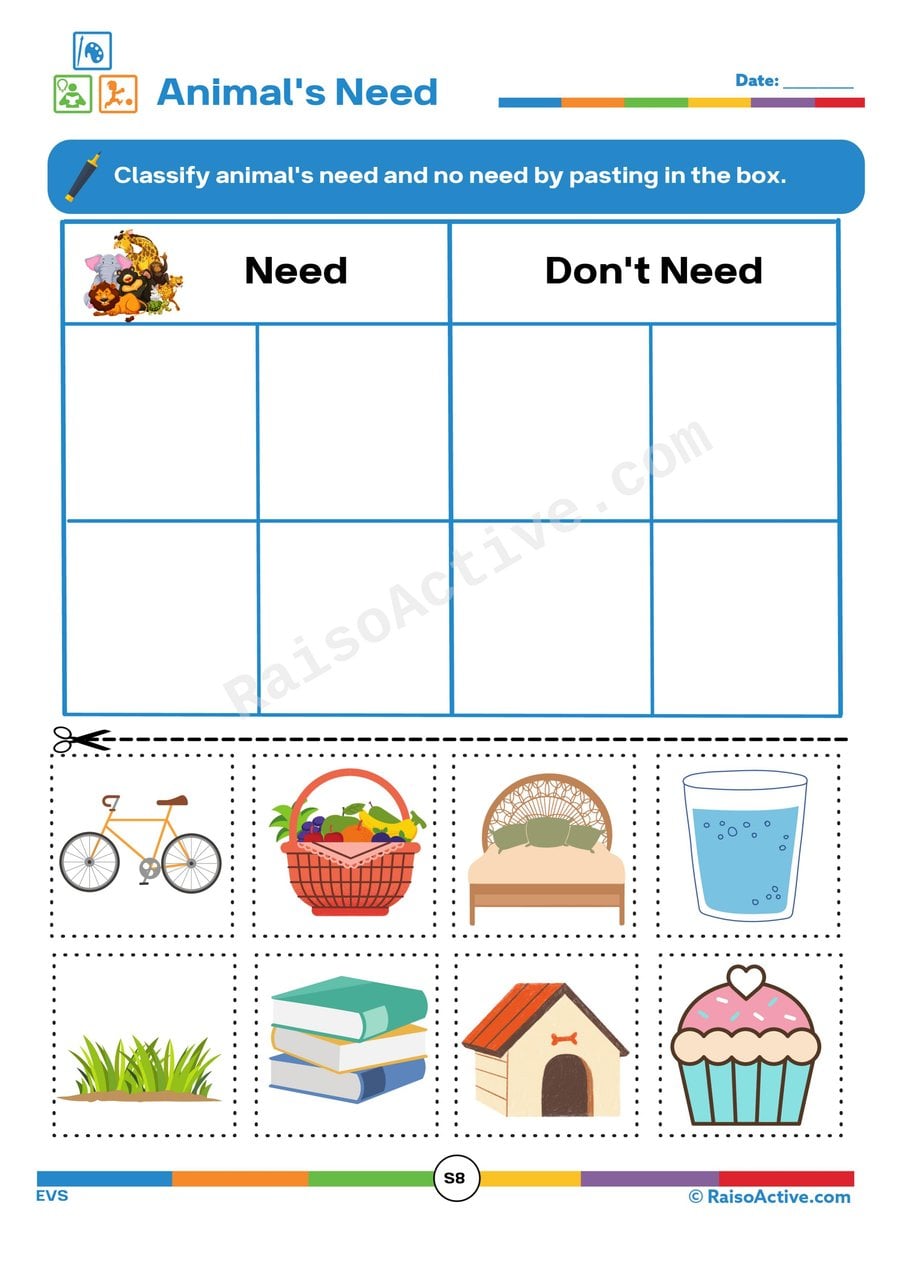
Animal Needs Sorting Worksheet for Preschoolers
This sorting activity helps children ages 3-5 understand that animals have specific survival needs — food, water, shelter, air — by cutting out picture cards and classifying each one as something an animal 'needs' or 'doesn't need.' Making this distinction requires children to reason about cause and effect in a simple form: what happens to an animal without food or water. This early exposure to classification and survival needs lays groundwork for more formal life science concepts children will encounter in later grades.

Polite Words Worksheet: Circle the Correct Option!
Children ages 3-5 practice recognizing which polite word fits a given social scenario, like saying 'please' when asking for something or 'sorry' after bumping into someone, building early social-emotional vocabulary alongside reading skills. Learning to match politeness to situation helps children apply good manners appropriately rather than just memorizing words in isolation.
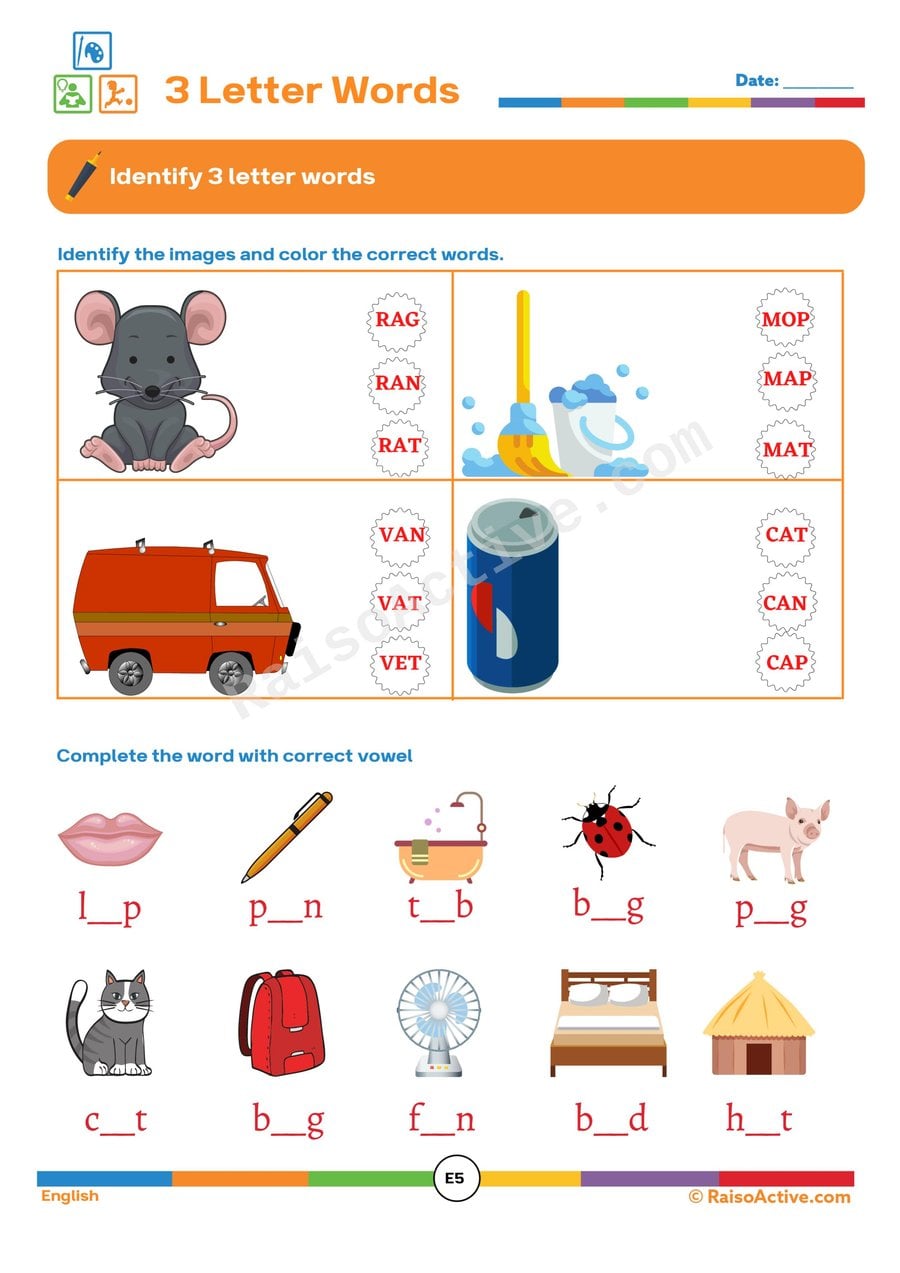
3 Letter Words Worksheet: Identify and Color!
This worksheet helps children ages 3-5 identify and recognize simple three-letter words by matching pictures to their written word and then completing each word by filling in a missing vowel. Working with short, consistent words like these builds the beginning reading skills that let children start decoding independently.

Butterfly Life Cycle Matching Worksheet for Preschoolers
This matching worksheet introduces children ages 3-5 to the four stages of metamorphosis — egg, caterpillar, chrysalis, and butterfly — while building visual matching skills essential for early science literacy. Pairing each picture to its correct stage strengthens observation and categorization, skills children will later apply across all science topics.

Diamond Shape Counting and Matching Worksheet for Preschoolers
This diamond-themed worksheet helps 3-5 year olds tell a diamond apart from squares, circles, and triangles by its four slanted sides and pointed top and bottom, a shape many preschoolers find trickier than rounder or more symmetrical ones. Counting the diamonds one at a time builds one-to-one correspondence, and matching same-sized diamonds strengthens visual discrimination, the skill of spotting small differences between similar-looking shapes.

Color Sorting Worksheet: Cut and Paste the Pictures!
This worksheet helps children ages 3-5 practice color recognition and sorting by cutting out pictures and gluing each one into the row matching its color. Physically sorting objects by a single shared attribute, like color, builds early categorization skills, while the cutting and gluing strengthens fine motor coordination needed for more complex craft and writing tasks later on.
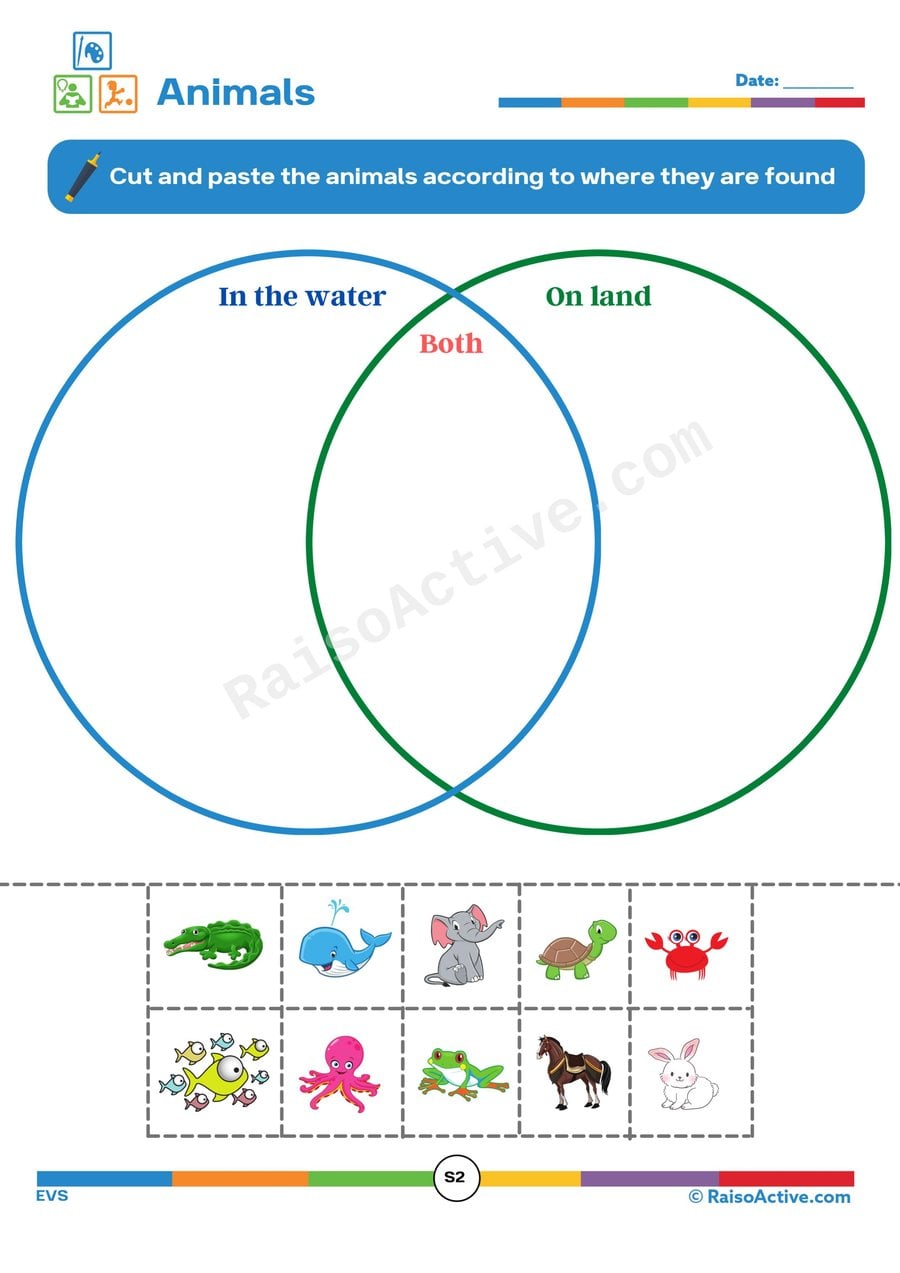
Animals: Sorting Worksheet for Preschoolers
This sorting worksheet has children ages 3-5 cut out animal pictures and paste each one into either a water or land habitat circle, building an early classification skill around where different animals naturally live. Sorting animals by habitat, rather than by type or size, introduces the idea that an animal's environment is a meaningful category on its own.
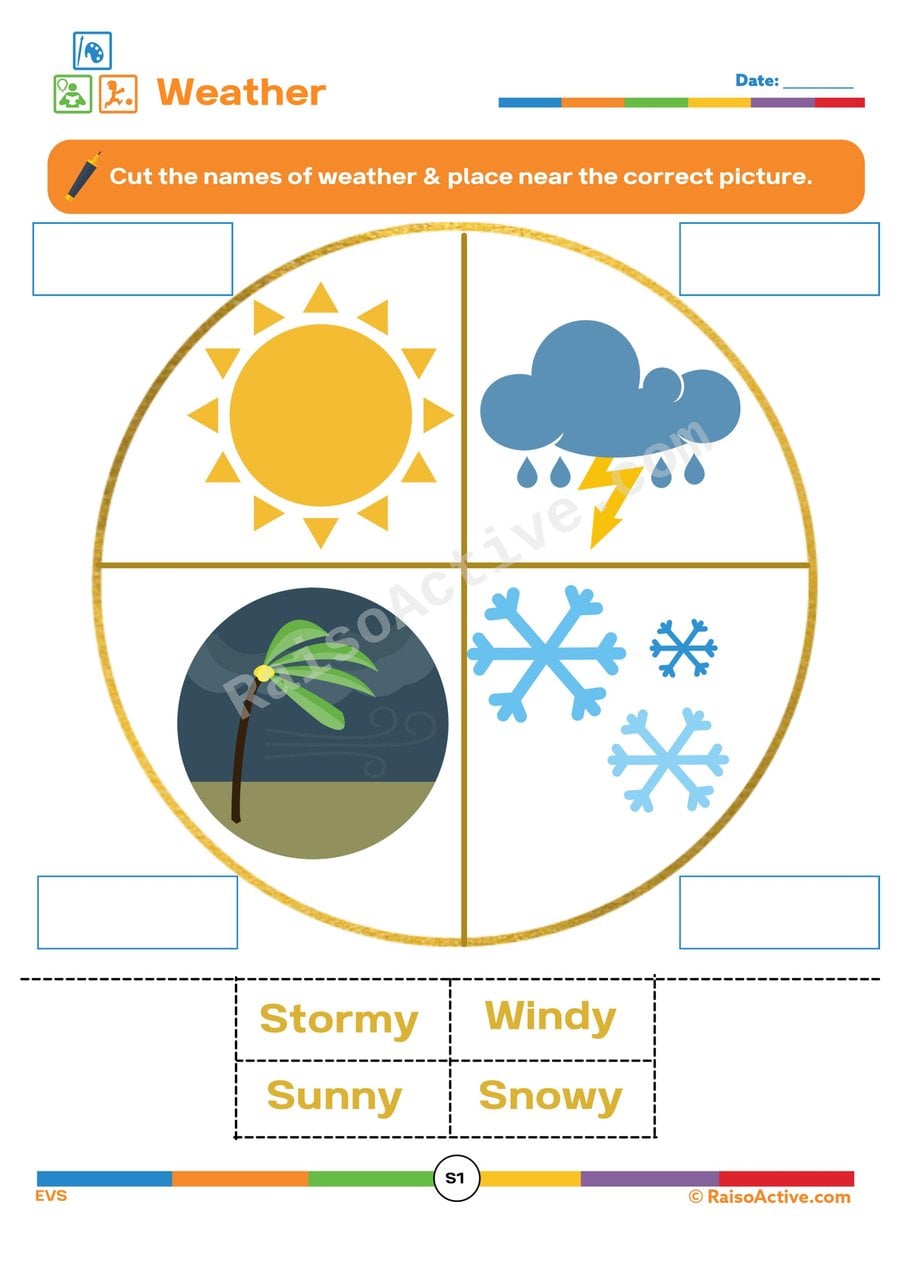
Weather Matching Worksheet for Preschoolers
Cutting out weather name labels and gluing them beside the matching picture teaches children ages 3-5 vocabulary for common weather types, like sunny, rainy, or snowy, while connecting a written word to something they can observe outside every day. Because the labels must be read and correctly matched rather than simply circled, this worksheet also builds early sight-word recognition tied to real, familiar concepts. Weather is something children experience daily, which makes this an especially concrete entry point into word-to-picture matching.

Match the Flags! A Fun Coloring Worksheet for Kids
This worksheet combines coloring with flag recognition, helping children ages 3-5 practice fine motor control while learning to match a colored flag to its correct blank outline. Coloring the flags first, then matching them, adds an extra layer of visual processing as children must recall the colors they just used to complete the matching step.

Landforms Worksheet: Identify and Tick the Correct Answer!
Looking at pictures of landforms like volcanoes, glaciers, and islands and choosing the correct name from two options teaches children ages 3-5 early earth science vocabulary while building visual discrimination between different natural features. Because each landform has a distinct silhouette, shape, and texture, children practice careful observation of details, like noticing that a volcano has a cone shape while an island is surrounded by water. This worksheet introduces basic geography concepts in a way that's grounded in pictures rather than abstract explanation.

Open and Close Worksheet: Circle the Open and Closed Objects!
Children ages 3-5 build early categorization skills by identifying whether pictured objects, like a door, a box, or a jar, are open or closed. This concept requires observing a physical state and applying a descriptive word correctly, an important early step in building descriptive vocabulary. Recognizing open versus closed also has practical safety value, connecting worksheet learning to real-world awareness.

Read & Match Worksheet: Matching Sentences to Pictures
Matching a sentence to its picture through drawing a line or coloring builds reading comprehension for children ages 3-5, requiring them to process the sentence's full meaning rather than recognizing familiar words in isolation. Following this with coloring keeps the activity engaging while giving repeated visual exposure to each completed sentence-and-picture pair.
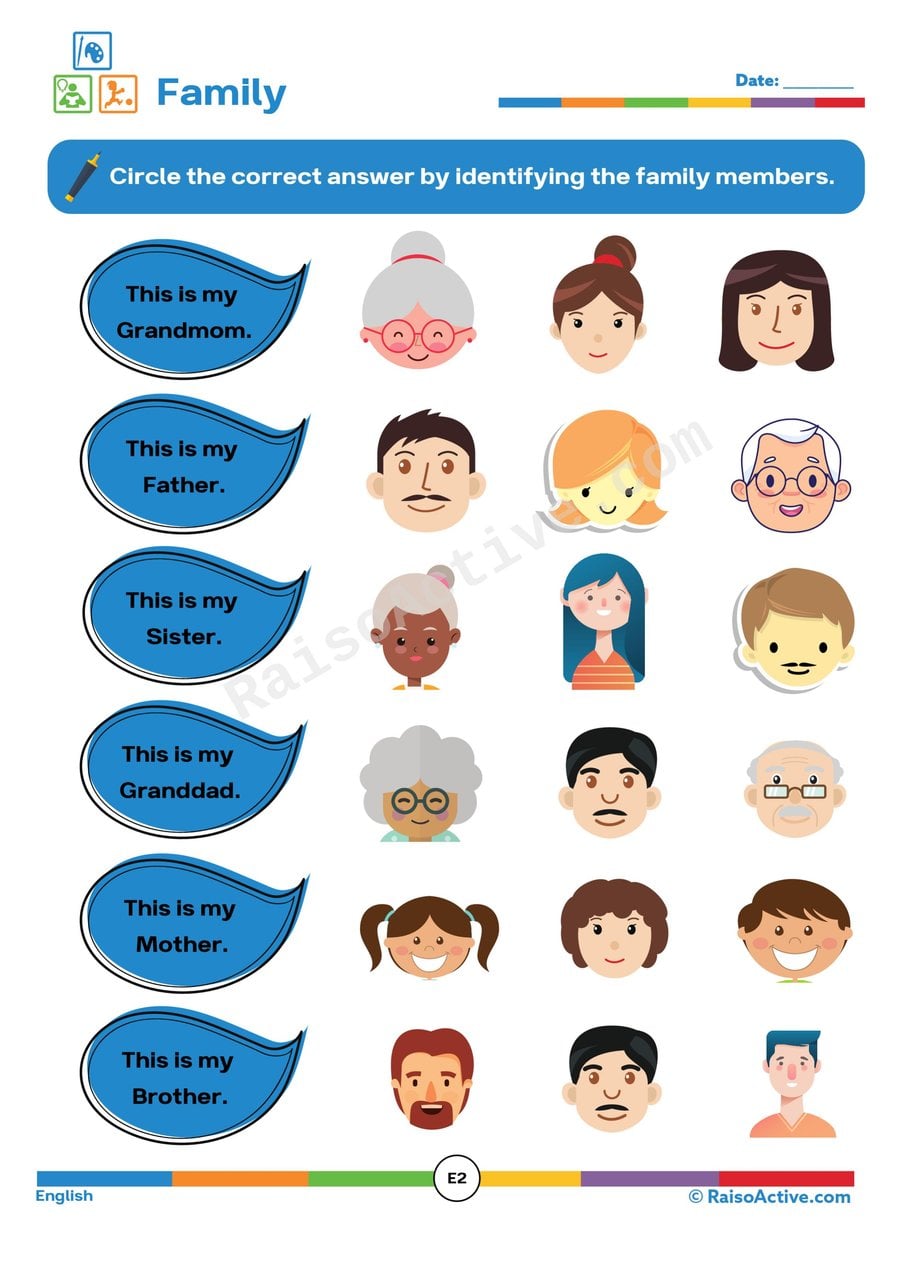
Family Members Worksheet: Identify and Circle!
Reading a sentence describing a family member and circling the matching picture teaches children ages 3-5 to connect written description to a specific person, combining early reading comprehension with family vocabulary. This task also builds the habit of checking text carefully rather than guessing from the picture alone.

Match the Baby Animals Worksheet for Preschoolers
Matching adult animals to their babies teaches children ages 3-5 specific animal vocabulary — like calf, cub, and kit — while sharpening visual comparison skills as they look for physical similarities between the pictures. This kind of pairing task also builds early categorization thinking, since children must recognize that a baby animal, despite looking different from its parent, still belongs to the same animal family.

Say My Sound: Beginning Letter Sounds Worksheet for Preschoolers
Saying a picture's name aloud and then circling the letter that matches its beginning sound builds phonemic awareness in children ages 3-5, teaching them to isolate the very first sound in a spoken word before connecting it to a printed letter. Because several letter options are given for each picture, this worksheet requires children to actively compare sounds rather than simply recognize a single correct letter by memory. This kind of applied letter-sound practice is one of the strongest early predictors of later reading success.
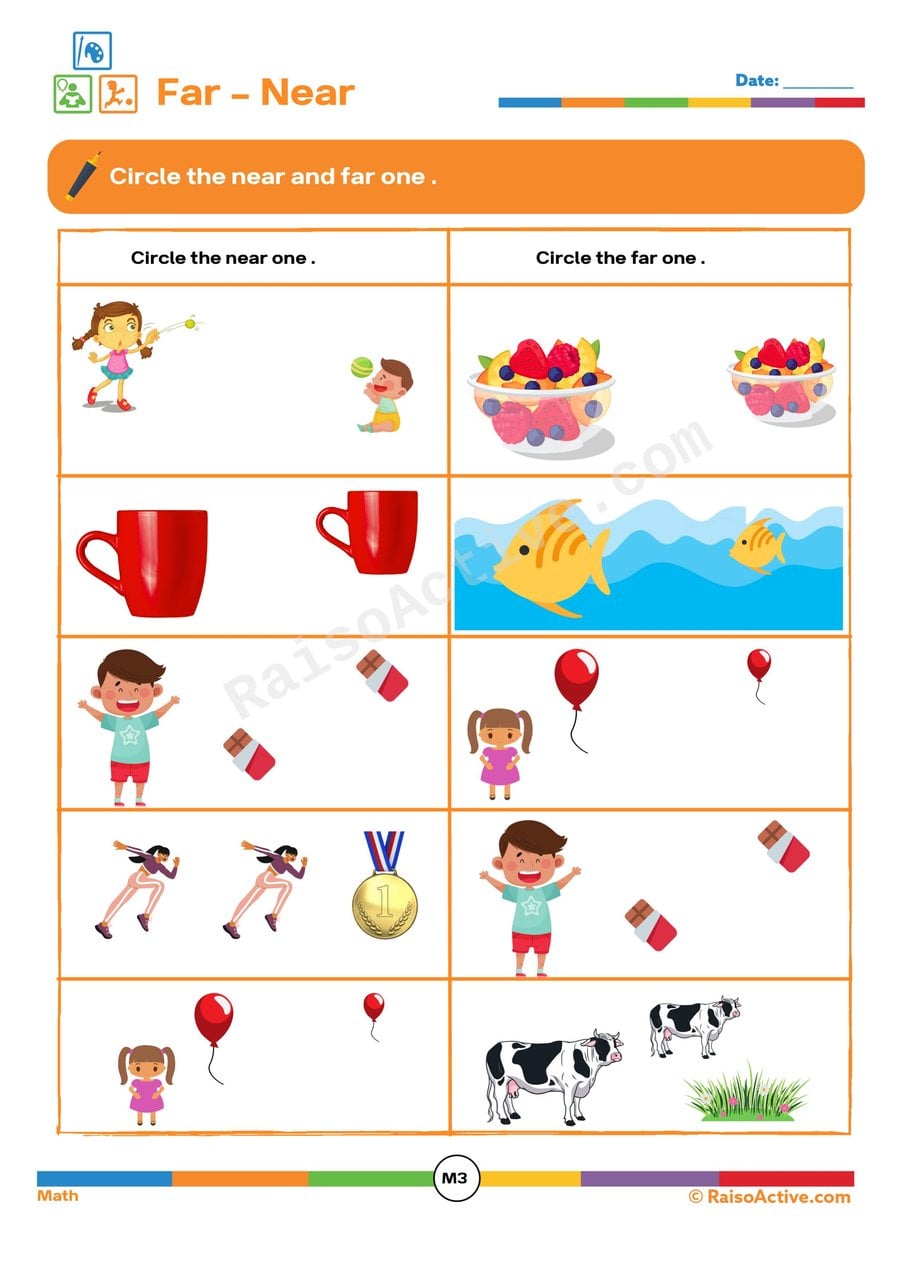
Far and Near Worksheet: Circle the Objects!
Children ages 3-5 build early spatial reasoning by comparing the relative distance of paired objects and deciding which is 'near' and which is 'far,' a foundational concept for understanding position and distance in the world around them. This kind of comparative thinking also supports later math concepts like measurement and estimation.

Christmas Shadow Matching Worksheet for Preschoolers
This shadow-matching worksheet sharpens visual discrimination in children ages 3-5 by asking them to match colorful Christmas images — like a tree, stocking, or ornament — to their black silhouette shadows. Because shadows strip away color and detail, children must focus on overall shape and outline, a skill that supports later letter and number recognition where shape distinctions matter. The seasonal theme also builds vocabulary connected to a holiday children are likely already excited about.

Fun with Sounds: Matching 'f' and 'h' Sounds Worksheet
This worksheet builds early listening skills in children ages 3-5 by having them match pictures to the beginning sounds 'f' and 'h'. Practicing these two clearly distinct consonant sounds side by side gives less confident listeners an easier win than harder pairs, building confidence in the matching-sounds-to-letters process that underlies all future phonics work.
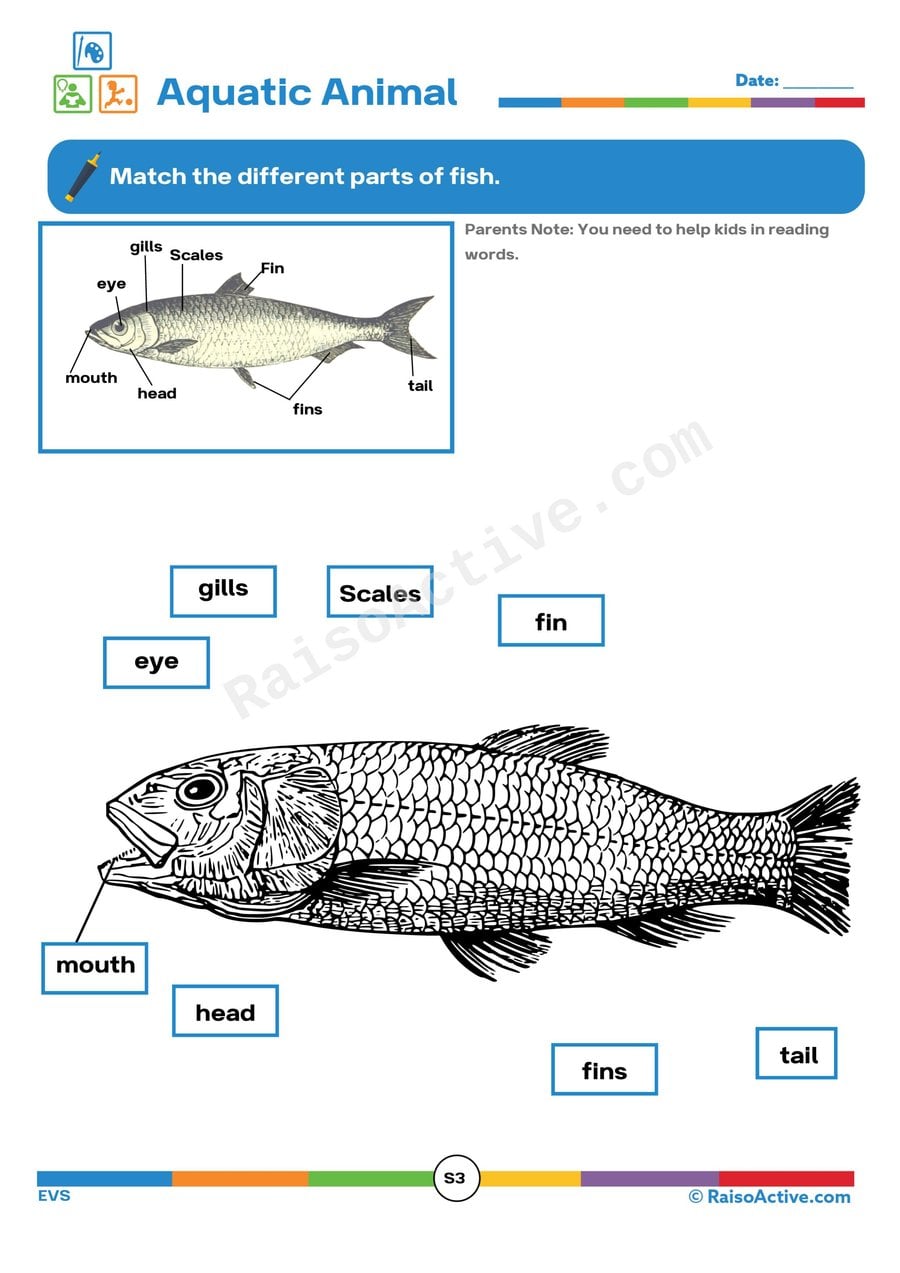
Fish Parts Matching Worksheet for Preschoolers
Preschoolers ages 3-5 learn the specific parts of a fish — like fins, gills, tail, and scales — by drawing lines connecting each written word to the correct location on a fish illustration. This vocabulary-focused matching task builds observational science skills, teaching children to see an animal's individual features rather than one general shape. It also reinforces early word recognition as children connect written labels to visual meaning.

Match the Life Cycle Stages Worksheet for Preschoolers
Children ages 3-5 practice matching animals and plants to their correct life cycle stage, reinforcing the broader science concept that all living things grow and change over time. Working across multiple types of living things — not just one animal — helps children recognize life cycles as a general pattern in nature rather than a fact specific to a single creature.
Matching types by age
Same-picture matching comes first because it needs only visual comparison. Shadow or silhouette matching follows, asking the child to recognize an outline without color or detail. Part-to-whole and pattern matching add closer observation. Letter matching (capital to lowercase) and number-to-quantity matching then turn the format into early literacy and math practice, and word-to-picture matching supports reading from around five.
- Ages 2–3: identical pictures, big and small versions of the same object, color matching
- Ages 3–4: shadows, halves of a picture, animals to homes, objects to their use
- Ages 4–5: uppercase to lowercase, numeral to dots, shapes to real objects, rhyming pictures
- Ages 5–6: words to pictures, sums to answers, beginning sounds, opposites
- Ages 6–7: words to definitions, analog to digital clocks, fractions to pictures
The draw-a-line format and what it teaches
Most matching sheets place items in two columns and ask the child to draw a line between each pair. Beyond the matching itself, this trains the child to scan a column systematically, hold a target in mind while searching, and control a pencil across the page without crossing other lines. Early sheets keep pairs opposite each other; later sheets shuffle the second column so the child must search. Odd-one-out variations reverse the task and ask which item does not belong.
How to use matching worksheets
For two- and three-year-olds, cut the sheet into cards and match physically before drawing lines. Ask "how do you know?" after each match so the child names the feature they used. If lines wander, place a finger on the target before the pencil moves. One sheet a day is plenty at this age; mix a picture-matching sheet with a letter or number sheet for four- to six-year-olds so the format supports new content rather than repeating old.
Frequently asked questions
What skills do matching worksheets develop?
These sheets develop visual discrimination (noticing what is the same and different), visual memory, attention and the concept of one-to-one correspondence. Depending on the content they also build letter recognition, number sense, vocabulary and classification. Drawing the connecting line adds pencil control and left-to-right tracking. These are the same skills that later underpin reading (telling b from d) and mathematics (matching a numeral to a set).
What should a 3 year old be able to match?
By age 3, in Preschool, UK Nursery or Indian Nursery, most children can match identical pictures, pair objects by color, match simple shapes, and find the same animal or toy among three or four options. Matching an object to its shadow and a picture to its other half typically follow between 3 and 4. Matching capital letters to lowercase and numerals to quantities are Pre-K, Reception and LKG expectations around 4 to 5.
What is shadow matching and why is it useful?
Shadow matching asks a child to pair a colored picture with its black silhouette. Because the silhouette removes color and inner detail, the child has to attend to overall shape and outline, which is a step up from same-picture matching. This kind of shape recognition is the same skill used to tell letters and numerals apart, so shadow matching is a common bridge between picture matching and letter matching around age 3 to 4.
How is matching different from sorting?
Matching pairs one item with one partner, such as a numeral with a set of dots or a capital with its lowercase letter. Sorting places many items into groups by a shared attribute, such as all the red things or all the animals. Matching is usually mastered first (around 2 to 3), while sorting by a single attribute develops around 3 to 4 and sorting by two attributes around 5 to 6.
Are the matching sheets free to download?
Every matching worksheet can be downloaded free as a watermarked PDF once you have an account, up to five sheets per day. Subscribing for a year (₹1000 / $20) removes the watermark and the daily cap for the whole library of 1,000-plus worksheets and the printable activity packs. All sheets are laid out for A4 and US Letter.

Written by
Hemsweta Jain · Teacher Cheena
MBA and Early Childhood Educator, teaching since 2014 · Founder of RaisoActive, Mumbai
Written and reviewed by Hemsweta Jain (Teacher Cheena), who designs every RaisoActive worksheet.
Last reviewed
Printable packs for ages 2–6
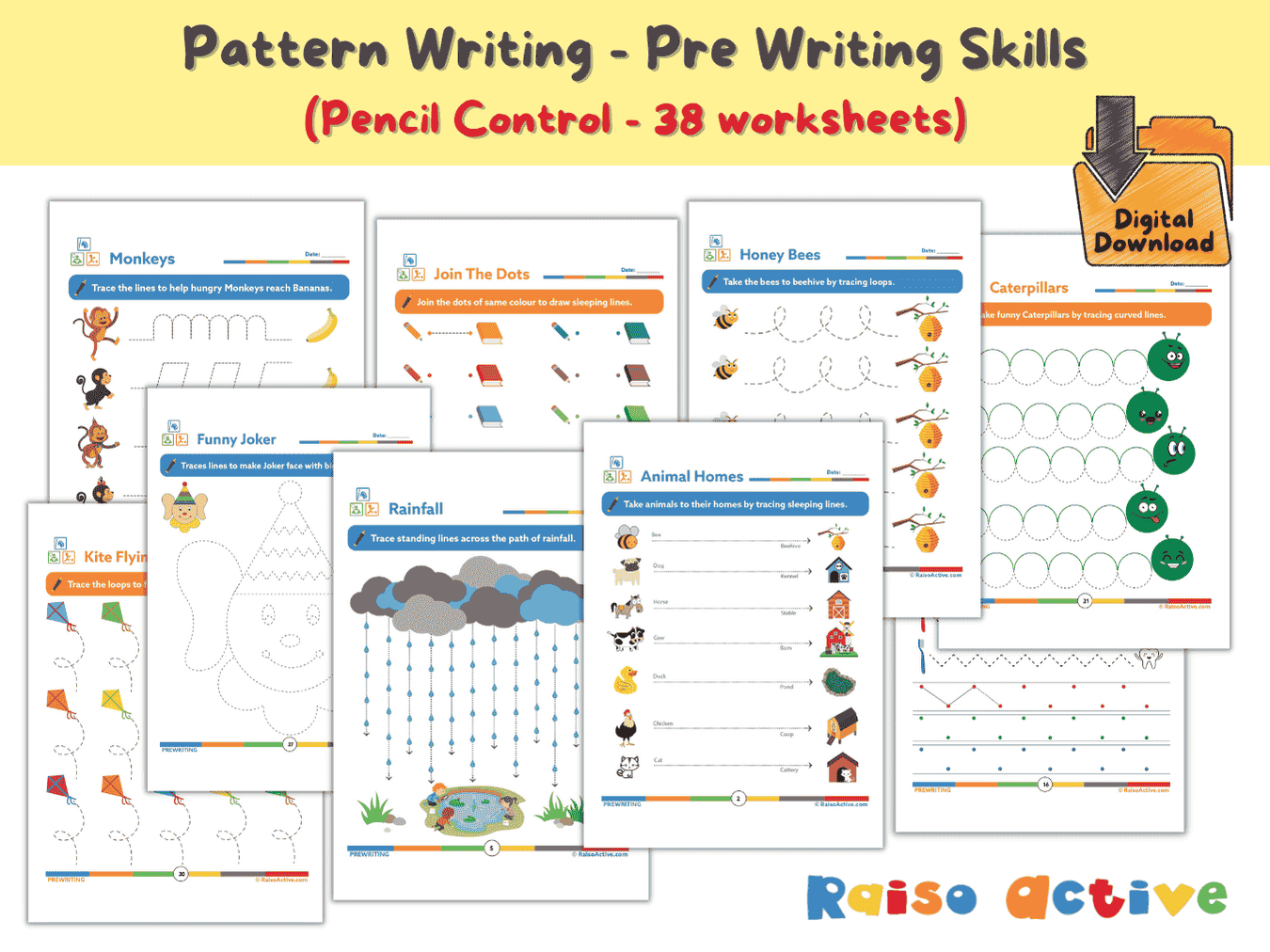
Pattern Writing Pre-writing Skills Activity Book for 3-4 Year Olds
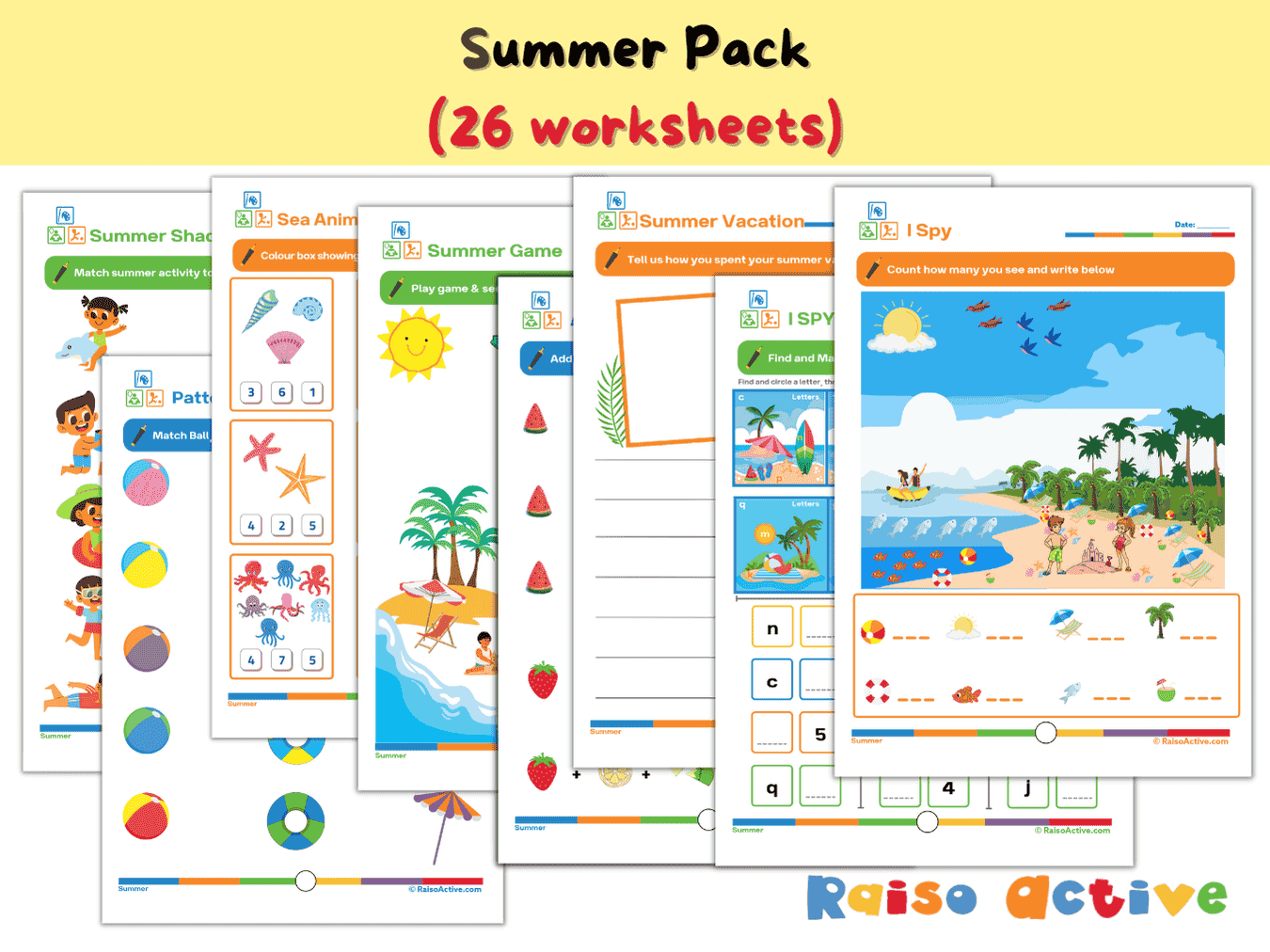
Summer Activity Pack: Math, Literacy, Puzzles & More for Preschool & Kindergarten
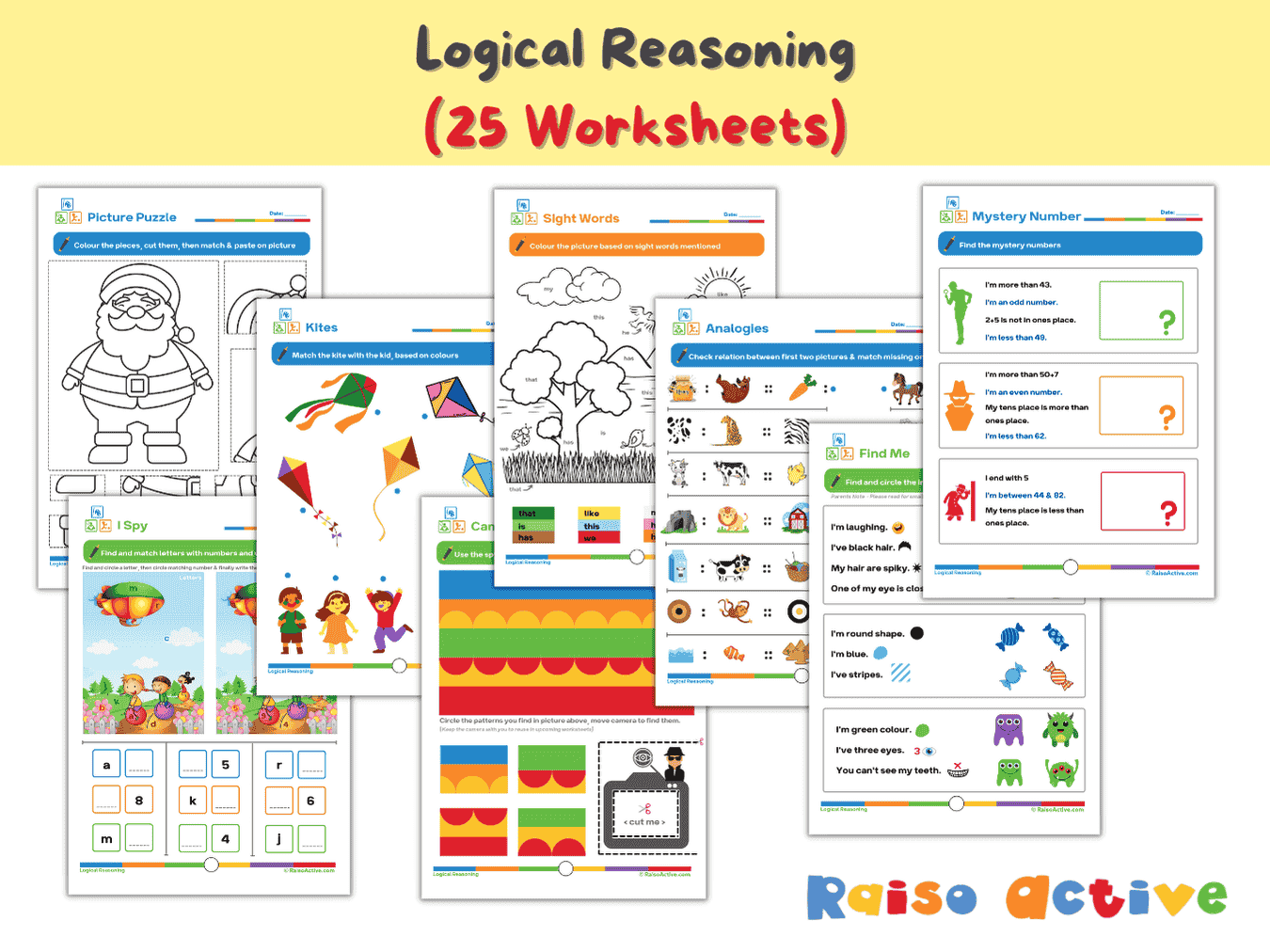
Logical Reasoning Activity Book for Preschool & Kindergarten | Patterns, Puzzles & Analogies
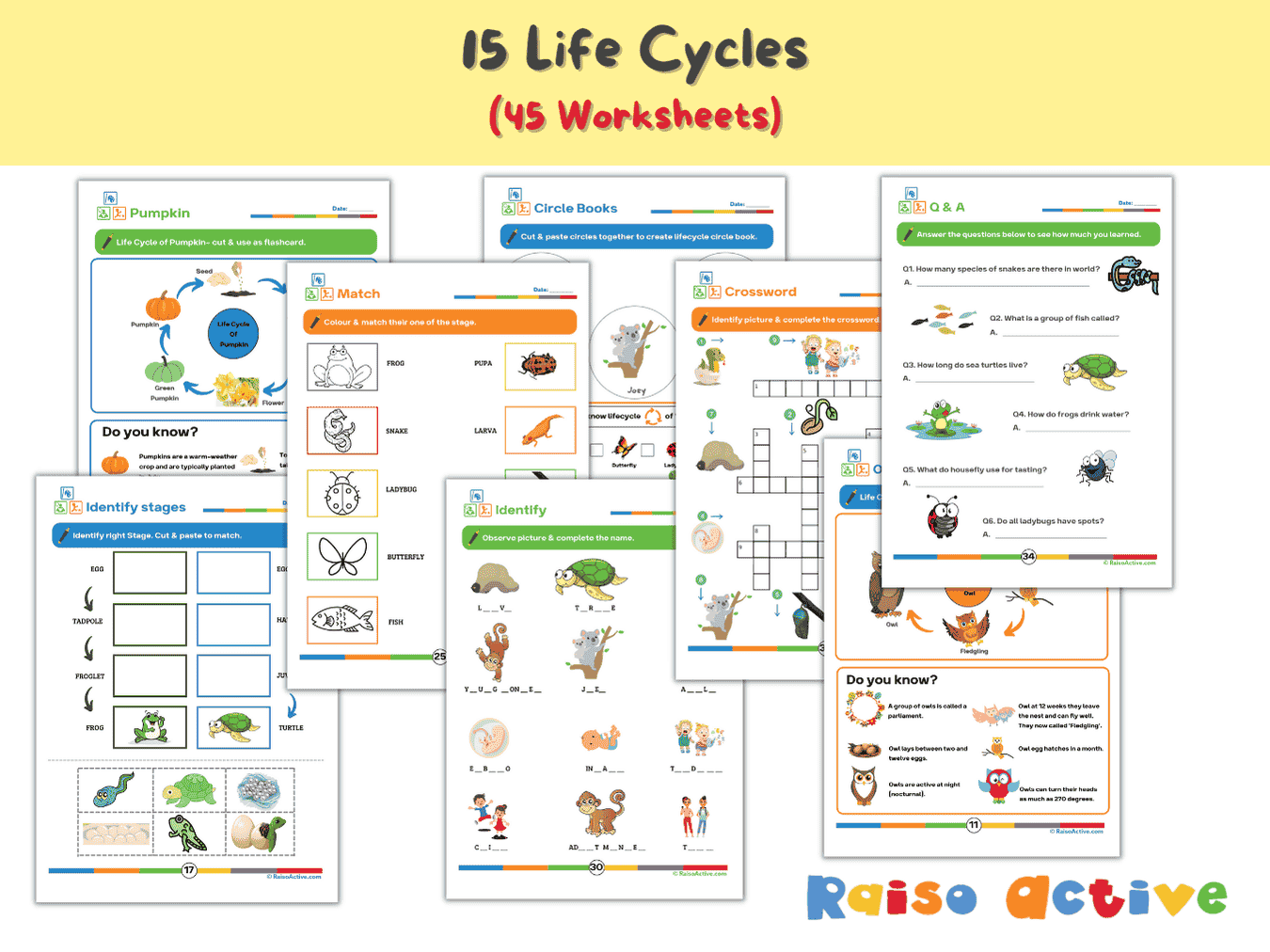
Lifecycles Activity Book & Flashcards for Preschool & Early Elementary
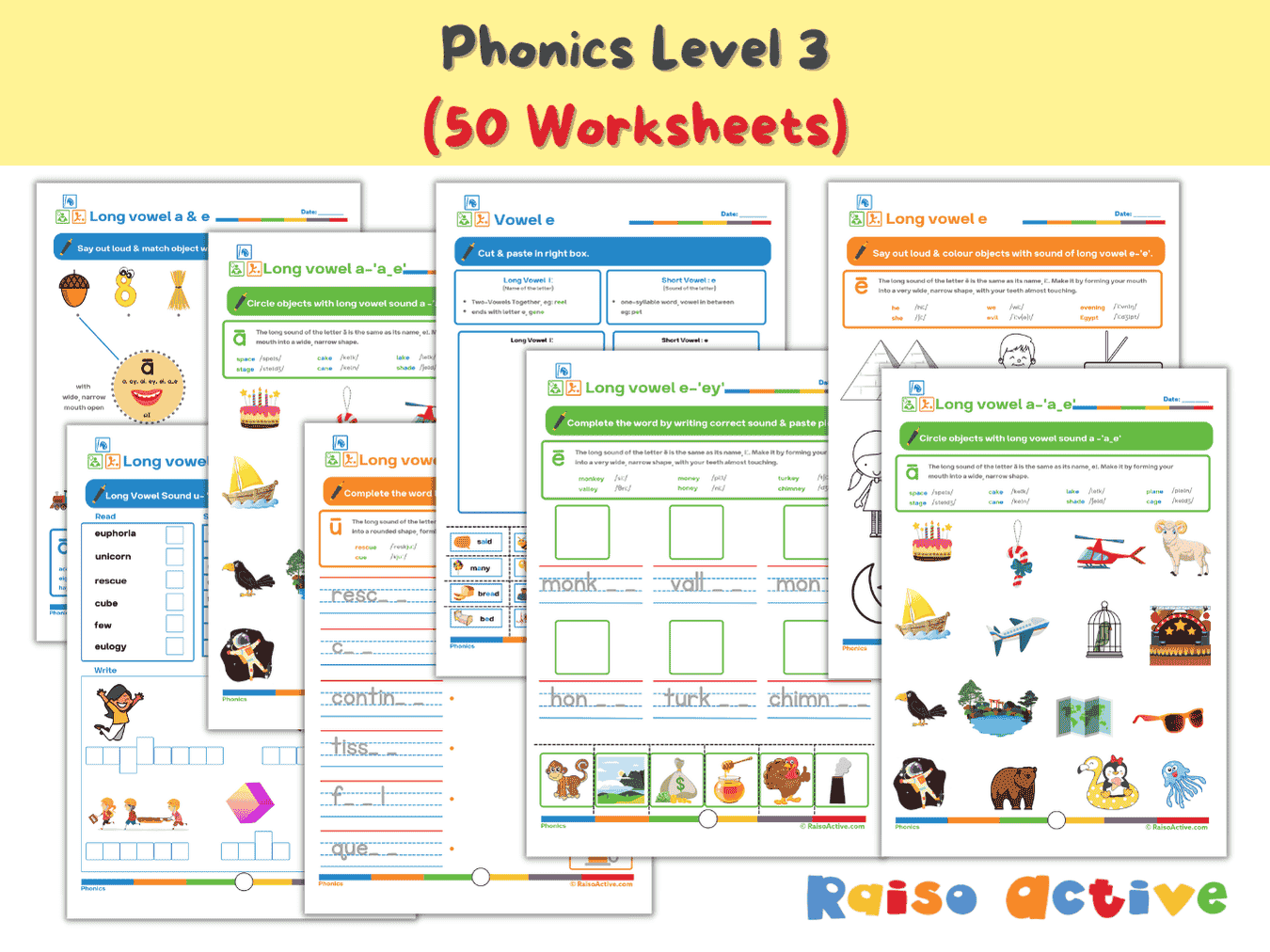
Phonics Level 3 Long Vowels Activity Book for Kindergarten & 1st Grade
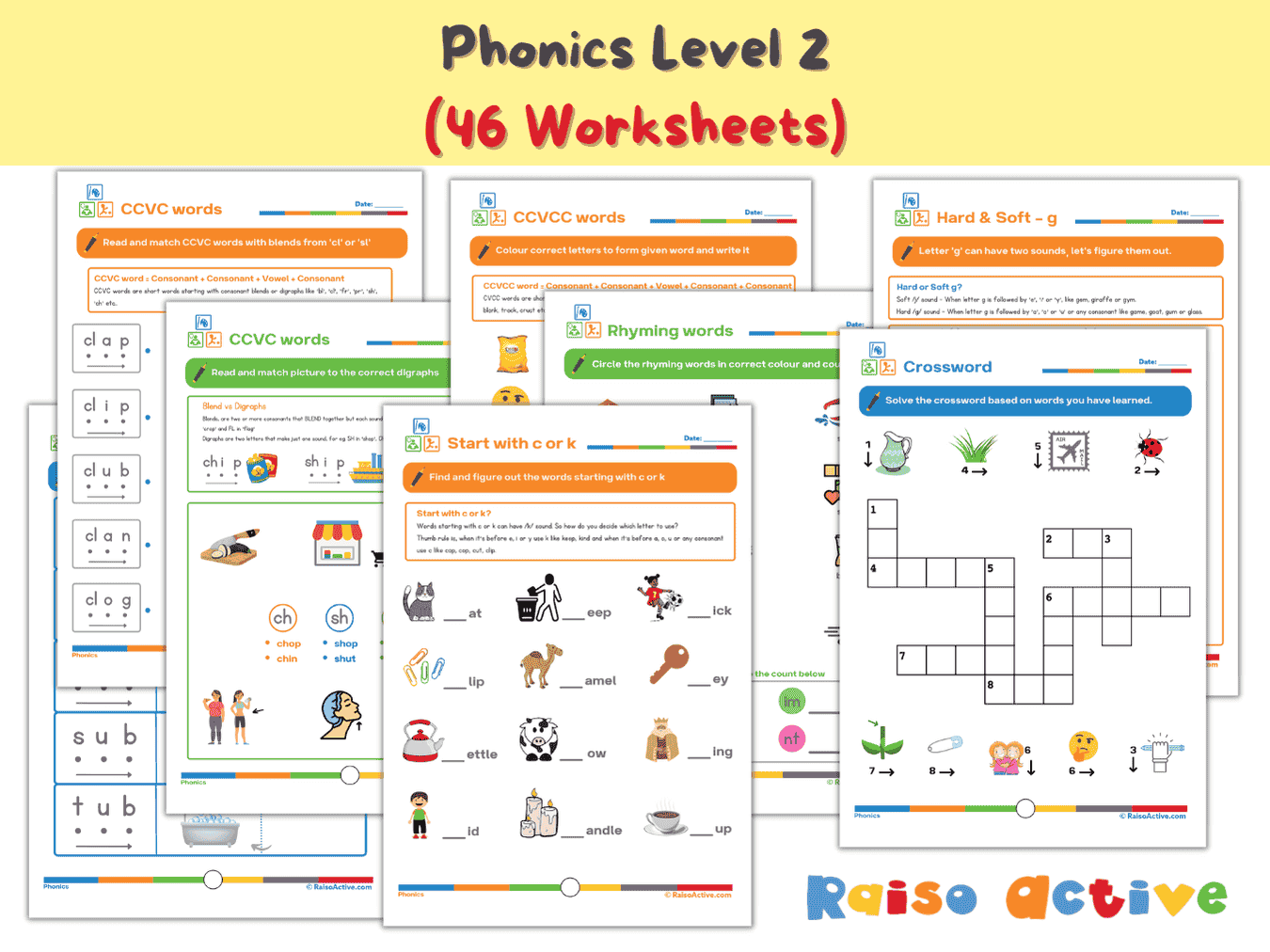
Phonics Level 2 Worksheets: CVC, CCVC, CVCC Word Families & Blends for Early Readers (Ages 4-7)
Guides for parents and teachers
See all guides →Sight Words by Age: The First 50 Words and How to Teach Them Without Flashcard Fatigue
Which sight words to teach first and why, the heart-word method, a read-trace-write-find routine, games, and a by-age table of typical sight-word progress.
Best Worksheets for 3-Year-Olds: What Works and What to Avoid
What works on worksheets for 3-year-olds: short sessions, crayons, tracing lines, matching, cutting, a free weekly plan, and signs one is too advanced.
Age-Appropriate Problem-Solving Activities: Building Critical Thinkers from the Ground Up
Discover fun, age-appropriate problem-solving activities for children ages 1-8. Build critical thinking, logic, and reasoning skills through play-based learning.
Critical Thinking Activities That Actually Work for Young Children: Building Tomorrow's Thinkers Today
Discover proven critical thinking activities for young children. Age-wise logic games, questioning techniques, and hands-on ideas to build thinking skills at home.
Coding Activities for Preschoolers: Building Tomorrow's Thinkers Today
Discover 15+ unplugged and screen-based coding activities for preschoolers that build sequencing, logic, and problem-solving skills through play. NEP 2020 aligned.
Teaching Basic Computer Skills to Young Children: A Parent's Complete Guide
Help your child ages 3-8 build digital literacy with age-appropriate computer skills: mouse, keyboard, safe internet, and top apps for Indian families.
Canonical: https://raisoactive.com/worksheets/matching