Free printable worksheets · United States
Preschool Matching Worksheets (Ages 3–4)
Preschool matching worksheets are practice sheets for children aged 3–4 in Preschool in the US. Matching is finding and pairing items that are identical, related or belong to the same category, from among several printed options. The sheets on this page cover identifying identical pairs, matching an object to its category, matching uppercase letters to lowercase and matching a numeral to a quantity.
Preschool builds readiness rather than academics: pre-writing strokes, uppercase letter recognition, counting objects to ten, naming shapes and colors, and cutting along a line, all introduced through short table activities inside a mostly play-based day. Grip is still forming, so most activities favor a thick crayon over a standard pencil. Three-year-olds move from identical pictures to pairs that go together for a reason: a colored animal and its black shadow, the two halves of a cut-apart picture, a bird and its nest, a toothbrush and toothpaste. Most can now draw a wobbly line between partners placed opposite each other in two columns. Keep four to six pairs per sheet. Shuffled columns and letter or number pairs are still a year away.
461+ worksheets · free PDF download · print on A4 or Letter
Preschool Matching Worksheets to print
Browse all worksheets for ages 3–4
Clothing Pattern Match Worksheet for Preschoolers
This worksheet has children ages 3-5 study repeating patterns on clothing items — stripes, polka dots, or checks — and match each item to its identical twin, building visual discrimination and early pattern-sequencing skills. Distinguishing between similar-looking patterns also sharpens attention to detail, a skill that later supports letter and word recognition.

Find the Similar Objects Worksheet for Preschoolers
Comparing a row of objects to find the ones that match and identify the one that's different builds visual discrimination skills for children ages 3-5, an early foundation for noticing the subtle differences between similar-looking letters later in reading.
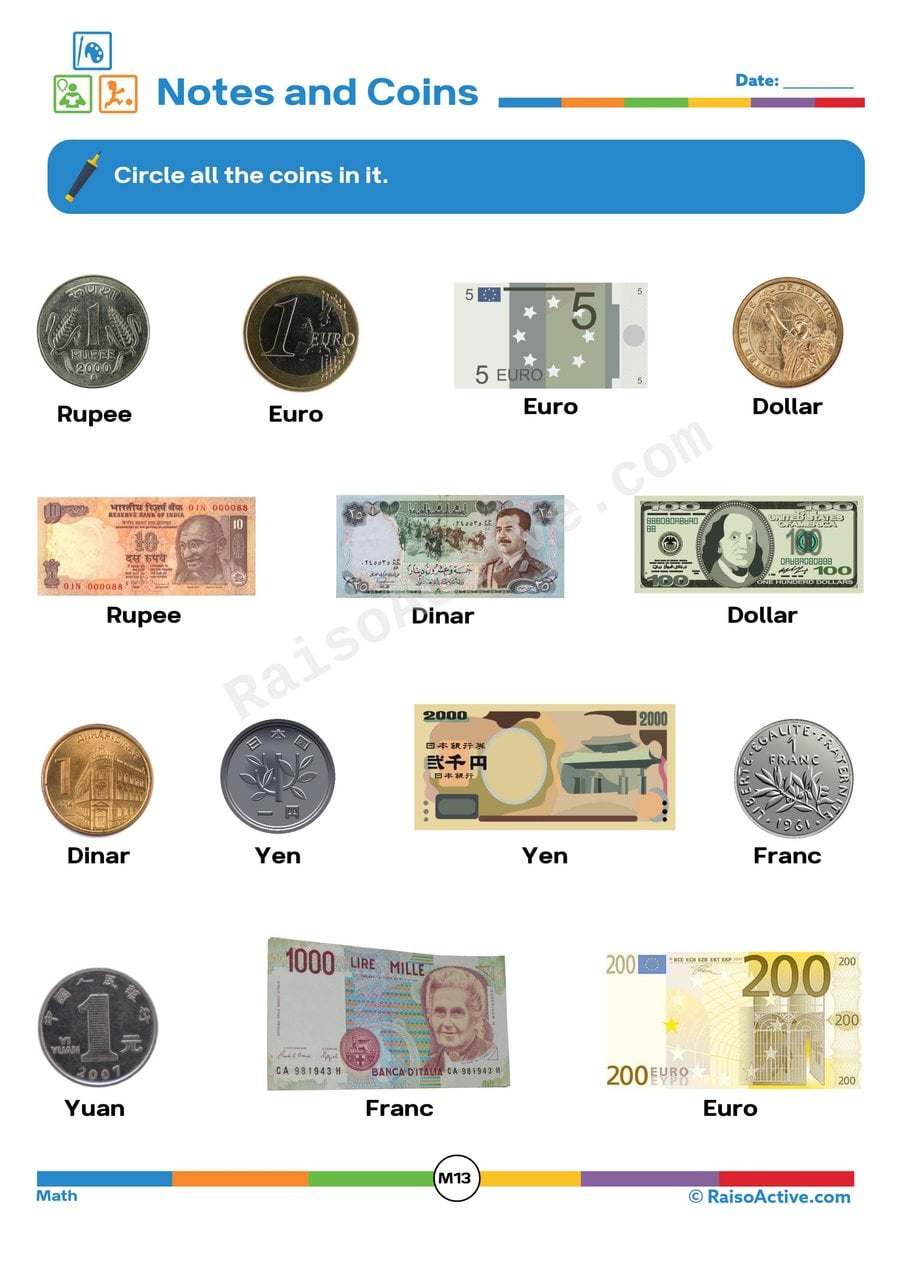
Coin Spotting Fun: Circle the Coins!
This worksheet asks children ages 3-5 to scan a page of mixed images and circle every coin they can find, building early visual discrimination and introducing the concept of money as a distinct category of object. Learning to recognize coins by their round shape and shiny appearance lays early groundwork for later skills like counting money and understanding value.

Fun Phonics Worksheet: Matching Uppercase and Lowercase Letters!
This matching worksheet teaches children ages 3-5 to recognize that uppercase and lowercase versions of the same letter — like S and s — represent one letter despite looking different, a concept that trips up many early readers. Drawing a line between the four matching pairs builds visual discrimination and letter-form memory, while the follow-up task of circling pictures that start with 'C' adds practice connecting a letter to its sound.

Match the Flags Worksheet: Fun Flag Matching Activity for Kids!
This flag-matching worksheet strengthens visual scanning and word recognition as children ages 3-5 compare printed country names on one side of the page to flag images on the other and connect the correct pairs. Because they must scan back and forth between two columns, it also builds the left-to-right tracking skills that support early reading.
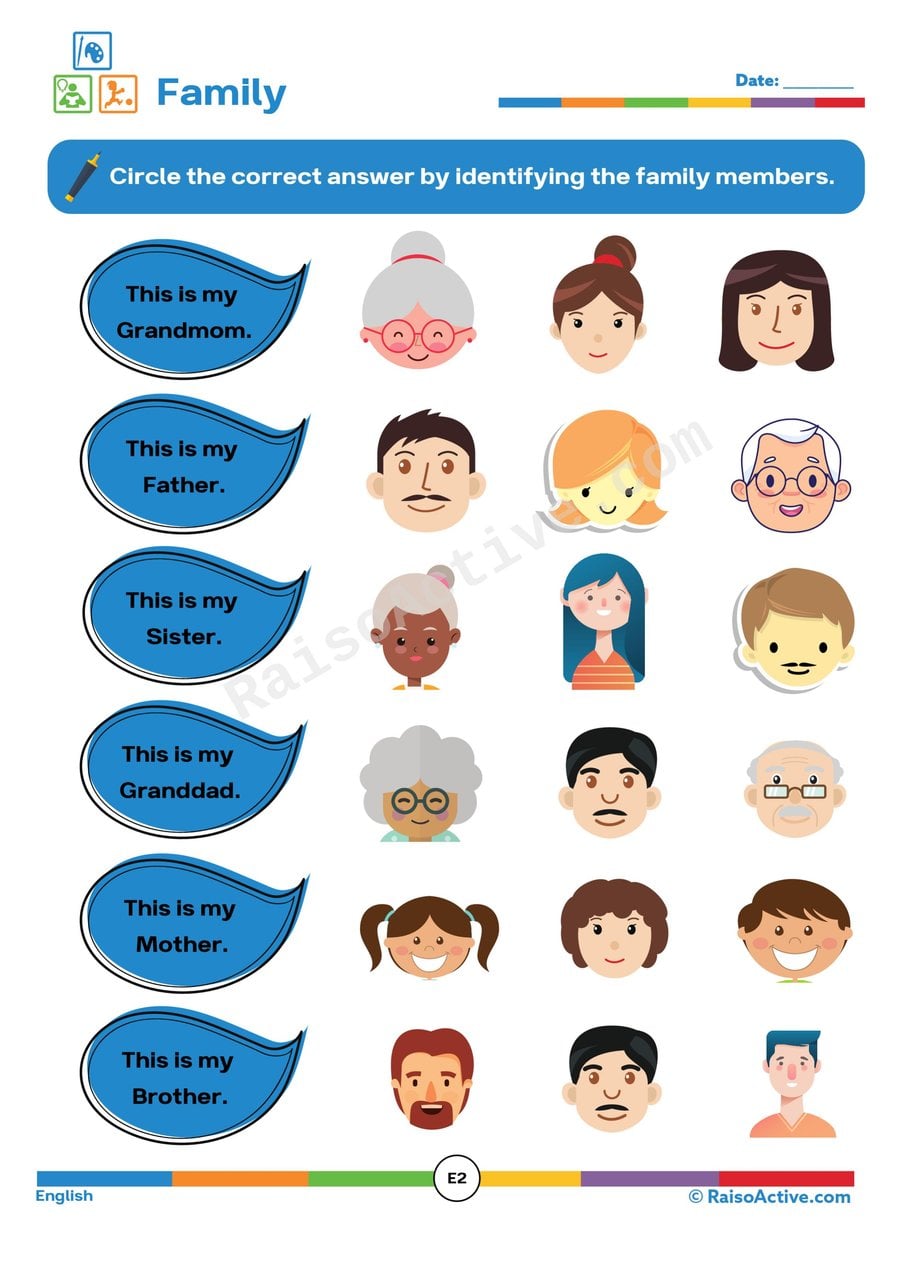
Family Members Worksheet: Identify and Circle!
Reading a sentence describing a family member and circling the matching picture teaches children ages 3-5 to connect written description to a specific person, combining early reading comprehension with family vocabulary. This task also builds the habit of checking text carefully rather than guessing from the picture alone.

Capital and Small Letter Matching Worksheet for Preschoolers
Children ages 3-5 build letter recognition fluency by matching each uppercase letter to its corresponding lowercase form, a skill essential for reading since text uses both cases interchangeably. Recognizing that 'B' and 'b' represent the same letter sound despite looking different is a genuinely tricky early literacy milestone. Circling words that begin with a capital letter adds an extra layer of practice noticing capitalization in real context.
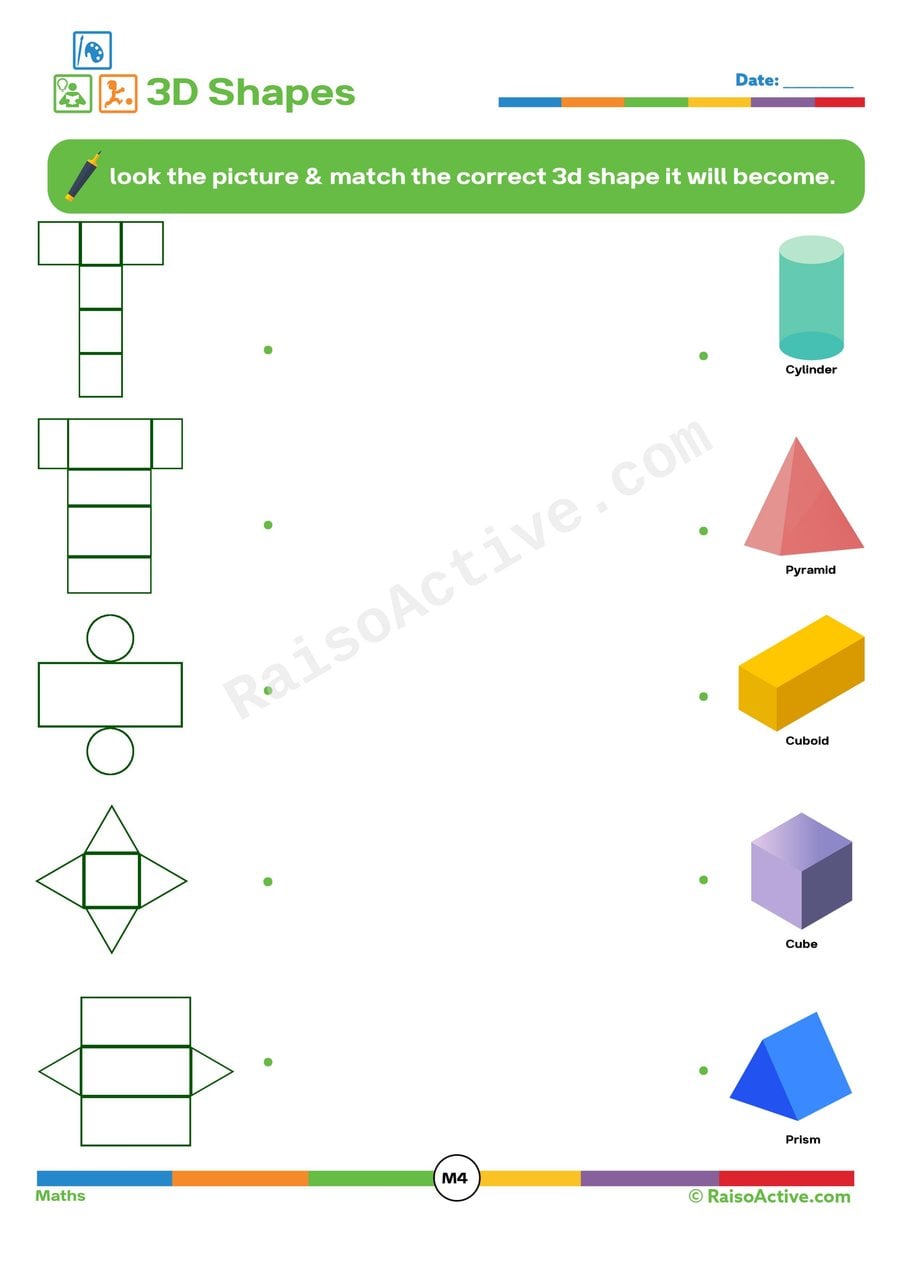
3D Shapes Matching Worksheet for Preschoolers
Connecting a flat, unfolded 2D net to the 3D shape it forms when folded builds spatial reasoning for children ages 3-5, an early introduction to geometry that helps them visualize how flat surfaces combine into solid forms like cubes and cones.

Match the Letter: N, O, P Worksheet for Preschoolers
Drawing a line from an uppercase letter to a picture that starts with the same sound reinforces letter-sound correspondence for children ages 3-5, connecting the shape of N, O, and P to their spoken sounds.

Number Names Matching Worksheet for Preschoolers
This worksheet helps children ages 3-5 connect written number names, like 'three' or 'seven,' to the numeral they represent, an important step beyond simply recognizing digits since it introduces reading actual number words. Decoding a color clue to figure out and write each number name first adds an extra layer of visual attention before the matching step even begins.
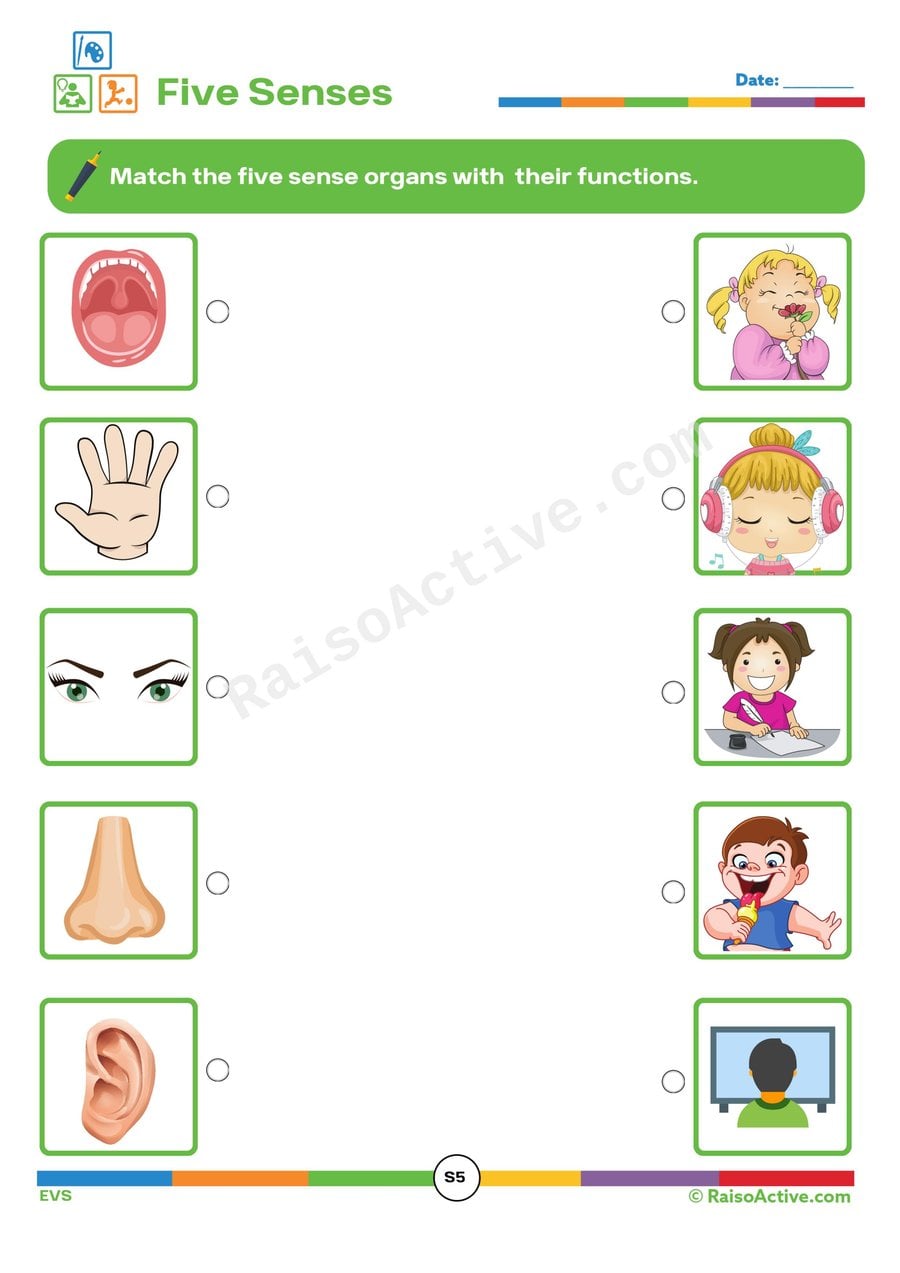
Five Senses Matching Worksheet for Preschoolers
Matching each sense organ, eyes, nose, ears, hands, mouth, to its correct function teaches children the basic science of how their bodies gather information about the world, an early concept in human biology. For ages three to five, connecting a body part to a specific job, eyes for seeing, nose for smelling, also builds descriptive vocabulary they can use to talk about their everyday experiences.

Treasure Hunt: Alphabetical Order Worksheet for Preschoolers
This connect-the-letters worksheet has children ages 3-5 trace a path from A to Z in strict alphabetical order to help a character find hidden treasure, combining full alphabet sequencing practice with sustained fine motor control as they draw one long connected line. Successfully sequencing the entire alphabet in order, rather than just naming letters individually, is a meaningful milestone in early literacy.
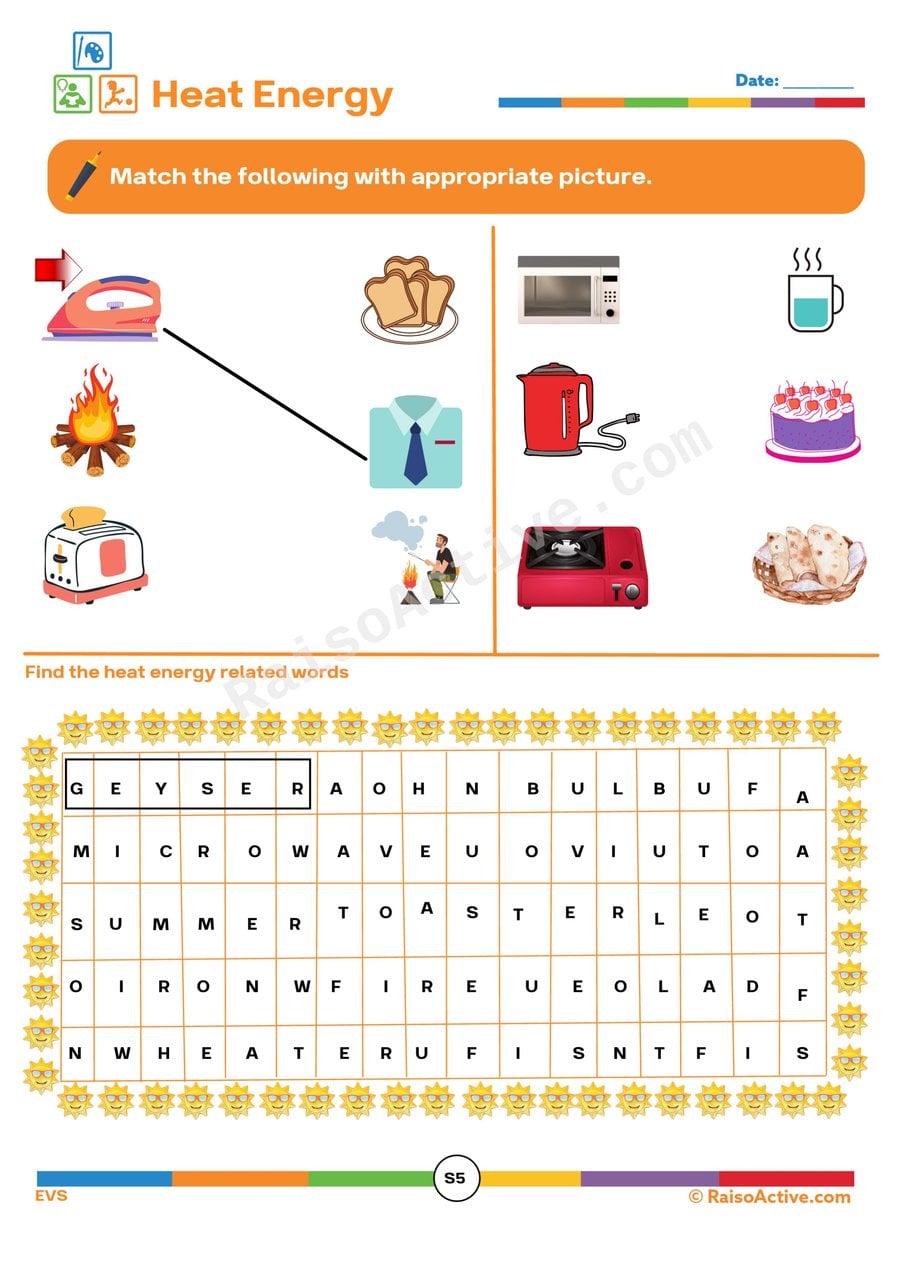
Heat Energy Matching Worksheet for Preschoolers
This worksheet narrows the broad concept of energy down to one specific, easy-to-observe type — heat — and asks children ages 3-5 to match everyday objects to pictures representing heat energy, like a stove, the sun, or a fire. Because heat is something children can directly feel and observe, it's an excellent entry point for early science vocabulary before moving to more abstract energy types like electricity. The word search portion adds early literacy practice, asking children to visually scan for heat-related vocabulary words among a grid of letters.
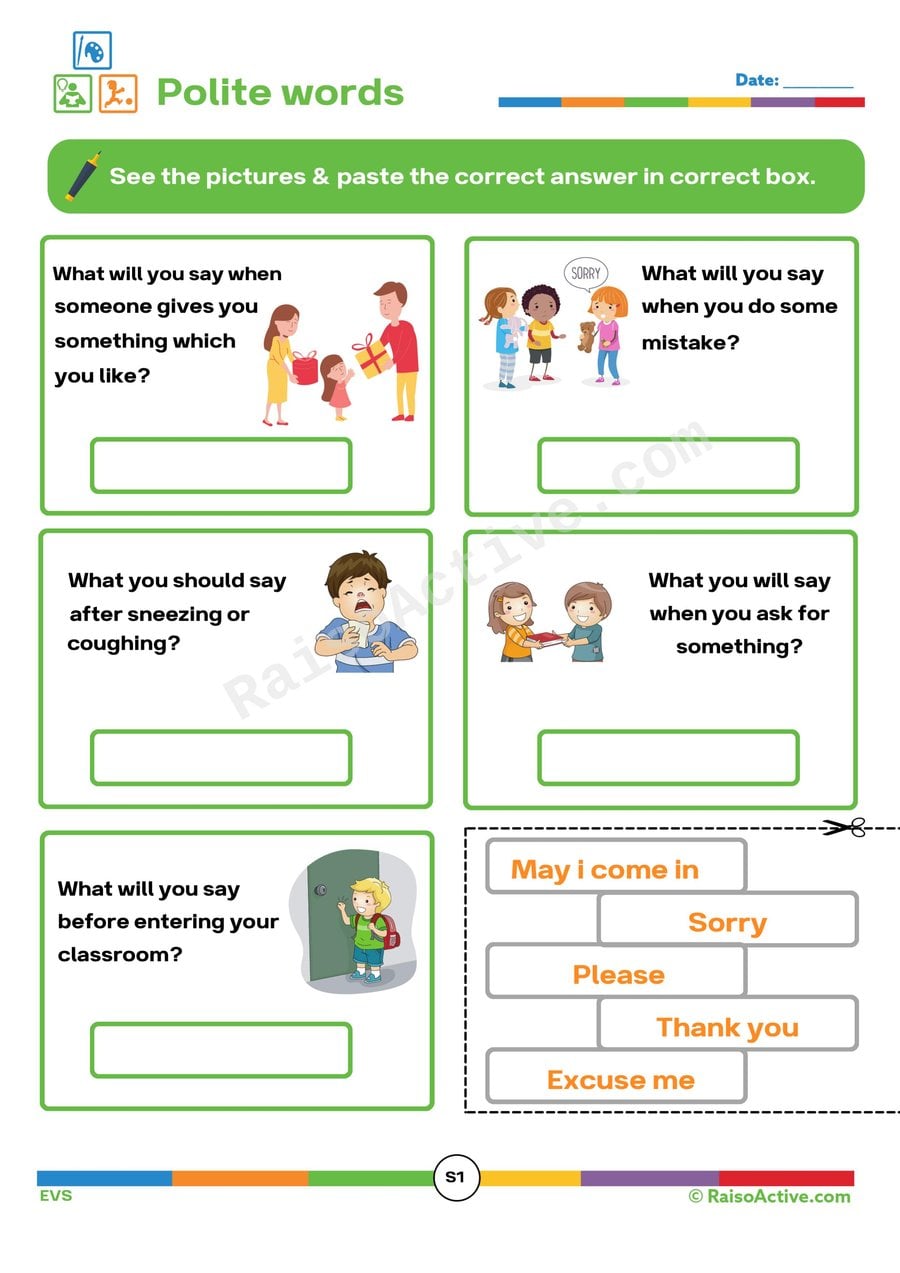
Polite Words Worksheet: Matching and Application
Matching pictures and scenarios to the right polite word teaches children ages 3-5 when and why to use phrases like please, thank you, sorry, and excuse me, building the pragmatic language skills needed for real social interactions. This kind of practice helps young children connect a word not just to its meaning but to the specific situation that calls for it.

Read and Match: Sentence Matching Worksheet for Preschoolers
This worksheet has 3-5 year olds read a short, simple sentence and then find and paste the one picture that actually matches its meaning — a task that requires genuine reading comprehension rather than picture-guessing, since more than one image on the page might look similar at a glance. Because the child has to hold the sentence's meaning in mind while comparing several picture options, this builds an early bridge between decoding words and understanding what they describe.

Christmas Matching Worksheet for Preschoolers: Find the Identical Objects!
Comparing objects in a row to find the one that exactly matches the first picture builds visual discrimination in children ages 3-5, a skill that requires noticing small differences in shape, color, and detail. This kind of close looking is a direct precursor to letter recognition, since young readers must later tell apart similarly shaped letters like b and d using the same careful visual comparison. The Christmas theme keeps the repetitive matching task feeling festive rather than tedious.

Match the Bird Shadows Worksheet for Preschoolers
Matching bird pictures to their correct shadows sharpens visual discrimination for children ages 3-5, requiring them to focus on outline and shape rather than color or detail, since a shadow strips away everything but silhouette. This kind of shape-matching task builds the careful observation skills that support later letter and word recognition, where subtle shape differences also matter.
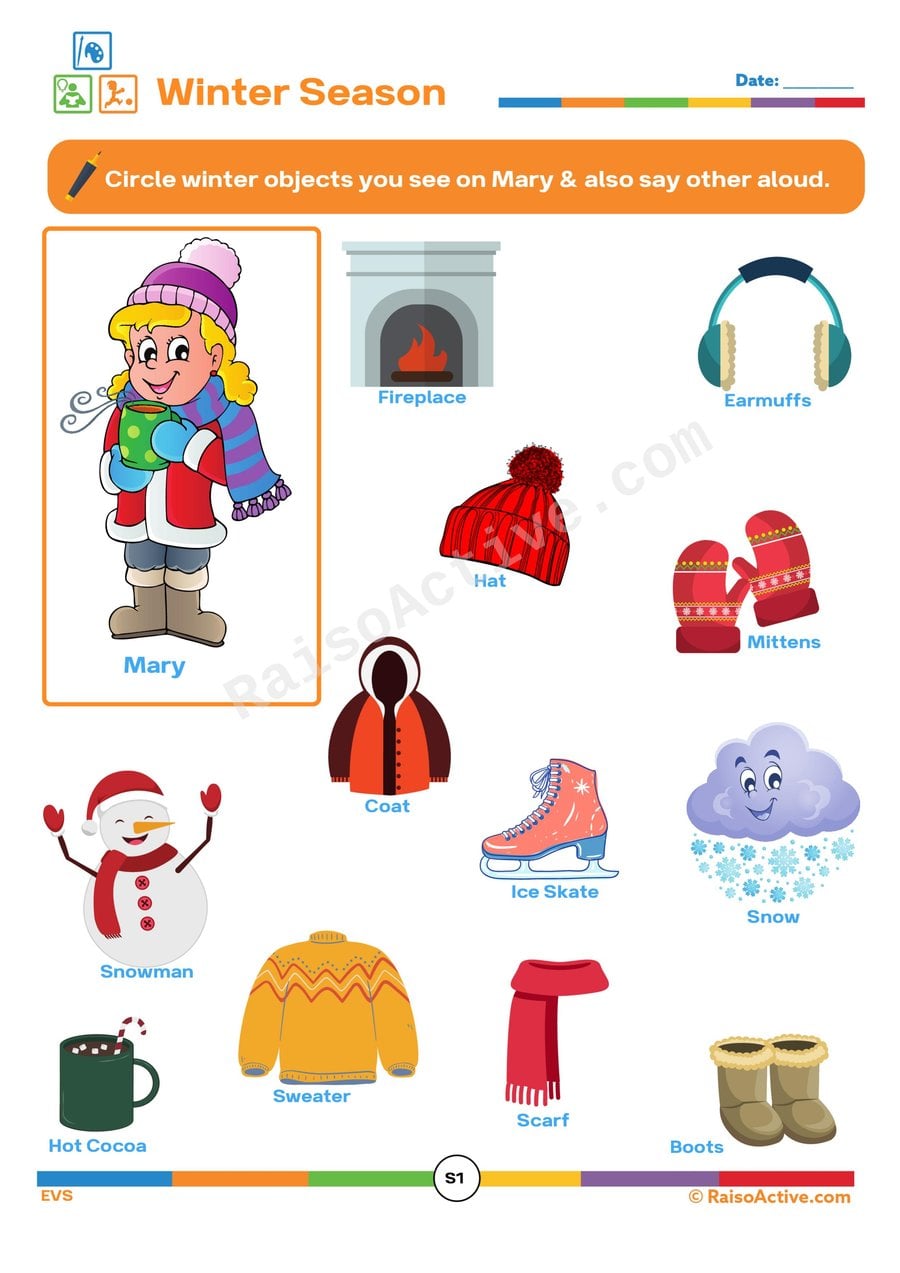
Winter Objects Worksheet: Circle and Say!
Identifying winter-related objects on this worksheet builds vocabulary and seasonal awareness for children ages 3-5, teaching them to associate specific items, like scarves, mittens, and snowflakes, with a particular time of year. Circling objects within a larger picture also sharpens visual scanning skills, requiring children to search carefully rather than glance at the whole image at once.

Rainy Day Fun: Circle the Rainy Season Items Worksheet
This worksheet helps children ages 3-5 identify items commonly used during the rainy season, like umbrellas, boots, and raincoats, by looking at a mixed set of pictures and circling only the ones that belong to rainy weather. Sorting relevant from irrelevant items this way builds early categorization and observation skills.
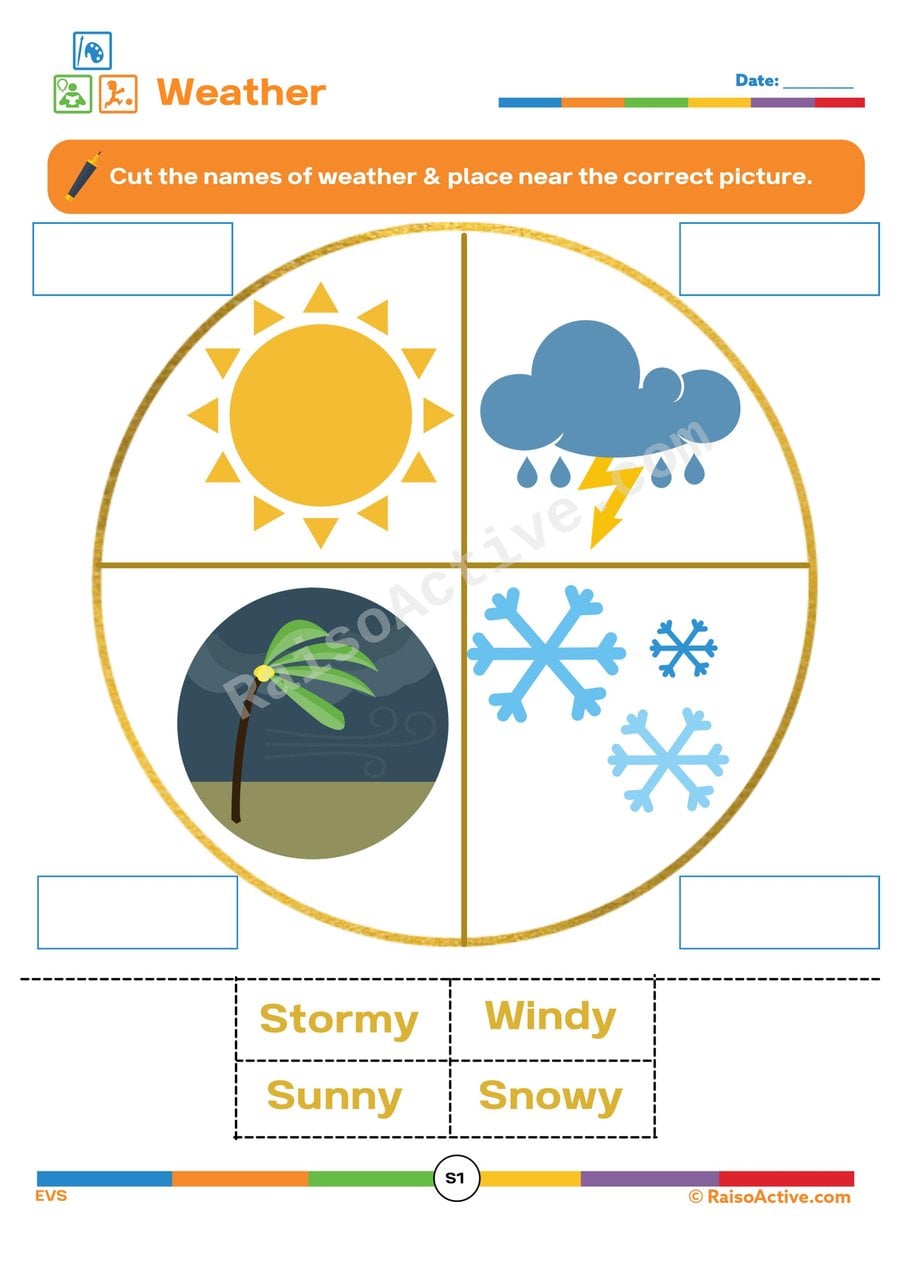
Weather Matching Worksheet for Preschoolers
Cutting out weather name labels and gluing them beside the matching picture teaches children ages 3-5 vocabulary for common weather types, like sunny, rainy, or snowy, while connecting a written word to something they can observe outside every day. Because the labels must be read and correctly matched rather than simply circled, this worksheet also builds early sight-word recognition tied to real, familiar concepts. Weather is something children experience daily, which makes this an especially concrete entry point into word-to-picture matching.

Landforms Worksheet: Identify and Tick the Correct Answer!
Looking at pictures of landforms like volcanoes, glaciers, and islands and choosing the correct name from two options teaches children ages 3-5 early earth science vocabulary while building visual discrimination between different natural features. Because each landform has a distinct silhouette, shape, and texture, children practice careful observation of details, like noticing that a volcano has a cone shape while an island is surrounded by water. This worksheet introduces basic geography concepts in a way that's grounded in pictures rather than abstract explanation.
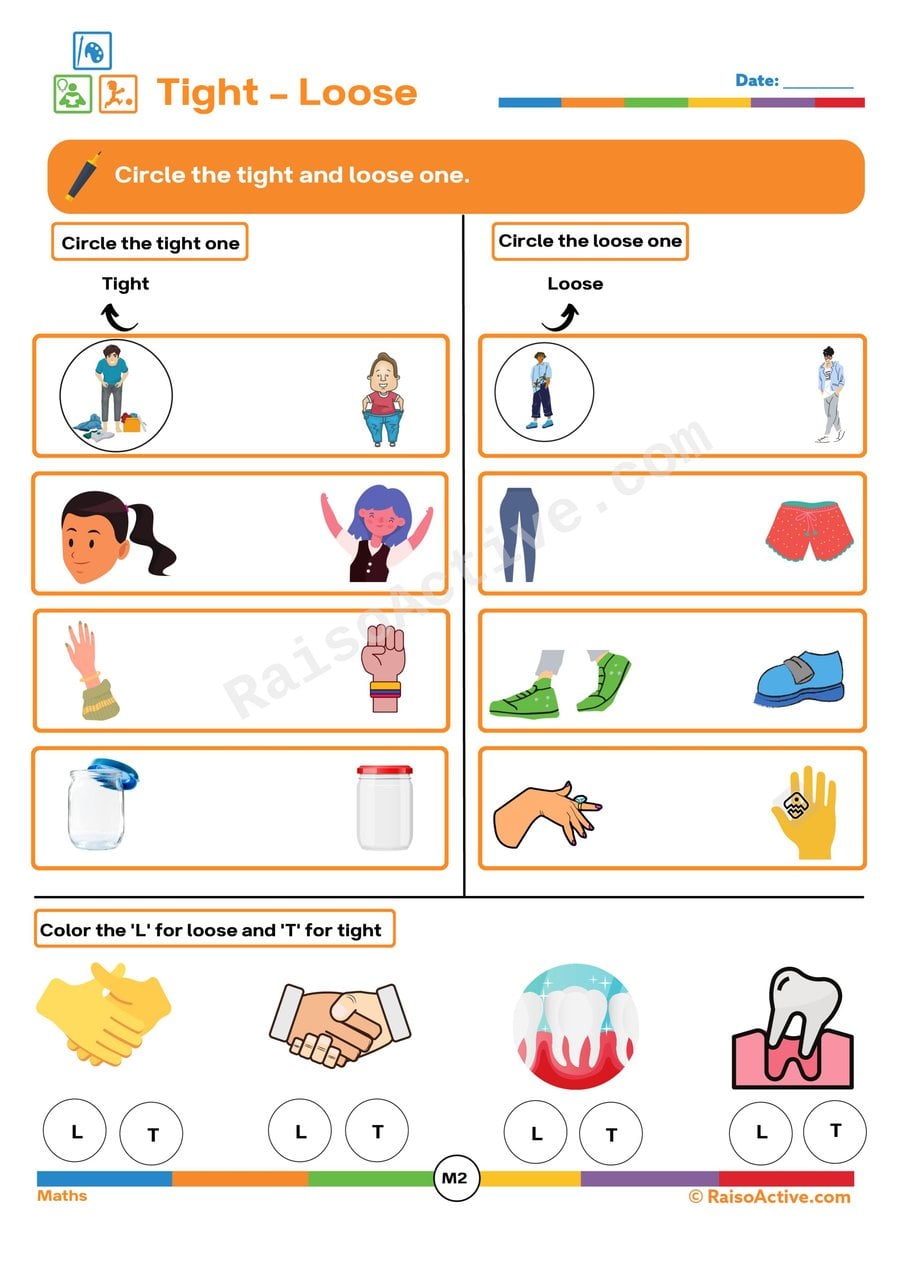
Tight and Loose Worksheet: Circle and Color!
Understanding opposite pairs like 'tight' and 'loose' helps children ages 3-5 build descriptive vocabulary and comparative thinking, skills that support both language development and early reasoning about physical properties. This worksheet asks children to look closely at pictured items — like shoelaces, screws, or clothing — and judge which state each one is in, which sharpens observation skills alongside vocabulary. Learning opposites like this also lays groundwork for later concepts such as measurement and comparison in math.

Diamond Shape Counting and Matching Worksheet for Preschoolers
This diamond-themed worksheet helps 3-5 year olds tell a diamond apart from squares, circles, and triangles by its four slanted sides and pointed top and bottom, a shape many preschoolers find trickier than rounder or more symmetrical ones. Counting the diamonds one at a time builds one-to-one correspondence, and matching same-sized diamonds strengthens visual discrimination, the skill of spotting small differences between similar-looking shapes.

Emotions Worksheet: Match the Emoji to the Feeling!
This worksheet helps children ages 3-5 identify and understand different emotions by comparing a child's facial expression in a picture to a set of emoji faces and choosing the one that matches. Learning to read facial cues and name feelings is a foundational social-emotional skill that helps children both recognize their own emotions and empathize with others.
What Preschool matching worksheets cover
Three-year-olds move from identical pictures to pairs that go together for a reason: a colored animal and its black shadow, the two halves of a cut-apart picture, a bird and its nest, a toothbrush and toothpaste. Most can now draw a wobbly line between partners placed opposite each other in two columns. Keep four to six pairs per sheet. Shuffled columns and letter or number pairs are still a year away.
- Draw a line from each animal to its black shadow
- Join the two halves of a picture that was cut apart
- Match each animal to the place where it lives
- Pair an object with the thing it is used with
- Find the one picture that does not belong among four
How to use these worksheets at home or in class
Five minutes is a solid session for a three-year-old, ten minutes the practical ceiling. Offer a thick crayon or a short fat pencil, sit beside your child, and treat the sheet as one activity among blocks, stories and outdoor play rather than as schoolwork.
Start with the sheet that matches what your child can already do, then move one step up. Keep finished sheets in a folder: Preschool teachers often ask for evidence of practice, and children like seeing their own progress.
Is your child ready for Preschool matching work?
A child ready for these activities holds a crayon and makes deliberate marks, sits at a table briefly, follows a single spoken instruction, and shows some interest in the letters of their own name or the numbers they hear counted aloud.
Frequently asked questions
How many pairs should be on a matching sheet for a three-year-old?
Four to six, laid out in two columns with each partner directly opposite, is about right at this age. More pairs than that turn the sheet into a visual search, which most three-year-olds cannot yet do systematically, and the lines start crossing. Once a child completes a six-pair sheet without help, keep the count the same and shuffle the second column before adding more pairs.
What should a Preschool child be able to do in matching?
Three-year-olds move from identical pictures to pairs that go together for a reason: a colored animal and its black shadow, the two halves of a cut-apart picture, a bird and its nest, a toothbrush and toothpaste. Most can now draw a wobbly line between partners placed opposite each other in two columns. Keep four to six pairs per sheet. Shuffled columns and letter or number pairs are still a year away. A child ready for these activities holds a crayon and makes deliberate marks, sits at a table briefly, follows a single spoken instruction, and shows some interest in the letters of their own name or the numbers they hear counted aloud.
Do these worksheets follow the Preschool curriculum?
The sheets cover identifying identical pairs, matching an object to its category, matching uppercase letters to lowercase and matching a numeral to a quantity, which sit inside the Head Start Early Learning Outcomes Framework (ELOF) outcomes for Preschool. Nursery (UK), Nursery (India) use the same skills at this age, so the sheets also fit families following those programmes.
Are these Preschool matching worksheets free?
Yes. Each worksheet downloads free as a watermarked PDF once you create an account, with a limit of five a day. An annual membership ($20) removes the watermark and the limit for the whole library of over 1,000 worksheets and every printable pack.

Written by
Hemsweta Jain · Teacher Cheena
MBA and Early Childhood Educator, teaching since 2014 · Founder of RaisoActive, Mumbai
Written and reviewed by Hemsweta Jain (Teacher Cheena), who designs every RaisoActive worksheet.
Last reviewed
Printable packs for ages 3–4
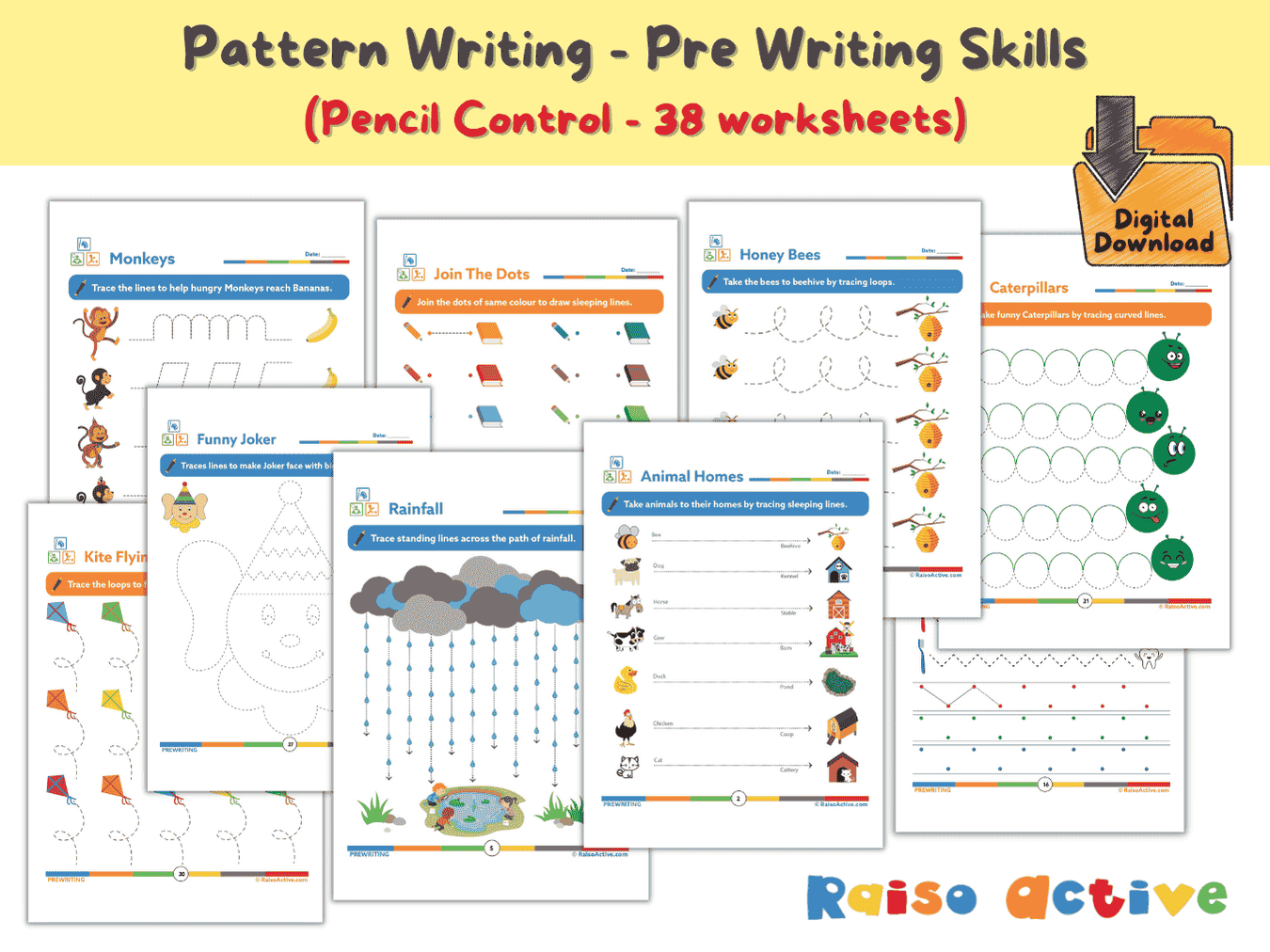
Pattern Writing Pre-writing Skills Activity Book for 3-4 Year Olds
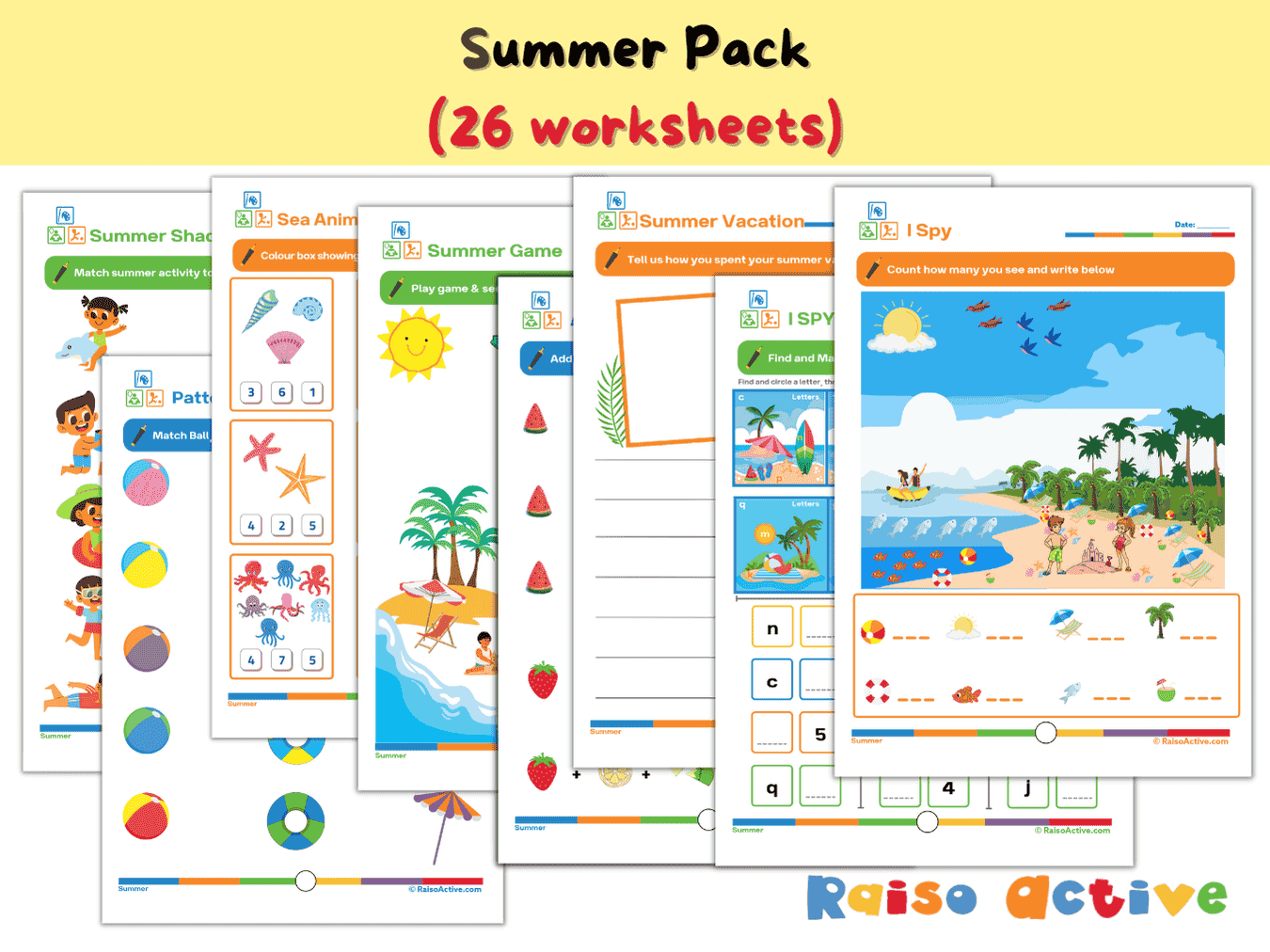
Summer Activity Pack: Math, Literacy, Puzzles & More for Preschool & Kindergarten
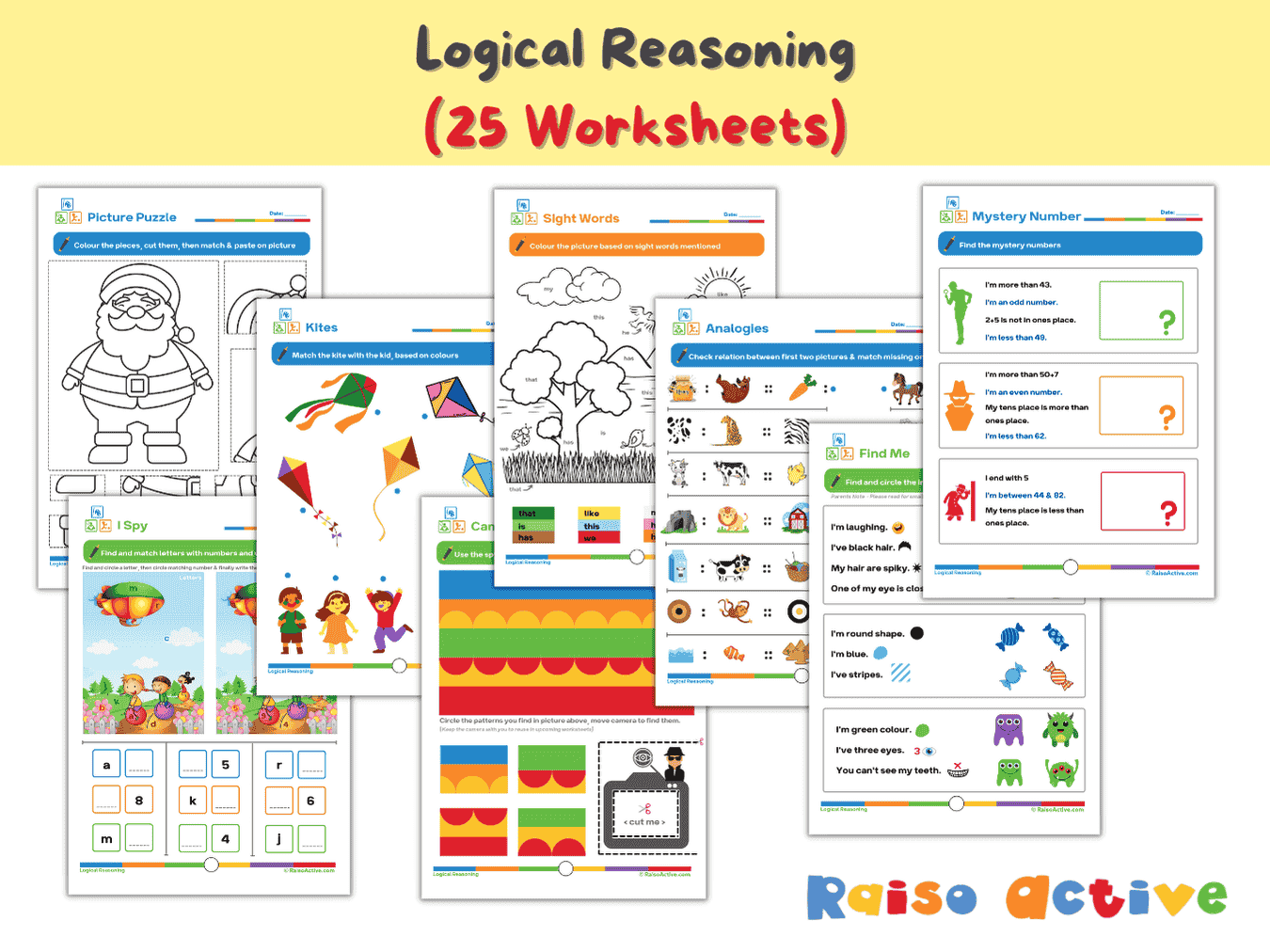
Logical Reasoning Activity Book for Preschool & Kindergarten | Patterns, Puzzles & Analogies
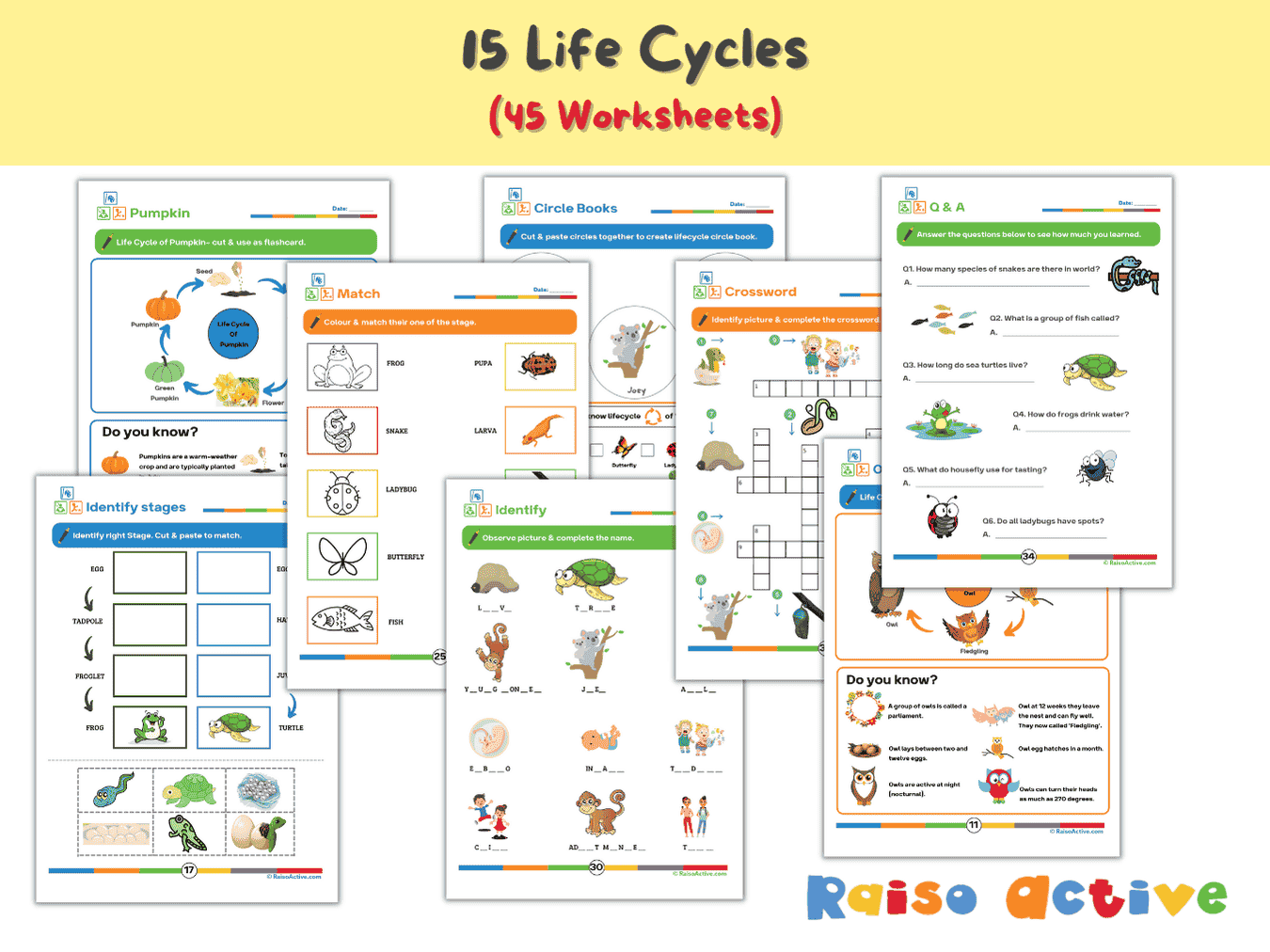
Lifecycles Activity Book & Flashcards for Preschool & Early Elementary
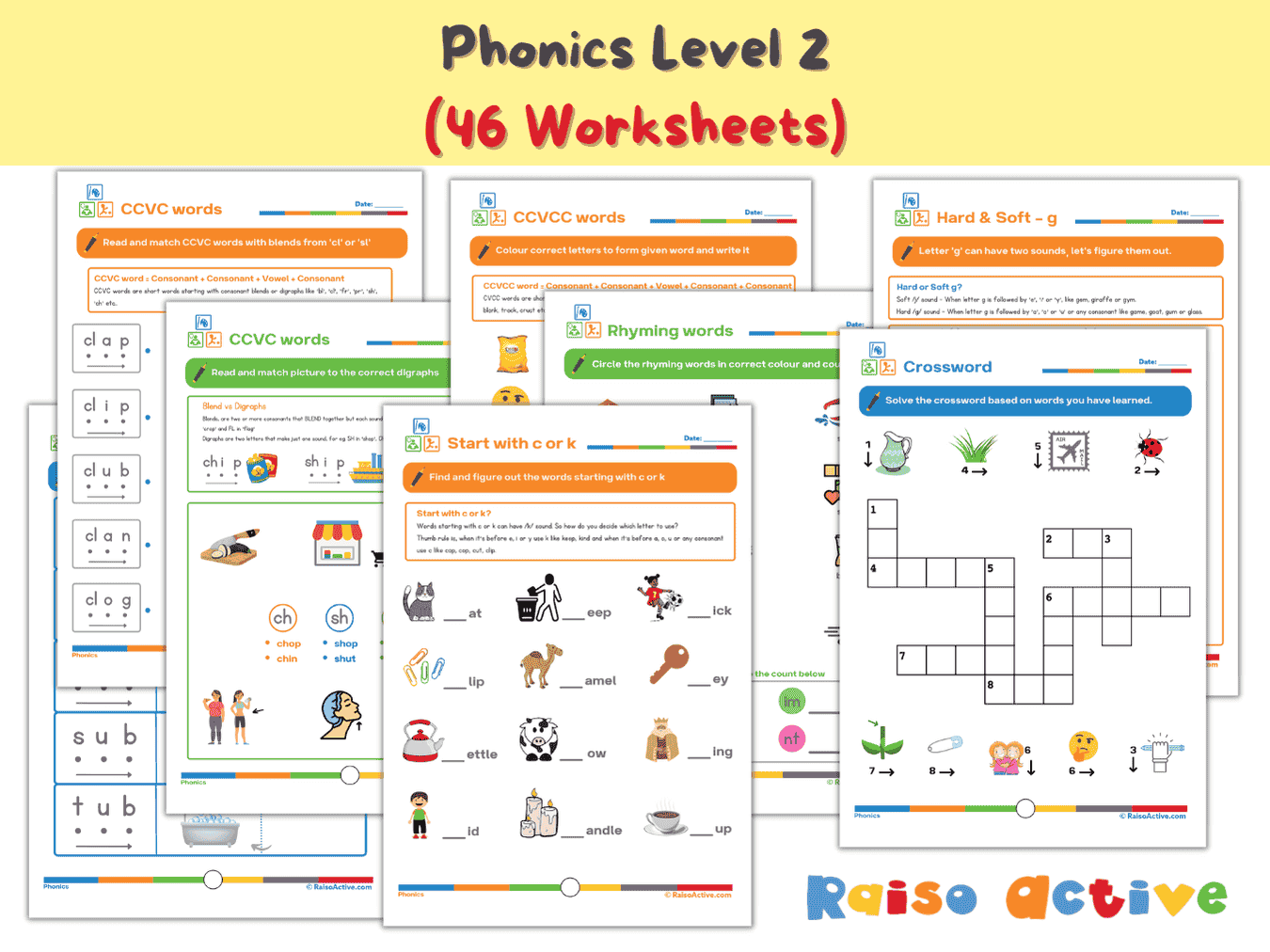
Phonics Level 2 Worksheets: CVC, CCVC, CVCC Word Families & Blends for Early Readers (Ages 4-7)
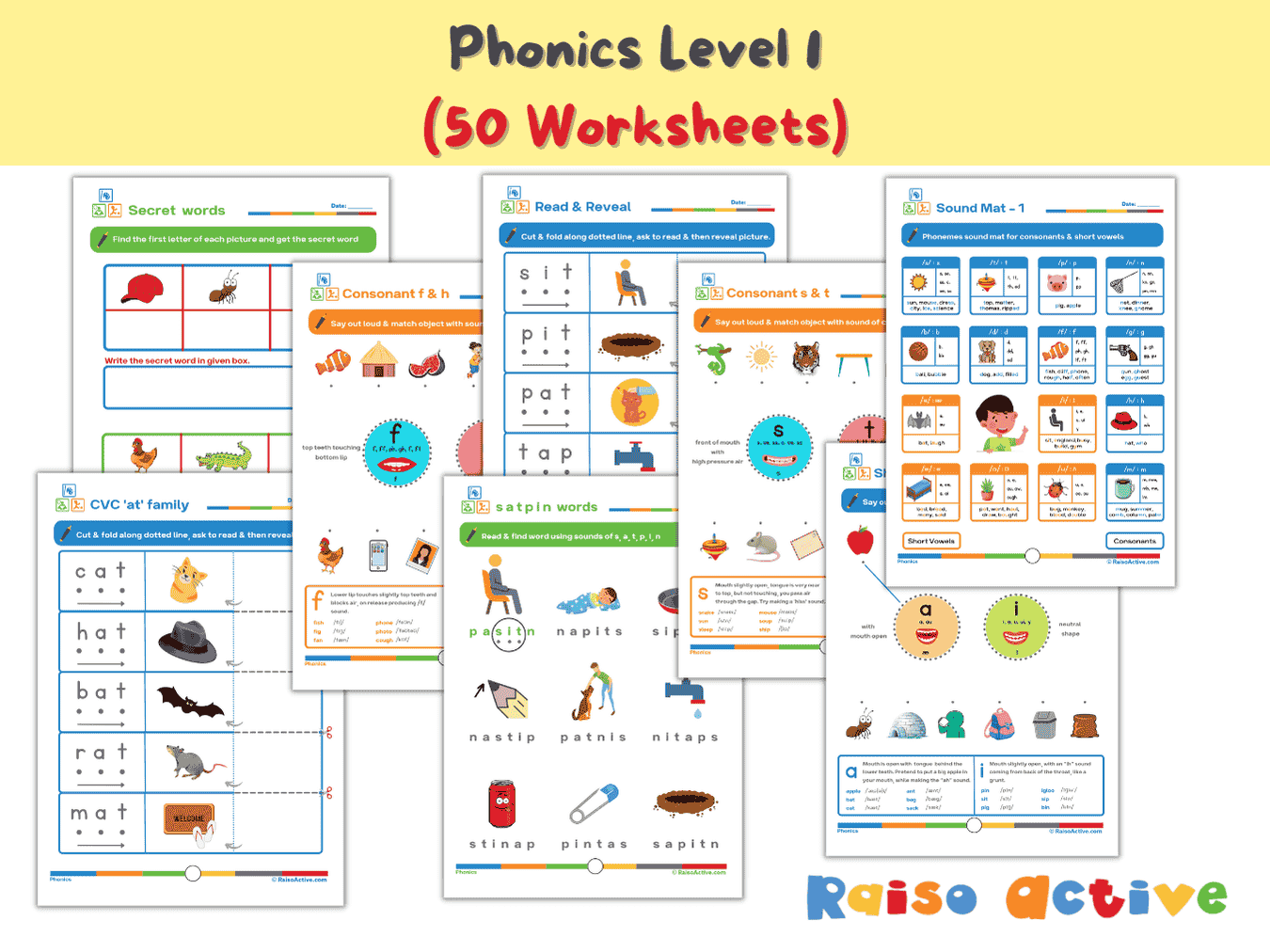
Phonics Level 1 Activity Book: Letter Sounds, Blending & CVC Words for Preschool & Kindergarten
Guides for parents and teachers
See all guides →Best Worksheets for 3-Year-Olds: What Works and What to Avoid
What works on worksheets for 3-year-olds: short sessions, crayons, tracing lines, matching, cutting, a free weekly plan, and signs one is too advanced.
Age-Appropriate Problem-Solving Activities: Building Critical Thinkers from the Ground Up
Discover fun, age-appropriate problem-solving activities for children ages 1-8. Build critical thinking, logic, and reasoning skills through play-based learning.
Critical Thinking Activities That Actually Work for Young Children: Building Tomorrow's Thinkers Today
Discover proven critical thinking activities for young children. Age-wise logic games, questioning techniques, and hands-on ideas to build thinking skills at home.
Coding Activities for Preschoolers: Building Tomorrow's Thinkers Today
Discover 15+ unplugged and screen-based coding activities for preschoolers that build sequencing, logic, and problem-solving skills through play. NEP 2020 aligned.
Canonical: https://raisoactive.com/worksheets/preschool-matching