Match the Letter: N, O, P Worksheet for Preschoolers
Drawing a line from an uppercase letter to a picture that starts with the same sound reinforces letter-sound correspondence for children ages 3-5, connecting the shape of N, O, and P to their spoken sounds.
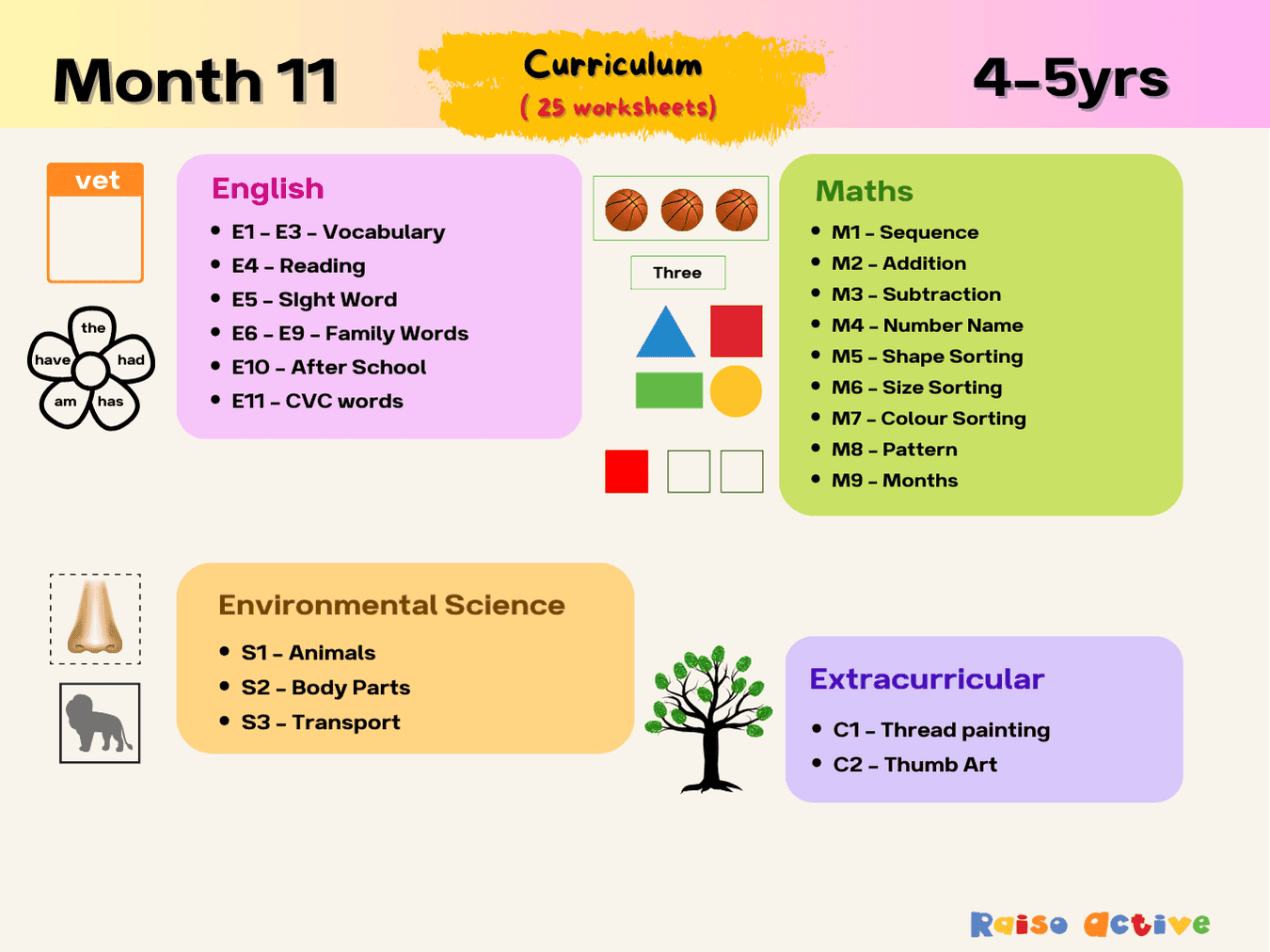
Part of the pack
Month 11: Learning & Development | Ages 4-5
This is page 6 of the pack. Ages 4-5 · Pre-KAges 4-5 · ReceptionAges 4-5 · LKGAges 4-5

Made for your child
Counting to 10, made for your child
A maths pack with your child's name in it: pictures that explain, practice at three levels, puzzles and story sums about them. Print a new set whenever they finish.
Make a maths packFree preview · free for members
Curriculum
- Alphabet > Alphabet Sequence
How to use this worksheet
Look at the letters on the left side of the worksheet and say each one aloud. Scan the pictures on the right and identify which one starts with that letter's sound. Draw a line connecting the letter to its matching picture, then repeat for the remaining letters N, O, and P.
Materials needed
- Pencil
- Crayons
Extension activities
- 1Find objects around the house that start with the letters N, O, and P.
- 2Practice writing the letters N, O, and P on scrap paper.
- 3Create a collage of pictures that start with these letters.
- 4Play a matching card game using the same letters and pictures.

Written by
Hemsweta Jain · Teacher Cheena
MBA and Early Childhood Educator, teaching since 2014 · Founder of RaisoActive, Mumbai
Every RaisoActive worksheet is designed and checked by the founder before publishing.
Published · Last reviewed
More from Month 11: Learning & Development | Ages 4-5

Letter Sounds: Cut and Paste 'Ii' and 'Jj' Pictures Worksheet
Ages 3-5 · Preschool–Pre-KAges 3-5 · Nursery–ReceptionAges 3-5 · Nursery–LKGAges 3-5
Sorting pictures by their beginning sound into 'Ii' and 'Jj' groups builds phonemic awareness for children ages 3-5, training their ear to isolate the first sound of a word before connecting it to its written letter.
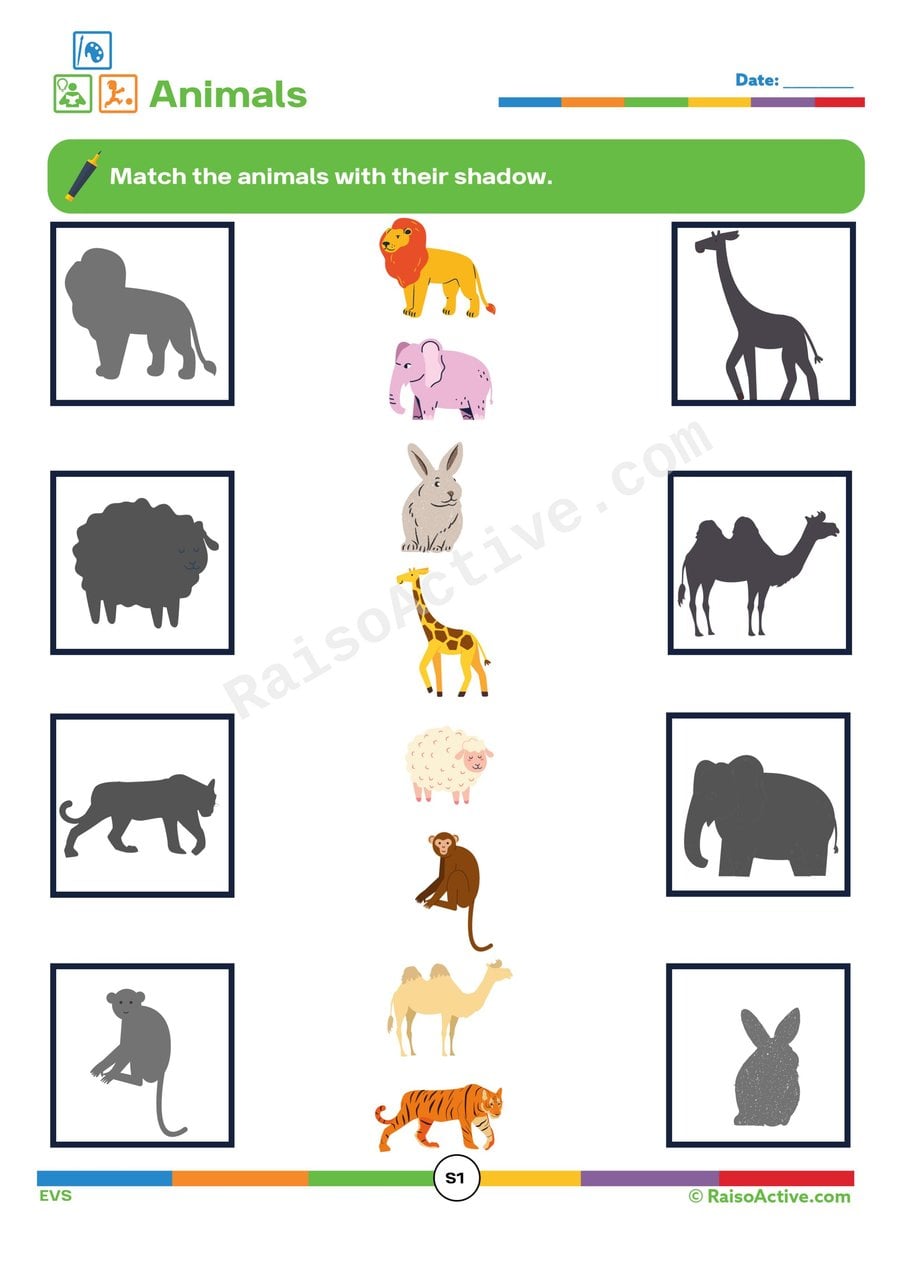
Animal Shadow Match Worksheet for Preschoolers
Ages 3-5 · Preschool–Pre-KAges 3-5 · Nursery–ReceptionAges 3-5 · Nursery–LKGAges 3-5
This worksheet builds visual discrimination skills for children ages 3-5 by having them match each animal to its correct silhouette or shadow shape. Because a shadow strips away color and detail, leaving only outline and proportion, this task requires more careful visual analysis than typical picture matching, sharpening the kind of attention to shape and form that supports later letter and word recognition.

Color Sorting Worksheet: Cut and Paste the Pictures!
Ages 3-5 · Preschool–Pre-KAges 3-5 · Nursery–ReceptionAges 3-5 · Nursery–LKGAges 3-5
This worksheet helps children ages 3-5 practice color recognition and sorting by cutting out pictures and gluing each one into the row matching its color. Physically sorting objects by a single shared attribute, like color, builds early categorization skills, while the cutting and gluing strengthens fine motor coordination needed for more complex craft and writing tasks later on.

Zen the Hen CVC Word Worksheet for Early Readers
Ages 3-5 · Preschool–Pre-KAges 3-5 · Nursery–ReceptionAges 3-5 · Nursery–LKGAges 3-5
This worksheet uses a short story about 'Zen the Hen' to give children ages 3-5 practice reading and completing CVC (consonant-vowel-consonant) words, one of the earliest and most important word patterns in learning to read. Filling in missing CVC words within a story context, rather than in isolation, helps children see how decoding skills apply to real reading, building both phonics and comprehension together.

Addition Fun: Add and Match the Numbers! (Worksheet)
Ages 4-6 · Pre-K–KindergartenAges 4-6 · Reception–Year 1Ages 4-6 · LKG–UKGAges 4-6
Children ages 4-6 practice basic addition by counting two groups of pictured objects, finding their total, and then matching that sum to the correct number, combining counting, addition, and visual matching in a single activity. Drawing a line to connect an answer to its number reinforces that a math sentence and a numeral represent exactly the same quantity.

Months of the Year Cut and Paste Worksheet for Kids
Ages 3-5 · Preschool–Pre-KAges 3-5 · Nursery–ReceptionAges 3-5 · Nursery–LKGAges 3-5
Cutting out the months of the year and gluing them in the correct order builds sequencing skills and calendar vocabulary for children ages 3-5, an early step toward understanding how time is organized across a year.

Family Words Worksheet: Matching and Picture Association
Ages 4-5 · Pre-KAges 4-5 · ReceptionAges 4-5 · LKGAges 4-5
Children ages 4-5 build vocabulary and reading recognition around family-member words — like mom, dad, sister, or brother — by first identifying the correct word for a picture, then matching printed words to pictures through cutting and pasting. Because family vocabulary is deeply familiar and emotionally meaningful, it's an especially effective category for anchoring new sight words in a child's memory.
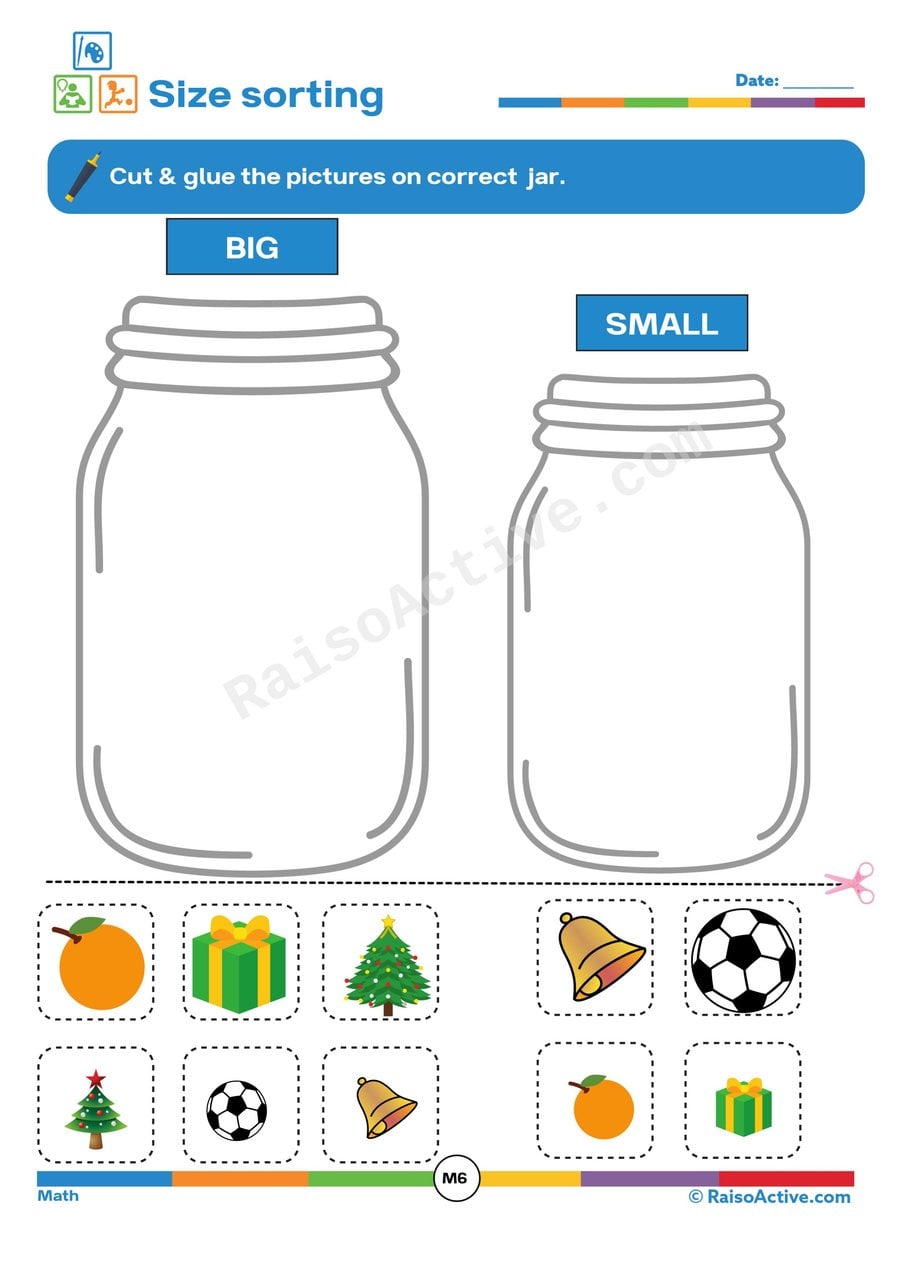
Size Sorting Worksheet: Big vs. Small!
Ages 3-5 · Preschool–Pre-KAges 3-5 · Nursery–ReceptionAges 3-5 · Nursery–LKGAges 3-5
Deciding whether a cut-out picture is big or small and gluing it into the correct jar builds comparative reasoning for children ages 3-5, an early step toward understanding relative size before moving into formal measurement.
Related worksheets
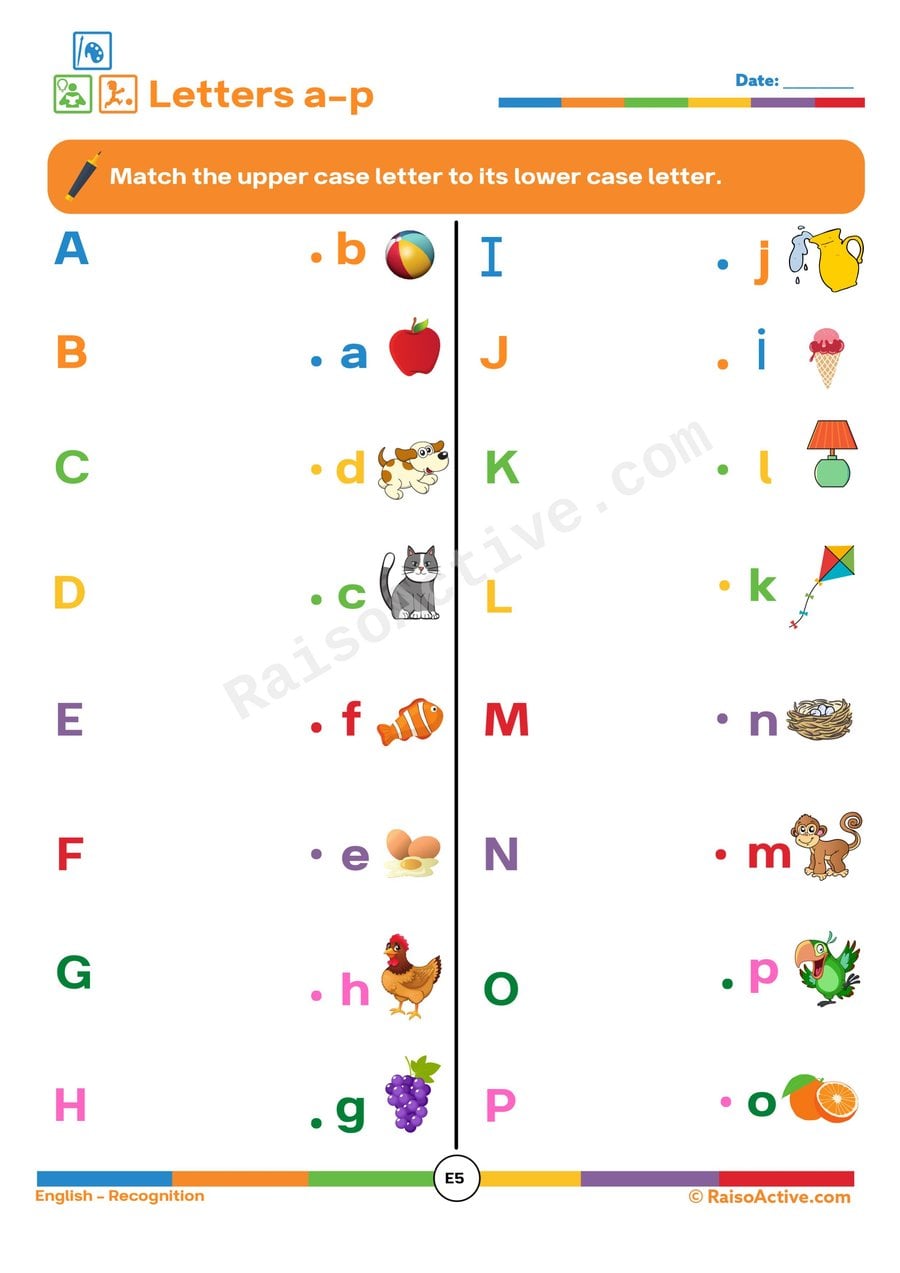
Match the Uppercase Letters: A-P Worksheet
Ages 4-5 · Pre-KAges 4-5 · ReceptionAges 4-5 · LKGAges 4-5
This worksheet strengthens your child's visual discrimination skills by focusing on uppercase letters from A to P. Children aged 4-5 years develop crucial pre-reading abilities as they learn to identify and pair identical letter forms. Mastering this matching task builds a strong foundation for future letter recognition and early literacy success.
Five Days of Diwali: Dhanteras to Bhai Dooj Picture Match
Ages 4-6 · Pre-K–KindergartenAges 4-6 · Reception–Year 1Ages 4-6 · LKG–UKGAges 4-6
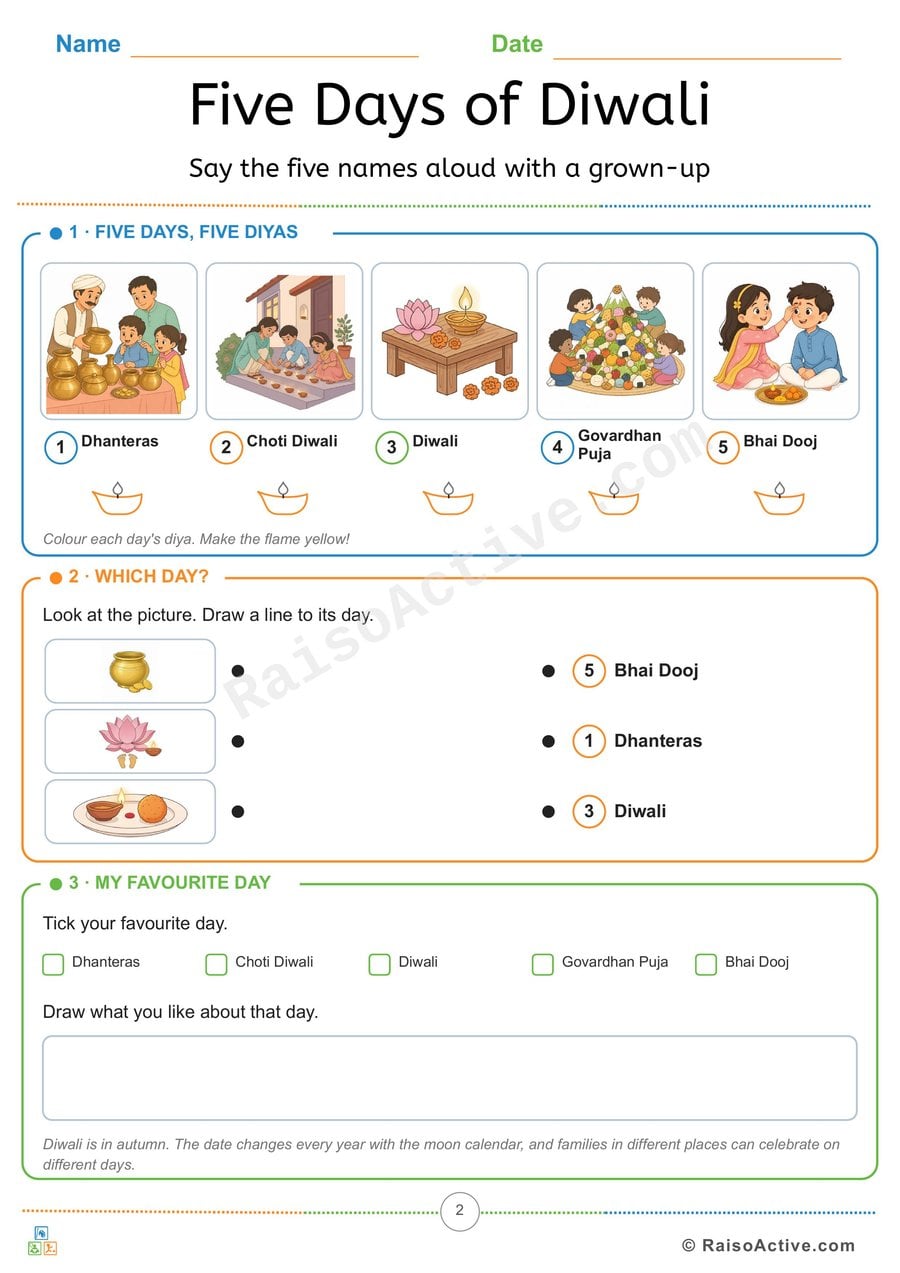
Children meet the five days of Diwali in order: Dhanteras, Choti Diwali, Diwali, Govardhan Puja and Bhai Dooj. They match a picture to each day, colour a diya for every day and say the names aloud with a grown-up.

Balloon Pattern Matching Worksheet for Preschoolers
Ages 3-5 · Preschool–Pre-KAges 3-5 · Nursery–ReceptionAges 3-5 · Nursery–LKGAges 3-5
Children ages 3-5 build early pattern-recognition skills on this worksheet by studying a sequence of colored balloons and finding the matching set to complete it. Recognizing and continuing a repeating sequence is a foundational pre-math skill that later supports understanding of number patterns, skip counting, and simple algebraic thinking.

Navratri Look Closely: Spot the Difference and Shadow Match
Ages 4-6 · Pre-K–KindergartenAges 4-6 · Reception–Year 1Ages 4-6 · LKG–UKGAges 4-6
Children compare two pictures carefully to find what is different and match objects to their shadows by looking at shape.
Phonics Level 2 Answer Key
Ages 4-7 · Pre-K–Grade 1Ages 4-7 · Reception–Year 2Ages 4-7 · LKG–Class 1Ages 4-7
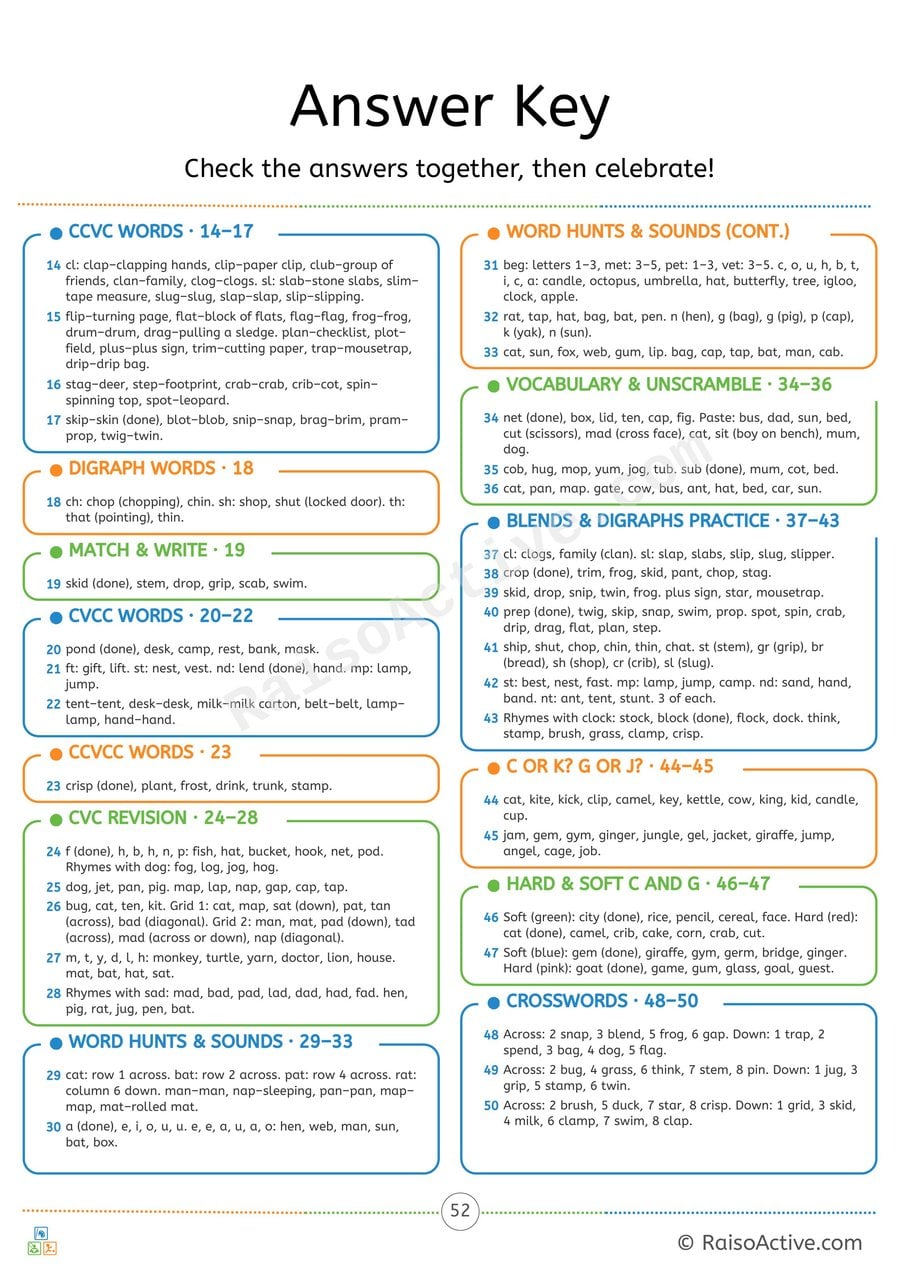
Grown-ups can check the answers for every page in the pack that has one right answer, grouped by section.

Phonics Level 2 Sound Mat 4: Consonant Blends and ck
Ages 4-7 · Pre-K–Grade 1Ages 4-7 · Reception–Year 2Ages 4-7 · LKG–Class 1Ages 4-7
Children see how two consonants keep both their sounds in a blend, at the start of words (bl, cl, fl, sl, br, cr, dr, tr, st, sw) and at the end (nd, nt, mp), and that ck makes one /k/ sound.

Stick Man Emotions Worksheet: Happy, Sad, Angry, and Surprised!
Ages 4-6 · Pre-K–KindergartenAges 4-6 · Reception–Year 1Ages 4-6 · LKG–UKGAges 4-6
Children ages 4-6 practice reading facial expressions on this worksheet, matching stick-figure faces to their correct emotion labels by noticing details like mouth shape and eyebrow position. This strengthens emotional literacy — the ability to name and recognize feelings in others — which supports empathy and smoother social interactions as children move into more group play and classroom settings.
Stick Man Emotions Worksheet: Happy, Sad, Angry & Surprised!
Ages 3-5 · Preschool–Pre-KAges 3-5 · Nursery–ReceptionAges 3-5 · Nursery–LKGAges 3-5
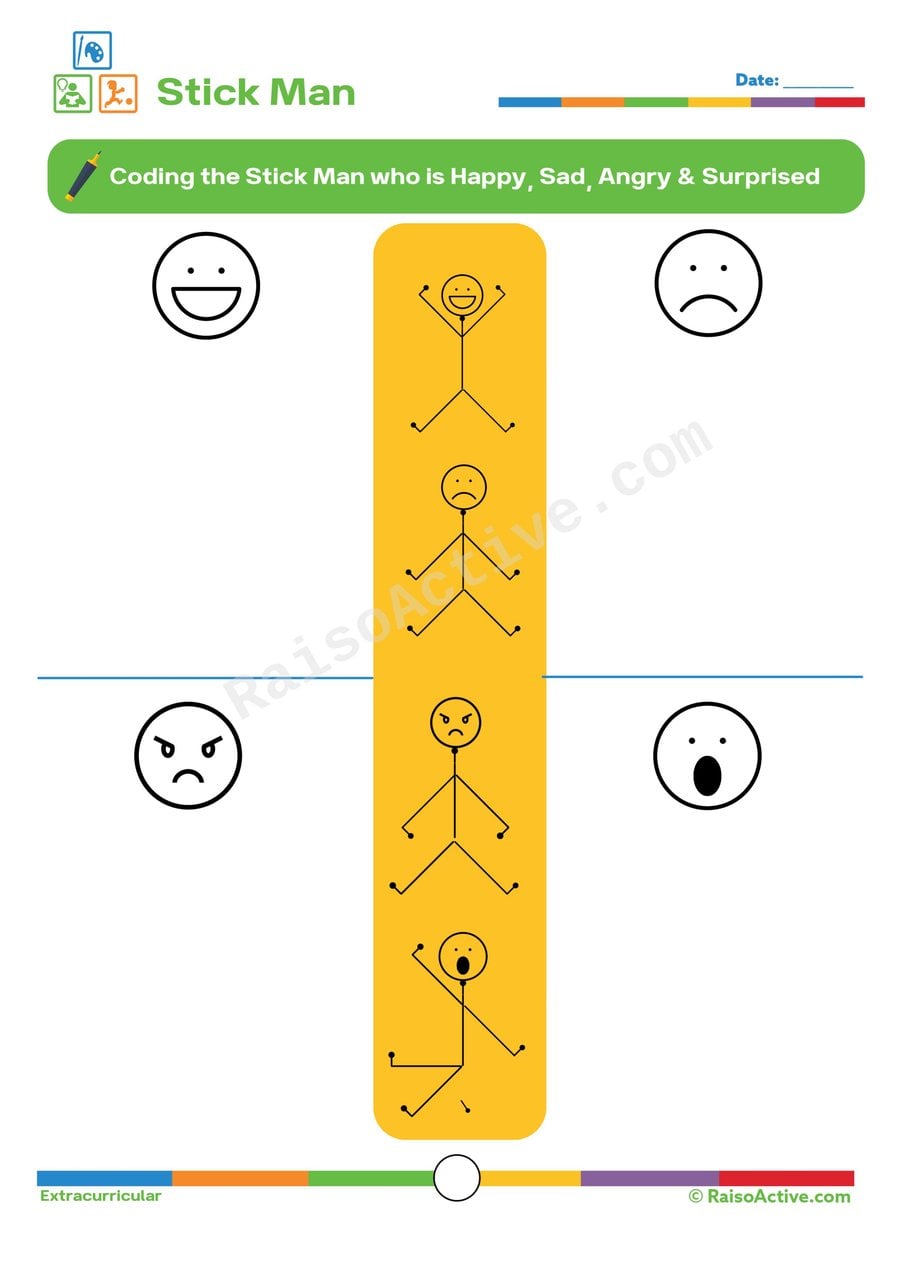
Matching simple stick-figure faces to emotion words helps children ages 3-5 build an early emotional vocabulary, connecting facial cues like a curved mouth or raised eyebrows to specific feeling words. This kind of emotion recognition is a foundational social-emotional skill, helping children name what they and others are feeling instead of just reacting.
Guides for this topic

How to Teach CVC Blending: A Step-by-Step Method That Works in Two Weeks
A step-by-step method for teaching CVC blending, covering continuous sounds, word families, common errors, and a 14-day plan that most children finish reading CVC words.

Best Worksheets for 3-Year-Olds: What Works and What to Avoid
What works on worksheets for 3-year-olds: short sessions, crayons, tracing lines, matching, cutting, a free weekly plan, and signs one is too advanced.
Phase 2 Phonics at Home: Sound Order, Blending Games, Worksheets
Phase 2 phonics at home: the five sound sets in order, oral blending, tricky words, a two-week routine, common mistakes, and free worksheets.
Reviews
Every worksheet for ages 3–5, no watermark
Members download the full library of 1,000+ worksheets and every activity pack without watermarks or daily limits. One year costs ₹999 in India or $20 elsewhere.
See membership plansOr download any worksheet free with a watermark (5 a day).