Free printable worksheets · US · UK · India
Worksheets for 4 Year Olds
Worksheets for 4 year olds are printable practice pages for children aged 4 to 5 in Pre-K, Reception or LKG, the year letters and numbers become things a child can write. They cover tracing and writing capital letters, matching letters to sounds, counting and writing numbers to 20, shapes, patterns, cutting along lines and picture matching.
Four is the year of the alphabet. The hand that traced lines at three can now trace and then copy capital letters, and the ear that enjoyed rhymes can now hear that "sun" starts with "s". Attention stretches to fifteen minutes, so a page can carry a full row of letters or a set of ten counting pictures. Numbers extend from five to twenty, with the important shift from reciting to counting objects and writing the numeral. Scissors skills mature enough to cut curves. In Pre-K, Reception and LKG this is the year school readiness is assessed, so the sheets on this hub track the outcomes those programs look for: letter recognition and formation, letter sounds, number sense to 20, shapes, patterns and finishing a task independently.
1952+ worksheets · free PDF download · print on A4 or Letter
Worksheets for 4 Year Olds to print
Browse all worksheets for ages 4–5
Clothing Pattern Match Worksheet for Preschoolers
This worksheet has children ages 3-5 study repeating patterns on clothing items — stripes, polka dots, or checks — and match each item to its identical twin, building visual discrimination and early pattern-sequencing skills. Distinguishing between similar-looking patterns also sharpens attention to detail, a skill that later supports letter and word recognition.

Butterfly Tracing Worksheet: Connect the Butterflies to the Flowers!
Tracing a line from each butterfly to its matching flower combines pre-writing line control with an early matching and visual-tracking task, since your child has to follow the correct path among several possible ones without crossing into a neighboring line. This dual challenge builds both the fine motor precision and the visual discrimination skills that later support reading, where the eyes must track along a single line of text without jumping to the wrong row.

Underwater Adventure: Color the Aquatic Animals Worksheet
Coloring a scene full of aquatic animals gives children a low-pressure way to practice fine motor control and color choice while also building familiarity with ocean creature vocabulary as they look at and name each animal before coloring it. For ages three to five, an open coloring page like this also supports creativity, since there's no single 'correct' color for a fantasy-bright fish or coral.

CVC 'ip' Family Words Matching Worksheet for Preschoolers
Working through the 'ip' family (lip, zip, dip) helps children ages 3-5 practice decoding short, consistent-pattern words while also strengthening visual matching skills as they connect each word to its picture. Coloring the words before matching adds a multisensory layer that helps many children retain new vocabulary more effectively than reading alone. This kind of repeated, low-stakes practice with a single vowel-consonant pattern builds the automatic word recognition children need before they can read connected sentences.

Balloon Pattern Matching Worksheet for Preschoolers
This worksheet strengthens pattern recognition in children ages 3-5 by having them study a repeating sequence of colored balloons and locate the matching arrangement elsewhere on the page. Recognizing and reproducing a pattern is an early pre-algebra skill, laying groundwork for later number patterns and logical sequencing.
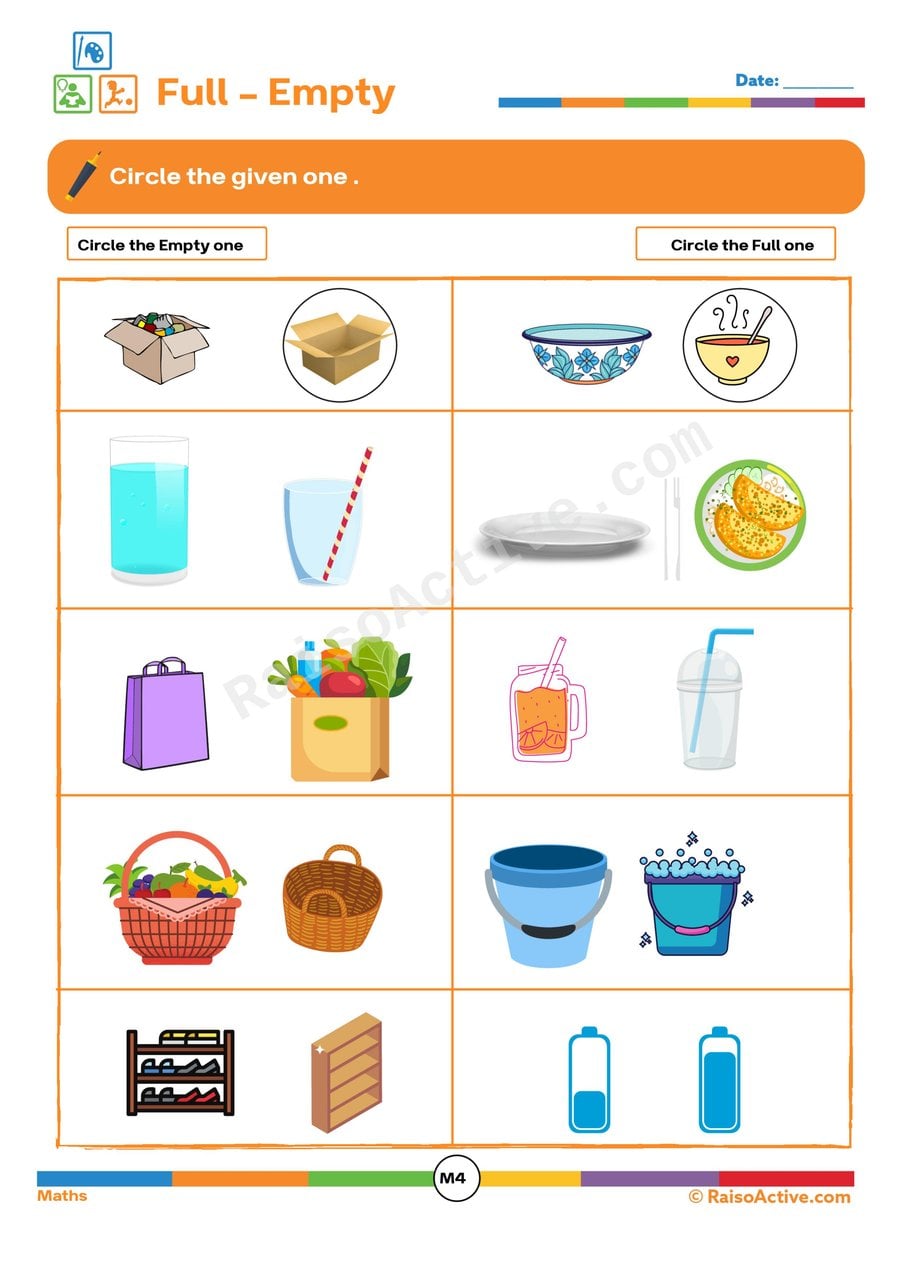
Full and Empty Worksheet for Preschoolers
This sorting worksheet introduces children ages 3-5 to the comparative concepts of 'full' and 'empty,' an early measurement idea that lays groundwork for later understanding of quantity and volume. By examining containers and objects at different fill levels, children practice careful visual observation rather than relying on counting alone. Learning to describe amounts in everyday language like full and empty also supports vocabulary development children will use constantly in daily life.

Under the Sea Shapes Cut and Paste Worksheet for Preschoolers
This worksheet combines shape recognition with fine motor practice as children ages 3-5 cut out geometric shapes and arrange them into an underwater scene. Identifying each shape before placing it, and cutting along the provided lines, builds both early geometry vocabulary and the scissor control needed for more advanced cutting tasks.

Trace and Write the Letter T Worksheet for Preschoolers
Tracing the uppercase letter T has children ages 3-5 practice one of the simplest two-stroke combinations in the alphabet, a vertical line crossed by a horizontal line at the top, which builds confidence with cross-stroke letters before tackling harder ones like F or X. Because T is a common letter in early reading and writing, mastering its formation supports a wide range of future words. The page also reinforces the /t/ sound heard in words like 'turtle,' 'toy,' and 'top.'

Unicorn Dot-to-Dot Worksheet: Connect the Numbers!
Connecting fifty numbered dots in sequence gives children serious practice with number order and one-to-one counting while also demanding steady pencil control to draw a continuous line from point to point. The reveal of a unicorn picture at the end provides a built-in reward that keeps motivation high through a task that requires more sustained focus than a typical preschool counting page.

Doctor's Tools: Circle the Items! - Worksheet for Kids
This worksheet builds visual discrimination and category knowledge by asking children to identify which pictured items belong to a doctor's toolkit, like a stethoscope or thermometer, versus items that don't. For ages 3-5, sorting objects by their real-world function is an early classification skill, and the community-helper theme also builds vocabulary around health and care.
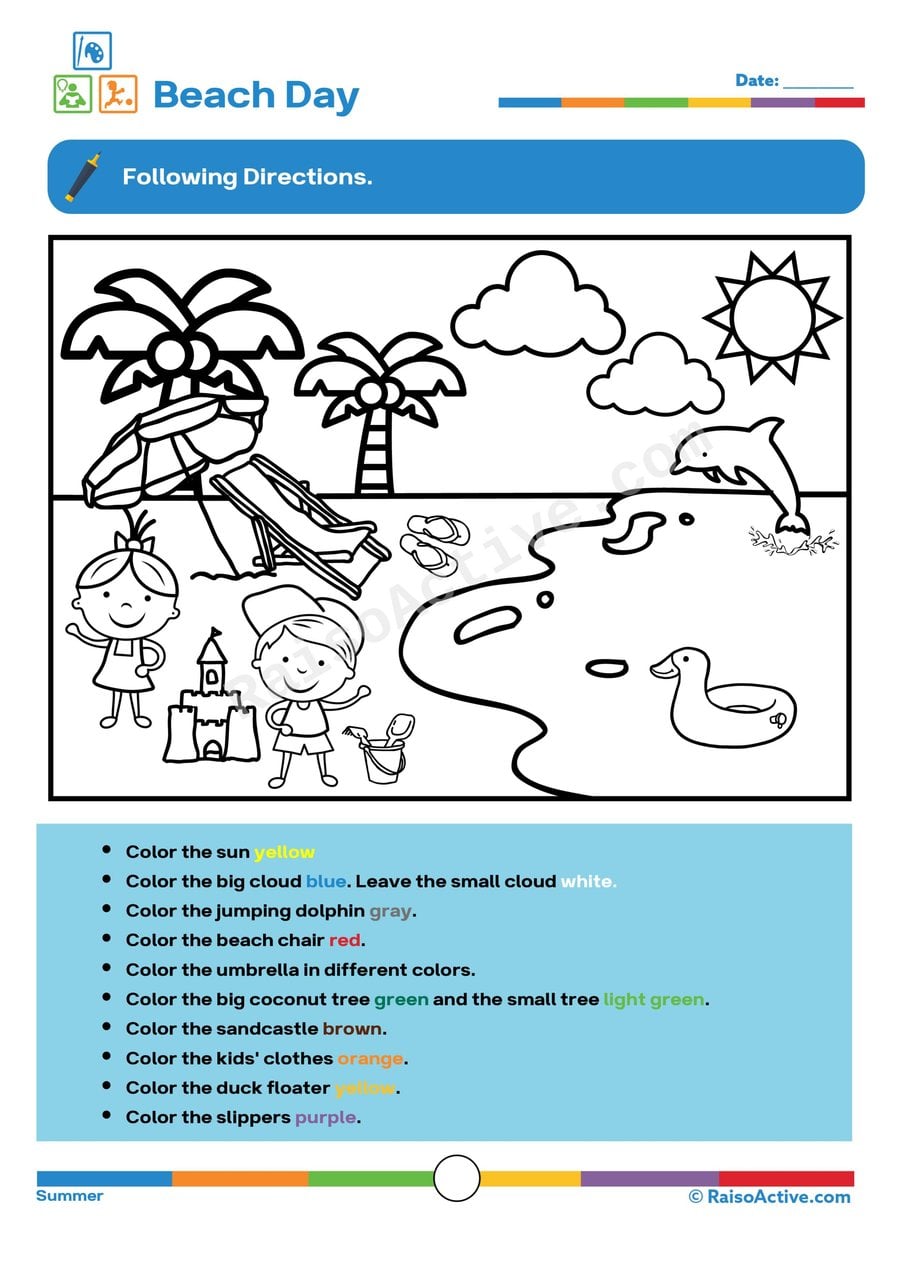
Beach Day Coloring Worksheet for Preschoolers
This worksheet has children ages 3-5 read or listen to specific color instructions, like coloring the sun yellow and a cloud blue, and then apply the correct color to each part of a beach scene. Following multi-part color instructions builds listening comprehension and the ability to hold several separate directions in mind at once, both important readiness skills for classroom instructions. It also reinforces color-word vocabulary and fine motor control as children color within the lines of each shape.

Happy or Sad Teeth: Dental Sorting Worksheet for Kids
This sorting worksheet has children ages 3-5 cut out pictures of foods and place them next to either a happy or sad tooth, teaching which foods support healthy teeth (like fruits, vegetables, and dairy) and which contribute to cavities (like candy and soda). Making the effects of food choices visible through a simple happy/sad symbol helps young children connect everyday eating decisions to a health outcome they can understand.

Learn the Letter 'n' Worksheet: Tracing, Matching, and Coloring Fun!
This worksheet builds letter 'n' recognition for 3-5 year olds through tracing, a highlighting search, matching to pictures, and coloring — four connected tasks that ask your child to hold onto the same letter across different formats and follow multi-step instructions in sequence. The letter 'n' is frequently confused with 'm' since both involve humps, so the repeated exposure here helps children start telling the two apart by sound and shape.
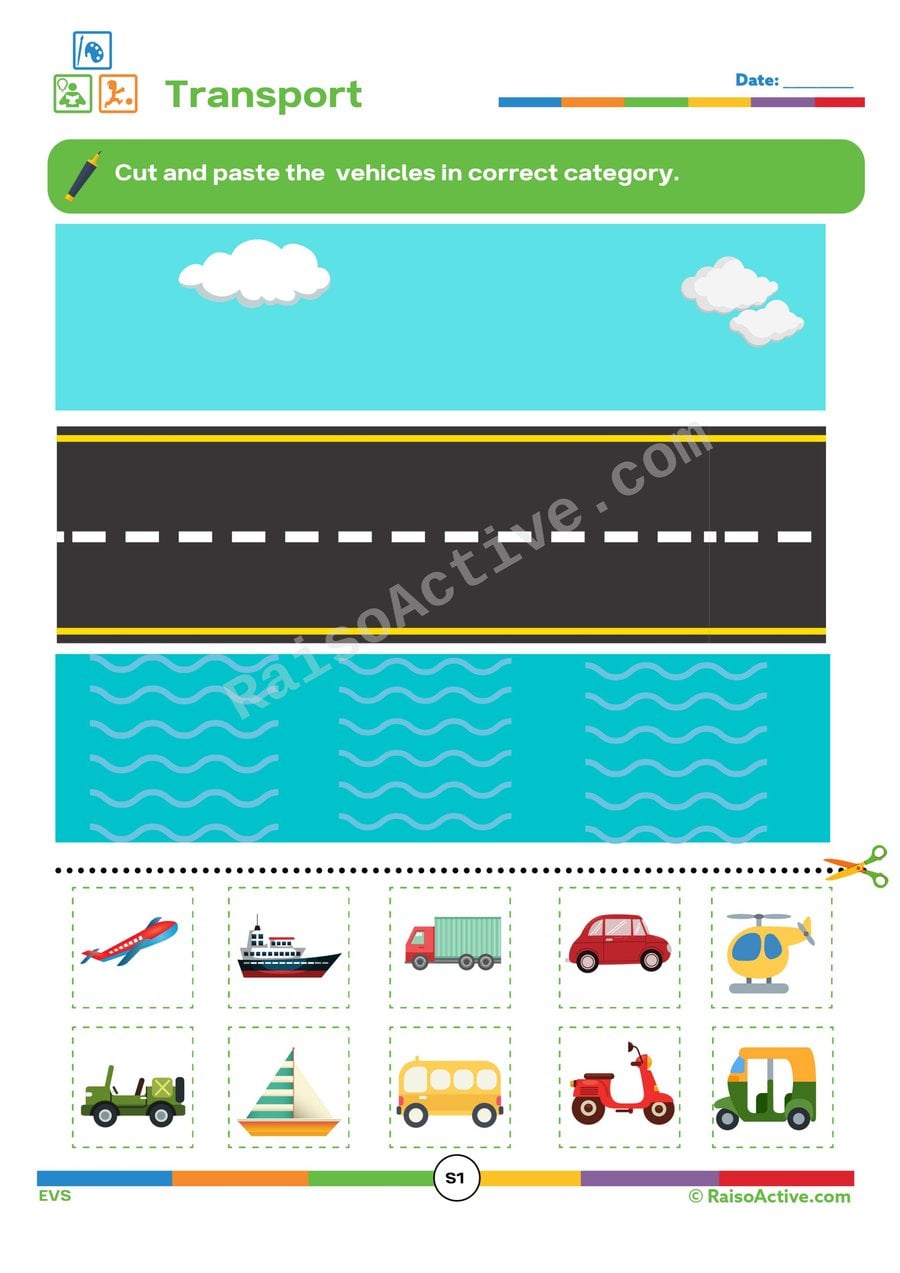
Transport Sorting Worksheet for Preschoolers
Children ages 3-5 practice classification and vocabulary as they sort vehicle pictures into three categories — air, road, and water — based on how each one travels. This kind of sorting task builds early logical reasoning, since children must identify a shared property among different pictures rather than just naming each vehicle individually.

Trace and Write the Letter X Worksheet for Preschoolers
This worksheet has children ages 3-5 trace the uppercase letter X, practicing two diagonal lines that cross in the middle, a stroke pattern that requires more precise pencil control than straight or curved letters alone. Because relatively few common words start with X, this page also introduces the idea that a letter's position within a word, not just the beginning, matters for reading, since children may know X best from words like 'box' or 'fox.' Mastering this crossing stroke also supports other skills like drawing intersecting lines in later math and geometry work.

Adjective Adventure: Coloring and Sentence Fun Worksheet for Kids
Coloring only the adjectives in a set of words teaches children ages 3-5 to recognize descriptive words as their own grammatical category, distinct from naming words or action words, a foundational step toward understanding how sentences are built. Writing a sentence using a chosen adjective afterward pushes the recognition skill into active use, requiring children to apply what they identified rather than just spot it.

Color Santa Claus for Christmas! A Fun Coloring Worksheet
This Santa Claus coloring page lets children ages 3-5 practice crayon control and color selection on a large, familiar holiday figure, building confidence with fine motor coloring skills before moving to smaller or more detailed pictures. Choosing colors for Santa's suit, hat, and beard also opens up conversation about the holiday season and familiar seasonal symbols.
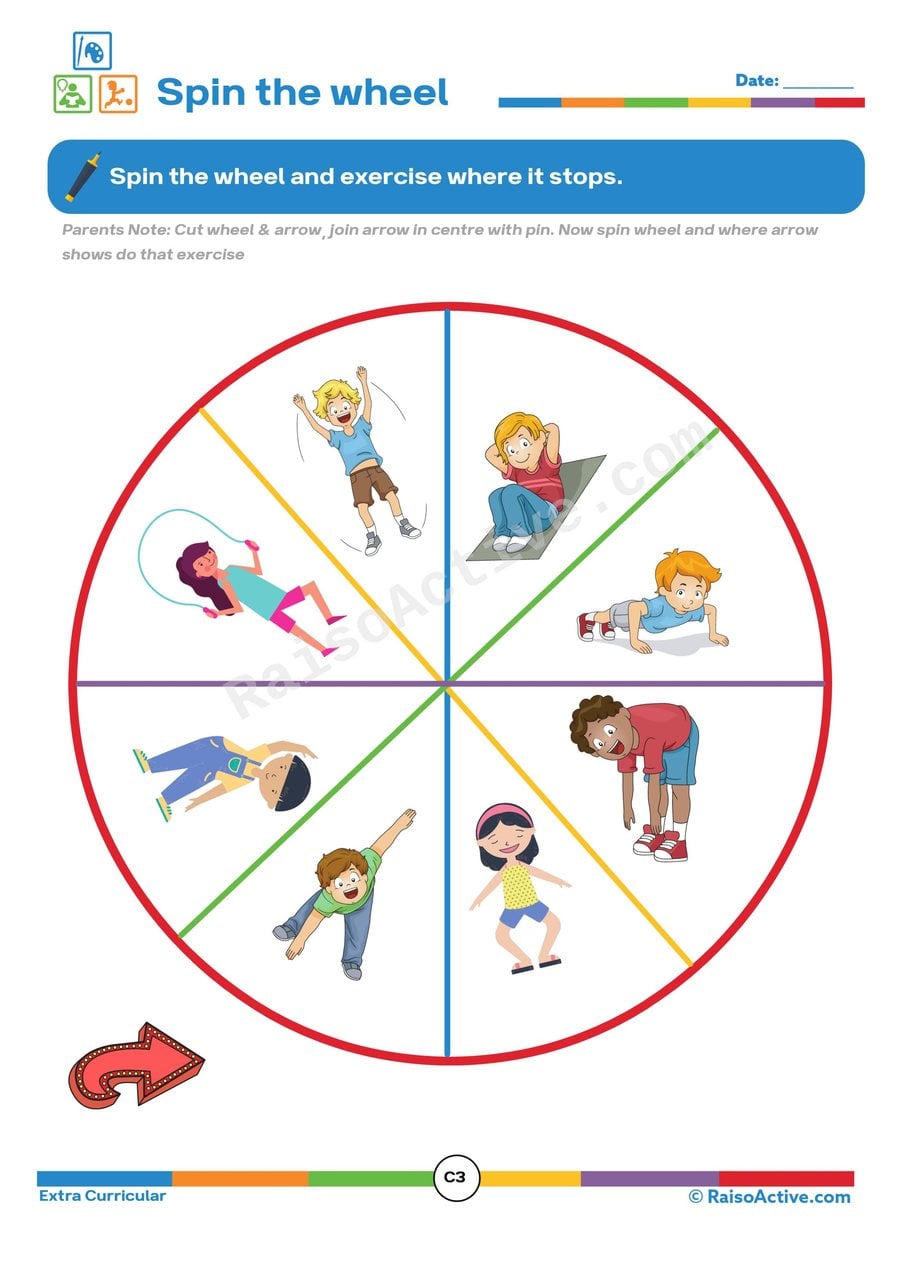
Spin the Wheel Exercise Worksheet for Kids
This spinner-based worksheet gets children ages 3-5 moving by having them build a simple spinning wheel, then perform whichever exercise the arrow lands on, combining following-directions practice with gross motor skill development like jumping, stretching, or hopping. Turning physical activity into a game with an element of chance also keeps young children more engaged than a straightforward list of exercises would.
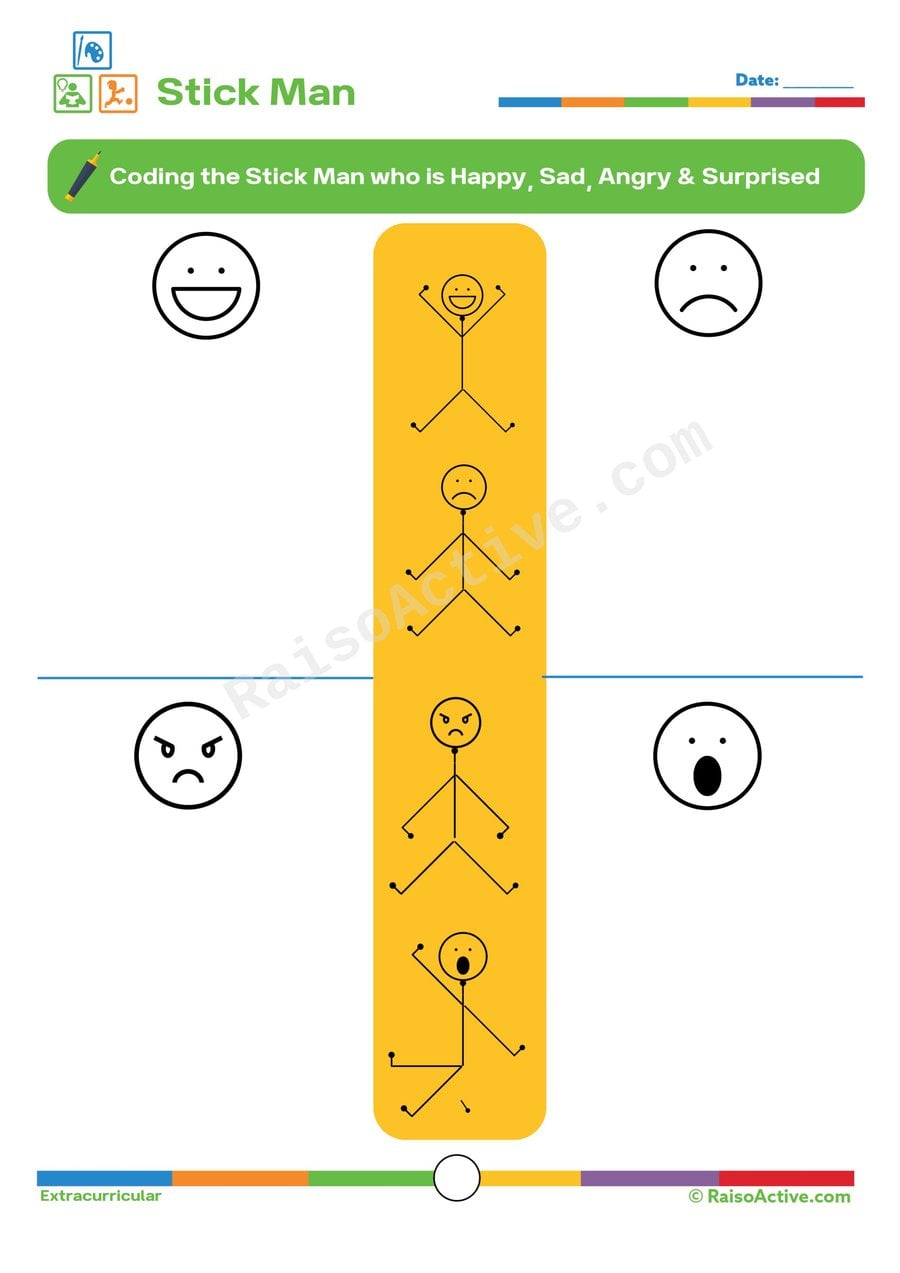
Stick Man Emotions Worksheet: Happy, Sad, Angry & Surprised!
Matching simple stick-figure faces to emotion words helps children ages 3-5 build an early emotional vocabulary, connecting facial cues like a curved mouth or raised eyebrows to specific feeling words. This kind of emotion recognition is a foundational social-emotional skill, helping children name what they and others are feeling instead of just reacting.

Seasons and Weather Worksheet: Fill in the Blanks!
This worksheet builds early science vocabulary by asking children to fill in blanks connecting each of the four seasons to its typical weather, such as snow in winter or sunshine in summer. For three- to five-year-olds, tying weather words to the season they experience it in helps organize their everyday observations of the world into a simple, memorable framework.

Count and Add: Fruits, Vehicles, and Sweets Worksheet for Preschoolers
This worksheet practices counting and basic addition by having children count several different groups of everyday objects — fruits, vehicles, and sweets — and then add the totals together. For three- to five-year-olds, varying the objects being counted across different sections keeps the counting practice fresh while reinforcing that the process of counting and adding works the same way no matter what's being counted.

Symmetry Fun Worksheet for Kids: Complete and Color!
This symmetry worksheet challenges children ages 3-5 to study a half-drawn Christmas picture and draw the missing mirror-image half, introducing the early geometry concept that two sides of a shape can match exactly. Completing and then coloring the picture also builds visual comparison skills, since children must check their drawn half against the original before filling it in with color.
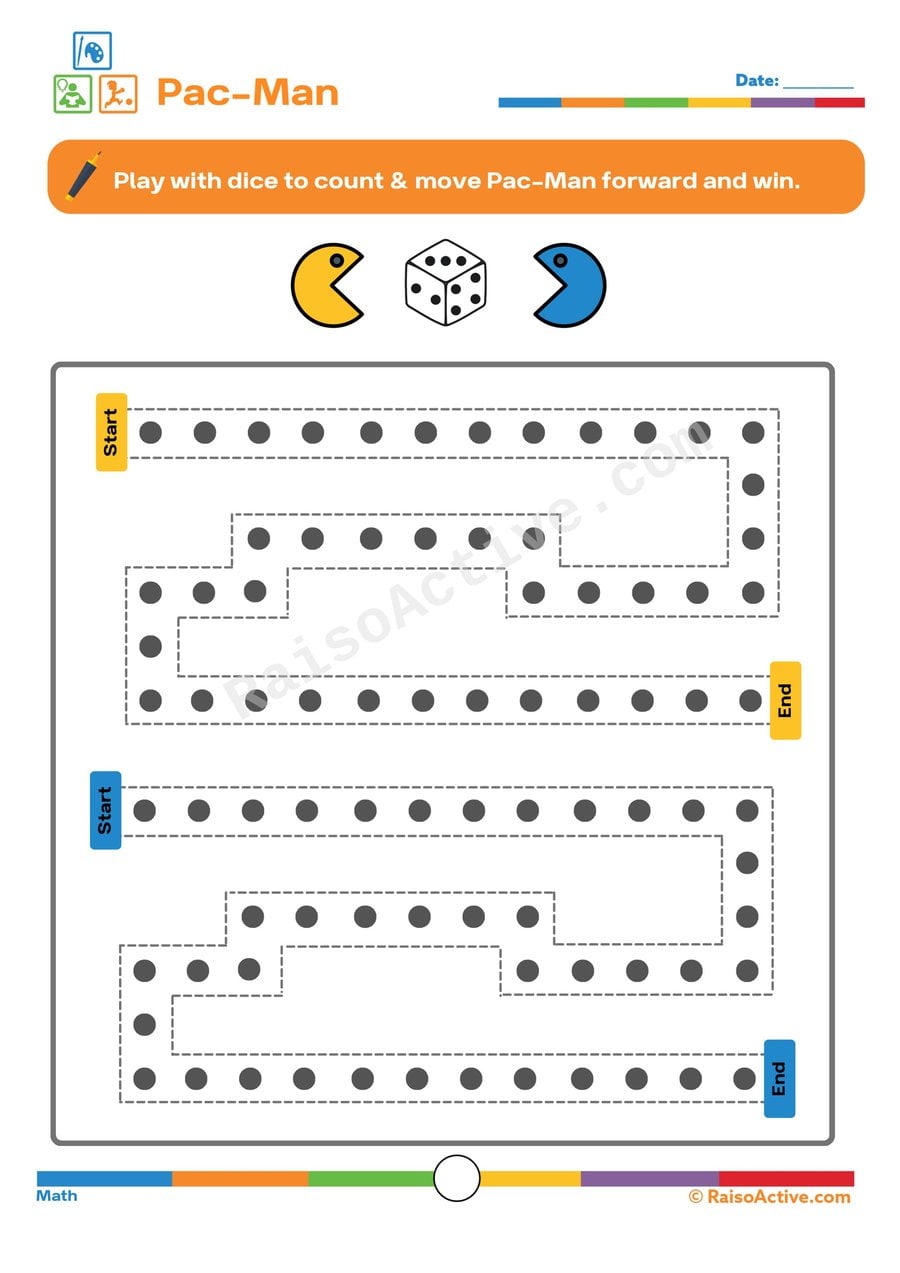
Pac-Man Maze Worksheet: Count and Move!
This dice-driven maze combines counting practice with path-following for children ages 3-5, since they must accurately count dots on a die before moving Pac-Man the matching number of spaces forward. Deciding how far to move and staying on the correct path also builds early strategic thinking, as children track their current position within the maze after each turn.

Trace the Penguin: A Fun Pre-Writing Worksheet for Kids!
Tracing the rounded outline of a penguin gives children ages 3-5 practice with curved strokes that form a whole recognizable animal shape rather than an abstract line, which helps the tracing feel purposeful and connected to something familiar from books or videos. The cold-climate theme also introduces simple vocabulary about penguins and their environment, a small science connection layered onto the fine motor practice.
What a 4 year old can typically do
A typical four-year-old can hold a pencil with a tripod grip, trace and copy most capital letters, write their first name, recognize many letters and give the sound of some, count ten to twenty objects accurately, write numerals with occasional reversals, name basic shapes and colors, copy an AB pattern, cut along a curved line and sit for a fifteen-minute task with light supervision.
- Letters: recognizing and tracing capitals A–Z, then writing them; letter-sound matching; name writing
- Numbers: counting objects to 20, writing numerals, matching number to quantity, more and less
- Shapes and patterns: circle, square, triangle, rectangle, oval, star; AB and ABC patterns
- Fine motor: cutting straight and curved lines, cut-and-paste sorting, mazes, dot-to-dot to 10
- Thinking: odd one out, what comes next, simple sorting by two attributes
How to use worksheets with a 4 year old
Begin with a two-minute warm-up of pattern lines or a maze, then the main letter or number sheet, then something lighter like cut-and-paste or coloring. Say the letter name and sound as your child traces. Show correct formation from the start dot once; do not erase or redo, just try again on the next row.
Two sheets a day, five days a week, is a comfortable routine and roughly what Pre-K, Reception and LKG teachers send home. Keep a folder of finished pages by date so progress is visible. Reversed letters and numerals are normal at four; note them and move on rather than drilling them.
Signs your child is ready for more
When capital letters are steady and the child is starting to sound out first letters of words, introduce lowercase letters and beginning-sound sheets. When counting to 20 is accurate, introduce simple joining-two-groups pictures. If instead letters are still reversed and counting skips numbers, stay with tracing and touch-counting; both are expected at four and clear up with repetition, not pressure.
Frequently asked questions
What should a 4 year old know before kindergarten or UKG?
By the end of the Pre-K, Reception or LKG year most programs expect a child to recognize most letters and their sounds, write their name and many capital letters, count to 20 and count out ten objects, recognize numerals to 10 or 20, name basic shapes and colors, copy a pattern, hold a pencil correctly, use scissors, and follow multi-step instructions. Reading words is not expected; the sound work is the preparation for it.
Are worksheets good for 4 year olds?
At four, short worksheets are useful because the hand and attention span are ready for them. Tracing builds letter formation, counting pages build one-to-one correspondence, and cutting and matching pages build fine motor and visual skills. Ten to fifteen minutes a day of single-skill sheets, with plenty of play the rest of the day, is a balance most Pre-K and Reception teachers would recognize.
How do I teach a 4 year old to write letters?
Start with capital letters and the letters in the child's name. Use tracing sheets with a start dot and arrows, say the letter name and sound as you trace, then have the child copy underneath. Keep letters large. Group letters by stroke (L, T, I, H first; then C, O, Q; then A, V, W). Move to lowercase once capitals are steady, usually late in the fourth year or at five.
How long should a 4 year old do worksheets each day?
Ten to fifteen minutes, once or twice a day, is right for most four-year-olds. Two single-skill sheets fit that window. Stop while the child is still willing; a page abandoned halfway is fine. Consistency over weeks matters more than any single session, and skipping a day does no harm.
What is the difference between worksheets for 3 and 4 year olds?
Three-year-old sheets stay with pre-writing lines, large coloring, matching and counting to five, and expect a fist-to-finger grip transition. Four-year-old sheets assume a tripod grip and add actual letters and numerals to trace and write, letter sounds, counting to 20, patterns and cutting on curves. The print is smaller and there are more items per page because attention has grown.
Are the worksheets for 4 year olds free to download?
Yes. Each sheet downloads free as a watermarked PDF after creating an account, with a limit of five a day. An annual subscription (about $20 or ₹1000) removes the watermark and daily limit for the full library, which Pre-K, Reception and LKG teachers use to print class sets.

Written by
Hemsweta Jain · Teacher Cheena
MBA and Early Childhood Educator, teaching since 2014 · Founder of RaisoActive, Mumbai
Written and reviewed by Hemsweta Jain (Teacher Cheena), who designs every RaisoActive worksheet.
Last reviewed
Printable packs for ages 4–5
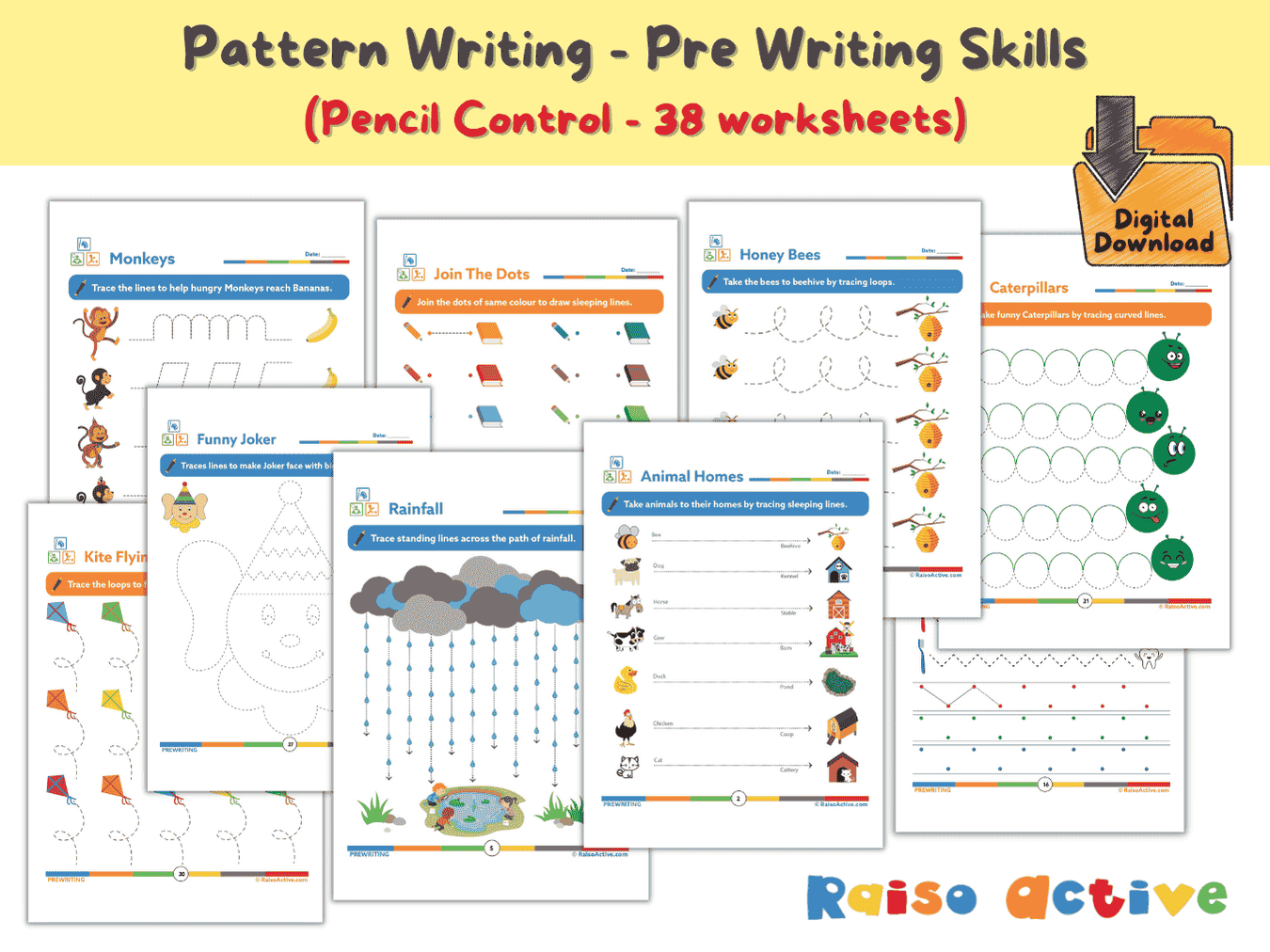
Pattern Writing Pre-writing Skills Activity Book for 3-4 Year Olds
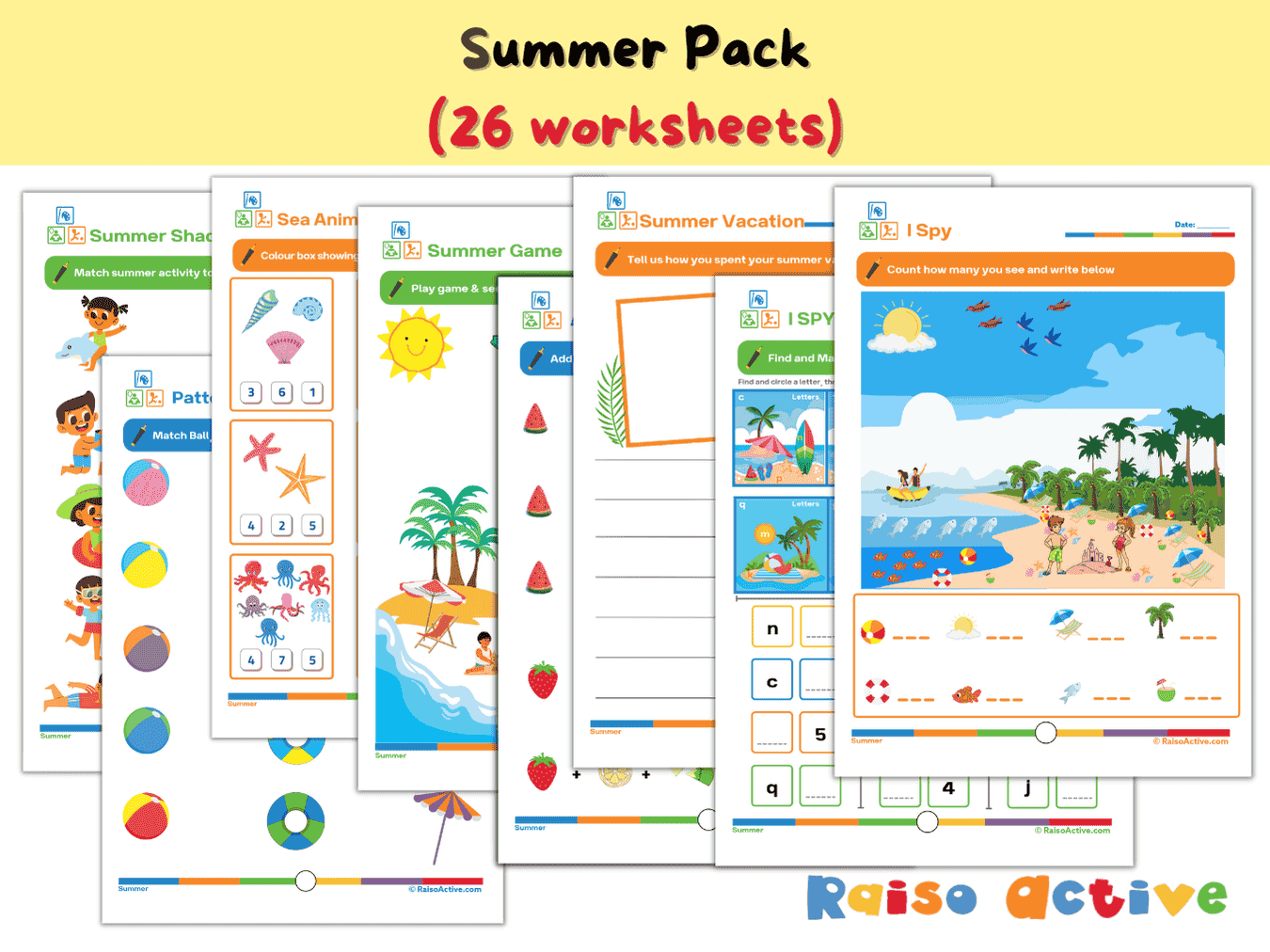
Summer Activity Pack: Math, Literacy, Puzzles & More for Preschool & Kindergarten
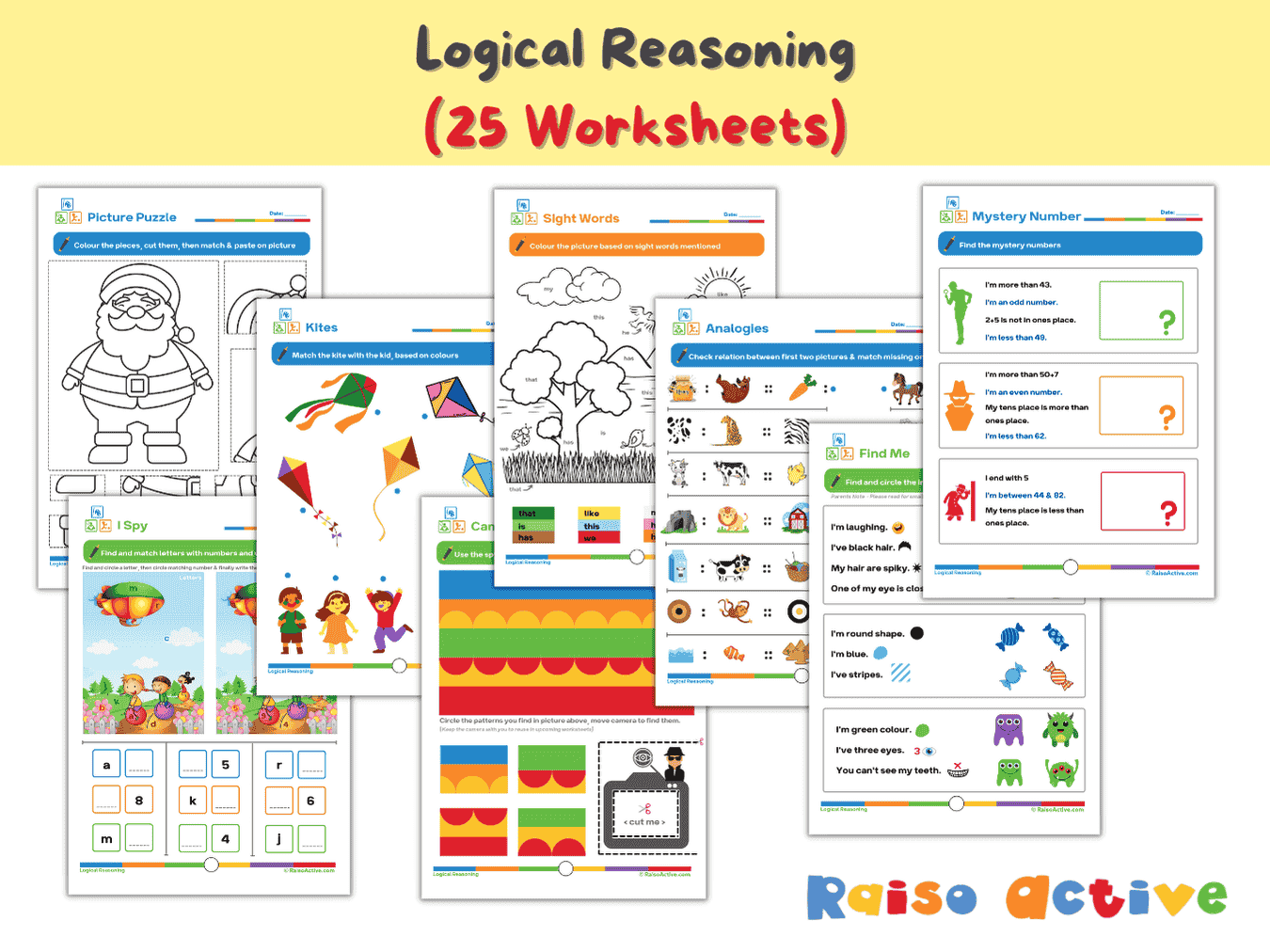
Logical Reasoning Activity Book for Preschool & Kindergarten | Patterns, Puzzles & Analogies
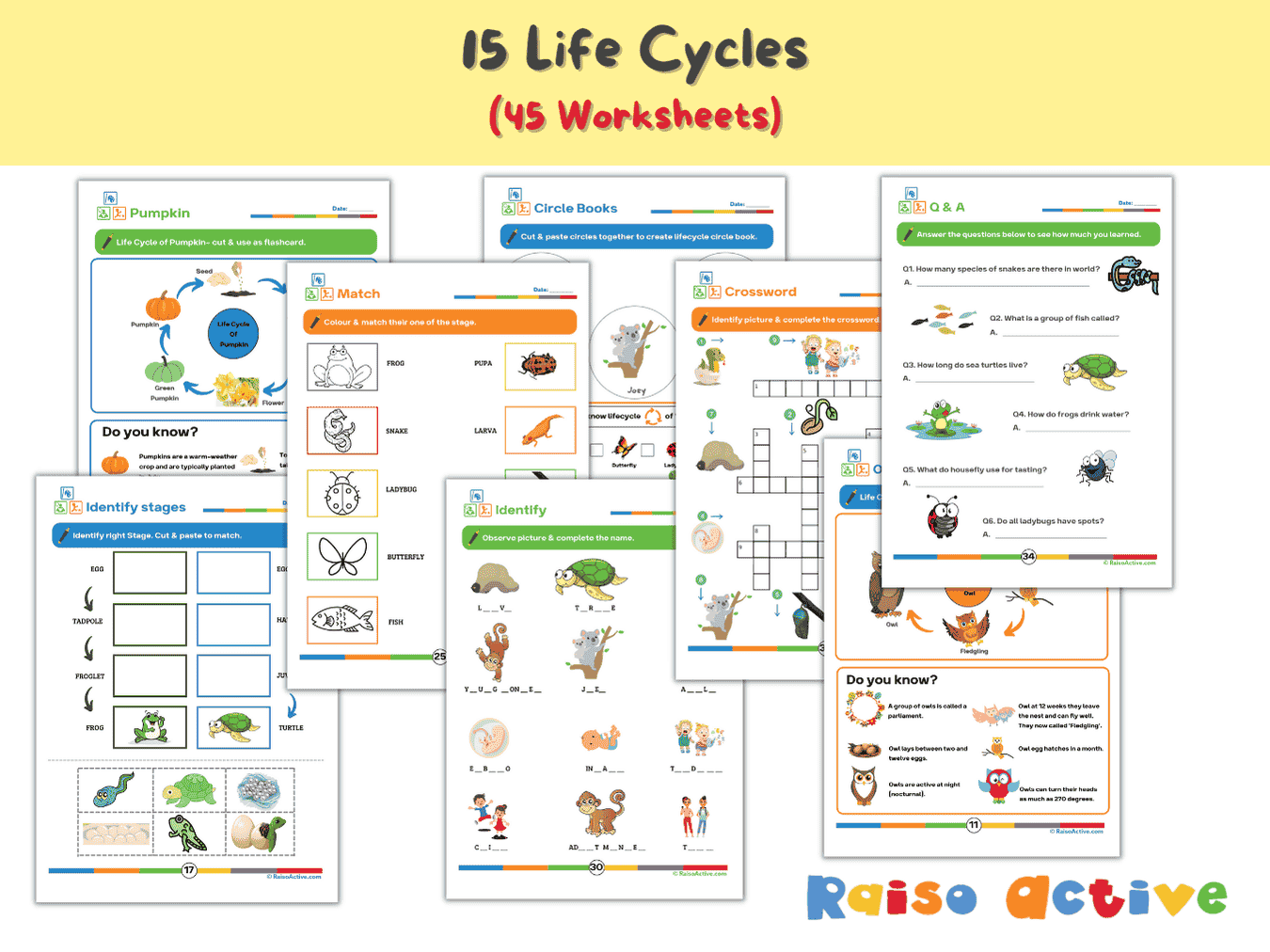
Lifecycles Activity Book & Flashcards for Preschool & Early Elementary
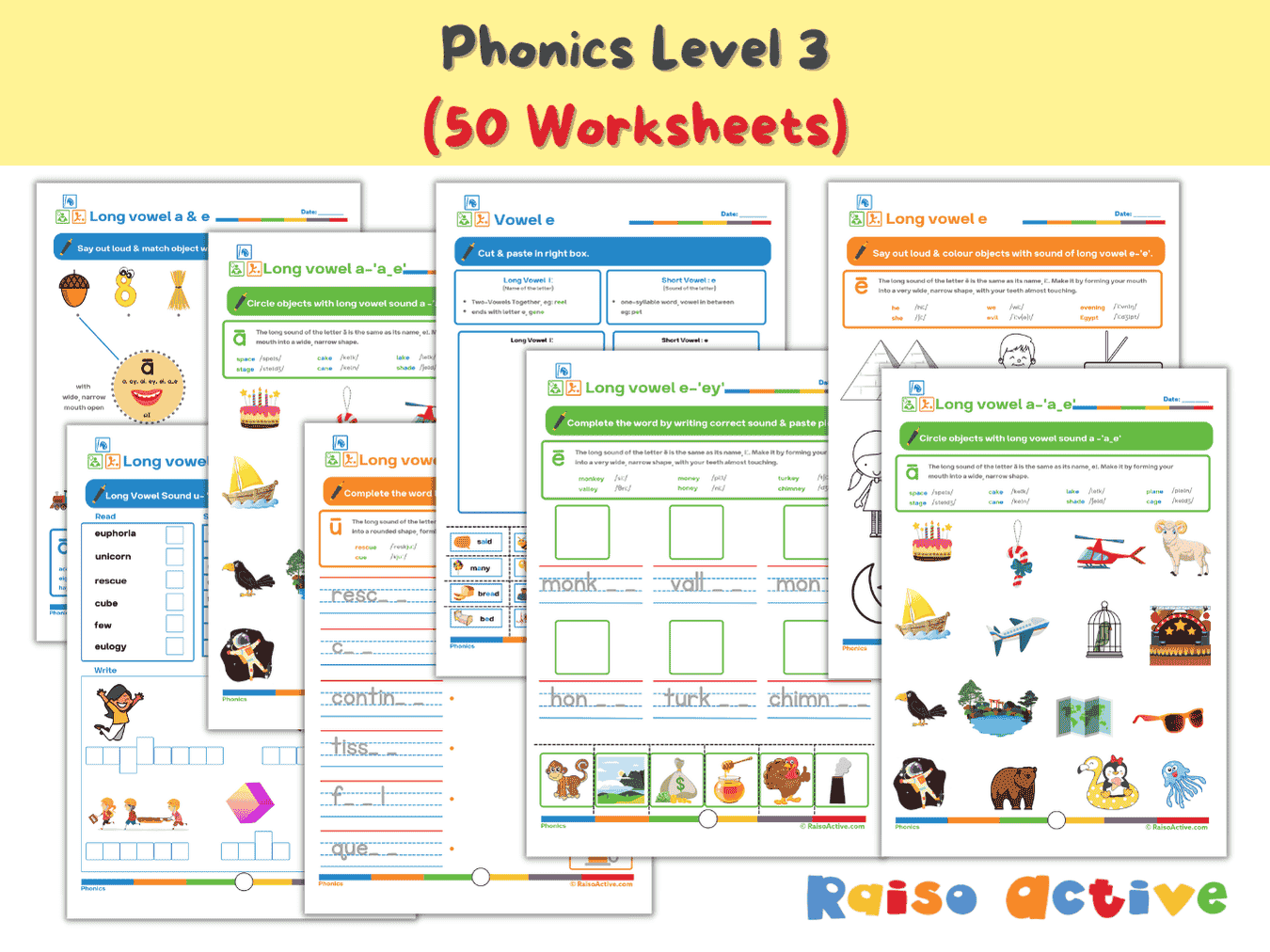
Phonics Level 3 Long Vowels Activity Book for Kindergarten & 1st Grade
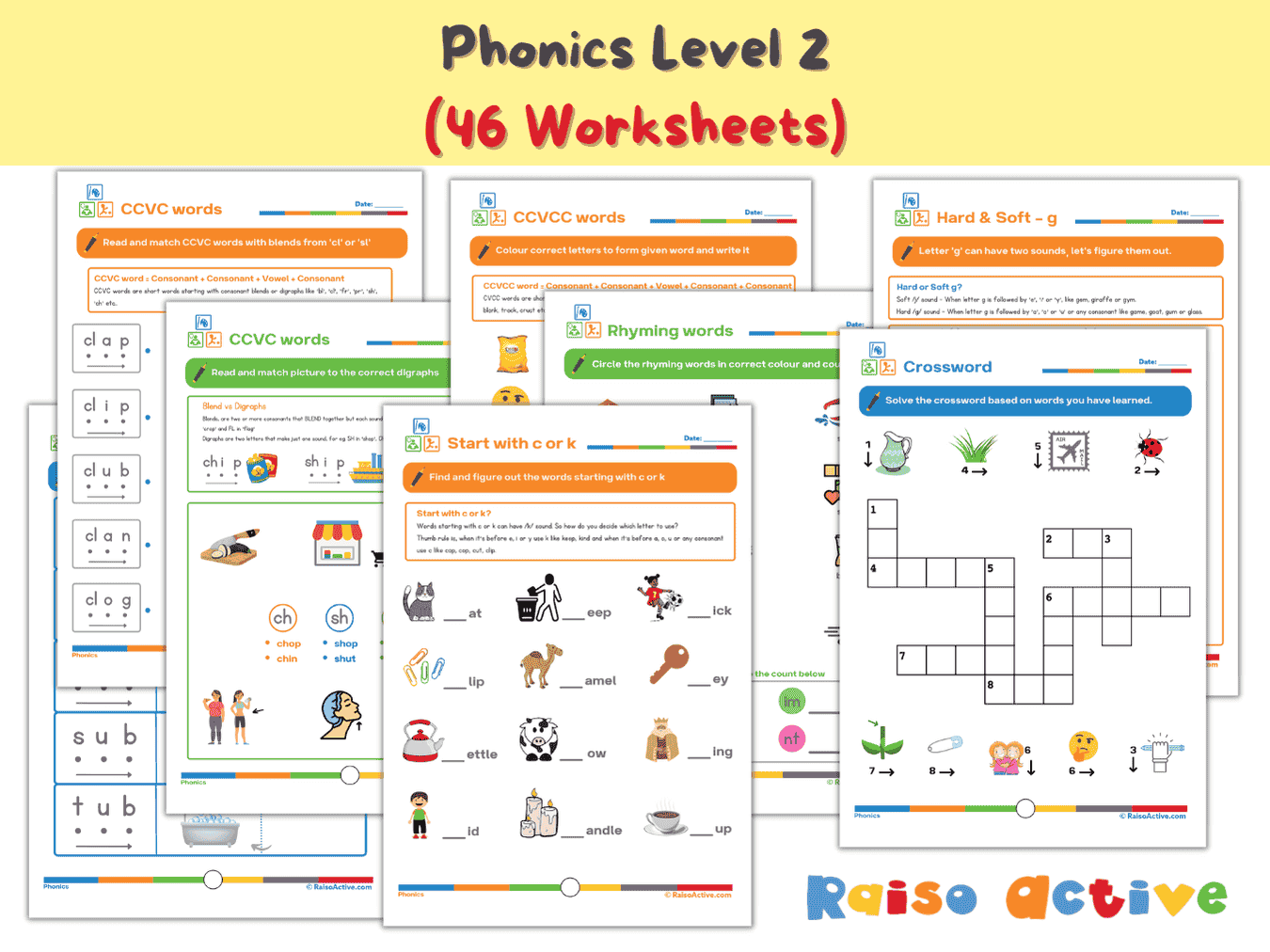
Phonics Level 2 Worksheets: CVC, CCVC, CVCC Word Families & Blends for Early Readers (Ages 4-7)
Guides for parents and teachers
See all guides →Sight Words by Age: The First 50 Words and How to Teach Them Without Flashcard Fatigue
Which sight words to teach first and why, the heart-word method, a read-trace-write-find routine, games, and a by-age table of typical sight-word progress.
Number Formation Rhymes 0–9 and How to Fix Reversals
Original number formation rhymes for 0–9, the correct stroke order for each digit, why 3, 5 and 7 get reversed most often, and multisensory fixes that work.
Pre-Writing Strokes in Order: From Standing Lines to Loops (With Printable Patterns)
The developmental order of pre-writing strokes, from vertical lines to loops, and why practicing them in sequence makes letter formation much easier to learn.
Kindergarten Readiness Checklist: 25 Skills to Practice Before the First Day
A kindergarten readiness checklist of 25 literacy, math, motor, self-regulation and self-help skills, with an 8-week summer plan and notes on when not to worry.
Best Worksheets for 3-Year-Olds: What Works and What to Avoid
What works on worksheets for 3-year-olds: short sessions, crayons, tracing lines, matching, cutting, a free weekly plan, and signs one is too advanced.
Phase 2 Phonics at Home: Sound Order, Blending Games, Worksheets
Phase 2 phonics at home: the five sound sets in order, oral blending, tricky words, a two-week routine, common mistakes, and free worksheets.
Canonical: https://raisoactive.com/worksheets/worksheets-for-4-year-olds