Sandwich Making Fun: Cut, Paste, and Create!
This worksheet helps children ages 3-5 develop fine motor skills by cutting out different food item shapes, while encouraging creativity as they decide which ingredients to layer to design their own imaginary sandwich. Making design choices about food order also introduces basic sequencing, since a sandwich is built in a specific stacked layer order.
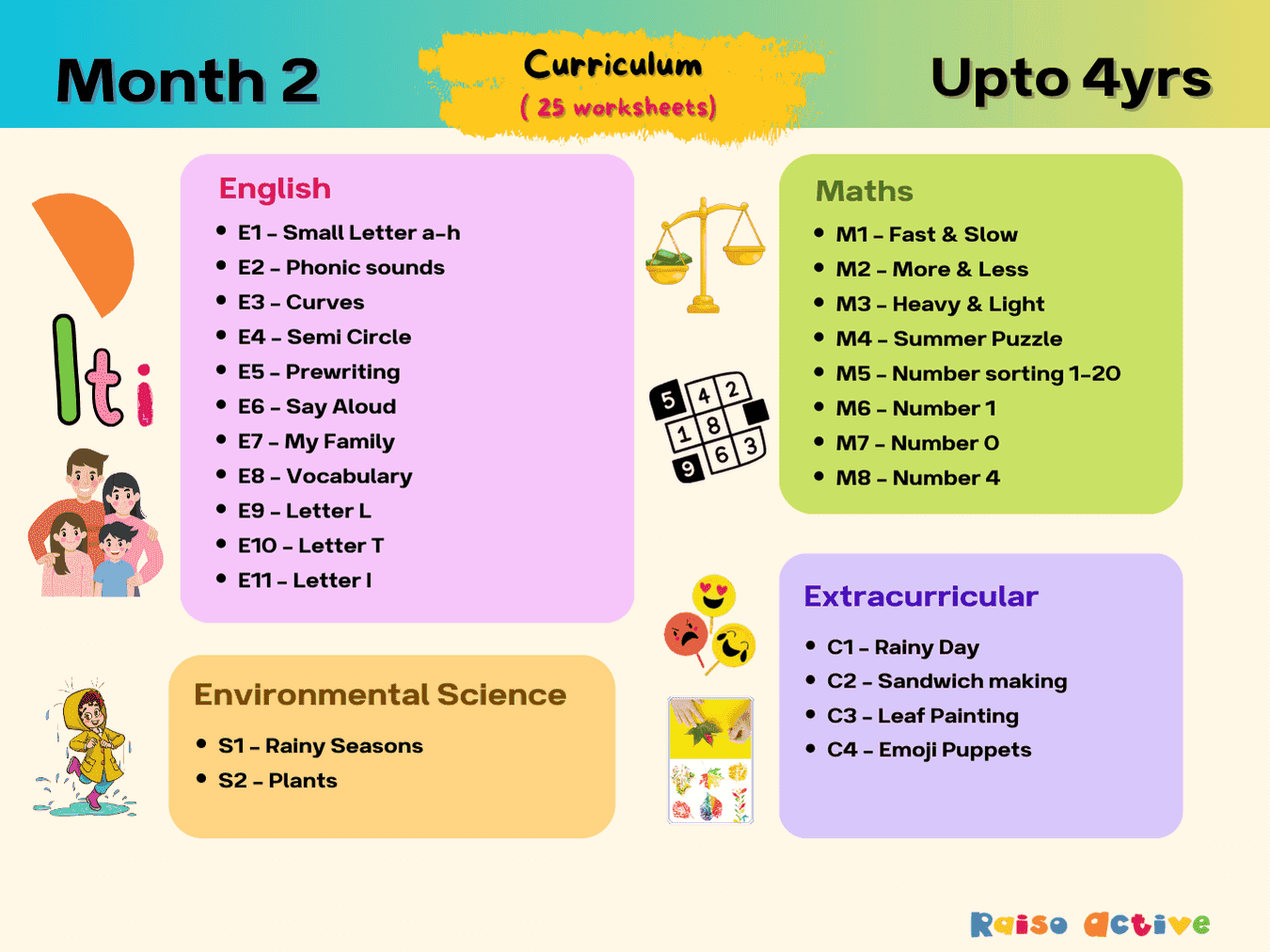
Part of the pack
Month 2: Learning & Development | Ages Up to 4
This is page 26 of the pack. Ages 3-4 · PreschoolAges 3-4 · NurseryAges 3-4
Curriculum
- Art & Craft > Arts & Crafts
How to use this worksheet
Have your child cut out the different food items provided, like bread, lettuce, cheese, and other fillings, guiding their scissor hand as needed. Look at the blank sandwich space on the page and talk about what order the layers usually go in, starting with bread on the bottom. Have your child arrange and glue the pieces to create their own sandwich in the blank space. Once finished, have them describe their sandwich creation out loud, naming each ingredient they used.
Materials needed
- Scissors
- Glue or Tape
- Pencil
Extension activities
- 1Make a real sandwich together using the same or similar ingredients from the worksheet.
- 2Draw your favorite sandwich from memory and label each ingredient.
- 3Take turns describing a sandwich for the other person to build using the cut-out pieces.
- 4Count how many ingredients went into the finished sandwich creation.

Written by
Hemsweta Jain · Teacher Cheena
MBA and Early Childhood Educator, teaching since 2014 · Founder of RaisoActive, Mumbai
Every RaisoActive worksheet is designed and checked by the founder before publishing.
Published · Last reviewed
More from Month 2: Learning & Development | Ages Up to 4
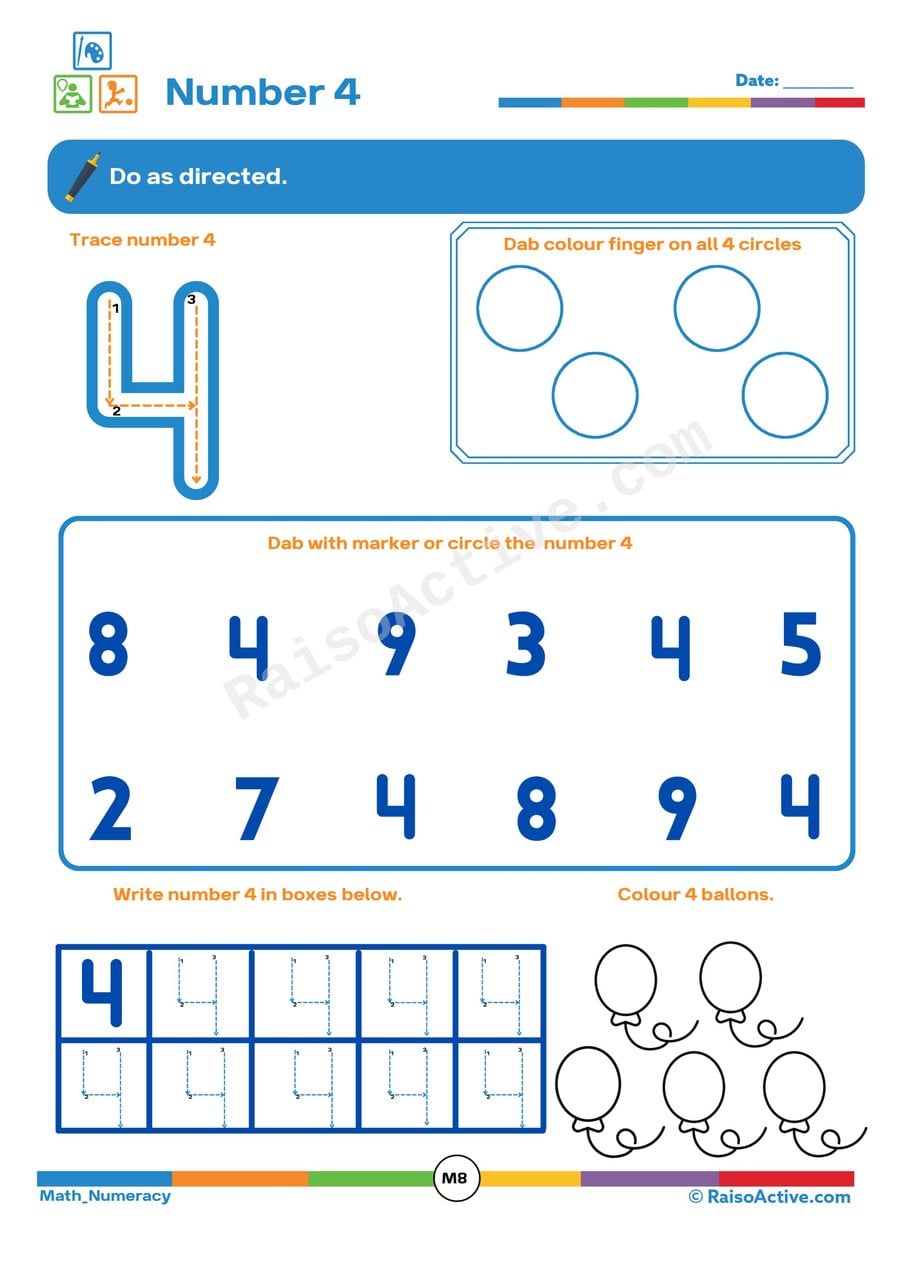
Number 4 Worksheet: Trace, Count, and Write!
Ages 3-5 · Preschool–Pre-KAges 3-5 · Nursery–ReceptionAges 3-5 · Nursery–LKGAges 3-5
This worksheet helps children ages 3-5 learn to recognize, trace, and write the number 4 while practicing counting and matching the number to a quantity across several different activities, including dabbing circles, circling number 4 in a set, and coloring the correct number of balloons. Repeating the same number across so many formats helps solidify both the symbol and the quantity it represents.

Letter L Tracing Worksheet for Preschoolers: Learn to Write!
Ages 3-5 · Preschool–Pre-KAges 3-5 · Nursery–ReceptionAges 3-5 · Nursery–LKGAges 3-5
This worksheet helps children ages 3-5 practice tracing the letter L's simple straight-line strokes while identifying words that start with the letter L, giving early success with one of the more approachable letters to write. Because L uses just two straight strokes, it's often a confidence-building letter for children still building fine motor control.
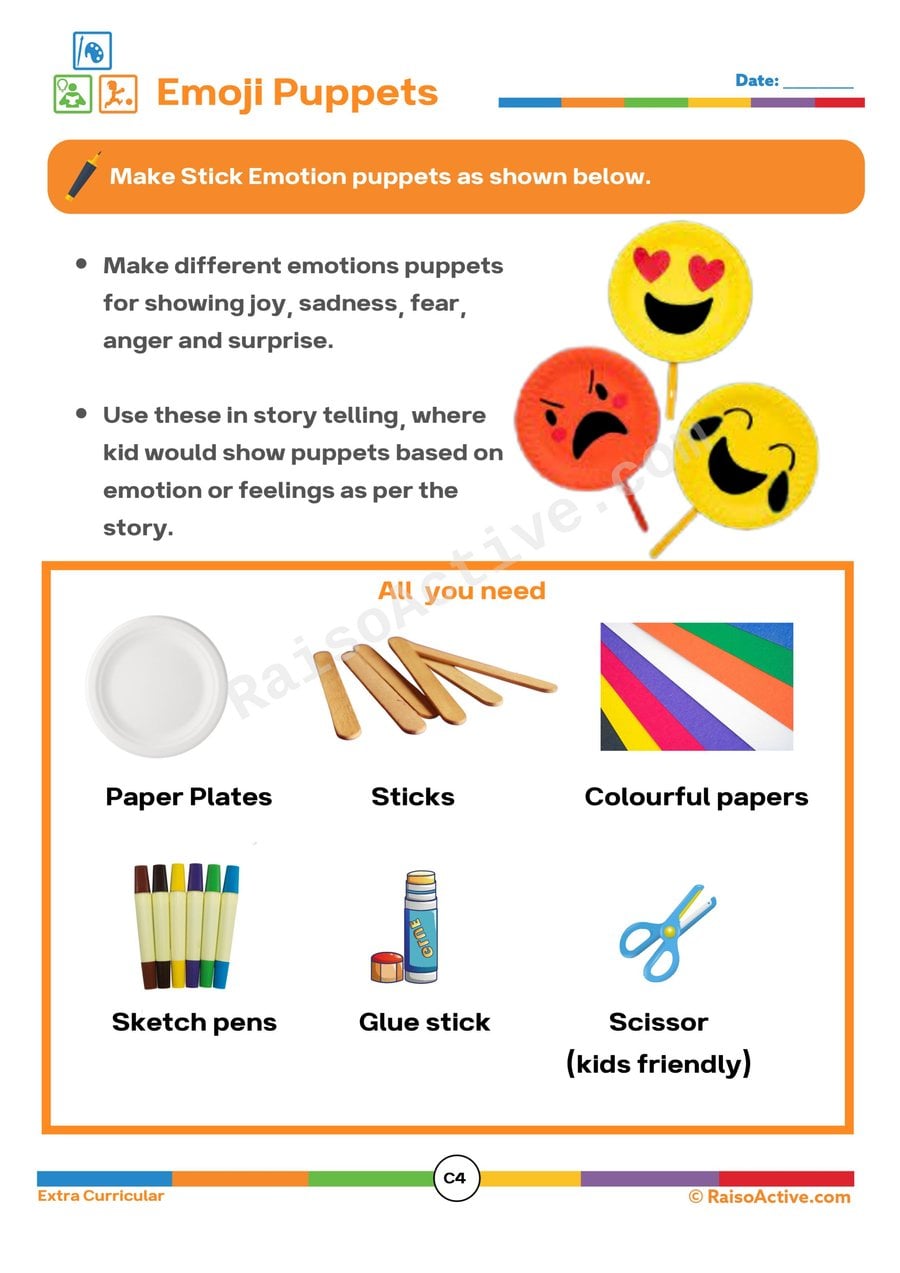
Emoji Puppets Craft Worksheet for Kids
Ages 3-5 · Preschool–Pre-KAges 3-5 · Nursery–ReceptionAges 3-5 · Nursery–LKGAges 3-5
This craft worksheet helps children ages 3-5 create emoji puppets representing different emotions, building emotional vocabulary and fine motor scissor skills at the same time as creative storytelling. Making a physical puppet for each feeling gives children a tangible way to talk about emotions that can feel abstract when discussed with words alone.

Trace the Letter T Worksheet: Practice Writing & Coloring Fun!
Ages 3-5 · Preschool–Pre-KAges 3-5 · Nursery–ReceptionAges 3-5 · Nursery–LKGAges 3-5
This worksheet builds recognition and formation of the letter T through guided tracing and by identifying pictures of words that start with T, like 'tiger' or 'turtle.' For three- to five-year-olds, the letter T's simple cross-shaped stroke — one straight line down, one straight line across — makes it a good letter for practicing controlled, confident pencil strokes.

Fun Letter I & H Vocabulary Game Worksheet for Preschoolers
Ages 3-5 · Preschool–Pre-KAges 3-5 · Nursery–ReceptionAges 3-5 · Nursery–LKGAges 3-5
This board-game-style worksheet helps children ages 3-5 build vocabulary around the letters I and H by rolling a die, moving along a path, and generating additional words that share the same beginning sound as the picture they land on. Thinking of extra words on the spot pushes children beyond simple recognition into active word recall, a more advanced phonics skill.

Semi-Circle Fun: Tracing, Counting, and Patterns Worksheet for Preschoolers
Ages 3-5 · Preschool–Pre-KAges 3-5 · Nursery–ReceptionAges 3-5 · Nursery–LKGAges 3-5
This worksheet helps children ages 3-5 learn about semi-circles through tracing their curved edge, counting how many appear in a group, and identifying which shape comes next in a repeating pattern. Covering one shape across three different skills, tracing, counting, and patterning, gives children a well-rounded, layered understanding of what makes a semi-circle unique.

Plant Life Cycle Worksheet: Cut and Paste the Stages!
Ages 3-5 · Preschool–Pre-KAges 3-5 · Nursery–ReceptionAges 3-5 · Nursery–LKGAges 3-5
This worksheet helps children ages 3-5 learn the different stages of a plant's life cycle, from seed to sprout to full-grown plant, by coloring each stage and then cutting and pasting the pictures in the correct sequential order. Sequencing the stages builds early scientific reasoning about growth and change over time, a concept children can also observe in themselves.

Letter I Tracing Worksheet: Learn to Trace and Identify Words
Ages 3-5 · Preschool–Pre-KAges 3-5 · Nursery–ReceptionAges 3-5 · Nursery–LKGAges 3-5
This worksheet builds recognition and formation of the letter I, both uppercase and lowercase, through tracing practice and identifying pictures of words that start with I, like 'igloo' or 'insect.' For three- to five-year-olds, uppercase I is one of the simplest letter shapes to form, making it a good confidence-building letter even as lowercase i, with its added dot, introduces a slightly trickier two-part stroke.
Related worksheets

Pikachu Pulses Worksheet: Following Instructions and Coloring Fun!
Ages 3-5 · Preschool–Pre-KAges 3-5 · Nursery–ReceptionAges 3-5 · Nursery–LKGAges 3-5
This activity helps children ages 3-5 practice following multi-step color instructions and strengthens pincer grip and fine motor precision as they place small dried lentils onto specific sections of a Pikachu outline. Working with tiny materials like lentils demands more finger control than crayons or markers, making this a genuinely challenging and rewarding fine motor exercise.
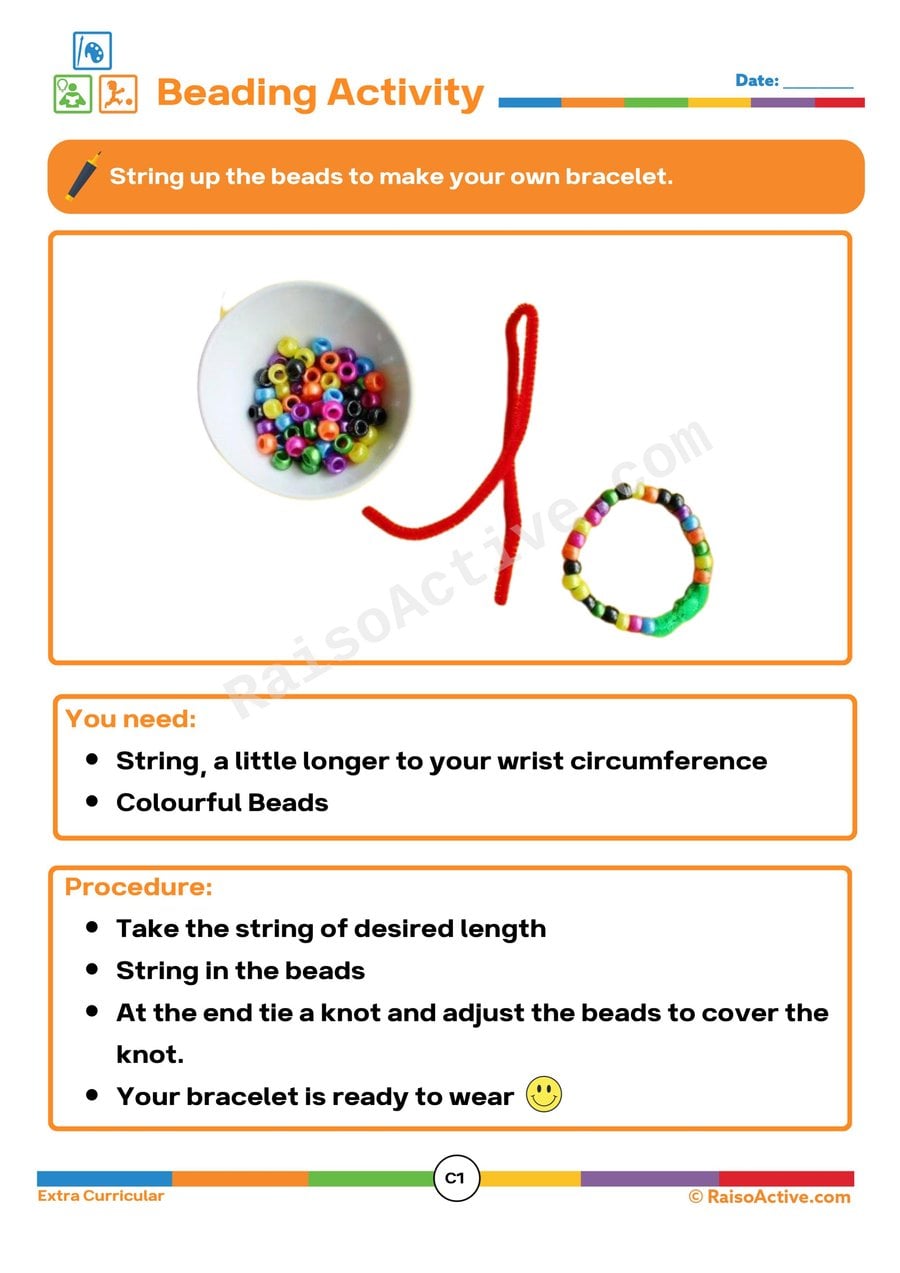
Beading Fun: Make Your Own Bracelet Worksheet
Ages 3-5 · Preschool–Pre-KAges 3-5 · Nursery–ReceptionAges 3-5 · Nursery–LKGAges 3-5
This beading craft has children ages 3-5 string beads onto a cord and tie it off to make a wearable bracelet, building bilateral coordination as one hand holds the string steady while the other threads beads — a genuinely demanding fine motor task at this age. Completing a sequence of small, repeated actions toward a finished, wearable product also builds patience and a sense of accomplishment.

Napkin Folding Fun: Following Instructions Worksheet for Kids
Ages 3-5 · Preschool–Pre-KAges 3-5 · Nursery–ReceptionAges 3-5 · Nursery–LKGAges 3-5
This activity builds sequential following-directions skills and fine motor control as children fold a napkin step by step into a new shape. Because each fold depends on the one before it, children practice holding a multi-step instruction in mind and executing it in order — a skill that transfers directly to following recipes, craft instructions, and classroom directions later on.

Flower Fun: Draw and Color a Flower with Bottle Caps and Bangles!
Ages 3-5 · Preschool–Pre-KAges 3-5 · Nursery–ReceptionAges 3-5 · Nursery–LKGAges 3-5
Tracing around a bottle cap for small circles and a bangle for large circles teaches children ages 3-5 to use everyday objects as drawing tools, building fine motor control and an early sense of composing shapes into a picture. This hands-on approach to drawing a flower also introduces the idea that complex pictures can be built from simple repeated shapes.
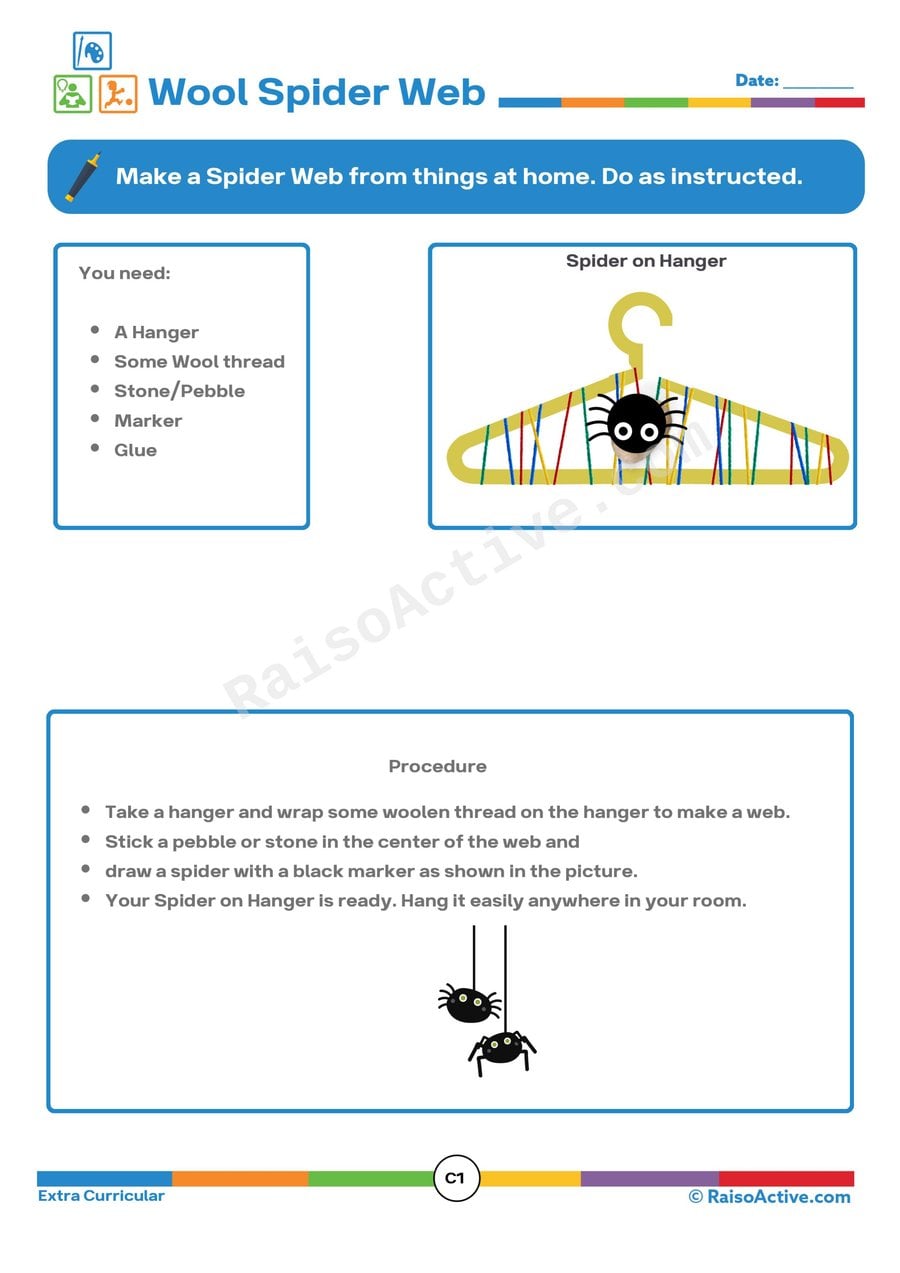
Wool Spider Web Craft: Follow the Instructions!
Ages 3-5 · Preschool–Pre-KAges 3-5 · Nursery–ReceptionAges 3-5 · Nursery–LKGAges 3-5
This step-by-step craft activity builds sequencing and instruction-following skills as children wrap wool thread around a hanger to form a web shape, while also strengthening fine motor coordination through the repetitive wrapping motion. For ages 3-5, following a multi-step process in the correct order is excellent practice for executive function skills that carry over into classroom instructions later on.
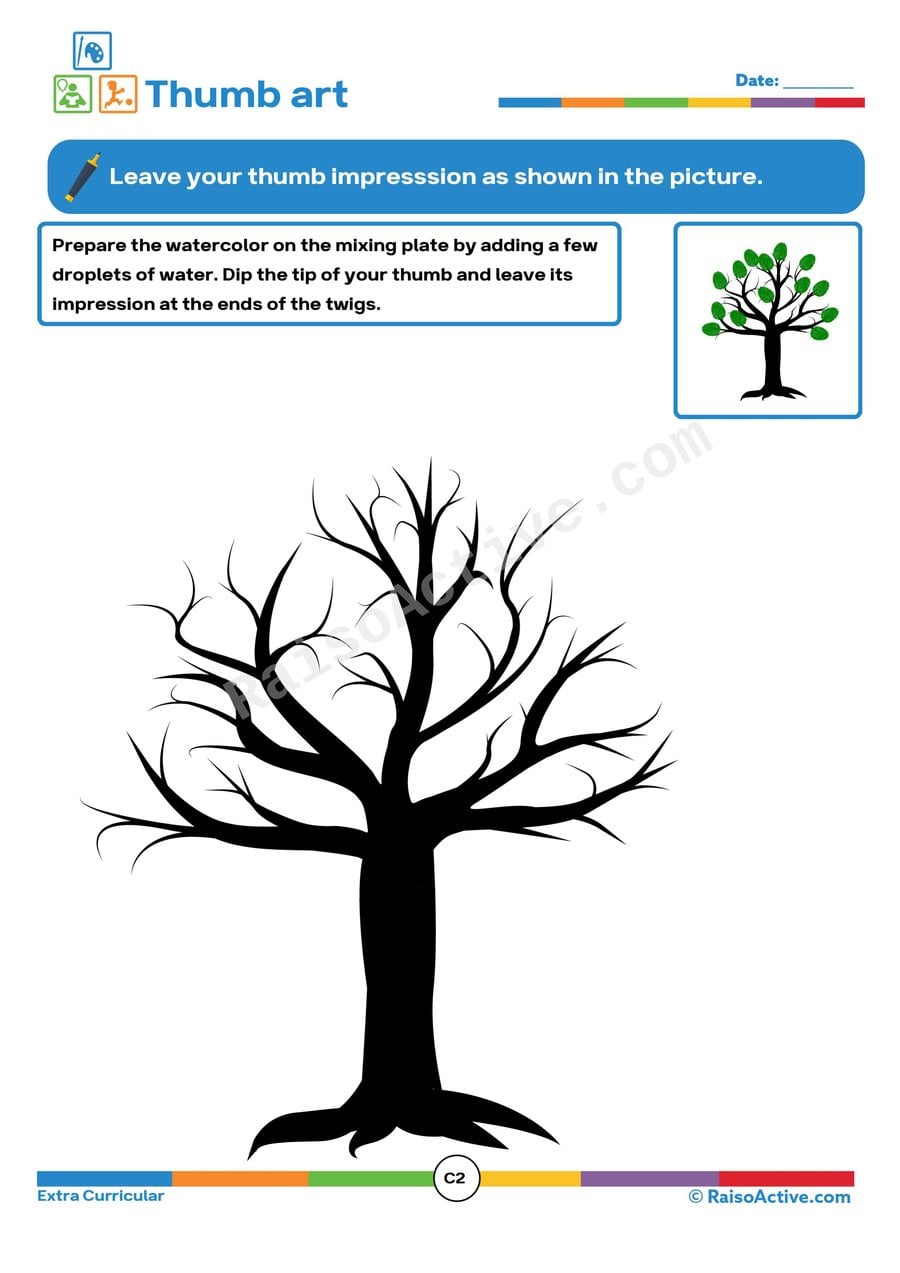
Thumb Art Tree Worksheet for Preschoolers
Ages 3-5 · Preschool–Pre-KAges 3-5 · Nursery–ReceptionAges 3-5 · Nursery–LKGAges 3-5
This thumbprint craft helps children ages 3-5 develop fine motor control and hand strength as they press their thumb repeatedly onto paper to create the leaves of a tree, a controlled, repetitive motion that's different from typical crayon coloring. It also introduces early art concepts like composition and texture, since the finished tree's fullness depends on how many thumbprints your child adds and where they place them.

Flower Craft: Make 5 Flowers with Pencil Shavings!
Ages 3-5 · Preschool–Pre-KAges 3-5 · Nursery–ReceptionAges 3-5 · Nursery–LKGAges 3-5
This craft activity has 3-5 year olds use actual pencil shavings — an unusual, tactile material — to build five flower shapes, following a multi-step visual example rather than a simple one-step instruction. That combination of following a sequence and precisely placing small, delicate shavings builds fine motor control and pincer grip in a way that's noticeably different from crayons or scissors, plus it introduces the idea of turning a leftover material into art.

Handprint Face Fun: A Creative Cut and Paste Worksheet for Kids!
Ages 3-5 · Preschool–Pre-KAges 3-5 · Nursery–ReceptionAges 3-5 · Nursery–LKGAges 3-5
Tracing or printing a handprint and then building a face on it with cut-out features combines fine motor practice, following multi-step instructions, and open-ended creativity in a single activity. For ages three to five, the sequencing required, print, then cut, then arrange, then paste, also strengthens working memory as children hold several steps in mind at once.
Guides for this topic

How to Teach Cutting Skills to Your Preschooler: A Complete Guide for Parents and Teachers
Help your child master scissor skills safely. Expert guide covering readiness signs, scissor types, progression steps, pre-cutting exercises, and fun practice ideas for ages 2-6.
Christmas and Winter Activities That Combine Fun and Learning: Creating Magical Educational Experiences
Discover Christmas and winter activities that combine festive fun with real learning. Crafts, counting, literacy, and printable worksheets for ages 2 to 8 — perfect for home and school.
Age-Appropriate Halloween Learning Activities: Balancing Spooks and Skills for Young Learners
Discover fun, age-appropriate Halloween learning activities for young children. Spooky crafts, counting games, literacy ideas, and printable worksheets for ages 2 to 8.
Reviews
Every worksheet for ages 3–5, no watermark
Members download the full library of 1,000+ worksheets and every activity pack without watermarks or daily limits. One year costs ₹999 in India or $20 elsewhere.
See membership plansOr download any worksheet free with a watermark (5 a day).