
Flower Fun: Draw and Color a Flower with Bottle Caps and Bangles!
Tracing around a bottle cap for small circles and a bangle for large circles teaches children ages 3-5 to use everyday objects as drawing tools, building fine motor control and an early sense of composing shapes into a picture. This hands-on approach to drawing a flower also introduces the idea that complex pictures can be built from simple repeated shapes.
Curriculum
How to use this worksheet
Show your child how to hold the bottle cap steady on the paper and trace around its edge to make the small circles for the flower's center or petals. Then have them use the bangle the same way to trace the larger circle for the outer petal shape. Once the flower outline is complete, let your child color it in with crayons.
Materials needed
- Pencil
- Crayons
- Bottle cap
- Bangle
Extension activities
- •Try tracing other round household objects, like coins or jar lids, to make a picture of something new.
- •Draw a whole garden scene by making several flowers using the same bottle cap and bangle technique.
- •Press a real flower petal onto paper as a stamp alongside the drawn flower.
- •Mix colors while coloring the flower to explore what new shades appear.
- •Cut out the finished flower and use it to decorate a card for a family member.
Tips for parents and teachers
Help hold the stencil object steady for your child if tracing around curves is still tricky, since this is a new skill for many preschoolers. Encourage them to try different color combinations to make the flower their own. Praise their effort with the tracing technique rather than expecting a perfectly round circle.

Written by
Hemsweta Jain · Teacher Cheena
MBA and Early Childhood Educator, teaching since 2014 · Founder of RaisoActive, Mumbai
Every RaisoActive worksheet is designed and checked by the founder before publishing.
Published · Last reviewed
Related worksheets
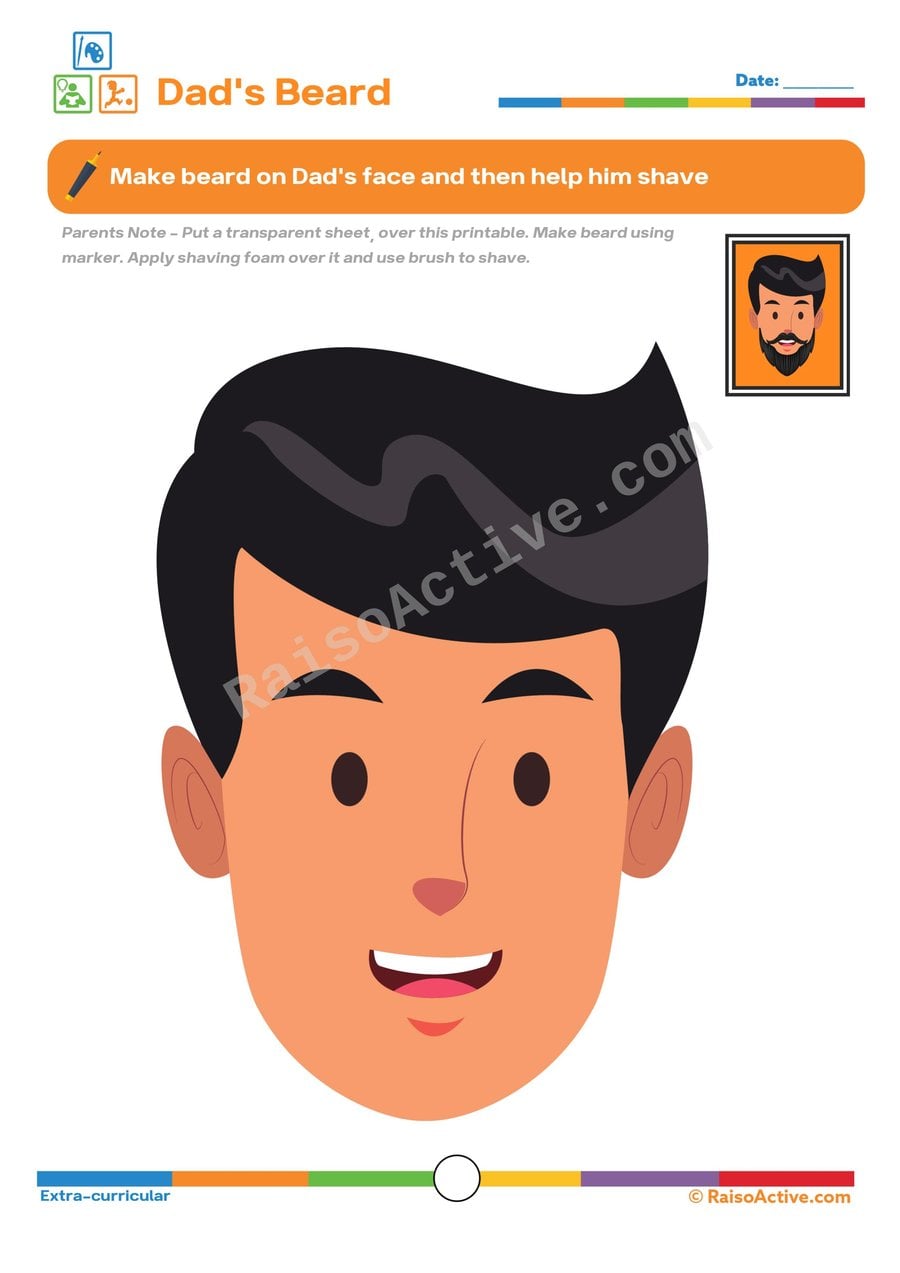
Dad's Beard: A Fun Shaving Activity for Kids!
This playful pretend-shaving activity builds fine motor control and bilateral coordination in children ages 3-5, as they draw a beard with a marker and then 'shave' it away using foam and a brush in careful, controlled strokes. It also introduces a simple science idea — that shaving foam can be applied and removed in layers — while giving children a hands-on, sensory way to imitate an everyday grown-up routine.
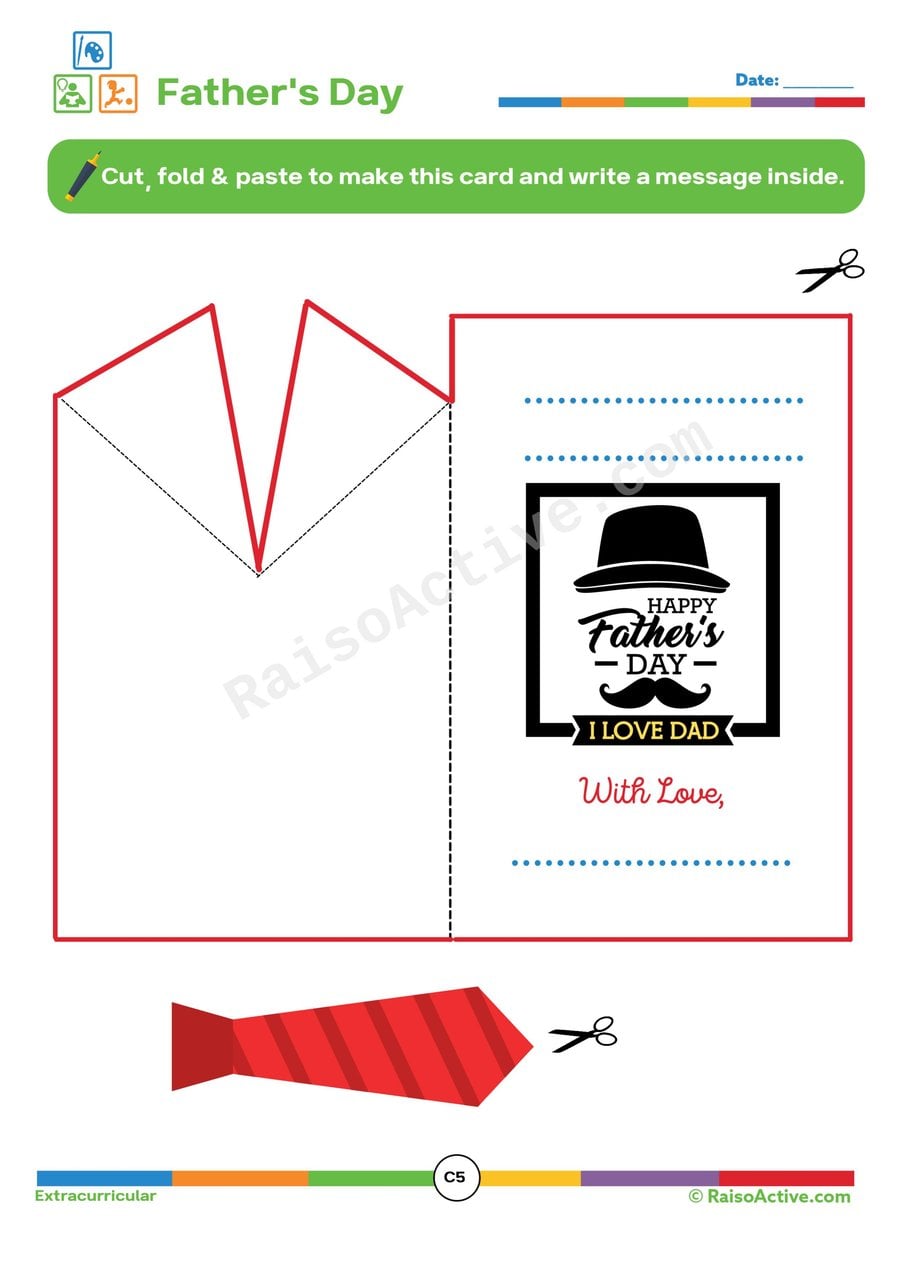
Father's Day Card Craft: Cut, Fold, and Paste!
This Father's Day card craft gives children ages 3-5 focused practice with three distinct fine motor actions in sequence — cutting along a line, folding paper neatly in half, and pasting a small piece precisely in place. Sequencing multiple craft steps in the right order also builds early executive-function skills like following multi-step directions. The personal, gift-making purpose adds meaning and motivation that keeps young children engaged through each step.
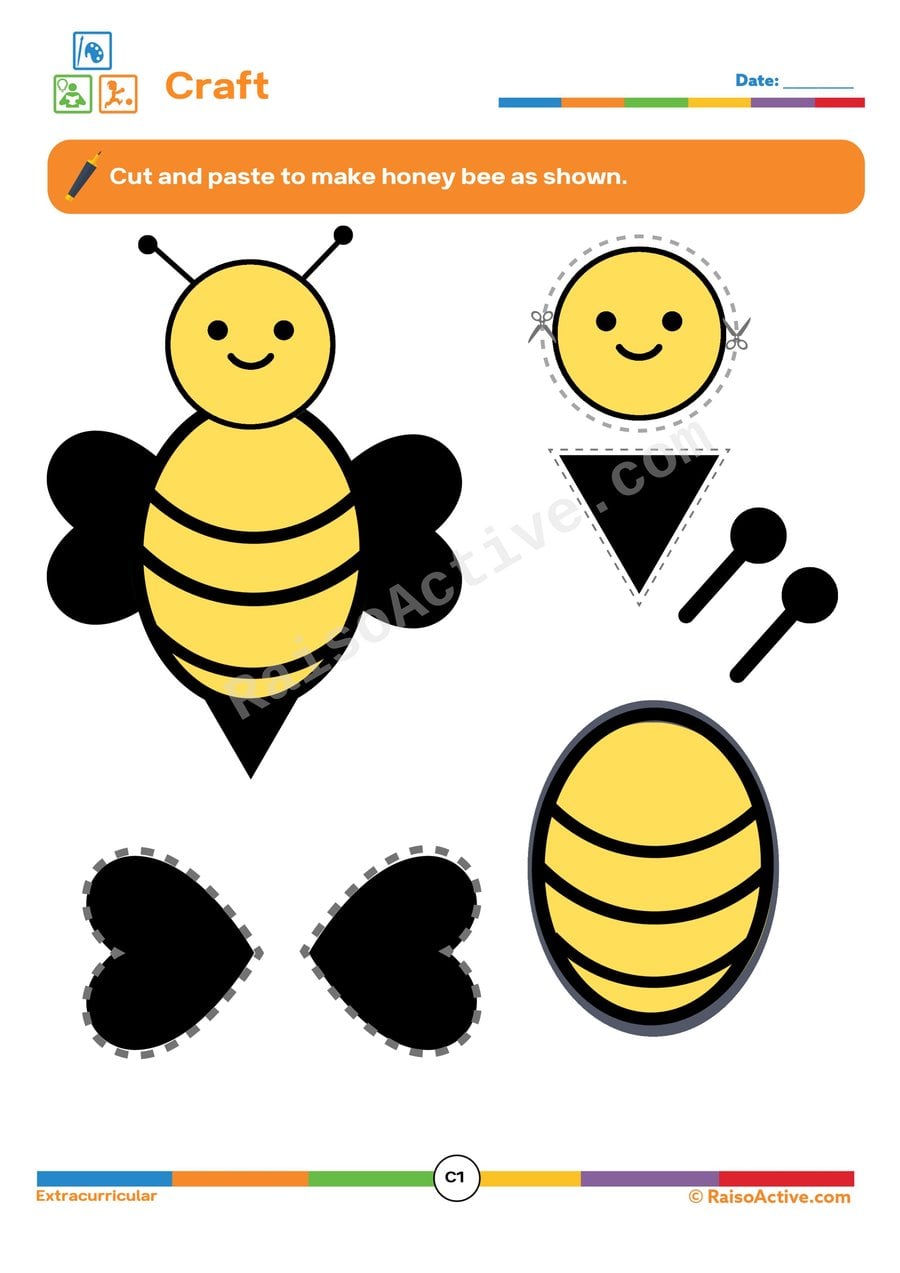
Honey Bee Craft Worksheet: Cut and Paste Fun!
This honey bee craft gives children ages 3-5 targeted practice with scissor control as they cut along dotted lines to separate bee body parts, then reassemble them by pasting into a complete bee shape. Because the pieces must be cut accurately to fit together correctly afterward, this activity demands more precision than simple free-cutting practice. Assembling a multi-piece figure also reinforces spatial reasoning, since children have to recognize how each cut piece relates to the whole.

Pikachu Pulses Worksheet: Following Instructions and Coloring Fun!
This activity helps children ages 3-5 practice following multi-step color instructions and strengthens pincer grip and fine motor precision as they place small dried lentils onto specific sections of a Pikachu outline. Working with tiny materials like lentils demands more finger control than crayons or markers, making this a genuinely challenging and rewarding fine motor exercise.

Cotton Bud Flower Craft Worksheet for Preschoolers
This cotton bud craft has children ages 3-5 paste cotton buds around a yellow center to build flower petals, an activity that strengthens the pincer grip and hand control needed for later pencil writing. Because each cotton bud represents one petal, the craft doubles as a counting exercise, giving children practice with one-to-one correspondence while they work. Combining a sensory material like cotton buds with a familiar shape — the flower — makes fine motor practice feel like play rather than drilling.
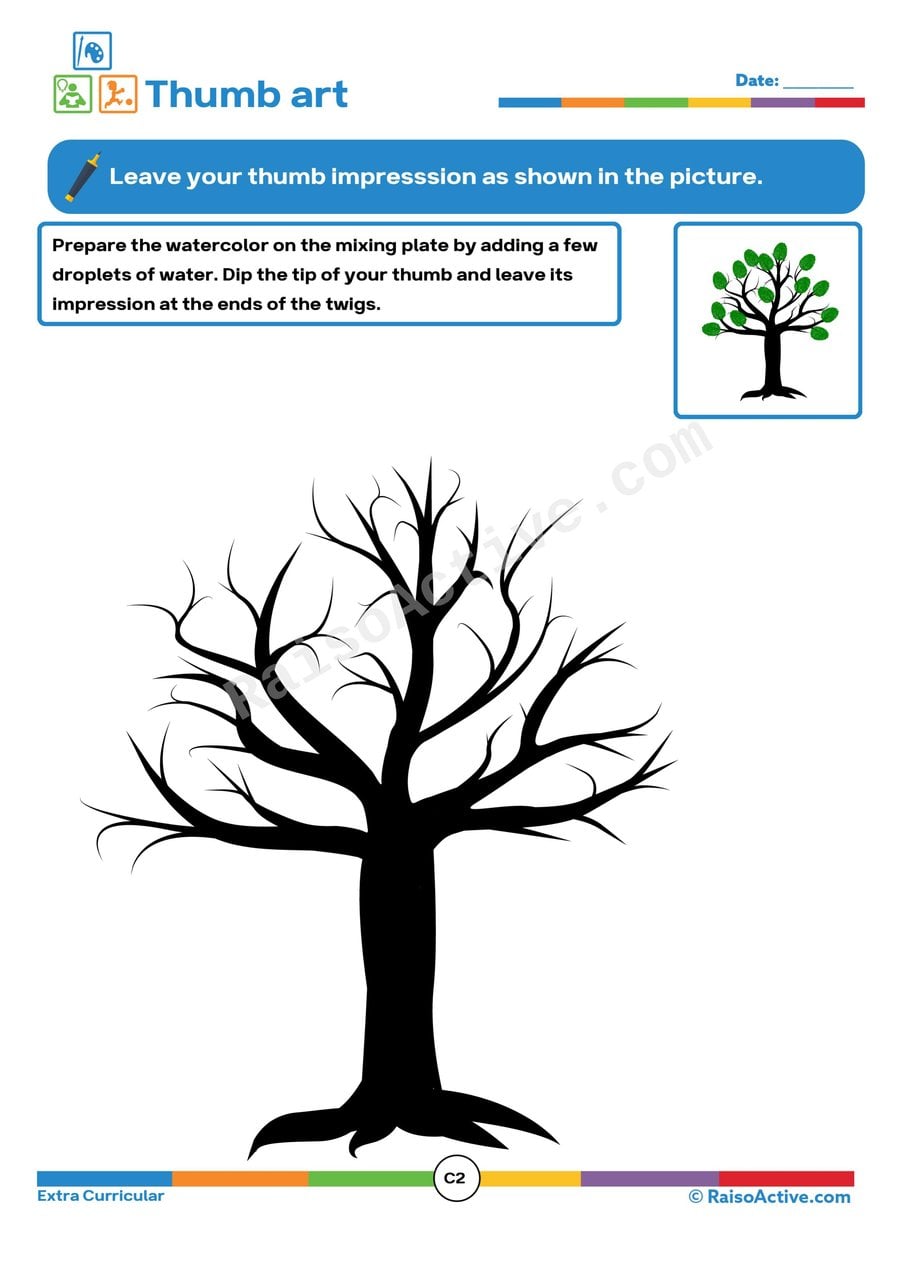
Thumb Art Tree Worksheet for Preschoolers
This thumbprint craft helps children ages 3-5 develop fine motor control and hand strength as they press their thumb repeatedly onto paper to create the leaves of a tree, a controlled, repetitive motion that's different from typical crayon coloring. It also introduces early art concepts like composition and texture, since the finished tree's fullness depends on how many thumbprints your child adds and where they place them.

Thread Painting Fun: A Creative Craft Worksheet for Kids!
Dipping thread in watercolor, folding paper, and pulling the thread introduces children ages 3-5 to an unusual printmaking technique that builds fine motor control and cause-and-effect thinking, since the pulled thread creates a surprising symmetrical design they couldn't fully plan in advance.

Cute Rabbit Cut and Paste Worksheet for Preschoolers
Children ages 3-5 practice precise scissor control and gluing as they cut apart separate body-shape pieces and assemble them into a complete rabbit picture, building the fine motor coordination needed for later handwriting. Piecing together separate parts to form a whole also strengthens early spatial reasoning about how shapes fit together.
Guides for this topic
Best Worksheets for 3-Year-Olds: What Works and What to Avoid
What works on worksheets for 3-year-olds: short sessions, crayons, tracing lines, matching, cutting, a free weekly plan, and signs one is too advanced.
Age-Appropriate Problem-Solving Activities: Building Critical Thinkers from the Ground Up
Discover fun, age-appropriate problem-solving activities for children ages 1-8. Build critical thinking, logic, and reasoning skills through play-based learning.
Fostering Creativity in Structured Learning: The Perfect Balance for Young Minds
Learn how to blend creativity with structured learning for children ages 1-8. Practical strategies, activities, and printable worksheets for parents and teachers.
Reviews
Every worksheet for ages 3–5, no watermark
Members download the full library of 1,000+ worksheets and every activity pack without watermarks or daily limits. One year costs ₹1,000 in India or $20 elsewhere.
See membership plansOr download any worksheet free with a watermark (5 a day).