Transport Sorting Worksheet for Preschoolers
Sorting vehicle pictures into air, road, water, and rail categories teaches children ages 3-5 to classify modes of transportation based on where they travel, building both vocabulary and early categorization reasoning. Cutting and pasting each vehicle into its category also strengthens fine motor precision alongside the sorting task.
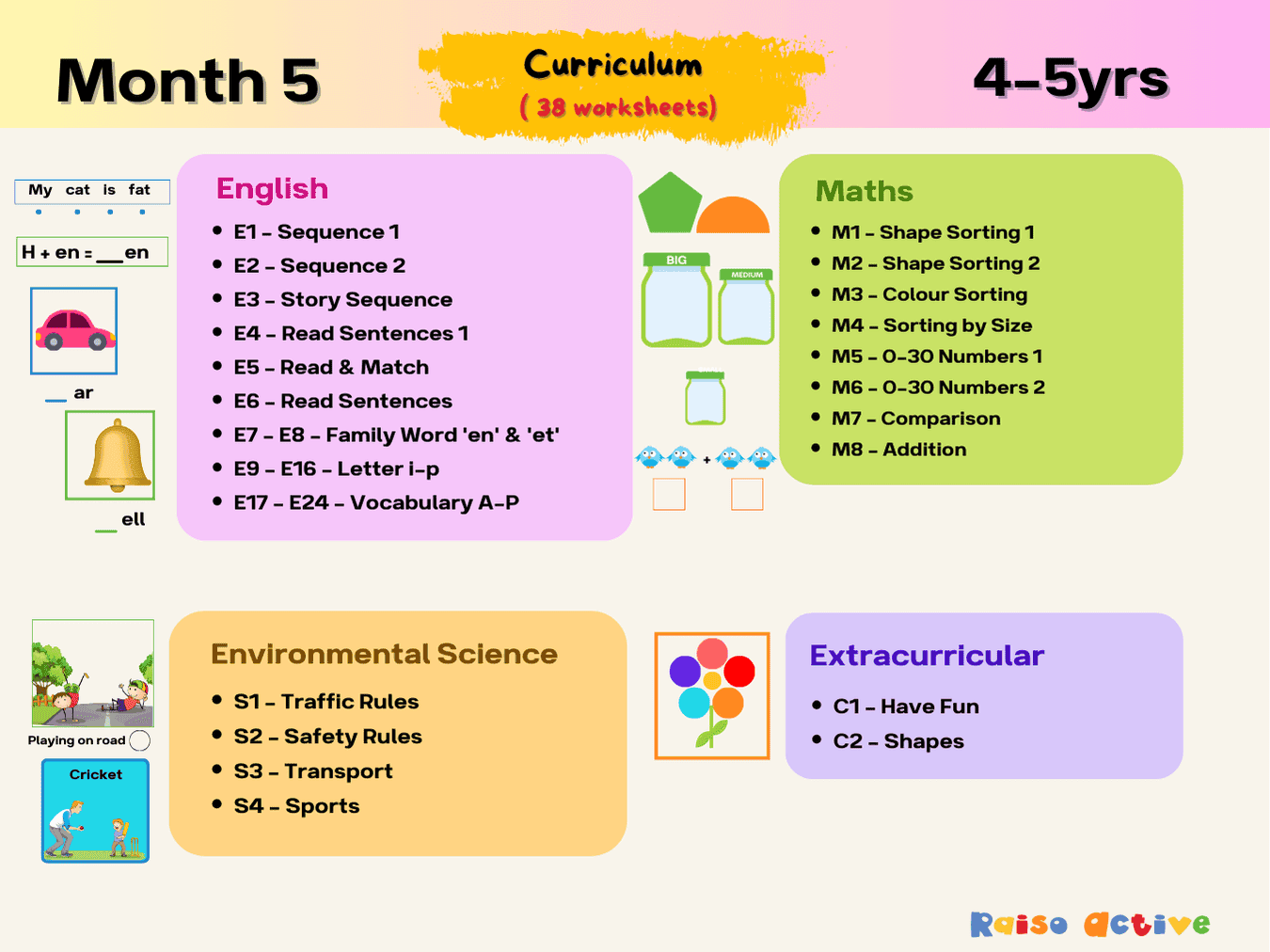
Part of the pack
Month 5: Literacy, Math, Environmental Science | Ages 4-5
This is page 38 of the pack. Ages 4-5 · Pre-KAges 4-5 · ReceptionAges 4-5 · LKGAges 4-5
Curriculum
- Safety > Road Safety
How to use this worksheet
Look at the vehicle pictures at the bottom of the page together and name each one. Ask your child to think about where each vehicle travels, whether in the air, on the road, on water, or on rails, then have them cut it out. Have them paste each vehicle into the correct category section, discussing their reasoning as they go.
Materials needed
- Scissors
- Glue
- Pencil or Marker
Extension activities
- 1Draw a picture of your favorite mode of transportation.
- 2Make a collage of different vehicles cut from old magazines.
- 3Sort toy vehicles at home into the same four categories.
- 4Take a walk or drive and spot real examples of each transport category.
- 5Talk about how people and goods travel long distances using different vehicles.

Written by
Hemsweta Jain · Teacher Cheena
MBA and Early Childhood Educator, teaching since 2014 · Founder of RaisoActive, Mumbai
Every RaisoActive worksheet is designed and checked by the founder before publishing.
Published · Last reviewed
More from Month 5: Literacy, Math, Environmental Science | Ages 4-5

Learn the Letter 'n' Worksheet: Tracing, Matching, and Coloring Fun!
Ages 3-5 · Preschool–Pre-KAges 3-5 · Nursery–ReceptionAges 3-5 · Nursery–LKGAges 3-5
This worksheet builds letter 'n' recognition for 3-5 year olds through tracing, a highlighting search, matching to pictures, and coloring — four connected tasks that ask your child to hold onto the same letter across different formats and follow multi-step instructions in sequence. The letter 'n' is frequently confused with 'm' since both involve humps, so the repeated exposure here helps children start telling the two apart by sound and shape.

Beehive Number Fun: Missing Numbers 0-30 Worksheet
Ages 4-6 · Pre-K–KindergartenAges 4-6 · Reception–Year 1Ages 4-6 · LKG–UKGAges 4-6
Filling in missing numbers along a beehive path gives 4-6 year olds practice with the full 0-30 number sequence, a meaningful stretch beyond the more common 1-10 or 1-20 ranges seen in earlier counting worksheets. Because the missing numbers are scattered rather than all at the end, your child has to actually understand what number comes next at multiple points in the sequence, rather than simply continuing a count from a known starting point.

Read and Match: Sentence Matching Worksheet for Preschoolers
Ages 3-5 · Preschool–Pre-KAges 3-5 · Nursery–ReceptionAges 3-5 · Nursery–LKGAges 3-5
This worksheet has 3-5 year olds read a short, simple sentence and then find and paste the one picture that actually matches its meaning — a task that requires genuine reading comprehension rather than picture-guessing, since more than one image on the page might look similar at a glance. Because the child has to hold the sentence's meaning in mind while comparing several picture options, this builds an early bridge between decoding words and understanding what they describe.

First Letter Fun: Identify and Write! A Worksheet for Young Learners
Ages 3-5 · Preschool–Pre-KAges 3-5 · Nursery–ReceptionAges 3-5 · Nursery–LKGAges 3-5
This worksheet gives 3-5 year olds focused practice isolating the very first sound in a spoken word and writing the matching letter, building the same phonemic awareness skill that underlies spelling later on. Saying each picture's name aloud before writing forces your child to actively listen for the sound rather than guess at a letter from memory, which is what makes this different from copying pre-written letters.

Comparing Objects: A Fun Counting Worksheet for Preschoolers!
Ages 4-5 · Pre-KAges 4-5 · ReceptionAges 4-5 · LKGAges 4-5
This worksheet has 4-5 year olds count two groups of objects and then compare the totals using the greater-than, less-than, and equal-to symbols — an early but genuine step into formal math notation that goes beyond simple counting into representing a comparison symbolically. Because your child has to count accurately before comparing, this worksheet also reinforces that math symbols stand for real relationships between quantities, not arbitrary marks to memorize.
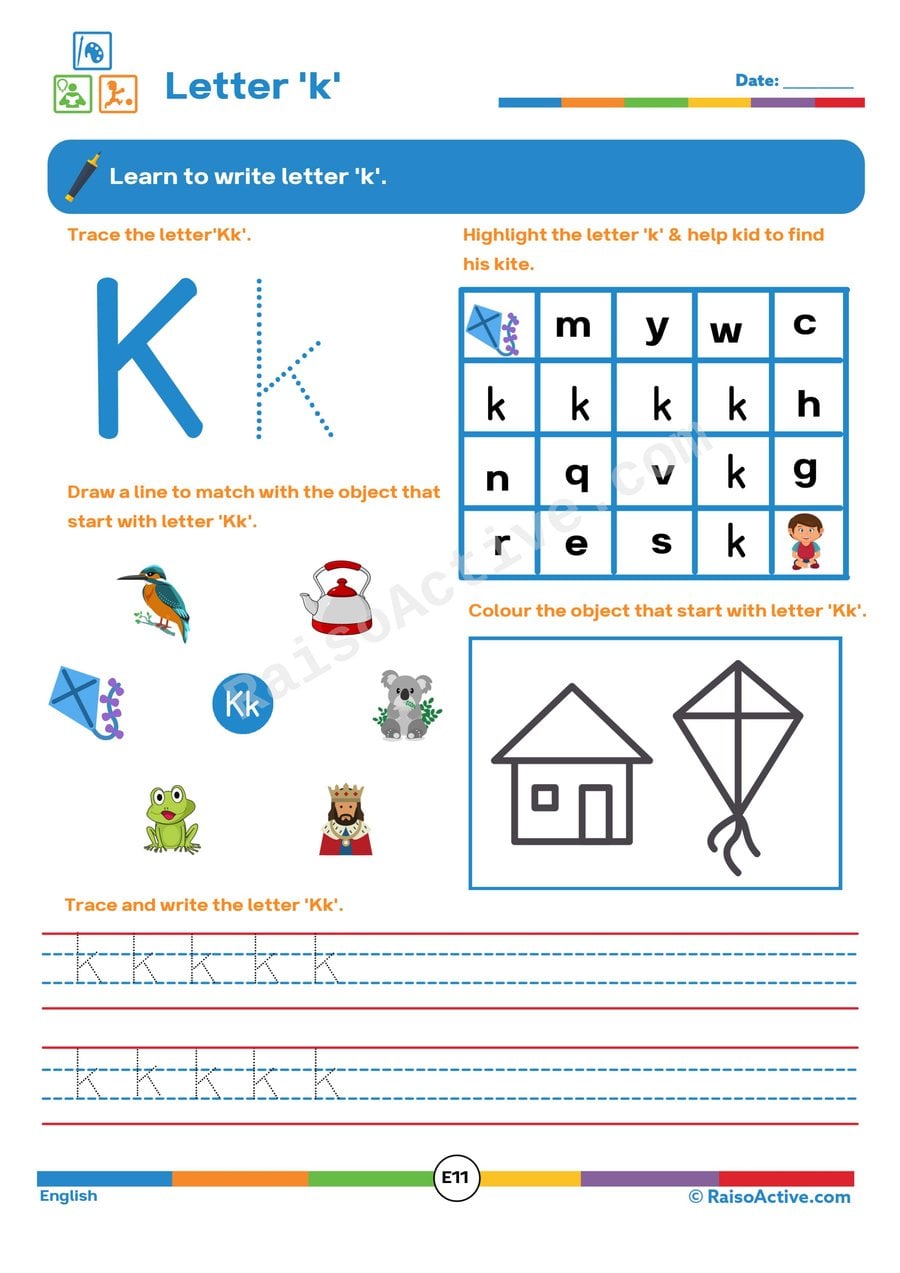
Letter 'k' Worksheet: Trace, Match, and Color!
Ages 3-5 · Preschool–Pre-KAges 3-5 · Nursery–ReceptionAges 3-5 · Nursery–LKGAges 3-5
This worksheet builds letter 'k' recognition for 3-5 year olds across three connected activities — tracing its shape, matching it to pictures that start with the same sound, and coloring those matched objects — which reinforces the letter through repetition in different formats rather than a single pass. The 'k' sound and shape are less commonly practiced than more frequent letters, so this worksheet gives your child valuable extra exposure to a trickier letter.
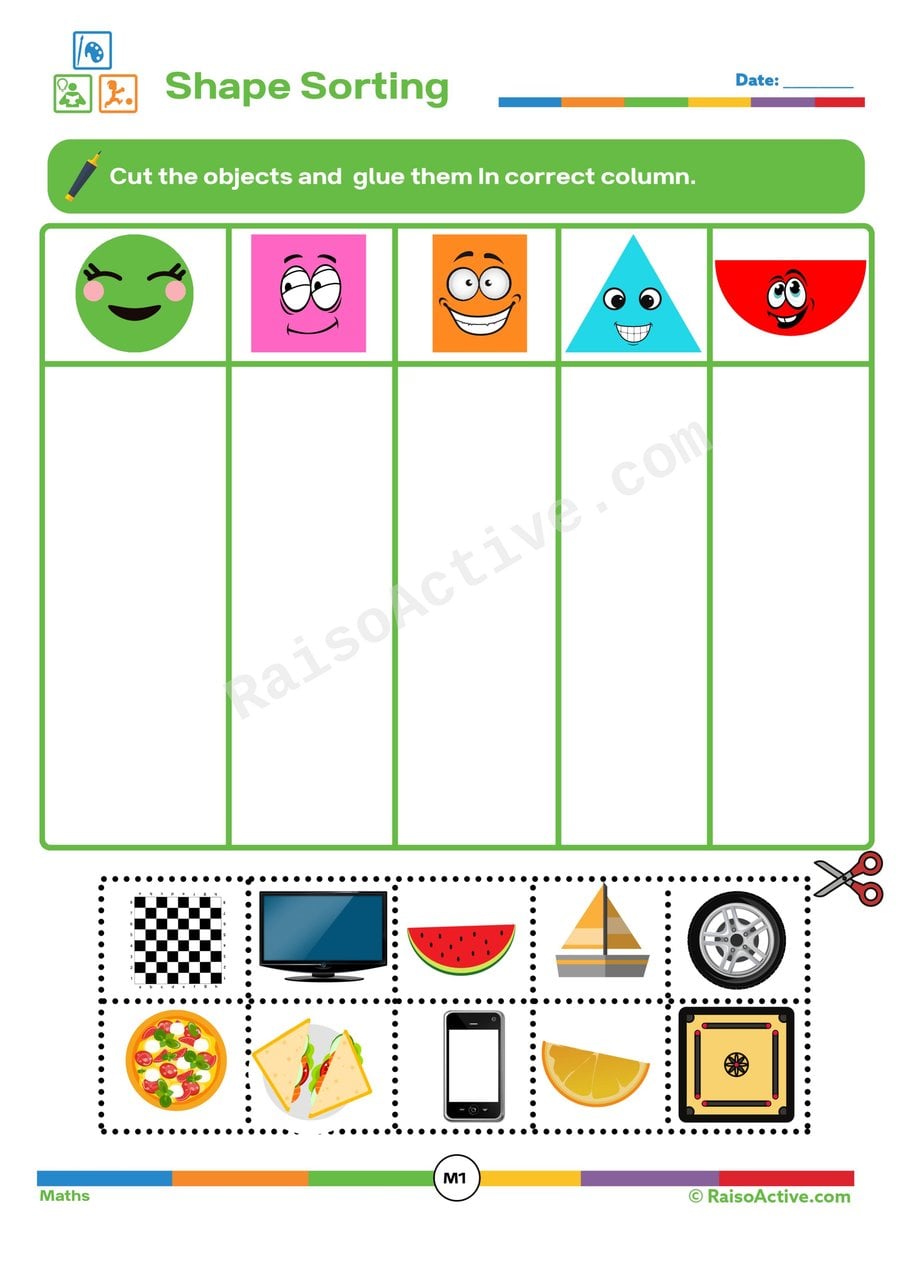
Shape Sorting Worksheet: Cut and Paste Fun!
Ages 3-5 · Preschool–Pre-KAges 3-5 · Nursery–ReceptionAges 3-5 · Nursery–LKGAges 3-5
This cut-and-paste activity asks 3-5 year olds to do more than just name a shape — they have to look at a jumble of circles, squares, and triangles, decide which column each one belongs to, and physically place it there. That sorting step is what builds real shape classification, not just shape labeling, since your child must compare each new piece against the ones already in the column. Cutting the shapes out along their curves and corners is also genuine scissor practice, since curved cuts (circles) are notably harder for small hands than straight ones (triangles, squares).
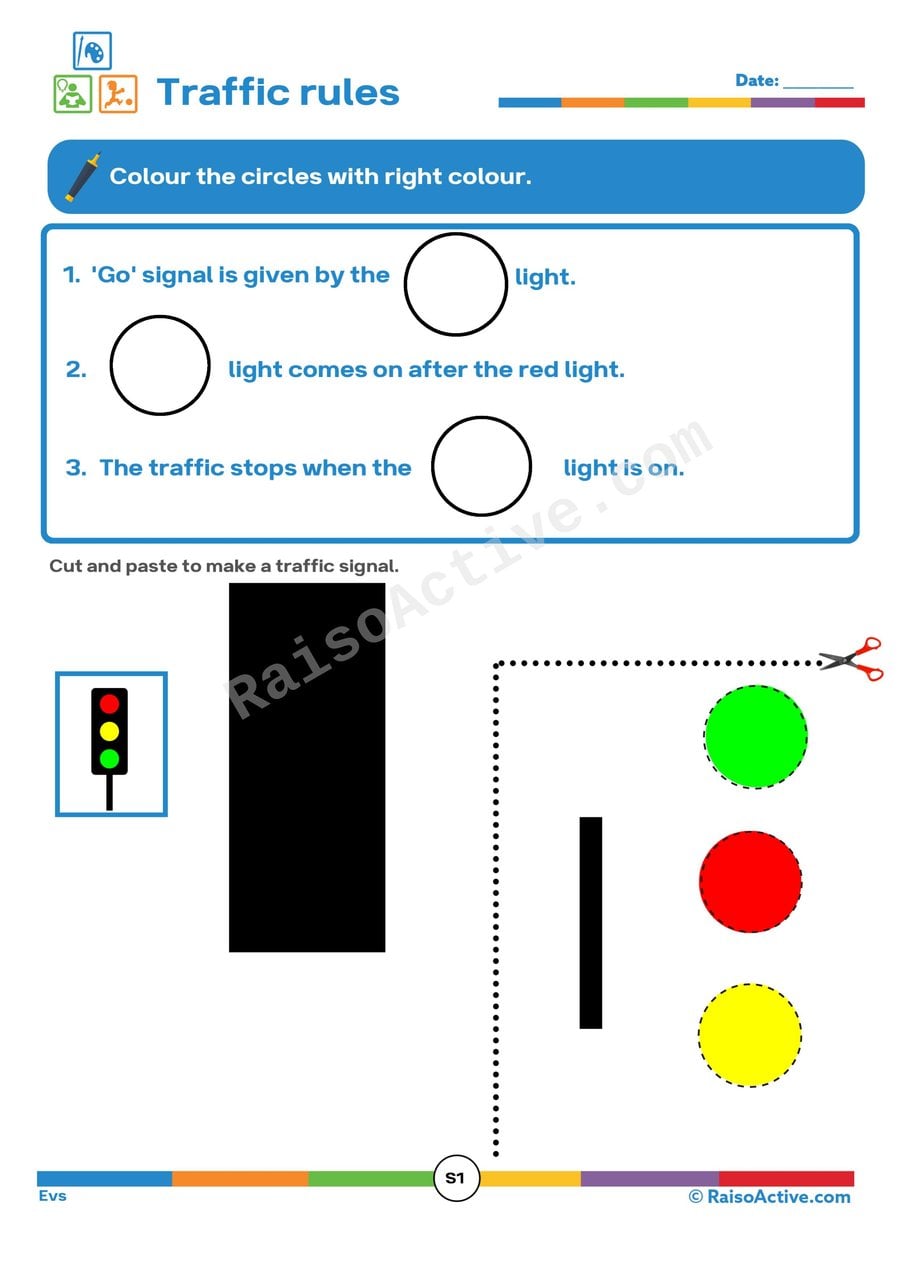
Traffic Light Colors Worksheet for Kids
Ages 3-5 · Preschool–Pre-KAges 3-5 · Nursery–ReceptionAges 3-5 · Nursery–LKGAges 3-5
Coloring the traffic light and completing the signal teaches children ages 3-5 what each color means, connecting red, yellow, and green to stop, wait, and go in a way that supports real road safety awareness. Cutting and pasting the finished signal also gives extra fine motor practice tied directly to the lesson.
Related worksheets
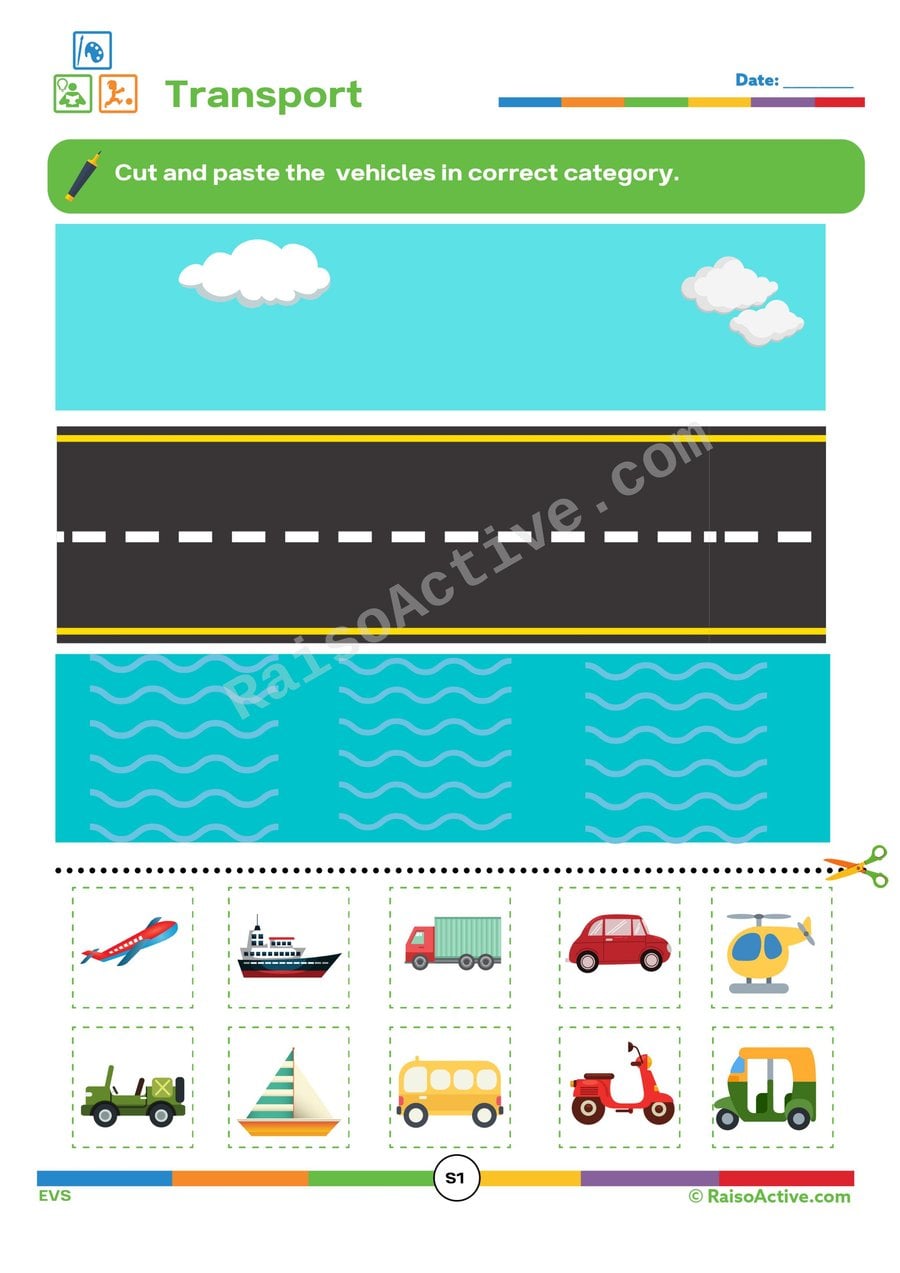
Transport Sorting Worksheet for Preschoolers
Ages 3-5 · Preschool–Pre-KAges 3-5 · Nursery–ReceptionAges 3-5 · Nursery–LKGAges 3-5
Children ages 3-5 practice classification and vocabulary as they sort vehicle pictures into three categories — air, road, and water — based on how each one travels. This kind of sorting task builds early logical reasoning, since children must identify a shared property among different pictures rather than just naming each vehicle individually.
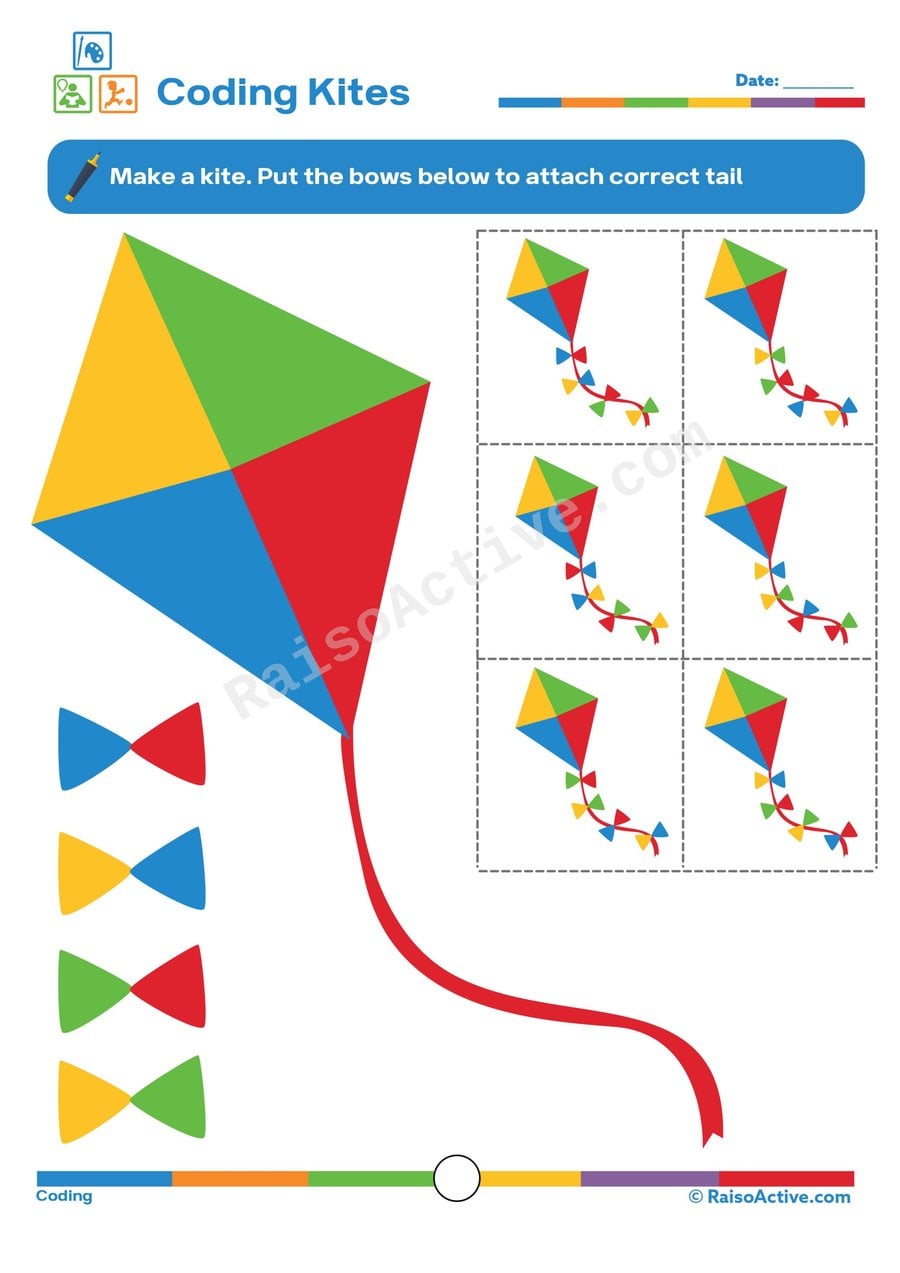
Coding Kites Worksheet: Match the Bows!
Ages 3-5 · Preschool–Pre-KAges 3-5 · Nursery–ReceptionAges 3-5 · Nursery–LKGAges 3-5
This activity sharpens visual observation in children ages 3-5 as they compare color sequences on each kite to a set of loose bows and find the exact match. Careful, systematic comparison — checking each color in order rather than glancing quickly — builds an attention-to-detail habit that transfers directly to early reading and number work.

Clothing Pattern Match Worksheet for Preschoolers
Ages 3-5 · Preschool–Pre-KAges 3-5 · Nursery–ReceptionAges 3-5 · Nursery–LKGAges 3-5
This worksheet has children ages 3-5 study repeating patterns on clothing items — stripes, polka dots, or checks — and match each item to its identical twin, building visual discrimination and early pattern-sequencing skills. Distinguishing between similar-looking patterns also sharpens attention to detail, a skill that later supports letter and word recognition.
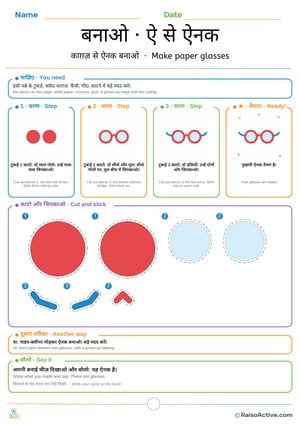
Make Paper Glasses: Hindi Letter ऐ (ai) Cut and Stick Craft | बनाओ · ऐ से ऐनक
Ages 4-7 · Pre-K–Grade 1Ages 4-7 · Reception–Year 2Ages 4-7 · LKG–Class 1Ages 4-7
Children cut out the numbered pieces and stick them in order to make a pair of glasses with two red rims, two lenses and two arms, then show it and say a full sentence about it. It links the letter ऐ with a real picture word, ऐनक, and practises scissor control and following steps.

Feelings Detective for Kids: Clue Cards, Story Order and Draw a Proud Moment
Ages 4-6 · Pre-K–KindergartenAges 4-6 · Reception–Year 1Ages 4-6 · LKG–UKGAges 4-6
Children use body clues (fists, a wobbly tummy, standing tall) and what happened to work out the feeling, put three pictures in order and talk about a proud moment.

How Big Is It? Feelings Thermometer and Matching the Size of the Reaction
Ages 7-10 · Grade 2–Grade 3Ages 7-10 · Year 3–Year 4Ages 7-10 · Class 2–Class 3Ages 7-10
Children rank five feelings from coolest to hottest, decide whether a problem is small, medium or big and match the size of the reaction, then think of a reaction that fits a small problem.
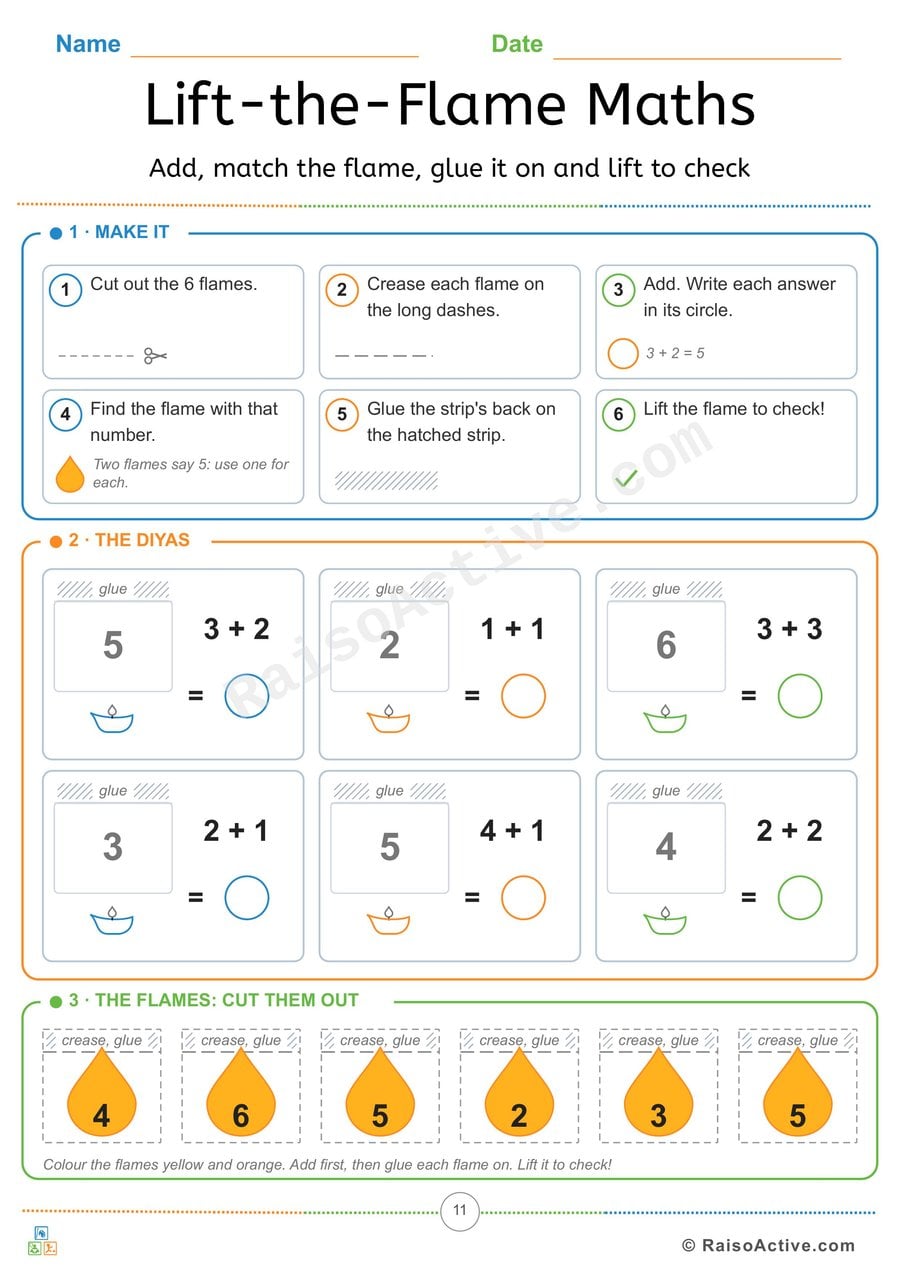
Lift-the-Flame Diwali Maths: Cut, Glue and Check the Sum
Ages 4-6 · Pre-K–KindergartenAges 4-6 · Reception–Year 1Ages 4-6 · LKG–UKGAges 4-6
Children add small numbers up to 6, find the flame strip with the matching number, glue it behind a diya and lift the flame to check their answer. A self-checking maths craft.
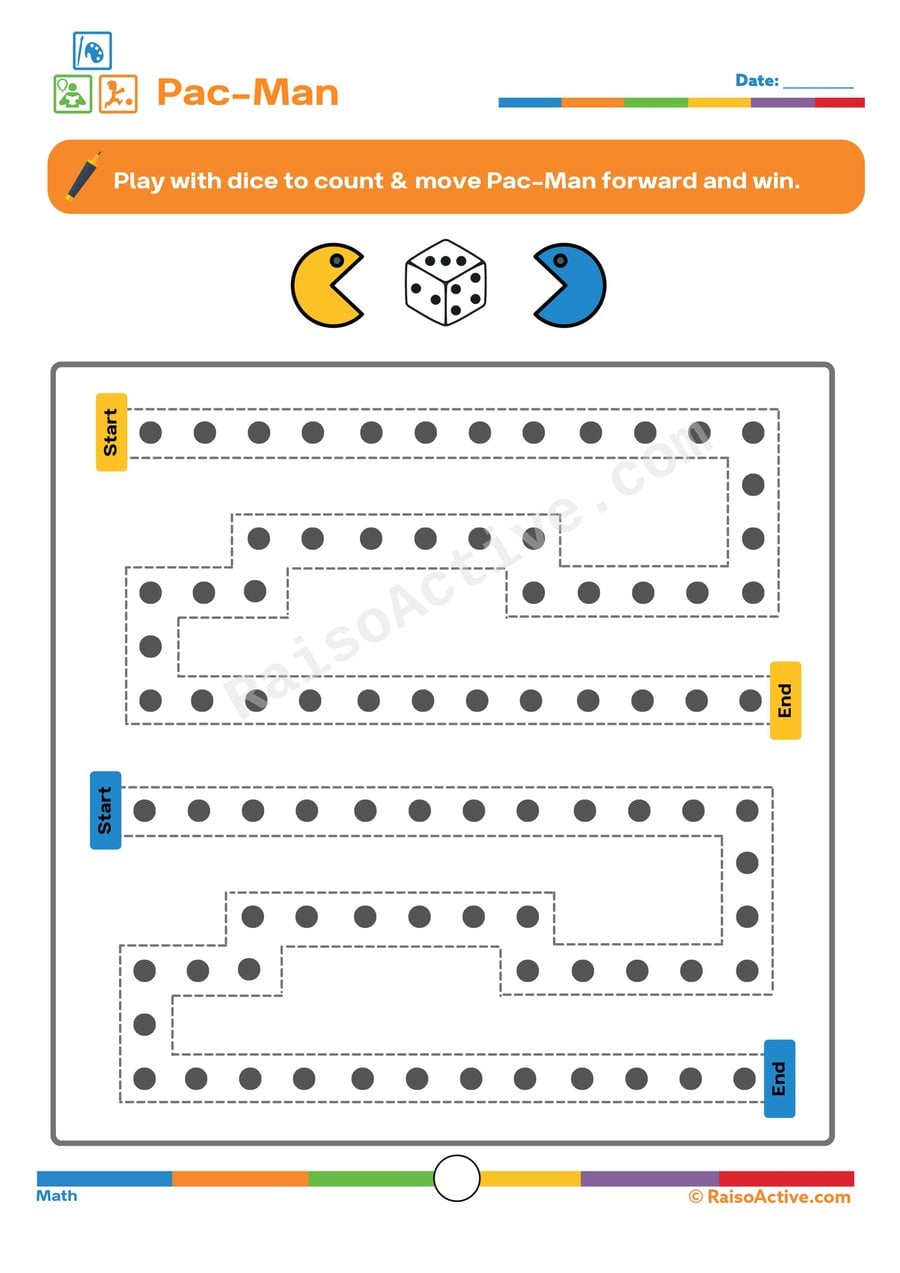
Pac-Man Maze Worksheet: Count and Move!
Ages 3-5 · Preschool–Pre-KAges 3-5 · Nursery–ReceptionAges 3-5 · Nursery–LKGAges 3-5
This dice-counting maze gives children ages 3-5 repeated practice matching a rolled number to the correct number of moves, reinforcing accurate counting under a bit of playful pressure. Tracking Pac-Man's current position after each roll also builds short-term spatial memory, since children must remember where they left off before moving again.
Guides for this topic

Age-Appropriate Problem-Solving Activities: Building Critical Thinkers from the Ground Up
Discover fun, age-appropriate problem-solving activities for children ages 1-8. Build critical thinking, logic, and reasoning skills through play-based learning.
Critical Thinking Activities That Actually Work for Young Children: Building Tomorrow's Thinkers Today
Discover proven critical thinking activities for young children. Age-wise logic games, questioning techniques, and hands-on ideas to build thinking skills at home.

Preparing Your Child for a Rapidly Changing World: Essential Skills for Future Success
Discover the essential 21st century skills your child needs for future success. Practical tips on creativity, critical thinking, digital literacy & emotional intelligence for ages 1-8.
Reviews
Every worksheet for ages 3–5, no watermark
Members download the full library of 1,000+ worksheets and every activity pack without watermarks or daily limits. One year costs ₹999 in India or $20 elsewhere.
See membership plansOr download any worksheet free with a watermark (5 a day).