King Craft Worksheet: Cut, Roll, and Paste Fun!
Making a king craft gives children ages 3-5 hands-on practice with three distinct fine motor actions in one project — cutting along lines, rolling paper into a cylindrical shape, and pasting pieces into place. Combining these steps in sequence also builds early planning skills, since the craft only comes together correctly if the pieces are assembled in the right order. It's a playful way to strengthen the hand muscles children need for writing.
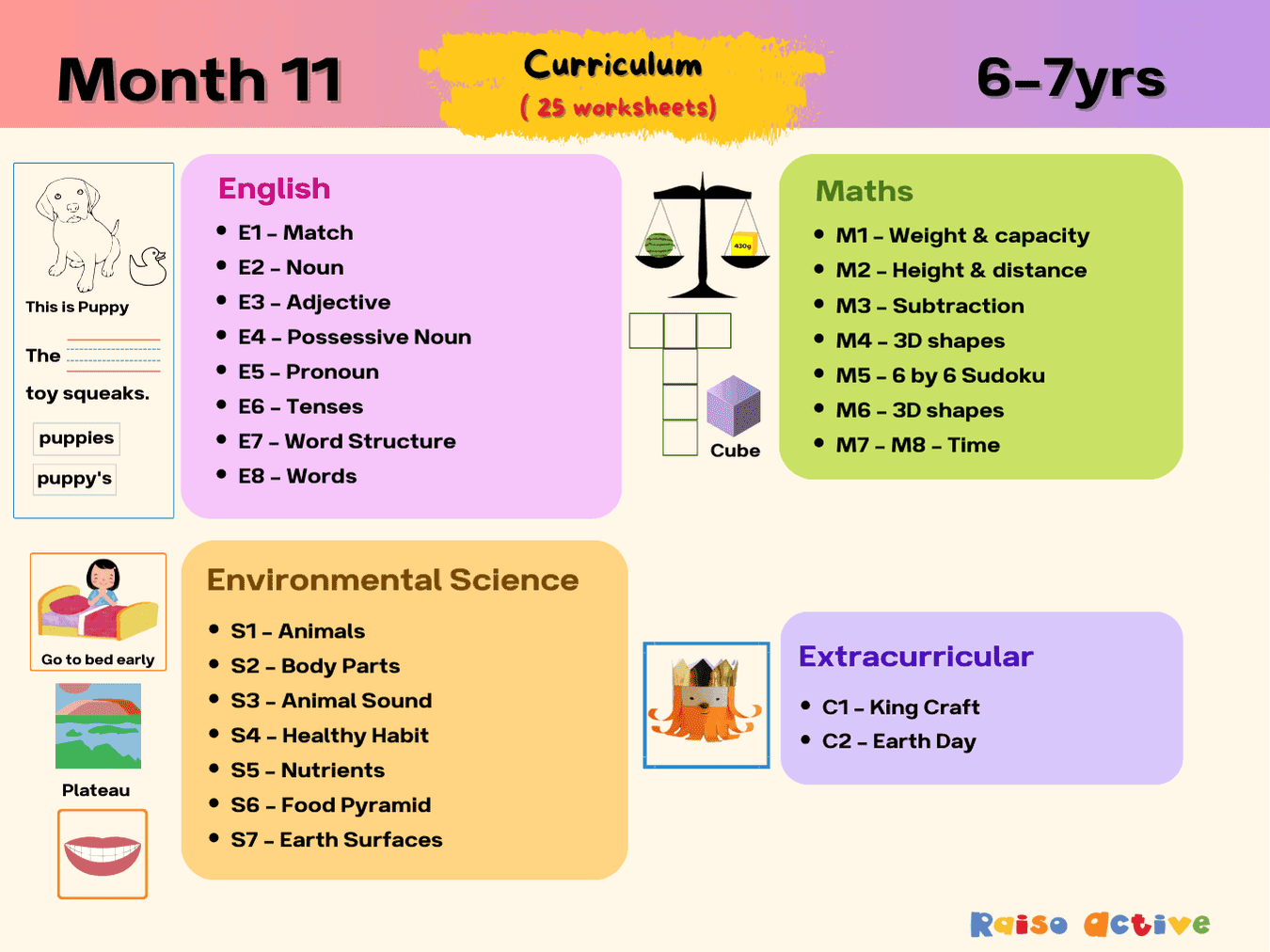
Part of the pack
Month 11: Learning & Development | Ages 6-7
This is page 27 of the pack. Ages 6-7 · Grade 1Ages 6-7 · Year 2Ages 6-7 · Class 1Ages 6-7
Curriculum
- Art & Craft > Arts & Crafts
How to use this worksheet
Start by cutting out all the provided shapes together, talking through which piece becomes which part of the king. Show your child how to roll the brown pieces into cylinders and hold them briefly until the shape sets, offering a small piece of tape or a dab of glue if the paper won't hold its curl. Paste the rolled pieces together to build the king's crown and body, checking the picture guide as you go. Once assembled, let your child add the finishing touches with crayons or markers.
Materials needed
- Scissors
- Glue
- Crayons or Markers (optional)
Extension activities
- 1Create a castle for the king out of a cereal box or building blocks.
- 2Draw the king's face, giving him a crown, a mustache, or whatever details your child imagines.
- 3Write or dictate a short story about a day in the life of the king.
- 4Make a queen or a knight to go along with the king using the same rolling-and-pasting technique.

Written by
Hemsweta Jain · Teacher Cheena
MBA and Early Childhood Educator, teaching since 2014 · Founder of RaisoActive, Mumbai
Every RaisoActive worksheet is designed and checked by the founder before publishing.
Published · Last reviewed
More from Month 11: Learning & Development | Ages 6-7

Healthy Habits Worksheet for Kids: Sorting Activities
Ages 3-5 · Preschool–Pre-KAges 3-5 · Nursery–ReceptionAges 3-5 · Nursery–LKGAges 3-5
This worksheet helps children ages 3-5 build early health literacy by looking at pictures of daily habits, like brushing teeth or eating vegetables, and deciding whether each one is healthy or unhealthy. Making this judgment requires applying general knowledge about wellbeing to a specific picture, which builds reasoning skills alongside foundational health awareness that supports good routines.

Food Pyramid Worksheet: Learn About Healthy Eating!
Ages 3-5 · Preschool–Pre-KAges 3-5 · Nursery–ReceptionAges 3-5 · Nursery–LKGAges 3-5
This worksheet introduces children ages 3-5 to the food pyramid as a visual guide for balanced eating, helping them understand that different food groups should be eaten in different amounts. Filling in the blanks about food groups and serving sizes builds early nutrition literacy and reinforces the idea that a healthy diet includes variety, not just favorite foods.
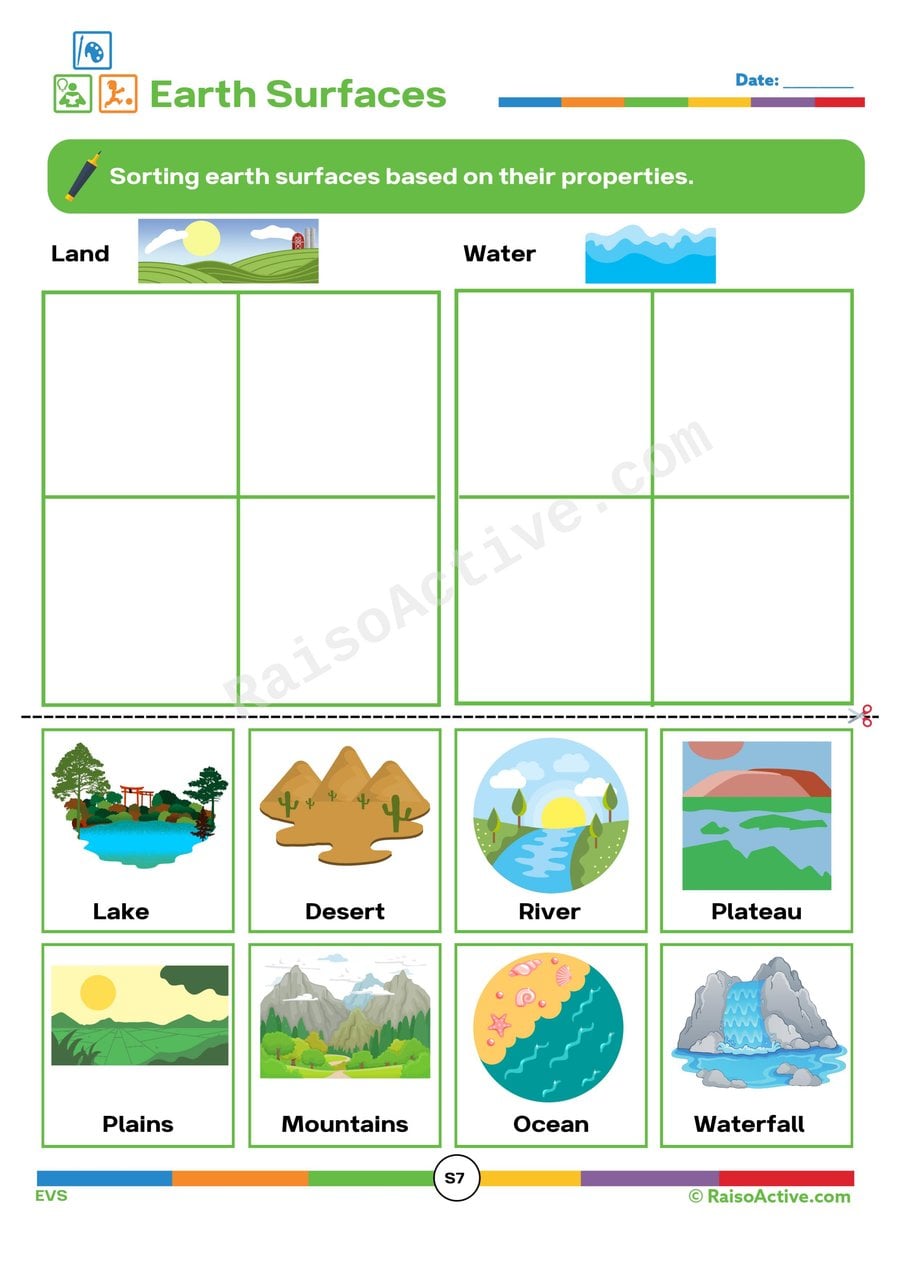
Earth Surfaces Sorting Worksheet for Kids
Ages 4-6 · Pre-K–KindergartenAges 4-6 · Reception–Year 1Ages 4-6 · LKG–UKGAges 4-6
Sorting pictures into 'land' and 'water' categories builds early classification skills and basic earth science vocabulary for children ages 4-6, helping them notice physical differences between surfaces they see in daily life.
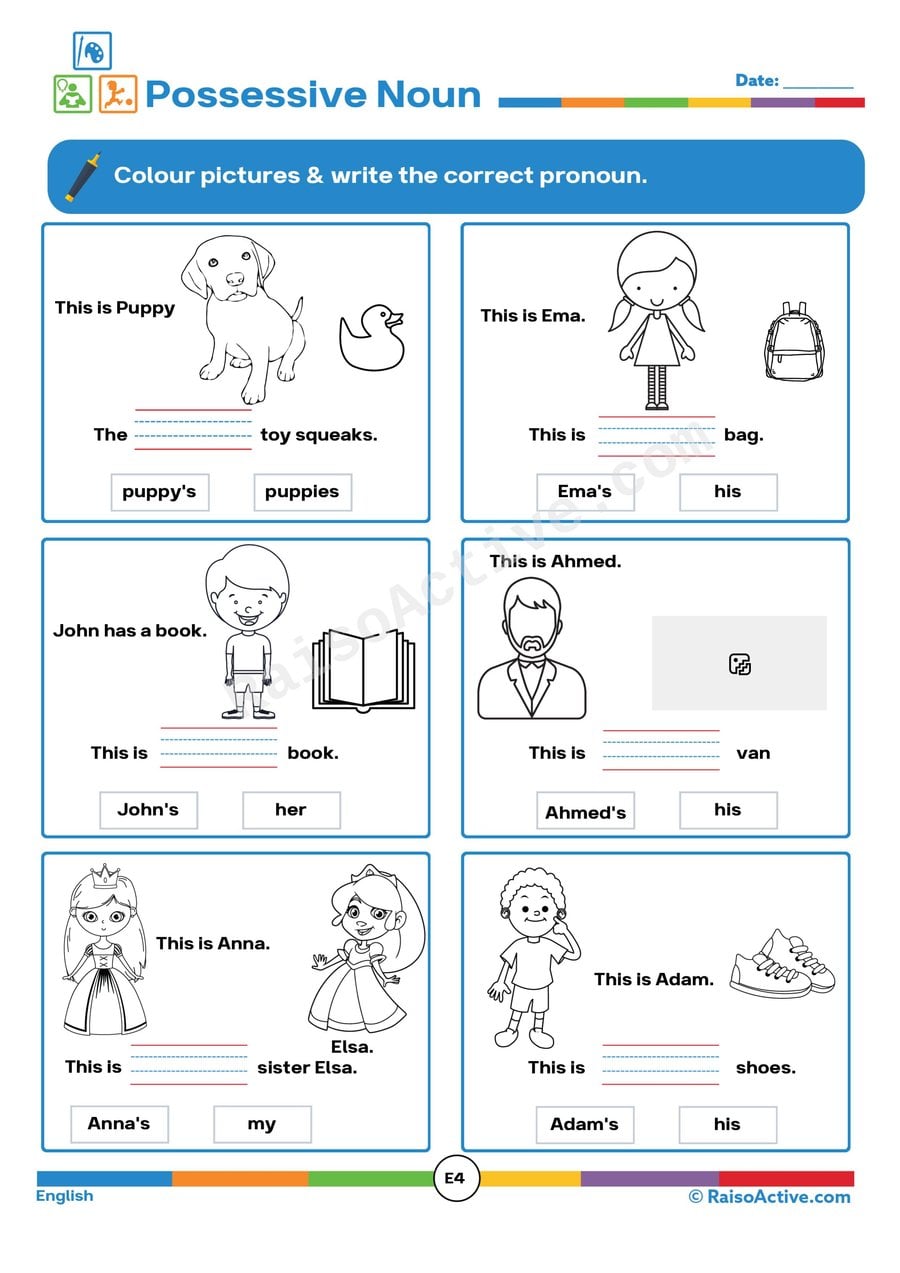
Possessive Nouns Worksheet: Color and Write!
Ages 4-6 · Pre-K–KindergartenAges 4-6 · Reception–Year 1Ages 4-6 · LKG–UKGAges 4-6
Children ages 4-6 practice forming possessive nouns, learning to add an apostrophe and 's' to show that something belongs to someone, like 'the dog's bone.' This is a specific grammar rule that children will use constantly once they start writing about ownership in their own sentences.

Animal Sounds Matching Worksheet for Preschoolers
Ages 3-5 · Preschool–Pre-KAges 3-5 · Nursery–ReceptionAges 3-5 · Nursery–LKGAges 3-5
This worksheet strengthens vocabulary and auditory-visual association in children ages 3-5 as they connect each animal picture to the written word for the sound it makes, like 'moo' or 'quack.' Matching sounds to animals also supports early literacy by pairing a familiar spoken word with its printed form, giving children an early, low-pressure introduction to reading words in context.

Proper Noun Practice Worksheet for Early Learners
Ages 4-6 · Pre-K–KindergartenAges 4-6 · Reception–Year 1Ages 4-6 · LKG–UKGAges 4-6
This worksheet introduces children ages 4-6 to the concept of proper nouns — specific names for people, places, or things — by having them choose or write the correct proper noun to complete each sentence. Understanding the difference between a general word like 'city' and a specific name like 'Mumbai' is an early grammar concept that also supports capitalization rules children will need once they start writing independently.

Subtraction Fun: Practice Problems for Early Learners
Ages 4-6 · Pre-K–KindergartenAges 4-6 · Reception–Year 1Ages 4-6 · LKG–UKGAges 4-6
This worksheet gives children ages 4-6 repeated practice with basic subtraction, working through simple equations and word problems that build number sense before formal arithmetic instruction begins. Filling in missing numbers within equations also introduces the idea that subtraction is reversible and connected to addition, an early step toward flexible number thinking. Repeated, varied practice like this helps subtraction facts move from effortful counting to quick recall.

Words Worksheet: Unscramble, Capitalize, and Choose the Best Word!
Ages 4-6 · Pre-K–KindergartenAges 4-6 · Reception–Year 1Ages 4-6 · LKG–UKGAges 4-6
This multi-part worksheet challenges children ages 4-6 to unscramble jumbled letters into real words, identify correctly capitalized sentences, and choose the most fitting word to complete a sentence. Combining these three tasks on one page builds spelling, sentence-level grammar awareness, and vocabulary precision together, pushing children to apply several early literacy skills in a single sitting rather than practicing them in isolation.
Related worksheets

Napkin Folding Fun: Following Instructions Worksheet for Kids
Ages 3-5 · Preschool–Pre-KAges 3-5 · Nursery–ReceptionAges 3-5 · Nursery–LKGAges 3-5
This activity builds sequential following-directions skills and fine motor control as children fold a napkin step by step into a new shape. Because each fold depends on the one before it, children practice holding a multi-step instruction in mind and executing it in order — a skill that transfers directly to following recipes, craft instructions, and classroom directions later on.

Cotton Bud Flower Craft Worksheet for Preschoolers
Ages 3-5 · Preschool–Pre-KAges 3-5 · Nursery–ReceptionAges 3-5 · Nursery–LKGAges 3-5
This cotton bud craft has children ages 3-5 paste cotton buds around a yellow center to build flower petals, an activity that strengthens the pincer grip and hand control needed for later pencil writing. Because each cotton bud represents one petal, the craft doubles as a counting exercise, giving children practice with one-to-one correspondence while they work. Combining a sensory material like cotton buds with a familiar shape — the flower — makes fine motor practice feel like play rather than drilling.
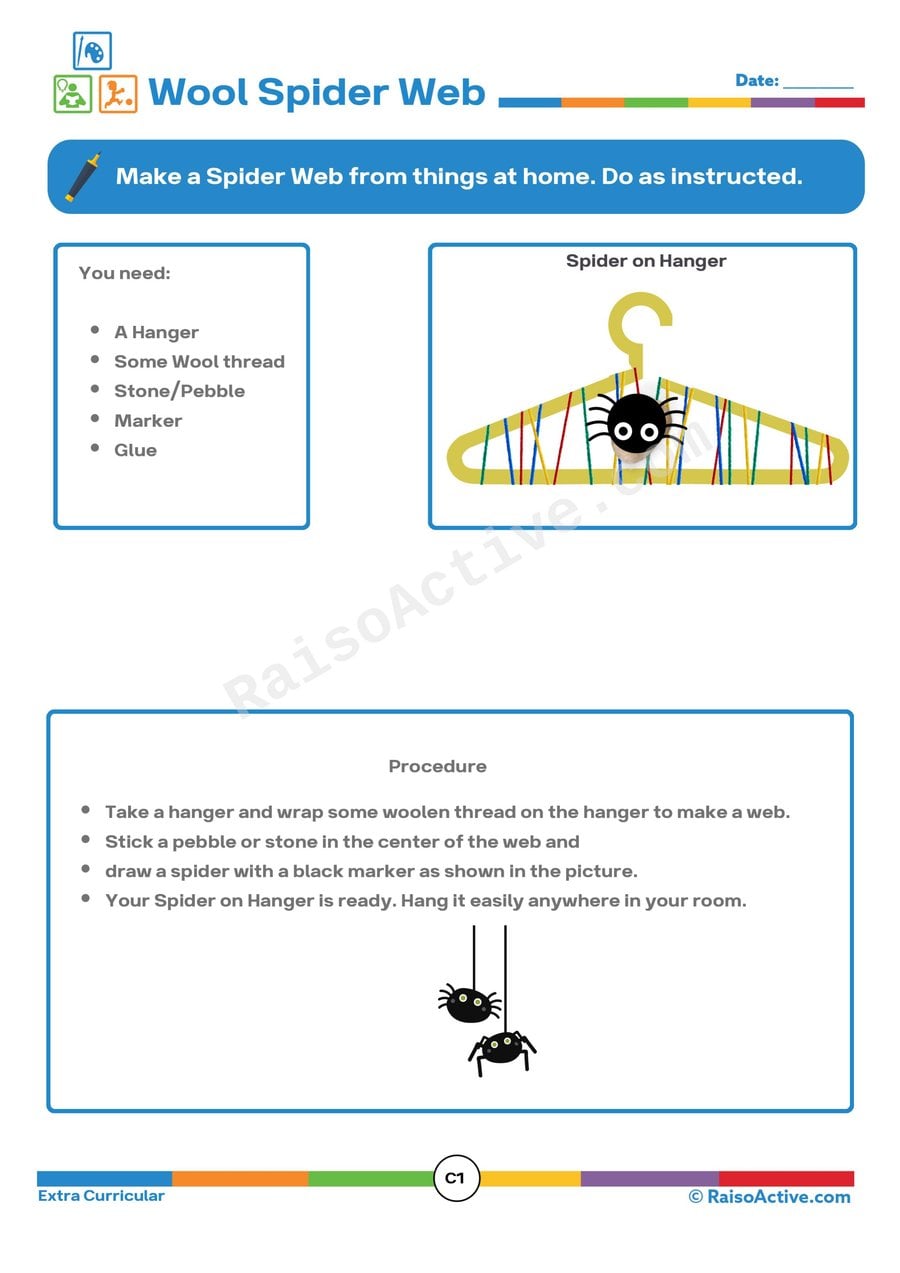
Wool Spider Web Craft: Follow the Instructions!
Ages 3-5 · Preschool–Pre-KAges 3-5 · Nursery–ReceptionAges 3-5 · Nursery–LKGAges 3-5
This step-by-step craft activity builds sequencing and instruction-following skills as children wrap wool thread around a hanger to form a web shape, while also strengthening fine motor coordination through the repetitive wrapping motion. For ages 3-5, following a multi-step process in the correct order is excellent practice for executive function skills that carry over into classroom instructions later on.

Colorful Butterfly Cut and Paste Worksheet for Preschoolers
Ages 3-5 · Preschool–Pre-KAges 3-5 · Nursery–ReceptionAges 3-5 · Nursery–LKGAges 3-5
Cutting out heart shapes and arranging them into a butterfly gives children ages 3-5 focused practice with scissor control and precise gluing, since the final picture only comes together correctly if each heart is placed in the right spot. Following a visual example to build a specific, recognizable shape also strengthens spatial reasoning, requiring children to compare their work to a model rather than assembling pieces at random. This kind of guided craft bridges basic coloring and more advanced, independent art projects.

Flower Craft: Make 5 Flowers with Pencil Shavings!
Ages 3-5 · Preschool–Pre-KAges 3-5 · Nursery–ReceptionAges 3-5 · Nursery–LKGAges 3-5
This craft activity has 3-5 year olds use actual pencil shavings — an unusual, tactile material — to build five flower shapes, following a multi-step visual example rather than a simple one-step instruction. That combination of following a sequence and precisely placing small, delicate shavings builds fine motor control and pincer grip in a way that's noticeably different from crayons or scissors, plus it introduces the idea of turning a leftover material into art.

Eco-Ganesha Craft: Make Your Own Eco-Friendly Ganesh!
Ages 3-5 · Preschool–Pre-KAges 3-5 · Nursery–ReceptionAges 3-5 · Nursery–LKGAges 3-5
Making an Eco-Ganesha from peepal leaves teaches children ages 3-5 to see natural materials as creative art supplies, building both fine motor skill through careful arrangement and early environmental awareness through using biodegradable materials instead of plastic. This hands-on craft also introduces cultural and seasonal tradition in a tactile, memorable way that connects art-making to real-world values.
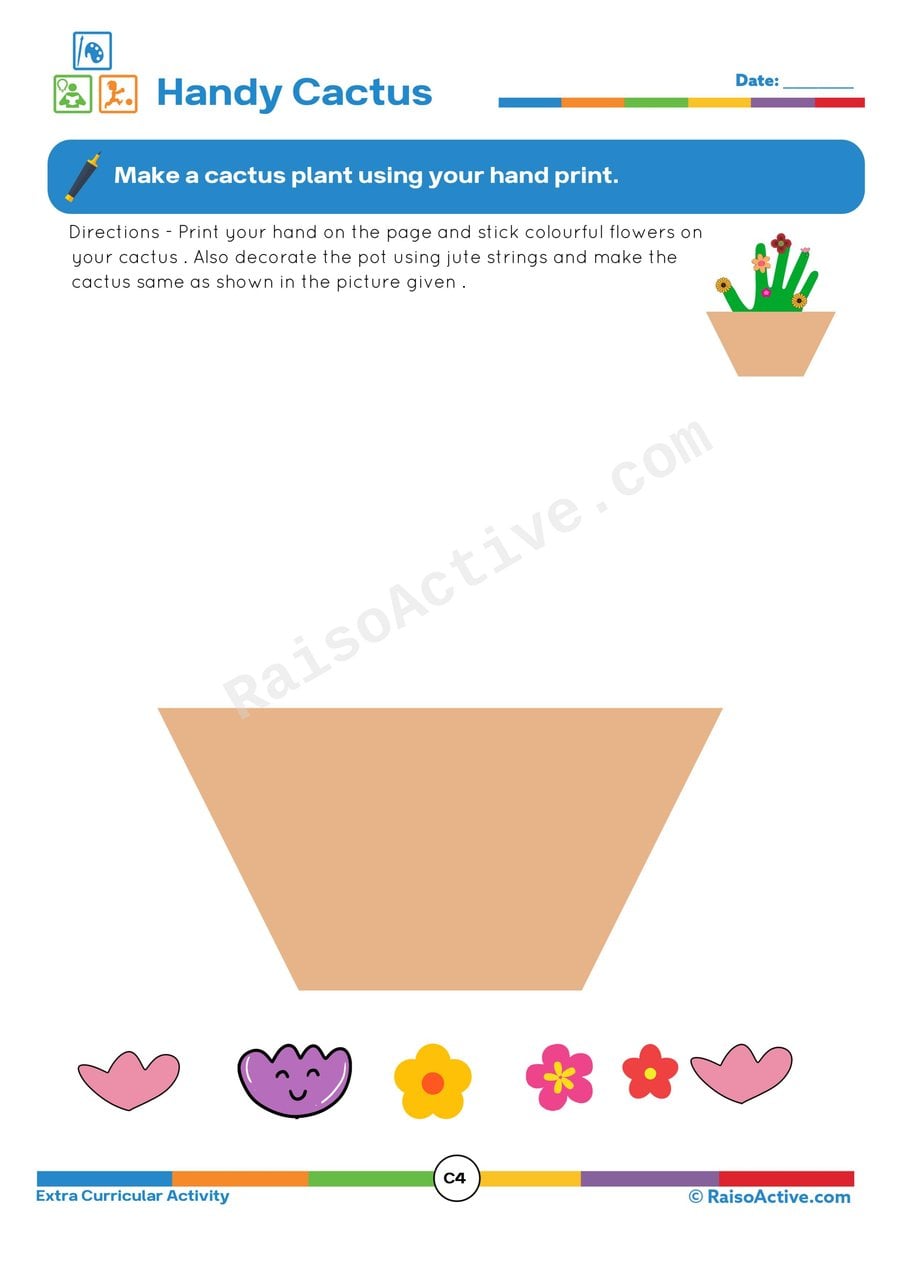
Handprint Cactus Craft Worksheet for Kids
Ages 3-5 · Preschool–Pre-KAges 3-5 · Nursery–ReceptionAges 3-5 · Nursery–LKGAges 3-5
Tracing and decorating a handprint into cactus shapes builds fine motor control and following-directions skills for children ages 3-5, since they must coordinate cutting, gluing, and arranging several craft pieces to match a shown example.
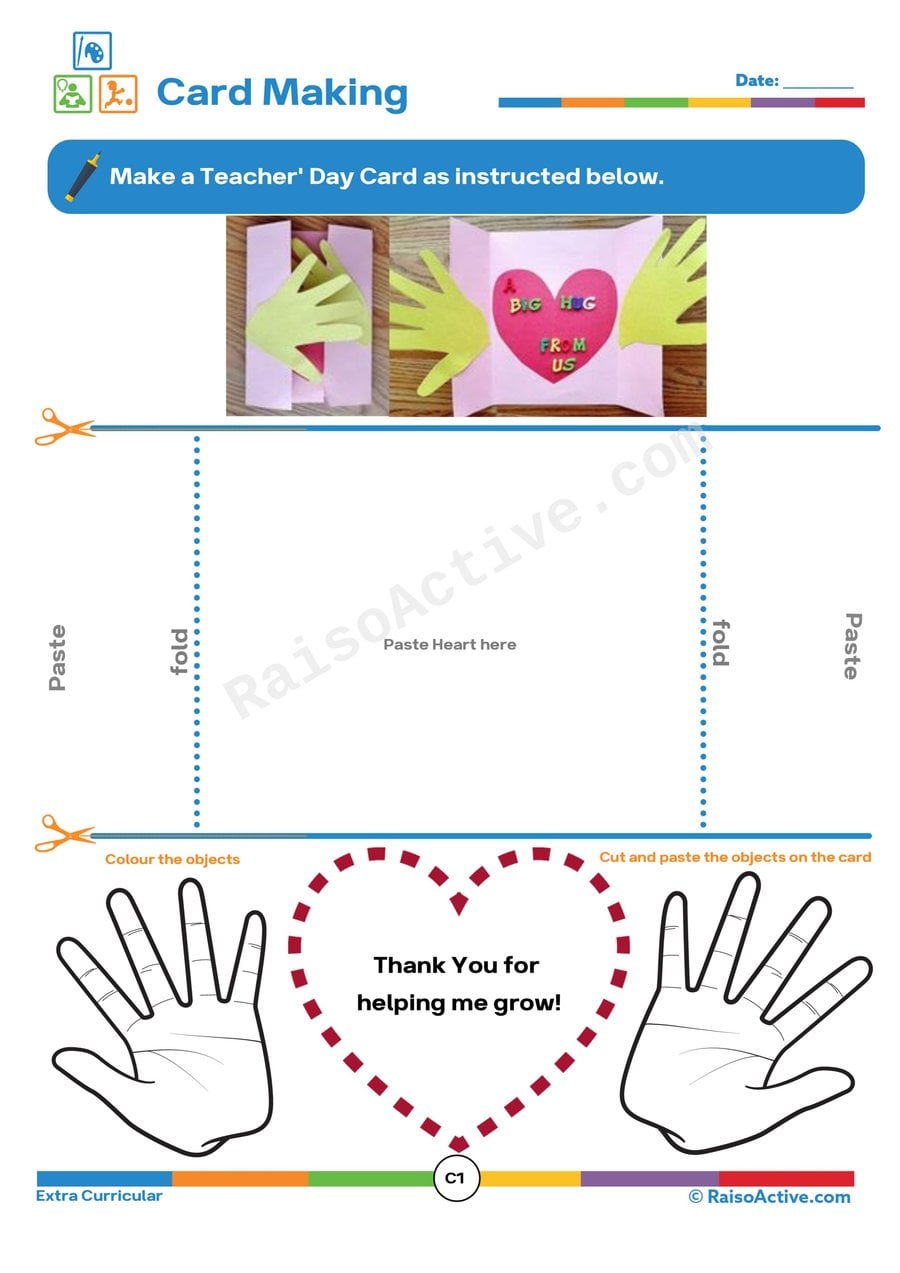
Teacher's Day Card Craft: Make a Special Card!
Ages 3-5 · Preschool–Pre-KAges 3-5 · Nursery–ReceptionAges 3-5 · Nursery–LKGAges 3-5
This craft worksheet helps children ages 3-5 follow a multi-step sequence — cutting, coloring, gluing, and folding — while creating a handmade card that expresses gratitude toward their teacher. Beyond fine motor practice, it introduces the social-emotional skill of thinking about someone else's feelings and expressing appreciation in a tangible way.
Guides for this topic

Celebrating Diversity: How to Incorporate Cultural Awareness in Learning Activities for Young Children
Practical cultural awareness activities for young children aged 2-8. Explore Indian festivals, world cultures, food, music, and crafts to teach diversity and inclusion.
What Supplies Do You Need for Preschool Learning at Home: The Complete Essential Guide
Discover the essential supplies for preschool learning at home — from crayons and counting blocks to sensory bins. Affordable options available in India for ages 2–6.
Christmas and Winter Activities That Combine Fun and Learning: Creating Magical Educational Experiences
Discover Christmas and winter activities that combine festive fun with real learning. Crafts, counting, literacy, and printable worksheets for ages 2 to 8 — perfect for home and school.
Reviews
Every worksheet for ages 3–5, no watermark
Members download the full library of 1,000+ worksheets and every activity pack without watermarks or daily limits. One year costs ₹999 in India or $20 elsewhere.
See membership plansOr download any worksheet free with a watermark (5 a day).