Proper Noun Practice Worksheet for Early Learners
This worksheet introduces children ages 4-6 to the concept of proper nouns — specific names for people, places, or things — by having them choose or write the correct proper noun to complete each sentence. Understanding the difference between a general word like 'city' and a specific name like 'Mumbai' is an early grammar concept that also supports capitalization rules children will need once they start writing independently.
Part of the pack
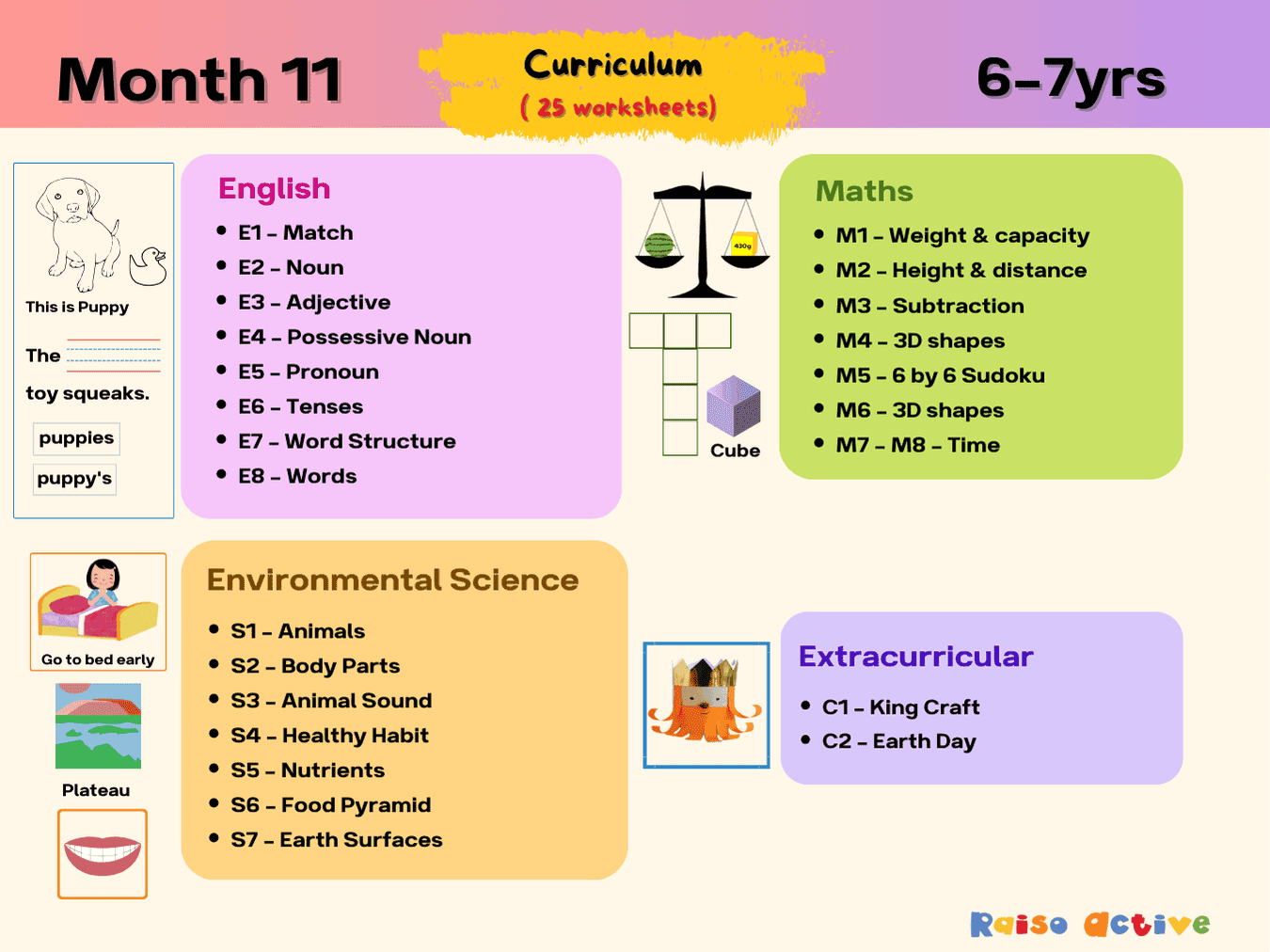
Month 11: Learning & Development | Ages 6-7
This is page 5 of the pack. Ages 6-7 · Grade 1Ages 6-7 · Year 2Ages 6-7 · Class 1Ages 6-7
Made for your child
A whole activity pack made with their name
60 pages to spot, build, trace and write their own name, plus pages about their favourites, feelings and family. See a free preview with their name.
Make an All About Me packFree preview · free for members
Or start free: a name tracing sheet with their nameCurriculum
- Grammar > Nouns & Grammar
How to use this worksheet
Read the first sentence aloud together, leaving a pause where the proper noun belongs. Look at the answer choices provided and talk about which one is a specific name rather than a general word. Have your child circle or write the correct proper noun to complete the sentence, then read the finished sentence aloud together. Continue through each remaining sentence the same way, pointing out that proper nouns always start with a capital letter.
Materials needed
- Pencil
- Eraser
Extension activities
- 1Make a list of proper nouns your child knows, like their own name, their school, and their city.
- 2Play a sorting game with cards showing common nouns and proper nouns, like 'dog' versus 'Rex.'
- 3Write a short sentence together using your child's own name and their street or city.
- 4Look through a book together and circle any proper nouns you spot on a page.

Written by
Hemsweta Jain · Teacher Cheena
MBA and Early Childhood Educator, teaching since 2014 · Founder of RaisoActive, Mumbai
Every RaisoActive worksheet is designed and checked by the founder before publishing.
Published · Last reviewed
More from Month 11: Learning & Development | Ages 6-7
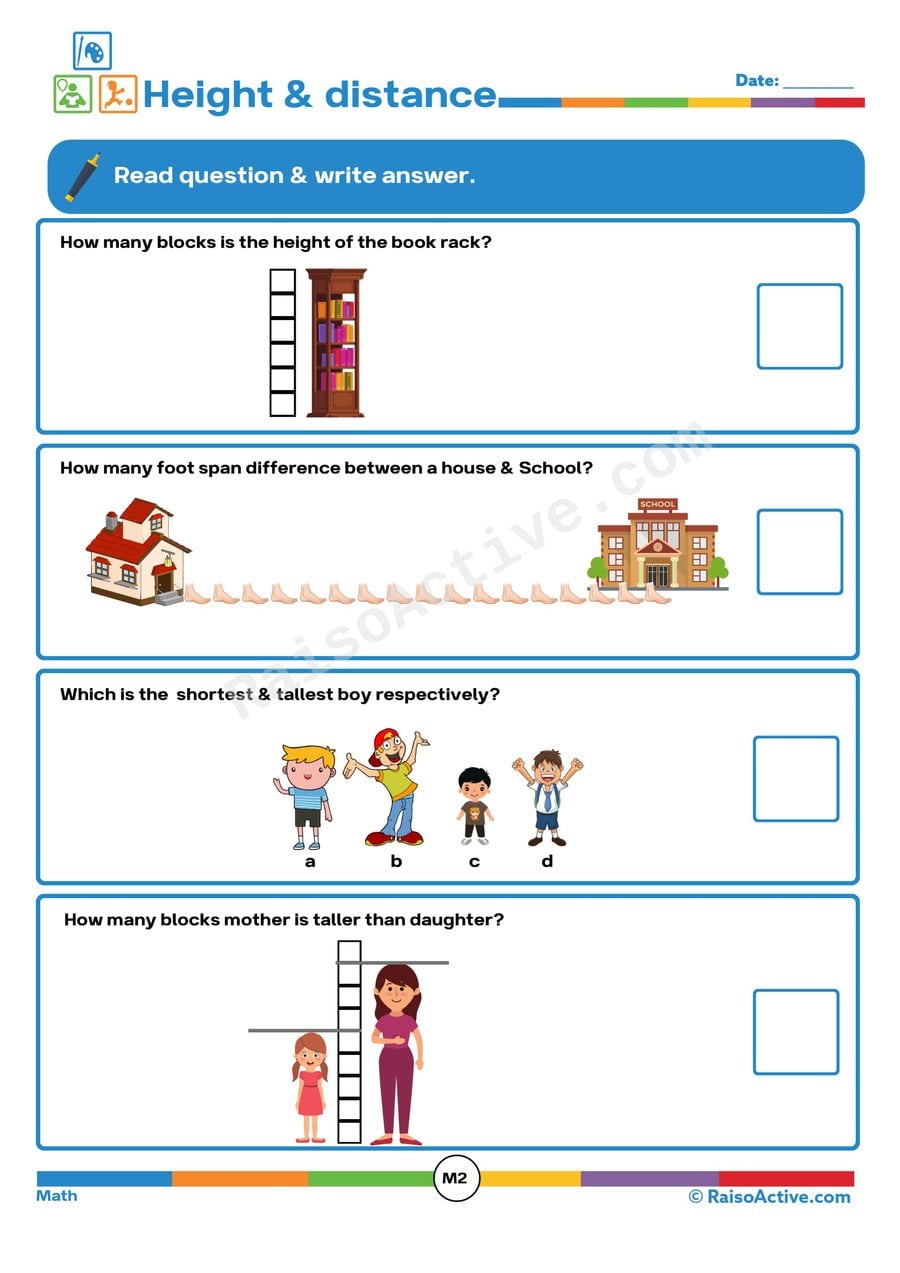
Height and Distance Worksheet for Kids
Ages 4-6 · Pre-K–KindergartenAges 4-6 · Reception–Year 1Ages 4-6 · LKG–UKGAges 4-6
Children ages 4-6 practice comparing height and distance using visual examples, building early measurement and comparison skills that form the basis for later lessons in math involving length and size. Learning to compare 'taller,' 'shorter,' 'closer,' and 'farther' helps children describe the physical world with more precise language.

Pronoun Power: Cut & Paste Matching Worksheet for Preschoolers
Ages 4-6 · Pre-K–KindergartenAges 4-6 · Reception–Year 1Ages 4-6 · LKG–UKGAges 4-6
Children ages 4-6 practice recognizing and applying pronouns — he, she, it, they, and similar words — by reading a short sentence, deciding which pronoun fits the picture, and physically placing it in the right spot. Cutting and pasting adds a fine motor and sequencing component on top of the grammar skill, since children must locate, cut, and correctly position each pronoun piece. This hands-on format helps pronoun concepts stick better than reading alone.
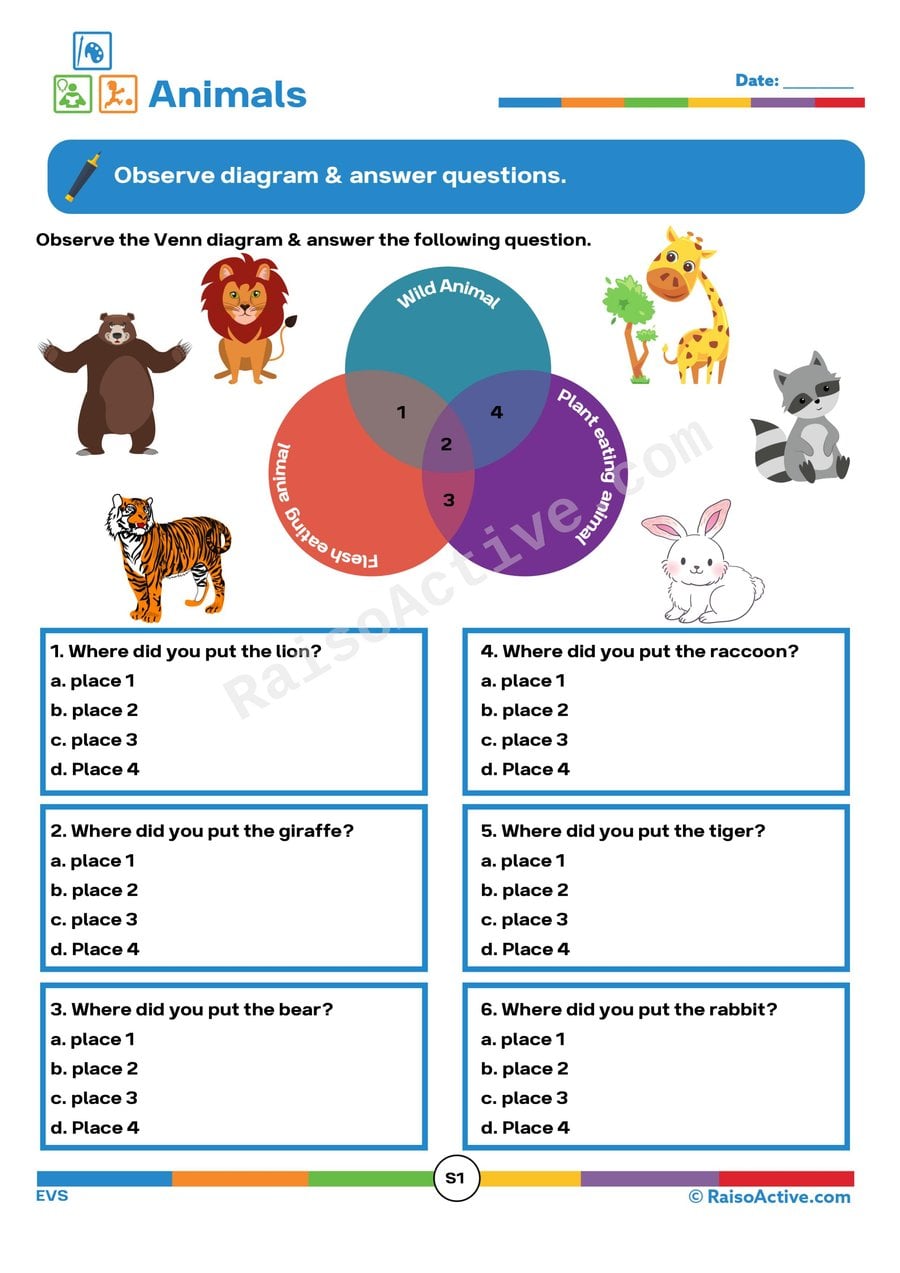
Animal Venn Diagram Worksheet for Kids
Ages 4-6 · Pre-K–KindergartenAges 4-6 · Reception–Year 1Ages 4-6 · LKG–UKGAges 4-6
This worksheet introduces children ages 4-6 to the Venn diagram as a tool for classifying animals by shared and distinct characteristics, such as habitat, number of legs, or covering (fur, feathers, scales). Deciding where an animal belongs — in one circle, the other, or the overlapping middle — builds comparative reasoning and categorization skills that are foundational to later scientific classification work.

Words Worksheet: Unscramble, Capitalize, and Choose the Best Word!
Ages 4-6 · Pre-K–KindergartenAges 4-6 · Reception–Year 1Ages 4-6 · LKG–UKGAges 4-6
This multi-part worksheet challenges children ages 4-6 to unscramble jumbled letters into real words, identify correctly capitalized sentences, and choose the most fitting word to complete a sentence. Combining these three tasks on one page builds spelling, sentence-level grammar awareness, and vocabulary precision together, pushing children to apply several early literacy skills in a single sitting rather than practicing them in isolation.
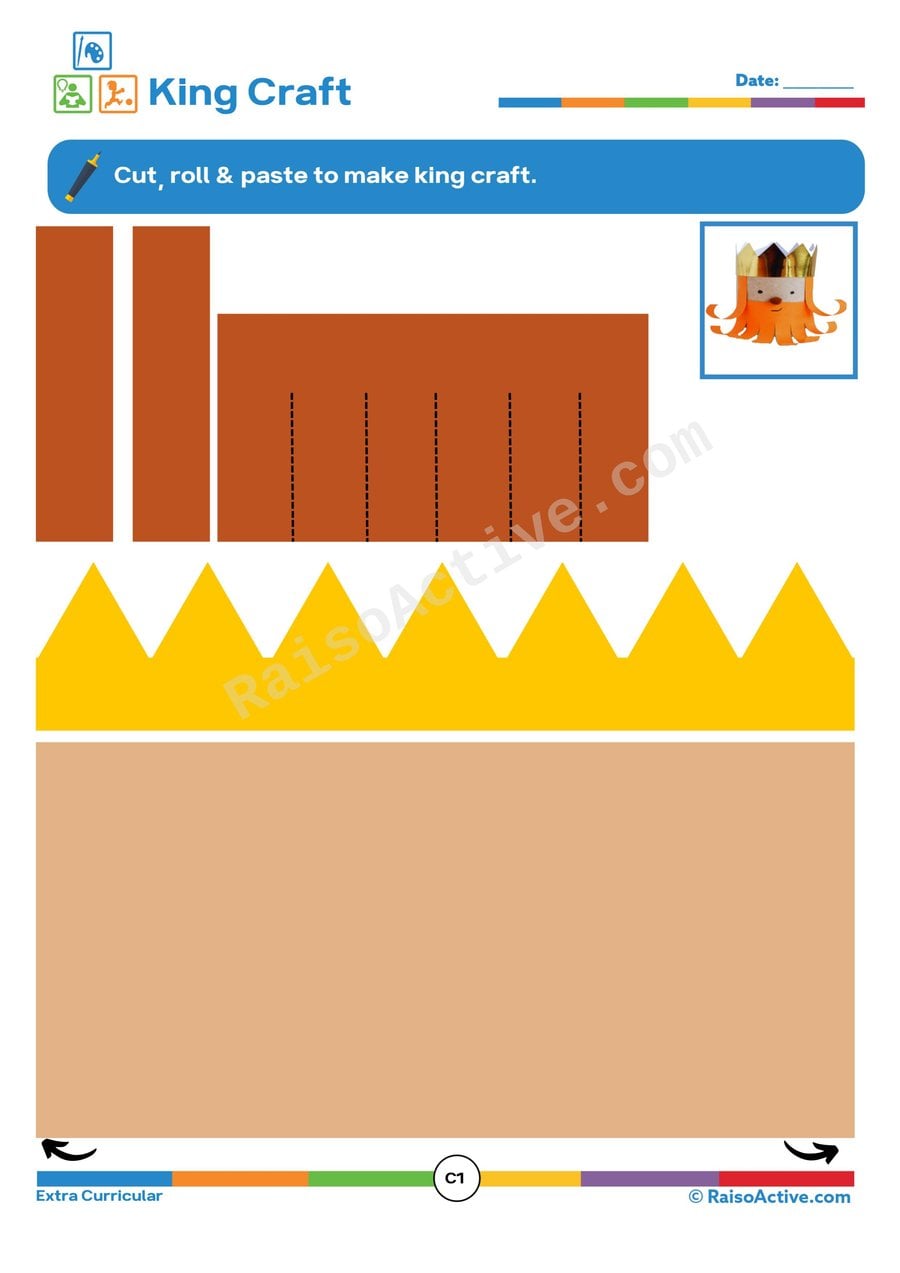
King Craft Worksheet: Cut, Roll, and Paste Fun!
Ages 3-5 · Preschool–Pre-KAges 3-5 · Nursery–ReceptionAges 3-5 · Nursery–LKGAges 3-5
Making a king craft gives children ages 3-5 hands-on practice with three distinct fine motor actions in one project — cutting along lines, rolling paper into a cylindrical shape, and pasting pieces into place. Combining these steps in sequence also builds early planning skills, since the craft only comes together correctly if the pieces are assembled in the right order. It's a playful way to strengthen the hand muscles children need for writing.

Noun, Pronoun, or Adjective? Match the Words! Worksheet for Kids
Ages 4-6 · Pre-K–KindergartenAges 4-6 · Reception–Year 1Ages 4-6 · LKG–UKGAges 4-6
This worksheet introduces children ages 4-6 to three foundational parts of speech — nouns, pronouns, and adjectives — by asking them to sort individual words into the correct grammatical category. Learning to tell these word types apart early gives children a vocabulary for talking about language itself, which supports both reading comprehension and their own sentence writing later on. Matching words to pictures also keeps an abstract grammar concept grounded in something concrete and visual.

Food Pyramid Worksheet: Learn About Healthy Eating!
Ages 3-5 · Preschool–Pre-KAges 3-5 · Nursery–ReceptionAges 3-5 · Nursery–LKGAges 3-5
This worksheet introduces children ages 3-5 to the food pyramid as a visual guide for balanced eating, helping them understand that different food groups should be eaten in different amounts. Filling in the blanks about food groups and serving sizes builds early nutrition literacy and reinforces the idea that a healthy diet includes variety, not just favorite foods.

Earth Day Sorting Worksheet: Good vs. Bad for the Environment!
Ages 4-6 · Pre-K–KindergartenAges 4-6 · Reception–Year 1Ages 4-6 · LKG–UKGAges 4-6
Sorting pictures of everyday actions into 'good for the environment' and 'bad for the environment' introduces children ages 4-6 to cause-and-effect reasoning about human impact, an early building block for environmental awareness and responsible habits.
Related worksheets

A and The Worksheet: Practice with Nouns and Articles
Ages 3-5 · Preschool–Pre-KAges 3-5 · Nursery–ReceptionAges 3-5 · Nursery–LKGAges 3-5
Choosing between the articles 'a' and 'the' before a noun builds early grammar awareness for children ages 3-5, helping them notice a small but important word choice that changes how a sentence sounds and reads.
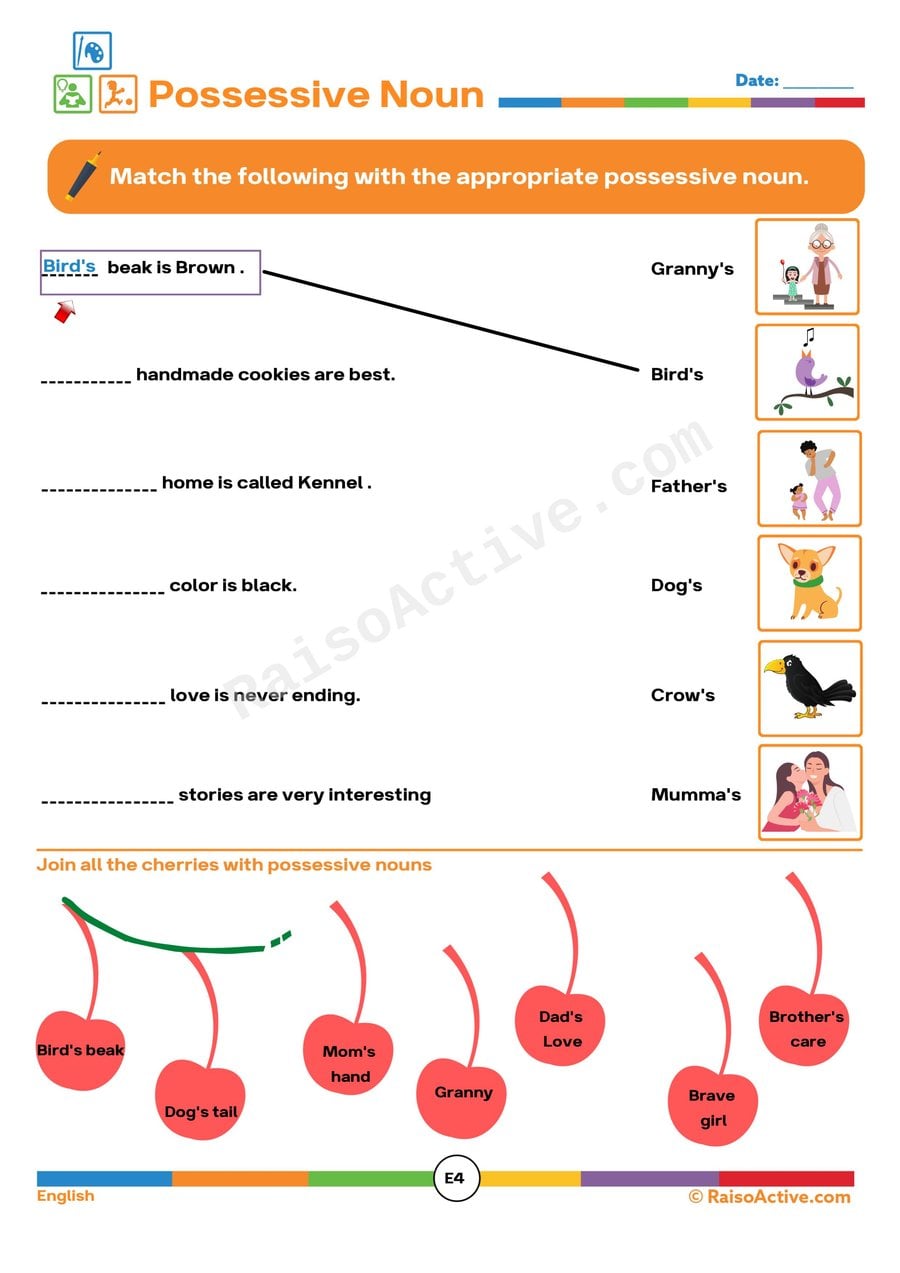
Possessive Noun Matching Worksheet for Kids
Ages 4-6 · Pre-K–KindergartenAges 4-6 · Reception–Year 1Ages 4-6 · LKG–UKGAges 4-6
Children ages 4-6 learn to identify possessive nouns, like 'the dog's bone' or 'Mia's book', which show ownership using an apostrophe and 's'. Matching possessive phrases to their meaning builds early grammar awareness that will later support correct sentence writing and reading comprehension. The cherry-connecting activity adds a playful visual-tracking layer to reinforce the matching skill.

Parent's Guide: Nouns, Pronouns, and Energy Exploration!
Ages 3-5 · Preschool–Pre-KAges 3-5 · Nursery–ReceptionAges 3-5 · Nursery–LKGAges 3-5
This parent guide bundles together two very different early-learning areas — basic grammar concepts like nouns and pronouns, and an introduction to energy sources — giving children ages 3-5 a varied set of short activities rather than one long worksheet. Identifying pronouns builds early grammatical awareness, helping children notice that words like 'he,' 'she,' and 'it' stand in for names they already know. The energy exploration section introduces very early science vocabulary by asking children to notice which everyday objects use energy, connecting an abstract concept to familiar household items.

Subject and Predicate Sorting Worksheet for Preschoolers
Ages 4-5 · Pre-KAges 4-5 · ReceptionAges 4-5 · LKGAges 4-5
This worksheet introduces children ages 4-5 to a basic building block of sentence grammar, teaching them that every sentence has a subject — who or what it's about — and a predicate — what that subject does or is. Sorting sentence fragments into these two categories helps children start to notice sentence structure, which supports both reading comprehension and their own sentence writing later on. This early grammar awareness lays groundwork for more formal sentence study in kindergarten and beyond.

Parent's Guide: Learning Pronouns, Place Value, and More!
Ages 4-6 · Pre-K–KindergartenAges 4-6 · Reception–Year 1Ages 4-6 · LKG–UKGAges 4-6
This parent's guide brings together pronoun flashcards, tens-and-ones block arranging, family tree drawing, and a simple taste exploration, giving children ages 4-6 varied practice across grammar, place value, and sensory vocabulary in one flexible session. Because each section targets a different skill, the guide lets you follow whatever your child is most curious about that day.

Proper Noun Worksheet for Kids: Fill-in-the-Blanks and Identify!
Ages 4-6 · Pre-K–KindergartenAges 4-6 · Reception–Year 1Ages 4-6 · LKG–UKGAges 4-6
This worksheet teaches children to tell the difference between a common noun and a proper noun, the specific, capitalized name of a particular person, place, or thing, which is foundational for both grammar and correct capitalization in their own writing. Ages four to six are at the right stage to start noticing that names like 'London' or 'Sara' get capital letters while general words like 'city' or 'girl' do not.

Possessive Noun Worksheet: Practice with Examples!
Ages 4-6 · Pre-K–KindergartenAges 4-6 · Reception–Year 1Ages 4-6 · LKG–UKGAges 4-6
Possessive nouns, words like 'the dog's bone' that show ownership, introduce children to how a small change, adding an apostrophe and 's', shifts the meaning of a whole sentence, an early lesson in how grammar carries specific information. For ages four to six, recognizing possession in sentences also supports reading comprehension, since misunderstanding who owns what can confuse the meaning of a story.

When Do We Celebrate? Indian Festivals and the Months of the Year
Ages 4-8 · Pre-K–Grade 2Ages 4-8 · Reception–Year 3Ages 4-8 · LKG–Class 2Ages 4-8
Children connect each festival to the month it falls in and learn that some festivals follow the moon, so their dates change each year.
Guides for this topic

Documenting Learning Without Drowning in Data: A Practical Guide for Parents and Teachers
Learn practical ways to document your child's learning without overwhelm. Simple portfolios, observation tips, and printable trackers for ages 1-8.

How to Help Your Child with Letter Reversals: A Complete Guide for Parents and Teachers
Letter reversals are normal until age 7-8. Learn the best multisensory strategies, anchor letter tricks, and activities to help children write b, d, p, and q correctly.

Activities That Help with Pencil Grip Development: A Complete Guide for Parents and Teachers
Discover fun, research-backed activities to develop pencil grip in young children. Age-wise exercises, play ideas, and expert tips for parents and teachers.
Reviews
Every worksheet for ages 4–6, no watermark
Members download the full library of 1,000+ worksheets and every activity pack without watermarks or daily limits. One year costs ₹999 in India or $20 elsewhere.
See membership plansOr download any worksheet free with a watermark (5 a day).