Noun, Pronoun, or Adjective? Match the Words! Worksheet for Kids
This worksheet introduces children ages 4-6 to three foundational parts of speech — nouns, pronouns, and adjectives — by asking them to sort individual words into the correct grammatical category. Learning to tell these word types apart early gives children a vocabulary for talking about language itself, which supports both reading comprehension and their own sentence writing later on. Matching words to pictures also keeps an abstract grammar concept grounded in something concrete and visual.
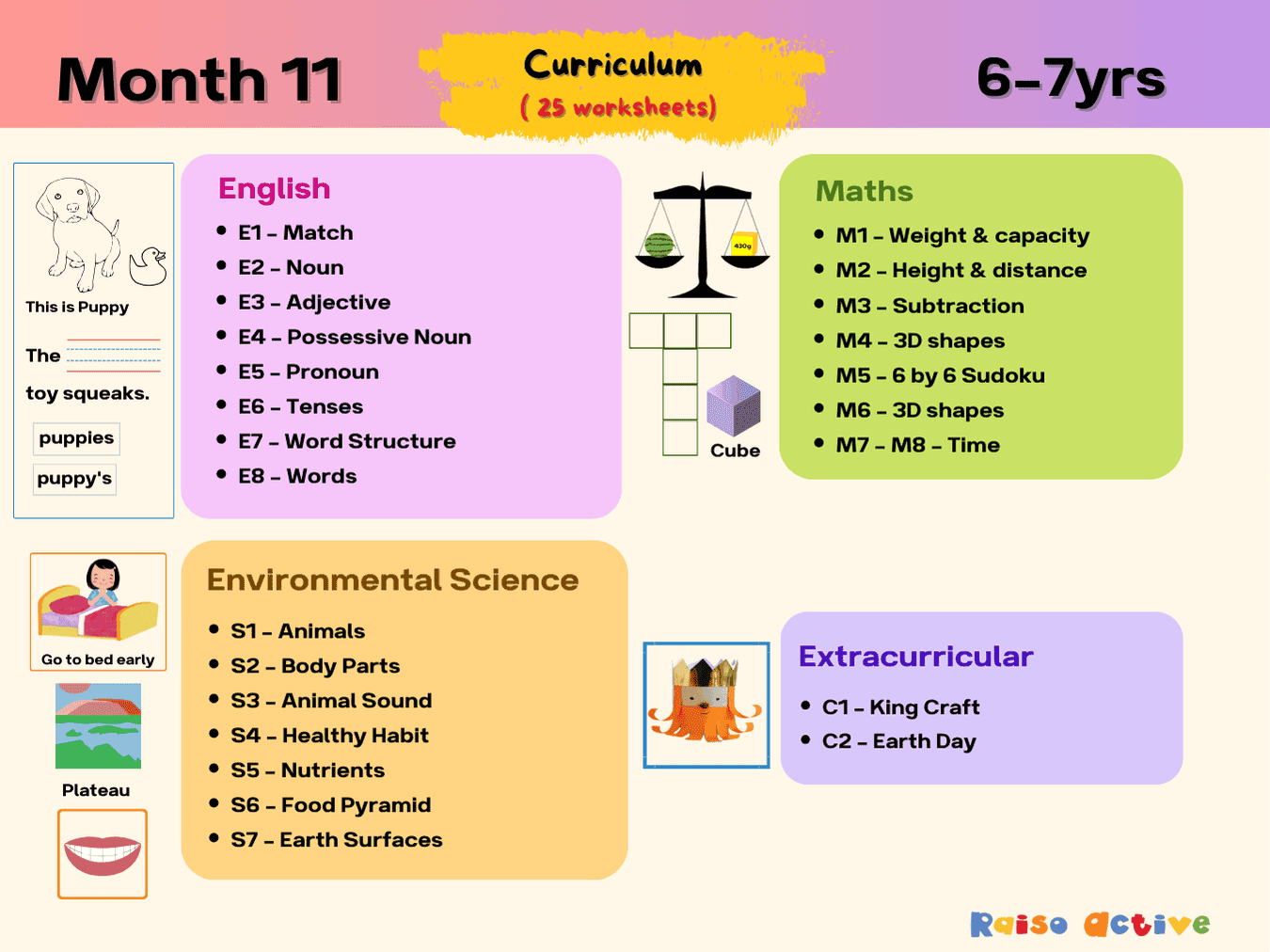
Part of the pack
Month 11: Learning & Development | Ages 6-7
This is page 4 of the pack. Ages 6-7 · Grade 1Ages 6-7 · Year 2Ages 6-7 · Class 1Ages 6-7
Made for your child
Numbers to 20, made for your child
A maths pack with your child's name in it: pictures that explain, practice at three levels, puzzles and story sums about them. Print a new set whenever they finish.
Make a maths packFree preview · free for members
Curriculum
- Grammar > Nouns & Grammar
How to use this worksheet
Before starting, briefly remind your child what each category means in simple terms: nouns name people, places, or things; pronouns replace a name, like he, she, or it; and adjectives describe something. Read each word on the left aloud together, discuss which category it fits, and have your child draw a line to the matching picture. Go slowly on pronouns and adjectives since these are more abstract than nouns for this age group, and double-check each line before moving to the next word.
Materials needed
- Pencil
Extension activities
- 1Point to objects around the room and take turns naming them as nouns, describing them with adjectives, and replacing the name with a pronoun in a sentence.
- 2Write a few simple sentences together and circle the nouns in one color, adjectives in another.
- 3Play a guessing game where you describe an object with adjectives and your child guesses the noun.
- 4Look through a picture book and find one noun, one adjective, and one pronoun on a page.

Written by
Hemsweta Jain · Teacher Cheena
MBA and Early Childhood Educator, teaching since 2014 · Founder of RaisoActive, Mumbai
Every RaisoActive worksheet is designed and checked by the founder before publishing.
Published · Last reviewed
More from Month 11: Learning & Development | Ages 6-7

Animal Sounds Matching Worksheet for Preschoolers
Ages 3-5 · Preschool–Pre-KAges 3-5 · Nursery–ReceptionAges 3-5 · Nursery–LKGAges 3-5
This worksheet strengthens vocabulary and auditory-visual association in children ages 3-5 as they connect each animal picture to the written word for the sound it makes, like 'moo' or 'quack.' Matching sounds to animals also supports early literacy by pairing a familiar spoken word with its printed form, giving children an early, low-pressure introduction to reading words in context.
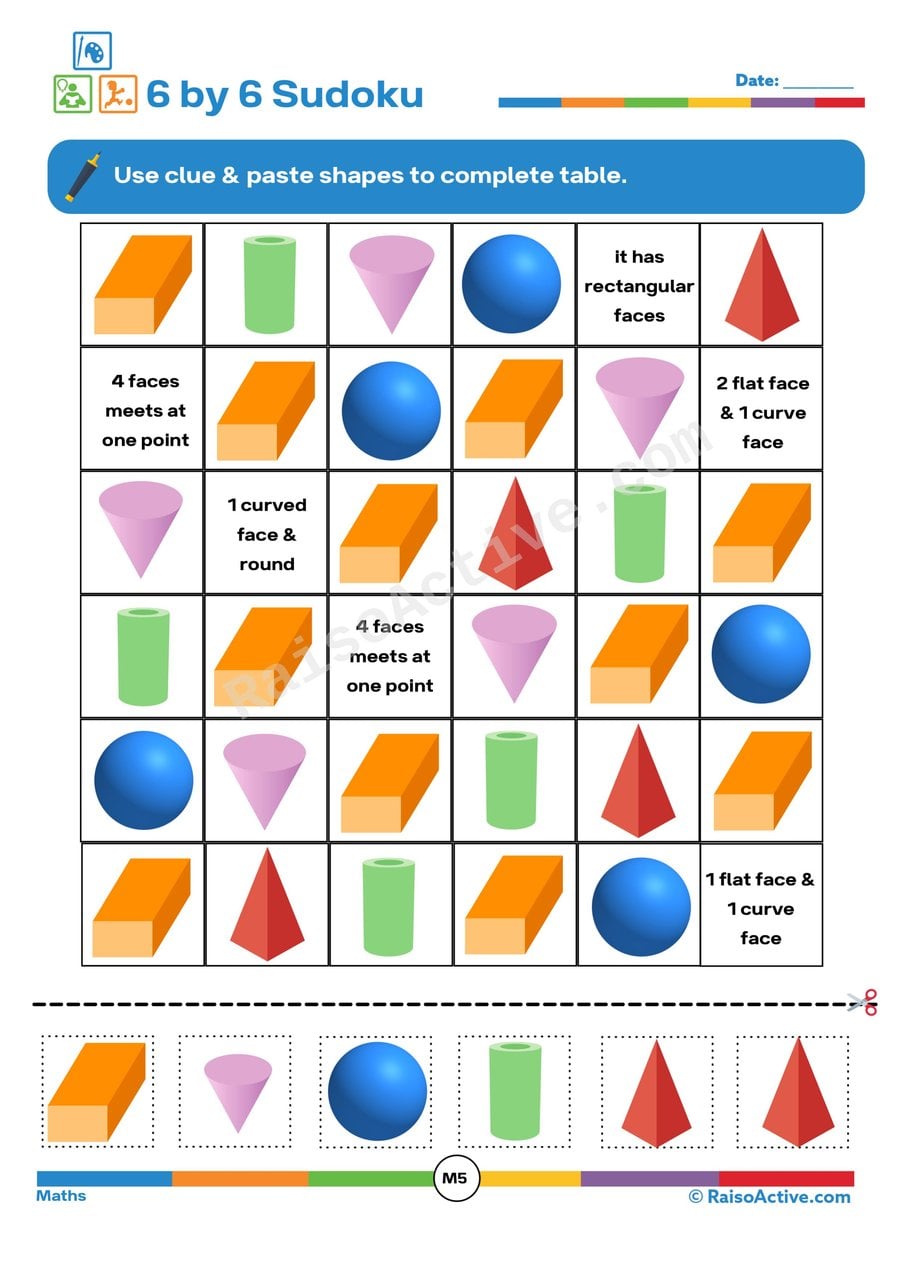
Month 11: Learning & Development | Ages 6-7 - Page 16
Ages 6-7 · Grade 1Ages 6-7 · Year 2Ages 6-7 · Class 1Ages 6-7
This page serves as the table of contents for Month 11 of the Ages 6-7 Learning & Development plan, giving parents and teachers a clear map of the skills and worksheets covered that month, from literacy and math practice to critical thinking activities. Reviewing it first sets expectations for the pacing and variety of learning a 6-7 year old will encounter across the month.

Pronoun Power: Cut & Paste Matching Worksheet for Preschoolers
Ages 4-6 · Pre-K–KindergartenAges 4-6 · Reception–Year 1Ages 4-6 · LKG–UKGAges 4-6
Children ages 4-6 practice recognizing and applying pronouns — he, she, it, they, and similar words — by reading a short sentence, deciding which pronoun fits the picture, and physically placing it in the right spot. Cutting and pasting adds a fine motor and sequencing component on top of the grammar skill, since children must locate, cut, and correctly position each pronoun piece. This hands-on format helps pronoun concepts stick better than reading alone.
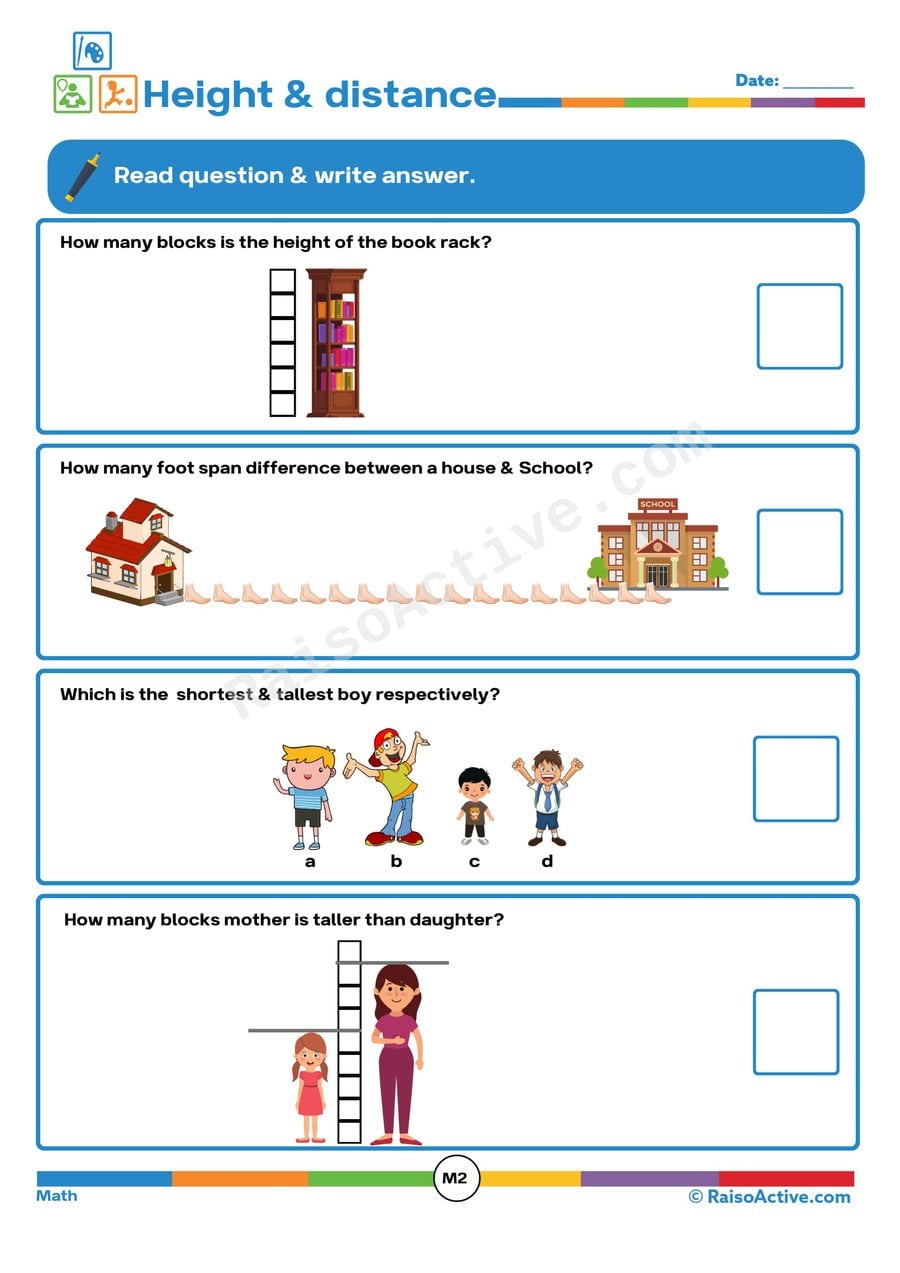
Height and Distance Worksheet for Kids
Ages 4-6 · Pre-K–KindergartenAges 4-6 · Reception–Year 1Ages 4-6 · LKG–UKGAges 4-6
Children ages 4-6 practice comparing height and distance using visual examples, building early measurement and comparison skills that form the basis for later lessons in math involving length and size. Learning to compare 'taller,' 'shorter,' 'closer,' and 'farther' helps children describe the physical world with more precise language.

Proper Noun Practice Worksheet for Early Learners
Ages 4-6 · Pre-K–KindergartenAges 4-6 · Reception–Year 1Ages 4-6 · LKG–UKGAges 4-6
This worksheet introduces children ages 4-6 to the concept of proper nouns — specific names for people, places, or things — by having them choose or write the correct proper noun to complete each sentence. Understanding the difference between a general word like 'city' and a specific name like 'Mumbai' is an early grammar concept that also supports capitalization rules children will need once they start writing independently.
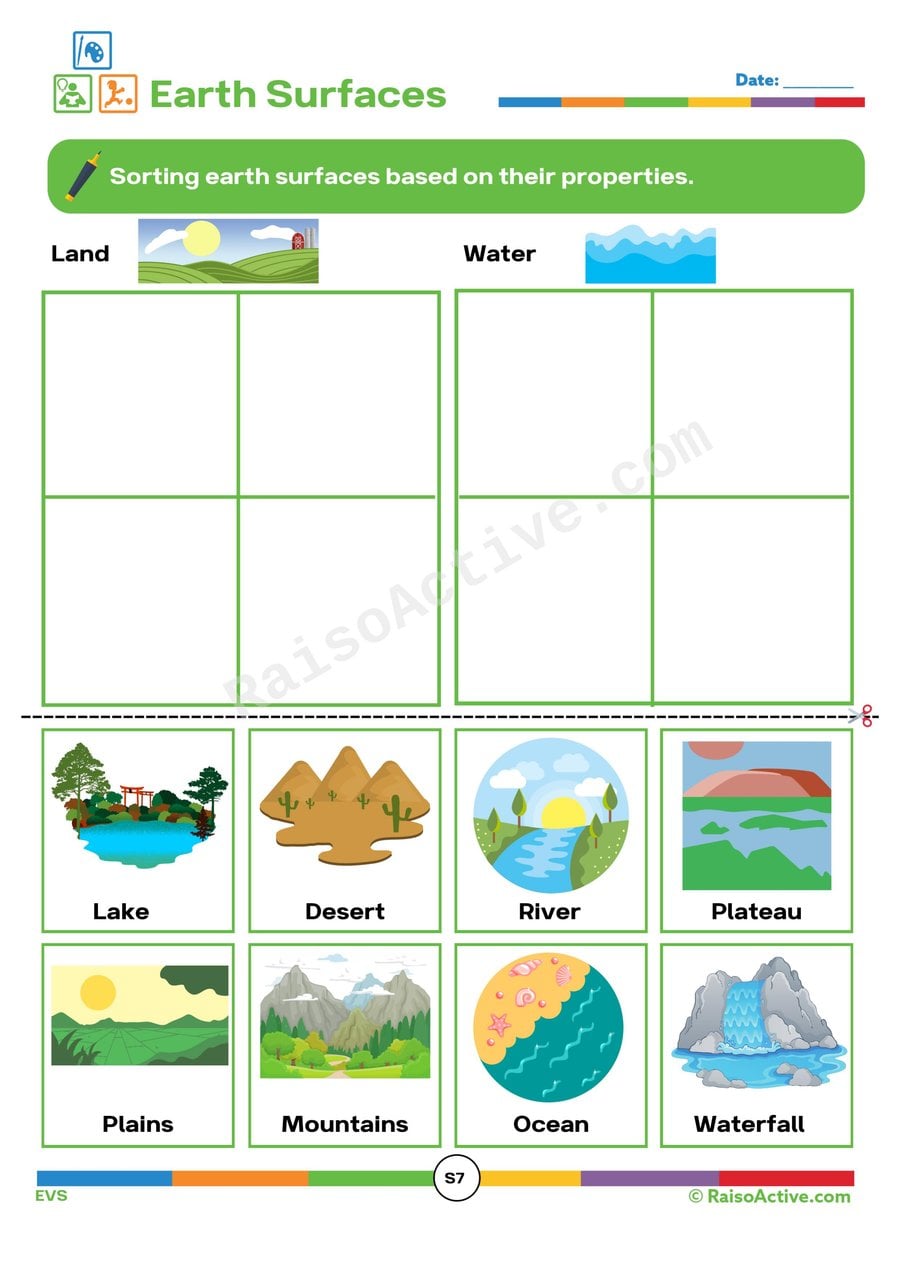
Earth Surfaces Sorting Worksheet for Kids
Ages 4-6 · Pre-K–KindergartenAges 4-6 · Reception–Year 1Ages 4-6 · LKG–UKGAges 4-6
Sorting pictures into 'land' and 'water' categories builds early classification skills and basic earth science vocabulary for children ages 4-6, helping them notice physical differences between surfaces they see in daily life.

Tenses Worksheet: Identifying Past, Present, and Future Verbs
Ages 4-6 · Pre-K–KindergartenAges 4-6 · Reception–Year 1Ages 4-6 · LKG–UKGAges 4-6
Identifying whether an underlined verb describes something that already happened, is happening now, or will happen later introduces children ages 4-6 to verb tense, an important step toward constructing grammatically correct sentences of their own.

Words Worksheet: Unscramble, Capitalize, and Choose the Best Word!
Ages 4-6 · Pre-K–KindergartenAges 4-6 · Reception–Year 1Ages 4-6 · LKG–UKGAges 4-6
This multi-part worksheet challenges children ages 4-6 to unscramble jumbled letters into real words, identify correctly capitalized sentences, and choose the most fitting word to complete a sentence. Combining these three tasks on one page builds spelling, sentence-level grammar awareness, and vocabulary precision together, pushing children to apply several early literacy skills in a single sitting rather than practicing them in isolation.
Related worksheets

Proper Noun Worksheet for Kids: Fill-in-the-Blanks and Identify!
Ages 4-6 · Pre-K–KindergartenAges 4-6 · Reception–Year 1Ages 4-6 · LKG–UKGAges 4-6
This worksheet teaches children to tell the difference between a common noun and a proper noun, the specific, capitalized name of a particular person, place, or thing, which is foundational for both grammar and correct capitalization in their own writing. Ages four to six are at the right stage to start noticing that names like 'London' or 'Sara' get capital letters while general words like 'city' or 'girl' do not.

Parent's Guide: Learning Pronouns, Place Value, and More!
Ages 4-6 · Pre-K–KindergartenAges 4-6 · Reception–Year 1Ages 4-6 · LKG–UKGAges 4-6
This parent's guide brings together pronoun flashcards, tens-and-ones block arranging, family tree drawing, and a simple taste exploration, giving children ages 4-6 varied practice across grammar, place value, and sensory vocabulary in one flexible session. Because each section targets a different skill, the guide lets you follow whatever your child is most curious about that day.

A and The Worksheet: Practice with Nouns and Articles
Ages 3-5 · Preschool–Pre-KAges 3-5 · Nursery–ReceptionAges 3-5 · Nursery–LKGAges 3-5
Choosing between the articles 'a' and 'the' before a noun builds early grammar awareness for children ages 3-5, helping them notice a small but important word choice that changes how a sentence sounds and reads.
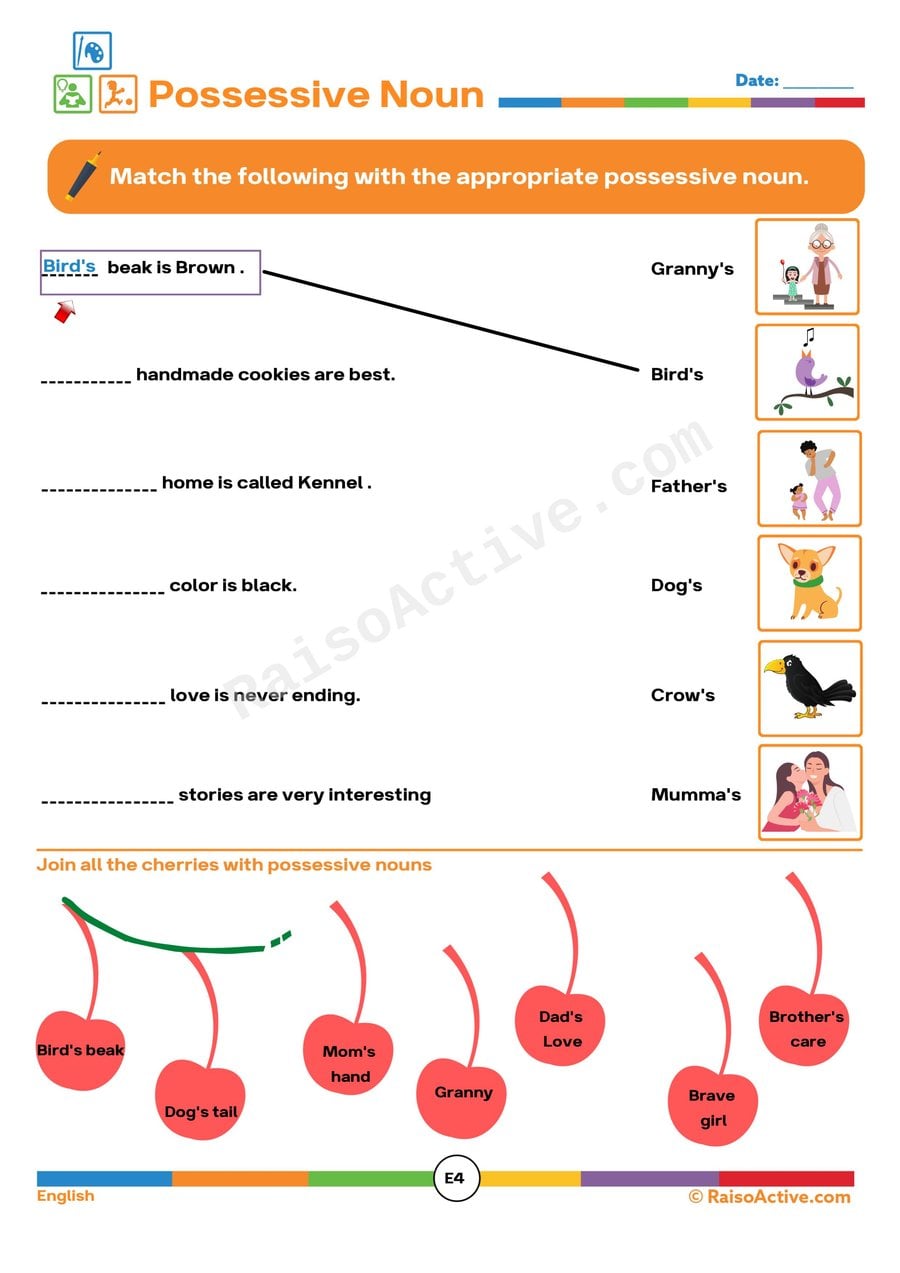
Possessive Noun Matching Worksheet for Kids
Ages 4-6 · Pre-K–KindergartenAges 4-6 · Reception–Year 1Ages 4-6 · LKG–UKGAges 4-6
Children ages 4-6 learn to identify possessive nouns, like 'the dog's bone' or 'Mia's book', which show ownership using an apostrophe and 's'. Matching possessive phrases to their meaning builds early grammar awareness that will later support correct sentence writing and reading comprehension. The cherry-connecting activity adds a playful visual-tracking layer to reinforce the matching skill.

Possessive Noun Worksheet: Practice with Examples!
Ages 4-6 · Pre-K–KindergartenAges 4-6 · Reception–Year 1Ages 4-6 · LKG–UKGAges 4-6
Possessive nouns, words like 'the dog's bone' that show ownership, introduce children to how a small change, adding an apostrophe and 's', shifts the meaning of a whole sentence, an early lesson in how grammar carries specific information. For ages four to six, recognizing possession in sentences also supports reading comprehension, since misunderstanding who owns what can confuse the meaning of a story.

Parent's Guide: Nouns, Pronouns, and Energy Exploration!
Ages 3-5 · Preschool–Pre-KAges 3-5 · Nursery–ReceptionAges 3-5 · Nursery–LKGAges 3-5
This parent guide bundles together two very different early-learning areas — basic grammar concepts like nouns and pronouns, and an introduction to energy sources — giving children ages 3-5 a varied set of short activities rather than one long worksheet. Identifying pronouns builds early grammatical awareness, helping children notice that words like 'he,' 'she,' and 'it' stand in for names they already know. The energy exploration section introduces very early science vocabulary by asking children to notice which everyday objects use energy, connecting an abstract concept to familiar household items.

Subject and Predicate Sorting Worksheet for Preschoolers
Ages 4-5 · Pre-KAges 4-5 · ReceptionAges 4-5 · LKGAges 4-5
This worksheet introduces children ages 4-5 to a basic building block of sentence grammar, teaching them that every sentence has a subject — who or what it's about — and a predicate — what that subject does or is. Sorting sentence fragments into these two categories helps children start to notice sentence structure, which supports both reading comprehension and their own sentence writing later on. This early grammar awareness lays groundwork for more formal sentence study in kindergarten and beyond.

Easter Egg Match: Add and Find the Matching Designs!
Ages 3-5 · Preschool–Pre-KAges 3-5 · Nursery–ReceptionAges 3-5 · Nursery–LKGAges 3-5
This worksheet blends early addition with visual matching as children ages 3-5 combine two separate shape groups and then search for the Easter egg design that shows the same total. Because the 'answer' is a picture rather than a written number, children practice quantity comparison and pattern-matching without needing to know written numerals yet.
Guides for this topic

Reviews
Every worksheet for ages 4–6, no watermark
Members download the full library of 1,000+ worksheets and every activity pack without watermarks or daily limits. One year costs ₹999 in India or $20 elsewhere.
See membership plansOr download any worksheet free with a watermark (5 a day).