Trace the Letter T Worksheet: Practice Writing & Coloring Fun!
This worksheet builds recognition and formation of the letter T through guided tracing and by identifying pictures of words that start with T, like 'tiger' or 'turtle.' For three- to five-year-olds, the letter T's simple cross-shaped stroke — one straight line down, one straight line across — makes it a good letter for practicing controlled, confident pencil strokes.
Part of the pack
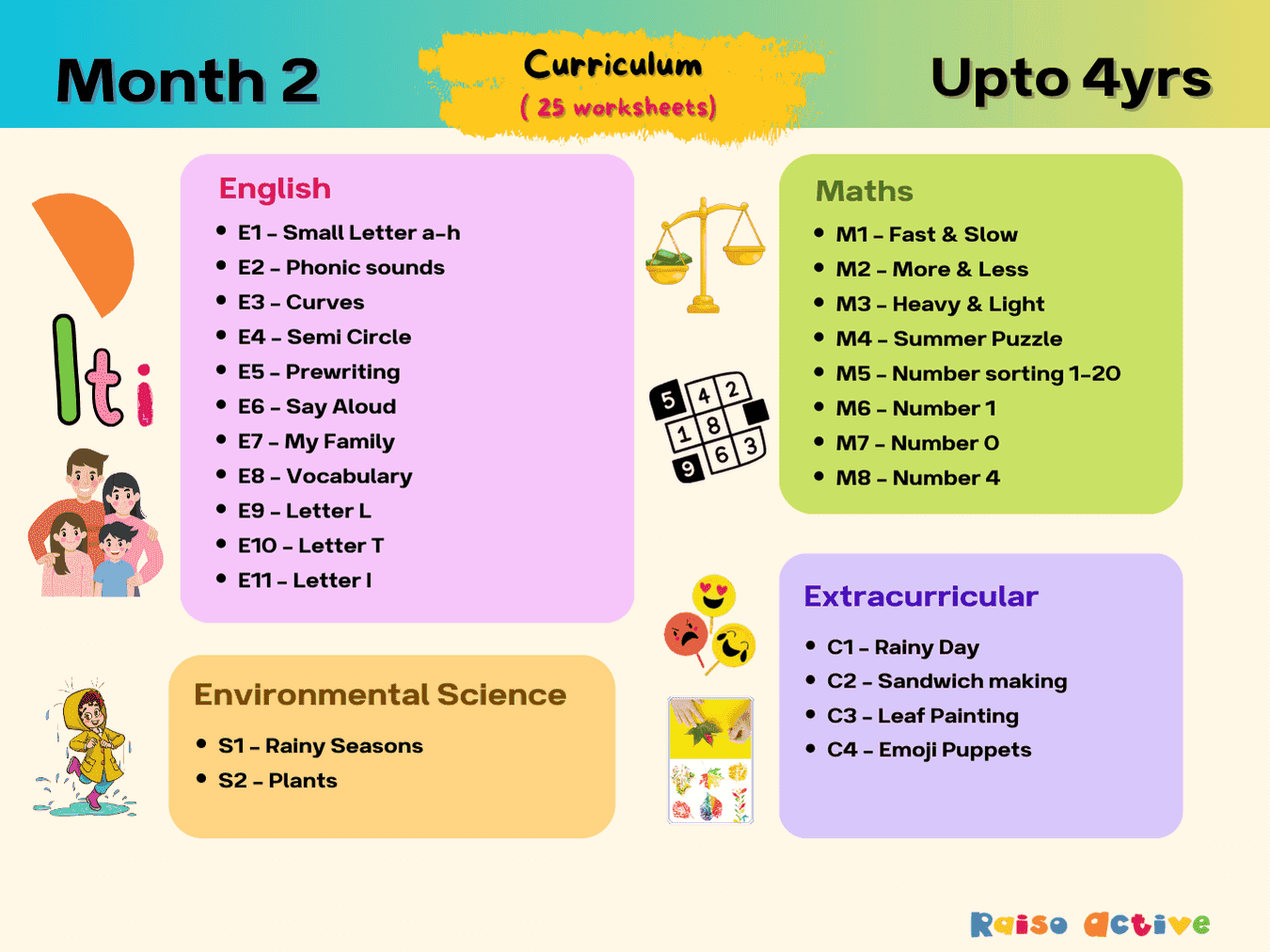
Month 2: Learning & Development | Ages Up to 4
This is page 13 of the pack. Ages 3-4 · PreschoolAges 3-4 · NurseryAges 3-4

Made for your child
A whole activity pack made with their name
60 pages to spot, build, trace and write their own name, plus pages about their favourites, feelings and family. See a free preview with their name.
Make an All About Me packFree preview · free for members
Or start free: a name tracing sheet with their nameCurriculum
- Writing > Letter Tracing A-Z
How to use this worksheet
First, have your child trace the letter T along the dotted lines, noting the top-to-bottom stroke followed by the left-to-right stroke across the top. Then, have them trace the dotted lines again for more repetition, saying the /t/ sound with each pass. Finally, look at the pictures together, name each one, and have your child color only the pictures that start with the letter T.
Materials needed
- Pencil
- Crayons
Extension activities
- 1Find other objects around the house that start with the letter T, like a table or towel.
- 2Practice writing the letter T in sand or shaving cream for extra sensory repetition.
- 3Create a collage using pictures of things that start with the letter T.
- 4Make a simple snack shaped like the letter T using crackers or pretzel sticks.
- 5Sing an alphabet song, pausing on T to reinforce its sound and shape.

Written by
Hemsweta Jain · Teacher Cheena
MBA and Early Childhood Educator, teaching since 2014 · Founder of RaisoActive, Mumbai
Every RaisoActive worksheet is designed and checked by the founder before publishing.
Published · Last reviewed
More from Month 2: Learning & Development | Ages Up to 4

Summer Puzzle Worksheet: Cut and Arrange Numbers 11-20!
Ages 4-5 · Pre-KAges 4-5 · ReceptionAges 4-5 · LKGAges 4-5
This worksheet extends number sequencing practice into the teens and twenties by having children cut out numbered puzzle pieces and arrange them from 11 to 20 to reveal a hidden summer picture. For four- and five-year-olds, the puzzle format adds motivation to get the sequence right, since an incorrect order means the picture won't come together properly, giving children immediate, visual feedback on their own work.

Small Letter a-h Matching Worksheet for Preschoolers
Ages 3-5 · Preschool–Pre-KAges 3-5 · Nursery–ReceptionAges 3-5 · Nursery–LKGAges 3-5
This worksheet builds lowercase letter recognition for a through h by having children match each letter to a picture whose name starts with that sound. For three- to five-year-olds, focusing on lowercase forms specifically matters because most of the text children encounter in books is written in lowercase, making this recognition more directly useful for early reading than uppercase alone.

Letter I Tracing Worksheet: Learn to Trace and Identify Words
Ages 3-5 · Preschool–Pre-KAges 3-5 · Nursery–ReceptionAges 3-5 · Nursery–LKGAges 3-5
This worksheet builds recognition and formation of the letter I, both uppercase and lowercase, through tracing practice and identifying pictures of words that start with I, like 'igloo' or 'insect.' For three- to five-year-olds, uppercase I is one of the simplest letter shapes to form, making it a good confidence-building letter even as lowercase i, with its added dot, introduces a slightly trickier two-part stroke.

Rainy Day Fun: Circle the Rainy Season Items Worksheet
Ages 3-5 · Preschool–Pre-KAges 3-5 · Nursery–ReceptionAges 3-5 · Nursery–LKGAges 3-5
This worksheet helps children ages 3-5 identify items commonly used during the rainy season, like umbrellas, boots, and raincoats, by looking at a mixed set of pictures and circling only the ones that belong to rainy weather. Sorting relevant from irrelevant items this way builds early categorization and observation skills.
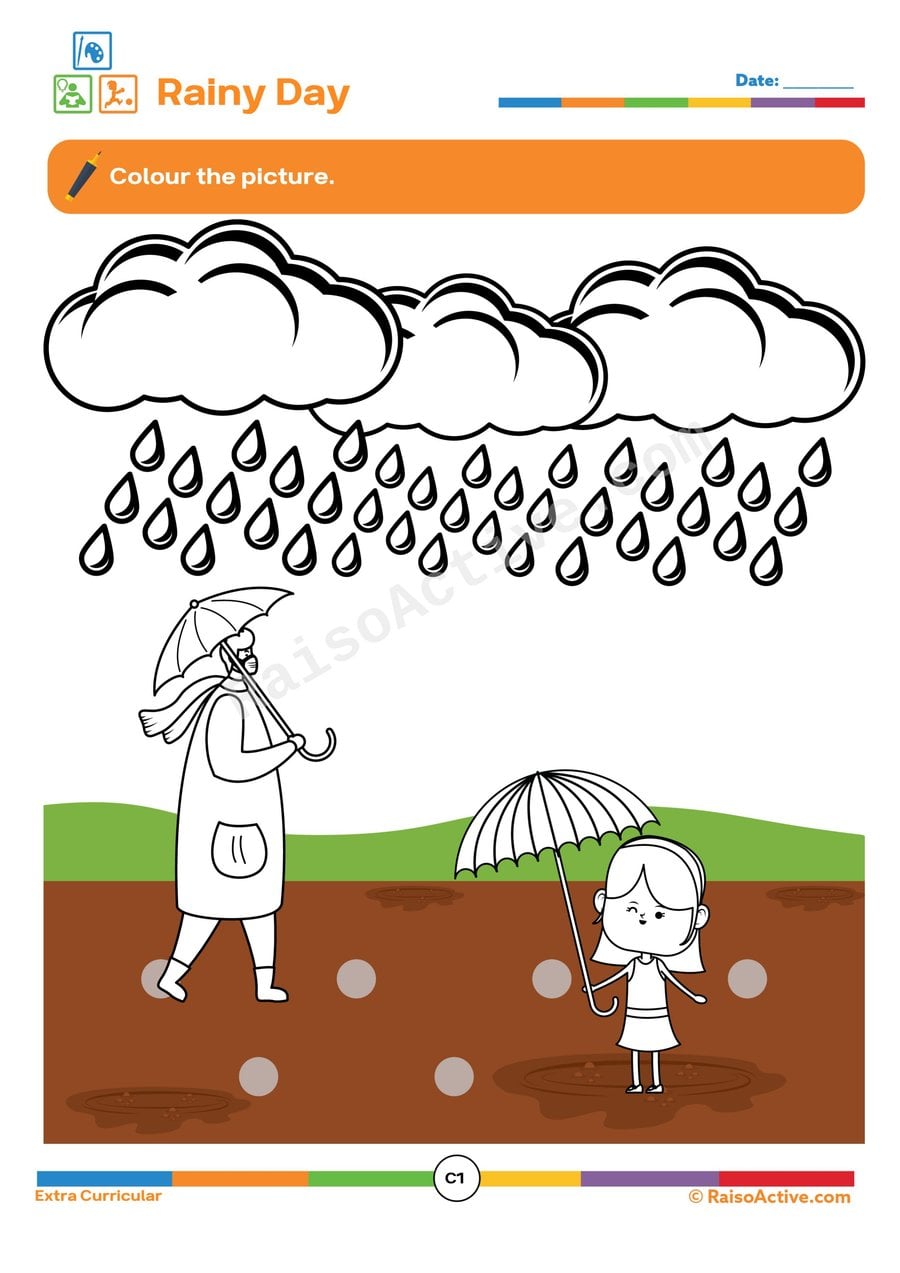
Rainy Day Coloring Worksheet for Preschoolers
Ages 3-5 · Preschool–Pre-KAges 3-5 · Nursery–ReceptionAges 3-5 · Nursery–LKGAges 3-5
This worksheet builds fine motor control and color-within-the-lines coordination while giving children a chance to talk about weather vocabulary tied to a rainy day scene, like clouds, raindrops, and umbrellas. For three- to five-year-olds, coloring a themed scene rather than a random picture also gives adults a natural opening to connect the art activity to real conversations about weather.
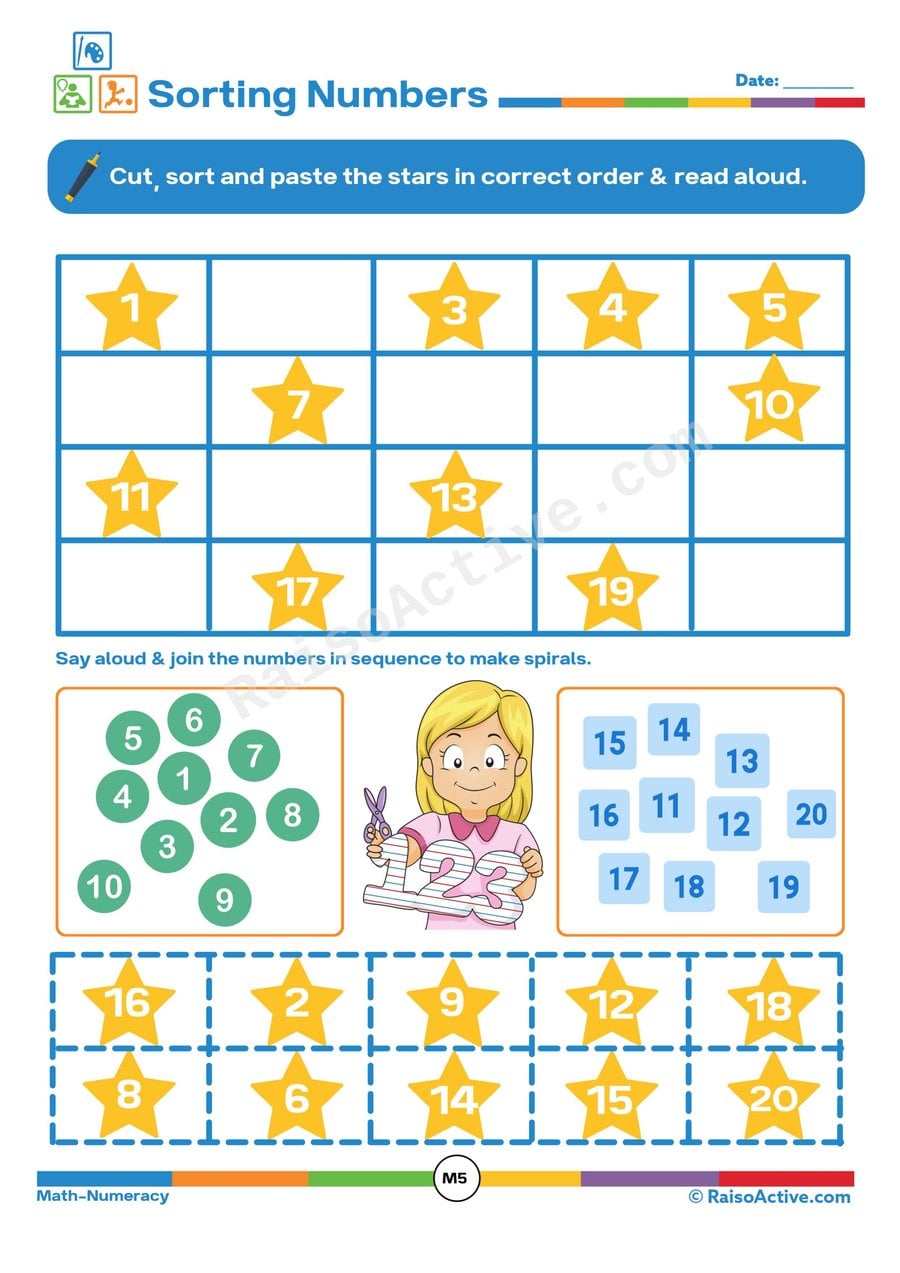
Sorting Numbers Worksheet: Cut, Paste, and Order!
Ages 4-5 · Pre-KAges 4-5 · ReceptionAges 4-5 · LKGAges 4-5
This worksheet reinforces number recognition and ascending-order sequencing by having children cut out star-shaped number pieces and paste them into a grid in the correct counting order. For four- and five-year-olds, physically manipulating loose number pieces — rather than just writing numbers in place — makes the abstract idea of 'order' something they can touch, rearrange, and correct before committing to a final answer.

Pre-Writing Practice: Trace the Lines and Shapes Worksheet
Ages 3-5 · Preschool–Pre-KAges 3-5 · Nursery–ReceptionAges 3-5 · Nursery–LKGAges 3-5
This worksheet builds pre-writing skills by having children trace a variety of lines and shapes — following dinosaurs, marbles, skateboarders, and cars along their paths — which develops the hand-eye coordination and pencil control needed before formal letter writing begins. For three- to five-year-olds, tracing varied line types like straight, curved, and zigzag paths builds the specific motor patterns that later show up in letter strokes like the curves in 'c' and 'o' or the straight lines in 'l' and 't.'
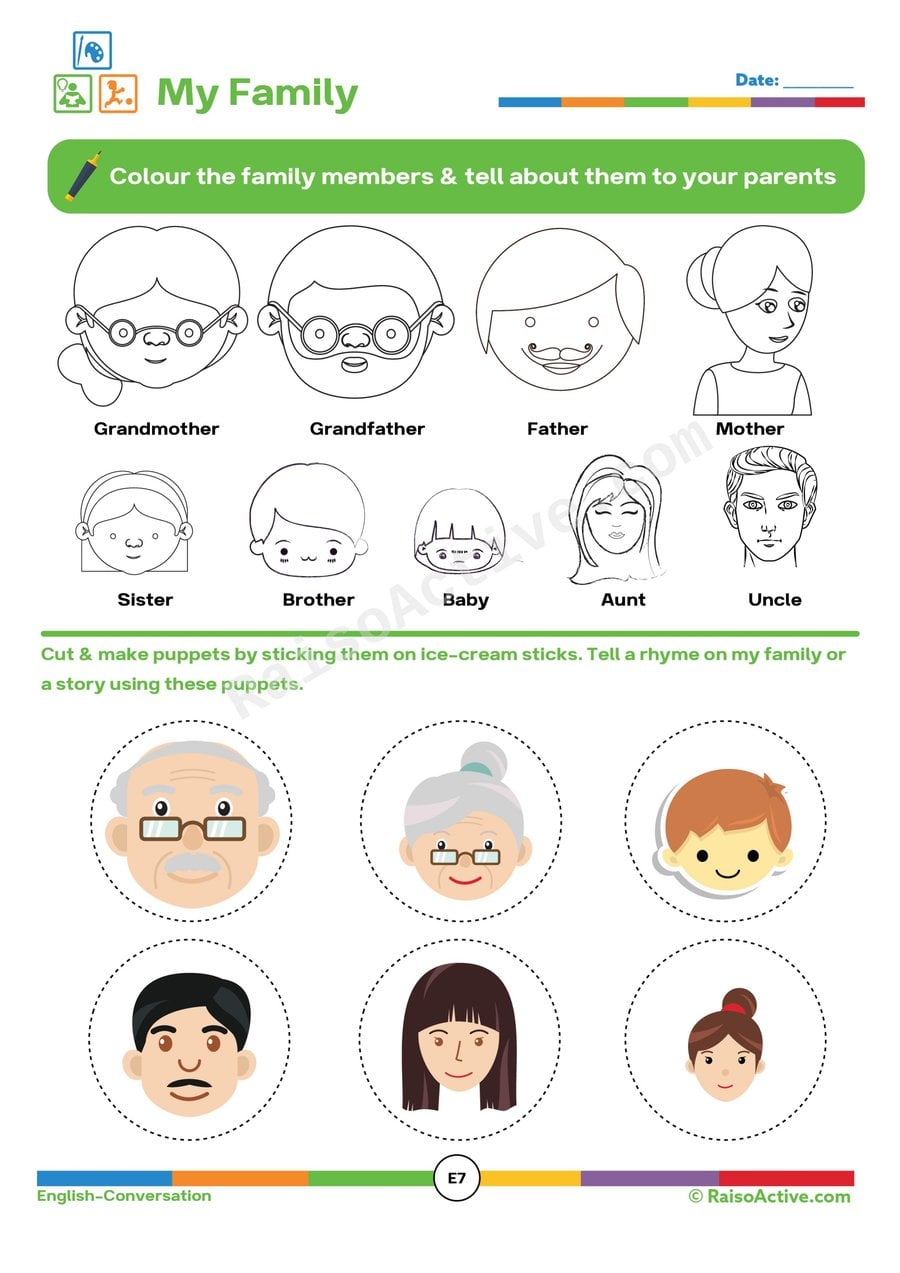
My Family: Color and Create Puppets Worksheet
Ages 3-5 · Preschool–Pre-KAges 3-5 · Nursery–ReceptionAges 3-5 · Nursery–LKGAges 3-5
This worksheet builds early social-emotional vocabulary around family roles while developing fine motor skills through coloring, cutting, and assembling finger puppets. For three- to five-year-olds, turning family members into puppets they can move and talk through gives them a hands-on way to describe relationships and practice storytelling about people who matter most to them.
Related worksheets
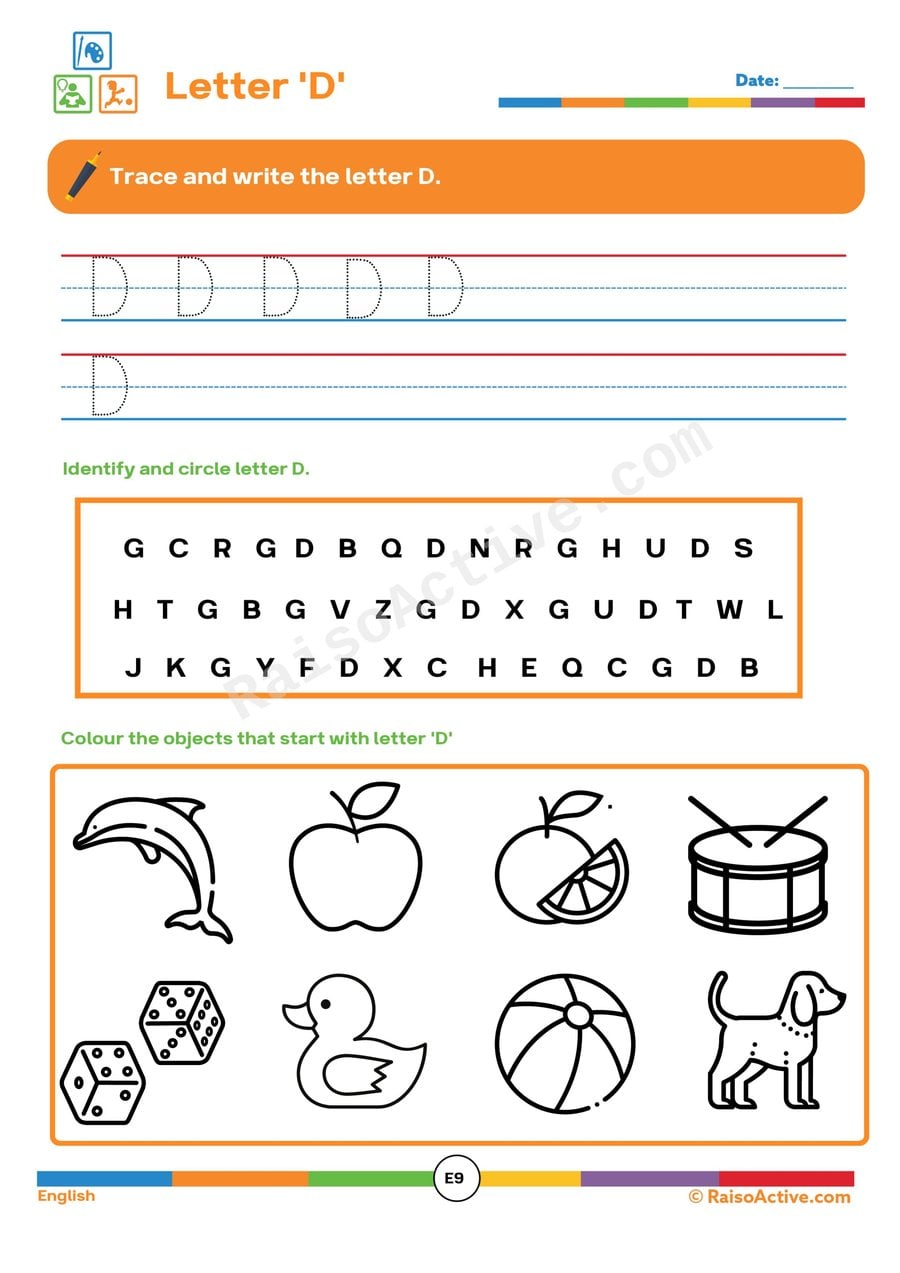
Letter D Worksheet: Trace, Identify, and Color!
Ages 3-5 · Preschool–Pre-KAges 3-5 · Nursery–ReceptionAges 3-5 · Nursery–LKGAges 3-5
This worksheet helps children ages 3-5 practice letter recognition, pencil-controlled tracing, and beginning sound awareness all centered on the letter D. Searching for D within a group of letters builds visual discrimination, an important pre-reading skill for telling similar shapes apart quickly.

Letter S Tracing Worksheet: Learn to Write and Identify the Letter S!
Ages 3-5 · Preschool–Pre-KAges 3-5 · Nursery–ReceptionAges 3-5 · Nursery–LKGAges 3-5
This worksheet helps children ages 3-5 learn to recognize and write the letter S, both uppercase and lowercase, using its distinctive curving stroke, while also practicing identifying words that start with the letter S. Because S makes a long, continuous hissing sound that's easy to isolate, this letter is often one of the more approachable sounds for early phonics practice.
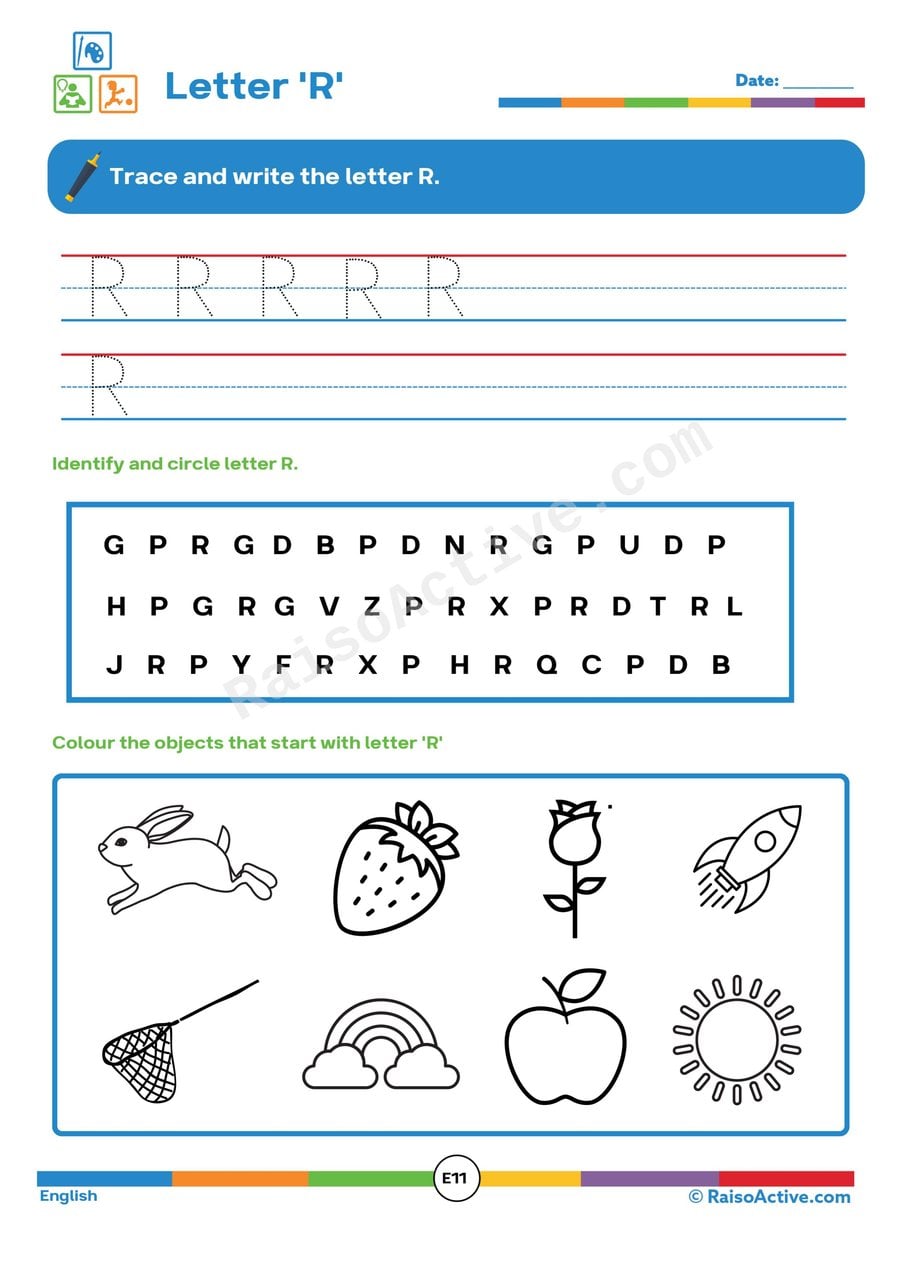
Letter R Worksheet: Trace, Identify, and Color!
Ages 4-5 · Pre-KAges 4-5 · ReceptionAges 4-5 · LKGAges 4-5
This worksheet helps children ages 4-5 practice tracing and writing the letter R, spotting it among a group of other letters, and recognizing objects that begin with the R sound. Working across three related tasks for one letter, tracing, searching, and identifying pictures, gives repeated exposure that helps the letter shape and sound become automatic.

Learn the Letter N! Tracing and Coloring Worksheet for Preschoolers
Ages 3-5 · Preschool–Pre-KAges 3-5 · Nursery–ReceptionAges 3-5 · Nursery–LKGAges 3-5
This worksheet helps children ages 3-5 build the specific hand movements needed to form the letter N, tracing both its uppercase and lowercase shapes while also linking the letter to its sound through picture coloring. Repeated tracing strengthens the pencil grip and directional control that later support fluent handwriting.

Learn the Letter 'n' Worksheet: Tracing, Matching, and Coloring Fun!
Ages 3-5 · Preschool–Pre-KAges 3-5 · Nursery–ReceptionAges 3-5 · Nursery–LKGAges 3-5
This worksheet builds letter 'n' recognition for 3-5 year olds through tracing, a highlighting search, matching to pictures, and coloring — four connected tasks that ask your child to hold onto the same letter across different formats and follow multi-step instructions in sequence. The letter 'n' is frequently confused with 'm' since both involve humps, so the repeated exposure here helps children start telling the two apart by sound and shape.

Letter C Tracing and Coloring Worksheet for Preschoolers
Ages 3-5 · Preschool–Pre-KAges 3-5 · Nursery–ReceptionAges 3-5 · Nursery–LKGAges 3-5
This worksheet builds handwriting readiness by having children trace the letter C multiple times, while the coloring and picture-matching elements connect the letter's shape to its sound through familiar C words. For ages 3-5, repeating the same letter across tracing and picture activities on one page reinforces recognition from multiple angles in a single sitting.
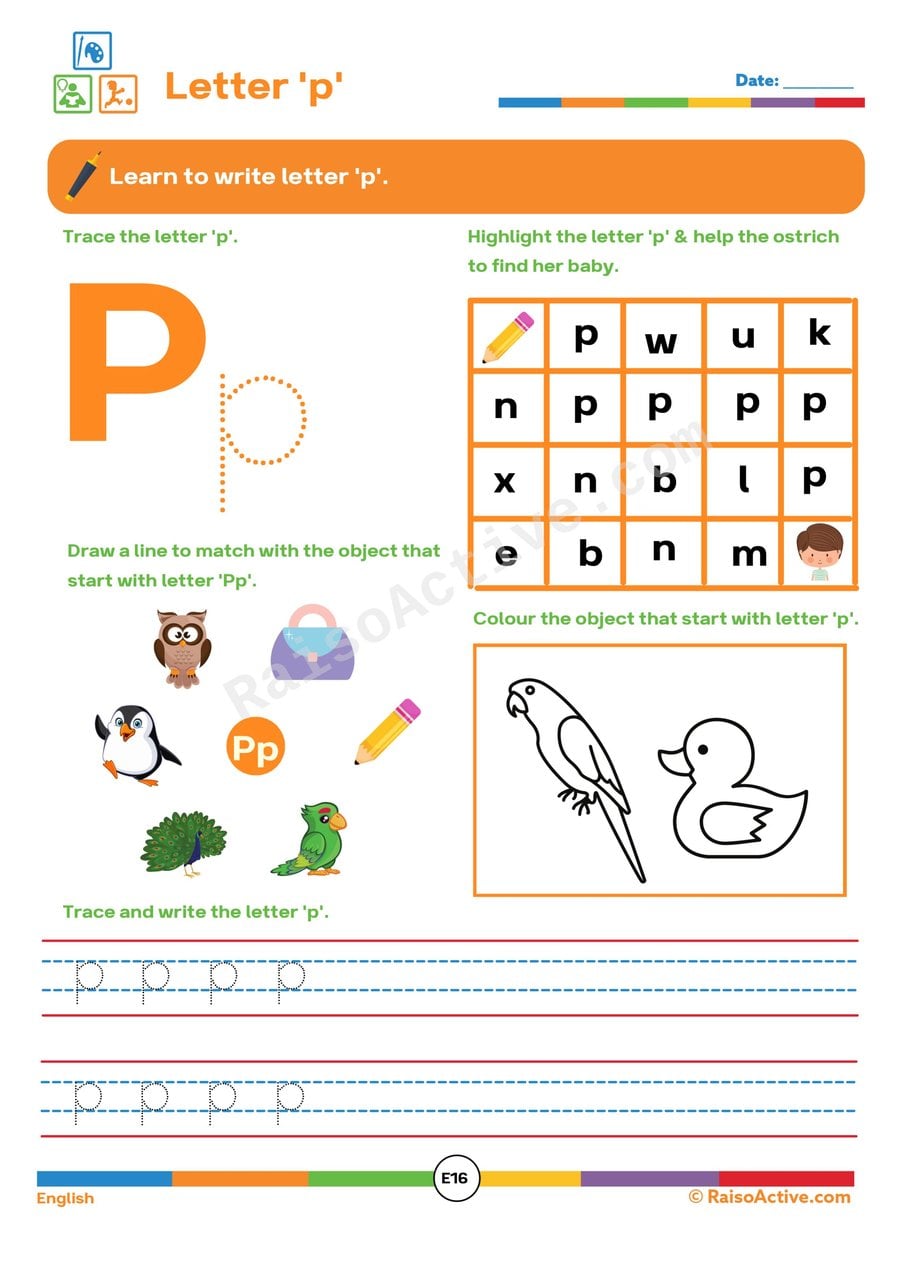
Letter 'p' Fun: Trace, Find, and Color the Letter 'p'!
Ages 3-5 · Preschool–Pre-KAges 3-5 · Nursery–ReceptionAges 3-5 · Nursery–LKGAges 3-5
Tracing both uppercase and lowercase 'p' builds handwriting muscle memory for children ages 3-5, while searching for the letter in a word search sharpens visual discrimination between similar letter shapes. Matching and coloring objects that start with 'p' rounds out the practice by linking the written letter to its spoken sound and real-world examples.

Learn the Letter 'V': Tracing, Matching, and Coloring Worksheet
Ages 3-5 · Preschool–Pre-KAges 3-5 · Nursery–ReceptionAges 3-5 · Nursery–LKGAges 3-5
Tracing, matching, and coloring the letter 'V' gives children ages 3-5 focused repetition on a letter formed entirely from two diagonal strokes, a different motor pattern than the curves and verticals used in many other letters. Matching pictures like a violin or a van to the letter builds the sound-symbol connection for the /v/ sound, which can be tricky to distinguish from /f/ or /b/ for young learners. Highlighting the lowercase 'v' within a letter grid to help a character find an object adds a game-like search element that keeps attention on the task.
Guides for this topic

Best Worksheets for 3-Year-Olds: What Works and What to Avoid
What works on worksheets for 3-year-olds: short sessions, crayons, tracing lines, matching, cutting, a free weekly plan, and signs one is too advanced.
Fostering Creativity in Structured Learning: The Perfect Balance for Young Minds
Learn how to blend creativity with structured learning for children ages 1-8. Practical strategies, activities, and printable worksheets for parents and teachers.

How to Help Your Child with Letter Reversals: A Complete Guide for Parents and Teachers
Letter reversals are normal until age 7-8. Learn the best multisensory strategies, anchor letter tricks, and activities to help children write b, d, p, and q correctly.
Reviews
Every worksheet for ages 3–5, no watermark
Members download the full library of 1,000+ worksheets and every activity pack without watermarks or daily limits. One year costs ₹999 in India or $20 elsewhere.
See membership plansOr download any worksheet free with a watermark (5 a day).